In 2017 I blogged about a study by Hanno Seebens and 44 coauthors that showed that the rate of new introductions of alien species has risen rapidly since about 1800 – and showed no sign of slowing down (a reference to the full article is at the end of this blog). Here’s a brief recap, followed by a 2020 update by Seebens and colleagues.
In 2017, Seebens et al. analyzed a database covering 45,813 first records of 16,926 alien species established in 282 distinct geographic regions. The year with the highest number of reported new detections was 1996 – 585, or an average of more than 1.5 sightings per day.
The authors found that the adoption of national and international biosecurity measures during the 20th Century had slowed introductions – but not sufficiently. Numbers of reported new introductions of fish and mammals had decreased since the early 1950s. However, first recorded introductions of vascular plant species remained high, and introductions of birds and reptiles also continued to rise, largely as pets in countries with strengthening economies.
For taxa introduced primarily accidentally on transport vectors or as contaminants of commodities (e.g., algae, insects, crustaceans, molluscs and other invertebrates), they found a strong correlation between their spread and the market value of goods imported into the region of interest – existing biosecurity regimes had not slowed down the accumulation of these alien taxa.
As a consequence, the authors expected that the numbers of new alien species would continue to increase.
As you are aware, since 2015 I have posted 15 blogs about the continued detections of tree pests in wood packaging, which remains one of the major pathways despite the international regulation ISPM#15. I have found it harder to track insect and pathogen introductions on imported plants, but it surely continues apace.
2020 Study Projects Continuing Rise in Introductions, Especially Arthropods
Hanno Seebens and a smaller set of coauthors (see full reference at the end of this blog) have now produced an estimate of probable introduction rates in the future. They looked at taxon–continent combinations for seven major taxonomic groups and eight continents (excluding Antarctica).
They found an overall increase in established alien species between 2005 and 2050 of 36%.
The study predicted that by the mid-21st Century, there will be distinct increases in alien species numbers, particularly for Europe, but also for Temperate Asia and North America, and for invertebrates in all regions. Europe ranked highest in absolute numbers of new alien species (~2,543; a 64% increase). Temperate Asia was projected to receive about 1,597 species (a 50% increase); North America about 1,484 (a 23% increase); South America about 1,391 (a 49% increase); and the Pacific Islands about 132. Only Australasia could expect a slower rise in introductions. The predicted trajectories of alien species numbers were surprisingly similar for mainland and island regions across taxonomic groups.
Invertebrates showed the highest relative increases. Rates of new detections of alien species were projected to accelerate for arthropods other than crustaceans worldwide, especially for North America (!). The study also projected higher relative increases for aquatic vascular plants and terrestrial insects
All drivers of introduction and invasion are predicted to intensify in the future. This is despite adoption of increasing numbers of countermeasures in recent decades. Most countries’ capacity to proactively counter the rising tide of invasive species is still poor. Furthermore, the principal drivers – intensification of trade and transport, land-use change, and access to new source pools – is expected to continue operating as now – “business as usual”.
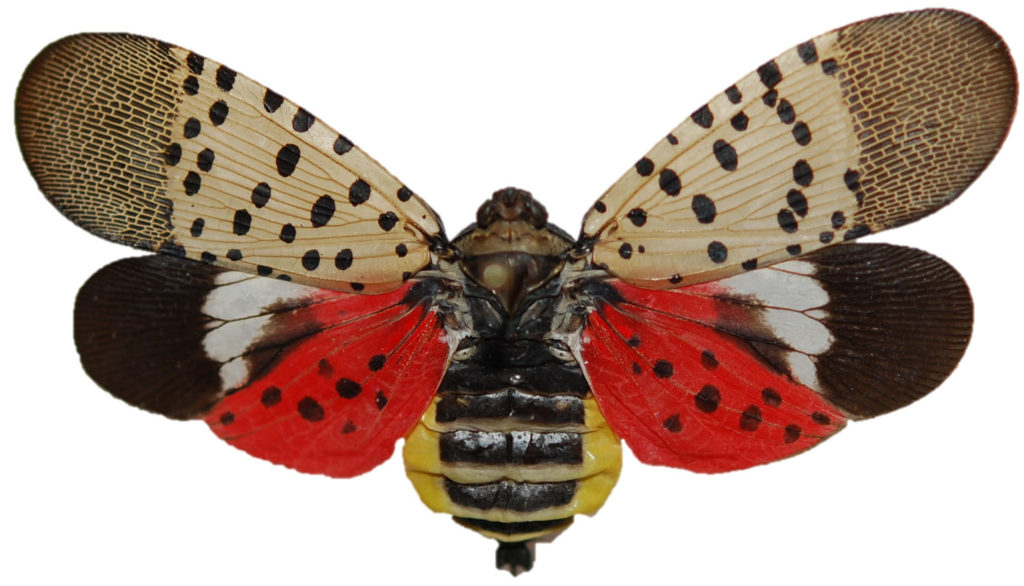
spotted lanternfly Holly Ragusa, Pennsylvania Department of Agriculture
Current Status of “New” Detections
Seebens et al. (2020) relied on the Alien Species First Records Database for first detection records up to 2005. More than half (54%) of the first-detection records in the database are vascular plants. Arthropods other than crustaceans made up 28% of the total, birds 6%, fishes 4%, mammals 3%, molluscs 2%, and crustaceans 2%. The 2020 study confirmed the earlier finding that the observed first-record rates of mammals changed at around 1950 from an increasing to a decreasing trend. Finally, the total numbers of non-native species in the Database is much lower in aquatic habitats. (The authors do not discuss whether this reflects actual introductions or gaps in reporting.)
In the database, Europe recorded 38% of all first records, North America 16%, Australasia 15%, South America 9%, Temperate Asia 9%, Africa 6%, Pacific Islands 5% and Tropical Asia 2%.
A comparison to the immediate past (1960-2005) showed that the rates of emerging non-native species were projected to accelerate during 2005-2050, especially for arthropods. As I noted above, North America is predicted to have high increases in absolute numbers. Increases are also predicted for birds. Declines are predicted for mammals and fishes.
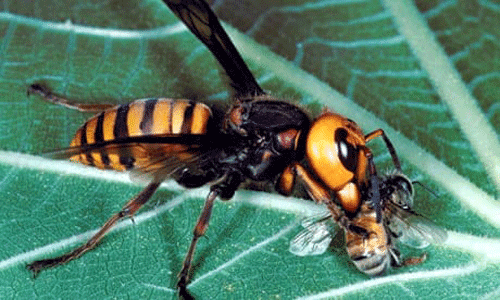
Asian giant hornet; photo from University of Florida Department of Entomology
Projected increases for Australasia were consistently lower than in the past.
Caveats:
1) The authors assumed that past patterns of alien species accumulation will continue in the future. They did not attempt to predict efforts to strengthen biosecurity regulations and mitigation strategies.
2) Projections were calculated in the absence of data on many underlying drivers for the historic periods and some taxonomic groups. However, observed trends of newly-detected alien species numbers during the 20th century were surprisingly stable despite distinct political and socio-economic changes.
Seebens and colleagues conclude that implementation of targeted biosecurity efforts can reduce the numbers of new alien species becoming established. However, a significant decrease in rates of alien species numbers on a large scale can only be achieved by a coordinated effort that crosses political borders.
Seebens, H., S. Bacher, T.M. Blackburn, C. Capinha, W. Dawson, S. Dullinger, P. Genovesi, P.E. Hulme, M. van Kleunen, I. Kühn, J.M. Jeschke, B. Lenzner, A.M. Liebhold, Z. Pattison, J. Perg, P. Pyšek, M. Winter, F. Essl. 2020. Projecting the continental accumulation of alien species through to 2050. Global Change Biology. 2020;00:1 -13 https://onlinelibrary.wiley.com/doi/10.1111/gcb.15333
Posted by Faith Campbell
We welcome comments that supplement or correct factual information, suggest new approaches, or promote thoughtful consideration. We post comments that disagree with us — but not those we judge to be not civil or inflammatory.
For a detailed discussion of the policies and practices that have allowed these pests to enter and spread – and that do not promote effective restoration strategies – review the Fading Forests report at http://treeimprovement.utk.edu/FadingForests.htm
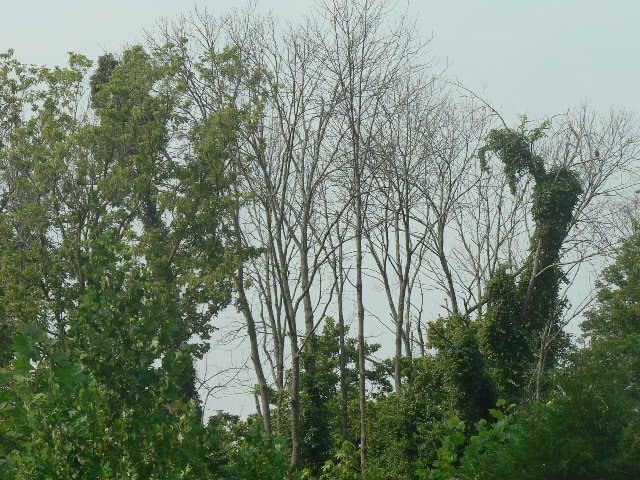
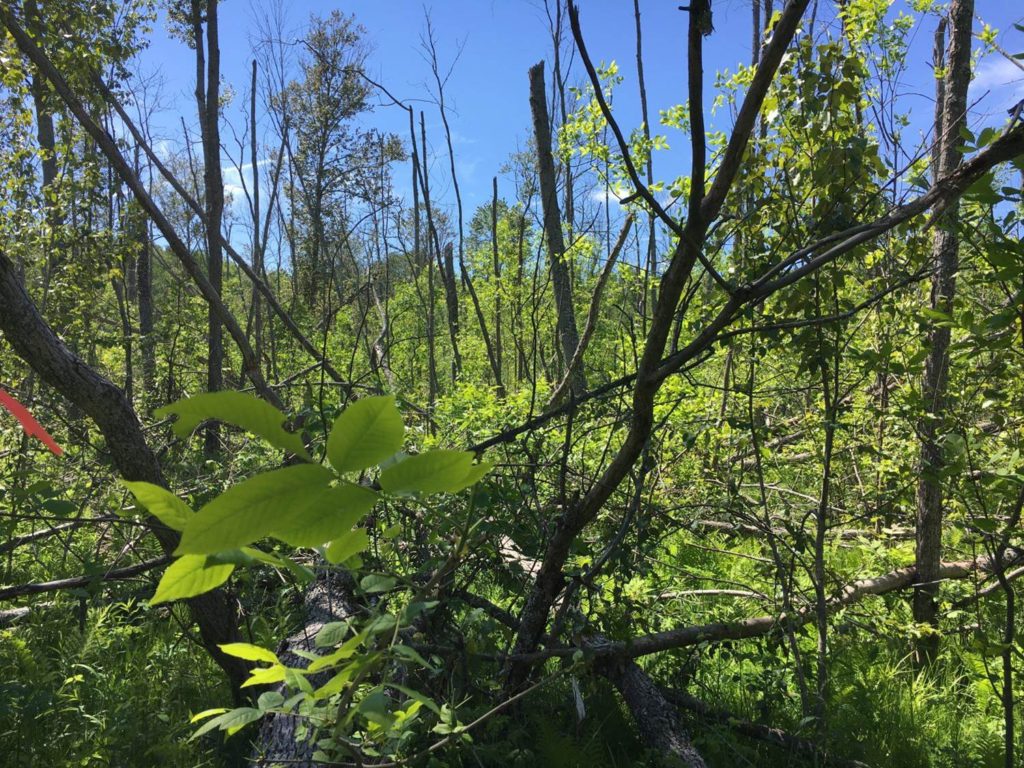
dead ash along Accotink Creek, Fairfax County, Virginia photo by F.T. Campbell
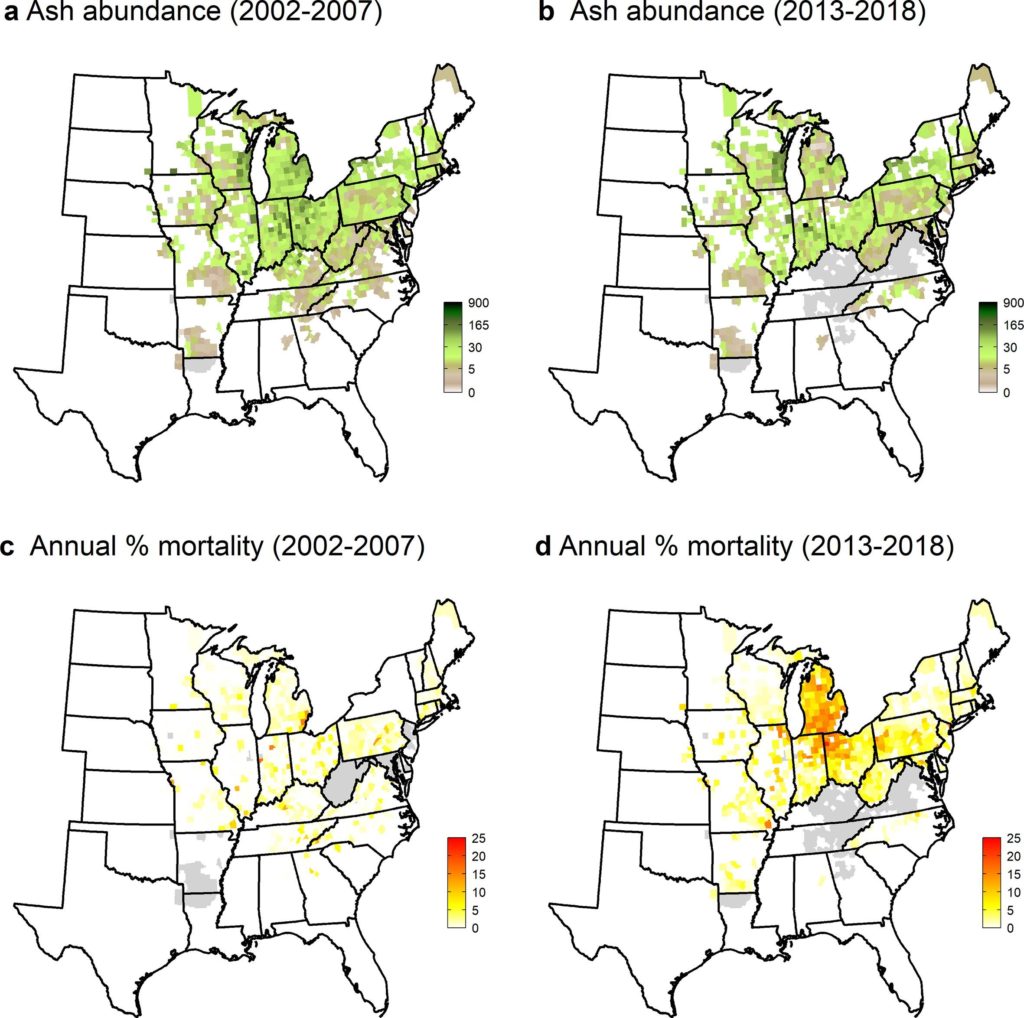
As we all know, the emerald ash borer (EAB) has killed millions of ash trees in its invaded range across eastern North America. However, field studies have detected robust regeneration of ash seedlings and saplings in various invaded areas. Ward et al. 2021 (full citation at end of blog) set out to determine whether this regeneration will result in recovery of mature ashes that can perform their ecological role. They conclude that it will not. Instead, they say, the EAB invasion will probably alter successional patterns and composition of large areas of naturally regenerating forests, causing a cascade of ecological impacts in ash-containing ecosystems
Ward and colleagues used USDA Forest Service Forest Inventory and Analysis (FIA data) to quantify ash recruitment and regeneration across the entire eastern United States. Theirs is the first study to evaluate trends across the region, rather than specific locations or stands. They related the FIA recruitment data to EAB spread, as measured by USDA Animal and Plant Health Inspection Service’ (APHIS) record of the first EAB detection in each county.
FIA inventories in 2002-2007 and 2013-2018 show large numbers of ash seedlings and saplings in counties invaded in the first wave of invasion, 2002–2006. These areas had higher densities of both seedlings and saplings than plots in other counties. The earliest-invaded counties were in areas that had extraordinarily high densities of ash before the EAB invasion, so the numbers of seedlings and saplings probably reflected that abundant seed source.
However, by the 2013-2018 inventory ash trees in the smallest overstory class (12.7 cm dbh) were dying at faster rates than they were recruited from seedlings or saplings in all 362 counties recorded by APHIS as EAB-infested before 2013. Ward and colleagues found these negative population trajectories on plots that have been invaded for more than about 10 years. This trend suggests that ash will continue to decline in abundance and may become functionally extinct across the invaded range.
Some U.S. Forest Service biologists are more optimistic about ash recovery in response to biocontrol of the EAB. See their podcast here.
In the risk of functional extinction, ash trees are unfortunately not unique. The authors note similar impacts from the invasion of the hemlock woolly adelgid and beech bark disease.
Data Reveal History of Invasion (spread)
Ward and colleagues focused on the risk of mortality for young ashes as they developed from seedlings to saplings, and, eventually, to overstory trees. The youngest “overstory” trees are 12.7 to 17 cm dbh. FIA data show that even the largest trees in this class are 3 cm smaller than trees that produce seeds.
Mortality was initially uniformly low – less than 2.1% — as measured by the first FIA inventory (2002–2007). This is not surprising because EAB was detected only in 2002, and then in only few counties. (EAB had probably been present for a decade before it was detected.)
By the 2013-2018 FIA inventory, mortality had quadrupled to 8–11% in counties invaded during the 2002–2006 period. In the counties invaded during the 2007–2012 period, morality also rose to 3-5%. Both measurements included all diameter classes. Annual mortality rates in the FIA 2013-2018 inventory were still highest for the counties invaded during 2002–2006 except for the largest trees (those greater than 40 cm dbh). By the time of the 2013-2018 FIA survey, overstory ash densities near the epicenter had since declined substantially. They had been nearly eliminated in some counties in southeastern Michigan. There were still sufficient numbers of smaller trees in the region to exhibit an elevated mortality rate – more than 10% per year in several counties in Michigan, Indian, and Ohio. By contrast, in the most recently invaded areas – those counties recorded by APHIS as infested after 2013 – there was very little change in ash densities compared to the 2002-2007 period. This is hardly surprising since it takes years for mortality to reach levels observable by the FIA process.
dead ash on edge of Pohick Bay, Fairfax County, Virginia photo by F.T. Campbell
Considering trees just entering the overstory category (those with diameters of 12.7 cm dbh), annual mortality increased substantially across the region. Between the first FIA inventory (conducted in 2002-2007) and the second inventory (conducted in 2013-2018), their average annual mortality rose more than four-fold, from 0.08 trees per ha to 0.37 trees per ha. By 2013-2018, recruitment in the 2002–2006 invasion cohort was about 50% less than tree mortality levels; recruitment and mortality were about equivalent for the counties invaded in the 2007–2012 period. Recruitment was [still] significantly higher than mortality for the counties recorded as invaded in 2013–2018. However, Ward and colleagues expect mortality rates of this cohort to accelerate over the next five to 10 years – even in areas with lower ash densities.
Ward and colleagues note that many of the young ash trees were dying before they could reach reproductive age – which they estimated to be about 20 years with a dbh of about 20 cm.
As the invasion progresses and hosts are depleted, mortality rates could slow, but, for ash to persist, it is critical that sufficient numbers of trees reach reproductive age before succumbing to residual EAB populations.
Other factors that might influence ash include competition with trees in other genera. The biocontrol agents now becoming established in young ash forests might increase the likelihood of ash persistence. Still, seed production and seedling survival will need to be frequent and widespread if they are to offset expected mortality. Resilience might also vary depending on individual species’ vulnerability to changes in the climate and to EAB (green and black ash are more vulnerable than white ash).
SOURCE
Ward, S.F., A.M. Liebhold, R.S. Morin, S. Fei. 2021. Population dynamics of ash across the eastern USA following invasion by emerald ash borer. Forest Ecology and Management 479 (2021) 118574
Posted by Faith Campbell
We welcome comments that supplement or correct factual information, suggest new approaches, or promote thoughtful consideration. We post comments that disagree with us — but not those we judge to be not civil or inflammatory.
For a detailed discussion of the policies and practices that have allowed these pests to enter and spread – and that do not promote effective restoration strategies – review the Fading Forests report at http://treeimprovement.utk.edu/FadingForests.htm
Recent information raises several troubling/worrisome issues:
1. The overall collapse in trade and travel has severely cut into the collection of user fees. These fees pay for Agriculture Quarantine Inspectors, putting jobs at risk. Their inspections provide important incentives for importers to follow U.S. and international rules to limit pests.
2. The list of imports from China in 2020 includes $1 billion worth of nursery stock. This is down about 7% from 2019. However, from the perspective of preventing plant diseases and pests, these imports continue to be high risk and still not adequately addressed by U.S. policy.
3. Other Asian regions are gaining in import share. Thus we can expect to see more pests arriving from countries other than China, like Vietnam.
Loss of User Fees Could Mean Loss of Inspectors
The collapse of trade and travel has a more troubling result: severe reductions in user fees collected from travelers and importers to fund DHS/Customs and Border Protection Agriculture Quarantine Inspectors. In a recent opinion piece, several former administrators of APHIS warn that current user fee collections are insufficient to sustain inspectors’ employment. A reserve fund will also be depleted this month. APHIS estimates that it will require an appropriation of $630 million to fund these agricultural inspections through the next fiscal year (October 2020 – September 2021).
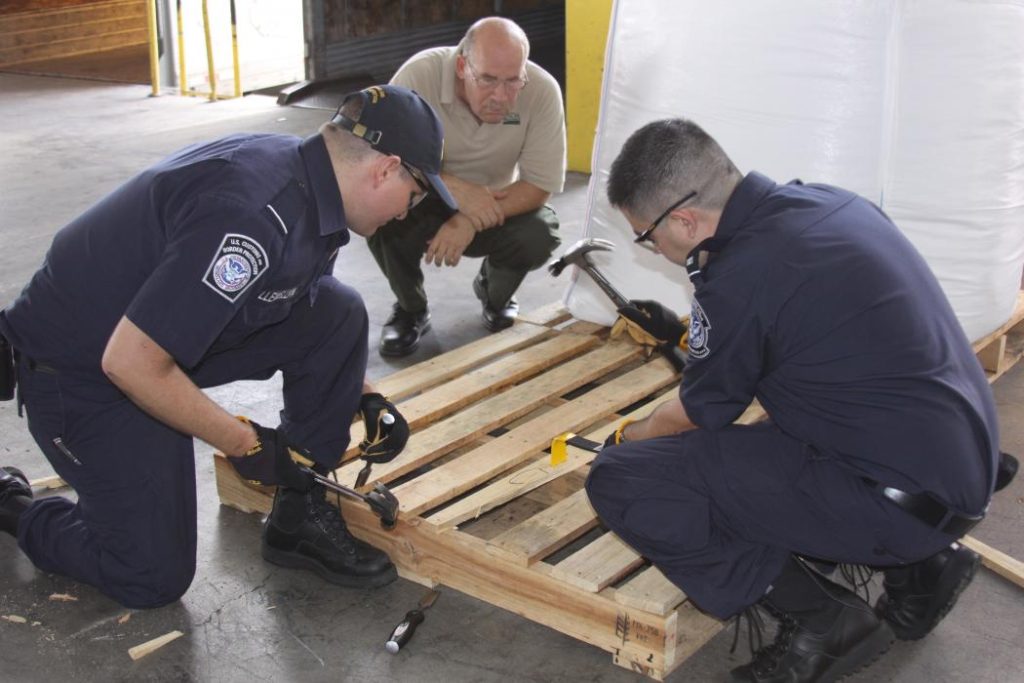
Agricultural inspectors focus on plant and animal imports – including horticultural stock, seeds, fruits, and vegetables – both in commercial shipments and in passengers’ baggage. They are also called in when CBP inspectors suspect pests are present in wood packaging.
I do not consider inspection to be the most effective strategy to prevent introductions. That is, I think inspections are less effective than regulations requiring treatments and pre-shipment pest-mitigation measures. However, losing inspectors – even temporarily – will undermine detection and enforcement as an incentive for importers to comply with U.S. and international rules. This funding crisis is therefore a serious concern. Please ask your senators and member of Congress to support increasing the appropriation for DHS CBP by $650 million to keep these inspectors on the job.
Imports from Asia Skyrocket
New data show that containerized US import volumes from Asia rocketed 91% between March and August. During the same five-month period a year ago, import volumes rose only 36% — so the 2020 increase is more than double the earlier pace. Numbers of incoming containers from Asia nearly doubled at the ports New York/New Jersey; Los Angeles/Long Beach, California; and Savannah, Georgia. The California ports are reported to be working nearly at capacity. This has resulted in higher handling costs and delays in trucking imports out of the port to their destinations.
Import volumes from Vietnam and India continue outpace the market generally.
Update: Imports from China Continue to Decline Relative to Other Source Regions
In August I posted a blog reporting a significant reduction in imports from China recently – first as a result of new tariffs in 2019, and second, as a result of the global economic crash associated with the Covid-19 virus.
Imports from China decreased by 16% in 2019 compared to 2018, then rose slightly in the first months of 2020. My focus then – and now – is on declining imports of heavy goods — the types of imports most likely to be packaged in wooden crates or on wooden pallets that can transport pests.
Import volumes from China rose later in the year, as the U.S. economy began to rebound. Official data from the U.S. Bureau of the Census shows US imports from China had more than doubled (by value) since March — from $19.8 billion in March to $40.7 billion in July. Still, imports of heavy items and most consumer items – other than computers – have decreased in 2020 compared to 2019.
Included in this list of imports is $1 billion worth of nursery stock – down about 7% from 2019. Nursery stock imports are rarely included in Census reports, so I value this information. Of course, these imports – even ‘though declining – still represent a series plant pest risks. One study showed that imported plants carry a pest risk 12 times higher than wood packaging material (Liebhold et al. 2012; see full reference at end of blog).
rhododendron infected by sudden oak death – photo courtesy of Jennifer Parke
Important Shifts in Sources of U.S. Imports
Data show a broad and years-long decline in the share of U.S. imports that come from China. This decline is best seen in declining volumes of imports arriving at the ports of Los Angeles, Long Beach, Northwest Sea Alliance and another port in the region. Imports arriving at these ports declined 5.3% in May 2019 compared to May 2018. At that time, this decline was blamed on importers having stocked up in advance of threatened US tariffs on goods from China. Bureau of the Census data show a 2% reduction in loaded twenty-foot-long containers (TEUs) entering Long Beach in calendar year to date 2019 compared to calendar year to date 2020 (through August).
Commercial data sources indicate even larger declines. According to the Journal of Commerce, the twin ports of Los Angeles and Long Beach handled 37.7% of the loaded TEUs entering the United States in 2018. This fell to 33.5% in July 2020 — a drop of 4.2 percentage points in just 18 months. The author of this article said the reason was a fall in imports from East Asia (including China, Hong Kong, Japan, South Korea, and Taiwan) compared to Southeast Asia, Europe, then South America and, finally, South Asia (primarily India). The article provides a table quantifying shifting sources of U.S. imports:
Total US Market Share Imports by Source Region
SOURCE 2018 2019 2020YTD 2018-2020 change
East Asia 61.6% 58% 54.5% -7.1%
Europe 14.9% 15.8% 16.9% +1.9%
Southeast Asia 8.3% 10.5% 11.9% +3.6%
South America 8.2% 10.5% 11.9% +3.6%
South Asia 2.7% 3.1% 3.1% +0.5%
Other source regions – e.g., the Caribbean, Middle East, Pacific, Africa, and Atlantic – were all below 2% of total numbers of TEU in all three years, and changed not at all or minimally over this period.
As I noted in the earlier blog, the pest risk persists. First, imports from China continue, and the most recent data (for the period 2011-2016) indicate significant numbers of shipments continue to be in violation of requirements for wood packaging (APHIS database / pers. comm). Remember, USDA passed up an opportunity to raise the issue of non-compliant wood packaging with Chinese phytosanitary officials.
Plus other regions also are the source of pests. I wrote about the risk from Mexico in the previous blog. The region of Southeast Asia has already been the source of highly damaging pests, e.g., redbay ambrosia beetle and polyphagous shot hole borer.
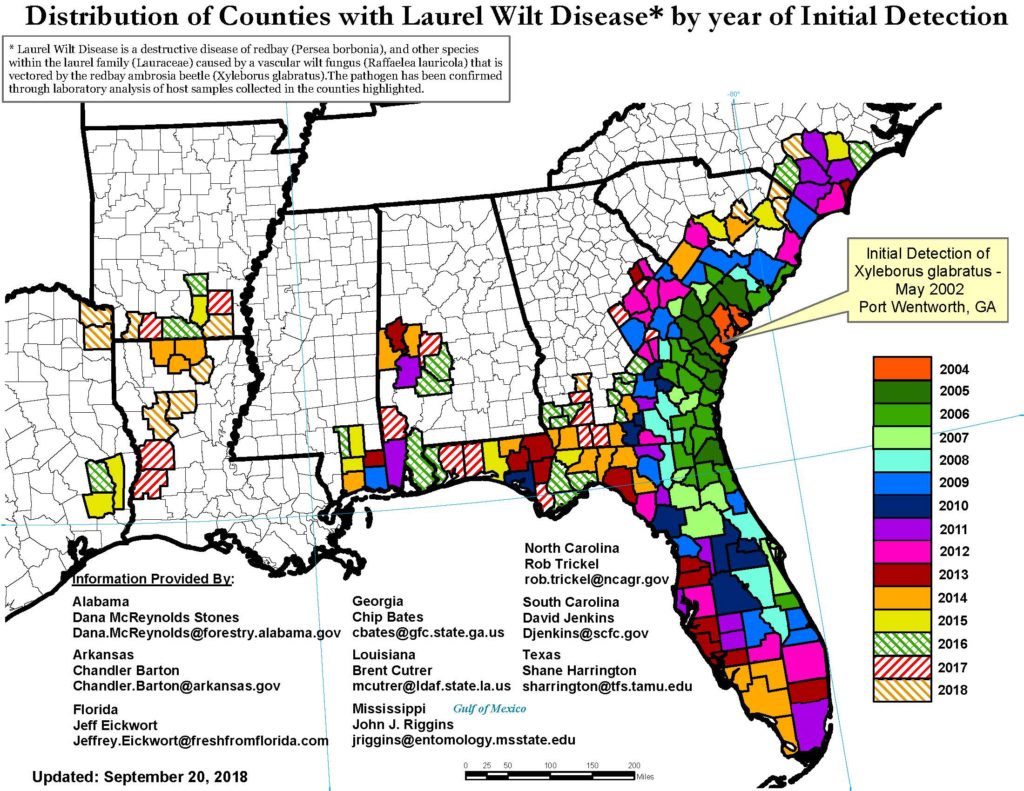
distribution of laurel wilt, carried by redbay ambrosia beetle
Scientists have also detected numerous known and previously unknown species of the brown alga genus Phytophthora in Vietnam and Taiwan. Of course, this is the genus that includes the pathogens that cause sudden oak death, black ink disease, potato blight, and numerous other plant diseases. APHIS has not accepted my urging to undertake rapid assessments of the vulnerability of North American trees to these newly discovered microbes.
SOURCE
Liebhold, A.M., E.G. Brockerhoff, L.J. Garrett, J.L. Parke, and K.O. Britton. 2012. Live Plant Imports: the Major Pathway for Forest Insect and Pathogen Invasions of the US. www.frontiersinecology.org
Posted by Faith Campbell
We welcome comments that supplement or correct factual information, suggest new approaches, or promote thoughtful consideration. We post comments that disagree with us — but not those we judge to be not civil or inflammatory.
For a detailed discussion of the policies and practices that have allowed these pests to enter and spread – and that do not promote effective restoration strategies – review the Fading Forests report at http://treeimprovement.utk.edu/FadingForests.htm
Reminder: Friday is the deadline for commenting on APHIS’ draft environmental assessment for the Asian longhorned beetle eradication program in South Carolina. Comments should be submitted at https://beta.regulations.gov/commenton/APHIS-2020-0086-0001
The Center for Invasive Species Prevention submitted comments that supported the eradication effort because of the well-documented threat that the ALB poses to the forests of North America. We also supported the preferred alternative in the EA.
However, we found the environmental assessment (EA) to be deficient in several ways:
the EA does not identify the host species present in the program area – not even of the 5,800 trees inspected by the program as of mid-August.
the EA provides no estimate of the proportion of deciduous trees and shrubs in the area that are host species. Conifers dominate the area. This means that any fauna dependent on deciduous trees and shrubs for food and shelter already contend with limited resources. Consequently, while we concur with the EA that any impacts will be localized, they might be exacerbated by the relative rarity of hardwood species in the local area. It is particularly important that the EA address this question since the Programmatic EIS was written under the assumption that forests at risk to the ALB are like those in the Northeast and Midwest, where hardwoods dominate.
Without knowing the proportion of deciduous flora comprised of host species, no one can evaluate the amount of wildlife food that could be removed or treated by pesticides. Some wildlife species are potentially vulnerable, including those that feed on pollen and nectar (i.e., bees and other pollinators) and those that feed on insects and other invertebrates. The latter include two species listed federally as threatened species: the frosted flatwood salamander (Ambystoma cingulatum) and northern long-eared bat (Myotis septentrionalis). Also vulnerable are birds, 96% of which feed their young on insects and other invertebrates. I worry about sublethal effects and possible bioaccumulation. Aquatic organisms, especially invertebrates, might also be affected.
The information gaps in the EA highlight weaknesses in the Programmatic EIS, on which it relies. The most important gap is the dearth of pesticide dose/mortality data for terrestrial amphibians. Apparently, EPA has not required such studies before approving pesticides.
Posted by Faith Campbell
We welcome comments that supplement or correct factual information, suggest new approaches, or promote thoughtful consideration. We post comments that disagree with us — but not those we judge to be not civil or inflammatory.
For a detailed discussion of the policies and practices that have allowed these pests to enter and spread – and that do not promote effective restoration strategies – review the Fading Forests report at http://treeimprovement.utk.edu/FadingForests.htm
APHIS has apparently passed up an opportunity to pressure China to clean up its wood packaging – although China ranks among the countries that most often violates ISPM#15 and sends wood packaging infested by quarantine pests. (See the blogs under the category “wood packaging” on this site.)
In May, a large delegation of APHIS employees met (virtually) with an equally large delegation of its Chinese counterpart to negotiate “technical protocols” linked to the Phase 1 trade agreement with China. The focus of the negotiations was on Chinese phytosanitary barriers that block exports of US products to China.
The two countries have now signed technical protocols to allow the United States to export to China a wide range of commodities estimated to be worth between $700 million and $760 million annually when the agreement is fully implemented. These commodities include barley for processing, hay, some fruits (blueberries, avocados, nectarines), almond meal, and chipping potatoes.
Some of the agreements cap years of effort. The example cited is chipping potatoes. Negotiations continue on some other U.S. exports to China, including logs.
An article in APHIS’ online newsletter reports that “On the import side, we are working on the requirements for China’s requested commodities….” Presumably these would be exports to the U.S. The examples listed were all fruits.
US & Chinese delegations (APHIS photo)
I inquired whether wood packaging was part of the negotiation.
Andrea B. Simao, Assistant Deputy Administrator and Director of PPQ’s Phytosanitary Issues Management unit, replied that SWPM was not raised “since there has [sic] not been significant issues.” Instead, she detailed efforts in the ongoing negotiations to persuade China that U.S. phytosanitary treatments are sufficient to control various pathogens in logs: oak wilt, phosphine on conifers, pinewood nematode.
Apparently the focus was fully on US exports and nobody raised US concerns about the risks of imports from China. This approach fits the Administration’s emphasis on exporting agricultural commodities to China. However, this is not reality. Over the past five years, I have frequently cited USDA’s own data – which demonstrate the likelihood that wood packaging will transport tree-killing pests from China to the U.S.
APHIS PPQ Deputy Administrator Osama El-Lissy & Chinese counterpart Li Jainwei sign agreement (APHIS photo)
Please inform your Member of Congress and Senators (or candidates for House or Senate) about how you feel about this failure of USDA to protect America’s natural resources. We must raise the political heat in order to pressure USDA into placing as high a priority on protecting US natural resources as it does on supporting agricultural exports.
Posted by Faith Campbell
We welcome comments that supplement or correct factual information, suggest new approaches, or promote thoughtful consideration. We post comments that disagree with us — but not those we judge to be not civil or inflammatory.
For a detailed discussion of the policies and practices that have allowed these pests to enter and spread – and that do not promote effective restoration strategies – review the Fading Forests report at http://treeimprovement.utk.edu/FadingForests.htm
U.S. phytosanitary policy is set by politicians – the Secretary of Agriculture, trade officials, and members of the House and Senate. Elected or appointed state officials determine how aggressively trees are protected in their jurisdictions. To fix the problems, those politicians need to hear from those of us who know about the pest risk associated with wood packaging and other imports.
Politics is how our country makes important decisions. And in politics, the squeaky wheel gets the grease.
Election seasons provide opportunities to raise issues. Politicians pay more attention to constituents’ concerns when they are courting our votes.
Further, if new people take up positions in January (whether elected or appointed), they will be more open to learning about issues new to them than were the people who have occupied an office for some time.
These messages need to be repeated periodically. Proctor and Gamble does not make its profits by asking us to buy their toothpaste once a year. We cannot duplicate a major corporation’s advertising budget – but we can speak up!
Tell your member of Congress and senators that you are worried that our trees are still being put at risk by insects arriving in wood packaging or diseases being spread by shipments of plants. Ask them to urge theUSDA Secretary to take action to curtail introductions of additional tree-killing pests.
Ask your friends and neighbors to join you in communicating these concerns to their Congressional representatives and senators.
If you are a member of an association – a scientific or professional society, an environmental advocacy group, a homeowners’ association – ask your association and fellow members to join you in communicating these concerns to their Congressional representatives and senators.
Write letters to the editors of your local newspaper or TV news station.
What should we say?
Our goal should be to hold foreign suppliers responsible for complying with ISPM#15. Here are five pieces of a comprehensive approach. It is best to advocate for all. However, if you feel more comfortable focusing on one or two specific actions, please do so!
1) One approach is to penalize violators. APHIS should:
Fine an importer for each new shipment found to be out of compliance with ISPM#15 in those cases where the foreign supplier of that shipment has a record of repeated violations.
Prohibit imports in packaging made from solid wood (boards, 4 x 4s, etc.) from foreign suppliers that have a record of repeated violations.
Allow continued imports from those same suppliers as long as they are contained in other types of packaging materials, including plastic, metals, fiberboards.
APHIS has the authority to take these action under the “emergency action” provision (Sec. 5.7) of the World Trade Organization Agreement on Sanitary and Phytosanitary Standards. (See a lengthy discussion of the SPS agreement in Chapter III of Fading Forests II, available here.) http://treeimprovement.utk.edu/FadingForests.htm
USDA and CBP should take other steps to help importers comply with ISPM#15.
USDA should also step up efforts to help U.S. importers to determine – and then use – those foreign suppliers of wood packaging and dunnage have good compliance records.
APHIS should join the DHS CBP in providing incentives to importers to join an expanded Customs-Trade Partnership Against Terrorism program (C-TPAT) that would require participants to assume full responsibility for ensuring that their packaging complies with IPPC standards.
The Government should strengthen underlying regulations.
Once a new president is elected, urge him to instruct the Office of Management and Budget to allow APHIS to finalize regulations – proposed more than five years ago! – that would apply ISPM#15 to wood packaging used in trade between the US and Canada. (Canada has been ready to adopt this measure for several years.)
USDA needs to understand the “approach rate” of pests in wood packaging in order to identify and fix weaknesses in its policies. To reach this understanding, APHIS should authorize Robert Haack to repeat the study documented in Haack et al. (2014). Furthermore, APHIS should collaborate with foreign counterparts to determine the relative importance of possible causes of the persistent pest presence problem – fraud, accidental misapplication of treatments, or other failures of treatment. Once the study has been completed, APHIS and its colleagues should work through the IPPC to fix the problems.
There are also recommendations of the Tree-Smart Trade program at www.tree-smart-trade.org Tree-Smart also has a Twitter account: @treeSMARTtrade
Posted by Faith Campbell
We welcome comments that supplement or correct factual information, suggest new approaches, or promote thoughtful consideration. We post comments that disagree with us — but not those we judge to be not civil or inflammatory.
For a detailed discussion of the policies and practices that have allowed these pests to enter and spread – and that do not promote effective restoration strategies – review the Fading Forests report at http://treeimprovement.utk.edu/FadingForests.htm
I first blogged about wood packaging in July 2015 – it was my first blog! I have written 15 times about wood packaging since. To see the series, visit www.nivemnic.us, scroll down below “archives” to “categories”, click on “wood packaging”.
For five years, I have called upon USDA to act. It’s long past time to replace decade-old policies that have failed to prevent introductions. More recently, I have begun calling for revising the international phytosanitary system, too.
As I’ve demonstrated in my blogs – and documented by Aukema et al. 2011 and others—wood-boring beetles have been among the most damaging tree-killing pests introduced to the U.S. Local governments, homeowners, and businesses spend billions of dollars each year to manage dying and dead trees. Landowners bear added costs in reduced property values. The ecosystem impacts are substantial, but still poorly quantified.
International efforts – i.e., ISPM#15 – have apparently reduced the rate at which wood-borer pests approach our shores. However, the reduction has not been sufficient to prevent a tripling of the number of non-native wood-borers established in U.S. by 2050 (Leung et al. 2014) — as I have demonstrated over and over.
Also, I have documented again and again the continued presence of wood-borers in incoming wood packaging and resulting introductions (visit the “wood packaging” category in the blog archives).
Part of the blame for inadequate protection from pests might arise from the specific requirements of current international standards (see Nadel et al. 2016 and Krishnankutty et al. 2020b). But I think most of the blame falls on APHIS’ choice to be forgiving, rather than strict, in enforcing its own regulations that implement the international standard.
There is widespread evidence of exporters’ failures to implement international standards. The evidence is clear: we cannot rely on exporters to meet either international standards or importing country’s phytosanitary requirements. The same countries – and even individual exporting businesses! – fail to comply with ISPM#15 year after year (Haack et al. 2014; APHIS interception database). APHIS has not taken effective action to end imports from these scofflaws.
U.S. phytosanitary policy is set by politicians. Politicians pay more attention to constituents’ concerns during election seasons – so NOW is the time to press for changes! I will discuss how to do this in an accompanying second blog.
U.S. imports have decreased significantly in recent years, especially from the two countries with the worst records of non-compliance with ISPM#15 (Mexico and China). But economic collapse is not a long-term strategy for reducing pest risk.
Quantifying Pest Risk for Wood Packaging: We Don’t Know
Here’s my best estimate of the pest risk associated with wood packaging. Remember, though, that key data remain missing.
Haack et al. published a landmark analysis of pest approach rates in 2014, using data from 2009. However, they did not include imports from China, Mexico, or Canada. Given the history of interceptions, it is probable that a recalculation of the approach rate that included China and Mexico would raise the estimate. It is more difficult to provide a more accurate estimate re: Canada, because CBP rarely inspects those shipments. (The U.S. and Canada do not require each other to treat wood packaging.)
As of mid-October 2019, CBP said it received 11 million containers at seaports annually (CBP website). If 75% of those incoming sea-borne containers have wood packaging (per Meissner et al. 2009), that equals 8,250,000 containers. If 0.1% of those containers with wood packaging is infested (per Haack et al. 2014), we are receiving 8,250 infested shipping containers via maritime shipping – even now, when imports have decreased substantially. This is more than 22 infested containers every day.
As of a decade ago, Chinese shipments were only half as likely to be enclosed in wood packaging as are shipments from other exporters. Perhaps this reflects a greater reliance on air shipments – air shipments globally are half as likely as maritime shipments to be encased in packaging made of wood (Meissner et al. 2009). Despite the lower proportion of wood packaging use, shipments from China still rank second (to Mexico) in the number of shipments detected as infested. In part, the data reflect inspection priorities: due to the great damage caused by Asian insects to North American trees and their record of poor compliance, CBP targets shipments from China for more intense scrutiny. Still, the high number of detections reflects continuing non-compliance by Chinese exporters. And remember: first, the U.S. and Canada began requiring treatment of wood packaging from China at the end of 1998 – 21 years ago! And second, APHIS almost never penalizes importers for poor compliance.
Understanding the pest risk from Mexico and Canada is important, because they are our second and third largest trading partners. As of October 2019, the numbers of shipping containers arriving overland (by truck or rail) from these countries annually were 13.7 million (CBP website). No one has estimated the proportion of these containers that contain wood packaging. If it is the same proportion as in maritime shipments, the approach rate would be another 10,275 infested containers per year – or 28 per day.
The total of maritime and land-based shipments that are probably infested (excluding air shipments) – would be 18,525 containers annually or 50 per day.
If I am right that shipments from China and Mexico have a higher pest-infestation rate than the 0.1% global estimate developed by Haack et al. (2014), the pest approach rate is probably higher than the 18,525 containers given above.
(I noted in my previous blog that insect species arriving from our neighbors pose a lower risk than the species from Asia or Europe – although the risk is not “0”. I addressed the Mexican woodborers in the previous blog. The risk from Canada could arise from non-native woodborers established in that country but not yet in the U.S. e.g., brown spruce longhorned beetle. Another risk is that shipments from off-shore origins might be transshipped through Canada and escape inspection because they are claimed to have been re-packaged there – as CBP staff have told me.)
The point is, we don’t know how many pests are reaching the U.S. daily. The current approach rate might be significantly higher or lower than Haack and colleagues estimated a decade ago due to
Exclusion of China, Mexico, and Canada from the original study.
Changes in the treatment requirements of ISPM#15.
Another decade of experience – which might have led to better compliance (however, see below).
Despite my urging, APHIS has not agreed to a study to update Haack’s estimate.
It is also true that shipping containers provide shelter for a vast range of hitchhiking organisms in addition to insects in the wood, e.g., other insects’ eggs attached to the sides of the container, snails, weed seeds, even vertebrates.
Enforcement: One Agency Steps Up
When ISPM#15 was adopted, APHIS expected that importers would clean up their supply chains in order to avoid the lost income and costly delays that result from CBP interception of a non-compliant shipment. However, the data clearly show that this disincentive to violate ISPM#15 is insufficient to prompt companies to fix the problem. We need to find a more efficacious approach.
Clearly, enforcement in the form of penalties had been rare before 2017. CBP staff reported that as of January 2017 (before the agency strengthened its own enforcement effort), only about 30 of the nearly 21,000 non-compliant import shipments had received a financial penalty. CBP staff cited two reasons for the low penalty rate: 1) USDA policy requires that an importer be caught five times in a year with non-compliant wood packaging before imposing a fine; and 2) APHIS had not designated wood packaging as a high-risk commodity. After CBP initiated more aggressive enforcement in November 2017, enforcement actions rose by 400% (John Sagle, CBP. pers. comm) – although from a very low starting point!
Data on CBP interceptions in 2019 (Harriger) show decreases in the number of non-compliant shipments from earlier years in all categories: a 19% decrease below the 2010-2018 average of shipments intercepted; a 13% decrease in number of shipments intercepted because the wood packaging lacked the ISPM#15 mark; a decrease of 6% in the number of shipments intercepted that had a quarantine pest. Still, percentages based on absolute numbers don’t tell the whole story. They can be affected by inspection effort and other variables. So while these decreases are encouraging, it is still too early to determine the impact of CBP’s enforcement upgrade.
Unfortunately, there has not yet been the substantive/overall change needed in federal policy. At a minimum, APHIS continues to allow importers five violations per twelve month period.
While the cities that import the most goods – especially from Asia – would seem to be at particular risk, experience shows that pests can be introduced anywhere. This is demonstrated by establishment of the Asian longhorned beetle in semi-rural Clermont County, Ohio and the velvet longhorned beetle in Utah (Krishnankutty, et al. 2020a).
“Treated” Wood Still Transports Pests
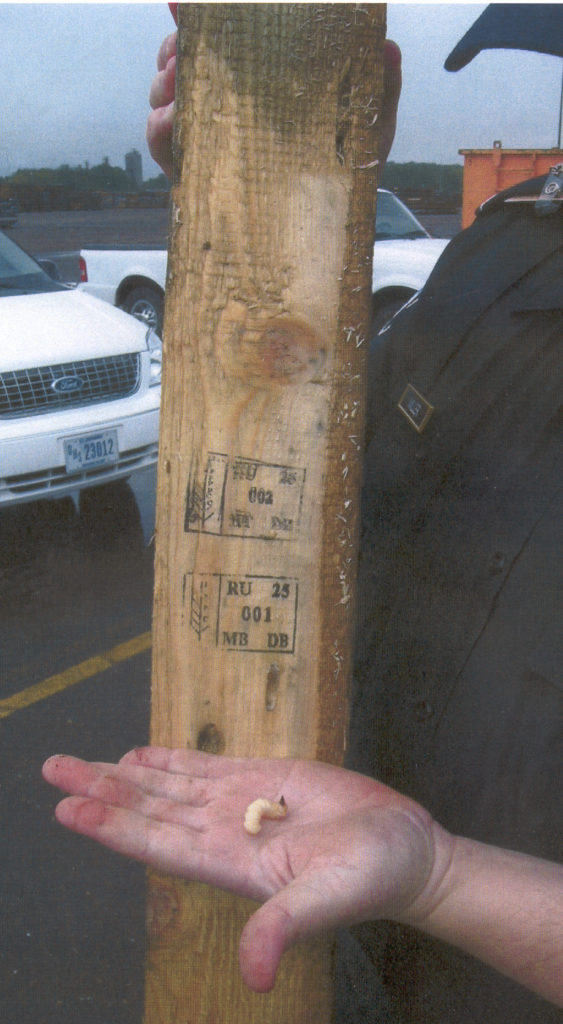
According to interception data provided to me by CBP (Harriger), 97% of pest-infested shipments detected over a period of 6 years (FYs 2010 – 2015) bore the stamp indicating they’d been treated in compliance with ISPM#15. These shipments came from all importing countries. Unfortunately, CBP has not provided the necessary breakdown of its data in more recent years to calculate this proportion.
Krishnankutty et al. (2020b) analyzed wood packaging from 42 countries intercepted by CBP over six years (April 2012 – January 2018). They found that 87% of the infested wood packaging included in this study bore the ISPM mark. This is a lower non-compliance rate than that shown by CBP data, but still too high.
European scientists carried out an intensive survey of wood packaging associated with shipments of stone from China to the 28 European Union countries during 2013-2016. They also found that 97.5% of consignments that harbored pests bore the ISPM#15 mark (Eyre et al. 2018). The problem did not decrease over time.
The possible causes of this problem are long-known. What effort is APHIS making to determine their relative importance? Is it fraud? Is it accidental misapplication of the treatments? Is it that the treatments do not work as well as necessary?
By comparing Haack’s estimate with the CBP data, I estimate that CBP is detecting and halting the importation of 4 – 8% of the shipments that actually contain pest-infested wood. Wu et al. (2020) concurred that the majority of infesting larvae would probably not be intercepted – despite CBP’s best efforts – and would be transported to the cargo’s intended destinations.
Since CBP inspects only about 2% of incoming shipments, this detection rate demonstrates the value of CBP’s program to target likely violators. It deserves praise. But it is obviously too low a “catch” rate to provide an adequate level of protection for our forests. I do not believe that increasing the inspection workforce and effort will result in substantial improvement in this rate. Instead, we need action to curtail imports of wood packaging from countries and exporters with records of non-compliance.
What Federal Agencies Are Doing to Better Prevent Introductions
Other than CBP’s welcome newly rigorous enforcement policy, most actions have focused on educating exporters, importers, shippers, customs brokers, and exporting countries’ phytosanitary agencies.
Since upgrading its enforcement actions, CBP has expanded its long-standing educational efforts. APHIS co-sponsored workshops for agricultural agencies and exporters in Asia and the Americas earlier in the decade.
APHIS also planned to host international symposia on wood packaging issues as part of events recognizing 2020 as the International Year of Plant Health. These symposia have been postponed by travel and other restrictions arising from the coronavirus pandemic.
Posted by Faith Campbell
We welcome comments that supplement or correct factual information, suggest new approaches, or promote thoughtful consideration. We post comments that disagree with us — but not those we judge to be not civil or inflammatory.
For a detailed discussion of the policies and practices that have allowed these pests to enter and spread – and that do not promote effective restoration strategies – review the Fading Forests report at http://treeimprovement.utk.edu/FadingForests.htm
SOURCES
Aukema, J.E., B. Leung, K. Kovacs, C. Chivers, K. O. Britton, J. Englin, S.J. Frankel, R. G. Haight, T. P. Holmes, A. Liebhold, D.G. McCullough, B. Von Holle.. 2011. Economic Impacts of Non-Native Forest Insects in the Continental United States PLoS One September 2011 (Volume 6 Issue 9)
Eyre, D., R. Macarthur, R.A. Haack, Y. Lu, and H. Krehan. 2018. Variation in Inspection Efficacy by Member States of SWPM Entering EU. Journal of Economic Entomology, 111(2), 2018, 707–715)
Haack, R. A. 2006. Exotic bark- and wood-boring Coleoptera in the United States: recent establishments and interceptions. Can. J. For. Res. 36: 269–288.
Haack, R.A., F. Herard, J. Sun, J.J. Burgeon. 2009. Managing Invasive Populations of Asian Longhorned Beetle and Citrus Longhorned Beetle: A Worldwide Perspective. Annu. Rev. Entomol. 2010. 55:521-46.
Haack, R. A., K. O. Britton, E. G. Brockerhoff, J. F. Cavey, L. J. Garrett, M. Kimberley, F. Lowenstein, A. Nuding, L. J. Olson, J. Turner, and K. N. Vasilaky. 2014. Effectiveness of the international phytosanitary standard ISPM no. 15 on reducing wood borer infestation rates in wood packaging material entering the United States. Plos One 9:e96611.
Krishnankutty, S.M., K. Bigsby, J. Hastings, Y. Takeuchi, Y. Wu, S.W. Lingafelter, H. Nadel, S.W. Myers, and A.M. Ray. 2020a. Predicting Establishment Potential of an Invasive Wood-Boring Beetle, Trichoferus campestris (Coleoptera) in the United States. Annals of the Entomological Society of America, XX(X), 2020, 1–12
Krishnankutty, S., H. Nadel, A.M. Taylor, M.C. Wiemann, Y. Wu, S.W. Lingafelter, S.W. Myers, and A.M. Ray. 2020b. Identification of Tree Genera Used in the Construction of Solid Wood-Packaging Materials That Arrived at U.S. Ports Infested With Live Wood-Boring Insects. Commodity Treatment and Quarantine Entomology
Leung, B., M.R. Springborn, J.A. Turner, E.G. Brockerhoff. 2014. Pathway-level risk analysis: the net present value of an invasive species policy in the US. The Ecological Society of America. Frontiers of Ecology.org
Meissner, H., A. Lemay, C. Bertone, K. Schwartzburg, L. Ferguson, L. Newton. 2009. Evaluation of Pathways for Exotic Plant Pest Movement into and within the Greater Caribbean Region. Caribbean Invasive Species Working Group (CISWG) and USDA APHIS Plant Epidemiology and Risk Analysis Laboratory
Nadel, H. S. Meyers, J. Molongoski, Y. Wu, S. Lingafelter, A. Ray, S. Krishnankutty, A. Taylor. 2017. Identification of Port Interceptions in Wood Packing Material Cumulative Progress Report, April 2012 – June 2017
Oregon Department of Agriculture, Plant Protection & Conservation Programs. 2019. Annual Report 2019.
USDA APHIS interception database – pers. comm. January 2017.
Wu, Y., S.M. Krishnankutty, K.A. Vieira, B. Wang. 2020. Invasion of Trichoferus campestris (Coleoptera: Cerambycidae) into the United States characterized by high levels of genetic diversity and recurrent intros. Biological Invasions Volume 22, pages1309–1323(2020)
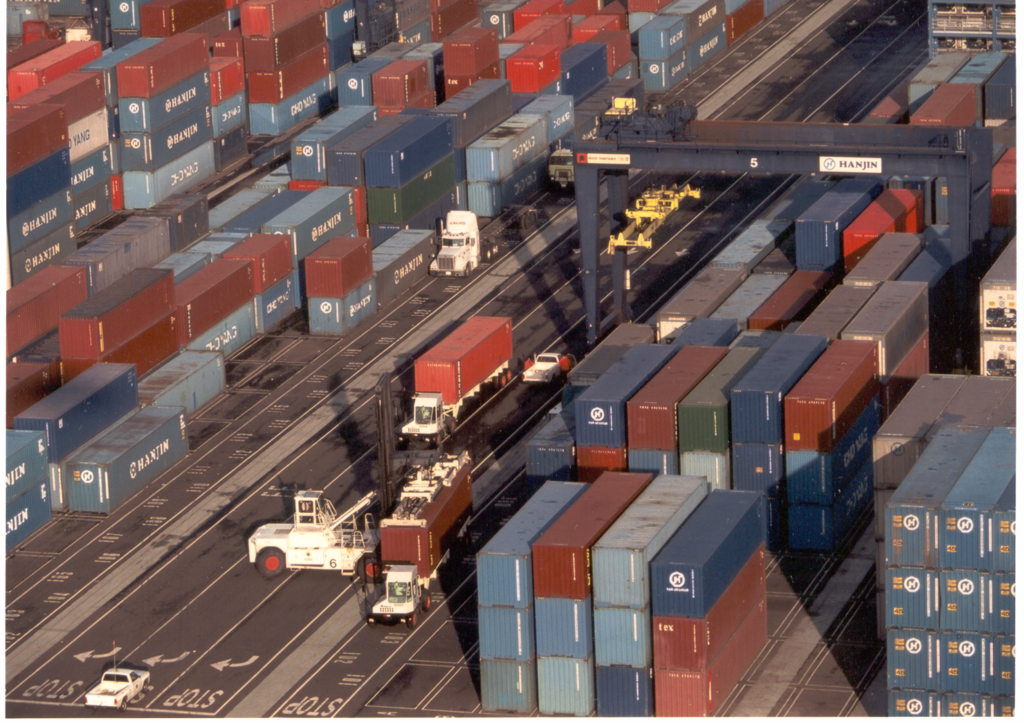
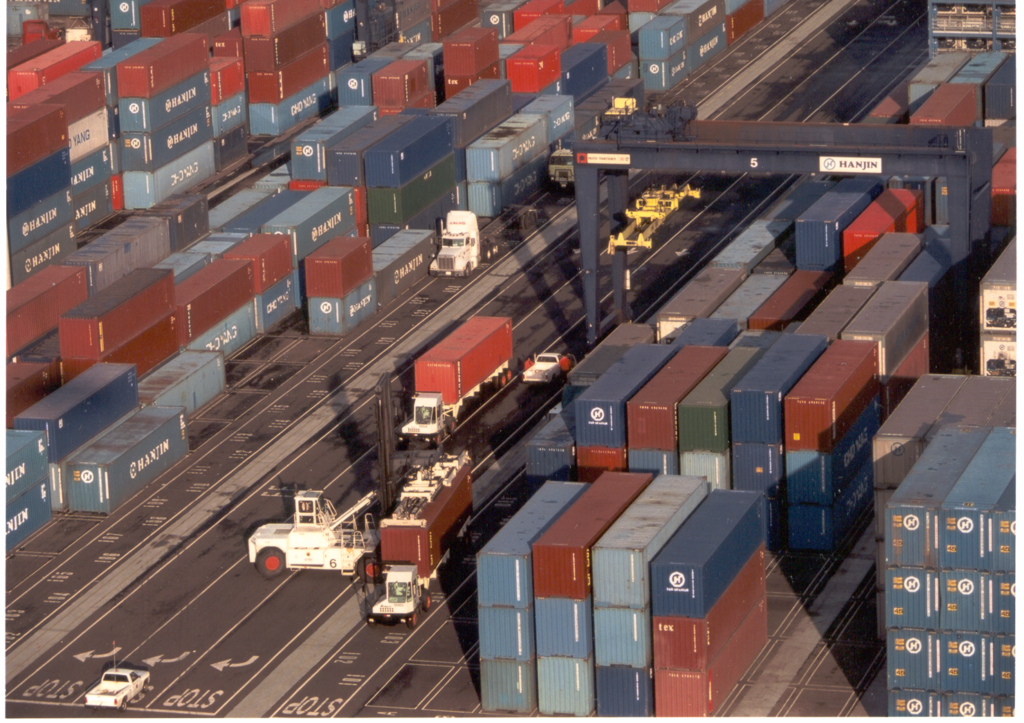
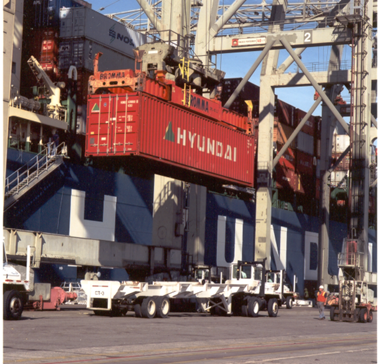
A shipping container being off-loaded in Long Beach
In 2018, China supplied 21.2% of all U.S. imports of goods. Import volumes had been rising rapidly: 427% since China joined WTO in 2001 (17 years!).
However, volumes of U.S. imports from China dropped significantly following imposition of tariffs in the second half of 2019. See a graph published in the Washington Post. U.S. Census Bureau data show U.S. imports from China declined 16% in 2019 compared to 2018 (from $539 billion to $452 billion). The Post graph shows imports from China have begun to rise again in 2020, although they are still far below levels in 2016-2018.
What might this imply for imports of pests?
2019 Imports from China
Heavy goods – are the ones most likely to be packaged in wooden crates or on wooden pallets that can transport pests. These include metal and stone products (including tile); machinery (such as automobile parts and farm equipment); electronics; bulk food shipments; and finished wood articles
Many goods imported from China are heavy so their packaging might facilitate pest invasions. Unfortunately, the various websites combine types of imports in different categories, so it is difficult to compare data from the various years. Worse, while I easily found data for 2019 and 2020, I could not find 2018 data (it must be there somewhere!). Still, six of the top eleven categories in 2019 appear to fall into the “heavy” categories.
Also, China is the third largest supplier of agricultural imports, primarily processed fruits and vegetables, including juices (together, about $1.5 billion), snack foods ($222 million), spices ($167) million, and fresh vegetables ($160 million).
Trade from Hong Kong is reported separately, but it is not a significant amount – $6.3 billion in 2018; and is declining. Electrical machinery is the largest category, at $980 million.
2020 Imports from China
Import volumes declined substantially during the first five months of 2020, compared to the same period in 2019:
Cell phones & related equipment fell 18.53%
Computers fell 4.86%
Miscellaneous textile rose 300%
Motor vehicle parts fell 26%
Seats excluding medical and dental fell 32.5%
The principal sea ports receiving goods from China during the period January – May 2020 were
Los Angeles $35.27 billion – fell 31.9%
Long Beach $10.61 billion – fell 22%
Newark $9.21 billion – fell 28%
Savannah $8.38 billion
Oakland $4.94 billion
Houston $4.29 billion
Pest Implications
These reduced volume of imports would seem to promise a reduced pest risk. Other factors point in the same direction.
Mode of transport is also significant, that is, air freight versus sea or land transport. In the first five months of 2020, https://ustr.gov/countries-regions/china-mongolia-taiwan/peoples-republic-china a quarter of U.S. imports from China, or $36 billion, entered through just four airports: Chicago’s O’Hare, Los Angeles, Anchorage, and JFK in New York. It is also encouraging that the volumes shipped by air apparently rose. The data show that at O’Hare imports rose 8.4%; at Los Angeles they rose 22%. The website does not provide data for Anchorage or New York. This could be a temporary fluke, for example, if importers were trying to acquire supplies quickly, before new tariffs took effect.
A larger proportion of goods shipped by air might result in a lower approach rate for wood-boring insects, since airborne goods are probably less likely to be packaged in wood. More than a decade ago, Meissner et al. (2009) found that only a third of air shipments (from all countries) were packaged in wood, compared to three-quarters of maritime shipments. I wonder if this is the reason that they found that shipments from China were only half as likely to be enclosed in wood packaging as were shipments from other exporting countries.
Even if China is cutting its imports in quantity, significant problems with quality persist. China consistently ranks second (to Mexico) in the number of shipments containing wood packaging that does not comply with international and U.S. regulations. Over the period 2011-2016, shipments from China constituted 11% of shipments detected by the Bureau of Customs and Border Protection as non-compliant (APHIS database / pers. comm).
So the pest risk persists. Remember that in 1986 – about the time the Asian longhorned beetle and the emerald ash borer were introduced from China – the U.S. imported only $3.8 billion worth of goods from that country. Of course, the U.S. did not require treatment of wood packaging from China until January 1999. My previous blogs have frequently documented the continuing presence of pests in wood packaging from China. To see the series, visit www.nivemnic.us, scroll down below archives to “categories”, click on “wood packaging”.
goldspotted oak borer
Because Mexico has an even worse record of compliance with wood packaging regulations than does China, it is good news that U.S. imports from there fell even more precipitously (see graph here). Pests that might be introduced in wood from Mexico generally pose less of a risk, but the risk is not zero! Three woodborers from Mexico – goldspotted oak borer, soapberry borer, and walnut twig beetle – have proved lethal to naïve species growing in the U.S. Each is described here.
Conclusion
Although the presumably temporary collapse of global trade might provide a respite from pest introductions, it is not a long-term strategy. Furthermore, resulting decreases in user fees will reduce the CBP’s inspection staff. I call again for revision of the international phytosanitary system to focus on preventing the movement of plant pests. The designation of 2020 as the International Year of Plant Health means now is the appropriate time to initiate such action.
Posted by Faith Campbell
We welcome comments that supplement or correct factual information, suggest new approaches, or promote thoughtful consideration. We post comments that disagree with us — but not those we judge to be not civil or inflammatory.
For a detailed discussion of the policies and practices that have allowed these pests to enter and spread – and that do not promote effective restoration strategies – review the Fading Forests report at http://treeimprovement.utk.edu/FadingForests.htm
SOURCES
Haack, R.A., F. Herard, and J. Sun, and J.J. Turgeon. 2010. Managing Invasive populations of Asian longhorned beetle and citrus longhorned beetle: a worldwide perspective. Annual Review of Entomology 55: 521-546.
Meissner, H., A. Lemay, C. Bertone, K. Schwartzburg, L. Ferguson, L. Newton. 2009. Evaluation of Pathways for Exotic Plant Pest Movement into and within the Greater Caribbean Region. Caribbean Invasive Species Working Group (CISWG) and USDA APHIS Plant Epidemiology and Risk Analysis Laboratory
Ash forest in Michigan killed by emerald ash borer photo by Nate Siegert
As I reported in December, the USDA Forest Service Forest Health Management program has been issuing reports on the status of pest invasions, based on annual national Insect and Disease Surveys (IDS). This survey is carried out by low-level aerial surveys of statistically valid geographic units. (For a discussion of quadrat establishment, see the Introduction to the 2019 report here.
Here I compare the pest situation as it appeared in two recent years, based on these surveys: 2017 and 2018.
Of course, two years is too short a time to see trends. The second report provides USFS scientists attempt to provide context by analyzing 20 years of data (Chapter 6 of the 2019 report).
These reports are important sources of data on the status of non-native pests in our forests, but I raise several caveats that necessitate our continuing to rely on additional sources, some of which I have cited in previous blogs. I will address these in greater detail below. But in brief, these caveats are:
1) Major pests – both in extent and damage caused – are not adequately included (see below).
2) The survey technique resulted in delays in detecting mortality. It cannot be used as an early detection tool.
3) There is little analysis of the statistics cited.
Why Stakeholders Cannot Rely on These Two Survey Reports Alone
I hope stakeholders, analysts, and decision-makers will utilize the full range of reports and other data to evaluate the presence and impacts of various invasive pests and pathogens. Even the reports’ authors advise decision-makers to use other forest health indicators in addition to this report. It is not the “fault” of the authors that these reports cannot serve all needs. However, we all need to be aware this caveat.
1. Important Pests Not Adequately Included.
Many of the most damaging non-native pests caused extensive damage before these surveys were initiated. These include white pine blister rust, chestnut blight, Dutch elm disease, butternut canker, Port-Orford cedar root disease, European gypsy moth, and balsam woolly adelgid on Fraser fir. [For further discussion, see pest write-ups here and my earlier blogs reviewing 30 years of engagement and survey data from Shenandoah National Park.]
2. Major Damaging Pests Are Poorly Captured by the Survey Method.Morin found that non-native pests had caused a five percent increase in mortality nation-wide – as measured by tree volume. Three of the species suffering the highest rates of this “exacerbated mortality” are redbay, ash, and hemlock. The current studies’ authors concede all three are poorly detected by the survey methods. The aerial survey techniques are ill-suited to detect mortality of tree species that grow scattered throughout a diverse forest. Other seriously damaging pests that are poorly detected by aerial surveys are Dutch elm disease, white pine blister rust, and thousand cankers disease. Again, see the species write-ups here to be reminded about how great the pest’s impact are. Also review my earlier blog reviewing 30 years of my engagement with the issue and survey data from Shenandoah National Park.
dead redbay in woods photo by F.T. Campbell
Given these caveats above, what do these studies show us?
Areas surveyed.
Since 1999, the annual Insect and Disease Survey (IDS) has covered on average 266,655,000 ha, although the area varied from a maximum of 320,712,000 ha (in 2007) to a minimum of 202,170,000 ha (in 2017), then increased to 211,34,000 ha in 2018. For reasons not clear to me, the proportion of forested area in the lower 48 states surveyed actually declined from 2017 to 2018 – from 55.1% to 46.6%. In Alaska, the 2017 surveys covered about 7.3% of the total forested area but 12.7% of the forested area in 2018. In Hawai`i, the survey covered about 80.1% of the forested area in 2017, but only 69.4% of the State’s total tree canopy area in 2018.
Tree-Killing Insects and Pathogens Found.
The 2017 survey identified 63 mortality-causing agents and complexes that cumulatively affected 3.27 million ha in the lower 48 states – about 1.3% of the total 252 million ha of forested land in these states. Of these agents of tree mortality, 23 were detected killing trees on areas totaling larger than 5,000 ha each.
The 2018 survey identified seven fewer mortality-causing agents – only 56. These agents were detected on about 2.13 million ha across the lower 48 (slightly less than the combined land area of New Jersey and Rhode Island), or about 0.8% of the total forested area. Of the total, 22 agents were detected killing trees on areas totaling larger than 5,000 ha each.
The more recent report does not discuss these declines from the 2017 findings or whether they might be related to the smaller percentages of forested areas covered by the aerial survey in 2018.
In both 2017 and 2018, as well as in the 20-year trend analysis (Chapter 6 of the report published in 2020), overall mortality is greatest in the West due to the impact of several native western bark beetles. Overall mortality rates in other regions was considered low, despite severe impacts of some non-native species.
The 2017 survey found that the emerald ash borer (EAB) was the most widespread single agent, causing measurable tree mortality on 1.42 million ha. In 2018, the area of EAB damage was reduced by 76% — to just 338,000 ha. (Still, the latter figure represented 15.8% of the total area displaying mortality). These figures were probably underestimates – especially in areas outside North Central Region – because EAB is one of the pests poorly detected by the aerial survey technique – at least when ash are growing scattered in a diverse forest ecosystem. Although the USFS report doesn’t say so, this decline probably reflected the collapse of dead ash trees and reduction in numbers of still-alive but vulnerable ash trees as the EAB invasion wave matured.
The reports document a huge increase in mortality attributed to the sudden oak death pathogen between 2017 and 2018. (SOD is the only widespread non-native agent of mortality on the West coast.) The area affected increased nearly seven-fold – from 6,335 ha in the 2017 survey to 42,771 ha in the 2018 survey. This equated to causing mortality on 3.9% of the total Regional mortality area. This finding parallels finding reported by the California Oak Mortality Task Force. Note that SOD-related mortality was not detected by the aerial surveys until 2008 – 13 year or more after scientists working on the ground detected the presence of the then-unknown pathogen in the forests of California.
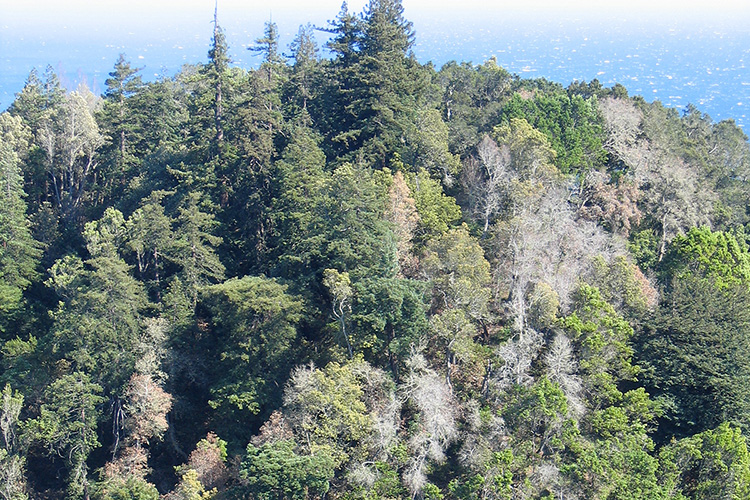
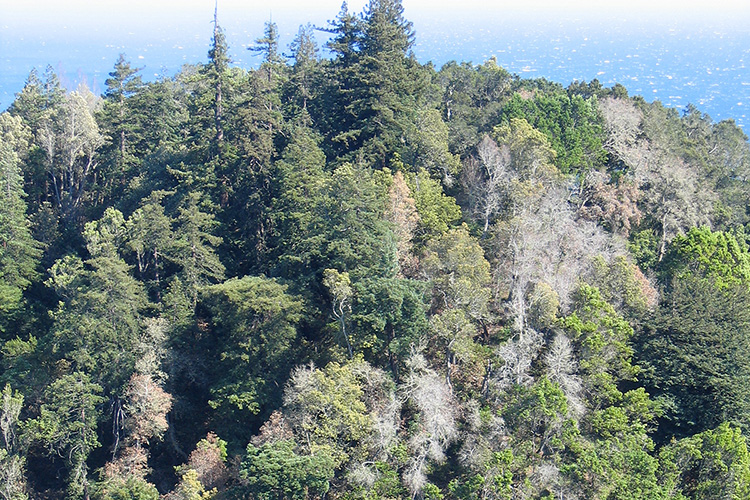
tanoak killed by Phytophthora ramorum on Big Sur peninsula photo by Matteo Garbelotto
Another alarming increase detected in 2018 was that of balsam woolly adelgid (BWA) in the Interior West. BWA-caused mortality was evident on 44,000 ha – 8.4% of the total area with mortality. BWA impacts were especially severe in central Idaho. There are several native pests in the same area. (See BWA write-up here.) BWA was first detected in Idaho in 1983 – 35 years earlier.
Geographic Hot Spots
The EAB caused the principal hot spots in the East. In the USFS North Central Region, 91% of the area suffering tree mortality in 2017 was attributed to the EAB. The EAB was also causing mortality across 10,346 ha (16% of the total areas suffering mortality) in the Northeast (especially Connecticut) and more than 5,000 ha in the South (especially Kentucky). (See my December blog for a discussion of the puzzling situation in several Great Plains ecoregions, where mortality was attributed largely to drought rather than either EAB or Dutch elm disease.)
Another mortality agent in the Northeastern Region was the European gypsy moth. In 2018, it was responsible for tree death on 31% of the total 70,000 ha affected area.
Another hot spot was in Hawai`i. In 2017, about 37,000 ha of mortality was detected. By 2018, the dead zone had increased to 46,000 ha – despite a 12% decrease in the area surveyed. In both years, the data collectors officially called the cause unknown. The reports’ authors stated that the probable cause was they rapid ‘ōhi‘a death fungi. (I ask why the surveyors did not state the cause since rapid ‘ōhi‘a death was identified on the Big Island in 2014.)
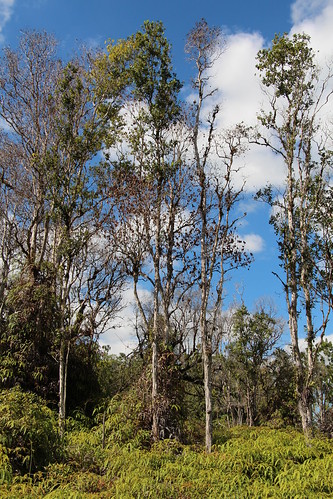
rapid ‘ōhi‘a death photo by J.B. Friday
Other non-native pests that affected more than 5,000 ha in the lower 48 states in 2017 were the BWA outbreak in the Northeast (20,758 ha, primarily in Maine); beech bark disease (12,222 ha, primarily in the North Central Region), and oak wilt (9,573 ha, primarily in the North Central Region and Texas).
In the Southern Region, mortality agents were detected on 1% or less of the forested area in 2017. In 2018, EAB-caused mortality was detected on 9.7% of the total 13,000 ha area experiencing mortality. An earlier gypsy moth outbreak had apparently calmed. I remind you that the report authors have conceded that laurel wilt and hemlock woolly adelgid are poorly detected by the survey technique.
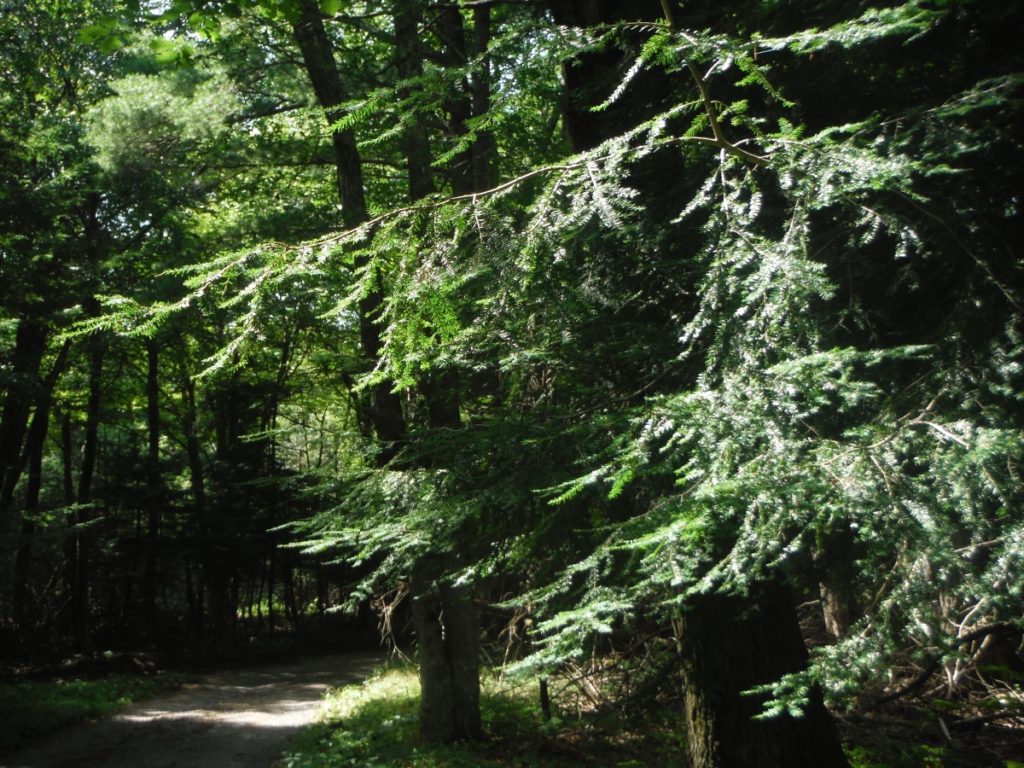
eastern hemlock in Shenandoah National Park (Virgina)
DEFOLIATORS
The 2017 survey detected defoliation caused by 50 agents and complexes across the lower 48. These impacted 2.3 million ha. The 2018 survey identified six more defoliation agents and complexes (56), but they affected a much smaller area – about 1.72 million ha.
Unsurprisingly, the most widespread was the European gypsy moth. The data demonstrated the gypsy moth’s boom/bust cycle. In 2017, gypsy moth impacts were detected on 39% of the total forested area of the lower 48 states (913,000 ha) in 2017. By 2018, the total area affected by the gyspy moth had fallen to 156,000 ha.
In both years, gypsy moth defoliation was particularly severe in the Northeast Region. In 2018, a second non-native species, browntail moth (Euproctis chrysorrhoea) was also causing severe defoliation in the region, primarily in Maine.
In the South, the European gypsy moth affected only 5.8% of the total area of defoliation; native defoliators predominated.
The report does not discuss the relationship between gypsy-moth caused defoliation and mortality. True, there must be repeated defoliations to cause tree mortality.
Other non-native defoliation agents affecting more than 5,000 ha in the lower 48 in 2017 were the larch casebearer (25,891 ha in the North Central Region and another 7,400 ha in the West Coast Region); and winter moth (12,760 ha in the Northeast Region). Is the decline of winter moth in 2018 data related to introduction of a biocontrol agent?
In 2018, the Larch casebearer (Coleophora laricella) continued to be a significant defoliator, affected 3.1% of the North Central Region’s total defoliated area. A new agent, the balsam woolly adelgid (BWA), was detected defoliating firs in the West Coast Region. The affected area was 15,000 ha – 5% of the total affected area Again, there was no discussion of as to whether defoliation precedes mortality. Admittedly, the progression of BWA damage in firs is extremely complicated.
Alaskan forests suffered widespread defoliation, mostly by native species. The survey detected an unknown canker on quaking aspen (Populus tremuloides).
Twenty Years of Data: Trends
In addition to reporting on the 2018 survey, the more recent report contains an analysis (in Chapter 6) of data over 20 years. The analysis is intended to be used in analyses required under the Resource Protection Act (RPA). The RPA analysis uses the same set of Insect and Disease Survey data, although it groups them in four rather than five regions.
The authors grouped the annual data into four five-year windows (1996-2001; 2002-2006; 2007–2011; 2012-2016).
An overview comprising all mortality agents across the nation found a major “spurt” in area exposed to mortality-causing agents in 2002-2006. The 14.2 million ha was 4.5 times greater than the 3.1 million ha affected in the preceding 1997-2001 period. This was attributed, in part, to a sampling change. The mortality footprint fell slowly in later periods – to 9.9 million ha in 2007-2011 and 6.9 million ha in 2012-2016. Other than during the 2002-2006 period, mortality was relatively low in the Northern Region – despite EAB – especially when compared to high mortality in the Rocky Mountain and Pacific Coast Regions attributed to bark beetles.
The mortality area attributed to pathogens was also highest in 2002-2006. This was due to three pests: a root diseases-bark beetle complex killing subalpine fir, oak wilt, and beech bark disease.
Very little disease mortality was reported in the South during any of the five-year periods – an alarming failure given damage to redbay by laurel wilt. The lapse is more confusing because past IDS reports have listed redbay as heavily damaged (see USDA FS FHTET 2014).
The Pacific states saw a modest increase over time. The sudden oak death infestation was first detected by the IDS survey in 2008 – approximately 13years after it was detected on the ground.
Over the 20 years, non-native species caused mortality on an average of 500,000 ha in each five-year period except 2002-2006 (described above). The proportion of the total mortality footprint associated with non-native species was14.8% in 1997-2001, 34.4% in 2002-2006, 3.6% in 2007-2011 & 7.4% in 2012-2016.
Only in the Northern Region was a large proportion of the mortality footprint consistently attributed to non-native species – 35.1% in 1997-2011 to 98.5% in 2002-2006. The suite of species changed over time. In the first period (1997-2001), the principal species were beech bark disease, European gypsy moth, oak wilt, and hemlock woolly adelgid. During two periods – 2002-2006 and 2007-2011 – those present earlier were joined by BWA, EAB, and Dutch elm disease. By the final period – 2012-2016 – the principal agents were EAB and red pine scale.
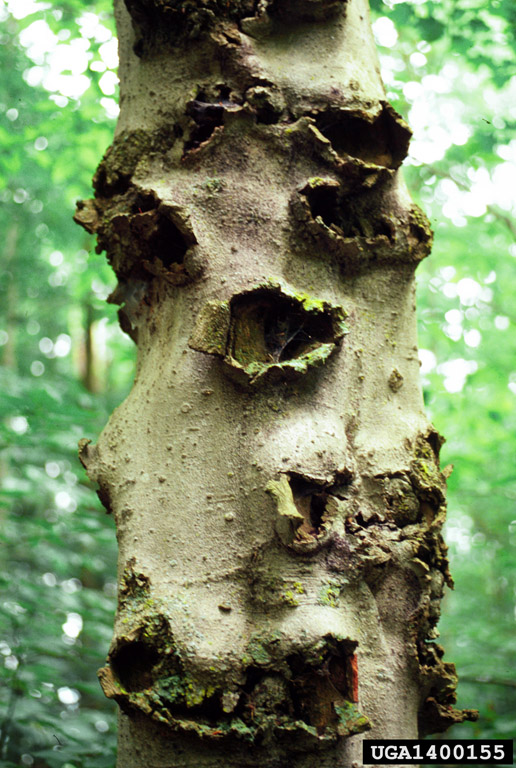
beech bark disease Photo by Linda Haugen courtesy of Bugwood
Non-native mortality agents detected in the South included hemlock woolly agelgid and oak wilt. HWA affected 71.8% of the affected area in 2006 – 2012, 21.9% in 2012-2016. EAB was first detected by the aerial survey in 2016.
In the two western regions, non-native agents had low footprints. The highest impacts were associated with BWA and white pine blister rust in the Rocky Mountain Region, Port-Orford cedar root disease and SOD in the Pacific Region, with the addition of BWA in some years and ROD in 2015 and 2016.
Generally, woodborers have caused the highest mortality levels, seconded by pathogens. Only in the 2002-2006 period did another insect feeding guild exceed 10% of total mortality area – when BWA (a sap feeder) reached 18.7% of detected mortality – on balsam fir in Maine.
In the Western regions, the disease white pine blister rust was second to the subalpine fir mortality complex. Even this ranking fails to reflect widespread mortality of lower-elevation five-needle pines in previous decades.
In the Northern Region, a disease – beech bark disease – was most important in the first five-year period. It was replaced by a wood-boring beetle – EAB. I have noted the importance of the BWA (a sap-feeder) infestation during 2002-2006.
In the Southern Region, native bark beetles usually predominated. There were outbreaks of the foliage-feeding European gypsy moth in2007-2011 and hemlock woolly adelgid (sap-feeder) in 2012-2016.
The authors of the report note that the South might be underrepresented for several reasons – but without mentioning the severe impacts on the understory trees redbay and more recently sassafras.
SOURCES
Bailey, R.G.. 1995. Descriptions of the ecoregions of the United States. 2d ed. Miscellaneous Publication No. 1391. Washington, D.C.: U.S. Department of Agriculture Forest Service. 108 p.
Fei, S., R.S. Morin, C.M. Oswalt, and A.M. 2019. Biomass losses resulting from insect and disease invasions in United States forests
Guo, Q., S. Feib, K.M. Potter, A.M. Liebhold, and J. Wenf. 2019. Tree diversity regulates forest pest invasion. PNAS. www.pnas.org/cgi/doi/10.1073/pnas.1821039116
Morin, R.S., K.W. Gottschalk, M.E. Ostry, A.M. Liebhold. 2018. Regional patterns of declining butternut (Juglans cinerea L.) suggest site characteristics for restoration. Ecology and Evolution.2018;8:546-559
Morin, R. A. Liebhold, S. Pugh, and S. Fie. 2019. Current Status of Hosts and Future Risk of EAB Across the Range of Ash: Online Tools for Broad-Scale Impact Assessment. Presentation at the 81st Northeastern Forest Pest Council, West Chester, PA, March 14, 2019
Potter, K.M., B.S. Crane, W.W. Hargrove. 2017. A US national prioritization framework for tree species vulnerability to climate change. New Forests (2017) 48:275–300 DOI 10.1007/s11056-017-9569-5
Potter, K.M., M.E. Escanferla, R.M. Jetton, and G. Man. 2019a. Important Insect and Disease Threats to United States Tree Species and Geographic Patterns of Their Potential Impacts. Forests. 2019 10 304.
Potter, K.M., M.E. Escanferla, R.M. Jetton, G. Man, and B.S. Crane. 2019b. Prioritizing the conservation needs of United States tree species: Evaluating vulnerability to forest insect and disease threats. Global Ecology and Conservation. (2019)
USDA Forest Service. Forest Health Monitoring: National Status, Trends, and Analysis 2018. General Technical Report SRS-239. June 2019. Editors Kevin M. Potter Barbara L. Conkling
USDA Forest Service. Forest Health Technology Enterprise Team. 2014. 2013-2027 National Insect and Disease Forest Risk Assessment. FHTET-14-01
Posted by Faith Campbell
We welcome comments that supplement or correct factual information, suggest new approaches, or promote thoughtful consideration. We post comments that disagree with us — but not those we judge to be not civil or inflammatory.
For a detailed discussion of the policies and practices that have allowed these pests to enter and spread – and that do not promote effective restoration strategies – review the Fading Forests report at http://treeimprovement.utk.edu/FadingForests.htm
The U.N. Food and Agriculture Organization has declared 2020 to be the International Year of Plant Health. APHIS, U.N. FAO, and others planned celebratory events — most now postponed.
The designation prompts consideration of whether the current global phytosanitary system – created in 1995 – is succeeding in preventing movement of invasive plant pests and invasive plants. Join me in this evaluation!
I focus on evaluating the most widespread invasive pests killing trees – and the pathways on which they travel. Some of the most damaging tree pests, of course, were moved around the world decades ago. But too many have been transported after the modern plant health system was developed in the mid-20th Century with the adoption of the original International Plant Protection Convention (IPPC) in 1951.
Of course, this is also the period when trade volume exploded, resulting in new source countries, new products, and new technologies that facilitated newly rapid movement of goods and accompanying pests. See my earlier blog here and the book by Marc Levinson, The Box: How the Shipping Container Made the World Smaller and the World Economy Bigger. It iswell-documented that rising trade volumes, new trade connections, new products have and will continue to exacerbate unintended movement of species (Seebens et al., 2018).
The phytosanitary regime was massively revised in the mid-1990s through adoption of the World Trade Organization and the Agreement on Sanitary and Phytosanitary Standards (SPS Agreement). Two principal changes were to constrain individual countries’ freedom to establish their own phytosanitary regulations and to require evidence of risk rather than allowing action on the basis of “if in doubt, keep it out”. I have written a critique of the new system in Fading Forests II. See Chapter 3, available here.
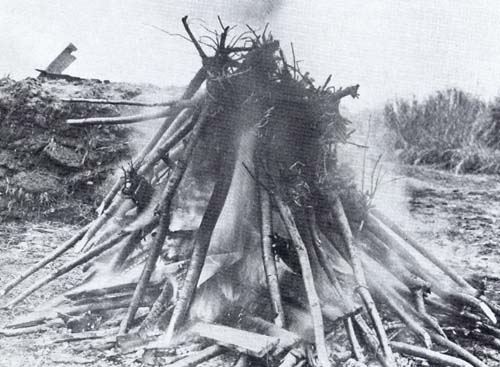
USDA officials burn infested cherry trees – gifts from Japan Washington, D.C. 1912
Has the new regime allowed spread of pests, as I predicted in my critique?
Of course, the explosion of global trade has made prevention of species introductions far more difficult. So the rising numbers of introductions cannot be blamed entirely on the SPS Agreement. Still, it is vital to review pest status in order to see whether the SPS Agreement is succeeding in protecting Earth’s flora. Here, I am looking at only one type of bioinvader. Many more types need to be evaluated, even among plants and plant pests. Nor do I pretend that my list is comprehensive even in the category I focus on – tree-killing insects, nematodes, and pathogens.
My definition of “global invader” is an insect, pathogen, or nematode that has been moved from its known or probable place of origin to at least two novel continents or widespread island groups.
Before the SPS Agreement
Of course, many highly damaging forest insects and pathogens spread widely before the eruption of global trade in the second half of the 20th Century. Examples include several pathogens:
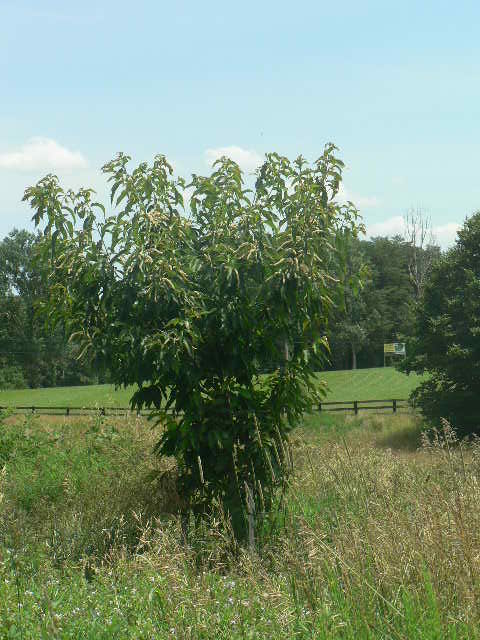
American chestnut bred to be resistant to blight photo by F.T. Campbell
Phytophthora cinnamomi – Europe, North America, Oceania, South America
Cryphonectria parasitica – Europe and North America; Oceania probably much later
Dutch elm disease causal agents Ophiostoma ulmi & novo-ulmi (the vectors are sometimes native insects) – Europe, North America, Oceania;
And some insects:
Hylastes ater – Oceania, South America, Africa
Scolytus multistriatus (Dutch elm disease vector) – North America 1909; later to Oceania; mid-20th Century to Africa
There have also been initial introductions of some organisms that would become “global” later:
Phytophthora lateralis – North America before 1950
During the period 1950 – 1995 –when trade began exploding and countries were adopting their own phytosanitary regulations as allowed under the original IPPC – the following pests were introduced “globally”:
P. ramorum in Big Sur, California photo by Matteo Garbelotto
Phytophthora ramorum was introduced from Southeast Asia to Europe and North America.
Hylurgus ligniperda – Oceania, South America, Africa, Asia after 1950; North America before 1995
Phoracantha recurva – detected in various geographies after 1995, but almost certainly introduced to North America, South America, Europe, Africa, and Oceania before that date
Palm pests – red palm weevil (Rhynchophorus ferrugineus) to most areas of the Old World and Oceania where palms grow; coconut rhinoceros beetle (Oryctes rhinoceros) around Africa, Mauritius, Reunion; Oceania;
Again, there were initial introductions of numerous insects in wood packaging and on “plants for planting” that would expand to “global” ranges after 1995:
Anoplophora glabripennis
To North America: Anoplophora glabripennis;, Agrilus planipennis; Austropuccinia psidii; Phoracantha recurve; Glycaspis brimblecombei
To Asia: Pine wood nematode Bursaphelenchus xylophilus
To Oceania, South America – Sirex noctillio;
After the SPS Agreement
There has been an apparent explosion of spread since adoption of SPS Agreement in 1995. No doubt these introductions were made possible by the concurrent explosion of trade volumes and more pest-friendly shipping practices (e.g., use of shipping containers and more rapid transportation). The principal vector appears to be plants for planting. About 50% of new plant pathogen invasions are associated with plants for planting (Jimu et al. 2016). Wood packaging is a strong second vector.
Tree-killing pests of which I am aware that have apparently spread globally after 1995 include:
Insects
Aulacaspis ysumatsui – North America, Caribbean, Pacific Ocean islands, Oceania, Africa, Europe, various islands off Southeast Asia that are probably outside original range
Erythrina humeana in the Manie van der Schijff Botanical Garden, Pretoria vulnerable to Euwallacea / Fusarium complex
Quadrastichus erythrinae – North America, Southeast Asia, islands in the Indian and Pacific oceans
Euwallacea fornicatus complex, esp. Euwallacea whitfordiodendrus and E. kuroshio and their Fusarium symbionts Fusarium euwallaceae, Graphium euwallaceae, & Paracremonium pembeum – North America, Africa
Several insects that attack Eucalyptus have been widely introduced to areas where plantations of these species have been planted, e.g.,
Blue gum chalcid wasp or eucalyptus gall wasp Leptocybe invasa – throughout Africa, the Middle East, Asia, the Pacific Region, Europe, South America, Mexico, and the United States [CABI]
Red gum lerp psyllid (Glycaspis brimblecombei) Europe 2009 [EPPO]
Eucalyptus snout beetles Gonipterus spp complex à two species introduced to five continents (Schroder et al. 2019).
Eucalyptus gall wasp(Ophelimus maskelli) – Mediterranean Region, the Middle East, South Africa, Europe, U.S., New Zealand [CABI]
Continued spread of species that had been introduced to a single new continent before 1995:
Pine wood nematode Bursaphelenchus xylophilus – to Europe
Phytophthora lateralis – to Europe and South America
Myrtle rust Austropuccinia psidii – to Pacific oceanic islands and Oceania
Anoplophora glabripennis and A. chinensis – to Europe
Sirex noctillio – to North America
Agrilus planipennis – to Russia and western Europe
Red palm weevil (Rhynchophorus ferrugineus) – to North America (California- eradicated)
Coconut rhinoceros beetle (Oryctes rhinoceros) – to Pacific islands, e.g., Guam and Hawai`i
I note that several studies have identified large numbers of introduced species in certain categories, although the dates of introduction are uncertain. Some were probably introduced before 1995. Here I cite the following:
Jung et al. (2015) found 59 putative Phytophthora taxa in forest and landscape planting sites in Europe; none had been detected by inspectors at the European Union borders.
Jimu et al. (2019) report global spread of Eucalyptus pathogens carried by the trade in seed and cuttings to support establishment of new plantations and breeding programs.
Numerous species of Phytophthora across North America – about 60 species in California native plant nurseries; eleven species in Minnesota (both from Swiecki et al. 2018); Parke et al. (2014) identified 28 Phytophthora taxa in four Oregon nurseries.
Nine species of Phytophthora associated in urban streetscapes, parks, gardens, and remnant native vegetation in urban settings in Western Australia (Barber et al. 2013).
So What’s the Bigger Picture?
I have blogged frequently about the weaknesses of the international standard governing wood packaging; go here.
Clearly the weaknesses of the international phytosanitary system are not limited to the wood packaging pathway. And I repeat that the phytosanitary system is under severe challenge by trade volumes and practices – at least before the Covid-19 pandemic. Still, it is clear that the international phytosanitary system has failed in achieving its purpose: to provide adequate protection in response to this challenge.
I have two suggestions:
1) I hope that the most affected countries will take actionper their authority under Section 5.7 of the SPS Agreement. This allows emergency action to prevent further introductions via the principal pathways and from the geographic origins posing the greatest threats (e.g., China for wood packaging, Southeast Asia for Phytophthorapathogens).
2) I hope further that all the nearly 200 countries that are parties to the SPS Agreement and the IPPC will rapidly institute an analysis of the current phytosanitary system to quickly identify amendments to the agreements that would better enable countries to protect their plants from non-native pests.
SOURCES
Barber, P.A., T. Paap, T.I. Burgess, W. Dunstan, G.E.St.J. Hardy. 2013. A diverse range of Phytophthora species are associated with dying urban trees. Urban Forestry & Urban Greening 12 (2013) 569-575
Jimu, L., M. Kemler, M.J. Wingfield, E. Mwenje, and J. Roux. 2016. The Eucalyptus stem canker pathogen Teratosphaeria zuluensis detected in seed samples. Forestry 2016 89 316-324 https://academic.oup.com/forestry/article/89/3/316/1749105
Levinson, M. The Box: How the Shipping Container Made the World Smaller and the World Economy Bigger Princeton University Press 2008
Schroder, M. Slippers, B., Wingfield, M.J., Hurley, B.P, Invasion history and management of Eucalyptus snout beetles in the Gopterus scutellatus species complex. 2019. Journal of Pest Science
Parke, J.L., B.J. Knaus, V.J. Fieland, C.Lewis, and N.J. Grünwald. 2014. Phytophthora Community Structure Analyses in Oregon Nurseries Inform Systems Approaches to Disease Management. Phytopathology Vol. 104, No 10.
Schroder, M. Slippers, B., Wingfield, M.J.,Hurley, B.P, Invasion history and managementof Eucalyptus snout beetles in the Gopterus scutellatus species complex. 2019. Journal of Pest Science
Seebens, H., T.M. Blackburn, E.E. Dyer, P. Genovesi, P.E. Hulme, J.M. Jeschke, S. Pagad, P. Pyse, M. van Kleunen, M. Winter, M. Ansong, M. Arianoutsou, S. Bacher, B. Blasius, E.G. Brockerhoff, G. Brundu, C. Capinha, C.E. Causton, L. Celesti-Grapow, W. Dawson, S. Dullinger, E.P. Economo, N. Fuentes, B. Guénard, H. Jäger, J. Kartesz, M. Kenis, I. Kühn, B. Lenzner, A.M. Liebhold, A. Mosen, D. Moser, W. Nentwig, M. Nishino, D. Pearman, J. Pergl, W. Rabitsch, J. Rojas-Sandoval, A. Roques, S. Rorke, S. Rossinelli, H.E. Roy, R. Scalera, S. Schindler, K. Stajerová, B. Tokarska-Guzik, K. Walker, D.F. Ward, T. Yamanaka, and F. Essl. 2018. Global rise in emerging alien species results from increased accessibility of new source pools. PNAS Plus. Available at http://www.nature.com/articles/ncomms14435
Swiecki, T.J., E.A. Bernhardt, and S.J. Frankel. 2018. Phytophthoraroot disease and the need for clean nursery stock in urban forests: Part 1 Phytophthora invasions in the urban forest and beyond. Western Arborist Fall 2018.
We welcome comments that supplement or correct factual information, suggest new approaches, or promote thoughtful consideration. We post comments that disagree with us — but not those we judge to be not civil or inflammatory.
For a detailed discussion of the policies and practices that have allowed these pests to enter and spread – and that do not promote effective restoration strategies – review the Fading Forests report at http://treeimprovement.utk.edu/FadingForests.htm