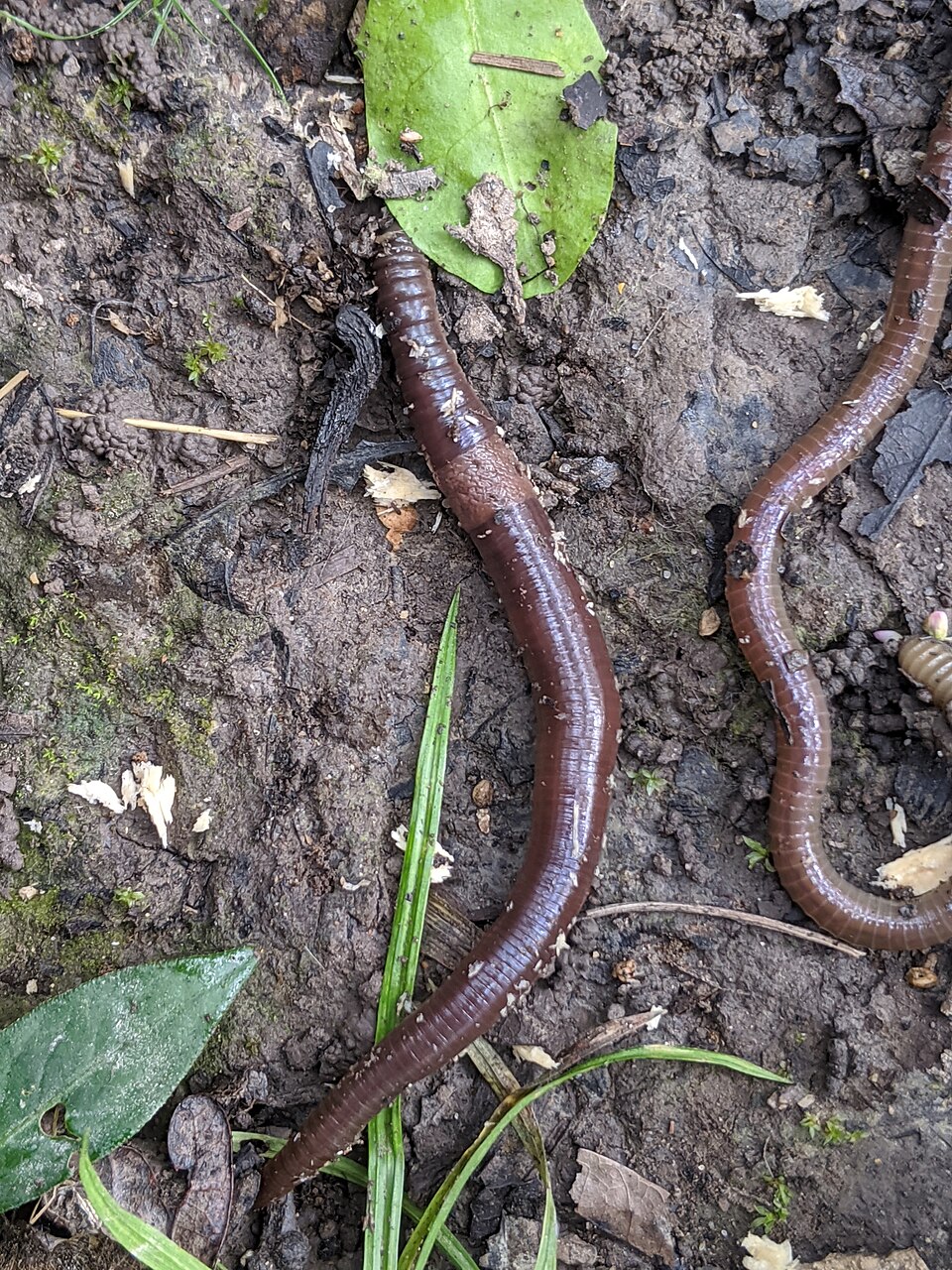
The University of Minnesota is seeking to learn the extent and impact of invasive Asian jumping worms (Amynthas spp.). Scientists fear that jumping worms will remove the naturally deep litter layer and create extremely loose soils that cannot be held by plant roots. These changes will expose soil on the state’s hillsides to erosion by human footsteps, rainfall, and water runoff. They worry about the future sustainability of forested hills in Minnesota.
The research project began in January 2024; it is funded at $430,000. The research seeks to answer the following questions:
- What is the magnitude and rate at which jumping worms accelerate soil erosion in forested hillslopes in Minnesota?
- What are the mechanisms of soil erosion by jumping worms in hardwood forests?
- What is the spatial extent of jumping worms in forested hillslopes?
- What species of native plants are capable of holding soils against jumping worms and could act as erosion-prevention?
- What management practices could help to reduce soil erosion induced by jumping worms in forested hillslopes?
The scientists are asking volunteers to actively look for jumping worms in the forests of southeastern Minnesota and report them to EDDMapS.
The scientists remind us that invasive European earthworms have already infested nearly all of the state’s forests, even in the remote Boundary Waters Wilderness. Forest soils and understory vegetation transformed, and invasive earthworm impacts are cascading through ecological and socio-economic processes. They expect the state to become divided into two distinct areas, each dominated by a different invasive earthworm group.
Posted by Faith Campbell
We welcome comments that supplement or correct factual information, suggest new approaches, or promote thoughtful consideration. We post comments that disagree with us — but not those we judge to be not civil or inflammatory.
For a detailed discussion of the policies and practices that have allowed these pests to enter and spread – and that do not promote effective restoration strategies – review the Fading Forests report at http://treeimprovement.utk.edu/FadingForests.htm
Or