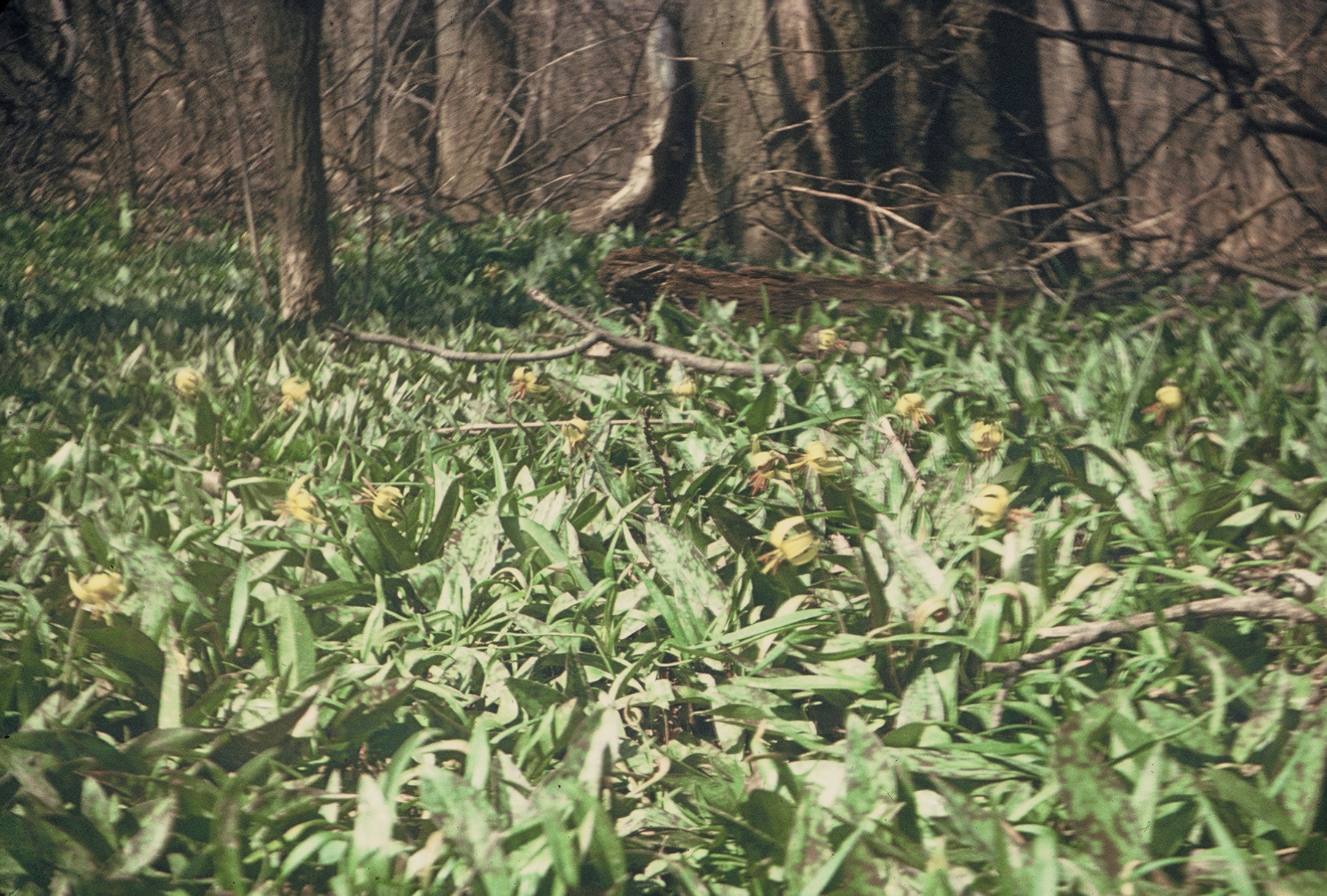
I fell in love with spring ephemerals in the woods of the Institute for Advanced Studies in Princeton. While the degree I was pursuing had no relationship to birding in the swamp, I spent a lot of time enjoying the woods. At that time, more than 50 years ago, the herbaceous layer was dominated by spring beauties (Claytonia virginica), trout lilies (Erythronium americanum), and violets (Viola species).
Beyond the beauty that delights us (or at least, me!), spring ephemerals are important ecologically. They support specialist pollinators and reduce nutrient losses at a time of year when vegetation cover is low and leaching and runoff rates high.
In the decades since I left Princeton, scientists and nature lovers have observed declines in native understory plant communities. These are predicted to continue due to invasion by plants and worms, worm blogs herbivore pressure by deer, E NPS blog, Blossey blog land use changes, and climate change.
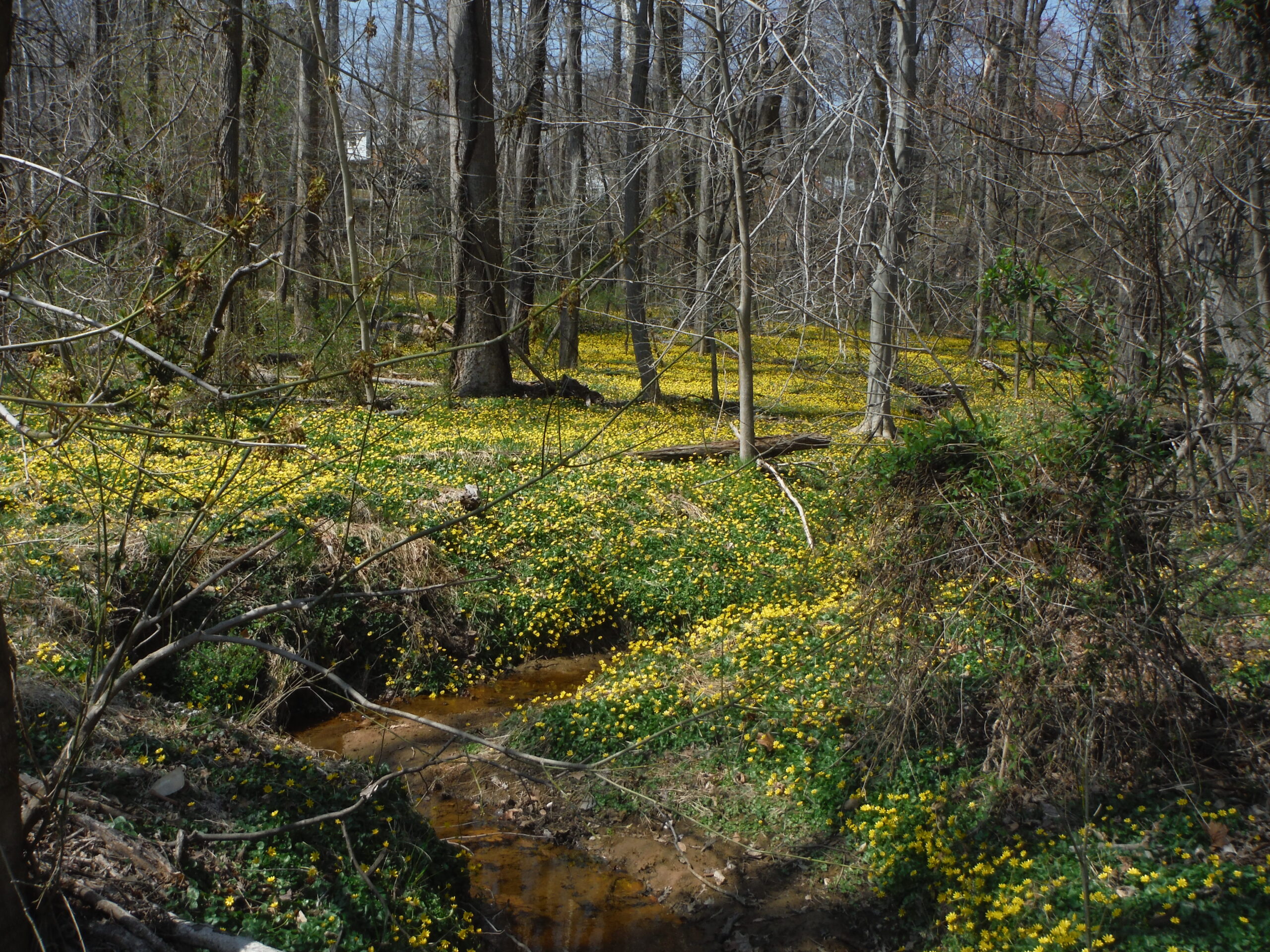
Where I live, in the suburbs of the District of Columbia, these forces are clear. The formerly glorious riparian forests where I walk are overrun by invasive plants. The herb layer is dominated by Japanese stiltgrass (Microstegium vimineum) and – increasingly — lesser celandine (Ficaria verna = Ranunculus ficaria). (I found it interesting that Ficaria began taking over floodplain forests only in the last decades of the 20th century, although it was introduced more than 100 years earlier.) Many invasive shrubs (Rosa multiflora, various Lonicera species. …) and vines (Ampelopsis sp, Orbiculatus, Lonicera japonica, Hedera helix …) compound the problem. While I am not sure whether most earthworms here are native or not, high deer populations certainly are a factor.
So I rejoice that scientists are studying how one taxon of spring ephemerals, trout lilies – Erythronium species – are coping with individual and combined threats. Gutiérrez and Hovick (full citation at the end of this blog) investigated how two species of Erythronium performed in the absence of a leaf litter layer – with and without competition by Ficaria. They chose to manipulate leaf litter as a proxy for impacts from invasive earthworms and non-native shrubs, especially those with rapidly decomposing leaves. They refer to others’ studies focused on different spring ephemerals.
Gutiérrez and Hovick found that the absence of leaf litter reduced asexual reproduction (corm biomass) in both Erythronium albidum and E. americanum species by 30%. That is, the absence of leaf litter alone reduced the native plants’ performance. This is alarming because persistent leaf litter has been reduced across much of the deciduous forests of eastern North America as a result of action by invasive earthworms and the rapid decomposition of the leaves of most invasive shrubs.
Trout lilies’ performance declined even more when litter absence was coupled with direct competition from Ficaria. Under those conditions, corm biomass declined by 50%. Impacts by lesser celandine occurred despite these plants’ being smaller than counterparts in nearby woodlands. The reduced size of Erythronium corms was sufficient, in their view, to reduce the likelihood that Erythronium would flower to nearly zero. This has clear implications for the long-term population viability of Erythronium andtheir specialist pollinators.
Gutiérrez and Hovick conclude restoration of these floodplain forests’ herb layer must incorporate management strategies that not only reduce Ficaria’s presence but also restore leaf litter.
Underlying Factors
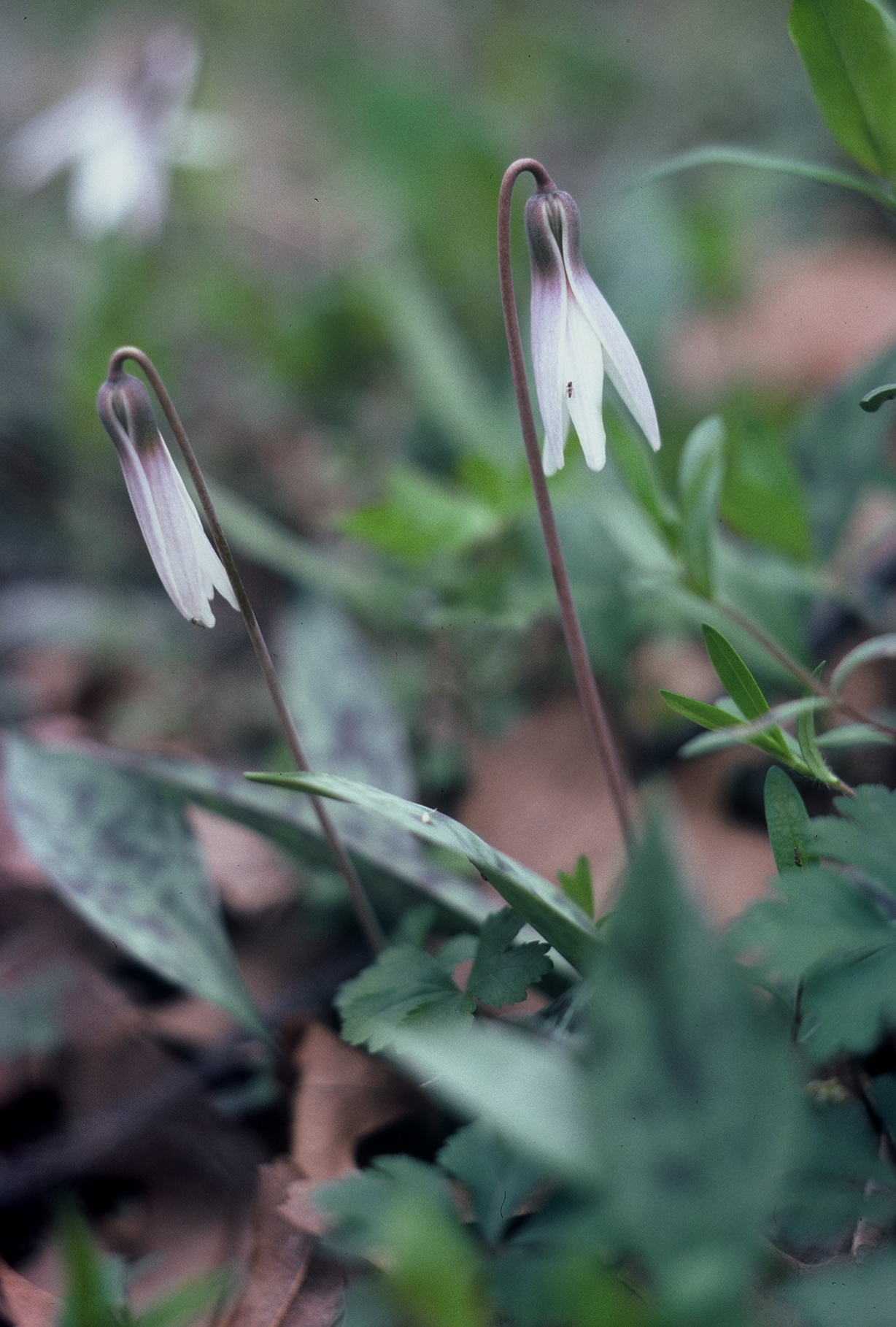
Native spring ephemerals in eastern North America evolved to emerge through litter layers in early spring. The litter layers impose both costs and benefits. In response to shading by leaf litter, Erythronium produces larger petioles compared to same-sized leaves, thus reducing the proportion of resources allocated to building photosynthetic tissue. In these cases, the corms that both perpetuate the individual and carry out asexual reproduction are smaller.
On the other hand, leaf litter increases moisture retention and reduces frost damage by buffering soil temperatures. While these results were seen in their experiment, Gutiérrez and Hovick believe the benefits are greater in nature than demonstrated in the study using potted plants. Leaf litter also increases nutrient availability, directly by increasing supply and indirectly by facilitating fine root growth. In this context, they note that their experiment used litter composed of just two tree species — red oak (Quercus rubra) and red maple (Acer rubrum). This narrow sample probably failed to capture the varied properties of other tree species’ litter and associated microbial activity.
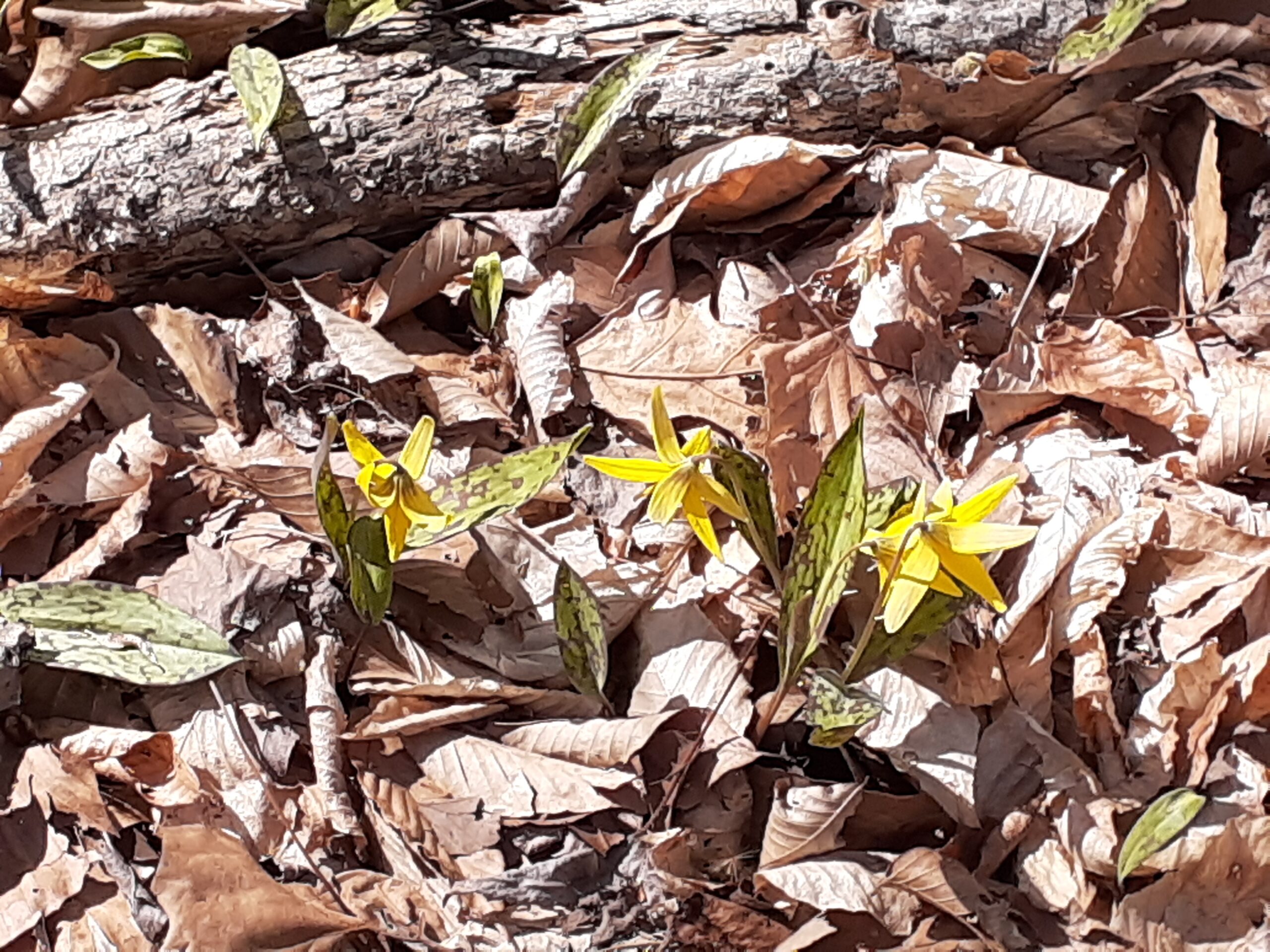
Plants in the Erythronium genus reproduce primarily asexually through producing runners that form corms. The parent corm and runners disintegrate before summer dormancy; the offspring corms persist. Some individuals do not reproduce asexually; they simply replenish their own corm.
The few previous studies give mixed results regarding lesser celandine’s impacts on co-occurring native herbaceous plants (see the summaries in Gutiérrez and Hovick). The authors do not explicitly say whether lesser celandine is usually associated with low litter levels, but that appears to be the implication. They do say that it is not clear whether lesser celandine drives leaf litter loss by altering soil physiochemistry and microbial activity. Or, rather, that it simply performs well when leaf litter is absent.
Where lesser celandine and Erythronium co-occur at high densities, the former’s biomass per square meter can be more than an order of magnitude higher than Erythronium. Gutiérrez and Hovick suggest that competition between the species is primarily belowground. They cite their finding that by the time Erythronium shoots matured, lesser celandine roots occupied most of the belowground pot volume. They expect belowground competition in forests to be even more pronounced because of accumulated lesser celandine root biomass.
Aboveground, the principal factor appears to be the necessity for trout lilies to grow longer petioles to raise their leaves above lesser celandine rosettes, perhaps starving leaf formation. Since leaves are the plant’s photosynthetic organ, this tradeoff could ultimately result in fewer resources returned to the corm for future growth and reproduction. Although Gutiérrez and Hovick also mention that lesser celandine competition might delay Erythronium emergence and flowering, they do not discuss that.
A factor not mentioned by Gutiérrez and Hovick is the probability that Ficaria verna is allelopathic. See the article by Kendra Cipollini listed as a source at the end if this blog.
Details of Impaired Performance of Erythronium
At the time of senescence, Erythronium plants grown in pots with leaf litter were nearly twice as large as those grown in bare soil conditions. One-third of their offspring corms grew to be larger than the putative biomass threshold for flowering. Only 9% of corms of plants grown in bare soil and 2% (one individual) of those grown with lesser celandine did. As noted above, corms developed by Erythronium grown in the presence of Ficaria actually lost biomass. This is the basis for their conclusion that there would be almost no sexual reproduction the following year where litter was absent and lesser celandine present.
Gutiérrez and Hovick think the principle mechanisms by which leaf litter affects performance of Erythronium plants is by buffering temperature ranges and increasing moisture retention. Indeed, they found that daily temperature ranges and maxima of soil in pots with bare soil or lesser celandine plants were both higher than temperatures under leaf litter. Reducing temperature maxima could be especially important with the increasing frequency and intensity of late-spring heatwaves associated with climate change. Absence of leaf litter advanced trout lily’s shoot emergence, flower emergence, and petal opening by 14 or more days.
This change might expose the plants to increased risk of frost damage. These dynamics will be system-specific, especially with complications added by climate change. However, Therefore, Gutiérrez and Hovick encourage future research to explore species-specific litter effects on spring ephemerals.
Broader Implications
Their findings regarding these two species of spring ephemerals prompt Gutiérrez and Hovick to assert that negative impacts from invasive plant species might be especially underestimated in spring ephemeral communities due to the combination of their short period of annual aboveground activity and tendency towards long lives. Changes might be very subtle over short timeframes.
They add that it is important to learn the role different conditions might play in the futures of related species. The two species’ ranges largely overlap, but E. americanum extends into the extreme southeast and northeast, E. albidum into the prairie states. Although these species’ respond to loss of leaf litter and lesser celandine invasions in similar ways, the fact that E. albidum occurs in areas of higher soil moisture makes it more vulnerable to negative population-level impacts from lesser celandine invasions.
Note about additional threats
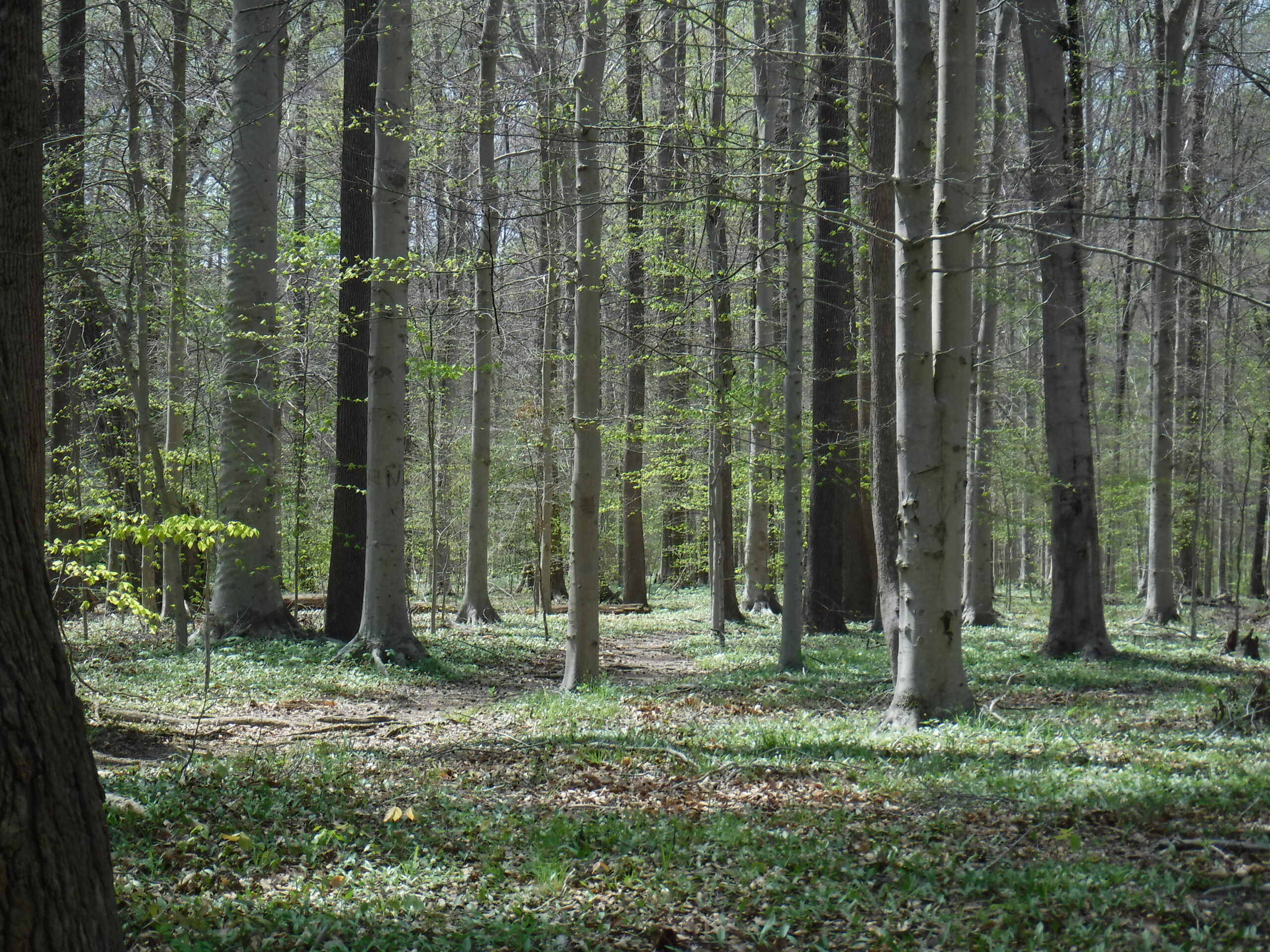
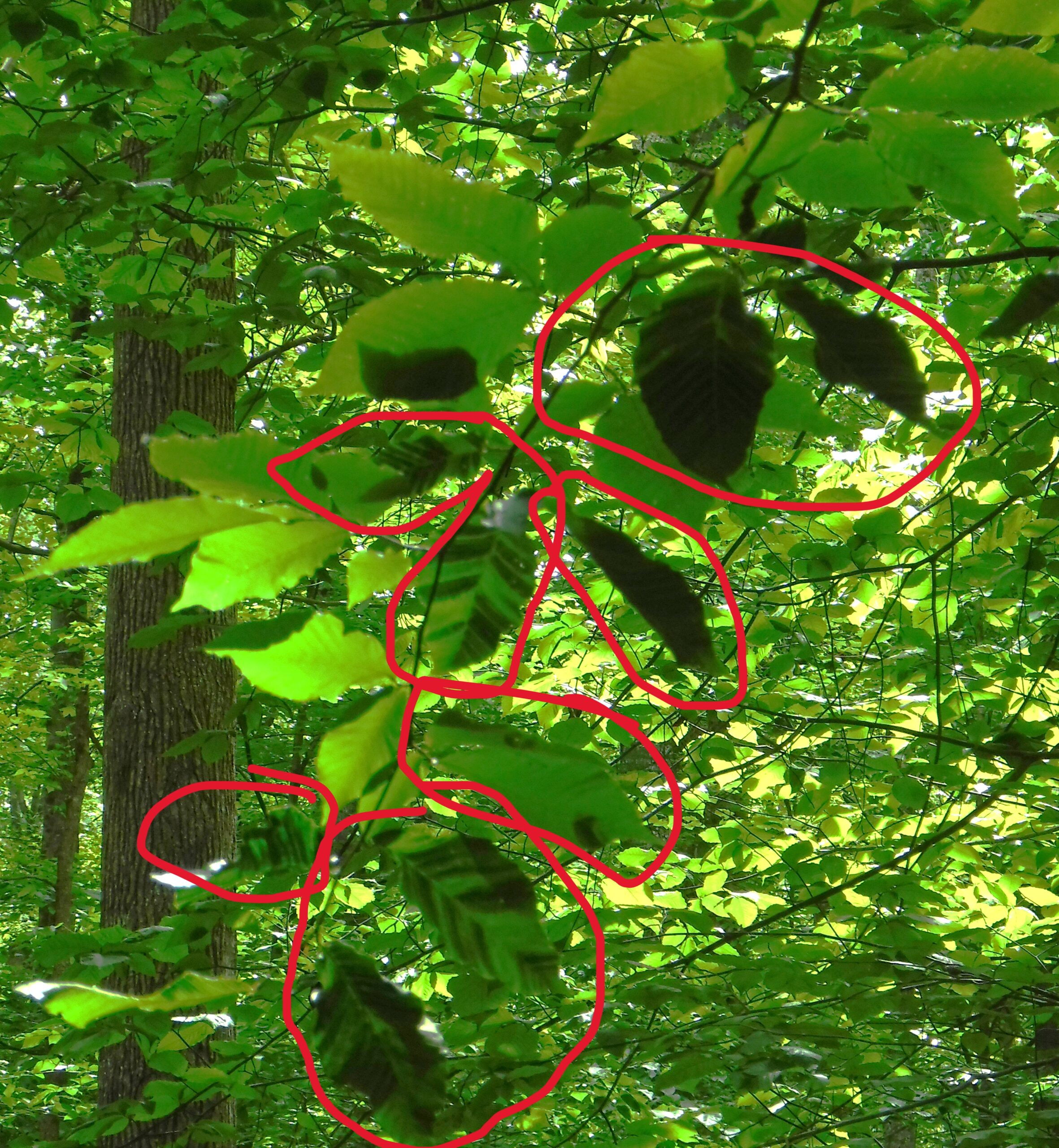
Most of the photos of Erythronium americanum in this blog were taken along a particular creek in Fairfax County, Virginia. Ficaria has just begun to invade this area (see photo above); deer are plentiful. These plants face another bioinvasion: beech leaf disease has arrived. Widespread mortality of the predominantly beech understory will presumably open areas to more light, probably spread of the extant invasive plants.
SOURCES
Cipollini, K. and K.D. Schradin. 2011. Guilty in the Court of Public Opinion: Testing Presumptive Impacts and Allelopathic Potential of Ranunculus ficaria”
Gutiérrez, R.G. and S.M. Hovick. 2025. Compounding negative effects of leaf litter absence and belowground competition from an invasive spring ephemeral on native spring ephemeral growth and reproduction. Biol Invasions (2025) 27:213 https://doi.org/10.1007/s10530-025-03668-4