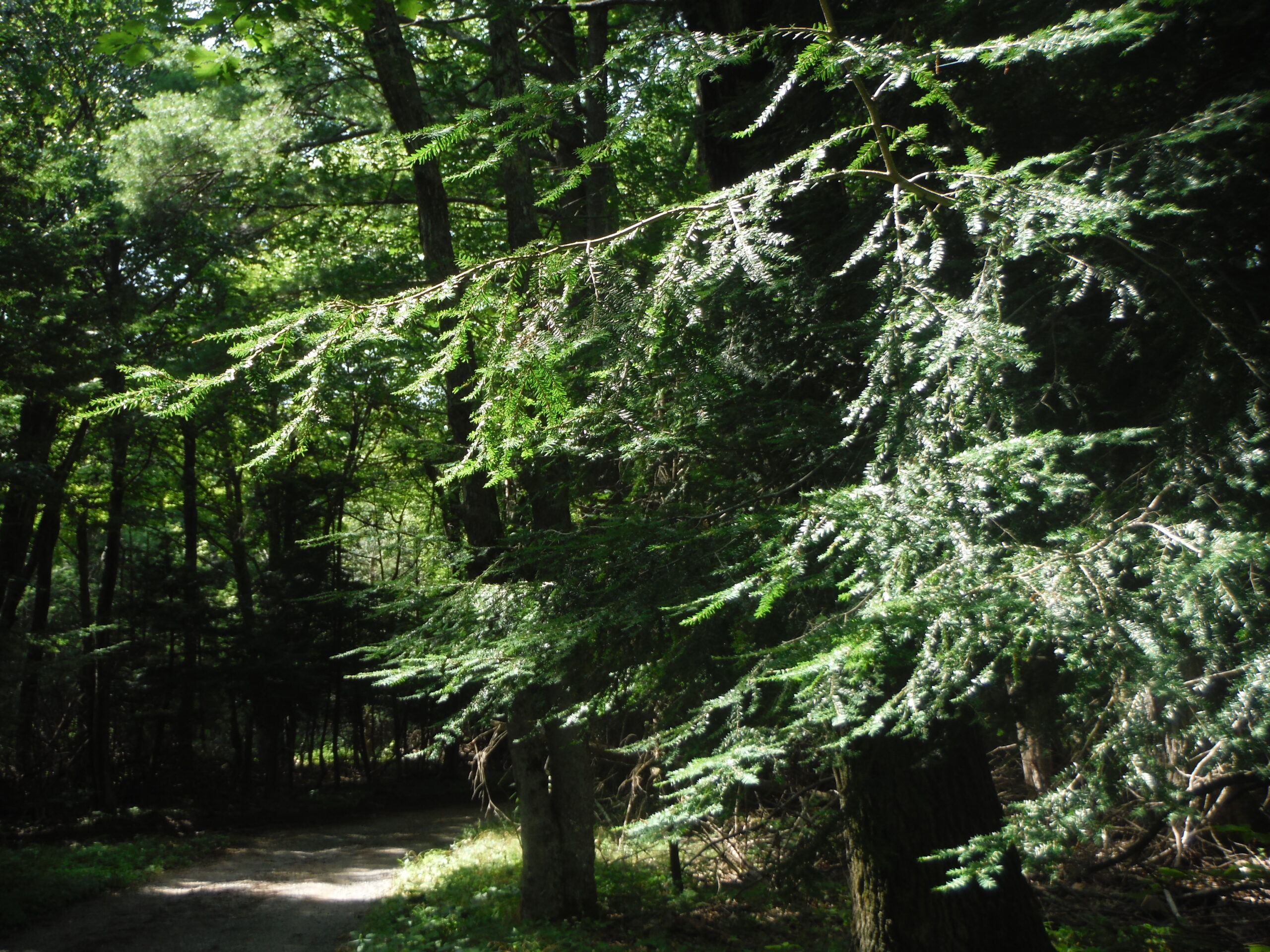
The Wildlife Society’s Invasive Species and the Forestry and Wildlife Working Groups are cosponsoring a workshop for the Lingering Hemlock Project. The workshop will be on Tuesday 28 April at 2:00 PM EDT.
The Lingering Hemlock Project is a subset of The Nature Conservancy’s “Tree Species in Peril” program. The project aims to locate and selectively breed eastern hemlocks with genetic resistance to the hemlock woolly adelgid (HWA).
Olivia Hall from the North Carolina Hemlock Restoration Initiative will share more about how natural areas can participate in the Lingering Hemlock Project. In the southeastern US, project partners can locate and record data on hemlocks that remain healthy despite HWA infestations. In the northeastern US, project partners can establish hemlock plots and monitor their health and decline annually.
Go here to learn more about the project & webinar, and find the link to join.
I have blogged about HWA often – although there is no simple method for finding the earlier blogs. In 2025 I posted 3 blogs – in March and one in August. If you need a reminder about HWA, visit TNC’s “don’t move firewood” website here.
Posted by Faith Campbell
We welcome comments that supplement or correct factual information, suggest new approaches, or promote thoughtful consideration. We post comments that disagree with us — but not those we judge to be not civil or inflammatory.
For a detailed discussion of the policies and practices that have allowed these pests to enter and spread – and that do not promote effective restoration strategies – review the Fading Forests report at http://treeimprovement.utk.edu/FadingForests.htm
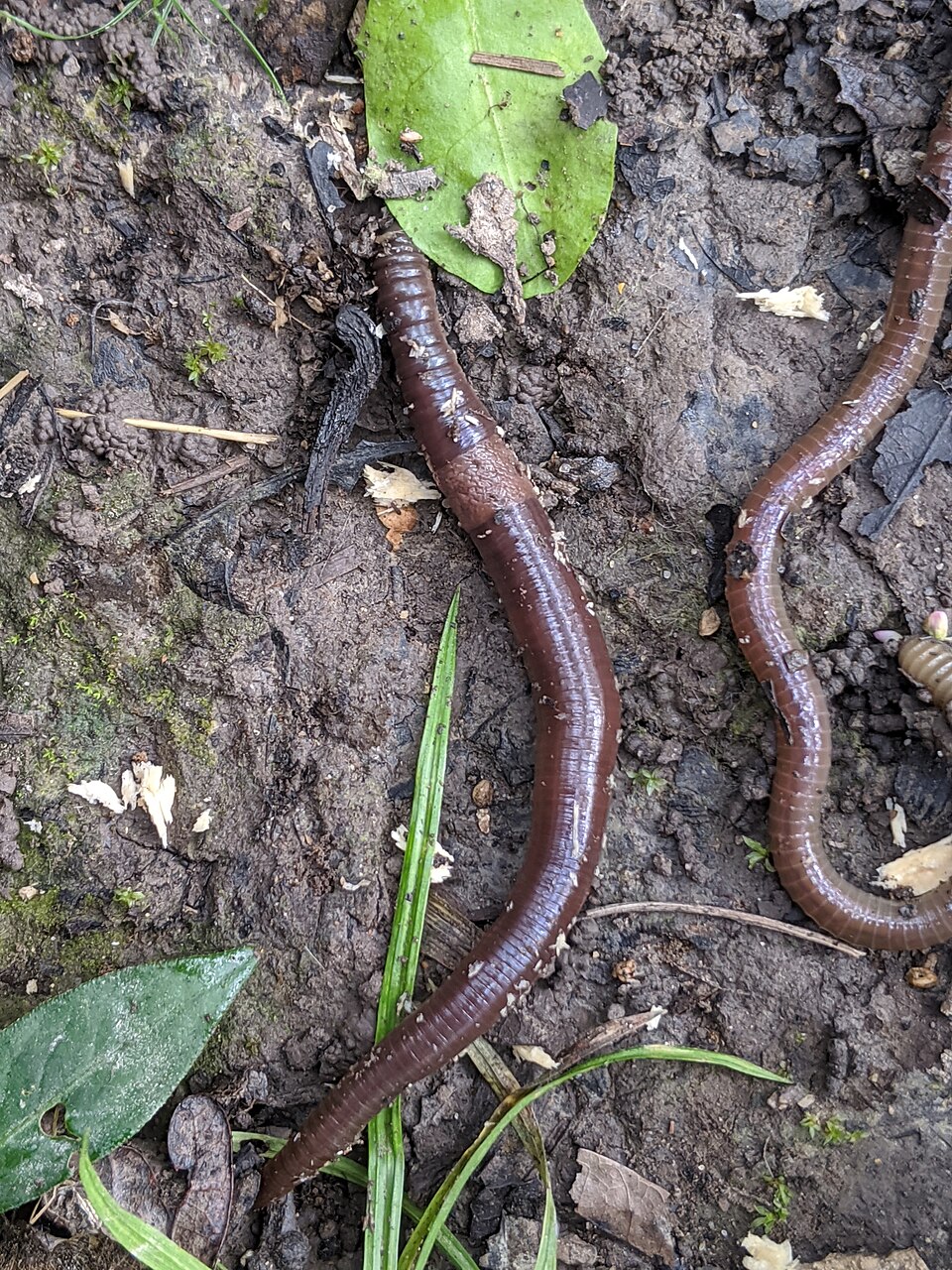
Amynthas agrestis; photo by John Abrams via Wikimedia
The University of Minnesota is seeking to learn the extent and impact of invasive Asian jumping worms (Amynthas spp.). Scientists fear that jumping worms will remove the naturally deep litter layer and create extremely loose soils that cannot be held by plant roots. These changes will expose soil on the state’s hillsides to erosion by human footsteps, rainfall, and water runoff. They worry about the future sustainability of forested hills in Minnesota.
The research project began in January 2024; it is funded at $430,000. The research seeks to answer the following questions:
What is the magnitude and rate at which jumping worms accelerate soil erosion in forested hillslopes in Minnesota?
What are the mechanisms of soil erosion by jumping worms in hardwood forests?
What is the spatial extent of jumping worms in forested hillslopes?
What species of native plants are capable of holding soils against jumping worms and could act as erosion-prevention?
What management practices could help to reduce soil erosion induced by jumping worms in forested hillslopes?
The scientists are asking volunteers to actively look for jumping worms in the forests of southeastern Minnesota and report them to EDDMapS.
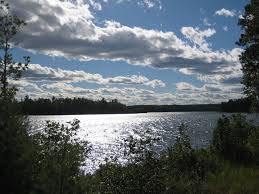
Boundary Water Canoe Area; photo by Chad Fennell via Wikimedia
The scientists remind us that invasive European earthworms have already infested nearly all of the state’s forests, even in the remote Boundary Waters Wilderness. Forest soils and understory vegetation transformed, and invasive earthworm impacts are cascading through ecological and socio-economic processes. They expect the state to become divided into two distinct areas, each dominated by a different invasive earthworm group.
Posted by Faith Campbell
We welcome comments that supplement or correct factual information, suggest new approaches, or promote thoughtful consideration. We post comments that disagree with us — but not those we judge to be not civil or inflammatory.
For a detailed discussion of the policies and practices that have allowed these pests to enter and spread – and that do not promote effective restoration strategies – review the Fading Forests report at http://treeimprovement.utk.edu/FadingForests.htm
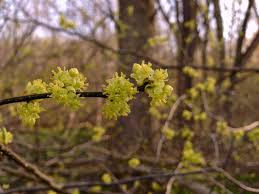
Lindera benzoin; photo by Fritzflohrreynolds via Wikimedia
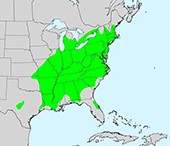
Scientists in Ohio and other states are trying to determine what is causing dieback of the native shrub northern or common spicebush (Lindera benzoin). The shrub occurs throughout much of the eastern United States and neighboring parts of Ontario, Canada.
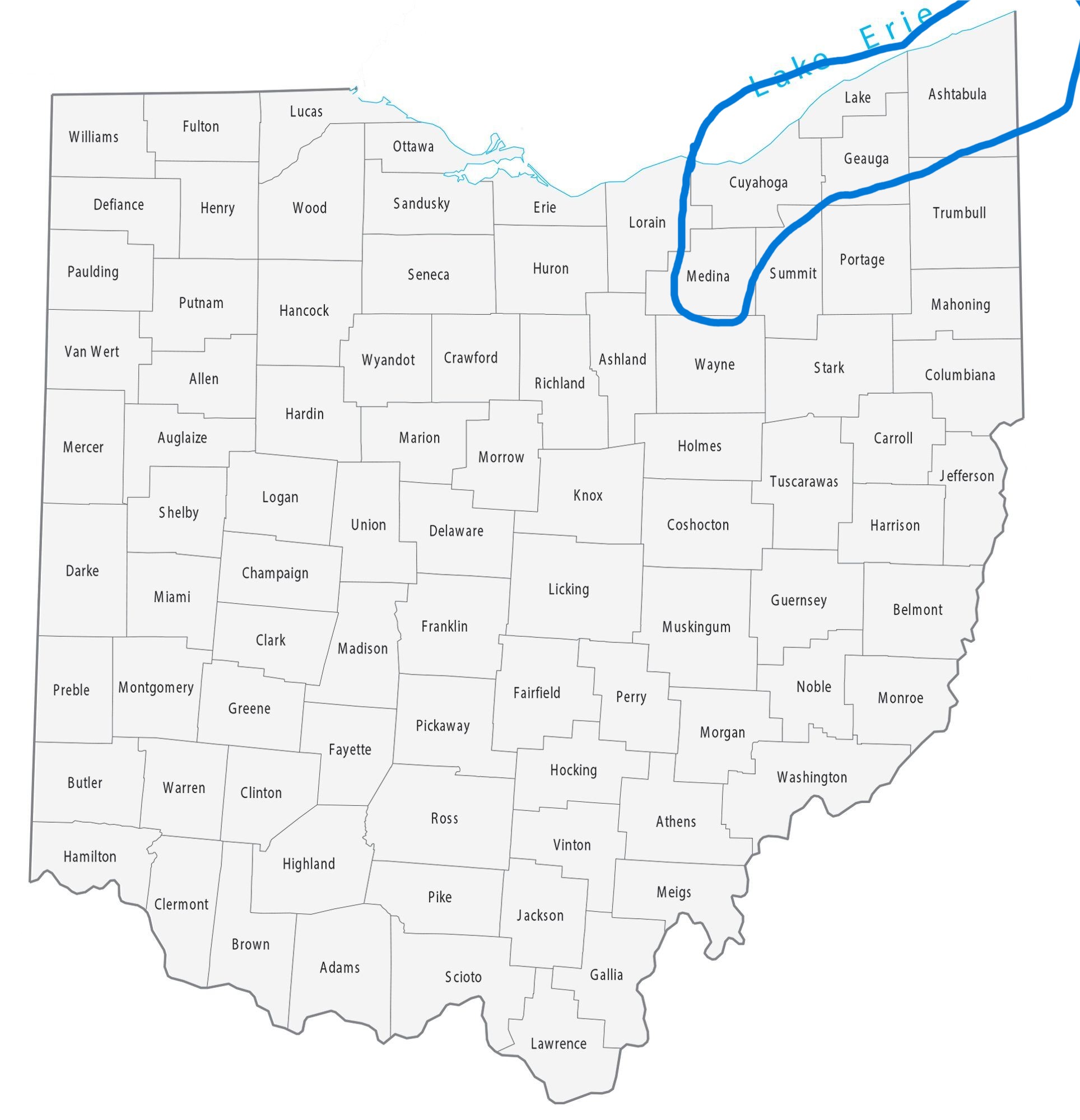
In May 2024, Ohio State forest entomologist Kayla Perry and Cleveland Metroparks Natural Resources Area Manager Josh Philipps observed red thrips and dieback symptoms on spicebush in the reserve. The website includes many photographs of the damage. [Interesting note: beech leaf disease was also first detected in Cleveland Metroparks.] Later in the season similar symptoms were detected at Holden Arboretum and in other units of Cleveland Metroparks properties across three Ohio counties, Cuyahoga, Lake, and Medina. Constance Hausman, Senior Conservation Science Manager with Cleveland Metroparks, reported seeing dieback on spicebush at other reserves in Lake, Ashtabula, and Geauga Counties, suggesting the problem is likely more widespread.
At some locations, large populations of thrips were found on a few plants where they were congregating on the underside of the leaves. While some of the plants show twig dieback, other plants wilt. Some had chlorotic leaves with a mottled pattern. Other symptoms included black necrosis of the petioles and some vein spotting. Similar dieback and viral symptoms observed at other parks within the region. At an arboretum in Wooster, symptoms were seen but no thrips were observed on those plants. As of December 2024, there was no evidence of a connection between the dieback symptoms and the presence of the thrips.
Ohio State entomologists identified the thips as nymphs belonging to the suborder Tubilifera or tube-tailed thrips. National Identification Services (NIS) confirmed the identification as Pseudophilothrips in the family Phlaeothripidae. However, a species determination could not be made due to the limited genetic database of Thysanoptera in GenBank or BOLD.
Some of the symptoms are often associated with a viral infection. Examination of a few twigs found no signs or symptoms of black twig borer (Xylosandrus compactus). Culture plates showed the growth of Colletotrichum sp., a well-known pathogen capable of infecting a wide range of host plants and causing various host-specific symptoms — often referred as anthracnose. The C. Wayne Ellett Plant Pest Diagnostic Clinic did not observe the characteristic vascular streaking associated with vascular streak dieback, a fungal disease caused by Ceratobasidium theobromae. (Spicebush with these symptoms were detected on 30 years ago at two locations in southwestern Ohio, but the cause was not determined.)
Scientists at USDA-ARS were testing symptomatic samples for another possible agent, the recently discovered Emaravirus. The December 2024 article said results were pending. However, at the February 2026 USDA Annapolis, participants reported no breakthroughs.
As of late 2024, symptomatic plants had been detected in Kentucky, Missouri, and Virginia, as well as Northeast Ohio. I believe Maryland has also found symptomatic spicebushes.
Lindera species are also threatened by laurel wilt disease, which is spreading north.
The three spicebush species are hosts for several native swallowtail butterfly species and other pollinators, including spicebush swallowtail (Papilio troilus), eastern tiger swallowtail (Papilio glaucus), and promethea silkmoth / spicebush moth (Callosamia promethea). I believe the shrubs support largely the larvae of these species. The grubs of the sassafras borer (Oberea ruficollis) will bore into the shrub’s branches and roots.
Spicebush is one of the first shrubs to bloom in Pennsylvania forests. I have found no information concerning the plants’ importance to early season pollinators other than the butterflies.
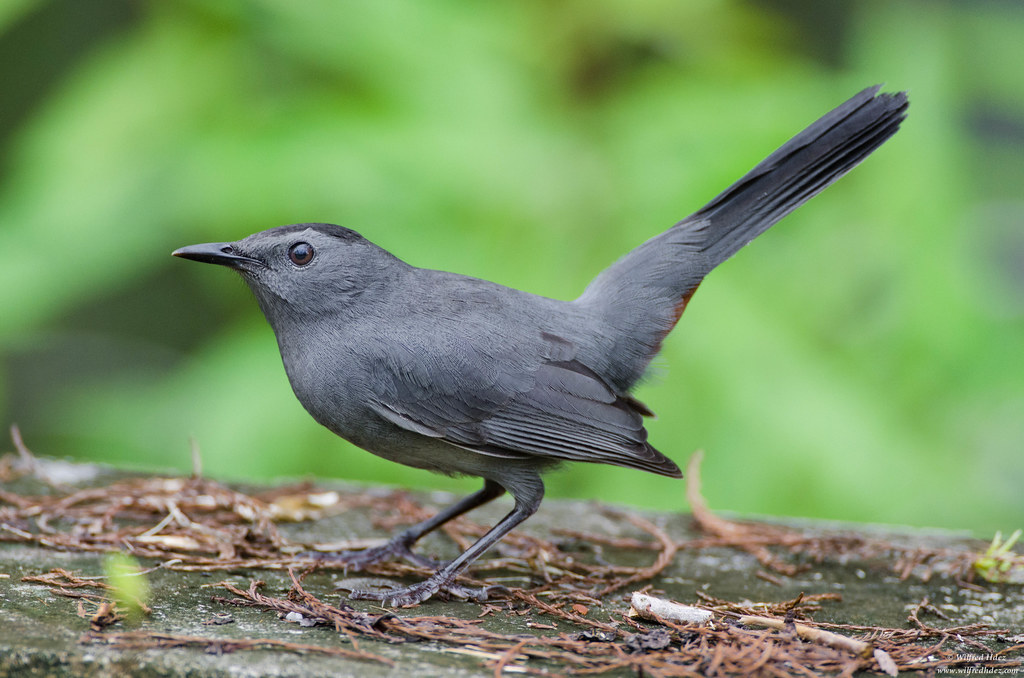
grey catbird; photo by Wilfred Hdez via Flickr
The red, shiny, elliptical fruits with a single seed (drupes) are nearly 50% fat. They become ripe in the fall, so a great fuel source for fall migrants and over-wintering resident birds, including wood thrush (Hylocichla mustelina), veery (Catharus fuscescens), northern bobwhite (Colinus virginianus), and gray catbird (Dumetella carolinensis). Eastern cottontail (Sylvilagus floridanus) and other small mammals might feed on the leaves, twigs, and berries. Other sources also mention deer. However, the spicy, sweet scent produced by the stems and foliage might deter some animals.
Spicebush leaves and berries can be used as a spice when cooking. Native Americans protected these plants used the plants to treat colds, coughs, and dermatological and respiratory ills.
Posted by Faith Campbell
We welcome comments that supplement or correct factual information, suggest new approaches, or promote thoughtful consideration. We post comments that disagree with us — but not those we judge to be not civil or inflammatory.
For a detailed discussion of the policies and practices that have allowed these pests to enter and spread – and that do not promote effective restoration strategies – review the Fading Forests report at http://treeimprovement.utk.edu/FadingForests.htm
The Trump Administration proposes (again!) to end all funding for USFS Research and State, Private, and Tribal Forestry programs. The budget document claims that these cuts are necessary “to ensure fiscal responsibility w/ taxpayer dollars & appropriate alignment of resources w/ USFS’s responsibility to appropriately steward National Forest System lands.” Ending the SP&T programs is justified as “better balance[ing] the appropriate roles of federal & State governments. … and [restoring] federalism …] The document claims that the federal component of Forest Health Management [currently receiving $16 million] duplicates programs managed by the National Forest System; yet the actions listed under this second budget category all relate to water management, not insects or pathogens. The document says states should manage pests on non-federal lands [currently receives $42 million]. I think this approach ignores the need for coordinated management for each of hundreds of pest species, from detection to eradication or development of host resistance. Eliminating the Research program will deprive all forest managers of a scientific foundation for management efforts.
The Trump Administration’s proposed budget would hold funding for key APHIS programs steady. This is great news compared to the extreme cuts proposed for the Forest Service. The budget document says that it is essential to continue APHIS programs success; any stoppages or reductions would potentially cause catastrophic consequences for environmental health. Contrary to this statement, holding funding steady actually results in cuts due to continuing introductions of new pests and inflation.
Item
2024 Actual
2025 Actual
2026 Estimated
2027 Estimated
Field Crop & Rangeland Ecosystems Pests (incl cogongrass)……….
12,000
12,000
11,000
9,026
Pest Detection ………………………………………………..
29,000
29,000
29,000
29,000
Plant Protection Methods Development ………………….
21,500
21,500
21,500
21,500
Specialty Crop Pests …………………………………………
215,000
215,000
214,000
217,339
Tree & Wood Pests …………………………………………..
59,000
59,000
58,650
58,650
Subtotal, Plant Health …………………………………….
387,500
387,500
385,150
386,515
USDA Forest Service
Two USFS programs w/ vital roles in protecting resilience of the Nation’s forests in the face of invasions by non-native pests and plants: R&D program and FHM within SPT division
The many economic & ecological benefits from our forests are under growing threats from a variety of disturbances, ranging from fires & hurricanes to non-native pests. ~ 60% of forests owned by non-feds; USFS must address threats to forests outside NFS to achieve its mission of sustaining “health, diversity, & productivity of the nation’s forests & grasslands to meet the needs of present & future generations.”
Research & Development
The Continuing Resolution for FY26 funded Research at $308 million for the year. Ask Congress to maintain this level. + increase research on invasive species from the current level of 1% to 5%.
The area of our forests & woodlands that is threatened by alien pests is similar to that attributed to fire or western bark beetles. More than 41% of forest biomass in the “lower 48” states is at risk to established non-native pests.[1] If able, add reference to pests on Hawai`i or Caribbean islands. Since additional introductions almost guaranteed, even greater proportion of US’ forest resources at risk in future. If possible, name example, e.g., Phytophthora austrocedri.Forest managers cannot counter these threats without understanding how these P&P kill trees & what actions are effective counter measures. This knowledge is obtained by research.
At least 53 tree species in forests across America are already under attack by non-native pests and pathogens. Yet as of FY23, Research stations spent just 1% of appropriation studying a few of the dozens of NIS pests. Funding for alien pests has decreased 70% since FY2010 even as new pests enter our forests. This inadequate research effort means USFS cannot develop effective programs to prevent, suppress, & eradicate the majority of alien pests. One crucial strategy suffers particularly = efforts to breed trees able to thrive despite NIS pests. R&D currently supports only a few such projects.
Forest Health Management: Supporting the Full Continuum of Pest Management
The Continuing Resolution for FY26 funded State, Private, and Tribal forests program at $310.6 million. I have not found specifics for the FHM program. This was an increase over the $281 million level in FY25.
Non-native pests and pathogens arrive as contaminants or hitchhikers on imported goods, especially on wood packaging and plants. These imports usually arrive in cities or suburbs, so the pests establish there first. They immediately cause enormous damage to urban forests, forcing local governments and property owners to absorb high tree removal costs. They then spread to rural forests, including National forests. Examples include hemlock woolly adelgid, emerald ash borer, invasive shot hole borers, goldspotted oak borer, sudden oak death, and beech leaf disease.
The most effective approach is to kill the pests where they first appear – usually in those urban or semi-rural forests. This response is led by FHM Cooperative Lands subprogram. We urge maintain funding for this subprogram at the FY26 level (possibly $42 million) so that the agency’s experts can continue to assist the states and other partners in countering these pests. As these pests spread to rural areas – including to National forests, National parks, and other public lands, responsibility for their management involves FHM Federal Lands subprogram. So much maintain funding for this subprogram at FY26 levels.
A recent analysis[2] determined that the natural resource values of 92 National parks are threatened by forest pests. Western parks are threatened primarily by outbreaks of the native mountain pine beetle (Dendroctonus ponderosae). Those in the East face threats from more than a dozen species of non-native pests, including hemlock woolly adelgid, emerald ash borer, spongy moth, laurel wilt, and – most recently – beech leaf disease.
Again, combatting these pests requires understanding their life histories & traits – understanding gained through the research program mentioned above.
Funding reductions over the past decade have already shrunk the number of FHM projects & areas treated each year. While 53 tree species are threatened, only four [eastern oaks, loblolly & ponderosa pines, & hemlocks] are targeted by 95% of projects. To counter the threats to 50 additional tree taxa, FHM needs additional resources.[3]
Investing in urban forestry is key to addressing both parties’ priorities & advancing flexible & cost-effective solutions to a wide range of issues impacting American communities, businesses, & families. The USFS SPT division’s Urban & Community Forestry Program efficiently distributes funds to shovel-ready projects for improving communities by maintaining a healthy tree canopy. Federal “seed” money provides resources necessary to initiate & stabilize these local programs.
A surprisingly high proportion of the (inadequate) funding for breeding trees to mitigate the damage caused by non-native pests is from FHM or the NFS, rather than R&D. These programs should receive substantial increases. The model program is the Dorena Genetic Resource Center. It provides decades-long commitment, skilled staff, necessary facilities; these result in breeding successes, i.e., western white pines and Port-Orford cedar.
Invasive Plants
Invasions of forests by non-native plant species erode forest productivity & provision of the full range of ecosystem services, hinder forest uses, degrade biodiversity & habitat, and impose substantial financial costs. A recent analysis[4] documents that this threat is growing: the number of FIA inventory plots containing invasive plant species rose in 58.9% of surveyed counties. Furthermore, in 73.2% of the counties the plots experienced an increase in species richness of invading plants. Increases occurred in all regions, but were greater in the East: from 46% to 52.3%. In the Rocky Mountains, the proportion of invaded plots rose from 6% to 11%. In Hawai`i, this proportion grew from 70% to 83.2%. Again, USFS Research and FHM programs, working together, are key to making progress in countering these bioinvasions.
[1] Fei, S., R.S. Morin, C.M. Oswalt, and A.M. 2019. Biomass losses resulting from insect and disease invasions in United States forests. PNAS August 27, 2019. Vol. 116 No. 35 17371–17376
[2] Michalak, J.L., C.E. Littlefield, J.E. Gross, T.G. Mozelewski, J.J. Lawler. 2026. Relative Vulnerability of US National Parks to Cumulative & Transformational Climate Impacts. Conservation Letters, 2026 Vol 19, Issue 1; 19:e70020
[3] Coleman, T.W, A.D. Graves, B.W. Oblinger, R.W. Flowers, J.J. Jacobs, B.D. Moltzan, S.S. Stephens, R.J. Rabaglia. 2023. Evaluating a decade (2011–2020) of integrated forest pest management in the United States. Journal of Integrated Pest Management, (2023) 14(1): 23; 1–17
[4] Potter, K.M., B.V. Iannone III, K.H. Riitters, Q. Guo, K. Pandit, C.M. Oswalt. 2026. US Forests are Increasingly Invaded by Problematic NIS Plants. Forest Ecology & Management 599 (2026) 123281
USDA Animal and Plant Health Inspection Service
APHIS is responsible for preventing intro and spread of pests and invasive plants that harm agric, including forests. APHIS policy guides port inspections carried out by the DHS CBP. APHIS inspects imported live plants.
Introductions of pests and pathogens have continued to occur. APHIS funding has remained steady – which means it is not growing to match the rising threat. At minimum, maintain current levels.
FY2025 enacted FY26 House FY26 Senate
APHIS total $1,148 $1,146 $1,168
Plant health subtotal $387.5 $388.6
Agric. quarantine $35.5 $35.5 $35.5
Field crop and rangeland $12 $11 $11.5
Pest detection $29 $28.5 $29
Methods development $21.5 $21.5 $21.5
Specialty crops $206.5 $216.3 $208.5
Tree and wood pests $59 $59 $58.6
Emergency preparedness and response* $44.5 $44.5 $44.3
* this fund is apparently for both animal and plant emergencies
Rationale
Already introduced pests threaten the many forest products and services benefitting all Americans. Just 15 of the worst pests threaten 41% of forest biomass in the “lower 48” states – comparable to fire.[1] A significant proportion of the resulting costs are imposed on municipal governments and homeowners. Fifteen years ago, it was estimated[2] that the municipal governments were spending more than $1B / year, primarily on removing and replacing trees on public property killed by these non-native pests. Homeowners faced costs of $1B plus loss of another $1.5B in property value. A more recent study estimated that cities will have to spend $30M per year to remove and replace ~ 1.4M street trees by 2050. Additional trees in parks and on homeowners’ properties also die.[3]
A new pattern has appeared in recent years: more newly-introduced pests are being detected in the Pacific Coast states rather than in the East and Midwest. Two southern California counties are projected to pay $150M – $1B[4] to remove and replace trees killed by invasive shot hole borers. The emerald ash borer threatens 9,000 ash on the streets of Portland, Oregon and millions more in parks and the forested wetlands of Willamette Valley, including in Ankeny National Wildlife Refuge. The Mediterranean oak borer has already killed thousands of oak trees in the San Francisco Bay area; it also threatens urban forests and valued oak savannahs in Oregon.
Additional introductions of highly damaging wood-borers are likely because we continue to receive inadequately treated crates, pallets, and other forms of packaging made of wood. For 20 years, all countries shipping goods to North America must treat their wooden packaging per prescribed protocols. To address this risk, we urge a modest $1M increase in APHIS’ “Tree and Wood Pest” account. We also suggest that the Subcommittee inquire of APHIS what steps it will take to improve compliance with the treatment requirement. You should focus your inquiry on China; wood packaging from this country is three times more likely to harbor a tree-killing pest than the global average.[5]
Other pests—especially plant diseases and sap sucking insects—enter on imported plants. Pathogens introduced recently via this pathway include rapid ohia death in Hawai`i (threatening the species that constitutes 80% of the Islands’ forest biomass) and beech leaf disease (thin a dozen years has spread across much of the East).
All assessments of APHIS’ plant import programs’ effectiveness use data from 2009; at that time, plant imports were more than 100 times more likely to transport pests than was wood packaging.[6] APHIS has amended its regulations several times since 2009. We urge the Subcommittee to call for APHIS to facilitate independent analysis of the efficacy of its current phytosanitary programs in order to understand whether the updated regulations have reduced the risk of additional introductions.
Again, pests introduced via this pathway proliferate and spread – often facilitated by movement of firewood, plants, and outdoor household goods. APHIS’ programs have suffered severe failures to prevent such spread, for example in the cases of the emerald ash borer and sudden oak death. We suggest that the Subcommittee inquire of APHIS what steps it will take to improve containment efforts regarding damaging plant pests, including through collaboration with its state partners.
We ask for small increases to the Pest Detection and Methods Development programs. The first enables prompt detection of newly introduced pests … which is critical to successful pest eradication or containment. The second empowers APHIS to improve essential detection and eradication tools.
The current emergency fund of is far below the level needed to respond when a new pest is discovered. We thank both the House and the Senate for clearly recognizing that these appropriations are inadequate by including in their bills language reiterating the Agriculture Secretary’s power to access funds from other Departmental programs (usually the Commodity Credit Corporation) to respond to emergencies.
[1] Fei, S., R.S. Morin, C.M. Oswalt, and A.M. 2019. Biomass losses resulting from insect and disease invasions in United States forests. PNAS August 27, 2019. Vol. 116 No. 35 17371–17376
[2] Aukema, J.E., B. Leung, K. Kovacs, C. Chivers, K. O. Britton, J. Englin, S.J. Frankel, R. G. Haight, T. P. Holmes, A. Liebhold, D.G. McCullough, B. Von Holle.. 2011. Economic Impacts of Non-Native Forest Insects in the Continental United States PLoS One September 2011 (Volume 6 Issue 9)
[3] Hudgins, E.J., F.H. Koch, M.J. Ambrose, and B. Leung. 2022. Hotspots of pest-induced US urban tree death, 2020–2050. Journal of Applied Ecology
[4] Jetter, K. A. Hollander, B.E. Nobua-Behrmann, N. Love, S. Lynch, E. Teach, N. Van Dorne, J. Kabashima, and J. Thorne. 2022. Bioeconomic modeling of invasive species management in urban forests: final report.
[5] Haack RA, Hardin JA, Caton BP and Petrice TR (2022) Wood borer detection rates on wood packaging materials entering the United States during different phases of ISPM#15 implementation and regulatory changes. Front. For. Glob. Change 5:1069117. doi: 10.3389/ffgc.2022.1069117
[6] Liebhold, A.M., E.G. Brockerhoff, L.J. Garrett, J.L. Parke, and K.O. Britton. 2012. Live Plant Imports: the Major Pathway for Forest Insect and Pathogen Invasions of the US. www.frontiersinecology.org
Congressional Committees with Jurisdiction … & how to submit testimony
FUNDING APHIS
House Committee on Appropriations, Subcommittee on Agriculture, Rural Development, Food and Drug Administration, and Related Agencies
Chairman: Andy Harris (R-MD)
Members: Robert Aderholt, David Valadao, John Moolenaar, Dan Newhouse, Julia Letlow, Ben Cline, Ashley Hinson, Scott Franklin
Democrats à Sanford Bishop, Jr., Chellie Pingree, Lauren Underwood, Marie Gluesenkamp Perez, Marcy Kaptur, Debbie Wasserman Schultz
deadline: May 1; email to ag.approp@mail.house.gov
instructions: 5 pages, double-spaced in Times New Roman, 12 Point Font; single-sided; PDF attachment to your email. At top of 1st page, clearly indicate your name, title, & institutional affiliation (if any); In 1st paragraph, clearly state agency, program, & amount of funding in the request
Senate Committee on Appropriations, Subcommittee on Agriculture, Rural Development, Food and Drug Administration, and Related Agencies
Chairman: John Hoeven (R-ND)
Members: Republicans à Mitch McConnell, Susan Collins, Jerry Morn, Cindy Hyde-Smith, Deb Fischer, Mike Rounds
Democrats à Jeanne Shaheen, Jeff Merkley, Tammy Baldwin, Martin Heinrich, Gary Peter, Kirsten Gillibrand, Jon Ossof
deadline: not clear; might be 22 May; email to agri@appro.senate.gov
instructions: 4 pages.. At top of 1st page, clearly indicate your name, title, & institutional affiliation; state agency, program, & amount of funding in the request
FUNDING USFS
House Committee on Appropriations, Subcommittee on Interior, Environment and Related Agencies
Chairman: Mike Simpson (R-WY)
Members: Republicans à Mark Amodei, Guy Reschenthaler, Michael Cloud, Ryan Zinke, Jake Ellzey, Celeste Maloy
Democrats à Chellie Pingree (D-ME), Betty McCollum, Josh Harder, James E. Clyburn
deadline: 22 April; email to IN.Approp@mail.house.gov
instructions: 4 pages, single-spaced in 12 Point Font; single-sided; prefer PDF but other formats OK. At top of 1st page, clearly indicate your name, title, & institutional affiliation (if any); In 1st paragraph, clearly state agency, program, & amount of funding in the request
Senate Committee on Appropriations, Subcommittee on Interior, Environment and Related Agencies
Chairman: Lisa Murkowski (R- AK)
Members: Republicans à Mitch McConnell, Shelly Moore Capito, John Hoeven, Deb Fischer, Mike Rounds
Democrats à Jeff Merkley, Chris van Hollen, Martin Heinrich, Tammy Baldwin, Kirsetn Gillibrand, Jon Ossof
deadline: unclear; possibly mid-June; email to int@appro.senate.gov
instructions: 4 pages, single-spaced in Microsoft Word or Word Perfect; do NOT send PDF. At top of 1st page, clearly indicate your name, title, & institutional affiliation (if any); In 1st paragraph, clearly state agency, program, & amount of funding in the request
In a press release on 31 March, 2026, the USDA announced major changes to the USFS structure. Agency headquarters will be moved to Salt Lake City. They point out that nearly 90% of USFS land is west of the Mississippi … but promise to sustain engagement in the Southeast (America’s “wood basket) by creating a regional office there. Furthermore, they will change the current regional organization to a state-based one; they plan to create 15 state directorships. State directors will serve as national leaders with primary oversight of forest supervisors, operational priorities, & relationships with states, tribes, & other partners. Each state office will include a small leadership support team responsible for functions such as legislative affairs, communications, & intergovernmental coordination.
There will still be some “operational service centers” in other cities; that for research will be in Fort Collins. The goal is to unify research priorities, accelerate the application of science to management decisions, & reduce administrative duplication. Information on which facilities will be retained or closed is available at this webpage. (I could not open this site.)
No specific information is provided re: forest health management program.
Posted by Faith Campbell
We welcome comments that supplement or correct factual information, suggest new approaches, or promote thoughtful consideration. We post comments that disagree with us — but not those we judge to be not civil or inflammatory.
For a detailed discussion of the policies and practices that have allowed these pests to enter and spread – and that do not promote effective restoration strategies – review the Fading Forests report at http://treeimprovement.utk.edu/FadingForests.htm