Promising Biocontrol to Protect Some Cacti

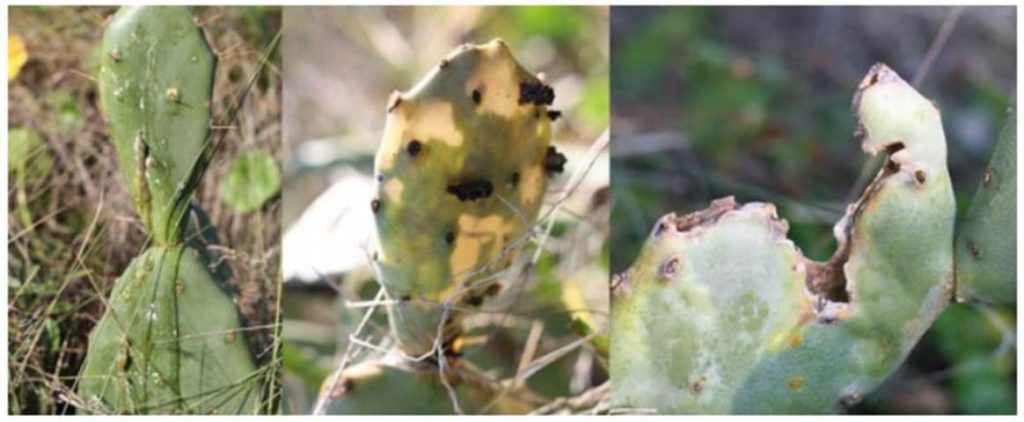
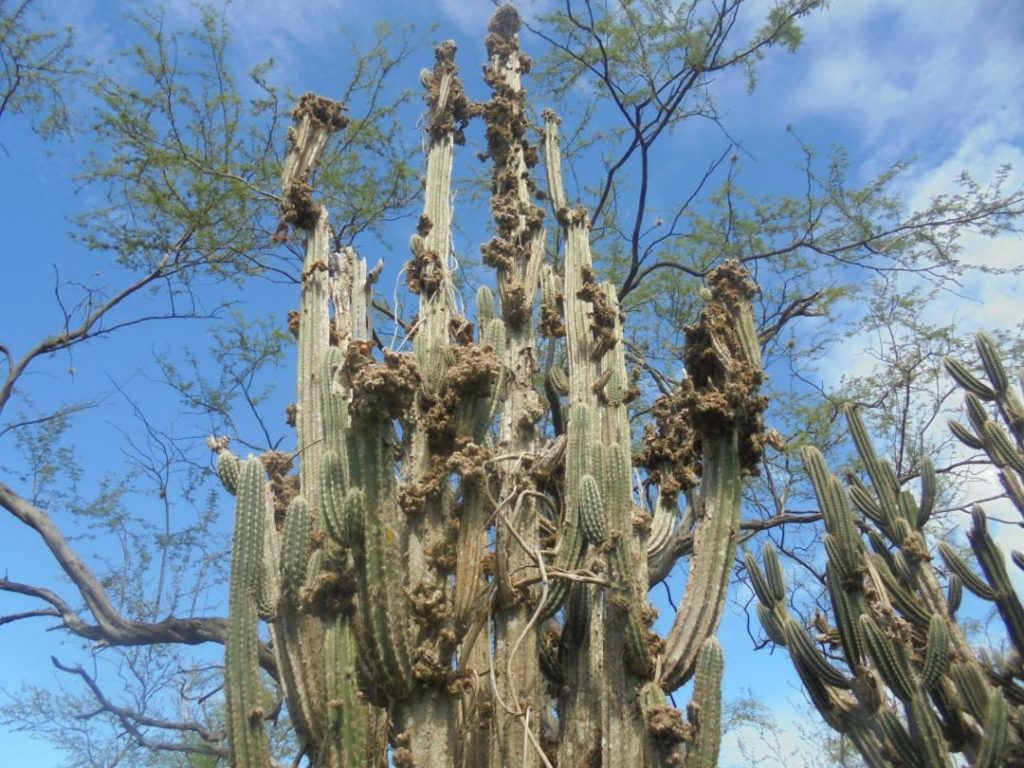
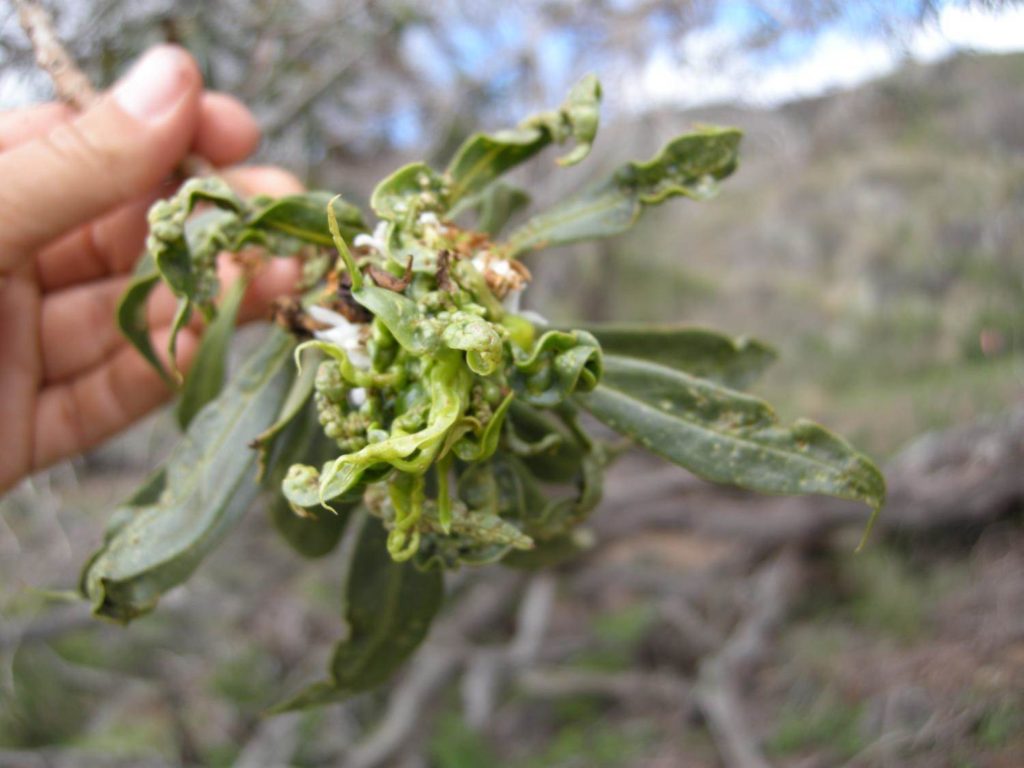
Photo of infested cactus at Cabo Rojo National Wildlife Refuge, Puerto Rico. Taken August 20, 2018 by Yorelyz Rodríguez-Reyes

Three and a half years ago, I blogged about the threat to columnar cacti in Puerto Rico from the Harrisia cactus mealybug. The mealybug clearly threatens the endemic cacti of the Caribbean islands, and possibly some of the hundreds of other columnar cacti growing across two million square miles of desert ecosystems that straddle the U.S.-Mexico border region.

I am pleased to report that scientists continue efforts to find biocontrol agents to reduce this insect’s damage on Caribbean islands. Much of this work is being done by the Center for Excellence in Quarantine and Invasive Species at University of Puerto Rico. The team consists of Michael West Ortiz, Yorelys Rodrígues Reyes, Ferdinand Correa and Jose Carlos Verle Rodrigues.

As of February 2019, the Center is conducting host specificity tests on a primary parasitoid of the Harrisia Cactus mealybug — Anagyrus cachamai. This wasp was found as a result of almost a decade of searching in South America and other locations. It is native to Argentina and Paraguay (Triapitsyn et al. 2018; sources listed at the end of the blog).The Center also continues surveys and studies of other primary and secondary parasitoids of the mealybug.

The work to develop a biocontrol agent for the mealybug continues despite continuing uncertainty about the true species of the mealybug. At the time of its discovery on Puerto Rico, the mealybug was believed to belong to a species used as a biocontrol agent for invasive cacti in Australia and South Africa, designated as Hypogeococcus pungens. However, H. pungens is now thought to be a species complex, and the species in Puerto Rico differs from the earlier designation (Triapitsyn et al. 2018). 

Apparently the mealybug was introduced in Puerto Rico around 2000   — probably on the ornamental common purslane (Portulaca olerácea), an annual succulent. (Note: the introduction was on a host different from the vulnerable cacti.) Within five years of the first detection in San Juan, the mealybug was sighted on cacti on the other side of the island in the Guánica State Forest and Biosphere Reserve. By 2010, the mealybug was widely distributed in most dry districts. Surveys found it in all 11 municipalities surveyed in southern Puerto Rico. At some locations, infestation levels were extremely high – e.g., 86% of stems surveyed were infested at Guánica. Infestation rates were lower in other municipalities. As of 2010, infestations were estimated to be present on about 1,400 km2 on the southern coast; the rate of new infestations suggests that the mealybug was spreading rapidly (Segarra-Carmona et al. 2010).  I have been unable to obtain more recent estimates.

The mealybug impacts seven of 14 native cactus species occurring in dry forests of the island, including three endemic and two endangered species in the subfamily Cactoideae. The two endangered species are Harrisia portoricensis and Leptocereus grantianus (USDA ARS). The tissue damage caused by the mealybug interferes with sexual reproduction and can cause direct mortality of the plant (Triapitsyn et al. 2018).  These cacti provide food or shelter for endemic bats, birds, moths and other pollinators (Segarra & Ramirez; USDA ARS). The mealybug is also now killing native cacti on the U.S. Virgin Islands (H. Diaz-Soltero pers. comm. August 2015).

 USDA Funds Conservation Efforts Despite Apparent Absence of a Constituency Calling for Such Action

Efforts to identify and test possible biocontrol agents targetting the Harrisia cactus mealybug received significant funds from the Plant Pest and Disease Management and Disaster Prevention Program. This is a competitive grant program managed by APHIS. It is permanently funded and thus not subject to the vagaries of annual appropriations. Until last year, this program operated under Section 10007 of the 2014 Farm Bill. With passage of a new Farm Bill, it is now designated as Section 7721 of the Plant Protection Act.

Since Fiscal Year 2018, APHIS has had authority to spend more than $60 million per year on this program.  In Fiscal Year 2017, , the program provided $120,000 to an unspecified federal agency, $70,000 to an academic institution in Puerto Rico (presumably the Center), $15,000 to another academic institution in California, and $3,000 divided among two APHIS facilities – for a total of $208,000. The next round of funds came in FY19, when the program provided $277,267 to an unspecified federal agency to continue work on biocontrol. In addition, the program provided $78,507 to an unspecified federal agency to “safeguard[e] genetic diversity of native and listed cacti threatened by Harrisia cactus mealybug in Puerto Rico”.

No Apparent Action on Threats to Opuntia Cacti

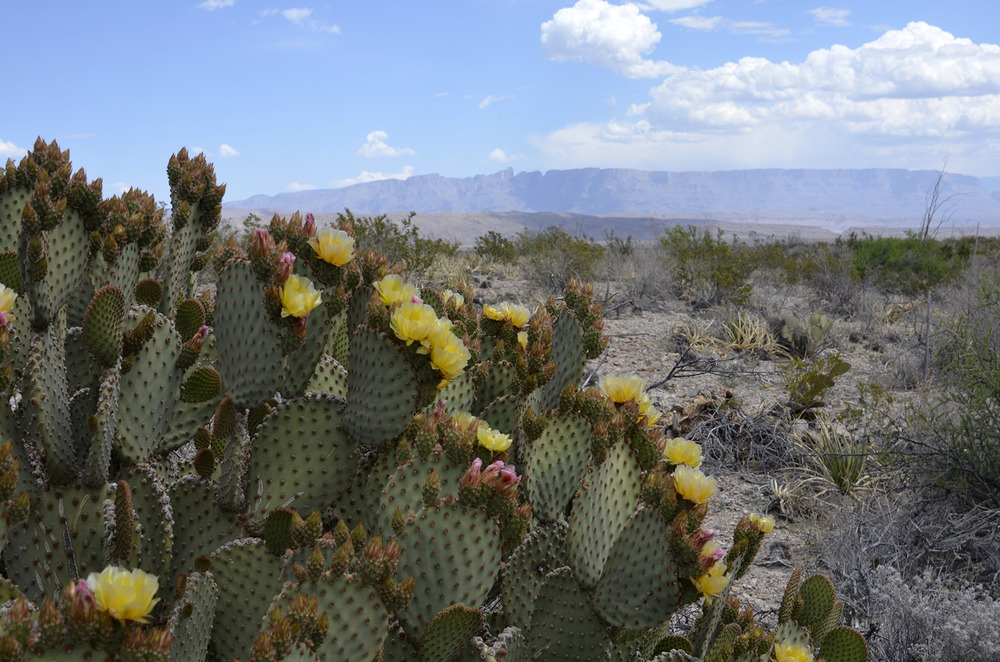
In my earlier blog, I also described the threat to flat-padded Opuntia (prickly pear) cacti from the cactus moth Cactoblastis cactorum. Various federal, state, and academic entities received $463,000 from the permanent fund in Fiscal Year 2016 and another $100,000 in FY2017. No cactus moth programs have received funds in more recent years.

SOURCES

Segarra-Carmona, A.E., A. Ramirez-Lluch. No date. Hypogeococcus pungens (Hemiptera: Pseudococcidae): A new threat to biodiversity in fragile dry tropical forests.

Segarra-Carmona, A.E., A. Ramírez-Lluch, I. Cabrera-Asencio and A.N. Jiménez-López. 2010.  FIRST REPORT OF A NEW INVASIVE MEALYBUG, THE HARRISIA CACTUS MEALYBUG HYPOGEOCOCCUS PUNGENS (HEMIPTERA: PSEUDOCOCCIDAE). J. Agrie. Univ. RR. 94(1-2):183-187 (2010)

Triapitsyn, Aguirre, Logarzo, Hight, Ciomperlik, Rugman-Jones, Rodriguez. 2018. Complex of primary and secondary parasitoids (Hymenoptera: Encyrtidae and Signiphoridae) of Hypogeococcus spp. mealybugs (Hemiptera: Pseudococcidae) in the New World. Florida Entomologist Volume 101, No. 3 411

USDA Agriculture Research Service, Research Project: Biological Control of the Harrisia Cactus Mealybug, Hypogeococcus pungens (Hemiptera:pseudococcidae) in Puerto Rico Project Number: 0211-22000-006-10 Project Type: Reimbursable

West Ortiz, M. pers. comm. February 2019

Posted by Faith Campbell

We welcome comments that supplement or correct factual information, suggest new approaches, or promote thoughtful consideration. We post comments that disagree with us — but not those we judge to be not civil or inflammatory.
Invasive Species Policy: Will New Law Empower Agencies? Or Hinder Strategic Planning, Research, and Engaging the Public through Outreach?

Much-Heralded Major Conservation Legislation — S. 47 – Mandates “On-the-Ground” Actions 

Senate bill S. 47 enjoyed strong support from the conservation community because it expanded protection for several National parks and wilderness areas, mandated easier access to public land for hunters and anglers, and provided permanent status for the most important program that funds purchase of lands and waters for recreation and other purposes – the Land and Water Conservation Fund. It passed the Senate on February 12, 2019 by a vote of 92 for, 8 against. The bill passed the House of Representatives on February 26, 2019 by a vote of 363 for, 62 against. Everyone expects President Trump to sign it into law.

The new language had previously been a stand-alone bill introduced in two previous sessions of Congress. The first version, S. 2240, was introduced in 2016; I blogged about a hearing on that legislation in May 2016, describing my reservations. The bill was not enacted in that Congress. It was reintroduced in 2017, when it was called the “WILD Act” (S. 826).

Title VII of the new legislation now expected to become law governs programs implemented by the Departments of Interior, Agriculture (specifically the Forest Service) and the U.S. Army Corps of Engineers. It also applies to the head of “any federal agency” having duties related to planning or treatment of invasive species “for the purpose of protecting water and wildlife on land and in water.”

Title VII takes the form of an amendment to the Fish and Wildlife Coordination Act (16 U.S.C. 661 et seq.)

As in the original 2016 bill (S. 2240), the new law – at Title VII, §10(c)(2)(C) – agencies are required to adopt strategic plans for their invasive species programs. The priorities in the federal agencies’ invasive species plans will be set by state governors – not the federal agency charged with managing that land unit and its resources.

  • Under§10(a)(4)(C), tribal, regional, State, or local authorities are authorized to weigh in on the determination of which terrestrial or aquatic species fit the definitions of ‘invasive’ and ‘alien’ species.
  • Under §10(c)(3).the Secretaries are required, in developing their strategic plans, to take into consideration the ecological as well as the economic costs of acting or not acting, I welcome this provision.

Like the original 2016 bill (S. 2240), the new law – at Title VII, §10(g) – (i)  – requires land-managing agencies to allocate their invasive species funds according to the following formula: 75% for on-the-ground activity; 15% for combined research and outreach; 10% or less for administrative costs.

  • Fortunately, “on-the-ground” activities have been expanded to include
    • detection and monitoring.
    • “the use of appropriate methods to remove invasive species from a vehicle or vessel capable of conveyance.” 
    • “investigations regarding methods for early detection and rapid response, prevention, control, or management of the invasive species.”
    • It is unclear whether “on-the-ground” activities include the salaries of staff who manage such programs from desks (as distinct from people who work in the field).
  • Unfortunately, the definition of “prevention” is unnecessarily limited by §10(a)(6) (B). This clause authorizes agencies ‘‘to impede the spread of the invasive species … by inspecting, intercepting, or confiscating invasive species threats prior to the establishment of the invasive species onto land or water of an eligible State.” This clause reflects too narrow an understanding of prevention actions. They are not limited to (inefficient) inspection and seizure programs at “borders”. It is much more efficient to apply measures intended to prevent the presence of a pest in the transported good in the place of production. One example is APHIS’ requirements governing nursery stock intended to be shipped interstate so as to prevent the spread of the sudden oak death pathogen.

Following the revised 2017 version of the bill (text here; see my blog here) the law requires the agencies to make “substantive annual net reduction of invasive species populations or infested acreage …”  (The original bill mandated an annual reduction of 5%.) It is unclear whether this mandate applies to all invasive species on the affected acreage, or only those designated by a flawed process (see below) and included in the agency’s strategic plan [Title VII, §10(c)(1)].

Under Subsection (d), the plan is to prioritize the use of methods that are effective (as determined by the Secretary, based on sound scientific data); that minimize environmental impacts; and control and manage invasive species in the least costly manner. I worry that this requirement, combined with the mandate to achieve “annual net reductions” in invasive species numbers, will promote the use of chemical pesticides.

Under Section (f), agencies are to apply all available tools and flexibilities to expedite invasive species control projects and activities. Those projects are to be located in an area that is at high risk for invasive species introduction, establishment, or spread; and determined by the Secretary to require immediate action to address that risk. These actions are to be carried out in accordance with applicable agency procedures, including any applicable land or resource management plan. This language apparently replaces earlier efforts to exclude invasive species control projects from analysis under NEPA. How this mandate interacts with state governors’ setting priorities under §10(c)(2)(C) is unclear.

Remember that under the funding allocations specified in Title VII, §10(g) – (i), “… not more than 10% may be used for administrative costs incurred to carry out those programs, including costs relating to oversight and management of the programs, recordkeeping, and implementation of the strategic plan …”. At the same time, §§10(e), (j), and (l) require economic analyses and reports detailing compliance with requirements and results of projects. In other words, the new law restricts expenditure of funds for “administrative costs” but imposes significant additional administrative duties.

Fortunately, Title VII §10(k)(1) states that “Nothing in this section precludes the Secretary concerned from pursuing or supporting, pursuant to any other provision of law, any activity regarding [invasive species]  control, prevention, or management …, including investigations to improve the control, prevention, or management of the invasive species.

In all iterations, the bills called for the projects to be carried out through collaboration with wide range of partners, including private individuals and entities – apparently including non-governmental organizations such as state or local invasive plant coalitions.

Earlier in Congressional consideration of the new law’s provisions, the National Environmental Coalition on Invasive Species (NECIS) responded by adopting its own description of an effective, comprehensive invasive species program.  Under the title “Tackling the Challenge of Invasive Species,” the coalition makes the following major points:

  • Focus prevention efforts on pathways of introduction. Until they are closed, managing established infestations will be a never-ending burden.
  • Broader and more aggressive efforts to control existing invaders is a solid investment, but should not be at the expense of other aspects of a comprehensive national response.
  • Close loopholes in the “Injurious Wildlife” sections of the Lacey Act to provide agencies with more agile processes for regulating the importation and transport of harmful invasive species.
  • Enhance funding for invasive species control and management projects; prioritize efforts to reduce invasive species’ spread at landscape scales.
  • Ensure that federal actions do not inadvertently promote the introduction or spread of harmful invasive species; use caution when promoting nonnative species for biofuels, bioenergy, or other
  • purposes.
  • Adopt metrics to gauge the effectiveness of efforts to prevent the introduction and spread of new invasives and to achieve long-term control or removal of existing invaders.
  • Support robust research and outreach programs, which are essential to improving the efficacy of federal, state, and local invasive species prevention and control efforts.

Given the new legislation’s focus on land-managing agencies, I point to the importance the coalition gave to research on the invasion processes utilized by various species and education of land and water users  so as to gain their cooperation. These recommendations are directly counter to the new law’s stringent limitations on research and “outreach”.

I think particularly pertinent are the recommendations on metrics to measure programs’ efficacy. Proper metrics should metrics address outcomes and program effectiveness re:

  • efforts to prevent species introduction and spread
  • activities that target pathways or vectors
  • the effectiveness of treatments in eradicating or reducing the target invasives.

Potential additional metrics include, but are not limited to:

  • Rate of new invasions; possibly categorized by type of invader or geography
  • Acres infested and changes in infestations over time
  • Acres protected, based on projections of future spread avoided by eradication
  • Economic impact of invasive species
  • Number of species intercepted.

The full document is available here .

Posted by Faith Campbell

We welcome comments that supplement or correct factual information, suggest new approaches, or promote thoughtful consideration. We post comments that disagree with us — but not those we judge to be not civil or inflammatory.
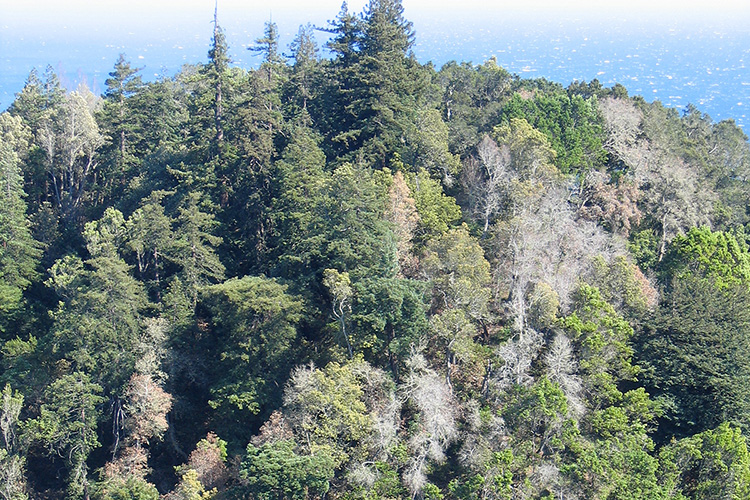
2018 – More Bad News on Sudden Oak Death

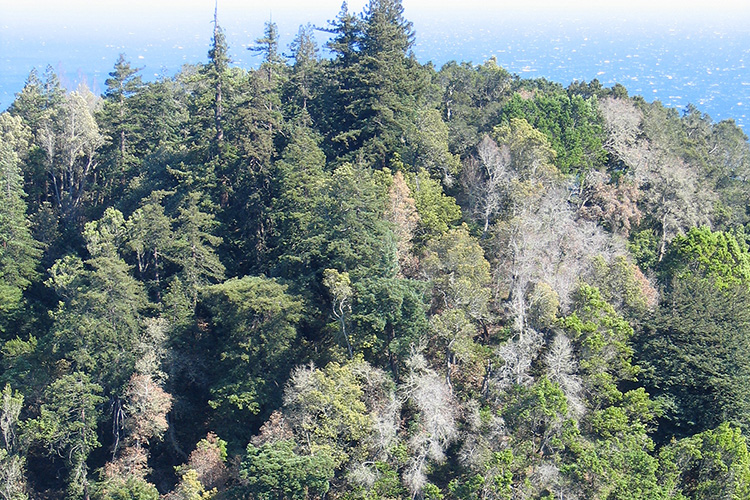
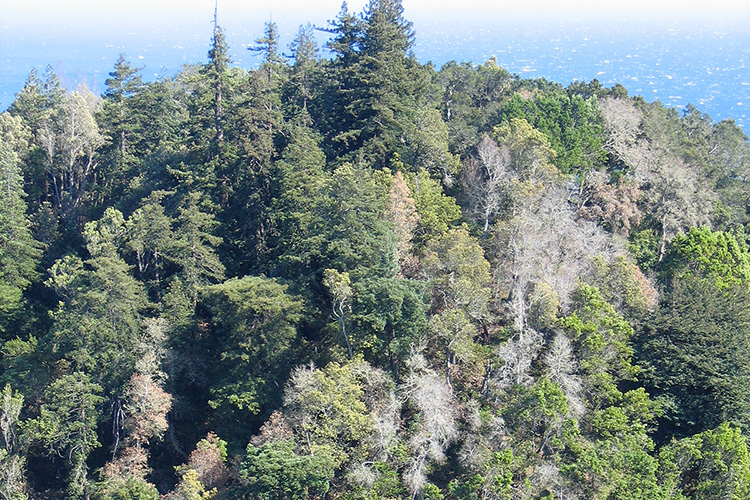
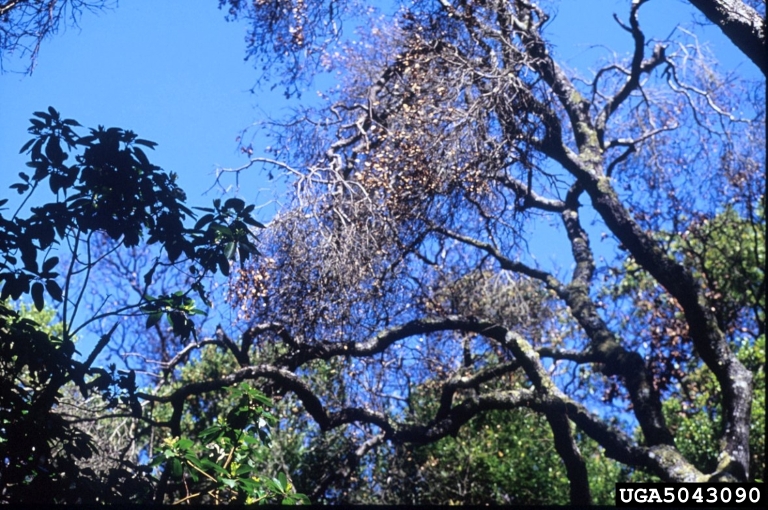
Tanoak mortality at Big Sur photo by Matteo Garbelotto
  1. Outbreaks intensified in western North America and Western Europe (UK, France).
  2. Outbreaks are increasingly genetically diverse – raising the possibility of sexual reproduction and evolution.
  3. Evidence accumulated that eradicating Phytophthora ramorum from the environment once it is present is extremely difficult, if not impossible.

Meanwhile, APHIS proposed revisions that would weaken its regulation of nursery stock. See my earlier blog. Copies of all comments can be viewed here.

1) Intensifying Outbreaks

North America

According to the California Oak Mortality Task Force’s (COMTF) November 2018 newsletter, about 50 million trees have been killed by P. ramorum in California and Oregon. This breaks down to:

  • 29 – 44 million tanoaks (Notholithocarpus densiflorus) (1.6 – 2.5% of the species’ total population in California and Oregon);
  • 1.9 – 3.3 million coast live oaks (Quercus agrifolia) and Shreve oaks (Q. parvula var. shrevei), combined (0.4 – 0.7% of their populations); and
  • up to 1.1 million California black oaks (Q. kelloggii) (less than 0.17% of their population).

Of course, the oaks face additional threats from goldspotted oak borer and  polyphagous and Kuroshio shot hole borers hin more southern parts of California.

California bay laurel (Umbellularia californica) is not killed by P. ramorum but instead drives the spread of the outbreak in California. The state has an estimated 91.4 million infected California bay laurel trees.

These estimates are considered to be conservative. They are based only on trees that have been confirmed to be infected by direct, cultural isolation during the period up to 2014 — more than four years ago! And before a sharp intensification of infection (see below).

Data from a USDA Forest Service aerial detection survey – reported in COMTF’s September 2018 newsletter — detected a large increase in tanoak mortality in counties California counties reaching from Mendocino south to Monterey. This intensification in tree mortality was expected because the pattern is already well established: two seasons after a wet winter seasons, trees die. Such a wet and extended winter occurred in 2016-2017.

United Kingdom

Outbreaks of the EU1 strain of P. ramorum on larch (Larix kaempferi) in Scotland have also intensified. The infection is now found throughout much of Scotland, not just in the heavily infested zone in the the southwest part of the country. See updated map of outbreaks on Larch sites in woodland settings at https://scotland.forestry.gov.uk/supporting/forest-industries/tree-health/phytophthora- ramorum?highlight=WyJyYW1vcnVtIiwiJ3JhbW9ydW0iLCIncmFtb3J1bSciXQ

There is more on the status of P. ramorum in the the UK (England, Wales, Scotland and Northern Ireland) in a situation report posted by Forestry Commission England in 2018. Find it here: https://www.forestry.gov.uk/pdf/PRamorumSituationReport30June2018.pdf/$FILE/PRamorumSituationReport30June2018.pdfh

As in North America, the large number of outbreaks is attributed to favorable, wet conditions in the summer and fall of 2017. (This situation was summarized in COMTF’s September 2018 newsletter.

France

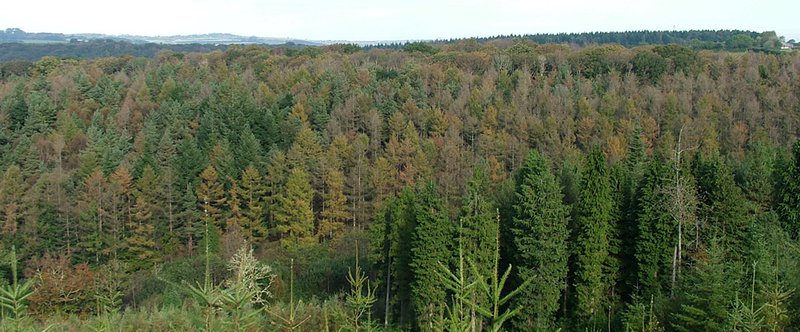
The outbreak on larch in France, first reported in 2015, is also spreading. This is particularly significant because, first, it is the first report of  P. ramorum outside of nurseries and ornamental settings in mainland Europe and, second, because it is a new genotype not tied to any other outbreak. By May 2018, about 80% of the trees in the Saint-Cadou larch plantations in Brittany (Northwest France) were symptomatic or dead in the more infected plots. A second outbreak has been detected a few kilometers away in a mixed forest stand of larch, oak, and sweet chestnut (Castanea sativa).  There, disease prevalence was much lower. Both stands have been removed.

(This was also  summarized in COMTF’s September newsletter.

2) Increasing Genetic Diversity

EU1 Strain in Oregon

As I have reported in the past, Oregon now has a second strain of Phytophthora ramorum – the “EU1” strain. This opens the possibility of sexual reproduction between it and the NA1 strain already established in forests in Oregon’s Curry County.

According to a presentation by Chris Benemann of the Oregon Department of Agriculture to the Continental Dialogue on Non-Native Forest Insects and Diseases, in 2018 – three years after the initial detection of one tree in 2015 – the number of trees infected by the EU1 strain has risen to 73. Oregon has prioritized removing these trees and treating (burning) the immediate area – now more than 355 acres. The legislature has provided $2.3 million for SOD treatments for 2017-2019. ODA believes that eradication of the EU1 outbreak is still possible.

3) But Is Eradication Possible?

According to the COMTF September newsletter, P. ramorum was detected by a water bait in a small pond downstream from a previously-infected botanical garden in Kitsap County, Washington. The garden undertook extensive mitigation efforts – including soil steaming –  and the pathogen had not been detected in this managed landscape for about 2 ½ years. Hundreds of samples of host plants were collected in September, with only one warranting further analysis to determine whether it was positive.  Surveys will continue in 2019.

In the East, USDA has baited streams to detect P. ramorum for several years. Seven states participated in the 2018 Spring National P. ramorum Early Detection Survey of Forests: Alabama, Georgia, Mississippi, North Carolina, Pennsylvania, South Carolina, and Texas. As reported in the COMTF’s September newsletter, h292 samples were collected from 48 sites. As in past years, positive samples were collected from streams associated with previously positive nurseries. These included three samples from two locations in Alabama; two samples from one location in Mississippi; and one sample from North Carolina. The Alabama and Mississippi sites have tested positive for approximately a decade.

So, the pathogen is persisting in water – but how? I have been told that P. ramorum requires plant material on which to survive – so how is it persisting without detectable infested plants? Also, does the presence of zoospores pose a threat of infesting streamside plant material? What studies are examining this issue?

Awareness through Art

Artists have transformed a SOD-infected tanoak tree into 7,000 pencils as part of their thoughtful “7,000 Marks” project. They  explore issues around global industrial trade, quarantine boundaries as a conservation tools, and the opposing concern that restricting trade can echo a rising tide of xenophobia. You can learn more (and buy pencils) here.

SOURCES

Cobb, R.; Ross, N.; Hayden, K.J.; Eyre, C.A.; Dodd, R.S.; Frankel, S.; Garbelotto, M. and Rizzo, D.M. 2018. Promise and pitfalls of endemic resistance for cultural resources threatened by Phytophthora ramorum . Phytopathology. Early view.

https://apsjournals.apsnet.org/doi/abs/10.1094/PHYTO-04-18-0142-R

Harris, A.R.; Mullett, M.S.; Webber, J.F. 2018. Changes in the population structure and sporulation behaviour of Phytophthora ramorum associated with the epidemic on Larix (larch) in Britain. Biological Invasions. 20(9): 2313–2328.

Posted by Faith Campbell

We welcome comments that supplement or correct factual information, suggest new approaches, or promote thoughtful consideration. We post comments that disagree with us — but not those we judge to be not civil or inflammatory.
New Study of Why People Move Firewood – and Its Relation to EAB Deregulation

We know that people moving firewood long distances is cause for great concern because of the likelihood that tree-killing pests will be transported to new and previously uninfested locations. This concern has been heightened by the USDA APHIS proposal to deregulate the emerald ash borer (EAB). As the principal federal “quarantine pest” transported by firewood, the EAB provides the legal foundation for most federal and state firewood regulations. (Of course, the EAB regulations also govern other articles that could transport wood-boring pests). (See earlier blogs here and here.)

Most forest pest professionals agree that the greatest risks are associated with individuals who transport firewood for recreational camping or summer homes. These people have proven to be the most difficult to regulate and the most likely to not see – or to ignore – messages intended to discourage them from moving firewood. The Nature Conservancy manages the “Don’t Move Firewood” program. It has done polling on messages and impact and concludes that the percentage of U.S. voters who have heard a “don’t move firewood” message remains steady and that those who have heard that message are less likely to transport firewood, especially over distances greater than 50 miles. More details are here

A recently published study by several academics and one forest service scientist reinforces The Conservancy’s earlier conclusion about the importance of outreach efforts as an essential component of programs intended to manage wood-boring pests. On the other hand, the new study points to additional nuances in crafting messages that will be effective in changing people’s behavior.


Findings


Daigle et al. 2018 (see full citation at the end of the blog) surveyed 272 people who were camping in public (state) or private campgrounds in three New England states in 2013 – four years after each of those states adopted regulations prohibiting out-of-state firewood and began their outreach efforts. Some campers apparently feel a strong connection to the place they are visiting, as shown by the fact that 84% of the 79 campers at private campgrounds had spent two or more nights camping in the same state in the previous year. That emotional connection might provide a motivation that could be activated to persuade those campers to stop transporting firewood (see below).

The authors found that slightly more than 25% of the 272 respondents reported that they often or always brought firewood from home for camping. More discouraging is that they found that people might not comply even when informed about the risks. Instead, compliance depended largely on the individual’s motivation and commitment level rather than knowledge. Worse yet, campers categorized as “highly involved” in the forest pest issue were just as likely to transport firewood from home as were others. Apparently, these non-compliant campers did not fully “connect the dots” between their concerns about forest health and their own actions. See below for Daigle et al.’s suggestions for ways to help people make those connections.

To understand the role of motivation, Daigle et al. tried to assess the strength of each camper’s beliefs about the relationship between tree-killing pests and the transport of firewood by recreational campers.

Overall, 25% of respondents were very highly involved with tree pest issues; another 22% were highly involved. Respondents’ perception of the relationship between damaging tree pests and transport of firewood differed significantly based on their levels of involvement. Respondents with a low level of involvement were less likely to agree with three statements (listed below) that firewood-associated pests pose a serious threat. Campers with very high levels of involvement strongly disagreed with three other statements that either downplayed the threat or portrayed the respondent’s compliance as “useless” as long as others continue to transport firewood.

Perception questions against which respondents’ agreement or disagreement was measured:

  • “There is not much one individual can do about invasive pests brought in by firewood”
  • “I don’t think invasive pests brought in by firewood are very important.”
  • “The threat of invasive pests brought in by firewood is serious.”
  • “As long as other people continue to bring firewood from home, my efforts to prevent invasive pests are useless.”
  • “The invasive forest pest risk from firewood is exaggerated.”
  • “In the long run, things will balance out with invasive pests.”


Rationale

Respondents’ most frequent explanations for why they take firewood from home when they go camping were cost, quality, and convenience. The most frequently cited reason for not transporting firewood was that the respondent knew that it was not allowed.

Level of pest awareness:

While nearly all respondents (92%) had heard something about non-native pests killing trees, but 57% could not recall the name of a specific pest in the absence of a prompt. When asked about the emerald ash borer and Asian longhorned beetle, more respondents had heard about the ALB (77% v. 52%). Most said the principal source of information was a state agency.


Suggested Actions

Daigle et al. conclude that authorities need to increase citizens’ exposure to outreach materials in order to activate concern and bring about desired actions to curtail risk of pests in firewood.

One clear need is to counter many campers’ belief that their wood is safe so it is okay to transport it regardless of the regulations. Often they based that belief on the fact that their home is not in a designated quarantine zone. Daigle et al. suggested that educational material should try to counter this belief by emphasizing the time lag between a pest’s establishment and its detection.

To help “connect the dots” between campers’ concerns about forest health and the implications of their actions (transporting firewood), survey respondents suggested using more visuals showing the destruction caused by the invasive forest pests, especially in areas they care about – close to home or favorite recreation areas. Daigle et al. thought such pictures would “help the campers with high involvement to trigger activation of attitudes with the association of forest pests and firewood transport.”

Other suggestions for strengthening outreach were to ensure that the message

  • Is novel – that it does not simply reiterate a camper’s initial belief system.
  • Produces agreement by the recipient without generating counterarguments.
  • Is relevant to the audience’s concerns.

They also suggested that campgrounds (public and private) help motivate campers to leave firewood at home by coordinating with local firewood vendors to provide competitively priced firewood at the campground or by including the cost of providing some firewood in the camping fee.

Daigle et al. made two other suggestions that call for stronger actions.

First, they suggested that outreach programs incorporate incentives or rewards to engage people who don’t have a high level of involvement in forest health issues.

Second, they suggested that authorities reinforce the educational message by using “more direct” actions, such as

  • confiscating illegally transported firewood at check stations,
  • issuing warnings about such actions, or
  • administering fines for moving non-compliant firewood.

The authors suggest that state agencies should consider taking these actions – but I see no reason why federal agencies should not also.

EAB; David Cappaert

Conclusions re APHIS’ Proposal to Deregulate EAB

Daigle et al. conclude that outreach efforts aimed at curtailing movement of firewood need to be continued. They are a critical component of overall management programs targetting non-native tree-killing pests – programs developed through decades of research and trials. The motive is clear: more effectively delaying these pests’ spread provides large benefits to municipalities and homeowners.

These are the same points made by many who opposed APHIS’ proposal to deregulate the emerald ash borer.

In its comments to APHIS, The Nature Conservancy noted that the domestic EAB quarantine had been effective in limiting spread of the pest through two of the most important pathways – firewood and nursery stock. The resulting slower spread had protected three-quarters of the ash range in the United States and bought time to develop mitigation measures.

Further, eliminating the federal quarantine would not only unleash this pathway for long-range movement of EAB but undermine the many federal, state, regional, tribal, private, and non-profit  partners’ efforts to curtail movement of all invasive forest pests in firewood.

Many other commenters, including several state agencies, the National Association of State Foresters and Southern Group of State Foresters called for APHIS to continue leading national efforts to curtail spread of EAB and other pests through careless movement of infested firewood. The Montana Department of Natural Resources and Conservation and NASF specifically urged that APHIS reinstate the National Firewood Task Force (which APHIS led in 2009-2010).

The Don’t Move Firewood program has a more informal blog on this topic, available here.


Source

Daigle, J.J., C.L. Straub, J.E. Leahy, S.M.De Urioste-Stone, D.J. Ranco, N.W. Siegert. How Campers’ Beliefs about Forest Pests Affect Firewood Transport Behavior An Application of Involvement Theory. Forest Science XX(XX):1-10  https://academic.oup.com/forestscience/advance-article/doi/10.1093/forsci/fxy056/5232804


National Park Service Experts Urge Improvements to Invasive Species Efforts


cats – reported to be the most widespread invasive animal in National parks

In two recent evaluations and resulting reports, National Park Service experts admit the agency has fallen short on managing the invasive species threat and suggest ways to improve. One report – that on invasive animals (see below) identifies the principal problem to be lack of support for invasive species programs from NPS leadership.

They’re not alone: I have previously criticized the NPS here and here


Invasive Animals

The bolder of the two reports addresses invasive animals – “Invasive Animals in U.S. National Parks – By a Science Panel” https://irma.nps.gov/DataStore/DownloadFile/594922 commissioned by the NPS Chief of Biological Resources Division. The report was released in December 2017.

The report is blunt – which I welcome.


Key Message

The NPS’ mission of preserving America’s natural and cultural resources unimpaired for future generations is “under a deep and immediate threat as a consequence of invasive animal species, yet the National Park Service does not have a comprehensive understanding of the costs and impacts of invasive animals or a coordinated strategy for their management.”  The result: “The consequence is a general record of failure to control invasive species across the system.”

The report says there are opportunities for the NPS to take a lead in addressing the threat – including to help counter invasive species denialism. It suggests ways to provide the needed capacity and to change the agency culture that hampers efforts to realize this ambition.


Current Picture

More than half of all National Park units reporting to the report’s authors (245 out of 326 parks) reported the presence of invasive animals – ranging from freshwater mussels to feral cats. In the process of compiling the report, the authors received reports of 1,409 invasive animal populations – comprising 331 species — probably an underestimate. Only a small percentage can be considered under some form of management. The most widely reported species:

Domestic cat                69 parks

Common starling         66 parks

Common pigeon          47 parks

House sparrow             40 parks

Red imported fire ant   40 parks

Feral hog                      39 parks

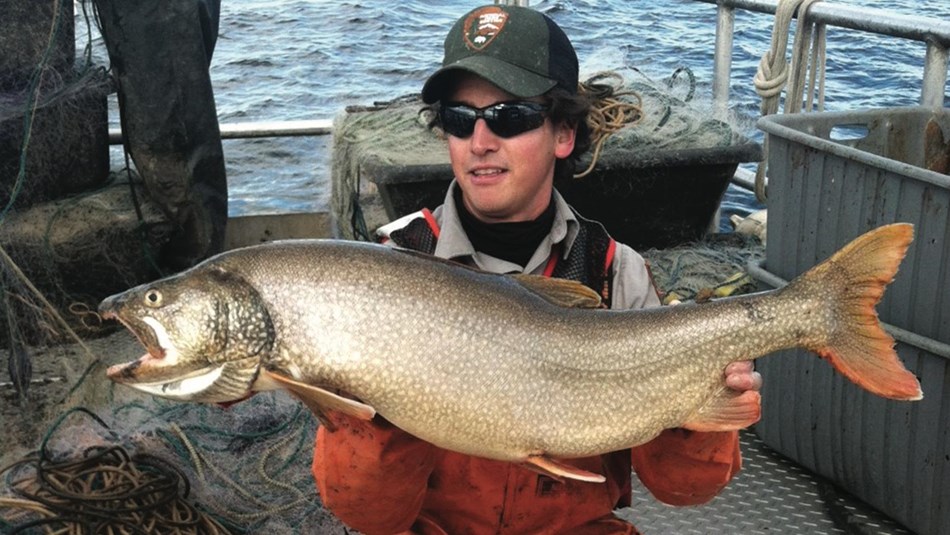
Rainbow trout              36 parks (often introduced deliberately)


The report mentions several tree-killing insects or pathogens among the damaging animal invaders in National parks: emerald ash borer, hemlock woolly adelgid, and rapid ohia death (a pathogen). (Background on all three is here.)


This new report acknowledges management efforts. They reviewed 80 NPS projects in the pipeline from 2000 through 2023. Most projects target a limited number of species: feral hogs, cats, and horses/burros; fire ants; hemlock woolly adelgid; and emerald ash borer.

EAB-killed ash tree in Shenandoah NP  (F.T. Campbell)

Eradication has reportedly been attempted for 21 invasive animal populations; 17 of those populations remained under some control efforts (e.g., monitoring to detect any re-invasion) in 2016. Nine of the eradicated populations were in the Pacific West region – especially Channel Islands National Park. Another eight were in the Southeast. Three other regions — Intermountain, Northeast, and National Capital regions — each reported one invasive animal population eradicated and under control. Another 150 invasive animal populations were reportedly “controlled”.


What’s the Problem?

The report’s authors note numerous (and well-known) difficulties in managing invasive animals. These include difficulty detecting invaders at early stages of invasion; paucity of effective management tools; and social constraints such as perceived benefits associated with some (e.g., trout and other sport fishes) and ethical and humane objections to killing vertebrates.

However, the report identifies the principal problem to be lack of support for invasive species programs from NPS leadership. Constraints that hamper park managers’ efforts within the agency include Service-wide coordination, lack of capacity, park culture, “social license” (i.e., public approval), and cross-boundary coordination.

The authors suggest that to correct these deficiencies, the Service should formally acknowledge that invasive animals represent a crisis on par with each of the three major crises that drove Service-wide change in the past:

1) over-abundance of ungulates due to predator control (leading to the “Leopold Report” in the 1960s);

2) Yellowstone fire crisis (which led to new wildfire awareness in the country); and

3) recognition of the importance of climate change (which resulted in the report “Leopold Revisited: Resource Stewardship in the National Parks”).

To achieve true success in such a major undertaking, all levels of NPS management must be engaged. Further NPS’ current culture and capacity must be changed. The report suggests providing incentives for (1) efforts to address long-term threats (not just “urgent” ones) and (2) putting time and effort into coordinating with potential partners, including other park units, agencies at all levels of government, non-governmental organizations, private landowners, and economic entities.

An additional step to realizing a comprehensive invasive animal program would be to integrate invasive animal threats and management into long-range planning goals for natural and cultural landscapes and day-to-day operations of parks and relevant technical programs (e.g., Biological Resources Division, Water Resources Division, and Inventory and Monitoring Division).

The report notes the need for increased funding. Such funding would need a flexible timeline (unlike existing Service-wide funding for more general purposes), allowing parks to be responsive to time-sensitive management issues. It would also have to be available consistently over the long term – since eradication can take a long time. Several approaches are proposed, including incorporating some invasive species control programs (e.g., weeds, wood borers) into infrastructure maintenance budgets; adopting invasive species as fundraising challenges for “Friends of Park” and the National Park Foundation; and adopting invasive species as a priority threat.

The authors would like NPS to become a leader on the invasive species issue – specifically by testing emerging best management practices and by better educating visitors on the ecological values of parks and the serious threat that invasive species pose to the their biodiversity. The authors suggest that the NPS also take the lead in countering invasive species denialism.

While officially-approved deliberate introductions of non-native species are probably unlikely to continue, the report expects that the numbers of invasive animals and species in national parks will increase due to continuing spread of invaders from neighboring areas. Therefore, NPS’ current piecemeal approach needs to be replaced with a much stronger, strategic approach in which parks engage in collaboration with conservation partners on adjacent lands or waters and across the greater landscape.


Invasive Plants

The NPS launched a coordinated effort targetting invasive plants years ago — in 2000. The most obvious component of which was the Exotic Plant Management Teams (EPMTs). The broader program was officially named the Invasive Plant Program (IPP) only in 2014. The IPP provides leadership to individual parks, regions, and the park system on invasive plant management, restoration, and landscape level protection. The IPP released its strategic plan in December 2016. (Ok! More than a year ago. I am tardy.)

Despite the large size of the program – 15 EMPTs across the country – and the clear and recognized threat that invasive plants pose to NPS values, I got the impression that the program struggles to gain  support from the Service. In that way, the situation is similar to the challenges to efforts on animal invasives described above.

   removing Miconia to protect Haleakala National Park

The Strategic Plan identifies goals and actions to optimize the program’s effectiveness, while increasing program and park capacity and leveraging human and fiscal resources with state, federal, and private entities.

The plan articulates a mission, a vision, five broad goals, and actions for the next 10 years. It’s intended to guide annual planning and major projects, as well as to identify and help prioritize funding needs and initiatives.

The overall vision is for the Invasive Plant Program to guide park service efforts to enhance landscape level stewardship of resources by applying “technically sound, holistic, collaborative, adaptive, and innovative approaches.” The hope is that other NPS units will increasingly rely on the IPP’s expertise in implementing their programs and building partnerships.

The strategic plan lays out five broad goals, each supplemented by a list of detailed activities. Priority actions have been identified for the first 5 years (2017-2021) with the expectation that actions will be re-prioritized during annual reviews. These five goals are:

  1. Develop program standards

Clarify and standardize administrative and operational roles and tasks. Improve data management and train colleagues in those standards. Incorporate science-informed procedures to support park management of invasive plants.

Interestingly, the Plan calls for IPP staff to quantify the invasive plant threat and effort needed to manage it and then to communicate the gap between effort needed and resources available to decision makers.

2. Promote the Invasive Plant Program by highlighting the services it provides and the significance of the invasive plant issue both internally and with stakeholders. Assure that IPP efforts parallel those in the Department of Interior Action Plan for invasive species.

  1. Build capacity of individual parks and the Service to prevent the arrival of invasive plants and manage infestations that are already present

Enhance resource and information sharing and field-based training. Find ways to encourage parks to continue managing the invaders after the EMPT completes the initial eradication. Also find ways to increase the EPMT Program’s efficiency. Possibly develop an NPS pesticide applicators’ certification course (the Bureau of Land Management and Department of Defense already have one).

Increase partnerships to deal with actions that are outside parks’ control. Specifically, participate in regional and state invasive plant councils, and collaborate with a full range of external partners to identify successful techniques, conduct control and restoration campaigns, improve and implement efficient plant management across park boundaries, and recruit and manage youth and volunteers.

  1. Promote holistic and integrated invasive plant management

Work with other NPS programs and parks (across all divisions) to establish resource stewardship and landscape preservation / restoration goals. Integrate integrated pest management strategies in management actions. Continue close collaboration with Climate Change Response Program (if it still exists!). Identify research needs and get the research done.

  1. Collaborate on invasive plant management

Foster and encourage internal and external collaboration and coordination to leverage available resources, expertise, and knowledge.

Identify parks, NPS programs, partner agencies, organizations, and related initiatives with similar objectives to increase efficiency and effectiveness. Coordinate with NPS monitoring programs (although the invasive animal study authors thought the monitoring program is not structured to serve invasive species needs). Partner with BLM and US Fish and Wildlife Service and non-federal partners to cooperatively manage invasive plants on the landscape. Coordinate compliance with National Environmental Policy Act (NEPA) and National Historic Preservation Act.


Each IPP unit is expected to develop an annual work plan that aligns with an annual financial plan. Priorities will be reviewed annually. Each IPP unit will also submit an annual accomplishment report. IPP might develop a tracking system to be applied to each assigned action.

Plus the IPP strategic plan will be reviewed annually and actions will be re-prioritized as needed. The annual status reports will be made available to stakeholders and partners on the Web.


Posted by Faith Campbell

We welcome comments that supplement or correct factual information, suggest new approaches, or promote thoughtful consideration. We post comments that disagree with us — but not those we judge to be not civil or inflammatory.
 

You Might Be Surprised By Who is Authorized to Manage Wildlife on Federal Lands

mountain goats – introduced onto USFS-managed lands in the Columbia River Gorge at state initiative; in Utah, the state introduced mountain goats on lands adjacent to a USFS Research Natural Area


The journal Environmental Law has just published a 135-page article that debunks a common myth of wildlife management – a piece that the U.S. Forest Service tried to quash. The authors’ analysis could affect the introduction of potentially invasive non-native species – and the reintroduction of native ones – on federal lands.

Nie, M., C. Barns, J. Haber, J. Joly, K. Pitt & S. Zellmer. 2017. Fish and Wildlife Management on Federal Lands; debunking state supremacy. Environmental Law, Vol. 47, no. 4 (2017).

The article reviews the legal authority of federal and state governments to manage wildlife on federal lands.  The authors examined wildlife-related provisions within the National Park System, National Wildlife Refuge System, National Forest System, Bureau of Land Management, the special case of Alaska, the National Wilderness Preservation System, and the Endangered Species Act. They also reviewed cases where federal and state agencies came into conflict over wildlife management on federal lands.

Citing the U.S. Constitution, federal land laws, and relevant case law, the authors assert that federal agencies have an obligation, not just the discretion, to manage and conserve fish and wildlife on lands and waters under their management. They say that the often-cited statement that “the states manage wildlife and federal land agencies only manage wildlife habitat” is wrong from a legal standpoint. This is the myth that the article debunks.

Furthermore, the authors find that federal agencies frequently apply their powers in an inconsistent and sometimes even unlawful fashion. Due to political pressures, they may back down when confronted by states wanting to manage wildlife to achieve their own goals – even when the state’s goals conflict with the legally-mandated purposes of the federal land under question. Such goals might include ensuring maximum populations of “game” animals or introduction of species to new habitats – regardless of the potential impact on native plants and animals.

The authors note that federal land and wildlife laws provide ample opportunities for constructive intergovernmental cooperation in wildlife management. They call for truly mutual collaboration by federal, state, and tribal authorities in managing wildlife. However, such cooperation is blocked in part by states choosing to challenge the constitutional powers, federal land laws, and U.S. government supremacy. In addition, the authors contend, most states have not put together programs that address their own conservation obligations. These obligations are inherent in the widely recognized doctrine of wildlife being a public trust to be managed for the present and future benefit of the people, not the government or private individuals.

According to the website of the Forest Service Employees for Environmental Ethics,  posting of a draft of this article on the University of Montana website (where lead author Martin Nie teaches) led the U.S. Forest Service to pressure the university to withdraw the article. The university refused, and the Forest Service ended its contract with Nie and his research center.

The paper can be downloaded here. We welcome comments that supplement or correct factual information, suggest new approaches, or promote thoughtful consideration. We post comments that disagree with us — but not those we judge to be not civil or inflammatory.
Posted by Faith Campbell

Invasive “hot spot” study confirms vulnerable places, causes of introductions

removing Miconia from Hawaiian forest; courtesy of the Nature Conservancy of Hawai`i

A recent article by Wayne Dawson and 24 coauthors (see reference at the end of this blog) provides the first-ever global analysis of established alien species. They studied the diversity of established alien species belonging go eight taxonomic groups – amphibians, ants, birds, freshwater fish, mammals, reptiles, spiders and vascular plants – across 609 regions (186 islands or archipelagos, and 423 mainland regions).

The analysis found that the highest numbers of established alien species in these taxonomic groups were in the Hawaiian Islands, New Zealand’s North Island and the Lesser Sunda Islands of Indonesia. The Hawaiian Islands have high numbers of invasive species in all of the eight groups studied. In New Zealand, the highest numbers were invasive plants and introduced mammals that prey on the native birds.

Florida is the top hotspot among mainland regions. Florida is followed by the California coast and northern Australia.

Burmese python in the Florida Everglades; photo by U.S. Fish & Wildlife Service

Patterns

 Invasive species hotspots were found mainly on islands and in coastal regions of mainland areas. The lead author, Dr. Wayne Dawson, a researcher at Durham University’s Department of Biosciences, suggested that the greater invasive species richness in coastal regions probably results from higher rates of species introductions to port areas compared to interior regions.

Island regions have, on average, higher cross-taxon invasive species richness. This cross-taxon richness on islands tends to be higher for those islands further from continental landmasses. The authors suggest that such oceanic islands might be more likely to import large quantities of goods from foreign sources than islands close to continents, thus experiencing higher propagule pressure.


Associations

Regions with greater wealth (measured as per capita GNP), human population density, and area have higher established alien richness. These effects were strongest on islands. The authors suggest that wealth and human population density might correlate with higher numbers of species being brought to the region through trade and transport.

On mainlands, cooler regions have higher richness. I think this might reflect history – centuries of colonial powers importing plants and animals. However, colonial powers also introduced species to tropical regions.  In contrast, on islands warmer and wetter regions have higher richness of invasive species.


Drivers

The authors conclude that cumulative numbers of invasive species at a particular location are driven to a greater extent by differences in area and propagule pressure than by climate. The model that best explains cross-taxon invasive species richness combines per capita GDP, population density and sampling effort. Other important factors are area of the region, mean annual precipitation, and whether a region is on a mainland or island(s).

The study results show that, per unit increase in area, per capita GDP, and population density, invasive species richness increases at a faster rate on islands than on mainlands. This might be confirmation of the longstanding belief that islands are more readily invaded than mainlands, although the authors caution that a rigorous test of this explanation would require data on failed introductions.

The authors call for additional research to understand whether these effects arise because more species are introduced to hotspot regions, or because human disturbance in these regions makes it easier for the newcomers to find vacant spaces and opportunities to thrive.


I think it would be helpful to compare the findings on invasive species richness in specific regions to data on historic patterns of trade and colonization to strengthen our understanding of the importance of propagule pressure in determining invasion patterns.


Increasing Confirmation of Significance and Breadth of Invasive Species Threat

The Dawson et al. study is the latest in a series of analyses of global or regional patterns in invasive species. I have blogged previously about several of these:

  • Bradshaw et al. 2016 concluded that invasive insects alone cause at least $77 billion in damage every year, a figure they described as a “gross underestimate”.
  • A study by Hanno Seebens and 44 coauthors showed that the rate of new introductions of alien species has risen rapidly since about 1800 – and shows no sign of slowing down. Adoption of national and international biosecurity measures have been only partially effective, failing to slow deliberate introductions of vascular plant species, birds, and reptiles, and accidentally introduced invertebrates and pathogens. Like Dawson et al, Seebens et al. found a strong correlation between the spread of bioinvaders introduced primarily accidentally as stowaways on transport vectors or contaminants of commodities (e.g., algae, insects, crustaceans, molluscs and other invertebrates) and the market value of goods imported into the region of interest.
  • Liebhold et al. 2016(see reference below) studied insect assemblages in 20 regions around the world. They found that an insect taxon’s ability to take advantage of particular invasion pathways better explained the insect’s invasion history than the insects’ life-history traits. (The latter affect the insect’s ability to establish in a new ecosystem.)
  • Maartje J. Klapwijk and several colleagues note that growing trade in living plants and wood products has brought a rise in non-native tree pests becoming established in Europe. The number of alien invertebrate species has increased two-fold since 1950; the number of fungal species has increased four-fold since 1900.
  • Jung et al. (2015) studied the presence of Phytophthora pathogens in nurseries in Europe. They found 59 putatively alien Phytophthora taxa in the nurseries. Two-thirds were unknown to science before 1990. None had been intercepted at European ports of entry when they were introduced. Nor have strict quarantine regulations halted spread of the quarantine organism ramorum.
  • A report by The World Conservation Union (IUCN) on World Heritage sites globally found that invasive species were second to poaching as a threat to the sites’ natural values. Of 229 natural World Heritage sites examined, 104 were affected by invasive species. Island sites – especially in the tropics – were most heavily impacted.
  • Another report by IUCN found that invasive species were the second most common cause of species extinctions – especially for vertebrates.

Conclusions

These studies demonstrate that

  • Invasive species have become a significant threat to biological diversity and ecosystem services around the world – one that continues to grow.
  • The recent spate of studies originating in Europe probably reflects recent recognition of the continent’s vulnerability – as seen, inter alia, in the proliferation of tree-killing Phytophthoras.
  • Human movement of species – propagule pressure – whether deliberately or due to inadequate efforts to manage trade-related pathways – explain the bulk of “successful” introductions.
  • Economic activity drives introductions, so areas at highest immediate risk are urban areas and other centers receiving high volumes of imports and visitors. Among troubling trends in the future is rapid global urbanization – along with rising economic interdependency.
  • Efforts to curb these movements – at the national, regional, and international levels – have failed so far to counter the threat posed by invasive species of nearly all taxonomic groups.

In my view, the requirements that phytosanitary measures “balance” pest prevention against trade facilitation results in half measures being applied – and half measures achieve halfway results. For example, the U.S. does not require that packaging be made from materials that cannot transport tree-killing pests. The USDA has moved far too slowly to limit imports of plant taxa that pose a risk of either being invasive themselves or of transporting pests known to be damaging.


Conservationists should focus on building political pressure to strengthen regulations and other programs intended to curtail this movement. No other approach will succeed.


Sources

Bradshaw, C.J.A. et al. Massive yet grossly underestimated global costs of invasive insects. Nat. Commun. 7, 12986 doi: 10.1038/ncomms12986 (2016). (Open access)

Dawson, W., D. Moser, M. van Kleunen, H. Kreft, J. Perg, P. Pyšek, P. Weigelt, M. Winter, B. Lenzner, T.M. Blackburn, E.E. Dyer, P. Cassey, S.L. Scrivens, E.P. Economo, B. Guénard, C. Capinha, H. Seebens, P. García-Díaz, W. Nentwig, E. García-Berthou, C. Casal, N.E. Mandrak, P. Fuller, C. Meyer and F. Ess. 2017. Global hotspots and correlates of IAS richness across taxon groups. Nature Ecology and Evolution Vol. 1, Article 0186. DOI: 10.1038/s41559-017-0186 | www.nature.com/natecolevol


Jung,T., L. Orlikowski, B. Henricot, P. Abad-Campos, A.G. Aday, O. Aguin Casa, J. Bakonyi, S.O. Cacciola, T. Cech, D. Chavarriaga, T. Corcobado, A. Cravador, T. Decourcelle, G. Denton, S. Diamandis, H.T. Doggmus-Lehtijarvi, A. Franceschini, B. Ginetti, M. Glavendekic, J. Hantula, G. Hartmann, M. Herrero, D. Ivic, M. Horta Jung, A. Lilja, N. Keca, V. Kramarets, A. Lyubenova, H. Machado, G. Magnano di San Lio, P.J. Mansilla Vazquez, B. Marais, I. Matsiakh, I. Milenkovic, S. Moricca, Z.A. Nagy, J. Nechwatal, C. Olsson, T. Oszako, A. Pane, E.J. Paplomatas, C. Pintos Varela, S. Prospero, C. Rial Martinez, D. Rigling, C. Robin, A. Rytkonen, M.E. Sanchez, B. Scanu, A. Schlenzig, J. Schumacher, S. Slavov, A. Solla, E. Sousa, J. Stenlid, V. Talgø, Z. Tomic, P. Tsopelas, A. Vannini, A.M. Vettraino, M. Wenneker, S. Woodward and A. Perez-Sierra. 2015. Widespread Phytophthora infestations in European nurseries put forest, semi-natural and horticultural ecosystems at high risk of Phytophthora disease. Forest Pathology.


Klapwijk, M.J., A.J.M. Hopkins, L. Eriksson, M. Pettersson, M. Schroeder, A. Lindelo¨w, J. Ro¨nnberg, E.C.H. Keskitalo, M. Kenis. 2016. Reducing the risk of invasive forest pests and pathogens: Combining legislation, targeted management and public awareness. Ambio 2016, 45(Suppl. 2):S223–S234  DOI 10.1007/s13280-015-0748-3  [http://www.nature.com/articles/ncomms14435 ]


Liebhold, A.M., T. Yamanaka, A. Roques, S. Augustin, S.L. Chown, E.G. Brockerhoff, P. Pysek. 2016. Global compositional variation among native and nonindigenous regional insect assemblages emphasizes the importance of pathways. Biological Invasions (2016) 18:893–905


Seebens, H. et al., 2017. No saturation in the accumulation of alien species worldwide. Nature Communications. January 2017. [http://www.nature.com/articles/ncomms14435 ]


We welcome comments that supplement or correct factual information, suggest new approaches, or promote thoughtful consideration. We post comments that disagree with us — but not those we judge to be not civil or inflammatory.
 

Posted by Faith Campbell


Bill aimed at controlling invasive species on the ground advances

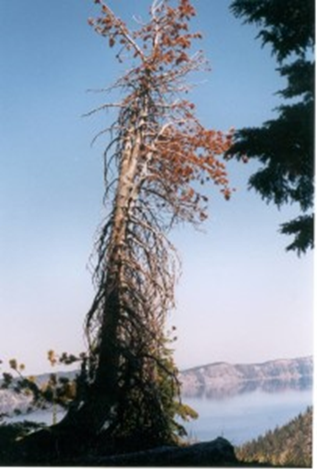
whitebark pine in Crater Lake National Park killed by white pine blister rust; photo by F.T. Campbell

In the first days of April, the Senate Environment and Public Works Committee  adopted the Wildlife Innovation and Longevity Driver Act (S. 826) (the WILD Act).

Title II of this legislation would amend the Fish and Wildlife Coordination Act by inserting language very similar to the Federal Land Invasive Species Control, Prevention, and Management Act (S. 509).  I blogged last year about that  bill and a hearing about it here.

Our concerns at the time focused on:

  • The provision allowing invasive control projects to proceed without first being evaluated by an environmental impact statement or environmental assessment. Lack of careful analysis could expose the environment to additional damage. For example, use of herbicides or grazing to control invasive plants can lead to suppression of native forbs. Suppressing invasion by one set of plants – whatever the strategy used – often facilitates a secondary invasion.
  • The mandatory funding allocations – which severely limit funds available to support research, outreach, and strategic planning and coordination – could undercut activities crucial to development and implementation of effective strategies and management tools.
  • The mandatory goal of reducing invasive species populations by 5% per year is unrealistic.
  • New requirements on reporting and coordination might divert already-thin resources and delay needed action.
  • Priority-setting. Managing invasive species on national lands should reflect national goals and perspectives, not be set by states’ governors.

Caroline Murphy of The Wildlife Society and I have reviewed Title II of the new WILD Act and find that it differs from last year’s invasive species control bill in several important ways:

  • The bill now applies to a wider range of agencies. The Secretary of the Army (who supervises the Corps of Engineers) is included explicitly; he joins the secretaries of Interior and Agriculture (as supervisor of the Forest Service). In addition, the bill also applies to the head of “any federal agency” having duties related to planning or treatment of invasive species “for the purpose of protecting water and wildlife on land and in water.”
  • Most important, projects are no longer granted a “Categorical Exclusion” from preparing environmental impact analyses. Instead, under an “Expedited Action” provision, the Secretaries are instructed to use all existing legal tools and flexibilities to expedite projects and activities.
  • The bill still requires that 75% of invasive species funds be allocated to “on-the-ground control and management of invasive species.” But such activity now may include “the use of appropriate methods to remove invasive species from a vehicle or vessel capable of conveyance.” I wish the language also included efforts to prevent invasive species from being present in or on the vehicle or vessel.
  • The bill has dropped the requirement that invasive species’ populations be reduced by 5% annually. The bill now requires the Secretaries to develop a strategic plan “to achieve, to the maximum extent practicable, a substantive annual net reduction of invasive species populations or infested acreage on land or water” that the Secretary manages. It is still not clear whether that reduction should apply to some or all of the invasive species there.

I am still concerned that

  • Projects are to use least-cost methods. This requirement is likely to favor reliance on chemical controls, which could have significant non-target impacts and might not provide lasting control. This incentive might be counter-balanced by the requirement that the methods be effective, based on sound scientific data. However, the bill’s focus on measuring annual results rather than long-term efficacy will add to pressures to rely on short-term approaches that could undermine long-term effectiveness.
  • Leadership of the projects – especially setting priorities – will be in hands of state governments, not the federal agencies which have the responsibility under federal law to manage the lands and waters that are to be protected. A partial counter-balance is the requirement that the appropriate federal agency Secretary determine which lands or waters need immediate action to address the invasive species risk.  Furthermore, the expedited actions are to be carried out in accordance with agency procedures, including any applicable land or resource management plan

I welcome the requirement that the Secretaries, in developing their strategic plans, must take into consideration the ecological as well as the economic costs of acting or not acting.

As before, the projects are to be carried out through collaboration with wide range of partners, including private individuals and entities – apparently including non-governmental organizations such as state or local invasive plant coalitions.

The rest of the WILD Act would reauthorize the Partners for Fish and Wildlife Program, some Multinational Species Conservation Fund Programs, and create several conservation-related competitive grant programs to be managed by the National Fish and Wildlife Foundation, one of which is for the management of invasive species.

Now that these provisions are incorporated into a wider bill, and Senator Barasso is chairman of the full committee, adoption of some version of this legislation now seems more likely than I thought last year.  Apparently there is still no action in House on the parallel bill.

While I am heartened by some of the changes in the bill since last year, I continue to think that America’s public lands would be better protected by a more comprehensive approach that includes prevention, mapping, early detection, research, prioritization, coordination and outreach aimed at engaging key stakeholders.  Such an approach was outlined in a document developed a couple of years ago by the National Environmental Coalition on Invasive Species (NECIS) – available here.

Posted by Faith Campbell

We welcome comments that supplement or correct factual information, suggest new approaches, or promote thoughtful consideration. We post comments that disagree with us — but not those we judge to be not civil or inflammatory.
New Secretary of Interior Pledges to Support Invasive Species Efforts — Let’s Ask USDA Secretary to do the Same!

Interior Secretary nominee Ryan Zinke

During his confirmation hearing Ryan Zinke, nominated to be the new Secretary of Interior, committed to several senators that he would explore ways to better manage invasive species on federal lands – especially in National parks – and to strengthen the National Invasive Species Council (NISC).

Mr. Zinke is currently a Congressional Representative from Montana. Senator Debbie Stabenow (MI) pressed him on invasive species issues during the hearing, focusing on the threat to the Great Lakes of carp and other aquatic species. Also, Senators Al Franken (MN), Joe Manchin (WV), and Mazie K. Hirono (HI) asked about invasive species in written questions submitted to the nominee.

Mr. Zinke answered most questions the same way:  He shares the Senator’s concern, especially since  Montana has significant invasive species problems. Also, he thinks it is critical that federal land managers be encouraged and empowered to be good neighbors in controlling invasive species in cooperation with adjacent private land owners. …  Specifically he wants to explore ways to implement the Early Detection Rapid Response Framework adopted by NISC in 2016.


* Sen. Franken included a single question on bioinvaders among a long list of questions on other topics. He mentioned the emerald ash borer as one example of a damaging invader in Minnesota. Senator Franken asked Mr. Zinke:

1) what steps he would take to enhance invasive species control on public lands

See paragraph above for Mr. Zinke’s answer.

2) whether he would enforce the Lacey Act and explore ways to strengthen it.

Mr. Zinke said he would enforce the law. He is aware that there is broad bipartisan frustration with the lack of an efficient process for listing injurious species under the Act. He would ask the Fish and Wildlife Service to recommend ways to improve its implementation. If legislative changes might be helpful, he would be pleased to have that conversation with the Congress.


* Sen. Manchin’s first question (!) asked how Mr. Zinke might strengthen NISC to help manage invaders across multiple types of land ownership. See Mr. Zinke’s frequent reference to his Montana experience above for his answer.


* Sen. Hirono asked five questions pertaining to invasive species! Her first question concerned steps to protect National parks (especially in Hawaii) from bioinvasion. Here, Mr. Zinke gave his usual response but added: “I am especially concerned that Hawaii’s unique flora and fauna are vulnerable to invasive species. I would not want to see invasive species push any of these unique plants and animals onto the Endangered Species list. Once confirmed, I will ask the National Park Service to present me with options for better protecting our national parks from invasive species.”


Ms. Hirono also asked about strengthening NISC. Mr. Zinke responded as follows: “…, I will explore ways to improve the operations of the National Invasive Species Council, and actively engage with the Secretaries of Commerce and Agriculture to get off to a strong start on this issue. … We also need to create a more effective linkage between the National Invasive Species Council policy operation in Washington, DC, and the on the ground federal land managers across the country who deal with invasive species on a daily basis…”


Also, Sen. Hirono asked for Mr. Zinke to help Hawai`i and other U.S. Pacific islands to counter the spread of invasive species through movement of military equipment. Mr. Zinke said he would work to enhance coordination with the Department of Defense and the Pacific island communities to reduce the risks posed by invasive species. … explore how we may implement the recent framework for early detection and rapid response …


Mr. Zinke also promised to work with Senator Hirono on several issues under Interior jurisdiction that are priorities for Hawai`i, among them invasive species.


What We Should Ask the new President & Congress to Do re: Invasive Species

While there are many opportunities for the Congress to strengthen U.S. invasive species programs (see my blog from December 31 here, the most important activity NOW is the confirmation of Sonny Perdue as Secretary of Agriculture. Contact your Senators and urge them to ask Governor Perdue how he will address invasive species challenges.

USDA Secretary nominee Sonny Perdue

Possible questions:

Q: How serious do you think is the threat to American natural resources from invasive (non-native) insects, pathogens, and plants? Can you suggest steps you would take to strengthen the efforts of the Animal and Plant Health Inspection Service (APHIS) aimed at controlling introduction and spread of such bioinvaders into the United States?

Q: The principal legal authority for preventing introductions of invasive plants and plant pests is the Plant Protection Act. The PPA provides strong authority but its implementation has been hampered by internal USDA decisions. How would you ensure that the Department corrects these problems and actively enforces its regulations aimed at ensuring the health and productivity of America’s plant resources?

  • In recent years, more than 20 previously undetected plant pests have been detected in the country each year. Hundreds of shipments of goods entering the country each year contain plant pests. What strategies would you promote to reduce the introduction, spread, and impacts of invasive species?

Q: Given the ever-tightening budget allocated to agencies responsible for addressing invasive species threats, what steps would you take to ensure that our country does not suffer waves of new invasions?

If you have a working relationship with your Senators and believe they understand the invasive species issue fairly well, you might want to suggest more detailed questions:

Q: As you know, the Animal and Plant Health Inspection Service (APHIS) is responsible for preventing introduction and spread of plant pests.

  • In some cases, APHIS has been hesitant to use its authority to penalize importers which routinely receive shipments that violate plant pest (phytosanitary) regulations. [You might cite my blog from last week  which illustrates examples pertaining to wood packaging.] Will you instruct APHIS to use its legal authority to impose civil penalties to deter continuing violations?


  • Trying to prevent pest introductions by increasing the percentage of shipments that are inspected visually will not be effective in many cases. This is true especially with regard to one of the most important pathways by which plant pests are introduced – imports of living plant material such as nursery stock. APHIS began updating its regulations governing plant imports nearly four years ago, but the proposed new regulations have been not been finalized. Will you look into the reasons for delay and take steps to update these regulations to focus on pathway cleanliness rather than continue to rely on ineffective visual inspections?

Q: Urban forests across the country are under threat from a growing number of non-native or introduced insect pests. Examples include the emerald ash borer – now found in 27 states; Asian longhorned beetle – which threatens a large proportion of urban trees across the country; and polyphagous and Kuroshio shot hole borers – killing many trees in southern California.

Urban forests are at particularly high risk of infestation by non-native pests because they are growing near ports and other transportation hubs where such pests are first introduced. Furthermore, each individual tree in an urban setting provides important benefits in the form of shade, moderation of storm water runoff, abatement of air pollutants, enhanced property values, and neighborhood amenities.

  • Will you fully utilize the authorities under the Plant Protection Act to help ensure the health and productivity of America’s urban forests?
  • [If you have not already suggested the questions outlined above re: wood packaging and other pathways, you might suggest them in this context.]


The Secretary of Agriculture also oversees the Forest Service. Pertinent questions:

Q: Invasives are as great a threat to eastern forests as wildfires are in the West. Despite the growing damage and ecological destruction we are witnessing the budgets for research on strategies to minimize these bioinvaders’ impacts are actually falling. How will you work to provide solutions to this quandary?

As I said in my blog at the end of December, what is missing is a political demand for action – and support for necessary staff and funding. Agencies under the secretaries of Agriculture and Interior bear most of the responsibility for managing invasive species. As long as these officials are not being pressed by key Congressional committees, the media, and key stakeholders to take more aggressive and effective action to curtail species introductions and suppress established populations of bioinvaders, they will continue to focus their attention on issues that do generate these kinds of political pressure.

Posted by Faith Campbell

We welcome comments that supplement or correct factual information, suggest new approaches, or promote thoughtful consideration. We post comments that disagree with us — but not those we judge to be not civil or inflammatory.
 

Firewood: Important Progress — and a Troubling Stalemate

49862752

After years of work, the combined efforts of many staff at federal agencies and non-profits have succeeded in placing a firewood alert message on the Reservation.gov website for all of the 3,163 federal  campgrounds managed by the National Park Service, USDA Forest Service, and Corps of Engineers for which visitors can reserve a spot in advance. Only 43 federal reserveable campgrounds remain without messaging. These are managed by the Bureau of Land Management, Bureau of Reclamation, and the US Fish and Wildlife Service.

As of October 2016, visitors reserving campgrounds through the services of Reserve America or Recreation.gov for any National parks, National forests, or Army Corps reservoirs will find new information in the “Know before you go” section – a message about not moving firewood.

The messages vary somewhat  by agency, but basically say:  “Don’t move firewood!”  They often add “buy firewood at or near your destination and burn it on-site.”  Some messages include a brief explanation about the aim — to prevent or limit spread of invasive tree-killing pests. Some include a message that some states regulate firewood movement. There is a link to either the national program — dontmovefirewood.org – or to the pertinent state program, e.g., the California Firewood Task Force for National Forest campgrounds in Region 5.

Some federal campgrounds do not use the Reservation.gov system and therefore require separate efforts to improve firewood messaging. This includes several popular water-based recreation sites in the central southern states, such as the Arkansas River National Recreation Area and Oachita National Forest. Many states in this region also do not regulate firewood. [See my earlier blog contrasting management of firewood with management of boats and attached  mussels or aquatic plants here and the article by Frank Koch and colleagues, referenced below.]

Those who succeeded in achieving the widespread adoption of this outreach program deserve our thanks and praise! They worked long and hard for this.


On a Less Positive Note…

Unfortunately, efforts to put a firewood certification program into place appear to have stalled.

In March 2010, in response to increasing concern across the country, APHIS issued a first-ever firewood strategy, with a number of important elements.  It proposed the following:

Outreach Strategies:

  1. State and Federal agencies should convene a communications steering committee.
  2. Develop an online hub of firewood outreach materials.
  3. Prioritize the outreach activities.
  4. Use diverse methods to get consistent messages out about the risk of moving firewood.
  5. Support the voluntary and regulatory efforts.

Voluntary Strategies:

  1. Large-scale producers and retailers adopt best management practices.
  2. National producers and retailers adopt an industry-run national certification program with labeling and recordkeeping requirements based on best management practices.
  3. Public and private campgrounds make local or treated firewood available.
  4. Firewood consumers and small-scale local producers adopt best management practices.

Regulatory Strategies:

  1. APHIS should promulgate regulations for the interstate movement of firewood as soon as possible with requirements for labeling, recordkeeping and treatment based on best management practices.
  2. States should publish intrastate movement regulations with requirements similar to the Federal regulations for labeling, recordkeeping and treatment as needed. Moving firewood 50 miles or less would be exempt from intrastate regulations provided this does not violate any quarantine that may be in place.
  3. State, Federal, and private parks, forests and campgrounds should institute policies that encourage campers to use local firewood and to not move firewood out of the local area.

What has been done over the six and one-half years since the Strategy was released?

There has been tremendous progress on the outreach and voluntary strategies, with the Nature Conservancy’s Don’t Move Firewood program providing support and advice.  However, these voluntary programs are inadequate without regulatory backup.

There has been less progress on the more formal certification and regulatory strategies proposed in 2010.

Geoff Friedman – a firewood producer based in northern California – reports that he has developed the software for a certification program and worked with producers to get their acceptance. However, implementing the required wood treatments and – especially – staffing a third-party certification program – would raise the cost of firewood by 50%, according to Friedman. The major retailers which sell packaged firewood – the “big box stores” – are not willing to adopt the program because of this increased cost. In the absence or regulations requiring treatment of firewood, the program has stalled. (In the East, many states already regulate firewood. However, those states’ treatment requirements vary. Friedman seems to believe that this challenge can be worked out.)

APHIS has not adopted national regulations and does not appear to be on the verge of doing so. I believe APHIS wanted to tie its regulations to the certification program that has now stalled. Eleven of the 50 states currently have their own state-specific regulations limiting the movement of firewood from other states into their state. Only two more states are known to be potentially considering legislation in 2017. Many — but not all — federal agencies have now engaged on discouraging visitors from bringing their own firewood (see above). Some National parks actually restrict visitors bringing firewood to wood that is certified by USDA – including the park with the highest number of visitors, Great Smoky Mountains National Park. However, Yosemite and other National parks in California are not among them. And these are vulnerable to goldspotted oak borer and  the polyphagous or Kuroshio shot hole borers (see species write-ups here).

Worse, APHIS is actively moving toward dropping regulations trying to prevent spread of the emerald ash borer (see species write-up here). APHIS argues that with EAB now present in 30 states (although in many cases, in only one or a few counties), it is too late to try to prevent the insect’s further spread. The regulatory effort is using resources that would be better put to other strategies, such as expanding the biocontrol program. I concede that funding is tight, and likely to be cut further; and that other approaches – and other pests! – need attention.

However, the legal and logical foundation for nearly all state regulations governing firewood is the emerald ash borer. The promised federal regulation and certification program also rest primarily on the EAB risk. Many states – as well as APHIS – must base their regulation on one or more specific pests. Will these state regulations and promised federal programs survive the loss of the federal EAB regulatory program?

In any case, we are a long way from what is needed to get control of the firewood pathway. Each of the “lower 48” states should have an external quarantine. Hawai`i might need one too, if it imports firewood. (Hawai`i does import other types of risky wood products, including Christmas trees.)  Also, all 50 states need internal restrictions on the distance firewood is moved. So far, only a fraction have them.

The incoming Trump Administration strongly objects to regulations, so it is highly unlikely that we will see progress on these matters in the near future.


Reference:

Koch, F.H., D. Yemshanov, R.D. Magarey, and W.D. Smith. 2012. Dispersal of Invasive Forest Insects via Recreational Firewood: A Quantitative Analysis J. Econ. Entomol. 105(2): 438-450 (2012);


Posted by Faith Campbell

Leigh Greenwood helped check the facts and dates mentioned in this blog