What will replace hemlocks? Intractions with other plants & introduced pathogens complicate the situation

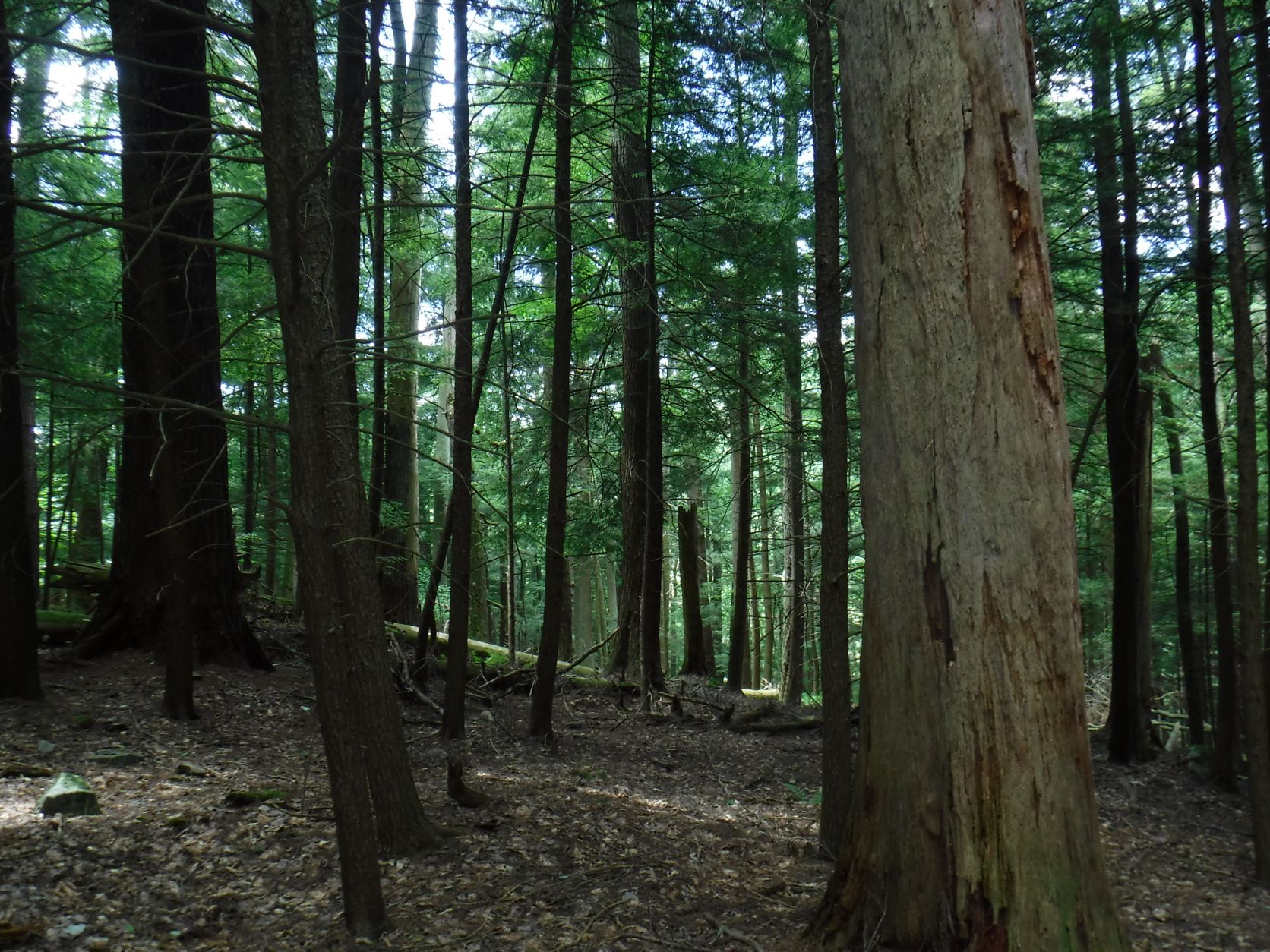
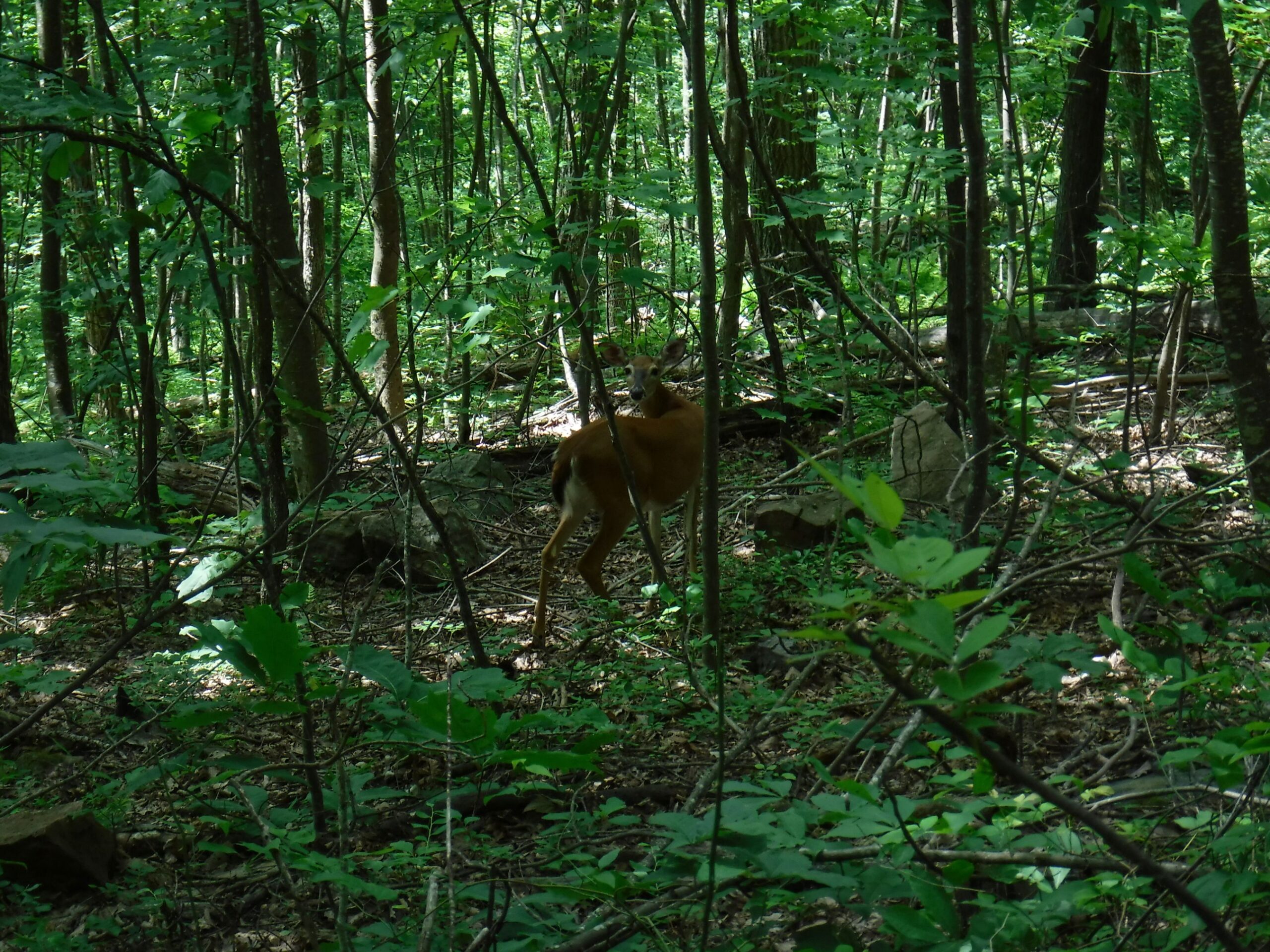
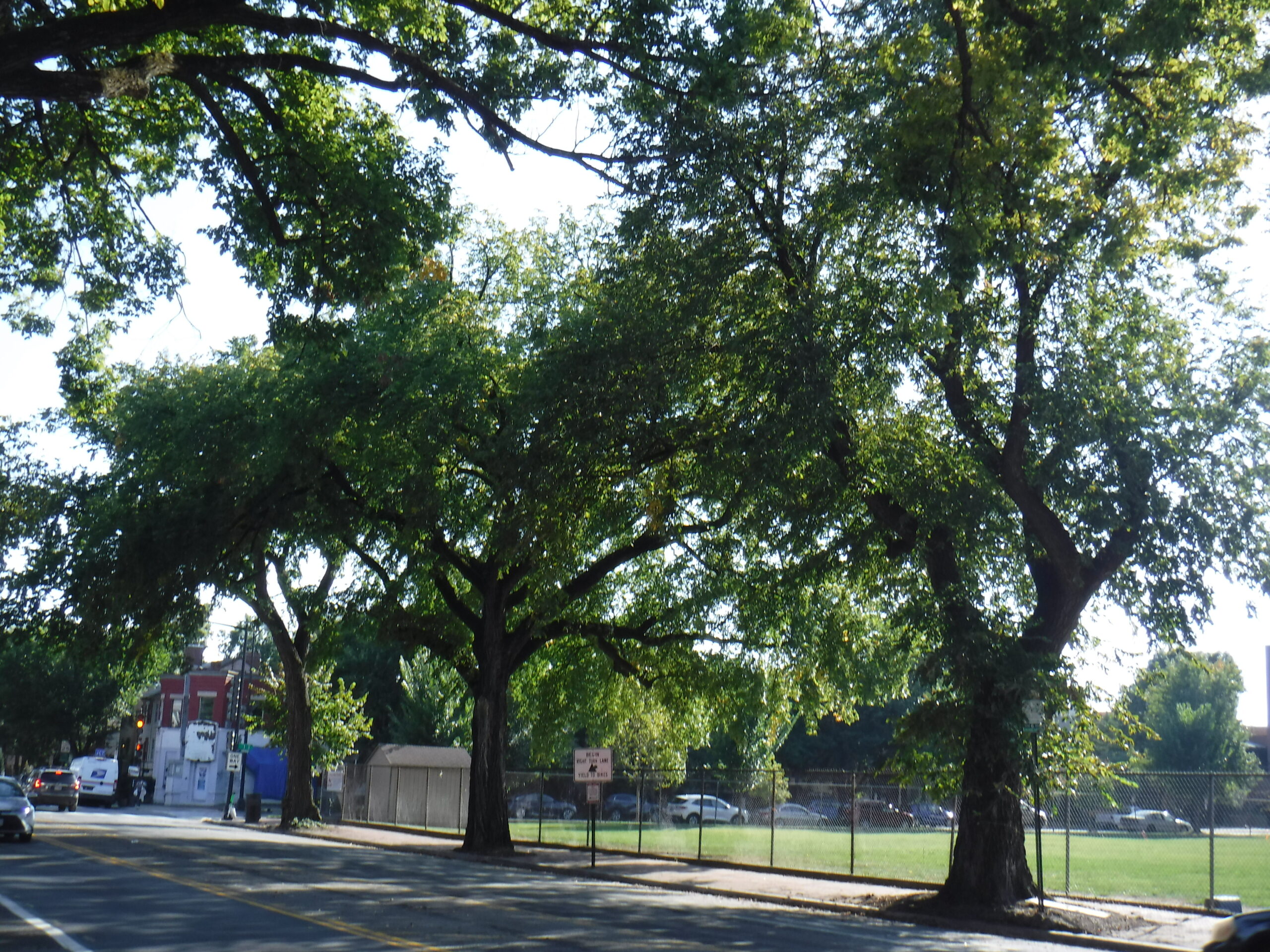
eastern hemlocks in Cook Forest State Forest Pennsylvania; photo by F.T. Campbell

As Eastern hemlock (Tsuga canadensis) suffers high levels of mortality across nearly all its range due to hemlock woolly adelgid (HWA; Adelges tsugae),  scientists scramble to determine what the successor forests will look like. The transformation will be stark: from deeply shaded evergreen coniferous forest with a sparse understory to something very different. As this process takes place, most scientists expect cascading effects on not only terrestrial and aquatic wildlife but also onecosystem functions, including soils and nutrient and hydrologic cycles (Dharmadi et al. 2019 Plotkin et al. 2024).

New England

In southern New England, hemlock groves are being replaced by stands of deciduous hardwood forests dominated by black birch (Betula lenta). While birch are expected to continue to dominate, other species comprise at least one third of seedlings in the Harvard Forest experimental sites, primarily eastern white pine (Pinus strobus) and red maple (Acer rubrum). Plotkin et al. (2024) note that conversion of hemlock forests to pine forests would be a less dramatic ecosystem shift since both are evergreen conifers.

symptoms of beech leaf disease; photo by the Ohio State University

In both southern New England and farther north, in Vermont and New Hampshire, maples and American beech have increased in prominence. In the latter case, this is despite the prevalence of beech bark disease and managers’ efforts to suppress beech. I have noted that beech leaf disease now threatens to disrupt this process.

Landowners in the region often seek to get some financial return from their forests before a pest kills the trees. About a quarter of the almost 9,000 ha of hemlock stands in the southern Connecticut River Valley have been harvested as HWA spread into the area. To test the effect of pre-mortality logging of hemlock stands, Plotkin et al. tried to mimic HWA-caused mortality by girdling all the hemlocks in some plots in Harvard Forest. In other plots they harvested most hemlocks and some of the other tree species. The girdled plots had a dramatic increase in standing and downed deadwood and a longer period of elevated understory light levels than the logged plots. They note that standing snags and on-ground dead wood provide critical ecosystem functions. Many wildlife and microbial species depend on dead wood for nutrition and a variety of micro habitats. Plotkin et al. found that the slowly decomposing dead wood also stored a large amount of carbon: girdled plots stored 18% more above-ground carbon than logged sites, even after accounting for carbon stored in harvested wood products.

a beech snag with nesting cavities; photo by F.T. Campbell

The magnitude of these differences might be even larger than demonstrated in this experiment. In New England, hemlocks infested with HWA die over a decade, not the two years seen after girdling. The delayed mortality provides a longer window of opportunity for succeeding vegetation to adapt and preserve higher levels of biodiversity. Plotkin et al. (2024) suggest that logging pest-threatened hemlock forests might remove structural resources that would support forest response to ongoing climate stress and future disturbances.

Considering the disturbed plots’ invasibility by non-native plants, Plotkin et al. (2024) found that more non-native shrubs invaded the girdled plots than the logged plots. They suggest that birds that disperse the shrubs’ fleshy fruits were attracted by perch sites provided by the standing dead trees.

Southern Appalachians

In the Southern Appalachians, post-HWA forests will apparently be quite different. At the USDA Forest Service’ Coweeta Hydrologic Laboratory in the Nantahala Mountain Range of western North Carolina, eastern hemlock died much faster than in New England. Hemlocks comprised more than 40% of the basal area before arrival of HWA (detected in 2003). Within two years all hemlock trees were infested. Half were dead by 2010, 97% by 2014 (Dharmadi et al. 2919).

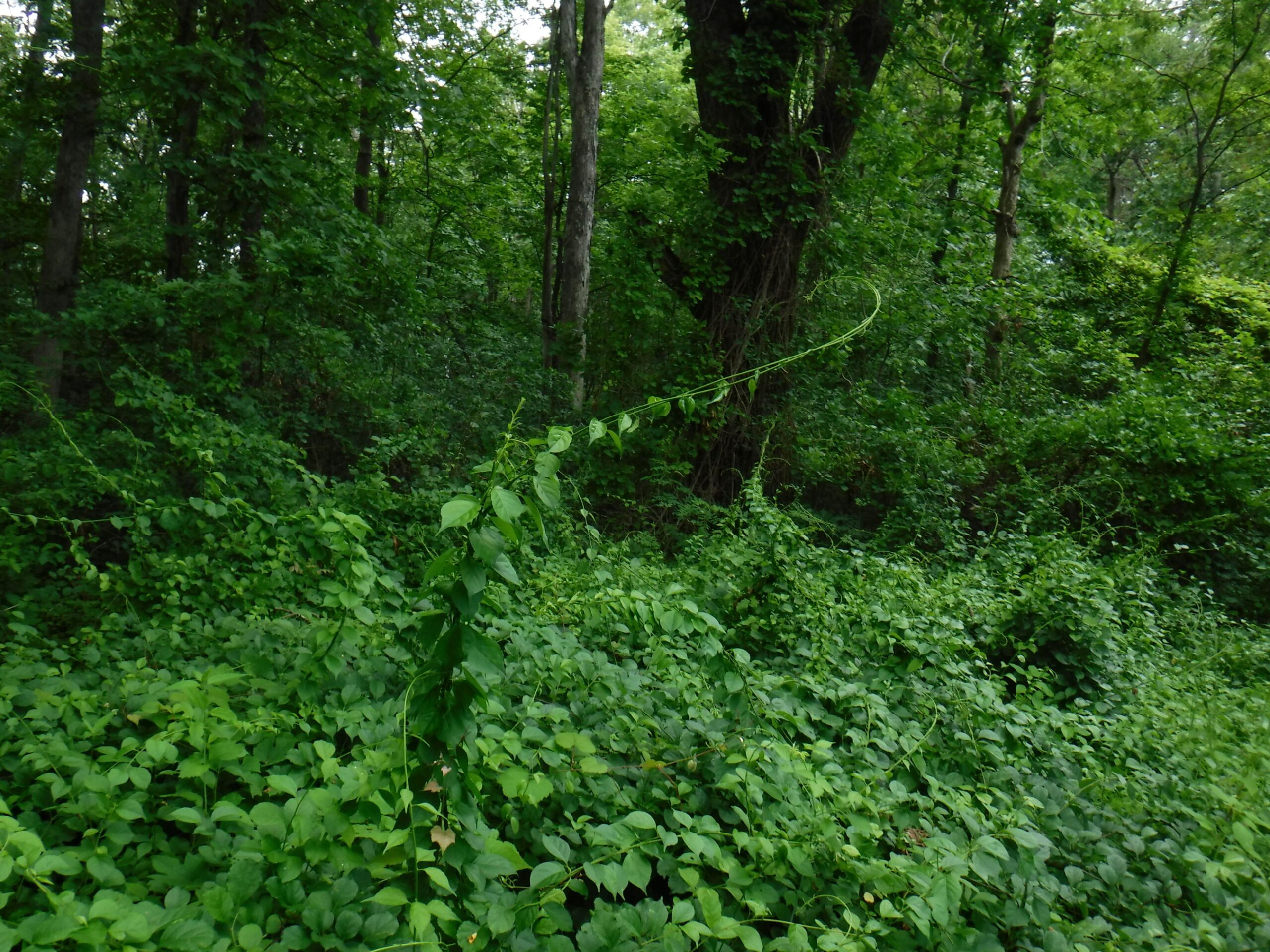
In some part of the southern Appalachian forests the shrub layer is dominated by Rhododendron maximum (rosebay rhododendron). This dense shrub layer is preventing recruitment of deciduous tree species that had been expected to replace the dead hemlocks. Tree seedlings died rather than grew into saplings. Scientists working in the Coweeta experimental forest attribute the seedlings’ demise to limited access to key resources, e.g., water, nutrients (especially inorganic nitrogen), and light (Dharmadi, Elliott and Miniat 2019).

In the Coweeta Basin, hemlock loss is the most recent of a series of severe disturbances that have apparently led to a cascade of responses in the overstory, midstory, and soil that have promoted expansion of rhododendron. (The earlier disturbances were widespread logging in the 19th Century and the loss of American chestnut to chestnut blight in the first part of the 20th Century. Therefore, the response of future forests to changes in temperature and rainfall might now depend on these novel tree-shrub interactions .

R. maximum hampers succession by forming a dense subcanopy layer that greatly limits light reaching the forest floor and reduces soil moisture and temperature. These changes impede seed germination and seedling survival. In addition, rhododendron leaves that fall to the ground create a thick organic soil layer that decomposes very slowly. This affects soil chemistry, specifically availability of the key nutrient nitrogen.

The rhododendron shrubs in the region are younger than the deciduous trees now making up the canopy above them (Dharmadi, Elliott and Miniat 2019). The dense rhododendron stands resulted from the widespread mortality of American chestnut (Castanea dentata) in the early 20th century and of hemlock in the first years of the 21st Century. What’s more, even the mature deciduous trees appear to be suppressed by dense rhododendron stands. Canopy trees above rhododendrons are on average 6m shorter than those growing on sites without rhododendron thickets (Dharmadi, Elliott and Miniat 2019). In fact, by 2014, 10% of standing trees other than hemlocks had died. The tree suffering the highest level of mortality was flowering dogwood (Cornus florida). The authors do not mention a probable factor, the introduced disease dogwood anthracnose. Other species experiencing high levels of mortality are not, to my knowledge, under attack by non-native pests, so their demise seems more clearly linked to resource competition with rhododendron. These were striped maple (Acer pennsylvanicum), pitch pine (Pinus rigida), witch hazel (Hamamelis virginiana), and that staple of New England aftermath forests, black birch (Betula lenta).

Dharmadi, Elliott and Miniat (2019) suggested that managers should step in to increase recruitment in both understory and overstory layers. They proposed active management: removing rhododendrons and the soil organic layer. USFS scientists are applying these ideas experimentally at the Coweeta research station. I am unclear as to whether there is one study or more. In any case, rhododendronplants have been removed with the goal of restoring vegetation structure and composition – presumably both understory plant diversity and recruitment of tree species capable of growing into the canopy. In at least some cases, the rhododendron removal is followed by prescribed fire. One study is looking also at whether this action increased water yield.

Apparently this lack of tree regeneration is extensive – although published data are not easily accessible. Staff of the North Carolina Hemlock Restoration Initiative report they encounter similar issues (O.W. Hall, Hemlock Restoration Initiative, pers. comm.)

Several experiments have demonstrated that even in the southern Appalachians, where there are abundant moisture and rainfall, the trees and shrubs compete for water and other nutrients. However, Dharmadi et al. (2022) found that removal of the rhododendron shrub layer is unlikely to significantly alter streamflow, atr least during the growing season. In winter, when deciduous trees lack leaves, reduction in interception of precipitation might result in increased streamflow (Dharmadi et al. 2022). I ask whether increasing stream flow in winter is a goal? I thought the concern was stream flow levels in summer.

Nor is removal of the rhododendron shrub layer likely to alter stream chemistry during the growing season.

Removal of living Rhododendron and leaf litter apparently can help restore forest structure through improving tree seedling survival and recruitment as well as increasing growth of established trees.

Removing Privet

However, other management actions might bring about desired changes more effectively or broadly. Specifically Dharmadi and colleagues mentioned removal of privet (Ligustrum) – a very widespread invasive shrub in forests of the Southeast. (Fifteen years ago it was estimated that just one privet species, Chinese privet, occupied more than a million hectares in 12 southeastern states [Hanula 2009].)

Chinese privet

I ask also whether prescribed fire to remove the rhododendron-dominated soil organic layer is useful. Dharmadi and colleagues found that such fires reduced leaf litter temporarily, but annual leaf-fall replaced the litter layer the next year, so this management effort is unlikely to affect plot evapotranspiration rates.

Supporting Pollinators

Another study (Ulyshenet al. 2022) examined whether removing rosebay rhododendron would benefit bees and other pollinators. They found that removal of Rhododendron alone (without fire) did not dramatically improve pollinator habitat in the southern Appalachians. In fact, about a quarter of the bee species studied visited R. maximum flowers and might decline if the shrub’s population is reduced. Ulyshen and colleagues suggest that some factors that correlate with fire severity probably promotes growth of insect-pollinated plants. They suggest specifically the greater presence of downed woody debris, which provides nesting sites and other resources used by insects. They recommended creation of open areas to support wildflowers as a more effective way to benefit bees in this region. Again, rhododendron removal pales in effectiveness compared to eradication of privet.

SOURCES

Dharmadi, S.N., K.J. Elliott, C.F. Miniat. 2019. Lack of forest tree seedling recruitment and enhanced tree and shrub growth characterizes post-Tsuga canadensis mortality forests in the southern Appalachians. Forest Ecology and Management 440 (2019) 122–130.

Dharmadi, S.N., K.J. Elliott, C.F. Miniat. 2022.  Larger hardwood trees benefit from removing Rhododendron maximum following Tsuga canadensis mortality. Forest Ecology and Management

Hanula, J.L., S. Horn, and J.W. Taylor. 2009. Chinese Privet (Ligustrum sinense) Removal and its Effect on Native Plant Communities of Riparian Forests. Invasive Plant Science and Management 2009 2:292–300.

Plotkin, A.B., A.M. Ellison, D.A. Orwig, M.G. MacLean. 2024. Logging response alters trajectories of reorganization after loss of a foundation tree species. Ecological Applications. 2024;e2957.

Ulyshen, M., K. Elliott, J. Scott, S. Horn, P. Clinton, N. Liu, C.F. Miniat, P. Caldwell, C. Oishi,  J.  Knoepp, P. Bolstad. 2022. Effects of Rhododendron removal and prescribed fire on bees and plants in the southern Appalachians. Ecology and Evolution. 2022;12:e8677.

Posted by Faith Campbell

We welcome comments that supplement or correct factual information, suggest new approaches, or promote thoughtful consideration. We post comments that disagree with us — but not those we judge to be not civil or inflammatory.

For a detailed discussion of the policies and practices that have allowed these pests to enter and spread – and that do not promote effective restoration strategies – review the Fading Forests report at  https://treeimprovement.tennessee.edu/

or

www.fadingforests.org

A systemic treatment for beech leaf disease!

Reminder: beech leaf disease (BLD) came to attention in 2012 near Cleveland. It has since spread rapidly to the East and more slowly to the North, South, and West. It has been detected in 15 states and the Province of Ontario. The disease is caused by the foliar nematode Litylenchus crenatae mccannii (Lcm). Damage to the leaves can significantly reduce the tree’s ability to photosynthesize, resulting in a progressive depletion of carbohydrate reserves following successive years of infection. Scientists continue efforts to determine how it is spread and the extent of tree mortality.

Last summer I blogged about an Integrated Pest Management (IPM) strategy developed by Bartlett Tree Research Laboratories – the research arm of Bartlett Tree Experts – to treat individual beech trees afflicted with beech leaf disease (BLD). This treatment relied on a foliar spray. The challenge is that the entire canopy must be sprayed; this is difficult for large trees. Also, some trees cannot be sprayed because of their proximity to water bodies or other issues. For these large trees, Bartlett sought to develop a systemic treatment that can be applied as a drench or root flare injection.

photo by Matt Borden, Bartlett, via Flickr

I rejoice to tell you that Bartlett has now confirmed effectiveness of a systemic root flare injection treatment. Again, the project is led by Dr. Andrew Loyd and Dr. Matthew Borden. The full citation for their publication is at the end of this blog.ph

This second treatment utilizes Thiabendazole (TBZ), which has a long history of use in arboriculture to manage Dutch elm disease and sycamore anthracnose. In addition to being a fungicide TBZ is also a potent nematicide.  

Bartlett tested the efficacy of TBZ by monitoring 62 symptomatic American beech (Fagus grandifolia) trees across three sites comprising natural mixed hardwood forests with beech as a dominant species. Half of the trees were injected with TBZ, and the rest were monitored as non-treated controls. In the late winter after applying the injection, the researchers sampled twigs from all the trees and counted the number of nematodes in late-season dormant buds, where most of the damage occurs. They also quantified canopy density and BLD symptom expression before treatment and around 11 months after the tree injections the following year, to gauge year-over-year change. At one site, in Ohio, the trees were assessed again in the second season, or 22 months, after the initial injection. They also assessed damage to the root flare caused by the injection process.

Bartlett’s researchers found that at both 11 and 22 months after treatment, injected trees had significantly better visual ratings of canopy condition and lower numbers of Lcm in dormant buds. The untreated controls continued to have high disease severity and large numbers of nematodes in their buds.

Detailed Results

At the time of the initial inventory and treatment, about 65% of the canopies of beech trees at the two Ohio sites displayed foliar BLD symptoms. The proportion was lower at the New Jersey site, where BLD has been present only a season or two before treating – 42%.

During the first growing season post-treatment, the percent of the symptomatic beech canopies at the two Ohio sites fell by 70 – 85%. At the site where trees were evaluated again the second season (22 months) post-treatment, the percent of the canopy exhibiting leaf symptoms continued to decline. The scientists hypothesize that this continuing decrease could be due to TBZ residues being translocated to new leaves and buds, or to a reduction in local inoculum sources within the individual trees and surrounding forest due to treating a significant portion of the community.

At the New Jersey site, where injection was performed later in the season, the percent of the canopy exhibiting leaf symptoms increased by 66%. However, by another measure – percent of canopy with fine twig dieback – these trees improved by 71% while on untreated trees twig dieback increased by 95% and were already experiencing severe canopy loss.

New Jersey site contrasting treated & untreated trees; photo by Matt Borden, Bartlett

On average, there were significantly fewer Lcm in dormant bud tissues in treated trees compared to the untreated control trees. At the two sites in Ohio, the reductions were by 86% and 99%. At the New Jersey site, the decline was not as great, but still encouraging: 70%.

These results suggest that one treatment can substantially reduce symptoms. Scientists now need to determine at what point BLD symptoms return to damaging levels at both “low” & “high” concentrations of thiabendazole in order to determine retreatment intervals and expectations.

While the disease severity (measured by the percent canopy displaying BLD leaf symptoms) of all trees increased at Hillsborough, the canopies of trees injected with the “low rate” of TBZ was significantly better than those of the untreated trees. This was because of a significant reduction in fine twig dieback in the former as opposed to a significant increase in fine twig dieback in untreated controls. Fine twig dieback symptom expression is presumed to be associated with bud abortion caused by Lcm.

The New Jersey treatments occurred at the end of August. The scientists think that this period might follow rather than precede dispersal of many nematodes from the leaves to the buds, as evidenced by the reduced but still substantial numbers of nematodes found in the buds.

While there was some damage visible at injection sites, the Bartlett team considers the frequency of these symptoms to be low. Cracking of the bark was seen on 19% of injected trees; evidence of fluxing was present on 12%. Injection sites were closing rapidly at the site reviewed after 22 months post-treatment. Additionally, based on observations made during this study, they believe that cracking can be further reduced.

Loyd et al. conclude that TBZ injection is an effective treatment option for large beech (> 25-cm dbh) where full coverage sprays with fluopyram are difficult, or for trees growing near water, or where pesticide drift may be of concern.

a forest in Northern Virginia dominated by beech; photo by F.T. Campbell

While this treatment can be used in natural landscapes, treatments of whole forests will probably not be feasible due to the cost. Scientists continue investigating whether some combination of silvicultural practices such as reduction in stand density and with pesticide application of select mature beech might prove effective. In fact, scientists are establishing new plots this year to test a silviculture management approach in forests of Pennsylvania and Rhode Island where BLD is prevalent.

SOURCE

Loyd, A.L., M.A. Borden, C.A. Littlejohn, C.M. Rigsby, B. Brantley, M. Ware, C. McCurry, & K. Fite. 2025. Thiabendazole as a Therapeutic Root Flare Injection for Beech Leaf Disease Management Arboriculture & Urban Forestry 2025 https://doi.org/10.48044/jauf.2025.007

Posted by Faith Campbell

We welcome comments that supplement or correct factual information, suggest new approaches, or promote thoughtful consideration. We post comments that disagree with us — but not those we judge to be not civil or inflammatory.

For a detailed discussion of the policies and practices that have allowed these pests to enter and spread – and that do not promote effective restoration strategies – review the Fading Forests report at  https://treeimprovement.tennessee.edu/

or

www.fadingforests.org

More pests in Europe & Mideast – hazard to North American trees

giant sequoia; photo by Matthew Dillon via Flickr

The pest alert system “PestLens” has again alerted us to plant pests in Europe or Asia that feed on species closely related to tree species native to North American forests.  Two of the insects named in the alert apparently pose a hazard to icons of the forests of America’s Pacific coast forests, giant sequoia and redwood.

I hope APHIS is using this information to alert port and on-the-ground staff and perhaps initiating more in-depth risk assessments.

The posting on February 27, 2025 reported that cotton jassid, Jacobiasca lybica (Hemiptera: Cicadellidae), affects not just cotton and citrus but also Cupressus sempervirens (Mediterranean cypress) [Cupressaceae]. More than a dozen North American trees species are in this family, including

  • Sequoiadendron giganteum or giant sequoia. Giant sequoia is listed as an endangered species by the IUCN with fewer than 80,000 remaining in its native California.
  • Chamaecyparis thyoides and C. lawsoniana (Port-Orford cedar). Port-Orford cedar has been decimated in its native range by an introduced pathogen, Phytopthora lateralis. A major breeding effort has developed trees that are resistant to the pathogen; they are now available for people to plant.
  • Thuja occidentalis, also known as northern white-cedar, eastern white-cedar, or arborvitae,
  • Taxodium ascendens, also known as pond cypress
  • several Juniperus
  • Hesperocyparis macrocarpa also known as Cupressus macrocarpa, or the Monterey cypress. NatureServe ranks the cypress as GI – critically imperiled.

Cotton jassid been reported from several countries in Europe, Africa, and the Middle East.

China has reported the existence of a previously unknown bark beetle species, Phloeosinus metasequoiae (Coleoptera: Curculionidae). It was found infesting Metasequoia glyptostroboides (dawn redwood) trees in China. Affected trees exhibited reddened leaves and holes and tunnels in branches.

China has also discovered a several new hosts utilized by the fungus Pestalotiopsis lushanensis (Sordariomycetes: Amphisphaeriales). Formerly known to infect tea (Camellia sinensis) and several other plant species, P. lushanensis has now been found shoot causing blight and leaf drop on a conifer, deodar cedar (Cedrus deodara) and leaf spots on an angiosperm with congeners in North America — the rare Chinese species, Magnolia decidua. There are eight species of Magnolia native to North America.

Magnolia grandiflora; photo by DavetheMage via Wikimedia

APHIS’ ability to respond to alerts remains uncertain.

The agency’s probationary employees have been fired – just as at other agencies. APHIS staff were prohibited from participating in last week’s annual USDA Invasive Species Research Forum – the 33rd such meeting. The bird flu emergency is demanding all the attention and funds.

So – how can the rest of us fill in?

At the USDA Research Forum I again presented a poster urging greater attention to tree-killing pathogens. Scientists have made considerable progress in identifying factors that indicate whether a non-native insect might pose a significant threat (see blogs on conifer and deciduous species; more to come!). However, USDA had not funded a similar effort to improve understanding of pathogens. The most promising strategy so far are sentinel plantings. However, these systems have weaknesses; I will blog in the near future about another analysis.

I propose that APHIS start by working with independent scientists to determine the actual, current level of pathogens associated with various types of incoming goods. Contact me directly if you wish to read the text of my poster.

Posted by Faith Campbell

We welcome comments that supplement or correct factual information, suggest new approaches, or promote thoughtful consideration. We post comments that disagree with us — but not those we judge to be not civil or inflammatory.

For a detailed discussion of the policies and practices that have allowed these pests to enter and spread – and that do not promote effective restoration strategies – review the Fading Forests report at  https://treeimprovement.tennessee.edu/

or

www.fadingforests.org

Pest Alerts – is USDA (able to) pay attention?

redbay (Persea borbonia killed by laurel wilt

The pest alert system “PestLens” provides information about new reports of plant pests around the world. Notices are published weekly. These provide North American stakeholders advance notice of pests to be on the lookout for. While I have followed these postings for several years, I have been alarmed by recent notices report documenting the presence of insects or pathogens that feed on species in the same genera as tree species native to North American forests. The alerts cover pests of all types of crops, not just trees.

I note that several of these not-yet-introduced pests attack the genus Persea, which contains several native tree and shrub species that are already severely affected by laurel wilt disease.

The report for 19 December, 2024, provided information about two pathogens.

flowering dogwood Cornus florida; photo by F.T. Campbell
  1. The bacterium Pectobacterium aroidearum (Gammaproteobacteria: Enterobacteriales) was detected in China. The bacterium infests several crops and Persea americana (avocado). Although the detection in China is new, the bacterium is apparently already widespread, since it has been earlier been reported from parts of Africa, the Middle East, Asia, Brazil, and Jamaica.
  2. The dagger nematodes Xiphinema simile and X. zagrosense (Longidoridae) were reported in Syria.  Xsimile is associated with economically important plants, including Cornus spp. (dogwood; North American species already decimated by the introduced pathogen dogwood anthracnose), Malus spp.(apple), Prunus spp. (stone fruit), Quercus spp. (oaks – already under attack by many non-native organisms), and Vitis vinifera (grape). X. zagrosense is also associated with Poaceae. X. simile has earlier been reported from parts of Europe, Kenya, Iran, and Russia. X. zagrosense has also been reported from Iran.

The report for 9 January, 2025, conveyed information about 1 pathogen and 1 insect.

  1. It noted the presence in Thailand of the fungus Pseudoplagiostoma perseae (Sordariomycetes: Diaporthales) on Persea americana.
  2. The South American palm borer, Paysandisia archon (Lepidoptera: Castniidae), is infesting several palms at multiple locations in Switzerland. It attacks several economically important palm species and the native genus Washingtonia spp. (fan palm).
native California fan palm, Washingtonia filifera; photo by F.T. Campbell

The report for 13 February, 2025, gave information about 1 pathogen and 1 insect.

  1. An anthracnose fungus Colletotrichum aenigma (Sordariomycetes: Glomerellales) infecting Carya illinoinensis (pecan) and Ilex cornuta (Chinese holly) in China. Colletotrichum aenigma infects other economically important plants. These include the following genera with native species in North America: Vaccinium (blueberry), Malus (apple), Persea americana (avocado), and Vitis vinifera (grape). Colletotrichum aenigma is also widespread; it has been reported from parts of Europe, the Middle East, Asia, New Zealand, and South America.
  2. South African citrus thrips, Scirtothrips aurantii (Thysanoptera: Thripidae) in a greenhouse in the Netherlands. The thrips infests several woody plants, including Ilex crenata (Japanese holly), Rosa spp., Malus (apple), Persea americana (avocado), Prunus spp. (stone fruit), and Vitis vinifera (grape). S. aurantii  it is under eradication in Portugal and Spain. It has also been reported from parts of Africa, Yemen, and Australia.
Scirtothrips aurantii; photo by Pablo Alvarado Aldea, Spain

A few weeks ago I wanted to conclude this blog by stating my hope that APHIS is using this information to alert port and on-the-ground staff and perhaps initiating more in-depth risk assessments. Now – as we learn about mindless firings of USDA staff, I fear I must limit my hopes to a future for APHIS’ programs and skilled staff in more general terms.

Do we face shut-down of pest prevention/response efforts across the board?

Posted by Faith Campbell

We welcome comments that supplement or correct factual information, suggest new approaches, or promote thoughtful consideration. We post comments that disagree with us — but not those we judge to be not civil or inflammatory.

For a detailed discussion of the policies and practices that have allowed these pests to enter and spread – and that do not promote effective restoration strategies – review the Fading Forests report here or here.

New Shothole Borer in California — Alert! & Opportunity to Advise Whether the State or County Should Lead the Response

several Euwallaceae species; E. interjectus is 2nd from the top. Photo from Gomez et al. 2018; ZooKeys 768 19-68

In December 2024, California officials announced detection of a third species of invasive shothole borer beetle in the state. This invasion was found in Santa Cruz County in October 2024. The beetle has been identified as Euwallacea interjectus; the associated fungus is Fusarium floridanum. Like other non-native shothole borers in the same genus already known to be in California, Euwallacea interjectus is native to Southeast Asia.

So far, the infestation extends across at least 75 acres (CDFA proposal). It is affecting primarily box elders (Acer negundo). Other tree species have also been attacked: California sycamore (Platanus racemose), coast live oak (Quercus agrifolia), arroyo willow (Salix lasiolepis), red willow (Salix laevigata), and black cottonwood (Populus balsamifera ssp. trichocarpa). [See the CDFA risk assessment referred to below]. While it is too early to know precisely, E. interjectus is expected to pose a risk of tree dieback in urban, wildland and agricultural landscapes similar to that already caused by its relatives — the Polyphagous shot hole borer (Euwallacea fornicatus s.s. [PSHB]) and Kuroshio shot hole borer (Euwallacea kuroshio [(KSHB)].

The Santa Cruz County Department of Agriculture and University of California Cooperative Extension Service are coordinating with the California Department of Food and Agriculture (CDFA) to monitor and respond to the infestation. Research is being conducted by the University of California to evaluate the full range of potential tree species that may be affected by the beetle.

CDFA is seeking input on whether to designate Euwallacea interjectus as a category “B” pest. Under this category, response to the pest would be carried out by the counties at their own discretion, not by the state. You can advise CDFA’s on this decision until 17 February. Go here.

In its proposal, CDFA notes that several tree hosts of the beetle grow throughout California. The analysis gave a risk ranking of “High (3)” in four categories: climate/host interaction, host range, dispersal and reproduction, and ecosystem-level impacts. The economic risk rank is “Medium (2)” because it might attack only stressed trees – although CDFA concedes that drought stress is common in California. The overall determination is that the consequences of Euwallacea interjectus’ introduction to California is “High (14)”. Still, CDFA proposes to leave response to this introduction up to affected counties.

Santa Cruz County is outside the areas identified by a model developed by Lynch et al. (full citation below) as being at high risk of establishment of the Euwallacea-Fusarium complex, based on analysis of sites where Euwallacea fornicatus and E. kuroshio are already established. Nearby areas are ranked at high risk; these include drier areas in the San Francisco Bay region.

There are at least three four beetles in the Euwallacea fornicatus species complex. Several look almost identical to one another; the only reliable way to tell them apart is by looking at their DNA. However, E. interjectus is substantially larger than E. fornicatus and E. kuroshio, the two already-established shothole borers causing damage in southern California.

Various members of the Euwallacea fornicatus species complex have invaded countries around the world and other parts of the United States. While many of these introductions occurred decades ago – e.g., Hawai`i, Florida, possibly Israel, there appears to have been a spurt of introductions around or after 2000. The PSHB was first detected in California in 2003; the KSHB in 2013. As of 2022, disease caused by these two complexes had spread throughout Orange, San Diego, Los Angeles, Riverside, San Bernardino and Ventura counties. Outbreaks have been detected as far north as Santa Barbara /Santa Clarita. The KSHB had “jumped” to more distant locations in San Luis Obispo and Santa Clara counties. So far, the two later detections apparently do not represent established populations. In November 2023, the PSHB beetle–pathogen complex was confirmed killing hundreds of trees in riparian forests in San Jose, in the San Francisco Bay region. Two host trees – California sycamore and valley oaks – are important in the urban forest canopy of the region

NOTE: the invasive shot hole borers and their associated fungi attacking trees in California are completely unrelated to the laurel wilt complex killing trees in the Lauraceae family in eastern States.  This complex involves an ambrosia beetle Xyleborus glabratus and associated fungus Harringtonia (formerly Raffaelea) lauricola.

SOURCES

California Department of Food and Agriculture, California Pest Rating Proposal Euwallaceae interjectus (Blanford): Boxelder ambrosia beetle https://blogs.cdfa.ca.gov/Section3162/wp-content/uploads/2025/01/Euwallacea-interjectus.pdf  

Comments due by February 17, 2025.

Lynch, S.C., E. Reyes-Gonzalez, E.L. Bossard, K.S. Alarcon, N.L.R. Love, A.D. Hollander, B.E. Nobua-Behrmann & G.S. Gilbert. 2024. A phylogenetic epidemiology approach to predicting the establishment of multi-host plant pests  Communications Biology

Posted by Faith Campbell

We welcome comments that supplement or correct factual information, suggest new approaches, or promote thoughtful consideration. We post comments that disagree with us — but not those we judge to be not civil or inflammatory.

For a detailed discussion of the policies and practices that have allowed these pests to enter and spread – and that do not promote effective restoration strategies – review the Fading Forests report at  https://treeimprovement.tennessee.edu/

or

www.fadingforests.org

APHIS funding for pests that kill trees (& cacti)

emerald ash borer; some of PPA grants are funding evaluation of biocontrol efficacy

USDA APHIS has released information about its most recent annual allocation of funds under the Plant Pest and Disease Management & Disaster Prevention Program under §7721 of the Plant Protection Act. (Also see Fading Forests II and III; links provided at the end of this blog.) These funds support both critical needs and opportunities to strengthen the nation’s infrastructure for pest detection, surveillance, identification, and threat mitigation. Since 2009, this USDA program has provided nearly $940 million to more than 5,890 projects.

For FY25 APHIS allocated $62.725 million to fund 339 projects, about 58% of the proposals submitted. About $10 million has reserved for responding to pest and plant health emergencies throughout the year.

According to APHIS’ press release, the highest amount of funds (almost $16 million) is allocated to the category “Enhanced Plant Pest/Disease Survey.” Projects on “Enhanced Mitigation Capabilities” received $13.6 million. “Targetting Domestic Inspection Efforts to Vulnerable Points” received nearly $6 million. “Improving Pest Identification and Detection Technology” was funded at $5 million. Outreach & education received $4 million.  I am not sure why these do not total $63 million.

Funding for States and Specific Pests

Wood-boring insects received about $2.3 million. These included more than $869,800 to assess the efficacy of biocontrol for controlling emerald ash borer (EAB) Agrilus planipennis, $687,410 was provided for various detection projects, and $450,000 for outreach efforts related to various pests. Ohio State received $93,000 to optimize traps for the detection of non-native scolytines (bark beetles).

Biocontrol efficacy will also be assessed for hemlock woolly adelgid, invasive shot hole borers, cactus moth, and several invasive plants (including Brazilian pepper). (Contact me to obtain a copy of CISP’s comments on this biocontrol program.)

Opuntia basilaris in Anza Boreggo; one of flat-padded Opuntia vulnerable to the cactus moth; photo by F.T. Campbell

Funding for other pests exceeded $1 million for spotted lanternfly (nearly $1.4 million), Asian defoliators ($1.2 million) and box tree moth (just over $1 million).

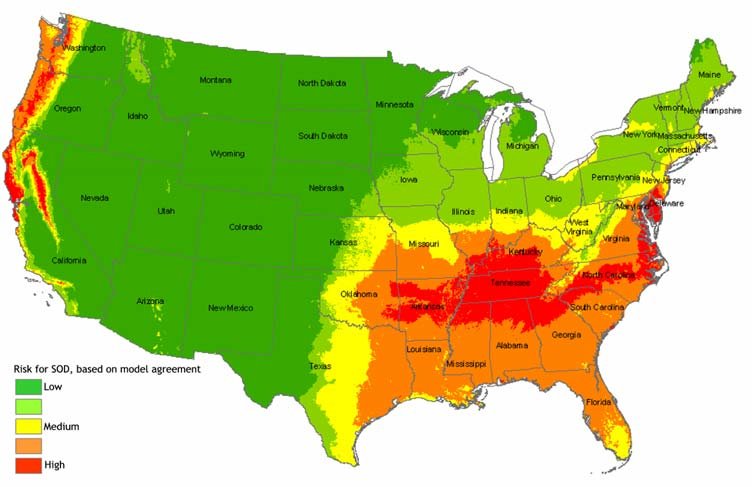
$630,000 was provided for detection surveys and studies of the sudden oak death pathogen Phytophthora ramorum, especially how it infects nursery stock. Nursery surveys are funded in Alabama, Louisiana, North Carolina, Ohio, Oklahoma, Pennsylvania, South Carolina, Tennessee, Virginia, and West Virginia. Most of these states are in regions considered most at risk to SOD infection of wildland plants.    

sudden oak mortality of tanoak trees in southern Oregon; photo by Oregon Department of Forestry

Oregon received much-deserved $41,000 to evaluate the threat of the NA2 and EU2 lineages of P. ramorum to nurseries and forests Oregon also received $104,000 to respond to the detection of Phytophthora austrocedri in nurseries in the state. The Oregon outbreak has been traced to Ohio, but I see no record of funds to assist that state in determining how it was introduced.

Asian defoliator (e.g., Lymantrid moths) surveys have been funded for several years. This year’s projects are in Alaska, Arkansas, California, Kentucky, Maryland, Massachusetts, Mississippi, Montana, Nevada, North Carolina, Oregon, Tennessee, Texas, Washington, and West Virginia. While I agree that the introduction risk is not limited to coastal states with maritime ports, I don’t what criteria were applied in choosing the non-coastal states which are funded to search for these insects

Spotted lanternfly surveys (including technological improvements) or related outreach are funded in Alabama, Connecticut, Delaware, Kentucky, New Hampshire, New Jersey, North Carolina, Oregon, Pennsylvania, and Tennessee. California’s project is focused on postharvest treatments.

The Don’t Move Firewood project continues to be funded by APHIS. Several states also direct attention specifically to the firewood pathway: Kentucky, Maine, and Michigan.

I applaud the precautionary funding of the Agriculture Research Service to generate of high-quality genomic resources for managing the causal agent of Japanese oak wilt Dryadomyces quercivorous

Florida Department of Agriculture, North Carolina State University, and West Virginia University each received more than $100,000 to improve detection and management of invasive hornets.

Tennessee State University got $100,000 to continue efforts to detect and understand Vascular Streak Dieback in redbud Cercis canadensis.

Posted by Faith Campbell

We welcome comments that supplement or correct factual information, suggest new approaches, or promote thoughtful consideration. We post comments that disagree with us — but not those we judge to be not civil or inflammatory.

For a detailed discussion of the policies and practices that have allowed these pests to enter and spread – and that do not promote effective restoration strategies – review the Fading Forests report at  https://treeimprovement.tennessee.edu/

or

www.fadingforests.org

Protect salamanders from fatal disease

The U.S. Fish and Wildlife Service (USFWS) has taken new action to protect North America’s salamanders from the pathogenic Salamander Chytrid Fungus Batrachochytrium salamandrivorans; Bsal). The Center for Invasive Species Prevention (CISP) welcomes this action and urges you to help the Service to finalize it.

To read and comment on the interim rule, go here. The comment period closes on March 11.

oriental fire-bellied newt (Cynops orientalis); one of the non-native species imported in largest numbers before the 2016 Lacey Act interim rule; photo by Sebastian Voitel

USFWS acted under its authority to contained in the “injurious wildlife” provisions of the Lacey Act [18 U.S.C. 42(a)]. This statute, first adopted in 1900, empowers the Secretary of Interior to regulate human-mediated transport of any species of wild mammal, wild bird, fish, mollusk, crustacean, amphibian, or reptile found to be injurious to human beings; to the interests of agriculture, horticulture, or forestry; or to America’s wildlife or wildlife resources. Regulated articles include offspring or eggs of the listed species, dead specimens, and animal parts.

Any importation of a listed taxon into the U.S. is regulated. However, regulation of transport within the United States is complicated because of clumsy wording of the statute. In 2017, the D.C. Circuit Court of Appeals [U.S. Association of Reptile Keepers, Inc. v. Zinke [852 F.3d 1131 (D.C. Cir. 2017)] ruled that the law regulates transport of listed species (and their progeny, parts, etc.) between the contiguous 48 States and several other jurisdictions: Hawai`i, Puerto Rico, other U.S. territories, and the District of Columbia. However, transport among the “lower 48” states (e.g., from Virginia to Kentucky) or from the “lower 48” states to Alaska, is not regulated (unless the route to or from Alaska passes through Canada). In past years conservationists asked Congress to amend the law to close this obvious gap in protection, but without success.

It is still illegal to transport listed species across any state borders if the wildlife specimen was either imported to the U.S. or transported between the above-enumerated jurisdictions in violation of any U.S. law. [Lacey Act Amendments of 1981, 16 U.S.C. 3372(a)(1)] 

Those wishing to transport a listed species for zoological, educational, medical, or scientific purposes may apply for a permit from USFWS to do so.

The threat to salamanders

The United States is a center of diversity for salamanders. Our nation is home to 221 species of salamanders, more than any other country. These species are in 23 genera in nine families. In fact, nine of the 10 families of salamanders worldwide are found in the U.S. Highest diversity is found along the Pacific Coast and in the southern Appalachian Mountains. As the most abundant vertebrates in their forest habitats, salamanders make significant contributions to nutrient cycling and even carbon sequestration.

Because they depend on both aquatic and terrestrial habitats, salamanders face many threats to their existence. Twenty species of American salamanders from 6 genera (Ambystoma, Batrachoseps, Eurycea, Necturus, Phaeognathus, Plethodon) are listed under the Endangered Species Act link as endangered or threatened. A subspecies of hellbender salamander (Cryptobranchus alleganiensis alleghaniensis) has been proposed for listing.

Amylosterium xxx – marbled salamander; photo by John B. Clare via Flickr

Over the last 12 years, they have faced an alarming new threat.

In 2013, European scientists detected rapid, widespread death of salamander populations in the Netherlands. They determined that the cause was a fungal disease caused by Batrachochytrium salamandrivoran (Bsal). Their alarm was heightened because this fungus is closely related to another, Batrachochytrium dendrobatidis (Bd), which had recently caused serious decline of more than 100 frog and toad species, including driving several to extinction, and had been transported to all continents except Antartica.

Responding to this new threat, amphibian conservation specialists and wildlife groups generally banded together to put pressure on the USFWS to take regulatory action. In response, in 2016, the USFWS adopted an interim rule link prohibiting importation of 20 genera of salamanders. These genera had been shown by scientists to contain at least one species which either suffered mortality when it was exposed to  Bsal or could transmit the disease to other salamanders. At the time, Bsal had been shown by scientific studies to be lethal to two American species; USFWS had evidence that U.S. species in other genera could “carry” the pathogen and infect other animals. Three of the species included in the 2016 action had already been listed as endangered or threatened. USFWS’ action cut down the number of salamanders being imported annually by ~95% (based on official import data compiled by the USFWS’ Office of Law Enforcement).

The prohibitions do not apply to articles that cannot transmit the fungus. These include eggs or gametes; parts or tissues that have been chemically preserved, chemically treated, or heat treated so that the pathogen, if present, is rendered non-viable; and molecular specimens consisting of only the nucleic acids from organisms.

Now, 8 years later, the USFWS is acting to finalize the 2016 “interim” rule and to regulate importation and transportation of an additional 16 genera of salamanders. This step had been urged by the National Environmental Coalition on Invasive Species (NECIS), and many others, in their public comments on that Interim Rule. Extending protection to these 16 genera is based on research conducted since the 2016 Rule. Species in 13 of the newly protected genera are considered likely carriers of the disease. Nine species have been demonstrated to be killed by Bsal. No studies have yet determined the vulnerability of more than 50 species in 10 genera of North American salamanders, including four species listed under the Endangered Species Act.

The 36 genera covered by the combined actions of 2016 and 2025 actions are currently considered to comprise ~ 426 species. However, changes in taxonomy are frequent. So USFWS is no longer enumerating the species protected, but is instead relying on listing genera. The regulations apply to all species in a listed genus (whether so classified now or in the future) as well as hybrids of species in any listed genus, including offspring from a pair in which only one of the parents is in a genus listed as injurious.

Appalachian hellbender Cryptobranchus alleganiensis alleghaniensis; historic book illustration via Flickr

USFWS chose to issue “interim” rules in both 2016 and 2025 because that action takes effect almost immediately. (The 2025 interim rule take effect on January 25th.) The usual rulemaking process governed by the Administrative Procedure Act (5 U.S.C. 551 et seq.) often takes years to complete. During that time, the species proposed for listing may still be imported and transported – that is, they could place additional salamander populations at risk of infection by Bsal. The USFWS states that it is unlikely to be able to protect or restore species and ecosystems if the pathogen does become established in the U.S.

In the interval between 2016 and now, Canada banned importation of all living or dead salamanders, eggs, sperm, tissue cultures, and embryos in response to the Bsal threat.

During these years scientists also completed several studies aimed at clarifying which salamander species are either at risk of infection by Bsal or are able to harbor and transmit the pathogen to other salamanders. The USFWS cites studies by, inter alia, Yuan et al. 2018, Carter et al. 2020, Barnhart et al. 2020, Grear et al. 2021, and Gray et al. 2023. USFWS says it cannot act in the absence of such studies, since it must justify its protective actions on scientifically defensible information.

Another relevant question is whether Bsal is already established in North America? Waddle et al. 2020 carried out an intensive search in 35 states that found no evidence that it is. The USFWS concludes that prohibiting importation of additional salamander taxa is still an effective measure to protect North American biodiversity. This is because the international commercial trade in salamanders is the most likely pathway by which Bsal would be introduced to the United States. We note in support of this assertion that former USFWS employee Su Jewell found years ago that none of the 288 non-indigenous species listed as injurious while they are not established in the U.S. has become established since the listing. 

The Federal Register document includes a lengthy discussions of why the USFWS has chosen to act under the Lacey Act rather than try some other approach, e.g., setting up quarantine areas or a disease-free certification program for traded salamanders. Among the factors they considered were the current absence of certainty in testing procedures and the possibility of falsified documentation.

WEAKNESSES THE LACEY ACT

The Lacey Act is the principal statute under which the U.S. Government tries to manage invasive species of wildlife – at least those that are not considered “plant pests”. It is not surprising that a law written 125 years ago is no longer the best fit for current conservation needs. See our earlier blog and discussions by, inter alia, Fowler, Lodge, and Hsia and Anderson.

Here, the USFWS lacks authority to regulate pathogens [viruses, bacteria, and fungi that cause disease] or fomites (materials, such as water, that can act as passive carriers and transfer pathogens). Instead, USFWS regulates the hosts. The USFWS previously listed dead salmonids as “injurious” because their carcasses can transmit several viruses.   

Another issue is that USFWS cannot designate a taxon “injurious” and regulate trade in it until the Service has conclusive scientific evidence that the species or genus meets the definition. The USFWS has chosen to rely on genus-level data rather than require that each species be tested. Still, as we noted above, American salamanders in 10 genera remain outside the Lacey Act’s protections because studies have not yet been conducted. The USFWS concedes that many of these genera might contain species that are vulnerable to this potentially deadly fungus.

As to relying on laboratory tests of a taxon’s response to the pathogen, the USFWS believes that environmental stresses inherent living in the wild might exacerbate a salamander species’ vulnerability to the disease.

The USFWS is requesting public comment specifically on:

(1) the extent to which species in the 16 genera listed by this interim rule are currently in domestic production for sale – and in which States this occurs? How many businesses sell salamanders from the listed genera between enumerated jurisdictions (e.g., between “lower 48” states and Hawai`i or the District of Columbia)?

(2) What state-listed endangered or threatened species would be affected by introduction of Bsal?

(3) How could this interim rule be modified to reduce costs or burdens for some or all entities, including small entities, while still meeting USFWS’s goals? What are the costs and benefits of the modifications?

(4) Is there any evidence suggesting that Bsal has been established in the U.S.? Or that any of these genera are not carriers of Bsal? Or that additional genera are carriers of Bsal? Is there evidence that eggs or other reproductive material pose a greater risk than USFWS determined, so should be regulated?

(5) Could a reliable health certificate system be developed that would allow imports of Bsal-free salamanders? Are there treatments that would ensure imported salamanders are reliably free of Bsal? How could compliance be monitored? As to salamander specimens, parts, or products, are there other treatments proven adequate to render Bsal non-viable?

(6) Do any Federal, State, or local rules duplicate, overlap, or conflict w/ this interim rule?

CISP encourages those with knowledge of amphibian conservation and disease to comment. Slow progress has been made toward blocking Bsal from the U.S., but the story is not yet closed.

See also the articles by Su Jewell,

Jewell, S.D. 2020 A century of injurious wildlife listing under the Lacey Act: a history. Management of Biological Invasions 11(3): 356–371, https://doi.org/10. 3391/mbi.2020.11.3.01

Jewell, S.D. and P.L. Fuller 2021 The unsung success of injurious wildlife listing under the Lacey Act. Management of Biological Invasions 2021 Volume 12 Issue 3

Posted by Faith Campbell and Peter Jenkins (former member of CISP’s board and consultant to NECIS and other groups on amphibian disease regulation)

We welcome comments that supplement or correct factual information, suggest new approaches, or promote thoughtful consideration. We post comments that disagree with us — but not those we judge to be not civil or inflammatory.

How beech leaf disease spreads in the forest

BLD symptoms; photo by Matt Borden, Bartlett Tree Experts

As beech leaf disease (BLD) is detected in an ever-expanding number of counties from Michigan to Maine south to Virginia, scientists are trying to clarify how the causal nematode — Litylenchus crenatae ssp. mccannii (Lcm) – spreads. One focus is on local spread from tree to tree. Mankanwal Goraya and colleagues set up an experiment in Stone Valley Forest, a recreation and research site managed by Penn State in Huntington County, Pennsylvania. BLD is present – although I have not been able to determine for how many years. [The full citation to Goraya et al. is provided at the end of this blog.]

Goraya et al. (2024) set up four stands, each bearing three funnels, at varying distances from naturally BLD-infected American beech (Fagus grandifolia) trees. Two stands were at 3.51 m from symptomatic trees of starkly different sizes: one of the trees had a dbh of 50 cm, the other of only 5.6 cm. A third close-up stand was set up at 2.20 m from another large tree, having a dbh of 46 cm. The fourth stand was set up at a significantly longer distance, 11.74 m from a symptomatic beech tree; this tree was also small, with a dbh of 5 cm. This arrangement allowed the scientists to detect influences of both distance from the source of infection and relative canopy size of the source tree. They consider dbh to be an adequate substitute for canopy size. There was apparently no other effort to determine or vary the height of “source” trees, although I think that might influence speed of the wind flowing through the canopy.

Goraya et al. also tested whether it is possible to detect the presence of Lcm in association with other invertebrates that live in beech forests. To do this, they counted numbers of nematodes in frass from six species of caterpillars that had been feeding on leaves of infected trees, and in two spider webs spun in the branches of symptomatic trees. They also determined whether these nematodes were alive (active) or inactive – presumably dead.

The study makes clear that Lcm’s life cycle and impact are not as surprising as initially thought. Several species in the family Anguinidae – to which Lcm belongs – are considered significant pests. These nematodes can parasitize aerial parts of the plants (leaves, stems, inflorescences and seeds), causing swellings and galls. Furthermore, they are migratory; they can move across the surface of host tissues using water films. Once they have penetrated the host tissues, they can induce host cell hyperplasia and hypertrophy, resulting in leaf or bulb deformities, shorter internodes, and neoplastic tissues. Furthermore, heavy rainfall and wind are known to play significant roles in the dissemination of plant-infecting nematodes. In their desiccated state on infected seeds, some species of this family can survive passage through animals’ gastrointestinal digestive tract (e.g., domestic livestock, insects, & birds).

A crucial factor is that Lcm can reach densities of thousands of nematodes per leaf by late summer or early fall, increasing the likelihood of their exposure to facilitating environmental conditions at the time they migrate from leaves to buds. And once established within the bud tissues, the nematodes feed on bud scales and newly forming leaves to develop & increase their pop #s. They also use the bud as protection from adverse environmental conditions.

Goraya and colleagues collected samples every other day from September 9 to November 23, 2023 – the period when Lcm migrate from highly infected leaves to newly forming buds. [I note that it in the mid-Atlantic – where Lcm is spreading – we had an extensive drought in autumn 2024 – more than 30 days without any rain from early October into November. I hope scientists are monitoring BLD spread sufficient closely to see whether this drought affected dispersal.]

Nematodes dispersal linked to weather

Goraya and colleagues collected 324 samples from the funnels. Eighty-two percent (n =266) of the samples had nematodes; up to 92% were identified as Lcm. Non-Lcm nematodes were distributed across different genera, mostly classified as free-living nematodes. While several hundred nematodes were found in the funnels on most days, numbers peaked noticeably on some days in September and October.   A startling 2,452 nematodes were recovered from a single funnel in October. Depending on the sample, up to 67% of Lcm recovered from the funnels were active.

Analysis of the environmental (weather) variables found that increases in wind speed, humidity, and precipitation (rainfall) coincided with higher numbers of Lcm being recovered from the funnels.  However, the effect of wind speed becomes less positive as precipitation increases or vice versa. Goraya et al. suggest a pronounced negative interaction between wind and rain. At low precipitation levels, increased wind speed might facilitate Lcm dispersal. As rainfall increases, higher wind speeds might carry the Lcm nematodes farther away. Support is seen in the fact that fewer nematodes were found in the funnels closer to the BLD-infected trees during these periods. Really heavy rain might push a significant preponderance of nematodes to the ground. The scientists point to a very complex interplay between weather patterns and Lcm population dynamics and dispersal.

BLD symptoms on beech tree in Fairfax County, Virginia – a dozen miles from known infestation; photo by F.T. Campbell

The model did not show any significant influence of maximum temperature on nematode numbers in autumn. Goraya et al. do not speculate on whether temperatures might play a role during summer, as distinct from cooler autumn periods.

Goraya et al.’s findings differ from those of previous studies. Earlier documentation of wind dispersal of nematodes concerned primarily free-living species. It was unexpected to find consistently much higher numbers of Lcm – especially because Lcm is a plant-parasitic nematode. Another surprise is the high proportion of nematodes that are active.

Goraya et al. conclude that because Lcm is actively migrating in large numbers during autumn months, it is primed to take advantage of favorable weather. This nematode will likely survive and thrive in the environmental conditions of beech forests in northeastern North America.

Considering the effect of distance, some findings fit expectations: significantly more Lcm were recovered from funnels placed near symptomatic “source” trees than from those farther away. However, this was not a simple relationship. For example, in two cases the scenarios seemed nearly alike: both “source” trees were large (dbh 46 or 50 cm) and symptoms were “medium-high” (more than half of leaves presenting dark-green interveinal bands). Distance of funnels from the “source” tree differed minimally: 2.2 m versus 3.51 m. Still, the number of nematodes retrieved from the two sets of funnels differed significantly: one set of funnels recovered the highest number of Lcm nematodes obtained during the entire experiment – 2,452; the second contained only up to 600 nematodes. The authors do not offer an explanation.

I am not surprised by the apparently strong correlation between numbers and proximity to the disease source (a symptomatic tree). Nor am I surprised that Lcm nematodes were also found in funnels 11 meters away. I do wonder, however, why they are certain that no source was closer. Detecting early stage infections is notoriously difficult.

beech with large canopy; photo by F.T. Campbell

Goraya et al. also evaluated the effect of size of the source tree. They used dbh a substitute for larger canopies. Trees with larger canopies can host more nematodes, so are likely to contribute more to dispersal events. Two sets of funnels were equidistant from separate “source” trees – 3.51 m. One tree was small – 5.6 cm dbh, 11% as large as the other tree (50 cm). They collected many fewer Lcm nematodes from the smaller tree – the maximum was only 132 compared to 600 (a decrease of 78%).

Still, small trees can apparently support spread of the nematode to a reasonable distance. The fourth set of funnels was set up more than three times farther away (11.74 m) from an infected tree of a similar size (dbh = 5 cm) but recovered almost the same number of Lcm nematodes (0 – 119).

I find it alarming that both small trees in this part of the experiment had low BLD symptoms – only a few leaves were banded. Yet they apparently are the source of Lcm spread. The alternative, as I noted above, is that other “source” trees were in the vicinity but were not detected, possibly because they did not yet display symptoms?

Goraya et al. conclude that “source” tree size directly impacts the number of recovered nematodes. In addition, wind plays a pivotal role in their local distribution. This suggests a complex dispersal pattern in which proximity to the source leads to higher numbers of nematodes but longer-distance spread is possible.

Tussock moth; photo by Jon Yuschock via Bugwood

 Nematodes’ association with other organisms

Goraya et al. (2024) collected one each of six caterpillar species from BLD-symptomatic trees. The frass of one – the tussock moth caterpillar (Halysidota tessellaris) — contained 12 nematode specimens — 10 of them Lcm. Two of the Lcm were alive and active. Their presence indicates that Lcm can survive passage through the caterpillar’s gastrointestinal tract. The authors conclude that caterpillars feeding on symptomatic leaves might contribute to local dispersal of Lcm.

Hundreds of Lcm were recovered from the two spider webs collected from the branches of a BLD-infected beech tree. From one web, 255 nematodes were captured; 58 were active. In the second web there were only 34 Lcm, but one-third — 10 – were active.

Goraya et al. (2024) hypothesized that any biotic form having the ability to move from a BLD-infected tree would be able to transport Lcm to other non-infected trees. Beyond caterpillars, they speculate that birds consuming these caterpillars might also disperse Lcm. Doug Tallamy has documented that many birds feed on caterpillars, link although he is focused on those that consume caterpillars in the spring, not the autumn. They note that others are studying that the bird species that feed on beech buds (e.g., finches) might transport nematodes. They note the need for additional research to clarify whether the nematode can survive birds’ digestive system.

Re: detection of live Lcm in spider webs, Goraya et al. suggest two possible interpretations: 1) this finding demonstrates that nematodes might fall from leaves, potentially spreading the infection to other trees beneath the canopy. (Supporting this idea is the fact that sub-canopy trees are often heavily infected with BLD and are frequently the first to exhibit BLD symptoms.) 2) Nematodes in spider webs are very likely to be transported by other “incidental organisms” (e.g., insects, birds, mammals) that feed on invertebrates trapped in webs — thereby potentially increasing the number and impact of nonspecific nematode vectors.

In conclusion, Goraya et al. found that many factors, e.g., distance & size of infected beech trees, wind speed, & humidity, contribute significantly to Lcm dispersal. The multitude of organisms interacting beneath the canopy also play a role.

They suggest that several major questions still need to be explored. These include how Lcm navigate environmental factors in their spread; and whether Lcm can survive – perhaps in a anhydrobioses state –transport over long distances, whether by abiotic or biotic vectors.

I remind my readers of the importance of beech in the hardwood forests in northeastern North America. Many wild animals, including squirrels, wild turkeys, white-tailed deer, and bears depend on beechnuts for fats and proteins. Moreover, some insects birds rely on beech tree canopies for shelter & nesting.

Other Hosts

Beech leaf disease attacks not just American beech (Fagus grandifolia). In North America, it has also attacked planted European beech(F. sylvatica), Chinese beech (F. engleriana), and Oriental beech (F. orientalis). Thus if it spreads it could have severe impacts across forests of much of the Northern Hemisphere.

range of European beech; from Royal Botanic Gardens, Kew

I appreciate that this project was funded by the USDA Forest Service International Program. I will pursue information concerning efforts by USFS Research and Development and the Forest Health Protection program.

SOURCE

Goraya, M., C. Kantor, P. Vieira, D. Martin, M. Kantor. 2024 Deciphering the vectors: Unveiling the local dispersal of Litylenchus crenatae ssp mccanni in the American beech (Fagus grandifolia) forest ecosystem  PLOS ONE |https://doi.org/10.1371/journal.pone.0311830 November 8, 2024 1 / 16

Posted by Faith Campbell

We welcome comments that supplement or correct factual information, suggest new approaches, or promote thoughtful consideration. We post comments that disagree with us — but not those we judge to be not civil or inflammatory.

For a detailed discussion of the policies and practices that have allowed these pests to enter and spread – and that do not promote effective restoration strategies – review the Fading Forests report at https://treeimprovement.tennessee.edu/

or

www.fadingforests.org

Hawaiian Efforts to Restore Threatened Trees

ʻŌhiʻa trees killed by ROD; photo by Richard Sniezko, USFS

Several Hawaiian tree species are at risk due to introduced forest pests. Two of the Islands’ most widespread species are among the at-risk taxa. Their continuing loss would expose watersheds on which human life and agriculture depend. Habitats for hundreds of other species – many endemic and already endangered – would lose their foundations. These trees also are of the greatest cultural importance to Native Hawaiians.

I am pleased to report that Hawaiian scientists and conservationists are trying to protect and restore them.

Other tree species enjoy less recognition … and efforts to protect them have struggled to obtain support.

1) koa (Acacia koa)

Koa is both a dominant canopy tree and the second-most abundant native tree species in Hawai`i in terms of areas covered. The species is endemic to the Hawaiian archipelago. Koa forests provide habitat for 30 of the islands’ remaining 35 native bird species, many of which are listed under the U.S. Endangered Species Act. Also dependent on koa forests are native plant and invertebrate species and the Islands’ only native terrestrial mammal, the Hawaiian hoary bat. Finally, koa forests protect watersheds, add nitrogen to degraded soils, and store carbon [Inman-Narahari et al.]

Koa forests once ranged from near sea level to above 7000 ft (2100 m) on both the wet and dry sides of all the large Hawaiian Islands. Conversion of forests to livestock grazing and row-crop agriculture has reduced koa’s range. Significant koa forests are now found on four islands – Hawai’i, Maui, O‘ahu, and Kauaʻi. More than 90% of the remaining koa forests occur on Hawai`i Island (the “Big Island) [Inman-Narahari et al.]

In addition to its fundamental environmental role, koa has immense cultural importance. Koa represents strength and the warrior spirit. The wood was used traditionally to make sea-going canoes. Now Koa is widely used for making musical instruments, especially guitars and ukuleles; furniture, surfboards, ornaments, and art [Inman-Narahari et al.]

Koa timber has the highest monetary value of any wood harvested on the Islands. However, supplies of commercial-quality trees are very limited (Dudley et al. 2020). Harvesting is entirely from old-growth forests on private land. [Inman-Narahari et al.]

Koa forests are under threat by a vascular wilt disease caused by Fusarium oxysporum f. sp. koae (FOXY). This disease can kill up to 90% of young trees and – sometimes — mature trees in native forests. The fungus is a soil-dwelling organism that spreads in soil and infects susceptible plants through the root system (Dudley et al. 2020).

Conservation and commercial considerations have converged to prompt efforts to breed koa resistant to FOXY. Conservationists hope to restore native forests on large areas where agriculture has declined. The forestry industry seeks to enhance supplies of the Islands’ most valuable wood. Finally, science indicated that a breeding program would probably be successful. Field trials in the 1990s demonstrated great differences in wilt-disease mortality among seed sources (the proportion of seedlings surviving inoculation ranged from 4% to 91.6%) [Sniezko 2003; Dudley et al. 2009].

In 2003, Dudley and Sniezko outlined a long-term strategy for exploring and utilizing genetic resistance in koa. Since then, a team of scientists and foresters has implemented different phases of the strategy and refined it further (Dudley et al. 2012, 2015, 2017; Sniezko et al. 2016]

First, scientists determined that the wilt disease is established on the four main islands. Having obtained more than 500 isolates of the pathogen from 386 trees sampled at 46 sites, scientists tested more than 700 koa families from 11 ecoregions for resistance against ten of the most highly virulent isolates (Dudley et al. 2020). 

The Hawaiian Agricultural Research Center (HARC), supported by public and private partners, has converted the field-testing facilities on Hawai`i, Maui, and Oahu into seed orchards. The best-performing tree families are being grown to maturity to produce seeds for planting. It is essential that the seedlings be not just resistant to FOXY but also adapted to the ecological conditions of the specific site where they are  to be planted [Dudley et al. 2020; Inman-Narahari et al. ] Locally adapted, wilt-resistant seed has been planted on Kauaʻi and Hawai`i. Preparations are being made to plant seed on Maui and O‘ahu also. Scientists are also exploring methods to scale up planting in both restoration and commercial forests [R. Hauff pers. comm.].  

koa; photo by David Eickhoff via Flickr

Restoration of koa on the approximately half of lands in the species’ former range that are privately owned will require that the trees provide superior timber. Private landowners might also need financial incentives since the rotation time for a koa plantation is thought to be 30-80 years. [Inman-Narahari et al.]

Plantings on both private and public lands will need to be protected from grazing by feral ungulates and encroachment by competing plants. These management actions are intensive, expensive, and must be maintained for years.

Some additional challenges are scientific: uncertainties about appropriate seed zones, efficacy of silvicultural approaches to managing the disease, and whether koa can be managed for sustainable harvests. Human considerations are also important: Hawai`i lacks sufficient professional tree improvement or silvicultural personnel, a functioning seed distribution and banking network — and supporting resources. Finally, some segments of the public oppose ungulate control programs. Inman-Narahari et al.

Finally, scientists must monitor seed orchards and field plantings for any signs of maladaptation to climate change. (Dudley et al. 2020).

2) ʻŌhiʻa Metrosideros polymorpha)   

ʻŌhiʻa  lehua is the most widespread tree on the Islands. It dominates approximately 80% the biomass of Hawaii’s remaining native forest, in both wet and dry habitats. ʻŌhiʻa illustrates adaptive radiation and appears to be undergoing incipient speciation. The multitude of ecological niches and their isolation on the separate islands has resulted in five recognized species in the genus Metrosideros. Even the species found throughout the state, Metrosideros polymorpha, has eight recognized varieties (Luiz et al. (2023) (some authorities say there are more).

Loss of this iconic species could result in significant changes to the structure, composition, and potentially, the function, of forests on a landscape level. High elevation ‘ohi‘a forests protect watersheds across the state. ʻŌhiʻa forests shelter the Islands’ one native terrestrial mammal (Hawaiian hoary bat), 30 species of forest birds, and more than 500 endemic arthropod species. Many species in all these taxa are endangered or threatened (Luiz et al. 2023). The increased light penetrating interior forests following canopy dieback facilitates invasion by light-loving non-native plant species, of which Hawai`i has dozens. There is perhaps no other species in the United States that supports more endangered taxa or that plays such a geographical dominant ecological keystone role [Luiz et al. 2023]

For many Native Hawaiians, ‘ōhi‘a is a physical manifestation of multiple Hawaiian deities and the subject of many Hawaiian proverbs, chants, and stories; and foundational to the scared practice of many hula. The wood has numerous uses. Flowers, shoots, and aerial roots are used medicinally and for making lei. The importance of the biocultural link between ‘ōhi‘a and the people of Hawai`i is described by Loope and LaRosa (2008) and Luiz et al. (2023).

In 2010 scientists detected rapid mortality affecting ‘ōhi‘a on Hawai‘i Island. Scientists determined that the disease is caused by two recently-described pathogenic fungi, Ceratocystis lukuohia and Ceratocystis huliohia. The two diseases, Ceratocystis wilt and Ceratocystis canker of ʻōhiʻa, are jointly called “rapid ‘ōhi‘a death”, or ROD. The more virulent species, C. lukuohia, has since spread across Hawai`i Island and been detected on Kaua‘i.  The less virulent C. huliohia  is established on Hawai`i and Kaua‘i and in about a dozen trees on  O‘ahu. One tree on Maui was infected; it was destroyed, and no new infection has been detected [M. Hughes pers. comm.] As of 2023, significant mortality has occurred on more than one third of the vulnerable forest on Hawai`i Island, although mortality is patchy.  

 [ʻŌhiʻa is also facing a separate  disease called myrtle rust caused by the fungus Austropuccinia psidii; to date this rust has caused less virulent infections on ‘ōhi‘a.]

rust-killed ‘ōhi‘a in 2016; photo by J.B. Friday

Because of the ecological importance of ‘ōhi‘a and the rapid spread of these lethal diseases, research into possible resistance to the more virulent pathogen, C. lukiohia began fairly quickly, in 2016. Some ‘ōhi‘a survive in forests on the Big Island in the presence of ROD, raising hopes that some trees might possess natural resistance. Scientists are collecting germplasm from these lightly impacted stands near high-mortality stands (Luiz et al. 2023). Five seedlings representing four varieties of M. polymorpha that survived several years’ exposure to the disease are being used to produce rooted cuttings and seeds for further evaluation of these genotypes.

ʻŌhiʻa flowers

Encouraged by these developments, and recognizing the scope of additional work needed, in 2018 stakeholders created a collaborative partnership that includes state, federal, and non-profit agencies and entities, ʻŌhiʻa Disease Resistance Program (‘ODRP) (Luiz et al. 2023). The partnership seeks to provide baseline information on genetic resistance present in all Hawaiian taxa in the genus Metrosideros. It aims further to develop sources of ROD-resistant germplasm for restoration intended to serve several purposes: cultural plantings, landscaping, and ecological restoration. ‘ODRP is pursuing screenings of seedlings and rooted cuttings sampled from native Metrosideros throughout Hawai`i while trying to improve screening and growing methods. Progress will depend on expanding these efforts to include field trials; research into environmental and genetic drivers of susceptibility and resistance; developing remote sensing and molecular methods to rapidly detect ROD-resistant individuals; and support already ongoing Metrosideros conservation. If levels of resistance in wild populations prove to be insufficient, the program will also undertake breeding (Luiz et al. 2023).

To be successful, ‘ODRP must surmount several challenges (Luiz et al. 2022):

  • increase capacity to screen seedlings from several hundred plants per year to several thousand;
  • optimize artificial inoculation methodologies;
  • determine the effects of temperature and season on infection rates and disease progression;
  • find ways to speed up seedlings’ attaining sufficient size for testing;
  • develop improved ways to propagate ʻōhiʻa from seed and rooted cuttings;
  • establish sites for field testing of putatively resistant trees across a wide range of climatic and edaphic conditions;
  • establish seed orchard, preferably on several islands;
  • establish systems for seed collection from the wide variety of subspecies/varieties;
  • if breeding to enhance resistance is appropriate, it will be useful to develop high-throughput phenotyping of the seed orchard plantings.

  [See DMF profile for more details.]

Developing ROD-resistant ‘ōhi‘a is only one part of a holistic conservation program. Luiz et al. (2023) reiterate the importance of quarantines and education to curtail movement of infected material and countering activities that injure the trees. Fencing to protect these forests from grazing by feral animals can drastically reduce the amount of disease. Finally, scientists must overcome the factors there caused the almost complete lack of natural regeneration of ‘ōhi‘a in lower elevation forests. Most important are competition by invasive plants, predation by feral ungulates, and the presence of other diseases, e.g., Austropuccinia psidii.

Hawaii’s dryland forests are highly endangered: more than 90% of dry forests are already lost due to habitat destruction and the spread of invasive plant and animal species. Two tree species are the focus of species-specific programs aimed at restoring them to remaining dryland forests. However, support for both programs seems precarious and requires stable long-term funding; disease resistance programs often necessitate decades-long endeavors.

naio in bloom; photo by Forrest & Kim Starr via Creative Commons

1) naio (Myoporum sandwicense)

Naio grows on all of the main Hawaiian Islands at elevations ranging from sea level to 3000 m. While it occurs in the full range of forest types from dry to wet, naio is one of two tree species that dominate upland dry forests. The other species is mamane, Sophora chrysophylla. Naio is a key forage tree for two endangered honeycreepers, palila (Loxioides bailleui) and `akiapola`au (Hemignathus munroi). The tree is also an important host of many species of native yellow-face bees (Hylaeus spp). Finally, loss of a native tree species in priority watersheds might lead to invasions by non-native plants that consume more water or increase runoff.

The invasive non-native Myoporum thrips, Klambothrips myopori, was detected on Hawai‘i Island in December 2008 (L. Kaufman website). In 2018 the thrips was found also on Oahu (work plan). The Myoporum thrips feeds on and causes galls on plants’ terminal growth. This can eventually lead to death of the plant.

Aware of thrips-caused death of plants in the Myoporum genus in California, the Hawaii Department of Lands and Natural Resources Division of Forestry and Wildlife and the University of Hawai‘i began efforts to determine the insect’s distribution and infestation rates, as well as the overall health of naio populations on the Big Island. This initiative began in September 2010, nearly two years after the thrips’ detection. Scientists monitored nine protected natural habitats for four years. This monitoring program was supported by the USFS Forest Health Protection program. This program is described by Kaufman.

naio monitoring sites from L. Kaufman article

The monitoring program determined that by 2013, the thrips has spread across most of Hawi`i Island, on its own and aided by human movement of landscaping plants. More than 60% of trees being monitored had died. Infestation and dieback levels had both increased, especially at medium elevation sites. The authors feared that mortality at high elevations would increase in the future. They found no evidence that natural enemies are effective controlling naio thrips populations on Hawai`i Island.

Kaufman was skeptical that biological control would be effective. She suggested, instead, a breeding program, including hybridizing M. sandwicensis with non-Hawaiian Myoporum species that appear to be resistant to thrips. Kaufman also called for additional programs: active monitoring to prevent thrips from establishing on neighboring islands; and collection and storage of naio seeds.

Ten years later, in February 2024, DLNR Division of Forestry and Wildlife adopted a draft work plan for exploring possible resistance to the Myoporum thrips. Early steps include establishing a database to record data needed to track parent trees, associated propagules, and the results of tests. These data are crucial to keeping track of which trees show the most promise. Other actions will aim to hone methods and processes. Among practical questions to be answered are a) whether scientists can grow even-aged stands of naio seedlings; b) identifying the most efficient resistance screening techniques; and c) whether K. myopori thrips are naturally present in sufficient numbers to be used in tests, or – alternatively – whether they must be augmented. [Plan]

Meanwhile, scientists have begun collecting seed from unaffected or lightly affected naio in hotspots where mortality is high. They have focused on the dry and mesic forests of the western side of Hawai`i (“Big”) Island, where the largest number of naio populations still occur and are at high risk. Unfortunately, these “lingering” trees remain vulnerable to other threats, such as browsing by feral ungulates, competition with invasive plants, drought, and reduced fecundity & regeneration.

Hawai`i DLNR has secured initial funding from the Department of Defense’s REPI program to begin a pest resistance project and is seeking a partnership with University of Hawai`i to carry out tests “challenging” different naio families’ resistance to the thrips [R. Hauff pers. comm.]

wiliwili; photo by Forrest & Kim Starr

2) wiliwili (Erythrina sandwicensis)

Efforts to protect the wiliwili have focused on biological control. The introduced Erythrina gall wasp, Quadrastichus erythrinae (EGW) was detected on the islands in 2005. It immediately caused considerable damage to the native tree and cultivated nonnative coral trees.

A parasitic wasp, Eurytoma erythrinae, was approved for release in November 2008 – only 3 ½ years after EGW was detected on O‘ahu. The parasitic wasp quickly suppressed the gall wasp’s impacts to both wiliwili trees and non-native Erythrina. By 2024, managers are once again planting the tree in restoration projects.

However, both the gall wasp and a second insect pest – a bruchid, Specularius impressithorax – can cause loss of more than 75% of the seed crop. This damage means that the tree cannot regenerate. By 2019, Hawaiian authorities began seeking permission to release a second biocontrol gent, Aprostocitus nites.Unfortunately, the Hawai’i Department of Agriculture still has not approved the release permit despite five years having passed. Once they have this approval, the scientists will then need to ask USDA Animal and Plant Health Inspection Service (APHIS) for its approval [R. Hauff, pers. comm.]

SOURCES

www.RapidOhiaDeath.org

Dudley, N., R. James, R. Sniezko, P. Cannon, A. Yeh, T. Jones, & Michael Kaufmann. 2009? Operational Disease Screening Program for Resistance to Wilt in Acacia koa in Hawai`i. Hawai`i Forestry Association Newsletter August 29 2009

Dudley, N., T. Jones, K. Gerber, A.L. Ross-Davis, R.A. Sniezko, P. Cannon & J. Dobbs. 2020. Establishment of a Genetically Diverse, Disease-Resistant Acacia koa Seed Orchard in Kokee, Kauai: Early Growth, Form, & Survival. Forests 2020, 11, 1276; doi:10.3390/f11121276 www.mdpi.com/journal/forests

Friday, J. B., L. Keith, and F. Hughes. 2015. Rapid ʻŌhiʻa Death (Ceratocystis Wilt of ʻŌhiʻa). PD-107, College of Tropical Agriculture and Human Resources, University of Hawai‘i, Honolulu, HI. URL: https://www.ctahr.HI.edu/oc/freepubs/pdf/PD-107.pdf  Accessed April 3, 2018.

Friday, J.B. 2018. Rapid ??hi?a Death Symposium -West Hawai`i (“West Side Symposium”) March 3rd 2018,  https://vimeo.com/258704469 Accessed April 4, 2018 (see also full video archive at https://vimeo.com/user10051674)

Inman-Narahari, F., R. Hauff, S.S. Mann, I. Sprecher, & L. Hadway. Koa Action Plan: Management & research priorities for Acacia koa forestry in Hawai`i. State of Hawai`i Department of Land & Natural Resources Division of Forestry & Wildlife no date

Kaufman, L.V, J. Yalemar, M.G. Wright. In press. Classical biological control of the erythrina gall wasp, Quadrastichus erythrinae, in Hawaii: Conserving an endangered habitat. Biological Control. Vol. 142, March 2020

Loope, L. and A.M. LaRosa. 2008. ‘Ohi’a Rust (Eucalyptus Rust) (Puccinia psidii Winter) Risk Assessment for Hawai‘i.

Luiz, B.C. 2017. Understanding Ceratocystis. sp A: Growth, morphology, and host resistance. MS thesis, University of Hawai‘i at Hilo.

Luiz, B.C., C.P. Giardina, L.M. Keith, D.F. Jacobs, R.A. Sniezko, M.A. Hughes, J.B. Friday, P. Cannon, R. Hauff, K. Francisco, M.M. Chau, N. Dudley, A. Yeh, G. Asner, R.E. Martin, R. Perroy, B.J. Tucker, A. Evangelista, V. Fernandez, C. Martins-Keli’iho.omalu, K. Santos, R. Ohara. 2023. A framework for establishlishing a rapid ‘Ohi‘a death resistance program  New Forests 54, 637–660. https://doi.org/10.1007/s11056-021-09896-5

Additional information on the koa resistance program is posted at http://www.harc-hspa.com/forestry.html 

Sniezko, R.A., N. Dudley, T. Jones, & P. Cannon. 2016. Koa wilt resistance & koa genetics – key to successful restoration & reforestation of koa (Acacia koa). Acacia koa in Hawai‘i: Facing the Future. Proceedings of the 2016 Symposium, Hilo, HI: www.TropHTIRC.org , www.ctahr.HI.edu/forestry 

Posted by Faith Campbell

We welcome comments that supplement or correct factual information, suggest new approaches, or promote thoughtful consideration. We post comments that disagree with us — but not those we judge to be not civil or inflammatory.

For a detailed discussion of the policies and practices that have allowed these pests to enter and spread – and that do not promote effective restoration strategies – review the Fading Forests report at  https://treeimprovement.tennessee.edu/

or

www.fadingforests.org

Scientists: Introduced forest pest reshaping forests, with many bad consequences … will regulators step up?

Jarrah dieback in Western Australia

The number of introduced forest pathogens are increasing – creating a crisis that is recognized by more scientists. These experts say tree diseases are reshaping both native and planted forests around the globe. The diseases are threatening biodiversity, ecosystem services, provision of products, and related human wellbeing. Some suggest that bioinvasions might threaten forests as much as climate change, while also undermining forests’ role in carbon sequestration.

Unfortunately, I see little willingness within the plant health regulatory community to tackle improving programs to slow introductions. Even when the scientists documenting the damage work for the U.S. Department of Agriculture – usually the U.S. Forest Service — USDA policy-makers don’t act on their findings. [I tried to spur a conversation with USDA 2 years ago. So far, no response.]

counties where beech leaf disease has been detected

What the scientists say about these pests’ impacts

Andrew Gougherty (2023) – one of the researchers employed by the USDA Forest Service – says that emerging infectious tree diseases are reshaping forests around the globe. Furthermore, new diseases are likely to continue appearing in the future and threaten native and planted forests worldwide. [Full references are provided at the end of the blog.] Haoran Wu (2023/24) – a Master’s Degree student at Oxford University – agrees that arrival of previously unknown pathogens are likely to alter the structure and composition of forests worldwide. Weed, Ayers, and Hicke (2013) [academics] note that forest pests — native and introduced — are the dominant sources of disturbance to North American forests. They suggest that, globally, bioinvasions might be at least as important as climate change as threats to the sustainability of forest ecosystems. They are concerned that recurrent forest disturbances caused by pests might counteract carbon mitigation strategies. 

Scientists have proclaimed these warnings for years. Five years ago, Fei et al. (2019) reported that the 15 most damaging pests introduced to the United States — cumulatively — had already caused tree mortality to exceed background levels by 5.53 teragrams of carbon per year. As these 15 pests spread and invasions intensify, they threaten 41.1% of the total live forest biomass in the 48 coterminous states. Poland et al. (2019) (again – written by USFS employees) document the damage to America’s forest ecosystems caused by the full range of invasive species, terrestrial and aquatic.

Fei et al. and Weed, Ayers, and Hicke (2013) also support the finding that old, large trees are the most important trees with regard to carbon storage. This understanding leads them to conclude that the most damaging non-native pests are the emerald ash borer, Dutch elm disease fungi, beech bark disease, and hemlock woolly adelgid. As I pointed out in earlier blogs, other large trees, e.g., American chestnut and several of the white pines, were virtually eliminated from much of their historical ranges by non-native pathogens decades ago. These same large, old, trees also maintain important aspects of biological diversity.

It is true that not all tree species are killed by any particular pest. Some tree genera or species decrease while others thrive, thus altering the species composition of the affected stands (Weed, Ayers, and Hicke). This mode of protection is being undermined by the proliferation of insects and pathogens that cumulatively attack ever more tree taxa. And while it is true that some of the carbon storage capacity lost to pest attack will be restored by compensatory growth in unaffected trees, this faster growth is delayed by as much as two or more decades after pest invasions begin (Fei et al.).

ash forest after EAB infestation; Photo by Nate Siegert, USFS

Still, despite the rapid rise of destructive tree pests and disease outbreaks, scientists cannot yet resolve critical aspects of pathogens’ ecological impacts or relationship to climate change. Gougherty notes that numerous tree diseases have been linked to climate change or are predicted to be impacted by future changes in the climate. However, various studies’ findings on the effects of changes in moisture and precipitation are contradictory. Wu reports that his study of ash decline in a forest in Oxfordshire found that climate change will have a very small positive impact on disease severity through increased pathogen virulence. Weed, Ayers, and Hicke go farther, making the general statement that despite scientists’ broad knowledge of climate effects on insect and pathogen demography, they still lack the capacity to predict pest outbreaks under climate change. As a result, responses intended to maintain ecosystem productivity under changing climates are plagued by uncertainty.

Clarifying how disease systems are likely to interact with predicted changes in specific characteristics of climate is important — because maintaining carbon storage levels is important. Quirion et al. (2021) estimate that, nation-wide, native and non-native pests have decreased carbon sequestration by live forest trees by at least 12.83 teragrams carbon per year. This equals approximately 9% of the contiguous states’ total annual forest carbon sequestration and is equivalent to the CO2 emissions from more than 10 million passenger vehicles driven for one year. Continuing introductions of new pests, along with worsening effects of native pests associated with climate change, could cause about 30% less carbon sequestration in living trees. These impacts — combined with more frequent and severe fires and other forest disturbances — are likely to negate any efforts to improve forests’ capacity for storing carbon.

Understanding pathogens’ interaction with their hosts is intrinsically complicated. There are multiple biological and environmental factors. What’s more, each taxon adapts individually to the several environmental factors. Wu says there is no general agreement on the relative importance of the various environmental factors. The fact that most forest diseases are not detected until years after their introduction also complicates efforts to understand factors affecting infection and colonization.

The fungal-caused ash decline in Europe is a particularly alarming example of the possible extent of such delays. According to Wu, when the disease was first detected – in Poland in 1992 – it had already been present perhaps 30 years, since the 1960s.  Even then, the causal agent was not isolated until 2006 – or about 40 years after introduction. The disease had already spread through about half the European continent before plant health officials could even name the organism. The pathogen’s arrival in the United Kingdom was not detected until perhaps five years after its introduction – despite the country possessing some of the world’s premier forest pathologists who by then (2012) knew what they to look for. 

Clearly, improving scientific understanding of forest pathogens will be difficult. In addition, effective policy depends on understanding the social and economic drivers of trade, development, and political decisions are primary drivers of the movement of pathogens. Wu calls for collaboration of ecologists, geneticists, earth scientists, and social scientists to understand the complexity of the host-pathogen-surrounding system. Bringing about this new way of working and obtaining needed resources will take time – time that forests cannot afford.  

However, Earth’s forests are under severe threat now. Preventing their collapse depends on plant health officials integrating recognition of these difficulties into their policy formulation. It is time to be realistic: develop and implement policies that reflect the true level of threat and limits of current science.

Background: Rising Numbers of Introductions

Gougherty’s analysis of rising detections of emerging tree diseases found little evidence of saturation globally – in accord with the findings of Seebens et al. (2017) regarding all taxa. Relying on data for 24 tree genera, nearly all native to the Northern Hemisphere, Gougherty found that the number of new pests attacking these tree genera are doubling on average every 11.2 years. Disease accumulation is increasing rapidly in both regions where hosts are native and where they are introduced, but more rapidly in trees’ native ranges.This finding is consistent with most new diseases arise from introductions of pathogens to naïve hosts.

Gougherty says his estimates are almost certainly underestimates for a number of reasons. Countries differ in scientific resources and their scientists’ facility with English. Scientists are more likely to notice and report high-impact pathogens and those in high-visibility locations. Where national borders are closer, e.g., in Europe, a minor pest expansion can be reported as “new” in several countries.  New pathogens in North America appear to occur more slowly, possibly because the United States and Canada are very large. He suggests that another possible factor is the U.S. (I would add Canada) have adopted pest-prevention regulations that might be more effective than those in place in other regions. (See my blogs and the Fading Forest reports linked to below for my view of these measures’ effectiveness.)

ash dieback in the UK

Wu notes that reports of tree pathogens in Europe began rising suddenly after the 1980s. He cites the findings by Santini et al. (2012) that not only were twice as many pathogens detected in the period after 1950 than in the previous 40 years, the region of origin also changed. During the earlier period, two-thirds of the introduced pathogens came from temperate North America. After 1950, about one-third of previously unknown disease agents were from temperate North America. Another one-third was from Asia. By 2012, more than half of plant infectious diseases were caused by introduction of previously unknown pathogens.

What is to be done?

Most emerging disease agents do not have the same dramatic effects as chestnut blight in North America, ash dieback in Europe, or Jarrah dieback in Australia. Nevertheless, as Gougherty notes, their continued emergence in naïve biomes increases the likelihood of especially damaging diseases emerging and changing forest community composition.

Gougherty calls for policies intended to address both the agents being introduced through trade, etc., and those that emerge from shifts in virulence or host range of native pathogens or changing environmental conditions. In his view, stronger phytosanitary programs are not sufficient.

Wu recommends enhanced monitoring of key patterns of biodiversity and ecosystem functioning, He says these studies should focus on the net outcome of complex interactions. Wu also calls for increasing understanding of key “spillover” effects – outcomes that cannot be currently assessed but might impact the predicted outcome. He lists several examples:

  • the effects of drought–disease interactions  on tree health in southern Europe,
  • interaction between host density and pathogen virulence,
  • reproductive performance of trees experiencing disease,
  • effect of secondary infections,
  • potential for pathogens to gain increased virulence through hybridization.
  • potential for breeding resistant trees to create a population buffer for saving biological diversity. Wu says his study of ash decline in Oxfordshire demonstrates that maintaining a small proportion of resistant trees could help tree population recovery.

Quirion et al. provide separate recommendations with regard to native and introduced pests. To minimize damage from the former, they call for improved forest management – tailored to the target species and the environmental context. When confronting introduced pests, however, thinning is not effective. Instead, they recommend specific steps to minimize introductions via two principal pathways, wood packaging and imports of living plants. In addition, since even the most stringent prevention and enforcement will not eliminate all risk, Quirion et al. advocate increased funding for and research into improved strategies for inspection, early detection of new outbreaks, and strategic rapid response to newly detected incursions. Finally, to reduce impacts of established pests, they recommend providing increased and more stable funding for classical biocontrol, research into technologies such as sterile-insect release and gene drive, and host resistance breeding.

USDA HQ

Remember: reducing forest pest impacts can simultaneously serve several goals—carbon sequestration, biodiversity conservation, and perpetuating the myriad economic and societal benefits of forests. See Poland et al. and the recent IUCN report on threatened tree species.

SOURCES

Barrett, T.M. and G.C. Robertson, Editors. 2021. Disturbance and Sustainability in Forests of the Western United States. USDA Forest Service Pacific Northwest Research Station. General Technical Report PNW-GTR-992. March 2021

Clark, P.W. and A.W. D’Amato. 2021. Long-term development of transition hardwood and Pinus strobusQuercus mixedwood forests with implications for future adaptation and mitigation potential. Forest Ecology and Management 501 (2021) 119654

Fei, S., R.S. Morin, C.M. Oswalt, and A.M. 2019. Biomass losses resulting from insect and disease invasions in United States forests. Proceedings of the National Academy of Sciences. www.pnas.org/cgi/doi/10.1073/pnas.1820601116  

Gougherty AV (2023) Emerging tree diseases are accumulating rapidly in the native and non-native ranges of Holarctic trees. NeoBiota 87: 143–160. https://doi.org/10.3897/neobiota.87.103525

Lovett, G.M., C.D. Canham, M.A. Arthur, K.C. Weathers, and R.D. Fitzhugh. 2006. Forest Ecosystem Responses to Exotic Pests and Pathogens in Eastern North America. BioScience Vol. 56 No. 5 May 2006

Lovett, G.M., M. Weiss, A.M. Liebhold, T.P. Holmes, B. Leung, K.F. Lambert, D.A. Orwig, F.T. Campbell, J. Rosenthal, D.G. MCCullough, R. Wildova, M.P. Ayres, C.D. Canham, D.R. Foster, S.L. Ladeau, and T. Weldy. 2016.  Nonnative forest insects and pathogens in the United States: Impacts and policy options.  Ecological Applications, 26(5), 2016, pp. 1437-1455

Poland, T.M., Patel-Weynand, T., Finch, D., Miniat, C. F., and Lopez, V. (Eds) (2019), Invasive Species in Forests and Grasslands of the United States: A Comprehensive Science Synthesis for the United States Forest Sector.  Springer Verlag.

Quirion, B.R., G.M. Domke, B.F. Walters, G.M. Lovett, J.E. Fargione, L. Greenwood, K. Serbesoff-King, J.M. Randall, and S. Fei. 2021 Insect and Disease Disturbance Correlate With Reduced Carbon Sequestration in Forests of the Contiguous US. Front. For. Glob. Change 4:716582.  [Volume 4 | Article 716582] doi: 10.3389/ffgc.2021.716582

Weed, A.S., M.P. Ayers, and J.A. Hicke. 2013. Consequences of climate change for biotic disturbances in North American forests. Ecological Monographs, 83(4), 2013, pp. 441–470

Wu, H. 2023/24. Modelling Tree Mortality Caused by Ash Dieback in a Changing World: A Complexity-based Approach MSc/MPhil Dissertation Submitted August 12, 2024. School of Geography and the Environment, Oxford University.

Posted by Faith Campbell

We welcome comments that supplement or correct factual information, suggest new approaches, or promote thoughtful consideration. We post comments that disagree with us — but not those we judge to be not civil or inflammatory.

For a detailed discussion of the policies and practices that have allowed these pests to enter and spread – and that do not promote effective restoration strategies – review the Fading Forests report at  https://treeimprovement.tennessee.edu/

or

www.fadingforests.org