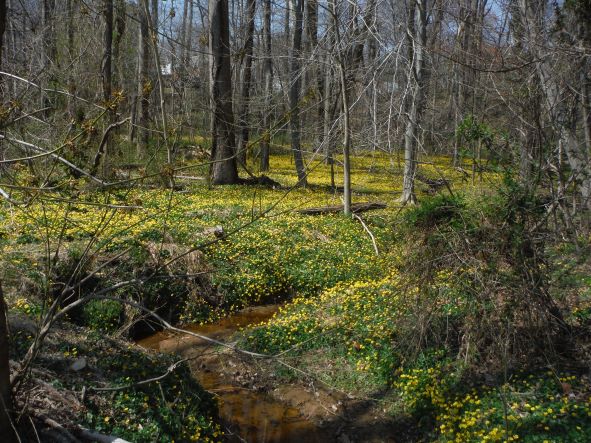
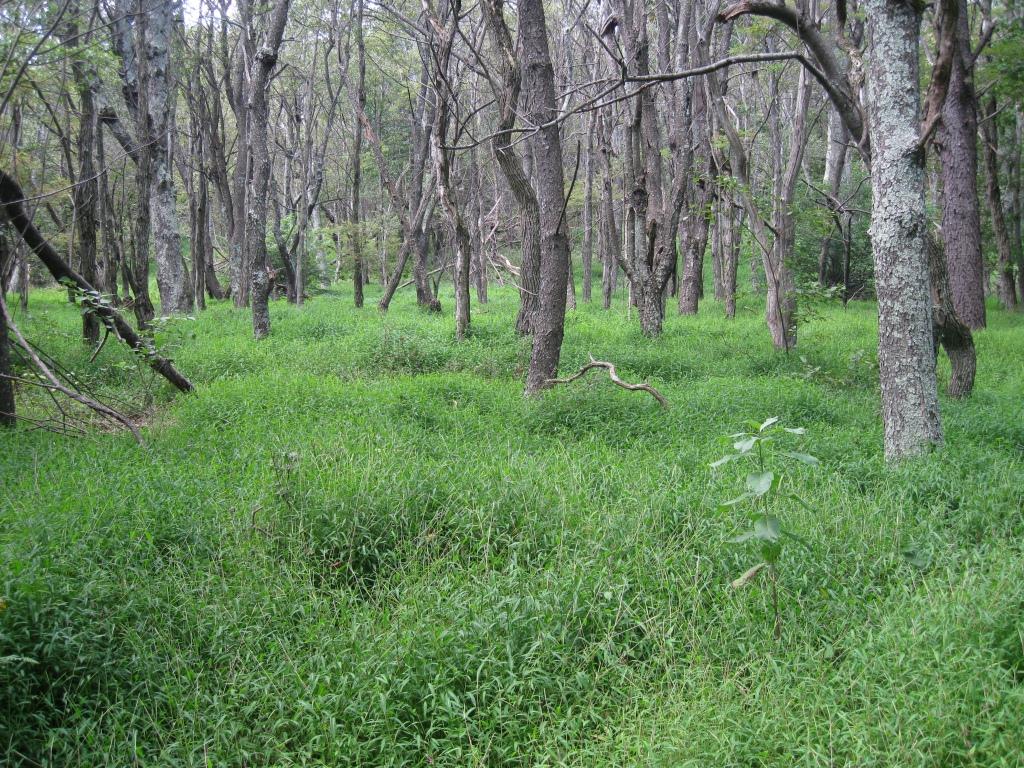
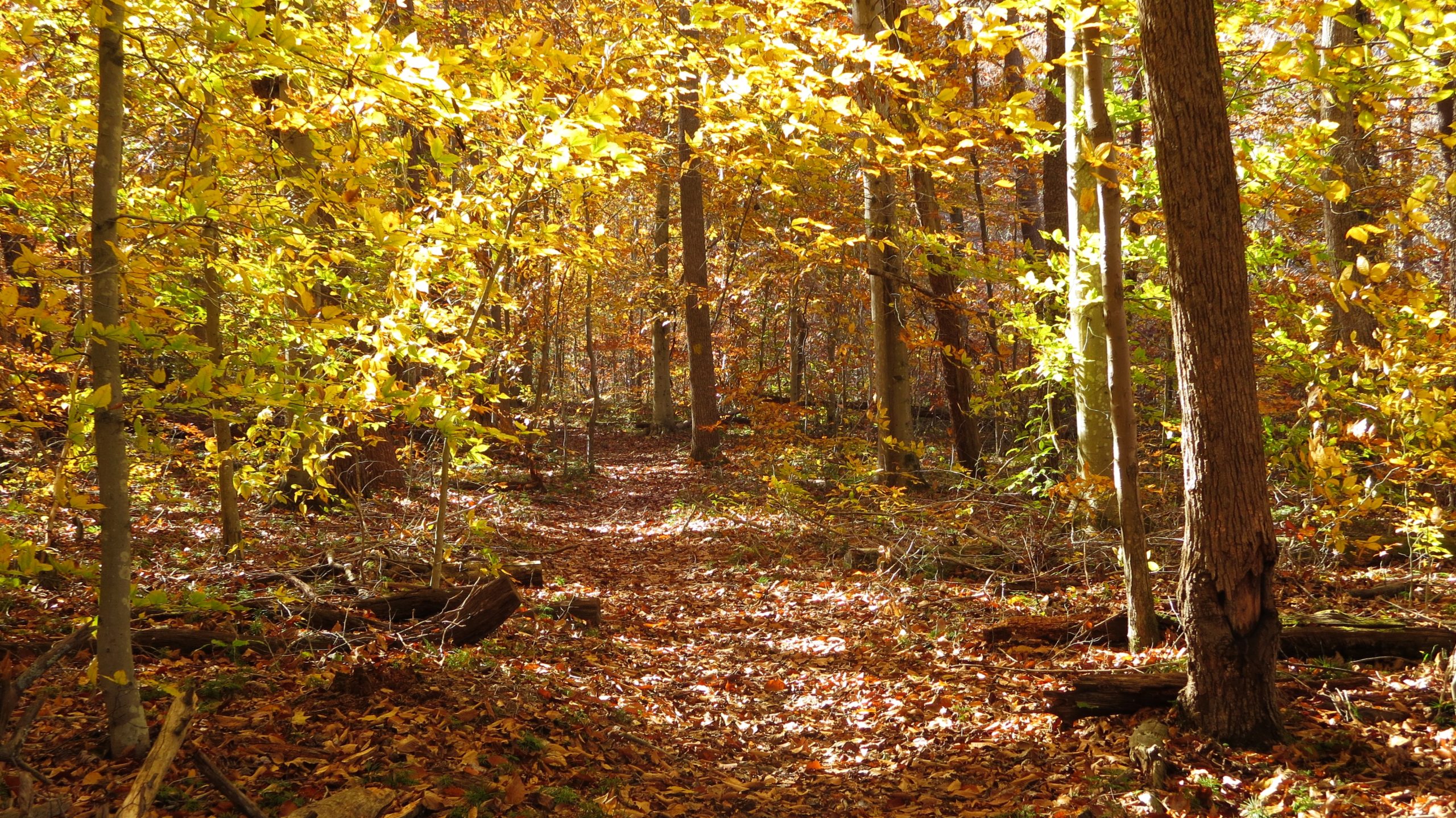
I post here photos from two creek valleys in northern Virginia.
The Accotink creek valley is completely overrun by invasive plants … the herbaceous layer is made up of lesser celandine (Ficaria verna Huds; Ranunculus ficaria L.) and – in some places — Leucojum.
Neighboring Pohick creek valley still supports native hebaceous plants – skunk cabbage, spring beauties, trout lillies.
They both flow through wealthier suburbs in Fairfax County.
?????
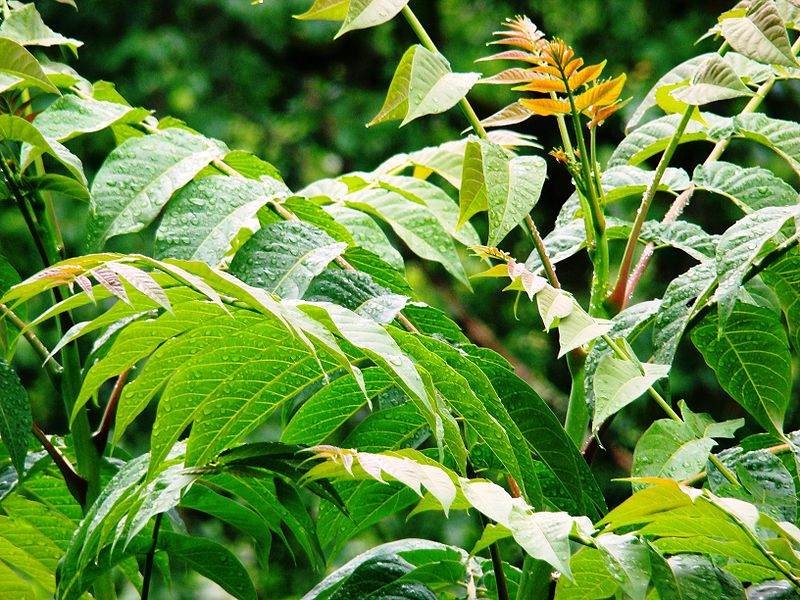
P.S. In a ditch connecting to Pohick creek I have found this aquatic plant:
Plant is rooted, but leaves float on the water surface. In March the leaves were wide with scalloped edges; by April they are longer – lanceolate? I have seen it nowhere else. Anyone know what it is? Local authorities say it is not water chestnut (Trapa).
Posted by Faith Campbell
We welcome comments that supplement or correct factual information, suggest new approaches, or promote thoughtful consideration. We post comments that disagree with us — but not those we judge to be not civil or inflammatory.
For a detailed discussion of the policies and practices that have allowed these pests to enter and spread – and that do not promote effective restoration strategies – review the Fading Forests report at http://treeimprovement.utk.edu/FadingForests.htm
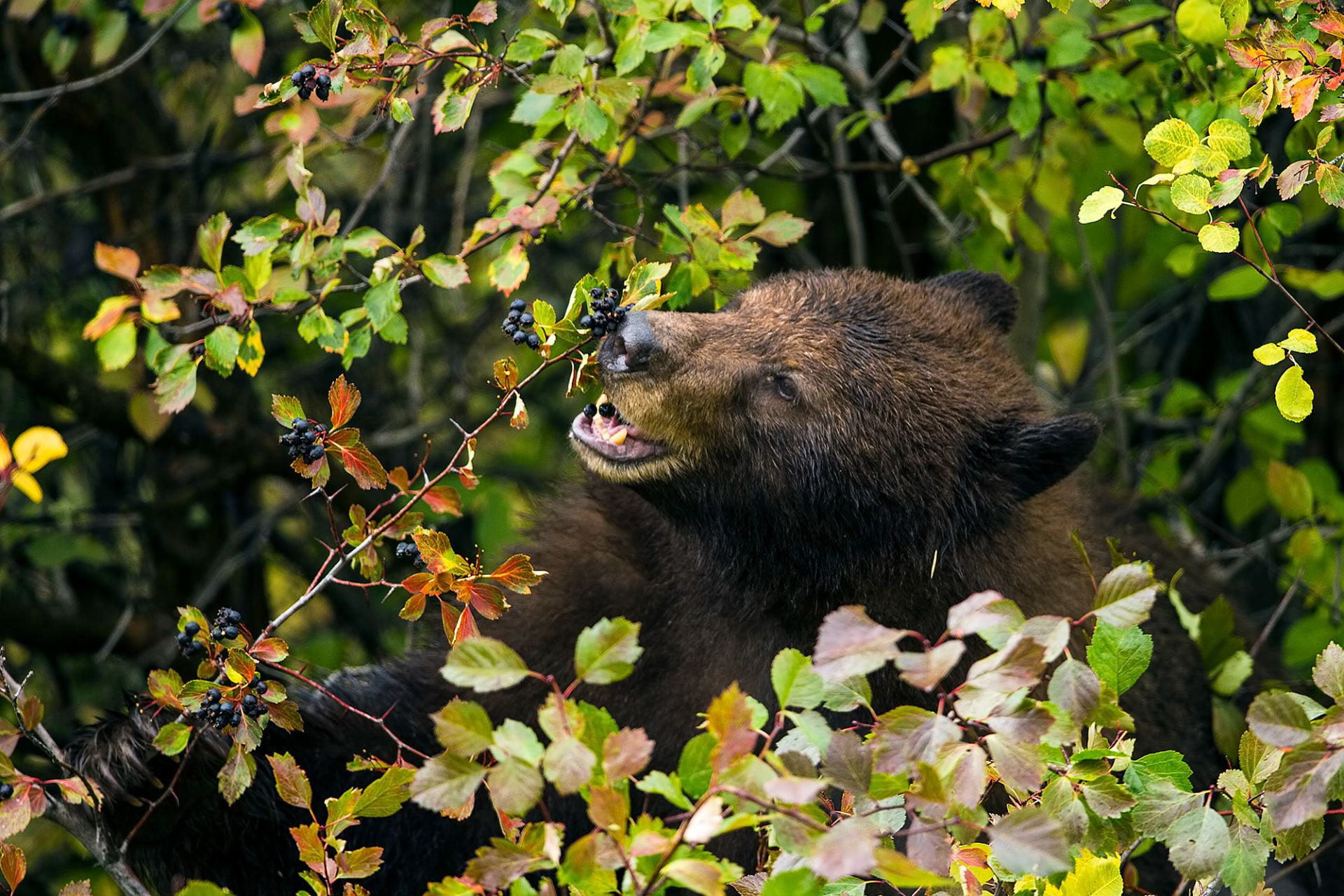
black berry eating hawthorn berries; photo by Paul D. Vitucci
Articles by Evan Fricke and colleagues remind us to look more broadly at bioinvasion to consider the impact on ecosystem function and evolution. They focus on animal interactions with plants in the shared environment, especially animals’ role as seed dispersers.
The authors also remind us that natural barriers explain why there are different species in different areas and thus how evolution and speciation follow different paths in different places. Think of Galapagos finches evolving in isolation from a few ancestors that somehow made it over the ocean from mainland South America.
These points are made in two recent articles.
In the first, Fricke and Svenning 2020 (full citation at end of this blog) note that about half of all plant species depend on animals to disperse their seeds. Animal seed dispersal is influenced by several drivers of global change, including local or generalized extinction (= defaunation); bioinvasion; and habitat fragmentation. The decline of large vertebrates has a particularly important role in these interactions.
Their study focused on fleshy-fruited plants that are dispersed by animals. (The study does not include nuts, e.g., acorns, which are presumably subject to some of the same pressures.) They expect evolution of the affected plants and animals to proceed differently as a result of the new partnerships, but they did not study any such interactions.
Their study covered animal seed-dispersal interactions with plants at 410 locations. The data encompassed 24,455 unique animal-plant pairs involving 1,631 animal and 3,208 plant species. Three quarters of the animals were birds; most of the rest were mammals, primarily bats and primates. Only 1% were in other animal groups – lizards, tortoises, or fish.
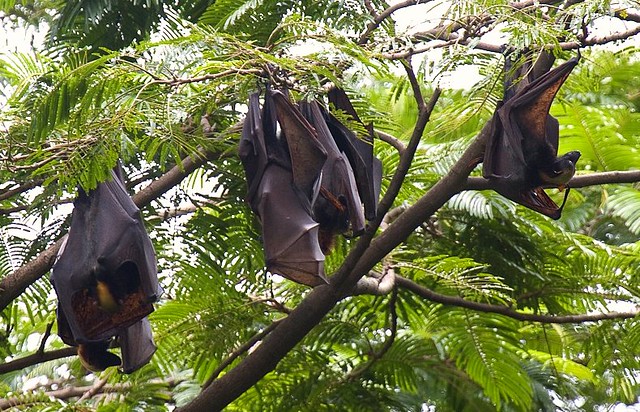
fruit bats on Luzon, Philippines; photo by Francesco Vernonesi; Flickr.com
They found that introduced plants and animals are twice as likely as native species to interact with introduced partners. The resulting interactions are likely to amplify biotic homogenization in future ecosystems. Already, introduced species have largely replaced missing native frugivore species in some places. In fact, mutualisms in which either or both the plant and animal is an introduced species are now about seven times higher than decades ago.
These mutual-benefit interactions of introduced species are even more prevalent in areas where human modification of the environment is greater. The proportion of introduced species and of novel interactions caused by introduced plant or animal species was higher for oceanic island systems than for continental bioregions. This finding adds a new dimension to the already recognized heightened susceptibility of remote islands to invasion and their loss of native species. Continental bioregions’ networks typically had few introduced animals and a greater prevalence of intro plants than animals.
Fricke and colleagues think plant-frugivore networks are likely to increasingly favor a relatively few introduced generalists over many native species, reducing the uniqueness of future biotas. The result might be to reduce resilience of terrestrial ecosystems by, first, allowing perturbations to propagate more quickly; and, second, by exposing disparate ecosystems to similar drivers. They called for giving higher priority to managing increasing ecological homogenization.
In the second article, Fricke, Ordonez, Rogers, and Svenning (2022) note that climate change requires many plant species to shift their populations hundreds of meters to tens of kilometers per year to track their climatic niche. Earth is also experiencing the formation of novel communities as species introductions and shifting ranges result in co-occurrence of species that do not share co-evolutionary history. They conclude that the novel mutualistic interaction networks will influence whether certain plant species persist and spread.
These authors examined four scenarios to assess how current long-distance dispersal has been affected by past defaunation and invasion and how it is threatened by species endangerment. These scenarios are as follows:
1st scenario (current scenario) = natural and introduced ranges of extant species today.
2nd scenario (natural scenario) = mammal and bird ranges as they would be if unaffected by extinctions, range contractions, or introductions.
3rd scenario (extinction scenario) = those bird and mammal species listed as vulnerable or endangered by the IUCN go extinct.
4th scenario (extirpation of introduced species scenario) = introduced species are extirpated.
Fricke and colleagues estimate that extinction of at least local populations of seed-dispersing mammals and birds has already reduced the capacity of plants to track climate change by 60% globally. The effect is strongest in temperate regions and regions with little topographic complexity. Two examples are eastern North America and Europe. These regions face a double threat: rapid climate change and loss of large mammals that provided long-distance dispersal.
The extinction scenario is most evident in Southeast Asia and Madagascar. The remaining animal seed dispersers are already threatened or endangered. Fricke and colleagues project that future loss of vulnerable and endangered species from their current ranges would result in a further reduction of 15% in the capacity of plants to track climate change.
The contrary situation is found on islands which have few native mammals. Introduced species are now important long-distance seed dispersers. In some cases, the introduced animals are dispersing invasive plant seeds, e.g., on Hawai`i feral hogs are spreading the invasive plant strawberry guava (Psidium cattleianum).
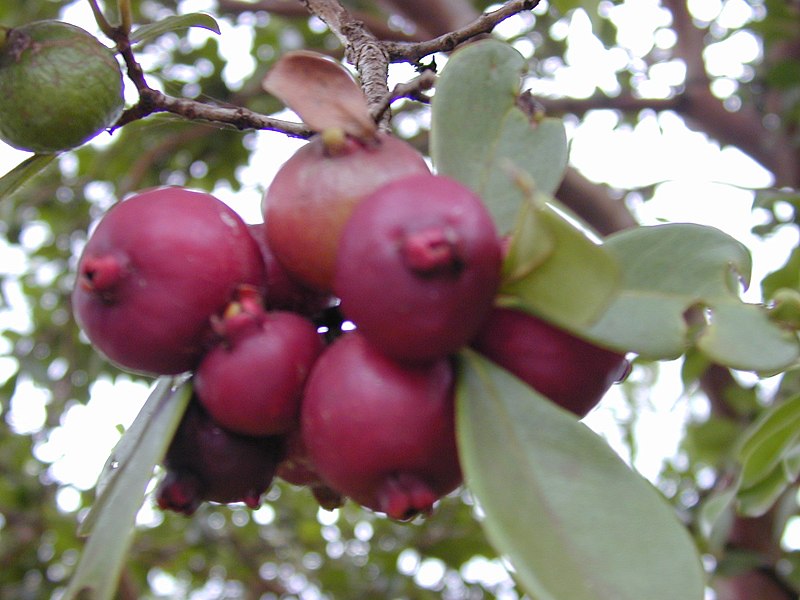
strawberry guava on Maui; photo by Forest and Kim Starr
People’s actions have resulted in ecoregions disproportionately losing the species that provide long-distance seed dispersal function, i.e., large mammals. In other words, human activities have caused not only rapid climate change—requiring broad-scale range shifts by plants—but also defaunation of the birds and mammals needed by plants to do so. Habitat fragmentation and other land-use changes will likely amplify existing constraints on plant range shifts.
Fricke and colleagues say their findings emphasize the importance of not only promoting habitat connectivity to maximize the functional potential of current seed dispersers but also restoring biotic connectivity through the recovery of large-bodied animals to increase the resilience of vegetation communities under climate change.
SOURCES
Fricke, E. C., & Svenning, J. C. (2020). Accelerating homogenization of the global plant–frugivore meta-network. Nature, 585(7823), 74-78. https://www.nature.com/articles/s41586-020-2640-y
Fricke, E. C., Ordonez, A., Rogers, H. S., & Svenning, J. C. (2022). The effects of defaunation on plants’ capacity to track climate change. Science, 375(6577), 210-214. https://www.science.org/doi/full/10.1126/science.abk3510
Posted by Faith Campbell
We welcome comments that supplement or correct factual information, suggest new approaches, or promote thoughtful consideration. We post comments that disagree with us — but not those we judge to be not civil or inflammatory.
For a detailed discussion of the policies and practices that have allowed these pests to enter and spread – and that do not promote effective restoration strategies – review the Fading Forests report at http://treeimprovement.utk.edu/FadingForests.htm
brown tree snake Boiga irregularis; via Wikimedia; one of the species on which the most money is spent on preventive efforts
In recent years a group of scientists have attempted to determine how much invasive species are costing worldwide. See Daigne et al. 2020 here.
Some of these scientists have now gone further in evaluating these data. Cuthbert et al. (2022) [full citation at end of blog] see management of steadily increasing numbers of invasive, alien species as a major societal challenge for the 21st Century. They undertook their study of invasive species-related costs and expenditures because rising numbers and impacts of bioinvasions are placing growing pressure on the management of ecological and economic systems and they expect this burden to continue to rise (citing Seebens et al., 2021; full citation at end of blog).
They relied on a database of economic costs (InvaCost; see “methods” section of Cuthbert et al.) It is the best there is but Cuthbert et al. note several gaps:
Only 83 countries reported management costs; of those, only 24 reported costs specifically associated with pre-invasion (prevention) efforts.
Data comparing regional costs do not incorporate consideration of varying purchasing power of the reporting countries’ currencies.
Data available are patchy so global management costs are probably substantially underestimated. For example, forest insects and pathogens account for less than 1% of the records in the InvaCost database, but constitute 25% of total annual costs ($43.4 billion) (Williams et al., in prep.) .
Still, their findings fit widespread expectations.
These data point to a total cost associated with invasive species – including both realized damage and management costs – of about $1.5 trillion since 1960. North America and Oceania spent by far the greatest amount of all global money countering bioinvasions. North America spent 54% of the total expenditure of $95.3 billion; Oceania spent 30%. The remaining regions each spent less than $5 billion.
Cuthbert et al. set out to compare management expenditures to losses/damage; to compare management expenditures pre-invasion (prevention) to post-invasion (control); and to determine potential savings if management had been more timely.
Economic Data Show Global Efforts Could Be – But Aren’t — Cost-Effective
The authors conclude that countries are making insufficient investments in invasive species management — particularly preventive management. This failure is demonstrated by the fact thatreported management expenditures ($95.3 billion) are only 8% of total damage costs from invasions ($1.13 trillion). While both cost or losses and management expenditures have risen over time, even in recent decades, losses were more than ten times larger than reported management expenditures. This discrepancy was true across all regions except the Antarctic-Subantarctic. The discrepancy was especially noteworthy in Asia, where damages were 77-times higher than management expenditures.
Furthermore, only a tiny fraction of overall management spending goes to prevention. Of the $95.3 billion in total spending on management, only $2.8 billion – less than 3% – has been spent on pre-invasion management. Again, this pattern is true for all geographic regions except the Antarctic-Subantarctic. The divergence is greatest in Africa, where post-introduction control is funded at more than 1400 times preventive efforts. It is also significant for Asia and South America.
Even in North America – where preventative actions were most generously funded – post-introduction management is funded at 16 times that of prevention.
Cuthbert et al. worry particularly about the low level of funding for prevention in the Global South. They note that these conservation managers operate under severe budgetary constraints. At least some of the bioinvasion-caused losses suffered by resources under their stewardship could have been avoided if the invaders’ introduction and establishment had been successfully prevented.
While in the body of the article Cuthbert et al. seem uncertain about why funding for preventive actions is so low, in their conclusions they offer a convincing (to me) explanation. They note that people are intrinsically inclined to react when impact becomes apparent. It is therefore difficult to motivate proactive investment when impacts are seemingly absent in the short-term, incurred by other sectors, or in different regions, and when other demands on limited funds may seem more pressing. Plus efficient proactive management will prevent any impact, paradoxically undermining evidence of the value of this action!
Aedes aegypti mosquito; one of the species on which the most money is spent for post-introduction control; photo by James Gathany; via Flickr
Delay Costs Money
The reports contained in the InvaCost database indicate that management is delayed an average of 11 years after damage was first been reported. Cuthbert et al. estimate that these delays have caused an additional cost of about $1.2 trillion worldwide. Each $1 of management was estimated to reduce damage by $53.5 in this study. This finding, they argue, supports the value of timely invasive species management.
They point out that the Supplementary Materials contain many examples of bioinvasions that entail large and sustained late-stage expenditures that would have been avoided had management interventions begun earlier.
Although Cuthbert et al. are not as clear as I would wish, they seem to recognize also that stakeholders’ varying perceptions of whether an introduced species is causing a detrimental “impact” might also complicate reporting – not just whether any management action is taken
Cuthbert et al. are encouraged by two recent trends: growing investments in preventative actions and research, and shrinking delays in initiating management. However, these hopeful trends are unequal among the geographic regions.
Which Taxonomic Groups Get the Most Money?
About 42% of management costs ($39.9 billion) were spent on diverse or unspecified taxonomic groups. Of the costs that were taxonomically defined, 58% ($32.1 billion) was spent on invertebrates [see above re: forest pests]; 27% ($14.8 billion) on plants; 12% ($6.7 billion) on vertebrates; and 3% ($1.8 billion) on “other” taxa, i.e. fungi, chromists, and pathogens. For all of these defined taxonomic groups, post-invasion management dominated over pre-invasion management.
When considering the invaded habitats, 69% of overall management spending was on terrestrial species ($66.1 billion); 7% on semi-aquatic species ($6.7 billion); 2% on aquatic species ($2.0 billion); the remainder was “diverse/unspecified”. For pre-invasion management (prevention programs), terrestrial species were still highest ($840.4 million). However, a relatively large share of investments was allocated to aquatic invaders ($624.2 million).
Considering costs attributed to individual species, the top 10 targetted for preventive efforts were four insects, three mammals, two reptiles, and one alga. Top expenditures for post-invasion investments went to eight insects [including Asian longhorned beetle], one mammal, and one bird.
Asian longhorned beetle
Just two of the costliest species were in both categories: insects red imported fire ant(Solenopsis invicta) and Mediterranean fruitfly (Ceratitis capitate). None of the species with the highest pre-invasion investment was among the top 10 costliest invaders in terms of damages. However, note the lack of data on fungi, chromists, and pathogens. (I wrote about this problem in an earlier blog.)
Discussion and Recommendations
Cuthbert et al. conclude that damage costs and post-invasion spending are probably growing substantially faster than pre-invasion investment. Therefore, they call for a stronger commitment to enhancing biosecurity and for more reliance on regional efforts rather than ones by individual countries. Their examples of opportunities come from Europe.
Drawing parallels to climate action, the authors also call for greater emphasis on during decision-making to act collectively and proactively to solve a growing global and inter-generational problem.
Cuthbert et al. focus many of their recommendations on improving reporting. One point I found particularly interesting: given the uneven and rapidly changing nature of invasive species data, they think it likely that future invasions could involve a new suite of geographic origins, pathways or vectors, taxonomic groups, and habitats. These could require different management approaches than those in use today.
As regards data and reporting, Cuthbert et al. recommend:
1) reducing bias in cost data by increasing funding for reporting of underreported taxa and regions;
2) addressing ambiguities in data by adopting a harmonized framework for reporting expenditures. For example, agriculture and public health officials refer to “pest species” without differentiating introduced from native species. (An earlier blog also discussed the challenge arising from these fields’ different purposes and cultures.)
3) urging colleagues to try harder to collect and integrate cost information, especially across sectors;
4) urging countries to report separately costs and expenditures associated with different categories, i.e., prevention separately from post-invasion management; damage separately from management efforts; and.
5) creating a formal repository for information about the efficacy of management expenditures.
While the InvaCost database is incomplete (a result of poor accounting by the countries, not lack of effort by the compilers!), analysis of these data points to some obvious ways to improve global efforts to contain bioinvasion. I hope countries will adjust their efforts based on these findings.
Seebens, H. S. Bacher, T.M. Blackburn, C. Capinha, W. Dawson, S. Dullinger, P. Genovesi, P.E. Hulme, M.van Kleunen, I. Kühn, J.M. Jeschke, B. Lenzner, A.M. Liebhold, Z. Pattison, J. Perg, P. Pyšek, M. Winter, F. Essl. 2021. Projecting the continental accumulation of alien species through to 2050. Glob Change Biol. 2021;27:970-982.
Williams, G.M., M.D. Ginzel, Z. Ma, D.C. Adams, F.T. Campbell, G.M. Lovett, M. Belén Pildain, K.F. Raffa, K.J.K. Gandhi, A. Santini, R.A. Sniezko, M.J. Wingfield, and P. Bonello 2022. The Global Forest Health Crisis: A Public Good Social Dilemma in Need of International Collective Action. submitted
Posted by Faith Campbell
We welcome comments that supplement or correct factual information, suggest new approaches, or promote thoughtful consideration. We post comments that disagree with us — but not those we judge to be not civil or inflammatory.
For a detailed discussion of the policies and practices that have allowed these pests to enter and spread – and that do not promote effective restoration strategies – review the Fading Forests report at http://treeimprovement.utk.edu/FadingForests.htm
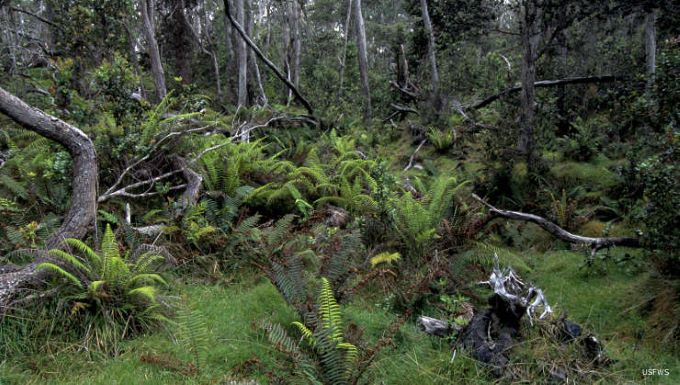
Hakalau Forest, Hawai“i; nearly 90% of Hawaiian flora is unique to the Islands
A recent article by Yang et al. 2021 (full citation at the end of this blog) seeks to determine the extent to which introduced plants reduce the uniqueness of regional floras. They analyzed data from 658 regions covering about 65.7% of the Earth’s ice-free land surface and about 62.3% of the planet’s known plant species.
They found strong homogenization of plant species’ taxonomic and phylogenetic diversity results from introductions of plant species to ecosystems beyond their native range. Homogenization caused by regional extinctions of native floral species occurs much less frequently.
There are two aspects of a region’s floral uniqueness. One is the number of species that it shares with other regions. This is taxonomic uniqueness. The other is the distinctiveness of the evolutionary history of the region. When several species are endemic to a region’s flora, and lack close relatives in other regions, that equals phylogenetic uniqueness.
The effect of a species introduction differs depending on which of these aspects one focuses on. Thus, naturalization of a species closely related to native species (e.g., a congeneric species) will have less impact on the phylogenetic floristic uniqueness of the region than naturalization by a distantly related species. Taxonomic uniqueness, however, will be affected to the same degree, irrespective of the phylogenetic distance between the naturalized and native species.
Yang et al. found strong homogenization of plant diversity. They found that species introductions increased the taxonomic similarity in 90.7% of all regional pairs and phylogenetic similarity in 77.2% of all region pairs. Most homogenization results from introductions of plant species to ecosystems beyond their native range. Homogenization caused by regional extinctions of native floral species occurs much less frequently.
This loss of regional biotic uniqueness or distinctiveness changes biotic interactions and species assemblages. These, in turn, have ecological and evolutionary consequences at larger scales and higher levels.
The degree of homogenization between regions’ floras depends on three factors:
1) The distance between the donor and recipient regions. Since nearby regions share more species, an introduction from a more distant origin is more likely to be a novel species and so contribute to homogenization of “donor” and “receiving” floras.
2) Climatic similarity, especially temperature. A plant species introduced from a climatically similar but geographically distant place is more likely to establish than a species from a different climatic zone. As a result, the recipient area’s flora is changed to more closely resemble the flora of the donor region with which it shares climatic conditions – regardless of the distance between them.
3) The level of exchange of goods and people between two regions. The higher the rate of exchange between two regions, the greater the chance that a species will be introduced and become established. Yang et al. used the existence of current or past administrative relationships (e.g., colonial relationship) between two regions as a proxy for intensity of trade and transport between donor and recipient regions. They found that floras of regions with current or past administrative links have taxonomically become more similar to each other than the floras of regions with no such links.
flora of the Cape Floral Kingdom – South Africa; photo from Michael Wingfield
Establishment of introduced species can increase floristic similarity of the donor and recipient regions (= floristic homogenization) when the species is native to one of the two regions and naturalizes in the other, or when it is not native to both regions and naturalizes in both. On the other hand, a species introduction can decrease the floristic similarity of the two regions (i.e., enhance floristic differentiation) when the species is not native to both regions but naturalized in only one.
Homogenization hotspots differed slightly depending on whether one focused on taxonomic or phylogenetic aspects.
The regions with the greatest average increase in taxonomic similarity with other regions due to naturalized alien species were New Zealand, portions of Australia, and many oceanic islands. The Australasian situation probably reflects its long biogeographic isolation from other parts of the globe and its highly unique native flora. As a result, nearly all non-native plants introduced to Australasia strongly increase levels of its floristic similarity to the rest of the world. Oceanic islands have species-poor floras with large proportions of unique endemics. They have also received high numbers of naturalized alien plants.
Hotspots of phylogenetic homogenization on continents are the same as those for taxonomic homogenization, but this is not true for islands. Yang et al. think this is because islands’ native floras were established by natural colonization from nearby continental floras so – despite subsequent speciation – they retain their phylogenetic relationship to the donor areas’ floras.
Yang et al. concede that they lacked high-quality data on native and naturalized alien species lists for a third of Earth’s ice-free terrestrial surface, especially Africa, Eastern Europe, and tropical Asia. They believe, however, that data from these regions are unlikely to change the overall finding. (Scientists are beginning to compile lists of forest pests in Africa). link to blog
Yang et al. note that introduction and naturalization of alien species are likely to increase in the future, thusaccelerating floristic homogenization. The ecological, evolutionary and socioeconomic consequences are largely unknown.They call for stronger biosecurity regulations of trade and transport and other measures to protect native vegetation.
SOURCE
Yang, Q., P. Weigelt, T.S. Fristoe, Z. Zhang, H. Kreft, A. Stein, H. Seebens, W. Dawson, F. Essl, C. König, B. Lenzner, J. Pergl, R. Pouteau, P. Pyšek, M. Winter, A.L. Ebel, N. Fuentes, E.L.H. Giehl, J. Kartesz, P. Krestov, T. Kukk, M. Nishino, A. Kupriyanov, J.L. Villaseñor, J.J. Wieringa, A. Zeddam, E. Zykova and M. van Kleunen. 2021. The global loss of floristic uniqueness. NATURE COMMUNICATIONS (2021) 12:7290. https://doi.org/10.1038/s41467-021-27603-y
Posted by Faith Campbell
We welcome comments that supplement or correct factual information, suggest new approaches, or promote thoughtful consideration. We post comments that disagree with us — but not those we judge to be not civil or inflammatory.
For a detailed discussion of the policies and practices that have allowed these pests to enter and spread – and that do not promote effective restoration strategies – review the Fading Forests report at http://treeimprovement.utk.edu/FadingForests.htm
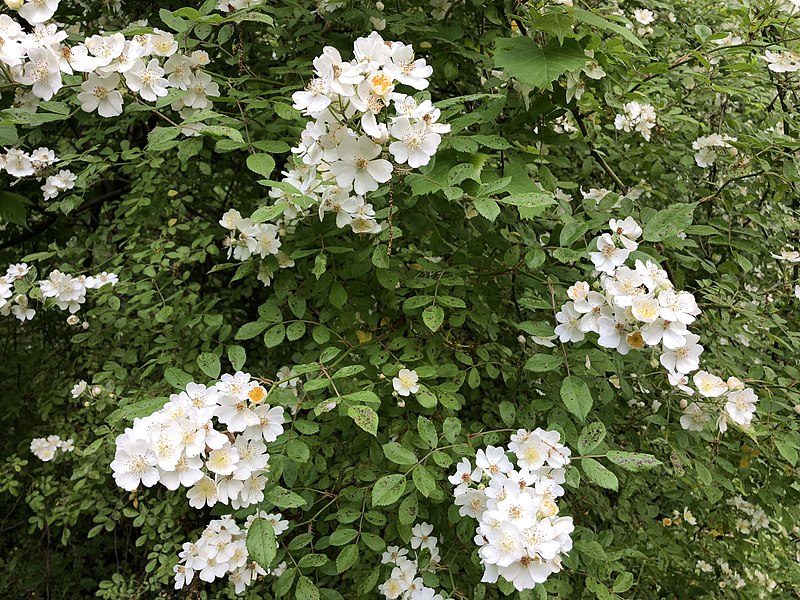
It’s everywhere! multiflora rose (photo by Famartin)
The United States is overrun with introduced plants. Five years ago, Rod Randall’s database listed more than 9,700 non-native plant species as naturalized in the U.S. Not all of these species were “invasive”.
At that time, regional invasive plant groups listed the following numbers of invasive species in their regions:
Southeast Exotic Plant Pest Council – approximately 400 invasive plants
Mid-Atlantic Invasive Plants Council – 285 invasive plants
Midwest Invasive Plants Network reported that state agencies or state-level invasive plant councils in its region listed more than 270 plant species as invasive, noxious, or pest species
California Invasive Plants Council listed 208 species.
Texas Invasives reported more than 800 non-native plant species in the state, of which 20 were considered invasive.
Species – Rankings and Extents
We know that these invaders are affecting wide swaths of many ecosystems. A recent study based on Forest Inventory and Analysis (FIA) data (explained here) showed that nation-wide, 39% of forested plotssampled contained at least one invasive species. Hawai`i was first, at 70%. Eastern forests were second, at 46%. In the West overall, 11% of plots contained at least one invasive species. Plots in both Alaska and the Intermountain states were at 6% of plots invaded. A different study (Barrett and Robertson 2021; full citation at end of blog) reported the proportion of Western forest covered by invasive plants. This approach resulted in different numbers, but the same general ranking: Hawai`i again “led” at 46%; Pacific Coast states at 3.3%; Rocky Mountain states at 0.75%; coastal Alaska at 0.01%.
In more arid regions, data from the Bureau of Land Management showed that invaded acreage had more than doubled between 2009 and 2015.
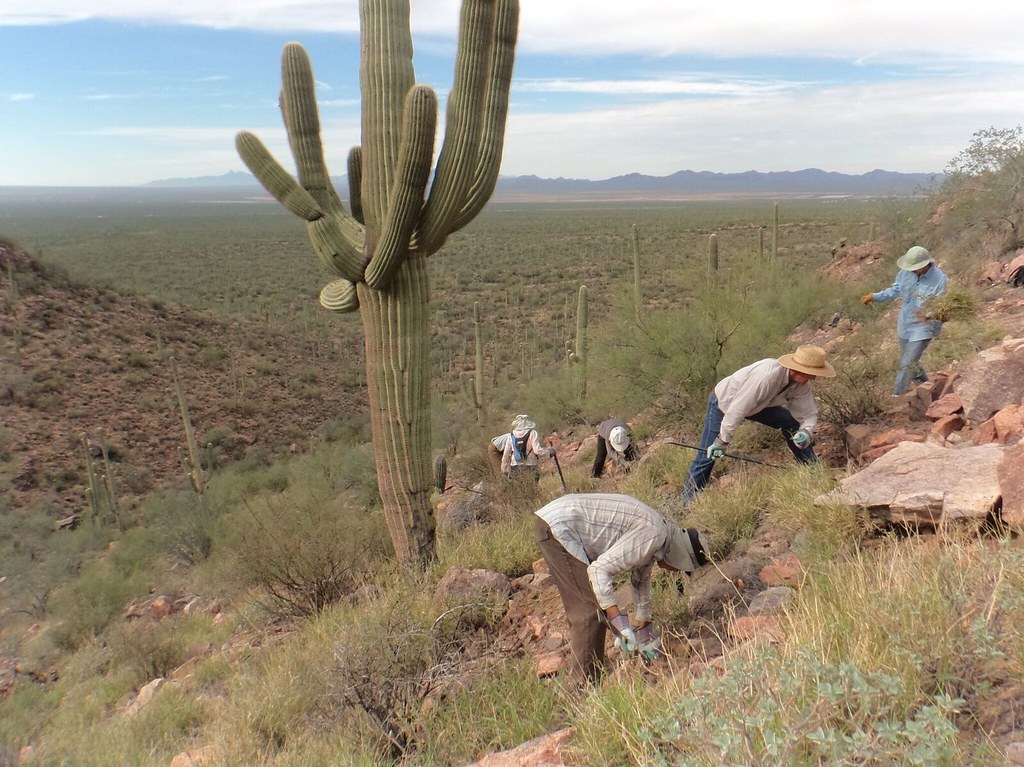
buffelgrass removal in Tucson; Photo by Julia Rowe, Arizona Sonora Desert Museum
The situation is expected to get worse: a study of just one small portion of U.S. naturalized plants found that non-native plant species were more widely distributed than native species and that the average invasive plant inhabited only about 50% of its expected range. Furthermore, human actions were more important in facilitating spread than the species’ biological attributes.
Most of the detailed studies have been conducted in the Northeast – by both Forest Service and National Park Service scientists. The USFS’ Northern Region (Region 9) contains 24 states, from Maine to Minnesota, from Delaware to Missouri. A review of forest inventory (FIA) data (Oswaltet al. 2015) provided details on 50 plant species. (Unfortunately, the Southern Region [Region 8] has chosen to report in different formats, so it is hard to get an overall picture of invasive plants throughout the forests of the entire East. This is especially annoying to those of us who live in Mid-Atlantic states, which are divided between the two regions.)
Oswalt et al. (2015) provided data on the percentage of FIA plots in each state that were reported to have at least one invasive plant species. The northern Midwest ranked highest – e.g., one state (Ohio) at 93%; one state (Iowa) at 81%; two states (Indiana and Illinois) above 70%. Parts of the Mid-Atlantic region were almost as invaded – West Virginia at 79% and Maryland at 65%. The Northern plains states ranked lowest in invasions – North Dakota at 29% and South Dakota at 15%.
A study by the National Park Service of part of the Northeast (from Virginia and West Virginia to Maine) found a situation similar to that found by USFS researchers. In 35 of 39 park units, more than half of the plots had at least one invasive plant species when the 2015-2018 survey began. In 10 parks (a quarter of those surveyed), every plot had at least one. Invasions are worsening: 80% of the park units showed there was a significant increase in at least one trend measuring abundance.
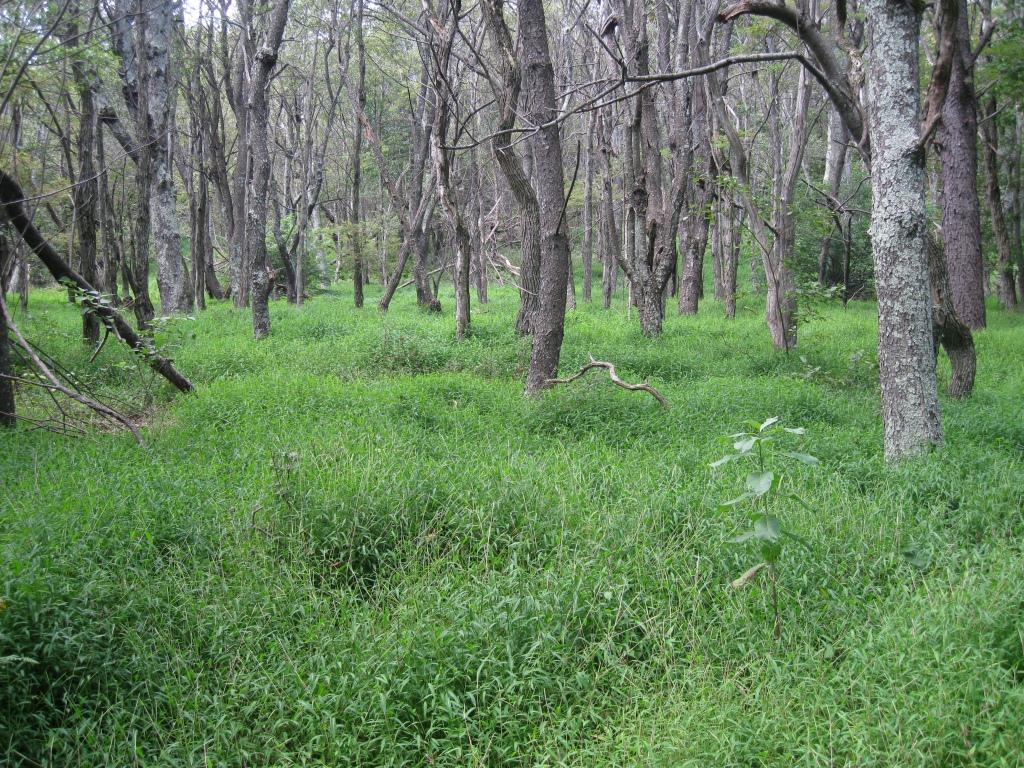
Japanese stiltgrass in Shenandoah National Park; Photo by J. Hughes
The USFS and NPS report different species to be most widespread. In the National Park Service-managed units, Japanese stiltgrass (Microstegium vimineum) was found on 30% of all plots, in more than 75% of all NPS-managed units in the study. This magnitude comes despite the species not being found north of 41o N latitude. In forest plots inventoried by the USDA Forest Service, Japanese stiltgrass was the 14th most widespread species in the Northern region. I speculate that the species might not be common in the upper Midwest, which was not included in the NPS study. Oswalt et al. (2015) noted that Japanese stiltgrass was the 5th most common invasive plant in the Southern region.
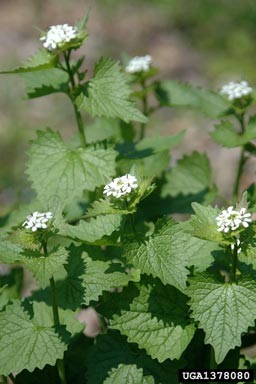
Both studies agreed that garlic mustard (Alliaria petiolata) is widespread. The NPS study found it to be the most frequently detected non-grass herbaceous species, detected in 20% of plots throughout the study area (Virginia and West Virginia to Maine). On forest plots monitored by the USFS, garlic mustard was the 3rd most frequently detected species, on 4.5% of the surveyed plots. The species is reported to be present in 36 states & 5 provinces.
Why do Studies Ignore Deliberate Planting as a Factor?
Both USFS & NPS found shrubs and vines to be highly widespread. NPS specified Japanese barberry (Berberis thunbergii), Japanese honeysuckle (Lonicera japonica), multiflora rose (Rosa multiflora), and wineberry (Rubus phoenicolasius). USFS FIA data showed multiflora rose to be the most frequently recorded invasive plant, present on 16.6% of surveyed plots. It is otherwise recorded in 39 states and 5 provinces. Multiflora rose is almost ubiquitous in some states; in Ohio it is recorded on 85% of the plots. “Roses” were reported to be the 3rd most common invasive plant in the Southern Region. Other shrubs also dominated FIA plot detections: European buckthorn was 4th most frequently detected species, present on 4.4% of survey plots; or in 34 states and 8 provinces. Its presence is highest in New York, at 16.8% of plots. If the plots invaded by the various bush honeysuckle species do not overlap, these shrubs occupy 9.5% of all surveyed plots – second to multiflora rose. The vine Japanese honeysuckle ranked 6th – present on 3.6% of survey plots across the region. Japanese honeysuckle is reported to be the most common invasive plant in the Southern region. Other shrubs ranking 12th or above included Autumn olive and Japanese barberry
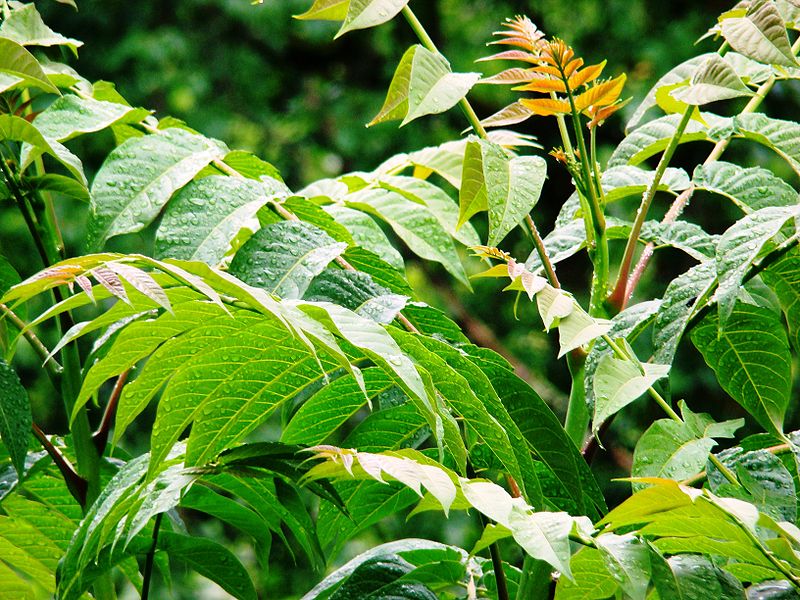
Tree-of-heaven (Ailanthus altissima) was the most common invasive tree found in National parks, again, despite not growing north of 41o N latitude. It is found in 9% of plots.
Ailanthus
I will say that I find it extremely annoying that the scientists carrying out these studies never mention that virtually all these shrub species had been deliberately planted in forests or nearby lands! Instead, they focus on such factors as histories of agriculture and other disturbances and fragmentation. It is well documented (e.g., Lehan et al. 2013) that the vast majority of shrub species introduced to the U.S. were introduced deliberately. Furthermore, more than 500 plant species invasive in some region are being sold on-line globally.
Deliberate planting of species that turn out to be invasive is also rarely recognized in the West, e.g., Pearson et. al. There, the motivation for planting might be livestock forage or erosion control rather than wildlife habitat “enhancement” or ornamental horticulture.
I am pleased that the most recent study (Barrett and Robertson 2021) differs somewhat by noting (sometimes) both invasions by forage grasses and the appearance in the mesic forests of Pacific states such planted species as Armenian blackberry. However, while this report notes the potential that pathogens might be transported to new areas by restoration planting and “assisted migration”, it does not mention the concomitant risk of introducing plant species that might prove invasive in the naïve ecosystems.
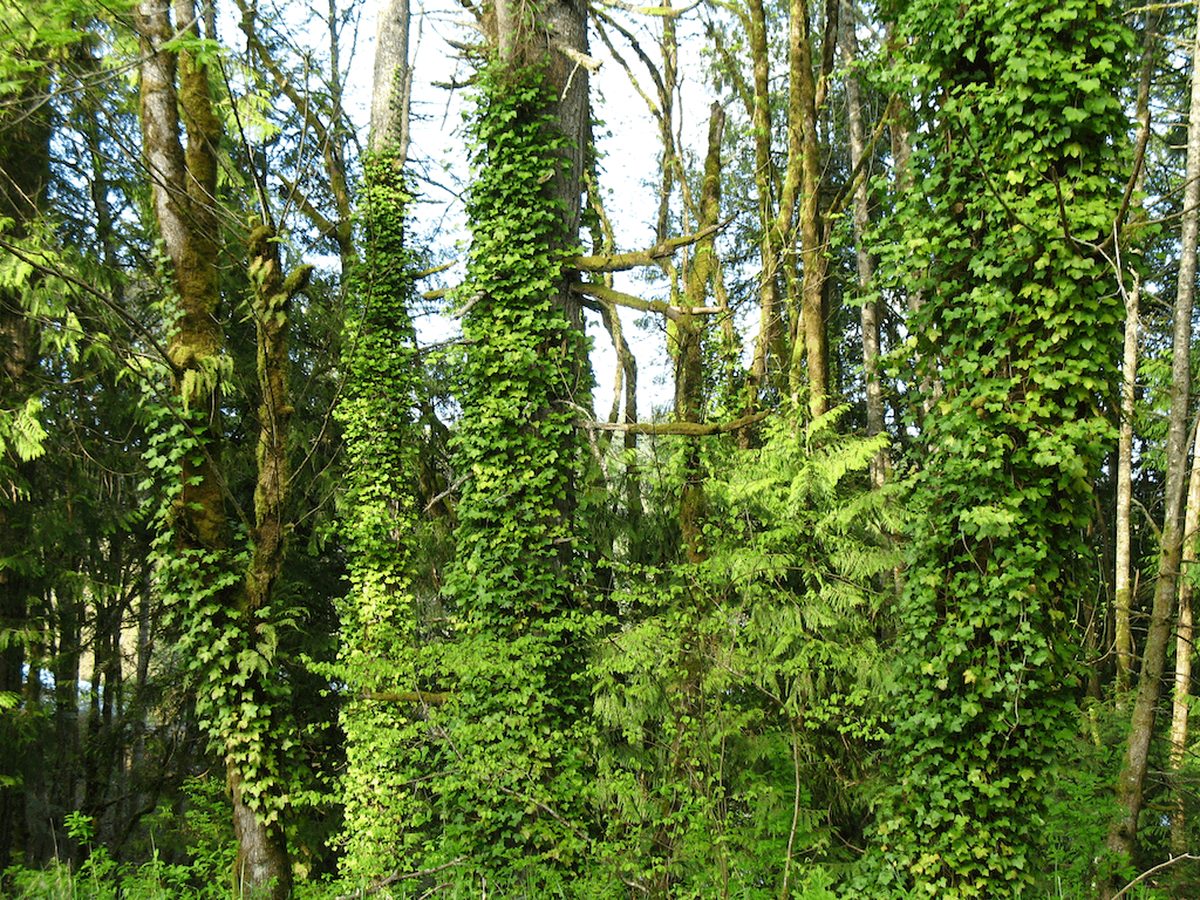
English ivy invading forest in Washington State; photo from Washington Noxious Weed Board
[Go to the earlier blogs linked here and the Western forests report for discussions of management strategies.]
Barrett and Robertson (2021) state that although invasive plants are increasing in extent and intensity in Western forests, they are usually considered to be contributing factors rather than as proximate causes. However, they note two caveats: 1) determining the ultimate causes and resulting implications of these recent increases is more difficult; and 2) data are particularly poor on plant species’ presence. Indeed, the FIA survey process link is ineffective for early detection and tactical monitoring [that is, identifying particular species in specific habitats of concern] of plant invasions.
Of the 23.4 M ha of forested lands that have experienced a disturbance over a five-year window (the time frame for FIA), only 600,000 ha was affected by the combined categories of geologic, vegetation, and other disturbances. (This is 10% of the area affected by either insects or pathogens.) Cheatgrass (Bromus tectorum) was by far the most abundant species in Western forests, covering 480,000 ha, or about 0.49%cover of all forested land in the conterminous Western United States. Because of the difficulties of surveying, Barrett and Robertson (2021) conclude that the area covered by IAS plants on the Pacific Coast and Rocky Mountains could be twice recorded values.
FIA surveys detected the highest number of non-native plant species in the forests of the continental Pacific states — 259 species. Many were grasses (although different species than in the Rockies), but shrubs and other forbs were also present. In the Rocky Mountain states the surveys detected a total of 195 non-native species, primarily grasses. FIA surveys in Hawai`i detected 136 non-native species. The most abundant was strawberry guava, which was detected on 9% of the forested area in the state. Surveys of FIA plots in coastal Alaska detected only 8 non-native plant species; common dandelion was the most abundant. Except in Hawai`i, the plants were expected to have substantially lower impacts than in eastern forests.
I note that the US Geological Service (Simpson and Eyler, 2018) reports there are approximately 1,754 non-native plants in Hawai`i and 424 in Alaska. Not all are necessarily invasive. And the USGS study covered all of Alaska, not just the southeastern coastal region.
Barrett and Robertson (2021) found that plant invasions are less extensive in older forest stands, mesic stands in contrast to drier areas and those with sparse or open tree canopies, and farther from roads. Thus, invasive plant cover was higher in hardwood and low-elevation and dry conifer forest types than in high-elevation and moist conifer types. In Hawai`i, mean plant cover was more than 40 % in all forest types except cloud forest, where it was 7.8 %. Again, proximity to roads was mentioned in the context of the likelihood of disturbance but no mention was made of the fact that households and businesses (e.g., tourist facilities, even agency facilities!) might deliberately introduce plants – e.g., horticulture.
Barrett and Robertson (2021) expect the impacts of NIS plants on forest lands to increase in the future, due to both additional introductions (despite efforts to prevent such) and spread of established species. They note that every disturbance creates an opportunity for the many ruderal and graminoid species to establish – facilitated by their abundance nearby. They note the significant challenge presented by secondary invaders, which often respond to space made available by “weed control” projects better than natives.
I welcome their concern about shade-tolerant plants apparently increasing in wetter areas of the Pacific coast states. They note that the presence of non-native plants in a forest is less obvious, and the impacts might be more subtle, perhaps primarily affecting tree regeneration through competition or other effects (e.g., promoting fire). Barrett and Robertson (2021) note that many of the shade-tolerant non-native species abundant in temperate Eastern U.S. forests (e.g., garlic mustard) are present in the West and are likely to become important.
SOURCES
Barrett, T.M. and G.C. Robertson, Editors. 2021. Disturbance and Sustainability in Forests of the Western US. USDA Forest Service Pacific Northwest Research Station. General Technical Report PNW-GTR-992
March 2021
Simpson, A., and Eyler, M.C., 2018, First comprehensive list of non-native species established in three major regions of the United States: U.S. Geological Survey Open-File Report 2018-1156, 15 p., https://doi.org/10.3133/ofr20181156.
ISSN 2331-1258 (online)
Posted by Faith Campbell
We welcome comments that supplement or correct factual information, suggest new approaches, or promote thoughtful consideration. We post comments that disagree with us — but not those we judge to be not civil or inflammatory.
For a detailed discussion of the policies and practices that have allowed tree-killing pests to enter and spread – and that do not promote effective restoration strategies – review the Fading Forests report at http://treeimprovement.utk.edu/FadingForests.htm (These reports do not discuss invasive plants.)
In February the USFS published a lengthy analysis of invasive species: Invasive Species in Forests and Rangelands of the United States. A Comprehensive Science Synthesis for the US Forest Sector (Poland et al. 2021; full citation at the end of the blog). More than 100 people contributed to the book; I helped write the chapters on legislation and regulations and international cooperation. The book is available for download at no cost here.
Chapters address impacts in terrestrial and aquatic systems; impacts on ecosystem processes; impacts on various sectors of the economy and cultural resources; interactions with climate change and other disturbances; management strategies for species and landscapes; tools for inventory and management. Each chapter evaluates the current status of knowledge about the topic and suggests research needs. There are also summaries of the invasive species situation in eight regions.
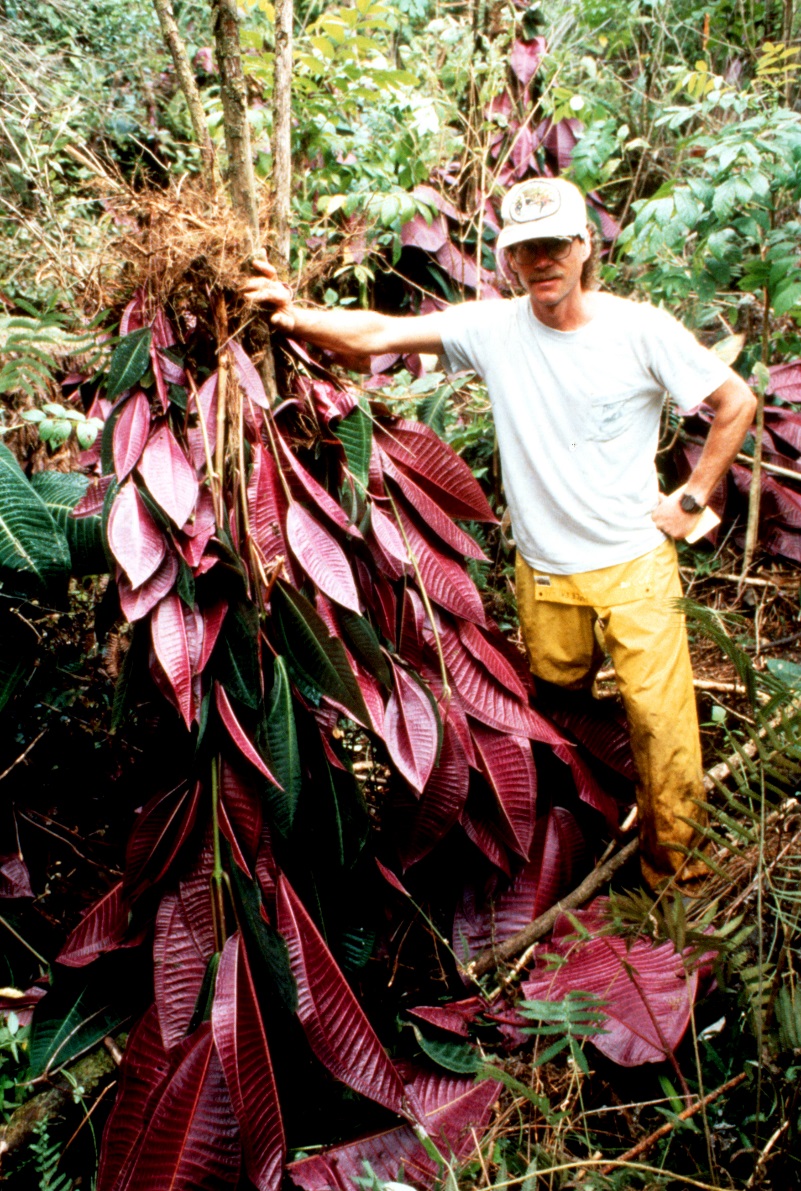
Miconia – one of many invasive plants damaging ecosystems in Hawai`i
I greatly appreciate the effort. Authors first met in 2015, and most chapters were essentially written in 2016. The long delay in its appearance came largely from negotiations with the publisher. The delay means some of the information is out of date. I am particularly aware that several experts – e.g., Potter, Guo, and Fei – have published about forest pests since the Aukema source cited. I wonder whether inclusion of their findings might change some of the conclusions about the proportion of introduced pests that cause noticeable impacts.
Since the report’s publication in February I have struggled with how to describe and evaluate this book. What is its purpose? Who is its audience? The Executive Summary says the report is a sector-wide scientific assessment of the current state of invasive species science and research in the U.S.
However, the Introduction states a somewhat different purpose. It says the report documents invasive species impacts that affect ecosystem processes and a wide range of economic sectors. This would imply an intention to enhance efforts to counter such effects– not just to shape research but also to change management. Indeed, the Conclusion of the Executive Summary (pp. xvi-xvii) is titled “An Imperative for Action”.
Tom Vilsack, Secretary of Agriculture
I am not the author to evaluate how effectively the book sets out research agendas. Regarding its usefulness in prompting policy-makers to do more, I regretfully conclude that it falls short.
Getting the balance right between an issue’s status and what needs to be done is difficult, perhaps impossible. I appreciate that the report makes clear how complex bioinvasion and ecosystem management and restoration are. Its length and density highlight the difficulty of making progress. This daunting complexity might well discourage agency leadership from prioritizing invasive species management.
On the other hand, summary sections sometimes oversimplify or bury important subtleties and caveats. The question of whether some key questions can ever be resolved by science is hinted at – but in detailed sections that few will read. The same is true regarding the restrictions imposed by funding shortfalls.
The Report Would Have Benefitted from Another Round of Editing
Editing this tome was a Herculean task. I feel like a curmudgeon suggesting that the editors do more! Nevertheless, I think the report would have been improved by the effort. One more round of editing – perhaps involving a wider range of authors – could have pulled together the most vital points to make them more accessible to policymakers. It could also have tightened the ecosystem-based descriptions of impacts, which are currently overwhelmed by too much information.
A precis for policymakers
A precis focused on information pertinent to policymakers (which the current Executive Summary does not) should contain the statement that the continued absence of a comprehensive investigation of invasive species’ impacts hampers research, management, and policy (mentioned only in §16.5, on p. 332). It should note situations in which insufficient funding is blocking recommended action. I note three examples: programs aimed at breeding trees resistant to non-native pests (resource issues discussed only in §§8.3.1 and 8.3.2, p. 195); sustaining “rapid response” programs (§6.4.3, p. 125); costs of ecosystem restoration, especially for landscape-level restoration (§16.4). I am sure there are additional under-funded activities that should be included!
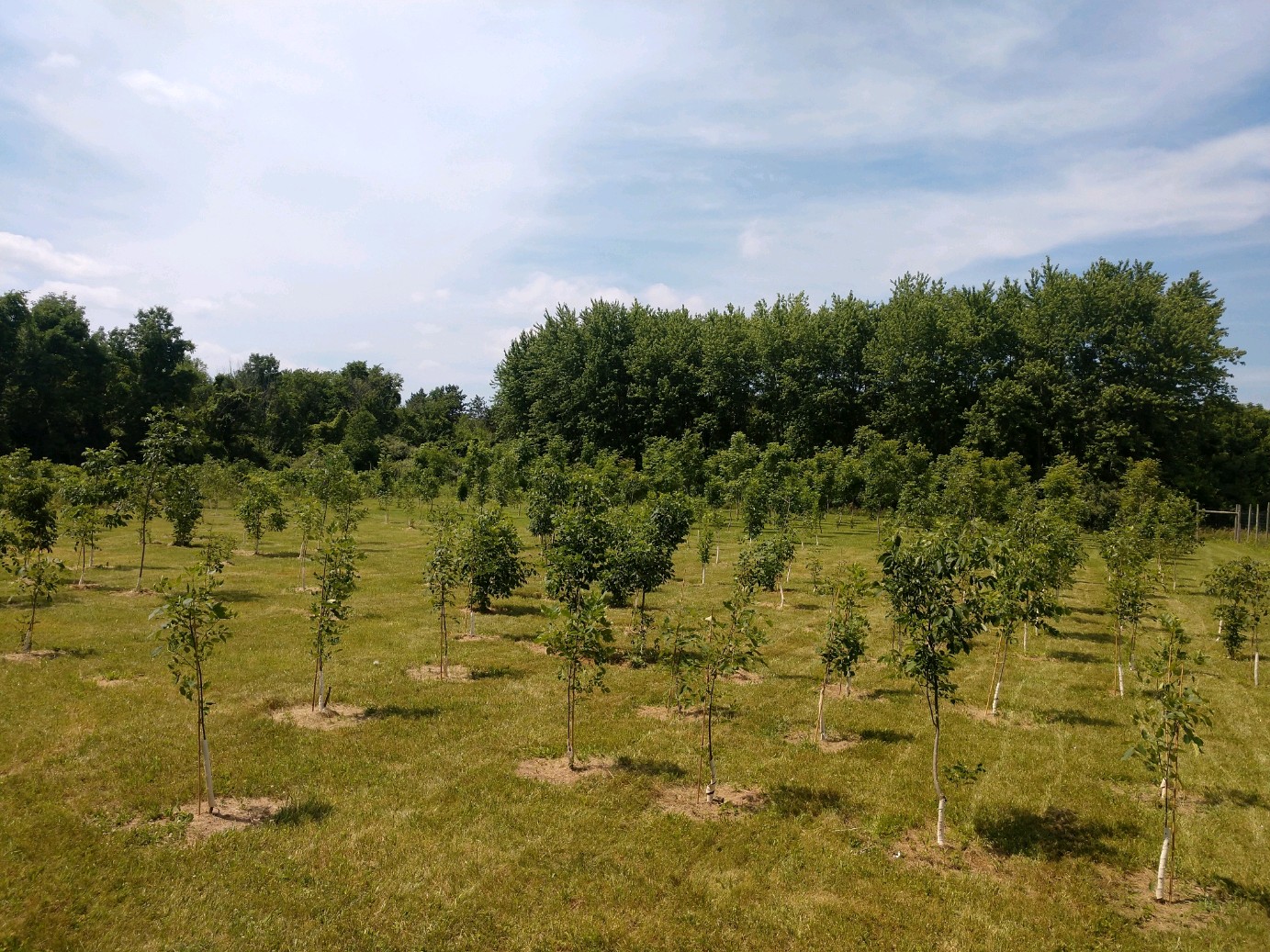
cross-bred ash seedlings being tested for vulnerability to EAB; photo courtesy of Jennifer Koch
Other important information that should be highlighted in such a precis includes the statement that many ecosystems have already reached a point where healthy functions are in a more tenuous balance due to invasive species (p. 51). Effective carbon storage and maintaining sustainable nutrient and water balance are at risk. Second, costs and losses caused by invasive forest pests generally fall disproportionately on a few economic sectors and households. They cannot be equated to governmental expenditures alone (p. 305). Third, even a brief estimate of overall numbers of invasive species appears only in §7.4. Information about individual species is scattered because it is used as example of particular topic (e.g., impacts on forest or grassland ecosystems, or on ecosystem services, or on cultural values).
Ecosystem Impacts Overwhelmed
As noted above, the report laments the absence of a comprehensive investigation of invasive species’ impacts. Perhaps the editors intended this report to partially fill this gap. To be fair, I have long wished for a “crown to root zone” description of invasive species’ impacts at a site or in a biome. Concise descriptions of individual invasive species and their impacts are not provided by this report, but they can be found elsewhere. (The regional summaries partially address the problem of too much information – but they do not provide perspective on organisms that have invaded more than one region, e.g., emerald ash borer or white pine blister rust.) Another round of editing might have resulted in a more focused presentation that would be more easily applied by policymakers.
Welcome Straightforward Discussion of Conceptual Difficulties
I applaud the report’s openness about some important overarching concepts that science cannot yet formulate. If supportable theories could be conceived, they would assist in the development of policies:
Despite decades of effort, scientists have not established a clear paradigm to explain an ecosystem’s susceptibility to invasion (p. 85). Invasibility is complex: it results from a dynamic interplay between ecosystem condition and ecological properties of the potential invader, especially local propagule pressure.
Scientists cannot predict how climate warming will change distributions of invasive species [see Chapter 4] and alter pathways. This inability hampers efforts to develop effective prevention, control, and restoration strategies (p. xi). Climate change and invasive species need to be studied together as interactive drivers of global environmental change with evolutionary consequences.
The Report’s Recommendations
Policy-oriented recommendations are scattered throughout the report. I note here some I find particularly important:
Measures of progress should be based on the degree to which people, cultures, and natural resources are protected from the harmful effects of invasive species.
Managers should assess the efficacy of all prevention, control, and management activities and their effect upon the environment. Such an evaluation should be based on a clear statement of the goals of the policy or action. [I wish the report explicitly recognized that both setting goals and measuring efficacy are difficult when contemplating action against a new invader that is new to science or when the impacts are poorly understood. Early detection / rapid response efforts are already undermined by an insistence on gathering information on possible impacts before acting; that delay can doom prospects for success.]
Risk assessment should both better incorporate uncertainty and evaluate the interactions among multiple taxa. Risk assessment tools should be used to evaluate and prioritize management efforts and strategies beyond prevention and early detection/rapid response.
Economic analyses aimed at exploring tradeoffs need better tools for measuring returns on invasive species management investments (§16.5).
Actions that might be understood as “restoration” aim at a range of goals along the gradient between being restored to a known historic state and being rehabilitated to a defined desired state. The report stresses building ecosystem resilience to create resistance to future invasions, but I am skeptical that this will work re: forest insects and disease pathogens.
Propagule pressure is a key determinant of invasion success. Devising methods to reduce propagule pressure is the most promising to approach to prevent future invasions (p. 115). This includes investing in quarantine capacity building in other countries can contribute significantly to preventing new invasions to the US.
Resource managers need additional studies of how invasive species spread through domestic trade, and how policies may differ between foreign and domestic sources of risk.
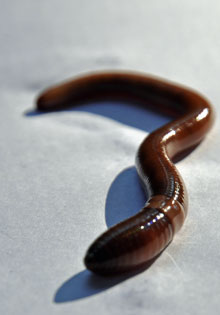
I appreciate the report’s attention to such often-ignored aspects as non-native earthworms and soil chemistry. I also praise the report’s emphasis on social aspects of bioinvasion and the essential role of engaging the public. However, I think the authors could have made greater use of surveys conducted by the Wisconsin Department of Natural Resources and The Nature Conservancy’s Don’t Move Firewood program.
Lost Opportunities
I am glad that the report makes reference to the “rule of 25” rather than “rule of 10s”. I would have appreciated a discussion of this topic, which is a current issue in bioinvasion theory. As noted at the beginning of this blog, the long time between when the report was written and when it was published might have hampered such a discussion
Also, I wish the report had explored how scientists and managers should deal with the “black swan” problem of infrequent introductions that have extremely high impacts. The report addresses this issue only through long discussions of data gaps, and ways to improve models of introduction and spread.
I wish the section on the Northwest Region included a discussion of why an area with so many characteristics favoring bioinvasion has so few damaging forest pests. Admittedly, those present are highly damaging: white pine blister rust, sudden oak death, Port-Orford cedar root disease, balsam woolly adelgid, and larch casebearer. The report also notes the constant threat that Asian and European gypsy moths will be introduced. (The Entomological Society of America has decided to coin a new common name for these insects; they currently to be called by the Latin binomial Lymatria dispar).
And I wish the section on the Southeast and Caribbean discussed introduced forest pests on the Caribbean islands. I suspect this reflects a dearth of research effort rather than the biological situation. I indulge my disagreement with the conclusion that introduced tree species have “enriched” the islands’ flora.
SOURCE
Poland, T.M., P. Patel-Weynand, D.M Finch, C.F. Miniat, D.C. Hayes, V.M Lopez, editors. 2021. Invasive species in Forests and Rangelands of the United States. A Comprehensive Science Synthesis for the US Forest Sector. Springer
Posted by Faith Campbell
We welcome comments that supplement or correct factual information, suggest new approaches, or promote thoughtful consideration. We post comments that disagree with us — but not those we judge to be not civil or inflammatory.
For a detailed discussion of the policies and practices that have allowed these pests to enter and spread – and that do not promote effective restoration strategies – review the Fading Forests report at http://treeimprovement.utk.edu/FadingForests.htm
Ailanthus – one of the invasive species shared by South Africa and the U.S.
A few years ago, I posted a blog in which I pointed to a report on South Africa’s response to bioinvasion as a model for the U.S. and other countries. South Africa has published its second report. This report outlines the country’s status as of December 2019 and trends since the first report (i.e. since December 2016). (I describe the report’s findings on South Africa’s invasive species situation in a companion blog.) Again, I find it a good model of how a country should report its invasive species status, efforts, and challenges. In comparison, many U.S. efforts comes up short.
U.S. Reports Need to Be More Comprehensive
The South African report provides a national perspective on all taxa. Various United States agencies have attempted something similar a few times. The report issued by the Office of Technology Assessment in 1993 summarized knowledge of introduced species and evaluated then-current management programs.
The 2018 report by the U.S. Geological Service focused on data: the authors concluded that 11,344 species had been introduced and described the situation in three regions – the “lower 48” states, Alaska, and Hawai`i. However, the USGS did not evaluate programs and policies. The new USDA Forest Service report (Poland et al. 2021) describes taxa and impacts of invasive species in forest and grassland biomes, including associated aquatic systems. Again, it does not evaluate the efficacy of programs and policies.
The biennial national reports required by the Executive Order establishing the National Invasive Species Council (NISC) are most similar to the South African ones in intent. However, none has been comprehensive. For example, the most recent, issued in 2018, strives to raise concern by stating that invasive species effect a wide range of ecosystem services that underpin human well-being and economic growth. Some emphasis is given to damage to infrastructure. The report then sets out priority actions in six areas: leadership and prioritization, coordination, raising awareness, removing barriers, assessing federal capacities, and fostering innovation. NISC also issued a report in 2016 – this one focused on improving early detection and rapid response. NISC posted a useful innovation – a “report card” updating progress on priority actions — in October 2018. It listed whether actions had been completed, were in progress, or were no longer applicable. However, the “report card” gave no explanation of the status of various actions; the most notable omissions concerned the actions dismissed as “not applicable”. Worse, no report cards have been posted since 2018. I doubt if those or any more comprehensive reports will be forthcoming. This reflects the increasing marginalization of NISC. The Council has never had sufficient power to coordinate agencies’ actions, and now barely survives.
U.S. Reports Need to Be More Candid
The authors of the South African report made an impressive commitment to honest evaluation of the country’s gaps, continuing problems, progress, and strengths. As in the first report, they are willing to note shortcomings, even of programs that enjoy broad political support (e.g., the Working for Water program).
It is not clear whether decision-makers have acted — or will act — on the report’s findings. That is true in many countries, including the United States. However, that is separate whether decision-makers have an honest appraisal on which to base action.
Assessment of South Africa’s Invasive Species Programs
Here is a summary of what the authors say about South Africa’s invasive species program. I want to state clearly that my intention is not to criticize South Africa’s efforts. No country has a perfect program, and South Africa faces many challenges. These have been exacerbated by COVD-19.
The report identifies the areas listed below as needing change or improvement.
1) Absence of a comprehensive policy on bioinvasion. Such a policy would provide a vision for what South Africa aspires to achieve, clarify the government’s position, guide decision-makers, and provide a basis for coordinating programs by all affected parties (e.g., including conservation and phytosanitary agencies).
2) As in the first report, the authors call for monitoring program outcomes (results) rather than inputs (money, staffing, etc.) or outputs (e.g., acres treated). The authors also say data must be available for scrutiny. In those cases when data are adequate for assessing programs’ efficacy, they indicate that the control effort is largely ineffective.
3) Inadequate data in several areas. The report notes progress in developing and applying transparent and science-based criteria to species categorization as invasive (as distinct from relying on expert opinion). However, this change is taking time to implement, and sometimes results in species receiving a different rating. [I agree with the report that data gaps undermine understanding of the extent and impacts of bioinvasion, domestic pathways of spread, justification of expenditures, assessment of various programs’ efficacy (individually or overall), priority setting, and identifying changes needed to overcome programs’ weaknesses. However, I think filling these data gaps might demand time and resources that could better be utilized to respond to invasions – even when those invasions are not fully understood.]
4) Funding of bioinvasion programs by the National Department of Forestry, Fisheries, and the Environment has been fairly constant over 2012–2019, but this is a decline in real terms. The figure of 1 billion ZAR does not include spending by other government departments, national and provincial conservation bodies, municipalities, non-governmental organizations, and the private sector. Authors of the report expect funding to decrease in the future because of competing needs.
While at least 237 invasive species are under some management (see Table 5.1), funding is heavily skewed – 45% of funding goes to management of one invasive plant (black wattle); 72% to management of 10 species.
5) Need for policies to address the threat emerging from rising trade with other African countries, especially considering the probable adoption of the proposed African Continental Free Trade Area. Under this agreement, imported goods will only be inspected for alien species at the first port of entry, and most African countries have limited inspection capacity. [European pathologists Brasier, Jung, and others have noted the same issue arising in Europe, where imported plants move freely around the European Union once approved for entry by one member state.]
The authors of the South African report say programs’ efficacy would be considerably improved if species and sites were prioritized, and species-specific management plans developed. They warn that, in the absence of planning and prioritization, there is a risk that funding could be diluted by targeting too many species, leading to ineffective control and a concomitant increase in impacts.
In South Africa, regulations, permits, and other measures aimed at regulating legal imports of listed species are increasingly effective. However, there is still insufficient capacity to prevent accidental or intentional illegal introductions of alien species. There is also more enforcement of regulations requiring landowners to control invasive species. Six criminal cases have been filed and – as of December 2019, one conviction (guilty plea) obtained. However, the data do not allow an assessment of the overall level of compliance.
The report found little discernable progress on the proportion of pathways that have formally approved management plans. Management is either absent or ineffective for 61% of pathways. There has been no action to manage the ballast water pathway. On the other hand, in some cases, other laws focus explicitly on pathways, e.g., agricultural produce is regulated under the Agricultural Pests Act of 1983.
During the period December 2016 – December 2019, the Plant Inspection Services tested more than 12,000 plant import samples for quarantine pests and made 62 interceptions. The report calls for more detailed information from the various government departments responsible for managing particular pathways (e.g., the phytosanitary service), and for an assessments of the quality of their interventions.
The number of non-native taxa with some form of management has grown by 40% since December 2016 – although – as I have already noted — spending is highly skewed to a few plant species. The number and extent of site-specific management plans has also increased, apparently largely due to a few large-scale plans developed by private landowners. However, few of these plans have been formally approved by some unspecified overseer.
Citing the strengths and weaknesses described above, the current (second) report downgraded its assessment of governmental programs from “substantial” to “partial”.
Comparison to U.S.
How does the United States measure up on the elements that need change or improvement? I know of no U.S. government report that is as blunt in assessing the efficacy of our programs –individually or as a whole.
Nevertheless, each of the five weaknesses identified for South Africa also exist in the United States:
Re: lack of a comprehensive policy, I think the U.S. also suffers this absence. This is regrettable since the National Invasive Species Council (NISC) was set up in 1999.
Re: monitoring outcomes to assess programs’ efficacy, I think U.S. agencies do seem to be more focused on collecting data on programs’ results – see the Forest Service’ budget justification. However, I think too often the data collected focus on inputs and outputs.
Re: data gaps, I think all countries – including the U.S. — lack data on important aspects of bioinvasion. I differ from the South African report, however, in arguing for funding research aimed at developing responses rather than monitoring to clarify the extent of a specific invasive species. Information that does not lead to action seems to me to be a luxury given the low level of funding.
Re: funding, I find that, despite the existence of NISC, it remains difficult to get an overall picture of U.S federal funding of invasive species programs. Indeed, the cross-cut budget was dropped in 2018 at the Administration’s request. I expect all agencies are under-funded; I have often said so as regards key USDA programs. As in South Africa, funding is skewed to a few species that I think should be lower in priority (e.g., gypsy moth).
Re: upgrading invasive species programs to counter free-trade policies, I think U.S. trade policies place too high a priority on promoting agricultural exports to the detriment of efforts to prevent forest pest introductions. This imbalance might be present with regard to other taxa and pathways. See Fading Forests II here.
South African and U.S. agencies also face the same over-arching issues. For example, the U.S. priority-setting process seems to be a “black box.” Several USFS scientists (Potter et al. 2019) spent considerable effort to develop a set of criteria for ranking action on tree species that are hosts of damaging introduced pests. Yet there is no evidence that this laudable project influenced priorities for USFS funding.
SOURCES
Poland, T.M., P. Patel-Weynand, D.M Finch, C.F. Miniat, D.C. Hayes, V.M Lopez, editors. 2021. Invasive Species in Forests and Rangelands of the United States. A Comprehensive Science Synthesis for the US Forest Sector. Springer
Potter, K.M., Escanferla, M.E., Jetton, R.M., Man, G., Crane, B.S. 2019. Prioritizing the conservation needs of United States tree species: Evaluating vulnerability to forest P&P threats, Global Ecology and Conservation (2019), doi: https://doi.org/10.1016/j.gecco.2019.e00622.
SANBI and CIB 2020. The status of bioinvasions and their management in South Africa in 2019. pp.71. South African National BD Institute, Kirstenbosch and DSI-NRF Centre of Excellence for Invasion Biology, Stellenbosch. http://dx.doi.org/10.5281/zenodo.3947613
Posted by Faith Campbell
We welcome comments that supplement or correct factual information, suggest new approaches, or promote thoughtful consideration. We post comments that disagree with us — but not those we judge to be not civil or inflammatory.
For a detailed discussion of the policies and practices that have allowed these pests to enter and spread – and that do not promote effective restoration strategies – review the Fading Forests report at http://treeimprovement.utk.edu/FadingForests.htm
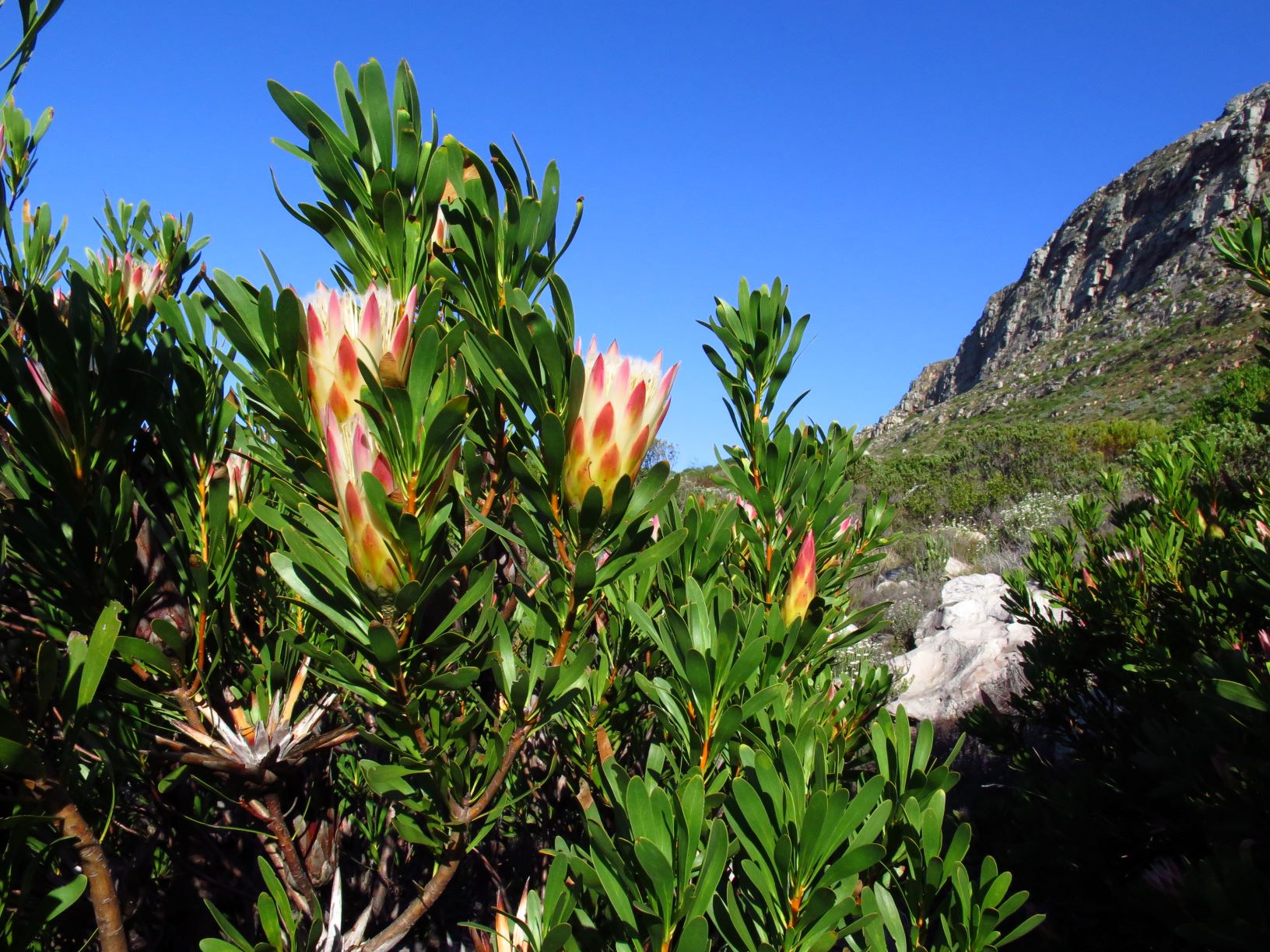
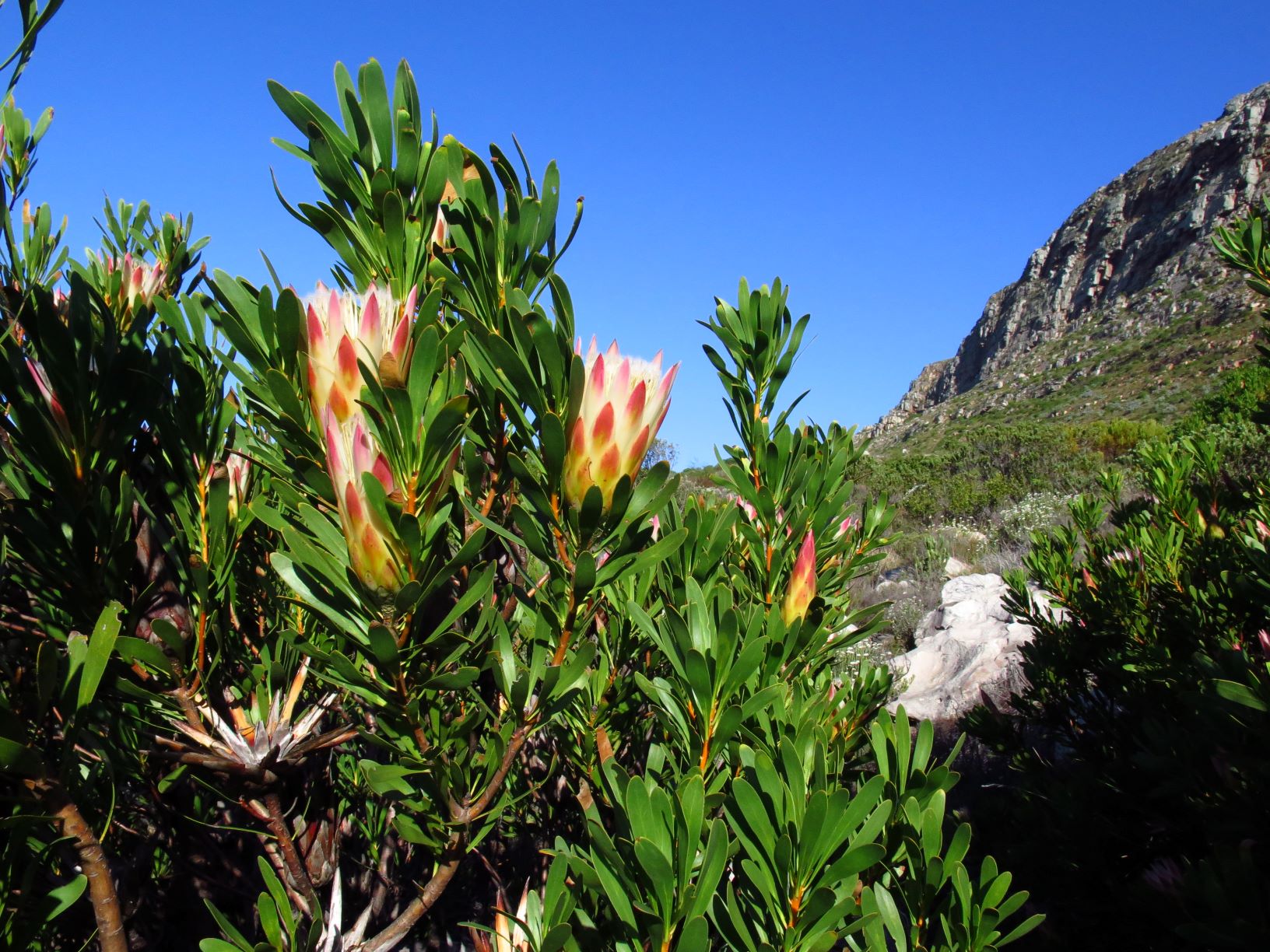
Protea repens and fynbos vegetation near Table Mountain; photo by Mike Wingfield
South Africa is a country of immense biological diversity. It is also one that recognizes the threat invasive species pose to its natural wealth – and to the economy and livelihoods of ordinary people.
Also, South Africans are trying hard to improve the country’s invasive species program. It recently released the second national report assessing how well it is curtailing introductions and minimizing damage. As I describe in a companion blog, I find these reports to contain exceptionally thorough and honest appraisals of South Africa’s invasive species programs. I address that value in the companion blog, where I compare the South African report — and its findings — to U.S. government reports on our invasive species programs.
In South Africa, bioinvasion ranks third – after cultivation and land degradation – as a threat to the country’s impressive biodiversity. Invasive species are responsible for 25% of all biodiversity loss. Certain taxa are at particular risk: native amphibians and freshwater fishes, and some species of plants and butterflies.
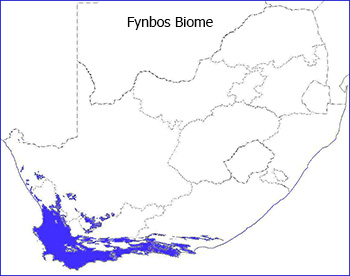
Particularly disturbing is the bioinvasion threat to the Fynbos biome. The report notes that 251 non-native species have been identified in this system. This finding causes concern because the Fynbos is a unique floral biome. In fact, it constitutes the principal component of one of only six floral kingdoms found on Earth: the Cape Floral Kingdom (or region). For more information, go here.
map of South Africa showing fynbos biome
Not surprisingly, invasive bird and plant species are most numerous around major urban centers. The report concludes that this is probably because most non-native birds are commensal with humans; most birds and plants were first introduced to urban centers; and there is greater sampling effort there. Indeed, the patterns of (detected) invasive plant richness are still highly sensitive to sampling effort.
South Africa is considered a leader on invasive species management. However, its record is spotty.
Successes
Biocontrol interventions are considered a success. South Africa has approved release of 157 biocontrol agents, including seven since 2016. All the recent agents (and probably most others) target invasive plants. The South African biocontrol community conducts a comprehensive review of their effectiveness at roughly 10-year intervals. The fourth assessment is currently under way. Also, the report considers eradication of non-native fish (primarily sport species) from several wetlands and river reaches to have been successful. (However, opposition by sport fishermen has delayed listing of some trout species as invasive.)
Failures
On the other hand, strategies to combat invasive plants, other than by biocontrol, appear to be having little success. Even the extent of plant invasions in national parks is poorly documented. Also, the report highlights ballast water as an inadequately managed pathway of invasion.
The report estimates that three new non-native species arrive in South Africa accidentally or illegally every year. Interestingly, reported species arrivals have declined in the current decade compared to the preceding one. The report’s authors consider this to probably be an underestimate caused by the well-known lag in detecting and reporting introductions. The apparent decline also is contrary to global findings. Table 1 in Seebens et al. 2020 (full citation at end of blog) projected that the African continent would receive approximately 767 new alien species between 2005 and 2050.
Even the introductory pathways are poorly known: the pathway for 54% of the taxa introduced to South Africa are unknown. Of the species for which the introductory pathway is known, horticultural or ornamental introductions of plants dominate – 15% of that total. A second important pathway – for accidental introductions – is shipping (5% of all introductions). Other pathways thought to be prominent during 2017–2019 are the timber trade, contaminants on imported animals, and natural dispersal from other African countries where they had previously been introduced.
PSHB symptoms on Vachellia sieberiana; photo by Trudy Paap
Polyphagous shothole borer
The report highlights as an example of a recent introduction that of the polyphagous shothole borer (PSHB, Euwallacea fornicatus). https://www.dontmovefirewood.org/pest_pathogen/polyphagous-shot-hole-borer-html/http://nivemnic.us/south-africas-unique-flora-put-at-risk-by-polyphagous-shot-hole-borer/ See Box 3.1 in the report. This species is expected to have huge impacts, especially in urban areas. While most of the trees affected so far are non-native (e.g., maples, planes, oaks, avocadoes), several native trees are also reproductive hosts. https://www.fabinet.up.ac.za/pshb In response to the introduction, the government established an interdepartmental steering committee, which has developed a consolidated strategy and action plan. However, as of October 2020 the shot hole borer had not been listed under invasive species regulations, even on an emergency basis. It had been listed as a quarantine pest of agricultural plants (e.g., avocado) per the Agricultural Pests Act 1983.
As note in my blog assessing the report, the report bravely concludes that the government’s regulatory regime is only partially successful (whereas three years ago it graded it as “substantial”). The downgrade is the result of a more thorough evaluation of the regulatory regime’s effectiveness.
SOURCES
SANBI and CIB 2020. The status of bioinvasions and their management in South Africa in 2019. pp.71. South African National BD Institute, Kirstenbosch and DSI-NRF Centre of Excellence for Invasion Biology, Stellenbosch. http://dx.doi.org/10.5281/zenodo.3947613
Seebens, H., S. Bacher, T.M. Blackburn, C. Capinha, W. Dawson, S. Dullinger, P. Genovesi, P.E. Hulme, M. van Kleunen, I. Kühn, J.M. Jeschke, B. Lenzner, A.M. Liebhold, Z. Pattison, J. Perg, P. Pyšek, M. Winter, F. Essl. 2020. Projecting the continental accumulation of alien species through to 2050. Global Change Biology. 2020;00:1 -13 https://onlinelibrary.wiley.com/doi/10.1111/gcb.15333
Posted by Faith Campbell
We welcome comments that supplement or correct factual information, suggest new approaches, or promote thoughtful consideration. We post comments that disagree with us — but not those we judge to be not civil or inflammatory.
For a detailed discussion of the policies and practices that have allowed these pests to enter and spread – and that do not promote effective restoration strategies – review the Fading Forests report at http://treeimprovement.utk.edu/FadingForests.htm
Posted by Scott J. Cameron, former Acting Assistant Secretary for Policy Management and Budget , US Department of the Interior
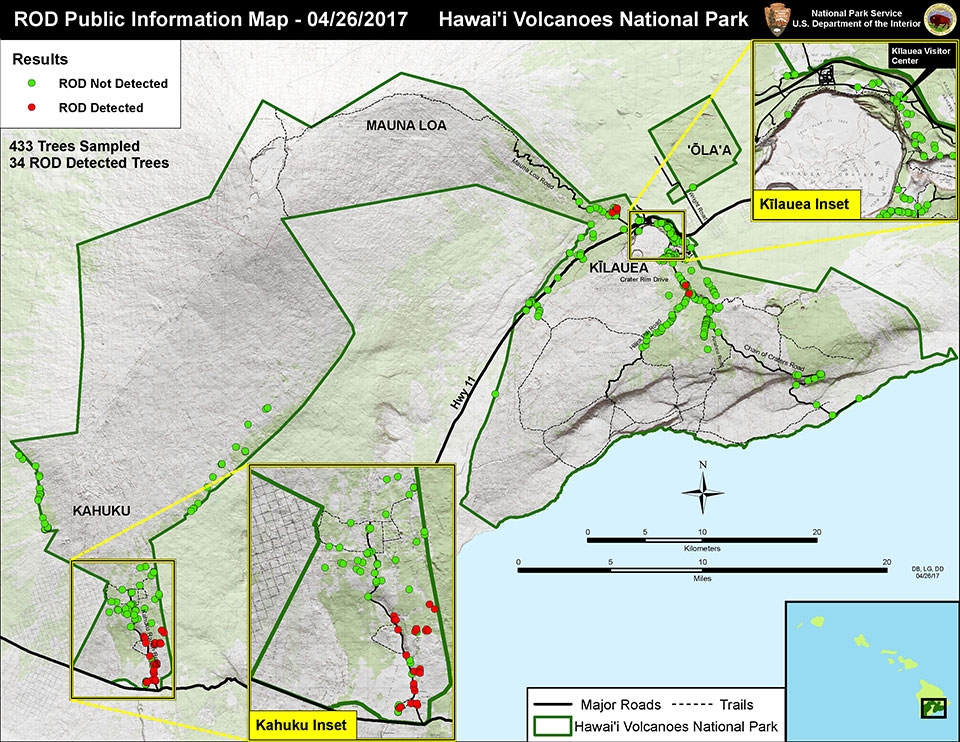
locations in Hawaii Volcanoes National Park where ohia trees were infected by rapid ohia death pathogen in 2017
In 2019 Congress passed the John D. Dingell, Jr. Conservation, Management, and Recreation Act. Among other things, it directed the Department of the Interior to “develop a strategic plan that will achieve, to the maximum extent practicable, a substantive annual net reduction of invasive species population or infested acreage on land or water managed by the Secretary.” This provision triggered a year-long process of public involvement and inter-bureau coordination. The result was a plan published in January 2021. It represents the first attempt by Interior at a Department-wide multi-taxa, multi-year approach to invasive species. It has the potential to spur integration of invasive species work across the Department’s many bureaus and to focus each bureau’s efforts on a set of common goals, strategies, and performance metrics.
While Congress’ language is open-ended, any planning exercise is constrained by the most recent President’s budget and existing law. It is up to those of us who are not, or at least no longer, executive branch employees to advocate for plans unbound by those constraints.
In that spirit, I offer eight recommendations to improve invasive species management. Four are within existing authorities; four more are outside the current budgetary and statutory framework. Many more ideas are without a doubt worth pursuing.
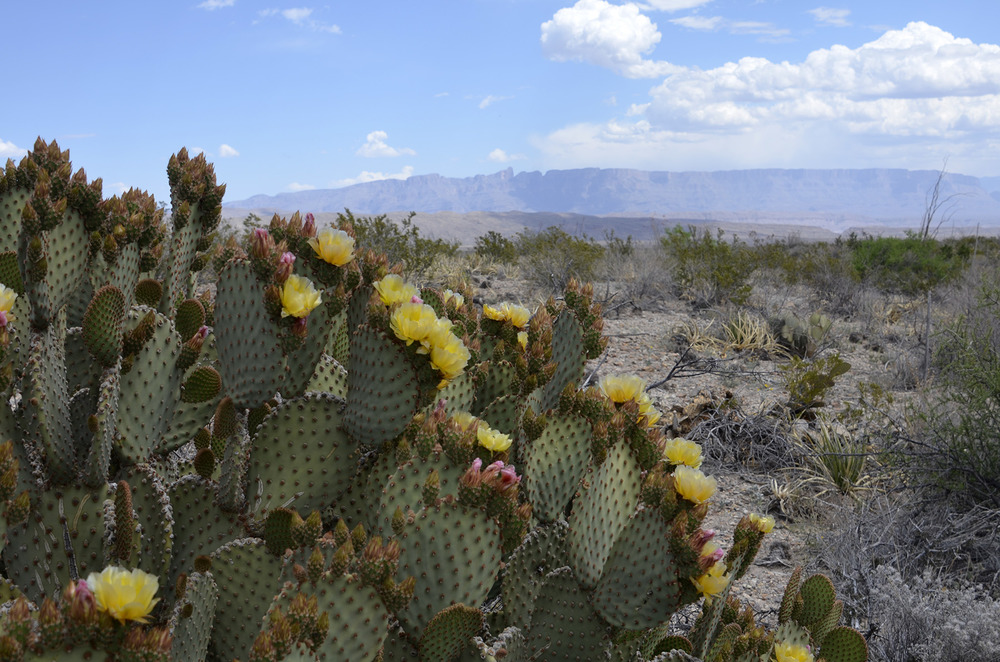
Opuntia (prickly pear) cactus – common plant in western National parks and on Bureau of Land Management lands; under threat by cactus moth
First, within existing funding and legal authorities, the Department has unfinished business that it can act on now.
Secure approval of the package of categorical exclusions under the National Environmental Policy Act (NEPA) — now awaiting approval by the President’s Council on Environmental Quality (CEQ). Over many years agencies have documented how invasive species control improves, rather than harms, the environment. Absent an applicable NEPA categorical exclusion approved by CEQ, though, each such action needs to run the time- and money-consuming gauntlet of NEPA compliance. In the meantime, the invasive plants germinate, the invasive animals reproduce, and what might have been a localized and inexpensive problem has expanded geographically and in terms of cost and complexity. In the Fall of 2020 Interior submitted hundreds of pages of documentation on numerous practices proven to control invasive species without harming the environment. Due to time and staffing constraints at CEQ, these categorical exclusions still await action. Interior and CEQ should take prompt steps to finish them.
Allocate to the US Geological Survey at least $10 million of the roughly $90 million remaining available to the Secretary in CARES Act appropriations for research on invasive zoonotic diseases. These are diseases like COVID-19 and West Nile virus that can move from one species to another. Many zoonotic diseases fit the definition of invasive species, since they are not native to the United States and endanger human health. In the case of COVID-19 funding is available to the Secretary of the Interior, without need for further Congressional action, from funds appropriated by the CARES Act. The availability of these funds will expire at the end of September 2021, so Interior should provide this research funding to USGS as soon as possible.
Join the existing Memorandum of Understanding between the Western Governors Association (WGA) and the US Department of Agriculture’s Forest Service. These groups have established “a framework to allow the U.S. Forest Service (USFS) and WGA to work collaboratively to accomplish mutual goals, further common interests, and effectively respond to the increasing suite of challenges facing western landscapes.” This provides a forum to improve coordination between the States and the federal government on the management of invasive species, and Interior needs to be part of that team.
Interior should work with USDA to accelerate and intensify efforts to systematically improve coordination between the interagency Wildland Fire Leadership Council and the interagency National Invasive Species Council. Both Councils have member agencies that practice vegetation management using similar tools and techniques, although for different purposes. The two Councils should identify a select number of initiatives in FY21 where their efforts would benefit both wildland fire management and invasive plant management .
swamp bay trees in Everglades National Park killed by laurel wilt; photo by Tony Pernas
Four steps to implement the strategic plan outside the scope of current law and the President’s Fiscal Year 2021 budget. I offer the following:
Improve implementation of the Lacey Act program to list injurious species. There are both legislative and administrative elements to this proposal.
In a federal District Court decision on May 19, 2015, on a lawsuit filed by the Association of Reptile Keepers, the Court undid the longstanding Fish and Wildlife Service policy that the Lacey Act allowed FWS to ban interstate transport of injurious species. On April 7, 2017, the D.C. Circuit Court of Appeals upheld the District Court’s view. These rulings mean that FWS authority only applies to international commerce. Unfortunately, the court’s interpretation of the law and legislative history are reasonable, so Congress needs to amend the law to make it clear that FWS is explicitly authorized to regulate interstate commerce in injurious species. The Department of the Interior should work with the Department of Justice and the Office of Management and Budget to develop the necessary bill language and submit it to Congress.
At the same time, the FWS injurious species listing process is notoriously slow, even causing Congress to occasionally list species legislatively. The fact that these legislative initiatives have sometimes been promoted by Members of Congress who normally are opposed to more federal regulation signals just how awkward the current FWS process is. Thus there might well be strong bipartisan support to amend the Lacey Act on the interstate commerce matter. Acting on its own authority, FWS should procure an independent third party review of the injurious species listing process and ask the contractor to make suggestions for “business process reengineering” to improve and streamline current practices, along with evaluating whether higher funding or new technology is needed.
The Bureau of Reclamation, Department of the Interior, and the Office of Management and Budget should develop legislative language to submit to Congress for the 2022 Water Resources Development Act, that explicitly authorizes an aquatic nuisance species program in the Bureau of Reclamation. It could parallel the relatively new authority enjoyed by the Army Corps of Engineers and mandate increased coordination between the two water agencies.
Any climate change legislation pursued by Congress and the Administration should include provisions for addressing invasive species. Climate change will make some North American habitats more suitable for foreign organisms, as cold-intolerant species might be able to survive in more northern latitudes in the U.S. than previously was the case. Second, the disruptive effect of climate change on North American ecosystem structure and trophic relationships at any latitude will make those ecosystems more vulnerable to invasion. Finally, the spread of invasive species may in and of itself exacerbate climate change, such as through the increased carbon dioxide emissions from rangeland wildfires aggravated by the dominance of invasive cheatgrass.
The Senate Committee on Environment and Public Works and the House Natural Resources Committee should each hold oversight hearings on how best to help state and local governments detect and respond to new invasive species that are not within the statutory purview of USDA/APHIS. This is a complex topic, important for both ecological and financial reasons. Over the years several attempts to address it have failed. A thoughtful review by Congress and the Administration, which perhaps would lead to passage of new statutory authority and funding, is worth exploring.
The Author:
Scott Cameron recently left the federal government, where he had served as Acting Assistant Secretary for Policy, Management and Budget at the U.S. Department of the Interior. In that capacity he oversaw Department-wide budget, invasive species, natural resource damage assessment and restoration, environmental compliance and numerous administrative functions of this $14 billion agency with 65,000 employees. Previously, Scott held other civil service job (e.g., at the White House Office of Management and Budget) & political appointments in the federal government, on the staff of the Governor of California, and on Congressional staffs. While not in government, Scott led formation of the Reduce Risk from Invasive Species Coalition.
CISP welcomes comments that supplement or correct factual information, suggest new approaches, or promote thoughtful consideration. We post comments that disagree with us — but not those we judge to be not civil or inflammatory.
Further information on the plant pests mentioned in the photo captions can be obtained at www.dontmovefirewood.org; click the “invasive species” button.
Japanese stiltgrass in Shenandoah National Park; photo by Jake Hughes, NPS
The recent appearance of a study by National Park Service (NPS) scientists quantifying the threat posed by invasive plants prompted me to seek updates on this issue. In May 2018, I blogged about NPS’ Invasive Plant Program Strategic Plan, which was issued in 2016. At the time, I got the impression that the program was struggling to gain support from NPS leadership in Washington, as well as leaders of individual parks. Has the situation improved since then?
The recent study, by Kathryn Miller and colleagues, focuses on National parks in the East, from Virginia to Maine. (I provide a full reference at the end of this blog.) I look forward to a planned follow-up article that will try to clarify drivers of invasion.
The Miller study appears to have been undertaken to partially fulfill one of the goals of the NPS’ 2016 Invasive Plant Program Strategic Plan. One of the actions under Goal 1 in the Plan was to quantify the invasive plant threat, the effort needed to manage it, and then to communicate the gap between needs and available resources. Miller et al. have quantified the threat to National parks in one region (not the entire country). However, they have communicated the gap between effort and need in only the most general way.
Protecting the forests in eastern National parks is valuable from many perspectives. The forests in these parks are older and have higher stand-level tree diversity than surrounding unprotected forests. Protecting their long-term condition also corresponds to the National Park Service’s (NPS) stated mission, as established in its Organic Act.
The study relied on National Park Service Inventory and Monitoring Program data from 1,479 permanent forest plots covering 39 eastern NP units located from Virginia to Maine. The data were collected over 12 years, in three survey cycles (2007–2010, 2011–2014, and 2015–2018).
The authors note that in forest ecosystems, invasive plants can reduce native diversity, alter forest structure, suppress tree regeneration, alter nutrient cycling, and modify disturbance regimes. Some – the shrubs and vines – also threaten human health by promoting increases in tick populations and associated Lyme disease risks.
Unsurprisingly, the data showed invasive plants to be widespread, and increasing. In 80% of the park units, there was a significant increase in at least one trend measuring abundance. Any decrease in plant invaders tended to be in herbaceous or graminoid species; that decrease was often counterbalanced by an approximately equivalent increase in invasive shrubs or vines. In 35 of the park units, more than half of the plots had at least one invasive plant species when the 2015-2018 survey began. In 10 parks (a quarter of those surveyed), every plot had at least one.
The most widespread species is Japanese stiltgrass (Microstegium vimineum). It is present in more than 75% of all park units and 30% of all 1,400 plots. This dominance is true despite the fact that stiltgrass does not extend north of Roosevelt-Vanderbilt National Historic Site in New York state (41o N latitude). Stiltgrass is also the most aggressive invader.
The second most widespread invaders are a group of shrubs and vines, including most notably Japanese barberry (Berberis thunbergii), Japanese honeysuckle (Lonicera japonica), multiflora rose (Rosa multiflora), and wineberry (Rubus phoenicolasius). I note – although the articles does not – that several of these have been deliberately planted – either to “enhance” ecosystems (multiflora rose) or as ornamentals (barberry). [Lehan et al. 2013 (full reference at end of blog) found that 95% of 125 shrub species introduced to the U.S. were introduced deliberately.] I know of no examples of deliberate planting of Japanese stiltgrass.
The most frequently detected non-grass herbaceous species is garlic mustard (Alliaria petiolata), which was detected in 20% of plots. Garlic mustard is found throughout the study area (Virginia to Maine). Tree-of-heaven (Ailanthus altissima) is the most common invasive tree. It is found in only 9% of plots and does not grow north of Roosevelt-Vanderbilt NHS. Again, both were intentionally introduced – and not noted as such in the article.
Because they could not identify the source populations for each plot, the study could not directly measure rates of establishment and expansion. The data did allow tracking rough trends in each park.
Parks with the highest abundance tended to be near densely populated areas. However, this pattern was not universal. For example, Prince William Forest Park in the outer Virginia suburbs of the District of Columbia metro area was one of two of the least invaded park units.
Prince William Forest Park
(note the prevalence of beech – I fear for the arrival of beech leaf disease!)
Total invasives increased significantly in 21 of the 39 parks for at least one metric. In 10 parks (a quarter of all parks), total invasives increased significantly in two of the three metrics. Antietam National Battlefield experienced the steepest increases.
The authors note that invasive plants continue to establish and expand, even in already heavily invaded forests. Thus they found little evidence of saturation. This finding conflicts with invasion theory. They also found antagonistic interactions between invasive species to be common.
The authors said managers should prioritize efforts to control Japanese stiltgrass and the shrubs and vinesdue to their widespread occurrence, rapid expansion, ability to suppress tree regeneration and understory diversity, and – in the case of the shrubs and vines, link to ticks.
The authors noted the need to better understand the drivers and impacts of invasive plants in eastern forests. They mentioned the overabundance of white-tailed deer (Odocoileus virginianus), latitude, climate change, fragmentation and urbanization. I have urged them to include analysis of deliberate planting of various species on lands within the park units or nearby. They have said that they will do so in the planned follow-up article.
The authors propose that deferred management of natural resources receive attention and sustained commitment on par with the attention to deferred maintenance of the park units’ infrastructure. The maintenance backlog has been addressed through recent legislation: the Great America Outdoors Act which provided $6.5 billion over five years to address deferred maintenance projects in all 419 national park units. I believe that these projects will not address invasive species, which are managed under the “Natural Resources” budget account, not “Maintenance”. Some “Maintenance” projects probably will include control of invasive plants. A former Interior Department official has suggested that resource management activities might be funded under another section of the legislation, which provides $900 million under the Land and Water Conservation program. I hope this is true.
National Park Service’ Overall Invasive Plant Program Now
In response to the mandate in the John D. Dingell, Jr. Conservation, Management, and Recreation Act (Public Law 116-9), the Department of Interior has issued a department-wide invasive species strategy. Will issuance of the new strategy provide impetus to the NPS to seek funding to implement its 2016 invasive plant strategic plan? Will Congress provide funds for this purpose?
Finding out the current status of National Park Service took a little effort. The NPS’ website has “popular” information about the efforts of individual regional Invasive Plant Management Teams (see links at the end of this blog). These posts provide only the briefest overview of program achievements and do not compare those accomplishments to the goals in the 2016 plan.
However, Terri Hogan, Invasive Plant Program Manager in the Biological Resources Division, provided following information:
NPS leadership now supports the agency’s invasive plant effort. The national Invasive Plant Program (IPP) contributes to the annual Natural Resource Stewardship and Science Directorate (NRSS)’ Biological Resource Division (BRD) work plan. All is guided by the “Four Pillars to Guide Natural Resource Activities and Investments”, adopted in 2016.
It is not clear that invasive species have the highest priority under this regime. The four “pillars” are
Holding the line – includes conserving biodiversity by removing invasive plants
Managing amid Continuous Change – includes conducting risk assessment and taking other actions to contain future exotic species
Leveraging for Conservation at Scale
Enhancing Stewardship and Science Access and Engagement
Cooperation with owners of neighboring private lands has been enhanced by engagement of the Western Governors Association and state and local political leaders. Many parks participate in Partnerships for Invasive Species Management (PRISMs), CISMS, and Cooperative Weed Management areas (CWMAs). This collaboration has been strengthened by adoption of the John D. Dingell, Jr. Act (see above).
In practice, the focus appears to still be on the Invasive Plant Management Teams (IPMTs). There are now 17 teams. Fifteen are funded through the national office. One is funded by an individual park; one funded through a regional office. Annual reports have been published for FYs 2017 and 2018. The FY19 report has been held up but should be posted soon.
The reports provide brief description of the overall program and vignettes of particular activities. There are more detailed – but still anecdotal – reports for each of the teams. It is difficult to determine whether there has been overall progress. For example, the reported total infested acreage increased from 133,658 acres in FY17 to 301,195 acres in FY18. This presumably reflects more intense monitoring as well as a probable increase in real infections. (The infested acreage figures do not address intensity of invasion on these acres.) The teams cumulatively treated 8,937 acres in FY 2017; 8,331 acres in FY 2018. They carried out inventory and monitoring projects on 169,057 acres in FY17, 210,000 acres in FY18.
Since the Miller article concerns the region from Virginia to Maine, I checked the FY17 and FY 18 reports from the Invasive Plant Management Teams from the Mid-Atlantic, National Capital Area, and Northeastern regions. The Mid-Atlantic team emphasized work on wavyleaf basketgrass and meadows in parks established to protect cultural or historic sites. The National Capital Area team emphasized partnerships and success eradicating Giant Hogweed (Heracleum mantegazzianum) on private land neighboring Rock Creek Park. The Northeastern Team serves 25 parks; the report emphasized leveraging resources and testing efficacy of pre-emergent herbicide for control of Japanese stiltgrass. With this exception, the teams do not appear to be prioritizing the species recommended for action by the Miller study.
Brief, “popular” articles about the NPS’ invasive plant effort are available here
Lehan, N.E., J.R. Murphy, L.P. Thornburn, and B.A. Bradley. 2013. Accidental Introductions are an Important Source of Invasive Plants in the Continental United States. American Journal of Botany 100(7): 1287–1293. 2013.
Miller, K. M., B. J. McGill, A. S. Weed, C. E. Seirup, J. A. Comiskey, E. R. Matthews, S. Perles, & J. Paul Schmit. 2020. Long-term trends indicate that invasive plants are pervasive and increasing in eastern national parks. Ecology. 00(00):e02239. 10.1002/eap.2239
Posted by Faith Campbell
We welcome comments that supplement or correct factual information, suggest new approaches, or promote thoughtful consideration. We post comments that disagree with us — but not those we judge to be not civil or inflammatory.
For a detailed discussion of the policies and practices that have allowed these pests to enter and spread – and that do not promote effective restoration strategies – review the Fading Forests report at http://treeimprovement.utk.edu/FadingForests.htm