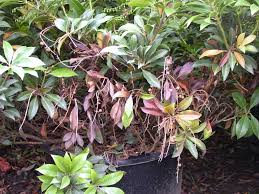
Phytophthora ramorum-infected rhododendron plant; photo by Jennifer Parke, Oregon State University
APHIS has released the list of projects funded under §7721 of the Plant Protection Act in Fiscal Year 2023. Projects funded under the Plant Pest and Disease Management and Disaster Prevention Program (PPDMDPP) are intend to strengthen the nation’s infrastructure for pest detection and surveillance, identification, threat mitigation, and safeguard the nursery production system.
APHIS has allocated $62.975 M to fund 322 projects in 48 states, Guam, & Puerto Rico. ~ $13.5 M has been reserved for responding to pest and plant health emergencies throughout the year. USDA is funding ~70% of the more than 460 PPDMDPP proposals submitted.
2 – Target Domestic Inspection Activities at Vulnerable Points $6,356,964
3 – Pest Identification and Detection Technology Enhancement $5,295,125
4 – Safeguard Nursery Production $2,079,119
5 – Outreach and Education $4,131,333
6 – Enhance Mitigation Capabilities $13,875,775
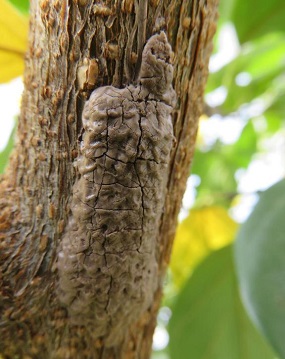
By my calculation (subject to error!), the total for projects on forest pests is ~$6.5 M – or a little over 10% of the total. The top recipient was survey and management of sudden oak death: ~$700,000 for research at NORS-DUC and NCSU plus detection efforts in nurseries of 14 states. Other well-funded efforts were surveys for bark beetles and forest pests (projects in 14 states); surveys for Asian defoliators (projects in 14 states); and outreach programs targetting the spotted lanternfly (10 states, plus surveys in California).
Three states (Iowa, Kentucky and Maryland) received funding for surveys targetting thousand cankers disease of walnut; two states (Kentucky and Maine) obtained funding for outreach about the risk associated with firewood. Funding for the Nature Conservancy’s “Don’t Move Firewood” campaign appears under the home state of its leader, Montana.
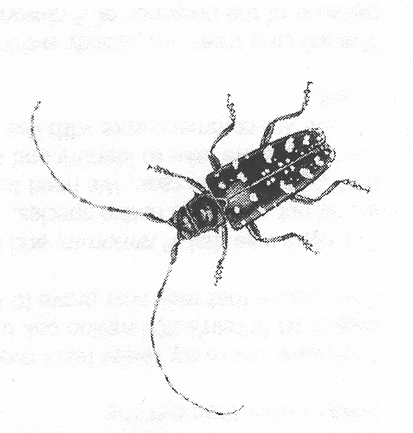
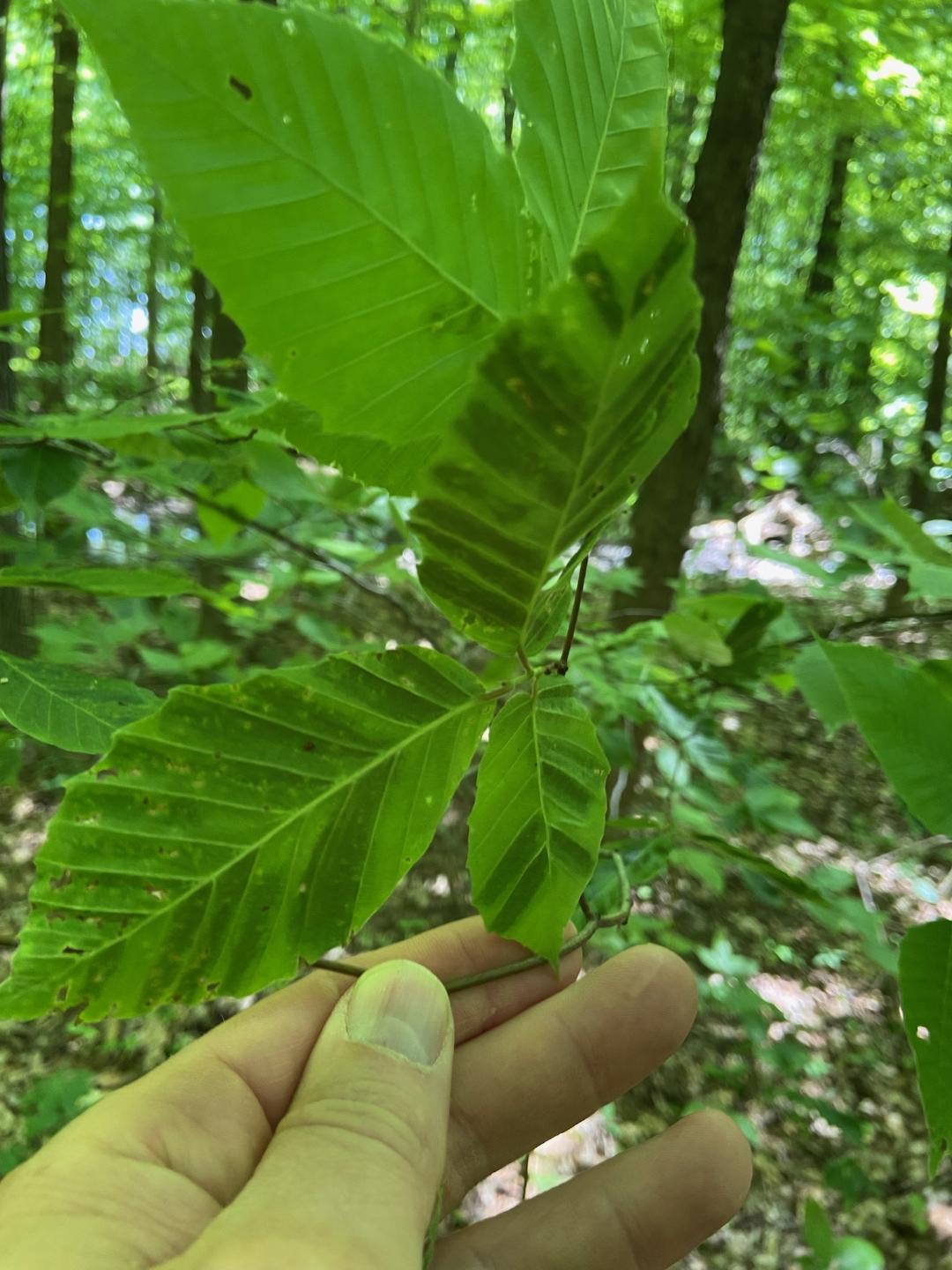
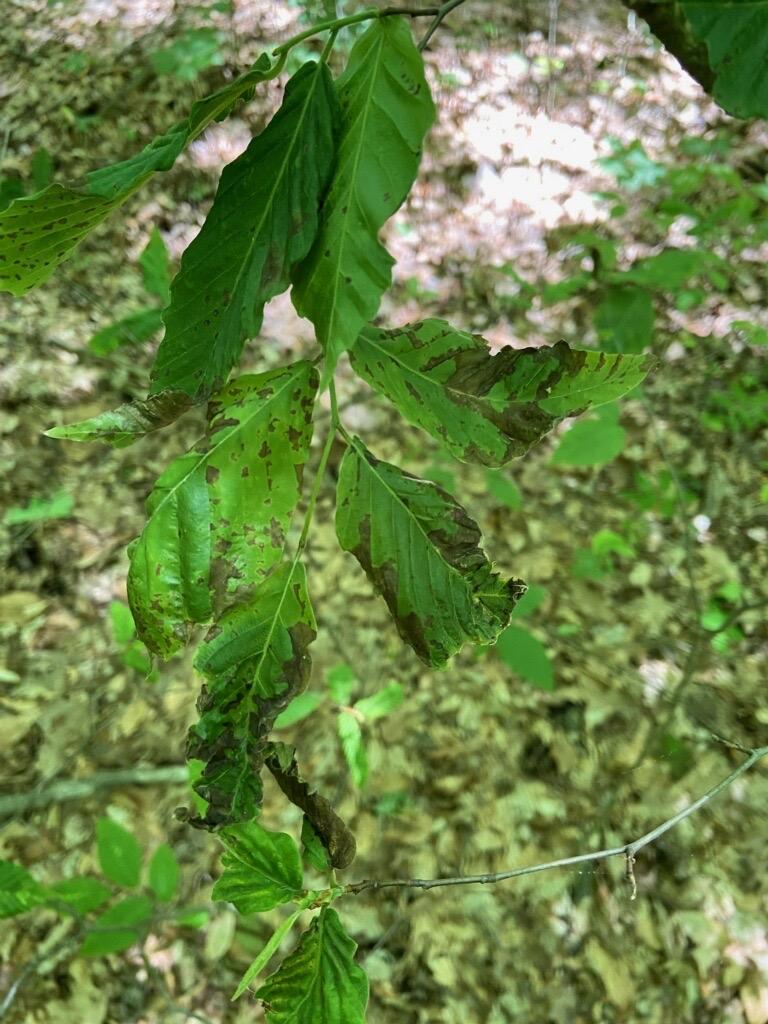
Massachusetts obtained funding for outreach re: Asian longhorned beetle. Ohio State received funding for developing a risk map for beech leaf disease.
Ten states received funding for no forest pest projects; I don’t know whether they sought funding for this purpose. These states are Arizona, Colorado, Florida, Hawai`i, Idaho, Minnesota, Nebraska, New Mexico, North Dakota, and Puerto Rico. The “National” funding category also contained no forest pest projects.
Looking at the overall funding level might give a somewhat skewed impression because several of the projects with total funding of ~ $500,000 are actually carried out by USDA agencies. These awards are listed under the state in which the USDA facility happens to be located. Nearly half this money ($213,000) goes to a project by an Agriculture Research Service unit in Delaware to study the efficacy of the biocontrol targetting emerald ash borer. Another $105,588 is allocated to detection of the SOD pathogen (Phytophthora ramorum) in irrigation water, undertaken – I think – at the ARS quarantine facility in Frederick, Maryland. A smaller project at a USFS research facility in Connecticut is studying egg diapause in the spotted lanternfly. The Delaware ARS unit is also pursuing biological control of the red-necked longhorn beetle (RNB) Aromia bungi, which attacks primarily stone fruits. Native to China and other countries in Asia, RNB has been intercepted in wood packaging by the U.S. and Europe; it has become established in Italy and Japan [Kim Alan Hoelmer, ARS, pers. comm.] The APHIS lab in Massachusetts is developing a light trap for detection of the Asian spongy mothsLymantria dispar.
I am intrigued that two states (Mississippi and Nevada) are conducting “palm commodity” surveys. Palms are important components of the environment in some states – although I am not certain these are the two most important!
As you might remember, I am also interested in some invaders other than forest pests. Washington has obtained $998,000 to support two projects integral to its efforts to find and eradicate the Asian (or Northern) Giant hornet. Oregon has obtained funding to carry out a survey for these hornets.
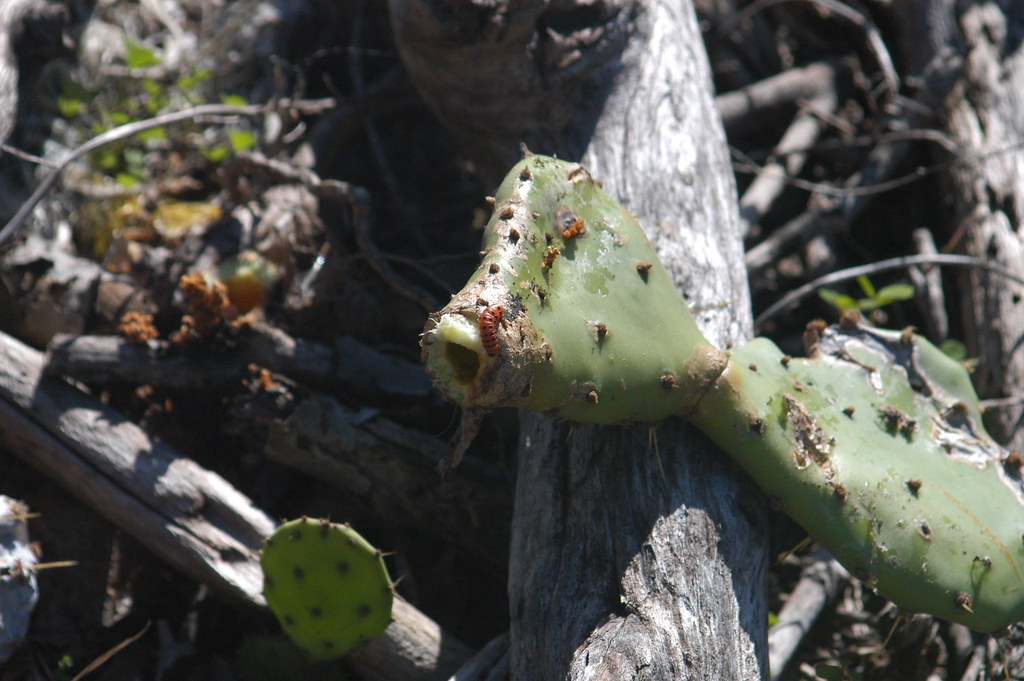
Cactus moth larvae feeding on prickly pear cactus; photo by Doug Beckers, via Flickr
I rejoice to see that the Florida Department of Agriculture continues efforts to deploy biocontrol agents targetting the cactus moth. The Agriculture Research Service is evaluating the establishment of biocontrol agents released to counter two highly invasive plants. Re: Brazilian peppertree, I don’t question the damage it has caused in southern Florida but I have grave concerns should the psyllid and thrips reach Hawai`i. I am most distressed to see that Hawaiian Division of Forestry and Wildlife and Department of Agriculture are actively pursuing deliberate introduction of the thrips. ARS is also searching for potential biocontrol agents targetting the invasive cogongrass (Imperata cylindrica). Penn State is working on registering a soil fungus native to North America, Verticillium nonalfalfae, as a biocontrol targetting the highly invasive tree of heaven (Ailanthus).
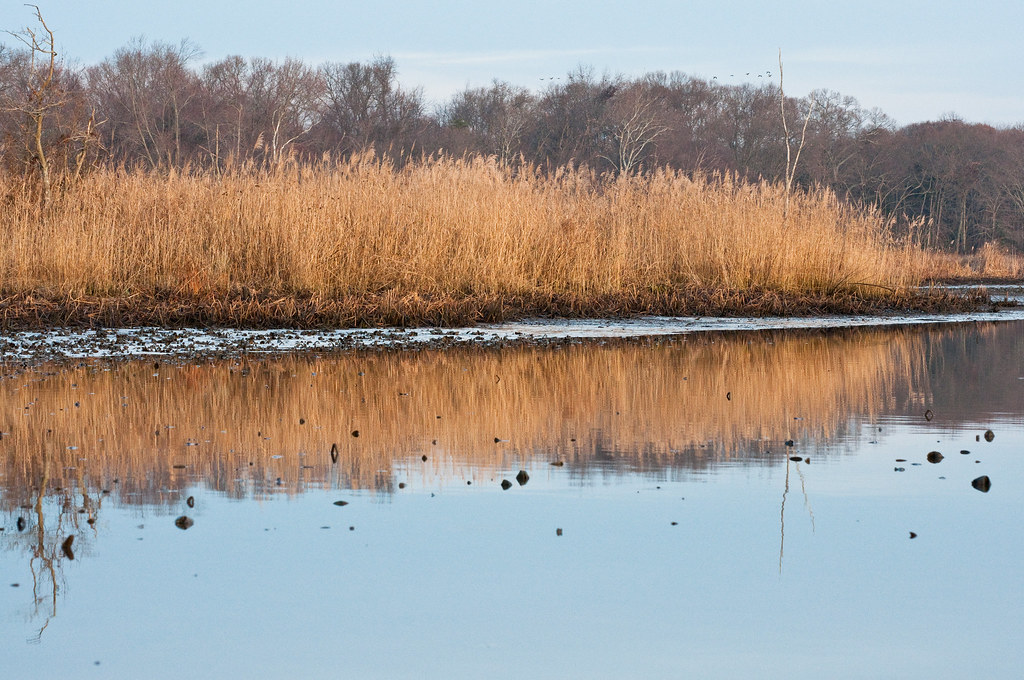
Phragmites invading Merkle Wildlife Sanctuary, Upper Marlboro, Maryland; photo by Alicia Pimental, (c) Chesapeake Bay Foundation
APHIS is pursuing biocontrol for “Roseau” cane scale. This situation presents a conflict of geographic regions because the plant to be controlled is Phragmites australis.Phragmitesis highly invasive in the Mid-Atlantic, Northeast, and Great Lakes states . On the Mississippi delta it is considered important in maintaining wetlands crucial to protecting the Louisiana coast from rising seas.
Finally, USDA is pursuing management tools to contain the Box Tree Moth – a threat to the most widely planted ornamental shrub.
Posted by Faith Campbell
We welcome comments that supplement or correct factual information, suggest new approaches, or promote thoughtful consideration. We post comments that disagree with us — but not those we judge to be not civil or inflammatory.
For a detailed discussion of the policies and practices that have allowed these pests to enter and spread – and that do not promote effective restoration strategies – review the Fading Forests report at http://treeimprovement.utk.edu/FadingForests.htm
area devastated by EAB; photo by Nathan Siegert, USFS
The emerald ash borer (EAB; Agrilus planipennis) is the most damaging forest insect ever introduced. In late June 2022 it was detected in Forest Grove, Oregon — 26 miles from Portland. This is the first confirmation of EAB on the West Coast – a jump of over 1,000 miles from outbreaks in the Plains states. The infested ash trees were immediately cut down and chipped (see Oregon Department of Agriculture website; full link at end of blog). See my earlier blog on EAB’s threat to ash-dominated riparian wetlands in Oregon.
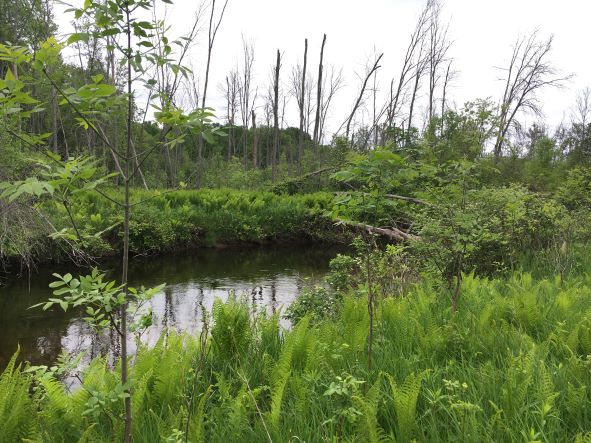
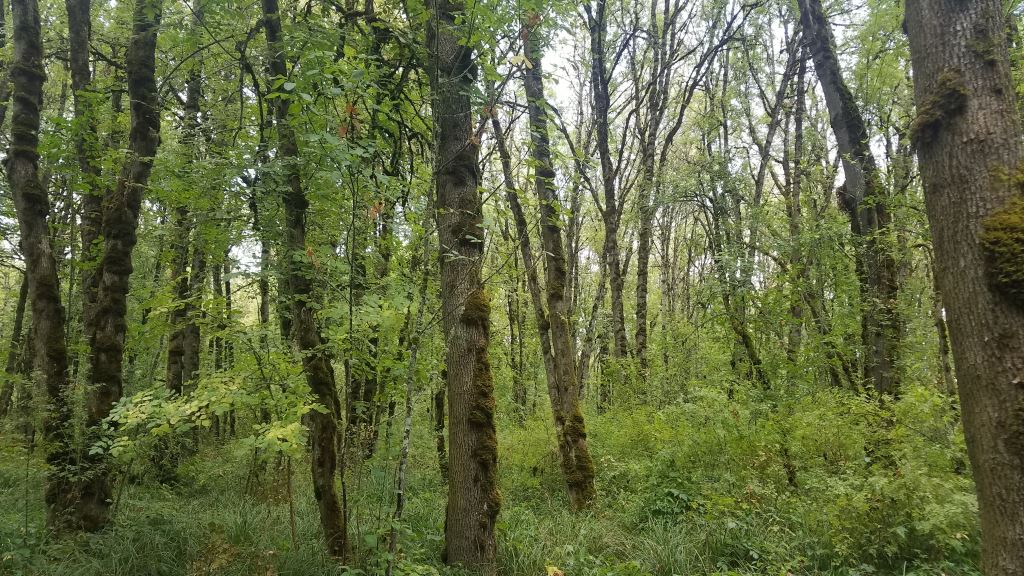
ash-dominated swamp along the Willamette River in Oregon; photo by William Wyatt, ODF
Oregon has been preparing for the EAB:
The state finalized its response plan in March 2021; see reference at end of blog.
The state sought and received funds from USDA APHIS to initiate a biocontrol program. The funds were not from APHIS’ operational budget, but from the agency’s Plant Pest and Disease Management and Disaster Prevention Program (PPDMDPP) (Farm Bill money).
State and federal agencies have begun collecting seeds for resistance screening and a possible breeding program.
EAB: Why Quarantines Are Essential
As you might remember, in January 2021 APHIS dropped its federal regulations aimed at curtailing EAB’s spread via movement of wood and nursery plants. This shifted the responsibility for quarantines to state authorities. Instead, APHIS reallocated its funding to biological control. I raised objections at the time, saying the latter was no substitute for the former.
A new academic study shows that APHIS’ action was a costly mistake.
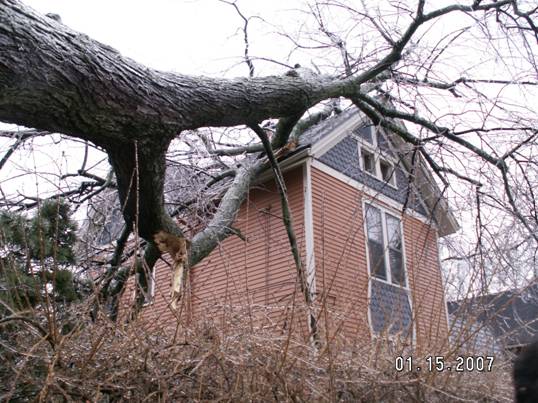
Hudgins et al. (2022; full citation at end of this blog) estimate EAB damage to street trees alone – not counting other urban trees – in the United States will be roughly $900 million over the next 30 years. These costs cannot be avoided. Cities cannot allow trees killed by EAB to remain standing, threatening to cause injury or damage when they fall.
ash fallen onto house in Ann Arbor, Michigan; photo courtesy of former mayor John Hieftje
The authors evaluated various control options for minimizing the number of ash street trees exposed to EAB. They assessed the trees’ exposure in the next 40 years, based on management actions taken in the next 30 years.
In their evaluation of management options, Hudgins et al. tried to account for the fact that the effect of management at any specific site depends on the effects of previous management. Additional complexity comes from the facts that the EAB is spread over long distances largely by human actions (i.e., movement of infested wood); and that biocontrol organisms also disperse.
They conclude that efforts to control spread at the invasion’s leading edge alone – as APHIS’ program did – are less useful than accounting for urban centers’ role in long-distance pest dispersal via human movement. Cities with infested trees are hubs for pest transport along roads. Hudgins et al. say that quarantine programs need to incorporate this factor.
Hudgins et al. concluded that the best management strategy always relied on site-specific quarantines aimed at slowing the EAB spread rate. This optimized strategy, compared to conventional approaches, could potentially save $585 million and protect an additional 1 million street trees over the next 40 years. They also found that budgets should be allocated as follows: 74-89% of funds going to quarantine, the remaining 11% to 26% to biocontrol.
In other words, a coherent harmonized quarantine program – either through reinstatement of the federal quarantine or coordination of state quarantines — could save American cities up to $1 billion and protect 1 million trees over several decades. Since street trees make up only a small fraction of all urban trees, up to 100 million urban ash trees could be protected, leading to even greater cost savings.
Unfortunately, such a coordinated approach seems unlikely. States continue to have very different attitudes about the risk. For example, Washington has no plans to adopt EAB regulations, despite it being detected in Oregon. To the north, Canada already has EAB quarantines and Hudgins et al. advise that they be maintained.
The authors recognize that quarantines’ efficacy is a matter of debate. Quarantines require high degrees of compliance from all economic agents in the quarantine area. Also they need significant enforcement effort. Some argue that meeting either requirement, let alone both, is unrealistic. However, under Hudgins et al.’s model, use of quarantines was always part of the optimal management method across a variety of quarantine efficiency scenarios. Again, these models point to allocating about 75% of the total budget to quarantine implementation. In all scenarios, reliance solely on biocontrol led to huge losses of trees compared to a combined strategy.
Hudgins et al. asked their model for optimal application of both quarantines and biocontrol agents. For example, quarantine enforcement could focus on limiting entry of EAB at sites that: 1) have many ash street trees, 2) currently have low EAB propagule pressure, but 3) are vulnerable to receiving high propagule influx from many sites. Seattle is a prime example of such a vulnerable city with many transportation links to distant cities with significant ash populations.
On the other hand, quarantine enforcement could strive to limit outward spread (emigration) of EAB from which high numbers of pests could be transported to multiple other locales, each with many street trees and low propagule pressure. These sites would be along the leading edge of the invasion and where the probability of long-distance pest dispersal is high.
Authorities should be prepared to adjust quarantine actions in response to changing rates and patterns of invasion spread.
Biocontrol agents should be deployed to sites with sufficient EAB density to support the parasitoids, especially sites predicted to be hubs of spread.
Hudgins et al. concede that they did not explicitly account for:
1) The impact of uncertainty regarding EAB spread on the model;
2) Alternative objectives that might point to other approaches, e.g., minimizing extent of invaded range, or reducing the number of urban and forest trees exposed to EAB;
3) Impacts of predators, such as woodpeckers, on EAB populations;
4) Synergistic impacts from climate change, which by exacerbating stress on ash trees will probably increase tree mortality from EAB infestations; and
5) Variation in management efficiency depending on communities’ capacities.
In the future, Hudgins et al. hope to test their model on other species to determine whether there is a predictable spatial pattern for all wood boring pests, that is, should quarantines always be focused on centers of high pest densities as probable sources of spread. Determining any patterns would greatly assist risk assessment and proactive planning.
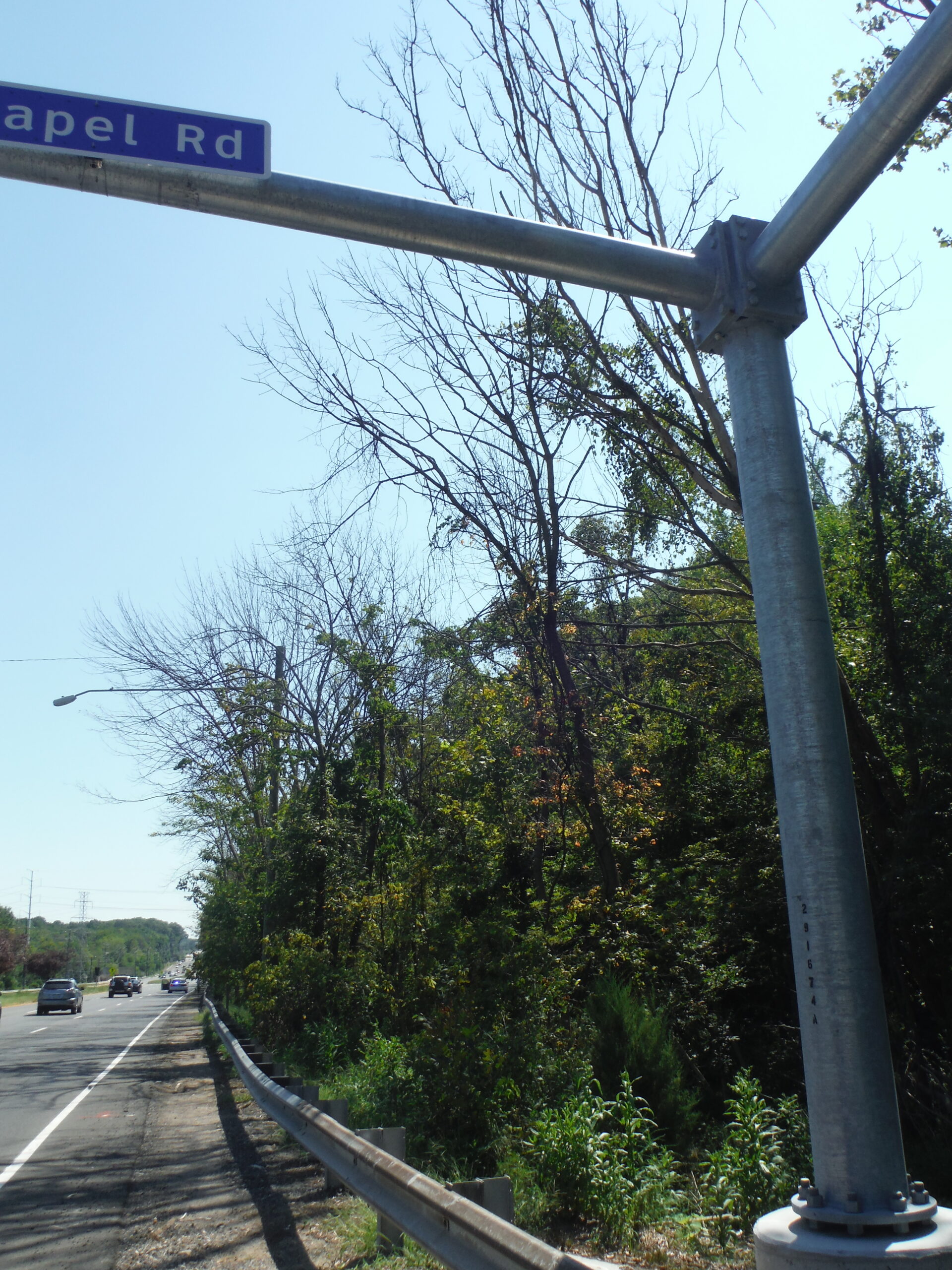
dead ash near major road in northern Virginia; photo by F.T. Campbell
In an earlier study, Dr. Hudgins and other colleagues projected that by 2050, 1.4 million street trees in urban areas and communities of the United States will be killed by introduced insect pests – primarily EAB. This represents 2.1- 2.5% of all urban street trees. Nearly all of this mortality will occur in a quarter of the 30,000 communities evaluated. They predict that 6,747 communities not yet affected by the EAB will suffer the highest losses between now and 2060. However, they evaluated risks more broadly: the potential pest threat to 48 tree genera. Their model indicated that if a new woodboring insect pest is introduced, and that pest attacks maples or oaks, it could kill 6.1 million trees and cost American cities $4.9 billion over 30 years. The risk would be highest if this pest were introduced via a port in the South. I have blogged often about the rising rate of shipments coming directly from Asia to the American South
SOURCES
Hudgins, E.J., J.O. Hanson, C.J.K. MacQuarrie, D. Yemshanov, C.M. Baker, I. Chadès, M. Holden, E. McDonald-Madden, J.R. Bennett. 2022. Optimal emerald ash borer (Agrilus planipennis) control across the U.S. preprint available here: https://doi.org/10.21203/rs.3.rs-1998687/v2
Hudgins, E.J., F.H. Koch, M.J. Ambrose, B. Leung. 2022. Hotspots of pest-induced US urban tree death, 2020–2050. Journal of Applied Ecology
Members of this team published an article earlier that evaluated the threat from introduced woodborers as a group to U.S. urban areas; see E.J. Hudgins, F.H. Koch, M.J. Ambrose, B. Leung. 2022. Hotspots of pest-induced US urban tree death, 2020–2050. Journal of Applied Ecology
We welcome comments that supplement or correct factual information, suggest new approaches, or promote thoughtful consideration. We post comments that disagree with us — but not those we judge to be not civil or inflammatory.
For a detailed discussion of the policies and practices that have allowed these pests to enter and spread – and that do not promote effective restoration strategies – review the Fading Forests report at http://treeimprovement.utk.edu/FadingForests.htm
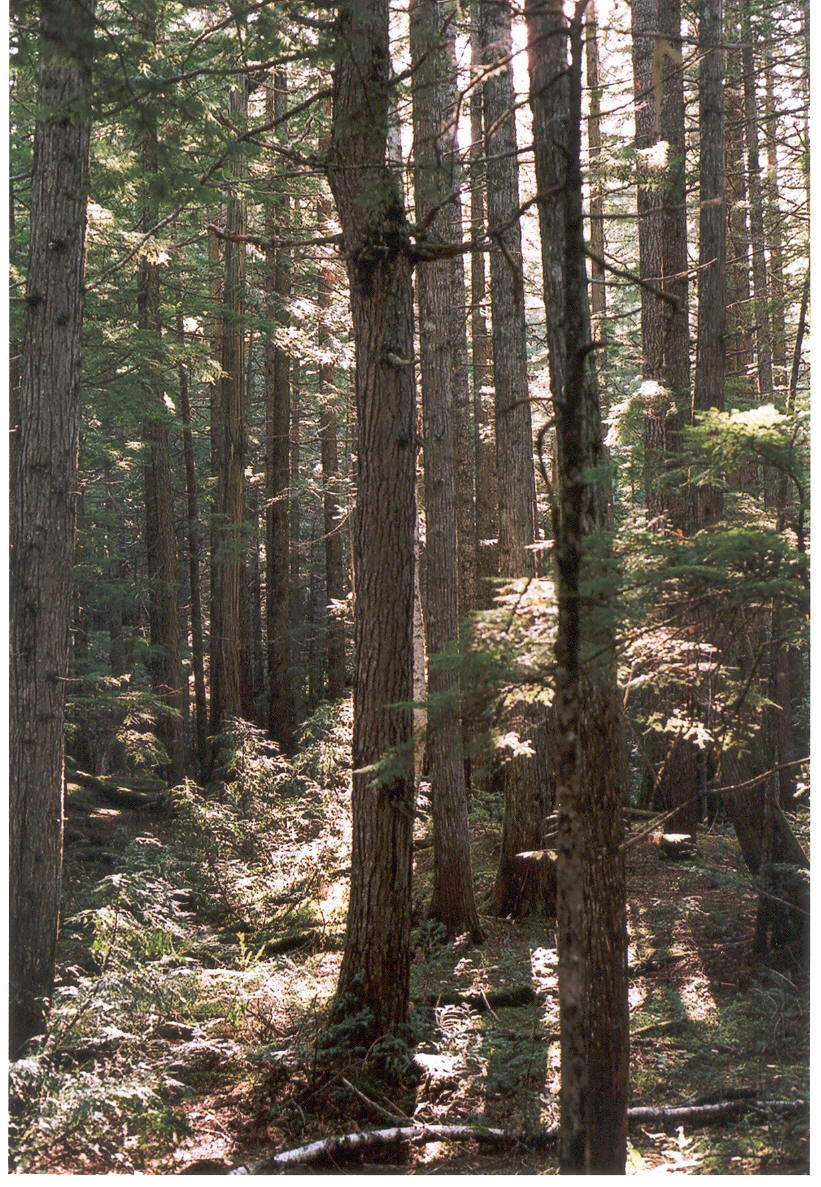
healthy hemlocks in Cook Forest, Pennsylvania; photo by F.T. Campbell
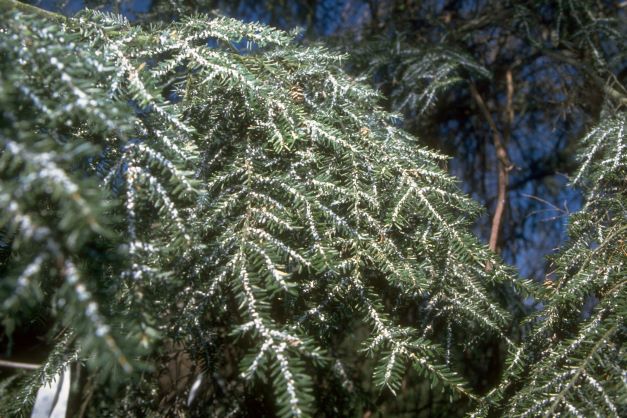
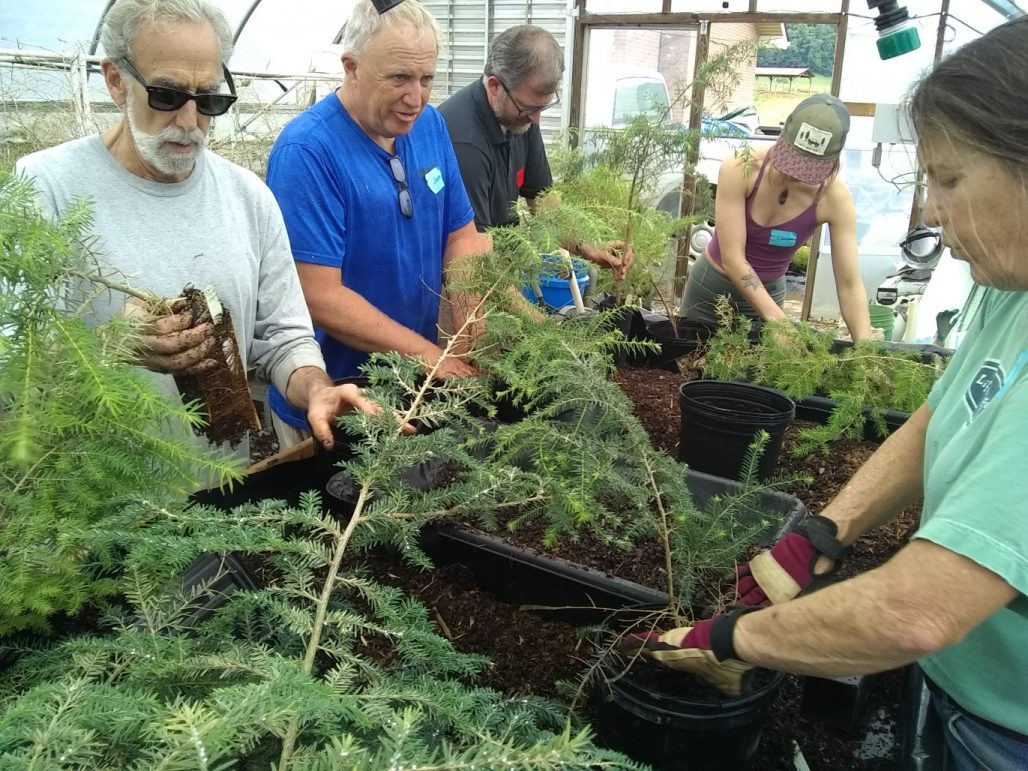
I blogged recently about North Carolina’s multi-pronged hemlock conservation program. As noted there, scientists are putting considerable hope in biological control as the most promising strategy to protect eastern (Tsuga canadensis) and Carolina hemlocks (T. caroliniana) from the hemlock woolly adelgid (HWA; Adelges tsugae). For a more detailed discussion of the adelgid’s life cycle, go here.
A new study by Crandall, Lombardo and Elkinton (full citation at end of blog) cheers us by supporting the probable efficacy of this approach – as long as a complete suite of biocontrol agents is deployed. The study points to the need to introduce additional biocontrol agents, specifically those that feed in the summer.
The study analyzed the relative importance of two different mechanisms to protect plants from herbaceous insects: do some hemlock species have an enhanced ability to fend off the adelgid (bottom-up protection); or do predators apply sufficient pressure (top-down protection) to reduce adelgid populations to levels that the tree can withstand? The study simultaneously analyzed
(1) the relative importance of summer-active and winter-active native predators;
(2) whether HWA colonization and abundances differed on western and eastern hemlock species;
(3) the relative importance of top-down and bottom-up forces on HWA feeding on western and eastern hemlocks in the adelgid’s native range;
4) tested whether the adelgid is ubiquitous at low densities across the Pacific Northwest (PNW) and compared HWA abundance in PNW to invaded range in New England.
The study was carried out in Washington State, where both western hemlock (Tsuga heterophylla) and HWA are native. They were able to compare adelgid impacts on eastern hemlock because the tree is planted in parks and gardens in the PNW.
Eastern hemlock infested by HWA; USDAFS via Bugwood
In an earlier study, (Crandall et al. 2020) found that L. nigrinus was not able to reduce HWA densities in the east. Laricobius spp have their greatest impact on HWA by larval feeding on the progrediens eggs produced by the sistens. However, 90% of hatching progrediens die naturally because there are a finite number of needles for them to settle on. To have an impact on HWA populations, Laricobius spp would have to prey on more than 90% of progrediens eggs. The solution appears to be summer-active predators – e.g., silver flies — which feed on the progrediens eggs and the sistens eggs which the progrediens generation lays.
western hemlock in British Columbia; photo by F.T. Campbell
KEY FINDINGS
Western hemlock is a native host of the adelgid. Crandall, Lombardo, and Elkinton found no evidence that western hemlock’s structure, chemistry, or other attributes help it fend off adelgid attack. The proportion of branches colonized by HWA was significantly higher on western than on eastern hemlock. Indeed, HWA populations were able to reach levels similar to those in eastern North America and were able to persist on western hemlock for multiple generations. Thus there is no evidence for bottom-up control of HWA on western hemlock.
HWA survival was significantly lower on branches of western hemlock when predators were allowed access. Crandall assumes that the smaller, non-significant, decrease in HWA densities on eastern hemlocks in the Pacific Northwest is also attributable to predation, although the data are too few to support a definitive conclusion. These predators included a species that has been released as a biocontrol agent in the east, Laricobius nigrinus. More important, apparently, was the presence of summer-active predators, including Leucotaraxis spp. and generalists. These summer-active predators are active from the progrediens nymph stage in April through the aestivating sistens nymph stage until about October. Laricobius nigrinus doesn’t become active until September. These results support the hypothesis that predator-caused mortality is responsible for suppressing HWA during rare and localized outbreaks on western hemlock in the PNW. In the east there are no native natural enemies that attack HWA – which is introduced to the region.
Effective control of HWA on the eastern naïve hosts will require establishment of a suite of predators which – together — attack the adelgid during both summer and winter.While several possible biocontrol agents have been introduced in the region, and at least some – e.g., Laricobius nigrinus – have established self-sustaining populations, are spreading, and have high predation rates, they have had very limited success in reducing HWA populations. Crandall, Lombardo and Elkinton say these data support the recent decision by the USDA Forest Service to augment the HWA biocontrol effort by introducing two species of silver flies, Leucotaraxis argenticollis and Le. piniperda, that feed on both the sistens and progrediens generations in PNW.
Tree-adelgid interactions are probably significantly affected by the lineage of both – whether the tree species has co-evolved with the specific lineage of the adelgid with which it is interacting. Crandall, Lombardo and Elkinton think evaluation of any Tsuga species’ resistance to HWA or any potential biocontrol agent needs to be studied in relation to the appropriate lineage of the adelgid.
When they compared HWA abundance (in 2021) on hemlock forests in western Washington with HWA abundance at introduced HWA range in New England, Crandall, Lombardo and Elkinton found that HWA abundance was higher in New England. They note that these comparisons are between two different linages of HWA – the lineage native to PNW and the introduced Japanese lineage in the East.
The authors note that HWA densities in the PNW are higher at the urban site (Seattle) than rural sites. Perhaps the reason is lower densities of HWA predators in non-forest settings because some, e.g., La. nigrinus, require a duff layer for pupation. Duff layers are rarely permitted to accumulate in urban areas. The authors call for studies to assess the relative abundance and identify factors affecting the abundance of HWA predators in rural and urban settings.
SOURCES
Crandall R.S., Jubb C.S., Mayfield A.E., Thompson B., McAvoy T.J., Salom S.M. and J.S. Elkinton. 2020. Rebound of Adelges tsugae spring generation following predation on overwintering generation ovisacs by the introduced predator Laricobius nigrinus in the eastern United States. Biological Control 145, 104-264. https://doi.org/10.1016/j.biocontrol.2020.104264
Crandall, R.S., J.A. Lombardo, and J.S. Elkinton. 2022. Top-down regulation of hemlock woolly adelgid (Adelges tsugae) in its native range in the Pacific Northwest of North America. Oecologia 199, 599-609. https://doi.org/10.1007/s00442-022-05214-8
Posted by Faith Campbell
We welcome comments that supplement or correct factual information, suggest new approaches, or promote thoughtful consideration. We post comments that disagree with us — but not those we judge to be not civil or inflammatory.
For a detailed discussion of the policies and practices that have allowed these pests to enter and spread – and that do not promote effective restoration strategies – review the Fading Forests report at http://treeimprovement.utk.edu/FadingForests.htm
The House Appropriations Committee has acted on funding for APHIS & USFS in Fiscal Year (FY) 23 – which begins on October 1. While several programs have been funded at an adequate level, funding for others – e.g., APHIS’ “Tree & Wood Pests) still falls short. Please contact your senators and ask them to urge members of the Senate Appropriations Committee to increase funding for this program. Members of the Senate Agriculture and Interior Appropriations subcommittees (those with jurisdiction) are listed at the end of this blog. My rationale for the “asks” are in my earlier blog.
APHIS funding in $ millions
Program
FY 2021 (millions)
FY 2022 enacted
FY 2023 Pres’ request
Our ask
House bill
Tree & Wood Pests
$60.456
$61.217
$62.854
$70
$62.562
Specialty Crops
$196.553
$209.553
$219.533
$219
$219.698
Pest Detection
$27.733
$28.218
$29.854
$30
$29.825
Methods Development
$20.844
$21.217
$21.854
$23
$31.807
The House bill provides significant funding for many traditional agricultural concerns – livestock health, cotton pests, citrus diseases and pests. Programs we lobbied for received less than the Administration requested with the exceptions of Methods Development and Specialty Crops. I found no explanation for the $10 million increase for methods development.
The Committee Report specifies increases for several pests under Specialty Crops, e.g., citrus and grapes. The report also specifies that $18.3 million should be spent to control spotted lanternfly, which is a pest of both agriculture (especially grapes) and forests. The Committee asks APHIS to keep it informed about progress tackling this pest. (Rep. Andy Harris, ranking Republican on the Agriculture Appropriations subcommittee, has an active SLF infestation in his district.)
The report also instructs APHIS to maintain funding for Asian longhorned beetle at previous levels – within the Tree & Wood Pest account. This means that any savings arising from APHIS’ declaration that parts of the Ohio infestation have eradicated must still be spent on this pest. There are several outbreaks where such funds might be spent, including in New York, Massachusetts, remaining areas in Ohio, and South Carolina.
As in past years, the House Report reiterates members’ expectation that the USDA Secretary will use the authority provided in this bill to transfer funds from the USDA Commodity Credit Corporation to obtain funds to address animal and plant pest emergencies that threaten American agriculture. The Committee has appropriated additional money which is intended to enhance, not replace, use of CCC funds. [The Office of Management and Budget has severely curtailed APHIS access to emergency funds.]
=======================
The House Committee has asked that USFS develop a research program that reflects priorities on, inter alia, invasive species. This falls short of my request for earmarking a specific (small) percentage of research funding for invasive species, but it does show Congressional interest in this problem.
one of the diseases needing USFS research: beech leaf disease (photo by Dr. Chagas de Freitas)
In the part of the budget that funds actual management work, Forest Health Management, apparently the $52 million appropriation reflects only a modest increase of funding for managing invasive species everywhere – on federal lands, i.e. National forests and non-federal lands, i.e., “coop” lands. I appreciate the attention to invasive species, especially emerald ash borer; but worry about allocating most funding to managing the impacts rather than pro-actively addressing introduction and spread to new areas.
USFS funding in $ millions
Program
FY 2021
FY 2022 enacted
FY 2023 Pres’ request
My ask
House bill
R&D
$296.6
$317.8
$317.8
$360.4
[FIA]
$37.7 ($15 M increase)
S&P FHM
$46,232
same?
$59.232
$82
$52.232
Research & Development – The Committee Report noted members’ interest in funding specific laboratories, programs, & projects, including several listed areas. The Committee expects USFS to develop a research program that reflects members’ priorities & other priorities critical to forest health, particularly with respect to climate change adaptation, preventing spread of insects and diseases, and watershed improvement
The report states several times that the USFS should assist in control of the emerald ash borer and other invasive pests, especially in areas where ash tree mortality has been high. Such statements are under State and Private Forestry, under both the Forest Health Management and Urban and Community Forests programs. The Committee earmarks $4 million under UCF for management & reforestation – including tree planting & removals — in communities most severely impacted by EAB and other pests. The efforts should prioritize regional, multi-organization collaborations in urban communities most severely impacted by invasive pests like EAB. The committee asks for a report from USFS on major invasive species and progress of remediation and replanting programs.
===========================
Key Members of the Senate Appropriations Committee
STATE
MEMBER
APHIS APPROP
USFS APPROP
AK
Lisa Murkowski
X
Calif
Diane Feinstein
X
X
FL
Marco Rubio
X
HI
Brian Schatz
X
IN
Mike Braun
X
KS
Jerry Moran
X
KY
Mitch McConnell
X
X
MD
Chris Van Hollen
X
ME
Susan Collins
X
MS
Cindy Hyde-Smith
X
X
MO
Roy Blunt
X
X
MT
Jon Tester
X
X
ND
John Hoeven
X
NM
Martin Heinrich
X
X
OR
Jeff Merkley
X
X
RI
Jack Reed
X
TN
Bill Hagerty
X
VT
Patrick Leahy
X
X
WV
Shelly Moore Capito
X
WI
Tammy Baldwin
X
Posted by Faith Campbell
We welcome comments that supplement or correct factual information, suggest new approaches, or promote thoughtful consideration. We post comments that disagree with us — but not those we judge to be not civil or inflammatory.
For a detailed discussion of the policies and practices that have allowed these pests to enter and spread – and that do not promote effective restoration strategies – review the Fading Forests report at http://treeimprovement.utk.edu/FadingForests.htm
symptoms of beech leaf disease; photo by Dr. Chagas de Freitas
Three webinars during April and May provided updates on efforts to address three non-native, tree-killing pests: hemlock woolly adelgid (HWA), link invasive shot hole borers (ISHB), link and beech leaf disease (BLD) link. I attended each and summarize here.
Hemlock conservation in North Carolina – the NC Hemlock Restoration Initiative (HRI) see SaveHemlocksNC.org
I was pleased to learn about the major effort under way in North Carolina, where eastern and Carolina hemlocks are extremely important components of multiple ecosystems. In 2013, the Commissioner of Agriculture decided to make protecting hemlocks a signature project. He wanted to ensure that three state agencies – the Forest Service, Wildlife Department, and State Parks – worked together to improve the efficacy of treating trees. (Treatments available at the time were expensive and time-consuming.)
HRI treatment at Conestee Falls; HRI photo
Thom Green described the result: North Carolina’s Hemlock Restoration Initiative (HRI). The initiative is administered by the Western North Carolina Communities – a non-governmental organization with strong connections to rural communities and a history of successful collaborative projects that support agriculture and forestry. It engages state agencies, local and county governments, local NGOs, and federal agencies and works on both public and private lands with the goal of ensuring that hemlocks can survive to maturity.
HRI staff work with local partners to identify priority hemlock conservation areas (HCAs). It then sends a “strike team” to guide the partners in treating as many trees as possible. (North Carolina allows non-licensed volunteers to apply pesticides under supervision; also, landowners can treat trees on their own property.) These collaborative projects can treat up to 1,000 trees per day.
The chemicals used are imidacloprid and, where poor tree health justifies emergency treatment, dinotefuran. These are usually applied as a soil drench because it is easier for people to transport the equipment into the woods. Bark spray is used in sensitive areas. They have found that imidacloprid provides five to seven years of protection. A new product, CoreTech, is even easier to transport and works much faster than imidacloprid, however, it costs more.
The HRI believes it is minimizing non-target impacts of the neonictenoid imidacloprid because:
hemlocks are pollinated by wind, not insects
hemlocks don’t exude resins that attract insects
pesticide applications are tightly targetted at the base of trunk, with 10-foot setbacks from water
long intervals between treatments (5 – 7 years) allow soil invertebrates to recover
The program has treated 100,000 trees between 2016 and 2021 on state and private lands. Now they are starting the second round of treatments for trees treated at the beginning of the program.
Treatment priorities are based primarily on the extent to which the trees are able to take up the chemical, evaluated by the percentage of the crown that is alive and the density of foliage. Since imidacloprid can take a year to reach the canopy of a mature tree, it is used only on trees with greater than half the crown rated as healthy. When trees have a lower status, dinotefuran is added (because it can reach the canopy within weeks). Trees with less than 30% live crown are not treated.
The Initiative also supports biocontrol programs. It has assisted releases of Laricobiusnigrinis (a beetle in the family Derodontidae) and helps volunteers monitor releases and survival. Dr. Green reports that L. nigrinis has spread almost throughout western North Carolina but that questions remain regarding its impact on tree health. He thinks biocontrol is not yet reliable as stand-alone tool; success will require a suite of predatory insects.
The HRI measures the success of various treatments (Hurray!). “Impact plots” are established at the start of treatment. Staff or volunteers return every three years to monitor all aspects of the health of a few designated trees – including untreated ones. So far, they have seen encouraging responses in crown density and new growth.
Invasive Shot Hole Borers (ISHB) in California
See www.ishb.org and video recordings of the meeting at:
A host of scientists from California spent two full days describing research and management projects funded by specific state legislation – Assembly Bill (AB)-2470 on two invasive shot hole borers.
Adoption of this legislation resulted largely from lobbying by John Kabashima. Additional funding was provided by CalFire (the state’s forestry agency). The agency responsible for managing invasive species – California Department of Food and Agriculture (CDFA) had designated these organisms as not a threat to agriculture. So it did not fund many necessary activities.
The Problem and Where It Is
“Fusarium dieback” is the disease caused by this insect-pathogen complex. The insects involved are two ambrosia beetles in the Euwallacea genus – the polyphagous (E. whitfordiodendrus) and Kuroshio (E. Kuroshio) shot hole borers. link to DMFAccording to Dr. Bea Nabua-Behermann, Urban Forestry and Natural Resources Advisor with University of California Cooperative Extension (UCCE), other fungi are present on both beetle species but its matching Fusarium sp. is the principal associated fungus and is required for the beetle’s reproduction. These are Fusarium euwallaceae and F. kuroshium.
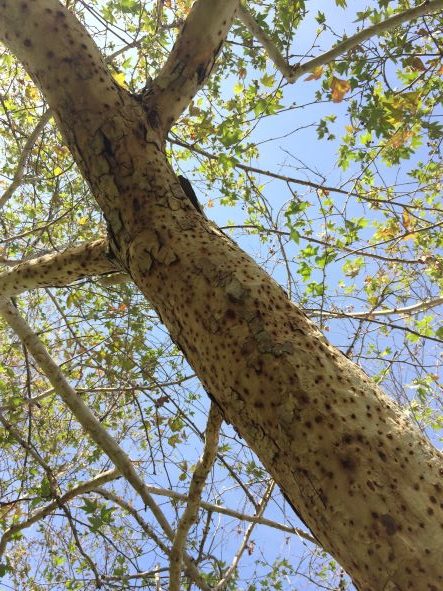
As of spring 2022, the beetle/fungus complex has spread as far north as Santa Barbara /Santa Clarita; and inland to San Bernardino and Riverside (see the map here). They are very widespread in Orange and San Diego counties. At least 65 tree species in southern California are reproductive hosts (globally, it is 77 species; see full list here). The preferred and most succeptible hosts are several species in the Acer, Parkinsonia, Platanus, Quercus, and Salix genera. Box elder (A. negundo) is so susceptible that it is considered a sentinel tree.
Because the beetles spend most of their life inside trees, their life cycle leaves few opportunities to combat them. Females (only) fly but tend to bore galleries on their natal tree. Several speakers on the webinar said management should focus on heavily infested “amplifier trees”. Much spread is human assisted since the beetles can survive in dead wood for months if it is damp enough for the fungus. Possible vectors are green waste, firewood, and even large wood chips or mulch.
Management – from Trapping to Rapid Response to Restoration
Akiv Eskalen of University of California Davis discussed trapping and monitoring techniques to confirm presence of the insect and pathogen. Also, he talked about setting priorities for treating trees based on the presence of reproductive hosts, host value, infestation level, and whether the trees pose a safety hazard. The disease causes too little damage to some hosts to warrant management. He emphasized the importance of preventing spread. This requires close monitoring of infested trees to see whether beetles move to neighbors. Dr. Eskalen described a major and intensive monitoring and treatment program at Disneyland. The 600 acres of parks, hotels, and parking lots have ~16,000 trees belonging to 681 species.
Several speakers described on-going efforts in Orange County. Danny Hirchag (IPM manager for Orange County Parks) described how his agency is managing 60,000 acres of variable woodlands containing 42,000 trees, of which 55% are hosts of ISHB and their associated fungi. Of greatest concern are California sycamore and coast live oak in areas of heavy public use. The highest priority is protecting public safety; next is protecting historic trees (which can’t be replaced); third is minimizing impacts to ecosystem services. Orange County Parks is currently removing fewer than 50 trees each year. Hirchag noted the importance of collaborating in the research trials conducted by the University of California Cooperative Extension.
infested California sycamore; photo by Bea Nabua-Behermann
Maximiliano Regis and Rachel Burnap, of County of Los Angeles Department of Agricultural Commissioner/Weights and Measures, described Los Angeles County’s efforts more broadly. The challenge is clear: LA County has more than 160 parks. In 2021, they placed nearly 2,500 traps, mapped infected trees, carried out on-ground surveys to find amplifier trees, removed both amplifier and hazard trees (using funds provided by CalFire), and educated the public. Their efforts were guided by an early detection-rapid response (ED/RR) Plan (2019) developed by Rosi Dagit (see below). While London plane trees (Platanus x hispanica) and California sycamores (Platanus racemose) were initially most affected, now black locusts (Robinia pseudoacacia) and box elders (Acer negundo) are succumbing. [Note: both are widespread across North America.] The researchers are trying to determine why some areas are largely untouched, despite the presence of the same tree species. Regis and Burnap noted the increasing difficulty getting confirmation of the pathogen’s presence because laboratories are overwhelmed. They continue looking for funding sources.
Rosi Dagit, Senior Conservation Biologist, Resource Conservation District of the Santa Monica Mountains, described the creation of that ED/RR system for Los Angeles County as a whole, without regard for property lines. Participants established random study plots across the entire Santa Monica Mountains Natural Recreation Area (NRA), based on proximity to areas of particularly sensitive ecological concerns. The fact that the NRA’s forests are aging and that the risk of infestations is especially high in riparian forests helped persuade policy-makers to fund the effort. The accompanying rapid response plan informs everyone about what to do, who should do it, and who pays. This information incorporates agencies’ rules about what and where to plant. It also provides measures to evaluate whether the action was effective. It did take more than two years for the county to set staffing needs etc.
John Kabashima link discussed his criteria for replanting and ecosystem restoration following tree removal in the southern California region. He recommends prompt removal of amplifier trees – especially box elder and California sycamore. He relies on replanting guidance developed by UC-Irvine (which is on the website) – especially avoiding monocultures. Kabashima reiterated the importance of close monitoring to track beetle populations and responding quickly if they build up.
Economics of Urban Forests and Cities Most at Risk
Karen Jetter (an economist at the UC Agriculture Issues Center) has developed a model to compare the costs of an early detection program to the environmental and monetary costs of infestation by Fusarium disease. She noted that early detection and monitoring programs are often hard to justify because — when they are successful — nothing changes! She found that averted or delayed costs (including tree removals, lost ecosystem services, lost landscape asset value [replanting value] and the cost to replant) always far exceeded the cost of monitoring programs. Unfortunately, a written report about this effort (Jetter, K., A. Hollander, B.E. Nobua-Behrmann, N. Love, S. Lynch, E. Teach, N. Van Dorne, J. Kabashima, and J. Thorne. 2022. Bioeconomic Modeling of Invasive Species Management in Urban Forests; Final Report) appears to be available only through the University of California “collaborative tools” website dedicated to practitioners and stakeholders engaged on ISHB issues. If you are not a member of the list, contact me using the comment button and ask that I send it to you. Include your email address (the comment process makes determining emails difficult if not impossible.)
Shannon Lynch (UC Davis) developed a model to estimate vulnerability of urban areas based on phylogenetic structure (relationship between tree species), host abundance, and number of beetle generations/year (linked to temperature). She found that areas with less favorable host communities can become vulnerable if the climate becomes favorable. Where the host community is already favorable, climate not important.
She evaluated 170 California cities based on their tree inventories. The cities at highest risk were San Diego, Los Angeles, the San Francisco Bay area, and the Central Valley – e.g., Sacramento. For areas lacking tree inventories, she based her risk determination on the estimated number of generations of beetles per year – based on climate. This analysis posited a very high risk in the eastern half of southern California and the Central Valley. Participants all recognized the need to apply this model to cities in Arizona and Nevada.
Possible Management Strategies
Shannon Lynch (UC Davis) studied whether endophytes might be used to kill the Fusarium fungi. She reported finding 771 fungal strains and 657 bacterial strains in tree microbiomes. Some of the fungal isolates impeded growth of the Fusarium fungi in a petri dish. She began testing whether these fungi can be used to inoculate cuttings that are to be used for restoration. She also planned to test more endophytes, and more native plant species to explore creation of a multi-fungus cocktail.
Richard Stouthamer of UC Riverside is exploring possible biocontrol agents. Of three he has evaluated, the most promising is Phasmastichus sp., which is new to science. He is still trying to establish laboratory cultures so he can test its host specificity.
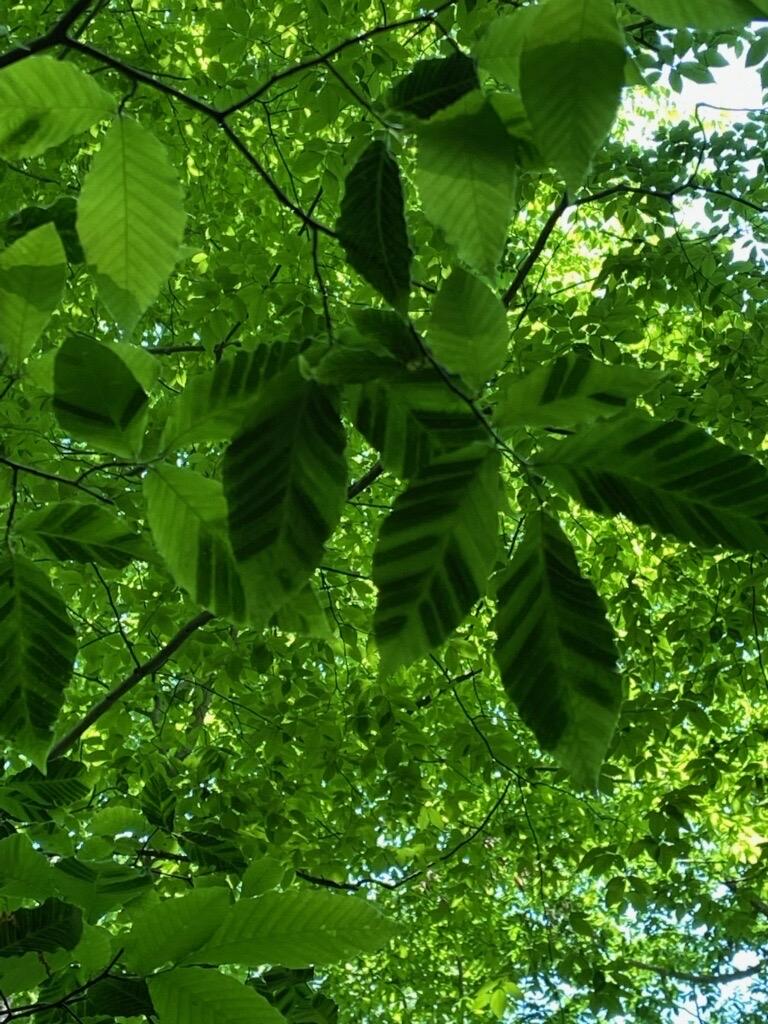
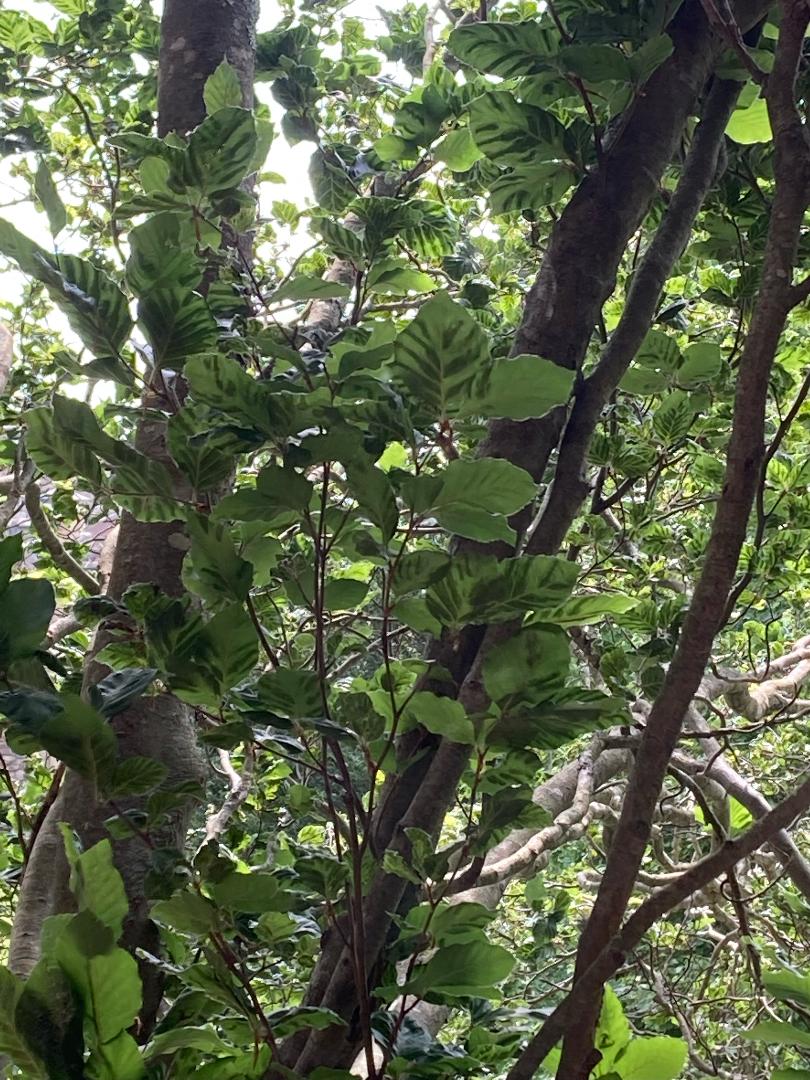
symptoms of beech leaf disease; photo by Dr. Chagas de Freitas
At this meeting, scientists described research aimed at improving basic understanding of beech leaf disease’s causal agents, its mechanisms of spread, etc. Their findings are mostly preliminary.
These findings are of greatest importance now:
presence of the nematodes varies considerably across leaf surface – if one collects samples from the wrong site on leaf, one won’t detect nematode (Paulo Vieria, Agriculture Research Service)
developing predictive risk maps that combines temperature, humidity, elevation, soils (Ersan Selvi, Ohio State). So far, he has found that BLD is greater in humid areas – including under closed forest canopies. The USFS is funding studies aimed at incorporating disease severity in detection apps.
determining extent of nematode presence. Sharon Reed of Ontario has found nematode DNA in trap fluids throughout the Province. It is much more common at known disease sites. Reed is also studying the presence of arthropods on beech leaves and buds.
Longer term findings and questions
possible vectors:
nematode DNA has been detected from birds – although it is not clear whether the DNA came from bird feces, feathers, or dust (DK Martin)
a few live nematodes have been extracted from the excrement of caterpillars that fed on infected leaves (Mihail Kantor, ARS)
nematode damage to leaves:
presence of the nematode in leaf buds before they open (Vieria and Joe Mowery, both ARS). The nematode can create considerable damage in leaf buds before they open. Nematodes are present as early as October of the preceding year.
damage to leaves by nematode (Mowery, ARS) Leaf epidermal cells are distorted, stomata blocked, chlorobasts are larger than normal, irregular shape
possible management tools
are there parasites that might attack the nematode? (Paulo Vieria, ARS)
experimental treatment of infested trees using phosphite (Kandor, ARS)
ecology: how do root microbiomes compare on infested and healthy trees? (Caleb Kime, Ohio State; and David Burke, Vice President for Science at Holden Arboretum)
infested European beech in Rhode Island; photo by Dr. Nathanial A. Mitkowski
Posted by Faith Campbell
We welcome comments that supplement or correct factual information, suggest new approaches, or promote thoughtful consideration. We post comments that disagree with us — but not those we judge to be not civil or inflammatory.
For a detailed discussion of the policies and practices that have allowed these pests to enter and spread – and that do not promote effective restoration strategies – review the Fading Forests report at http://treeimprovement.utk.edu/FadingForests.htm
spruce budworm; photo by Jerry E. Dewey, USFS; via Bugwood
The 64th Forest Pest Management Forum was held in December 2021. This is the largest and most significant gathering of forest pest management experts, managers, and practitioners in Canada. The proceedngs are available here. I summarize the contents. (This is my third review of recent reports on invasive species by Canadians. See also here and here. I appeciate the opportunity to learn about forest pest issues across such a large proportion of North America!
As usual, much of the attention was given to native pests, e.g.,
mountain pine beetle (Dendroctonus ponderosae) in Yukon, Alberta [declining numbers and areas affected]; Saskatchewan [none found in boreal forest]
Jack pine budworm (Choristoneura pinus) – Saskatchewan, Manitoba, Ontario. [damage to jack pine in the Northwest Territories is caused by an unknown agent]
spruce pests, including spruce budworm (Choristoneura fumiferana) across the country: from Yukon and Northwest Territories to New Brunswick; Nova Scotia; Newfoundland and Labrador
aspen defoliators – British Columbia; Northwest Territories; Alberta; Saskatchewan;
Swiss Needle Cast – British Columbia
Septoria leaf and stem blight in hybrid poplars (Populus genus) spreading in British Columbia; fears it could threaten black cottonwood, a keystone species in riparian ecosystems
hemlock mortality caused by HWA in Nova Scotia; photo by Celia Boone, NSDLF
The meeting also reported the following on non-native forest pests:
Asian longhorned beetle (Anoplophora glabripennis) — Canada has been declared free of ALB; national grid-based detection surveys continue – visual surveys at 10 sites; none found
emerald ash borer (Agrilus planipennis) — trapping focused on high-risk locations and urban centers outside established regulated areas with no new detections in 2021. Saskatchewan continues to regulate EAB as a quarantine pest – after its detection in Winnipeg in November 2017. In New Brunswick, EAB has spread throughout the region where it was originally discovered in early 2021. In Nova Scotia, EAB remains undetected outside of the regulated area of Halifax
spongy moth (Lymantria dispar dispar) – trapping continues across Canada; detections in all provinces except Newfoundland – Labrador. Officials think they have eradicated an incipient population in Manitoba. Outbreaks are intensifying in Ontario and Québec (spongy moth is also expanding in northern US)
brown spruce longhorned beetle (Tetropium fuscum) – widespread trapping in Nova Scotia detected no new finds.
hemlock woolly adelgid(Adelges tsugae) is a priority species. Hemlock is a major component of the forested regions in the eastern provinces and HWA threatens to cause potentially irreparable damage to hemlock-dominated areas. Visual detection surveys were conducted at more than 180 high risk locations in eastern Canada. HWA has been confirmed in 7 counties of Nova Scotia – 2 of them new; plus a new infestation in Ontario.
beech leaf-mining weevil(Orchestes fagi) — continues to spread, with 22,129 ha of damage and mortality in areas near Halifax, Nova Scotia. The report makes no mention of beech leaf disease and here.
Dutch elm disease (Ophiostoma ulmi & O.novo-ulmi) – spreading rapidly in parts of Saskatchewan; major control effort in Manitoba, where 38 communities are participating in a provincial program and Winnipeg has its own program.
elm zig zag sawfly(Aproceros leucopoda) – Canadian authorities are apparently considering what their response should be [see also Martelet al. 2022. (open access!)
elm zigzag sawfly; photo by Gyorgy Csoka Hungarian Forest Research Organization; via Bugwood
Canadian authorities have active surveillance programs targetting three species established in the U.S. which they worry will enter Canada:
spotted lanternfly eggs; New York Dept. of Environmental Conservation photo
oak wilt (Ceratocystis fagacearum) – visual surveys at more than 60 sites in Ontario, Québec, New Brunswick and Nova Scotia; so far, no detections.
spotted lanternfly (Lycorma delicatula) authorities noted the many possible pathways of introduction
brown-tail moth (Euproctis chrysorrhoea) – rising population in Maine; several additional public reports of sightings in New Brunswick.
Policy
Canada has a National Forest Pest Strategy adopted by the Canadian Council of Forest Ministers (CCFM) in 2007. The CCFM Forest Pest Working Group (FPWG) plays a major role in advancing this Strategy. It also provides a national forum for generating ideas and exchanging information about forest pest management among federal, provincial, and territorial government agencies.
According to officials of the Canadian Food Inspection Agency (CFIA), the government has initiated limited pathway-based surveys to detect introduced pests associated with wood packaging material (crates, pallets, etc.). [See additional blogs posted here under “wood packaging” category. E.g., this one. The agency is also developing an efficient, safe and feasible management program for handling shipborne dunnage. CFIA expected to publish a revised directive in spring 2022, then fully implement it by fall 2022.
Presentations on Individual Pests
The Proceedings include abstracts of presentations on individual species. The abstracts rarely provide the final findings.
Emma J. Hudgins, of Carleton University, reported on ways to optimize control of EAB in the U.S. She found that the best management strategy combined site-focused activities – such as biocontrol — and spread-focused (quarantine) management measures. This combined strategy vastly outperformed efforts based on limiting propagule pressure or managing single sites. In other words, quarantines should be refined rather than abandoned – as the US has done.
Oregon ash forest on the Willamette River, Oregon; photo by W. Williams, Oregon Dept. of Forestry
Chris MacQuarrie of the Canadian Forest Service reviewed use of biocontrol agents targetting EAB. Canada has approved release of three agents also approved in the United States: Tetrastichus planipennisi in 2013; Oobius agrili in 2015; Spathius galinae in 2017. Canada began trying to evaluate their impacts in 2018 – but the results are not included in the abstract.
Lucas Roscoe, also of the Canadian Forest Service, reviewed biocontrol efforts targetting hemlock woolly adelgid. The abstract doesn’t provide conclusions.
Kevin Porter and James Brandt assessed the risk of the spruce budworm (Choristoneura fumiferana) outbreaks in Eastern Canada’s Forests. The insect is the most widely distributed and destructive pest of spruce-fir forests in Canada; it is native to much of boreal and hemiboreal North America. Outbreaks occur periodically. Cumulative tree defoliation and mortality can result in significant losses of important timber and non-timber resources, affecting the forest industry and forest-dependent communities.
Stefan Zeglen and Nicolas Feau reported on the importance of environmental conditions in causing one disease. Swiss Needle Cast (caused by the usually innocuous endophyte Nothophaeocryptopus gaeumannii) has become pathogenic on Douglas-fir, causing up to 60% growth loss. This results from changing climate – and is expected to worsen with rising temperatures and humidity.
Posted by Faith Campbell
We welcome comments that supplement or correct factual information, suggest new approaches, or promote thoughtful consideration. We post comments that disagree with us — but not those we judge to be not civil or inflammatory.
For a detailed discussion of the policies and practices that have allowed these pests to enter and spread – and that do not promote effective restoration strategies – review the Fading Forests report at http://treeimprovement.utk.edu/FadingForests.htm
APHIS is seeking stakeholder input to its new strategic plan to guide the agency’s work over the next 5 years.
The strategic plan framework is a summary of the draft plan; it provides highlights including the mission and vision statements, core values, strategic goals and objectives, and trends or signals of change we expect to influence the agency’s work in the future. APHIS is seeking input on the following questions:
Are your interests represented in the plan?
Are there opportunities for APHIS to partner with others to achieve the goals and objectives?
Are there other trends for which the agency should be preparing?
Are there additional items APHIS should consider for the plan?
range of American beech – should APHIS be doing more to protect it from 3 non-native pests?
Comments must be received by July 1, 2022, 11:59pm (EST).
Posted by Faith Campbell
We welcome comments that supplement or correct factual information, suggest new approaches, or promote thoughtful consideration. We post comments that disagree with us — but not those we judge to be not civil or inflammatory.
For a detailed discussion of the policies and practices that have allowed these pests to enter and spread – and that do not promote effective restoration strategies – review the Fading Forests report at http://treeimprovement.utk.edu/FadingForests.htm
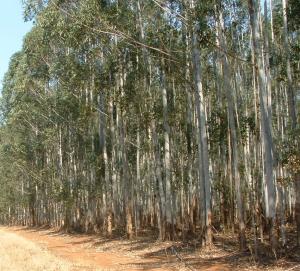
Eucalyptus plantation in Kwa-Zulu-Natal, South Africa; Kwa-Zulu-Natal Dept. of Transportation
Graziosi et al. (full citation at the end of the blog) point out that trees are crucial for Africa’s future. Eight hundred of the 4,500–6,000 indigenous tree species provide significant food. As elsewhere, trees provide wood and other extractive resources essential for economic growth. They also support biodiversity and mitigate current and impending climatic variations. Africa– especially the Sub-Saharan countries – is already considered highly vulnerable to climate change.
According to Graziosi et al., the cumulative economic impact of all invasive species in Africa is expected to exceed $1.2 billion per year. The total invasion cost as a proportion of GDP for many African countries is among the highest in the world. This raises the stakes for developing locally appropriate management strategies across the continent.
Responding effectively to this threat is hampered by gaps in data as well as some countries’ limited capacity for biosecurity. Graziosi et al. say that improved knowledge of taxonomy, distribution, and damage caused by these organisms is essential. Such knoledge will be crucial to develop continent-wide strategies to manage this emergency and to enhance capacity for country-level interventions.
Native and alien pests. Indigenous and plantation trees
Africa’s trees and their services are threatened by both native pests and accelerating introductions of pests and diseases from elsewhere. Long-established and new invaders increasingly affect planted forests of exotic eucalypts, pines, and Australian acacias, as well as important indigenous trees. Graziosi et al. note that the U.N. Food and Agriculture Organization (FAO) in an annex to a report issued in 2009 recorded about100 species of forest pests affecting trees in planted and natural forests across Africa. Half are native insects and pathogens, a third are alien; about 15% are of unknown origin. Considering all pests, broadleaf trees (predominantly native) are most affected.
The result is damage from the local – e.g., to rural livelihoods – to the continental – e.g., to economic development and biological diversity across Africa. Moreover, pests exacerbate widespread loss of forest cover. Overall, African forests are shrinking at the rate of almost 0.5% annually. This deforestation is affecting particularly natural forests; planted forests are actually growing 1.3% annually.
Exotic plantation trees face severe threats. More than 47 native and 19 non-indigenous defoliators, sap-feeders, wood- and shoot-borers attack plantations of Acacia spp., Eucalyptus spp., Pinus spp., and teak (Tectona grandis). About 90% of pathogens of plantation forestry are either non-indigenous or of uncertain origin. Eucalyptus alone are severely damaged by 15 species of pathogens. These organisms are listed in Tables 1 and 2.
Numerous native insect species, known as pests of indigenous trees, have reportedly widened their host range and now damage exotic trees too. Some introduced insects appear to pose significant threats to native tree species. One example is the Cypress aphid Cinara cupressi, which is attacking both exotic cypress plantations and the native African cedar Juniperus procera. Some fungi in the family Botryosphaeriaceae are latent pathogens infecting a wide range of hosts including indigenous Acacia. Dieback of large baobab trees was recently reported from southern Africa. While various microorganisms are associated with these symptoms, the specific cause is still uncertain.
A baobab tree in Limpopo region of South Africa; Wikimedia
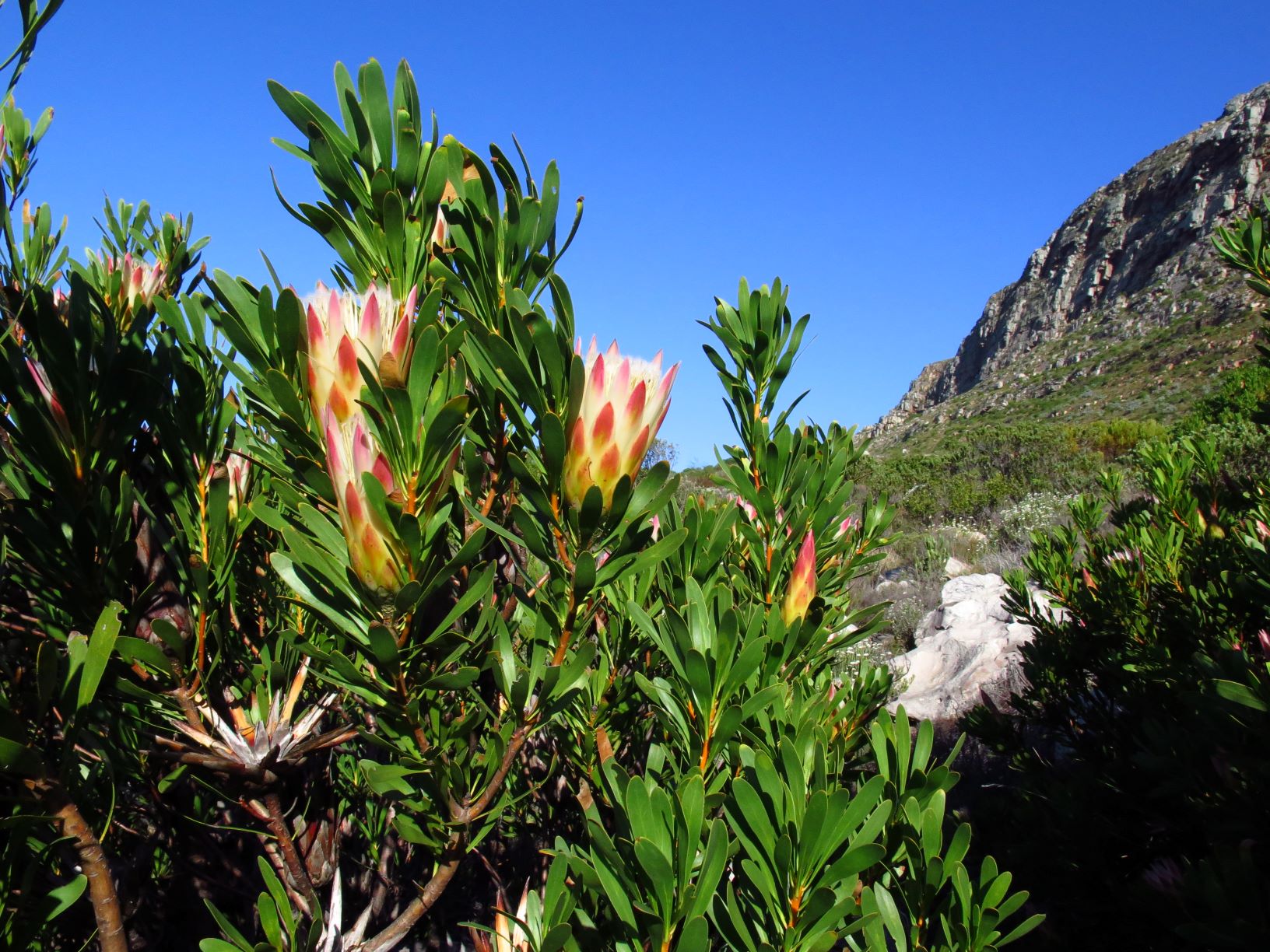
The risk currently appears to be particularly high in South Africa. The country’s flora is highly diverse and has a high level of endemism. In fact, South Africa is home to the Earth’s smallest floral kingdom, the Cape Floral Kingdom. It is also the apparent hot spot for pest introductions from overseas (see below). Phytophthora cinnamomi is attacking native Proteaceae in South Africa. According to Graziosi et al., an “incredible diversity” of Phytophthora taxa is present, portending threats to additional plant species. Other pathogens are attacking native conifers in the Podocarpus genus, Ekebergia capensis (Meliaceae), and Syzygium trees.
Protea repens and fynbos vegetation near Table Mountain; photo by Mike Wingfield
There is a clear pattern to further spread: pests first introduced to South Africa often spread. Examples include several insects and pathogens on Eucalyptus and the wood-boring pest of pine Sirex noctilio. This pattern is explained by two main factors. South Africa has a high capacity to detect introduced species. Also, there is an active plantation forestry sector that imports propagules. This offers opportunities for contaminating organisms to be introduced simultaneously.
Furthermore, as Graziosi et al. note, determining the geographic origin of significant proportion of pathogens is extremely difficult – an issue I will discuss in a separate blog based on a publication by primarily South African scientists. Some non-indigenous pathogens have been on the African continent for a long time. The Armillaria root rot pathogen apparently was introduced to South Africa with potted plants from Europe in the 1600s! They note also that many non-indigenous pathogens are probably already established on the continent but not yet detected due to the organisms’ cryptic nature and lagging detection abilities.
The future of African forests
African countries expect economic growth with associated increased trade with countries off-continent. The probable result will be to accelerate the rate of species introductions and spread. However, as climate change worsens, managers will find it increasingly difficult both to predict introduced species’ impact and to implement management programs.
This led Graziosi et al. to call for urgent improvements in plant biosecurity across the continent. They advocate improved coordination at regional and international levels. The list of needed actions is a familiar one: development and application of improved diagnostic tools, updated plant exchange regulations, and revised trade policies.
Graziosi et al. also call for development of effective control and management options. They suggest biocontrol, innovative silviculture practices, and selection of resistant trees. The good news is that African countries have already initiated programs to conserve tree germplasm and domesticate indigenous species, including establishment of field gene banks of high-priority indigenous trees. I have previously praised South African efforts, specifically reports here and here.
Mudada, Mapope, and Ngezimana (2022) describe the risk from introduced species to agriculture and human well-being in southern Africa beyond forestry. The region is already ravaged by food insecurities and hidden hunger. It would be devastated if the global average of crop loss due to plant diseases (10-16%) occurs there. They say these losses can be avoided with improved biosecurity mechanisms focused primarily on pest exclusion and plant quarantine regulations.
SOURCES
Graziosi, I. M. Tembo, J. Kuate, A. Muchugi. 2020 Pests and diseases of trees in Africa: A growing continental emergency. Plants People Planet DOI: 10.1002/ppp3.31
Mudada, N. Mapope, N., and Ngezimana, W. 2022 – The threat of transboundary plant pathogens to agricultural trade in Southern Africa: a perspective on Zimbabwe’s plant biosecurity – A review. Plant Pathology & Quarantine 12(1), 1–33, Doi 10.5943/ppq/12/1/1
Posted by Faith Campbell
We welcome comments that supplement or correct factual information, suggest new approaches, or promote thoughtful consideration. We post comments that disagree with us — but not those we judge to be not civil or inflammatory.
For a detailed discussion of the policies and practices that have allowed these pests to enter the United States and spread – and that do not promote effective restoration strategies – review the Fading Forests report at http://treeimprovement.utk.edu/FadingForests.htm
The Invasive Species Prevention and Forest Restoration Act (H.R. 1389) is before Congress. It is co-sponsored by Reps. Peter Welch [VT], Ann Kuster and Chris Pappas [NH], Chellie Pingree [ME], Elise Stefanik and Antonio Delgado [NY], Brian Fitzpatrick [PA], Mike Thompson [CA], Deborah Ross [NC].
Ask your Member of Congress/Representative to co-sponsor this bill. Ask your Senators to sponsor a companion bill.
In summary, this bill will:
Expand USDA APHIS’ access to emergency funds to eradicate or contain newly detected pest outbreaks.
Establish a pair of grant programs to support strategies aimed at restoring tree species decimated by non-native plant pests or noxious weeds. Such strategies include biological control of pests and enhancement of a tree host’s pest resistance.
One grant program supports research to explore and develop these strategies.
The second program support application of resistance breeding and other measures to restore forest tree species. Funded programs must incorporate a majority of the following components: collection and conservation of native tree genetic material; production of sufficient numbers of propagules; preparation of planting sites in the species’ former habitat; planting and post-planting maintenance.
Mandate a study to identify actions to overcome the shortfall of mission, leadership, and prioritization; identify agencies’ expertise and resources; improve coordination among agencies and with partners; and develop national strategies for saving tree species.
Organizations eligible for these grants include federal agencies; state cooperative institutions; colleges or universities offering a degree in the study of food, forestry, and agricultural sciences; and nonprofit entities with non-profit status per §501(c)(3) of the Internal Revenue Code.
Endorsements: Vermont Woodlands Association, American Forest Foundation, The Association of Consulting Foresters (ACF), Audubon Vermont, Center for Invasive Species Prevention, Ecological Society of America, Entomological Society of America, Maine Woodland Owners Association, Massachusetts Forest Alliance, National Association of State Foresters (NASF), National Woodland Owners Association (NWOA), The Nature Conservancy (TNC) Vermont, New Hampshire Timberland Owners Association, North American Invasive Species Management Association (NAISMA), Pennsylvania Forestry Association, Reduce Risk from Invasive Species Coalition, The Society of American Foresters (SAF), and a broad group of university professors and scientists.
Legislative Point of Contact: Alex Piper, Legislative Assistant, office of Rep. Welch. Contact me – providing your email! – if you wish me to send you Alex’ contact information. [The “contact” form does not provide your email and I will not reply in a public way.]
Posted by Faith Campbell
We welcome comments that supplement or correct factual information, suggest new approaches, or promote thoughtful consideration. We post comments that disagree with us — but not those we judge to be not civil or inflammatory.
For a detailed discussion of the policies and practices that have allowed these pests to enter and spread – and that do not promote effective restoration strategies – review the Fading Forests report at http://treeimprovement.utk.edu/FadingForests.htm
In February the USFS published a lengthy analysis of invasive species: Invasive Species in Forests and Rangelands of the United States. A Comprehensive Science Synthesis for the US Forest Sector (Poland et al. 2021; full citation at the end of the blog). More than 100 people contributed to the book; I helped write the chapters on legislation and regulations and international cooperation. The book is available for download at no cost here.
Chapters address impacts in terrestrial and aquatic systems; impacts on ecosystem processes; impacts on various sectors of the economy and cultural resources; interactions with climate change and other disturbances; management strategies for species and landscapes; tools for inventory and management. Each chapter evaluates the current status of knowledge about the topic and suggests research needs. There are also summaries of the invasive species situation in eight regions.
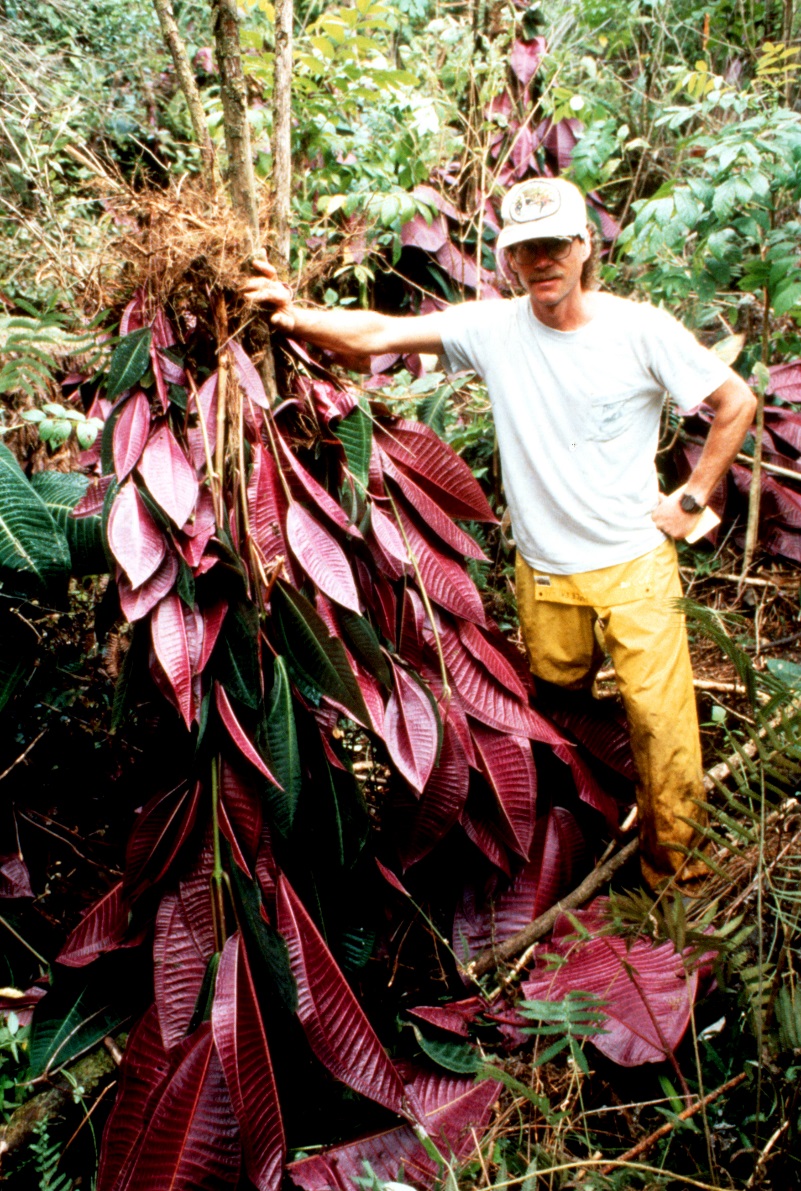
Miconia – one of many invasive plants damaging ecosystems in Hawai`i
I greatly appreciate the effort. Authors first met in 2015, and most chapters were essentially written in 2016. The long delay in its appearance came largely from negotiations with the publisher. The delay means some of the information is out of date. I am particularly aware that several experts – e.g., Potter, Guo, and Fei – have published about forest pests since the Aukema source cited. I wonder whether inclusion of their findings might change some of the conclusions about the proportion of introduced pests that cause noticeable impacts.
Since the report’s publication in February I have struggled with how to describe and evaluate this book. What is its purpose? Who is its audience? The Executive Summary says the report is a sector-wide scientific assessment of the current state of invasive species science and research in the U.S.
However, the Introduction states a somewhat different purpose. It says the report documents invasive species impacts that affect ecosystem processes and a wide range of economic sectors. This would imply an intention to enhance efforts to counter such effects– not just to shape research but also to change management. Indeed, the Conclusion of the Executive Summary (pp. xvi-xvii) is titled “An Imperative for Action”.
Tom Vilsack, Secretary of Agriculture
I am not the author to evaluate how effectively the book sets out research agendas. Regarding its usefulness in prompting policy-makers to do more, I regretfully conclude that it falls short.
Getting the balance right between an issue’s status and what needs to be done is difficult, perhaps impossible. I appreciate that the report makes clear how complex bioinvasion and ecosystem management and restoration are. Its length and density highlight the difficulty of making progress. This daunting complexity might well discourage agency leadership from prioritizing invasive species management.
On the other hand, summary sections sometimes oversimplify or bury important subtleties and caveats. The question of whether some key questions can ever be resolved by science is hinted at – but in detailed sections that few will read. The same is true regarding the restrictions imposed by funding shortfalls.
The Report Would Have Benefitted from Another Round of Editing
Editing this tome was a Herculean task. I feel like a curmudgeon suggesting that the editors do more! Nevertheless, I think the report would have been improved by the effort. One more round of editing – perhaps involving a wider range of authors – could have pulled together the most vital points to make them more accessible to policymakers. It could also have tightened the ecosystem-based descriptions of impacts, which are currently overwhelmed by too much information.
A precis for policymakers
A precis focused on information pertinent to policymakers (which the current Executive Summary does not) should contain the statement that the continued absence of a comprehensive investigation of invasive species’ impacts hampers research, management, and policy (mentioned only in §16.5, on p. 332). It should note situations in which insufficient funding is blocking recommended action. I note three examples: programs aimed at breeding trees resistant to non-native pests (resource issues discussed only in §§8.3.1 and 8.3.2, p. 195); sustaining “rapid response” programs (§6.4.3, p. 125); costs of ecosystem restoration, especially for landscape-level restoration (§16.4). I am sure there are additional under-funded activities that should be included!
cross-bred ash seedlings being tested for vulnerability to EAB; photo courtesy of Jennifer Koch
Other important information that should be highlighted in such a precis includes the statement that many ecosystems have already reached a point where healthy functions are in a more tenuous balance due to invasive species (p. 51). Effective carbon storage and maintaining sustainable nutrient and water balance are at risk. Second, costs and losses caused by invasive forest pests generally fall disproportionately on a few economic sectors and households. They cannot be equated to governmental expenditures alone (p. 305). Third, even a brief estimate of overall numbers of invasive species appears only in §7.4. Information about individual species is scattered because it is used as example of particular topic (e.g., impacts on forest or grassland ecosystems, or on ecosystem services, or on cultural values).
Ecosystem Impacts Overwhelmed
As noted above, the report laments the absence of a comprehensive investigation of invasive species’ impacts. Perhaps the editors intended this report to partially fill this gap. To be fair, I have long wished for a “crown to root zone” description of invasive species’ impacts at a site or in a biome. Concise descriptions of individual invasive species and their impacts are not provided by this report, but they can be found elsewhere. (The regional summaries partially address the problem of too much information – but they do not provide perspective on organisms that have invaded more than one region, e.g., emerald ash borer or white pine blister rust.) Another round of editing might have resulted in a more focused presentation that would be more easily applied by policymakers.
Welcome Straightforward Discussion of Conceptual Difficulties
I applaud the report’s openness about some important overarching concepts that science cannot yet formulate. If supportable theories could be conceived, they would assist in the development of policies:
Despite decades of effort, scientists have not established a clear paradigm to explain an ecosystem’s susceptibility to invasion (p. 85). Invasibility is complex: it results from a dynamic interplay between ecosystem condition and ecological properties of the potential invader, especially local propagule pressure.
Scientists cannot predict how climate warming will change distributions of invasive species [see Chapter 4] and alter pathways. This inability hampers efforts to develop effective prevention, control, and restoration strategies (p. xi). Climate change and invasive species need to be studied together as interactive drivers of global environmental change with evolutionary consequences.
The Report’s Recommendations
Policy-oriented recommendations are scattered throughout the report. I note here some I find particularly important:
Measures of progress should be based on the degree to which people, cultures, and natural resources are protected from the harmful effects of invasive species.
Managers should assess the efficacy of all prevention, control, and management activities and their effect upon the environment. Such an evaluation should be based on a clear statement of the goals of the policy or action. [I wish the report explicitly recognized that both setting goals and measuring efficacy are difficult when contemplating action against a new invader that is new to science or when the impacts are poorly understood. Early detection / rapid response efforts are already undermined by an insistence on gathering information on possible impacts before acting; that delay can doom prospects for success.]
Risk assessment should both better incorporate uncertainty and evaluate the interactions among multiple taxa. Risk assessment tools should be used to evaluate and prioritize management efforts and strategies beyond prevention and early detection/rapid response.
Economic analyses aimed at exploring tradeoffs need better tools for measuring returns on invasive species management investments (§16.5).
Actions that might be understood as “restoration” aim at a range of goals along the gradient between being restored to a known historic state and being rehabilitated to a defined desired state. The report stresses building ecosystem resilience to create resistance to future invasions, but I am skeptical that this will work re: forest insects and disease pathogens.
Propagule pressure is a key determinant of invasion success. Devising methods to reduce propagule pressure is the most promising to approach to prevent future invasions (p. 115). This includes investing in quarantine capacity building in other countries can contribute significantly to preventing new invasions to the US.
Resource managers need additional studies of how invasive species spread through domestic trade, and how policies may differ between foreign and domestic sources of risk.
I appreciate the report’s attention to such often-ignored aspects as non-native earthworms and soil chemistry. I also praise the report’s emphasis on social aspects of bioinvasion and the essential role of engaging the public. However, I think the authors could have made greater use of surveys conducted by the Wisconsin Department of Natural Resources and The Nature Conservancy’s Don’t Move Firewood program.
Lost Opportunities
I am glad that the report makes reference to the “rule of 25” rather than “rule of 10s”. I would have appreciated a discussion of this topic, which is a current issue in bioinvasion theory. As noted at the beginning of this blog, the long time between when the report was written and when it was published might have hampered such a discussion
Also, I wish the report had explored how scientists and managers should deal with the “black swan” problem of infrequent introductions that have extremely high impacts. The report addresses this issue only through long discussions of data gaps, and ways to improve models of introduction and spread.
I wish the section on the Northwest Region included a discussion of why an area with so many characteristics favoring bioinvasion has so few damaging forest pests. Admittedly, those present are highly damaging: white pine blister rust, sudden oak death, Port-Orford cedar root disease, balsam woolly adelgid, and larch casebearer. The report also notes the constant threat that Asian and European gypsy moths will be introduced. (The Entomological Society of America has decided to coin a new common name for these insects; they currently to be called by the Latin binomial Lymatria dispar).
And I wish the section on the Southeast and Caribbean discussed introduced forest pests on the Caribbean islands. I suspect this reflects a dearth of research effort rather than the biological situation. I indulge my disagreement with the conclusion that introduced tree species have “enriched” the islands’ flora.
SOURCE
Poland, T.M., P. Patel-Weynand, D.M Finch, C.F. Miniat, D.C. Hayes, V.M Lopez, editors. 2021. Invasive species in Forests and Rangelands of the United States. A Comprehensive Science Synthesis for the US Forest Sector. Springer
Posted by Faith Campbell
We welcome comments that supplement or correct factual information, suggest new approaches, or promote thoughtful consideration. We post comments that disagree with us — but not those we judge to be not civil or inflammatory.
For a detailed discussion of the policies and practices that have allowed these pests to enter and spread – and that do not promote effective restoration strategies – review the Fading Forests report at http://treeimprovement.utk.edu/FadingForests.htm