Progress – Now Threatened – On Protecting Our Cacti

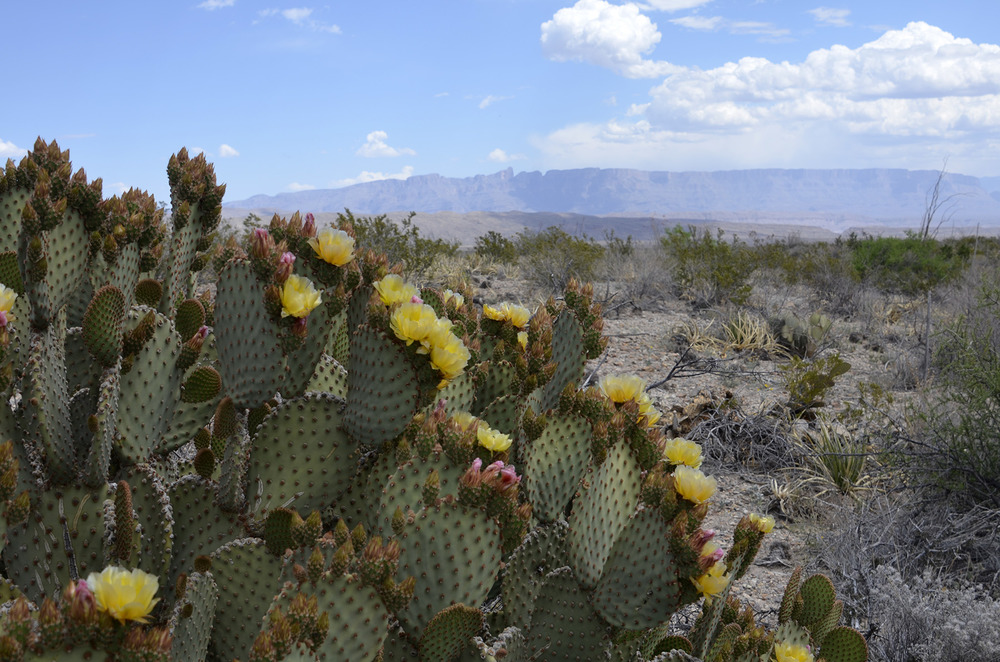
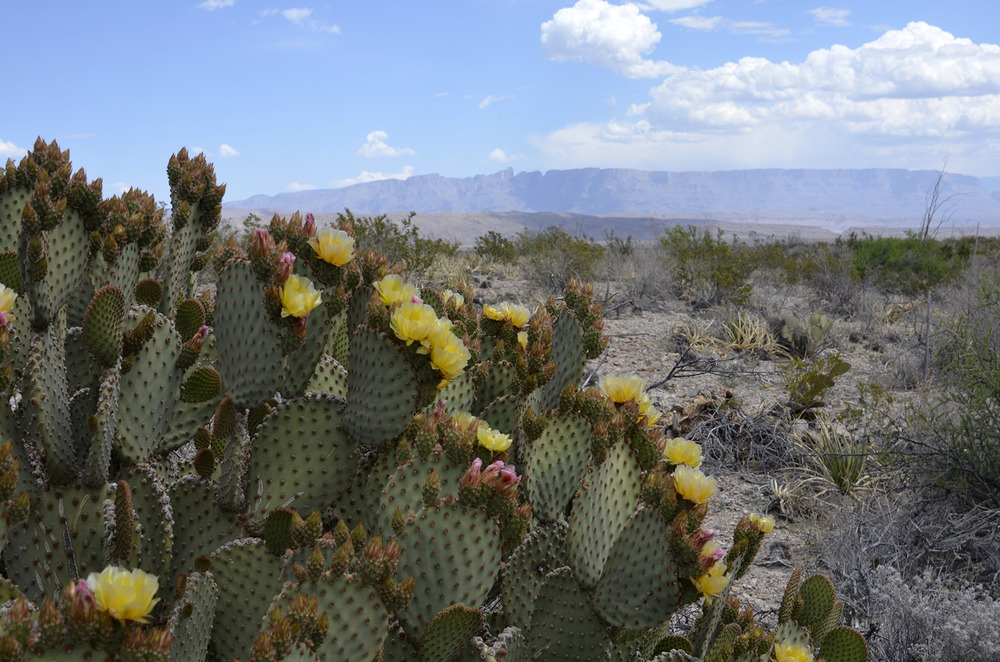
prickly pear cacti in Big Bend National Park
photo by Blake Trester, National Park Service

The cacti that are such important components of desert ecosystems across nearly 2 million square miles straddling the U.S.-Mexico border are under threat from non-native insects – as I have noted in earlier blogs. Of course, cacti are important in other ecoregions, too – I wrote recently about the columnar cacti in the dry forests of Puerto Rico.

Flat-padded prickly pear cacti of the genus Opuntia are threatened by the cactus moth, Cactoblastis cactorum.

In 1989, the cactus moth was found in southern Florida, to which it had spread from the Caribbean islands (Simonson 2005). Recently, the moth was found to have spread west as far as the Galveston, Texas, area and near I-10 in Columbus, Texas, about 75 miles west of central Houston (Stephen Hight, pers. com.) Two small outbreaks on islands off Mexico’s Caribbean coast have been eradicated.

In Florida, the cactus moth has caused considerable harm to six native species of prickly pear, three of which are listed by the state as threatened or endangered.

When the cactus moth reaches the more arid regions of Texas, it is likely to spread throughout the desert Southwest and into Mexico. In the American southwest, 31 Opuntia species are at risk; nine of them are endemic, one is endangered. Mexico is the center of endemism for the Opuntia genus. In Mexico, 54 Opuntia species are at risk, 38 of which are endemic (Varone et al. 2019; full citation at end of this blog).

The long-term effects of the cactus moth on these North American Opuntia are unknown because there may be substantial variations in tolerance. The attacks observed in the Caribbean islands have shown great variability in various cactus species’ vulnerability (Varone et al. 2019).

The Opuntia cacti support a diversity of pollinators as well as deer, javalina (peccaries), tortoises, and lizards. Prickly pears also shelter packrats and nesting birds (which in turn are fed on by raptors, coyotes, and snakes), and plant seedlings. Their roots hold highly erodible soils in place (Simonson 2005).

While scientists have been concerned about the possible impacts of the cactus moth since it was detected in Florida 30 years ago, a substantial response began only 15 years later. The U.S. Department of Agriculture began trying to slow the spread of the cactus moth in 2005 (Mengoni Goñalons et al. 2014), with a focus on surveys and monitoring, host (cactus) removal, and release of sterile males. This program was successful at slowing the moth’s spread and eradicating small outbreaks on offshore islands of Alabama, Mississippi, and Mexico.

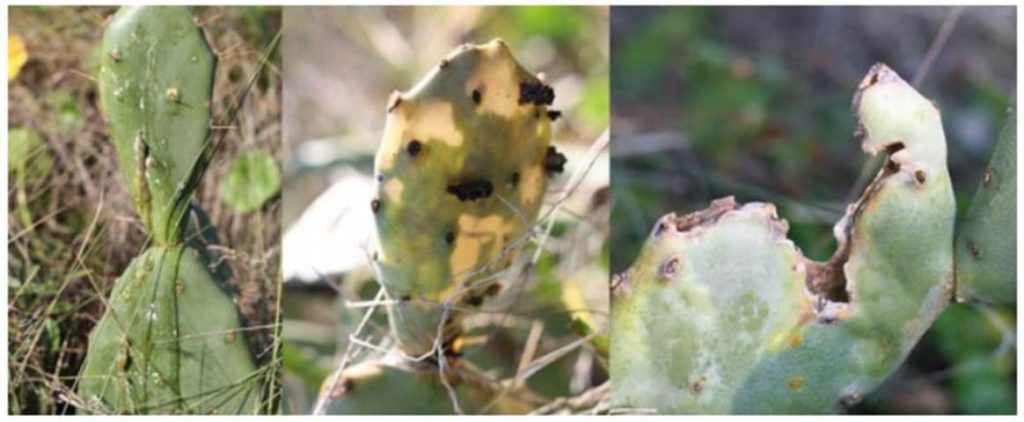
Cactus moth damage to native cacti in Florida
photo by Christine Miller, UF/IFAS

However, the moth continued to spread west and the program never received an appropriation from Congress. The primary funding source was a US – Mexico Bi-National Invasive Cactus Moth Abatement Program. Both countries contributed funds to support the research and operational program to slow the spread in the U.S. Funds were provided through USDA Animal and Plant Health and Inspection Service (APHIS) and the Mexican Secretariat of Agriculture, Livestock, Rural Development, Fisheries and Food (SEGARPA). Unfortunately, funding was reduced by both entities and became inadequate to maintain the Bi-National Program.

Therefore, in 2012, APHIS abandoned its regional program and shifted the focus to biocontrol. This is now considered the only viable control measure in the desert Southwest where vulnerable cacti are numerous and grow close together. The biocontrol project has been funded since 2012 through the Plant Pest and Disease Management and Disaster Prevention program (which receives funding through the Farm Bill). It has received a total of slightly more than $2 million over seven years. More than half the funds went to the quarantine facility to support efforts to rear non-target hosts and verify the biocontrol agent’s host specificity. About a quarter of the funds supported complementary work of an Argentine team (both the cactus moth and the most promising biocontrol agent are native to Argentina). Much smaller amounts have supported U.S.-based scientists who have studied other aspects of the cactus moth’s behavior and collected and identified the U.S. moths being tested for their possible vulnerability to attack by a biocontrol wasp.

Here are details of what these dedicated scientists achieved in just the past seven years at the relatively low cost of roughly $2 million. Unfortunately, the project now faces a funding crisis and we need to ensure they have the resources to finish their work.

Some Specifics of the BioControl Program

After literature reviews, extensive collections, and studies in the cactus moth’s native habitat in Argentina (Varone et al. 2015), a newly described wasp, Apanteles opuntiarum (Mengoni Goñalons et al. 2014), has been determined to be host specific on Argentine Cactoblastis species and the most promising candidate for biocontrol. Wasps were collected in Argentina and sent to establish a colony in a quarantine facility in Florida to enable host specificity studies on North American Lepidoptera (Varone et al. 2015).

Quarantine host specificity studies and development of rearing technology has not been straightforward. Initially, it was difficult to achieve a balanced male/female ratio in the laboratory-bred generations; this balance is required to maintain stable quarantine laboratory colonies for host range testing. This difficulty was overcome. A second challenge was high mortality of the cactus-feeding insects collected in the Southwest that were to be test for vulnerability to the biocontrol wasp. These desert-dwellers don’t do well in the humid, air-conditioned climate of the quarantine facility! For these difficult-to-rear native insects, scientists developed a molecular genetics method to detect whether eggs or larvae of the cactus moth parasitoid were present inside test caterpillars after they were exposed to the wasps. For easy to rear test insects, caterpillars are exposed to the wasps and reared to adulthood. Host specificity tests have been conducted on at least five species of native U.S. cactus-feeding caterpillars and 11 species of non-cactus-feeding caterpillars (Srivastava  et al. 2019; Hight pers.comm.).

To date there has been no instance of parasitism by Apanteles opuntiarum on either lepidopteran non-target species or non-cactus-feeding insects in the Florida quarantine or in field collections in Argentina (Srivastava et al. 2019; Varone et al. 2015; Hight pers.comm.).

The scientists expected to complete host-specificity testing in the coming months, then submit a petition to APHIS requesting the release of the wasp as a biocontrol agent. Unfortunately, the project’s request for about $250,000 in the current year was not funded. This money would have funded completion of the host specificity testing, preparation of a petition to APHIS in support of release of the biocontrol agent into the environment, and preparation of the release plan.

Meanwhile, what can we expect regarding the probable efficacy of the anticipated biocontrol program?

Some of the wasp’s behavioral traits are encouraging. The wasp is widely present in the range of the cactus moth, and persisted in these areas over the years of the study. The wasp can deposit multiple eggs with each “sting”. Multiple wasps can oviposit into each cactus moth without detriment to the wasp offspring. Unmated wasp females produce male offspring only, whereas mated females produce mixed offspring genders. In the field, female wasps attack cactus moth larvae in a variety of scenarios: they wait at plant access holes to sting larvae when they come outside to defecate; they attack larvae when they are moving on the surface of the pads; they can sting the youngest cactus moth larvae through the thin plant wall of mined the pads; and they enter large access holes created by older larvae and attack larger larvae. The wasps are attracted by the frass (excrement) left on the outside of the cactus pads by cactus moth larvae (Varone et al. 2020).

However, I wonder about the extent to which the cactus moth is controlled by parasitoids in Argentina. Cactoblastis eggs are killed primarily by being dislodged during weather events (rain and wind) and by predation by ants. First instar larvae are killed primarily by the native Argentine cactus plants’ own defenses – thick cuticles and release of sticky mucilage when the young larvae chew holes into the pads where they enter and feed internally. As larvae feed and develop inside the pads, the primary cause of mortality is natural enemies.

Of all the parasitoid species that attack C. cactorum, A. opuntiarum is the most abundant and important. When the larvae reach their final state (6th instars), they leave the pads and find pupation sites in plant litter near the base of the plants. It is at this stage that the parasitism from A. opuntiarum is detected in the younger larvae that were attacked while feeding inside pads. As the moth larva begins to spin silk into which to pupate, larvae of the wasp erupt through the skin of the caterpillar and pupate within the silk spun by the moth. Predation by generalists (ants, spiders, predatory beetles) accounted for high mortality of the unprotected last instar and pupae (Varone et al. 2019).

Finally, the cactus moth has three generations per year when feeding on O. stricta in the subtropical and tropical coastal areas of the Americas and the Caribbean. In Argentina, on its native host, the moth completes only two generations per year (Varone et al. 2019).

 How to Get the Program Support Needed

Opuntia in Big Bend National Park
Photo by Cookie Ballou,
National Park Service

To date, no organized constituency has advocated for protection of our cacti from non-native insect pests. Perhaps now that the Cactoblastis moth is in Texas, the threat it represents to our desert ecosystems will become real to conservationists and they will join the struggle. The first step is to resolve the funding crisis so that the agencies can complete testing of the biocontrol agent and gain approval for its release. So now there is “something people can do” – and I hope they will step forward.

I hope Americans are not actually indifferent to the threat that many cacti in our deserts will be killed by non-native insects. Many are key components of the ecosystems within premier National Parks, and other protected areas. Cacti also are beautiful treasures in botanical gardens. I hope conservationists will agree that these threats must be countered, and will help to ensure funding of the final stages of the biocontrol tests.

Sources

Mengoni Goñalons, C., L. Varone, G. Logarzo, M. Guala, M. Rodriguero, S.D. Hight, and J.E. Carpenter. 2014. Geographical range & lab studies on Apanteles opuntiarum (hymenoptera: braconiDae) in AR, a candidate for BC of Cactoblastis cactorum (Lepidoptera: Pyralidae) in North America. Florida Entomologist 97(4) December 2014

Simonson, S.E., T. J. Stohlgren, L. Tyler, W. Gregg, R. Muir, and L. Garrett. 2005. Preliminary assessment of the potential impacts and risks of the invasive cactus moth, Cactoblastis cactorum Berg, in the U.S. and Mexico. Final Report to the International Atomic Energy Agency, April 25, 2005 © IAEA 2005

Srivastava, M., P. Srivastava,  R. Karan, A. Jeyaprakash, L. Whilby, E. Rohrig, A.C. Howe,  S.D. Hight, and L. Varone. 2019. Molecular detection method developed to track the koinobiont larval parasitoid Apanteles opuntiarum (Hymenoptera: Braconidae) imported from Argentina to control Cactoblastis cactorum (Lepidoptera: Pyralidae). Florida Entomologist 102(2): 329-335.

Varone, L., C.M. Goñalons, A.C. Faltlhauser, M.E. Guala, D. Wolaver, M. Srivastava, and S.D. Hight. 2020. Effect of rearing Cactoblastis cactorum on an artificial diet on the behavior of Apanteles opuntiarum. Applied Entomology DOI: 10.1111/jen.12731.

Varone, L., G. Logarzo, J.J. Martínez, F. Navarro, J.E. Carpenter, and S.D. Hight. 2015. Field host range of Apanteles opuntiarum (Hymenoptera: Braconidae) in Argentina, a potential biocontrol agent of Cactoblastis cactorum (Lepidoptera: Pyralidae) in North America. Florida Entomologist — Volume 98, No. 2 803

Varone, L., M.B. Aguirre, E. Lobos, D. Ruiz Pérez, S.D. Hight, F. Palottini, M. Guala, G.A. Logarzo. 2019. Causes of mortality at different stages of Cactoblastis cactorum in the native range. BioControl (2019) 64:249–261

Posted by Faith Campbell

We welcome comments that supplement or correct factual information, suggest new approaches, or promote thoughtful consideration. We post comments that disagree with us — but not those we judge to be not civil or inflammatory.

Hawaiian Dry Forests – Glimmer of Hope for one tree, Alarm for a shrub

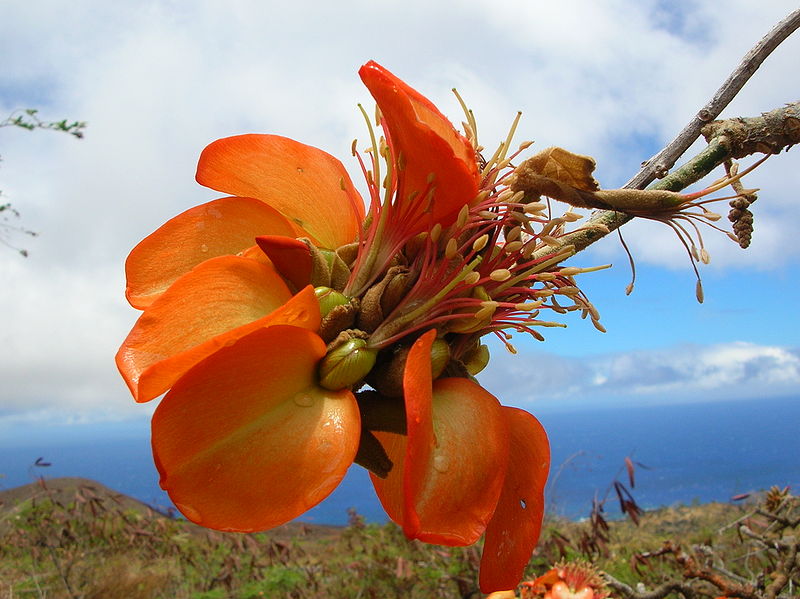
wiliwili flower
photo by Forrest and Kim Starr, courtesy of creative commons

Hawaii’s dryland forest is a highly endangered ecosystem. More than 90% of dry forests are already lost due to habitat destruction and the spread of invasive plant and animal species. However, a new publication documents some recovery of wiliwili trees from one major pest. At the same time, a new pest is spreading and killing naio, a critical dryland shrub.  Both pests originated in countries that have rarely if ever been a source of U.S. pests. This is worrying because phytosanitary agencies have their hands full with imports from the usual sources. The role of California as a source of invasive species in Hawai`i has long deserved federal attention – but as far as I know has not received it.

Hope for Wiliwili Trees

The Hawaiian endemic wiliwili tree, Erythrina sandwicensis, occurs in lowland dry forests on all the major islands from sea level to 600 m. Wililwili is a dominant overstory tree in these habitats. (Unless otherwise noted, the principal source is Kaufman et al. in press – full citation at end of blog.)

The tree has been severely affected by the introduced Erythrina gall wasp, Quadrastichus erythrinae (EGW). The gall wasp was detected on Oahu in 2005 and quickly spread to the other Hawaiian islands.  

Arrival of the EGW on Oahu was part of the insect’s rapid global range expansion.  Originally from East Africa, it was first detected in the Mascarene Islands and Singapore in 2003. At the time, it was unknown to science. Within a few years it had spread across Asia, many Pacific islands (including Hawai`i), and to the Americas, including Florida in 2006, Brazil in 2014 (Culik 2014), and Mexico in 2017 (Palacios-Torres 2017). Although apparently restricted to the Erythrina genus as host, it has lots of opportunities. This genus has 116 species distributed across tropical and subtropical regions: 72 species in the Americas, 31 in Africa, and 12 in Asia.

The severe damage to wiliwili (and to non-native Erythrina trees planted in urban areas and as windbreaks) prompted Hawaiian officials to immediately initiate efforts to find a classical biological control agent. The process moved rapidly. A candidate – a parasitic wasp species new to science, Eurytoma erythrinae – was found in East Africa in 2006. Host specificity testing was carried out. Scientists quickly learned to rear the parasitic wasp in laboratories. Release of the biocontrol agent was approved in November 2008 – only three and a half years after the EGW was detected on Oahu.

The biocontrol agent’s impact was quickly apparent. Establishment was confirmed within 1–4 months at all release locations throughout Hawai`i. Reduced pest impacts to trees were detected within two years. By 2018, only 33% of the foliage was damaged on the majority of wiliwili trees. Damage to non-native Erythrina had also declined.

Results of Biocontrol Agent’s Release

The biocontrol agent’s efficacy in reducing EGW’s impacts on trees has been evaluated for 10 years after the agent’s release. Monitoring was conducted at sites on four of the six main islands. (The monitoring program and its findings are described in Kaufman et al. in press).

I wonder how many other biocontrol agents have been monitored so closely for such a long time? Shouldn’t they all be?

Given the uniqueness and importance of such long-term assessment, it is worth looking at the data in detail.

1) Foliar Damage and Tree Health

In 2008, before release of the biocontrol agent, more than 70% of young shoots in wiliwili trees that were inspected were severely infested. The damage rating of “severe” fell from about 80% of trees in 2008 to about 40% in 2011. About 20% of trees surveyed – at sites on all islands – had no gall damage.

By three years after release of the biocontrol agent (2011), mortality rates attributed to stress from the EGW infestation for trees in natural areas fell to 21%. Mortality rates for trees in botanical gardens was somewhat higher – 34%. Kaufman et al. proposed several possible reasons: a) lingering presence of systemic insecticides that might have harmed the biocontrol agents early in the releases; b) year-round sustenance for the EGW as a result of the i) presence of alternative hosts and ii) supplemental irrigation which maintained fresh foliage on the trees.

Less intensive monitoring occurred during 2013 – 2018. It showed continuing substantial suppression of EGW damage on Erythrina foliage, although levels varied among locations. Sites with the lowest precipitation and higher temperatures throughout the year had the slowest recovery of wiliwili. Still, trees are now producing vegetative flushes and healthier canopies during non-dormant periods.

2) Flower and Seed Damage

Successful reduction of infestations in flowers and seedpods was less immediate. Still, by 2011, seed-set had increased from less than 3% of trees setting and maturing seed, to almost 30% with mature seed. The proportion of trees bearing inflorescences also increased, with more than 60% of trees blooming three years after introduction of the biocontrol agent. There was also a slow but steady increase in seed production.

However, in 2019, it remains unclear how infestation of seedpods will affect germination and therefore future plant recruitment.

More worrying, little recruitment was observed over the 10 years. Hawaiian authorities have completed tests on, and are preparing a petition for release of, a second biocontrol agent, Aprostocitus nites. It is hoped that it will further suppress EGW in flowers and seedpods.  

Still, poor recruitment is likely due to the combined impacts of multiple invasive species in native environments. A significant factor is a second insect pest – a bruchid, Specularius impressithorax – which can cause loss of more than 75% of the seed crop. I hope authorities are seeking methods to reduce this insect’s impacts.

The Hawaiian species group of the IUCN has given the wiliwili tree the Reed Book designation of “vulnerable”.

Worries for Naio

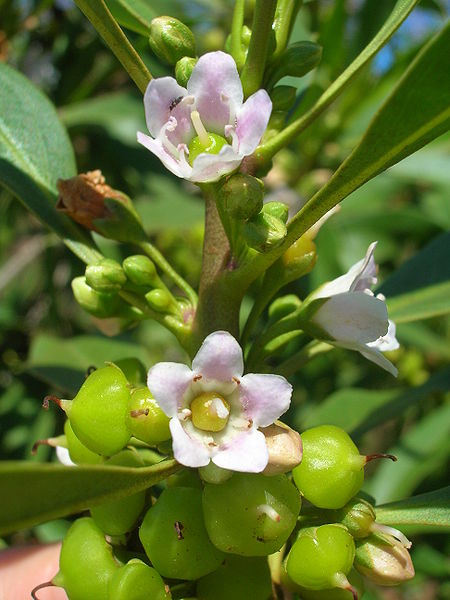
naio in bloom
photo by Forrest and Kim Starr, courtesy of creative commons

Naio (Myoporum sandwicense)is an integral component of native Hawaiian ecosystems, especially in dry forests, lowlands, and upland shrublands. However, it is also found in mesic and wet forest habitats. Naio is found on all of the main Hawaiian Islands at elevations ranging from sea level to 3000 m. The loss of this species would be not only a significant loss of native biological diversity but also a structural loss to native forest habitats.

The invasive non-native Myoporum thrips, Klambothrips myopori, was detected on the Big Island (Hawai‘i Island) in 2009 – four years after it was first detected on ornamental Myoporum species in California. At the time of the California detection, the species was unknown to science. It is now known that this species is native to Tasmania.

The thrips feeds on and causes galls on plants’ terminal growth and can eventually lead to death of the plant.

For close to a decade, the Myoporum thrips was restricted to the Big Island.  It has now been found on Oahu (Wright pers. comm.) Alarmed by the high mortality of plants in California, in September 2010, the Hawaii Department of Lands and Natural Resources Division of Forestry and Wildlife and the University of Hawai‘i initiated efforts to determine spatial distribution, infestation rates, and overall tree health of naio populations on the Big Island. Monitoring took place at nine protected natural habitats for four years. This monitoring program was supported by the USFS Forest Health Protection program. (See also the chapter on naio by Kaufman et al. 2019 in Potter et al. 2019 – full citation at the end of this blog.)

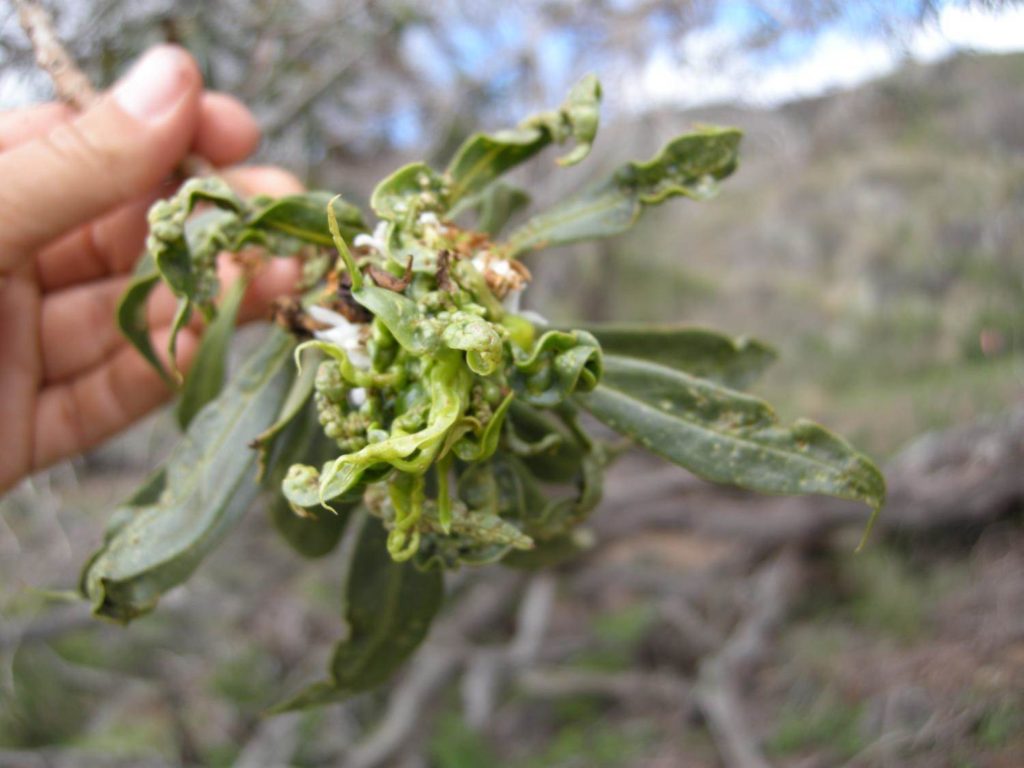
naio damaged by thrips
photo by Leyla Kaufman, University of Hawaii

The monitoring confirmed that the myoporum thrips has spread and colonized natural habitats on the leeward side of Hawai`i Island. Infestation rates increased considerably at all sites over the duration of the four-year sampling period. Trees experiencing high infestation levels also showed branch dieback.

Medium-elevation sites (between 500–999 m) had the highest infestations and dieback: over 70% of the shoots  had the worst damage.. At two sites, over 70% of the monitored trees have died.

Even though flowers and fruits were still seen at all sites, little to no plant recruitment was observed at these sites. Thus another plant species important in this endangered plant community is in decline.

Few management strategies are available for this pest. They include preventing spread to other islands and early detection followed by rapid application of pesticides.

 Implications and Conclusions

The Erythrina gall wasp and myoporum thrips are only two of the thousands of invasive species established in Hawai`i. Island ecosystems, especially Hawai`i,  are well recognized as especially vulnerable to invasive species. It has been estimated that on average 20 new arthropod species become established in Hawai`i every year.

East Africa and Tasmania are new sources for invasive species. Phytosanitary agencies need to adjust their targetting of high-risk imports to recognize this reality. Regarding the Hawaiian introduction of the thrips, there was probably made an intermediary stop in California – which is not unusual. (See also ohia rust.)

I applaud Hawaiian officials’ quick action to counter these pests. I wish their counterparts in other states did the same.

There are multiple threats to Hawaii’s dry forests, including habitat modification and fragmentation; wild fires; seed predation by rodents; predation on seeds, seedling, and saplings by introduced ungulates (e.g. feral goats, pigs and deer); competition with invasive weeds; and damage by invasive insect pests and diseases.

With so much of Hawaii’s dry forests already lost, the release of biocontrol agents targetting specific pests is only one element of a much-needed effort. Long-term protection of wiliwili and naio depends on greater efforts to reduce all threats and to stimulate natural regeneration of this ecosystem. These programs could include predator-proof fencing to keep out ungulates; baiting rodents and snails; and active collection. Breeding, and planting of threatened plant species in an effort to protect both the individual species and the habitat.

SOURCES

Culik, M.P., D. dos Santos Martins, J. Aires Ventura & V. Antonio Costa. The invasive gall wasp Quadrastichus erythrinae (Hymenoptera: Eulophidae) in South America: is classical biological control needed?

Kaufman, L.V.,  J. Yalemar, M.G. Wright. In press. Classical biological control of the erythrina gall wasp, Quadrastichus erythrinae, in Hawaii.: Conserving an endangered habitat. Biological Control. Vol. 142, March 2020

Palacios-Torres, R.E., J. Malpica-Pita, A.G. Bustamante-Ortiz, J. Valdez-Carrasco, A. Santos-Chávez, R. Vega-Muñoz and H. Vibrans-Lindemann. 2017. The Invasive Gall Wasp Quadrastichus erythrinae Kim in Mexico. Southwestern Entomologist.

Potter, K.M. B.L. Conkling. 2019. Forest Health Monitoring: National Status, Trends, and Analysis 2018. Forest Service Research & Development Southern Research Station General Technical Report SRS-239

Kaufman, L.V, E. Parsons, D. Zarders, C. King, and R. Hauff. 2019. CHAPTER 9. Monitoring Myoporum thrips, Klambothrips myopori (Thysanoptera: Phlaeothripidae), in Hawaii

Wright, Mark. 2005. Assistant Professor and Extension Specialist, University of Hawaii. Personal communication.


APHIS’ EIS on Importing Plant Pests: What it reveals about APHIS

APHIS headquarters in Riverdale, MD

APHIS has published a final Environmental Impact Statement (FEIS) as one of the final steps in modifying its regulations governing conditions for issuing permits for importation, interstate movement, and intrastate movement of plant pests – including biocontrol agents.  Access it here.

The original proposal to modify the regulatory system was published in March 2017.

I find the rationale for modifying the regulations to be compelling: the current regulations:

  • date from 2001;
  • do not adequately reflect changes in APHIS’ mandate enacted by the Plant Protection Act; and
  • do not focus agency efforts on the permit applications that pose the highest risk.

The FEIS presents two alteratives: the “preferred alternative” and the “comprehensive risk mitigation program.” APHIS settles for the less protective actions that expose natural resources, especially, to risk from non-indigenous species

1) The FEIS reiterates — without discussion or rationale — APHIS’ acceptance of the vague word “acceptable” to describe the level of protection the agency strives to achieve (see pp. 2, 22, 45, 106 of the FEIS).  The FEIS does not attempt to quantify the differences in the levels of protection provided by the two alternatives.

2) APHIS advocates a policy alternative that does not require post-release monitoring of biocontrol agents. The FEIS justifies adoption of this alternative despite putting a welcome emphasis on the importance of just such efforts to determine the actual impacts of biocontrol organisms on both target and non-target species (p. 67). On page 70, the FEIS notes that the paucity of documented examples of adverse effects on non-target species “may be the result of insufficient monitoring after release …” It goes on to note that “very few introductions included a careful evaluation of nontarget impacts  …” The FEIS notes the paucity of funding for this research and – sometimes – the lack of authority to require such monitoring.

In the case of APHIS, I see no legal impediment to the agency requiring biocontrol permit applicants to carry out post-release monitoring.

Indeed, if APHIS chose the “comprehensive risk mitigation program”, the agency would require enhanced post-release monitoring. The goal would be to document “the extent of establishment, spread, and limit to expected hosts” of the introduced biocontrol organism (p. 43). Nevertheless, the FEIS accepts the “preferred alternative”, which does not require such monitoring. The reason given for this choice is that the comprehensive program would require too many resources. I note below that we can overcome this barrier by lobbying for increased appropriations and higher staffing levels.

3) APHIS dismisses risks associated with high levels of uncertainty. In justifying the less rigorous “preferred alternative”, the FEIS refers 20 times to the persistence of uncertainties in analyses of the potential impact of importation, interstate transport, or release of non-indigenous organisms. FEIS also says that given these inevitable uncertainties, APHIS should regulate most organisms “conservatively” – defined in the FEIS as “based on what is known” ( p. 74).  Of course, APHIS long ago rejected the precautionary approach – which is a truly conservative approach.

4) The FEIS accepts APHIS’ current practice of evaluating risks only in the geographic area of approved introduction – despite conceding repeatedly that introduced organisms often spread beyond the original introduction site. It is true that the geographic area evaluated includes all continental states (whether Alaska is included is unclear). However, there is no discussion of the likelihood that organisms introduced to the continental states will be transported to U.S. islands in the Caribbean or Pacific – through either authorized or unauthorized mechanisms.

The FEIS Asserts Principles that APHIS Sometimes Fails to Live Up To

As I note above, the FEIS makes numerous references to the reality that an organism released into the environment might establish and spread to its maximum geographic range based upon host distribution, climate and other range-limiting factors. According to the FEIS, APHIS’ decisions about issuing a permit allowing release of non-native organisms must reflect that likelihood. For example:

“In principle, therefore, release of the biological control organism, at even one site, should be considered equivalent to release over the entire area in which potential hosts occur, and in which the climate is suitable for reproduction and survival.” (P. 67)

However, APHIS’ recent decision to allow introduction of a thrips (Pseudophilothrips ichini) in Florida to control Brazilian pepper (Schinus terebinthifolius) does not reflect this principle.

The environmental assessment (EA) that analyzed this proposed release reported that the thrips would both encounter a suitable climate in Hawai`i (pp. 11 and 19) and feed on two native Hawaiian species – Rhus sandwicensis and Dodonaea viscosa. The EA described the feeding damage on these non-target species as negligible and noted that P. ichini sustained only one generation on these non-target species (p. 27).  Furthermore, the EA noted (p. 29) that the action being reviewed did not include release of P. ichini in Hawai`i. However, the EA did not discuss the frequency with which insects established on the Continent are transported – without authorization – to the Islands.  In my view, if introduced to Hawai`i – by authorized or non-authorized transport – the thrips is likely to thrive because several good hosts are widespread.  By feeding on these good hosts, the thrips could enjoy a “food subsidy” that would allow it to put constant pressure on the vulnerable Hawaiian species. [You can obtain a copy of my comments on the draft EA by contacting me via the “contact us” button, or by visiting the Federal Register site at the link given above.]

Rhus sandwichensis; photo by Forest & Kim Starr

The FEIS fails to address an important risk

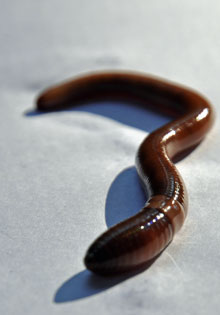
Amynthes agrestis one of the invasive earthworms established in the U.S.
photo by National Park Service

The FEIS doesn’t recognize – or even mention – the impact of non-native earthworms on native ecosystems and native plants! The only discussion of risks associated with earthworms is on p. 26, where the sole concern is the risk that soil-dwelling worms could vector crop and livestock diseases present in the soil in the country of origin.

Yet the FEIS notes that APHIS’ mandate – and the purpose of the permit system – is to protect not only American agriculture but also our natural resources. I have blogged about the severe impact earthworms have on native flora here. Why did the authors of the EIS ignore the large and growing scientific literature on this issue?

Good Points in the FEIS

1) The FEIS notes the concern that biocontrol agents will attack non-target species, with results that “may not be easily reversed.” (pp. 66, 74) The FEIS cites several examples, including Cactoblastis cactorum on North American prickly pear (Opuntia) cacti – see my blogs here and the potential impact of Rhinocyllus conicus on native thistles. The FEIS notes that these particular biocontrol agents would not be approved for release under current policies. However, the FEIS also reports that a biocontrol agent released on thistles in Virginia in 1997 – that is, under criteria currently in use – had spread across the continent to California and Nevada within two years! While the FEIS reports the spread as by natural means, I wonder if some enterprising farmers might have taken infected plants/inoculum without authority.

2) The FEIS notes several indirect concerns arising from the environmental release of biocontrol organisms, including contamination, adaptation, interference, competition, and hybridization. When biocontrol organisms establish but don’t reduce populations of the target weed, they can provide a “food subsidy” to some organisms, thus disrupting the ecological balance. The example given is two gall flies (Urophora affinis and U. quadrifasciata), which failed to control knapweed and led to population explosions of deer mice – with repercussions for competition among small mammals, possibly reduced recruitment of native plant populations, and increased incidence of a serious disease of humans, Sin Nombre hantavirus.  (Recall my similar concern re: a thrips if it reaches Hawai`i, above.)

3) The FEIS cites scientific publications demonstrating the low rate of success of biological control in controlling invasive plants or arthropods.  One such discussion – on p. 53 – notes that an estimated 65% of introduced arthropods successfully establish for the purposes of weed control, 25 – 34% of those introduced to control arthropods. These figures are repeated on p. 59. However, on pp. 67-68, even lower success rates are presented, based on worldwide estimates. This is not a good record, given the risks involved. Furthermore, given my focus on non-native insects, I am concerned by the statement in the FEIS that the scientific study of potential risks of biocontrol targetting arthropods control is not thorough. (pp. 68-69)  

The Center for Invasive Species Prevention hopes that other stakeholders will work with us to persuade APHIS to work toward adoption of the more protective approach described in the “comprehensive  risk mitigation program”. A key factor will be lobbying the Administration and Congress to increase appropriations and personnel ceilings so that APHIS has the resources necessary to carry out the more protective program.

We welcome comments that supplement or correct factual information, suggest new approaches, or promote thoughtful consideration. We post comments that disagree with us — but not those we judge to be not civil or inflammatory.

Solutions Suggested by 30 Years’ Work

Faith Campbell receives award for activism from National Association of State Foresters; 2016

For nearly 30 years I have documented bioinvasion threats and gaps, first in three Fading Forests reports (available here), then in five years of blogging. Here I pull together that information and suggest — in most cases reiterate — steps to address these threats and gaps. I list sources of discussion of the underlying issues – other than my reports and blogs – in references at the end of this blog.

My first premise is: robust federal leadership is crucial:

  1. The Constitution gives primacy to federal agencies in managing imports and interstate trade.
  2. Only a consistent approach can protect trees (and other plants) from non-native pests.
  3. Federal agencies have more resources than state agencies individually or in any likely collective effort — despite decades of budget and staffing cuts.

My second premise is: success depends on a continuing, long-term effort founded on institutional and financial commitments commensurate with the scale of the threat. This requires stable funding; guidance by research and expert staff; and engagement by non-governmental players and stakeholders. Unfortunately, as I discuss below, funding has not been adequate or stable.

My third premise is that programs’ effectiveness needs to be measured, not just effort (see the NECIS document referenced at the end of the blog).

SPECIFICS 

Preventing new introductions continues to be the most effective action. Mitigating options decrease and damages increase once a non-native pest has entered the country – much less become established (see Lovett et al. 2016 and Roy et al. 2014). I recognize that preventing new introductions poses an extremely difficult challenge given the volume and speed of international trade and the strong economic forces supporting free trade. These challenges have been exacerbated over several decades by the political zeitgeist – the anti-regulatory ideology, the emphasis on “collaborating” with “clients” rather than imposing requirements through regulations. Although the current “America First” policy might reduce import volumes and therefore reduce the invasive species threat to some extent, the anti-regulatory stance has only strengthened.

containers at the Port of Long Beach, California

Decades of cutting key agencies’ budgets and personnel are another factor. However, the damage to America’s natural systems is so great that we must try harder to find more effective strategies (See the Fading Forest reports; my previous blogs; Lovett et al. 2016; and APHIS annual reports – e.g., the 2019 report here)

Prevention

  1. Despite adoption and implementation of new international and national regulations to stem pest introductions, introductions continue – although probably at a lower level than would otherwise be the case. Delays in adoption of regulations (documented in Fading Forests II and III and my two recent 30-years-in-review blogs have facilitated damaging introductions and spread.

Solutions 

  1. Stakeholders press USDA leadership to initiate rules intended to strengthen phytosanitary protection and expedite their completion
  2. APHIS promote and facilitate analysis of current programs and policies by non-agency experts to ensure the agency is applying most effective strategies (Lovett et al. 2016).
  • Adoption of insufficiently protective regulations (documented in FFII, FFIII, two 30-years-in-review blogs) – adopted in part because APHIS is trying to “balance” trade facilitation and phytosanitary protection – has further contributed to damaging pests’ introduction and spread.

Solutions:

  1. Boost priority of preventing pest introductions by amending the Congressional finding in the Plant Protection Act [7 USC 7701(3)] as follows

Existing language: “[I]t is the responsibility of the Secretary [of Agriculture] to facilitate exports, imports and interstate commerce in . . . commodities that pose a risk of harboring plant pests or noxious weeds in ways that will reduce, to the extent practicable, as determined by the Secretary, the risk of dissemination of plant pests and noxious weeds .… “

Amend to read as follows: “…. in ways that will reduce prevent, to the greatest extent practicable feasible, as determined by the Secretary, …” [emphasis added]

  • Adopt several actions to strengthen phytosanitary protections at the point of origin (Lovett et al. 2016)
  • Expand pre-clearance partnerships — as authorized for plants under Q-37 regulations and ISPM-36
  • Expand sentinel tree programs
  • Promote voluntary substitution of packaging made from materials other than solid wood.
  • APHIS doesn’t use the enforcement powers that it has under Plant Protection Act (see several of my past blogs)

Solutions:

CBP inspectors search for pests in a pallet; CBP photo
  1. APHIS follow the lead of Customs and Border Protection and begin penalizing importers on the first instance of their wood packaging not being in compliance with ISPM#15 (see blog here).
  2. APHIS prohibit use of wood packaging by countries and importers of categories of imports that – over the 13 years since implementation – have developed a record of frequent violations of ISPM#15.
  3. APHIS use its authority per revised Q-37 regulations to negotiate with countries that export plants to the U.S. to establish “integrated measures” programs aimed at minimizing the risk of associated pests being transported to the U.S.
  4. APHIS use its authority per revised Q-37 to place in the “Not Authorized for Import Pending Pest Risk Assessment (NAPPRA) “limbo” category genera containing North American “woody” plants  (see Roy et al. 2014; Lovett et al. 2016).

Spread within the U.S.

  1. The United States lacks a coordinated system to prevent pest spread within the country (see Fading Forests III Chapter 5). Even our strictest methods, like APHIS’s quarantines regulating interstate movement of goods, have failed to curtail spread of significant pests. The most obvious example is the emerald ash borer.

The regulations governing movement of the sudden oak death pathogen in the nursery trade have also failed: there have been periodic outbreaks in which the pathogen has been spread to nurseries across the country. Between 2003 and 2011, a total of 464 nurseries located in 27 states tested positive for the pathogen, the majority as a result of shipments traced from infested wholesalers. In 2019, plants exposed to the pathogen were again shipped to 18 states; eight of those states have confirmed that their plant retailers received infected plants (see my blog from summer here).

Another serious gap is the frequent failure of APHIS and states to adopt official programs targetting bioinvaders that will be difficult to control because of biological characteristics or cryptic natures – even when severe impacts are demonstrated. Recent examples include the laurel wilt disease complex, goldspotted oak borer, polyphagous and Kuroshio shot hole borers and associated pathogens, and even the spotted lanternfly (although the last has received significant funds from APHIS.)

redbay killed by laurel wilt disease, Georgia; photo by Scott Cameron

Solutions:

  1. APHIS apply much more stringent regulations to interstate movement, based on a heightened priority for prevention in contrast to facilitating interstate trade. E.g., prohibit nurseries on the West Coast from shipping P. ramorum hosts to states where the pathogen is not established.
  2. APHIS encourage states to adopt quarantines and regulations aimed at preventing spread of invasive pests to regions of the state that are not yet infested. For example, the sudden oak death pathogen in California and Oregon; the borers in southern California.
  3. APHIS abandon plans to deregulate emerald ash borer and step up its support for state  regulations on firewood.
  4. APHIS stop dumping pests it no longer wants to regulate onto the states through the “Federally Recognized State Manage Phytosanitary (FRSMP) program”.
  5. APHIS revise its policies so that the “special needs exemption” [7 U.S.C. 7756] actually allows states to adopt more stringent regulations to prevent introduction of APHIS-designated quarantine pests (see Fading Forests III Chapter 3).

To help fill the gaps, the states are trying to coordinate their regulations in some important areas. The most advanced example is the voluntary Systems Approach to Nursery Certification, or SANC program. APHIS has supported this initiative, including by funding from the Plant Pest and Disease Management and Disaster Program (see below). However, it is a slow process; USDA funds first became available in 2010. The states are trying to coordinate on firewood, but we don’t yet know what the process will be.

  • Funding shortfalls (See the three Fading Forests reports, my blogs about appropriations)
  • Increase APHIS’ access to emergency funds from the Commodity Credit Corporation by  amending the Plant Protection Act [7 U.S.C. 7772 (a)] to include this new definition of “emergency”:

the term “emergency” means any outbreak of a plant pest or noxious weed which directly or indirectly threatens any segment of the agricultural production of the United States and for which the then available appropriated funds are determined by the Secretary to be insufficient to timely achieve the arrest, control, eradication, or prevention of the spread of such plant pest or noxious weed.

  • Although APHIS has the most robust prevention program of any federal agency, its funding is still inadequate. Stakeholders should lobby the Congress in support of higher annual appropriations.

The Plant Pest and Disease Management and Disaster Program (now under Section 7721 of the Plant Protection Act) has provided at least $77 million for tree-pest programs (excluding NORS-DUC & sentinel plant programs and other programs) since FY 2008. Much useful work has been carried out with these funds. However, these short-term grants cannot substitute for stable, long-term funding. I reiterate my call for stakeholders to lobby the Congress to provide larger appropriations to the APHIS Plant Protection program and Forest Service Forest Health Protection and Research programs.

Long-term Responses to Bioinvasive Challenge

More stakeholders are advocating raising the priority of – and providing adequate resources to – such long-term solutions as biocontrol and breeding trees resistant to pests and restoring them to our forests. Advocates include the state forestry agencies of the Northeast and Midwest, some non-governmental organizations, some academics, and individual USFS scientists. One effort resulted in inclusion of language in the 2018 Farm Bill (see blog here) – although this approach has apparently run into a dead end. The new emphasis on breeding has so far not been supported by agency or Congressional leaderships.

test planting of an American chestnut bred to be resistant to chestnut blight

Solutions:

  1. USFS convene workshop of the federal, state, National Academy, academic, and NGO groups promoting resistance breeding in order to develop consensus on priorities  and general structure of program.

Explicitly include evaluation of the CAPTURE Project’s (see blog here) efforts to set priorities to guide funding allocations and policies; and proposals for providing needed supportive infrastructure – facilities, trained staff in various disciplines. (See my blogs here.)

Report results of meeting to USDA leadership, Congress, and stakeholders

Then ensure implementation of the accepted approach by both Research and Development and Forest Health Protection programs. Include provisions to provide sustainable funding.

These proposed actions still do not address ways to correct the provisions of the international phytosanitary agreements (World Trade Organization and International Plant Protection Convention) that complicate – or preclude – efforts to prevent introduction of pests currently unknown to science. This  issue is discussed in Fading Forests II. A current example is beech leaf disease (described here).

Continuing inadequate engagement by stakeholders

Most constituencies that Americans expect to protect our forests don’t press decision-makers to fix the problems I have identified above: inadequate resources, weak and tardy phytosanitary measures. Some of these stakeholders are other federal agencies, or state agencies – or their staffs. They face restrictions on how “political” they can be. But where are the professional and scientific associations, representatives of the wood products industry, forest landowners, environmental NGOs and their funders, urban tree advocates Efforts by me, USDA, and others to better engage these groups have had disappointing results.

As I have documented, groups of USFS scientists have made several attempts to document the extent of invasive species threats and impacts and to set priorities. So far, they have not gained much traction. Another USFS attempt, Poland et al. in press, will appear at the end of the year. Will this be more successful?

I detect growing attention to educating citizen scientists for early detection; but if there is an inadequate – or no – official response to their efforts won’t people become discouraged?

SOURCES

Lovett, G.M., M. Weiss, A.M. Liebhold, T.P. Holmes,  B. Leung, K.F. Lambert, D.A. Orwig, F.T. Campbell, J. Rosenthal, D.G. McCullough, R. Wildova, M.P. Ayres, C.D. Canham, D.R. Foster, SL. Ladeau, and T. Weldy. 2016. NIS forest insects and pathogens in the US: Impacts and policy options. Ecological Applications, 26(5), 2016, pp. 1437–1455

National Environmental Coalition on Invasive Species “Tackling the Challenge.”

Poland, T.M., Patel-Weynand, T., Finch, D., Miniat, C. F., and Lopez, V. (Eds) (2019), Invasive Species in Forests and Grasslands of the United States: A Comprehensive Science Synthesis for the United States Forest Sector.  Springer Verlag. (in press).

Roy, B.A., H.M Alexander, J. Davidson, F.T Campbell, J.J Burdon, R. Sniezko, and C. Brasier. 2014. Increasing forest loss worldwide from P&Ps requires new trade regulations. Front Ecol Environ 2014; 12(8): 457–465

Promising Biocontrol to Protect Some Cacti

Photo of infested cactus at Cabo Rojo National Wildlife Refuge, Puerto Rico. Taken August 20, 2018 by Yorelyz Rodríguez-Reyes

Three and a half years ago, I blogged about the threat to columnar cacti in Puerto Rico from the Harrisia cactus mealybug. The mealybug clearly threatens the endemic cacti of the Caribbean islands, and possibly some of the hundreds of other columnar cacti growing across two million square miles of desert ecosystems that straddle the U.S.-Mexico border region.

I am pleased to report that scientists continue efforts to find biocontrol agents to reduce this insect’s damage on Caribbean islands. Much of this work is being done by the Center for Excellence in Quarantine and Invasive Species at University of Puerto Rico. The team consists of Michael West Ortiz, Yorelys Rodrígues Reyes, Ferdinand Correa and Jose Carlos Verle Rodrigues.

As of February 2019, the Center is conducting host specificity tests on a primary parasitoid of the Harrisia Cactus mealybug — Anagyrus cachamai. This wasp was found as a result of almost a decade of searching in South America and other locations. It is native to Argentina and Paraguay (Triapitsyn et al. 2018; sources listed at the end of the blog).The Center also continues surveys and studies of other primary and secondary parasitoids of the mealybug.

The work to develop a biocontrol agent for the mealybug continues despite continuing uncertainty about the true species of the mealybug. At the time of its discovery on Puerto Rico, the mealybug was believed to belong to a species used as a biocontrol agent for invasive cacti in Australia and South Africa, designated as Hypogeococcus pungens. However, H. pungens is now thought to be a species complex, and the species in Puerto Rico differs from the earlier designation (Triapitsyn et al. 2018). 

Apparently the mealybug was introduced in Puerto Rico around 2000   — probably on the ornamental common purslane (Portulaca olerácea), an annual succulent. (Note: the introduction was on a host different from the vulnerable cacti.) Within five years of the first detection in San Juan, the mealybug was sighted on cacti on the other side of the island in the Guánica State Forest and Biosphere Reserve. By 2010, the mealybug was widely distributed in most dry districts. Surveys found it in all 11 municipalities surveyed in southern Puerto Rico. At some locations, infestation levels were extremely high – e.g., 86% of stems surveyed were infested at Guánica. Infestation rates were lower in other municipalities. As of 2010, infestations were estimated to be present on about 1,400 km2 on the southern coast; the rate of new infestations suggests that the mealybug was spreading rapidly (Segarra-Carmona et al. 2010).  I have been unable to obtain more recent estimates.

The mealybug impacts seven of 14 native cactus species occurring in dry forests of the island, including three endemic and two endangered species in the subfamily Cactoideae. The two endangered species are Harrisia portoricensis and Leptocereus grantianus (USDA ARS). The tissue damage caused by the mealybug interferes with sexual reproduction and can cause direct mortality of the plant (Triapitsyn et al. 2018).  These cacti provide food or shelter for endemic bats, birds, moths and other pollinators (Segarra & Ramirez; USDA ARS). The mealybug is also now killing native cacti on the U.S. Virgin Islands (H. Diaz-Soltero pers. comm. August 2015).

 USDA Funds Conservation Efforts Despite Apparent Absence of a Constituency Calling for Such Action

Efforts to identify and test possible biocontrol agents targetting the Harrisia cactus mealybug received significant funds from the Plant Pest and Disease Management and Disaster Prevention Program. This is a competitive grant program managed by APHIS. It is permanently funded and thus not subject to the vagaries of annual appropriations. Until last year, this program operated under Section 10007 of the 2014 Farm Bill. With passage of a new Farm Bill, it is now designated as Section 7721 of the Plant Protection Act.

Since Fiscal Year 2018, APHIS has had authority to spend more than $60 million per year on this program.  In Fiscal Year 2017, , the program provided $120,000 to an unspecified federal agency, $70,000 to an academic institution in Puerto Rico (presumably the Center), $15,000 to another academic institution in California, and $3,000 divided among two APHIS facilities – for a total of $208,000. The next round of funds came in FY19, when the program provided $277,267 to an unspecified federal agency to continue work on biocontrol. In addition, the program provided $78,507 to an unspecified federal agency to “safeguard[e] genetic diversity of native and listed cacti threatened by Harrisia cactus mealybug in Puerto Rico”.

No Apparent Action on Threats to Opuntia Cacti

In my earlier blog, I also described the threat to flat-padded Opuntia (prickly pear) cacti from the cactus moth Cactoblastis cactorum. Various federal, state, and academic entities received $463,000 from the permanent fund in Fiscal Year 2016 and another $100,000 in FY2017. No cactus moth programs have received funds in more recent years.

SOURCES

Segarra-Carmona, A.E., A. Ramirez-Lluch. No date. Hypogeococcus pungens (Hemiptera: Pseudococcidae): A new threat to biodiversity in fragile dry tropical forests.

Segarra-Carmona, A.E., A. Ramírez-Lluch, I. Cabrera-Asencio and A.N. Jiménez-López. 2010.  FIRST REPORT OF A NEW INVASIVE MEALYBUG, THE HARRISIA CACTUS MEALYBUG HYPOGEOCOCCUS PUNGENS (HEMIPTERA: PSEUDOCOCCIDAE). J. Agrie. Univ. RR. 94(1-2):183-187 (2010)

Triapitsyn, Aguirre, Logarzo, Hight, Ciomperlik, Rugman-Jones, Rodriguez. 2018. Complex of primary and secondary parasitoids (Hymenoptera: Encyrtidae and Signiphoridae) of Hypogeococcus spp. mealybugs (Hemiptera: Pseudococcidae) in the New World. Florida Entomologist Volume 101, No. 3 411

USDA Agriculture Research Service, Research Project: Biological Control of the Harrisia Cactus Mealybug, Hypogeococcus pungens (Hemiptera:pseudococcidae) in Puerto Rico Project Number: 0211-22000-006-10 Project Type: Reimbursable

West Ortiz, M. pers. comm. February 2019

Posted by Faith Campbell

We welcome comments that supplement or correct factual information, suggest new approaches, or promote thoughtful consideration. We post comments that disagree with us — but not those we judge to be not civil or inflammatory.

Recent Developments on Stopping Emerald Ash Borer

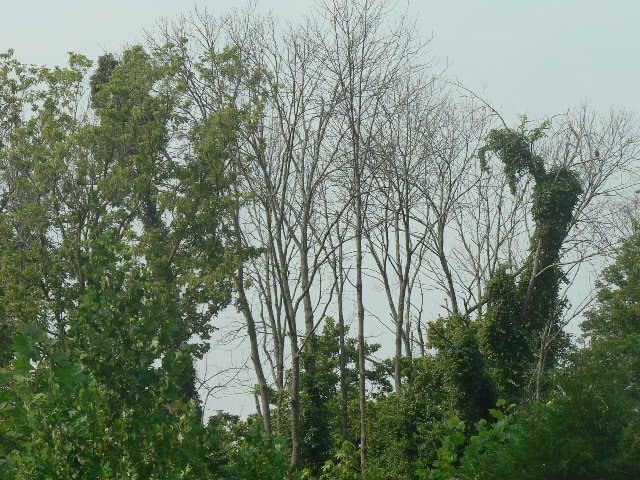
post-EAB ash forest in southern Michigan; photo by Nate Siebert, USFS

1) The Risks of Reliance on Biological Control

An article published lately indicates yet another complication that might undercut reliance on biocontrol to counter mortality of eastern ash populations caused by the emerald ash borer (EAB) (See my blogs from November — here and here)  regarding APHIS’ proposal to eliminate EAB quarantines in favor of relying chiefly on biocontrol – with little data to back up the change.)

Olson and Rieske (full citation at the end of this blog) found that one of the principal biocontrol agents now in use, and on which APHIS proposes to rely, Tetrastichus planipennisi, does not parasitize EAB larvae living in white fringetree, Chionanthus virginicus. While this tree is a suboptimal host for EAB – lower numbers of the beetle survive – the white fringetree would support survival of some EAB – thereby undermining efficacy of the biocontrol program.

Since white fringetree grows a cross much of the eastern range of ash trees — from New York to Texas, as shown by the map posted here, the presence of this reservoir that can be exploited by EAB will challenge the efficacy of biocontrol.

Olson and Rieske believe the reason that T. planipennisi does not attack EAB living in white fringetree is that the fringetree’s wood is so dense that the wasp cannot detect the presence of EAB in the tree (T. planipennisi apparently relies on tactile and vibratory clues to find its prey).

2) A Possible New Biopesticide to Suppress EAB?

A presentation at the 81st Northeastern Forest Pest Council by Mark Ardis of C.D.G. Environment described tests in the United States and Canada of methods for killing EAB by contaminating the beetles with the fungus Beauveria bassiana. The company is testing traps in which male beetles enter, become covered by fungal spores, then they fly out. The males not only become ill themselves, they also contaminate females during mating. Average overall beetle mortality from several test sites is 25%.

Given the terrible impact of the EAB invasions, I find it exciting to contemplate development of additional tools to be used in suppressing the beetles. However, I worry about possible impacts on non-target insects which might also be exposed to the fungal spores. A decade ago, David Wagner identified 21 species of insects that were specialists on Fraxinus, and said he expected additional species would also be associated with ash trees (full citation at end of blog). Mr. Ardis assured me that they had detected no insects other than EAB in the traps. I wish to see additional research on this issue.

The  US Environmental Protection Agency would have to approve use of this biopesticide. I suggest that we all keep an eye on this process.

3) Citizen Scientists Searching for EAB- resistant “Lingering Ash”

Jonathan Rosenthal and Radka Wildova of the Ecosystem Research Institute have established a citizen science program to find ash trees that have survived the EAB invasion. These trees will become the foundation of efforts to breed more trees resistant to the EAB, which could be used to restore our forests.

The program is called “MaMa” – Monitoring and Managing Ash. So far, about 30 plots have been set up in New York, New Jersey, and Vermont where citizens are monitoring ash trees that have apparently survived the EAB invasion. The program seeks additional partners from other areas.

Searches for lingering ash must be strategically timed to ensure that the trees identified are truly resistant to EAB – not just late to become infested. But you can’t wait too long after the infestation wave has gone through an area, because the tree might die due to wind throw or human activity. Or, if a tree has just partial resistance (an important attribute for breeding!), it might eventually succumb. It is also imperative to avoid confusing stump sprouts with truly lingering ash. The conclusion: monitor the infestation and search for lingering trees two years after 95% of ash have been killed, or four years after 50% have been killed.

The MaMa program provides guidance, maps, electronic reporting systems … so you can help!

If you wish to participate – or to learn more – contact the program at monitoringAsh.org or 845-419-5229.

SOURCES

Olson, D.G. and L.K. Rieske. 2019. Host range expansion may provide enemy free space for the highly invasive emerald ash borer. Biol Invasions (2019) 21:625–635

Wagner, D.L. Emerald Ash Borer Threatens Ash-feeding Lepidoptera. 2007. News of the Lepidopterists’ Society. Volume 49, No. 1 (Spring 2007)

Posted by Faith Campbell

We welcome comments that supplement or correct factual information, suggest new approaches, or promote thoughtful consideration. We post comments that disagree with us — but not those we judge to be not civil or inflammatory.

Progress in Combatting Invasives – with Caveats

Missouri Makes Progress in Eradicating Feral Hogs – Despite Sabotage

Feral hogs have expanded their range in the U.S. from 17 to 38 states over the past 30 years. Their populations grow rapidly because feral hogs can breed any time of the year and produce two litters of one to seven piglets every 12 to 15 months. [See MDC Press Release, January 25, 2019]

hog “sounder” in a trap in Missouri
Missouri Department of Conservation

Missouri’s program is increasingly successful: the numbers of hogs removed has risen from 5,358 in 2016, to 6,561 in 2017, to 9.365 in 2018. [See MDC Press Release, January 25, 2019] I have previously praised Missouri’s scientifically-based program to eradicate feral hogs – here and here (Missouri has extensive material on feral hogs posted here)  

According to the Missouri Department of Conservation’s feral hog elimination team leader, Mark McLain, said “This strategic approach is important because if we leave even a few feral hogs behind in an area, they can reproduce quickly and put us back where we started.”

According to McLain, hunting is not an effective method for eliminating feral hog populations. “For over 20 years, unregulated hunting of feral hogs was allowed in Missouri, during which time our feral hog population expanded from a few counties to over 30 counties,” he said.

In 2017, MDC, the Corps of Engineers, and the LAD Foundation established regulations against feral hog hunting on lands owned and managed by these three organizations. Other agencies have passed regulations similar to MDC’s to eliminate hog hunting on land they own.

However, illegal releases of feral hogs continue. The February 2019 press release (referenced below) describes several examples of the problems such releases cause. McLain said that those who release feral hogs face hefty fines. Hunting, especially with dogs, pushes the hogs onto neighboring property, which causes problems for neighbors. The hogs travel back and forth between the properties, escaping and causing more damage. Trapping with no hunting interference is the best method to eliminate them.

MDC advises landowners to seek help from the Department and USDA APHIS. These agencies providetechnical advice and training; conduct on-site visits; and loan equipment.

Are feral hog programs in other states using the same methods? Are they as successful?

SOURCES

Missouri Department of Conservation. More than 9,300 Feral Hogs Eliminated from Missouri in 2018. Press Release. January 25, 2019.

Missouri Department of Conservation. Interference with feral hog trapping sites costs trappers time, taxpayers money. Press Release. February 21, 2019.

Florida Looks to Biocontrol to Makes Progress Against Some of its Worst Invasive Plants

Brazilian peppertree tangle
John Randall, The Nature Conservancy
www.bugwood.org

Until recently, melaleuca (Melaleuca quinquenervia) was considered the worst invasive tree or shrub in Florida. It threatened to convert the everglades “sea of grass” into a thicket of exotic trees which could not support native wildlife. Thanks to the biocontrol agent Oxyops vitiosa, melaleuca is considered to be under maintenance control on public conservation land in the state. Still, melaleuca control demands about $2 million per year because of the huge area previously (and still) affected by the tree.

Now Florida is about to release biocontrol agents to attack Brazilian pepper (Schinus terebinthifolius). In Florida, Brazilian peppertree is found from Monroe County in the south to St. Johns, Levy, and Nassau counties in the north plus Franklin County in the Panhandle. An estimated 283,000 hectares of south and central Florida are invaded. The South Florida Water Management District alone is spending approximately $1.7 million per year (as of 2011) to control it.

Brazilian peppertree invades disturbed sites such as canal banks and fallow farmlands. Of greater concern to me are the many natural communities invaded – Brazilian peppertree infests more natural areas in Florida than any other invasive plant species. Invaded ecosystems include pinelands, hardwood hammocks, and critically important mangrove forests. The coastal mangroves are valued because of their high productivity, wildlife habitat, and shoreline protection and stabilization.

Brazilian peppertree infestation in the Everglades
Tony Pernas, USDI National Park Service
www.bugwood.org

Dense stands of Brazilian peppertree shade out and may kill food plants used by white-tailed deer – key prey for the endangered Florida panther. Other mammals and birds might be poisoned by toxic resins in the bark, leaves and fruits — although some birds feed extensively on the fruits – and thereby contribute to spread of the invasive plant.

Existing options for management of Brazilian peppertree, including chemical, mechanical, and physical control measures, have been used with some success against this weed. However, applying these strategies repeatedly to prevent regrowth is costly and labor intensive. Furthermore, such practices can be detrimental to native vegetation. For example, mangroves are particularly sensitive to both herbicides and the soil disturbances associated with mechanical control

After more than 20 years of searching, Florida hopes it has identified useful biocontrol agents. USDA APHIS is seeking public comment on the proposed release of two insect species, Calophya latiforceps  (a leaf galling psyllid) and Pseudophilothrips ichini (a thrips) as biological control agents targetting Brazilian pepper.

Much as I sympathize – Brazilian peppertree is a highly damaging invasive plant and there are no other effective control measures – I have questions. First, the psyllid is sedentary; dispersal would be by wind. Would this limit its efficacy?

More troubling is host specificity. The Environmental Assessment (available here) reveals that the thrips can reproduce in low numbers on several non-target plant species, including the Hawaiian sumac Rhus sandwicensis. True, the proposal is to release the biocontrol agents on the continent, not on Hawai`i. But insects have often been transported inadvertently to Hawai`i – and the islands’ plant species have often proved highly vulnerable to attack by non-native species (I confess that the most recent examples are pathogens, e.g., ‘ōhi‘a rust and rapid ‘ōhi‘a death.)

APHIS is accepting comments on the Environmental Assessment until March 29. Please consider providing your views. Again, the document is available here.

RESULTS

In June 2019, APHIS announced that it would issue permits for release of the two biocontrol agents on the continent – starting in Florida – without any restrictions. APHIS dismissed my concerns about the potential threat to native Hawaiian plants — Rhus sandwicensis and Dodonaea viscosa. See the agency’s responses in Appendix 7.

As regards the potential threat to the two Hawaiian species from the thrips Pseudophilothrips ichini APHIS chose to ignore my two greatest concerns:

1) that insects are introduced accidentally to Hawai`i frequently – so the threat from this thrips must be considered.

2)  if introduced to Hawai`i, P. ichini would have ample resources to maintain high population levels and so could put constant pressure on Rhus sandwicensis and Dodonaea viscosa even ‘though neither plant itself supports more than one generation of the thrips.

In response to my query as to who in Texas would be consulted re: possible release of the biocontrol agents in that state, APHIS replied the chief state plant regulatory official (head of plant pest issues in the state Department of Agriculture) and the APHIS representative in the state. No conservation authorities are designated. Nor would APHIS prepare a new environmental assessment – although the current one cites data almost exclusively for Florida.

One good response: in response to my concerns that the psyllid Calophya latiforceps is too sedentary to spread through the hundreds of thousands of acres invaded by Brazilian pepper, APHIS clarifies that a mass rearing and release program is under development.

Posted by Faith Campbell

We welcome comments that supplement or correct factual information, suggest new approaches, or promote thoughtful consideration. We post comments that disagree with us — but not those we judge to be not civil or inflammatory.

National Academies Endorse Suite of Pest Control Programs — and a Brand New Regulatory System for Biotech Trees

a blight-resistant chestnut tree bred using traditional breeding techniques by The American Chestnut Foundation; photo by F.T. Campbell

Nearly one-third of the continental United States is covered by forests, more than 1 million square miles. As demonstrated by many authorities and – I hope! – in my blogs, these forests face increasing threats, including introduction of rising numbers of non-native insects and pathogens that kill or severely damage the tree species that comprise those forests.

One response has been a request by the U.S. Endowment for Forestry and Communities, the Environmental Protection Agency, and U.S. Department of Agriculture (Agricultural Research Service, Animal and Plant Health Inspection Service, U.S. Forest Service, and National Institute of Food and Agriculture) that the National Academies of Sciences, Engineering, and Medicine consider the potential for the use of biotechnology to mitigate these threats to forest health.

The resulting report was released in January 2019 (see full citation at the end of the blog). The report is 240 pages long, very thorough, and wide-ranging. It does have a 12-page summary, listing the Panel’s many conclusions and its recommendations. While the preponderance of the report concerns forests on the North American continent, the panel did seek information about threats to endemic trees in Hawai`i, which (to my mind) are especially severe. See earlier blogs here and here.

To me, one of the report’s most important conclusions is that while there are multiple options for dealing with forest pests, their feasibility and success vary widely. Saying that no single management practice is likely to be effective by itself, the report calls for increasing investment in the full range of strategies other than biotechnology, i.e.,

  • preventing arrival of non-native pests (recognized as the first line of defense and the most cost-effective strategy);
  • site management practices;
  • biocontrol; and
  • enhancement of genetic resistance naturally present in affected tree species (including developing  human capital in professions related to tree breeding).

The panel was not asked to examine the potential for biotech to reduce threats to forest health by altering the pests affecting North American tree species so it does not do so.

Summarizing the Threat

Citing Aukema et al. 2010 and other sources, the Academy panels reports that approximately 450 species of insects and at least 16 species of pathogens have been introduced and have established in continental U.S. forests. Of those, 62 insects and all of the pathogens are determined to have a high impact. A USDA Forest Service study estimates that 81.3 million acres (about 7% of all forested or treed land in the U.S.) are at risk of losing at least 25% of tree vegetation by 2027 due to insects and pathogens. These pests are both non-native, introduced species and native pests that are spreading to new regions as a result of climate change.

The Academy panel notes that loss of a tree species can have cascading adverse effects on the forest ecosystem and on the range of services it provides and the values it represents to human populations.

Part A. The Technology for Trees

The Academy panel was asked to assess the ecological, economic, and social implications of deploying genetically engineered trees. The experts also were asked to identify the knowledge needed to evaluate the ways such a tree might affect the prospects for forest health. The analysis was to include social and cultural impacts as well as impacts on forest and associated ecosystems – including their structure, composition, processes, function, productivity, and resilience.

This use of biotechnology to restore healthy forests differs from applications in industrial plantations or annual agricultural crops in that the biotech tree is intended to proliferate in a natural forest setting.

The authors chose four taxa — American chestnut (Castanea dentata), whitebark pine (Pinus albicaulis), ash (Fraxinus spp.), and poplars (Populus spp.) — to illustrate the variety of threats to forest health and efforts to date to protect the resource.

The committee defined forest health as:

A condition that sustains the structure, composition, processes, function, productivity, and resilience of forest ecosystems over time and space.

The panel says that “forest health” is assessed based on current knowledge and is influenced by human needs, cultural values, and land management objectives.

1. A Balanced Analysis

The report does not hype biotechnology for solving problems. The panel called for research on even the foundational question: whether resistance imparted to tree species through a genetic change will be sufficient to persist in trees that are expected to live for decades to centuries as well as in the generations they parent.

The report compares the two approaches to enhancing genetic resistance to pests, i.e., selective (traditional) breeding and relying on biotechnology. Both involve multiple steps, expense, and risks of pursuing what ultimately turn out to be dead ends.

Thus, in traditional selective breeding, scientists must complete the following steps:

1) Determine whether genetic resistance exists within the affected tree species’ population. According to the Academy report, while many tree species have some degree of resistance to particular native or non-native pests, finding suitable parent trees can be difficult, and even when they are found, not all the progeny will be resistant.

2) Evaluate the durability of resistance in order to protect trees over decades.

3) Propagate the resistant progeny in greenhouses or seed orchards to create sufficient resistant genotypes for restoration and reforestation. Many tree species are difficult to propagate using cell culture and regeneration.

In applying biotechnology techniques, scientists must complete the following steps:

1) Identify the genes carrying pertinent traits – which are to be modified, introduced, or silenced. Scientists don’t know what genetic mechanisms underlie important traits. This discovery process is more difficult for tree species than for agronomic crops due to the plants’ large size, long generation time, and (in the case of conifers) immense genomes. Another problem is that forest trees have high levels of heterozygosity due to their large population sizes and outcrossing breeding systems, which complicates genome assembly and modification. Still, recent technological improvements are making this identification process easier.

2) Insert the genes using various biotechnology tools such as transgenesis and genome editing.

3) Produce trees containing the desired gene sequence to regenerate plants from disorganized callus tissue. As noted above, many tree species are difficult to propagate using cell culture and regeneration. Even when this approach is possible, the regeneration of a plant from a single cell may not produce an individual that has the desired genetic change in every cell.

The time line for applying either approach to protect forest health will depend on several factors, including the biology of both the tree and the pest, and the environments in which the target tree species exists. It can vary from a few years to multiple decades.

2. Who Should Carry Out Genetic Improvement of Trees (and by implication, all long-term strategies to protect forest health)?

Trees provide private as well as public benefits, such as income from timber sales. However, the costs of developing a genetically resistant tree – whether achieved through traditional breeding or biotechnology processes – will be incurred up front and the benefits will follow later – often decades or even centuries later. Consequently, the sponsors need a long time horizon!  

The panel suggests that the public sector can have greater patience when it perceives that significant public benefits will be forthcoming. The private sector is not likely to invest in the protection of forest health because it cannot fully capture the benefits that may accrue. The authors define “public sector” to include government agencies and non-profit organizations.

Part B. Impacts, Ethics, and Policy

1. Impacts

The report provides careful analysis of the ecological impacts that should be considered in evaluating the use of biotechnology to maintain or improve forest health. The report emphasizes that if the modified trees are to spread and restore the species to its role in the ecosystem, the modified trees must be competitive in the ecosystem (while not being invasive!). The trees must be suited to the variety of climates and other biophysical conditions found throughout the tree species’ range. The report even said that establishing the rangewide patterns of distribution of the target species’ natural standing genetic variation should be researched before a project is begun aimed at inserting pest resistance genes.

2. Public attitudes and ethical considerations

The panel was charged to consider social, cultural, and ethical issues related to the potential use of biotechnology to develop trees resistant to pests. They devote 13 pages to examining this complex set of issues, which range from Native Americans’ use of black ash to concepts of “wildness” and competing models of “conservation”.  There have been few surveys or other studies of Americans’ attitudes. The panel also notes that the public lacks in-depth knowledge about genetic interventions and processes, so their attitudes are likely to change — for or against use of the technology — as they learn more or associate biotech with strongly held beliefs.

The Panel notes that important ethical questions fall outside any current “impact analysis” evaluation system, or any new analysis that focuses on “ecosystem services”.  It calls for additional research on societal response to biotechnology applied to forest health and development of new forms of engaging full range of stakeholders.

3. Need for a New Impact Assessment Framework

The panel concludes that the current regulatory system does not provide for consideration of most aspects of forest health in assessing the safety of a tree developed through biotechnology, including those described above. Consequently, the panel calls for an entirely new assessment process in order to evaluate both the ecological and social/ethical considerations.

The long-standing Coordinated Framework for the Regulation of Biotechnology relies on existing federal statutes. Under this system, the regulatory agencies (USDA Animal and Plant Health Inspection Service, Environmental Protection Agency, sometimes Food and Drug Administration) regulate specific products, not the process by which the products are produced. For example, USDA regulates only the small subset of biotech trees which were transformed via use of a bacterium, Agrobacterium tumefaciens, to insert the desired trait.

The panel says that an agency undertaking an environmental analysis under the terms of the National Environmental Protection Act would need to add an analysis of some components of forest health.

To rectify these analytical gaps, the panel suggests creation of an integrated impact assessment framework that combines ecological risk assessment with consideration of ecosystem services. This integrated framework would evaluate the effect of the pest threat – and responses to that threat – on forest processes –as well as on associated cultural and spiritual values. The impact assessment must make explicit the links between specific forest protections and their effects on important ecosystem services. The panel points to an EPA guidance document on economic impact analysis (see reference at the end of this blog) as a useful starting point. The panel suggests that this framework should be used to evaluate any forest health intervention, including use of selectively bred trees.

Because of the length of time until tree reproductive maturity and long life span of most trees, collecting data for an impact assessment might take years. The panel suggests adopting a tiered system which would allow field trials of low-risk transgenic trees to reach flowering stage so as to provide data on gene flow and climatic tolerances – data that are essential for a proper impact assessment that would evaluate the likelihood of ultimate success of the restoration effort.  Such experiments and carefully developed models must also identify sources of uncertainty.

Adoption of such a stepwise, iterative process requires abandonment of the current regulatory system, which does not permit the flowering of biotech trees in most cases. 

My Conclusions

The report makes clear several realities:

1) the magnitude of the threat to our forests from non-native pests – which warrants an effective response;

2) the strengths and weaknesses of the several response strategies – none of which can solve this problem in isolation;

3) the scientific challenges that need to be overcome to apply strategies aimed at enhancing tree species’ genetic resistance to pests;

4) the need for greatly expanded programs to implement the various strategies.

Also, the report shows how unprepared our country is to systematically assess the full impacts of new forms of tree breeding and forest health. To rectify this gap, the report also calls for a complete overhaul of the procedures by which the government currently evaluates the environmental risks associated with applying one of the strategies, genetic transformation of the plant host – which is defined (in the Glosssary) as including transgenesis, cisgenesis, RNA interference, genome editing, and insertion of synthetic DNA.

The recommended actions in this report – taken either individually or collectively – require a level of commitment by government and conservation organizations that far exceeds the current level.

I hope the Academies’ prestige can prompt such commitment. For example, development of a sufficiently robust coalition of groups could re-invigorate our society’s response to the invasive pest threat. The report has received some encouraging attention. It was reported in Nature and Scientific American. About 130 people tuned in live to the launch webinar on January 8th. So far, almost 1,200 people have downloaded the report.

The government shutdown has delayed the sponsoring agencies’ (USDA and EPA)  official reactions to the report. It probably curtailed some publicity efforts among all the sponsoring agencies. Also, the report will be only one item in the overflowing inboxes of agency scientists and managers after 35 days on furlough. I hope it won’t be lost, especially with the threat of a second shut-down.  

How can those of us in the public who care about our forests ramp up our activity to support these recommendations?

A reminder: Scott Schlarbaum and I addressed the need for a greatly expanded restoration component as part of a comprehensive response to non-native tree-killing pests in our report Fading Forests III, released five years ago. It is available here.

SOURCES

Aukema, J.E., D.G. McCullough, B. Von Holle, A.M. Liebhold, K. Britton, & S.J. Frankel. 2010. Historical Accumulation of Nonindigenous Forest Pests in the Continental United States. Bioscience. December 2010 / Vol. 60 No. 11

National Academies of Sciences, Engineering, and Medicine. 2019. Forest Health and Biotech: Possibilities and Considerations. Washington, DC: The National Academies Press. doi: https://doi.org/10.17226/25221.

U.S. Environmental Protection Agency. 2014. Guidelines for Preparing Economic Analyses. Washington, D.C.

South African report: Rigorous, Honest, and a Model for U.S. and Others

Density of invasive plants in South Africa

map available here


Last month, in my blog about the US Geological Survey’s report on invasive species  I announced release of a report by South Africa on its invasive species management programs – available here.  Because this report is unusual in both its rigor and its honesty, I’m returning to it here. I think it is a model for our country and others.

The report provides the basics. That is, it analyzes pathways of introduction and spread; number, distribution and impact of individual species; species richness and abundance of alien species in defined areas; and the effectiveness of interventions. Of the 775 invasive species identified to date, 556, or about 72%, are listed under some national regulatory program. Terrestrial and freshwater plants number 574 species; terrestrial invertebrates number 107 species. A different set of 107 species, or about 14%, are considered by experts to be having major or severe impacts on biodiversity and/or human wellbeing. The highest numbers of alien species are in the savanna, grassland, Indian Ocean coastal belt, and fynbos biomes. South Africans are particularly focused on the reductions in surface water resulting from plant invasions. Much of the control effort is under the egis of the decades-old “Working for Water” program.

Also, the report has features that are all-too-rare in work of its kind. First is the authors’ focus on rigor – of data sources and interpretation of those data using standardized criteria. Second – and even more important – is their call for analyzing the efficacy of the components of invasive species program. They insist on the need to measure outcomes (that is, results), not just inputs (resources committed) and outputs (“acres treated”, etc.). Inputs are far easier to measure and are, unfortunately, the mainstay of how most U.S. efforts are tracked – if they are tracked at all.

As they note, measure of inputs and outputs are not useful because they provide no guidance on the purpose of the action or treatment or of its effectiveness in achieving that purpose.

(For earlier CISP advocacy of measuring outcomes, visit the National Environmental Coalition on Invasive Species and read the bullet points under “Recommendations for a Comprehensive National Response”.)

The report has been praised by international conservationists, including Piero Genovesi – chair of the IUCN’s Invasive Species Specialist Group. British ecologist Helen Roy says that, to her knowledge, it is “the first comprehensive synthesis of the state of invasive species by any country.”


How well are programs working?

The authors’ focus on rigor includes being scrupulously honest in their assessments of current program components. They note deficiencies and disappointments, even when the conclusions might be politically inconvenient. To be fair, all countries struggle to achieve success in managing bioinvasions. And South Africa is, in many ways, a developing country with a myriad of economic and social challenges.

So it is probably not surprising that, for most factors analyzed, the authors say data are insufficient to determine the program’s impact. Where data are adequate, they often show that programs fall short. For example, they conclude that control measures have been effective in reducing populations of established invasive species, usually plants, in some localized areas but not in others. While the situation would arguably have been worse had there been no control, current control efforts have not been effective in preventing the ongoing spread of IAS when viewed at a national scale. Only one of South Africa’s 72 international ports of entry has consistent inspection of incoming air passengers and cargo – and even those inspections are not carried out outside of regular working hours (e.g., nights and weekends).

The authors are even critical of the “Working for Water” program – which is the basis for most control efforts in South Africa and enjoys wide political support. WfW has two goals: providing employment and development opportunities to disadvantaged individuals in rural areas, and managing invasive alien plants. Despite substantial funding, the WfW program has supported control teams that have reached only 2% – 5% of the estimated extent of the most important invasive plants. Furthermore, programs structured to provide employment have not ensured use of the most efficient control strategies.


What’s needed in South Africa — and around the world

The authors conclude that South Africa needs new processes to monitor and report on bioinvasions in order to achieve evidence-based policy and management decisions. They call for (1) more research to determine and assess invasive species impacts; (2) better monitoring of the effectiveness of current control measures; and (3) the development of methods to look at the impact of bioinvasions and their management on society as a whole.

The authors say it is important for South Africa to improve its management of invasive species because their impacts are already large and are likely to increase significantly. They note that improving management efficiency will require difficult choices and trade-offs. They recommend a focus on priority pathways, species, and areas. They also stress return on investment.


I don’t know how this report has been received in South Africa. I hope government officials, media observers, landowners, political parties, and other stakeholders appreciate the honesty and expertise involved. I hope they take the analyses and recommendations seriously and act on them.

(Preparation of the report was was overseen by a team of editors and contributing authors employed by the South African National Biological Diversity Institute (SANBI) and the DST-NRF Centre of Excellence for Invasion Biology at (C.I.B). Drafts were widely circulated to contributing authors and other stakeholders for comments. An independent review editor will be appointed to assess the review process and recommend any ways to strengthen the process for future reports.)


Meanwhile, how do we Americans apply the same rigor to analyzing our own efforts?


Posted by Faith Campbell


We welcome comments that supplement or correct factual information, suggest new approaches, or promote thoughtful consideration. We post comments that disagree with us — but not those we judge to be not civil or inflammatory.


APHIS’ Strategic Plan – Focus on Deregulation & Trade Facilitation

APHIS’ headquarters building

USDA APHIS released its Strategic Plan for fiscal years 2019-2023 just after Thanksgiving. The report is 21 pages long. There is no evidence that any stakeholders were asked for input or review.

The Plan has a disappointing – but not surprising – emphasis on deregulation and “customer service”. A second – and more surprising weakness is the lack of attention to plant pests – even those of agriculture, much less natural resources. The emphasis is clearly on animal pests and diseases – including zoonotics.

APHIS’ mission is “To safeguard the health, welfare and value of American agricultural and natural resources.” To accomplish this mission, APHIS has set three goals:

  • Deliver efficient, effective, and responsive programs.
  • Safeguard American agriculture.
  • Facilitate safe U.S. agricultural exports.

Most references to protecting natural resources relate to finding more environmentally sensitive approaches for the program under which APHIS reduces human-wildlife conflicts (e.g., birds being struck by airplanes).

In the Plan, APHIS Administer Kevin Shea writes in his opening message that achieving APHIS’ difficult mission of protecting the health and value of America’s agriculture and natural resources cannot be accomplished by APHIS alone. Instead, the agency must work collaboratively with other government agencies and industry, and consult regularly with partners and stakeholders regarding programs’ effectiveness. Administer Shea also highlights the importance of “delivering our programs and services efficiently, effectively, with integrity, …” The agency promises to modernize information technology, data management, methods of communication with collaborators, exporters and importers, etc., in order to give good return on expenditure of taxpayer resources. APHIS also pledges to make decisions based on science. There are seven references to basing decisions on scientific data.

Fair enough. Such emphases were to be expected from Trump Administration and prefigured by USDA Secretary Sonny Perdue during his nomination hearing, e.g., facilitating exports, supporting better information technology.

However, the Plan refers to “customer service” or “customer experience” 34 times. An additional seven references are made to reducing regulatory burdens. The Plan also speaks of the need to “protect the health, welfare, and value of American agriculture and natural resources. … at a reasonable cost. … Easing regulatory burdens makes it easier to create jobs and promote economic growth.” (Emphasis added.)

Perhaps the recent proposal to deregulate the emerald ash borer is driven in part by the emphasis on minimizing costs to regulated industries and seeking alternative approaches? (Although the deregulation has been under discussion for several years, predating the Trump Administration.)

from APHIS PPQ website

The imbalance in attention to animal versus plant pests and disease is striking. Each of the 14 goals is supported by a number of specific tactics. There are a total of 100 “tactics” under the two goals most directly relevant to preventing or managing pest introductions. These goals are: “Protecting America’s agriculture” and “Promoting U.S. agricultural exports.” Of the 100 tactics, only ten are clearly related to plant pests; 19 are pretty clearly activities that apply to both plant and animal pests and diseases; and five are unclear as to whether they include plant pests as well as animal diseases. Thus, only a third of the tactics apply!

[In making this calculation, I did not include 43 tactics listed under the first goal (“Deliver efficient, effective, and responsive programs”) or three objectives under the goal of “Protecting American agriculture” that apply explicitly to wildlife management, regulating genetically engineered organisms, or ensuring humane treatment of animals.]

Specific examples of such lack of balance include the six examples illustrating the declaration (on p. 4) that “Pest and disease events are more frequent, more complex, and less predictable.” Five of the examples are animal diseases, the sixth is the insect-vectored human disease caused by the Zika virus.

In discussing its efforts to balance its safeguarding efforts against increasing requests for market access by international trading partners, APHIS mentions some activities pertinent to plant as well as animal pest management, e.g., examining disease and pest risks and inserting mitigation strategies into international agreements and interstate movement protocols. However, the only specific action it mentions is helping countries to build capacity to implement the Global Health Security Agenda.

The only reference to forest pests is under one of the 24 tactics associated with Goal 2. Safeguard American agriculture, Objective 2.1: Prevent damaging plant and animal pests and diseases from entering and spreading in the United States to promote plant and animal health. This tactic calls for strengthening the North American perimeter against pest threats from outside the region to prevent introduction of agricultural, forest, and other invasive pests.

Why are Plant Pests slighted?

Perhaps plant-related efforts were left out because they are less “sexy”? Or because they are more distantly linked to human health? The Plan does state that “The tactics in this plan represent only a portion of APHIS activities and by no means embody all the important work APHIS does to fulfill its mission.”

Who knows what was left out?

How will adoption of this strategy affect future efforts to address tree-killing insects and pathogens – both those already present in the country and those yet to be introduced?

Might PPQ Fill in the Gaps?

In 2014 APHIS Plant Protection and Quarantine issued its own strategic plan. This supplementary plan made frequent mentions of safeguarding natural resources. Indeed, the third of the plan’s seven goals stated:                              

Goal 3: Protect forests, urban landscapes, rangelands and other natural resources, as well as private working lands from harmful pests and diseases

Several “tactics” under each goal also directly applied to protecting natural resources. I list them below:

1) Prevent the entry and spread of ag pests and diseases.

  • Coordinate with Canada to implement an effective multi-national system that reduces the threat of tree pests arriving from Asia and other parts of the world (e.g. AGM).

3: Protect forests, urban landscapes, rangelands and other natural resources, as well as private working lands from harmful pests and diseases

  • Maintain EAB regulatory framework to focus on the leading edge of infestations while minimizing impacts on regulated businesses in quarantined areas.
  • Evaluate the effectiveness of biocontrol releases in states and combining both regulatory & outreach activities to address the risks of moving logs, firewood, and nursery stock.
  • Examine detection technologies and partnering with states to determine and apply the most effective strategies to survey & eradicate the Asian longhorned beetle
  • Partnering with federal and state agencies to enact measures such as a public outreach campaign to mitigate the movement of forest pests through firewood.
  1. Ensure the safe trade of ag products, creating export opportunities for U.S. producers
  • play a leadership role in revising ISPM#15
  1. Protect the health of U.S. agricultural resources, including addressing zoonotic disease issues and incidences, by implementing surveillance, preparedness and response, and control programs
  • Strengthen partnerships with Tribal Nations to develop a robust surveillance and early detection system for detecting and reporting invasive species.
  • Work with all stakeholders to coordinate all-hazards agriculture and natural resources response support.
  • Develop science-based programs in collaboration with industry and academia to jointly identify practices that will mitigate pest damage. E.G., SANC program http://sanc.nationalplantboard.org/ [a Systems Approach to Nursery Certification] implemented jointly with the National Plant Board and nursery industry

Dare we hope that PPQ adopts an updated strategic plan that fills in some of the gaps in the overall APHIS plan?


Posted by Faith Campbell


We welcome comments that supplement or correct factual information, suggest new approaches, or promote thoughtful consideration. We post comments that disagree with us — but not those we judge to be not civil or inflammatory.