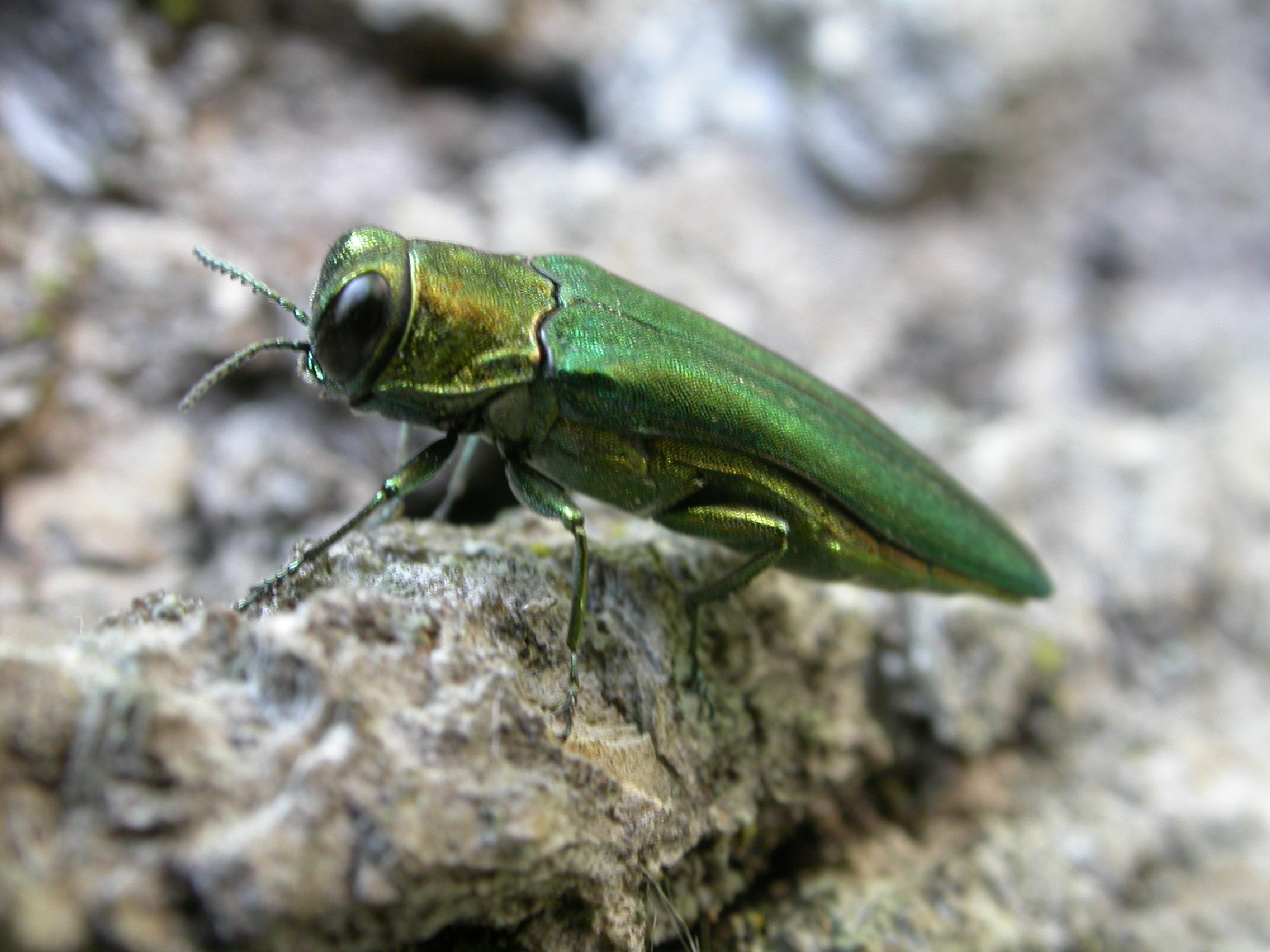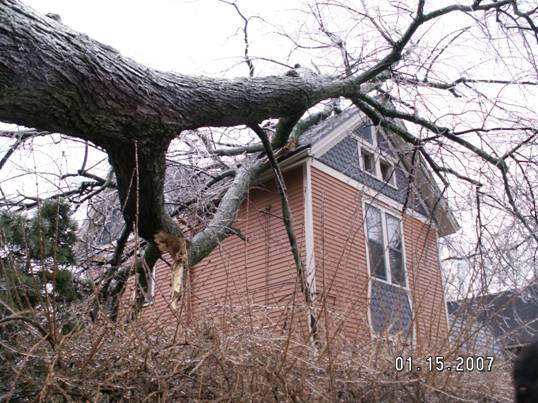
Comments on EAB deregulation show costs would be too high

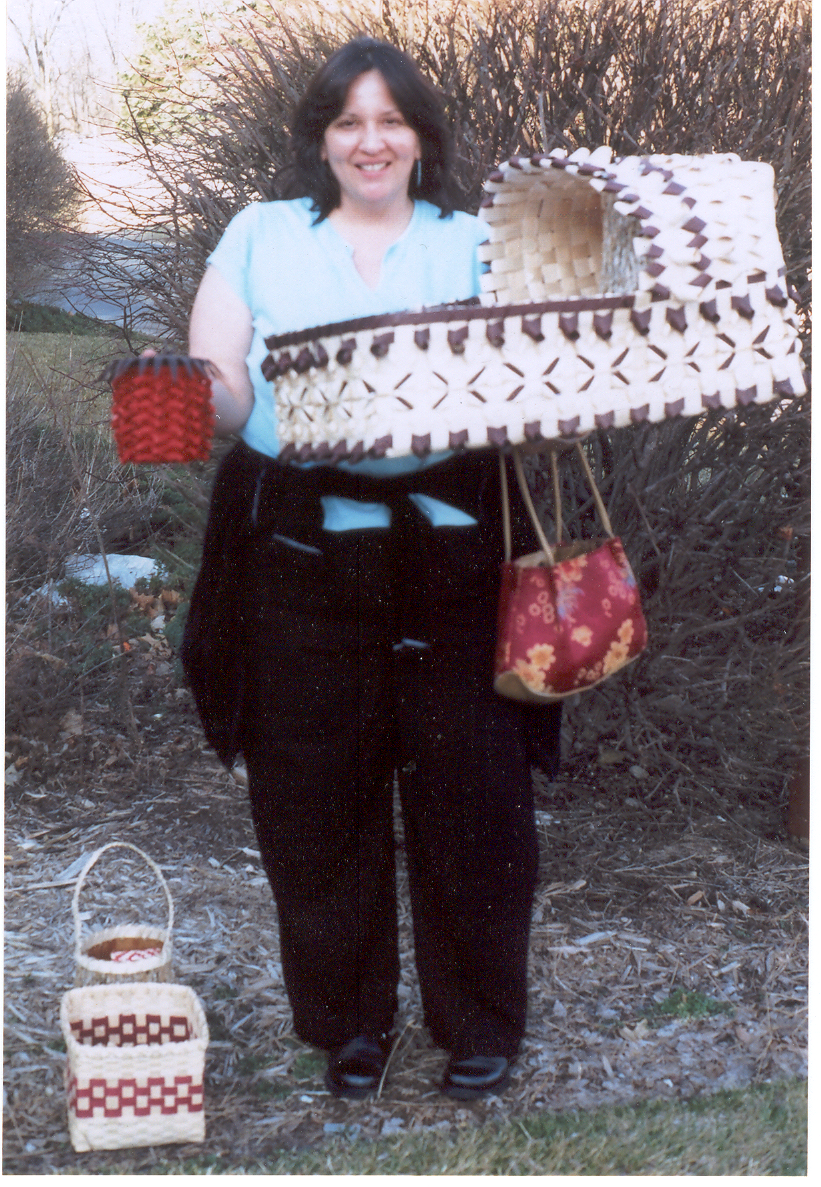
Kelly Church (Grand Traverse Band Ottawa Chippewa) with baskets she wove from black ash


As you know, in September APHIS published a proposal to alter management of the emerald ash borer (EAB). Under the proposal, APHIS would no longer regulate movement of firewood, nursery stock, or other items that can transport EAB to new areas. Instead, APHIS proposed to rely on biological control to reduce impacts and – possibly – slow EAB’s spread. I have posted two blogs about the weaknesses of the underlying analysis and the decision by the Center for Invasive Species Prevention to oppose the proposal. The proposal, accompanying “regulatory flexibility analysis,” and 150 comments by the public are posted here.

The Don’t Move Firewood program has provided links to the individual organizations’ comments here.


Here I summarize major points made by those commenting on the proposal.

Most state agriculture departments accepted the proposal. Few commented at all, leaving that to the National Plant Board. The NPB letter consisted of only four paragraphs. In contrast, several state forestry agencies commented.

Several organizations, including the National Plant Board and AmericanHort, agreed with APHIS that the quarantine has not worked primarily because detection tools are so poor. As a result, EAB is able to firmly establish for several years and spread in a new area before authorities detect it and take action.

It is clear from the comments that deregulating EAB might save APHIS money and effort, but the action will exacerbate the already substantial burden on many other U.S. entities – ranging from federal agencies such as USDA Forest Service and National Park Service to homeowners; woodlot owners to (potentially) exporters of all sorts of products; to Native Americans. The economic components of this potential burden surely deserve more serious evaluation as required under several Executive orders.

Comments Categorized

1) The quarantine has slowed the spread of EAB and it remains valuable in granting communities time to prepare

Several of the commenters wished to counter the proposal’s inference that quarantines had failed; rather, they insisted that quarantine has slowed spread of the EAB and that this strategy is still valuable because it gives un-infested areas more time to prepare. Those voicing this view included the National Association of State Foresters; Maine Department of Agriculture, Conservation and Forestry; Montana Department of Natural Resources and Conservation; Fond du Lac Band of Lake Superior Chippewa in Wisconsin; several bands of Native Americans in Maine (Houlton Band, Penobscot, an individual member of the Penobscot); The Nature Conservancy; a man who is both park superintendent for the City of Kalispell, Montana and Chair of the Montana Urban and Community Forestry Association; three local conservancies in Oregon (West Multnomah Soil and Water Conservation District;  Four-County Cooperative Weed Management Area from Clackamas, Clark, Multnomah and Washington counties in the greater Portland Metro area; Tualatin Soil and Water Conservation District); Jefferson County Colorado Invasive Species Management team; Maine Mountain Collaborative; Blue Hill Heritage Trust of Maine; a small woodland owner in Maine; and a Professor in the School of Forest Resources at the University of Maine.

Oregon’s Department of Environmental Quality Water Quality Division opposed the APHIS proposal. The Division noted that EAB spread in the east was facilitated greatly by the continuity of ash habitats whereas ash habitats are much more patchy in the West. Given this situation, human transport is the most likely means by which EAB will reach the West – either from infested portions of the U.S. or via trans-Pacific trade.

A few entities that supported APHIS’ proposal – e.g., the Southern Group of State Foresters and – in a separate letter – Texas Forest Service – also said the quarantine had been helpful.

As The Nature Conservancy said in its comments, the quarantine effectively limits two of the most important pathways, firewood and nursery stock. The result has been to protect much of the country from the pest and buying time to develop mitigation measures.


2) APHIS’ dismissal of quarantine is a worrying message (see also discussion of firewood below)

Several of the commenters expressed concern that APHIS too curtly dismissed the value of quarantine – both as it functioned to slow spread of EAB and as a tool used against a wide range of pests. Commenters raising issues about the proposal’s apparent undermining of quarantine as a strategy included the Kansas Forest Service; Maine Department of Agriculture, Conservation and Forestry; Vermont Agency of Agriculture, Food and Markets and the Department of Forests, Parks, and Recreation; and Wisconsin Department of Natural Resources Division of Forestry. The Vermont and Wisconsin agencies asked APHIS to clarify to affected parties what it expects to achieve by the proposed deregulation. The Fond du Lac Band of Chippewa warned that the public might interpret the dropping of regulations as signaling that EAB is no longer important.

Five organizations unified under the banner of the Coalition Against Forest Pests noted that APHIS had set a precedent of dropping regulations when quarantines appear to fail.

A subset of these comments focused on a lack of clarity by APHIS as to its future strategy.

Several commenters said that APHIS had not outlined a coherent strategy for the future. The Kansas Forest Service even called the proposal an agency “exit strategy” rather than a coherent plan. Others raising this issue included the Maine Department of Agriculture, Conservation and Forestry; South Dakota Department of Agriculture and Department of Game, Fish and Parks; and the Coalition Against Forest Pests. Maine noted that the proposal would shift the burden of regulation to the states. Maine and South Dakota said that APHIS, as the responsible federal regulatory agency, should provide a clear and consistent process for regulation of potentially infested products across state lines.

The Tennessee Forest Health Coordinator called for an analysis of EAB program successes that might point to ways in which APHIS could support alternative strategies. A professor of forestry in Maine said APHIS should evaluate and assess techniques specifically to optimize the effectiveness of education and outreach.

Among entities which supported APHIS’ proposed new approach, the Southern Group of State Foresters, Texas Forest Service, and two Vermont agencies – Agency of Agriculture, Food and Markets and the Department of Forests, Parks, and Recreation – urged APHIS to champion a national, multi-agency approach to managing EAB, including creation of a national, voluntary treatment standard and label for firewood; redirecting all savings to research & management – including state surveys. These groups also advocated funding increases for APHIS, the USDA Forest Service, and state EAB programs; and support for states to carry out their enlarged responsibilities for survey, outreach, education, and assistance to affected parties.

The Vermont agencies wrote that EAB “is a nationally significant pest, … which warrants a significant federal role.” Because EAB impacts on communities, forest health, and the forest economy continue to expand, a decision to discontinue regulatory activities should be accompanied by increased federal support for research and management.

The National Association of State Foresters also called for APHIS to champion a national, multi-agency approach, with a somewhat longer list of components. These should include support state research and management efforts, the biocontrol program, identifying genetic strains of ash trees that are resistant to EAB, maintain national treatment criteria for wood products (including firewood), and reconvene the National Firewood Task Force. NASF also urged the USDA Forest Service to develop a cooperative management program to sustain and replace ash trees killed by EAB.

Dr. David Orwig of Harvard Forest also called for funding not just biocontrol but also research areas like silviculture, chemical control, ash utilization, and management guidelines.

This pattern of asking for continued or expanded federal engagement – beyond biocontrol – is quite apparent.  Some entitites that said they supported APHIS’ proposal nevertheless called for the agency to continue detection and response components of the program – expressly contrary to the proposal itself.

Thus, AmericanHort, the two Vermont agencies, Wisconsin Department of Natural Resources Division of Forestry, and two Maine departments called for APHIS to continue or increase its engagement in EAB detection and other management activities – including biocontrol, outreach to explain the change in strategy, and engaging the National Park Service and Forest Service in promulgating a consistent firewood policy.

Others who asked for similar commitments were straightforward in opposing the proposal. Thus the North Dakota Department of Agriculture and North Dakota Forest Service – in separate letters – asked that APHIS continue to provide resources to help states monitor EAB presence and respond to any new detections. The Oregon Department of Forestry asked that federal agencies continue to fund research and development of early detection and rapid response strategies for EAB; conservation of ash genetic resources and promotion of natural resistance; research on uses of dead ash; as well as classical biocontrol once EAB is established in a new area.

Several commenters said that they had considered APHIS to be a critically important partner in countering the EAB and were disappointed that the agency is backing away. Native Americans in particular considered the proposal to be a betrayal of the Federal government’s treaty responsibilities vis a vis recognized tribes. The Fond du Lac Band of Wisconsin wrote that upholding a federal EAB regulation is vital to the protections of important cultural and natural resources both on the Reservation and within territories ceded to the Band by several 19th Century treaties. The tribe cited EO 13175 issued by President Clinton. The Houlton Band of Maine said APHIS has a mission to defend federally recognized tribes against invasive species.  The federal government should not make a decision so contrary to its fiduciary trust responsibility to federally recognized tribes.


3) Need for continued APHIS leadership on firewood regulation

The importance of APHIS continuing to lead national efforts to curtail spread of EAB (and other pests) through careless movement of infested firewood was stressed by many commenters. Voicing this need were many of the entities which opposed the proposal, including Maine Department of Agriculture, Conservation and Forestry; Montana Department of Natural Resources and Conservation; Southern Group of State Foresters; Texas Forest Service; the two Vermont agencies; The Nature Conservancy; and the National Association of State Foresters. As noted above, the NASF, Southern Group, Texas, and Vermont all said APHIS should support creation of a national, voluntary treatment standard & label for firewood. TNC said eliminating the EAB quarantine – the best known and understood firewood regulation – will exacerbate difficulties of outreach. Public outreach and education work best when they are backed up by core consistent rules. Montana Department of Natural Resources and Conservation and NASF called for reinstating the National Firewood Task Force (which APHIS led in 2009-2010).

Several entities that supported the proposal also called for continued APHIS engagement on firewood. One, the Wisconsin DNR Division of Forestry, urged APHIS to work with the National Park Service and Forest Service to create a consistent firewood policy. A second, the NPB, noted that it is developing guidance to states interested in initiating regulations, best management practices, or outreach programs. The NBP added that it welcomes any assistance from APHIS.

As The Nature Conservancy and Tennessee Forest Health Coordinator pointed out, the firewood effort – federal regulations, state regulations, education and outreach under the “Don’t Move Firewood” campaign – all helped curb movement of several tree-killing pests, not just EAB.


4) Others Pointed Out the Importance of Consistent Regulations to Keep Markets Open

A smaller number of entities addressed the similar importance of consistent rules governing interstate and US-Canadian trade in other types of vectors that can transport EAB and which are to be deregulated under the proposal. These included the NASF.  Several private groups from Maine and the Maine Department of Agriculture, Conservation and Forestry noted the importance of reaching agreement with Canada, which is a major market for their wood products. The two South Dakota departments also expressed concerns.

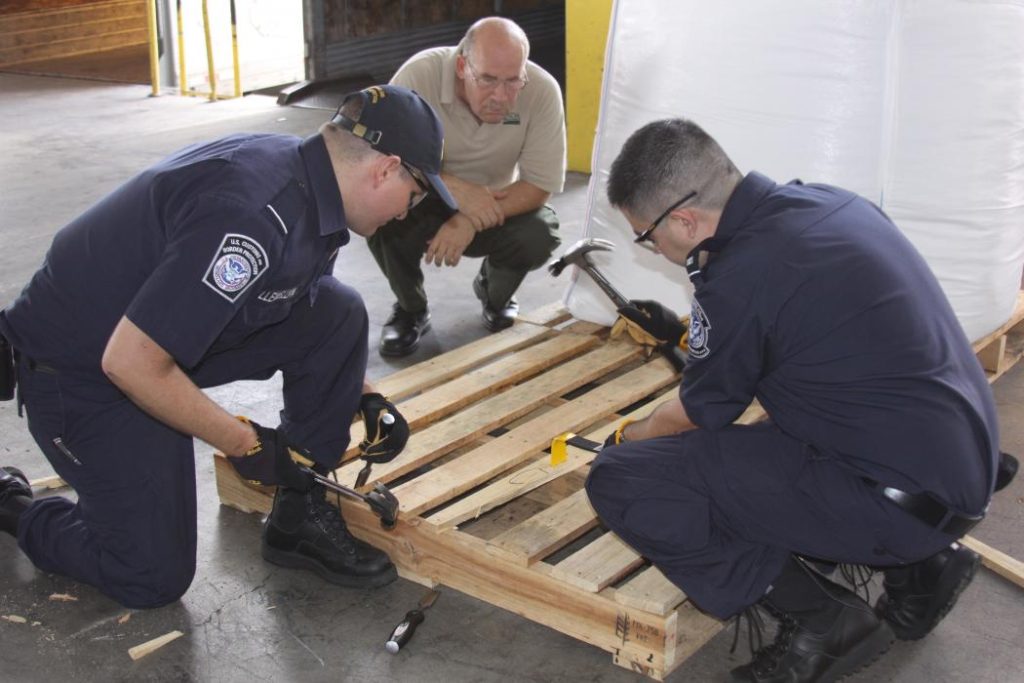
The National Wooden Pallet and Container Association raised the prospect of truly tremendous disruption of trade. At present, the United States and Canada exempt wood packaging originating in either country from requirements that it be treated in accordance with international standards (ISPM No. 15). Canada has many reasons to fear that crates and pallets carrying exports from the U.S. might be infested by EAB once APHIS stops enforcing quarantine regulations. If Canada responds by ending the exemption and requiring wood packaging from the U.S. to comply with ISPM#15, that action would affect a wide range of U.S. exports – from fruits to auto parts. In 2017, the U.S. exported $282 billion worth of goods to Canada (Office of the U.S. Trade Representative)


5) The Economic Analysis Underlying the Proposal was Inadequate

Several commenters criticized the adequacy of the economic analysis. The most specific criticisms were put forward by the California Forest Pest Council; CISP; the five organizations commenting under the banner of the Coalition Against Forest Pests; and the National Wooden Pallet and Container Association. The latter two cited specific Executive orders and the Paperwork Reduction Act in calling for a review of the proposal by the Office of Management and Budget & USDA Office of General Counsel to reassess whether it meets the conditions for the reduced economic analysis. As noted above, the NWPCA mentioned specifically a fear that Canada might discontinue the mutual exemption under which wood packaging may move between the two countries without being treated in accordance with ISPM#15. The possibility of such an action would certainly push the proposal over the $100 million threshold for completing much more rigorous economic analyses.

Other economic concerns not adequately addressed in the view of the commenters relate to costs arising earlier due to the faster spread of EAB to un-infested western states. Costs imposed earlier than would otherwise be the case are considered relevant in regulatory decisions. Furthermore, businesses in these and possibly other states will face new regulations adopted by states to fill the void left by federal deregulation. Finally, the lack of consistency arising from separate state regulations will impede interstate or US-Canada commerce.

Non-regulatory costs – death of trees and associated removal costs – costs to the forest industry, plus municipalities and home owners in areas not currently affected by infestation – were also not discussed in the proposal.

Several commenters said that APHIS had underestimated the ecological and cultural values threatened by spread of EAB. These included the Fond du Lac Band, Penobscot band, TNC, the Oregon soil conservation district and weed management area; Maine Mountain Collaborative and Woodland Owners, as well as several individuals.

The Nature Conservancy noted that three-quarters of the native ash range of the conterminous United States and 14 of vulnerable species in the U.S. and Mexico are still free of EAB as a result of the quarantine.

A Minnesota community’s Parks Commission noted that loss of trees to EAB can lead to other problems and costs. Consequently, the goal of “saving money” will not be achieved. In short, EAB-caused tree mortality “affects communities, including residents, homeowners, and taxpayers. Funding should be directed both to slowing the spread of the pest and to treatment of affected trees.”

A small woodland owner in Maine asked why APHIS did not evaluate economic impacts to landowners & municipalities.

Oregon’s Department of Environmental Quality Water Quality Division added that pesticides used to control EAB might cause negative impacts in riparian and aquatic environments.


6) Several Commenters questioned whether freed-up funds would support biocontrol – or whether they should

As noted in my earlier blogs, there are questions about whether biocontrol will be efficacious in protecting forests across the continent. CAFP echoed these questions. Blue Hill Heritage Trust of Maine called biocontrol experimental.

The Fond du Lac Band pointed out that most tribes don’t accept biocontrol on their reservations – so spending all available funds on this approach doesn’t help Native Americans.

The Maine government and the Penobscot Band of Maine expressed doubt that increased funding would actually materialize.


7) Comments that do not fit neatly into these categories.

The California Department of Agriculture said that it intends to promulgate a state exterior quarantine to protect its agriculture (olive trees are hosts of EAB) and environment.

The South Dakota Department of Agriculture and Department of Game, Fish and Parks concluded that interstate regulatory options should be a higher priority than other methods of control.

The Houlton Band of Maine said that maintaining the domestic quarantine is the only federal action that can adequately address the universally agreed fact that human activities cause the rapid spread of EAB.

The Western Governors Association described the region’s vulnerability to EAB spread and, citing recent Association policy resolutions, said a decision of this magnitude should be made only after substantive consultation with Western Governors.

The National Association of State Foresters pointed out that a decline in federal funding for EAB detection surveys will significantly reduce state forestry agencies’ capacity to monitor and respond to EAB spread.

The Jefferson County, Colorado Invasive Species Management team recommended retaining the quarantine using either the 100th Meridian or Continental Divide as the containment boundary. It cited as a justifications the “culture of vigilance” created by strong quarantines. This vigilance saves financial resources and protects natural and agricultural resources.

Finally, the Fond du Lac Band of Lake Superior Chippewa said that abandoning methods that are in place for the prevention of EAB’s spread, such as federal and state quarantines, and favoring only options that focus on rehabilitating a site after it has undergone a severe infestation, presents a large and unnecessary ecological risk. Invasive species programs have always focused on “prevention” being the key.


Posted by Faith Campbell

We welcome comments that supplement or correct factual information, suggest new approaches, or promote thoughtful consideration. We post comments that disagree with us — but not those we judge to be not civil or inflammatory.

CISP Decision: EAB Deregulation Is Not Useful – Too Much Is at Risk


EAB; Dave Cappaert

I blogged about APHIS’ proposal to stop regulating movement of objects that can transport the emerald ash borer on 28 September. At that time, I and the Center for Invasive Species Prevention were undecided. Now we have taken a firm position: We are sympathetic to the situation in which APHIS finds itself and are disappointed that APHIS’ efforts against EAB have not been as successful as hoped. However, we believe the quarantine continues to serve a useful purpose in protecting North America’s ash (and through the firewood regulatory effort, other resources) and that the analysis APHIS provides does not justify the proposed termination of the regulatory program. Making this regulatory change, based on absent and questionable scientific data, would set a terrible precedent.


Problems Arising from Poorly Substantiated Proposal

Here I provide some additional information on points I made in the blog in September.

1) The APHIS documents are completely unbalanced. They provide no analysis of the economic or environmental impact of  the regulatory changes that will allow the pest to spread more rapidly to the large areas of the country that are not yet infested.

The proposal concedes that emerald ash borer currently is known to occupy only about one quarter of the range of native Fraxinus species within the conterminous United States. As the Regulatory Flexibility Analysis states, numerous sawmills, firewood dealers, nurseries, logging/lumber companies, pallet manufacturing companies, and other establishments operate in these un-infested areas. The analysis makes no mention of the costs to millions of homeowners and property owners, thousands of municipal governments, etc., of removing and replacing ash trees on their properties that are killed by the ash borer as it spreads into new areas. The “analysis” makes no attempt to quantify impacts on any of these entities.


Examples of ash populations currently free of EAB include:

  • In North Dakota, 84% of the forest land area is dominated by hardwood forest types; one of the three major forest-type groups is elm/ash/cottonwood. Ash represent 38% of urban forest trees (Nowak, Hoehn, Crane, Bodine.)
  • In California, velvet ash (Fraxinus velutina) comprises 3.1% of the state’s street tree population (McPherson et al.). Because ash are large relative to other street trees, they provide about double the proportion of leaf cover (and associated environmental services) than the number of trees (Nowak, Hoehn, Crane, Weller, and Davila).
  • Portland, Oregon: ash represented 4% of urban trees (Portland Parks).

No mention is made of the additional range of Fraxinus species in Canada and Mexico that will be put at greater risk of invasion as the beetle spreads in the United States.

2) The proposal to rely on biocontrol to control EAB in the future lacks any scientific analysis of either the current biocontrol program’s effects or other possible program components.

APHIS is apparently relying on the conclusion by Duan et al. 2018 – based on models rather than field research findings – that larval and egg parasitism at about 60% would lead to a net population growth rate of EAB at a rate below replacement, therefore rapidly reducing EAB populations when such parasitism rates are accompanied by moderate to high levels of host plant resistance. If heavy woodpecker predation can be relied upon, a parasitism rate on EAB larvae of about 35% would be sufficient to achieve a similar reduction in the EAB population growth, even with limited levels of host resistance or tolerance.

However, scientific publications reviewing the impacts of the decade-old EAB biocontrol program present a mixed picture.

Our reading of several published studies indicate that two biocontrol agents (Oobius agrili and Tetrastichus planipennisi) appear to have established and spread in the northern reaches of the EAB’s U.S. range and southern Canada. At least some ash species appear to be regenerating well in some of those areas. However, it is too early to determine whether a third biocontrol agent (Spathius galinae) can protect the all-important remaining large trees, which have thicker bark. It is also too early to determine whether a different biocontrol agent (Spathius agrili) will have an impact on ash survival and regeneration in the middle latitudes (south of the 40th parallel).

APHIS does not discuss current or planned future efforts to seek and test biocontrol agents more likely to thrive in the South and West – to which EAB will spread. It is hoped – but not yet proved – that S. agrili will be more effective south of the 40th parallel. The article said nothing about possible agents that might be effective farther south or especially in the West.

Some scientists question the probable efficacy of biocontrol. For example, Showalter et al. note that “Despite the presence of a full complement of coevolved natural enemies in Asia, EAB has caused high mortality of North American ash species planted there … Biological control is best applied to systems in which the hosts can at least partially resist or tolerate non-native PIP [phytophagous insects and phytopathogens] attack, especially if negative density-dependent responses of natural enemies are slow relative to how long it takes the non-native PIP to kill trees.” Even Duan et al. 2018 agree that Asian ash species are more resistant (although they emphasize the large impact of natural enemies in Asia).

The scientific literature indicates that the impacts of egg parasitoid O. agrili remain uncertain (Abell et al.).

Duan et al. 2018 list and provide brief evaluations of nine possible biocontrol agents:

  • 2: status not revealed (Sclerodermus pupariae, Atanycolus nigriventris)
  • 2: disappointing efficacy to date (Spathius agrili, Oobius agrili)
  • 1: apparently efficacious in some geographies in smaller trees only (Tetrastichus planipennisi)
  • 1: promising in northern parts of EAB range but too early to evaluate (Spathius galinae)
  • 2: considered to have too broad a host range to be released (Tenerus, Xenoglena quadrisignata)
  • 1: release delayed pending further study (Oobius primorskyensis)

Even the impact of the most promising agent, Tetrastichus planipennisi, is not altogether clear. Duan et al. 2018 cite their life table analyses as indicating that T. planipennisi has contributed significantly to reducing net EAB population growth rates. They note a 90% reduction in EAB larval density. However, they say that this decline might be attributed in part to either the impact of the parasitoid or the general collapse of EAB populations following widespread mortality of overstory ash. (emphasis added)

3) Neither the proposal nor the supplementary materials provides  any information about the current allocation of available funding among APHIS’ program components or how those allocations will change if the proposal is adopted.

For example, APHIS has set a goal of releasing biocontrol agents in every county with a known EAB infestation where the agent populations can be sustained. The proposal states that, by the end of the 2017 field season, parasitoids had been released in 27 of 32 states and 2 of 3 provinces in which EAB is present (Duan et al. 2018). APHIS does not explain how the current funding allocation hampers achieving the stated goal.

4) The proposal and accompanying regulatory flexibility analysis provide  no information about whether APHIS will expand efforts supporting such other EAB impact minimization strategies as breeding trees resistant to emerald ash borer attack.

Even biocontrol practitioners (e.g., Duan et al. 2018 ) point to the importance of including breeding of resistant trees in the future efforts.

5) The proposal offers only vague promises about continuing federal efforts to minimize the risk that human transport of firewood will facilitate spread of the emerald ash borer or other tree pests.

Unfortunately, the impact of an outreach message depends heavily on having a simple, straightforward, unified message. Absent the EAB quarantine, which provides a nation-wide standard for firewood treatment, the “Don’t Move Firewood” campaign will be confronted by the task of trying to explain diverse messages and policies/rules issued by various states, counties, provinces, and managers of parks and other public lands. Hampered by this welter of messages, even the well-managed DMF campaign will struggle to persuade the public to help curtail spread via this pathway.

APHIS today published a set of “frequently asked questions” that address some of the issues raised in this blog. Go here to read the answers.


The Center for Invasive Species Prevention urges all who care about protecting North America’s native flora from non-native insects and diseases to submit comments on this proposed rule before the deadline on 19 November. This can be done by visiting here http://www.regulations.gov/#!docketDetail;D=APHIS-2017-0056.


Posted by Faith Campbell


We welcome comments that supplement or correct factual information, suggest new approaches, or promote thoughtful consideration. We post comments that disagree with us — but not those we judge to be not civil or inflammatory.


SOURCES


Abell, K.J., L.S. Bauer, J.J. Duan, R. Van Driesche. 2014. Long-term monitoring of the introduced emerald ash borer (Coleoptera: Buprestidae) egg parasitoid, Oobius agrili (Hymenoptera: Encyrtidae), in MI, USA and evaluation of a newly developed monitoring Technique. Biological Control 79 (2014) 36–42

Duan, J.J., L.S. Bauer, R.G. van Driesche, and J.R. Gould. 2018. Progress & Challenges of Protecting North American Ash Trees from the emerald ash borer Using Biological Control. Forests 2018, 9, 142; doi:10.3390/f9030142

McPherson, G., N. van Doorn, J. de Goedec. 2016. Structure, function and value of street trees in California, USA. USDA Forest Service, Pacific Southwest Research Station Urban Forestry and Urban Greening 17 2016 (104-115)

Nowak, D.J., R.E. Hoehn III, D.E. Crane, A.R. Bodine. Assessing Urban Forest Effects and Values of the Great Plains: Kansas, Nebraska, North Dakota, South Dakota. USDA Forest Service Northern Research Station Resource Bulletin NRS-71

Nowak, D.J., R.E. Hoehn III, D.E. Crane, L. Weller, A. Davila. Assessing Urban Forest Effects and Values: Los Angeles’ Urban Forest. USDA Forest Service Northern Research Station Resource Bulletin NRS-47

Portland Parks and Recreation Street Tree Inventory Findings 2015. www.portlandoregon.gov/parks/treeinventory

Showalter, D.N., K.F. Raffa, R.A. Sniezko, D.A. Herms, A.M. Liebhold,  J.A. Smith, P. Bonello. 2018. Strategic Development of Tree Resistance Against Forest Pathogen and Insect Invasions in Defense-Free Space. Frontiers in Ecology & Evolution

Is EAB deregulation necessary? Is it helpful? What is at risk?

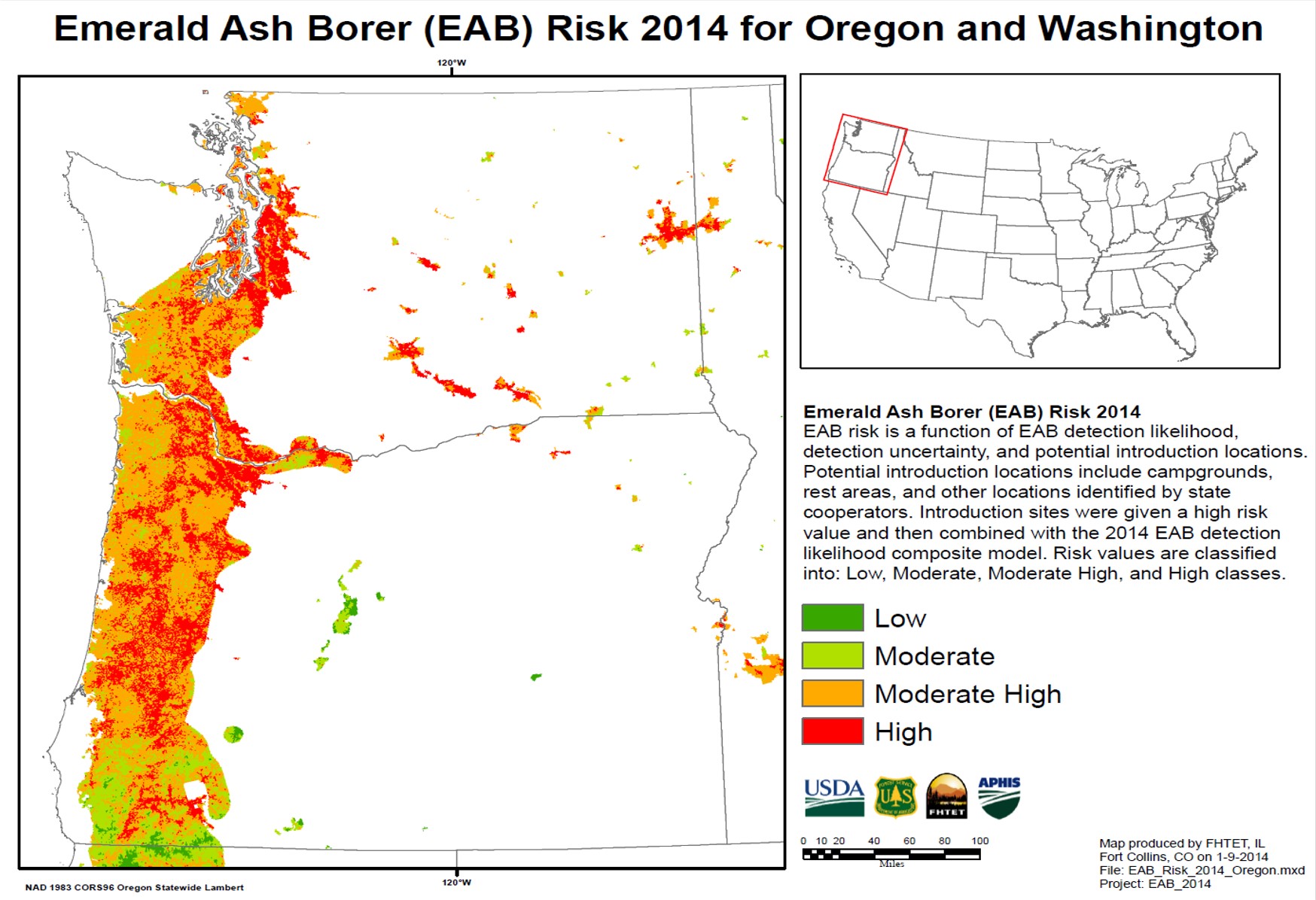
EAB risk to Oregon & Washington

USDA APHIS has formally proposed to end its regulatory program aimed at slowing the spread of the emerald ash borer (EAB) within the United States.  APHIS proposes to rely on biological control to reduce impacts and – possibly – slow EAB’s spread.  The proposal and accompanying “regulatory flexibility analysis” are posted here.

Public comments on this proposed change are due 19 November, 2018.

I will blog more fully about this issue in coming weeks. At present, I am on the fence regarding this change.

On the one hand, I recognize that APHIS has spent considerable effort and resources over 16 years trying to prevent spread of EAB – with less success than most would consider satisfactory. (EAB is known to be in 31 states and the District of Columbia now). While APHIS received tens of millions of dollars in emergency funding in the beginning, in recent years funding has shrunk. Over the past couple of years, APHIS has spent $6 – $7 million on EAB out of a total of about $54 million for addressing “tree and wood pests.” (See my blogs on appropriations by visiting www.cisp.us, scrolling down to “topics,” then scrolling down to “funding”). Funding has not risen to reflect the rising number of introduced pests. Presumably partly in response, APHIS has avoided initiating programs targetting additional tree-killing pests. For example, see my blogs on the shot hole borers in southern California and the velvet longhorned beetle by visiting www.cisp.us, scrolling down to “categories,” then scrolling down to “forest pest insects”. I see a strong need for new programs on new pests and money now allocated to EAB might help fund such programs.


On the other hand, APHIS says EAB currently occupies a quarter of the range of ash trees in the U.S. Abandoning slow-the-spread efforts put at risk trees occupying three quarters of the range of the genus in the country. (See APHIS’ map of infested areas here.) Additional ashes in Canada and Mexico are also at risk. Mexico is home to 13 species of ash – and the most likely pathway by which they will be put at risk to EAB is by spread from the U.S. However, APHIS makes no mention of these species’ presence nor USDA’s role in determining their fate.

I am concerned by the absence of information on several key aspects of the proposal.

  • APHIS makes no attempt to analyze the costs to states, municipalities, homeowners, etc. if EAB spreads to parts of the country where it is not yet established – primarily the West coast. As a result, the “economic analysis” covers only the reduced costs to entities within the quarantined areas which would be freed from requirements of compliance agreements to which they are subject under the current regulations. APHIS estimates that the more than 800 sawmills, logging/lumber producers, firewood producers, and pallet manufacturers now operating under compliance agreements would save between $9.8 M and $27.8 million annually. This appears to be a significant benefit – but it loses any meaning absent any estimate of the costs that will be absorbed by governments and private entities now outside the EAB-infested area.
ash tree killed by EAB; Ann Arbor, MI; courtesy of former mayor of Ann Arbor, MI John Hieftje
  • APHIS does not discuss how it would reallocate the $6 – 7 million it spends on EAB.  Would it all go to EAB biocontrol? Would some be allocated to other tree-killing pests that APHIS currently ignores?


  • APHIS provides no analysis of the efficacy of biocontrol in controlling EAB. It does not even summarize studies that have addressed past and current releases of EAB-specific biocontrol agents. (I will report on my reading of biocontrol studies in a future blog.)


  • APHIS says efforts are under way to develop programs to reduce the risk of pest spread via firewood movement. APHIS does not explain what those efforts are or why they are likely to be more effective than efforts undertaken in response to recommendations from the Firewood Task Force issued in 2010.


  • APHIS makes no attempt to analyze environmental impacts.

champion green ash in Michigan killed by EAB

  • APHIS says nothing about possibly supporting efforts to breed ash trees resistant to EAB.


I welcome your input on these issues.

I will inform you of my evolving thinking, information obtained in efforts to fill in these gaps, etc. in future blogs.


Posted by Faith Campbell


We welcome comments that supplement or correct factual information, suggest new approaches, or promote thoughtful consideration. We post comments that disagree with us — but not those we judge to be not civil or inflammatory.


Farm Bill Update – Please Thank Your Senators Right Away!

U.S. Senate

In May I blogged about adoption by the House of Representatives of its version of the Farm Bill, which will govern a wide range of policies for the next five years. I reported that the bill included weakened versions of a provision CISP has been seeking to establish programs to support long-term strategies to counter non-native, tree-killing insects and pathogens, e.g., biocontrol and breeding of trees resistant to pests.

I also reported that the House Farm bill contains provisions to which there is significant opposition from the larger environmental community. Several would gut some of our country’s fundamental environmental laws which have protected our health and natural resources since the early to mid-1970s. These provisions would:

  • Allow the U.S. Forest Service and the Interior Department’s Bureau of Land Management to decide for themselves whether an activity might “jeopardize” an endangered species (eliminating the need to consult with the U.S. Fish and Wildlife Service or National Marine Fisheries Service) (Section 8303 of the House Bill);
  • Allow the U.S. Forest Service and Bureau of Land Management to avoid preparing an environmental assessment under the National Environmental Policy Act (NEPA) for a long list of actions which currently must be assessed. That is, they could claim a “categorical exclusion” when taking a wide variety of “critical” actions aimed at addressing several goals. These include countering insect and disease infestations, reducing hazardous fuel loads, protecting municipal water sources, improving or enhancing critical habitat, increasing water yield, expediting salvage of dead trees following a catastrophic event, or achieving goals to maintain early successional forest. These “categorical exclusions” would apply to projects on up to 6,000 acres. (Sections 8311 – 8320); and
  • Require the EPA Administrator to register a pesticide if the Administrator determines that the pesticide, when used in accordance with widespread and commonly recognized practices, is not likely to jeopardize the survival of a species listed under the Endangered Species Act or to alter critical habitat. That is, the Administrator would not be required to consult with the U.S. Fish and Wildlife Service or National Marine Fisheries Service when making such determinations unlike under current law. (Section 9111).

The Senate passed its version of the Farm Bill in late June. Unfortunately, the Senate bill does not include the long-term restoration program CISP seeks. However, it doesn’t include the above attacks on environmental laws, either.

With the current Farm Bill set to expire on September 30th, there is considerable pressure to adopt a final version soon.  House and Senate staffers have been meeting to find common ground. Representatives and Senators who are on the joint Conference Committee – charged with working out the final bill – will hold their first meeting next week, on September 5th.

In preparation for the meetings of the Conference Committee, 38 Senators have written to their two colleagues who will lead the Senate conferees. Their letter voices strong opposition to changing long-standing environmental law:

“These harmful riders, spread throughout the Forestry, Horticulture, and Miscellaneous titles of the House bill, subjected the legislation to unnecessary opposition on the House floor and now complicates [sic] the bipartisan cooperation needed to pass a final conference report.

Again, we write to express our strong opposition to gutting bedrock U.S. environmental and public health protections with provisions that threaten our air, water, lands, and wildlife.”

Senators signing the letter are:

California: Feinstein & Harris;    Colorado: Bennet;    Connecticut: Murphy & Blumenthal;    Delaware: Carper & Coons;    Florida: Nelson;    Hawai`i: Hirono & Schatz;    Illinois: Durbin & Duckworth;    Maryland: Cardin & Van Hollen;    Massachusetts: Warren & Markey;    Minnesota: Klobuchar &  Smith;    Michigan: Peters;    Nevada: Cortez Masto;    New Hampshire: Shaheen & Hassan;    New Jersey: Menendez & Booker;    New Mexico: Udall & Heinrich;    New York: Gillibrand;    Oregon: Wyden & Merkley;    Pennsylvania: Casey; Rhode Island:    Reed & Whitehouse;    Vermont: Sanders;    Virginia: Warner & Kaine;    Washington: Murray & Cantwell;    Wisconsin: Baldwin.

If your Senators signed the letter, please email, call, or write to thank them immediately. If your Senators didn’t  – please urge them to express their support for its content.

Posted by Faith Campbell

We welcome comments that supplement or correct factual information, suggest new approaches, or promote thoughtful consideration. We post comments that disagree with us — but not those we judge to be not civil or inflammatory.


The 2018 Farm Bill – It’s Complicated!

As you might remember, the Center for Invasive Species Prevention and the Vermont Woodland Owners Association last year proposed several amendments to the Farm Bill that we hoped would strengthen the U.S. Department of Agriculture’s programs on non-native insects, plant pathogens, and invasive plants. These proposed amendments are here and here.

Two of our amendments sought to strengthen funding for long-term strategies to counterpests and restore pest-depleted tree species to the forest. We intended these proposals to be implemented together.  They were put forward as two proposals only because they fell into different sections, called “titles”, of the Farm Bill.

Our first proposal would create a grant program managed by the National Institute of Food and Agriculture (NIFA) to fund research focused on biocontrol and genetic manipulation of the pests; enhancement of host-resistance mechanisms for tree species; and development of other strategies for restoration. U.S. government agencies, state cooperative institutions, academic institutions with a college of agriculture or wildlife and fisheries, and non-profit organizations would all be eligible for funding.

Our second proposal would provide long-term funding to a similar array of organizations to support research into and deployment of strategies for restoring pest-resistant genotypes of native tree species to the forest. We suggested funds be drawn from the McIntyre-Stennis program. Successful grant applicants would be required to integrate several components into a cohesive forest restoration strategy:

  • Collection and conservation of native tree genetic material;
  • Production of sufficient numbers of  propagules of pest-resistant native trees to support landscape scale restoration;
  • Site preparation in native trees’ former habitat;
  • Planting of native tree seedlings; and
  • Post-planting maintenance of the trees.

Furthermore, priorities for competitive grants issued by this second fund would be based on the level of risk to forests in the state where the activity would take place, as determined by the following criteria:

  • Level of risk posed to forests of that state by non-native pests, as measured by such factors as the number of such pests present there;
  • Proportion of the state’s forest composed of species vulnerable to non-native pests present in the United States; and
  • Pests’ rate of spread via natural or human-assisted means.


Several coalitions presented these two proposals – in various forms – to the House and Senate Agriculture committees earlier this year.


ACTION IN THE HOUSE OF REPRESENTATIVES

The Stefanik Amendment

In the House, Representative Elise Stefanik (R-NY21) inserted a modified version of CISP’s proposed amendments into the Farm Bill (H.R. 2) . Ms. Stefanik’s speech on the House floor introducing her amendment, and support of that amendment by Rep. Glenn Thompson of Pennsylvania and Agriculture Committee Chairman K. Michael Conaway (R-TX) can be heard here; scroll to time 25.16

The Stefanik amendment includes some of the key provisions advocated by CISP but it also differs in significant ways. That is, it relies on an existing grant-making program, the Competitive Forestry, Natural Resources, and Environmental Grants program. This program funds proposals pursuing numerous purposes, including pest management and genetic tree improvement. Rep. Stefanik’s amendment adds a new purpose, restoring forest tree species native to American forests that have suffered severe levels of mortality caused by non-native pests. It is unclear whether this approach will significantly increase resources available for breeding trees resistant to non-native pests.

Another difference is that institutions receiving funds would have to demonstrate that their activity is part of a broader strategy that includes at least one of the following components:

1) Collection and conservation of genetic material;

2) Production of sufficient numbers of propagules to support the tree’s restoration to the landscape;

3) Site preparation of former native tree habitat;

4) Planting; and

5) Post planting maintenance

The original CISP proposal required any funded program to incorporate all of these components.

The Stefanik amendment would award grants based on the same three criteria proposed by CISP.

While we are disappointed that research underlying tree restoration has merely been added to an already-long list of purposes under the Competitive Forestry, Natural Resources, and Environmental Grants program, this approach might be the best we can hope for. There had been considerable opposition to our proposal because it would have changed the formula under which McIntire-Stennis funds are apportioned to the states. Adopted in 1962, the existing formula is based on each state’s

1) area of non-Federal commercial forest land;

2) volume of timber cut annually;

3) total expenditures for forestry research from non-Federal sources;

4) base amount distributed equally among the States.


The Faso Amendment

The House also accepted an amendment sponsored by Rep. John Faso (R-NY19) that would require APHIS and the US Forest Service to collaborate on surveillance to detect newly introduced tree-killing pests. The agencies would also report to Congress by 2021 on which pests are being detected on imports of wood packaging and living plants (APHIS’ so-called “plants for planting”) and the geographic origins of those pests. Rep. Faso’s speech introducing the amendment and supportive statements by Reps. Thompson and Conaway can be heard here; scroll to time 32 (immediately after the Stefanik amendment).


The Welch Bill

Meanwhile, as I blogged earlier, Rep. Peter Welch (D-VT) has introduced a separate bill (H.R. 5519) that contains modified versions of several CISP proposals.

Rep. Welch’s bill would do two things: strengthen APHIS’ access to “emergency” funds to respond to invasive pests, and create a competitive grant program to support research on biological control of plant pests or noxious weeds, enhancing host pest-resistance mechanisms, and other strategies for restoring tree species. These studies must be part of comprehensive forest restoration research. Eligible institutions would include federal and state agencies, academic institutions, and nonprofit organizations. Funding  would come from a USDA corporation, the Commodity Credit Corporation so they would not be subject to annual appropriations.

The House has taken no action on Rep. Welch’s bill.


THE CURRENT STATUS OF THE FARM BILL – AND CISP’s BOTTOM LINE

On 17 May,  the House of Representatives failed to pass the Farm Bill. No Democrats voted for the bill. About 30 Republicans also voted against the bill – not because they objected to its contents, but because they wanted to force a vote on an immigration bill. House leaders now promise a new vote on the Farm Bill on June 22nd.

Is this good news? As I said, it is complicated! The House bill contains several provisions to which there is significant opposition. The most controversial is a requirement that recipients of food stamps prove that they are working. Other provisions – which have not received much attention in the media, would:

  • Allow the U.S. Forest Service and the Interior Department’s Bureau of Land Management to decide for themselves whether an activity might “jeopardize” an endangered species (eliminating the need to consult with the U.S. Fish and Wildlife Service or National Marine Fisheries Service) (Section 8303);
  • Allow the U.S. Forest Service and Bureau of Land Management to avoid preparing an environmental assessment under the National Environmental Policy Act (NEPA) for a long list of actions which currently must be assessed. That is, they could claim a “categorical exclusion” when taking a wide variety of “critical” actions aimed at addressing several goals. These include countering insect and disease infestations, reducing hazardous fuel loads, protecting municipal water sources, improving or enhancing critical habitat, increasing water yield, expediting salvage of dead trees following a catastrophic event, or achieving goals to maintain early successional forest. These “categorical exclusions” would apply to projects on up to 6,000 acres. (Sections 8311 – 8320); and
  • Require the EPA Administrator to register a pesticide if the Administrator determines that the pesticide, when used in accordance with widespread and commonly recognized practices, is not likely to jeopardize the survival of a species listed under the Endangered Species Act or to alter critical habitat. Unlike under current law, the Administrator would not be required to consult with the U.S. Fish and Wildlife Service or National Marine Fisheries Service when making such determinations (Section 9111).

The Endangered Species Act, adopted almost unanimously in 1973, requires such “consultations” because experience had shown that agencies proposing projects tended to underestimate the damage that they might cause to imperiled species.  NEPA is one of the foundational statutes of U.S. environment protection; it was adopted in 1970. Finally, the EPA Administrator is supposed to decide whether to allow pesticide use based on science, per a much weaker but still important environmental protection statute, the Federal Insecticide, Fungicide, and Rodenticide Act (originally adopted in 1910; significantly amended in 1972).

Is getting an imperfect and partial program that might stimulate breeding of tree species resistant to invasive pests worth accepting this level of damage to fundamental environmental programs?

I don’t think so.

We don’t yet know what the Senate will do. We hope the Senate bill will support strong conservation programs – including strengthening APHIS and research into and application of long-term strategies such as resistance breeding – while not undermining the foundations of our Nation’s conservation and environmental programs.

Meanwhile, the House should rewrite the Farm Bill to remove the objectionable provisions.


Posted by Faith Campbell

We welcome comments that supplement or correct factual information, suggest new approaches, or promote thoughtful consideration. We post comments that disagree with us — but not those we judge to be not civil or inflammatory.


Act Now: Forest Protection in the 2018 Farm Bill


NOW is the time to advocate inclusion of important proposals in the 2018 Farm Bill. It is currently under consideration by the U.S. House of Representatives and Senate. If we miss this round of Farm Bill legislation, there won’t be another opportunity until 2023. Urge your Senators and Representative to support creation of the two grant-based funds described below.


What’s the issue?

We know that about 500 species of non-native insects and pathogens that attack native trees and shrubs are established in the United States. The number in Canada is 180 – there is considerable overlap.

Protecting the trees and their ecosystem services requires development and deployment of a set of tools aimed at either reducing the pests’ virulence or strengthening the tree hosts’ resistance or tolerance. Such strategies include biological control targetting the insect or pathogen and breeding trees resistant to the pest. Developing and employing these tools require sustained effort over years.

Unfortunately, the programs now charged with responding to introduced forest pests are only a ragged patchwork of university, state, and federal efforts. They provide neither the appropriate range of expertise nor continuity.  (For a more thorough discussion of the resources needed to restore tree species badly depleted by non-native pests, read Chapter 6 of Fading Forests III, posted here.)


CISP-backed Amendments

In order to begin filling the gaps, the Center for Invasive Species has proposed forest-related legislation for the Farm Bill currently being considered by Congress.

We propose creation of two new funds, each to provide grants to support tree-protection and restoration projects. We find that the expertise and facilities needed to plant and maintain young trees in the forest differ enough from those needed to research and test biological approaches to pest management and tree improvement that each deserves its own support.

Our first proposal would create a grant program managed by the National Institute of Food and Agriculture (NIFA) to provide long-term funding for research to restore tree species severely damaged by alien pests. The focus of the research would be on:

  • Biocontrol of pests threatening native tree species;
  • Exploration of genetic manipulation of the pests;
  • Enhancement of host- resistance mechanisms for individual tree species;
  • Development of other strategies for restoration; and
  • Development and dissemination of tools and information based on the research.

Entities eligible for funding under our proposal would include:

  • Agencies of the U.S. government;
  • State cooperative institutions;
  • A university or college with a college of agriculture or wildlife and fisheries; and
  • Non-profit entities recognized under Section 501(c)(3) of the Internal Revenue Code.

Our second proposal would provide long-term funding to support research into and deployment of strategies for restoring pest-decimated tree species in the forest. The source of funds would be the McIntire-Stennis program. The eligible institutions would be similar: schools of forestry; land grant universities; state agricultural and forestry experimental stations; and non-profit non-governmental organizations. Projects would integrate the following components into a forest restoration strategy:

  • Collection and conservation of native tree genetic material;
  • Production of propagules of native trees in numbers large enough for landscape scale restoration;
  • Site preparation of former of native tree habitat;
  • Planting of native tree seedlings; and
  • Post-planting maintenance of native trees.

In addition, competitive grants issued by this second fund would be awarded based on the degree to which the grant application addresses the following criteria:

  • Risk posed to the forests of that state by non-native pests, as measured by such factors as the number of such pests present in the state;
  • The proportion of the state’s forest composed of species vulnerable to non-native pests present in the United States; and
  • The pests’ rate of spread via natural or human-assisted means.

(To request the texts of the proposed amendments, use the “contact us” button.)


A Growing Chorus Sees the Same Need

A growing chorus of scientists is calling for long-term funding for forest restoration programs based partly on recent scientific breakthroughs.  So this year’s Farm Bill provides a key opportunity for initiating such programs.


The NIFA Letter

The National Institute of Food and Agriculture asks scientists each year to suggest their highest priorities for the agency’s research, extension, or education efforts. In December, twenty-eight scientists replied by calling for setting up a special “division” within NIFA to fund breeding of pest-resistant tree species and associated extension.

The lead authors are Pierluigi (Enrico) Bonello, Ohio State University, and Caterina Villari, University of Georgia. The 26 co-signers are scientists from 12 important research universities, along with the U.S. Forest Service (the Universities of Georgia, California (Berkeley), Florida, Kentucky, Minnesota, and West Virginia; Auburn University; Michigan Technological University; North Carolina State University; Oregon State University; Purdue University; the State University of New York).

The scientists note that recent scientific advances have created a new ability to exploit genetic resistance found in the tree species’ natural populations. They assert that developing and deploying host resistance promises to improve the efficacy of various control strategies – including biocontrol – and provides a foundation for restoring forest health in the face of ever-more non-native forest pests.

The scientists’ proposal differs from CISP’s in calling for establishment of research laboratories and field study sites at several locations in the country. These would be permanently funded to conduct screening and progeny trials, and adequately staffed with permanent cadres of forest tree geneticists and breeders who would collaborate closely with staff and university pathologists and entomologists. The apparent model is the USDA Forest Service’ Dorena Genetic Resource Center  in Oregon. Dorena has had notable success with breeding Port-Orford cedar and several white pine species that are tolerant of the pathogens that threaten them.


POC trials at Dorena

In contrast, the CISP proposal relies largely on the chestnut model, which relies more on non-governmental organizations and wide-ranging collaboration. Our overall goal is similar, though: to provide stable funding for the decades-long programs needed to restore forest tree species.


American Chestnut Foundation chestnut growing in Northern Virginia

Why do we advocate grant programs instead of establishment of permanent facilities? We thought that Congress would be more likely to accept a smaller and cheaper set of grant programs in the beginning. Once the value of the long-term strategies is demonstrated more widely, supporters would have greater success in lobbying for creation of the permanent facilities.

Among the new technologies that would seem to justify the scientists’ assertion that success in breeding now appears to be more likely is the use of FT-IR and Raman spectroscopy and associated analysis of tree chemicals to identify individual trees within natural populations that have an apparent ability to tolerate disease-causing organisms. The leading scientist on the NIFA letter, Enrico Bonello, has used the technique to identify coast live oaks resistant to Phytopthora ramorum (the causal agent of sudden oak death. He is now testing whether the technique can identify Port-Orford cedar trees tolerant of the root-rot fungus Phytophthora lateralis and whitebark pines resistant to white pine blister rust.

I blogged about Enrico’s work on ash resistance to EAB here.) You can learn more about Enrico’s interesting work here.

The NAS Study

Meanwhile, the National Academies of Sciences, Engineering, and Medicine has launched a study on The Potential for Biotechnology to Address Forest Health. By the end of 2018, a committee of experts will report on the potential use of biotechnology to mitigate threats to forest tree health; identify the ecological, ethical, and social implications of deploying biotechnology in forests, and develop a research agenda to address knowledge gaps about its application. Funding for the study has been provided by The U.S. Endowment for Forestry and Communities; several agencies within the U.S. Department of Agriculture – Animal and Plant Health Inspection Service, U.S. Forest Service, National Institute of Food and Agriculture, Agricultural Research Service; and U.S. Environmental Protection Agency.

The Committee meetings are webcast, and there are other webinars on pertinent topics. You can view the schedule and sign up to receive alerts here.

Several people actively engaged in finding answers to invasive pest challenges have presented their views to the Committee, including Gary Lovett, Deb McCullough, Richard Sniezko, and me (!). You can find our presentations (Powerpoints and oral) at the above website. My talk focused on the crisis posed by non-native insects and pathogens and the need to evaluate the full range of possible response strategies for each host-pest situation. Application of genetic engineering technologies – in the absence of adequate resources for research and deployment of resistant hosts – cannot result in restoration of the host trees.


Background Information

Examples of tree-killing pests include such famous examples as chestnut blight and Dutch elm disease as well as less-well-known pests as soapberry borer. This map

indicates how many of the most damaging pests are established in each county of the 49 conterminous states. Descriptions of some of these insects and pathogens are provided here.

Additional tree-killing pests not included in the sources for the data supporting the map for various reasons would add to the numbers of pests in some states. Some non-native organisms have been introduced too recently, others attack palms or trees in Hawai`i; still others are native to Mexico and parts of the United States so were not included.


Posted by Faith Campbell

We welcome comments that supplement or correct factual information, suggest new approaches, or promote thoughtful consideration. We post comments that disagree with us — but not those we judge to be not civil or inflammatory.


Bad News & Good News – current situation

  American beech; FT Campbell


I recently attended USDA’s annual Interagency Research Forum on Invasive Species in Annapolis, MD,  and have good and bad news to report about forest pests – mostly about insects but also a little on weeds.

Bad News

New pest: The European leaf-mining weevil is killing American beech in Nova Scotia. Jon Sweeney of Natural Resources Canada thinks it could spread throughout the tree species’ range. (I alerted you to another new pest of beech – beech leaf disease – at the beginning of December.  Beech is already hard-hit by beech bark disease.)

New information added in June: according to Meurisse et al. (2018), the weevil overwinters under the bark of beech and trees that are not hosts, so it can be transported by movement of firewood and other forms of unprocessed logs and branches. [Meurisse, N. D. Rassaati, B.P. Hurley, E.G. Brockerhoff, R.A. Haack. 2018. Common Pathways by which NIS forest insects move internationally and domestically. Journal of Pest Science. https://doi.org/10.1007/s10340-018-0990-0]

Other bad news concerns the spread of already-established pests:

  1. Hemlock woolly adelgid has been detected in Nova Scotia – where it has probably been present for years.
  2. Emerald ash borer has been detected in Winnipeg, Manitoba – home to an estimated 350,000 ash trees. Winnipeg is 1,300 km (870 miles) from Saulte Ste. Marie, the closest Canadian outbreak. The closest U.S. outbreak is in Duluth, Minnesota — 378 miles.
  3. Despite strenuous efforts by Pennsylvania (supported, but not adequately, by APHIS), (see my blog from last February ), spotted lanternfly has been detected in Delaware, New York, and Virginia. A map showing locations of apple orchards in the Winchester, Virginia area is available here.
  4. There is continued lack of clarity about biology and impact of velvet longhorned beetle (see my blog from last February.) The Utah population appears to be growing. APHIS is funding efforts to develop trapping tools to monitor the species.
  5. Alerted at the Forum, I investigated a disease on oak trees caused by the pathogen Diplodia corticola. Already recorded in Florida, California, Massachusetts and Maine, last year the disease was also detected in West Virginia. Forest pathologists Danielle Martin and Matt Kasson don’t expect this disease to cause widespread mortality. However, they do expect it to weaken oaks and increase their vulnerability to other threats.

spread of laurel wilt disease

Laurel wilt disease is one of the worst of the established non-native pests. Two speakers at the Forum described its ecological impacts.

Dr. John Riggins of the University of Mississippi reported that 24 native herbivorous insects are highly dependent on plants vulnerable to the laurel wilt insect-pathogen complex. One of these, the Palamedes swallowtail butterfly (Papilio palamedes) has suffered a three-fold to seven-fold decline in populations at study sites after the death of redbay caused by laurel wilt.

Dr. Frank Koch of the USDA Forest Service expects that the disease will spread throughout most of the range of another host, sassafras. (See a map of the plant’s range). With the climate changing, the insect is unlikely to suffer winter cold mortality in the heart of the tree’s range in Kentucky, West Virginia, and Virginia.

Apparently many birds depend on spicebush, a shrub in the Lauraceae family, but there is no easily available data on any changes to its distribution or health.


Good News

Other speakers at the Forum provided encouraging information.

Scientists described progress on breeding American elm trees resistant to or tolerant of the introduced Dutch elm disease (DED). USFS scientists led by James Slavicek and Kathleen Knight are trying to improve the genetic diversity and form of disease-tolerant American elms and to develop strategies for restoring them to the forest.

More than 70 seedlings planted in an orchard are being inoculated with the DED pathogen to test the trees’ tolerance. The project continues to collect seeds or cuttings from apparently resistant or tolerant trees. If you are aware of a large surviving elm in a natural setting (not urban planting), please contact the program via its website.

The project is also experimenting with methods for restoring trees in the forest. In one such experiment, elms, sycamores, and pin oaks have been planted at sites in Ohio where openings had been created by the death of ash attacked by emerald ash borer. Survival of the elm seedlings has been promising.


Also, there is cause to be optimistic re:

  1. Walnut / thousand cankers disease

In the East, walnut trees appear to recover from thousand cankers disease. One factor, according to Matt Ginzel of Purdue University, is that the thousand canker disease fungus, Geosmithia morbida, is a weak annual canker that would not cause branch or tree mortality in the absence of mass attack by the walnut twig beetle. Another factor is the greater reliability of precipitation in the East. Dr. Ginzel is now studying whether mass attack by the beetle is sufficient – alone – to kill walnut trees.


  1. b) Sirex noctilio

In Ontario, Laurel Haavik, U.S. Forest Service, finds both low impacts (so far) and evidence of resistance in some pine trees.


Also, scientists are making progress in developing tools for detecting and combatting highly damaging pests.

  1. Richard Stouthammer of U.C. Riverside has detected an effective chemical attractant for use in monitoring polyphagous and Kuroshio shot hole borers.  He is testing other pheromones that could improve the attractant’s efficacy. He has also detected some chemicals that apparently repel the beetles. His colleague, pathologist Akiv Eskalen, is testing endophytes that attack the beetles’ Fusarium fungus.
  2. Several scientists are identifying improved techniques for surveillance trapping for wood-boring beetles. These include Jon Sweeney of Natural Resources Canada and Jeremy Allison of the Great Lakes Forestry Centre.


Progress has also been made in biocontrol programs targetting non-native forest pests.

  1. Winter moth

Joseph Elkington of the University of Massachusetts reports success following 12 years of releases of the Cyzenis moth – a classical biocontrol agent that co-evolved with the winter moth in Europe. The picture is complex since the moths are eaten by native species of insects and small mammals and parasitized by a native wasp. However, native predators didn’t control the winter moth when it first entered Massachusetts.

2) Emerald ash borer

Jian Duan of the Agriculture Research Service reported that biocontrol agents targeting the  are having an impact on beetle densities in Michigan, where several parasitoids were released in 2007 to 2010. The larval parasitoid Tetrasrticus planipennisi appears to be having the greatest impact. A survey of ash saplings at these sites in 2015 found that more than 70% lacked fresh EAB galleries. In other trees, larval density was very low – a level of attack that Duan thinks the trees can survive.

However, Tetrasrticus has a short ovipositor so it is unlikely to be able to reach EAB larvae in larger trees with thicker bark. Furthermore, most of the biocontrol agents were collected at about 40o North latitude. It is unclear whether they will be as successful in controlling EAB outbreaks farther South.

Consequently, Duan noted the need to expand the rearing and release of a second, larger braconid wasp Spathius galinae, continue exploration in the southern and western edges of the EAB native range for new parasitoids; and continue work to determine the role of the egg parasitoids.

A brochure describing the U.S. EAB biocontrol program is available here

Canada began its EAB biocontrol program in 2013, using parasitoids raised by USDA APHIS. While evaluating the efficacy of these releases, Canada is also testing whether biocontrol can protect street trees.

3) Hemlock woolly adelgid

Scientists have been searching for a suite of biocontrol agents to control HWA for 25 years. Scientists believe that they need two sets of agents – those that will feed on the adelgid during spring/summer and those that will feed on HWA during winter/spring.

The first agent, Sasajiscymnus tsugae, was released in large numbers beginning in 1995. It is easy to rear. However, there are questions regarding its establishment and impact.

Laricobius nigrinus – a winter/spring feeder from the Pacific Northwest – was released beginning in 2003. It is widely established, especially in warmer areas. A related beetle, L. osakensis, was discovered in a part of Japan where eastern North American populations of HWA originated. Releases started in 2012. Scientists are hopeful that this beetle will prove more effective than some of the other biocontrol agents.

Winter cold snaps in the Northeast have killed HWA. While HWA populations often rebound quickly, predatory insects might suffer longer-term mortality. This risk intensifies the importance of finding agents that attack HWA during the spring or summer. Two new agents – the silver flies Leucopis artenticollis and L. piniperda – may be able to fill this niche. Both are from the Pacific Northwest. Initial releases have established populations.


4) USDA scientists are at earlier stages of actively seeking and testing possible biocontrol agents targetting Asian longhorned beetle and spotted lanternfly.


5) Invasive Plant Management

A study in New York City shows that invasive plant removal can have lasting effects. Lea Johnson  of the University of Maryland studied vegetation dynamics in urban forest patches in New York City. Her publications are available here.

In the 1980s New York undertook large scale restoration of its parks, including removal of invasive plants – especially multiflora rose, porcelainberry (Ampelopsis) and oriental bittersweet (Celastris). The goal was to establish self-sustaining forest with regeneration of native species. In 2006, Dr. Johnson was asked to evaluate the parks’ vegetation. She compared restored sites and similar sites without restoration.

I find it promising that Dr. Johnson found persistent differences in forest structure and composition as much as 15 or 20 years after restoration was undertaken. Treated sites had significantly lower invasive species abundance, a more complex forest structure, and greater native tree recruitment.

Still, shade intolerant species were abundant on all sites. The native shade tolerant species that had been planted did not do as well because gaps in the canopy persist.


CONCLUSIONS

As always, the annual Interagency Research Forum on Invasive Species provides an excellent opportunity to get an overview of non-native pest threats to America’s forests and the ever-wider range of scientists’ efforts to combat those threats. Presenters from universities as well as USDA, Canadian, and state agencies describe the status of host tree and pest species, advance promising technologies for detection, monitoring and control, and – increasingly – strategies for predicting potential pests’ likely impact. The networking opportunities are unparalleled.


Posted by Faith Campbell

We welcome comments that supplement or correct factual information, suggest new approaches, or promote thoughtful consideration. We post comments that disagree with us — but not those we judge to be not civil or inflammatory.


New Woodborer Detected – Importance of Surveillance By-Catch


Agrilus smaragdifrons – photo by Ryan Rieder, New Jersey Department of Agriculture


At least 11 non-native metallic wood-boring beetles in the genus Agrilus  have been introduced to either the United States or Canada – or both. The most recent detection is Agrilus smaragdifrons Ganglbauer, which feeds on the invasive plant tree of heaven (Ailanthus altissima). This information comes largely from an important new paper by noted entomologist E. Richard Hoebeke at the University of Georgia and others (see the reference Hoebeke et al. 2017 at the end of this blog).


Two more Agrilus species that are native to Mexico and – in one case, also Arizona – have been introduced to separate parts of the U.S. and are killing naïve hosts there. These are A. prionus (which attacks soapberry trees in Texas) and A. auroguttatus (the goldspotted oak borer, which attacks several oak trees in California). Both species are described here


The genus Agrilus is considered to be the largest genus of the entire Animal Kingdom; it has over 3,000 valid species (Hoebeke et al. 2017).


Most of the Agrilus introduced to North America do not attack trees. Several attack crops such as grapes, currants and gooseberries, and rasberries (Hoebeke et al. 2017; (Jendek and Grebennikov 2009; reference at the end of the blog). Others attack horticultural plants including roses, wisteria, and mimosa (Jendek and Grebennikov 2009).


Still others attack plants that are invasive, such as honeysuckles (Lonicera spp). One, A. hyperici Creutzer, was deliberately introduced as a biocontrol agent targeting St. John’s wort (Hypericum perforatum L.) (Jendek and Grebennikov 2009).


However, Agrilus sulcicollis attacks oaks, beech, chestnut and other trees in the Fagaceae family in its native Europe. The beetle was detected in Ontario in 2006 (Jendek and Grebennikov 2009).


The most recently detected East Asian “jewel” beetle, Agrilus smaragdifrons, was discovered by analysis of Agrilus species caught in surveillance programs targeting other species – usually emerald ash borer (EAB) (A. planipennis). The beetle was first identified in traps deployed by the New Jersey Department of Agriculture. Unlike in many trapping programs, New Jersey screened the trap catches for all beetles in the family Buprestidae (which includes EAB). In 2015, two samples from separate trapping sites in the state contained a distinct but unrecognized species. These were identified by Dr. Hoebeke as the East Asian A. smaragdifrons (Hoebeke et al. 2017).


Alerted to the new species, scientists conferred and found additional detections of the species. An EAB biosurveillance program in New England utilizing the native ground-nesting wasp Cerceris fumipennis also detected the A. smaragdifrons in at least one location in central Connecticut in 2015. (The wasps capture beetles in the Buprestid family to feed to their young. By observing which species of beetles are brought to their nests by the wasps, scientists can learn which species are present in an area.)


Pennsylvania has collected A. smaragdifrons in surveillance programs targeting either EAB or spotted lantern fly (Lycorma delicatula (White))(Hoebeke et al. 2017).

locations where A. smaragdifrons has been detected; map from Hoebeke et al. 2017

It turned out that A. smaragdifrons has been in the U.S. for several years. One scientist photographed the beetle – without knowing what it was – in 2011 in New Jersey and posted the image at BugGuide (http://bugguide.net/node/view/1139674/bgimage ; accessed by Hoebeke and colleagues on 1 May 2017).


Recent field observations in China and the U.S. have observed both adults and larvae feeding on tree of heaven. In Beijing, many Ailanthus trees in gardens or along roadsides have succumbed to attack by this wood-borer. Other tree species on the grounds of Beijing Forestry University have not been attacked by A. smaragdifrons (Hoebeke et al. 2017). Still, no proper host-specificity test has yet been conducted on the beetle.


Of course, Ailanthus is widespread across North America, from southern Canada to Florida, and even along river courses in the arid Southwest. According to the USDA Forest Service (see the third on-line reference at the end of the blog), Ailanthus is known to be present in 42 states. It is most abundant in the Mid-Atlantic and Northeastern states. For example, 18% of the forest plots inventoried by the USDA Forest Service Forest Inventory Analysis program in West Virginia had Ailanthus present. Efforts are under way to try to find biocontrol agents (Hoebeke et al. 2017).


Importance of analyzing by-catch in insect detection surveys.


While most managers of pest surveys ignore the non-target species caught in their traps (“by-catch”), this detection shows that examining the by-catch can sometimes result in discovering previously unknown species. (Other examples of such detections include the pine pest Sirex noctilio in New York in 2004 and the oak-feeding Agrilus sulcicollis in Ontario and later Michigan.


Hoebeke and his colleagues strongly recommend that scientists pay attention to non-target insects captured in their surveys, especially those insects that show up in any abundance for the first time.


SOURCES


Hoebeke, E.R., E. Jendek, J.E. Zablotny, R. Rieder, R. Yoo, V.V. Grebennikov and L. Ren. 2017. First North American Records of the East Asian Metallic Wood-Boring Beetle Agrilus smaragdifrons Ganglbauer (Coleoptera: Buprestidae: Agrilinae), a Specialist on Tree of Heaven (Ailanthus altissima, Simaroubaceae) Proceedings of the Entomological Society of Washington, 119(3):408-422.


This article demonstrates how to distinguish the Ailanthus beetle from other Agrilus species.


Jendek, E. and V.V. Grebennikov. 2009. Agrilus sulcicollis (Coleoptera: Buprestidae), a new alien species in North America. Canadian Entomologist 141: 236–245.

Maryland has declared A. smaragdifrons its “invasive species of the month” for December 2017. Visit http://mdinvasivesp.org/invader_of_the_month.html

Information about Ailanthus as an invasive plant is available at

https://www.invasivespeciesinfo.gov/plants/treeheaven.shtml ; https://www.nps.gov/plants/alien/pubs/midatlantic/midatlantic.pdf

https://www.nrs.fs.fed.us/pubs/43136

Biological Control Approved for Invasive Black and Pale Swallow-wort!

black swallow-wort; photo by Leslie J. Mehrhoff, University of Connecticut

Help is on the way!

With funding support through the Northeast IPM Partnership, University of Rhode Island entomologist Richard Casagrande has been leading a team to find biological control agents for two invasive plant species. The target species, black swallow-wort (Vincetoxicum nigrum) and pale swallow-wort (Vincetoxicum rossicum), are native to Europe and members of the milkweed family Apocynaceae (previously Asclepiadaceae). In the U.S., their vigorous growth overtakes and smothers small trees, shrubs and other native plants and threatens the survival of the monarch butterfly whose larvae rely on milkweed for their development. They are currently found in the northeastern and mid-Atlantic states but could spread much farther.

(See Faith’s earlier blog about USDA speeding up approvals of biocontrols for invasive plants here.

U.S. native swallow-wort species belong to the genus Cynanchum and include a dozen or so rare and endangered plant species. It was essential to consider these native species in the investigations. Feeding tests would need to show definitively that the potential biocontrol species would not attack native swallow-worts or other native members of the milkweed family. And, Jennifer Dacey, Casagrande’s graduate student, wanted to find out how well the exotic swallow-worts might provide for monarch butterflies. The results were alarming.  All of the monarch larvae died when hatching on black swallow-wort.  “They stopped eating after a single bite,” says Casagrande.

pale swallow-wort; photo by Leslie J. Mehrhoff, University of Connecticut

Why biological control?

Small infestations of invasive swallow-wort, seedlings and young plants can be pulled up by hand, mature plants can be dug up, and frequent mowing can suppress populations in fields. However, most infestations are too extensive to control by hand. Systemic herbicides – those that are carried through the plant to the roots — can be used to control large infestations, using foliar sprays. Several years of treatment will likely be needed due to the persistence of swallow-wort seeds. These efforts can be part of an overall Integrated Pest Management strategy but the best long-range solution is biological control. Biocontrol relies on finding herbivores that have coevolved to feed on specific invasive plants in their native range that will not have a significant impact on non-target species. Graduate student Aaron Weed worked with Swiss scientists to identify a handful of specialist plant herbivores, mainly beetles and moths that evolved with black swallow-wort and pale swallow-wort in their native ranges in Europe and were highly unlikely to feed on other plant species.

Approval process.

All biological control agents must be approved for release by the U.S. Department of Agriculture, Animal and Plant Health Inspection Service (APHIS). APHIS sets up a Technical Advisory Group, or “TAG”, to review the research on feeding tests conducted by the researchers, called “no-choice” tests.  Potential biocontrol agents are tested for feeding on an extensive selection of native plant species and their relatives to ensure the agents are specific to the target species and won’t pose a threat to agriculture or to rare, threatened or endangered species or to other native species. The TAG list includes, naturally, most native milkweed relatives and even species more distantly related.

“Luckily, none of our native plants is closely related to the [invasive]swallow-worts,” says Casagrande. “That makes [swallow-wort] a great candidate for classical biological control.  The Tag list also includes a suite of Eurasian plants you might expect these specialists to nibble at now and then, and even plants that could host these specialists’ relatives. The bar is high for these no-choice tests: biocontrols must prove they’ll die before they switch.”

Casagrande’s team examined five possible biocontrol specialists in their quarantine lab, including two European moth species (Hypena opulenta and Abrostola asclepiadis) that feed on swallow-wort leaves in their native range. The researchers wanted to be sure these insects wouldn’t jump to non-target plants on the TAG list, since the last thing anyone wants is a new pest dominating the landscape, threatening agriculture, native ecosystems, and rare plants.

Results?

Both leaf-eating moths “passed the acid test,” says Casagrande. However, scientists have only petitioned for and received approval for Hypena opulenta, which was approved by the USDA in September 2017. They may seek approval for Abrostela in the future but for now are focused on rearing, releasing, and studying the effectiveness of Hypena.  Releases in Canada started in 2013 when Hypena was approved there. Since then, it has established and spread but it is too soon to evaluate its effectiveness.

Releases in the U.S.

Hypena opulenta was released on Naushon Island, Massachusetts, in early September 2017 – the only release in the United States – where both black and pale swallow-wort occur. The field release was carried out by placing about 400 larvae in each of 4 large cages containing both swallow-wort species in sun and shade locations. The larvae will be allowed to grow and develop in the cages for a little while before the cages are opened to allow the larvae to escape and start establishing on the island.

Next steps?

Funding will be sought to support rearing of Hypena at University of Rhode Island and other locations in the U.S. Dr. Lisa Tewksbury, Manager of Biological Control at URI, is running the program. It will take a few years to get to the point of having sufficient moths to distribute widely.  Best practices for releasing and monitoring will be developed.

Thanks to the Northeast IPM Partnership and the interest and dedicated efforts of Casagrande and his research team, we now have the most effective tool to use against two highly invasive plant species that will also protect our native species and natural ecosystems.


Posted by Jil Swearingen

Jil recently retired from the federal government and works as an invasive species consultant. She has 28 years of experience working on invasive species at the county, regional and national level in areas of education, outreach and management. Jil initiated and co-founded the Mid Atlantic Invasive Plant Council and serves on the board. Jil serves as the Coordinator for the Mid Atlantic Early Detection Network, a project she initiated and co-developed, and she continues to serve as Chair for the Plant Conservation Alliance’s Alien Plant Working Group and manager of the Weeds Gone Wild website. Jil is lead author of the book, Plant Invaders of Mid-Atlantic Natural Areas. She was recently elected to serve on the Board of Directors of the Maryland Native Plant Society


We welcome comments that supplement or correct factual information, suggest new approaches, or promote thoughtful consideration. We post comments that disagree with us — but not those we judge to be not civil or inflammatory.