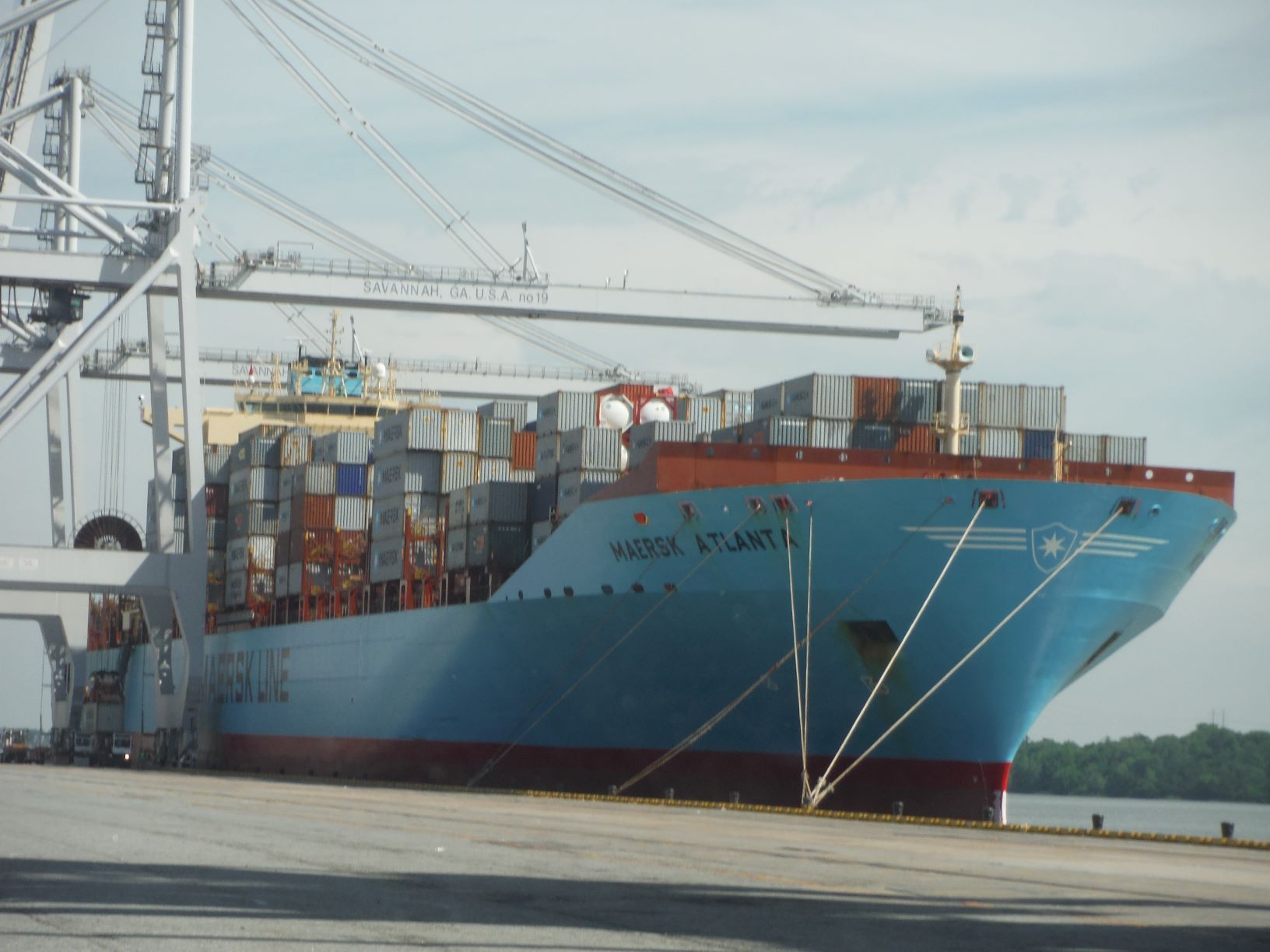
container ship at Savannah; photo by F.T. Campbell
I have blogged for a year about record-breaking volumes of imports reaching our ports from Asia … so now the media & politicians are aware of these issues! Oh, well …
The traffic jam continues … ports are being pressured to expand their hours of operation … I hope DHS Bureau of Customs and Border Protection (CBP) is keeping up & doing its best to detect & penalize shipments in which the wood packaging violates ISPM#15. I hope CBP is not under pressure from inside the Administration to “expedite” inspections.
Remember, Asia is the origin of many of the most damaging forest pests – e.g., Asian longhorned beetle, emerald ash borer, redbay ambrosia beetle, phytophagous and Kuroshia shot hole borers (for profiles of each visit here). Indeed, 15 of 16 non-native Xyleborini detected in the United States since 2000 are from Asia (Bob Rabaglia, USFS Forest Health Protection, presentation at IUFRO meeting in Prague, September 2021).
Reports of continuing backups:
US containerized imports from Asia totaled almost 1.6 million TEU in September, meaning every month this year has seen imports average almost 20% higher than the historical monthly average of about 1.3 million TEU. Asian imports in September were 13.8% higher than in pre-COVID September 2019. Before imports from Asia surged in the second half of 2020, imports exceeded 1.59 million TEU only once, in October 2018. Now that is the average monthly volume. Shipping and logistics experts expect port-related congestion problems they have experienced all year will continue well into 2022 (Mongelluzzo, October 13, 2021).
Major ports — Los Angeles-Long Beach, Oakland, the Northwest Seaport Alliance of Seattle and Tacoma, Savannah, and New York-New Jersey — have experienced vessel bunching, congested marine terminals, intermodal rail logjams that backed up to the ports from inland rail hubs, and shortages of chassis and labor throughout the transportation supply chain. Vessels at anchor of LA-LB peaked in mid-September at 73 and have remained in the range of 58 to 70 since then (Mongelluzzo, October 13, 2021).
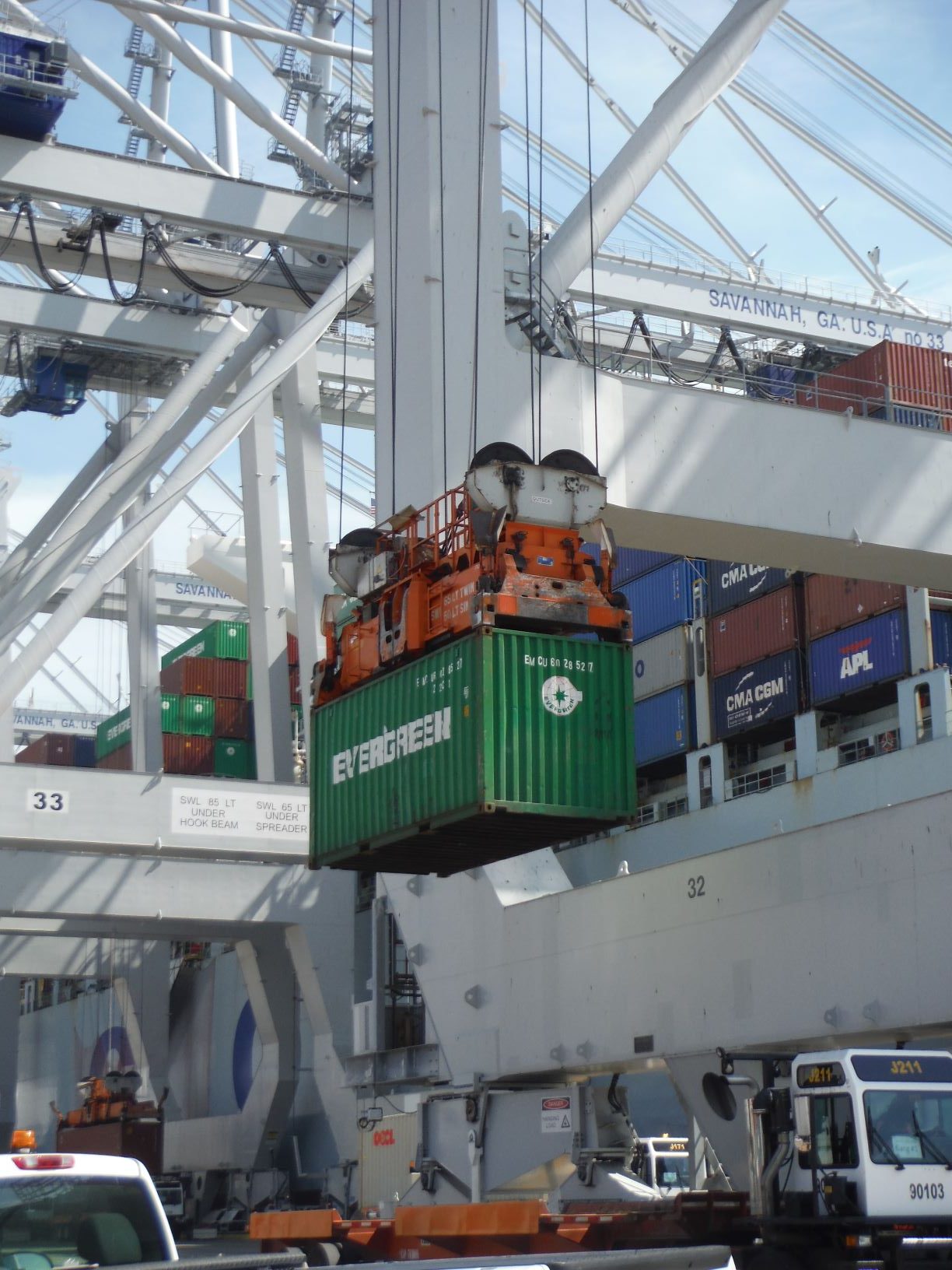
off-loading a container at Port of Savannah; photo by F.T. Campbell
On the other side of the country, at Savannah, imports of cargo-laden containers were 27% higher than in September 2019. Congestion meant that 22 to 27 vessels have been anchored per day awaiting a berth since the first of September. At one point, dwell times for import containers in the port rose to 12 days; this figure has since fallen to 8.4 days. The number of containers sitting at the terminal for more than 21 days has also fallen, from more than 4,000 containers in September to 2,200 now. This congestion results from the rising import volumes from Asia; some shippers are avoiding the California ports. Import volumes from Europe have been flat compared to 2019 – at 1.6 million TEU in the first seven months of 2021. One result is that carriers are now switching to Charleston (Knowler and Ashe, October 14, 2021).
I expect that the rising volume of imports from Asia presents rising opportunities for forest pests (and other invaders) to reach our shores. I hope Department of Agriculture researchers are tracking whether inspectors are now detecting higher numbers of pests in incoming wood packaging and plants. I hope they are also preparing to track detections of pest outbreaks over the next decade to see whether more Asian insects and pathogens become established as a result of the presumably higher propagule pressure.
SOURCES
Knowler, G. and A. Ashe. October 14, 2021. Trans-Atlantic carriers diverting from congested Savannah to Charleston.
We welcome comments that supplement or correct factual information, suggest new approaches, or promote thoughtful consideration. We post comments that disagree with us — but not those we judge to be not civil or inflammatory.
For a detailed discussion of the policies and practices that have allowed these pests to enter and spread – and that do not promote effective restoration strategies – review the Fading Forests report at http://treeimprovement.utk.edu/FadingForests.htm
As of September 2021, a number of new publications or presentations focus on four major forest pests: the Asian longhorned beetle, emerald ash borer, sudden oak death, and the Asian gypsy moth. Here’s a summary.
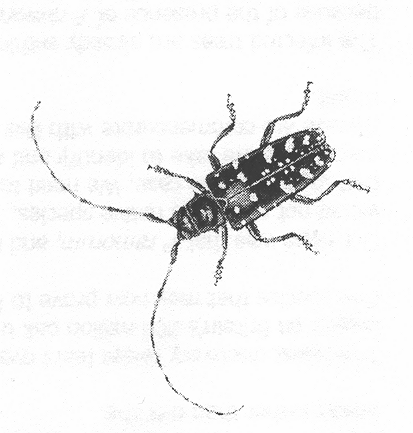
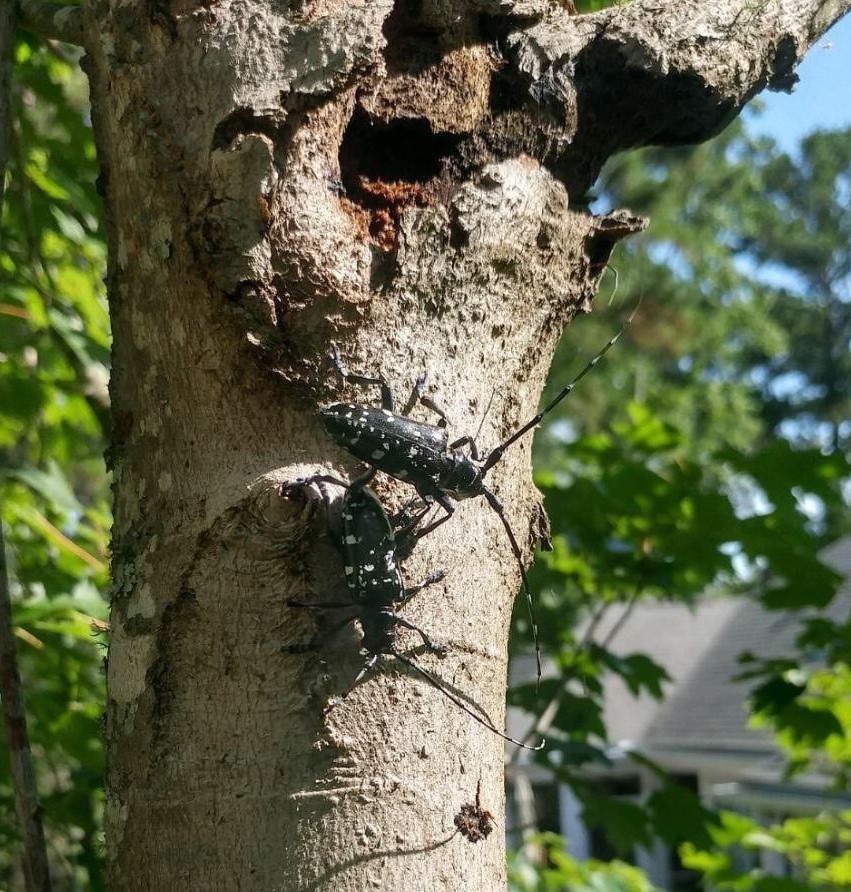
In many ways, the ALB is the poster child for wood-borers introduced in wood packaging (SWPM). ALB has been transported multiple times in the 30 or more years since the world opened to goods from China. Outbreaks have been detected in ~50 locations in North America, Europe, the Middle East (Trotter 2021, full citation at end of the blog), even in Asia – it was detected in Japan in 2002 (eradicated) and 2020 (Shoda-Kagaya 2021). Put another way, 33 countries recorded outbreaks as of July 2021 (Porth 2021). About half of the 50 outbreaks have been eradicated; the remaining are under active management, including four of the largest populations in the U.S. (Trotter 2021)
A Canadian genetic study (Porth 2021) of five U.S. outbreaks (New York/New Jersey, Massachusetts, Illinois, and Ohio) and the two outbreaks in Toronto indicated two major sources of ALB: the North China plain and Korea (source of the Massachusetts populations). The second Toronto outbreak probably began with survivors of the first that escaped eradication. I note that shortly after the New York and Chicago outbreaks were detected, scientists said the most likely source was the northern plains of China, where China had planted large stands of poplars which quickly were attacked by ALB. These trees were made into crates and pallets to support to booming exports.
In Japan, ALB attacks elms, birches, and willows, not maples. Longer study will provide additional information about hosts (Shoda-Kagaya 2021).
A Swiss study (Augustinus 2021) confirms others’ finding that imports of stone are particularly likely to be associated with ALB-infested SWPM.
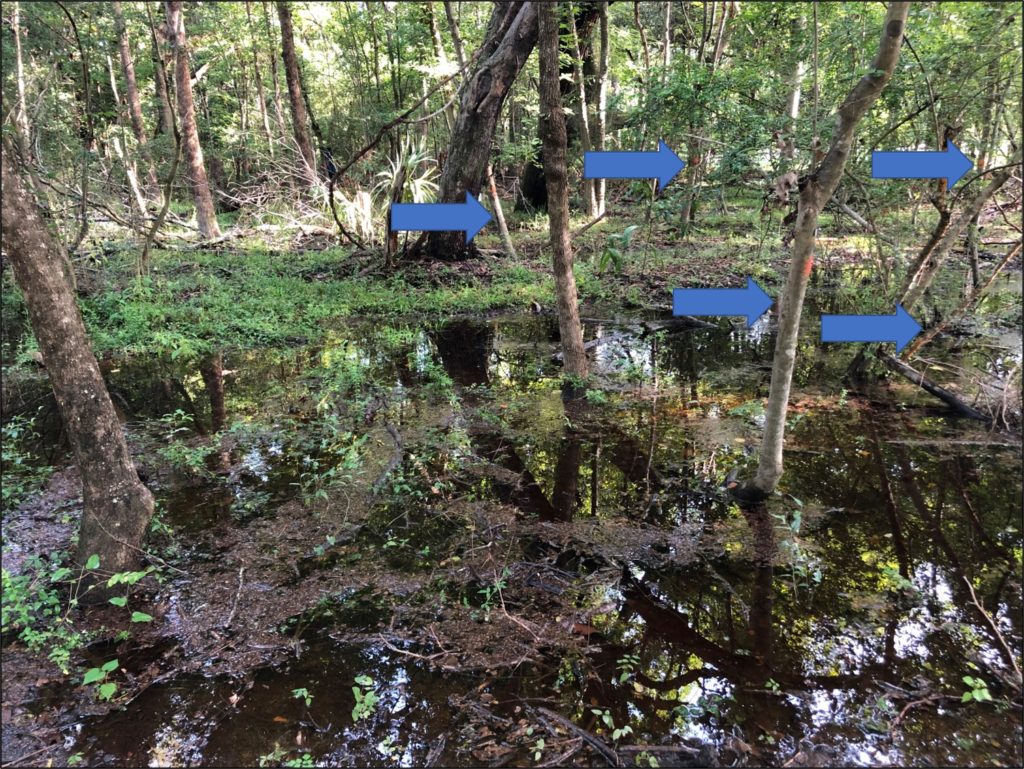
As I noted in an earlier blog, the latest U.S. outbreak in South Carolina presents several challenges. There are indications that the beetle completes its life cycle much faster in the subtropical climate – possibly within eight months (compared to two years in Massachusetts and Ohio). Also, APHIS is exploring new methods to destroy infested or vulnerable trees because workers can’t use heavy chipping equipment in swamps (Trotter 2021)
swamp in South Carolina where ALB is established; blue arrows indicate red maples photo by David Coyle
The EAB has been transported much less frequently in SWPM but once introduced it has proved much more difficult to eradicate or even contain. As a result it has caused much greater destruction. In North America, EAB is established in 35 states and five provinces. In the U.S. alone, an estimated 8.7 billion ash trees are under threat; this represents 2.5% of all U.S. aboveground biomass (de Andrade 2021).
In Europe, EAB is currently established in one province of Ukraine and 18 provinces of Russia. These include areas in St. Petersburg and in the Lower Volga basin that are separated from the core invasion range (Moscow) by 470 and 370 km, respectively. In Moscow EAB has caused mass mortality of European ash (F. excelsior); initial damage had been to the introduced North American species, green ash (Fraxinus pennsylvanica) (Volkovitsh, Bienkowski and Orlova-Bienkowskaja 2021).
In January 2021, USDA APHIS ended its 19-year domestic quarantine and regulation of movement of EAB-infested wood (e.g., firewood). Blogs objecting to this APHIS is now focused on applying classical biocontrol. As of September 2020, PPQ and its partners had released ~ 8 million parasitoid wasps in 350 counties in 30 states and Washington, DC (APHIS report; Duan 2021). APHIS reports successful recovery of wasp offspring in 22 states. The agency claims those recoveries demonstrate that the wasps are reproducing, becoming established in the areas where they were released, and most important, attacking and killing the beetles.
Duan (2021) says long-term study sites in Maryland, Michigan, Connecticut, Massachusetts and New York indicate that two of the four introduced biocontrol agents, the larval parasitoids Testrastichus planipennisi and Spathius galinae, have established co-existing populations via niche partitioning on different ash tree size classes. T. planipennis dominates on saplings and small ash trees while S. galinae predominates in pole- and sawtimber-sized trees. Duan says both parasitoids appear to have played a significant role in suppressing EAB populations, although he admits that it is too early to tell if we will see significant improvement in ash recovery and regeneration.
De Andrade (2021) has begun what he hopes will be a range-wide analysis of the impact of the biocontrol effort. He notes that Spathius galinae – although first releases began as recently as 2015 – is showing the best results, possibly because it does attack EAB larvae in larger trees. It will be some years before the efficacy of the program can be determined.
In its FY2020 annual report (citation at end of blog), APHIS notes that the disease sudden oak death was confirmed as present in a 16th California county (Del Norte) that year. This detection thus connects quarantined areas from south of San Francisco to the one county in southwest Oregon (Curry County) where the disease is wreaking havoc.
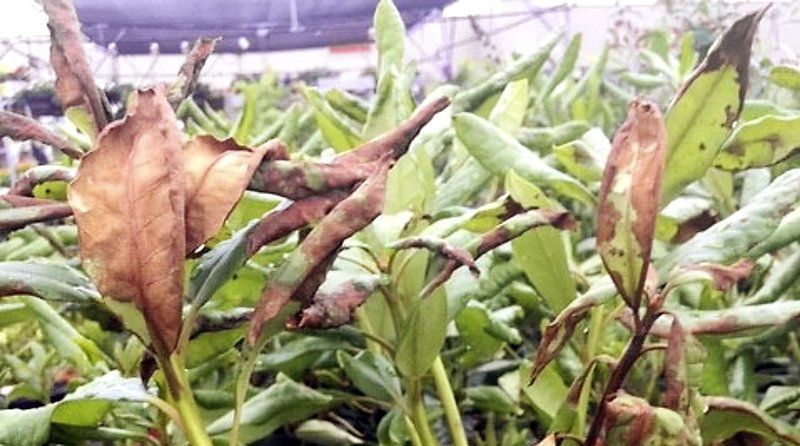
The report notes that the causal pathogen, Phytophthora ramorum, can be moved through nursery stock. APHIS took its most important recent action regarding nursery transmission in FY2019, when it relaxed regulatory requirements. In May 2019 – during FY 2020 — a large “spill” of the pathogen on nursery stock from West Coast nurseries resulted in possibly infected plants being shipped to 18 states. The FY2020 report says nothing about this event. Instead, APHIS reports that in FY 2020, 25 nurseries participated in the interstate regulatory program and the agency released two from strict post-infection regulation. PPQ also supports annual surveys, with 23 states participating.
rhododendron seized in 2019 because it was infected by SOD; photo by Indiana Department of Natural Resources
In 2021 there was an even larger incident of infected plants being shipped to nurseries. We’ll see if APHIS includes this failure in next year’s Annual Report.
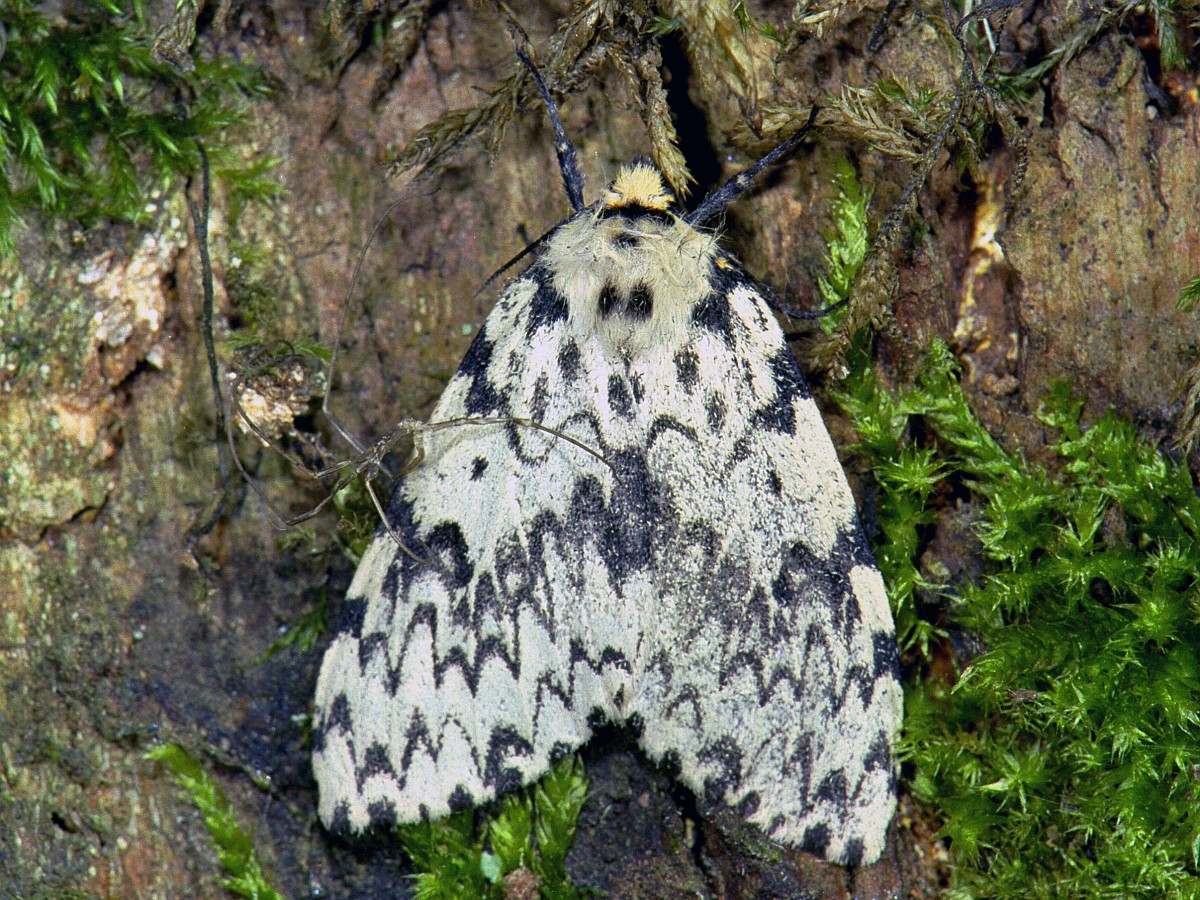
The several species of Lymatria native to Asia are considered to pose a serious threat to North American forests. Tussock moths in East Asia have a much wider host range than the European Lymantria dispar dispar established in eastern North America. In many cases, the females fly – a behavior which would undermine the control measures applied in the East. Finally, beginning in the early 1990s, new trade patterns created opportunities for these moths to reach North America.
Several leaders of the U.S. and Canadian efforts to prevent their establishment have just published a fascinating history of how the prevention program targetting East Asian tussock moths was adopted (Mastro et al. 2021). The history notes that the first detections of AGM in the Pacific Northwest and British Columbia in the early 1990s posed several challenges to the phytosanitary agencies. These challenges were:
how to justify under international trade rules regulating insects belonging to what was then thought to be the broad species Lymatria dispar. That species had been established (ever more widely) in eastern North America since 1869. While this crisis arose before adoption of the World Trade Organization, its Agreement on the Application of Sanitary and Phytosanitary Standards, and the new language of the International Plant Protection Organization, the U.S. negotiating position was that it should be “against the rules” to regulate new introductions of established pests. For a thorough discussion of these issues, go to Fading Forests II.
how to manage introductions via ships rather than the plant-origin commodities that they usually regulate.
The threat prodded the agencies to overcome these obstacles – a welcome exercise of initiative! Within a few years, APHIS and its Canadian counterpart (Canadian Food Inspection Service) developed a multi-layered monitoring and inspection program that was applied first to Russia and later to Japan, Korea, and China. Adoption of regulations was assisted by a simultaneous determination by scientists that the tussock moths of Asia actually belong to several species, including but not limited to L. dispar asiatica and L. dispar japonica. I blogged about recent successes and failures of this program and about a recent analysis of additional related species that also should probably be regulated.
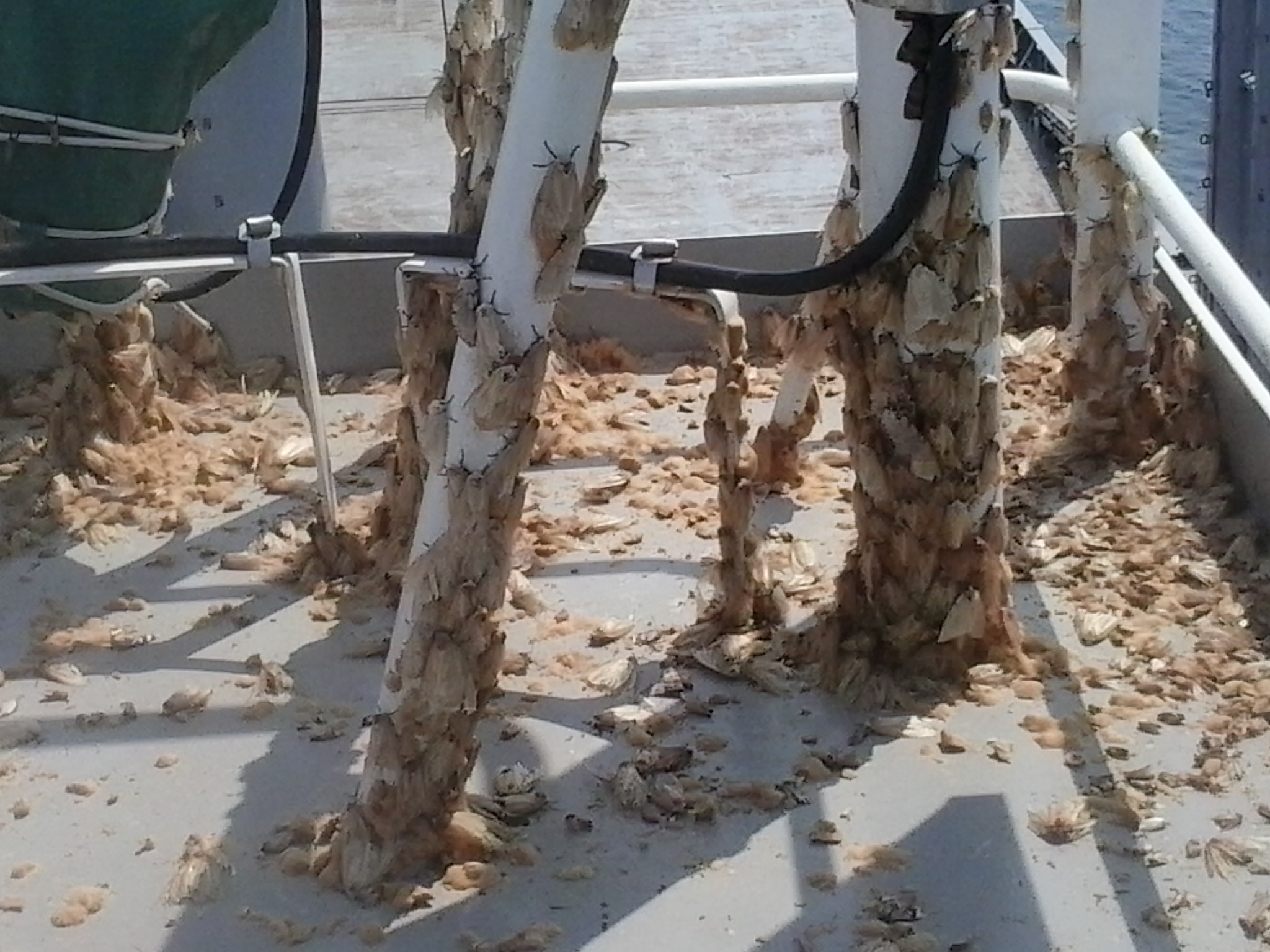
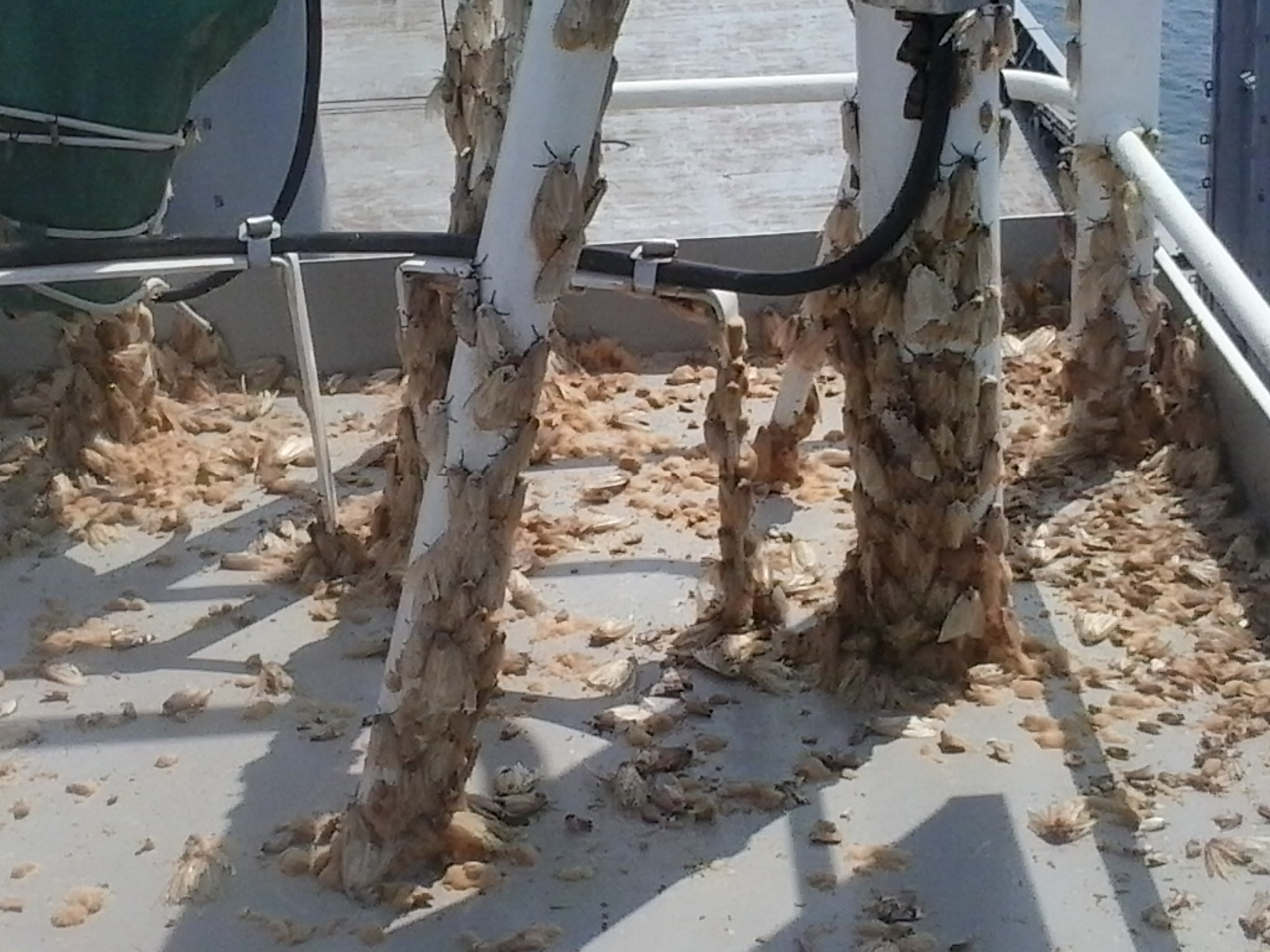
Asian gypsy moths on a ship in Nakhodka harbor; USDA photo
Mastro et al. (2021) report that AGM incursions in the U.S. have been discovered on 62 occasions between 1991 and 2019. These have resulted in expensive projects which have – so far – prevented establishment of AGM. These efforts are expensive for both APHIS and the states. APHIS has also funded intensive surveillance efforts, including under the Plant Pest and Disease Management and Disaster Prevention Program (Section 7721). In Fiscal Years 2018 through 2020, APHIS funded surveillance of “Asian defoliators” at more than $1 million each year.
APHIS ANNUAL REPORT FOR FY2020
In its most recent annual report (Helping U.S. Agriculture Thrive— Across the Country and Around the World Plant Protection and Quarantine: Fiscal Year 2020), APHIS provides some of the data on pests cited above. In addition, it reports the number of inspections conducted; pests intercepted and identified; and other agency activities.
Notably, APHIS claims credit for negotiating the agricultural components of the U.S.-China Phase One Economic and Trade Agreement (adopted in May 2020). APHIS says this agreement was the culmination of 20 years effort — and helped open the Chinese market to almost $1 billion annually in sales of U.S. agricultural commodities. When the agreement was announced, I blogged about my frustration that APHIS did not use take this opportunity to press the Chinese to ensure that their wood packaging is pest-free. Chinese wood packaging violates U.S. import rules more often than any other country and U.S. forests need not pay the price. [or something like that.]
As I noted above, the APHIS report makes no mention of the huge “spill” of the sudden oak death pathogen through the nursery trade in 2019 (FY2020). How can APHIS justify this omission?
SOURCES
Augustinus, B. Optimizing surveillance for priority and other quarantine forest pests in Switzerland. IUFRO Prague September 20 – 24, 2021
De Andrade, R. Emerald Ash Borer biocontrol in US IUFRO Prague September 20 – 24, 2021/
Duan, J. USDA Agriculture Research Service, Newark, DE in USDA document substituting for the 2022 USDA Forest Pest conference (“Annapolis”)”
Mastro, V.C., A.S. Munson, B. Wang, T. Freyman, & L.M. Humble. 2021. History of the Asian Lymantria species Program: A Unique Pathway Risk Mitigation Strategy. Journal of Integrated Pest Management, (2021) 12(1): 31; 1–10
Porth, Ilga. Universite Laval. Next-generation-sequencing-based biosurveillance for Anoplophora glabripennis IUFRO Prague September 20 – 24, 2021
Shoda-Kagaya, E. Current status of three invasive cerambycid pests in Japan. IUFRO Prague September 20 – 24, 2021
Trotter, R.T. USDA Forest Service, Hamden, CT in USDA document substituting for the 2022 USDA Forest Pest conference (“Annapolis”)
USDA APHIS PPQ Annual Report FY2020 Helping U.S. Ag Thrive— Across the Country and Around the World. Plant Protection and Quarantine: Fiscal Year 2020
Volkovitsh, M.G.; Bienkowski, A.O.; Orlova-Bienkowskaja, M.J. 2021. Emerald Ash Borer Approaches the Borders of the European Union and Kazakhstan and Is Confirmed to Infest European Ash. Forests
2021, 12, 691. https:// doi.org/10.3390/f12060691
Posted by Faith Campbell
We welcome comments that supplement or correct factual information, suggest new approaches, or promote thoughtful consideration. We post comments that disagree with us — but not those we judge to be not civil or inflammatory.
For a detailed discussion of the policies and practices that have allowed these pests to enter and spread – and that do not promote effective restoration strategies – review the Fading Forests report at http://treeimprovement.utk.edu/FadingForests.htm
Kew Gardens U.K., home to Botanic Gardens Conservation International; Wikipedia
A massive international effort has completed a “Global Tree Assessment: State of Earth’s Trees”. This is the result of five years’ effort; it aims at a comprehensive assessment of the conservation status of all the Earth’s trees. As a result of their work, the authors issue a call to action and include specific recommendations.
The leads were the Botanic Gardens Conservation International (BGCI) and International Union for Conservation of Nature’s (IUCN) Species Survival Commission (SSC) Global Tree Specialist Group. They were assisted by about 60 cooperating institutions and more than 500 individual experts. The Morton Arboretum was a major U.S. contributor. Here, my focus is on the global assessment. An accompanying blog contains my analysis of reports on the Morton Arboretum report for the U.S.
The Global Tree Assessment is the largest initiative in the history of the IUCN Red List process. (This process is described in Box 3 of the report, on p. 12; and on p. 40.) As of the end of 2020, IUCN Red List assessments evaluated 28,463 tree species, representing half of all known tree species. Organizers hope to complete comprehensive conservation assessments of all tree species for inclusion on the IUCN Red List by 2023. Other sources utilized included draft Red List profiles and national-level assessments of those species that are found in only one country.
SUMMARY OF FINDINGS
Using these sources, the Global Tree Assessment evaluated 58,497 tree species worldwide. The study determined that 30% are threatened with extinction. This number could change significantly if a large proportion of the 7,700 species (13.2%) recorded as “Data Deficient” turn out to be at risk. At least 142 species are recorded as already extinct in the wild. Two-fifths (41.5%) are considered to be not at risk. Detailed species’ evaluations are provided at GlobalTreeSearch or GlobalTree Portal.
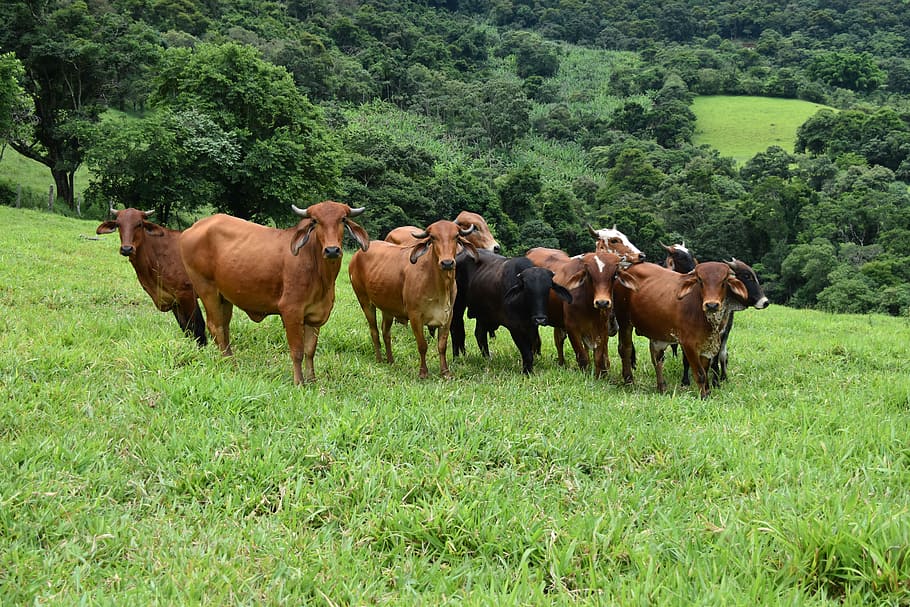
Brazilian forest converted to cattle pasture
The principal threats to trees globally are forest clearance and other forms of habitat loss (at least 65% of species) and direct exploitation for timber and other products (27% or more). The spread of non-native pests is said to affect 5% of the species.Climate change is having a measurable impact on 4% of the species and is expected to increase. (The situation in the United States differs significantly. Overexploitation plays almost no role and on-going habitat loss is important for only a few of the at-risk species.)
The authors decry the lack of attention, historically, to tree endangerment given trees’ ecological, cultural and economic importance. They hope that increased attention to the biodiversity crisis — an estimated 1 million animal and plant species threatened with extinction — and trees’ importance as carbon sinks will lead to increased conservation of trees and forests. They warn, however, that tree-planting programs must put the right species in the right place, including utilizing species that are under threat. In other words, tree planting practices need to change. They note that a community of botanists and conservationists is ready to assist.
Centers of tree species diversity – and of species under threat – are in Central and South America, followed by the other tropical regions of Southeast Asia and Africa. Fifty-eight percent of tree species are single country endemics. The highest proportion of endemism is found in New Zealand, Madagascar and New Caledonia. The region with the highest proportion of native tree species under threat is tropical Africa, especially Madagascar. The highest numbers of species “Not Evaluated” or “Data Deficient” are in IndoMalaya (tropical Asia) and Oceania. In those regions, about a third of species fall in one of those categories.
forest in Central America
The assessment authors fear ecosystem collapse caused by major, large-scale disturbance events. Examples are recent unprecedented fires in California, southern Australia, Indonesia, and the Amazon (although they don’t mention Siberia). They also note mass mortality events over large areas of forest caused by other factors, including drought and heat stress and the increased incidence of pests. These events have led to a worrying decline of dominant tree species currently evaluated as “Least Concern.” Citing a 2010 report, they list as examples spruce in Alaska, lodgepole pine in British Columbia, aspen in Saskatchewan and Alberta, and Colorado pinon pine (Pinus edulis) in the American southwest.
The authors emphasize the importance of preventing extinction of monotypic tree families. Such events would represent a disproportionate loss of unique evolutionary history, biological diversity, and potential for future evolution. Of the 257 plant families that include trees, 12 are monotypic. They are scattered around the tropics and former Gondwanaland; none is found in the Neo- or Paleoarctic regions. While extinctions to date have rarely affected plants above the rank of genus, the global assessment authors worry that the on-going sixth extinction wave might result in extinctions at the genus or family level.
In this context, the assessment made a particular effort to evaluate the status of species representing the survival of Gondwanian Rainforest lineages. They found that 29% of these tree species are threatened with extinction. Two case studies focus on Australia. They mention habitat conversion but not two non-native pathogens widespread in Australia, Phytophthora cinnamomi andAustropucciniapsidii.
formerly common, now endangered, Australian tree Rhodamnia rubescens, infected by Austropuccinia psidii; photo courtesy of Flickr
The proportion of total tree diversity designated as threatened is highest on island nations, e.g., 69% of the trees on St. Helena, 59% of the trees on Madagascar, 57% of the trees on Mauritius. Hawai`i is not treated separately from the United States as a whole. According to Megan Barstow of BGCI (pers. comm.), the just updated IUCN Red List includes 214 threatened tree species in Hawai`i.
[For the U.S. overall, the IUCN reports 1,424 tree species, of which 342 (24%) are considered threatened. In the companion U.S. assessment, the Morton Arboretum and collaborators found that 11% of 841 continental U.S. tree species are threatened.]
MAIN THREATS TO TREES
Habitat loss
Over the past 300 years, global forest area has decreased by about 40%. Conversion of land for crops and pasture continues to threaten more tree species than any other known threat. Additional losses are caused by conversion for urban and industrial development and transport corridors, and by changes in fire regimes. In total, these factors cumulatively threaten 78% of all tree species, 84% if one includes conversion to wood plantations.
Caribbean mahogany (Swietenia mahogani); photo by Miguel Vieria
Forest Exploitation
Exploitation, especially for timber, is the second greatest threat globally, affecting 27% of tree species (more than 7,400 tree species). The report focuses on centuries of harvest of valuable tropical timbers and exploitation for fuelwood, with an emphasis on Madagascar, where nearly half of all tree species (117 out of 244 tree species) are threatened.
Pests and diseases
Tree species are impacted by a wide range of pests and diseases that are spread by natural and artificial causes. Invasive and other problematic species are recorded as threats for 1,356 tree species (5%) recorded on the IUCN Red List. This figure might be low because some of the information is outdated (see my discussion of American beech in the companion blog about the North American report, here.) Also, climate change is altering the survival opportunities for many pests and diseases in new environments. The example given is the ash genus (Fraxinus), under attack by not only the emerald ash borer in North America and now Russia and Eastern Europe but also the disease Ash Dieback across Europe. The report refers readers to the International Plant Sentinel Network for early warning system of new and emerging pest and pathogen risks, as well as help in coordinating responses.
black ash (Fraxinus nigra) swamp; Flickr
Climate Change
Climate change is impacting all forest ecosystems and is emerging as a significant recorded threat to individual tree species. In the IUCN Red List assessments, climate change and severe weather is recorded as a threat in 1,080 (4%) cases. Trees of coastal, boreal and montane ecosystems are disproportionately impacted. The authors note that the actual impact of climate change is probably more widespread, as it is also impacting fire regimes and the survival, spread, and virulence of pests.
CURRENT CONSERVATION EFFORTS
In Protected areas
Currently, 15.4% of the global terrestrial surface has formal protection status. The IUCN study authors recognize in situ conservation of trees through protection of existing natural habitats as the best method for conserving tree diversity. It is therefore encouraging that at least 64% of all tree species are included in at least one protected area. However, representation is higher for species that are not threatened – 85% are represented in a conservation area while only 56% of threatened trees species are. Nor does the report assess the effectiveness of protection afforded by the various in situ sites. The authors express hope that the parallel IUCN Red List of Ecosystems will contribute to understanding of the efficacy of conservation efforts targetting forests.
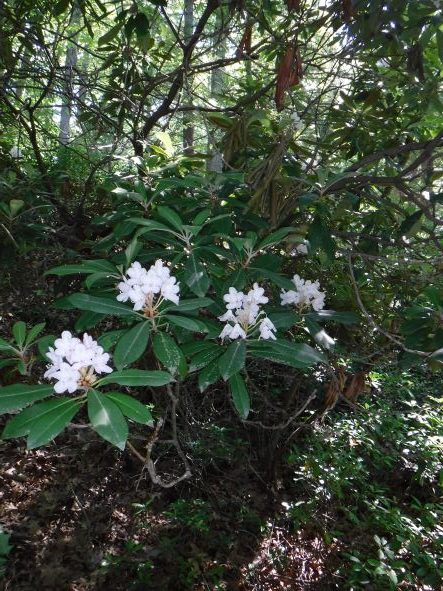
The Global Trees Campaign is a joint initiative of Fauna & Flora International (FFI) and BGCI. Since 1999 the campaign has worked to conserve more than 400 threatened tree species in more than 50 countries. The current focus is on six priority taxa = Acer, Dipterocarps, Magnolia, Nothofagus, Oak, and Rhododendron.
Rhododendron in Cook Forest State Park, PA; photo by F.T. Campbell
In Botanic gardens and seed banks
Especially for species under threat, conservation outside their native habitat – ex situ conservation – is an essential additional component. Currently 30% of tree species are recorded as present in at least one botanic garden or seed bank. Again, representation is higher for species that are not threatened – 45% are represented compared to only 21% of threatened tree species. For 41 species, ex situ conservation provides the only hope of survival, since they are extinct in the wild.
AN URGENT CALL FOR ACTION
The authors and collaborators who prepared the Global Tree Assessment hope that this report will help prompt action and better coordination of priorities and resources to better ensure that all tree species are supported by in situ conservation sites and by appropriate management plans. They state several times the importance of restoration plantings relying on native species. The purpose of plantings needs to include conservation of biological diversity, not just accumulation of carbon credits. The Ecological Restoration Alliance of Botanic Gardens (https://www.erabg.org/) is demonstrating that forest restoration can benefit biodiversity conservation. In many cases, propagation methods need to be developed. Also, projects must include aftercare and monitoring to ensure the survival of planted seedlings.
The IUCN assessment notes that ex situ conservation is an important backup. Education, capacity-building and awareness-raising are needed to equip, support, and empower local communities and other partners with the knowledge and skills to help conserve threatened trees.
Policy
The report say it does not address policy and legislation – a gap that fortunately is not quite true. The report both summarizes pertinent international agreements but also provides specific recommendations.
The international agreements that pertain to tree and forest conservation include:
Convention on Biological Diversity (CBD) and several specific programs: the Forestry Programme, Protected Area Programme and Sustainable Use Programme.
Global Strategy for Plant Conservation (GSPC), which is now developing post-2020 targets.
United Nations Framework Convention on Climate Change (UNFCCC) and countries’ implementing pledges to conserve carbon sinks, e.g., REDD+ (Reducing Emissions from Deforestation and Forest Degradation)
United Nations Strategic Plan for Forests 2017-2030
Global Plan of Action for the Conservation and Sustainable Use of Forest Genetic Resources
Convention on International Trade in Endangered Species, which currently protects 560 tree species, including 308 of the most threatened timbers
The report also mentions the voluntary New York Declaration on Forests, under which more than 200 entities – including governments, businesses, and Indigenous communities — have committed to eliminating deforestation from their supply chains. The supply chains touched on include those for major agricultural commodities, production of which is one of the greatest threat to trees.
SPECIFIC RECOMMENDATIONS
1. Strengthen tree conservation action globally through the formation of a new coalition that brings together existing resources and expertise, and applies lessons from the Global Trees Campaign to radically scale up tree conservation.
2. Use information in the GlobalTree Portal on the conservation status of individual tree species and current conservation action to plan additional action at local, national, and international levels, and for priority taxonomic groups. Build on the Portal by strengthening research on “Data Deficient” tree species, and collating additional information threatened species to avoid duplication of efforts and ensure conservation action is directed where it is needed most.
3. Ensure effective conservation of threatened trees within the protected area network by strengthening local knowledge, monitoring populations of threatened species and, where necessary, increasing enforcement of controls on illegal or non-sustainable harvesting of valuable species. Extend protected area coverage for threatened tree species and species assemblages that are currently not well-represented in protected areas.
4. Ensure that all globally threatened tree species are conserved in well-managed and genetically representative ex situ living and seed bank collections, with associated education and restoration programs.
5. Align work with the UN Decade on Ecosystem Restoration 2021–2030, engaging local communities, government forestry agencies, the business community, and other interested parties to ensure that the most appropriate tree species, including those that are threatened, are used in tree planting and restoration programs.
6. Improve data collection for national inventory and monitoring systems and use this information to reduce deforestation in areas of high tree diversity in association with REDD+ and Nationally Determined Contributions (NDCs).
7. Increase the availability of government, private and corporate funding for threatened tree species, and ensure that funding is directed to species and sites that are in greatest need of conservation.
SOURCE
Global Tree Assessment State of Earth’s Trees September 2021 Botanic Gardens Conservation International available here
Posted by Faith Campbell
We welcome comments that supplement or correct factual information, suggest new approaches, or promote thoughtful consideration. We post comments that disagree with us — but not those we judge to be not civil or inflammatory.
For a detailed discussion of the policies and practices that have allowed these pests to enter and spread – and that do not promote effective restoration strategies – review the Fading Forests report at http://treeimprovement.utk.edu/FadingForests.htm
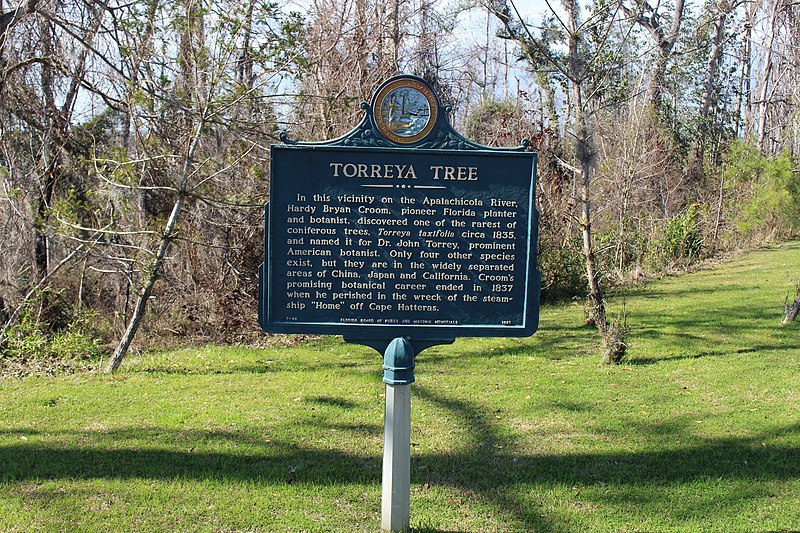
habitat of the Florida torreya tree; photo via Creative Commons
In August, the Morton Arboretum announced completion of a series of reports on the conservation status of major tree genera native to the continental United States. It is available here. The series of reports provides individual studies on Carya, Fagus, Gymnocladus, Juglans, Pinus, Taxus, and selected Lauraceae (Lindera, Persea, Sassafras). (Links to the individual reports are provided at the principal link above.)
The project was funded by the USDA Forest Service and the Institute of Museum and Library Services, The Morton Arboretum and Botanic Gardens Conservation International U.S.
Each report provides a summary of the ecology, distribution, and threats to species in the genus, plus levels of ex situ conservation efforts. The authors hope that the data in these reports will aid in setting conservation priorities and coordinating activities among stakeholders. The aim is to further conservation of U.S. keystone trees.
These reports are part of the overall “Global Tree Assessment: State of Earth’s Trees” compiled under the auspices of Botanic Gardens Conservation International (BGCI) and IUCN SSC Global Tree Specialist Group. I discuss the global assessment in a separate blog to which I will link. The global report evaluates species’ status according to both the International Union of Conservation of Nature’s (IUCN) Red List and NatureServe. The process used is explained in each both the international and U.S. reports. For the U.S. overall, the global assessment identifies 1,424 species of tree, of which 342 (24%) are considered threatened. Hawai`i specifically is home to 241 endangered tree species (Megan Barstow, BGCI Conservation Officer, pers. comm.). See my blogs about threats to Hawaiian trees.
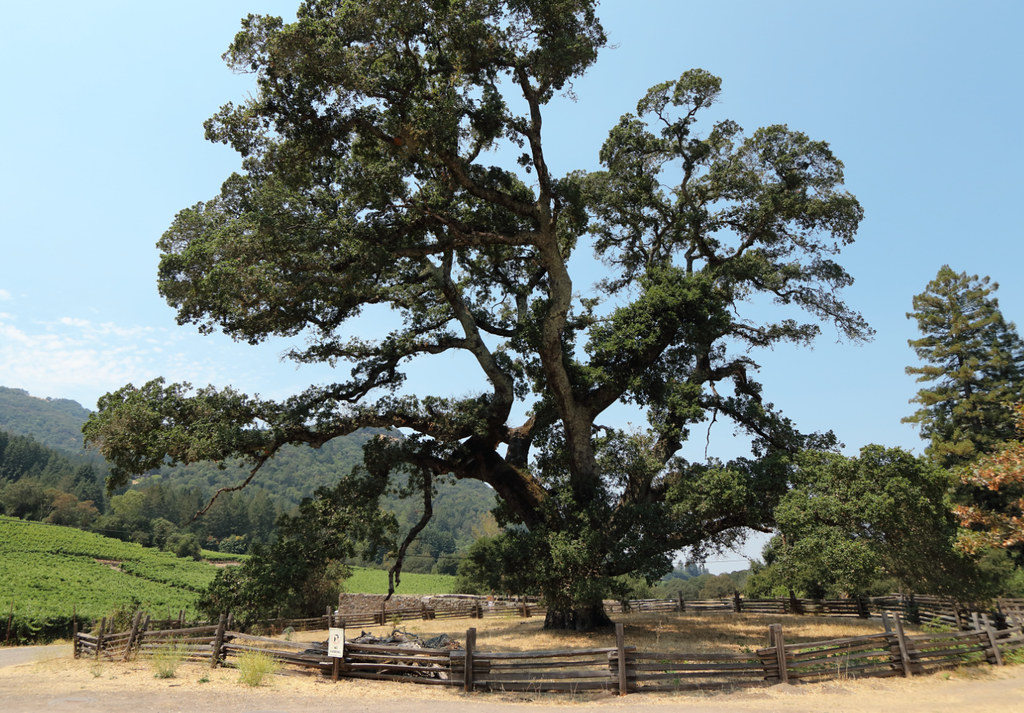
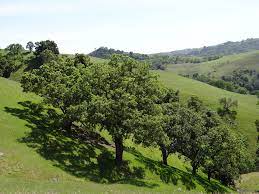
Quercus lobata (valley oak) at Jack London State Park, California
Like the global assessment, these individual studies of nine genera–carried out by the Morton Arboretum–are a monumental accomplishment. They vary in size and format. The report on oaks was completed first and is the most comprehensive. It is 220 pages, incorporating individual reports on 28 species of concern. The report on pines is 40 pages. It contains summary information and tables on all 37 pine species native to the United States, but lacks write-ups on individual species. The report on Lauracae is 25 pages; it evaluates the threat to five species in three genera from laurel wilt disease. The report on walnuts is 23 pages. It includes brief descriptions of six individual species, including butternut. The report on hickories (Carya spp.) is 20 pages. It provides brief description of 11 species. The report on yews is 18 pages. It covers three species. The report on Fagus addresses the single species in the genus, American beech. It is 17 pages. The shortest report is on another single species, Kentucky coffeetree; it is 15 pages.
Coverage of Threats from Non-Native Insects and Diseases in the Morton Arboretum Reports
In keeping with my focus, I concentrated my review of these nine reports on their handling of threats from non-native insects and pathogens. Six of the reports make some reference to pests – although the discussion is not always adequate, in my view. There are puzzling failures to mention some pathogens.
Genera subject to minimal threats from pests (native or non-native) include the monotypic Kentucky coffeetree (Gymnocladus dioicus), whichis considered by the IUCN to be Vulnerable due habitat fragmentation, rarity on the landscape, and population decline.
A second such genus is Carya spp., the hickories. The entire genus is assessed by the IUCN as of Least Concern. The Morton study ranked two species, C. floridana and C. myristiciformis, as of conservation concern.
Three evaluators – the IUCN, the Morton Arboretum, and Potter et al. (2019) – agree that one of the three U.S. yew species, Florida torreya (Taxus floridana or Torreya taxifolia), is Critically Endangered because of its extremely small range, low population, and deer predation. Indeed, Potter et al. (2019) ranked Florida torreya as first priority of all forest trees in the continental United States for conservation efforts. However, the Morton Arboretum analysis makes no mention of the canker disease reported by, among others, the U.S. Forest Service.
A third of the 28 oak (Quercus spp.) species considered to be of conservation concern per the Morton study criteria are reported to be threatened by non-native pests. Pest threats to oak species not considered to be of conservation concerned were not evaluated in the report.
The Morton report records 37 pine species (Pinus spp.) as native to the U.S. Native and introduced insects and pathogens are a threat to many, especially in the West.
Two reports – those on the Lauraceae and beech – focus almost exclusively on threats from non-native pests. The report on walnuts (Juglans spp.) divides its attention between non-native pests and habitat conversion issues. This approach comes into some question as a result of the recent decision by state plant health officials to that thousand cankers disease does not threaten black walnut (J. nigra) in its native range.
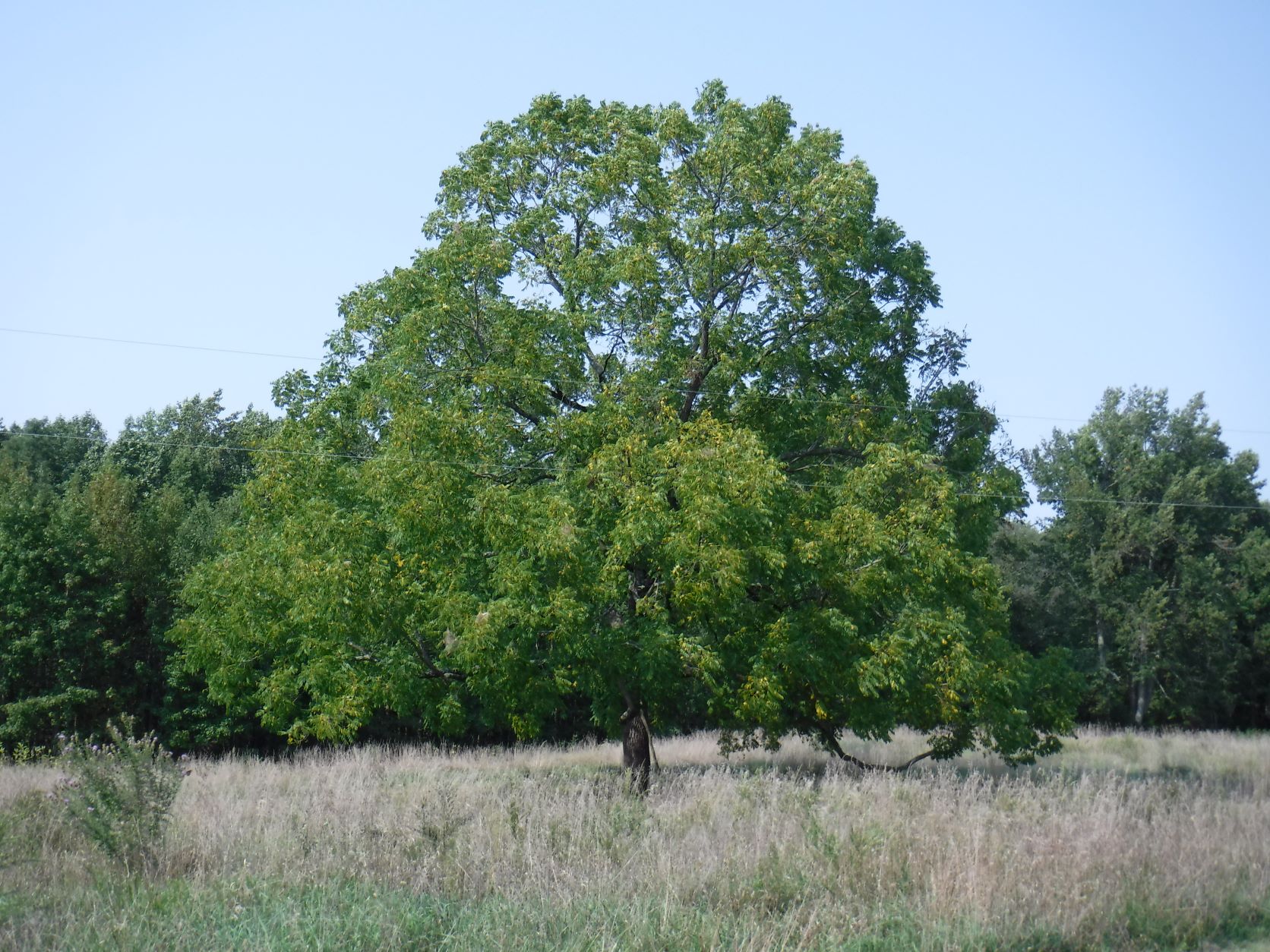
black walnut (J. nigra) photo by F.T. Campbell
Here I examine five of the individual genus reports in greater detail.
Oaks
The Morton report says that more than 200 oak species are known across North America, of which 91 are native in the United States. The study concludes that 28 of these native oaks are of conservation concern based on extinction risk, vulnerability to climate change, and low representation in ex situ collections. [The IUCN Red List recognizes 16 U.S. oak species as globally threatened with extinction.] Nearly all of the Morton’s report 28 species are confined to small ranges. In the U.S., regional conservation hotspots are in coastal southern California, including the Channel Islands; southwest Texas; and the southeastern states.
The summary opening section of the Morton report says 10 (36%) of the threatened oaks face a threat by a non-native pathogen. It admits that lack of information probably results in an underestimation of the pest risk. I found it difficult to confirm this overall figure by studying the detailed species reports because in some cases the threatening pathogen is not currently extant near the specific tree species’ habitat. I appreciate the evaluators’ concern about the potential for the pathogen, e.g., Phytophthora ramorum or oak wilt, to spread from its current range to vulnerable species growing on the other side of the continent. However, I wish the overview summary at the beginning of the report were clearer as to which species are currently being infected, which face a potential threat.
The report emphasizes the sudden oak death pathogen (SOD; Phytophthora ramorum), stating that it which currently poses a significant risk to wild populations of Q. parvula. However, the situation is more complex. As I note in my blog on threats to oaks, Q. parvula is divided into two subspecies. In the view of California officials, one, Q. p. var. shrevei, is currently threatened by SOD but the other, Q. p. var. parvula, (Santa Cruz Island oak) is currently outside the area infested by the pathogen. Perhaps the Morton Arboretum evaluators consider the potential risk to the second subspecies to be sufficient to justify stating that the pathogen poses a significant threat to the entire species; but I would appreciate greater clarity on this matter.
The report also mentions the potential threat to several rare oak species in the Southeast if SOD spreads there. While the Morton report rarely discusses species that have not been assessed as under threat, it does note that two species ranked as being of Least concern – coast live oak (Q. agrifolia) and California black oak (Q. kelloggii) – have been highly affected by SOD.
The Fusarium disease vectored by the polyphagous and Kuroshio shot hole borers is mentioned as a threat to Engelmann (Q. engelmannii)and valley (Q. lobata) oaks. The latter, in particular, is considered by the Morton Arboretum assessors to be already much diminished by habitat conversion.
In the East, hydrological changes have facilitated serious damage to Ogelthorpe oak (Q. oglethorpensis) by the fungus that causes chestnut blight–Cryphonectria parasitica.
The Morton study mentions oak wilt (Ceratocystis or Bretziellafagacearum) as an actual or potential factor in decline of oaks in the red oak clade (Sect. Lobatae). Only one of the oak species discussed – Q. arkansana – is in the East, were oak wilt is established. The rest are red oaks in California, where oak wilt is not yet established. Again, there is no discussion of the impact of oak wilt on widespread species not now considered to be of conservation concern.
In the individual species profiles making up the bulk of the Morton report on oaks, but not in the summary, the Morton report also mentions the goldspotted oak borer (Agrilus auroguttatus) as an actual or potential factor in decline of the same oaks in the red oak group. The following species – Q. engelmanni, Q. agrifolia, Q. parvula, Q. pumila — are in California and at most immediate threat.
The Morton study also mentions several native insects that are attacking oaks, and oak decline. It calls for further research to determine their impacts on oak species of concern.
For analyses of the various pests’ impacts on oaks broadly, not focused on at-risk tree species, see my recent blog updating threats to oaks, posted here, and the pest profiles posted at www.dontmovefirewood.org
Pines
The Morton report lists 12 pine species as priorities out of the total of 37 species native to the United States. The report notes that the majority of the at-risk species in the West are threatened primarily by high mortality from one or more pests, in particular native bark beetles.
Six of the 12 priority species are five-needle pines affected by white pine blister rust (WPBR; Cronartium ribicola). The report contains maps showing the distribution of WPBR. In some cases, the native mountain pine beetle (Dendroctonus ponderosae) contributes to immediate mortality. Presentation of recommendations is scattered and sometimes seems contradictory. Thus, P. longaeva (bristlecone pine) is said by the IUCN to be stable and is not listed among the 12 threatened species, but the Morton Arboretum assessors called for its receiving high conservation priority. P. albicaulis (whitebark pine) is a candidate for listing as Threatened under the Endangered Species Act, but the Morton Arboretum authors did not single it out for priority action beyond listing it among the dozen at-risk species.
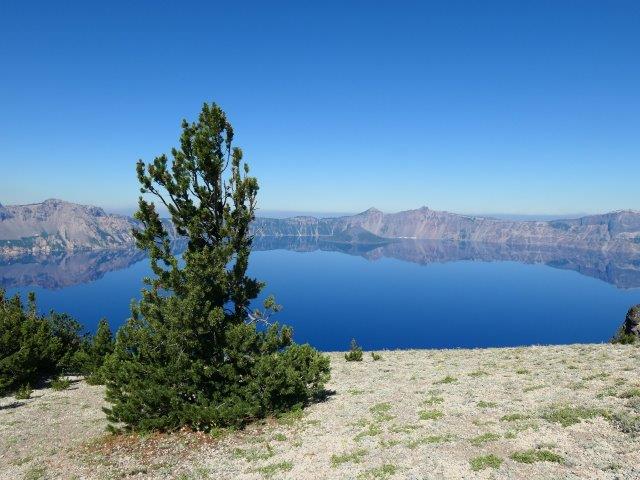
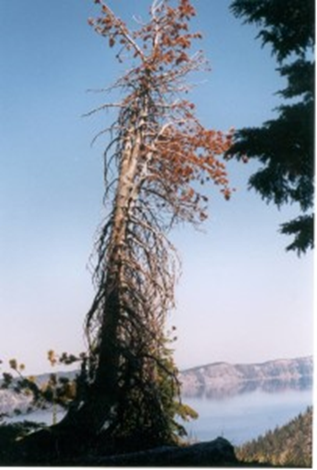
P. albicaulis (whitebark pine) at Crater Lake National Park; photo courtesy of Richard Sniezko, USFS
The report also notes impacts by Phytopthora cinnamomi on pines; a maps shows the distribution of this non-native pathogen. A third non-native pathogen — pitch canker (Fusarium circinatum) — is mentioned as affecting Monterrey pine (P. radiata). Torrey pine (Pinus torreyana) is also affected by pitch canker, but this pathogen is ranked by the Morton study as causing only moderate mortality in association with other factors. Torrey pine is ranked as critically endangered and decreasing in populations.
The report also publishes the rankings developed by Potter et al. (2019). P. torreyana was the top-ranked pine, ranked at 18 (less urgent than, eastern hemlock).
The Morton study authors concluded that native U.S. pines are under serious threat. However, their economic, ecological, and cultural importance makes them obvious targets for continued conservation priority.
For my analysis of the various pests’ impacts on pines broadly, see the pest profiles posted at www.dontmovefirewood.org
Lauraecae
The Morton group analyzed five of the 13 species native to the United States, chosen based on three factors – tree-like habit, susceptibility to laurel wilt disease, and distribution in areas currently affected by the disease. They note the importance of Sassafras as a monotypic genus.
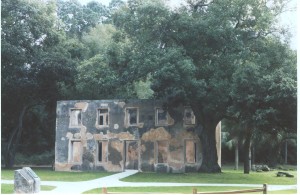
Horton House before death of the redbay trees; photo by F.T. Campbell
The Morton study notes the conservation status of several species needs changing due to the rapid spread of laurel wilt disease. I applaud this willingness to adjust, although I would be inclined to assign a higher ranking based on the most recent data from Olatinwo et al. (2021), cited here.
Redbay (Persea borbonia) was assessed in 2018 as IUCN Least Concern; it is now being re-assessed, with a probable upgrade to Vulnerable. The Morton study says that recent evidence points towards the ecological extinction of P. borbonia from coastal forest ecosystems. Potter et al. (2019) ranked redbay as fifth most deserving of conservation effort overall.
Silk bay (Persea humilis), endemic to Florida, is currently being assessed for the IUCN; it is recommended that it be designated as Near Threatened.
Swamp bay (Persea palustris) is widespread. It is being assessed for the IUCN; it is recommended for the Vulnerable category.
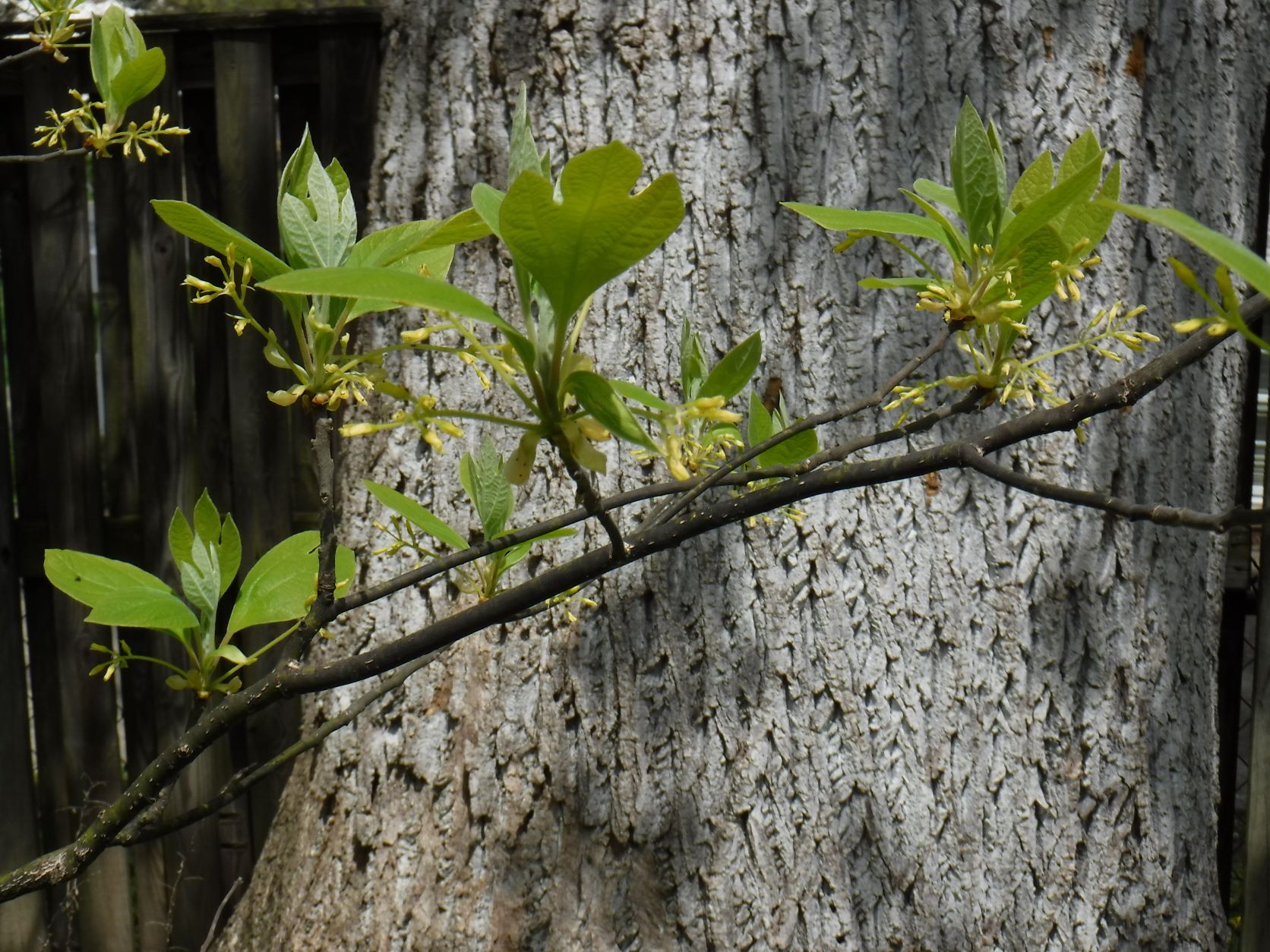
Sassafras (Sassafras albidum) is widely distributed. Sassafras had been assessed as of Least Concern as recently as the 2020 edition of the IUCN Red List. The Morton study notes that the current distribution of laurel wilt disease spans only a small percent of its range, so it does not pose an imminent threat to sassafras. However, cold-tolerance tests for the disease’s vector indicate the possibility of northward spread into more of the sassafras’ distribution. I note that laurel wilt is currently present in northern Kentucky and Tennessee.
American Beech
The Morton report notes that beech (Fagus grandifolia) is very widespread and a dominant tree in forests throughout the Northeastern United States and Canada. It is the only species in the genus native to North America, so presumably of high conservation interest. The report also notes its ecological importance (see also Lovett et al. 2006).
Beech bark disease is reported by the Morton Arboretum to have devastated Northeastern populations. The disease is well established in all beech-dominated forests in the United States, though it occurs on less than 30% of American beech’s full distribution. After mature beech die, thickets of young, shade-tolerant root sprouts and seedlings grow up, preventing regeneration of other tree species. Nevertheless, American beech was listed as of Least Concern by the IUCN in 2017.
The report makes no mention of beech leaf disease, which came to attention after the Morton assessment project had been almost completed. I think this is a serious gap that undermines the assessment not just of the species’ status in the wild but also of the efficacy of conservation efforts.
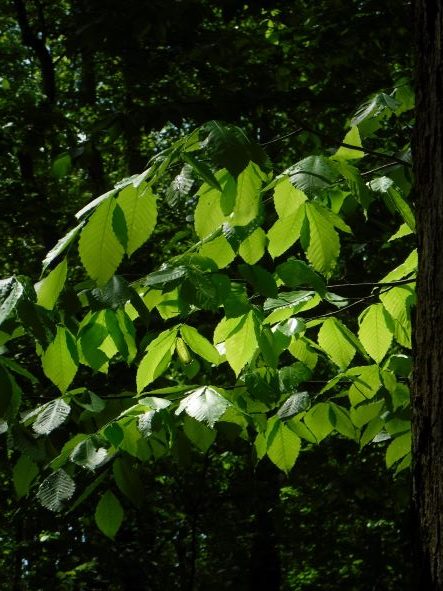
healthy American beech; photo by F.T. Campbell
Walnuts
The Morton team evaluated five species of walnut (Juglans californica, J. hindsii, J. major, J. microcarpa, and J. nigra); and butternut (J. cinerea). Thousand cankers disease – caused by the fungus Geosmithia morbida, which is vectored by the walnut twig beetle (Pityophthorus juglandis) – is reported by the Morton team as second in importance to butternut canker. However, as I noted in a recent blog, the states that formerly considered the disease to pose a serious threat no longer think so and are terminating their quarantine regulations. This decision too recent for consideration by the Morton team.
One of the walnuts — Juglans californica (Southern Calif walnut) — is considered threatened by habitat loss. The rest of the walnuts are categorized by the IUCN as of Least Concern.
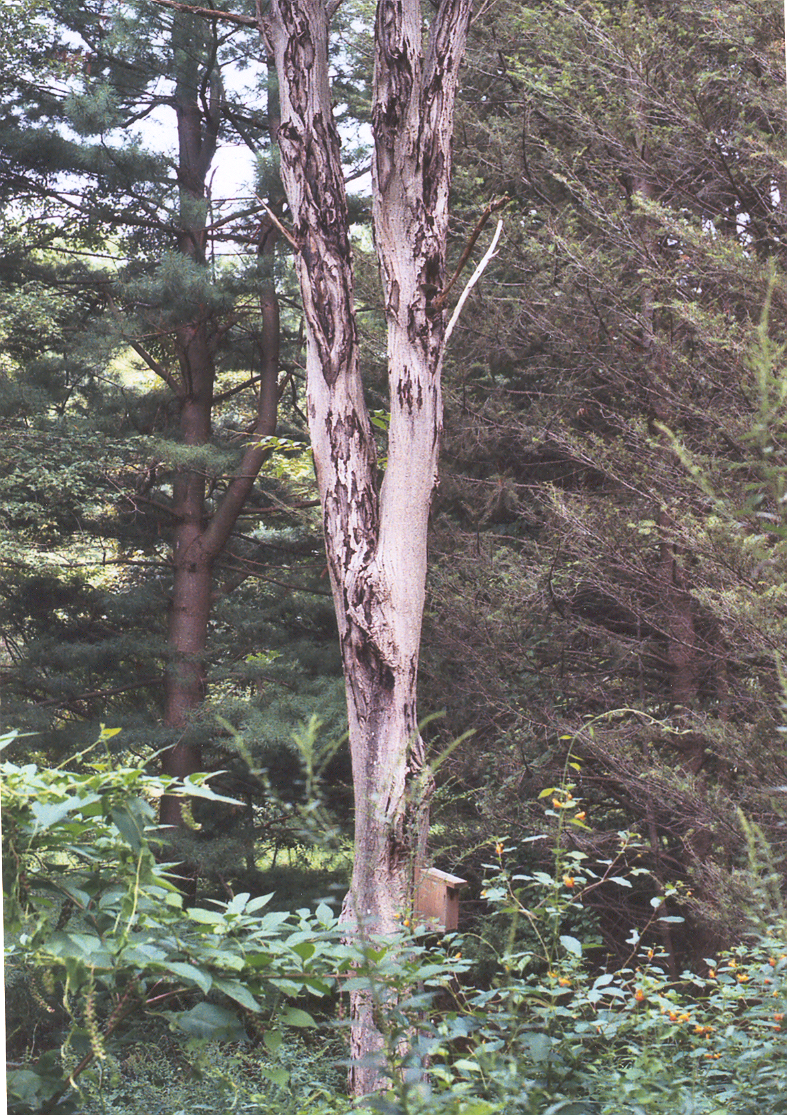
cankered butternut in New England; photo by F.T. Campbell
Butternut (Juglans cinerea), however, is considered by the IUCN to be Endangered. Although present across much of the Eastern deciduous forest, it is uncommon. It has suffered an estimated 80% population decline as a result of the disease caused by the butternut canker fungus Ophiognomonia clavigignenti-juglandacearum.
SOURCES
Beckman, E., Meyer, A., Pivorunas, D., Hoban, S., & Westwood, M. (2021). Conservation Gap Analysis of Am beech. Lisle, IL: The Morton Arboretum. August 2021
Beckman, E., Meyer, A., Pivorunas, D., Hoban, S., & Westwood, M. (2021). Conservation Gap Analysis of Native U.S. Hickories. Lisle, IL: The Morton Arboretum.
Beckman, E., Meyer, A., Pivorunas, D., Hoban, S., & Westwood, M. (2021). Conservation Gap Analysis of Kentucky Coffeetree. Lisle, IL: The Morton Arboretum.
Beckman, E., Meyer, A., Denvir, A., Gill, D., Man, G., Pivorunas, D., Shaw, K., & Westwood, M. (2019). Conservation Gap Analysis of Native U.S. Oaks. Lisle, IL: The Morton Arboretum.
Beckman, E., Meyer, A., Pivorunas, D., Hoban, S., & Westwood, M. (2021). Conservation Gap Analysis of Native U.S. Pines. Lisle, IL: The Morton Arboretum.
Beckman, E., Meyer, A., Pivorunas, D., Hoban, S., & Westwood, M. (2021). Conservation Gap Analysis of Native U.S. Laurels. Lisle, IL: The Morton Arboretum. August 2021
Beckman, E., Meyer, A., Pivorunas, D., Hoban, S., & Westwood, M. (2021). Conservation Gap Analysis of Native U.S. Walnuts. Lisle, IL: The Morton Arboretum. August 2021
Beckman, E., Meyer, A., Pivorunas, D., Hoban, S., & Westwood, M. (2021). Conservation Gap Analysis of Native U.S. Yews. Lisle, IL: The Morton Arboretum.
Lovett, G.M., C.D. Canham, M.A. Arthur, K.C., Weathers, and R.D. Fitzhugh. 2006. Forest Ecosystem Responses to Exotic Pests and Pathogens in Eastern North America. BioScience Vol. 56 No. 5 May 2006)
Olatinwo, R.O., S.W. Fraedrich & A.E. Mayfield III. 2021. Laurel Wilt: Current and Potential Impacts and Possibilities for Prevention and Management. Forests 2021, 12, 181.
Potter, K.M., M.E. Escanferla, R.M. Jetton, G. Man, B.S. Crane. 2019. Prioritizing the conservation needs of United States tree species: Evaluating vulnerability to forest insect and disease threats. Global Ecology and Conservation (2019), doi: https://doi.org/10.1016/
Posted by Faith Campbell
We welcome comments that supplement or correct factual information, suggest new approaches, or promote thoughtful consideration. We post comments that disagree with us — but not those we judge to be not civil or inflammatory.
For a detailed discussion of the policies and practices that have allowed these pests to enter and spread – and that do not promote effective restoration strategies – review the Fading Forests report at http://treeimprovement.utk.edu/FadingForests.htm
Quercus lobata in Alameda County, California; photo by Belinda Lo via Flickr
Five years ago I posted a blog about the threat to oak trees from non-native insects and pathogens. I am prompted to update what I said then by the publication of a monumental new analysis of endangered oak species (Beckman et al. 2021; full citation at end of blog). This report is packed with maps and graphics displaying centers of endemism, geographic areas with highest threat levels, etc., and individual profiles of all species it deems at risk.
The new study, led by the Morton Arboretum, says there are more than 200 oak species in North America – including Mexico; but only 91 species native to the United States. Of these, 28 species qualify as “of conservation concern” – defined as facing a moderate or greater threat. The principal threats to oak species are small populations or ranges and conversion of habitats for human use. Overall, 10 (36%) of the oak species “of conservation concern” have some actual or potential exposure to established non-native pests.
The report states that two species are significantly threatened by a non-native pathogen: Shreve oak (Quercus parvula) by the sudden oak death pathogen Phytophthora ramorum and Ogelthorp oak (Q. ogelthorpensis) by the chestnut blight pathogen Cryphonectria parasitica.
Several other California oaks are under some level of attack by the polyphagous and Kuroshio shot hole borers. The goldspotted oak borer (GSOB) is mentioned only in the individual species’ profiles, and largely as a potential or undetermined threat. For example, Engelmann oak (Quercus engelmannii) is reported to have suffered some damage from GSOB but that mortality is “likely a result of a complex of factors (e.g., drought and root diseases).” The potential threat from both SOD and oak wilt is mentioned for several of the oaks that are in the red oak subgenus (Erythrobalanus).
The Morton Arboretum’s determination is based on the fact that the non-native insects and pathogens that I described five years ago are attacking primarily widespread species and have not – to date – caused sufficient damage to imperil those species. This situation contrasts sharply with certain Lauraceae (e.g., redbay) threatened by laurel wilt disease; five-needle pines killed by white pine blister rust; eastern or Canadian hemlock killed by hemlock woolly adelgid; and American beech, which now faces threats from beech bark disease, beech leaf disease, and possibly European beech leaf weevil.
Meanwhile, the non-native pests of oaks that I described five years ago continue to spread.
My Update Incorporating Morton Arboretum’s Analysis: Threats in the East
In the East (from the Atlantic Ocean to the Great Plains), oaks are under serious attack from two non-native pests; a third pest has been suppressed by biological control.
oaks killed by European gypsy moth, Shenandoah National Park; photo by F.T. Campbell
The European gypsy moth (Lymantria dispar). The APHIS quarantine map shows its spread to be largely contained. The moth is currently present throughout the Northeast as far west as Wisconsin and neighboring parts of Minnesota and Illinois; and as far south as Currituck and Dare counties in North Carolina. The European gypsy moth continues to be the target of major containment and suppression programs operated by USDA Animal and Plant Health Inspection Service (APHIS), the US Forest Service and the states. For years US Forest Service spent half of its entire budget for studying and managing non-native pests on the European gypsy moth. By FY2021, this allocation had been reduced to a quarter of the total budget. The European gypsy moth is the most widespread non-native pest (see map, linked to above) and attacks a wide range of tree and shrub species. Still, it rarely causes death of the trees.
Oak wilt (caused by the fungus Ceratocystis fagacearum) is widespread from central Pennsylvania to eastern Minnesota and across Iowa, down the Appalachians in West Virginia and North Carolina-Tennessee border, in northern Arkansas and with large areas affected in central Texas. There are several outbreaks in New York State. The most recent map I can find is from 2016 so it is difficult to assess more recent status. In that year, the US Forest Service called oak wilt one of the most serious tree diseases in the eastern U.S. It attacks primarily red oaks and live oaks. It is spread by both bark-boring beetles and root grafts.
In 2016 I also listed the winter moth (Operophtera brumata) as a threat. Now, its presence in coastal areas of New England and Nova Scotia (and British Columbia) has been reduced to almost nuisance levels by action of the biological control agent Cyzenis albicans. (See this report.)
SOD-infested rhododendron plant; photo by Indiana Department of Natural Resources
The most significant potential threat to eastern oaks identified to date is the sudden oak death (SOD) pathogen, Phytophthora ramorum. Several oak species have been shown in laboratory studies to be vulnerable to infection by this pathogen. Furthermore, the climate in extensive parts of the East is considered conducive to supporting the disease. SOD has not been established in the East. However, too frequently SOD-infected plants have been shipped to eastern nurseries, where some are sold to homeowners before regulatory officials learn about the situation and act to destroy the plants.
My Update Incorporating Morton Arboretum’s Analysis: Threats in the West
In the West, millions of oaks have been killed by several pathogens and insects that are established and spreading. Another has been introduced since my earlier blog (see Mediterranean oak beetle, below). Additional threats loom, especially Asian species of tussock moths.
Coast live oaks, canyon live oaks, California black oaks, Shreve’s oaks, and tanoaks growing in coastal forests from Monterey County north to southern Oregon that catch fog/rain are being killed by sudden oak death (SOD). In this region, SOD has killed an estimated 50 million trees. While the preponderance of dead trees are not true oaks, but tanoaks (Notholithocarpus densiflorus), significant numbers of coast live oak (Quercus agrifolia), Shreve oak (Q. parvula var. shrevei), and California black oaks (Q. kelloggii) have also been killed. SOD continues to intensify in this region, and to expand. Sixteen California counties are now infected, and the infection in Curry County, Oregon has spread farther North. More worrying, two additional strains of the pathogen have been detected in forests of the region.
The Morton Arboretum analysis singled out Q. parvula as particularly threatened by SOD. Californians note that it is the subspecies Q. parvula var. shrevei that is threatened by SOD; the other subspecies, Q. parvula var. parvula (Santa Cruz Island oak) is – so far – outside the area infested by SOD.
California black oak killed by GSOB; photo by F.T. Campbell
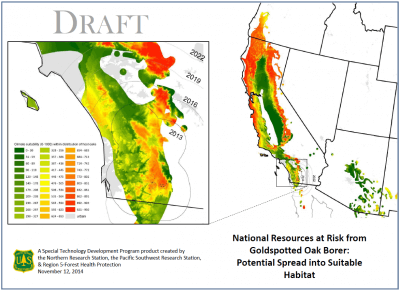
Also in California, coast live oaks, black oaks, and canyon oaks in the southern part of the state are being killed by goldspotted oak borer. Confirmed infestations are now in San Diego, Orange, Riverside, San Bernardino, and Los Angeles counties. See the map here. At least 100,000 black oaks have been killed in less than 20 years. Neither the State of California nor USDA APHIS has adopted regulations aimed at preventing spread of the goldspotted oak borer.
The Morton Arboretum analysis considers California black oak (Q. kellogii) to be secure.
Two more wood-boring beetles threaten oaks in southern California – the Polyphagous and Kuroshio shot hole borers. One or both of the invasive shot hole borers are known to be present in San Diego, Orange, Los Angeles, Riverside, San Bernardino, Ventura, and Santa Barbara counties. The beetles feed on coast live oaks, canyon live oaks, Engelmann oaks, and valley oaks – as well as many other kinds of trees. In the process, the beetles transmit a fungus that kills the tree. Many of the vulnerable tree species anchor the region’s riparian areas and urban plantings. See a map of the shot hole borers’ distribution here.
In November 2019, scientists discovered a new ambrosia beetle in symptomatic valley oaks (Quercus lobata) trees in Calistoga, Napa County. The insect was determined to be a European species, Xyleborus monographus. The common name is Mediterranean oak borer, or MOB. Within a few months it was known that this beetle is fairly widespread in Napa and neighboring Lake counties. The beetle had never been intercepted at ports in California or found in traps designed to detect bark beetles deployed in the San Francisco Bay area but not including Napa or Sonoma. Like other beetles in the Scolytinae subfamily, MOB can transmit fungi. One of the fungal species detected in the Calistoga infestation is Raffaelea montetyi, which is reported to be pathogenic on at least one European oak species.
The California Department of Food and Agriculture proposed assigning a pest rank to the beetle in December 2020. In their draft document ranking risk, state officials note that a proven host — Q. lobata — is widespread in California and the insect is probably capable of establishing over much of the state. The possible economic impact was described as possibly affecting production of oaks in California nurseries and triggering quarantines.
Therefore, X. monographus could exacerbate the effects of SOD on California oaks.
The Morton Arboretum has singled out Q. lobata as at risk because of conversion of more than 90% of its habitat to agriculture.
Asian gypsy moths swarm a ship in Nakhodka, Russian Far East; USDA APHIS photo
A looming potential threat to oaks on the West coast is the risk that tussock (gypsy) moths could be introduced to the area. The risk is two-fold – the Asian gypsy moth continually is carried to the area on ships bearing imports from Asia (as discussed in my blog in April). The European gypsy moth is sometimes taken across the country from its widespread introduced range in the East on travellers’ vehicles, outdoor furniture, or firewood. Both the West Coast states and USDA search vigilantly for any signs of gypsy moth arrival.
We welcome comments that supplement or correct factual information, suggest new approaches, or promote thoughtful consideration. We post comments that disagree with us — but not those we judge to be not civil or inflammatory.
For a detailed discussion of the policies and practices that have allowed these pests to enter and spread – and that do not promote effective restoration strategies – review the Fading Forests report at http://treeimprovement.utk.edu/FadingForests.htm
As this blog has repeatedly demonstrated, new non-native forest insects continue to be intercepted at ports-of-entry, including the beetles in the highly-damaging Scolytinae group (wood borers and bark beetles) – despite implementation of international rules to stop them (ISPM#15). Inspection is not an effective preventive measure – although useful as a deterrent when combined with effective requirements for treatment or other measures.
Meanwhile, early detection/rapid response programs are difficult and expensive, so officials need to determine priority targets. There has been considerable effort to develop tools for predicting which types of previously unknown – or poorly known – organisms will cause the most significant damage. Past studies have shown that traits of introduced species have not been strong predictors of impact [Schultz et al. (2019); full citation at end of blog]. Newer studies validate a different approach – focusing on the traits of the host trees. This is, of course, possible only when the probable hosts are known!
The focus on traits of hosts appears to be an application of components of the concept put forward by Lovett et al. in 2006. They found that a pest’s level of impact resulted from a combination of: 1) pest characteristics, i.e., mode of action, host specificity, and virulence; and 2) host characteristics, i.e., its importance in the forest ecosystem, its uniqueness, and its phytosociology (defined as whether the tree grows in pure or mixed stands, its role in succession dynamics, and how efficiently it regenerates; Lovett et al. (2006) looked at a broader suite of impacts, linked to changes in forest composition that result from mortality of the principal hosts.
The on-going project seeks features/traits useful in predicting the impacts of non-native insects on North American trees. [I recognize that it is much more difficult to carry out a statistical study of pathogens – but the impact of several non-native pathogens is so high that we need to try!] In April 2020 I posted a blog summarizing one step in this study [Mech et al. (2019); full citation at the end of this blog], which focused on pests of conifers. The second step – analysis of pests of hardwoods – has now been published [Schultz et al. (2019)]. I look forward to the third component, which will analyze generalists which utilize hosts in more than one angiosperm family or both angiosperms and conifers. (Some prominent examples, e.g., Asian longhorned beetle, the polyphagous and Kuroshio shot hole borers, and brown spruce longhorned beetle, are considered “generalists” under the criteria applied in this project.)
Here I briefly recapitulate the findings of Mech et al. (2019) on conifers; report on Schultz et al. (2019) on hardwoods; and note similarities and differences in their findings.
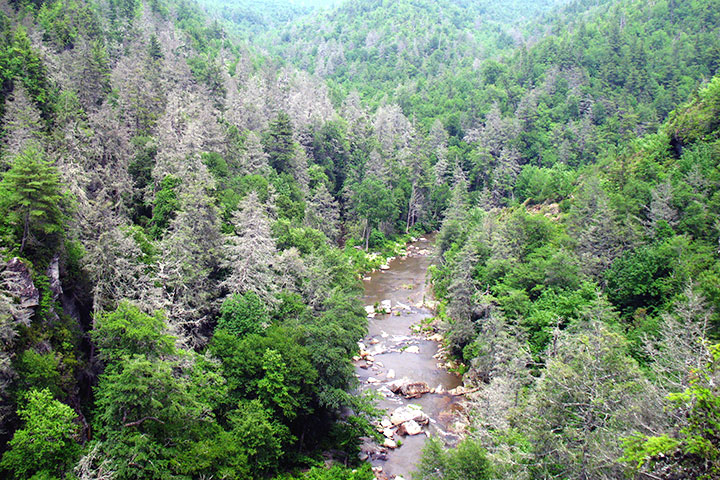
eastern hemlocks killed by hemlock woolly adelgid in Linville Gorge, N.C. photo by Steven Norman, USFS
A Quick Recap on Conifers
Mech et al. (2019) analyzed 58 insects that specialize on conifers (for a full discussion, see blog). About half of the approximately 100 conifer species native to North America have been colonized by one or more of these 58 non-native insects. Three-quarters of the affected trees have been attacked by more than one non-native insect. One of the insects attacked 16 novel North American hosts.
Of these 58 insects, only six are causing high impacts, all in the orders Hymenoptera (i.e., sawflies) and Hemiptera (i.e., adelgids, aphids, and scales) which feed on leaves or sap. These six are (1) Adelges piceae—balsam woolly adelgid; (2) Adelges tsugae—hemlock woolly adelgid; (3) Elatobium abietinum—green spruce aphid; (4) Gilpinia hercyniae—European spruce sawfly; (5) Matsucoccus matsumurae—red pine scale; and (6) Pristiphora erichsonii—larch sawfly. The high-impact pests included no wood borers, root feeders, or gall makers.
Mech et al. (2019) evaluated whether the probability of a non-native conifer specialist insect causing high impact on a naïve North American host could be predicted by any of the following characteristics: (a) evolutionary divergence time between native and novel hosts; (b) life history traits of the novel host; (c) evolutionary relationship of the non-native insect to native insects that have coevolved with the shared North American host; and/or (d) the life history traits of the non-native insect.
Major Drivers of Impacts
They found that the major drivers of impact severity for those that feed on foliage and sap (all the high-impact pests) were:
1) Host’s evolutionary history–
The greatest probability of high impact for a leaf-feeding specialist was when North American hosts diverged from a coevolved host of the insect in its native range recently (~1.5–5.0 million years ago [mya]). The divergence time for peak impact was longer for sap‐feeders – (~12–17 mya). The predictive power of the divergence-time factor was stronger for sap-feeders than for leaf feeders.
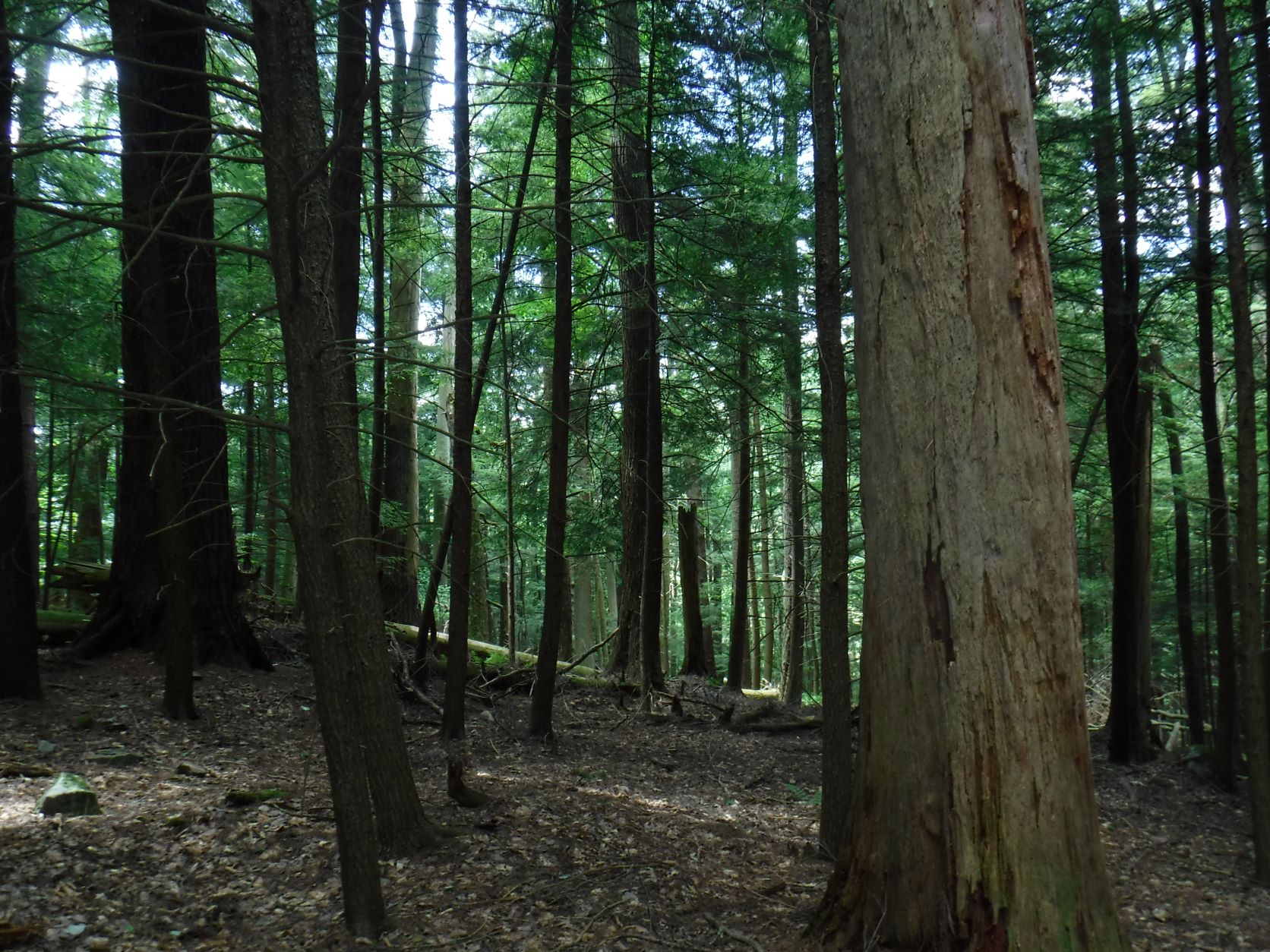
deep shade of a hemlock grove; Cook Forest State Park, Pennsylvania; photo by F.T. Campbell
2) Shade tolerance and drought intolerance – A tree species with greater shade tolerance and lower drought tolerance is more vulnerable to severe impacts. This profile fits most species of Abies, Picea, and Tsuga.
3) Insect evolutionary history – When a non-native insect shares a host with a closely related herbivorous insect native to North America, the invader is slightly less likely to cause severe impacts.
None of the insect life history traits examined, singly or in combination, had predictive value.
Mech et al. (2019) did not address pathogens. However, Beckman et al. (2021) report that only three non-native organisms pose serious threats to the 37 species of Pinus native to the U.S. All are pathogens. White pine blister rust (WPBR) attacks nine species and has caused widespread changes in forest composition in the West. Pine pitch canker is listed as threatening two narrowly endemic pine species (P. radiata and P. muricata). I am surprised that Beckman et al. (2019) indicate that only a lower threat is posed to P.torreyana by this pathogen. Phytophthora root rot (Phytophthora cinnamomi) threatens one widespread pine species (P. echinata).
Note that the conifer genera Mech et al. (2019) determined to best fit one of the predictive factors – shade tolerance – (see above) does not apply to Pinus.
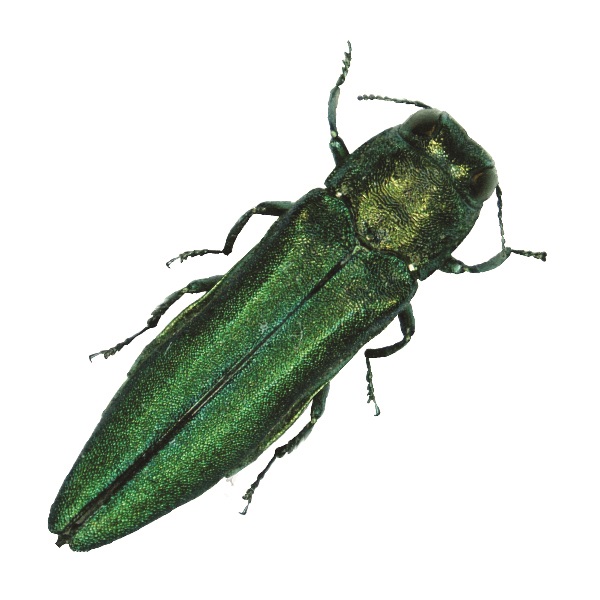
ash tree killed by emerald ash borer; Shenandoah National Park. photo by F.T. Campbell
New Study of Hardwoods
The second study – Schultz et al. (2021) – analyzes the traits and factors associated with damaging non-native insects that specialize on a single family of woody angiosperms (= hardwood specialists). This study used the same methodology as Mech et al. (2019) with two exceptions. First, they included consideration of whether the insect was in the subfamily Scolytinae (bark and ambrosia beetles) because of their close association with fungi which are sometimes highly phytopathogenic in novel hosts. Second, they added two host traits not included in the conifer study: ability to resprout and carbon to nitrogen ratio of the aboveground herbaceous material.
Schultz et al. (2021) developed an initial list of 191 hardwood-specialist insects. 29% were categorized as having no documented effect on hosts. Eight (4.2%) were identified as causing high impact on North American hardwoods = (A) goldspotted oak borer (GSOB) (Agrilus auroguttatus), (B) emerald ash borer (EAB) (Agrilus planipennis), (C) beech scale (Cryptococcus fagisuga), (D) walnut twig beetle (WTB) (Pityophthorus juglandis), (E) viburnum leaf beetle (Pyrrhalta viburni), (F) erythrina gall wasp (Quadrastichus erythrinae), (G) banded and European elm bark beetles (Scolytus schevyrewi/multistriatus), and (H) redbay ambrosia beetle (RAB) (Xyleborus glabratus). 75% of these high-impact species are beetles. Scale and gall wasp types are represented by one each. [One of these species, Pityophthorus juglandis, vectors thousand cankers disease (TCD) of walnut. As I reported in a recent blog, state phytosanitary agencies have decided that TCD does not pose a significant threat to walnuts and are terminating their quarantines and regulatory programs. I wonder whether this new assessment should prompt the authors to drop it from the list of high-impact pests.]
coast live oak killed by GSOB; Heisey County Park, San Diego County, California; photo by F.T. Campbell
Information gaps prompted the authors to whittle this list down to 100 insect species for the remainder of the analysis. They identified 151 North American hardwood trees or shrubs used as hosts by the 100 insects, resulting in 292 insect-novel host pairs. Of the 151 host species, 37% hosted more than one non-native insect.
Explaining Impacts and Influential Factors
1) Being a scolytine beetle best explains a specialist insect’s impact on hardwoods. Five (63%) of the eight high-impact species were wood borers, three of them scolytines: S. schevyrewi/multistriatus, X. glabratus, and the possibly misplaced P. juglandis. (Reminder: Mech et al. found that no insect traits predicted impact for conifer specialists).
2) Two factors were moderately explanatory:
Wood density. Moderate wood density (0.5–0.6 mg/mm3) resulted in an 11–12% chance it would experience high impact from a hardwood specialist; risk decreased if the novel host had lower or higher wood density.
Divergence time between native and novel hardwood hosts.The greatest probability of high impact was on a novel host that diverged from the host in the insect’s native range ~6 – 16 mya; that risk decreased to nearly zero for hardwood hosts more distantly or closely related. Compared to conifer specialists, this divergence distance was longer than for insects that feed on leaves, shorter than for insects that feed on sap.
3) The impact of specialist insects is not affected by relatednessto native insects on the shared North American hardwood host. Half of the 14 high impact insect-host pairs had a congener present on the shared host.
Reasons for the Influence of These Factors – per Schultz et al. (2019)
Importance of host evolutionary history. A novel host that has recently diverged from a native host might retain defenses. If those defenses erode over evolutionary time, this would increase the probability that the invading insect will have high impact as it colonizes the novel North American host in a defense-free space. On the other hand, longer evolutionary divergence times might allow the North American plant to change to the point that the introduced insect doesn’t recognize it as a host.
The peak probability of high impact occurred with hosts more distantly related for hardwood (~ 9.5 mya) than for conifer specialists (~ 3.8 mya). The reasons for this difference could be due to the different feeding guilds: 69% of high impact conifer specialist insects are sap-feeders, the rest foliage feeders, while 72% of 25 high impact hardwood specialists are wood borers; 16% folivores, 8% gall makers, 4% sap-feeders.
Fungal symbionts. A naïve host might lack defenses to either the insect or the fungus – or both.
historic Horton House on Jekyll Island, GA, before the redbays were killed by laurel wilt; photo by F.T. Campbell
In North America, the borer-fungi symbiotic relationships is associated with high impact pests of specialist hardwood pests but not conifer pests. However, there are conifer examples on other continents. Possibly North American conifers are at least partially preadapted due to the highly competitive pressures exerted by native scolytines. Conversely, the lower exposure of hardwood hosts to outbreaks of native scolytines might select for less preadaptation.
Another possible explanation is anatomical differences that better allow tree-to-tree below-ground transmission of beetle-vectored phytopathogens in angiosperms (e.g., longer root tracheids, long vessels) than conifers.
Wood density. Perhaps fast growing, early successional hardwoods with lower wood density are better able to tolerate herbivory, while slow-growing, well-defended, long-lived hardwoods with higher wood density are better able to resist them. Fast growth might also contribute to rapid compartmentalization of infection and decay caused by associated fungi. (Reminder: wood density was not a significant determinant for conifer specialists.)
Schultz et al. (2019) note that their models might need adjustment when new data become available.
SOURCES
Beckman, E., Meyer, A., Pivorunas, D., Hoban, S., & Westwood, M. (2021). Conservation Gap Analysis of Native U.S. Pines. Lisle, IL: The Morton Arboretum.
Lovett, G.M., C.D. Canham, M.A. Arthur, K.C., Weathers, and R.D. Fitzhugh. 2006. Forest Ecosystem Responses to Exotic Pests and Pathogens in Eastern North America. BioScience Vol. 56 No. 5 May 2006)
Mech, A.M., K.A. Thomas, T.D. Marsico, D.A. Herms, C.R. Allen, M.P. Ayres, K.J. K. Gandhi, J. Gurevitch, N.P. Havill, R.A. Hufbauer, A.M. Liebhold, K.F. Raffa, A.N. Schulz, D.R. Uden, & P.C. Tobin. 2019. Evolutionary history predicts high-impact invasions by herbivorous insects. Ecol Evol. 2019 Nov; 9(21): 12216–12230.
Schulz, A.N., A.M. Mech, M.P. Ayres, K. J. K. Gandhi, N.P. Havill, D.A. Herms, A.M. Hoover, R.A. Hufbauer, A.M. Liebhold, T.D. Marsico, K.F. Raffa, P.C. Tobin, D.R. Uden, K.A. Thomas. 2021. Predicting non-native insect impact: focusing on the trees to see the forest. Biological Invasions.
Posted by Faith Campbell
We welcome comments that supplement or correct factual information, suggest new approaches, or promote thoughtful consideration. We post comments that disagree with us — but not those we judge to be not civil or inflammatory.
For a detailed discussion of the policies and practices that have allowed these pests to enter and spread – and that do not promote effective restoration strategies – review the Fading Forests report at http://treeimprovement.utk.edu/FadingForests.htm
Volumes of imports continue to rise and enter the U.S. at a wider range of ports. Also, imports continue to arrive with insects in their wood packaging. The international policy intended to fix this problem is not working. It is vital to resolve this issue.
Insects in Wood Packaging
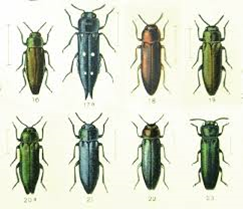
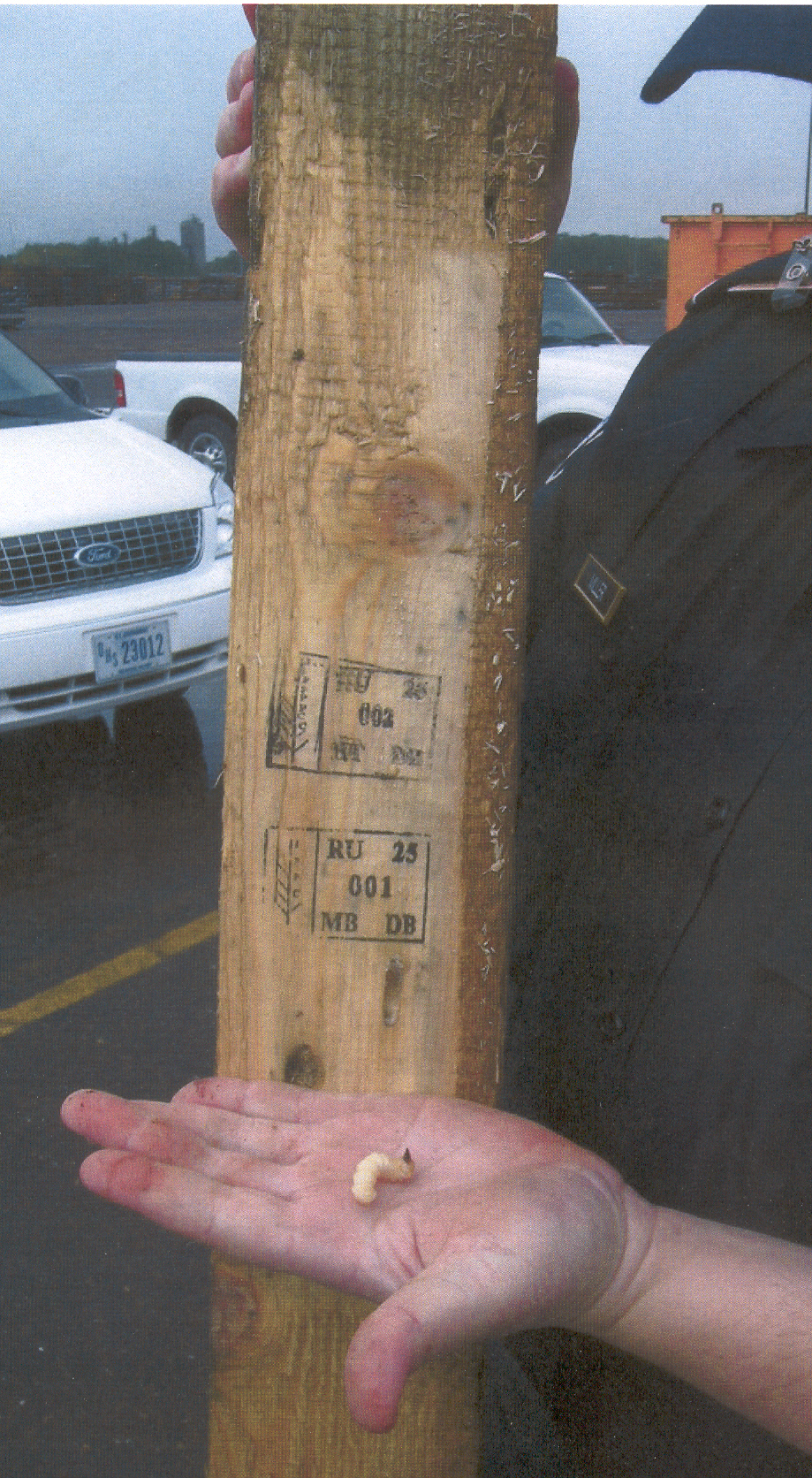
Over the ten-month period October 2020 through June 2021, Customs and Border Protection (CBP) interceptions were typical, according to Kevin Harriger, of the Department of Homeland Security, CBP. In a good sign, the number of infested shipments is 4.5% lower than the same period of the previous year. CBP inspectors found 1,563 shipments with non-compliant wood packaging. Three quarters, or1,148 shipments, lacked the required ISPM#15 stamp. A pest was found in 415 shipments (26%). Nearly three-quarters of the shipments (72% or 1,119 shipments) were carrying miscellaneous cargo. The leading pest family was Cerambycids. There were fewer Buprestids than in previous years, but more Siricids. (Reference at the end of the blog.)
Government View vs. Industry View
CBP assessed liquidated damages (a penalty related to the value of the cargo associated with the wood packaging; legal process explained here) on 654 cases (42% of the violations). These penalties totaled about $541,000 (Harriger). In response to industry objections, Harriger suggests that importers “know before you go” and work with the National Plant Protection Organization (NPPO; phytosanitary agency) of exporting countries so as to avoid interception-related delays.
At a separate webinar sponsored by IHS Markit (Journal of Commerce), an APHIS representative (Tyrone Jones, Trade Director-Forestry Products) said that in his view, ISPM#15 is working because less than 1% of wood packaging was non-compliant. Jones conceded that given the huge quantities of wood packaging in use, even a small infestation rate can result in a non-trivial amount of non-compliant wood. Jones also noted that APHIS has co-hosted workshops with Asian and Central/South American phytosanitary officials to improve their implementation of ISPM#15. The official process calls for the U.S. National Plant Protection Organization (NPPO; APHIS) to inform the foreign NPPO of problems and ask that agency to investigate and bring about a solution. Jones said the U.S. has received feedback from the exporting countries. In one case – apparently in China – APHIS got more directly involved –although how it did so is unclear. You may listen to the webinar by going here. Listening is without cost, but you must register at the site.
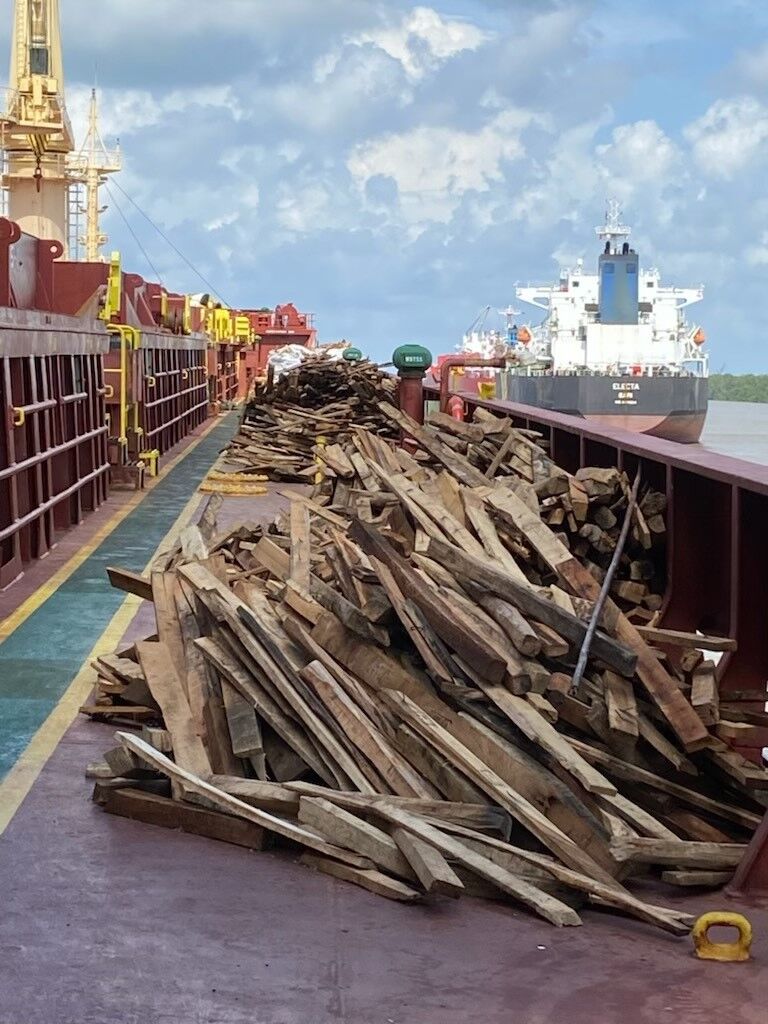
dunnage on a dock
However, as the previous guest blog by Gary Lovett and Diana Davila makes clear, importers are frustrated. They insist that even when they exercise great care in obtaining dunnage, the system is not working. I have blogged previously about the need for government to help importers obtain information that would facilitate compliance (go to “wood packaging” category on this blog site). Jones said APHIS could not provide lists of dunnage suppliers with records of non-compliance.
America needs to ensure that pests are not introduced while trade continues. Furthermore, it is a matter of fairness. U.S. importers are trying but are stymied by the process. For these reasons, the Center for Invasive Species Prevention applauds the initiative of Houston importers to engage players in the supply chain in new approaches. We wish them success!
Issue is International
Concern about the impact of these pest detections – and resulting disruption of cargo shipments – is international. According to an article in the Maritime Executive, five international freight transport organizations under auspices of the World Shipping Counsel in the Cargo Integrity Group are pushing the International Plant Protection Convention (IPPC) to work with them to focus mandatory measures on known high-risk areas and cargoes.
Import Volumes Rising
Meanwhile, volumes of imports continue to rise substantially to meet booming consumer demand – with concomitant risk. Also, imports enter at a wider range of ports. The following data refer to containerized cargo, which is associated with crates and pallets. While the form of wood packaging differs from the dunnage used for the break-bulk cargo which has been the problem in Houston, the issues are the same.
The Southern California port complex (Los Angeles/Long Beach) expects a 10% growth in container volumes this year – to more than 19 million TEU [a standardized measurement equivalent to a 20-foot long container] (Angell 5 August 2021). A few weeks later, this figure was raised to 20 million TEU (Mongelluzo, September 3, 2021). The Seattle-Takoma port complex has received 12.9% more containers from Asia this year than during the same period in 2019. Oakland has received 17.8% more (Mongelluzo August 24, 2021).
In the East, the port of Savannah moved 5.3 million TEU in the fiscal year ended June 30, an 18% increase over the same period in 2018–19 (before the COVID-19 pandemic upset import volumes). In expectation of further growth in volume, the Port of Savannah is creating additional container storage capacity; it aims to reach 7.5 million TEU by mid-2023 (Ashe 26 July 2021). The Port Authority of Virginia has voted to dredge its main channel which would make the port the deepest on the East Coast (surpassing Charleston) and allow greater access to larger ships coming from Southeast Asia. Virginia’s four container terminals currently handle 4.8 million TEU, collectively. We – federal taxpayers – are paying for these port expansions and associated risks of introduction of wood-boring pests, Asian tussock moths, and aquatic invaders.
Congress Paying to Expand Ports
The bipartisan infrastructure bill now pending in Congress contains $11.8 billion in new federal funding over the next five years to expand and improve ports and inland waterways (Szakonyi August 3, 2021). For example, funding for a portion of the dredging planned by the Port Authority of Virginia is included in this bill.
If adopted, the bill [§40804(b)(6)] also would provide $200 million for invasive species detection, prevention, and eradication, including conducting research and providing resources to facilitate detection of invasive species at points of entry. The funding is divided equally between the departments of Interior and Agriculture. Agencies will need these funds to address the plant pests (to say nothing of aquatic invaders) that arrive at these expanded ports!
Lymantria monacha 1 Novlinder, Saxafraga -Ab H Bass
Asian Gypsy Tussock Moths – Improved Detection Rates Result from Better Targetting
Another threat to America’s forests is the arrival of tussock moths from Asia. Kevin Harriger told the National Plant Board that CBP has improved its targetting of ships coming from Asia, based on flight dates, proximity of specific loading docks to forested areas, and other factors. Since 2018, CBP has detected moth egg masses on 177 ships. This equals an approach rate of 12.5% – much higher than the historical moth approach rate of 1%. Ships detected to be transporting moths must leave U.S. or Canadian waters and be cleaned. CBP is now searching vessels more intensely during re-inspection– and finding additional egg masses that had been missed. Thanks to the better targetting data, APHIS, CBP and state officials are aware of the approach of suspect vessels before they arrive.
Haack, R.A., Britton, K.O., Brockerhoff, E.G., Cavey, J.F., Garrett, L.J., et al. 2014. Effectiveness of the International Phytosanitary Standard ISPM No. 15 on Reducing Wood Borer Infestation Rates in Wood Packaging Material Entering the United States. PLoS ONE 9(5): e96611. doi:10.1371/journal.pone.0096611
Jones, J.T, USDA APHIS during JOC webinar, 19 August, 2021
We welcome comments that supplement or correct factual information, suggest new approaches, or promote thoughtful consideration. We post comments that disagree with us — but not those we judge to be not civil or inflammatory.
For a detailed discussion of the policies and practices that have allowed these pests to enter and spread – and that do not promote effective restoration strategies – review the Fading Forests report at http://treeimprovement.utk.edu/FadingForests.htm
A guest blog written by Gary Lovett, Cary Institute of Ecosystem Studies; and Diana Davila, UTC Overseas, Inc.
Gary Lovett died suddenly in December 2022. The future of this initiative is unclear.
Importers are learning that relying on the ISPM#15 mark to ensure that solid wood packaging material is pest-free can be a costly mistake. We propose a private sector solution for keeping insect pests out of wood packaging material and dunnage used in international trade. This voluntary program will supplement ISPM#15 procedures, and implementing it will require cooperation from U.S. government agencies.
dunnage left on the deck of Pan Jasmine after earlier off-loading of cargo; intercepted by CBP at Port of New Orleans; CBP photo
Readers of this series of blogs are well aware that international trade using solid wood packaging material (WPM) such as pallets, crates and dunnage can transport wood-boring insects into the U.S., and that these pests are one of the biggest threats to forest health in this country. The international regulation known as ISPM#15 (International Sanitary and Phytosanitary Measures #15), adopted by the U.S. in 2006, was supposed to solve this problem by mandating treatment of WPM to kill embedded insects through heat, fumigation, or other approved treatments. Treated wood is marked with an official stamp. Research has shown that this has only been partially effective, and the U.S. regularly receives WPM that is marked as having been treated, but is nonetheless infested with insects. This can occur either because the treatments are not 100% effective, or because they were improperly applied- or not applied at all, and the wood is fraudulently marked- by our trading partners.
This is a big problem not only for our forests, but for shippers and importers as well. Importers purchase wood and dunnage marked with the ISPM#15 stamp expecting it to be pest-free, but Customs and Border Protection (CBP) inspectors at ports often find insects in the wood. In an average year, CBP finds insect infestations in WPM in about 700 incoming shipments. Depending on the type of insect, this can result in a large fine for the importer or shipper (up to the value of the cargo) and they could also be required to re-export the infested cargo immediately. The re-exportation can be especially costly if an entire ship needs to be turned around and sent elsewhere because of infested WPM on board. In a recent example (see photo above), the Pan Jasmine, a 590-foot, Panamanian-flagged vessel, was found by CBP on July 17, 2021 to have infested dunnage on board and was turned around before it could dock at the Port of New Orleans (see photo above). These episodes often cost importers hundreds of thousands of dollars each time they happen, and in some cases the total cost for a single incident can be in the millions of dollars.
Cerambycid larva found in dunnage from Pan Jasmine; photo by A. Cunningham, USDA APHIS
Importers are learning that relying on the ISPM#15 mark to ensure that WPM is pest-free can be a costly mistake. To try to address this problem, a coalition of shippers that use the Port of Houston established a committee to investigate the issue and try to come up with solutions. The committee, called the Houston WPM and Dunnage Coalition, includes a core group that includes the two of us plus Peter Svensson of Clipper Americas and Richard Brazzale of Lake Shore Associates. The full group includes representatives of several other shipping companies, and we also work with staff from the USDA Animal and Plant Health Inspection Service (APHIS) and CBP.
We suggest a new approach by which importers can help prevent insect infestations of their WPM. Importers routinely use international inspection companies to check merchandise before it is shipped. Working at the loading port, these companies make sure that the cargo is what was ordered and that it is in good condition. There are several large international inspection companies that provide this service to importers for a fee. If the inspectors could be trained to also check for signs of insect infestation in the WPM, the problem could be addressed prior to shipment, reducing the risk of fines and re-exportation when the cargo reaches the U.S. We have spoken with several inspection companies that are eager to provide this service, and we believe that many shippers and importers will conclude that these pre-loading inspections can save them money by avoiding the high risk of fines and re-exportation.
To move forward with this program, inspection companies need to have their personnel trained to spot pest infestations in WPM. CBP has the most experience in this, and we hope they will agree to offer training sessions, or at least provide training material. We also believe that importers and shippers would benefit from creating an organization to oversee the program, certify inspectors and collect information on reliable producers of pest-free WPM. We hope a pilot program can be started within the next year, and that a full program can be ramped up after that. While we are proposing this for cargo bound for the U.S., the system is in concept applicable to cargo moving anywhere in the world. And while we focus on insects in WPM, the same approach could be used to inspect for other invasive species; for instance, seeds on the floor of a shipping container or insect egg masses on containers or cargo.
evidence of insect damage to dunnage on Pan Jasmine; CBP photo
This program offers a private-sector solution to the problem of infested WPM, and represents the first step being sought within the industry to mitigate the risk of pests arriving to the U.S., and the loss of confidence in the ISPM#15 certification being provided by WPM manufacturers. Other possible measures will be discussed in a subsequent blog post. The program would supplement, not replace, ISPM#15 regulations, and importers would still be required to use ISPM#15 compliant WPM. However, this program would reduce companies’ reliance on the ISPM#15 system, which has proven undependable. Developing this system for international shipments of WPM would provide a win-win—good for shippers and importers, and good for forests around the world.
[For Faith Campbell’s blogs on this topic, click on the category “wood packaging,” which is found below the monthly list of blogs on this site.]
whitebark pine killed by white pine blister rust; Crater Lake National Park; photo by F.T. Campbell
Increasing frequency and severity of forest disturbances pose significant challenges to the sustainable management of forests in the West and to the goods and services they provide. A recent study (Barrett and Robertson 2021; full citation at end of blog) found that natural and human-caused disturbances affected 22.3% of forest land in the West over a 5-year period. The study analyzed fire, drought, insects, disease, invasive plants, their interactions, and their socioeconomic impacts. Climate change was found to affect most disturbance processes now and is expected to continue to do so in the future.
The impacts of these disturbances varied; most disturbances did not result in stand-replacing mortality.
Overarching Findings on Disturbance Agents in Western Forests
Insect and disease outbreaks were the most extensive disturbance types. Each was estimated to affect 6.1 million hectares. Insect and disease outbreaks also caused the highest levels of tree mortality. This finding resulted from what was described as a relatively “low” threshold for “disturbance.” The authors set this threshold at disturbances that cause damage or mortality to 25% of trees in a stand or 50% of an individual tree species.
The overwhelmingly important causal agent was the mountain pine beetle (MPB; Dendroctonus ponderosae). Even after an approximately 50% drop in mortality after its peak years in the 2000s, MPB caused almost half the total area affected by all bark beetles combined 2000-2016.
The great majority of “pest” organisms causing disturbance in the West are native. Some non-native pests are important, though, and they are expected to become more important in the future. The most damaging non-native agent is white pine blister rust (WPBR; Cronaritum ribicola). Despite the largest control effort (in the 1930s), WPBR has caused drastic declines in white pines in the West. Currently attention focuses on high-elevation pines, especially whitebark pine (Pinus albicaulis), which is suffering extensive mortality from a combination of drought, MPB, and WPBR.
tanoak mortality in Big Sur, California; photo by Matteo Garbelotto
Other non-native pests discussed in the report are balsam woolly adelgid, larch casebearer, spruce aphid, and sudden oak death (SOD). The report notes the presence of a second strain of the causal agent of SOD (Phytophthora ramorum). In June 2021, a third strain was detected in Oregon forests (COMTF newsletter). There are mere mentions of goldspotted oak borer and polyphagous shot hole borer. The California fivespined ips (Ips paraconfusus) is reported to vector the fungus Fusarium circinatum which causes pitch canker disease in Monterey pine (Pinus radiata).
The second most extensive disturbance agent in the West is human activity – silvicultural management and conversion to non-forest land uses. These activities affected 4.4 million ha.
The third most extensive disturbance agent is grazing (primarily livestock). This affected 3.9 million ha.
Fire thus ranks fourth as a disturbance agent – as measured by extent. During a five-year period ending in 2017 or 2018, fire affected 3.7 million ha. (I don’t know whether this ranking will change in response to the fire cataclysms of the most recent years; apparently the latest year included in the data was 2017.) The area affected by fire during this period was double that of the period 1960 to 2000. However, fire frequency and extent were still considerably lower than in the 1920s through1940s, before the advent of fire suppression, especially in the drier forests of the interior West.
Other disturbance events – including those caused by weather and vegetation (presumably invasive plants) – affected far smaller areas: a total of 2.3 million ha.
Furthermore, drought and invasive plants – while increasing in extent & intensity – are often considered contributing factors rather than as proximate causes.
Data on past disturbance extents are poor for all these causes except fire. Analysis is further complicated by the high variability of disturbance events – year to year and across space. It is also often difficult to determine the ultimate causes. This makes the implications of these recent increases difficult to ascertain.
As the report points out, forest conditions are inherently dynamic, not stable. They note particularly human manipulation of fire – originally setting fires and then, more recently, suppressing them, has shaped the region’s forests for centuries. Fire suppression has significantly altered forest structure throughout the region, resulting in increasing fuel loads, decreasing resilience to fire and other disturbances.
Impacts of Climate Change
Fire suppression has also increased rates of carbon sequestration (see below).
The report notes that while past timber harvest, land clearing, insect outbreaks, and fires have reduced carbon stocks in forests across the United States to about half their maximum storage potential, recent vegetation and forest cover dynamics have resulted in net increases in carbon stocks in the West – despite CO2 emissions from trees killed by fire and insect damage since 2000.
In the future, climate change is expected to increase tree mortality substantially. In drier forests, mortality would result from increased fire incidence facilitated by a combination of longer fire season and decreased snowpack, reduced summer precipitation, and higher temperatures. In high-elevation and mesic forests, mortality would result from reduced snowpack, precipitation, and temperature.
About half of the West is likely to experience unprecedented climates by the end of this century. This change in climate could trigger changes in vegetation types and extent, net primary productivity, wildfire frequency, and expansion of the range of tree-damaging pests. Grasslands, chaparral, and montane forests are expected to expand; subalpine forests, tundra, and Great Basin woodlands are expected to contract.
Except in Arizona, California, and New Mexico, bark beetles are having a larger impact on forest CO2 emissions than is fire. Future impacts are unclear. Under moderate climate conditions forests would grow faster than under more severe scenarios, but they would thereby generate more fuel for the fires likely to occur during dry years. These fires might ultimately lead to lower carbon stocks.
I have addressed the invasive plant data in a separate blog.
Reducing Impacts via Management
Barrett and Robertson (2021) suggest management actions that could reduce the impact of these disturbances. First, they mention actions aimed at reducing invasions by non-native insects, pathogens, and plants. Also, they name actions to ameliorate climate change, such as reducing greenhouse gas emissions or increasing carbon sequestration and storage to mitigate expected future damage from wildfire, drought, and beetles.
They recommended a series of on-the-ground management actions: fuel reduction treatments; thinning to reduce tree mortality from drought; favoring species that do not host specific pests; and planting genetically resistant varieties. They call for caution to prevent transport of pathogens to new areas during restoration planting of nursery stock or in “assisted migration” projects. Economic impacts of disturbance events on recreation could be mitigated by altering the timing and duration of recreational site visits. The authors also note that the best choices will differ both by site-specific factors and by management goals. They call for community education programs, cooperative stewardship across multiple agencies and landowners, and local and regional planning.
Details on Pest Impacts
Disease dominated in the high elevations of interior mountain ranges and in the precipitation-heavy regions of Oregon and Washington. Even in these locations, mortality levels are often low, resulting in multi-aged stands with complex structure. Patterns of disturbance are expected to change as pathogens and their hosts adapt to climate change. The microbes might evolve more rapidly than the host trees.
test planting of rust-resistant seedlings of whitebark pine at Crater Lake NP; photo by Richard Sniezko
Sudden oak death (SOD) is now the leading biotic cause of tree mortality in coastal forests of California [and possibly Oregon?]. In heavily infested areas SOD has caused conversion of previously tanoak-dominated stands. The report provides a summary of Oregon’s attempts to eradicate SOD from 2001 to 2012.
I am surprised by the failure to mention non-native pest impacts on two narrowly endemic species: Port-Orford cedar root disease and pitch canker disease in Monterrey pines – other than to mention the vector (above).
test planting of disease-resistant Port-Orford cedar; photo by Richard Sniezko
Insect outbreaks were most common in pine forests. Decades of fire suppression, and now climate change, have substantially altered forest conditions over millions of hectares, primarily increasing the density of shade-tolerant and fire-intolerant trees (e.g., true firs, Abies spp.). Balsam woolly adelgid (BWA; Adelges piceae) is now threatening subalpine fir stands in British Columbia, Oregon, Washington, Idaho, Montana, and Utah. BWA is ranked as the 10th most damaging forest insect, first among non-native species over the next few decades (2013-2027). The spruce aphid (Elatobium abietinum) is having its most significant impact in coastal Southeast Alaska on Sitka spruce and in Arizona on Engelmann spruce. Projected increases in temperature and the frequency of droughts in the West will likely make spruce aphid a more significant disturbance agent in coming decades.
risk map for goldspotted oak borer
In discussing the goldspotted oak borer (GSOB; Agrilus coxalis sic) in California and emerald ash borer (EAB; Agrilus planipennis) in Colorado, Barrett and Robertson (2021) say that the heterogeneity of western landscapes provides some buffer against invasion. However, I note that GSOB threatens oaks throughout California (see the map at left). EAB threatens riparian areas of the Pacific states (see map below). These riparian areas are admittedly small in geographic extent but ecologically vital.
Barrett and Robertson (2021) expect seven tree species to suffer substantial levels of tree mortality in the near future. Six are pines threatened in large part by mountain pine beetle, led by the two high-elevation five-needle pines, whitebark pine (58% of total basal area) and limber pine (44%). These are followed by lodgepole pine (39%), ponderosa pine (28%), pinyon pine (27%), Jeffrey pine (26%). The seventh is grand fir (25% of total basal area); the report does not specify which agents are responsible.
Data Issues
The report notes that insects and pathogens are only partially covered by existing monitoring programs. Pathogens are particularly hard to detect and to make conclusive attributions of causality.
SOURCE
Barrett, T.M. and G.C. Robertson, Editors. 2021. Disturbance and Sustainability in Forests of the Western United States. USDA Forest Service Pacific Northwest Research Station. General Technical Report PNW-GTR-992. March 2021
Posted by Faith Campbell
We welcome comments that supplement or correct factual information, suggest new approaches, or promote thoughtful consideration. We post comments that disagree with us — but not those we judge to be not civil or inflammatory.
For a detailed discussion of the policies and practices that have allowed these pests to enter and spread – and that do not promote effective restoration strategies – review the Fading Forests report at http://treeimprovement.utk.edu/FadingForests.htm
In late July I participated in the annual meeting of the National Plant Board (NPB) – the organization representing the states’ phytosanitary agencies. USDA’s APHIS, DHS’ Bureau of Customs and Border Protection (CBP), and various industry associations also participated in the meeting. As usual, I learned lots of depressing developments.
A. Old problems continue to vex:
rhododendron plant infested by P. ramorum; photo by Jennifer Parke, Oregon State University
1) Sudden Oak Death in the Nursery Trade – Again!!!
As you might remember, spring 2019 saw an alarming number of plants infested by the sudden oak death pathogen (Phytophthora ramorum) shipped from west coast nurseries to nurseries in 18 states. Another major incident occurred in 2021. The California Oak Mortality Task Force (COMTF) newsletter for June 2021 reports that one nursery in Oregon shipped plants exposed to P. ramorum to big-box stores in 36 states — twice the number of states that received pathogen-exposed plants in 2019.
The first such incident was in 2004 – 17 years ago! Officials of the states that receive these infested plants are angry that every few years they must divert their resources from other duties to inspect nurseries in their states that have been exposed to the pathogen. They note that these “trace-forward” projects cost state governments money and prevent their carrying out other duties; they also impose significant costs on the in-state nurseries due to holds on sales. When infested plants are found, all these costs rise substantially.
The plant health official from Alabama noted that a single west coast nursery that had repeatedly been found to have infected plants shipped 29 lots of host plants to her state in spring 2021. As is clear from the COMTF article, other states also received thousands of plants that had been exposed to the pathogen. The Alabama official questioned why APHIS tilts so far toward a regulatory system that makes it possible for the “exporting” nurseries to ship. The result – too often – is that an infection at one small business can (repeatedly) impose high costs on hundreds of receiving nurseries and states. [I wonder whether anyone has considered a lawsuit against the source nurseries claiming damages? Would that be successful if the regulatory agencies approved the shipments because – at that time – their inspections had failed to detect the problem?]
Officials from the three west coast states, however, want to support their own nurseries’ efforts to relax regulations and maintain or open markets in the central and eastern states. They point to their own considerable efforts to inspect and certify the pest-free status of nurseries in their states.
Because of the different points of view among the states, the National Plant Board per se has never taken a position on the issue.
However, many states – and even APHIS Deputy Administrator El-Lissy – agree that something is not working. So APHIS is in the midst of reviewing its program, with input from NPB members. Such program reviews have been undertaken several times over the past 18 years. So far, they have never produced a program that effectively stops sales of pathogen-infested plants.
2) Contaminated Wood Packaging
Kevin Harriger of CBP reported that over the nine-month period October 2020 – June 2021, CBP intercepted 1,563 shipments that were in violation of ISPM#15, the international rule that requires that wood packaging be treated to kill pests. Most, or 1,148 shipments (73%), lacked the required mark certifying treatment. Four hundred fifteen (26%) of the total number of shipments had a live pest present. Nearly three quarters of the non-compliant shipments transported miscellaneous cargo. This is not a surprise: all of these characteristics are in keeping with past experience.
Meanwhile, APHIS Deputy Director El-Lissy said APHIS was working with importers, exporting countries’ departments of agriculture, and others to improve compliance. Apparently there were two high-profile incidents when shipments of car components were rejected because of ISPM#15 issues. I am trying to learn more about these incidents.
I recently blogged about the pest risk associated with incoming shipping containers and dunnage.
3) Asian Gypsy Moths (Tussock moths) Still Infesting Ships
Harriger also said that the period 2019-2020 saw the largest number of ships infested by Asian tussock moth eggs since the program began in 2012. [I am aware that the Entomological Society is searching for a new name for this group of insects.] On average, 12 of 100 approaching vessels was infested. CBP is using sophisticated models to identify regions within Asian ports where conditions exacerbate the risk of moth contamination. CBP can match individual ships’ loading records to this information to pinpoint which are most likely to be infested.
Oregon and Washington continue to find both Asian and European tussock moths in traps along the Columbia River. Such detections prompt eradication programs of varying expense and disruption.
[In April, I blogged about a report evaluating the risk posed by several Asian tussock moths; the report was prepared by experts under the auspices of the North American Plant Protection Organization.]
B. In addition to the arrival of new pests, there is an alarming spread of established ones:
1) Beech leaf disease
State phytosanitary officials reported detections of beech leaf disease (BLD) in Maine and Virginia. The devastating impact of BLD on this hard mast tree species is described here. BLD has now spread through much of southern New England (Connecticut, Rhode Island, Massachusetts) and up the coast to Maine. Connecticut reports that trees of all sizes are affected. Maine reports that the disease is widespread in the central coastal region.
beech trees in Prince William Forest Park
Virginia reported that the disease has been detected in Prince William Forest Park, a forested area south of Washington, D.C., managed by the National Park Service. This detection is too recent to say how widespread it is.
2) Laurel wilt
Kentucky’s plant health officer reported that laurel wilt disease has been detected on sassafras trees in Louisville, at the northern tip of the state and across the river from Ohio. He noted that a second host plant, spice bush, is in the nursery trade. While laurel wilt is not regulated, officials are concerned about its impact in natural forests. Neighboring states are concerned.
sassafras in northern Virginia; photo by F.T. Campbell
I learned by looking at the map that laurel wilt has also been detected in Sullivan County, Tennessee, on the Virginia border.
This pest of grapes, tree fruits, and a wide variety of native trees is spreading in Pennsylvania, Delaware, New Jersey, and Maryland. It has also been found in Ithaca, NY, and in Connecticut. The populations in Virginia and West Virginia also continue to spread; a disjunct outbreak has been detected in Prince William County, VA. (south of D.C.). Most alarming are disjunct populations in Ohio on the West Virginia border and in Indiana on the Ohio River border with northern Kentucky. See map here.
The Indiana population has been present for several years. The affected woodland is close to RV parks and other facilities that make further spread likely.
California has established an external quarantine targetting the spotted lanternfly .
C. Wrestling with Continuing Issues:
1) States try to compensate for APHIS’ end of regulating the emerald ash borer and firewood
The members of the NPB have spent years discussing the pros and cons of continuing to regulate ash wood to contain the emerald ash borer (EAB). As I blogged earlier, APHIS has ended its regulatory program. One state – Minnesota – is seeking to use an APHIS procedure to get APHIS’ continued protection from importation of EAB-infested wood (presumably from Canada). Under the Federally Recognized State Managed Phytosanitary Program (FRSMP), a state petitions APHIS to recognize its program for a specific pest. If APHIS grants that recognition, the agency will support the state by continuing to regulate imports of that pest or commodities that might transport the pest when they are destined for the regulating state.
The states have also tried to formulate a system to maintain regulation of firewood (nearly all states’ firewood regulations were based on the federal regulation of all hardwoods to prevent transport of the EAB). As part of this process, the NPB developed guidelines for adoption of regulations by the individual states (available here). The NPB members are just beginning to explore whether states might set up third-party certification system(s). Among the challenges to any harmonization are states’ differing legal authorities and disagreement on what threat levels should be applied, and for how long.
2) New information about the Asian longhorned beetle in South Carolina
ALB in South Carolina; photo by R. Brad Thompson, APHIS
South Carolina authorities reported that dendrological studies indicated Asian longhorned beetle (ALB) had been present near Charleston, S.C. since 2012, and possibly earlier. The population has the same genetic makeup as the outbreak in Ohio. This might be explained by either transport of infested wood from Clermont County, Ohio, or that wood packaging entering Charleston harbor came from the same part of China. (Charleston is an important port.) In South Carolina, ALB attacks primarily red maple – as is true at the other infestation sites. However, maple densities are much lower in the swamps of South Carolina and scientists don’t know whether the ALB will fly farther or intensify attacks on other host species. Other questions raised by differences between South Carolina and other, more northern, outbreak sites include possible changes in the beetle’s life cycle and flight periods.
Authorities noted the extremely difficult conditions, which impede survey and control efforts – which I described in an earlier blog.
One innovation was sharing of resources: staff from the North Carolina and Tennessee departments of agriculture went to South Carolina to help with surveys. The Resource Sharing Initiative was started a few years ago as a collaborative effort of APHIS and the NPB. This was the first time states tried it. There were several issues that had to be worked out. One issue was the long time it takes to train people to recognize ALB symptoms. All three states’ officials said the project was worthwhile.
black walnut in Fairfax County, VA — in an area where thousand cankers disease has been present for more than a decade; photo by FT Campbell
3) Recinding quarantines of thousand cankers disease of walnut
States which adopted quarantines targetting this insect/pathogen complex a decade ago now think that it poses little risk to black walnut (Juglans nigra) growing in its native range (as distinct from trees planted in the West). Several are in the process of rescinding their quarantines. I think these states have considered the science carefully and are taking the appropriate action.
4) Nursery self-certification – System Set Up; Will Nurseries Participate? Will Customers Support the Process?
Craig Regelbrugge of AmericanHort noted that the SANC program has now been officially launched – it has graduated from being a pilot program. [SANC stands for Systems Approach to Nursery Certification] Participants are exploring incentives to recruit wider participation by nurseries that produce plants and how to get support from plant retailers. SANC is conceived as an elite program for the best nurseries and marketplace leaders. It was never intended to be a remedial program to clean up problem issues such as the P. ramorum debacle. To work, it seems to me, SANC will need to find a way to persuade customers to want to pay more for quality plants. Hence the critical importance of getting retailers involved.
Posted by Faith Campbell
We welcome comments that supplement or correct factual information, suggest new approaches, or promote thoughtful consideration. We post comments that disagree with us — but not those we judge to be not civil or inflammatory.
For a detailed discussion of the policies and practices that have allowed these pests to enter and spread – and that do not promote effective restoration strategies – review the Fading Forests report at http://treeimprovement.utk.edu/FadingForests.htm