Eradicate ALB – of course! But what about the other pests?

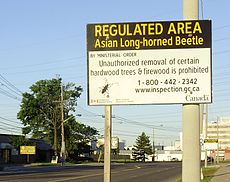
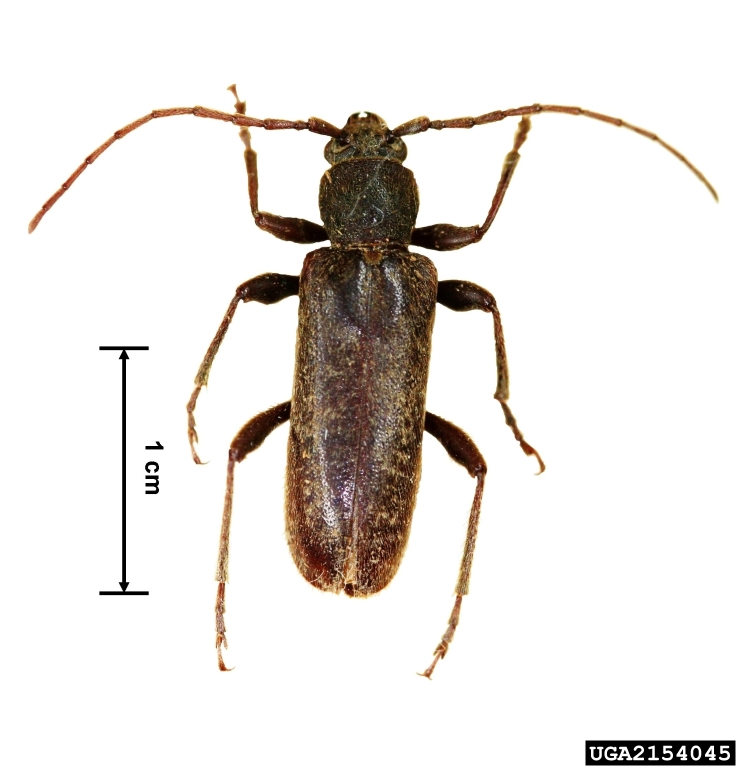
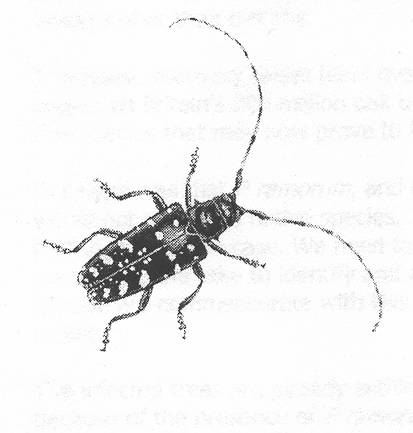
The Asian longhorned beetle (ALB) is the target of most of APHIS’ spending on non-native, tree-killing insects and pathogens. I have been on the record for 18 years – representing a sequence of three organizations – supporting ALB eradication efforts. But other damaging pests do not get adequate attention. Much of the explanation is probably money – APHIS is inadequately funded. But why have the other tree-killers slipped from the attention of politically important constituencies? How do we reverse this situation so that needed actions are taken?

The ALB Eradication Effort

After consulting several sources — Haack 2009, periodic news releases by APHIS and the Ohio Department of Agriculture – I conclude that in the 20 years since ALB was detected in Brooklyn in 1996, US and Canadian authorities have removed at least 188,000 trees. Data on the numbers of high-risk trees treated with systemic pesticides are much less complete. However, it appears from these same sources that U.S. and state authorities have treated more than 800,000 trees. Easily available data do not reveal how many of the treated trees were later found to be infested and therefore had to be cut down. I do hope agency and academic scientists are tracking that information – it is crucial to evaluating the efficacy of programs that allow treatment of “high risk” trees instead of removing them. A related issue is how many trees at early stages of infestation are missed by surveyors.

In carrying out the eradication program over 20 years, APHIS has spent about $600 million (Santos pers. comm.;  US Department of the Interior 2016). Canada has spent far less – something more than $35 million Canadian (Marcotte pers. comm.).

In FY15 APHIS allocated $41.6 million to eradication of the Asian longhorned beetle [US DoI 2016]. This represented 77% of all funds in the agency’s “Tree and Wood Pests” account. The President’s FY17 budget calls for cutting funding for this account from its current level of $54 million to $46 million. If Congress accepts President’s proposed cut and funding for ALB eradication remains at the FY15 level, the proportion allocated to this one pest would rise to 90% of the total account. Perhaps APHIS anticipates spending less on the ALB program. APHIS has announced (USDA news release) that it will  no longer apply systemic pesticides to “high-risk” trees in order to prevent beetle infestation. Instead, the program will focus on identifying and removing infested trees. I worry that with ALB outbreaks still present in Massachusetts, New York, and Ohio, any reduction in the program would be risky. (Official USDA budget documents don’t provide an explicit funding level for the ALB program, so we can’t be sure whether cuts are planned.)

Certainly, ALB eradication deserves continued priority. The beetle kills trees in 15 botanical families – especially maples and birches, which constitute much of the hardwood forest reaching from Maine to Minnesota, as well as urban trees worth an estimated $600 billion. Furthermore, adequately funded eradication efforts have proven to be a successful tactic.

pshb_1PSHB damage to coast live oak;

photo by Akif Eskalen, UCRiverside

Other tree-killing insects are being ignored

However, other species need to be addressed, too. If these efforts are to succeed, they need more than the leftovers from funding ALB work.

Some funds are available through the Farm Bill Section 10007 “Plant Pest and Disease Management and Disaster Prevention Program” grant program. Still …

The Asian gypsy moth demands constant attention from APHIS. That effort is ramping up in response to moth detections in the Pacific Northwest. Apparently most of the funds for this program are from the Farm Bill Section 10007 program – but how long can this funding source be sustained? (See my blog posted earlier in March.)

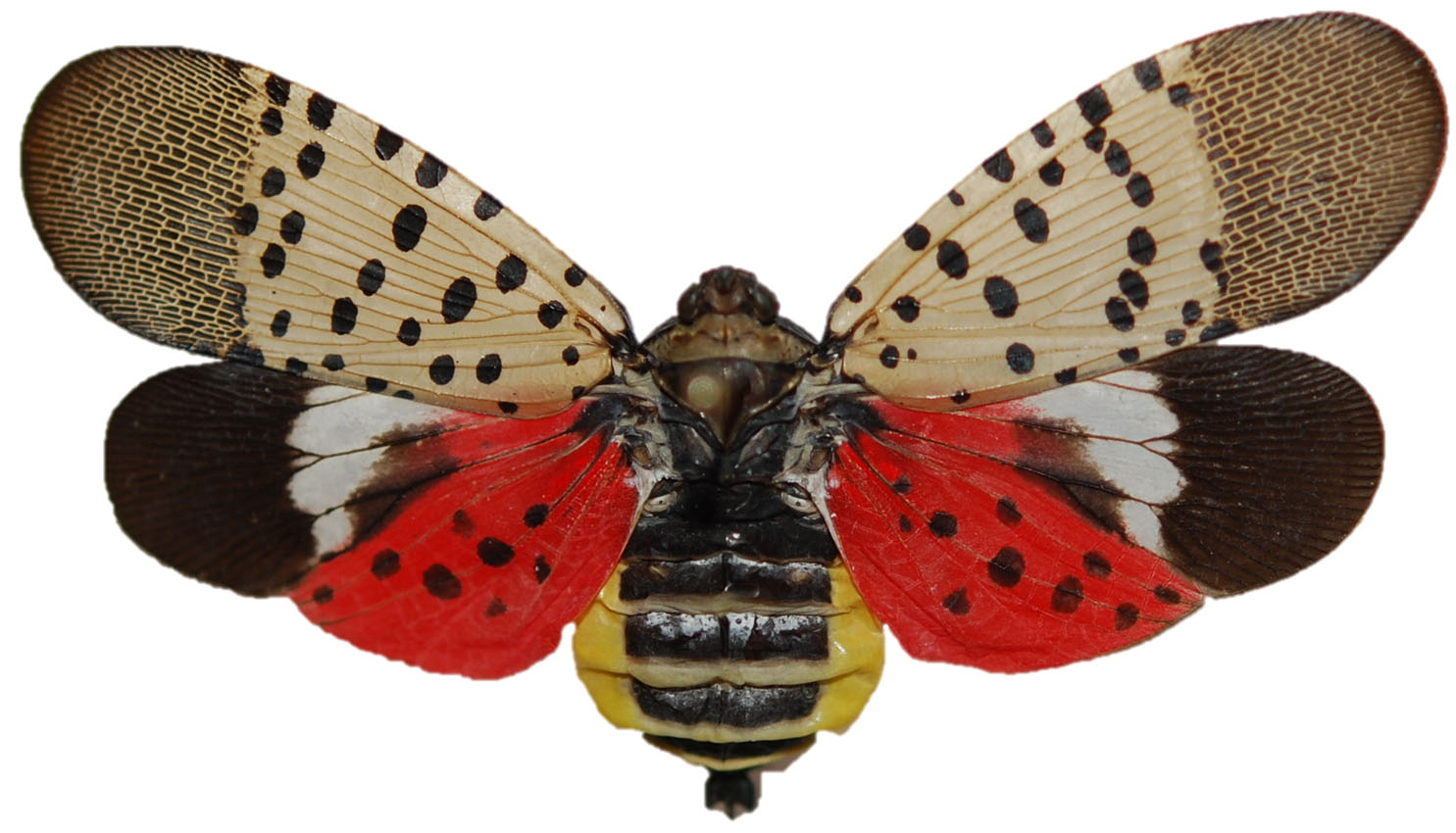
Efforts to eradicate the spotted lanternfly (Lycorma delicatula) from Pennsylvania continue. The lanternfly attacks 25 or more plant species that grow in the Mid-Atlantic states.  Concern focuses on grapes and fruit trees including apples and stone fruits. (The lanternfly prefers tree of heaven (Ailanthus) (PA DoA) but the insect’s host range is too wide to use it as a biocontrol agent for this widespread invasive plant. The spotted lanternfly entered country as egg masses attached to imported slate. It has been detected in four counties in southeastern Pennsylvania ]

What is – or should be – done about the 20 species of non-native wood-boring and bark insects that have been detected for the first time in the United States over just the past decade? While some appear not to be causing major damage, that impression could be wrong. The polyphagous shot hole borer was first detected in California in 2003 ]. It has taken over 10 years to determine that the PSHB and very similar Kuroshio shot hole borer transport fungi that threaten over 300 plant species, including trees that make up the majority of trees in riparian areas and half of the trees planted in urban areas across southern California.

Tree species in other warm regions of the country such as the Gulf Coast are also at risk if the shot hole borers’ spread is not curtailed. Examples include native boxelder and American sweetgum; as well as such widely planted ornamentals as camellia, mimosa, and Japanese maple. The insects and the Fusarium pathogen that they transport might also attack other species in the oak, maple, sycamore, holly, and willow genera which grow in the Southeast.

Other funding needs

APHIS needs to continue efforts to slow the spread of and reduce impacts on forests from the emerald ash borer, including by continuing to support programs aimed at curtailing movement of firewood. While the emerald ash borer has spread to 25 states, significant areas of natural and urban ash forests remain pest-free, especially in the deep South, Great Plains, and Pacific Coast. APHIS might also continue funding research aimed at improving both biological control and breeding of ash trees resistant to the emerald ash borer.  See my blog about resistance breeding posted in February.

APHIS must also have sufficient resources to respond when additional insect introduction are detected – which seems likely since an estimated 35 shipping containers entering the country each day carry wood packaging infested by damaging pests. [see my blogs about wood packaging posted in July and August 2015 and the SWPM fact sheets.

And – as the AGM and spotted lanternfly examples demonstrate – the risk of introduction of tree-killing insects goes far beyond imports of “agricultural” commodities – even when those commodities are widely interpreted to include wooden crates and pallets.

Please re-visit my blogs of 22 February to learn the details of funding issues and then contact your Representative and Senators to support increased funding for APHIS.


Posted by Faith Campbell


SOURCES

Haack, R.A., F. Herard, J. Sun, J.J. Turgeon. 2009. Managing Invasive Populations of Asian Longhorned Beetle and Citrus Longhorned Beetle: A Worldwide Perspective. Annu. Rev. Entomol. 2010. 55:521-46.

Marcotte, M. Canadian Food Inspection Agency. Email to F.T. Campbell 29 April, 2013.

Pennsylvania Department of Agriculture: Agriculture Secretary Urges Consumers to Help Keep Foreign Insect from Spreading through Pennsylvania, United States ​News for Immediate Release Nov. 3, 2014

Santos, R. USDA Animal and Plant Health Inspection Service. Email to F.T. Campbell, April 12, 2013.

USDA APHIS NEWS RELEASE   3/28/16

Contact: Rhonda Santos, (508) 852-8044, rhonda.j.santos@aphis.usda.gov

Suzanne Bond, (301) 851-4070, suzanne.m.bond@aphis.usda.gov

U.S. Department of the Interior. 2016. Safeguarding America’s lands and waters from invasive species: A national framework for early detection and rapid response, Washington D.C., 55p.


Asian gypsy moth – the risk is still too high

The Asian gypsy moth would be more damaging than the European gypsy moth because it feeds on a wider range of plants – including conifers – and the female flies – speeding up its spread.

lymdi18Asian gypsy moth; John H. Ghent; bugwood.org

The United States and Canada have a joint program – under the auspices of the North American Plant Protection Organization (see RSPM #33 here) aimed at preventing introduction of species of gypsy moths native to Asia. The principal risk arises from moths attaching their egg masses to ships (and containers on deck) when the ships visit ports in Far Eastern Russia, China, Korea, and Japan.  The NAPPO standard originally went into force in March 2012.  Under its terms, ships leaving ports in those countries during gypsy moth flight season must be inspected and cleaned before starting their voyage.


Gypsy moth populations rise and fall periodically; thus, it is much more likely that egg masses will be attached to ships during years of high moth population densities.


These variations are seen in U.S. and Canadian detection reports.

AGM Interceptions by year

United States                            Canada

2010                 4

2011                21

2012                44                                32

2013                42                                33

2014                76                                39

2015                  7                                15


(U.S. data from Kevin Harriger, Bureau of Customs and Border Protection, at the 2015 meeting of the Continental Dialogue on Non-Native Forest Insects and Diseases [http://continentalforestdialogue.org/continental-dialogue-meeting-november-2015/] ; Canadian data from Wendy Asbil, National Manager, Invasive Alien Species and Domestic Plant Health Programs Section, Plant Health and Biosecurity Directorate, Canadian Food Inspection Agency


While most AGM detections are at West Coast ports, the risk is not limited to that region. In 2013, Asian gypsy moths were detected at Baltimore, MD; Charleston, SC; Savanna and Brunswick, GA; Jacksonville, FL; New Orleans, LA; Houston and Corpus Christi, TX; and McAlester, OK.

Well aware of the risk associated with ships, U.S. and Canadian customs officials are vigilant in conducting inspections; if egg masses are found, the ships are required to return to international waters and clean off the egg masses.  The ships are inspected again before they are allowed back into port.  The process delays deliveries that are often on tight schedules and costs hundreds of thousands of dollars.

However, the risk is not limited to the ships themselves.  In 2014, more than 500 Asian gypsy moth egg masses were found on four shipments of imported steel slabs arriving at ports on the Columbia River. Efforts were made to clean the more than 5,000 steel slabs, but some egg masses were still present after the cleaning.  The steel was then sent to a furnace for final processing; the furnace heated the steel to  more than 2,000oF – sufficient to kill any remaining eggs! Still … (report by APHIS: Asian Gypsy Moth interceptions and mitigation of risk at Columbia River Ports of Entry, 2014. 18 February 2015)


Some question whether a global company with annual earnings close to $2 billion can be persuaded to take the necessary steps to ensure that its imports are free of gypsy moth eggs.  The cleanup costs charged  by APHIS would be minimal.


Besides, cleaning large steel plates is apparently difficult and probably requires fumigation with methyl bromide – which must be administered in a closed facility with appropriate safety measures.

Implementing the NAPPO standard that presents a unified front to Asian exporters – they must clean ships headed to North America – clearly has reduced the risk of introduction of Asian gypsy moths.  But the smaller risk remains.  Indeed, Oregon and Washington occasionally catch small numbers of Asian gypsy moths in their traps.  In 2015, ten Asian gypsy moths were trapped in Washington State (Report of the Technical Working Group for the Response to Asian Gypsy Moth Captures Washington-Oregon  2015 October 30, 2015).

Oregon caught two Asian gypsy moths in the Portland area (15,000 traps had been placed statewide; the state also trapped 12 European gypsy moths). Previous detections of Asian gypsy moth in Oregon were one each in 1991, 2000, and 2006. Two of these moths were trapped near the location of the 2015 detections.  A vessel that called at Tacoma in January 2013 had 275 egg masses.

The Asian gypsy moths were caught in traps across a broad area, including eight captures around  southern Puget Sound and three in the Portland, OR/Vancouver, WA area.  For these and other reasons, experts concluded that it is likely that females moths are also present in one or more of these areas (Report of the Technical Working Group for the Response to Asian Gypsy Moth Captures Washington-Oregon  2015 October 30, 2015).

The expert group recommended enhanced trapping plus eradication at the four sites where captures were clustered. The group discussed the pros and cons of various approaches, including spraying with Btk, Diflubenzuron (“Dimilin”), or Tebufenozide (“Mimic”); or with Gypchek (gypsy moth nuclear polyhedrosis virus); and  augmentation of spray programs by releasing sterile males.

Both Washington and Oregon plan gypsy moth eradication measures in 2016.  Washington plans to treat 10,500 acres at seven locations in Pierce and Thurston counties (both at the southern end of Puget Sound).   Oregon will spray in several places in northern and northwest Portland.


Posted by Faith Campbell


Emerald ash borer – crucial research needs funding!

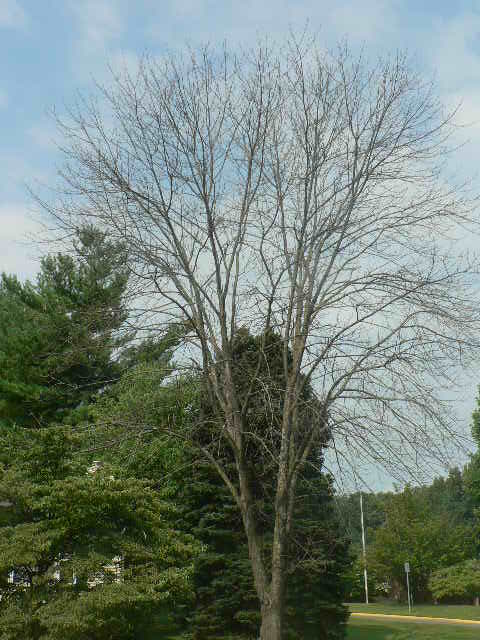
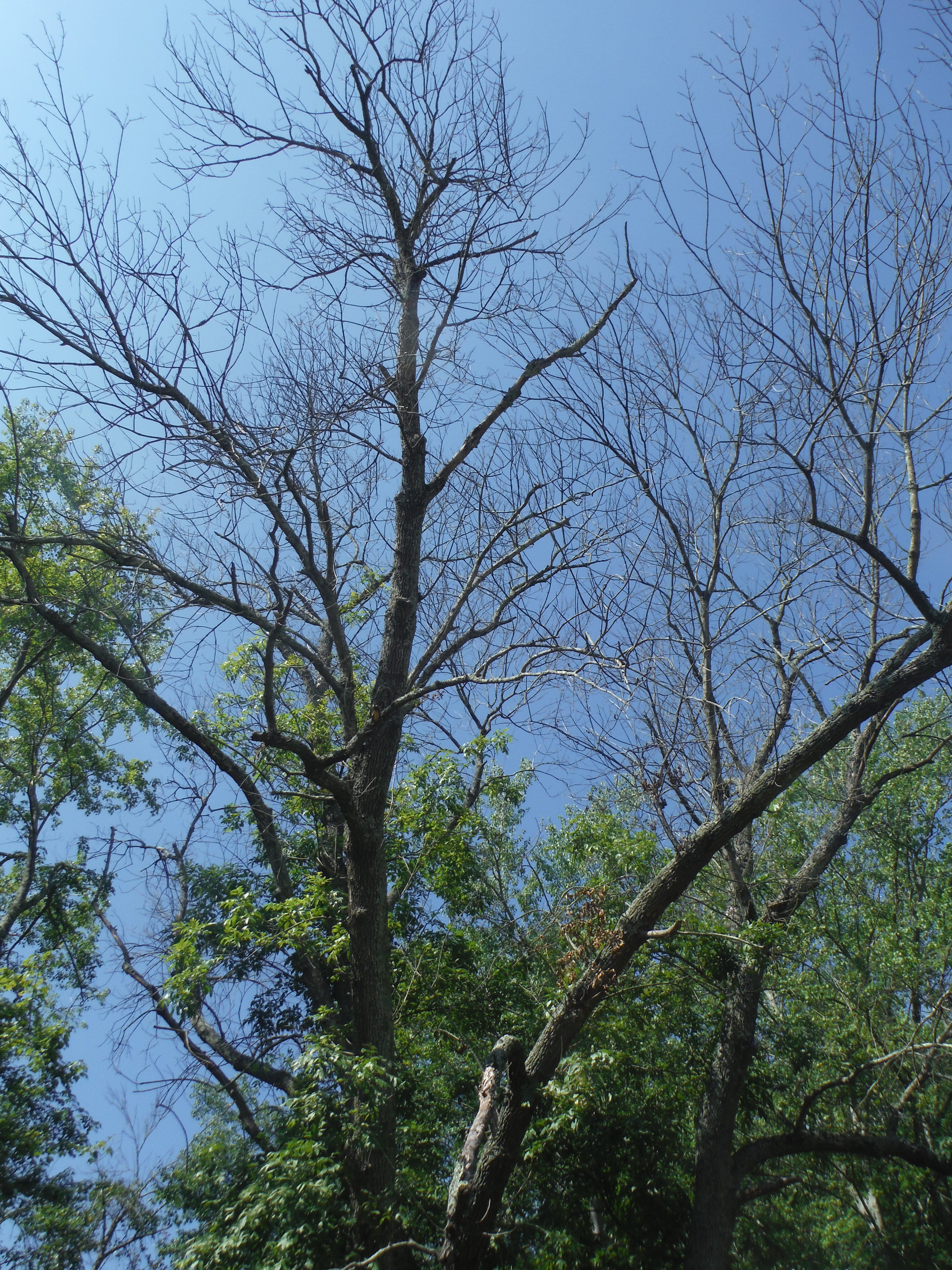
ash tree dying after attack by emerald ash borer

We all know that the emerald ash borer (EAB) has caused enormous damage in the approximately 25 years since it was first introduced to Michigan and Ontario. (For more information, see writeup here. In brief, EAB has killed “untold millions” of ash trees across more than 170,000 square miles in 25 states and two provinces (map).
Apparently all North American ash are vulnerable – more than 20 species in Canada, the U.S., and Mexico. The genus Fraxinus is one of the most widespread on the continent. These trees’ deaths are causing changes in forest species composition, structure, and function. Hundreds of arthropod species that depend on the genus will be affected.

Nevertheless, forests with important ash components are still outside the infested area and deserve greater protection.

20160222_Campbell

Also, ash trees are among the most common ornamental trees planted in U.S. cities and towns. The death of these trees show us that EAB also has imposed billions of dollars in costs on people who had no direct role in the insect’s introduction and spread. Several studies have proposed estimates:
o Communities in Ohio would likely incur costs up to $4 billion if all ash trees on public land were removed and replaced (Sydnor et al. 2007).
o Communities in four Midwestern states would have to pay an estimated $26 billion to remove and replace as trees growing in parks, private lands, and along streets (Sydnor et al. 2011).
o The cost of treating or removing only half of the affected urban and suburban trees across the anticipated range of EAB during the 10-year period from 2009 to 2019 would be $20 billion (Kovacs et al. 2011).

ash tree killed by EAB; Ann Arbor, MI; courtesy of Major Hefje

Over the 14 years since EAB was detected, scientists have learned much about the insect, its hosts, and its management. Early detection of new outbreaks remains difficult. However, traps and lures are more effective than even a few years ago. Other new tools also have been deployed, including strategies for protecting high value trees, and slowing the rate of ash mortality in urban and natural forests.

Four biocontrol agents have been released at sites across the invaded area, although it is too early to know how effective they will be in suppressing EAB populations and protecting ash trees.

The systemic insecticide emamectin benzoate controls EAB for up to three years. This means that municipalities and property owners can now save mature ash trees. Studies show that treating such trees costs less than removing dead trees and planting replacements (Herms and McCullough 2014).

Scientists in Ohio, Michigan, Kentucky, and Massachusetts are testing whether treating just some trees in forest settings can help protect nearby ashes.

One of the most important potential responses to this insect is to breed resistant ash trees. The USDA Forest Service and USDA APHIS have funded such efforts since 2005 – only three years after the insect was detected. Scientists have demonstrated that some ash species that have coevolved with the insect in Asia – especially Manchurian ash – are resistant to EAB attack. More recently, they have been studying how to cross-breed the resistant and non-resistant species and how to evaluate the hybrid progeny for genetic resistance.

Dr. Pierluigi (Enrico) Bonello and others at Ohio State and Wright State University  are studying how Manchurian ash trees resist EAB attack. Their focus is on the chemicals present in the trees’ tissues – how they differ in Manchurian ash compared to North American species. These studies have found that Manchurian ash trees contain chemicals that decrease growth and survival of EAB larvae, and decrease the attractiveness of the tree to ovipositing females.
The Ohio team next needs to continue their progress towards identification of the specific chemicals involved, insert the genes that produce them into other ash tree genomes, and produce a large enough number of progeny to test whether the new trees’ genes provide the expected protection.

The team is also studying the other side of this equation – how EAB larvae neutralize defense mechanisms of vulnerable ash species and how these trees may be manipulated to interfere with these adaptations of EAB.. This is a long-term project that needs consistent and sustained support over many years to bring about real capacity for restoring disappearing ash populations.

Unfortunately, funding for this vitally important work is not assured. USDA APHIS (link to 101 on CISP) has funded the team’s work to date, but may no longer be in a position to do so. . After all, it is 14 years since EAB was detected and a decade since APHIS stopped trying to eradicate it. The goal now is to manage EAB in the forest and in urban settings, over the long term. This task logically should fall to the USDA Forest Service.

Both APHIS and the Forest Service are challenged by the need to respond to the introduction of ever more non-native tree-killing insects and diseases; by the need for programs to address pests already present; and by simultaneous reductions in agencies’ budgets. APHIS’ budget for managing all “tree and wood pests” has fallen from $76 million to $55 million since 2011 – a 28% reduction. The USFS’ research budget has fallen less, proportionately: from $307 million to $292 million (a 4% cut).
However, the USFS Research budget has never been generous in funding research on non-native invasive species. Annual totals for invasive species research have been between $5 and $5.6 million since 2012. EAB specifically has been funded at between $1.2 and $1.8 million.
(For a longer discussion of funding shortfalls and other impediments to programs intended to help our forests recover from EAB and other non-native pests, read Chapter 6 of Fading Forests III, available here)

The emerald ash borer is the most destructive and costly forest insect ever introduced to the United States. Surely the government agency responsible for protecting our forests should provide additional resources to counter this threat.

Sources:
Herms, D. A. and D. G. McCullough. 2014. Emerald Ash Borer invasion of North America: History, biology, ecology, impacts, and management. Annual Review of Entomology, Vol 59, 2014 59:13-30.

Kovacs KF, Mercader RJ,Haight RG, SiegertNW,McCulloughDG,Liebhold AM. 2011. The influence
of satellite populations of emerald ash borer on projected economic costs in U.S. communities, 2010–
2020. J. Environ. Manag. 92:2170–81

Sydnor TD, Bumgardner M, Subburayalu S. 2011. Community ash densities and economic impact
potential of emerald ash borer (Agrilus planipennis) in four Midwestern states. Arboric. Urban For. 37:84–89

Sydnor TD, Bumgardner M, Todd A. 2007. The potential economic impacts of emerald ash borer
(Agrilus planipennis) on Ohio, U.S., communities. Arbor. Urban For. 33:48–54
Posted by Faith Campbell

Firewood – some states & federal agencies still have not acted to contain the threat

49862752Examples abound of pest spread by this means:
• Emerald ash borer: outbreaks near campgrounds in West Virginia, Missouri, New Hampshire, and many other states.
• Goldspotted oak borer: initial outbreak at campgrounds in Cleveland National Forest in San Diego County. Subsequently, outbreaks distant from the original site have been detected in Idyllwild in Riverside County, Weir Canyon in Orange County, and in Green Valley in Los Angeles County.
• Redbay ambrosia beetle and associated laurel wilt disease: outbreaks in Everglades National Park and in Texas.
It is widely believed that many other geographically distant outbreaks of damaging pests have been caused by movement of firewood.
About half the states have adopted regulations governing movement of firewood in order to reduce the risk that moving firewood can spread non-native, tree-killing insects far from existing outbreaks to new, vulnerable forests. Among states at greatest risk are states of the central South – Texas, Arkansas, Missouri; and California. All these states are at high risk due to numbers of campers visiting sites on their territories & growing presence of wood-boring pests.

A study by USDA Forest Service researcher Frank Koch and others found that the highest level of camper travel in the U.S. was to lakes and reservoirs in National forests in an area reaching from eastern Texas to Missouri. Arkansas and Missouri regulate hardwood firewood entering the state because of risk of transporting thousand cankers disease of walnut. Both also have internal state quarantines for emerald ash borer; movement of hardwood firewood from within those quarantine zones is prohibited. Firewood from the southern portion of Arkansas is also subject to quarantines intended to prevent movement of the red imported fire ant.
Texas also regulates firewood stored outside in red imported fire ant quarantine; this quarantine applies to all of the forested areas of the state, so presumably movement of firewood within this large area is allowed. The absence of regulations does not address the threat from one firewood-associated pest – the soapberry borer – already widespread in Texas; nor the increasing risk from EAB, which is established in several neighboring states (see link above).  Texas ash is an important component of forest in hill country. Texas ash is a key food for prey fed to nestlings of the endangered golden-cheeked warbler.
If Texas becomes a bridge by which EAB reaches Mexico, another dozen species of ash will be at risk.
California also does not regulate movement of firewood either generally or by visitors to state parks (see my blog of September 27). California does regulate movement of firewood into the state. And the California Department of Food and Agriculture and CalFire do invest significant resources in outreach and education efforts asking Californians not to move firewood.
In October, Dr. David Wood, emeritus professor of forest insects at UC Berkeley, and I submitted a petition to the California Department of Food and Agriculture asking that it regulate movement of firewood in the state. We cited specifically the recent detection of a new outbreak of the goldspotted oak borer at Green Valley in Los Angeles County.

goldspotted oak borer

In our petition, we acknowledged that CDFA has been active in outreach programs urging Californians not to move firewood. We said that we feared that the educational effort could not succeed in the absence of regulations. First, the lack of regulation allows firewood vendors to ignore the educational message, since there is no sanction. At a deeper level, failure to regulate also conveys an impression that the risk associated with firewood is not considered sufficiently serious to warrant an official response.
In November, CDFA denied our petition. The agency cited the fact that the GSOB detection did not occur until perhaps 20 years after its initial introduction; the absence of pests in firewood from Arizona and Mexico inspected at California border stations; the failure of the federal quarantines targeting EAB to slow that insect’s spread; the insect’s own flight capacity; and – especially – the large number of people moving firewood and other possible vectors of the insect around the state. CDFA re-iterated its belief that the most effective response combines research to develop better detection and management tools public outreach and education.
Of course, numerous other pests are transported in firewood, not just GSOB. These include Polyphagous and Kushiro shot hole borers, pitch canker of pines, sudden oak death, as well as such native insects as the mountain pine beetle.

All these states urge campers to obtain firewood near where they will burn it.
However, I think all are ignoring the lesson from Wisconsin – regulations restricting movement of firewood back up education by providing “teachable moments” and penalizing those who willfully disregard the warnings. To learn about Wisconsin’s successful application of a combination of regulations and outreach, watch the webinar presented by Andrea Diss-Torrance at http://dontmovefirewood.org/blog/webinar-changing-movement-firewood-campers-october-21st.html
Federal agencies also are not doing all they should – as I noted in my blog of August 10. USDA APHIS has enacted quarantines targeting particular species, such as the Asian longhorned beetle and emerald ash borer. APHIS also helps to fund significant outreach efforts, both through the Don’t Move Firewood website and associated programs and working with NASCAR and other sponsors of big events attended by lots of campers. However, APHIS’ plan to control movement of pests in firewood sold in bulk by large suppliers to large retail outlets by developing an industry certification program has been in the works for 5 years and is still not operational.
Some National parks have adopted firewood regulations, but neither the National Park Service nor the USDA Forest Service has adopted nation-wide regulations (see my blog of August 10 and Leigh Greenwood’s blog at http://www.dontmovefirewood.org/blog/nine-national-park-firewood-policies.htm). In the states discussed here, The Ozark National Scenic River (operated by the National Park Service) requires campers to obtain wood within 50 miles of the Park, or to collected dead and down wood at the site. Big Bend National Park has forests in the Chisos Mountains and along the Rio Grande, but it does not restrict visitors’ sources of firewood. Guadalupe Mountains National Park on the Texas border with New Mexico is home to a mixed forest. No fires are allowed in the Park’s two primitive campgrounds. Big Thicket National Preserve allows only hike- or boat-in backcountry camping; I saw no restrictions on firewood.
As I said in August and in an earlier blog of July 15, Yosemite National Park is at great risk to oak-killing insects such as GSOB that could be brought from the ever-larger areas of GSOB infestation in the San Diego and Los Angeles areas. Polyphagous and Kushiro polyphagous shot hole borers might also pose a threat. Yet neither Yosemite nor other National parks in the state have adopted regulations – and their messages urging visitors not to bring firewood are buried in the reservation process.

These states’ failure to adopt firewood regulations contrasts with their willingness to require boaters to clean their boats and trailers to prevent spread of zebra and quagga mussels. Why the different approaches? Do the aquatic organisms have a more compelling story? Are the agencies responsible for aquatic resources more aggressive than agricultural agencies? The threat from mussels was apparent earlier – have states just lost the willingness to act in more recent years? Can we understand the factors and use that knowledge to reverse this discrepancy?
The Continental Dialogue on Non-Native Insects and Diseases pays considerable attention to firewood. See the presentations given at its meeting in mid-November at http://continentalforestdialogue.org/continental-dialogue-meeting-november-2015/
Posted by Faith Campbell

Wood packaging again ???!!!!!! Yes – problems need to be fixed!!

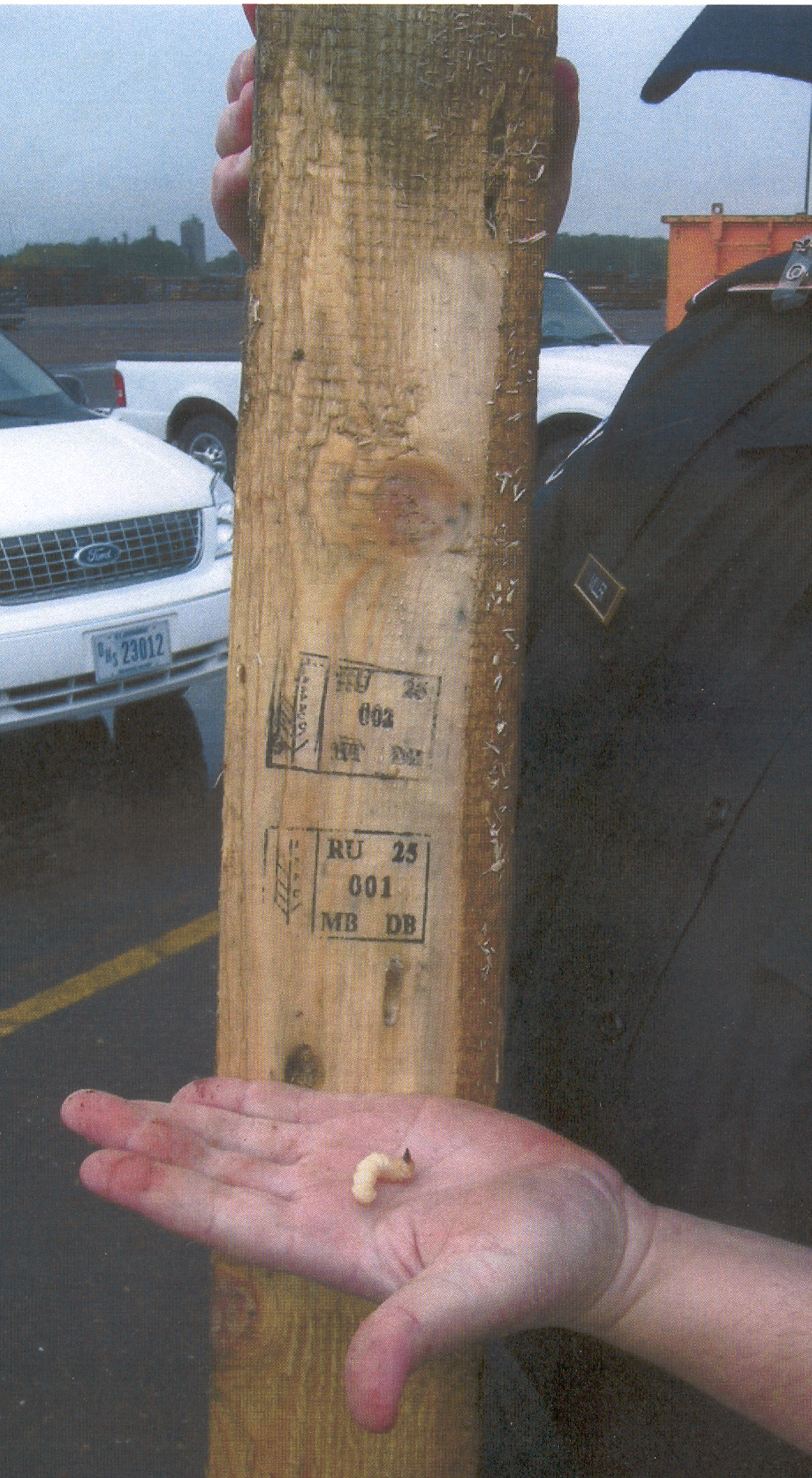
CBP inspector views Cerambycid larvae found in wood packaging that bears ISPM#15 stamp

Do we want triple the current number of wood-boring non-native insects to be established in just 35 years? We all know the damage that some of these insects can do (see summary or longer descriptions; for specific insects).
Over the past 30 years, at least 58 non-native species of wood- or bark-boring insects have been detected in the United States (not quite 2 new insects per year). Most were presumably introduced via imported wood, especially wood packaging (Haack et al.).

Yes, the U.S. has implemented the International Standard for Phytosanitary Management (ISPM)#15.  Nevertheless, USFS researcher Bob Haack estimates that 13,000 shipping containers per year – or 35 per day – transport tree-killing pests to the U.S. This is the basis for an estimate that by 2050 – just 35 years from now – the number of wood-boring pests introduced to the country will triple above current levels.
We don’t need to rely only on extrapolations to know that APHIS’ implementation of ISPM#15 is not protecting our trees. As noted in my blog of 11 September, inspectors at the ports continue to find insects in wood packaging – even wood packaging marked as having been treated according to the requirements of the standard. Nearly half of the wood packaging entering the country that does not comply with the treatment requirements comes from Mexico. U.S. and Mexican forests are separated by deserts – allowing insects to evolve there to which our trees are vulnerable (see my blog from 11 September and descriptions of goldspotted oak borer, soapberry borer, and walnut twig beetle and its accompanying fungus here).
An on-going study seeks to identify insect larvae found in wood packaging; it is a cooperative effort of USDA APHIS’ laboratory at Otis, Massachusetts, and Customs and Border Protection staff at eight ports. Since 2012, these ports have sent 848 cerambycid and buprestid beetle larvae to Otis for identification. The APHIS scientists have succeeded in identifying 292 larvae, or only 34%. They constituted 39 species and 29 genera.

At least 44 of these insects were from China; they included 6 Asian longhorned beetles. Remember, the U.S. first adopted regulations requiring China to treat its wood packaging at the end of 1998 – nearly 17 years ago!!! Another 20 insects were from Russia – which has been required to treat its wood packaging since early 2006 – nearly 10 years ago.
As noted in the documents linked to above, and in earlier blogs (15 July, 22 and 31 August, 11 September), wood-boring pests collectively have been the most costly of the types of tree-killing pests introduced. One study estimated that they cost local governments and homeowners $2.4 billion each year to manage dying and dead trees. The homeowners lose another $830 million in residential property values.

What the Government Has Done

While USDA APHIS has cracked down on U.S. producers of wood packaging who cheat and is promoting workshops to educate our trade partners on wood packaging treatment requirements, the government should do more to protect our forests.

What More Can be Done

• At present, U.S. policy allows an importer to be caught 5 times in 1 year with wood packaging that does not comply with the regulatory requirements. Requirements adopted a decade or more ago should be enforced more strictly! The Bureau of Customs and Border Protection and USDA APHIS should instead penalize all importers whose wood packaging does not comply with regulatory requirements.

• The Bureau of Customs and Border Protection should incorporate the wood packaging requirements into its “Customs-Trade Partnership Against Terrorism” (C-TPAT) program .

• USDA APHIS should re-examine the economic pros and cons of requiring importers to switch to packaging made from materials other than wooden boards. The new review should incorporate the high economic and ecological costs imposed by insects introduced via the wood packaging pathway.

• USDA leadership should move forward and the President’s Office of Management and Budget should approve final regulations – proposed by APHIS 5 years ago! – that would apply the same treatment requirements to wood packaging used in trade between the US and Canada. (Canada has been ready to adopt this measure for several years.)

Sources (my apologies – I apparently cannot attach to specific points in the blog):

Aukema, J.E., B. Leung, K. Kovacs, C. Chivers, K. O. Britton, J. Englin, S.J. Frankel, R. G. Haight, T. P. Holmes, A. Liebhold, D.G. McCullough, B. Von Holle.. 2011. Economic Impacts of Non-Native Forest Insects in the Continental United States PLoS One September 2011 (Volume 6 Issue 9)

Haack RA, Britton KO, Brockerhoff EG, Cavey JF, Garrett LJ, et al. (2014) Effectiveness of the International Phytosanitary Standard ISPM No. 15 on Reducing Wood Borer Infestation Rates in Wood Packaging Material Entering the United States. PLoS ONE 9(5): e96611. doi:10.1371/journal.pone.009661

Leung, B., M.R. Springborn, J.A. Turner, E.G. Brockerhoff. 2014. Pathway-level risk analysis: the net present value of an invasive species policy in the US. The Ecological Society of America. Frontiers of Ecology.org

Posted by Faith Campbell

Hawaii’s unique forests now threatened by insects and pathogens – APHIS & State should act

We have known since Darwin that oceanic islands can be cradles of speciation & endemism. Hawai`i exemplifies the phenomenon. Ninety-eight percent of native flowering plants are endemic (Cox). The density of native insect species in Hawai`i is higher than on mainland North America (Yamanaka).`ohi`a

We have known since Elton or earlier that oceanic islands are highly vulnerable to bioinvasion because their unique species did not evolve defenses against predation, herbivory, competition, or diseases; or the ability to adapt to changed soil chemistry or increased fire frequency.

Chapter 8 of the Office of Technology Assessment study of harmful invasive species states:

“Hawaii has a unique indigenous biota, the result of its remote location, topography, and climate. Many of its species, however, are already lost, and at least one-half of the wild species in Hawaii today are non-indigenous. New species have played a significant role in the extinction of indigenous species in the past and continue to do so. Hawaii, the Nation, and the world would lose something valuable as the indigenous fauna and flora decline.”

I apologize for not addressing the disasters wreaked on Hawai’i’s fauna and non-arboreal flora by invasive mammals and birds, plants, and such animal diseases as avian malaria and avian pox. For more on these topics, see the other sources listed below and the websites maintained by the Hawai`i Invasive Species Council and Coordinating Group on Alien Pest Species. Cox notes that alien species span all trophic groups and threaten the complete replacement of the native terrestrial biota.

Outside of land clearing for ranches and other uses, much of the damage to Hawaii’s native forest trees has been caused by introduced mammals – especially pigs and goats; and invasive plants. Few of the enormous number of non-native insects that have established in Hawai`i appear to have attacked native trees. More than 2,600 non-native insects have been introduced; their number equals three-quarters of the NIS insects established in North America, yet Hawai`i constitutes less than 0.01% of the area of North America. The ratio of non-native to native insect species is higher for Hawai`i than for the other geographic areas studied by Yamanaka and colleagues (mainland North America, “mainland” Japan, and two offshore Japanese islands) (Yamanaka).

More than 13% of the non-native insects (=~350) in Hawai`i were introduced intentionally for biological control of agricultural pests and non-native plants (Yamanaka). Cox, Elton, and the Office of Technology Assessment discuss briefly the sometimes damaging effects of these deliberate introductions.

I am aware of only one NIS insect that has seriously threatened a native tree species: the Erythrina gall wasp, which killed many native wiliwili trees as well as lots of introduced coral trees planted in towns and as windbreaks. Biocontrol agents have helped prevent continuing damage from the gall wasp.

Disease pathogens have so far proved greater threats to Hawaiian native trees than introduced insects. Koa wilt is killing koa, especially at lower elevations. It is not certain whether the pathogenic Fusarium fungus is introduced or native; it has been found on all four major islands. Koa is second only to `ohi`a (see below) in abundance in mid to upper elevation Hawaiian forests. It is extremely important ecologically and culturally (koa was the tree from which large, ocean-going canoes were made). Koa also has a wood valued for a range of uses.

`Ohi`a lehua is the most widespread tree on the Islands, dominating approximately 80% of Hawai`i’s remaining native forest (about 965,000 acres, 1500 square miles). These forests are home to Hawai`i’s one native mammal (Hawaiian hoary bat) and 30 species of forest birds (Loope and LaRosa). One threat to `ohi`a comes from `ohi`a or eucalyptus rust.  Detected in April 2005, it had spread to all the major islands by August. Fortunately, the strain of `ohi`a rust established in Hawai`i is not very virulent on `ohi`a, but it has killed many plants of an endangered native shrub, Eugenia koolauensis and in Australia it has killed many plants in the Myrtaceae family. Hawaiian conservationists worry that a different, more virulent, strain might be introduced on plants or cut foliage shipped to the Islands from either foreign sources or the U.S. mainland.

A new, apparently more damaging, pathogen was detected in 2010. This new disease is caused by two newly discovered species of the fungal genus Ceratocystis — Ceratocystis lukuohia and C. huliohia. By October 2015 the disease has killed 50% of the `ohi`a trees in several scattered locations totaling 6,000 acres on the southeast lowlands of Hawai`i (the “Big Island”). Tree mortality was nearing the boundary of Hawaii Volcanoes National Park. Hawaii Volcanoes pioneered methods for controlling invasive pigs and plants that threatened to destroy the Park’s forests. Through 40 years of sustained effort, Hawaii Volcanoes has brought those threats under control. Now the Park faces loss of its invaluable `ohi`a forest to this pathogen – which will be infinitely harder to keep out of the Park. (For updates on “rapid ohia death” visit the write-up here.)

The Hawai`i Department of Agriculture has adopted an emergency regulation aimed at preventing transport of infected wood or tree parts from the Big Island to other islands.

Although tree-killing insects and pathogens have so far not been as damaging in Hawai`i as might be expected, the Islands are highly vulnerable due to the large volumes of cargo and people from around the globe which land on the Islands and the few tree species native there. The Erythrina gall wasp has island-hopped from the east coast of Africa to Hawai`i and many islands in between. `Ohi`a rust is native to tropical America and probably reached the islands on cut stems used in floral decorations. It is unknown where the Ceratocytis fimbriata strain evolved or how it reached Hawai`i.

USDA APHIS is responsible for preventing introduction of new plant pests to Hawai`i from non-U.S. jurisdictions (as well as from Guam). APHIS has traditionally paid little attention to plant pests that are thought likely to threaten “only” Hawai`i but not plant (agricultural) resources on the mainland.

Hawaiian authorities are responsible for preventing introductions from the Mainland – but they struggle with inadequate resources to address the huge volumes of incoming freight and they sometimes hesitate to act. (Hawai`i Department of Agriculture considered restricting shipments of foliage in the Myrtacea to minimize the risk of introduction of a new strain of `ohi`a rust, but in the end did not adopt such a measure.)

Hawai`i’s unique biota is an irreplaceable treasure. All Americans should act to prevent introduction additional introductions to the Islands.

SOURCES:
Cox, George W. Alien Species in North America and Hawaii Impacts on Natural Ecosystems 1999
Elton, Charles S. The Ecology of Invasions by Animals and Plants 1958; see especially Chapter 4: The Fate of Remote Islands
Loope, L. and LaRosa, A.M. `Ohi`a Rust (Eucalyptus Rust) (Puccinia psidii Winter) Risk Assessment for Hawai`i
U.S. Congress Office of Technology Assessment. 1993. Harmful Non-Indigenous Species In the United States. OTA-F-565; available at http://govinfo.library.unt.edu/ota/Ota_1/DATA/1993/9325.PDF

Yamanaka, T., N. Morimoto, G.M. Nishida, K. Kiritani, S. Moriya, A.M. Liebhold. 2015. Comparison of insect invasions in North America, Japan and their Islands. Biol Invasions DOI 10.1007/s10530-015-0935-y

Posted by Faith Campbell

Californians – regulate firewood! Protect your trees!

A new outbreak of the goldspotted oak borer raises again the question of why California does not outlaw the movement of untreated firewood.

goldspotted oak borer

This beetle – which has already killed more than 80,000 oak trees! – has been detected in the town of Green Valley, a small town in Los Angeles County north of the city, and inside the boundaries of the Los Padres National Forest. The first surveys found 27 coast live oak trees with symptoms of beetle attack.
The beetles in Green Valley are genetically identical to those in San Diego County – strongly indicating that the outbreak was started by people moving firewood out of the infested area.
As I noted in my blog dated July 15, the California Department of Food and Agriculture (CDFA) has so far refused to adopt regulations governing movement of firewood. While CDFA and other entities have sponsored billboards, flyers, and other outreach materials to educate people about the risk associated with firewood, the failure to ban firewood movement puts oaks throughout the state at risk.


areas of California in which oaks are at risk to GSOB
areas of California in which oaks are at risk to GSOB (redder areas at greatest risk)

A second pest – the polyphagous shot hole borer and its associated Fusarium fungi – threatens a much wider range of trees. It is currently established in Los Angeles, Orange, San Bernardino, Riverside, and San Diego counties. It is known to attack Coast live oak, valley oak, Engelmann oak, California sycamore, big leaf maple and box elder, cottonwood, alder, and ash. This beetle, too, can be moved in firewood.
Californians should ask Governor Brown to adopt regulations restricting movement of untreated firewood. Act now! to protect your trees from goldspotted oak borer, polyphagous shot hole borer, and other non-native insects.
Posted by Faith Campbell

Wood Packaging – Customs Efforts & Recent Detections

As noted in my blog of July 15, damaging pests continue to enter the country in wood packaging. The most comprehensive study indicates that tree-killing pests are found in an estimated 13,000 containers entering the country each year – or 35 per day.
These pests are present despite requirements adopted 9 or more years ago that wood packaging be treated.

Types of cargo packaged in wood are inspected by agricultural specialists within the Bureau of Customs and Border Protection , a division of the Department of Homeland Security. CBP agricultural specialists work at 167 sea, air and land ports of entry.  See an article about CBP efforts to curb introductions of tree-killing pests posted at http://www.cbp.gov/frontline/2014/12/frontline-december-forest-prime-evil.

CBP agriculture specialists in Laredo, Texas, examine a wooden pallet for signs of insect infestation. [Note presence of an apparent ISPM stamp on the side of the pallet] Photo by Rick Pauza

According to the CBP in the above article, the types of commodities imported that have the highest rates of SWPM-related pest interceptions are metal and stone products (including tile), machinery (such as automobile parts and farm equipment), electronics, bulk food shipments and finished wood articles.
These imports have a long-standing record of pest presence – as described in Chapter 4 of my lengthy report on tree-killing pests.

According to the CBP , 48% of the wood packaging entering the country that does not comply with the treatment requirements comes from Mexico. Mexican maquiladoras are factories that import material and equipment duty-free, then assemble a wide range of products – auto parts, apparel, electronics, furniture, and appliances. Mexico’s 3,000 maquiladoras account for half of Mexico’s exports.
China has the second worst record.
Of course, we import lots of stuff from both countries! However, the China situation is particularly disturbing because the U.S. has required that wood packaging from China be treated since the beginning of 1999 – 16 years!
The ports receiving highest numbers of shipments with non-compliant wood packaging materials have consistently been those along the U.S.-Mexico border, especially in Texas: Laredo, Pharr, more recently Brownsville & Houston. Other ports receiving high volumes of non-compliant wood packaging include Blaine, Washington; Long Beach, California; and Romulus, Michigan.

USDA APHIS and CBP have cooperated in a program under which insect larvae found in wood packaging are identified as to species. In recent years, they have studied larvae detected in wood packaging from eight ports – Long Beach, Seattle; 2 ports in Florida; and three cities on the Texas-Mexico border. (Remember, there are 167 ports of entry across the country, so this sample represented 5% of all ports.) Found at these ports were an unreported total of insects, including 116 individuals in the same family as Asian longhorned beetle (Cerambycids). Forty-three were from China (including 5 ALB), 20 from Russia, and seven from Mexico (Philip Berger, APHIS, at the annual meeting of the Continental Dialogue on Non-Native Forest Insects and Diseases, November 2014)

Most familiar – and frightening! – examples of pests introduced via wood packaging include Asian longhorned beetle, emerald ash borer, redbay ambrosia beetle and its accompanying fungus, and possibly polyphagous shot hole borer and its accompanying fungus – all described here.

The prospect of receiving additional insects from Asia scares everyone. What if a new pest is as bad as the four we already have? The emerald ash borer has already caused the removal of an estimated 50 million trees and continues to spread to ash trees – and now white fringe trees – throughout America east of the Great Plains. Laurel wilt disease (transmitted by the redbay ambrosia beetle) is rapidly eradicating redbay trees in the southeast, including in Everglades National Park – one of the icons of the American conservation movement. The Asian longhorned beetle has already caused removal of more than 124,000 trees from our cities, suburbs, and nearby woodlands – at a cost to federal taxpayers of more than $500 million. If it escapes eradication programs, it threatens trees in 10% of America’s forests. The polyphagous shot hole borer threatens numerous tree species that, collectively, make up more than half the trees planted in urbanareas in Southern California.

While no one denies the threat from insects native to Asia, we should not be complacent about insects from Mexico. Although we are neighbors, our forests are separated by deserts – allowing insects to evolve there to which our trees are vulnerable. Three wood-boring beetles native to Mexico and possibly some U.S. border states are already causing havoc to U.S. trees – goldspotted oak borer, soapberry borer, and walnut twig beetle and its accompanying fungus (all described here).  The first two were introduced to vulnerable forests through movement of firewood, not wood packaging. The third – the walnut twig beetle – might be native to California, although thousand cankers disease is killing native California walnuts throughout the state so something is different than it used to be.

goldspotted oak borer

When Customs officials detect wood packaging that does not comply with ISPM #15 (“noncompliance” means one of three things: the wood does not bear the ISPM #15 stamp; or the stamp appears to be fraudulent; or signs of pests are detected), that wood must be re-exported immediately, usually with the associated commodity. If any insects present pose an immediate risk of introduction, e.g., if adults are emerging, the shipment might need to be fumigated before re-export.
Re-exported shipments – and any treatments – cause importers to lose income and face costly delays. Still, the continuing presence of non-compliant wood packaging indicates that these inconveniences are insufficient to prompt importers to take all precautions possible to ensure that packaging used by their suppliers and brokers comply with the requirements.

Why don’t importers use alternative packaging made from plastic, steel, or composites that would not harbor tree-killing insects? Plastic pallets also weigh much less than wooden ones, so transport costs are reduced. Customs has pointed out the advantages. … Still, packaging material made from wood is comparatively plentiful, cheap, easy to repair, biodegradable. So it continues to dominate the market.
What steps can be taken by the U.S. government and importers to minimize the presence of insects in packaging?
• U.S. policy allows an importer to be caught 5 times in 1 year with wood packaging that does not comply with the regulatory requirements. Requirements adopted a decade or more ago should be enforced strictly! The Bureau of Customs and Border Protection and USDA APHIS should instead penalize all importers whose wood packaging does not comply with the regulations.
• The Bureau of Customs and Border Protection should incorporate the wood packaging requirements into its “Customs-Trade Partnership Against Terrorism” (C-TPAT) program .
• USDA APHIS should re-examine the economic pros and cons of requiring importers to switch to packaging made from materials other than wooden boards. The new review should incorporate the high economic and ecological costs imposed by insects introduced via the wood packaging pathway.
• The President’s Office of Management and Budget should allow APHIS to finalize regulations – proposed in 5 years ago! – that would apply the same treatment requirements to wood packaging used in trade between the US and Canada. (Canada has been ready to adopt this measure for several years.)
• Importer’ contracts with suppliers routinely specify penalties for delivery delays; the contracts should be amended to add penalties for noncompliant wood packaging.
• A decade ago, USDA APHIS funded research which developed an ingenious method for detecting mobile pests inside a container. It was an LED light attached to a sticky trap. Placed inside a container, the light attracted snails, insects and possibly other living organisms. The whole mechanism was attached to a mailing container that could be pre-addressed for sending to a lab that could identify the pests. Why was this tool never implemented?

Posted by Faith Campbell

Wood-borers in Wood Packaging: How Did We Get to This Crisis?

shipping containershipping container being unloaded at Long Beach

The rising numbers of tree-killing wood-boring insects introduced to the U.S. (see  blogs from July 15 and August 3 & fact sheet and sources linked there) are a result of ballooning of trade volumes and use of wood packaging.

This irruption of trade was made possible by adoption of the shipping container to transport a wide range of goods.Moving from place to place are not just finished products but also components that originated in one country and that are to be assembled in another country.

How the shipping container revolutionized trade and manufacturing is detailed by Marc Levinson in his book, The Box: How the Shipping Container Made the World Smaller and the World Economy Bigger (Princeton University Press 2008). The transformation affected not only trade between countries, but also within countries, with some regional economies growing while others faltered.

Dr. Levinson recognizes that he has not addressed environmental damage caused by massive movement of cargo. While Dr. Levinson does not explain which damage he is thinking about, I doubt that he includes introductions of non-native wood-boring pests.

(I don’t know enough about the ballast water pathway to understand the impact of containerized shipping on introductions of aquatic invaders, but it seems likely to be an important factor through three factors: directing trade to new port areas; the ships’ huge size; and taking on of ballast water for those segments of a voyage carrying fewer filled cargo containers. On the other hand, Dr. Levinson says that a balance of cargo moving both ways on a trade route is an important factor in determining which ports thrive.)

Before containers, port costs represented the highest proportion of transport costs. Those costs are no longer an important consideration in determining manufacturing and transport choices. Nor is distance as important as before. What is most important are ports that can move large volumes of goods efficiently. The manufacturer or retailer at the top of the chain finds the most economical place for each step in the manufacturing and assembly process without regard to its location.

The containerization revolution was rapid. Containers were first used in international trade in 1966; within three years, nearly one-third of Japanese exports to the U.S. were containerized, half of those to Australia. In the decade after containers were first used in international trade, the volume of international trade in manufactured goods grew more than twice as fast as the volume of global manufacturing production, 2.5 times as fast as global economic output. Large numbers of specialized container ships were built, at ever-increasing sizes. The largest container ship in 1969 could carry 1,210 20-ft containers. By the early 2000s, ships being built to carry 10,000 20-foot containers; or 5,000 40-foot containers.

When Dr. Levinson wrote his book in 2005, the equivalent of 300 million 20-foot containers were crossing the world’s oceans each year.

The container revolution interacted with “just-in-time” manufacturing, which required rapid and reliable transport. Large companies signed written contracts with suppliers and shippers which included penalties for delays.

In the U.S., Long Beach quickly became the principal port because it (as well as Oakland and Seattle) had excellent rail connections to the interior. By 1987, one-third of containers from Asia destined for the East Coast landed at Long Beach and crossed the U.S. by rail. Perhaps counter to our expectation, only one-third of containers entering southern California in 1998 contained consumer goods. Most of the rest contained intermediate or partially processed goods as part of the new international supply and manufacturing chain.

containers at Long Beach Containers at Long Beach

On the East coast, Charleston SC and Savannah similarly grew because of transport connections – this time, primarily highways.

So, global trade is huge and growing; and the shipping container moves immense quantities of goods from one ecosystem to another and provide shelter for a vast range of hitchhiking living organisms (in addition to insects in the wood, there can be other insects’ eggs attached to the sides of the container, snails, weed seeds, even vertebrates – a raccoon once staggered out of a shipping container that had crossed the Atlantic from the U.S. to France!).

We need to imagine, test, and apply a variety of tools to suppress the numbers of living organisms traveling in shipping containers.

For example,
• if importer-supplier contracts specify penalties for delivery delays, we should ask why don’t importers amend the contracts to add penalties for non-compliant wood packaging?
• Might the Bureau of Customs and Border Protection incorporate the wood packaging requirements into its “Customs-Trade Partnership Against Terrorism” (C-TPAT) program.
• A decade ago, USDA APHIS funded research which developed an ingenious method for detecting mobile pests inside a container. It was an LED light attached to a sticky trap. Placed inside a container, the light attracted snails, insects and possibly other living organisms. The whole mechanism was attached to a mailing container that could be pre-addressed for sending to a lab that could identify the pests. Why was this tool never implemented?

We can’t stop the trade, but we can be much more aggressive in adopting measures to minimize pest introductions.

Posted by Faith Campbell

Non-Native Pest Threat to Forests of the West Coast

As we Americans import more stuff, the risk of new pest introductions rises, too. Many tree-killing insects arrive as larvae living in crates, pallets, and other forms of wood packaging. While the USDA requires that incoming wood packaging be treated to prevent pests, this regulation has not prevented pests from entering the country on wood packaging.

piece of wood packaging with Cerambycid larva; detected in Oregon

A study has found that perhaps 35 shipping containers harboring tree-killing pests reach our ports each day (Haack et al. 2014). At this rate, in just 35 years, America might suffer invasion by more than 100 new wood-boring species. This would result in a tripling of borers introduced to U.S. (Leung et al. 2014).

Already, wood-boring beetles have been among the most damaging tree-killing pests introduced to the U.S. Our environment certainly doesn’t need invasions by three times as many new wood-borers!

West-coast ports receive lots of incoming shipping containers. Long Beach alone receives about half of the nearly 25 million shipping containers arriving at the U.S. each year. So it is alarming that high-risk insects, including the Asian longhorned beetle (ALB), continue to be found in wood packaging (Berger 2014).

Imported goods that are heavy are more likely to be packaged in wood and that thus pose the greatest pest risk. The highest risk commodities are
• machinery (including electronics) and metals;
• tile and decorative stone (such as marble or granite counter tops) (Harriger 2014).
The west coast ports of Seattle, Los Angeles/Long Beach, and San Francisco all rank in the top 15 out of 3,500 (1/2 of 1%) cities nation-wide for imports of tile and decorative stone, machinery and metals (Colunga-Garcia et al. 2009).

Not only do west coast cities import high volumes of risky goods; a significant proportion of the trees growing in those cities are vulnerable to these pests. Seattle’s three to four million trees belong to more than 300 species – although a mere seven genera constitute two-thirds of the trees (Ciecko et al. 2012). It has been estimated that just four non-native pests (ALB, gypsy moth, emerald ash borer, and “Dutch” elm disease) could cause $3.5 billion in damages. The ALB alone threatens 39.5% of all trees lining the city’s streets (City of Seattle 2013).

San Francisco has an estimated 669,000 trees; 12% are at risk to the ALB (Nowak et al. 2007). Apparently no one has yet estimated the numbers of trees at risk to sudden oak death (SOD), goldspotted oak borer (GSOB), or polypagous shot hole borer (PSHB).

It is essential that USDA APHIS act more aggressively to prevent additional introductions of pests via wood packaging. (For a longer discussion of the wood packaging pathway, visit my previous blog posted on July 15th). In brief:
• APHIS & the Bureau of Customs and Border protection should penalize all importers whose wood packaging does not comply with decade-old regulatory requirements.
• The Bureau of Customs and Border Protection should incorporate the wood packaging requirements into its “Customs-Trade Partnership Against Terrorism” (C-TPAT) program
• APHIS should re-consider the advantages of requiring importers to switch to packaging made from materials other than wooden boards.
• The President’s Office of Management and Budget should allow APHIS to finalize regulations – proposed in 5 years ago! – that would apply the international standard’s treatment requirements to wood packaging used in trade between the US and Canada. (Canada has been ready to adopt this measure for several years.)

SOURCES
Berger, P. Executive Director, PPQ Science and Technology, Presentation to the Continental Dialogue on Non-Native Forest Insects and Diseases, November 3, 2014

Ciecko, L., K. Tenneson, J. Dilley, K. Wolf. 2012. Seattle’s Forest Ecosystem Values: Analysis of the Structure, Function, and Economic Benefits; August 2012; GREEN CITIES RESEARCH ALLIANCE; City of Seattle Urban Forest Stewardship Plan 2013.

City of Seattle Urban Forest Stewardship Plan 2013.

Colunga-Garcia, M., R.A. Haack, and A.O. Adelaja. 2009. Freight Transportation and the Potential for Invasions of Exotic Insects in Urban and Periurban Forests of the US. J. Econ. Entomol. 102(1): 237-246 (2009); and raw data for the study provided by the authors.

Haack, R.A., F. Herard, J. Sun, J.J. Burgeon. 2009. Managing Invasive Populations of Asian Longhorned Beetle and Citrus Longhorned Beetle: A Worldwide Perspective. Annu. Rev. Entomol. 2010. 55:521-46.

Haack RA, Britton KO, Brockerhoff EG, Cavey JF, Garrett LJ, et al. (2014) Effectiveness of the International Phytosanitary Standard ISPM No. 15 on Reducing Wood Borer Infestation Rates in Wood Packaging Material Entering the United States. PLoS ONE 9(5): e96611. doi:10.1371/journal.pone.0096611

Harriger, K. 2014. Presentation to the Continental Dialogue on Non-Native Forest Insects and Diseases, November 3, 2014

Leung, B., M.R. Springborn, J.A. Turner, E.G. Brockerhoff. 2014. Pathway-level risk analysis: the net present value of an invasive species policy in the US. The Ecological Society of America. Frontiers of Ecology.org

Nowak, D.J., R.E. Hoehn III, D.E. Crane, J.C. Stevens, J. T. Walton. 2007. Assessing Urban Forest Effects and Values: San Francisco’s Urban Forest. USDA Forest Service. Northern Research Station. Resource Bulletin NRS-8.


posted by F.T. Campbell