Support Adequate Funding for APHIS Tree-Pest Programs


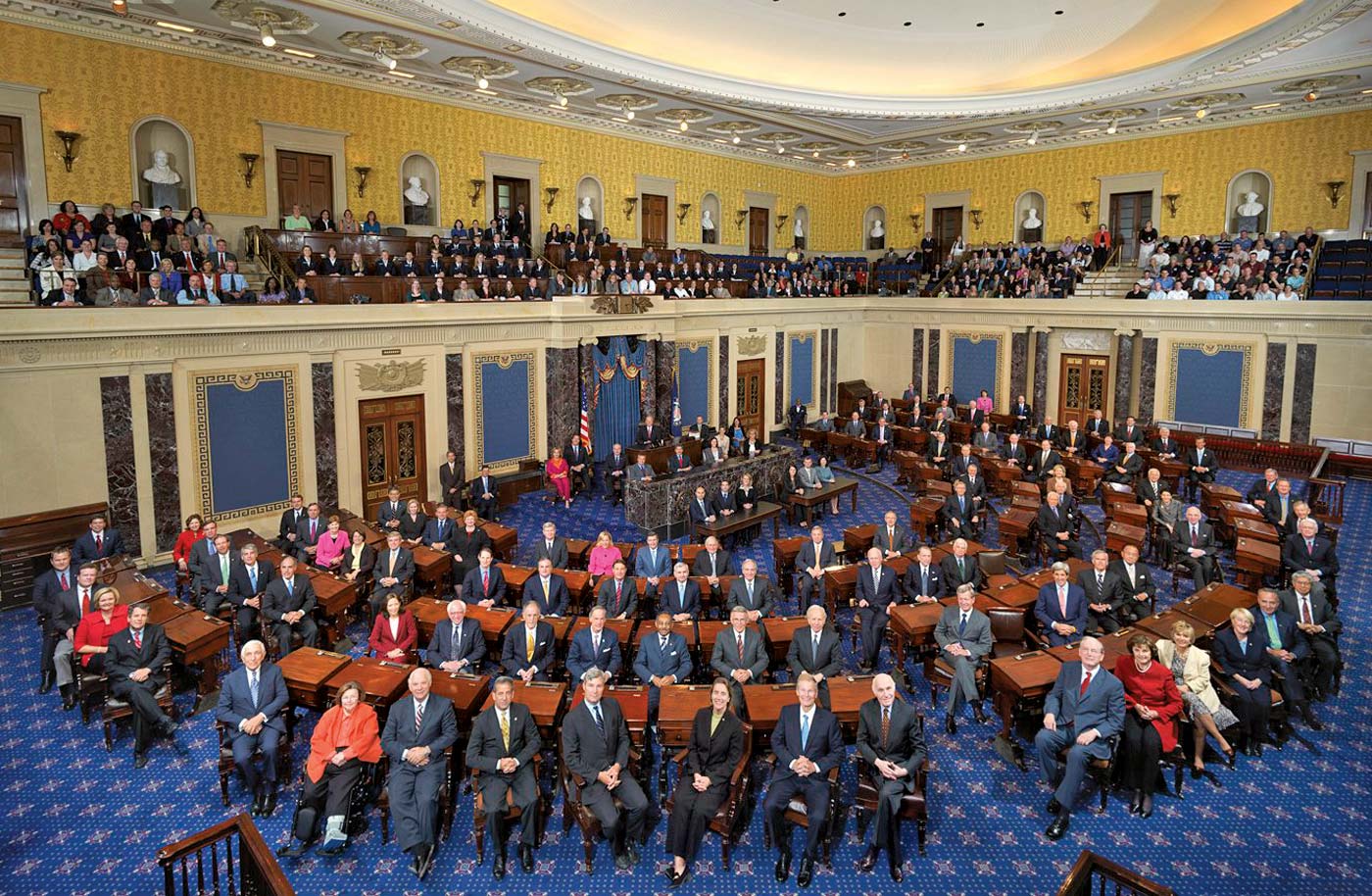
Congress is now considering funding for various agencies and programs for Fiscal Year 2018 – which begins on October 1. Please contact your Representative and Senators and urge them to support adequate funding for key programs managed by the USDA Animal and Plant Health Inspection Service (APHIS). These are essential for keeping the nation’s forests healthy by preventing introduction and spread of invasive pests. While I would much prefer to increase funding for these programs, that is impossible at this time. So I suggest that you support maintaining last year’s  funding levels for two  budget“lines” under the USDA APHIS Plant Health program: $54 million for the “Tree and Wood Pests” line and $156 million for the “Specialty Crops” line.


I have blogged often about the impacts of non-native insects and pathogens inthe United States — which are enormous. (See Lovett et al. 2016 for a summery.)  As new pests are introduced and established pests spread, these costs will only continue to rise.


Moreover, since 1975, U.S. imports (excluding petroleum products) have risen almost six times faster than APHIS and Customs and Border Protection’s staff capability to inspect  them. As a result of this and other prevention failures, such as insufficiently protective regulations, more than a dozen new plant pests are detected in the United States each year. Since the beginning of the 21st Century, at least 20 woodboring beetles have been detected here, including:

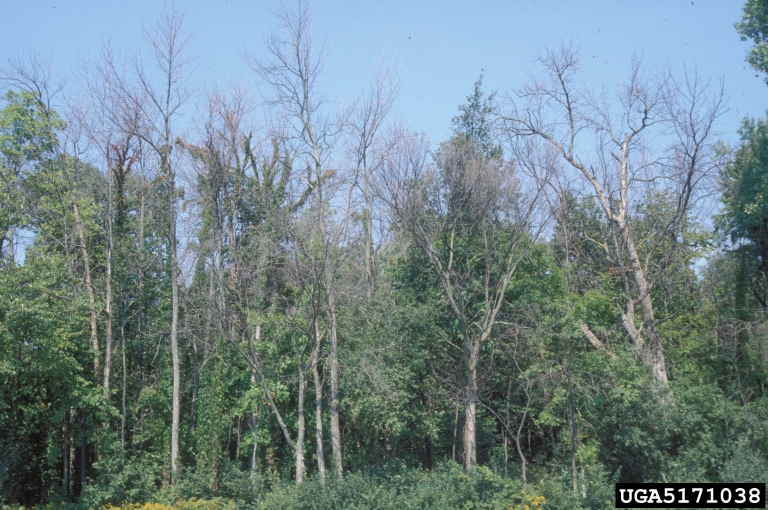
  • Redbay ambrosia beetle / laurel wilt disease;
  • Sirex woodwasp;
  • Goldspotted oak borer;
  • Walnut twig beetle and thousand cankers disease ;
  • Soapberry borer;
  • Polyphagous & Kuroshio shot hole borers; and
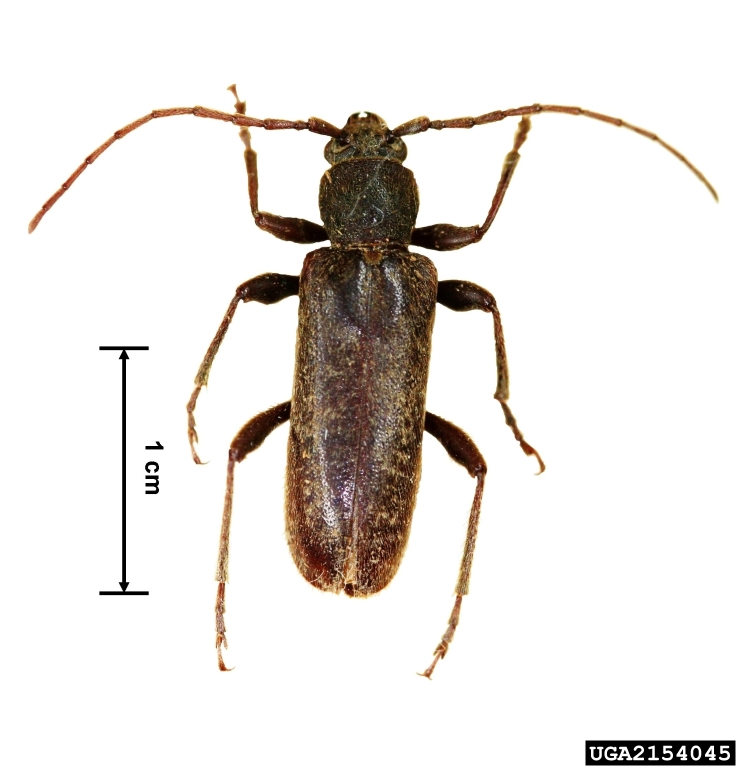
  • Velvet longhorned beetle.


Another dozen tree-killing pests that are not wood borers have also been detected, including Spotted lanternfly.


APHIS Programs Target only a Few of the Damaging Pests in the Country


At least in part because of inadequate funding, APHIS currently funds comprehensive programs targeting only four of the  dozens of already- or potentially-serious tree-killing pests already in the country: gyspy moth (both European and Asian); Asian longhorned beetle; emerald ash borer; and sudden oak death.


APHIS also provides limited assistance to programs on  other pests through grants  under the Section 10007 of the 2014 Farm Bill. One example is research to determine host ranges and possible control method for the polyphagous and Kuroshio shot hole borers. However, these funds have not been sufficient to support comprehensive suppression or eradication programs despite the threat posed by these two shot-hole borers. They threaten to kill 26 million trees – more than a third of the trees growing in urban areas in California’s Inland Empire, Coastal Southern California, and Southwest Desert. Absent an active APHIS program to develop effective control measures, the municipalities and homeowners of these regions will be forced to absorb an estimated $36.2 billion (the costs of removing and replacing dead and dying trees) if they want to maintain valuable urban forest canopy.

willow killed by Kuroshio shot hole borer

in Tijuana River estuary, California

photo by John Boland

The shot-hole borers might also threaten trees across the American South. Box elder, sweetgum, and tree of heaven are reproductive hosts for the polyphagous shot hole borer; all are widespread in southern forests. California species of sycamore, oak, and willow are also reproductive hosts; other trees in these genera, which grow widely across the U.S., might also be vulnerable to the shot hole borers.


APHIS also has devoted Section 10007 funds to the spotted lanternfly, which is found in southeastern Pennsylvania. This insect feeds on several crop trees as well as oak, walnut, poplar, and pine trees. Pennsylvania authorities cannot complete eradication of this pest without additional federal funding – which so far is uncertain.


APHIS has helped with trace-forwards to find furniture infested by the velvet longhorned beetle, but has not adopted a program targetting this species in the several states where it appears to be established.


As these examples illustrate, even maintaining current funding levels means that several damaging non-native insects and pathogens continue to spread without a meaningful federal response. Any cuts would only exacerbate the failure of APHIS’ program to protect our forests from non-native insects and pathogens.


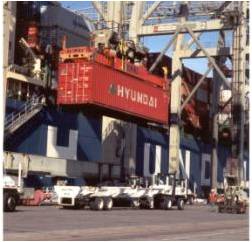
Remember, too, that additional introductions are likely in coming years. According to one study, perhaps 35 shipping containers entering the country each day carry damaging pests.

Unloading largest container ship to visit a U.S. East Coast port – “Cosco Development”; Savannah, GA  May 12, 2017; F.T. Campbell

At the same time, we cannot afford for APHIS to reduce its ongoing programs in order to address the other invaders. The  Asian longhorned beetle eradication program, at a cost of $35 – $40 million per year, has succeeded in eradicating 85% of the infestation in New York. (APHIS has just announced that a section of the borough of Queens is free of ALB.) However, the infestations in Massachusetts and Ohio still threaten to spread further into the forests. The $5 – $6 million per year allocated to the gypsy moth appears to be adequate, but APHIS must be prepared to eradicate any newly detected outbreaks, especially of the Asian gypsy moth on the west coast.


APHIS’ emerald ash borer program has received $7 million per year. To reduce future costs, the agency has cut back its regulatory program, so that it enforces regulations only at the infestation’s leading edge. In affected states, APHIS will continue surveys in unregulated areas, outreach, and coordination. These changes, taken together, undermine efforts to prevent the beetle’s spread to the vulnerable rural and urban forests in North Dakota, Oregon, and other states. APHIS is emphasizing production and dispersal of biocontrol agentsrather than regulatory measures

The sudden oak death program – targeting the pathogen Phytophthora ramorum — is under the “Specialty Crops” funding line. This must also be maintained at current levels because SOD threatens such important eastern forest tree species as northern red, chestnut, white, and pin oaks; sugar maple; and black walnut. APHIS regulates movement of nursery stock which could transport this pathogen from the West coast to vulnerable areas in the East. It was learned recently that APHIS needs to add the genus Magnolia to the “filthy five” group which is subject to the most careful regulation.

Whom to Contact

Please ask your Senators and Representative to support maintaining – or even increasing – funding for these APHIS programs. Your contact is especially important if you are represented by one of the members of the House or Senate Appropriations Committee’s Subcommittees on

Agriculture:

House:

* Robert Aderholt, Alabama, Chairman

* Kevin Yoder, Kansas

* Tom Rooney, Florida

* David Valadao, California

* Andy Harris, Maryland

* David Young, Iowa

* Steven Palazzo, Mississippi

* Sanford Bishop, Georgia, Ranking Member

* Rosa DeLauro, Connecticut

* Chellie Pingree, Maine

* Mark Pocan, Wisconsin


Senate:

John Hoeven, North Dakota

Thad Cochran, Mississippi

Mitch McConnell, Kentucky

Susan Collins, Maine

Roy Blunt, Missouri

Jerry Moran, Kansas,

Marco Rubio, Florida

Jeff Merkley, Oregon

Diane Feinstein, California

Jon Tester, Montana

Tom Udall, New Mexico

Patrick Leahy, Vermont

Tammy Baldwin, Illinois


Sources


Lovett, G.M., M. Weiss, A.M. Liebhold, T.P. Holmes, B. Leung, K.F. Lambert, D.A. Orwig , F.T. Campbell, J. Rosenthal, D.G. McCullough, R. Wildova, M.P. Ayres, C.D. Canham, D.R. Foster, S.L. LaDeau, and T. Weldy. 2016. Nonnative forest insects and pathogens in the United States: Impacts and policy options. Ecological Applications, 0(0), 2016, pp. 1–19. DOI 10.1890/15-1176.1  available at

http://onlinelibrary.wiley.com/doi/10.1890/15-1176/full


Additional recent sources of information on tree-killing pests not being addressed by APHIS:

Article about the damage caused by the goldspotted oak borer:

http://westernipm.org/index.cfm/ipm-in-the-west/natural-areas/gold-spotted-oak-borer-threatens-oak-woodlands-and-ecosystems-across-southern-california/?keywords=GSOB

Videos:

GSOB at Irvine Regional Park in OC

https://www.youtube.com/watch?v=eCRVmP5KmW0&feature=youtu.be

Goldspotted Oak Borer video

https://www.youtube.com/watch?v=In2e5atd3ZY&feature=youtu.be#t=13.3989831

The Los Angeles Times has published two recent articles about the shot hole borers at

http://www.latimes.com/local/california/la-me-dying-urban-trees-20170403-story.html

and

http://www.latimes.com/local/california/la-me-trees-change-20170427-story.html


We welcome comments that supplement or correct factual information, suggest new approaches, or promote thoughtful consideration. We post comments that disagree with us — but not those we judge to be not civil or inflammatory.
 

Posted by Faith Campbell


Using politics to protect our trees from non-native insects & pathogens


As we know, North America’s trees are under severe threat from a growing number of non-native insects, pathogens, nematodes, etc. (For lengthy descriptions of the threat, substantiated by source citations, read the Fading Forests reports here; or check out a recent policy brief here; or short descriptions; or from my earlier blogs.)

I hope we all agree on broad goals in our efforts to counter this threat. I suggest those goals – broadly speaking, can be summarized as

  • Preventing additional introductions to the greatest extent possible
  • Detecting new introductions quickly, initiating rapid & effective eradication or containment actions
  • Minimizing the risk of pest spreading from one state to others
  • Implementing programs aimed at restoring pest-depleted tree species to forests


America decides what issues government agencies will address through politics – the squeaky wheel gets the grease. We care about the pest threat to trees … so it is up to us to persuade political players to support programs structured to achieve these goals.

There are several approaches to engaging politicians. These should be pursued simultaneously and in a coordinated way. And we must persevere — asking politely but persistently for specific actions. Success is not achieved by one-time actions, but by continuing effort.


What Can We Do?


We can ask our state’s Governor to

Immediate actions

  • Communicate to the USDA Secretary the need to amend policies & regulations
  • Communicate with governors of other states with severe tree pest issues to ask them to support approaches to USDA & Congress
  • Put forest pest issue on the agenda of National Governors’ Association
  • Communicate with our state’s Congressional delegation and ask them to pressure USDA Secretary to amend policies and regulations
  • Communicate to the media both his/her concern about tree pest threats and proposed solutions.

Longer-term actions

  • Ask our state’s Congressional delegation to support proposed amendments to the 2019 Farm bill (see below)


We can ask our state’s agricultural and forestry agency heads to

  • Ask their national associations to support proposals to USDA Secretary & Congress. These associations include
    • National Association of State Departments of Agriculture (NASDA)
    • National Association of State Foresters (NASF) or its 3 regional groups – Northeastern Area Association of State Foresters, Southern Group of State Foresters, Council of Western State Foresters
  • Communicate to the media both the agency’s concern about tree pest threats and proposed solutions.

learning about forest pests (laurel wilt)

We can also act directly.

Ask mayors and officials of affected towns and counties to

  • Push proposals at regional or National Conference of Mayors or National Association of Counties
  • Instruct local forestry staff to seek support of local citizen tree care associations, regional and national associations of arborists, Arbor Day & “Tree City” organizations, Sustainable Urban Forest Coalition, etc.
  • Reach out to local media with a message that includes descriptions of policy actions intended to protect trees — not just damage caused by the pests
  • Ask stakeholder organizations of which we are a member or with whom we have contacts to speak up on the issue and support proposed solutions:
    • USDA Forest Service
    • State forestry divisions
    • Professional/scientific associations
    • Wood products industry
    • State departments of agriculture
    • State phytosanitary officials
    • Forest landowners
    • Environmental NGOs
    • Urban tree advocacy & support organizations


  • Encourage like-minded colleagues in other states to press the agenda with their state & federal political players, agencies, & media.
  • Communicate to the media both your concern about tree pest threats and proposed solutions.


Our goal is to create a “parade” – the impression of a groundswell demanding action that politicians will want to join. (Usually, they like to appear to “lead” the parade!). Note what was said by a real “Washington insider”, Arthur Brooks, President of the American Enterprise Institute. “If you want to influence leaders, sometimes you have to start a parade.” Quoted in the Washington Post 2/10/17


What Should We Tell All These People, Specifically?

What should be the content of our message to these potential allies? I suggest a coordinated package.  However, you might feel more comfortable selecting a few to address each time you communicate with a policymaker. Just choose those you think are most urgent, those you feel most passionate about, or those on which you have the most expertise. There is something for everyone below!

  • Make specific proposals, not vague ideas (see below for suggestions)
  • Always include information about how the pests arrive/spread (pathways such as imports of crates & pallets, or woody plants for ornamental horticulture) and what we can do to clean up those pathways (Don’t just describe the “freak of the week”)
  • Always point out that the burden of pest-related losses and costs falls on ordinary people and their communities. (Aukema et al. 2011 provides backup for this at the national level; try to get information about your state or city.)
  • We need to restore a sense of crisis to prompt action – but not leave people feeling helpless! We need also to bolster understanding that we have been and can again be successful in combatting tree pests.


Specific actions that will reduce risk that pests pose to our trees:

  • Importers switch from packaging made from solid wood (e.g., boards and 4”x4”s) to packaging made from other materials, e.g., particle boards, plastic, metal …
    This can be done by

— Persuading APHIS to initiate a rulemaking to require importers to make the shift. This can be done – although international trade agreements require preparation of a risk assessment that justifies the action because it addresses an identified risk (see my earlier blogs about wood packaging).

— Creating voluntary certification programs and persuade major importers to join them. One option is to incorporate non-wood packaging into the Department of Homeland Security Bureau of Customs and Border Protection’s (CBP) existing Customs-Trade Partnership Against terrorism (C-TPAT) program.


  • Tighten enforcement by penalizing shipments in packaging that does not comply with the current regulations

— Persuade CBP and/or USDA to end current policy under which no financial penalty is imposed until a specific importer has been caught five times in a single year with non-compliant wood packaging. APHIS has plenty of authority to penalize violators.

The Plant Protection Act [U.S.C. §7734 (b) (1)] provides for fines ranging from $50,000 for an individual up to $1 million for multiple, willful violations. These penalties can be imposed by the Secretary of Agriculture after a hearing – but without going through a trial. So far, the Secretary has not used this power to deter violations.


  • Restrict imports of woody plants that are more likely to transport pests that threaten our trees

— In 2011, APHIS adopted regulations giving it the power to temporarily prohibit importation of designated high-risk plants until the agency has carried out a risk assessment and implemented stronger phytosanitary measures to address those risks. Plants deserving such additional scrutiny can be declared “not authorized for importation pending pest risk assessment,” or “NAPPRA”. APHIS has proposed two lists of plant species under this authority. The second list was proposed nearly 4 years ago, but it has not been finalized so imports continue. APHIS should revive the NAPPRA process and utilize prompt listing of plants under this authority to minimize the risk that new pests will be introduced.

— APHIS should finalize amendments to the “Q-37” regulation (proposed nearly 4 years ago) that would establish APHIS’ authority to require foreign suppliers to implement integrated programs to minimize pest risk. Once this regulation is finalized, APHIS could begin negotiating agreements with individual countries to adopt systems intended to ensure pest-free status of those plant types, species, and origins currently considered to pose a medium to high risk.

— APHIS & USDA Foreign Agricultural Service should strengthen surveillance in foreign source countries for pests likely to attack North American trees, using such strategies as “sentinel trees” planted in botanical gardens.


  • Strengthen early detection/rapid response programs by

— Providing adequate funds to federal & state detection and rapid response programs. The funds must be available for the length of the eradication program – which often requires a decade or more. The current “emergency” funds available as transfers from the Commodity Credit Corporation usually are cut off after only 1 – 2 years.

— Better coordinate APHIS, USFS, state, & tribal surveillance programs.

— Engage tree professionals & citizen scientists more effectively in surveillance programs.


  • Enact Amendments to the 2019 Farm Bill to strengthen programs aimed at protecting North American trees from non-native insects and pathogens

— Stakeholders meeting under the auspices of several coalitions are considering what amendments to the Farm Bill could be advocated for the purpose of protecting our trees from non-native pests. Proposals under consideration would address such issues as

>> Strengthening APHIS’ pest-prevention mandate (which currently is conflated with a competing mandate to facilitate trade)

>> Providing increased and more reliable funding for detection, rapid response, and long-term restoration efforts

>> Providing incentives to importers to adopt pest-prevention programs beyond current legal requirements governing wood packaging materials

I will provide additional information about these proposals in coming weeks.


SOURCES

Aukema, J.E., B. Leung, K. Kovacs, C. Chivers, K. O. Britton, J. Englin, S.J. Frankel, R. G. Haight, T. P. Holmes, A. Liebhold, D.G. McCullough, B. Von Holle.. 2011. Economic Impacts of Non-Native Forest Insects in the Continental United States PLoS One September 2011 (Volume 6 Issue 9)

Posted by Faith Campbell


We welcome comments that supplement or correct factual information, suggest new approaches, or promote thoughtful consideration. We post comments that disagree with us — but not those we judge to be not civil or inflammatory.
 

Collapse of funding for ALL aspects of EAB management (except biocontrol)

dead ash, Fairfax VA; FT Campbell

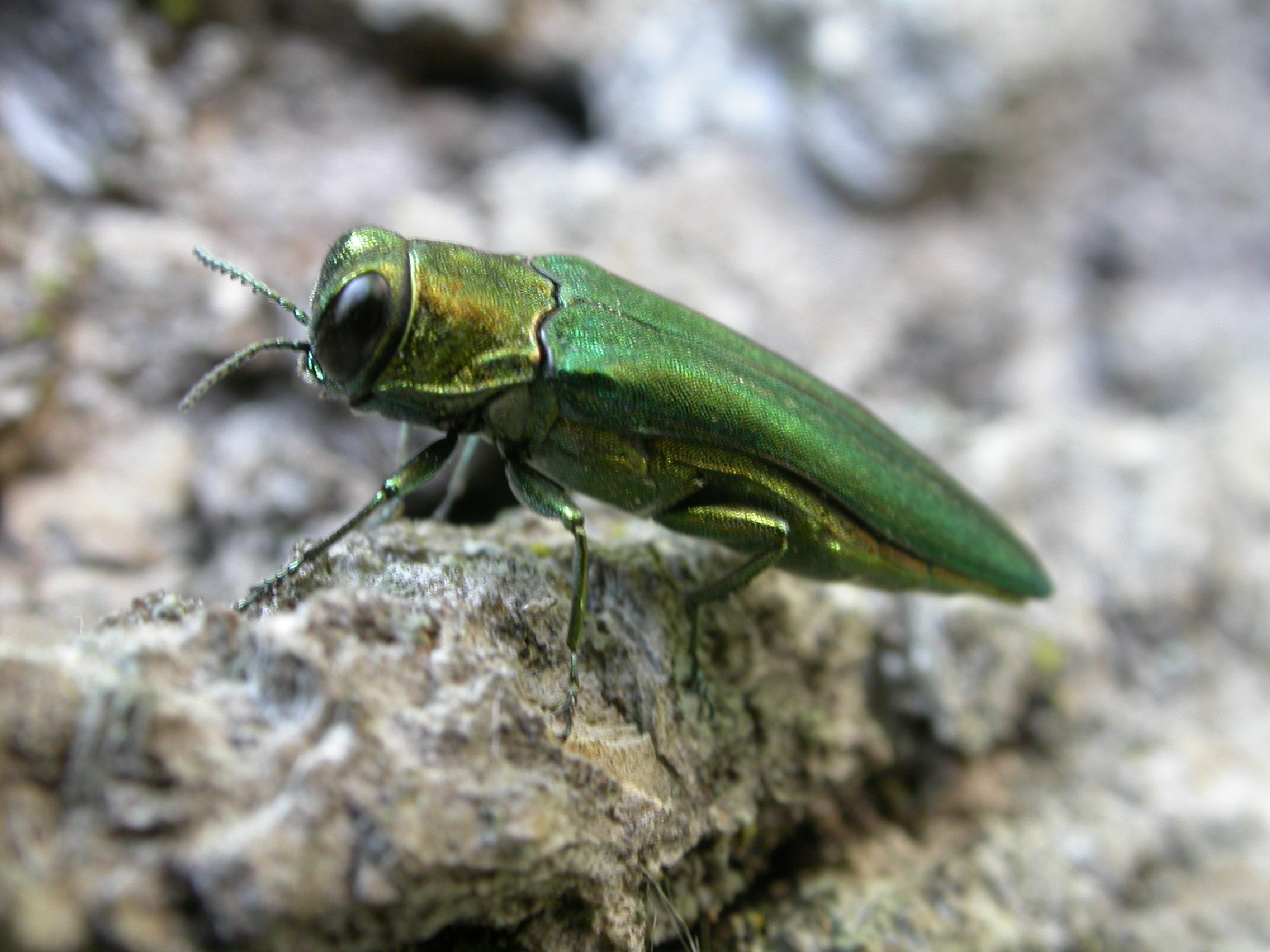
In the 25 years or more since it was introduced to North America, the emerald ash borer (EAB) has spread to portions of 27 states. and more widely across Quebec and Ontario. The U.S. quarantine area now covers 682,000 square miles. This has happened despite USDA APHIS spending more than $310 million (U.S.) and Canadian Food Inspection Service spending $25.7 million (Canadian).

The emerald ash borer has been a difficult insect to manage – it is cryptic, developing detection tools and management strategies required years of research and trial-and-error, it is easily transported to new areas in firewood. The beetle’s spread has been discouraging. However, now is not the time to give up! Large areas in which ash trees play significant roles in natural systems and planted areas are still outside the infested area. The tools and strategies can now be more effective in slowing further spread. Yet APHIS is now cutting funding for virtually all program components except biological control.

See the APHIS funding history below.

USDA APHIS Funding History for Emerald Ash Borer, FY 2003-2015
 ALLOCATION
Fiscal Year appropriation Emergency funds from Commodity Credit Corporation Carryover (funds not spent in previous years) TOTAL
2003 0 $12,442,000 $0 $12,442,000
2004 $1,208,000 $39,879,000 $0 $41,087,000
2005 $4,937,000 $30,140,000 $0 $35,077,000
2006 $10,000,000 $15,000,000 $0 $25,000,000
2007 $6,777,149 $21,185,670 $0 $27,962,819
2008 $22,863,672 $8,884,802 $0 $31,748,474
2009 $34,625,000 $0 $0 $34,625,000
2010 $37,205,000 $0 $0 $37,205,000
2011 37,130,590 $0 $0 $37,130,590
2012 $9,727,000 $0 $15,000,000 $24,727,000
2013 $10,095,570 $0 $0 $10,095,570
2014 $8,999,000 $0 $0 $8,999,000
2015 $7,849,000 $0 $0 $7,849,000
TOTAL $207,166,000 $103,084,000   $310,200,000


Obviously, funding for the EAB program has fallen significantly. Nevertheless, funding for EAB continues to absorb a significant proportion of funding available for countering the full range of tree-killing pests. APHIS’ total funding for “tree and wood pests” is $54 million. Funding for this program is expected to decrease in the coming years – at the same time as the number of introduced pests continues to rise.

(Other programs funded under the “tree and wood pest” line item are the Asian longhorned beetle – which receives $35-40 million; and European gypsy moth – which receives $5-6 million. [Paul Chaloux, USDA APHIS, pers. comm. February 2017)

APHIS is actively considering ending the EAB regulatory program – which would allow the agency to reduce its costs significantly. (It is unclear whether APHIS would apply the money thus “saved” to other tree-killing pests. I have blogged frequently about pests that APHIS is not addressing.) APHIS would continue to support the biocontrol program.

Ending the regulatory program would probably speed up EAB’s arrival in those western states with significant ash resources. These include the northern Great Plains; the coastal mountains of Washington, Oregon, and California; and riparian areas of Utah and Arizona. For example, North Dakota has 78 million ash trees, which constitute half of trees in riparian woodlands and 60% of planted shelterbreaks.

A map showing areas of Oregon at risk is contained in my blog linked to above.  The APHIS website contains a continental map showing areas with significant ash tree populations.

APHIS has already cut funding for EAB provided through the Farm Bill Section 100007 program. In Fiscal Year 2016, EAB programs received $285,000 through this program. Half went to academics for study of oviposition hosts or attractants. This funding dropped to $91,000 in FY17. This year, the funding is almost exclusively to academics studying the effect of EAB density and tree condition on parasitism by one of the biocontrol agents.

APHIS has pledged to continue supporting work on biocontrol programs targetting emerald ash borer.

USFS


The USDA Forest Service is also reducing its engagement on EAB: Forest Health Protection allocated only $240,000 in 2016; Research allocated a little under $1.2 million. USFS funding history is provided in the table below. It can be argued that the USFS has provided the necessary guidance to state, city, and local officials in preparing for EAB decimation of ash trees under their jurisdiction.

However, it is important that USFS Research funding be maintained to support such long-term restoration strategies as resistance breeding.


USFS Funding on Emerald Ash Borer, FY 2009-2016

FY09 FY10 FY11 FY12 FY13 FY14 FY15 FY16
EAB $3.9 M $6.4 M $6.4M $4.1 M $2.8M $1.8M $1.7M 1.4M


Important projects are already not being funded; I blogged last year about the loss of funding for Dr. Pierluigi (Enrico) Bonello and others at Ohio State and Wright State University, who are trying to understand how Manchurian ash trees resist EAB attack.

Impact of EAB Deregulation — Whither Firewood Regulation?

If the federal EAB quarantine is eliminated, what will be the impact on federal and state efforts to discourage movement of firewood so as to protect the Nation from this and other pests?

EAB remains a threat to urban, rural, and wildland forests across the continent (including in Mexico) – and EAB continues to be moved in firewood. Furthermore, many other damaging insects and some pathogens can be transported in firewood.

Most of the state firewood regulations require a tie to specific pests – and EAB has been the principal species invoked. Can states maintain their regulations by anchoring them to other pests? Or based on the general threat? I hope so!

Deregulation of EAB seems likely to be the death knell for the APHIS effort to erect a nation-wide industry certification program for firewood. Certification already appears unlikely to be adopted; as I described in my blog in November), the costs of a certification program are higher than retailers are willing to support.

The educational messages recently placed on the Reservation.gov website are likely to remain. These  alert campers making reservations at most National parks and many National forests to avoid moving firewood to slow the spread of tree-killing pests. These areas deserve continued protection. A full range of pests put them at risk, many of which are not regulated by APHIS, e.g., hemlock woolly adelgid and walnut twig beetle,


Posted by Faith Campbell

We welcome comments that supplement or correct factual information, suggest new approaches, or promote thoughtful consideration. We post comments that disagree with us — but not those we judge to be not civil or inflammatory.
 

Lack of Regulation and Funding Shortfalls Raise Probability of Pests’ Spread

OLYMPUS DIGITAL CAMERA
Photo by John Boland – willows killed by Kuroshio shot hole borer, Tijuana River, California


The polyphagous (PSHB) and Kuroshio (KSHB) shot hole borers are causing havoc in riparian and planted landscapes in four counties in southern California and are spreading north. (For current information go here or here .

As I described in a blog last July, the two insects are known to attack hundreds of tree species; at least 40 are reproductive hosts. Trees known to support PSHB include box elder, big leaf maple, California sycamore, willows, cottonwoods, and several California oaks. The insect-fungi combinations threaten more than a third of trees in the urban forests in southern California, with a cost for the trees’ removal and replacement estimated at $36 billion. Costs and hosts are discussed more fully in the July blog linked to above.


The High Cost of Management

 Already, UC Irvine has spent close to $2 million to manage trees on campus that have been attacked.

Orange County has both polyphygous and Kuroshio shot hole borers. One agency – Orange County parks – has spent $1.7 million on shot hole borer surveys, tree inventory, public outreach materials, staff training, and some research. The parks agency is trying to engage other county agencies, such as Public Works and Waste & Recycling to get their help. For example, Public Works is putting together a tree ordinance with enforceable provisions.


While scientists have not yet published their analysis of the vulnerability of forest areas in other parts of the country, we do know that some reproductive hosts are widespread across the country — box elder, sweet gum, Japanese wisteria, and tree of heaven. Less is known about the hosts for Kuroshio shot hole borer. For a full list of known hosts, visit the two sources linked to in the first paragraph.


How Agencies Should Respond to this Threat

The shot hole borers and associated fungi clearly represent serious threats to urban, rural, and wildland forests across California and probably much of the rest of the country. Clearly it is important that we:

  • Increase our understanding of these insects and their associated fungi – including their possible geographic and host ranges;
  • Use this evolving understanding to develop detection tools; and
  • Use this evolving understanding to develop methods to slow their spread or to protect trees.


So what is being done? Individuals – academics; staff of local, state, and federal agencies; and concerned conservationists – are working hard. But they get little support from state or federal phytosanitary agencies.


The Need for New State and Federal Regulations

I have written earlier about the refusal of California Department of Food and Agriculture to either designate the polyphagous and Kuroshio shot hole borers as quarantine pests [] or to regulate movement of firewood – one of the major pathways for spread of the insects.


Nor has USDA APHIS designated the insects and their fungi as quarantine pests. The apparent explanation for the agency’s inaction is the considerable taxonomic confusion about the beetles and the possibility that the insects are already established elsewhere in the U.S. In addition, since the two shot hole borers are currently known only from California, APHIS is unlikely to take action unless California does.  However, there is no legal requirement that APHIS defer to the state on this matter.


The Results of Funding and Regulatory Shortfalls

 Both CDFA and APHIS are providing some funds to support research and development. Research on  detection, spread, and possible biocontrols — for the insects or fungi — have received a total of $385,000 in FY16 and $419,549 in FY17 from a grant program operated under the USDA Plant Pest and Disease Management and Disaster Prevention Program (Farm Bill Sec. 10007). Still, the principal investigators and affected county, state, and federal agencies are scrambling to fill funding gaps – projects that will improve our understanding and put forward practical advice.

The San Diego Association of Governments (SANDAG) and Natural Communities Coalition (NCC) of Orange County are supporting research by Akif Eskalen and Shannon Lynch of UC Riverside on both (a) biocontrol using endophytes naturally occurring in various host tree species and (b) models to predict the disease’ behavior in native vegetation. Dr. Eskalen and Dr. John Kabashima of Orange County Cooperative Extension are seeking funds to support additional work on outreach and extension for advisors, land managers, master gardeners and homeowners.

Santa Barbara County officials – where at least one of the shot hole borer species was recently detected – are struggling to fund an expanded trap program to detect the insects. The CDFA does have traps deployed but UC Santa Barbara is considering launching a trapping program in riparian areas (where many of the host trees play especially important ecological roles). Officials are still not certain which species of insect is present (they think it is KSHB) and whether the beetles are carrying the typical fungal complex or something novel.

In the past, some of the work on the shot hole borers has been funded by associations of avocado growers. However, it is now clear that the beetle attacks only avocado tree branches, so it does not kill the tree. No longer facing a dire threat to their industry, the avocado commission is no longer funding research work on this pest-disease complex.

The experts – Dr. Eskalen for the fungi and his colleague Dr. Richard Stouthamer for the insects – have no funds to process samples sent to their laboratories for the confirmation of the beetles and fungi. They might soon have to charge fees for each sample – thereby discouraging collections that track each species’ spread and find new introductions.

In the absence of CDFA designation of the shot hole borers as regulated pests, neither state nor county agencies have a firm foundation on which to base regulations to curtail movement of firewood, green waste, or other pathways by which these pests can be spread to new areas.


Conservation Agencies are Cobbling Together Responses As Best They Can

Southern California staff of the California Department of Fish and Wildlife agency, responding to the damage caused by the Kuroshio shot hole borer in the Tijuana River estuary (described here and here), have formed a coalition to develop strategies for natural resource and urban forestry settings and ensure coordination. Natural resource agencies have access to some funding sources, such as Natural Communities Coalition (NCC) grants and funding for management of invasive species in protected habitats.

Southern California staff of the U.S. Fish and Wildlife Service are seeking grants from internal agency sources – citing the threat to riparian-dependent wildlife, especially the endangered Least Bell’s vireo.

Santa Monica National Recreation Area and the three National forests in the vicinity – the Angeles, Cleveland, and San Bernardino National forests – have taken actions that should help prevent the shot hole borers’ introduction via firewood.  Santa Monica Recreation Area does not allow wood fires, only charcoal (this action probably is in response to the high fire danger in the area rather than the pests specifically). The National forests’ webpages on camping include a graphic with the statements “Buy It Where You Burn It” and “Be aware that firewood can harbor insects and diseases; transporting it can move these pests to new locations.”  (See my earlier blog about firewood alerts on National forests, parks, etc. here).


What You Can Do


Many Californians are pushing for action … they need our help! If you live in California, contact your state legislators. If you live elsewhere, your forests are also at risk from California’s failure to act. So, if you know someone who lives there, ask that person to contact his/her legislators. Ask the legislators to (a) demand state designation of PSHB, KSHB, and GSOB as quarantine pests and adoption of state firewood regulations and (b) support funding for these programs.

Capitol

The U.S. Congress has a role in convincing APHIS to play a bigger role. Contact your federal Senators and Member of Congress and urge them to ask USDA APHIS to regulate movement of firewood, green waste, and nursery stock from areas infested by the polyphagous or Kuroshio shot hole borers and goldspotted oak borer.

President Trump will soon propose funding levels for government programs, including APHIS’ “tree and wood pest” program. Please keep informed about these proposals – and contact your Congressional representative to express support for adequate funding. Contact me using the “Contact us” button on our website if you wish to receive informative alerts about the upcoming appropriations process.


Posted by Faith Campbell


We welcome comments that supplement or correct factual information, suggest new approaches, or promote thoughtful consideration. We post comments that disagree with us — but not those we judge to be not civil or inflammatory.
The New Year – Where We Are & What Needs to be Done

ash-braddock-rd

dying ash tree, Fairfax County, Virginia; photo by F.T. Campbell

According to Aukema et al. 2010 (see references at the end of this blog), by the first decade of the 21st Century, the number of non-native insects and pathogens damaging our forests had risen to at least 475.  Sixty-two of the insects, and all of the 17 pathogens, were judged to have “high impact”, with both economic and ecological ramifications. More than 181 exotic insects that feed on woody plants are established in Canada (USDA APHIS 2009). Especially hard-hit is the eastern deciduous broadleaf forest — there is an exotic pest threat to nearly every dominant tree species in this ecosystem type.

The situation is actually worse than this article and others based on it depict. Aukema et al. 2010 did not include several highly damaging forest pests that are native to regions of North America (e.g., goldspotted oak borer, thousand cankers disease); nor did they include pests on U.S. islands, such as `ohi`a rust and Erythrina gall wasp in Hawai`i. Aukema et al. 2010 also did not include pests that attack palms or cycads – which are significant components of some ecosystems on the continent as well as on America’s tropical islands. Finally, some invaders have come to our attention since the database on which these authors relied was compiled, e.g., polyphagous and Kuroshio shot hole borers and the rapid ohia death pathogen. (For a list of pests detected since 2003, see page 7 of Fading Forests III, available here; this list was compiled in 2014, so it does not include the most recently detected pests, such as rapid ohia death. For descriptions of most invaders discussed in this blog, go here.)

Of course, more important than numbers are impacts. Lovett et al. 2016 provide a summary of those impacts … but let’s get specific. Note that some of these species occupy wide ranges; it is not only the narrow endemics that are under threat.

  • Several tree species are severely depleted throughout their ranges: American chestnut, Fraser fir, Port-Orford cedar, butternut, Carolina hemlock, redbay and swamp bay, cycads on Guam
  • Other species or genera are already severely reduced in significant portions of their ranges and the causal agents are spreading to the remaining sanctuaries: whitebark pine.
  • In some cases, the causal agent has not yet spread, but threatens to: `ohi`a.
  • Some tree or shrub taxa are under severe attack across much of their ranges: ashes, eastern hemlock, American beech, dogwoods, tanoak, viburnums …

Many of America’s 300 species of oak face a variety of threats:

  • in the East, European gypsy moth, oak wilt, and – in some areas – winter moth;
  • in the South, oak wilt and Diplodia;
  • on the West coast, sudden oak death, goldspotted oak borer, the polyphagous and Kuroshio shot hole borers, Diplodia, and foamy bark canker.

(For more about threats to oaks, see my blog from last April.)

Other threats are – so far – confined to relatively small areas, but they could break out. These include the multi-host insects Asian longhorned beetle; polyphagous and Kuroshio shot hole borers; and spotted lanternfly. Tree genera containing species at risk to one or more of these insects include maple, elm, willow, birch, sycamore, cottonwood and poplar, sweet gum, oak. Only ALB and the lanternfly currently are the focus of federal and state programs aimed at eradication or containment. The widespread invasive tree, Ailanthus or tree of heaven, could support spread of at least the polyphagous shot hole borer and spotted lanternfly.

Of course, additional pests are likely to be introduced (or detected) in the future. Known threats include the various Asian subspecies of gypsy moth and ash dieback (Hymenoscyphus fraxineus – previously  called Chalara fraxinea). If history is any guide, we are likely to be surprised by a highly destructive invader that we have either never heard of or dismissed based on its behavior elsewhere. See my earlier blogs for discussions of what should be done to reduce the introduction risk associated with wood packaging and imports of living plants.


What Should We Do?

2017 brings a new Administration and a new Congress. At a minimum, we need to educate all these decision-makers about both the high costs imposed by tree-killing insects and pathogens and effective strategies to minimize those costs. How will our concerns be received? We don’t know yet.

We might have opportunities arising from the skeptical attitude toward trade voiced during the campaign. Will newly elected or appointed agency and Congressional staffers be open to re-considering the plant health threats associated with international trade? On the other hand, will mainstream agriculture’s traditional strong support for exports continue to overwhelm calls to strengthen phytosanitary measures? Even if our message about risks associated with trade gains a hearing, will officials be willing to consider more rigorous regulations? Or higher funding levels for agencies responsible for plant pest prevention and response?

I hope you will join the Center for Invasive Species Prevention and others in coordinated efforts to take these messages to the next Secretary of Agriculture (who has not yet been named!) and key members of the Senate and House of Representatives. Opportunities in the Congress include Senate confirmation of the new Secretary and the three Under Secretaries that oversee APHIS, USFS, and ARS; annual appropriations bills; and early consideration of possible amendments to the Farm Bill (which is due for renewal in 2019).

See my post from a week ago for more suggestions for how Congress could improve U.S. invasive species management programs.

Expect to hear from me often in the coming year!


SOURCES

Aukema, J.E., D.G. McCullough, B. Von Holle, A.M. Liebhold, K. Britton, & S.J. Frankel. 2010. Historical Accumulation of Nonindigenous Forest Pests in the Continental United States. Bioscience. December 2010 / Vol. 60 No. 11

Lovett, G.M., M. Weiss, A.M. Liebhold, T.P. Holmes, B. Leung, K.F. Lambert, D.A. Orwig , F.T. Campbell, J. Rosenthal, D.G. McCullough, R. Wildova, M.P. Ayres, C.D. Canham, D.R. Foster, S.L. LaDeau, and T. Weldy. 2016. Nonnative forest insects and pathogens in the United States: Impacts and policy options. Ecological Applications, 0(0), 2016, pp. 1–19. DOI 10.1890/15-1176.1

U.S. Department of Agriculture, Animal and Plant Health Inspection Service.  2009.  Risk analysis for the movement of SWPM (WPM) from Canada into the US.


Posted by Faith Campbell

We welcome comments that supplement or correct factual information, suggest new approaches, or promote thoughtful consideration. We post comments that disagree with us — but not those we judge to be not civil or inflammatory.


What the new President & Congress Can Do re: Invasive Species

 White House


A new President and Congress take office in January.  And outgoing President Obama recently amended the Executive Order on invasive species.

What might the new leaders do to improve America’s invasive species programs?

Here are a group of actions that I think would improve programs significantly:

  • amend the Lacey Act to strengthen controls over introduction and spread of invasive animals and animal diseases;
  • raise the political profile of invasive species issues by holding more frequent oversight hearings;
  • increase funding for invasive species prevention, containment, and control programs;
  • support proposals to amend the 2019 Farm Bill to strengthen on-the-ground programs, policies, and research aimed at minimizing invasive species introduction, spread, and damage;
  • during the confirmation process, Senators should ask President Trump’s nominees to leadership positions in the Departments of Agriculture and Interior about how they will address invasive species challenges.

Do we need new legislation mandating that federal land-managing agencies do X or Y with regard to invasive species? This was the focus of a hearing in May at which I testified.

Federal land-managing agencies are already authorized and – in some cases required – to act to control invasive species on lands and waters under their jurisdiction.  Some of the existing statutes even authorize the agencies to apply fees paid by people who use the public lands for some purpose (e.g., livestock grazing, recreation) to management of invasive species.

Most of the statutes authorizing invasive species management incorporate that activity into the agency’s broader management goals for protection of wildlife, habitat, natural resources, historic or cultural sites, etc.  For example, the USFS Manual §2900 lists 21 laws and 6 regulations or policies that govern the USFS’ management of invasive species.  Some of these laws apply to all federal land-managing agencies, including:

  • Endangered Species Act (ESA) of 1973 (16 U.S.C. §§1531 et seq.)
  • Surface Mining Control and Reclamation Act of 1977 (30 U.S.C. 1201, 1201 (note), 1236, 1272, 1305). §515
  • North American Wetland Conservation Act 1989 (16 U.S.C. 4401 (note), 4401-4413, 16 U.S.C. 669b (note)). §9 [U.S.C. 4408]
  • Sikes Act (Fish and Wildlife Conservation) of September 15, 1960 (16 U.S.C. 670g-670l, 670o, P.L. 86-797), as amended. §201
  • National Historic Preservation Act of 1966 [16 U.S.C. §§470 et seq.]
  • Wilderness Act of 1964 (16 U.S.C. §§1131 et seq.

Other statutes apply only to resource management authorities of the USDA Forest Service; these include:

  • Organic Administration Act of 1897 (16 U.S.C. §§ 473 et seq.).
  • Fish and Wildlife Coordination Act (16 U.S.C. § 661 et seq.).
  • Knutson-Vandenberg Act of June 9, 1930 (16 U.S.C. 576, 576a-576b). §3 [16 U.S.C. 576b]
  • Bankhead-Jones Farm Tenant Act of 1937 (7 U.S.C. §§1010 et seq.)
  • Anderson-Mansfield Reforestation and Revegetation Act of October 11, 1949 (16 U.S.C. 581j (note), 581j, 581k)
  • Multiple-Use Sustained-Yield Act of 1960 (16 U.S.C. §§528 et seq.)
  • Forest and Rangeland Renewable Resources Planning Act (RPA) of 1974 as amended by the National Forest Management Act (NFMA) of 1976. §6
  • International Forestry Cooperation Act of 1990 (16 U.S.C. § 4501)
  • Healthy Forests Restoration Act of 2003 (H.R. 1904), [16 U.S.C. 6501-6502, 6511-18, 6541-42, 6571-78]
  • Wyden Amendment (P.L. 109-54, Section 434).
For brief descriptions of all these statutes, see the references and links at the end of this blog posting.

Advocates have tried before to legislate a specific requirement that federal agencies combat invasive species.  The Federal Noxious Weed Act of 1974 (7 U.S.C. § 2801 note; 7 U.S.C. § 2814) was amended in 1990 to add §15, “Management of Undesirable Plants on Federal Lands”.  This section requires each federal agency to

1) designate an office or person adequately trained to develop and coordinate an undesirable plants management program for control of undesirable plants on federal lands under the agency’s jurisdiction, and

2) establish and adequately fund an undesirable plants management program through the agency’s budgetary process,

3) complete and implement cooperative agreements with state agencies regarding the management of undesirable plant species on federal lands, and

4) establish integrated management systems to control or contain undesirable plant species targeted under cooperative agreements.

This approach hasn’t worked – no one is satisfied by the federal agencies’ “weed” management efforts.


Capitol

What is missing is a political demand for action – and support for necessary staff and funding. Agencies under the secretaries of Agriculture and Interior bear most of the responsibility for managing invasive species.  As long as these officials are not being pressed by key Congressional committees, the media, and key stakeholders to take more aggressive and effective action to curtail species introductions and suppress established populations of bioinvaders, they will continue to focus their attention on issues that do generate these kinds of political pressure.

I am not saying that the principal statutes governing invasive species management could not be improved.  As noted above, several proposals have been put forward to strengthen laws which are the foundation for preventing introduction of invasive species.  I will blog about specific proposals in the new year.


Sources

USFS Invasive Species Manual

ANSTF/NISC report “Federal Policy Options Addressing the Movement of Aquatic Invasive Species Onto and Off of Federal Lands and Waters. 2015.  Committee on the Movement of Aquatic Invasive Species both onto and off of Federal Lands and Waters.

Posted by Faith Campbell

We welcome comments that supplement or correct factual information, suggest new approaches, or promote thoughtful consideration. We post comments that disagree with us — but not those we judge to be not civil or inflammatory.

Support Effort to Declare UN “International Year of Plant Health”

forum-1190786_960_720

Officials who carry out plant health programs around the world are trying to build public understanding and support for such programs by organizing an “International Year of Plant Health”. Such “international years” are designated by the United Nations General Assembly – so – as you can imagine – years of planning go into the effort.

So far, the proposal has been approved by the Council of Agricultural Ministers and will be considered by the Conference of the UN Food and Agriculture Organization in June 2017. If approved by the FAO, the proposal will then be put to the full United Nations by sponsoring nations’ diplomats.  The General Assembly meeting in 2018 would consider the proposal – assuming FAO does forward it.

The goal of the proposed Year is to persuade decision-makers and the public that protecting plants by preventing and containing pests is an essential foundation for countries’ efforts to achieve food security, economic development, and environmental protection. Organizers also want people to know that plant protection is also a necessary component of policies to facilitate trade.

The events associated with the “International Year of Plant Health” will recognize plant health disciplines and the many people and organizations who contribute at the global, regional and national levels. It is not intended to celebrate specifically the International Plant Protection Convention, or the standards and other measures it has adopted.

Plant health professionals are concerned that funds and other resources dedicated to plant protection services are shrinking despite the growing threat to agricultural and natural resources from the spread of pests. Without more attention, they fear that resources will fall even farther behind the need as agencies confront demands from other global challenges. They intend to make the case that healthy plants help solve — rather than compete with – such other big problems as climate change, changing migration patterns, biosecurity concerns, and economic development.

The proponents specific objectives are to:

  1. Raise awareness among political decision makers at global, regional, and national levels.
  2. Build up plant health efforts and resources at all levels to better match growing needs linked to increasing trade and the new pest risks caused by climate change.
  3. Educate the broader public so it better understands the importance of protecting plant health.
  4. Enhance dialogue and stakeholder involvement in plant health.
  5. Increase information about the state of plant protection in the world.
  6. Promote partnerships on national, regional, and global levels.

It is hoped that success in raising awareness and understanding will result in sustainable funding of national plant health systems that will, in turn, enable

  • Improved capacity to take on more plant health related projects and programs
  • More effective collaboration and solutions at the global level
  • Better plant health situation in all countries.

I assume that readers of this blog are stakeholders in the global plant protection network. Most of you are professionally engaged in forest or nature conservation (perhaps through research), or are active conservation advocates. Some of you might be affiliated with trade and grower associations. Please consider how you can help educate political decision makers about the importance of protecting plants from non-native organisms that potentially threaten native ecosystems or agricultural and horticultural production. The first task is to ensure that the incoming Secretary of Agriculture actively supports the proposal both among his colleagues (e.g., with the Department of State) and at the FAO Conference in June. Please use your contacts in the government – including the Congress – and with other stakeholders to promote the idea.

Assuming that the International Year of Plant Health is approved, there will be many opportunities to lead or collaborate in the planned outreach efforts. Our engagement might help shape the message. For example, we need to ensure attention to the many challenges currently hindering plant health protection,  as discussed in my blogs and in numerous peer-reviewed articles and reports. Also, we need to make certain that the environmental and biodiversity aspects of plant protection are prominent among considerations.

And if the Year is not approved?  In my mind, that action would prove even more that we need to educate those who do not yet see why healthy trees and other plants matter!

Let me know what you think we might do – by sending me an email using the “contact us” button. Together, we can use this proposal to join coalitions with the goal of promoting stronger, more effective protection for our forests and other natural resources!


Posed by Faith Campbell

We welcome comments that supplement or correct factual information, suggest new approaches, or promote thoughtful consideration. We post comments that disagree with us — but not those we judge to be uncivil or inflammatory.

Let’s Work Together to Curtail Threat to Our Forests from Non-Native Pests

Dear Forest Pest Mavens,

I believe you agree with me that non-native insects, pathogens, earthworms … and other organisms! … pose significant threats to North America’s tree species and the complex ecosystems of which they are such important components.

I hope you also agree that our society’s efforts to counter this threat fall far short of what is needed.

  • Official phytosanitary policies are not as strong as needed to prevent introduction and spread of these tree-killing pests.
  • Worse, those policies are not always enforced assertively – as I documented in my blog about a shipment of auto parts posted on 9 August.
  • The Congress does not provide sufficient funds and other resources to support active detection and response programs – either early in an invasion or later.
  • Businesses that import or trade in goods or packaging that can transport pests are not held responsible for taking actions aimed at reducing the likelihood of such transport or supporting recovery efforts. Opposing free trade has become a hot button election issue but one of its worst impacts — wholesale movement of pests — is never mentioned.

As I noted in my earlier blog, a key reason we see these weaknesses is because those who want stronger programs have not had an effective voice in educating federal policy-makers – the USDA secretary, senators, and members of Congress – about the damage caused by introduced tree-killing pests and the governmental actions needed to counter those impacts.

The election provides both a deadline and an opportunity.

The deadline: we should try to finalize some APHIS-proposed actions before this Administration leaves office. Outgoing officials often feel freer to take bold actions at this time.

The opportunities:

  • New officials who take office in January might be open to addressing “new” issues. We must begin efforts now to get our “asks” on their agenda.  Specifically, we should approach the  senators who will question appointees to USDA Secretary and Under Secretary positions during their confirmation processes.  We should urge them to ask candidates  how they would address plant pests and to make firm, specific commitments to do so
  • Also, Congress is beginning to consider provisions to include in the next Farm Bill (due to be passed by 2019).

Several coalitions work to raise the political profile of non-native, tree-killing pests, i.e., the Coalition Against Forest Pests; Sustainable Urban Forestry Coalition; Reduce Risk from Invasive Species Coalition; Continental Dialogue on Non-Native Forest Insects and Diseases.   Many of the nation-wide forest-related organizations are members of one or more of these coalitions and I work hard for many of them. They are absolutely essential. . .

However, such “big tent” coalitions are unlikely to press for  truly bold solutions, especially if new policies  involve serious costs to economic interests or industries that are part of their membership. There is nothing nefarious in this; it is the way coalitions operate. In the case of forests pest issues, though, the absence of more forceful and nimble groups leaves a policy vacuum that no one currently  fills.

Furthermore, these coalitions don’t offer an opportunity to concerned individuals and smaller organizations to learn about phytosanitary threats or provide them with opportunities to influence policy.

In the past, I have tried to provide this information through my one-way emails and blog postings.  I would like now to upgrade these communications and to provide you with a way to interact with me and others, as well as to form joint positions.  The goal is to re-balance the politics of phytosanitary policy – so that our political leaders understand and support both adoption and enforcement of strong, effective phytosanitary measures.

I suggest that we form a new, loose “coalition of the willing” who are ready to speak up and seek ways to stay abreast of developments and opportunities and to coordinate their actions with those of like-minded people.  I suggest a loose structure –

  • I undertake to set up an email network that everyone could use. It would:
    • communicate information about pest threats and opportunities to engage;
    • communications could be initiated by anyone in the group (either through a “reply all” function or my promise to re-send any email sent to me — with the request that I do so);
    • encourage people to work together – with my assistance – to form joint positions;
    • provide lists of key contacts for specific issues — perhaps with specific talking points, letter templates, etc., to help in reaching out;
  • There would be no cost to participants;
  • Participants could take part anonymously if they wish – either generally or on specific issues;
  • If there is sufficient interest or need, we could form a steering committee to streamline and help guide the work;
  • Our goal would be communications that are straight-forward and clear — to each other and to policymakers — while avoiding gratuitous insults or insinuations.

Examples of issues on which I believe a new group could productively engage (and which the “big tent” coalitions likely will avoid) are:

  • Helping APHIS finalize its proposal to require that wood packaging coming from Canada conform to ISPM#15 standards (see blog posted on 9 August). We need to press the USDA leadership to approve the proposal; then press the Office of Management and Budget to approve it.
  • Press USDA to take two steps to improve enforcement of ISPM#15:
    • End the policy of not fining importers for non-compliant wood packaging until they have five (!) non-compliances within a single year.
    • Declare wood packaging to be a high-risk import and thus subject to mandatory inspection by Customs
  • Press Customs and Border Protection to include wood packaging compliance under its Customs-Trade Partnership Against Terrorism (C-TPAT) program.
  • Seek agreement on a strategy to encourage importers to shift to packaging made from materials other than solid wood boards. Proposals range from new regulatory requirements to C-TPAT to green certification-type voluntary programs.

I welcome suggestions for other topics we might explore!

Please let me know that you would like to join this coalition.  Please  feel free to forward this message and to invite others to join in.

[use the “contact” button on the www.cisp.us website]

Faith

Funding Levels Reveal Low Priority for Combatting Tree-Killing Pests

As the recent article demonstrated, non-native insects and pathogens pose a unique threat to America’s forests.  See also my blog posted May 10.

As Scott Schlarbaum and I said in Fading Forests III:

“Ultimately, then, the future of American forests is in the hands of our nation’s people.  In choosing our elected representatives, holding other government officials accountable, and making our private choices, we decide the priority of  whether addressing the causes and solutions to these pest issues is a priority – and, thus, whether we will keep of our natural heritage.  There is already a strong foundation for action.”

However, American society – as reflected in its political decisions – has not put a high priority on countering this threat. We outlined the long history of inadequate funding for USDA APHIS and USFS in chapters III and VI. Also, I wrote about the appropriations process for Fiscal Year 2017 (which begins in October) in my blog posted on March 22.

$100

Recent action by the House of Representatives (see below) might signal a change. We shall have to wait to see whether this change lasts.


APHIS Funding

Too often, we think first of U.S. Forest Service funding as singularly important regarding non-native forest pests and pathogens. When it comes to prevention, though, its USDA’s Animal and Health Inspection Service (APHIS) that is key.

Total funding for the USDA APHIS in FY17 will be on the order of $939 million. The budget for its plant health program is about $310 million.  Included in this sum are mere tens of millions for addressing tree-killing pests:

  • Tree and wood pests — $54 million in the Senate bill, but only $45.9 million in the House bill
  • “specialty crops” — $167.5 million in the House bill, $158 million in the Senate bill; with only about $5 million likely to be spent on managing the sudden oak death pathogen, especially movement of infected plants, soil, etc. in the nursery trade.

The Center for Invasive Species Prevention and others had requested the higher number for “tree and wood pests”.  We think higher funding is appropriate given the number of highly damaging wood-boring insects already in the country – e.g., Asian longhorned beetle; emerald ash borer; redbay ambrosia beetle and its associated laurel wilt pathogen; the polyphagous and Kuroshio shot hole borers and their associated pathogens … (all these species are described here).  Furthermore, there is every likelihood that additional pests will be detected in the country since the wood packaging pathways remains leaky (see the Lovett et al. article cited above and my blogs about the wood packaging material pathway posted in July through October 2015).

The House bill specifies that $15 million of the “specialty crops” money should be allocated to citrus pests and pathogens, fruit flies, a grapevine pest and a multi-host pest (light brown apple moth).

USFS Forest Health Funding

Funding levels for the USDA Forest Service also demonstrate a low priority to countering non-native tree-killing insects and pathogens.

Total funding for the USFS is about $5 billion.  In making its request for $4.9 billion, the Administration allocated only $92 million to countering threats to forest health (on both federal and non-federal lands).

The House of Representatives’ Appropriations Committee has a different – and welcome – view: the House bill provides $114.6 million for forest health protection.  This is $15 million above the FY16 level and $22.55 million above the Administration’s request – a substantial increase unequaled in past years.  The accompanying committee report expresses concern about severe insect and disease threats, especially in California.  The report also notes that invasive forest pests threaten more than 58 million acres of the Nation’s forests.  The Committee encourages the Service to continue its work to assess future risks, control existing threats, research and develop new control methods, and improve the health of forest ecosystems.  Since only $5 million of the increase is to be used on non-federal lands, the “bump-up” for non-native pests will be modest.

A note of caution: the House expansion of funding for the forest health program was doubtless made easier by the House’s cuts to programs managed by the Environmental Protection Agency, which is funded by the same bill.)

The Senate bill follows the Administration in allocating only $92 million for forest health protection.

Not only has the Administration asked for less for the forest health program in recent years.  The funding allocations within that total trouble me.  In the current year (FY16), the USFS allocated only $20.2 million (15% of total forest health funds for this year) to specific projects targeting non-native insects or pathogens.  Nearly $10 million of these funds went to just one species – European gypsy moth.  The only other species receiving a significant proportion of the funds is hemlock woolly adelgid – HWA received $1.77 million. The second greatest allocation was to oak wilt — $466,000.  Ranking third is white pine blister rust, which was allocated $420,000.  A group of three species (goldspotted oak borer, thousand cankers disease, and laurel wilt) received a total $587,000.  This low figure does not, in my view, reflect the great damage caused by goldspotted oak borer and laurel wilt.  Furthermore, I assume that the polyphagous and Kuroshio shot hole borers are included in this grouping, although they are not listed specifically.  Both shot hole borers threaten many tree species in southern California riparian areas, and pose a possible threat to trees in other parts of the country.  All of these species are expected to receive less funding in FY17 under the Administration’s request.  (Again, all these species are described here).

(Native pests – southern and western bark beetles – received a total of $7.2 million in FY16. Invasive plants were allocated $1.7 million.  These figures are not included in my calculations in the preceding paragraph.)

USFS Research Funding

The House appropriations bill provides just under $292 million for research – the amount requested by the Administration.   The Senate bill cut funding for research to $280 million – a cut of $11 million from the FY16 level.  Worse, the Senate also added $2 million to the share of research funding allocated to foerst inventory.  The only mention of non-native pests and diseases in the report accompanying the Senate bill is a paragraph instructing the USFS to work with the USDI Fish and Wildlife Service, National Park Service, USDA APHIS, and state agencies to address the threat to the Hawaiian Islands’ `ohi`a trees from the Ceratocystis fungus (the disease is described here).  This report emphasizes the importance of continuing research on forest product utilization.

Even more troubling, for years the USFS has allocated only about 3% of its total research budget to research on “pest” species (including invasive plants).  Of this total, about half – $5 million – has been allocated to projects targeting non-native insects or pathogens.  This year (FY16), the highest funding went to hemlock woolly adelgid, at $1.782 million.  The second greatest amount was allocated to emerald ash borer —  $1.168 million.

(In FY16, the non-native western bark beetles received nearly $1.4 million in research funding; invasive plants received nearly $1.9 million.  Again, these figures are not included in my calculations above. )

USFS Wildfire Funding

One explanation for the Administration’s lower funding requests is the great pressure on the USFS to fund management of wildfire.  The agency now spends more than half of its annual budget to fight wildfires.  This situation is expected to get worse as the climate warms and fires become even more frequent and intense.

The Obama Administration’s budget proposals for both FY16 and FY17 asked Congress to set up a system to pay the costs of fighting extreme wildfires in the same way it finances the federal response to other natural disasters.  When hurricanes and tornadoes cause sufficient damage to be declared disasters by the president, the Federal Emergency Management Agency is authorized to exceed its annual budget and draw on a special disaster account. The account is adjusted each year to reflect the 10-year average cost of responding to such events.  President Obama suggested creating a similar exception for USDA Forest Service and Department of the Interior.

Currently, the USFS must obtain funds through annual Congressional appropriations – which are adopted too early for an accurate assessment of that season’s likely fire damage. When fire-fighting costs exceed the appropriation, the USFS must transfer money from other accounts – setting back forest restoration projects and efforts aimed at preventing wildfires.

The Obama administration asked Congress to end the need for such transfers by appropriating 70% of the 10-year average it costs to fight wildfires each year and allowing the Forest Service access to a disaster fund.

However, the Congress has been unwilling so far to establish the disaster fund.

Conclusion

The House bill’s welcome increase for the USFS forest health protection program – if enacted – would address pests that are already widespread.  Programs aimed at preventing introductions and responding to newly detected invasions – programs operated by APHIS – do not yet enjoy sufficient support from either the Administration or the Congress.

Advocates for stronger programs to combat non-native forest pests are exploring ways to ensure additional funding for key programs, especially early detection of and rapid response to newly detected outbreaks.  You will hear more about these ideas in future!

SOURCES

Descriptions of the Administration’s fire-funding proposal can be found at:

http://www.nytimes.com/2014/02/23/us/obama-to-propose-shift-in-wildfire-funding.html?_r=0&module=ArrowsNav&contentCollection=U.S.&action=keypress&region=FixedLeft&pgtype=article

http://thehill.com/policy/finance/253687-obama-officials-press-congress-to-change-wildfire-funding


Posted by Faith Campbell


Eradicate ALB – of course! But what about the other pests?

The Asian longhorned beetle (ALB) is the target of most of APHIS’ spending on non-native, tree-killing insects and pathogens. I have been on the record for 18 years – representing a sequence of three organizations – supporting ALB eradication efforts. But other damaging pests do not get adequate attention. Much of the explanation is probably money – APHIS is inadequately funded. But why have the other tree-killers slipped from the attention of politically important constituencies? How do we reverse this situation so that needed actions are taken?

The ALB Eradication Effort

After consulting several sources — Haack 2009, periodic news releases by APHIS and the Ohio Department of Agriculture – I conclude that in the 20 years since ALB was detected in Brooklyn in 1996, US and Canadian authorities have removed at least 188,000 trees. Data on the numbers of high-risk trees treated with systemic pesticides are much less complete. However, it appears from these same sources that U.S. and state authorities have treated more than 800,000 trees. Easily available data do not reveal how many of the treated trees were later found to be infested and therefore had to be cut down. I do hope agency and academic scientists are tracking that information – it is crucial to evaluating the efficacy of programs that allow treatment of “high risk” trees instead of removing them. A related issue is how many trees at early stages of infestation are missed by surveyors.

In carrying out the eradication program over 20 years, APHIS has spent about $600 million (Santos pers. comm.;  US Department of the Interior 2016). Canada has spent far less – something more than $35 million Canadian (Marcotte pers. comm.).

In FY15 APHIS allocated $41.6 million to eradication of the Asian longhorned beetle [US DoI 2016]. This represented 77% of all funds in the agency’s “Tree and Wood Pests” account. The President’s FY17 budget calls for cutting funding for this account from its current level of $54 million to $46 million. If Congress accepts President’s proposed cut and funding for ALB eradication remains at the FY15 level, the proportion allocated to this one pest would rise to 90% of the total account. Perhaps APHIS anticipates spending less on the ALB program. APHIS has announced (USDA news release) that it will  no longer apply systemic pesticides to “high-risk” trees in order to prevent beetle infestation. Instead, the program will focus on identifying and removing infested trees. I worry that with ALB outbreaks still present in Massachusetts, New York, and Ohio, any reduction in the program would be risky. (Official USDA budget documents don’t provide an explicit funding level for the ALB program, so we can’t be sure whether cuts are planned.)

Certainly, ALB eradication deserves continued priority. The beetle kills trees in 15 botanical families – especially maples and birches, which constitute much of the hardwood forest reaching from Maine to Minnesota, as well as urban trees worth an estimated $600 billion. Furthermore, adequately funded eradication efforts have proven to be a successful tactic.

pshb_1PSHB damage to coast live oak;

photo by Akif Eskalen, UCRiverside

Other tree-killing insects are being ignored

However, other species need to be addressed, too. If these efforts are to succeed, they need more than the leftovers from funding ALB work.

Some funds are available through the Farm Bill Section 10007 “Plant Pest and Disease Management and Disaster Prevention Program” grant program. Still …

The Asian gypsy moth demands constant attention from APHIS. That effort is ramping up in response to moth detections in the Pacific Northwest. Apparently most of the funds for this program are from the Farm Bill Section 10007 program – but how long can this funding source be sustained? (See my blog posted earlier in March.)

Efforts to eradicate the spotted lanternfly (Lycorma delicatula) from Pennsylvania continue. The lanternfly attacks 25 or more plant species that grow in the Mid-Atlantic states.  Concern focuses on grapes and fruit trees including apples and stone fruits. (The lanternfly prefers tree of heaven (Ailanthus) (PA DoA) but the insect’s host range is too wide to use it as a biocontrol agent for this widespread invasive plant. The spotted lanternfly entered country as egg masses attached to imported slate. It has been detected in four counties in southeastern Pennsylvania ]

What is – or should be – done about the 20 species of non-native wood-boring and bark insects that have been detected for the first time in the United States over just the past decade? While some appear not to be causing major damage, that impression could be wrong. The polyphagous shot hole borer was first detected in California in 2003 ]. It has taken over 10 years to determine that the PSHB and very similar Kuroshio shot hole borer transport fungi that threaten over 300 plant species, including trees that make up the majority of trees in riparian areas and half of the trees planted in urban areas across southern California.

Tree species in other warm regions of the country such as the Gulf Coast are also at risk if the shot hole borers’ spread is not curtailed. Examples include native boxelder and American sweetgum; as well as such widely planted ornamentals as camellia, mimosa, and Japanese maple. The insects and the Fusarium pathogen that they transport might also attack other species in the oak, maple, sycamore, holly, and willow genera which grow in the Southeast.

Other funding needs

APHIS needs to continue efforts to slow the spread of and reduce impacts on forests from the emerald ash borer, including by continuing to support programs aimed at curtailing movement of firewood. While the emerald ash borer has spread to 25 states, significant areas of natural and urban ash forests remain pest-free, especially in the deep South, Great Plains, and Pacific Coast. APHIS might also continue funding research aimed at improving both biological control and breeding of ash trees resistant to the emerald ash borer.  See my blog about resistance breeding posted in February.

APHIS must also have sufficient resources to respond when additional insect introduction are detected – which seems likely since an estimated 35 shipping containers entering the country each day carry wood packaging infested by damaging pests. [see my blogs about wood packaging posted in July and August 2015 and the SWPM fact sheets.

And – as the AGM and spotted lanternfly examples demonstrate – the risk of introduction of tree-killing insects goes far beyond imports of “agricultural” commodities – even when those commodities are widely interpreted to include wooden crates and pallets.

Please re-visit my blogs of 22 February to learn the details of funding issues and then contact your Representative and Senators to support increased funding for APHIS.


Posted by Faith Campbell


SOURCES

Haack, R.A., F. Herard, J. Sun, J.J. Turgeon. 2009. Managing Invasive Populations of Asian Longhorned Beetle and Citrus Longhorned Beetle: A Worldwide Perspective. Annu. Rev. Entomol. 2010. 55:521-46.

Marcotte, M. Canadian Food Inspection Agency. Email to F.T. Campbell 29 April, 2013.

Pennsylvania Department of Agriculture: Agriculture Secretary Urges Consumers to Help Keep Foreign Insect from Spreading through Pennsylvania, United States ​News for Immediate Release Nov. 3, 2014

Santos, R. USDA Animal and Plant Health Inspection Service. Email to F.T. Campbell, April 12, 2013.

USDA APHIS NEWS RELEASE   3/28/16

Contact: Rhonda Santos, (508) 852-8044, rhonda.j.santos@aphis.usda.gov

Suzanne Bond, (301) 851-4070, suzanne.m.bond@aphis.usda.gov

U.S. Department of the Interior. 2016. Safeguarding America’s lands and waters from invasive species: A national framework for early detection and rapid response, Washington D.C., 55p.