Emerald ash borer – crucial research needs funding!

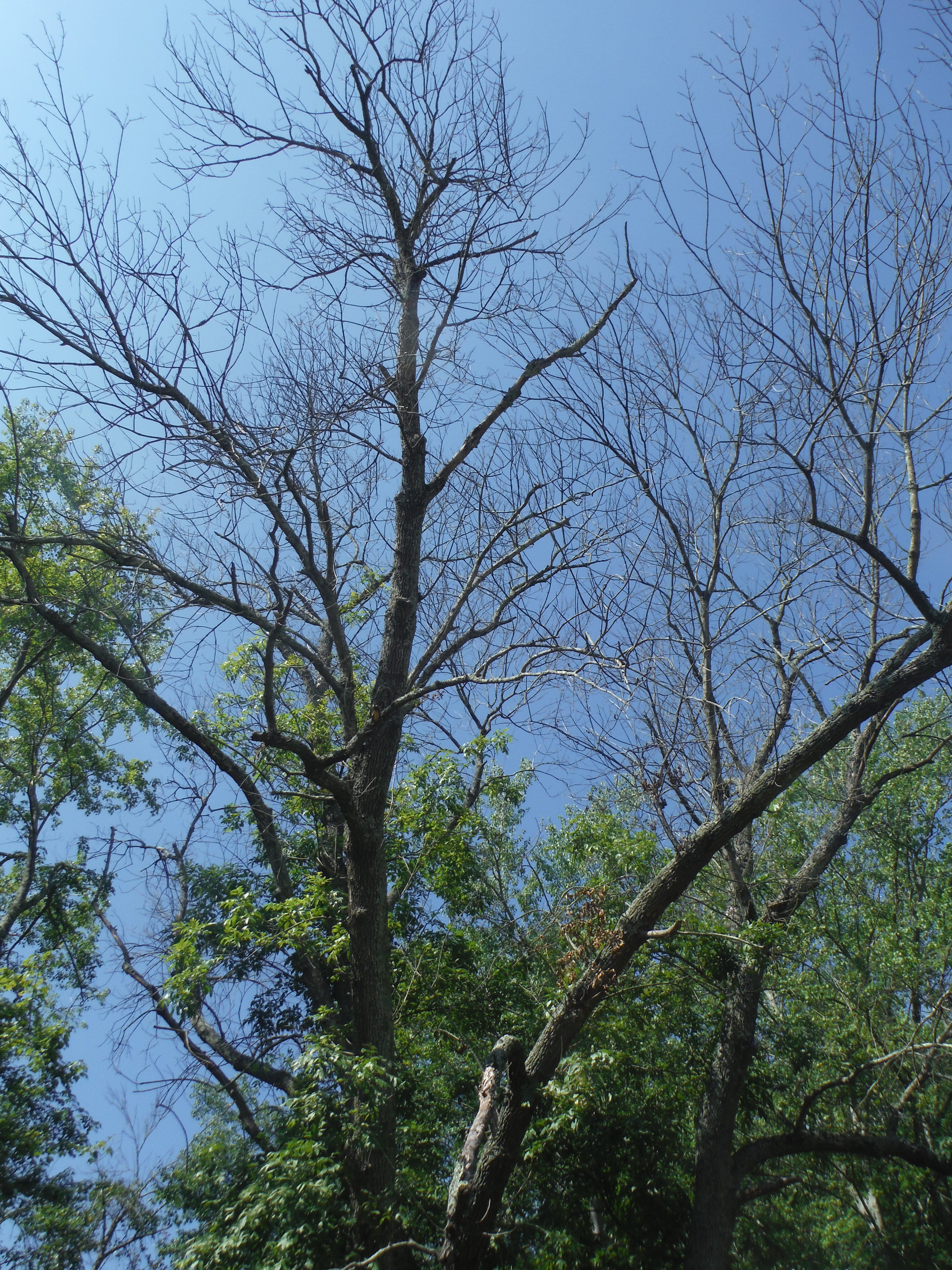
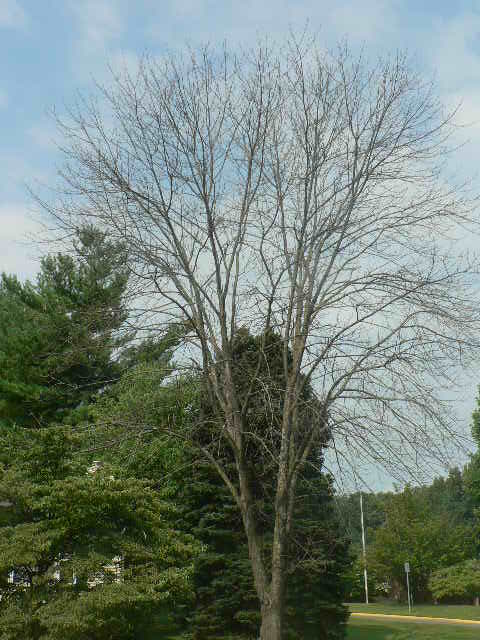
ash tree dying after attack by emerald ash borer

We all know that the emerald ash borer (EAB) has caused enormous damage in the approximately 25 years since it was first introduced to Michigan and Ontario. (For more information, see writeup here. In brief, EAB has killed “untold millions” of ash trees across more than 170,000 square miles in 25 states and two provinces (map).
Apparently all North American ash are vulnerable – more than 20 species in Canada, the U.S., and Mexico. The genus Fraxinus is one of the most widespread on the continent. These trees’ deaths are causing changes in forest species composition, structure, and function. Hundreds of arthropod species that depend on the genus will be affected.

Nevertheless, forests with important ash components are still outside the infested area and deserve greater protection.

20160222_Campbell

Also, ash trees are among the most common ornamental trees planted in U.S. cities and towns. The death of these trees show us that EAB also has imposed billions of dollars in costs on people who had no direct role in the insect’s introduction and spread. Several studies have proposed estimates:
o Communities in Ohio would likely incur costs up to $4 billion if all ash trees on public land were removed and replaced (Sydnor et al. 2007).
o Communities in four Midwestern states would have to pay an estimated $26 billion to remove and replace as trees growing in parks, private lands, and along streets (Sydnor et al. 2011).
o The cost of treating or removing only half of the affected urban and suburban trees across the anticipated range of EAB during the 10-year period from 2009 to 2019 would be $20 billion (Kovacs et al. 2011).

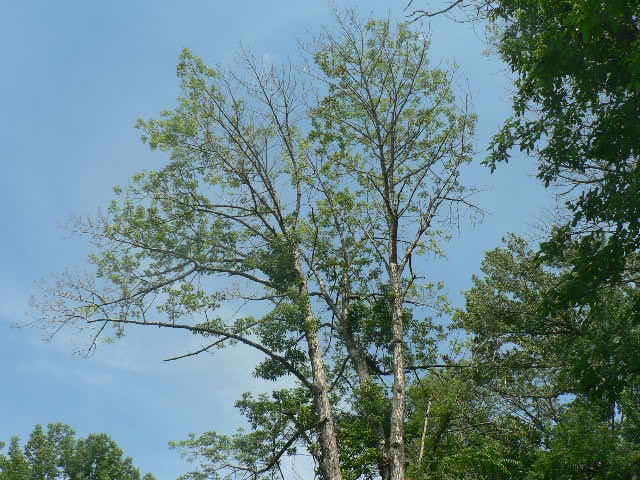
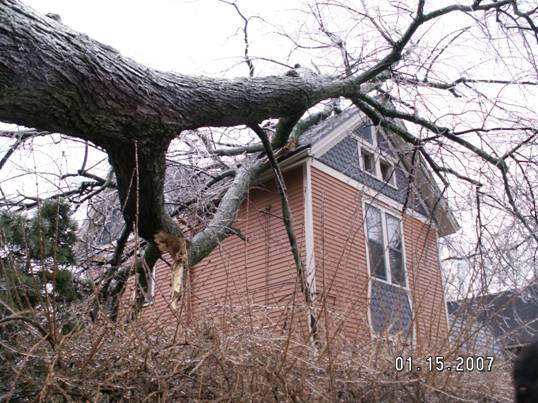
ash tree killed by EAB; Ann Arbor, MI; courtesy of Major Hefje

Over the 14 years since EAB was detected, scientists have learned much about the insect, its hosts, and its management. Early detection of new outbreaks remains difficult. However, traps and lures are more effective than even a few years ago. Other new tools also have been deployed, including strategies for protecting high value trees, and slowing the rate of ash mortality in urban and natural forests.

Four biocontrol agents have been released at sites across the invaded area, although it is too early to know how effective they will be in suppressing EAB populations and protecting ash trees.

The systemic insecticide emamectin benzoate controls EAB for up to three years. This means that municipalities and property owners can now save mature ash trees. Studies show that treating such trees costs less than removing dead trees and planting replacements (Herms and McCullough 2014).

Scientists in Ohio, Michigan, Kentucky, and Massachusetts are testing whether treating just some trees in forest settings can help protect nearby ashes.

One of the most important potential responses to this insect is to breed resistant ash trees. The USDA Forest Service and USDA APHIS have funded such efforts since 2005 – only three years after the insect was detected. Scientists have demonstrated that some ash species that have coevolved with the insect in Asia – especially Manchurian ash – are resistant to EAB attack. More recently, they have been studying how to cross-breed the resistant and non-resistant species and how to evaluate the hybrid progeny for genetic resistance.

Dr. Pierluigi (Enrico) Bonello and others at Ohio State and Wright State University  are studying how Manchurian ash trees resist EAB attack. Their focus is on the chemicals present in the trees’ tissues – how they differ in Manchurian ash compared to North American species. These studies have found that Manchurian ash trees contain chemicals that decrease growth and survival of EAB larvae, and decrease the attractiveness of the tree to ovipositing females.
The Ohio team next needs to continue their progress towards identification of the specific chemicals involved, insert the genes that produce them into other ash tree genomes, and produce a large enough number of progeny to test whether the new trees’ genes provide the expected protection.

The team is also studying the other side of this equation – how EAB larvae neutralize defense mechanisms of vulnerable ash species and how these trees may be manipulated to interfere with these adaptations of EAB.. This is a long-term project that needs consistent and sustained support over many years to bring about real capacity for restoring disappearing ash populations.

Unfortunately, funding for this vitally important work is not assured. USDA APHIS (link to 101 on CISP) has funded the team’s work to date, but may no longer be in a position to do so. . After all, it is 14 years since EAB was detected and a decade since APHIS stopped trying to eradicate it. The goal now is to manage EAB in the forest and in urban settings, over the long term. This task logically should fall to the USDA Forest Service.

Both APHIS and the Forest Service are challenged by the need to respond to the introduction of ever more non-native tree-killing insects and diseases; by the need for programs to address pests already present; and by simultaneous reductions in agencies’ budgets. APHIS’ budget for managing all “tree and wood pests” has fallen from $76 million to $55 million since 2011 – a 28% reduction. The USFS’ research budget has fallen less, proportionately: from $307 million to $292 million (a 4% cut).
However, the USFS Research budget has never been generous in funding research on non-native invasive species. Annual totals for invasive species research have been between $5 and $5.6 million since 2012. EAB specifically has been funded at between $1.2 and $1.8 million.
(For a longer discussion of funding shortfalls and other impediments to programs intended to help our forests recover from EAB and other non-native pests, read Chapter 6 of Fading Forests III, available here)

The emerald ash borer is the most destructive and costly forest insect ever introduced to the United States. Surely the government agency responsible for protecting our forests should provide additional resources to counter this threat.

Sources:
Herms, D. A. and D. G. McCullough. 2014. Emerald Ash Borer invasion of North America: History, biology, ecology, impacts, and management. Annual Review of Entomology, Vol 59, 2014 59:13-30.

Kovacs KF, Mercader RJ,Haight RG, SiegertNW,McCulloughDG,Liebhold AM. 2011. The influence
of satellite populations of emerald ash borer on projected economic costs in U.S. communities, 2010–
2020. J. Environ. Manag. 92:2170–81

Sydnor TD, Bumgardner M, Subburayalu S. 2011. Community ash densities and economic impact
potential of emerald ash borer (Agrilus planipennis) in four Midwestern states. Arboric. Urban For. 37:84–89

Sydnor TD, Bumgardner M, Todd A. 2007. The potential economic impacts of emerald ash borer
(Agrilus planipennis) on Ohio, U.S., communities. Arbor. Urban For. 33:48–54
Posted by Faith Campbell

Cacti under Threat – Does No One Care?

Nearly 2 million square miles of ecologically significant and beautiful desert ecosystems straddle the U.S.-Mexico border regions. Cacti are either dominate or are extremely important components of these ecosystems. Two South American insects already present in the United States threaten to kill large numbers of these cacti and transform these desert ecosystems. Iconic species – prickly pears, saguaro, and organ pipe cacti – are at risk.

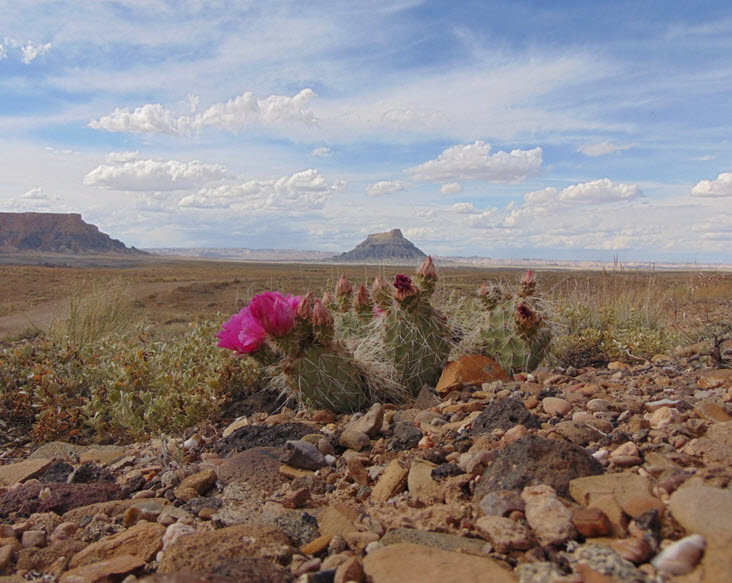
prickly pear cactus at Factory Butte; photo by S.E. Schlarbaum

Flat-padded prickly pear cacti of the genus Opuntia are threatened by the cactus moth, Cactoblastis cactorum.
In 1989, the cactus moth was found in southern Florida, to which it had spread from the Caribbean islands (Simonson 2005). Since then, it has spread west as far as southern Louisiana. Two small outbreaks on islands off Mexico’s Caribbean coast have been eradicated. If it reaches the arid regions of Texas, it is likely to spread throughout the desert Southwest.
In Florida, the cactus moth has caused considerable harm to six native species of prickly pear, three of which are listed by the state as threatened or endangered. In the American Southwest, at least 80 species of flat-padded prickly pears are at risk (Simonson et al. 2005) and there are more in Mexico, which is the center of endemism for Opuntia.
These cacti support a diversity of pollinators as well as deer, javalina (peccaries), tortoises, and lizards. Prickly pears also shelter packrats –which in turn are fed on by raptors, coyotes, and snakes; nesting birds and plant seedlings. Their roots hold highly erodible soils in place (Simonson 2005).
The U.S. Department of Agriculture began trying to slow the spread of the cactus moth in 2005 – 15 years after it was first detected in Florida (Mengoni Goñalons et al. 2014).  However, the program never received an appropriation from Congress so funding was always inadequate. For several years, a patchwork of projects was stitched together: Mexico provided some funding; a volunteer network managed by Mississippi State University monitored lands along the Gulf Coast for the moth; and a laboratory operated by the Florida Department of Agriculture reared moths for research, sterile male releases and biocontrol host specificity testing.
The continuous funding problems led APHIS to abandon its regional program and focus on biocontrol, which is the only viable control measure in the desert Southwest where vulnerable cacti are numerous and grow close together. A newly described wasp, Apanteles opuntiarum (Mengoni Goñalons et al. 2014), is the most promising candidate.
Harrisia cactus mealybug might attack columnar cacti
The 2 million square miles of desert in Southwest United States and Mexico are home to more than 500 columnar cactus species in the Cactoideae (Zimmerman et al. 2010). Some are already endangered; others are totems of the desert, e.g., saguaro, organ pipe, and barrel cacti. The larger ones, particularly, play important ecological roles.
A second South American insect threatens columnar cacti in the Caribbean basin now and in the future could put others at risk in the American Southwest and Mexico: the Harrisia cactus mealybug (Zimmerman et al. 2010).
A mealybug in the genus Hypogeococcus has been killing several of the 13 columnar cactus species in southern Puerto Rico since 2005. Two are endangered species: Harrisia portoricensis and Leptocereus grantianus (USDA ARS). These cacti provide food or shelter for endemic bats, birds, moths and other pollinators (Segarra & Ramirez; USDA ARS). This mealybug is also now killing native cacti on the U.S. Virgin Islands (H. Diaz-Soltero pers. comm. August 2015).
Mealybugs in the same genus in Florida and Hawai`i do not attack cacti (University of Florida fact sheet; Hawai`i Department of Agriculture new pest report). In South America, though, insects in this genus feed on many columnar cacti, including ones in the genera Cereus, Echinopsis, Harrisia, Cleistocactus, Monvilea, and Parodia (USDA ARS; Zimmerman et al. 2010). Scientists are uncertain how many mealybug species are involved, which complicates efforts to determine the level of threat to columnar cacti on the U.S. mainland (H. Diaz-Soltero pers. com. August 2015). No one knows how vulnerable individual cactus species growing in the Southwest are to Hypogeococcus mealybugs (Golubov pers. comm. January 2011). Nor does anyone know whether natural enemies of mealybugs native to Mexico might also attack alien mealybugs and so prevent significant damage to native cacti (Zimmerman et al. 2010).
Still, the possible threat warrants studies to determine the vulnerability of these cacti to non-native mealybugs in the Hypogeococcus genus.
Meanwhile, scientists at the USDA ARS laboratory in Argentina have been searching for possible biocontrol agents but are stymied by the confusion over which mealybugs attach which cacti. Use of DNA sequencing and other tools should clarify these issues (H. Diaz-Soltero pers. comm. August 2015). However, no funds have been appropriated for this work, which has hindered progress (H. Diaz-Soltero pers. comm. August 2015).
To date, no organized constituency has advocated for protection of our cacti from these two pests. In the past I tried to persuade native plant societies, Nature Conservancy chapters, the leadership of the American Cactus and Succulent Society, and other groups that champion the desert to help lobby the Congress to fund USDA’s efforts. I was never successful.
Are Americans truly indifferent to the threat that many cacti in our deserts will be killed by non-native insects? Do they not realize that these threats must be countered before they reach the areas where cacti are dense and numerous?

Sources
California Plant Pest and Disease Report. 2005. Vol. 22 No. 1. Covering Period from July 2002 through July 2005.
Hawaii Department of Agriculture. 2006. http://hawaii.gov/hdoa/pi/ppc/2006-annual-report/new-pest-detections (accessed 11/1/10)
Mengoni Goñalons, C., L. Varone, G. Logarzo, M. Guala, M. Rodriguero, S.D. Hight, and J.E. Carpenter. 2014. Geographical range & lab studies on Apanteles opuntiarum (hymenoptera: braconiDae) in AR, a candidate for BC of Cactoblastis cactorum (Lepidoptera: Pyralidae) in North America. Florida Entomologist 97(4) December 2014
Segarra-Carmona, A.E., A. Ramirez-Lluch. No date. Hypogeococcus pungens (Hemiptera: Pseudococcidae): A new threat to biodiversity in fragile dry tropical forests. {title/org/other identifying information for Segarra-Carmona plus an entry for the pers. comm.}
Simonson, S.E., T. J. Stohlgren, L. Tyler, W. Gregg, R. Muir, and L. Garrett. 2005. Preliminary assessment of the potential impacts and risks of the invasive cactus moth, Cactoblastis cactorum Berg, in the U.S. and Mexico. Final Report to the International Atomic Energy Agency, April 25, 2005 © IAEA 2005
USDA Agriculture Research Service, Research Project: Biological Control of the Harrisia Cactus Mealybug, Hypogeococcus pungens (Hemiptera:pseudococcidae) in Puerto Rico Project Number: 0211-22000-006-10 Project Type: Reimbursable
Zimmermann, H.G., M.P.S. Cuen, M.C. Mandujano, and J. Golubov. 2010. The South American mealybug that threatens North American cacti. Cactus and Succulent Journal. 2010 Volume 82 Number 3

Posted by Faith Campbell

Funding Shortfalls Threaten Our Trees – & Are Becoming Worse

Experts have recognized for two decades that funding of federal programs intended to prevent or respond to introductions of invasive species is inadequate.  As regards tree-killing insects and pathogens, there have been spikes in the past, spurred by, first, detection of Asian longhorned beetle  and emerald ash borer, then by federal spending increases to support recovery from the Great Recession.

But with renewed pressure to reduce the federal budget, programs operated by APHIS and the USDA Forest Service have suffered significant cuts in spending. For a history of these cuts, read Chapter 3 in Fading Forests III .

Funding for key programs continue. Most alarming is that these cuts are suggested by the Administration! in its annual budget sent to Congress. I don’t know whether the cuts are suggested by the agencies, or instead are imposed by higher-ups in the Department of Agriculture or at the President’s Office of Management and Budget.

White House

Certainly there is competition for the available funds. APHIS is funded by the Agriculture Appropriations bill, which also funds agriculture programs that enjoy strong lobbying support as well as food stamps. The Forest Service is being squeezed by the ever-higher costs of managing wildfires.

Still, these cuts threaten to expose our wildland, rural, and urban forests to permanent destruction by non-native, tree-killing insects and pathogens.

Congress determines the final funding levels through the appropriations process.

Capitol  Members of Congress work for us!!

Ask your member of Congress & senators to support adequate funding for APHIS & USFS programs that counter invasive, non-native tree-killing pests.

Congress’ actions are at the following stage as of the third week in July:

APHIS

The House Subcommittee on Agricultural Appropriations bill had cut funding for “tree and wood pest” group – although the bill did increase funding for the “specialty crops” program.

In both cases, groups with which I work had asked to maintain the FY15 level.

The Senate bill, adopted by the full Appropriations Committee on 16 July, has restored funding to the “tree and wood pest” line! Possibly because of this increase, it holds the “specialty crops” program funding to the FY15 level.

Funding specifics:

HOUSE Agriculture appropriations bill maintains overall funding for APHIS at the FY15 level ($871 million). This is $15 million above the President’s request in his budget; and about the same as the level of funding for the current fiscal year (FY 2015). Within this amount, the following is allocated to programs that address tree-killing pests:

  • $158,000,000, to remain available until expended, for specialty crop pests

(a very small proportion of this account, about $5 million, goes to sudden oak death management)

  • $45,500,000, to remain available until expended, for tree and wood pests (e.g., ALB, EAB)


SENATE Agriculture appropriations bill raised overall funding for APHIS to $876 M — $20 million above the President’s budget request and $5 M above both the current year and House level. Within this amount, the following is allocated to programs that address for tree-killing pests:

  • $156,000,000, to remain available until expended, for specialty crop pests
  • $54,000,000, to remain available until expended, for tree and wood pests


As I said above, it is disturbing that these programs do not enjoy sufficient support within the Administration. We all need to increase our lobbying of USDA – both at the APHIS level and above; and at OMB.

USDA

USDA Forest Service

Both the House and Senate Interior Appropriations subcommittee bills cut USFS funding for both research and forest health management.

The House interior appropriations bill provides only $207 million for research other than Forest Inventory and Assessment. The Senate interior appropriations bill provides $211 million for research other than FIA. Both figures are below the $220 million allocated for the current year (FY2015) and higher levels in previous years.

The House bill provides only $99 million for forest health management (on both federal and non-federal or “coop” lands). The Senate bill provides $100.7 million. Again, both figures are below the $104.6 million provided in FY15 and higher levels in previous years.

Funding for all USFS programs is under extreme pressure by the growing cost of fighting wildfires. Until this problem is resolved, it will be extremely difficult to obtain additional funds for other programs – even in the face of rising numbers of tree-killing pests across the country. There are also questions within OMB and among some advocacy groups about whether the USFS should assist states and cities in containing tree-killing pests. Some argue that the USFS should confine its efforts to pests that are attacking trees in National forests. My reply: if you wait for ALB or other pests to reach National forests before responding, you have thrown away any chance of containing the outbreak.