Fiscal Year 2020 began on October 1, 2019. In December Congress adopted funding bills (appropriations) for the full fiscal year – which ends next September.
APHIS
In
its Agriculture Appropriations bill, Congress is holding steady or increasing
funding for several APHIS programs that are important for addressing
tree-killing pests:
tree and wood pests program – $60 million (this is the same as FY2019, and $4 million above the Administration’s request);
Pest Detection – $27.4 million (this is same as FY219 and as the Administration’s request);
Methods development – $20.686 million (about the same as in FY2019 and the Administration’s request).
Specialty crops program – increased to $192.013 million. The accompanying report mentions two specific organisms as priorities – navel orangeworm and sudden oak death (apparently in response to an Oregon economic study and because Sen. Merkley is on the Appropriations Committee). This was above the $186 million in both the House and Senate bills and considerably above the Administration’s request of $176 million.
The Agriculture Appropriations bill reiterates helpful language from past laws authorizing the Secretary of Agriculture “to transfer … funds available to … the Department [of Agriculture] such sums as may be deemed necessary” to respond to disease or pest emergencies that threaten any segment of the U.S. agricultural production industry. However, for the past decade the Office of Management and Budget has prevented frequent use of this power. APHIS did receive emergency funds to address the spotted lanternfly in February 2018 (APHIS Press Release No. 0031.18)
(You might remember that in 2017-2018 I put forward
amendments to the Farm Bill that would have broadened APHIS’ access to
emergency funds. I sought especially to ensure that efforts to protect native
vegetation and urban trees would be eligible for funding. Unfortunately, this
amendment was not enacted.)
USDA Forest Service
The overall Research and Development program is funded
at $305 million – a few million above what I advocated for. Of this total, $77 million is allocated to the
Forest Inventory and Analysis program. In the past, research on invasive
species has received about 10% of the total research funds. The USFS has been
directed by Congress to restructure its research program. I will monitor any
changes and determine the implications for invasive species concerns.
USFS engagement on pest issues with other federal
agencies and state, local government, and private land managers is carried out
through the Forest Health Management program under the State and Private
Forestry division. While neither the appropriations legislation nor the
accompanying report provides any direction on forest health activities,
program staff report that funding for the overall program totals $104 million –
about $6 million more than in FY2019. Program work on federal lands is funded
at $66
million. However, $3 million has been deducted as part of a budget reform. After the deduction, this allocation is about $7 million above the
funding level for FY 2019. Program work on non-federal “cooperative” lands is funded at $44 million. Congress has instructed that $2 million of this total be given to the eastern
states’ forest health monitoring cooperative. The total “cooperative” lands allocation is
$2 million above the FY2019 allocation.
Conclusion
I am very pleased by Congress maintaining or
increasing funds for APHIS’ forestry programs. I am somewhat concerned by the pressure
to reform USFS programs. I worry especially about the increasing focus on
managing pests on federal lands compared to non-federal lands because nearly
all damaging invasions begin on non-federal lands.
ash tree killed by emerald ash borer Ann Arbor, MI photo provided courtesy of former mayor John Hieftje
Posted by Faith Campbell
We
welcome comments that supplement or correct factual information, suggest new
approaches, or promote thoughtful consideration. We post comments that disagree
with us — but not those we judge to be not civil or inflammatory.
The National Park Service has a legal mandate to manage lands and waters under its jurisdiction so as to “preserve unimpaired” their natural and cultural resources (NPS Organic Act 54 U.S.C. § 100101, et seq.) Invasive species undermine efforts to achieve that mission. In 2000, the NPS adopted a program to coordinate management of invasive plants. It’s not as effective as needed – see the strategic plan.
However, only recently has NPS begun trying to prioritize and coordinate programs targetting the many animals and animal diseases which threaten Park resources. These organisms range from emerald ash borer and quagga mussels; to pythons, goats, and pigs; to diseases such as white nose syndrome of bats and avian malaria in Hawai`i.
In 2017, NPS released an internal study of the pervasive threat to Park resources posed by invasive animals and discussed steps to overcome barriers to more effective responses (Redford et al., 2017; full citation at end of this blog). The Chief of the Biological Resources Division initiated this report by asking a Science Panel to evaluate the extent of the invasive animal problem, assess management needs, review best practices, and assess potential models that could serve as a service-wide organizational framework. The report was to pay particular attention to innovative and creative approaches including, but not limited to, new genomic tools. I summarized the Panel’s findings and conclusions in a blog when its report appeared in 2017.
Significantly, the
Panel’s final report states that “a general record of failure to control
invasive species across the system” was caused principally by a lack of support
for invasive species programs from NPS leadership.
This
report has now appeared in the form of a peer-reviewed article in the journal Biological Invasions by Dayer et al. 2019 (full citation at end of
this blog). Although nine of the ten authors are the same on both reports there
are substantive differences in content. For example, the journal article
reiterates the principal findings and conclusions of the Panel’s final report,
but in less blunt language.
What’s Been Watered
Down
The
toning down is seen clearly in the statements some of the panel’s six key
findings.
Finding
#1
The panel’s report says: invasive animals pose a significant threat to
the cultural and natural values and the infrastructure of U.S. national parks.
To date, the NPS has not effectively addressed the threat they pose.
Dayer et al. says: the ubiquitous presence of invasive animals in parks
undermines the NPS mission.
Finding
#2
The panel’s report says: managing
invasive animals will require action starting at the highest levels, engaging
all levels of NPS management, and will require changes in NPS culture and
capacity.
Dayer et al. says: coordinated action is required to meet the challenge.
Finding
#4
The panel’s report states: effective
management of invasive animals will require stakeholder engagement, education,
and behavior change.
Dayer et al. says: public engagement, cooperation and support is [sic]
critical.
Wording
of the other three “key findings” was also changed, but these changes are less
substantive.
Drayer
et al. also avoid the word “failure”
in describing the current status of NPS” efforts to manage invasive animal
species. Instead, these authors conclude that the invasive species threat “is
of sufficient magnitude and urgency that it would be appropriate for the NPS to
formally declare invasive animals as a service-wide priority.”
Where the
Documents Agree – Sort of
Both
the Panel’s report and Dayer et al.
state that invasive animal threats are under-prioritized and under-funded. They
say that addressing this challenge must begin at the highest levels within the
NPS, engage all levels of management, and will require investments from the NPS
leadership. Even within individual parks,
they acknowledge that staffs struggle to communicate the importance of invasive
animal control efforts to their park leadership, especially given competition with
other concerns that appear to be more urgent. And they admit that parks also
lack staff capacity in both numbers and expertise.
Also,
both the Panel’s report and Dayer et al.
urge the NPS to acknowledge formally that invasive animals represent a crisis
on par with each of the three major crises that drove Service-wide change in
the past: over-abundance of ungulates due to predator control; Yellowstone fire
crisis (which led to new wildfire awareness in the country); and recognition of
the importance of climate change.
The
Panel suggested ways to update NPS’ culture and capacity: providing incentives
for staff to (1) address long-term threats (not just “urgent” ones) and (2) put
time and effort into coordinating with potential partners, including other park
units, agencies at all levels of government, non-governmental organizations,
private landowners, and economic entities. Dayer et al. mention these barriers but does not directly mention
changing incentives as one way to overcome them.
Both
the Panel’s report and Dayer et al.
suggest integrating invasive animal threats and management into long-range
planning goals for natural and cultural landscapes and day-to-day operations of
parks and relevant technical programs (e.g., Biological Resources Division,
Water Resources Division, and Inventory and Monitoring Division).
What is Missing
from the Journal Publication
The
Panel’s final report noted the need for increased funding. It said that such
funding would need to be both consistent and sufficiently flexible to allow
parks to respond to time-sensitive management issues. It proposes several
approaches. These include incorporating some invasive species control programs
(e.g., for weeds and wood borers)
into infrastructure maintenance budgets; adopting invasive species as
fundraising challenges for non-governmental partners (e.g., “Friends of Park” and the National Park Foundation); and
adopting invasive species as a priority threat. Dayer et al. do not discuss funding issues.
The final internal report envisioned the
NPS becoming a leader on the invasive species issue by 1) testing emerging best
management practices, and 2) educating visitors on the serious threat that
invasive species pose to parks’ biodiversity. As part of this process, the
authors suggest that the NPS also take the lead in countering invasive species
denialism. Dayer et al. do not mention the issue of invasive species deniers.
Common Ground:
Status of Invasive Animals in the Parks
The
Panel’s report and Dayer et al. describe
the current situation similarly:
More than half of the National parks that responded to the internal survey (245 of the 326 parks) reported problems associated with one or more invasive animal species.
The total number of species recorded was 331. This is considered to be an underestimate since staffs often lack the ability to thoroughly survey their parks – especially for invertebrates.
Invasive species threats to Parks’ resources have been recognized for nearly 100 years. The original report notes that 155 parks reported the presence of one or more exotic vertebrate species in 1977. At that time, exotic animals were the fourth most commonly reported source of threats. In 1991, parks identified 200 unfunded projects to address exotic species, costing almost $30 million.
Only a small percentage of non-native animal invasions are under active management. Dayer et al. stated that 23% have management plans at the park unit level, and only 11% are reported as being ‘‘under control”.
Individual parks have effective programs targetting specific bioinvaders (examples are described in Redford et al; a brief summary of these efforts is provided in my previous blog.
Common Ground on
Some Solutions
The
report and Dayer et al. promote the
same steps to improve invasive animal management across the Service. Both note
that the NPS is adopting formal decision support tactics to update and
strengthen natural resource management across the board. More specific steps include
establishing
a coordination mechanism that enables ongoing and timely information sharing.
mainstreaming
invasive species issue across the NPS branches or creating a cross-cutting IAS
initiative among the Biological Resources Division, Water Resources Division,
Inventory and Monitoring Division, Climate Change Response Program, and the
regional offices.
While
both documents call on the NPS to develop and test emerging technologies, the
Panel’s final report is more detailed,
providing, in Table 5, a list of several areas of special interest, including
remotely triggered traps, species-specific toxicants, toxicant delivery
systems, drones, environmental DNA, and sterile-male releases. Dayer et al. mention eDNA and metabarcoding
for ED/RR, biocontrol, and gene drives to control invasive pathogens. (Neither
document discusses possible concerns regarding use of CRISPR and other
gene-altering technologies, other than to say there would be public concerns that
would need to be addressed.)
Both
documents note the necessity of working with resource managers beyond park
boundaries to detect and manage species before they arrive in parks. They note
that developing and operationalizing such partnerships requires time and
resources. Furthermore, invasive species prevention, eradication, and
containment programs can be effective only with public support. They suggest
strengthening NPS’ highly regarded public outreach and interpretation program
to build such support, including through the use of citizen scientists.
The
Panel’s final report said that the NPS should recognize that the condition of
the ecosystem is the objective of efforts.
Its authors recognized that achieving this goal might require
reconsidering how ecosystem management is organized within NPS so interacting
stressors (e.g., fire) and management
levers (e.g., pest eradication/suppression, prescribed fire) would be addressed.
For this, the NPS would need to create a focused capacity to address the
pressing issue of invasive animals in such a way that fosters integrated
resource management within parks, focusing on fundamental values of ecosystem
states, and not eradication targets. Dayer et
al. called for the same changes without specifically labelling “condition
of the ecosystem” as the goal.
Publication of
Dayer et al. prompted me to find out
what progress the NPS has made in responding to the “key findings” in the
Panel’s final report (neither publication calls them “recommendations”).
The
National Park Service has acted on the recommendation to appoint an “invasive
animal coordinator” within the Biological Resources Division. That person is Jennifer Sieracki. However, I wonder whether a person located in BRD is of sufficient stature to
influence agency policy across all divisions. It is not clear whether there is active
coordination with the national-level invasive plant coordinator.
Dr.
Sieriaki responded to my query by noting the following new efforts 1) to
improve outreach to partners and
the public, and 2) to expand formal and informal partnerships with local,
state, federal and tribal entities and local communities near parks.
NPS should soon finalize
two formal partnerships with other agencies and organizations for outreach and
management of invasive animal species.
NPS is working with
researchers at the US Geological Survey to expand an existing modeling tool for
identifying potential suitable habitat for invasive plant species to include
invasive insects. This will help staff focus on the most likely locations for
introductions and thus assist with early detection and control.
NPS has created a
Community of Practice so NPS employees can seek each other’s advice on addressing
invasive animal issues. A workshop of regional invasive species coordinators is
planned for the coming months to guide direction of the service-wide program
and identify other top priorities. (Seriacki pers. comm.)
I also wonder whether the NPS can achieve the top-level coordination and outreach to the public called for by both reports while complying with the terms of Public Law 116-9 – the John N. Dingle Jr. Conservation, Management, and Recreation Act, which was enacted a year ago. Title VII, Section 10(i) of this law limits spending to carry out invasive species program management and oversight to 10% of appropriated funds. Less than 15% may be spent on investigations (research), development activities, and outreach and public awareness efforts (Section 10(h)). The law does allow spending for investigations regarding methods for early detection and rapid response, prevention, control, or management; as well as inspections and interception or confiscation of invasive species to prevent in-park introductions.
For more information, see my previous criticism of NPS failure to address invasive species issues here.
Posted by Faith Campbell
We welcome comments that supplement or correct factual information, suggest new approaches, or promote thoughtful consideration. We post comments that disagree with us — but not those we judge to be not civil or inflammatory.
See also my earlier discussion of the new legislation here.
SOURCES
Dayer,
A.A., K.H. Redford, K.J. Campbell, C.R. Dickman, R.S. Epanchin-Niell, E.D.
Grosholz, D.E. Hallac, E.F. Leslie, L.A. Richardson, M.W. Schwartz. 2019. The
unaddressed threat of invasive animals in U.S. National Parks. Biol Invasions
Redford,
K.H., K. Campbell, A. Dayer, C. Dickman, R. Epanchin-Niell, T. Grosholz, D.
Hallac, L. Richardson, M. Schwartz. 2017. Invasive animals in U. S. National Parks:
By a science panel. Natural Resource Report NPS/NRSS/BRD/NRR—2017/1564. NPS,
Fort Collins, Colorado. Commissioned by the NPS Chief of Biological Resources
Division. https://irma.nps.gov/DataStore/DownloadFile/594922
Jennifer Sieracki, Invasive Animal Coordinator,
Biological Resources Division, National Park Service
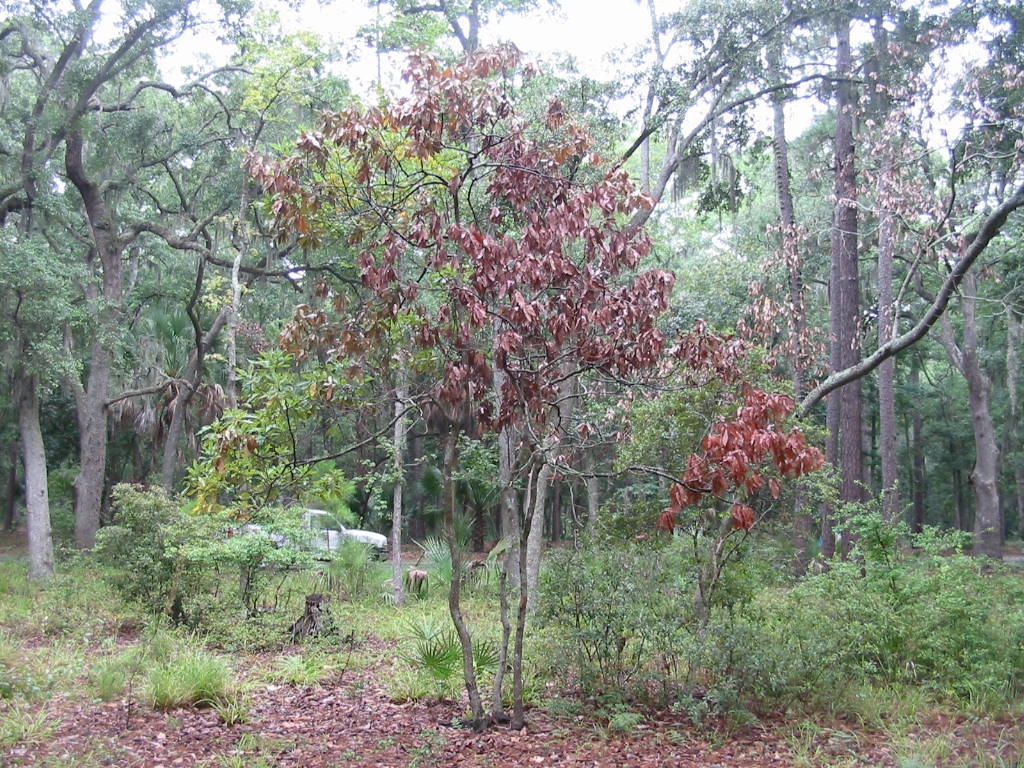
redbay in Georgia killed by laurel wilt photo by Scott Cameron
In August I posted a blog summarizing information on pest introductions and impacts gleaned over my nearly 30 years of engagement. Already, I need to post an update, with an alarming estimate of introduced pests’ impacts across the continent.
Fei
et al. 2019 (see the full citation is
at the end of this blog) estimate that the
15 most damaging introduced species threaten 41.1% of the total live forest
biomass in the 48 conterminous states.
In
fact, this might be an underestimate
of the pests’ impacts on biomass loss. Fei et
al. (2019) note several limitations in their data that might result in such
an underestimate. These include:
1)
Mortality rates – and impacts – may increase over several decades following the
initial invasion.
2)
For pests already established throughout nearly all their potential ranges,
pest-induced biomass loss could be substantially underestimated because most of
their hosts died long ago, before the FIA data began to be collected. Consequently,
the actual loss of these tree species from the forest is much greater than has
been measured by the study’s methods.
3)
Mortality rates vary among species and regions, which might introduce errors.
They cite European gypsy moth, in which relatively small areas of heightened
mortality due to repeated defoliations are swamped by lower mortality rates
across the chosen measurement area.
4)
They considered only tree mortality, not crown or root dieback or reductions in
tree growth.
5)
They did not estimate carbon release to the forest floor as a result of
defoliation.
6)
Pest-related mortality rates may be underestimated due to salvage – although
the authors did not observe evidence of substantial salvage efforts for most of
these pests.
7)
The data did not include losses from urban tree mortality.
Fei
et al. estimate that more than 450 pests
are established in the 48 conterminous states. This study excluded pests
attacking palms; trees on U.S. Pacific and Caribbean islands; and pests native
to portions of North America that are causing severe damage in naïve hosts – e.g., goldspotted oak borer. I did
include the latter groups in my slightly larger estimate laid out in my August
blog.
Fei
et al. base their analysis on 83 of
the introduced pest species considered to cause substantial effects on tree
health and productivity and sometimes extensive tree mortality. (In my August
blog, I described findings by another study by Guo et al (2019) that counted 91 species in that category.)
Fei et al. build on studies by a group of USDA Forest Service (USFS) scientists that I described in an earlier blog.
This team found that, nation-wide, non-native forest pests are causing an approximate 5% increase in total annual mortality by tree volume. They based their studies on analysis of 92,978 long-term plots maintained by the USDA Forest Inventory and Analysis program.
As
noted above, the article cannot capture the full range of mortality in species
affected by pests introduced decades ago. Chestnut blight, white pine blister
rust, Port-Orford-Cedar root disease, beech bark disease, butternut canker,
dogwood anthracnose, and European gypsy moths had all killed millions of trees
before the USFS forest inventory plots were established. Fei et al. do form a solid basis for measuring some of the current
impacts and projecting future ones.
The
focus of the new article is on the amount of carbon being transferred from live
biomass to dead organic matter as a result of the increased mortality caused by
the 15 species with the highest impacts. This is arguably a more quantifiable
measure of pests’ impacts than others’ approaches. Here, I focus more narrowly on the
documentation of exacerbated mortality as measured by the loss of biomass. Added
together, these 15 species have caused an additional (i.e., above background levels) tree mortality rate of 5.53 TgC per
year [defined as terragrams of carbon]. This
estimate of annual conversion of live biomass to dead wood is similar in
magnitude to that attributed to fire (5.4 to 14.2 TgC per year) (Fei et al. 2019). Yet the fire threat gets
much more attention – for both prevention and management.
It
is important to remember that conversion of living biomass to dead wood does
not result in an immediate release of carbon to the atmosphere. Atmospheric releases
take place through decomposition which is both gradual and takes place at
varying rates. Some of the carbon will remain in the soil. And, over time, some
of the carbon storage capacity will be restored by compensatory growth in
unaffected trees and the recruitment of new regeneration – although this faster
growth is delayed by as much as two or more decades after pest invasions begin
(Fei et al. 2019).
American elm being killed by “Dutch” elm disease photo by Cheryl Kaiser, University of Kentucky; bugwood.org
The 15 species of introduced pests used in this analysis
are laurel
wilt disease, chestnut blight, butternut canker, dogwood anthracnose, emerald
ash borer (EAB), Dutch elm disease, red pine scale, beech bark disease, hemlock
woolly adelgid, balsam woolly adelgid, European gypsy moth, white pine blister
rust, green spruce aphid, sudden oak death, and Port-Orford cedar root disease.
Of these, the highest elevation in biomass loss – as measured by FIA plot data
– was caused by EAB, Dutch elm disease, beech bark disease, and hemlock woolly
adelgid. We know that elms and beech, at least, began dying decades before the
FIA data began to be collected. So the reported mortality rates are an
underestimate. This is especially true because beech mortality is highest in
the first decade after invasion by beech bark disease.
Annual levels of biomass loss are virtually certain to increase. First, pests will spread to new host ranges and infestations in already-invaded ranges will intensify. As a result, substantial amounts of the hosts’ biomass are at risk of exacerbated mortality. As I noted at the top of the blog, the total amount of host biomass at risk from these 15 species is estimated to be 5,197 TgC – or 41.1% of the total live forest biomass in the 48 conterminous states. Further exacerbating future losses is the likelihood that additional pests will be introduced. I would add that pests not included in this analysis – e.g., polyphagous and Kuroshio shot hole borers and possibly the spotted lanternfly – are also likely to contribute to losses of live forest biomass.
Fei
et al. (2019) did not attempt to
determine the economic value of this biomass loss or to address other types of
losses to ecosystem services.
Remember that a separate set of studies reported by Potter et al. (2019) (the CAPTURE project) also relied on data from the FIA plots to evaluate the impact of introduced pests. These studies focused on identifying the host species at greatest risk rather than highest-impact pests or biomass loss. I find it reassuring that the Fei and Potter studies – using different approaches – resulted in very similar species rankings. See my discussion of the Potter studies here.
Together, the teams led by Potter and Fei set clear priorities for addressing the threats from non-native pests. What we need now is action! See my recommendations in my recent “solutions” blog.
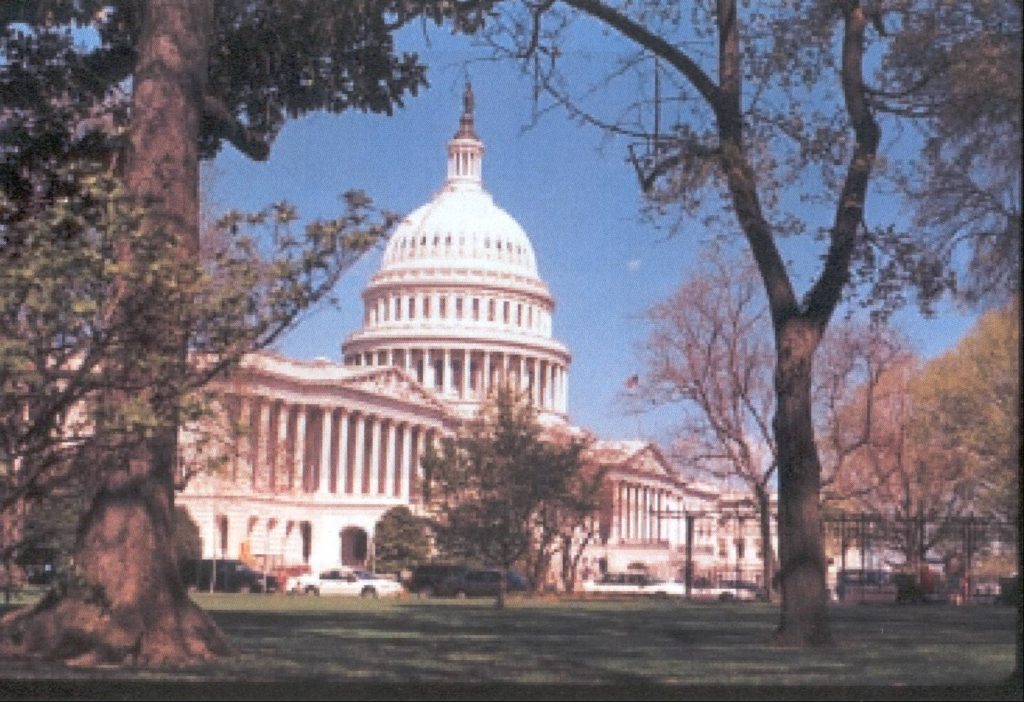
U.S. Capitol – inform your representatives that you want action to protect trees!
SOURCES
Fei,
S., R.S. Morin, C.M. Oswalt, and A.M. 2019. Biomass losses resulting from
insect and disease invasions in United States forests
Potter,
K.M., M.E. Escanferla, R.M. Jetton, and G. Man. 2019a. Important Insect and
Disease Threats to United States Tree Species
and Geographic Patterns of Their Potential Impacts. Forests. 2019 10 304.
Potter,
K.M., M.E. Escanferla, R.M. Jetton, G. Man, and B.S. Crane. 2019b. Prioritizing
the conservation needs of United States tree species: Evaluating vulnerability
to forest insect and disease threats. Global Ecology and Conservation. (2019)
Fiscal
Year 2020 began on 1 October. Congress has not yet passed funding bills
(appropriations) for the full year. Agencies are operating now on a short-term
continuing resolution which expires on November 21st. Meanwhile,
representatives of the House and Senate will meet to reconcile the differences
between the two bodies’ appropriations bills in hope that a year-long bill can
be finalized by that time.
(Disagreement
between President Trump and the Congress about funding for the border wall
might prevent adoption of full-year appropriations bills and lead to another
government shutdown.)
I
report here the differences between House and Senate bills funding the USDA
APHIS and Forest Service programs that are vital to addressing non-native
forest pests.
APHIS
Over
the years, I have complained that inadequate funding is a major cause of
shortfalls in APHIS’ efforts to detect new invasions by tree-killing pests and to
respond to those invasions in effective ways.
While
funding levels are still too low, at least Congress is holding funding steady
for APHIS for Fiscal Year 2020 (which began three weeks ago, on October 1st).
Both House and Senate bills maintain funding for two crucial programs at the
FY19 levels:
“tree
and wood pests” program – $60 million (this matches the FY19 level; it is $4
million above the funding provided in previous years); and
“Pest
Detection” – $27.4 million.
The
House provided slightly higher funding than the Senate for two other programs:
“specialty
crops” (including sudden oak death) – $186.5 million in the House bill, $186
million in the Senate bill; and
“methods
development” – $21.686 million in the House bill, $20.686 million in the Senate
bill.
In the report accompanying its bill, the House called for two additional funding options to address emergencies. First, it set up a contingency fund of $470,000 to control outbreaks of insects, plant diseases, animal diseases and pest animals and birds to meet emergency conditions. Second, the report repeated language from past reports that authorizes the Secretary to take “such sums as may be deemed necessary” from other USDA programs in order to counter pest emergencies threatening any segment of U.S. agricultural production.
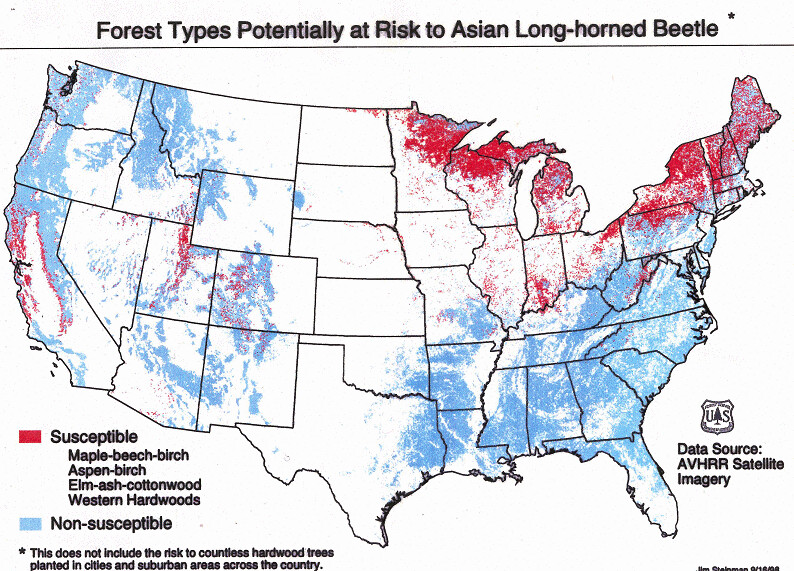
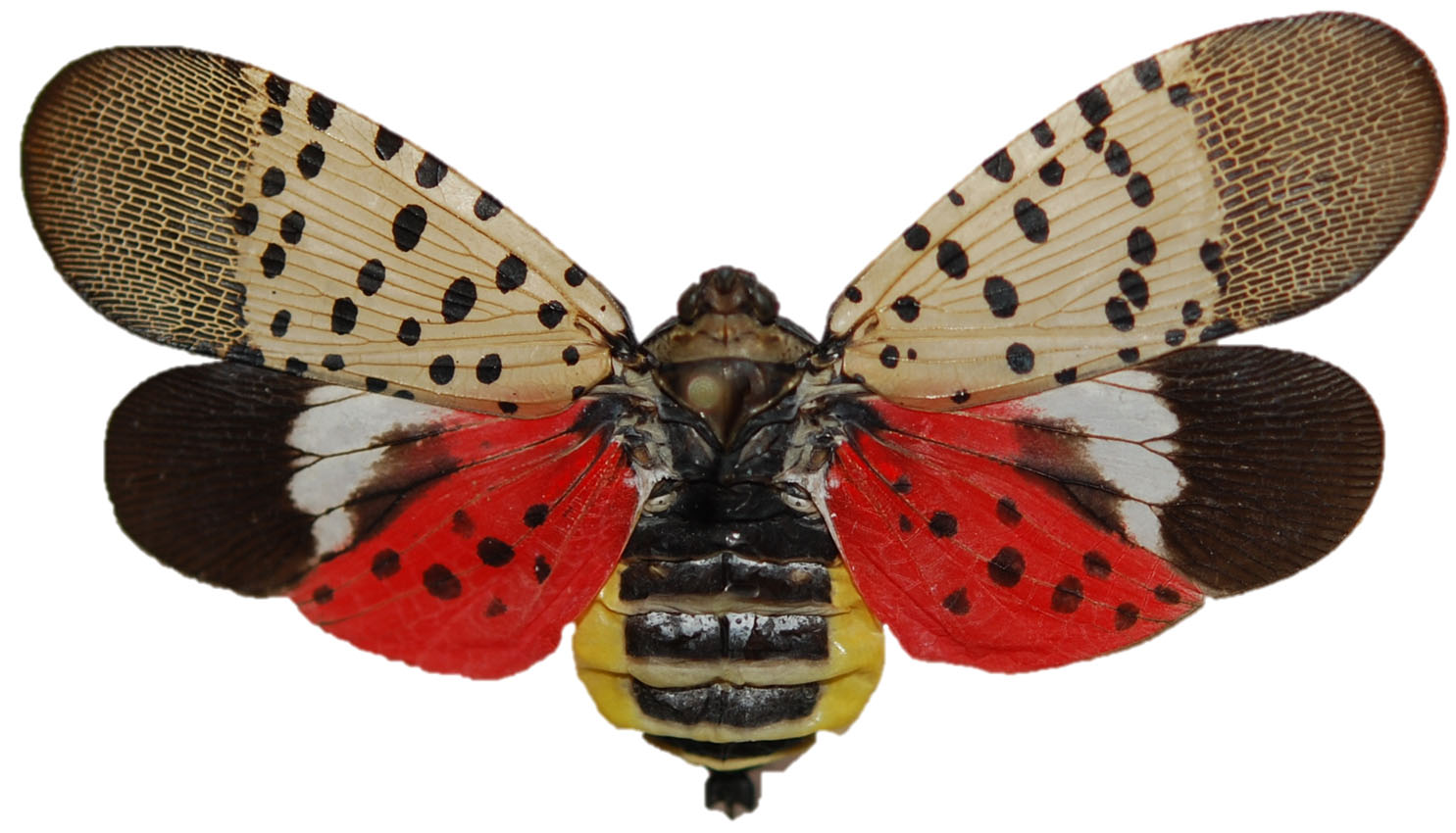
The Senate report addressed several high-profile tree pests. It called for complete eradication of the Asian longhorned beetle; mandated that APHIS report on its efforts to eradicate ALB and spotted lanternfly and to minimize spread of the polyphagous and Kuroshio shot hole borers; and to assist states that have recently detected the emerald ash borer. (This language is helpful, but it falls short of what I previously advocated – that APHIS continue efforts to prevent EAB spread, especially through movement of firewood.) The Senate report also urged APHIS to maintain FY19 level funding addressing the sudden oak death pathogen, in particular to improve understanding of the two strains of the pathogen present in Oregon’s forests link to blog to inform control and management techniques in wildlands. (Actually, management in wildlands falls largely to the Forest Service, with scientific input from both Agriculture Research Service and – to some extent – the NORS-DUC research nursery managed by APHIS.)
For a lengthier justification of my funding requests, see my earlier blog on APHIS funding
Funding for
Resistance Breeding through NIFA
As I pointed out in my blog in May, the 2018 Farm Bill included an amendment (Section 8708) that establishes a new priority for a grant program managed by the National Institute of Food and Agriculture. The amendment would support restoration to the forest of native tree species that have suffered severe levels of mortality caused by non-native insects, plant pathogens, or other pests. The amendment affects the Competitive Forestry, Natural Resources, and Environmental Grants Program under Section 1232(c)(2) of the Food, Agriculture, Conservation, and Trade Act of 1990 (16 U.S.C. 582A-8, as amended. However, this program has not been funded for more than a decade. In my blog, I asked you to support a $10 million appropriation to NIFA to fund a competitive grant program for such forests restoration.
Neither the House nor the Senate provided funding for
this program.
USFS
The House bill provides $277,155,000 for USFS Research and Development – nearly $20 million more than the Senate bill ($257,640,000). The House report links this increase to the recognition of the increasing risk to urban, rural, and wildland forests from insect and disease outbreaks and invasive plant infestations. The report calls on the Forest Service to develop a research program that addresses several priorities critical to forest health, including preventing the spread of disease and invasive species.
USFS engagement on pest issues with other federal agencies and state, local government, and private land managers is carried out through the Forest Health Management program under the State and Private Forestry division. The Senate bill and report are confusing because they have separated out salaries and other expenses. As a result, I can’t compare its figures to those in previous years or to those from the House. Partly for this reason, I urge you to support the House bill, which is quite clear in appropriating $103,736,000 for Forest Health Management, which is a programmatic increase of $19 million above the FY19 level and $29,919,000 above the budget request. I am encouraged by the House’ report, which encourages the Forest Service to address high priority invasive species, pests, and diseases, including the emerald ash borer and bark beetle infestations.
For longer explanations, see my earlier blog on USFS funding.
These bills show an increasing awareness of forest
pest issues in key funding committees in both the House and Senate. Let’s reinforce this message – and spread it
to the rest of Congress. Please contact your senators and representative and
ask them to support these funding levels.
Posted by Faith Campbell
We
welcome comments that supplement or correct factual information, suggest new
approaches, or promote thoughtful consideration. We post comments that disagree
with us — but not those we judge to be not civil or inflammatory.
Faith Campbell receives award for activism from National Association of State Foresters; 2016
For nearly 30 years I have documented bioinvasion threats and gaps, first in three Fading Forests reports (available here), then in five years of blogging. Here I pull together that information and suggest — in most cases reiterate — steps to address these threats and gaps. I list sources of discussion of the underlying issues – other than my reports and blogs – in references at the end of this blog.
My
first premise is: robust federal leadership is crucial:
The Constitution gives primacy to
federal agencies in managing imports and interstate trade.
Only a consistent approach can
protect trees (and other plants) from non-native pests.
Federal agencies have more
resources than state agencies individually or in any likely collective effort
— despite decades of budget and staffing cuts.
My
second premise is: success depends on a continuing, long-term effort founded on
institutional and financial commitments commensurate with the scale of the threat.
This requires stable funding; guidance by research and expert staff; and engagement
by non-governmental players and stakeholders. Unfortunately, as I discuss
below, funding has not been adequate or stable.
My third premise is that programs’ effectiveness needs to be measured, not just effort (see the NECIS document referenced at the end of the blog).
SPECIFICS
Preventing
new introductions continues to be the most effective action. Mitigating options
decrease and damages increase once a non-native pest has entered the country –
much less become established (see Lovett et
al. 2016 and Roy et al. 2014). I
recognize that preventing new introductions poses an extremely difficult
challenge given the volume and speed of international trade and the strong
economic forces supporting free trade. These challenges have been exacerbated over
several decades by the political zeitgeist – the anti-regulatory ideology, the emphasis
on “collaborating” with “clients” rather than imposing requirements through
regulations. Although the current “America First” policy might reduce import
volumes and therefore reduce the invasive species threat to some extent, the
anti-regulatory stance has only strengthened.
containers at the Port of Long Beach, California
Decades of cutting key agencies’ budgets and personnel are another factor. However, the damage to America’s natural systems is so great that we must try harder to find more effective strategies (See the Fading Forest reports; my previous blogs; Lovett et al. 2016; and APHIS annual reports – e.g., the 2019 report here)
Prevention
Despite adoption and implementation of new international and national regulations to stem pest introductions, introductions continue – although probably at a lower level than would otherwise be the case. Delays in adoption of regulations (documented in Fading Forests II and III and my two recent 30-years-in-review blogs have facilitated damaging introductions and spread.
Solutions
Stakeholders press USDA
leadership to initiate rules intended to strengthen phytosanitary protection and
expedite their completion
APHIS promote and facilitate
analysis of current programs and policies by non-agency experts to ensure the
agency is applying most effective strategies (Lovett et al. 2016).
Adoption
of insufficiently protective regulations (documented in FFII, FFIII, two
30-years-in-review blogs) – adopted in part because APHIS is trying to
“balance” trade facilitation and phytosanitary protection – has further
contributed to damaging pests’ introduction and spread.
Solutions:
Boost
priority of preventing pest introductions by amending the Congressional finding
in the Plant Protection Act [7 USC 7701(3)] as follows
Existing language: “[I]t is the
responsibility of the Secretary [of Agriculture] to facilitate exports, imports
and interstate commerce in . . . commodities that pose a risk of harboring
plant pests or noxious weeds in ways that
will reduce, to the extent practicable, as determined by the Secretary, the
risk of dissemination of plant pests and noxious weeds .… “
Amend to read as follows: “…. in ways that will reduce prevent, to the greatest extent practicable feasible, as determined by the Secretary, …” [emphasis added]
Adopt several actions to
strengthen phytosanitary protections at the point of origin (Lovett et al. 2016)
Expand
pre-clearance partnerships — as authorized for plants under Q-37 regulations
and ISPM-36
Expand
sentinel tree programs
Promote
voluntary substitution of packaging made from materials other than solid wood.
APHIS
doesn’t use the enforcement powers that it has under Plant Protection Act (see
several of my past blogs)
Solutions:
CBP inspectors search for pests in a pallet; CBP photo
APHIS follow the lead of Customs and Border Protection and begin penalizing importers on the first instance of their wood packaging not being in compliance with ISPM#15 (see blog here).
APHIS prohibit use of wood packaging by countries and importers of categories of imports that – over the 13 years since implementation – have developed a record of frequent violations of ISPM#15.
APHIS use its authority per revised Q-37 regulations to negotiate with countries that export plants to the U.S. to establish “integrated measures” programs aimed at minimizing the risk of associated pests being transported to the U.S.
APHIS use its authority per revised Q-37 to place in the “Not Authorized for Import Pending Pest Risk Assessment (NAPPRA) “limbo” category genera containing North American “woody” plants (see Roy et al. 2014; Lovett et al. 2016).
Spread within the
U.S.
The
United States lacks a coordinated system to prevent pest spread within the
country (see Fading Forests III Chapter 5). Even our strictest methods, like APHIS’s
quarantines regulating interstate movement of goods, have failed to curtail
spread of significant pests. The most obvious example is the emerald ash borer.
The regulations governing movement of the sudden oak death pathogen in the nursery trade have also failed: there have been periodic outbreaks in which the pathogen has been spread to nurseries across the country. Between 2003 and 2011, a total of 464 nurseries located in 27 states tested positive for the pathogen, the majority as a result of shipments traced from infested wholesalers. In 2019, plants exposed to the pathogen were again shipped to 18 states; eight of those states have confirmed that their plant retailers received infected plants (see my blog from summer here).
Another
serious gap is the frequent failure of APHIS and states to adopt official
programs targetting bioinvaders that will be difficult to control because of
biological characteristics or cryptic natures – even when severe impacts are
demonstrated. Recent examples include the laurel wilt disease complex, goldspotted
oak borer, polyphagous and Kuroshio shot hole borers and associated pathogens,
and even the spotted lanternfly (although the last has received significant
funds from APHIS.)
redbay killed by laurel wilt disease, Georgia; photo by Scott Cameron
Solutions:
APHIS apply much more stringent
regulations to interstate movement, based on a heightened priority for
prevention in contrast to facilitating interstate trade. E.g., prohibit nurseries on the West Coast from shipping P. ramorum hosts to states where the pathogen
is not established.
APHIS encourage states to adopt
quarantines and regulations aimed at preventing spread of invasive pests to
regions of the state that are not yet infested. For example, the sudden oak
death pathogen in California and Oregon; the borers in southern California.
APHIS abandon plans to deregulate
emerald ash borer and step up its support for state regulations on firewood.
APHIS stop dumping pests it no
longer wants to regulate onto the states through the “Federally Recognized
State Manage Phytosanitary (FRSMP) program”.
APHIS revise its policies so that
the “special needs exemption” [7 U.S.C. 7756] actually allows states to adopt
more stringent regulations to prevent introduction of APHIS-designated
quarantine pests (see Fading Forests III Chapter 3).
To help fill the gaps, the states are trying to coordinate their regulations in some important areas. The most advanced example is the voluntary Systems Approach to Nursery Certification, or SANC program. APHIS has supported this initiative, including by funding from the Plant Pest and Disease Management and Disaster Program (see below). However, it is a slow process; USDA funds first became available in 2010. The states are trying to coordinate on firewood, but we don’t yet know what the process will be.
Funding shortfalls (See the three Fading Forests
reports, my blogs about appropriations)
Increase APHIS’ access to emergency
funds from the Commodity Credit Corporation by
amending the Plant Protection Act [7 U.S.C. 7772 (a)] to include this
new definition of “emergency”:
the term “emergency” means any
outbreak of a plant pest or noxious weed which directly or indirectly threatens
any segment of the agricultural production of the United States and for which
the then available appropriated funds are determined by the Secretary to be
insufficient to timely achieve the arrest, control, eradication, or prevention
of the spread of such plant pest or noxious weed.
Although APHIS has the most
robust prevention program of any federal agency, its funding is still
inadequate. Stakeholders should lobby the Congress in support of higher annual
appropriations.
The Plant
Pest and Disease Management and Disaster Program (now under Section 7721 of the
Plant Protection Act) has provided at least $77 million for tree-pest
programs (excluding NORS-DUC & sentinel plant programs and other programs)
since FY 2008. Much useful work has been carried out with these funds. However,
these short-term grants cannot substitute for stable, long-term funding. I
reiterate my call for stakeholders to lobby the Congress to provide larger
appropriations to the APHIS Plant Protection program and Forest Service Forest
Health Protection and Research programs.
Long-term Responses
to Bioinvasive Challenge
More stakeholders are advocating raising the priority of – and providing adequate resources to – such long-term solutions as biocontrol and breeding trees resistant to pests and restoring them to our forests. Advocates include the state forestry agencies of the Northeast and Midwest, some non-governmental organizations, some academics, and individual USFS scientists. One effort resulted in inclusion of language in the 2018 Farm Bill (see blog here) – although this approach has apparently run into a dead end. The new emphasis on breeding has so far not been supported by agency or Congressional leaderships.
test planting of an American chestnut bred to be resistant to chestnut blight
Solutions:
USFS convene workshop of the
federal, state, National Academy, academic, and NGO groups promoting resistance
breeding in order to develop consensus on priorities and general structure of program.
Explicitly include evaluation of the
CAPTURE Project’s (see blog here) efforts to
set priorities to guide funding allocations and policies; and proposals for
providing needed supportive infrastructure – facilities, trained staff in
various disciplines. (See my blogs here.)
Report results of meeting to USDA
leadership, Congress, and stakeholders
Then ensure implementation of the
accepted approach by both Research and Development and Forest Health Protection
programs. Include provisions to provide sustainable funding.
These proposed actions still do not address ways to correct the provisions of the international phytosanitary agreements (World Trade Organization and International Plant Protection Convention) that complicate – or preclude – efforts to prevent introduction of pests currently unknown to science. This issue is discussed in Fading Forests II. A current example is beech leaf disease (described here).
Continuing
inadequate engagement by stakeholders
Most
constituencies that Americans expect to protect our forests don’t press
decision-makers to fix the problems I have identified above: inadequate
resources, weak and tardy phytosanitary measures. Some of these stakeholders
are other federal agencies, or state agencies – or their staffs. They face
restrictions on how “political” they can be. But where are the professional and scientific associations,
representatives of the wood products industry, forest landowners, environmental NGOs and their funders, urban
tree advocates Efforts by me, USDA, and others to better engage these groups
have had disappointing results.
As
I have documented, groups of USFS scientists have made several attempts to
document the extent of invasive species threats and impacts and to set
priorities. So far, they have not gained much traction. Another USFS attempt,
Poland et al. in press, will appear
at the end of the year. Will this be more successful?
I
detect growing attention to educating citizen scientists for early detection;
but if there is an inadequate – or no – official response to their efforts
won’t people become discouraged?
SOURCES
Lovett,
G.M., M. Weiss, A.M. Liebhold, T.P. Holmes,
B. Leung, K.F. Lambert, D.A. Orwig, F.T. Campbell, J. Rosenthal, D.G. McCullough,
R. Wildova, M.P. Ayres, C.D. Canham, D.R. Foster, SL. Ladeau, and T. Weldy.
2016. NIS forest insects and pathogens in the US: Impacts and policy options. Ecological
Applications, 26(5), 2016, pp. 1437–1455
National Environmental Coalition on Invasive Species “Tackling the Challenge.”
Poland,
T.M., Patel-Weynand, T., Finch, D., Miniat, C. F., and Lopez, V. (Eds) (2019),
Invasive Species in Forests and Grasslands of the United States: A
Comprehensive Science Synthesis for the United States Forest Sector. Springer Verlag. (in press).
Roy,
B.A., H.M Alexander, J. Davidson, F.T Campbell, J.J Burdon, R. Sniezko, and C.
Brasier. 2014. Increasing forest loss worldwide from P&Ps requires new
trade regulations. Front Ecol Environ 2014; 12(8): 457–465
dead whitebark pine in Crater Lake National Park photo by F.T. Campbell
I began studying and writing about the threat to North America’s forests from non-native insects and pathogens in the early 1990s – nearly 30 years ago. I reported my analyses of the evolving threat in the three “Fading Forests” reports – coauthored by Scott Schlarbaum – in 1994, 2003, and 2014. These reports are available here.
So what has changed over those 30 years? What remains the same? Why have both the changes and the stasis occurred? What can we do to fix the gaps, close unaddressed pathways, strengthen flabby policies? I will address these issues in this and following blogs.
experimental American chestnut planted in Fairfax County, VA photo by F.T. Campbell
What has changed
since the early 1990s:
Adoption and implementation of significant new international and national regulations and programs aimed at preventing introductions of non-native invasive species.
Despite the welter of new regulations, an alarming increase in numbers of highly damaging forest pests established in the country. (By my count, about 50 new species have established on the continent, six on Pacific islands; see details below.)
Alarming spread of established pests to new geographic regions and new hosts (e.g., emerald ash borer in 35 states and 5 provinces; laurel wilt disease across the range of redbay and swamp bay; rapid ‘ōhi‘a death on three of the main Hawaiian islands).
Introductions via unexpected pathways and vectors far removed from phytosanitary agencies’ usual targets, e.g., ship superstructures, imported steel and stone …
What has remained the
same since the early 1990s:
Inadequate
resources provided to response and recovery efforts.
Available
funding focused on only a few of the more than 90 species causing damage.
Adoption
of insufficiently protective regulations that have failed to prevent
introduction and spread of tree-killing pests.
Lengthy
delays in implementing programs that tighten controls – another factor in
continuing introductions and spread.
Continued
importance of expected pathways – nursery stock and raw wood, especially
crates, pallets, and other forms of wood packaging.
Federal
and state agencies still choose not to take action on pests e.g., goldspotted oak borer, polyphagous
and Kuroshio shothole borers, beech leaf disease.
Inadequate
coordination despite several efforts to set priorities.
Spurts
of attention by media and political decision-makers, contrasted by lengthy
periods of inattention.
Failure
of most stakeholders to support efforts to prevent and respond to introductions
of tree-killing pests.
Details: The Situations
Then and Now
(Many of the individual species mentioned here are described more fully here. Full citations of sources are at the end of blog.)
American elm on the National Mall, Washington, D.C.
photo by USDA Agricultural Research Service
In 1993:
The number of non-native forest pest species established in the U.S. was estimated at between 300 (Millers et al. 1993) and 380 (Mattson et al., 1994; Liebhold et al., 1995) .
The area suffering the greatest numbers and impacts was the Northeast.
Several highly damaging pests that had been established for decades, including chestnut blight, white pine blister rust, Port-Orford-cedar root disease, Dutch elm disease, hemlock woolly adelgid, butternut canker, and dogwood anthracnose were receiving some attention but continued to spread.
USDA Forest Service funding for management of exotic pest infestations was crisis-oriented, with “… priorities … set under political pressures for immediate answers, with too much regard for short-term problems and too little consideration for broader management objectives.” (NAS 1975)
Since few high-profile pests had been introduced in recent years, APHIS was not actively engaged. In FY92, APHIS spent $20 million on efforts to eradicate the Asian gypsy moth. The narrow focus is illustrated by the fact that in FY93, more than two-thirds of all USDA tree pest control funds were devoted to efforts to suppress or eradicate the European gypsy moth (See FFI).
Concern about possible new introductions had grown; it focused on proposals to import unprocessed wood from Siberia, New Zealand, and Chile. The USDA Forest Service, academic scientists, and therefore APHIS emphasized the risks of known Asian pests, e.g., Asian gypsy moth, to western coniferous forests (See FFI). While individual scientists had expressed concern about wood packaging material, there was little public discussion of this threat.
We would learn later that several of the most damaging pests were already present in the country but not yet recognized – Asian longhorned beetle, sudden oak death pathogen, probably emerald ash borer.
beech leaf disease
photo by John Pogacnik
In 2019:
Numbers of non-native insects and pathogens attacking trees in North America approach 500 species. (In Fading Forests III, I calculated that by the first decade of the 21st Century, the number had risen to at least 475. Several more have been detected since 2014. More than 181 exotic insects that feed on woody plants had established in Canada. (Source: USDA APHIS. 2000. Wood packaging risk assessment.)
Of these, 91 are considered “serious” threats (Guo et al. 2019). This estimate excludes pests native to portions of North America that are causing severe damage in naïve hosts – e.g., goldspotted oak borer; pests of palms; and pests attacking trees on U.S. Pacific and Caribbean islands.
Introductions had continued.
Between 1980 and 2016, at least 30 non-native species of wood- or bark-boring insects (Scolytinae / Scolytidae) were newly detected in the U.S. (Haack and Rabaglia 2013; Rabaglia et al. 2019). A few of these are highly damaging, e.g. redbay ambrosia beetle, polyphagous and Kuroshio shothole borers.
In addition to these 30 new pests, other highly damaging tree-killing pests probably introduced since the 1980s include (on the continent):
Eight Cerambycids such as Asian longhorned beetle (Wu et al. 2017)
7 Agrilus, including emerald ash borer and soapberry borer; plus goldspotted oak borer transported from Arizona to California (Digirolomo et al. 2019; R. Haack, pers. comm.)
Sirex woodwasp
Pests of palm trees, e.g., red palm mite, red palm weevil, South American palm weevil
Spotted lanternfly
Beech leaf disease
Also not included in the above estimate and lists are tree-killing pests on America’s Pacific Islands :
‘ōhi‘a rust
Cycad scale
Cycad blue betterfly
Erythrina gall wasp
two Ceratocystis pathogens that cause rapid ‘ōhi‘a death
Coconut rhinoceros beetle
Authorities also carried out approximately 25 eradication programs targetting introductions of the Asian gypsy moth (USDA Pest Alert Asian Gypsy Moth plus additional outbreaks since 2014).
Impacts of exacerbated tree mortality rates linked to these introduced pests are seen across wide swaths of the country, and affect widespread species, genera, and families.
dead redbay in Claxton, Georgia photo by Scott Cameron
I will discuss the risk of continuing new introductions in a separate blog.
Trying to Develop
the Big Picture and Set Priorities
In
recent years, USDA Forest Service scientists have made several attempts to
provide nation-wide assessments of the impact of these pests and criteria for
establishing priorities.
The
National Insect and Disease Forest Risk Assessment predicted the loss of basal
area to various pests over the 15-year time period 2012 – 2027. The assessment
predicted the following losses for specific species: 90% for redbay; 60% for whitebark
pine; more than 40% for limber pine; 24% for tanoak; 11% for coast live oak; 6%
for eastern and Carolina hemlock; 27% for eight species of ash; 20% for
American elm; 19% for red oak; 18% for American beech (Krist et al. 2014).
A separate group of scientists found that, nation-wide, non-native forest pests are causing an approximate 5% increase in total mortality by tree volume (Randy Morin at NEFPC). For details on Dr. Morin’s findings, see my blog here.
A third approach to developing a nation-wide picture, Project CAPTURE, (and my blog here) utilized FIA data to develop priorities for conservation action. Fifteen species were placed in the highest priority category, including Florida torreya (Torreya taxifolia), American chestnut and Allegheny and Ozark chinquapins, redbay, five species of ash, two species of hemlock, Port-Orford cedar, tanoak, and butternut (Potter et al. 2019(b).
According
to Project CAPTURE, the non-native pests affecting the largest number of hosts
are the European gypsy moth, which attacks 65 hosts; and oak wilt (Bretziella fagacearum), which infects 61
hosts. The Asian longhorned beetle attacks 43 hosts (Potter et al. 2019(b).
I note that several other non-native pests also have high numbers of host species. In the Project CAPTURE study, these pests are ranked lower because the project limited its evaluation to the five agents with the greatest effect on any particular host. Thus, of the 18 native tree species that host one or both of the invasive shothole borers and associated Fusarium disease complex (PSHB website), the project included only six. Of the 22 tree species listed by APHIS as hosts of Phytophtora ramorum, the project included 12 (K. Potter, pers. comm. April 17, 2019).
SOD-killed tanoak on the Big Sur peninsula, California photo by Matteo Garbelotto, University of California Berkeley
More extensive discussions of
non-native pests’ impacts are provided in Lovett et al. 2006, Lovett et al.
2016, and Potter et al. 2019. A
book-length discussion of invasive species impacts – ranging from feral hogs to
invasive plants, is expected in December; look for Poland et al. (in press).
SOURCES
Aukema,
J.E., D.G. McCullough, B. Von Holle, A.M. Liebhold, K. Britton, & S.J.
Frankel. 2010. Historical Accumulation of Nonindigenous Forest Pests in the
Continental United States. Bioscience. December
2010 / Vol. 60 No. 11
Digirolomo, M.F., E. Jendek, V.V. Grebennikov, O. Nakladal. 2019. First North American
record of an unnamed West Palaearctic Agrilus (Coleoptera:
Buprestidae) infesting European beech (Fagus sylvatica) in New York
City, USA. European Journal of
Entomology. Eur. J.
Entomol. 116: 244-252, 2019
Guo,
Q., S. Fei, K.M. Potter, A.M. Liebhold, and J. Wenf. 2019. Tree diversity
regulates forest pest invasion. Proceedings of the National Academy of Sciences
of the United States of America. www.pnas.org/cgi/doi/10.1073/pnas.1821039116
Haack,
R.A. and R.J. Rabaglia. 2013. Exotic Bark and Ambrosia Beetles in the USA:
Potential and Current Invaders. CAB International 2013. Potential Invasive
Pests of Agricultural Crops (ed. J. Peña)
Krist,
F.J. Jr., J.R. Ellenwood, M.E. Woods, A. J. McMahan, J.P. Cowardin, D.E. Ryerson,
F.J. Sapio, M.O. Zweifler, S.A. Romero 2014. National Insect and Disease Forest
Risk Assessment. United States Department of Agriculture Forest Service Forest
Health Technology Enterprise Team FHTET-14-01
Leung,
B., M.R. Springborn, J.A. Turner, E.G. Brockerhoff. 2014. Pathway-level risk
analysis: the net present value of an invasive species policy in the US. The
Ecological Society of America. Frontiers of Ecology.org
Liebhold, A. M., W. L. MacDonald, D. Bergdahl, and V. C. Mastro. 1995. Invasion by exotic forest pests: a threat to forest ecosystems. Forest Sci., Monograph 30. 49 pp.
Lovett,
G.M., C.D. Canham, M.A. Arthur, K.C. Weathers, and R.D. Fitzhugh. Forest
Ecosystem Responses to Exotic Pests and Pathogens in Eastern North America. BioScience
Vol. 56 No. 5 (May 2006)
Lovett,
G.M., M. Weiss, A.M. Liebhold, T.P. Holmes,
B. Leung, K.F. Lambert, D.A. Orwig, F.T. Campbell, J. Rosenthal, D.G.
McCullough, R. Wildova, M.P. Ayres, C.D. Canham, D.R. Foster, SL. Ladeau, and
T. Weldy. 2016. NIS forest insects and pathogens in the US: Impacts and policy
options. Ecological Applications, 26(5), 2016, pp. 1437–1455
Mattson,
W. J., P. Niemela, I. Millers, and Y. Ingauazo.
1994. Immigrant phytophagous insects on woody plants in the United
States and Canada: an annotated list.
USDA For. Ser. Gen. Tech. Rep. NC-169, 27 pp.
Millers, I. United States
Department of Agriculture, Forest Service Entomologist, Forest Health
Protection Northeastern Area State and Private Forestry. Durham, NH. Personal
communication to F.T. Campbell, 1993.
Morin, R. presentation at Northeastern Forest Pest Council 81st Annual
Meeting, March 12 – 14, 2019, West
Chester, Pennsylvania
National Academy of Sciences. 1975. Forest Pest Control. Washington, D.C.
Poland,
T.M., Patel-Weynand, T., Finch, D., Miniat, C. F., and Lopez, V. (Eds) (2019),
Invasive Species in Forests and Grasslands of the United States: A
Comprehensive Science Synthesis for the United States Forest Sector. Springer Verlag. (in press).
Potter,
K.M., M.E. Escanferla, R.M. Jetton, and G. Man. 2019. Important Insect and
Disease Threats to US Tree Species and Geographic Patterns of Their Potential
Impacts. Forests 2019, 10, 304.
Potter,
K.M., Escanferla, M.E., Jetton, R.M., Man, G., Crane, B.S. 2019. Prioritizing
the conservation needs of US tree spp: Evaluating vulnerability to forest insect
and disease threats, Global Ecology and Conservation (2019), doi:
https://doi.org/10.1016/
Rabaglia,
R.J., A.I. Cognato, E. R. Hoebeke, C.W. Johnson, J.R. LaBonte, M.E. Carter, and
J.J. Vlach. 2019. Early Detection and Rapid Response. A Ten-Year Summary of the
USDA Forest Service Program of Surveillance for Non-Native Bark and Ambrosia
Beetles. American Entomologist Volume 65, Number 1
U.S.
Department of Agriculture, Animal and Plant Health Inspection Service. 2009.
Risk analysis for the movement of wood packaging material (WPM) from
Canada into the US.
Wu,Y.,
N.F. Trepanowski, J.J. Molongoski, P.F. Reagel, S.W. Lingafelter, H. Nadel1,
S.W. Myers & A.M. Ray. 2017. Identification of wood-boring beetles
(Cerambycidae and Buprestidae) intercepted in trade-associated solid wood
packaging material using DNA barcoding and morphology Scientific Reports 7:40316
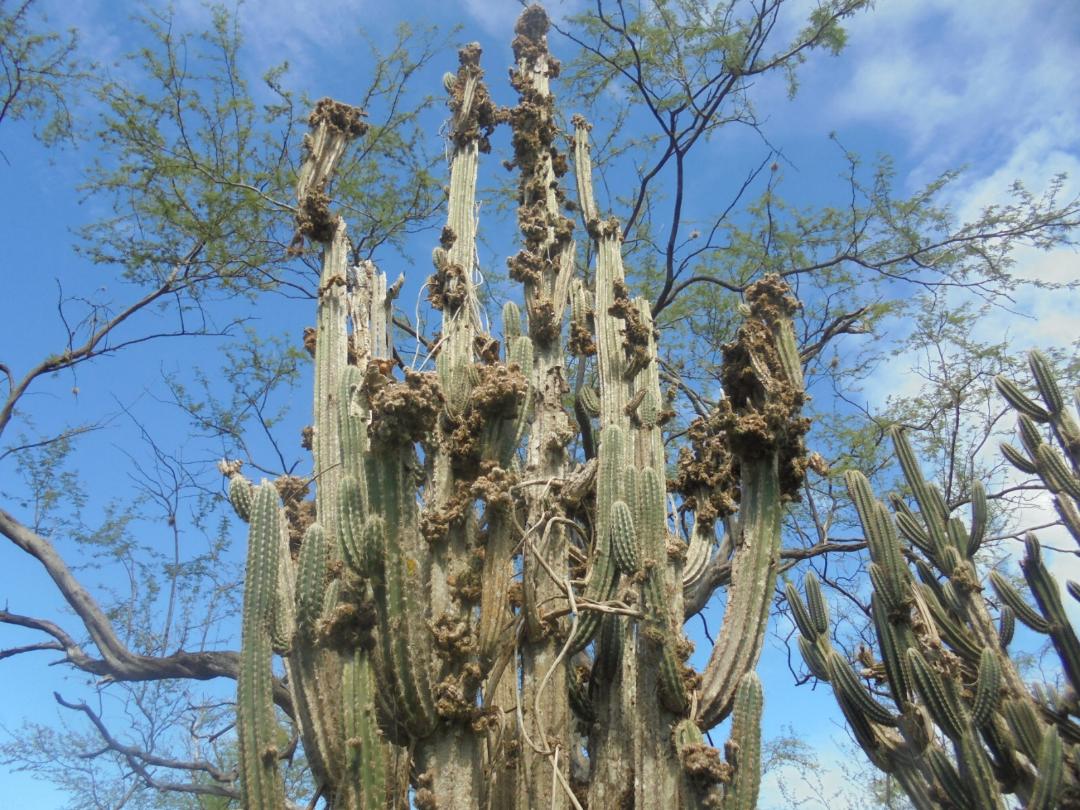
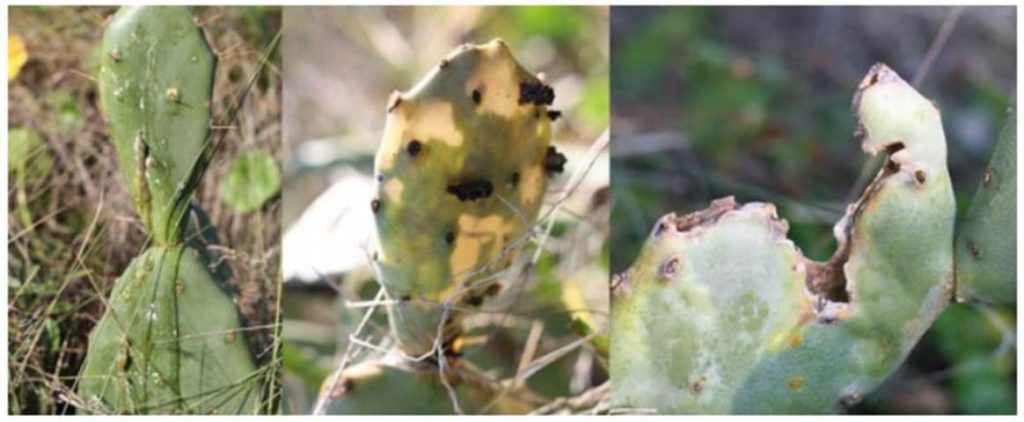
Photo of infested cactus at Cabo Rojo National Wildlife Refuge, Puerto Rico. Taken August 20, 2018 by Yorelyz Rodríguez-Reyes
Three and a half years ago, I blogged about the threat to columnar cacti in Puerto Rico from the Harrisia cactus mealybug. The mealybug clearly threatens the endemic cacti of the Caribbean islands, and possibly some of the hundreds of other columnar cacti growing across two million square miles of desert ecosystems that straddle the U.S.-Mexico border region.
I am pleased to report that scientists continue efforts to find biocontrol agents to reduce this insect’s damage on Caribbean islands. Much of this work is being done by the Center for Excellence in Quarantine and Invasive Species at University of Puerto Rico. The team consists of Michael West Ortiz, Yorelys Rodrígues Reyes, Ferdinand Correa and Jose Carlos Verle Rodrigues.
As of February 2019, the Center is conducting host specificity tests on a primary parasitoid of the Harrisia Cactus mealybug — Anagyrus cachamai. This wasp was found as a result of almost a decade of searching in South America and other locations. It is native to Argentina and Paraguay (Triapitsyn et al. 2018; sources listed at the end of the blog).The Center also continues surveys and studies of other primary and secondary parasitoids of the mealybug.
The work to develop a biocontrol agent for the
mealybug continues despite continuing uncertainty about the true species of the mealybug. At the time
of its discovery on Puerto Rico, the mealybug was believed to belong to a
species used as a biocontrol agent for invasive cacti in Australia and South
Africa, designated as Hypogeococcus
pungens.
However, H. pungens is now thought to
be a species complex, and the species in Puerto Rico differs from the earlier
designation (Triapitsyn et al.
2018).
Apparently
the mealybug was introduced in Puerto Rico around 2000 — probably on the ornamental common
purslane (Portulaca olerácea), an
annual succulent. (Note: the
introduction was on a host different from the vulnerable cacti.) Within five
years of the first detection in San Juan, the mealybug was sighted on cacti on
the other side of the island in the Guánica State Forest and Biosphere Reserve.
By 2010, the mealybug was widely distributed in most dry districts. Surveys
found it in all 11 municipalities surveyed in southern Puerto Rico. At some
locations, infestation levels were extremely high – e.g., 86% of stems surveyed were infested at Guánica. Infestation
rates were lower in other municipalities. As of 2010, infestations were
estimated to be present on about 1,400 km2 on the southern coast;
the rate of new infestations suggests that the mealybug was spreading rapidly
(Segarra-Carmona et al. 2010). I have been unable to obtain more recent
estimates.
The
mealybug impacts seven of 14 native cactus species occurring in dry forests of
the island, including three endemic and two endangered species in the subfamily
Cactoideae. The two endangered species are Harrisia
portoricensis and Leptocereus grantianus (USDA ARS). The tissue
damage caused by the mealybug interferes with sexual reproduction and can cause
direct mortality of the plant (Triapitsyn et
al. 2018). These
cacti provide food or shelter for endemic bats, birds, moths and other
pollinators (Segarra & Ramirez; USDA ARS). The mealybug is also now killing
native cacti on the U.S. Virgin Islands (H. Diaz-Soltero pers. comm. August
2015).
USDA Funds Conservation Efforts Despite
Apparent Absence of a Constituency Calling for Such Action
Efforts
to identify and test possible biocontrol agents targetting the Harrisia cactus
mealybug received significant funds from the Plant
Pest and Disease Management and Disaster Prevention Program. This is a
competitive grant program managed by APHIS. It is permanently funded and thus
not subject to the vagaries of annual appropriations. Until last year, this
program operated under Section
10007 of the 2014 Farm Bill. With passage of a new Farm Bill, it is now
designated as Section 7721 of the Plant Protection Act.
Since Fiscal Year 2018, APHIS has had authority to spend more than $60 million per year on this program. In Fiscal Year 2017, , the program provided $120,000 to an unspecified federal agency, $70,000 to an academic institution in Puerto Rico (presumably the Center), $15,000 to another academic institution in California, and $3,000 divided among two APHIS facilities – for a total of $208,000. The next round of funds came in FY19, when the program provided $277,267 to an unspecified federal agency to continue work on biocontrol. In addition, the program provided $78,507 to an unspecified federal agency to “safeguard[e] genetic diversity of native and listed cacti threatened by Harrisia cactus mealybug in Puerto Rico”.
No Apparent Action on
Threats to Opuntia Cacti
In my earlier blog, I also described the threat to flat-padded Opuntia (prickly pear) cacti from the cactus moth Cactoblastis cactorum. Various federal, state, and academic entities received $463,000 from the permanent fund in Fiscal Year 2016 and another $100,000 in FY2017. No cactus moth programs have received funds in more recent years.
SOURCES
Segarra-Carmona, A.E., A.
Ramirez-Lluch. No date. Hypogeococcus pungens (Hemiptera: Pseudococcidae): A
new threat to biodiversity in fragile dry tropical forests.
Segarra-Carmona,
A.E., A. Ramírez-Lluch, I. Cabrera-Asencio and A.N. Jiménez-López. 2010. FIRST REPORT OF A NEW INVASIVE MEALYBUG, THE
HARRISIA CACTUS MEALYBUG HYPOGEOCOCCUS PUNGENS (HEMIPTERA: PSEUDOCOCCIDAE). J.
Agrie. Univ. RR. 94(1-2):183-187 (2010)
Triapitsyn,
Aguirre, Logarzo, Hight, Ciomperlik, Rugman-Jones, Rodriguez. 2018. Complex of
primary and secondary parasitoids (Hymenoptera: Encyrtidae and Signiphoridae)
of Hypogeococcus spp. mealybugs (Hemiptera: Pseudococcidae) in the New World. Florida
Entomologist Volume 101, No. 3 411
USDA Agriculture Research Service, Research Project:
Biological Control of the Harrisia Cactus Mealybug, Hypogeococcus pungens
(Hemiptera:pseudococcidae) in Puerto Rico Project Number: 0211-22000-006-10
Project Type: Reimbursable
West Ortiz, M. pers. comm. February 2019
Posted
by Faith Campbell
We
welcome comments that supplement or correct factual information, suggest new
approaches, or promote thoughtful consideration. We post comments that disagree
with us — but not those we judge to be not civil or inflammatory.
post-EAB ash forest in southern Michigan; photo by Nate Siebert, USFS
1) The Risks of Reliance
on Biological Control
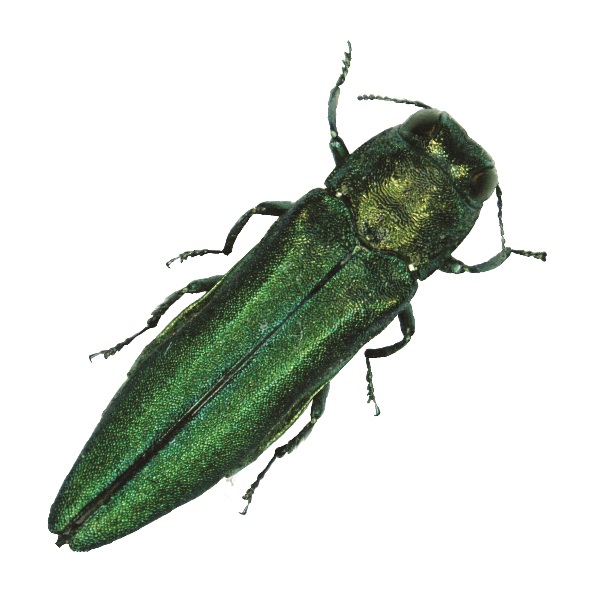
An article published lately indicates yet another complication that might undercut reliance on biocontrol to counter mortality of eastern ash populations caused by the emerald ash borer (EAB) (See my blogs from November — here and here) regarding APHIS’ proposal to eliminate EAB quarantines in favor of relying chiefly on biocontrol – with little data to back up the change.)
Olson
and Rieske (full citation at the end of this blog) found that one of the
principal biocontrol agents now in use, and on which APHIS proposes to rely, Tetrastichus planipennisi, does not parasitize
EAB larvae living in white fringetree, Chionanthus
virginicus. While this tree is a suboptimal host for EAB – lower numbers of
the beetle survive – the white fringetree would support survival of some EAB –
thereby undermining efficacy of the biocontrol program.
Since white fringetree grows a cross much of the eastern range of ash trees — from New York to Texas, as shown by the map posted here, the presence of this reservoir that can be exploited by EAB will challenge the efficacy of biocontrol.
Olson
and Rieske believe the reason that T.
planipennisi does not attack EAB living in white fringetree is that the
fringetree’s wood is so dense that the wasp cannot detect the presence of EAB
in the tree (T. planipennisi apparently
relies on tactile and vibratory clues to find its prey).
2) A Possible New
Biopesticide to Suppress EAB?
A presentation at the 81st Northeastern Forest Pest Council by Mark Ardis of C.D.G. Environment described tests in the United States and Canada of methods for killing EAB by contaminating the beetles with the fungus Beauveria bassiana. The company is testing traps in which male beetles enter, become covered by fungal spores, then they fly out. The males not only become ill themselves, they also contaminate females during mating. Average overall beetle mortality from several test sites is 25%.
Given the terrible
impact of the EAB invasions, I find it exciting to contemplate development of
additional tools to be used in suppressing the beetles. However, I worry about
possible impacts on non-target insects which might also be exposed to the
fungal spores. A decade ago, David Wagner identified 21 species of insects that
were specialists on Fraxinus, and said
he expected additional species would also be associated with ash trees (full
citation at end of blog). Mr. Ardis assured me that they had detected no
insects other than EAB in the traps. I wish to see additional research on this
issue.
The US Environmental Protection Agency would have
to approve use of this biopesticide. I suggest that we all keep an eye on this
process.
3) Citizen
Scientists Searching for EAB- resistant “Lingering Ash”
Jonathan Rosenthal
and Radka Wildova of the Ecosystem Research Institute have established a
citizen science program to find ash trees that have survived the EAB invasion. These
trees will become the foundation of efforts to breed more trees resistant to
the EAB, which could be used to restore our forests.
The program is called
“MaMa” – Monitoring and Managing Ash. So far, about 30 plots have been set up
in New York, New Jersey, and Vermont where citizens are monitoring ash trees
that have apparently survived the EAB invasion. The program seeks additional
partners from other areas.
Searches for
lingering ash must be strategically timed to ensure that the trees identified
are truly resistant to EAB – not just late to become infested. But you can’t
wait too long after the infestation wave has gone through an area, because the
tree might die due to wind throw or human activity. Or, if a tree has just partial
resistance (an important attribute for breeding!), it might eventually succumb.
It is also imperative to avoid confusing stump sprouts with truly lingering
ash. The conclusion: monitor the infestation and search for lingering trees two
years after 95% of ash have been killed, or four years after 50% have been
killed.
The MaMa program
provides guidance, maps, electronic reporting systems … so you can help!
If you wish to participate
– or to learn more – contact the program at monitoringAsh.org or 845-419-5229.
SOURCES
Olson,
D.G. and L.K. Rieske. 2019. Host range expansion may provide enemy free space
for the highly invasive emerald ash borer. Biol Invasions (2019) 21:625–635
Wagner, D.L. Emerald Ash Borer Threatens Ash-feeding Lepidoptera. 2007. News of the Lepidopterists’ Society. Volume 49, No. 1 (Spring 2007)
Posted
by Faith Campbell
We
welcome comments that supplement or correct factual information, suggest new
approaches, or promote thoughtful consideration. We post comments that disagree
with us — but not those we judge to be not civil or inflammatory.
We
have long known that significant damage to our forests have been caused by
non-native insects and diseases. Now USFS scientists have found that
exacerbated mortality caused by these pests is showing up in official
monitoring data – the Forest Inventory and Analysis (FIA) data. In a presentation
at the 81st Northeastern Forest Pest Council, Randall Morin
described the results of applying FIA data to determine mortality levels caused by several of the most
damaging invaders. He found an approximately 5% increase in total mortality
volume nation-wide.
Morin also compared a map prepared by Andrew Liebhold showing the number of non-native tree-killing pests established in each county of the continent to the mortality rates for those counties based on the FIA data. (See two maps below.)
map showing number of non-native forest pests established in each county of the Continental States; from Liebhold/USFSDr. Randall Morin’s map showing levels of tree mortality, based on FIA data
Counties showing the highest mortality rates in FIA data do not align with counties with highest numbers of invasive species. Morin thinks the discrepancy is explained by such human factors as invasion pressure and the ease of pest movement through the good transportation network in the Northeast. He assigns less importance to habitat invasibility.
The increase in mortality above the background rate was the worst for redbay due to laurel wilt disease – the annual mortality rate rose from 2.6% to 10.9% — slightly more than a four-fold increase. Almost as great an increase in mortality rates – to approximately three-fold – was found for ash trees attacked by the emerald ash borer (from 2.6% to 10.9%); beech dying from beech bark disease (from 0.7% to 2.1%); and hemlock killed by hemlock woolly adelgid, hemlock looper, and other pests (from 0.5% to 1.7%).
Some species are presumed to have an elevated mortality rate, but the pre-invasion “background” rate could not be calculated. These included American chestnut (mortality rate of 7%), butternut succumbing to butternut canker (mortality rate of 5.6%), and elm trees succumbing to “Dutch” elm disease (mortality rate of 3.5%).
The non-native pests and pathogens that have invaded the largest number of counties are white pine blister rust (955 counties), European gypsy moth (630 counties), dogwood anthracnose (609 counties in the East; the western counties were not calculated); emerald ash borer (479 counties); and hemlock woolly adelgid (432 counties).
The invaders posing the most widespread threat as measured by the volume of wood of host species are European gypsy moth (230.9 trillion ft3), Asian longhorned beetle (120.5 trillion ft3), balsam woolly adelgid (61 trillion ft3), sudden oak death (44.6 trillion ft3), and white pine blister rust (27.7 trillion ft3).
The proportion of
the host volume invaded by these non-native pests is 94% for white pine blister
rust, 48% for balsam wooly adelgid, 29% for European gypsy moth, 12% for sudden
oak death, and one half of one percent for Asian longhorned beetle.
Of
course, measuring impact by wood volume excludes some of the species suffering
the greatest losses because the trees are small in stature. This applies
particularly to redbay, but also dogwoods. Also, American chestnut was so
depleted before FIA inventories began that it is also not included – despite
the species’ wide natural range and large size.
[You can see the details for particular species by visiting the FIA “dashboards”. A particularly good example is that for hemlock woolly adelgid, available here.
USFS Response
Of
course, the Forest Service has been trying to counter the impact of invasive
insects and pathogens for decades, long before this study documented measurable
changes in mortality rates.
Unfortunately, funding for the agency’s response has been falling for decades – with concomitant reduction in staffs needed to carry out the work. See the graph below from p. 108 of my report, Fading Forests III, available here.
The
President’s FY2020 budget proposes additional cuts.
The proposal would cut funding for
the USFS Research division by $42.5 million
(14%); cut staff by 212 staff years
(12.5%). It would refocus the research program on inventory and monitoring;
water and biological resources; forest and rangeland management issues, especially
fire; forest products innovations; and people and the environment.
As shown by the above graph, this
proposed cut follows years of loss of expertise and research capacity.
The President’s budget
proposes to slash the State & Private Forestry account by 45.6% – from $335
million to just $182 million. The critically important Forest Health Management
program is included under State & Private Forestry. The cuts proposed for
FHM are 7% for work done on federal lands (from $44.9 million to $41.7 million;
and 16% for work done on non-federal “cooperative” lands (from $38 million to
$31.9 million). Staffing would be reduced by 4% for those working on federal
lands, a startling 38% for those working on cooperative lands.
For
details, view the USDA Forest Service budget justification, which can be found
by entering into your favorite search engine “FY2020 USFS Budget”. Funding
details begin on p. 12; staffing number details on p. 15.
These
severe cuts are proposed despite the fact that the budget justification notes
that pests (native as well as exotic) threaten more than four million acres and
that those pests know no boundaries. The document claims that the Service continues
to apply an “all lands” approach.
When
considering individual invasive pest species, these proposed cuts exacerbate reductions
in previous years. Some cuts are probably justified by changes in
circumstances, such as improved understanding of a species’ life cycle
resulting from past research. However, some are still troubling. (Again, for
details, view the USDA Forest Service budget justification, which can be found
by entering into your favorite search engine “FY2020 USFS Budget”. A table
listing species-specific expenditures in recent years, and the proposed FY2020
levels, is on pp. 38-39.)
The budget proposes to eliminate spending to manage Port-Orford-cedar root disease – which was funded at just $20,000 in recent years but received $200,000 as recently as FY2016. Forest Health Management would cease funding restoration for whitebark pine pests, including white pine blister – despite widespread recognition of the ecological importance of this species. Research on blister rust would continue, but at just over half the funding of recent years. Spending on oak wilt disease would be cut by 45%; funding for protecting hemlocks by 40% (the latter received $3.5 million in FY16). Funding for management of sudden oak death is proposed to be cut by 31% . Cuts to these programs seem particularly odd given that much of the threat is on federal lands – the supposed priority of the Administration’s budget.
The budget calls for a 12% cut in funding for the emerald ash borer – at the very time that USDA APHIS plans to terminate its regulatory program and state agencies and conservationists are looking to the Forest Service to provide leadership.
According to Bob Rabaglia, entomologist for the Forest Health Management program, the proportion of the FHM budget allocated to invasive alien species (as distinct from native pests) has been rising in recent years. Some of this increase is handled through a new “emerging pest” account. Species targeted by these funds, I have been told, include beach leaf disease; goldspotted oak borer; and the invasive polyphagous and Kuroshio shot hole borers.
Unfortunately, the
“emerging pest” account funds are not included in the table on pp. 38-39 of the
budget justification. Nor have I been able to learn from program staff how much
money is in the fund and how much has been allocated to these or other pest or
disease threats.
Adequate
funding of the USFS Research and Forest Health Management programs could allow
the agency to support, inter alia,
efforts by agency and academic scientists to breed trees resistant to the
damaging pest. I am aware, for example, of efforts to find “lingering” ash,
beech, hemlock, whitebark pine, and possibly also redbay. None is adequately
funded.
Please contact your member of Congress and Senators
and urge them to support adequate funding for these two Forest Service
programs. Research should be funded at $310 million (usually 5% or less of these funds is devoted to invasive species);
Forest Health should be funded at $51 million for
cooperative lands and $59 million for federal lands. It
is particularly important to advocate for funding for the “cooperative lands”
account since both the Administration and many members of Congress think the
Forest Service should focus more narrowly on federal lands.
It is particularly important to contact your member if
s/he is on the Interior Appropriations subcommittees. Those members are:
House:
Betty McCollum, Chair (MN 4th)
Chellie Pingree (ME 1st)
Derek Kilmer (WA 6th)
José Serrano (NY 15th)
Mike Quigley (IL 5th)
Bonnie Watson Coleman (NJ 12th)
Brenda Lawrence (MI 14th)
David Joyce, Ranking Member (OH 14th)
Mike Simpson (ID 2nd)
Chris Stewart (UT 2nd)
Mark Amodei (NV 2nd)
Senate:
Lisa
Murkowski, Chair (AK)
Lamar
Alexander (TN)
Roy
Blunt (MO)
Mitch
McConnell (KY)
Shelly
Moore Capito (WV)
Cindy
Hyde-Smith (MS)
Steve
Daines (MT)
Marco
Rubio (FL)
Tom
Udall, Ranking (NM)
Diane
Feinstein (CA)
Patrick
Leahy (VT)
Jack
Reed (RI)
Jon
Tester (MT)
Jeff
Merkley (OR)
Chris
van Hollen (MD)
Posted by Faith Campbell
We
welcome comments that supplement or correct factual information, suggest new
approaches, or promote thoughtful consideration. We post comments that disagree
with us — but not those we judge to be not civil or inflammatory.
As I have written often, inadequate funding is a major cause of shortfalls in USDA APHIS’ efforts to detect new invasions by tree-killing pests and to respond to those invasions in effective ways. So, I ask you to contact your Representative and Senators in support of appropriations for APHIS and –National Institute for Food and Agriculture (NIFA) for the next fiscal year – (FY)2020.
APHIS’
efforts to detect and respond to non-native tree-killing pests were rudely interrupted
by the five-week Government Shutdown from 22 December until late January. While
inspection of incoming shipments continued, U.S.-based activities were halted. Chaos
and confusion continued until 15 February, when the President signed
legislation that funds APHIS (and other government agencies) until the end of
September – the remainder of FY2919.
Surprise!
The funding bill provides increased funds for two key APHIS programs:
$60
million for the “tree and wood pests” program — $4 million above the funding provided
in recent years; and
$186
million for “specialty crop” pests (including sudden oak death) — $7.8 million
above recent levels.
I ask you to ask the Congress to maintain these funding levels for these budget “lines”.
I ask you also to support continuing the FY19 levels for two other programs:
Methods Development — $27.4 million; and
“Detection Funding” – $20. 7 million.
New this year, I hope you will support a $10 million appropriation to the National Institute of Food and Agriculture to fund a competitive grant program intended to restore to forests tree species significantly damaged by non-native insects and plant pathogens.
Justification for
the Funding Requests
As we know, non-native insects and pathogens that threaten native tree species have been and continue to be introduced to the United States. These pests impose significant costs: Aukema et al. 2011 (full reference at the end of the blog) estimated
municipal governments spend more than $2 billion per year to remove trees on city property that have been killed by these
pests.
homeowners spend $1 billion every year to remove and replace trees on their properties
homeowners absorb an additional $1.5
billion in reduced property values.
Costs are rising: the polyphagous and Kuroshio shot
hole borers are projected to cost municipalities and homeowners in California
$36.2 billion if their further spread is not prevented (McPherson 2017)
When you contact
your Representative or Senators, tell them about the impact of non-native pests
in your location!
The
significant ecological impacts are poorly quantified.
USDA APHIS is responsible for preventing such pests’ entry, detecting newly introduced pests, and initiating rapid eradication programs. Yet, despite rising risks of pest introduction commensurate with rising import volumes, funding for APHIS’ program targetting the “tree and wood pests” associated with crates and pallets has remained at or below $55 million since FY2012 – until the modest increase last year to $60 million. Among the forest pests detected during this period are the spotted lanternfly and here and Kuroshio shot hole borer.
Among the pests probably introduced on a second pathway, imports of living plants, are the two pathogens threatening Hawaii’s most widespread tree, ʻōhiʻa lehua and here, and beech leaf disease and here in the Northeastern states. The better-funded “specialty crops” account could help fund responses to these damaging pathogens.
Ask your Congressional representatives to urge APHIS to apply part of the increased funding for the “tree and wood pest” program to continue the regulatory program for the emerald ash borer (EAB) and here. In September, APHIS has proposed to terminate the EAB regulatory program. Program termination would greatly increase the risk that EAB will spread to the mountain and Pacific Coast states. California has five native species of ash vulnerable to EAB. Ash trees provide a higher percentage (8%) of Los Angeles’ tree canopy than any other species. This proportion will rise as other tree species succumb to the polyphagous and Kuroshio shot hole borers. Oregon’s one native species of ash is widespread in riparian areas and many urban plantings consist of ash. Ash trees are the fifth most common genus among Portland’s urban trees. Many stakeholders have urged APHIS to continue to regulate movement of firewood and other materials that facilitate EAB’s spread.
The “Specialty
Crops” program currently funds APHIS’ regulation of nursery operations to
prevent spread of the sudden oak death pathogen. In future, this budget line would be the logical source of
funds to manage the spotted lanternfly, which has been carried out through a
combination of emergency funding under 7 U.S.C. §7772 and grants funded through the Plant Pest and Disease
Management and Disaster Program (§7721
of the Plant Protection Act). (See below.)
Ask your Congressional representatives to support continued funding of APHIS’ “Methods Development” program at the
FY19 level of $27.4 million. This program assists APHIS in developing detection
and eradication tools essential for an effective response to new pests.
Similarly, ask your Congressional
representatives to support continued funding of the “Detection” budget
line at the FY19 level of $20.7 million. This program supports the critically
important collaborative state –federal program pest-detection program that is
critical to successful eradication and containment programs.
APHIS’ Additional sources
of funds
APHIS has always had authority to obtain “emergency” funds through 7 U.S.C. §7772. Emergency funds come from permanent USDA funding; they are not subject to annual appropriations. This authority has been tightly controlled by the Office of Management and Budget; I believe the last time APHIS obtained “emergency” funds for a tree pest was the emerald ash borer a decade or more ago. A year ago, APHIS accessed $17 million in emergency funding to address the expanding spotted lanternflyoutbreak [USDA Press Release No. 0031.18 February 7, 2018] and OMB also requires that APHIS quickly transfer programs started with emergency funds to the regular budget. As I note above, response to the expanding spotted lanternfly outbreak should logically be shifted to the “specialty crops” budget account.
For
a decade, APHIS has had access to a separate source of funds: the Plant Pest and Disease Management and Disaster Prevention Program.
This program is also funded through permanent funds, not subject to the
vagaries of annual budgeting and appropriations. Until last year, this program
operated under Section
10007 of the 2014 Farm Bill; with passage of a new Farm Bill last year, it is
now designated as Section 7721 of the Plant Protection Act. Beginning in Fiscal
Year 2018, APHIS has authority to spend up to $75 million per year.
Funds are provided under a competitive grants program to universities, states, Federal agencies, nongovernmental organizations, non-profits, and Tribal organizations “to conduct critical projects that keep U.S. crops, nurseries, and forests healthy, boost the marketability of agricultural products within the country and abroad, and help us do right and feed everyone.” [USDA press release “USDA Provides $66 Million in Fiscal Year 2019 to Protect Agriculture and Natural Resources from Plant Pests and Diseases”February 15, 2019]
Over the decade since the program began, it has funded, but my calculation, about $77 million in projects targetting tree-killing pests. The proportion of total program funding allocated to tree-killing pests has risen in the most recent years, driven largely by funding to counter the spotted lanternfly outbreak which began in Pennsylvania but has since spread (see above). In the current year (FY2019), APHIS used this program to fund $10 million in projects to address the spotted lanternfly. The SLF funds equaled 57% of the total funding for tree pests provided under the program in FY2019.
Implications
of the Tangle of Funding Sources
What is the significance of funding programs through the Plant Pest and Disease Management and Disaster Prevention Program as distinct from appropriated funds? Clearly, having access to $75 million that is not subject to the limits imposed by Administration budget priorities or Congressional appropriations allows considerable freedom. Does this freedom allow APHIS to support work on pests that might not qualify to be “quarantine” pests? For example, under the Plant Protection Act, APHIS normally does not engage on pests found only in one state. The polyphagous and Kuroshio shot hole borers fall into this category. So did the spotted lanternfly for the first several years – until its detection in Delaware and Virginia in late 2017. If so, then the presence of the lanternfly in several states would seem now to indicate that funding sources should be shifted – at least in part – to appropriated funds. But would such a shift result in less funding – a result I think would be most unwise!
The beech leaf disease doesn’t clearly qualify for designation as a “quarantine pest” because of the uncertainty about the causal agent. So far, there has been no Section 7721 funding to support efforts to identify the causal agent or to improve detection or curtail spread of the disease.
a blight-resistant chestnut bred by the American Chestnut Foundation; photographed in Fairfax County, Virginia by F.T. Campbell
Funding for
Resistance Breeding through NIFA
As we know, dozens of America’s tree species have been severely reduced or virtually eliminated from significant parts of their ranges by non-native insects and pathogens. Last year’s Farm Bill – the Agriculture Improvement Act of 2018 – included an amendment (Section 8708) that establishes a new priority for an existing grant program to support restoration to the forest of native tree species that have suffered severe levels of mortality caused by non-native insects, plant pathogens, or other pests. Grant-receiving programs would incorporate one or more of the following components: collection and conservation of native tree genetic material; production of sufficiently numerous propagules to support landscape-scale restoration; and planting and maintenance of seedlings in the landscape.
In January a panel of the National Academies of Sciences, Engineering, and Medicine recommended that the U.S. apply multifaceted approaches to combat these threats to forest health. One component strategy is breeding of trees resistant to the pest.
Ask Congress to begin applying the Academies’
recommendation by providing $10 million to NIFA to fund the
Competitive Forestry, Natural Resources, and Environmental Grants Program under
Section 1232(c)(2) of the Food, Agriculture, Conservation, and Trade Act of
1990 (16 U.S.C. 582A-8, as amended.
I
hope everyone will contact your Representative and Senators. If your Congressional representative is
listed below, your contact is particularly helpful because these are the
members of the House or Senate Agriculture Appropriations subcommittees – the
people with the greatest influence over what gets funded:
House Agriculture
Appropriations subcommittee members:
Aukema, J.E., B. Leung, K. Kovacs, C.
Chivers, K. O. Britton, J. Englin, S.J. Frankel, R. G. Haight, T. P. Holmes, A.
Liebhold, D.G. McCullough, B. Von Holle.. 2011. Economic
Impacts of Non-Native
Forest Insects in the
Continental United States
PLoS One September 2011
(Volume 6 Issue 9)
McPherson,
Gregory. September 28, 2017. Memorandum to John Kabashima re: Potential Impact
of ISHB-FD on Urban Forests of Southern California