A Tale of Two Pests: APHIS’ Response Contrasts Greatly

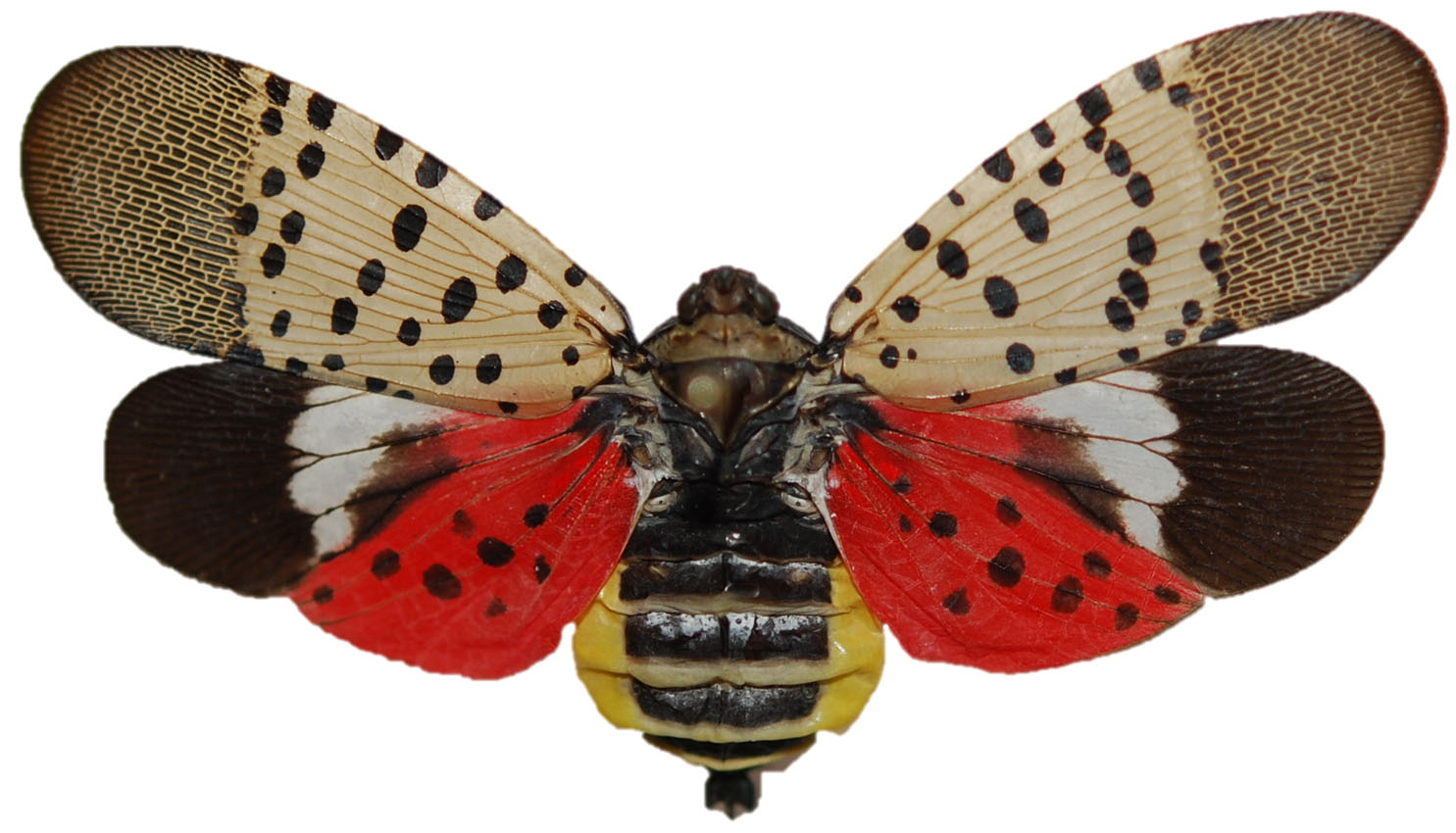
spotted lanternfly

Holly Raguza, Pennsylvania Department of Agriculture

I have not written previously about two insects that threaten fruit and forest trees in the U.S. – the spotted lanternfly (Lycorma delicatula) and the velvet longhorned beetle (Trichoferus campestris). APHIS has adopted strangely – and unexplained – different approaches to the two.


Spotted Lanternfly – Pennsylvania Jumps In; APHIS Provides the Funding

The spotted lanternfly (Lycorma delicatula) was first detected in southeast Pennsylvania in autumn 2014. It is native to China, India, and Vietnam. What was known then about its host range came from experience in Korea, where it had also been introduced. Officials were alarmed because the lanternfly is considered a pest of grapes and peaches – both are major crops in Pennsylvania (Spichiger Update; see reference below).

Currently, outbreaks of the spotted lanternfly are in 74 municipalities in six counties  in the southeastern part of the Commonwealth – covering a total of  829 square miles. In the more than two years since its detection, the spotted lanternfly has not spread to the rest of the Commonwealth or to other states. Authorities therefore believe that the state’s quarantine is having an impact (Spichiger Update & pers. comm.).

Pennsylvania’s authorities believe the lanternfly utilizes about 80 species of plants, especially during the early stages of its development. A monitoring program managed by Dr. Gregory Setliff of Kutztown University (see reference below) has developed a list of 24 putative hosts – including maples, birches, hickories, dogwoods, beech, ash, walnuts, tulip tree, tupelo, sycamore, poplar, peaches and plums, oaks, willows, sassafras, basswood, and elms. Setliff also found that the lanternfly will penetrate into woodlands; it does not stay on the edges.

Adults strongly prefer the widespread invasive species tree of heaven (Ailanthus altissima). In fact, it might be necessary for adults to feed on Ailanthus before laying their eggs. However, oviposition can occur on not just a wide variety of plants but also nearly any hard surface (Spichiger).

Officials are optimistic that an approach using trap trees will eradicate the spotted lanternfly. They remove most Ailanthus, then apply a systemic pesticide to the remaining trees to kill adult lanternflies when they feed (Spichiger).

Fortunately, this insect is conspicuous. As a result, 90% of citizen reports of sightings have proven to be accurate (Spichiger). This contrasts greatly with phytosanitary officials’ experience with Asian longhorned beetle, emerald ash borer, and other tree-killing pests.

Scientists in both Pennsylvania and China are looking for natural enemies.

The entire program in Pennsylvania has been funded through a series of Farm Bill grants from APHIS (Spechiger pers. comm.). These began in FY2016, right after the 2014 detection. By FY2017, Farm bill funding  totaled nearly  $2 million; it went to a myriad of entities to:  study lanternfly lifecycles and host preferences; find possible biocontrol agents and chemical treatments; and – especially – for outreach and education. Nearly $1.6 million of these funds went to state agencies in Pennsylvania.


Velvet Longhorned Beetle — States Limp Along; APHIS Support Minimal

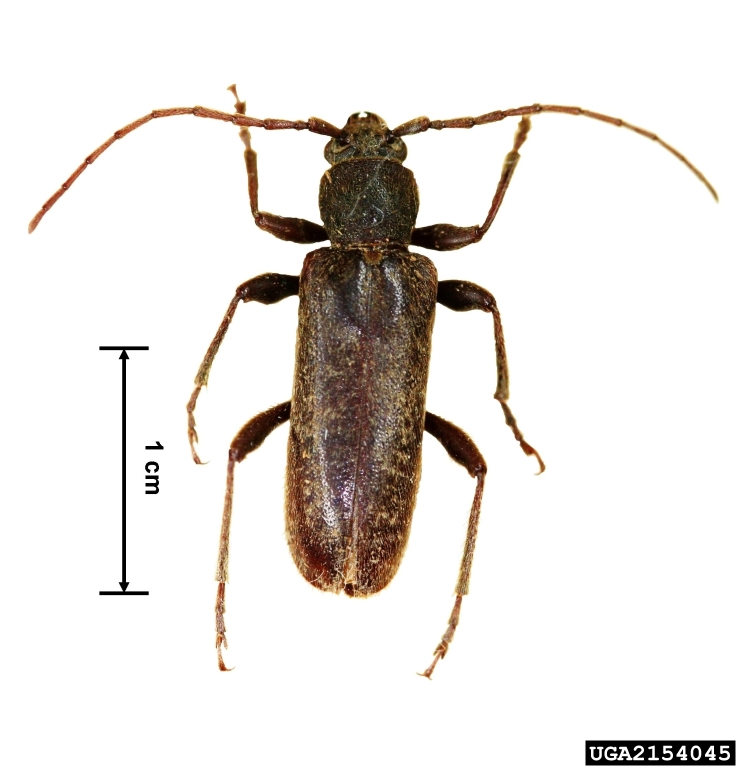
velvet longhorned beetle

Christopher Pierce, Bugwood

In contrast to the spotted laternfly, populations of the velvet longhorned beetle (VLB Trichoferus campestris) appear to be more long-standing and more widely spread. It was first found in 2010 in Utah. Now, it has been detected 15 separate times in Quebec and 11 U.S. states, according to Wu et al. 2017 and websites listed below. States specifically mentioned by sources include Illinois, Minnesota, New Jersey, New York, Ohio, Pennsylvania, and Rhode Island. Most are of single or a few beetles – although detections are sometimes repeated over several years – e.g., in Minnesota.

In contrast, the outbreak in Utah appears to be established and growing. The number of beetles detected has exploded from 4 in 2010 to 1,863 in 2015 .

Like so many other invaders, this beetle is known to be native to East and Central Asia.

The host range is still being studied. Hosts are thought to include more than 40 genera, including apple; cherry and peach; maple; birch; mulberry and paper mulberry; beech; ash; honey locust; mountain ash; willow; and cut wood of spruce and pine.

Like other woodborers, the velvet longhorned beetle has often been intercepted in wood packaging (see my earlier blogs. There have been 29 interceptions of the Trichferous genus over 3 years. Some of the newly established populations – such as Utah’s outbreak – are tied to specific shipments in which wood packaging was insect-infested (Wu et al. 2017).

VLB has also been detected in imported rustic furniture – probably because the beetle is apparently much more tolerant of tunneling in dry wood than other Cerambycids.  In some pieces, insect activity was not detected until 18 months after the furniture was purchased. In 2016 a Minnesota homeowner discovered a beetle emerging from bark-covered furniture that she had purchased more than a year earlier. Furniture from this shipment was shipped to at least 10 other states [Mark Abrahamson, Minnesota Department of Agriculture, pers. comm. February 16, 2017]. The Minnesota Department of Agriculture, APHIS, and other State departments of Agriculture are working with the furniture seller to recover and destroy all infested furniture.

Detection of the velvet longhorned beetle has been hampered by the absence of a good lure for traps.  Dr. Ann Ray of Xavier University in Ohio has isolated and identified a possible lure but needs another field season to determine the right amount of pheromone for each trap. While Dr. Ray’s earlier work had been funded by APHIS through its Section 10007 program, APHIS chose not to fund the final stage of testing in the FY2017 Farm Bill grant program. Indeed, no VLB programs were funded this year.

This contrasts sharply with APHIS’ continued engagement with the spotted lanternfly.

The extent of damage to fruit trees caused by the velvet longhorned beetle has been difficult to determine (Ray; see reference below). Perhaps for this reason, APHIS has not adopted an official stance on whether the beetle is “established” in the United States. Thus, five years after the insect was detected for a second year in Utah, the agency cannot make up its mind how great the threat is and what the agency’s response should be.

If the velvet longhorned beetle turns out to be highly damaging, eradicating it will have become increasingly difficult during the years that APHIS has pondered what to do.


See also http://ag.utah.gov/documents/Insect_Velvet_Longhorn_Beetle.pdf


SOURCES

Ray, Annie. Evaluation of lure and trap design for monitoring the velvet longhorned beetle Trichoferus campestris. XXVIII USDA Interagnecy Research Forum on Invasive Species January 10 -13, 2017.

Setliff, Gregory P. Investigating the host range of the spotted lanternfly (Lycorma delicatula) in southeastern Pennsylvania. XXVIII USDA Interagnecy Research Forum on Invasive Species January 10 -13, 2017.

Spichiger, Sven-Erik. Pennsylvania Department of Agriculture. Update on spotted lanternfly program in Pennsylvania. XXVIII USDA Interagnecy Research Forum on Invasive Species January 10 -13, 2017.

Wu,Y., N.F. Trepanowski, J.J. Molongoski, P.F. Reagel, S.W. Lingafelter, H. Nadel1, S.W. Myers & A.M. Ray. 2017. Identification of wood-boring beetles (Cerambycidae and Buprestidae) intercepted in trade-associated solid wood packaging material using DNA barcoding and morphology


We welcome comments that supplement or correct factual information, suggest new approaches, or promote thoughtful consideration. We post comments that disagree with us — but not those we judge to be not civil or inflammatory.


Posted by Faith Campbell

New Secretary of Interior Pledges to Support Invasive Species Efforts — Let’s Ask USDA Secretary to do the Same!

Interior Secretary nominee Ryan Zinke

During his confirmation hearing Ryan Zinke, nominated to be the new Secretary of Interior, committed to several senators that he would explore ways to better manage invasive species on federal lands – especially in National parks – and to strengthen the National Invasive Species Council (NISC).

Mr. Zinke is currently a Congressional Representative from Montana. Senator Debbie Stabenow (MI) pressed him on invasive species issues during the hearing, focusing on the threat to the Great Lakes of carp and other aquatic species. Also, Senators Al Franken (MN), Joe Manchin (WV), and Mazie K. Hirono (HI) asked about invasive species in written questions submitted to the nominee.

Mr. Zinke answered most questions the same way:  He shares the Senator’s concern, especially since  Montana has significant invasive species problems. Also, he thinks it is critical that federal land managers be encouraged and empowered to be good neighbors in controlling invasive species in cooperation with adjacent private land owners. …  Specifically he wants to explore ways to implement the Early Detection Rapid Response Framework adopted by NISC in 2016.


* Sen. Franken included a single question on bioinvaders among a long list of questions on other topics. He mentioned the emerald ash borer as one example of a damaging invader in Minnesota. Senator Franken asked Mr. Zinke:

1) what steps he would take to enhance invasive species control on public lands

See paragraph above for Mr. Zinke’s answer.

2) whether he would enforce the Lacey Act and explore ways to strengthen it.

Mr. Zinke said he would enforce the law. He is aware that there is broad bipartisan frustration with the lack of an efficient process for listing injurious species under the Act. He would ask the Fish and Wildlife Service to recommend ways to improve its implementation. If legislative changes might be helpful, he would be pleased to have that conversation with the Congress.


* Sen. Manchin’s first question (!) asked how Mr. Zinke might strengthen NISC to help manage invaders across multiple types of land ownership. See Mr. Zinke’s frequent reference to his Montana experience above for his answer.


* Sen. Hirono asked five questions pertaining to invasive species! Her first question concerned steps to protect National parks (especially in Hawaii) from bioinvasion. Here, Mr. Zinke gave his usual response but added: “I am especially concerned that Hawaii’s unique flora and fauna are vulnerable to invasive species. I would not want to see invasive species push any of these unique plants and animals onto the Endangered Species list. Once confirmed, I will ask the National Park Service to present me with options for better protecting our national parks from invasive species.”


Ms. Hirono also asked about strengthening NISC. Mr. Zinke responded as follows: “…, I will explore ways to improve the operations of the National Invasive Species Council, and actively engage with the Secretaries of Commerce and Agriculture to get off to a strong start on this issue. … We also need to create a more effective linkage between the National Invasive Species Council policy operation in Washington, DC, and the on the ground federal land managers across the country who deal with invasive species on a daily basis…”


Also, Sen. Hirono asked for Mr. Zinke to help Hawai`i and other U.S. Pacific islands to counter the spread of invasive species through movement of military equipment. Mr. Zinke said he would work to enhance coordination with the Department of Defense and the Pacific island communities to reduce the risks posed by invasive species. … explore how we may implement the recent framework for early detection and rapid response …


Mr. Zinke also promised to work with Senator Hirono on several issues under Interior jurisdiction that are priorities for Hawai`i, among them invasive species.


What We Should Ask the new President & Congress to Do re: Invasive Species

While there are many opportunities for the Congress to strengthen U.S. invasive species programs (see my blog from December 31 here, the most important activity NOW is the confirmation of Sonny Perdue as Secretary of Agriculture. Contact your Senators and urge them to ask Governor Perdue how he will address invasive species challenges.

USDA Secretary nominee Sonny Perdue

Possible questions:

Q: How serious do you think is the threat to American natural resources from invasive (non-native) insects, pathogens, and plants? Can you suggest steps you would take to strengthen the efforts of the Animal and Plant Health Inspection Service (APHIS) aimed at controlling introduction and spread of such bioinvaders into the United States?

Q: The principal legal authority for preventing introductions of invasive plants and plant pests is the Plant Protection Act. The PPA provides strong authority but its implementation has been hampered by internal USDA decisions. How would you ensure that the Department corrects these problems and actively enforces its regulations aimed at ensuring the health and productivity of America’s plant resources?

  • In recent years, more than 20 previously undetected plant pests have been detected in the country each year. Hundreds of shipments of goods entering the country each year contain plant pests. What strategies would you promote to reduce the introduction, spread, and impacts of invasive species?

Q: Given the ever-tightening budget allocated to agencies responsible for addressing invasive species threats, what steps would you take to ensure that our country does not suffer waves of new invasions?

If you have a working relationship with your Senators and believe they understand the invasive species issue fairly well, you might want to suggest more detailed questions:

Q: As you know, the Animal and Plant Health Inspection Service (APHIS) is responsible for preventing introduction and spread of plant pests.

  • In some cases, APHIS has been hesitant to use its authority to penalize importers which routinely receive shipments that violate plant pest (phytosanitary) regulations. [You might cite my blog from last week  which illustrates examples pertaining to wood packaging.] Will you instruct APHIS to use its legal authority to impose civil penalties to deter continuing violations?


  • Trying to prevent pest introductions by increasing the percentage of shipments that are inspected visually will not be effective in many cases. This is true especially with regard to one of the most important pathways by which plant pests are introduced – imports of living plant material such as nursery stock. APHIS began updating its regulations governing plant imports nearly four years ago, but the proposed new regulations have been not been finalized. Will you look into the reasons for delay and take steps to update these regulations to focus on pathway cleanliness rather than continue to rely on ineffective visual inspections?

Q: Urban forests across the country are under threat from a growing number of non-native or introduced insect pests. Examples include the emerald ash borer – now found in 27 states; Asian longhorned beetle – which threatens a large proportion of urban trees across the country; and polyphagous and Kuroshio shot hole borers – killing many trees in southern California.

Urban forests are at particularly high risk of infestation by non-native pests because they are growing near ports and other transportation hubs where such pests are first introduced. Furthermore, each individual tree in an urban setting provides important benefits in the form of shade, moderation of storm water runoff, abatement of air pollutants, enhanced property values, and neighborhood amenities.

  • Will you fully utilize the authorities under the Plant Protection Act to help ensure the health and productivity of America’s urban forests?
  • [If you have not already suggested the questions outlined above re: wood packaging and other pathways, you might suggest them in this context.]


The Secretary of Agriculture also oversees the Forest Service. Pertinent questions:

Q: Invasives are as great a threat to eastern forests as wildfires are in the West. Despite the growing damage and ecological destruction we are witnessing the budgets for research on strategies to minimize these bioinvaders’ impacts are actually falling. How will you work to provide solutions to this quandary?

As I said in my blog at the end of December, what is missing is a political demand for action – and support for necessary staff and funding. Agencies under the secretaries of Agriculture and Interior bear most of the responsibility for managing invasive species. As long as these officials are not being pressed by key Congressional committees, the media, and key stakeholders to take more aggressive and effective action to curtail species introductions and suppress established populations of bioinvaders, they will continue to focus their attention on issues that do generate these kinds of political pressure.

Posted by Faith Campbell

We welcome comments that supplement or correct factual information, suggest new approaches, or promote thoughtful consideration. We post comments that disagree with us — but not those we judge to be not civil or inflammatory.


Wood Packaging – Again! 11 years after ISPM#15, problems persist …

alb_larva

ALB pupa; Thomas B. Denholm, New Jersey Department of Agriculture; bugwood.org

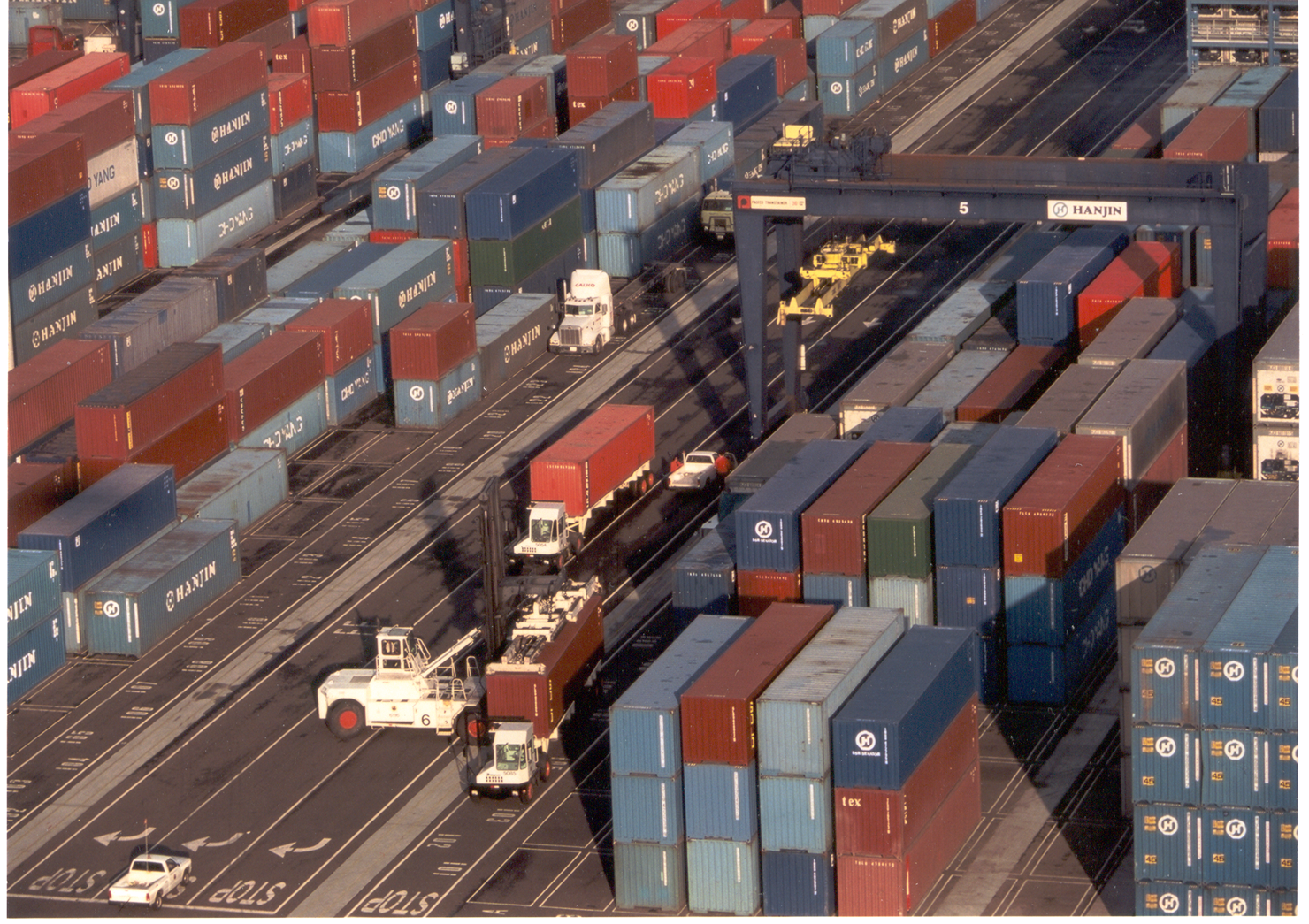
As I have noted in earlier fact sheets and blogs, wood packaging (crates, pallets, etc.) has been a major pathway for introductions of highly damaging wood-boring pests since at least the early 1990s. (See Figure 2a in Aukema et al. 2010; reference given at end of blog.)


This rise in introductions followed the rapid increase in use of shipping containers – as described in Levinson’s book The Box (reference below). Levinson notes that shipping capacity increase fourfold during the decade of the 1970s, reaching 10 million tons in 1980. (See also my blog from August 2015 here). A second factor was the U.S. opening trade with China in 1979. Since in those years – before establishment of more sophisticated detection tools – a pest was often present for close to a decade before being detected, it is not surprising that detections of woodboring pests began their rise around 1990.


February 2017 marks 11 years since the international standard (ISPM#15) was put into effect by the United States and 17 years after the U.S. and Canada began requiring China to treat its wood packaging. Nevertheless, numerous shipments containing wood packaging that does not comply with the regulations continue to arrive at our borders – and to bring pests.


A study by scientists and economists (Haack et al. 2014; reference below) analyzed detection data from the U.S. and other countries in order to calculate the reduction in pest risk associated with wood packaging following adoption of ISPM#15. They concluded that one tenth of one percent of the wood packaging entering the U.S. after adoption of ISPM#15 still contained a tree-killing pest. This sounds like a small risk. However, the U.S. imported approximately 25 million shipping containers in 2013 – and presumably similar numbers in more recent years. It has been estimated in the past that wood packaging is used in just over half of these containers. Therefore, even if merely 1/10th of 1% of the wood packaging in these shipments contained a tree-killing pest, 13,000 containers harboring pests probably enter the country each year. That is 35 potential pest arrivals each day.


Interception records compiled by USDA APHIS and the DHS Bureau of Customs and Border Protection clearly show that wood packaging infested with pests continued to arrive in recent years – including in 2016.


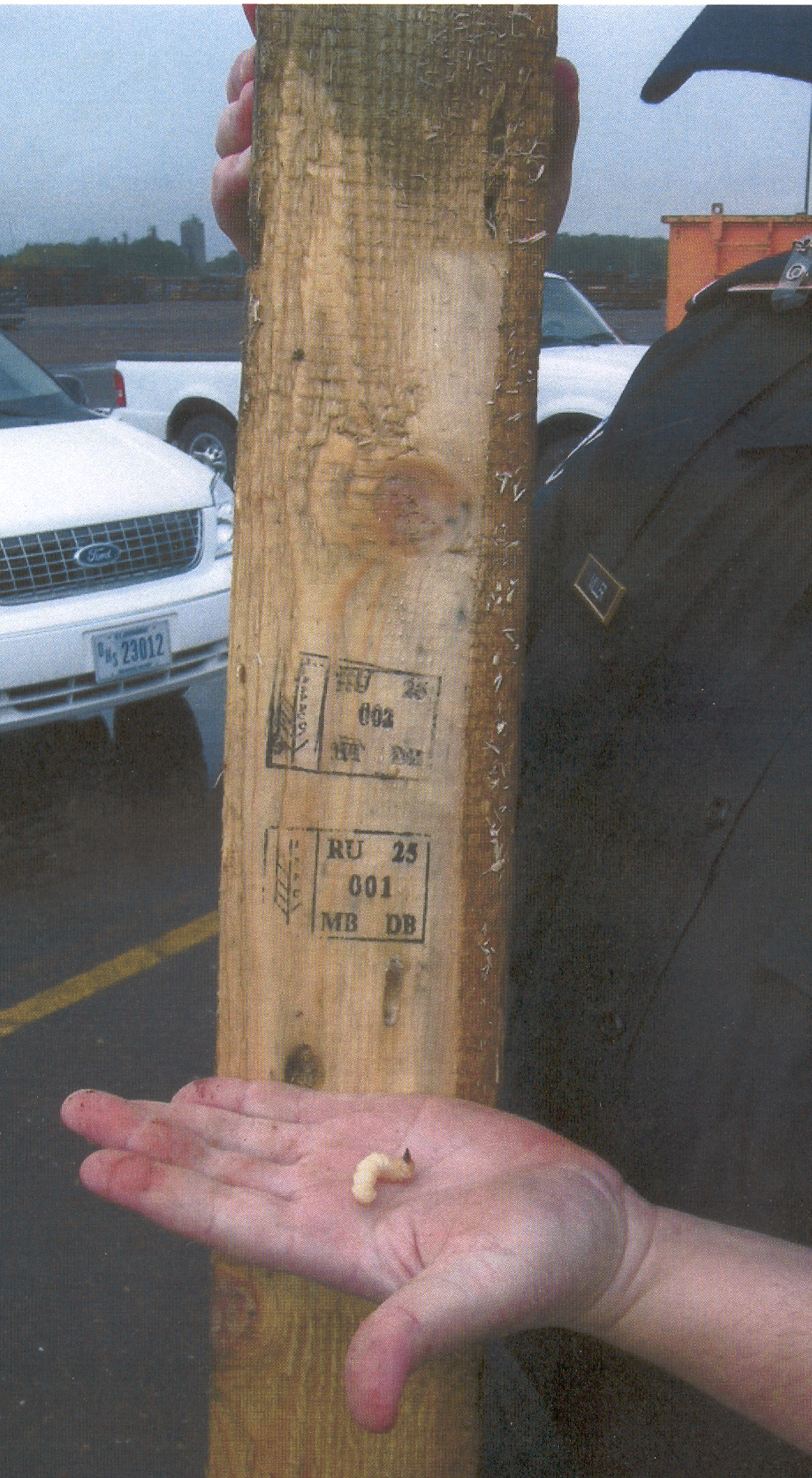
Over a period of seven years – Fiscal Years 2010 through 2016 – CBP detected more than 20,700 shipments with wood packaging that did not comply with ISPM#15. While most of the non-compliances represented wood packaging that lacked the required mark showing treatment per ISPM#15, in nearly 5,000 cases the wood packaging actually harbored a pest in a regulated taxonomic group (see Customs presentation at the Continental Dialogue here).


Customs inspectors at 11 ports (listed at end of blog) have been sending intercepted wood packaging containing insect larvae to APHIS for study. APHIS has also sent to me its record of interceptions for the period FYs 2011 – 2016.


The APHIS interception database contained 2,547 records for insect detections. The insects belonged to more than 20 families. Families with the highest numbers of detections were Cerambycids – 25% of total; Curculionidae – 23% (includes Dendroctonus, Ips, Orthotomicus, Scolytinae, Xyleborus, Euwallacea); Scolytidae – 17%  (includes true weevils such as elm bark beetles); Buprestids – 11%; and Bostrichidae – 3%. Not all of the insects in these groups pose a threat to North American plant species.

piece of wood packaging with Cerambycid larva; detected in Oregon

The samples sent by CBP to APHIS are limited largely to the families Cerambycidae (the family containing the Asian longhorned beetle) and Buprestidae (the family containing the emerald ash borer). This dataset contains 1,068 insects, obtained over the period April 2012 through August 2016 from 786 separate interceptions of non-compliant wood packaging. The sample is not from a random set of ports – four of the seven entry points are on the Mexican border, and the proportion was even higher in the early years of the study.


The APHIS interception database reports pests detected in wood packaging from dozens of countries. The countries of origin with the highest numbers of shipments detected to have pests present were Mexico, China, Italy, and Costa Rica. These numbers reflect in part import volumes. The U.S. imports huge volumes of goods from both Mexico and China. (Our second largest trade partner is Canada; the U.S. and Canada have exempted wood packaging moving between the two countries from the requirement that it comply with ISPM#15. Neither country inspects wood packaging from the other country at even the low rate of inspection applied to wood packaging coming from Mexico or overseas.)


The CBP-APHIS database includes pests found in wood packaging from 39 countries, including 212 shipments from Europe; 130 shipments from Asia; and 341 shipments from the Americas – almost exclusively Mexico.


APHIS analysts point out that the pests from Mexico might pose a lower risk since some proportion of them are probably species shared between our two countries. (However, several woodborers from Mexico are killing trees in the U.S. – e.g., goldspotted oak borer, walnut twig beetle, and soapberry borer. These species are described briefly here. These insects were probably introduced to vulnerable parts of the U.S. in firewood rather than wood packaging.)


As always (see the briefs here as well as various articles by Haack and Cavey), imports of heavy objects are associated with wood packaging found to be infested with insects: metal and machine parts, tiles, decorative stone. Imports of fruits and vegetables rank high because of the large number of interceptions in wood packaging from Mexico.


Comparing the estimate by Haack et al. 2014 with the CBP data indicates that Customs is detecting about 6% of all pest-infested shipments. I do not believe that increasing the inspection workforce and effort will result in substantial improvement in this rate.


On average, 26% of infested wood pieces detected by CBP were found in wood that had been treated according to ISPM#15 requirements (if we believe the ISPM#15 stamp on the wood). Does this indicate fraud? Or is the problem accidental misapplication of the treatments? Or are the treatments less effective than hoped? APHIS researchers have found that larvae from wood subject to methyl bromide fumigation were more likely to survive to adulthood than those intercepted in wood that had been heat treated. Does this indicate that methyl bromide fumigation is a less effective treatment?


CBP staff reported that only about 30 import shipments (out of nearly 21,000 shipments found to be in  violation of ISPM#15 requirements) have received a financial penalty. CBP staff cite two reasons for the low penalty rate:

  1. USDA policy requires that an importer be caught 5 times in a year with non-compliant wood packaging before authorizing a fine; and
  2. APHIS has not designated SWPM as a high-risk commodity


What Can Be Done to Slow or Eliminate this Pathway?


Our goal should be to hold foreign suppliers responsible for complying with ISPM#15. One approach is to penalize violators. APHIS and Customs might

  • Prohibit imports in packaging made from solid wood (boards, 4 x 4s, etc.) from foreign suppliers which have a record of repeated violations over the 11 years ISPM#15 has been in effect (17 years for exporters from Hong Kong & mainland China). Officials should allow continued imports from those same suppliers as long as they are contained in packaging made from other types of materials, including plastic, metals, fiberboards …
  • Fine an importer for each new shipment found to be out of compliance with ISPM#15 in cases when the foreign supplier of that shipment has a record of repeated violations.


There would need to be a severe penalty to deter foreign suppliers from simply changing their names or taking other steps to escape being associated with their violation record.


At the same time, the agencies should work with NGOs and importers to promote creation of an industry certification program that would recognize and reward importers who have voluntarily undertaken actions aimed at voluntarily exceeding ISPM#15 requirements so as to provide a higher level of protection against invasive species that would otherwise potentially be introduced into the United States.


What You Can Do


  • Tell your member of Congress and Senators that you are worried that our trees are still being put at risk by insects arriving in wood packaging. Ask them to urge the new Secretary of Agriculture (Sonny Perdue, former governor of Georgia) to take the actions outlined above in order to curtail introductions of additional tree-killing pests.


  • Talk to your friends and neighbors & civic organizations about the threat to our trees. Ask them to join you in communicating these concerns to their Congressional representatives and Senators.


  • Write letters to the editors of your local newspaper or TV news station.


Use your knowledge about pests threatening trees in your state or locality in your communications!


Ports that have sent specimens to APHIS lab: Seattle, Long Beach, San Diego, Laredo, Hildago,  Houston, Miami, Port Everglades, Chicago, Detroit

References

 Aukema, J.E., D.G. McCullough, B. Von Holle, A.M. Liebhold, K. Britton, & S.J. Frankel. 2010. Historical Accumulation of Nonindigenous Forest Pests in the Continental United States. Bioscience. December 2010 / Vol. 60 No. 11

Haack, R. A., K. O. Britton, E. G. Brockerhoff, J. F. Cavey, L. J. Garrett, M. Kimberley, F. Lowenstein, A. Nuding, L. J. Olson, J. Turner, and K. N. Vasilaky. 2014. Effectiveness of the international phytosanitary standard ISPM no. 15 on reducing wood borer infestation rates in wood packaging material entering the United States. Plos One 9:e96611.

Levinson, M. The Box: How the Shipping Container Made the World Smaller and the World Economy Bigger Princeton University Press 2008


We welcome comments that supplement or correct factual information, suggest new approaches, or promote thoughtful consideration. We post comments that disagree with us — but not those we judge to be not civil or inflammatory.


Posted by Faith Campbell
 

The New Year – Where We Are & What Needs to be Done

ash-braddock-rd

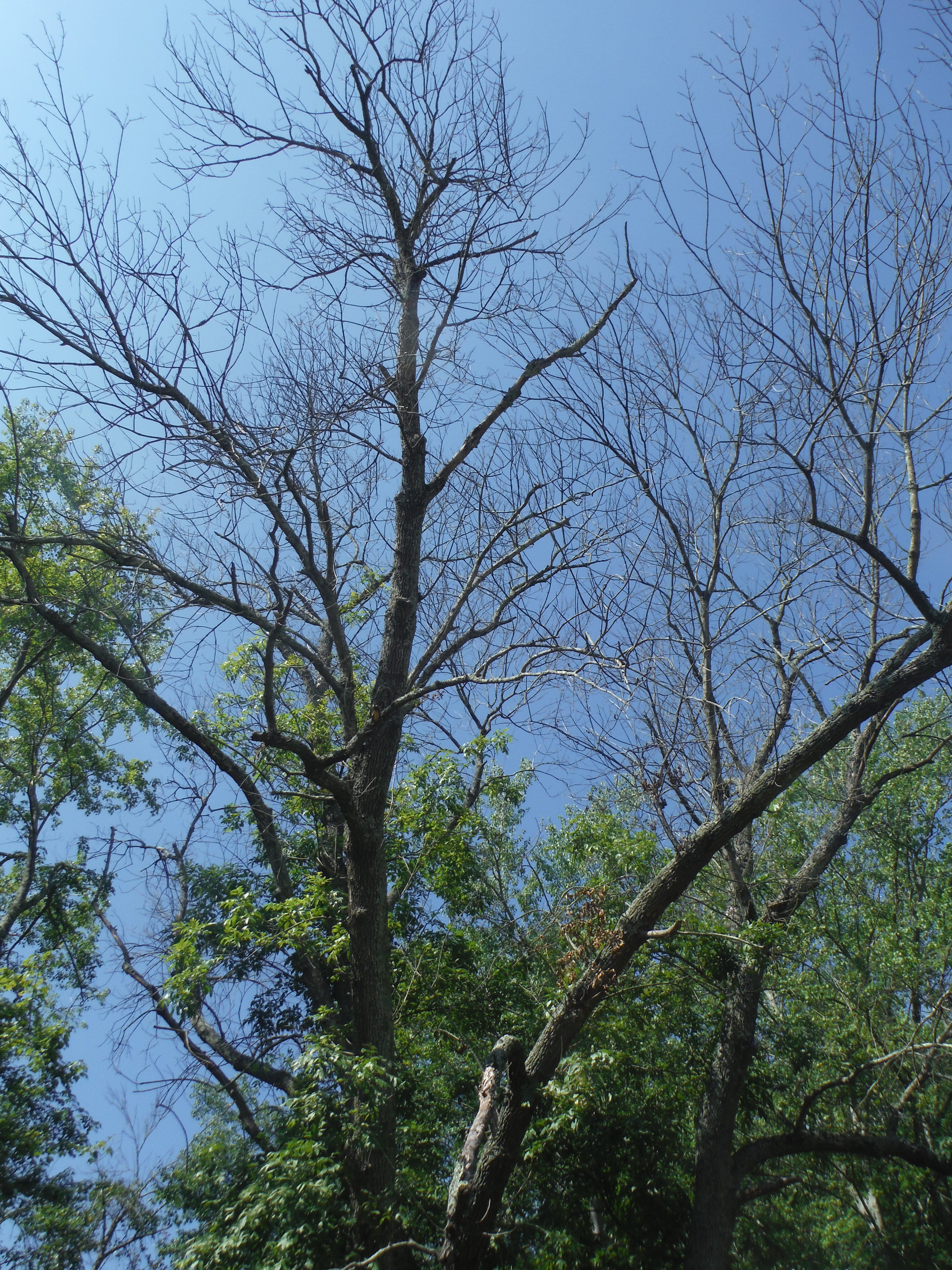
dying ash tree, Fairfax County, Virginia; photo by F.T. Campbell

According to Aukema et al. 2010 (see references at the end of this blog), by the first decade of the 21st Century, the number of non-native insects and pathogens damaging our forests had risen to at least 475.  Sixty-two of the insects, and all of the 17 pathogens, were judged to have “high impact”, with both economic and ecological ramifications. More than 181 exotic insects that feed on woody plants are established in Canada (USDA APHIS 2009). Especially hard-hit is the eastern deciduous broadleaf forest — there is an exotic pest threat to nearly every dominant tree species in this ecosystem type.

The situation is actually worse than this article and others based on it depict. Aukema et al. 2010 did not include several highly damaging forest pests that are native to regions of North America (e.g., goldspotted oak borer, thousand cankers disease); nor did they include pests on U.S. islands, such as `ohi`a rust and Erythrina gall wasp in Hawai`i. Aukema et al. 2010 also did not include pests that attack palms or cycads – which are significant components of some ecosystems on the continent as well as on America’s tropical islands. Finally, some invaders have come to our attention since the database on which these authors relied was compiled, e.g., polyphagous and Kuroshio shot hole borers and the rapid ohia death pathogen. (For a list of pests detected since 2003, see page 7 of Fading Forests III, available here; this list was compiled in 2014, so it does not include the most recently detected pests, such as rapid ohia death. For descriptions of most invaders discussed in this blog, go here.)

Of course, more important than numbers are impacts. Lovett et al. 2016 provide a summary of those impacts … but let’s get specific. Note that some of these species occupy wide ranges; it is not only the narrow endemics that are under threat.

  • Several tree species are severely depleted throughout their ranges: American chestnut, Fraser fir, Port-Orford cedar, butternut, Carolina hemlock, redbay and swamp bay, cycads on Guam
  • Other species or genera are already severely reduced in significant portions of their ranges and the causal agents are spreading to the remaining sanctuaries: whitebark pine.
  • In some cases, the causal agent has not yet spread, but threatens to: `ohi`a.
  • Some tree or shrub taxa are under severe attack across much of their ranges: ashes, eastern hemlock, American beech, dogwoods, tanoak, viburnums …

Many of America’s 300 species of oak face a variety of threats:

  • in the East, European gypsy moth, oak wilt, and – in some areas – winter moth;
  • in the South, oak wilt and Diplodia;
  • on the West coast, sudden oak death, goldspotted oak borer, the polyphagous and Kuroshio shot hole borers, Diplodia, and foamy bark canker.

(For more about threats to oaks, see my blog from last April.)

Other threats are – so far – confined to relatively small areas, but they could break out. These include the multi-host insects Asian longhorned beetle; polyphagous and Kuroshio shot hole borers; and spotted lanternfly. Tree genera containing species at risk to one or more of these insects include maple, elm, willow, birch, sycamore, cottonwood and poplar, sweet gum, oak. Only ALB and the lanternfly currently are the focus of federal and state programs aimed at eradication or containment. The widespread invasive tree, Ailanthus or tree of heaven, could support spread of at least the polyphagous shot hole borer and spotted lanternfly.

Of course, additional pests are likely to be introduced (or detected) in the future. Known threats include the various Asian subspecies of gypsy moth and ash dieback (Hymenoscyphus fraxineus – previously  called Chalara fraxinea). If history is any guide, we are likely to be surprised by a highly destructive invader that we have either never heard of or dismissed based on its behavior elsewhere. See my earlier blogs for discussions of what should be done to reduce the introduction risk associated with wood packaging and imports of living plants.


What Should We Do?

2017 brings a new Administration and a new Congress. At a minimum, we need to educate all these decision-makers about both the high costs imposed by tree-killing insects and pathogens and effective strategies to minimize those costs. How will our concerns be received? We don’t know yet.

We might have opportunities arising from the skeptical attitude toward trade voiced during the campaign. Will newly elected or appointed agency and Congressional staffers be open to re-considering the plant health threats associated with international trade? On the other hand, will mainstream agriculture’s traditional strong support for exports continue to overwhelm calls to strengthen phytosanitary measures? Even if our message about risks associated with trade gains a hearing, will officials be willing to consider more rigorous regulations? Or higher funding levels for agencies responsible for plant pest prevention and response?

I hope you will join the Center for Invasive Species Prevention and others in coordinated efforts to take these messages to the next Secretary of Agriculture (who has not yet been named!) and key members of the Senate and House of Representatives. Opportunities in the Congress include Senate confirmation of the new Secretary and the three Under Secretaries that oversee APHIS, USFS, and ARS; annual appropriations bills; and early consideration of possible amendments to the Farm Bill (which is due for renewal in 2019).

See my post from a week ago for more suggestions for how Congress could improve U.S. invasive species management programs.

Expect to hear from me often in the coming year!


SOURCES

Aukema, J.E., D.G. McCullough, B. Von Holle, A.M. Liebhold, K. Britton, & S.J. Frankel. 2010. Historical Accumulation of Nonindigenous Forest Pests in the Continental United States. Bioscience. December 2010 / Vol. 60 No. 11

Lovett, G.M., M. Weiss, A.M. Liebhold, T.P. Holmes, B. Leung, K.F. Lambert, D.A. Orwig , F.T. Campbell, J. Rosenthal, D.G. McCullough, R. Wildova, M.P. Ayres, C.D. Canham, D.R. Foster, S.L. LaDeau, and T. Weldy. 2016. Nonnative forest insects and pathogens in the United States: Impacts and policy options. Ecological Applications, 0(0), 2016, pp. 1–19. DOI 10.1890/15-1176.1

U.S. Department of Agriculture, Animal and Plant Health Inspection Service.  2009.  Risk analysis for the movement of SWPM (WPM) from Canada into the US.


Posted by Faith Campbell

We welcome comments that supplement or correct factual information, suggest new approaches, or promote thoughtful consideration. We post comments that disagree with us — but not those we judge to be not civil or inflammatory.


Invasive insects cause tens of billions in damage

1324067

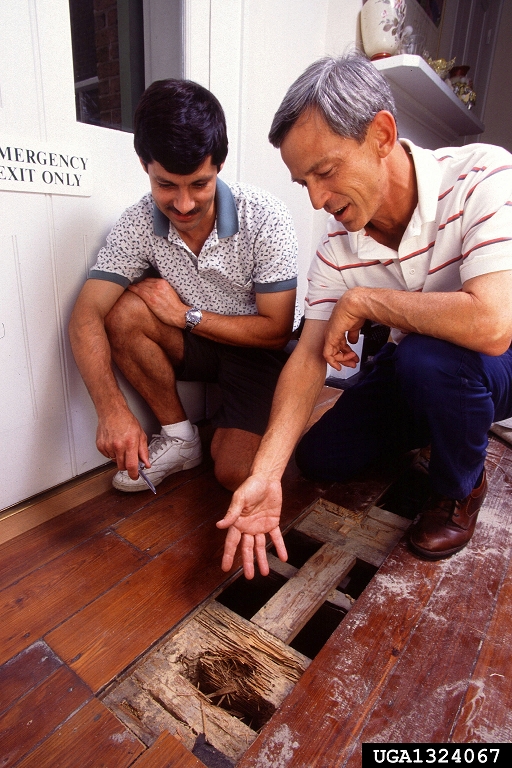
Formosan subterranean termite damage to a house in New Orleans; observed by Ed Freytag & Alan Lax; photo by Scott Bauer, USDA Agricultural Research Service; bugwood.org

A recent study documents the high costs imposed by invasive insects worldwide.  The study, by Bradshaw et al. (source with link is at the end of this post) concluded that invasive insects cause at least $77 billion (US) in damage every year. This figure includes costs of $70 billion in estimates of damaged goods and service; and $6.9 billion in associated health costs.

What is more, this figure is “grossly underestimated” for a number of reasons:

  • There were few studies providing cost estimates. The authors started by reviewing more than 700 articles, but found that only 158 yielded usable economic estimates.
  • Most of the studies applied to North America and Europe; much of the globe is not included.
  • Ecosystem services eroded by invasive pests are rarely quantified.
  • The health cost estimate does not include the impact of malaria (in most areas, the vector is native rather than invasive), the Zika virus, or economic losses in tourism or productivity (these latter were too difficult to calculate).

While the most destructive of the insects identified in the reports was the Formosan subterranean termite, Bradshaw et al. question some of the economic data included in the single report on the termite. The most damaging insect for which they found “reproducible” economic estimates is the diamondback moth, a voracious consumer of cruciferous crops worldwide.

Other invasive insects cited as being associated with high damage levels are tree-killing pests familiar to readers of this blog: the brown spruce longhorn beetle, the European gypsy moth in North America, and the Asian longhorned beetle (write-ups on all three species can be read here. In my view, the high ranking of these insects reflects a (welcome!) effort by researchers to quantify tree pests’ impacts; although damages caused by agricultural pests are more easily reduced by pesticide applications.

The situation is likely to worsen in the future. According to the authors, climate change, rising human population densities, human mobility, and intensifying international trade will allow these costly insects to spread into new areas. Still, substantial savings could be achieved by increasing surveillance, containment and public awareness (my emphasis).

In an interview with Agence France Presse, one of the coauthors, Franck Courchamp said the best way to combat this growing threat — spread mainly through international commerce — is not more pesticides. Instead, “The solution is better ‘bio-security’,” he said. “This includes inspection of ship and air cargo from certain regions, legislation to ensure that high-risk imports must be treated and rapid eradication of new incursions.” (Interview is posted at http://www.bangkokpost.com/news/world/1102417/invasive-insects-cause-tens-of-billions-in-damage-study)


Source

Bradshaw, C. J. A. et al. Massive yet grossly underestimated global costs of invasive insects. Nat. Commun. 7, 12986 doi: 10.1038/ncomms12986 (2016). (Open access)

Posted by Faith Campbell

We welcome comments that supplement or correct factual information, suggest new approaches, or promote thoughtful consideration. We post comments that disagree with us — but not those we judge to be not civil or inflammatory.

Asian Longhorned Beetle (ALB) – Newly Detected Infestation Shows Spread within Ohio

ALB profile jpg

On November 18, Ohio authorities and APHIS announced the discovery of Asian longhorned beetle- infested trees in a section of Clermont County previously thought to be free of the insect. (The press release is not yet posted to the web; go here to see the most recent information).

The center of the newly discovered infestation is within the Williamsburg Township portion of the East Fork Wildlife Area, south of Clover Road. Tree inspection crews will continue to survey the area to determine the extent of the infestation. Any trees found to be infested will be removed as part of the eradication effort. Also, authorities will expand the ALB quarantine to include areas near the new infestation. When available, a map of the regulated areas will be posted at agri.ohio.gov.

This setback reminds us how difficult it is to contain or eradicate this insect.

ALB was first discovered in Tate Township in Clermont County, Ohio, in June 2011. That quarantine currently covers a 61-square miles area.  According to the October 28 APHIS electronic newsletter, more than 2 million trees in the quarantine zone have been surveyed. The survey has detected 18,614 infested trees since 2011. 87,151 trees have been removed;  Of these, 17,995 were infested and 69,156 were deemed at high-risk of either already being infested or likely to become infested in the immediate future.

Status of ALB in Other States

Massachusetts   ALB was first detected in Worcester in 2008. The quarantine covers 110 square miles. At least 35,870 trees have been removed in the Commonwealth.

New York  ALB was first detected in Queens in August 1996. APHIS and the state continue efforts to eradicate ALB from three separate infestations in Queens, Brooklyn, and Amityville.  The quarantine covers a total of 137 square miles.  The number of infested Trees for the entire New York program is 7,082.  The number of trees removed is 23,731. Outbreaks in several sites have been declared eradicated:

  • Islip (Suffolk County) in 2011;
  • Manhattan  and Staten Island in 2013.

In 2013, the Amityville area infestation was found to be larger than previously known.

The total number of trees removed in the Massachusetts, New York, and Ohio programs was 146,000. However, this is not the total for all the damage caused by the Asian longhorned beetle.

ALB outbreaks in Illinois (Chicago) and New Jersey were eradicated earlier, and their removals are not included in the total given above.

In Illinois, according to Haack et al. 2012, 1,771 trees were removed and  286,227 were treated with systemic pesticides (imidacloprid).

In New Jersey (again, according to Haack et al. 2009,  21,981 infested and high-risk trees were removed.  Another  480,574 trees were treated. This total is not complete since the program had not yet succeeded in eradicating the ALB in New Jersey at the time of writing.

The total from all programs is 169,752.

The risk of new introductions remains.

  • During fiscal years 2010 – 2016, Customs (CBP) detected tree-killing pests in 4,984 shipments – an average of 807 shipments each year. (For the 2015 report, go here)
  • An analysis by Haack et al. (2014) concluded that one tenth of one percent of the wood packaging entering the U.S. after adoption of ISPM#15 still contained a tree-killing pest. Since the U.S. imports approximately 25 million shipping containers each year, and about half of these contain wood packaging, an “approach rate” of 0.1% equals 13,000 containers harboring pests that probably enter the country each year. That is 35 potential pest arrivals per day.
  • Customs send samples of intercepted wood packaging to an APHIS laboratory where the insect larvae are grown to adulthood and identified. The APHIS lab has received 1,068 insects from April 2012 through August 2016, taken from 786 separate interceptions of non-compliant wood packaging. Six of the insects were Asian longhorned beetles.

APHIS also detected 69 other pests in wood packaging sent from China.

The United States and Canada began requiring wood packaging from China to be treated in December 1998. (See my discussion of this regulation in Fading Forests II here.  Since the Customs data begin in 2010, we can see that 11 to 16 years after the rule governing Chinese wood packaging went into effect, we are still receiving wood packaging with pests from that country.

Also, 700 pests arrived from 36 other countries, led by Mexico, Turkey, and Ukraine (see presentation here; search for “Nadel”)

What are APHIS & CBP doing about these flagrant violations of existing rules? Each violation exposes our forests to additional pest attack and our citizens to higher costs – either in local or federal taxes or personal costs to remove trees — as well as to mental anguish and health impacts.

The evidence is in. APHIS and Customs should tighten enforcement of ISPM#15 by:

  • Prohibiting imports in solid wood packaging (boards) from foreign suppliers which have a record of repeated violations over the 10 years ISPM#15 has been in effect. (It’s been 16 years for exporters from Hong Kong and mainland China).  A reasonable number of violations should trigger this prohibition – perhaps eight over the entire period.

The U.S. should allow imports from those suppliers that are contained in other types of packaging materials, including plastic, metals, fiberboards …

  • Fining an importer for each new shipment found to be out of compliance with ISPM#15 if the foreign supplier of that shipment has a record of repeated violations (but fewer than the number that would trigger a ban) over the 10 years ISPM#15 has been in effect (16 years for exporters from Hong Kong & mainland China).  The number of violations needed to trigger the fine might be five over the entire period – not just in one year.
  • Ensuring that exporting countries understand that foreign suppliers that change their names or take other steps to obscure their past import records will be prosecuted for fraud. This penalty should be severe so as to deter deliberate attempts to avoid the consequences of past actions.


References

Haack, R.A., F. Herard, J. Sun, J.J. Turgeon. 2009. Managing Invasive Populations of Asian Longhorned Beetle and Citrus Longhorned Beetle: A Worldwide Perspective.  Annu. Rev. Entomol. 2010. 55:521-46.

Haack, R. A., K. O. Britton, E. G. Brockerhoff, J. F. Cavey, L. J. Garrett, M. Kimberley, F. Lowenstein, A. Nuding, L. J. Olson, J. Turner, and K. N. Vasilaky. 2014. Effectiveness of the international phytosanitary standard ISPM no. 15 on reducing wood borer infestation rates in wood packaging material entering the United States. Plos One 9:e96611.


Posted by Faith Campbell

The Latest on Phytophthoras

014_14

Phytopthora ramorum on tanoak in California; F.T. Campbell

Nine eastern states are participating in the 2016 USDA National Phytophthora ramorum Early Detection Survey of Forests. Those states are AL, FL, GA, MS, NC, PA, SC, TN, and TX. As of late August, streams in four locations were P. ramorum-positive. Three are in AL, one in MS. All had tested positive in previous years. Also, all have been associated with previously positive nurseries.  (Reported in the California Oak Mortality Task Force newsletter for September.) It is reassuring that no new positive locations have been detected. However, on what substrate is the pathogen persisting? Scientists agree that the pathogen does not survive in water (although it is reliably detected by testing in water) but must survive on some plant material – perhaps roots.

 P. ramorum also persists in nurseries. Seven California nurseries are participating in the APHIS federal P. ramorum program under which they are allowed to ship host plants interstate. Positive plants have been detected in two of them. One of these nurseries is undergoing the Confirmed Nursery Protocol clean-up. The other has completed the cleanup and has been allowed to resume shipping plants interstate. In both cases, the infected plants were not from the five “high-risk” genera which are the focus of monitoring for the regulatory system — Camellia, Kalmia, Pieris, Rhododendron, and Viburnum. (Reported in the California Oak Mortality Task Force newsletter for September.) I expressed concern about this too-narrow focus in a blog posted in July 2015 – http://nivemnic.us/2015/07/.


I have written about the widespread presence of various Phytophthoras in nurseries in blogs in April (for Europe http://nivemnic.us/2016/04/ ) and July (for California http://nivemnic.us/2016/07/ ). New publications add to this picture.


Junker and colleagues (see references below) report the detection of 15 Phytophthora species in two commercial woody ornamental nurseries (presumably in Europe, since the authors are Europeans). Twelve of the species are previously described but the DNA of three isolates did not match any of the known species.  Detections were highest in puddles on nursery pathways; followed by plant residues;, wind-carried leaves; and water and sediment from  runoff. The plant samples showed very low infection rates – a disturbing finding given the reliance until recently on inspection of plants to detect the pathogen. (Reported in the California Oak Mortality Task Force newsletter for September.)


New Phytophthora confirmed in U.S.

The United States has the first official confirmed detection of the pathogen Phytophthora quercina. It was found associated with oak trees planted on restoration sites in central coastal California. Although the California detection is the first officially confirmed detection of the pathogen in the U.S., a P. quercina ‘like’ organism has been reported to be associated with oak decline in forests in the Midwest. P. quercina is a pathogen associated with oak decline across Europe. It was rated as the species of highest concern in a USDA Plant Epidemiology and Risk Analysis Laboratory (PERAL) report. Another pathogen, P. tentaculata, was rated fifth on the same list. It was recently found in association with multiple native plant species in California’s native plant nurseries (see my July blog, linked above). See also California Oak Mortality Task Force newsletter at http://www.suddenoakdeath.org/news-and-events/current-newsletter/


Rapid Response Might Have Contained SOD – When will authorities learn this lesson?


Earlier this year, experts on modeling  the epidemiology of plant disease concluded that the sudden oak death epidemic in California could have been slowed considerably if aggressive management actions – backed by “a very high level of investment” – had started in 2002. By then, there was sufficient knowledge about the disease to guide actions. Management actions should have focused on the leading edge of the epidemic (admittedly, that edge has proven difficult to detect). The study is by American and British scientists (Cunniffe, Cobb, Meentemeyer, Rizzo, and Gilligan). See reference and news report below.


The authors’ estimate documents the high costs of inaction.  This is an important lesson – which has been repeated many times. If only officials from California and APHIS would take this to heart regarding several other forest pests. These include the polyphagous and Kuroshio shot hole borers and even the goldspotted oak borer (all described here).


 References


https://www.sciencedaily.com/releases/2016/05/160502161111.htm?utm_source=feedburner&utm_medium=email&utm_campaign=Feed%3A+sciencedaily%2Fplants_animals%2Finvasive_species+%28Invasive+Species+News+–+ScienceDaily%29


Cunniffe, N.J., R.C. Cobb, R.K. Meentemeyer, D.M. Rizzo, and C.A. Gilligan. Modeling when, where, and how to manage a forest epidemic, motivated by SOD in CalifPNAS, May 2016 DOI: 10.1073/pnas.1602153113


Junker, C., Goff, P., Wagner, S., and Werres, S. 2016. Occurrence of Phytophthora in commercial nursery production. Plant Health Progress. 17:64-75.


Posted by Faith Campbell

Europe moves to curtail forest pest introductions – but strongest measures are hampered by trade rules

alb-in-euro-on-tree-doris-holling-wslALB in Europe; photo by Doris Holling WSL

Maartje J. Klapwijk and several colleagues have recently taken a hard look at non-native forest pests in Europe.  They conclude that current European legislation is inadequate to prevent forest/tree pest introduction, establishment and spread in the European Union. (A link to the article is provided at the end of this post.)


Some of the proactive steps that they recommend, however, will be difficult to enact. International trade rules (World Trade Organization, Agreement on the Application of Sanitary and Phytosanitary Measures – SPS Agreement) require that countries prove that the target commodity in trade presents a significant pest risk – proof that is difficult to obtain before damage has actually occurred.


(I have written extensively about this “Catch 22” – see Fading Forests II here)


Furthermore, European Union rules prevent countries from taking proactive measures to restrict potentially pest-infested plants or wood products being traded from one EU member country to another.  However, member countries’ vary in their levels of concern about tree-killing pests. As a result, phytosanitary measures are quite weak in some countries. Once a pest-infested shipment enters a country with a weak phytosanitary system it can be moved freely to any other member country.


Thus, international and EU rules together create a significant risk that a pest will enter, establish, and then be spread by commerce to the rest of the Union.


The authors note that growing trade in living plants and wood products has brought a rise in non-native tree pests becoming established in Europe. The number of alien invertebrate species has increased two-fold since 1950; the number of fungal species has increased four-fold since 1900. Few studies have attempted to quantify the economic impacts of non-native tree-killing pests in Europe. But the authors say that the introduced pests will cause economic damage either directly by reducing the revenue of the country or imposing control costs; or indirectly through trade restrictions or reduced values of real estate.


Among the recent introductions are the pinewood nematode from North America; Asian and Citrus longhorned beetles and ash dieback fungus from Asia; and sudden oak death and other Phytophthora species. (I described the extent of Phytophtphora infestations in European nurseries in a blog posted on April 25.) As a partial response, EU countries have created a network of nurseries intended to serve as an early warning system against further introductions of alien tree pests.  (Descriptions of these pests and where they are found are available on the website of the European and Mediterranean Plant Pest Organization (EPPO) here)

alb-in-europeALB introduction sites in Europe


The European Union regulates invasive species through the Environment Directorate-General (DG Environment).  However, tree-killing pests and other plant health concerns are the responsibility of a different governmental body, the Directorate-General Health and Food Safety (DG SANCO).


Maartje J. Klapwijk and colleagues note the risk associated with:

  • crates, pallets, and other forms of wood packaging;
  • wood chips (Europe imports more than 4 million tons of wood pellets as fuel in order to meet its carbon emission reduction goals)  ; and
  • especially – living plants.


They note that the international community has adopted two international related sanitary agreements : ISPM#15 (wood packaging) and ISPM#36 (living plants).  The European Union requires certificates stating that imported plants are free from harmful organisms and that phytosanitary measures stipulated by the importing country have been applied. However, limited resources mean that only a small proportion of living plants, plant material, soil and wood products arriving in Europe can be inspected. “The main purpose of the inspections is to verify whether shipments comply with regulations, rather than to stop potentially harmful organisms …” (my emphasis).  Reflecting the differences in levels of concern among EU member states noted above, there are large differences in inspection intensity among the EU member states.


The pertinent European legislation is Directive 2000/29/EC. It relies on a ‘‘black-list’’ of plants and plant products that are banned from import and specifies procedures to apply when any of these banned products is found in the EU. According to Klapwijk and colleagues, these quarantine lists provide insufficient protection because harmful organisms that enter the EU often are unknown prior to establishment.


Aware of the current system’s inadequacies, the EC has proposed a new regulation which would simplify and harmonize plant passports, allow for stricter measures against pests, and address emerging risks from certain living plant imports from some non-EU countries. Instead of listing harmful plant pests, the proposed regulation “sets out the conceptual nature of quarantine pests” and empowers the Commission to adopt measures to control certain pests.


Klapwijk and colleagues praise these actions as a significant step forward. However, they note that the new rules still don’t provide for precautionary assessments of high-risk commodities. Nor do they restrict import of the highest-risk commodities, such as imports of large plants or plants in soil. (my emphasis)


The authors note that other countries take a more pro-active, precautionary stance. Australia and New Zealand require that all imported plant products be assessed and proved safe before import. The U.S. restricts the size of imported plants and does not allow imported plants to be in soil. (The U.S. has proposed a new approach that relies increasingly on integrated measures or systems approaches rather than port-of-entry inspection.  However, this proposal has been pending for more than three years. (APHIS explains its proposal here)


The question is, do trade rules allow Europe to apply the same restrictions as other countries? As Klapwijk and colleagues note, the EU cannot adopt more rigorous phytosanitary measures without providing scientific evidence for this necessity. Preparing a risk assessment to make this case will involve considerable work. As part of this process, Europe should announce that it wishes to raise its “level of protection” and that more stringent phytosanitary measures are needed to achieve that new goal.


Meanwhile, the EU can enhance its active detection efforts and “rapid response” capabilities. The new EC directive will require countries in which a new pest is detected to eradicate or contain the pest. However, the response continues to depend on investments and actions by individual Member States – which have often been insufficient.


Klapwijk and colleagues endorse the suggestion by Hulme et al. (2009) that the European Commission establish a single agency to respond to introductions of any kind of invasive species (not just tree pests) – modeled on the European Centre for Disease Prevention and Control.


Finally, Klapwijk and colleagues note the importance of engaging the public.  Citizens’ participation can enhance early detection and strengthen public support for management strategies.


CONCLUSIONS


We Americans are very lucky that the U.S. Department of Agriculture had fairly stringent rules governing plant imports before the World Trade Organization and SPS Agreement were negotiated in the 1990s.  We don’t have the burden of proving that imports of large plants (small trees!) in soil is too risky. (This not to say that U.S. regulations should not be tightened further for the most high-risk imports. See Fading Forests III here).  Europeans should be able to build their case for more restrictive trade rules on existing risk assessments and practices utilized by the U.S., Australia, New Zealand, and others; on the numerous studies published in recent years that describe recent introductions to Europe and the pathways by which they entered; and by the number of those introductions alone.  (To see what has been introduced, visit the website of the European and Mediterranean Plant Pest Organization (EPPO) here)


One important step in improving U.S. rules would be to finalize the proposal – put forward in 2013 – to depend more on integrated measures or systems approaches rather than inspection at the port of entry.  Join with me in urging the Secretary of Agriculture to finalize this proposal before he leaves office in January.   Contact me via the “contact us” button on the webpage to learn how you can help.


The United Kingdom has voted to leave the European Union. This means that the U.K. has the opportunity – and burden – of developing its own phytosanitary regulations. The U.K. has some of the leading forest pathologists and entomologists. The risk is obvious to all – especially Phytophthora ramorum in larch plantations and ash dieback disease in many areas of the country. I hope that the British will seize this opportunity to adopt really effective phytosanitary regulations that can serve as a model for the rest of Europe – and possibly even the U.S.


Sources


Maartje J. Klapwijk, Anna J. M. Hopkins, Louise Eriksson, Maria Pettersson, Martin Schroeder,A°ke Lindelo¨w, Jonas Ro¨nnberg, E. Carina H. Keskitalo, Marc Kenis. 2016. Reducing the risk of invasive forest pests and pathogens: Combining legislation, targeted management and public awareness. Ambio 2016, 45(Suppl. 2):S223–S234  DOI 10.1007/s13280-015-0748-3


Hulme, P.E. 2009. Trade, transport and trouble: Managing invasive species pathways in an era of globalization.  Journal of Applied Ecology 46:10-18


Posted by Faith Campbell

What Happens When Decision-Makers (= politicians) Don’t Hear from Us

Decisions and delays that undermine vital phytosanitary programs …


champion green ashchampion dead

Michigan’s champion green ash – before and after emerald ash borer entered the state

Examples:

Sometimes, when a shipment arriving at a U.S. port is found to be enclosed in wood packaging that is infested by pests, the importers complain to top-level officials. Sometimes, those officials respond to the pressure by allowing that shipment to enter the country – contrary to policy and common sense.

I learned recently of a particularly upsetting situation. A shipment of car parts arrived at a seaport. The wood packaging was found to be infested by a wood-boring insect that attacks pines and possibly other conifers. Because adults were present, the shipment could not be fumigated – because adult insects can escape during that process.

According to U.S. regulations, the shipment should have been refused entry to the U.S. and placed back on the ship to be transported elsewhere.

But what happened instead? The importer – a major auto manufacturer – complained to Michigan political leaders that delay in receiving the “just in time” shipment would result in halting production and unemployment.

Michigan governor Snyder and both Senator Debbie Stabenow and Senator Gary Peters put pressure on the U.S. Secretaries of Agriculture (who supervises APHIS) and Homeland Security (who supervises the Bureau of Customs and Border Protection). The two secretaries agreed to allow movement of the pest-infested shipment from the seaport across half the country to Michigan. They overruled their staffs and endangered our forests – most immediately along the shipment route. Those forests provide wildlife habitat, carbon sequestration, water supplies and other ecosystem serves; as well as numerous jobs and industries. It will be years before we know whether pests escaped the containers during transport and established in any of the wildland, rural, or urban forests along the route.

Had the shipment been refused entry — as the law requires — a new shipment in pest-free crates would have arrived within weeks.

It is particularly ironic that this pressure was exerted by Michigan officials. You would think that Michigan officials would remember the devastation to their state caused by the emerald ash borer and —  instead — press for vigorous enforcement of effective phytosanitary rules.

Of course, the Federal officials responsible for protecting our Nation from damaging plant pests should be strong in the face of political pressure. They should enforce regulations adopted through the appropriate regulatory processes. However, in this case, they chose the politically expedient action instead of carrying out their legal responsibilities.

A second example:

Since 2010, APHIS and its Canadian counterpart, Canadian Food Inspection Agency, have tried to amend the two countries’ regulations to require that wood packaging used to support or contain goods traded between the two countries conform to the international standard (ISPM#15). (When they initially adopted ISPM#15 in 2004, the U.S. and Canada exempted their bilateral trade.)

Why end this exemption? Both countries realize that each country harbors pests – native or introduced – that could pose a threat to forests in the other country. Also, the exemption complicates enforcement of the standard for shipments that originated elsewhere, e.g., in Europe or Asia.

For example, shipments of Italian decorative tiles that had been held in Canadian warehouses have been sent later to retailers in the U.S. Shippers have claimed that the pallets supporting the tiles are of Canadian origin, so they don’t need to have the stamp certifying treatment. Customs officials say that sometimes the evidence counters this claim – leading them to conclude that the pallet actually accompanied the load of tiles throughout its movement from Italy and thus is in violation of both U.S. and Canadian rules.  I expect that Canadians could cite examples of the same problem arising with shipments from U.S. warehouses to Canadian retailers.

Still, despite the need to end the exemption, APHIS’ proposed rule has been stuck at higher levels in the Department of Agriculture due to opposition by the Chamber of Commerce and some business associations.

Why are top-level politicians and other officials undermining phytosanitary programs? Do they not know the costs they’re risking?

I think it is at least partly because those of who know about the pest risk associated with wood packaging lack powerful and vocal allies who can educate the policy-makers about the damaged caused by introduced tree-killing pests.

For a reminder – woodborers have been estimated by Aukema et al. 2011 to cost local governments $1.7 billion per year; homeowners pay another $760 million to remove dead trees from their property. For more information, see also my blogs posted in July, August, September, and October 2016; fact sheets posted here and articles by Aukema et al. 2011 and Lovett et al. 2016. Remember that the costs discussed in these papers don’t reflect the vast majority of environmental and ecosystem losses, including disruption of such unique ecosystems as black ash swamps from New Brunswick to Minnesota and tree hammocks in the Everglades. Nor do they include the losses of cultural resources to Native Americans, such as basket weavers of the North and medicinal plants for Tribes in Florida …

You would think that federal and state officials who have lived through the disasters resulting from introduced wood-borers would want strict enforcement of customs and plant health regulations intended to prevent introduction of additional tree-killing pests. But these people respond to what they hear from the public and the media – perhaps the loudest voice they heard most recently. Unfortunately, people who care about invasive species – specifically tree-killing insects and pathogens – don’t have spokespeople.

Do you think the President or even Secretary of Agriculture is hearing about tree-killing pests every week? From whom? Not the Chief of the USDA Forest Service. Not the forest products industry. Not leaders of conservation organizations. Do governors, mayors, or heads of state agriculture or conservation agencies speak to Senators or Members of Congress — routinely and repeatedly — about the need to better protect our forests from non-native pests?

The evidence is that they do not. And what is the result?  These decision-makers respond to pressure from importers who want access to traded goods – and who are quite vocal about their complaints. Politics is how our country makes important decisions. And in politics, the squeaky wheel gets the grease.

When was the last time any of these officials – USDA Secretary Vilsack, DHS Secretary Jeh Johnson, Governor Rick Snyder, Senators Stabenow and Peters – heard from constituents or from leaders of the agencies under their jurisdiction about the importance of preventing introduction of new wood-boring insects?  When did a Michigan news media outlet last publish a report that discussed the pathways or vectors by which these insects enter the country and the importance of enforcing rules adopted to prevent additional introductions?

I recognize that it can be difficult for staff to get the attention of their supervisors on such issues. For example, I have been told by several people that California Governor Jerry Brown was surprised to learn that sudden oak death had killed millions of trees in his state. How did he “learn” this? From an article in the Washington Post that reported on a recent scientific study (Cuniffe et al. 2016).  Staff of CalFire were very frustrated that their efforts to educate the Governor had not resulted in his understanding the pathogen’s impact.

So – what can we do to re-balance the politics of phytosanitary policy – so that our political leaders understand why phytosanitary rules are adopted and support both adoption and enforcement of strong, effective measures?

We need to

  • Speak up at every opportunity about the damage to our trees caused by non-native insects and pathogens and describe the policies and programs that can reduce that damage and the risk of additional introductions.
    1. Tell this story to elected officials at all levels
    2. Write letters to the editors of media outlets
    3. Offer to show officials and reporters examples of the damage
  • Educate members of other stakeholder groups and ask them to integrate this message into their interactions with officials and the media.

Remember:

  • Election seasons provide opportunities to raise issues.
  • People taking up positions in January (whether elected or appointed) will be more open to learning about “new” issues than have been people who have occupied an office for some time.

Finally – these messages need to be repeated periodically. Proctor and Gamble does not make its profits  by asking us to buy their toothpaste once a year. We cannot duplicate a major corporation’s advertising budget – but we can speak up!


SOURCES

Aukema, J.E., B. Leung, K. Kovacs, C. Chivers, K. O. Britton, J. Englin, S.J. Frankel, R. G. Haight, T. P. Holmes, A. Liebhold, D.G. McCullough, B. Von Holle.. 2011. Economic Impacts of Non-Native Forest Insects in the Continental United States PLoS One September 2011 (Volume 6 Issue 9)

Cunniffe, N.J., R.C. Cobb, R.K. Meentemeyer, D.M. Rizzo, and C.A. Gilligan. Modeling when, where, and how to manage a forest epidemic, motivated by SOD in California. PNAS, May 2016 DOI: 10.1073/pnas.1602153113

Lovett,G.M.,  M. Weiss, A.M. Liebhold, T.P. Holmes, B. Leung, K.F. Lambert, D.A. Orwig, F.T. Campbell, J. Rosenthal, D.G. McCullough, R. Wildova, M.P. Ayres, C.D. Canham, D.R. Foster, S.L. LaDeau, and T. Weldy. 2016. Nonnative forest insects and pathogens in the United States: Impacts and policy options. Ecological Applications, 0(0), 2016, pp. 1–19. DOI 10.1890/15-1176.1


Posted by Faith Campbell


Junk the international phytosanitary system? One seed breeder says yes.

If you have read my earlier work, you know that I think the international phytosanitary “system” is not working well to prevent introduction of novel arthropods and pathogens that attack naïve plant hosts in the new ecosystem. For example, see my blog in May on the study of introduced forest pests with Gary Lovett as senior author; my blog in April 2016 on Phytopththoras in Europe; discussions of the problems in my reports, Fading Forests II and Fading Forests III – available here.

forum-1190786_960_720the IPPC is located in Rome

One plant breeder has read the critiques by Clive Brasier (world-famous British forest pathologist) and others and apparently concluded that the solution is not to strengthen phytosanitary measures but to abandon them! He suggests that instead of attempting to prevent pest introductions, agriculture should instead rely on new breeding technologies to rapidly breed plants that are resistant to the introduced pest.

D. Zamir (who works at the Institute of Plant Sciences and Genetics, Faculty of Agriculture, The Hebrew University of Jerusalem) has published an article in Plos 1 Biology citing Brasier’s criticisms (see Dr. Brasier’s web link above and my Phytophthora blog).  Zamir calls for the International Plant Protection Convention (IPPC) to launch a global plant breeding project.  In his view, such a project would not only improve plant species’ resilience vis a vis pest attacks. It would also build the scientific capacity of countries with high biological diversity

Zamir says that the IPPC is waging a losing defensive strategy that imposes ever-more regulations on plant movement and exposes those who would like to move plants for various reasons to increasingly heavy penalties if they violate the rules. At the same time, the internet provides unlimited opportunities for anyone to obtain mail-ordered seed, often with free international shipping.

Citing Brasier, Zamir notes that the current phytosanitary system has the following flaws:

  1. The system ignores the approximately 90% of pathogens that are unknown to science.
  2. It assumes that potential hosts will be taxonomically related to those affected in the country of origin, whereas the host range may be much wider in the new environment.
  3. Reliance on visual evaluations fails because pathogens might be present in a form that does not cause symptoms (e.g., spores).
  4. Aggressive pathogens identified in a particular country might not be recognized as a risky pest by the international community because of inefficient global communication of such threats.

Zamir says that biological diversity drives improvements in crop productivity and resilience to diseases and environmental stresses. In his view, release of new varieties provides added value to consumers, producers, and the environment.  Breeding programs often rely on the use of wild species and local varieties for gene mapping and rapid deployment of traits.  However, Zamir complains, the international system hampers exchanges of seed among countries. It is often not possible to ascertain if the original seed used as a source of the traits was obtained in accordance with all the phytosanitary regulations. Zamir says that breeders often “cut through the red tape” by sending the seed through the mail without obtaining a phytosanitary certificate.

Zamir then proposes that people concerned about plant productivity and health in the face of growing trade volumes and vulnerability to insects and pathogens should abandon reliance measures intended to prevent introductions of pests and instead launch a massive plant breeding program.

While his focus is apparently on crop breeding, Zamir cites success in breeding elm trees resistant to the Dutch elm disease pathogens as proof that this approach can work – and that success depends on access to the full genetic variability of the target species.

Zamir concedes that he has not addressed issues of governance, financing, selection of the species to be included in the program, and how to involve the private sector.

Of course, movement of seeds across ecological barriers poses less of a risk of introducing an alien pest than does movement of whole plants or cuttings. For that reason, phytosanitary regulations governing seed movement are more lenient than those for plants and cuttings.

I consider Zamir to wildly underestimate the difficulty – nay, impossibility – of applying his approach. To date, efforts to breed trees resistant to individual pests have required decades of effort. The U.S. tree breeding system falls far short of what is needed to respond to pests already in the country (see Chapter 6 of Fading Forests III, available here). For example, American chestnut has benefitted from decades of devoted effort – but success in countering chestnut blight is not yet certain, and the tree is under attack by another half-dozen pests.  (To see a reminder of how many tree taxa are under threat from non-native pests, go to the write-ups on the Don’t Move Firewood website or re-read articles by Lovett et al. or Aukema et al. 2010 — citations provided below.)

Even though modern genetic techniques, e.g., CRISPR –Cas9, seem to promise faster and cheaper breeding methods, how would breeding programs catch up to the tidal wave of new introductions?

Furthermore, few breeding programs for North American forest trees have yet proved a capacity to restore trees to the forest.

Finally, Zamir’s proposal would compound the existing equity problem. Already, the cost, environmental degradation, and other burdens of countering pest spread lie predominantly on the receiving society – including municipal tax payers and homeowners who must remove and replace trees killed by introduced pests (see Aukema et al. 2011.) Those who profit from international trade rarely pay directly. Zamir’s proposal would exacerbate that inequity by transferring all the risk of new introductions and cost of responding to new pests to the receiving ecosystem and the broad public. Those profiting from the trade would face next to no responsibility.

Fortunately, most plant breeders engaged in moving seed internationally have taken a more productive approach to adapting the international phytosanitary system to accommodate their business. The North American countries adopted a regional standard on the seed trade (RSPM# 36) in 2012.  A draft global standard will soon be circulated for comments by the IPPC member countries.

As I have said before, I call on phytosanitary agencies and the multitude of stakeholders harmed by pest movement – including grant-making foundations; federal and state agencies; conservation non-governmental organizations; forest products companies; trade associations representing various aspects of international trade in plants, wood packaging, and other vectors; and urban tree programs and mayors – to work together to improve U.S. and international phytosanitary programs.


SOURCES


Aukema, J.E., B. Leung, K. Kovacs, C. Chivers, K. O. Britton, J. Englin, S.J. Frankel, R. G. Haight, T. P. Holmes, A. Liebhold, D.G. McCullough, B. Von Holle.. 2011. Economic Impacts of Non-Native Forest Insects in the Continental United States PLoS One September 2011 (Volume 6 Issue 9)

Aukema, J.E., D.G. McCullough, B. Von Holle, A.M. Liebhold, K. Britton, & S.J. Frankel. 2010. Historical Accumulation of Nonindigenous Forest Pests in the Continental United States. Bioscience. December 2010 / Vol. 60 No. 11

Campbell, F.T. and S.E. Schlarbaum. Fading Forests I, II, and III at http://treeimprovement.utk.edu/FadingForests.htm

Lovett, G.M., M. Weiss, A.M. Liebhold, T.P. Holmes, B. Leung, K.F. Lambert, D.A. Orwig , F.T. Campbell , J. Rosenthal, D.G. McCullough, R. Wildova, M.P. Ayres, C.D. Canham, D.R. Foster, S.L. LaDeau, and T. Weldy. 2016. Nonnative forest insects and pathogens in the United States: Impacts and policy options. Ecological Applications, 0(0), 2016, pp. 1–19. DOI 10.1890/15-1176.1 Available at www.caryinstitute.org/tree-smart-trade

Zamir D (2016) Farewell to the Lose–Lose Reality of Policing Plant Imports. PLoS Biol 14(4): e1002438. doi:10.1371/journal.pbio.1002438 Published:  April 19, 2016Available at http://journals.plos.org/plosbiology/article?id=10.1371/journal.pbio.1002438 Or http://www.ncbi.nlm.nih.gov/pubmed/27093460


Posted by Faith Campbell