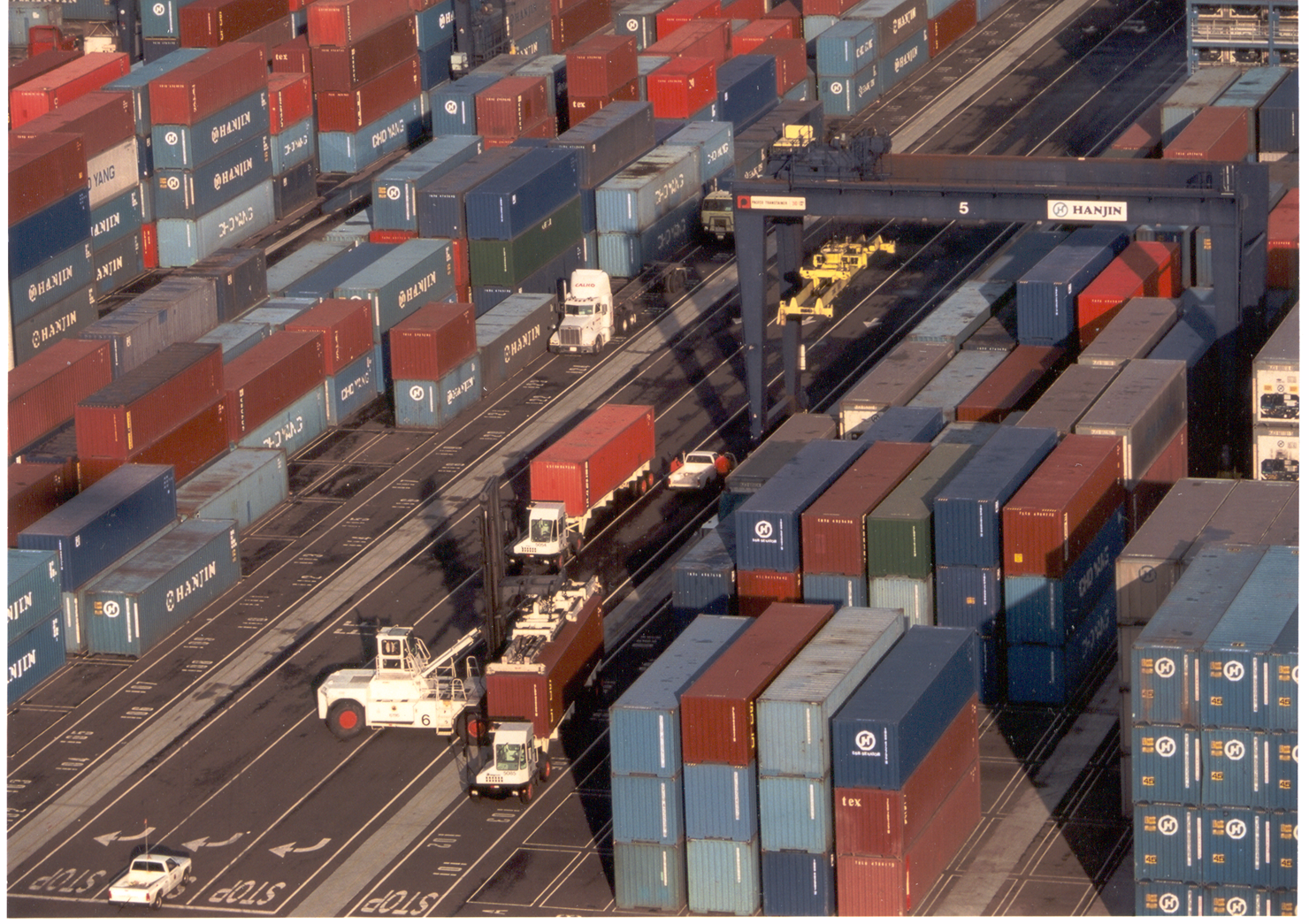
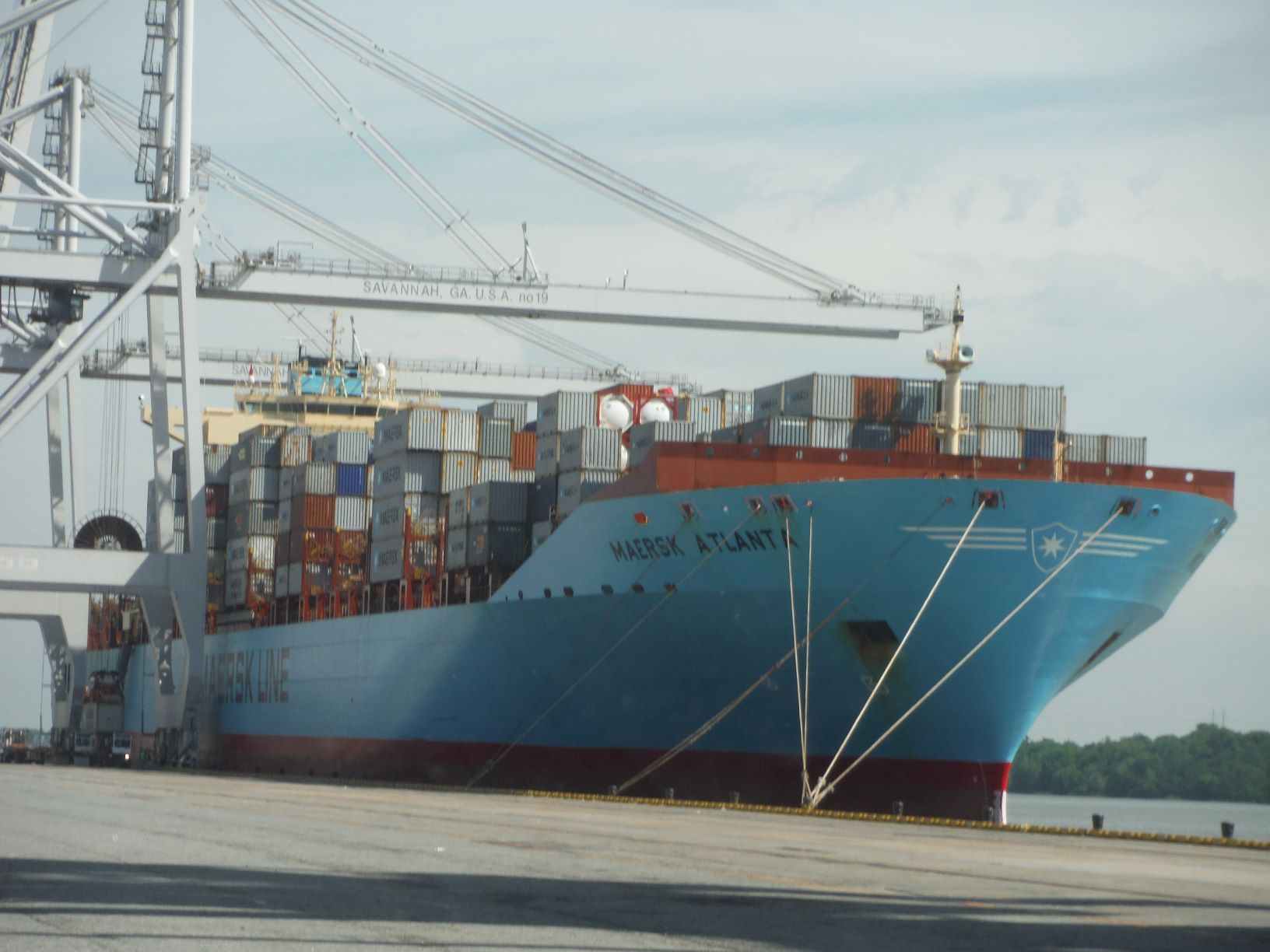
containers at Port of Long Beach; photo courtesy of Bob Kanter, Port of Long Beach
Here I update information on two of the major pathways by which tree-killing pests enter the United States: wood packaging and living plants (plant for planting).
Wood Packaging
Looking at wood packaging material, we find rising volumes for both shipping containers – and their accompanying crates and pallets; and dunnage.
Crates and pallets – Angell (2021; full citation at the end of the blog) provides data on North American maritime imports in 2020. The total number of TEUs [a standardized measure for containerized shipment; defined as the equivalent of a 20-foot long container] entering North America was 30,778,446.U.S. ports received 79.6% of these incoming containers, or 24,510,990 TEUs. Four Canadian ports handled 11.4% of the total volume (3,517,464 TEUs; four Mexican ports 8.9% (2,749, 992 TEU). Angell provides data for each of the top 25 ports, including those in Canada and Mexico.
To evaluate the pest risk associated with the containerized cargo, I rely on a pair of two decade-old studies. Haack et al. (2014) determined that approximately 0.1% (one out of a thousand) shipments with wood packaging probably harbor a tree-killing pest. Meissner et al. (2009) found that about 75% of maritime shipments contain wood packaging. Applying these calculations, we estimate that 21,000 of the containers arriving at U.S. and Canadian ports in 2020 might have harbored tree-killing pests.
While the opportunity for pests to arrive is obviously greatest at the ports receiving the highest volumes of containers with wood packaging, the ranking (below) does not tell the full story. The type of import is significant. For example, while Houston ranks sixth for containerized imports, it ranks first for imports of break-bulk (non-containerized) cargo that is often braced by wooden dunnage (see below). Consequently, Houston poses a higher risk than its ranking by containerized shipment might indicate.
Also, Halifax Nova Scotia ranks 22nd for the number of incoming containerized shipments (258,185 containers arriving). However, three tree-killing pests are known to have been introduced there: beech bark disease (in the 1890s), brown spruce longhorned beetle (in the 1990s), and European leaf-mining weevil (before 2012) [Sweeney, Annapolis 2018]
The top ten ports receiving containerized cargo in 2020 were
Port 2020 market share 2020 TEU volume
Los Angeles 15.6% 4,652,549
Long Beach 13% 3,986,991
New York/New Jersey 12.8% 3,925,469
Savannah 7.5% 2,294,392
Vancouver BC 5.8% 1,797,582
Houston 4.2% 1,288,128
Manzanillo, MX 4.1% 1,275,409
Seattle/Tacoma 4.1% 1,266,839
Virginia ports 4.1% 1,246,609
Charleston 3.3% 1,024,059
Import volumes continue to increase since these imports were recorded. U.S. imports rose substantially in the first half of 2021, especially from Asia. Imports from that content reached 9,523,959 TEUs, up 24.5% from the 7,649,095 TEUs imported in the first half of 2019. The number of containers imported in June was the highest number ever (Mongelluzzo July 12, 2021).
Applying the calculations from Haack et al. (2014) and Meissner et al. (2009) to the 2021 import data, we find that approximately 7,100 containers from Asia probably harbored tree-killing pests in the first six months of the year. (The article unfortunately reports data only for Asia.) Industry representatives quoted by Mongelluzzo expect high import volumes to continue through the summer. This figure also does not consider shipments from other source regions.
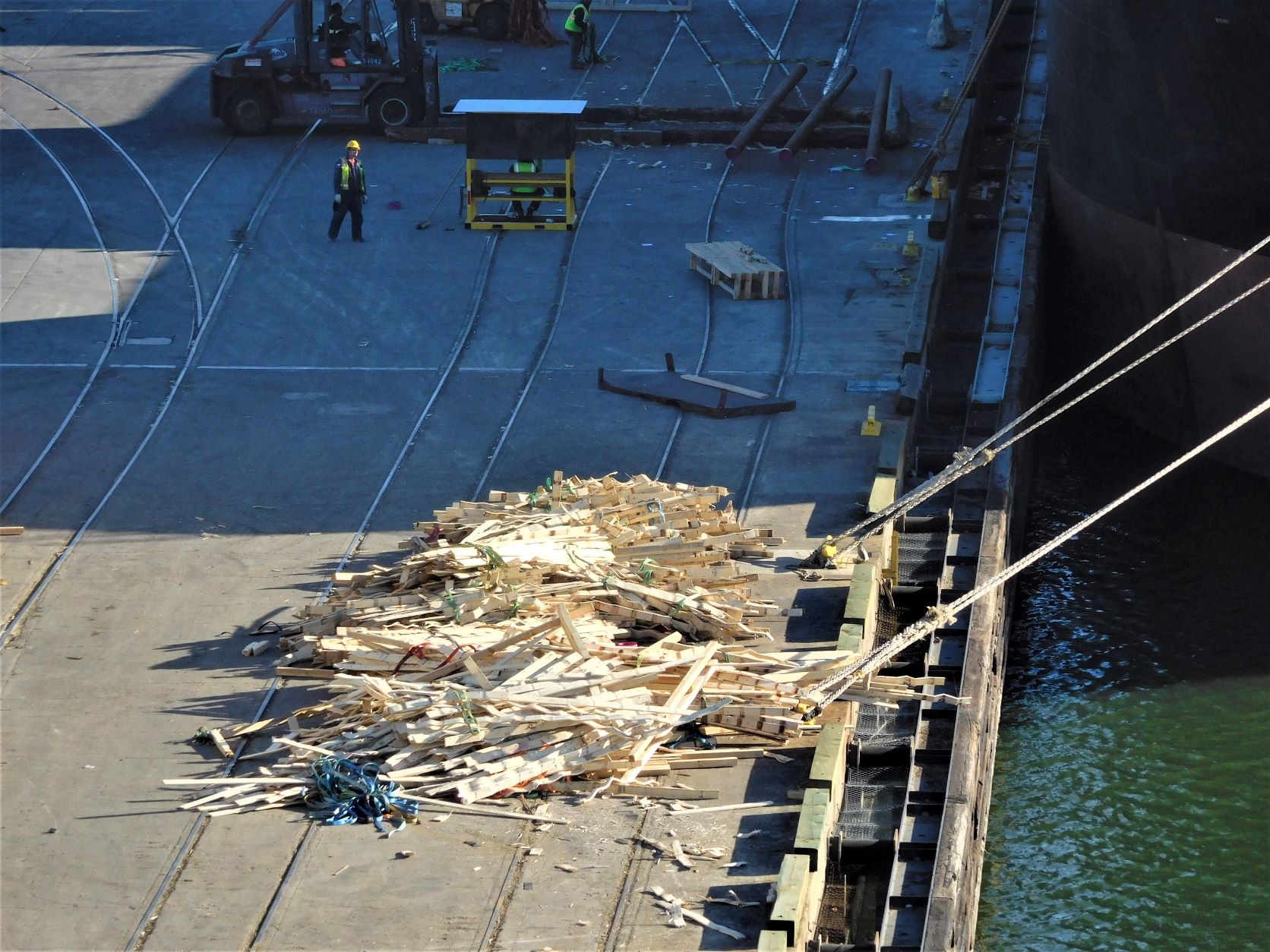
Dunnage on the pier at Port of Houston; photo by Port of Houston
Infested dunnage – Looking at dunnage, imports of break-bulk (non-containerized) cargo to Houston – the U.S. port which receives the most – are also on the upswing. Imports in April were up 21% above the pandemic-repressed 2020 levels.
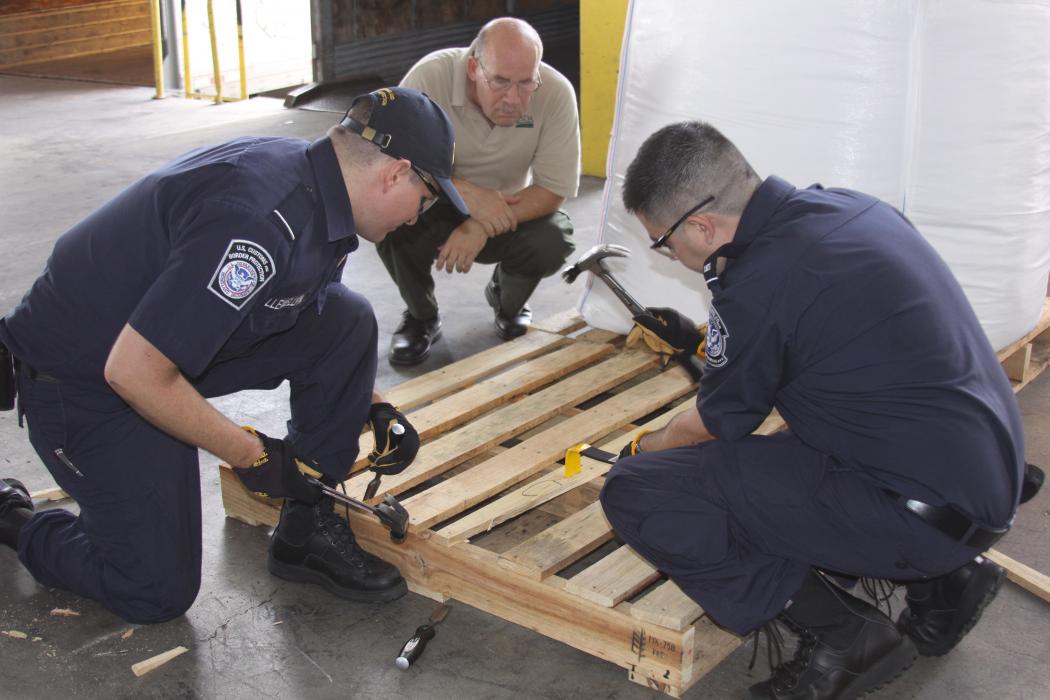
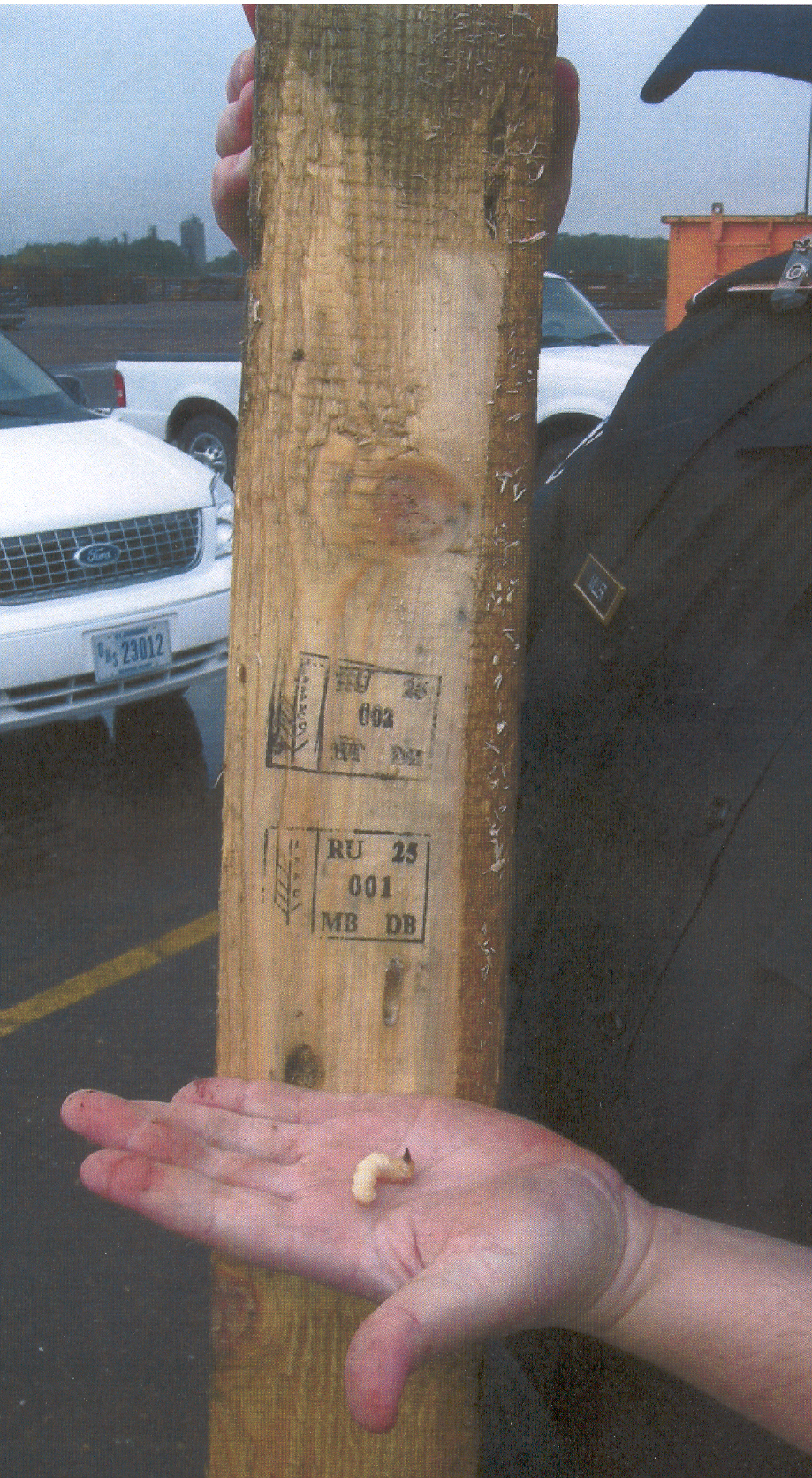
Importers at the port complain that too often the wooden dunnage is infested by pests, despite having been stamped as in compliance with ISPM#15. CBP spokesman John Sagle confirms that CBP inspectors at Houston and other ports are finding higher numbers of infested shipments. CBP does not release those data, so we cannot provide exact numbers (Nodar, July 19, 2021).
The Houston importers’ suspicion has been confirmed by data previously provided by CBP to the Continental Dialogue on Non-Native Insects and Diseases. From Fiscal Year 2010 through Fiscal Year 2015, on average 97% of the wood packaging (all types) found to be infested bore the stamp. CBP no longer provides data that touch on this issue.
Detection of pests in the dunnage leads to severe problems. Importers can face fines up to the full value of the associated cargo. Often, the cargo is re-exported, causing disruption of supply chains and additional financial losses (Nodar, July 19, 2021).
In 2019 importers and shippers from the Houston area formed an informal coalition with the Cary Institute of Ecosystem Studies to try to find a solution to this problem. The chosen approach is for company employees to be trained in CBP’s inspection techniques, then apply those methods at the source of shipments to identify – and reject – suspect dunnage before the shipment is loaded. In addition, the coalition hopes that international inspection companies, which already inspect cargo for other reasons at the loading port will also be trained to inspect for pests. Steps to set up such a training program were interrupted by the COVID-19 pandemic, but are expected to resume soon (Nodar, July 19, 2021).
Meanwhile, the persistence of pests in “treated” wood demands answers to the question of “why”. Is the cause fraud – deliberate misrepresentations that the wood has been treated when it has not? Or is the cause a failure of the treatments – either because they were applied incorrectly or they are inadequate per se?
ISPM#15 is not working adequately. I have said so. Gary Lovett of the Cary Institute has said so (Nodar July 19, 2021). Neither importers nor regulators can rely on the mark to separate pest-free wood packaging from packaging that is infested.
APHIS is the agency responsible for determining U.S. phytosanitary policies. APHIS has so far not accepted its responsibility for determining the cause of this continuing issue and acting to resolve it. Preferably, such detection efforts should be carried out in cooperation with other countries and such international entities as the International Plant Protection Convention (IPPC) and International Union of Forest Research Organizations (IUFRO). However, APHIS should undertake such studies alone, if necessary.
In the meantime, APHIS and CBP should assist importers who are trying to comply by facilitating access to information about which suppliers often supply wood packaging infested by pests. The marks on the wood packaging includes a code identifying the facility that carried out the treatment, so this information is readily available to U.S. authorities.
Plants for Planting
A second major pathway of pest introduction is imports of plants for planting. Data on this pathway are too poor to assess the risk – although a decade ago it was found that the percentage of incoming shipments of plants infested by a pest was 12% – more than ten times higher than the proportion for wood packaging (Liebhold et al. 2012).
According to APHIS’ annual report, in 2020 APHIS and its foreign collaborators inspected 1.05 billion plants in the 23 countries where APHIS has a pre-clearance program. In other words, these plants were inspected before they were shipped to the U.S. At U.S. borders, APHIS inspected and cleared another 1.8 billion “plant units” (cuttings, rooted plants, tissue culture, etc.) and nearly 723,000 kilograms of seeds. Obviously, the various plant types carry very different risks of pest introduction, so lumping them together obscures the pathway’s risk. The report does not indicate whether the total volume of plant imports rose or fell in 2020 compared to earlier years.
Haack R.A., Britton K.O., Brockerhoff, E.G., Cavey, J.F., Garrett, L.J., et al. (2014) Effectiveness of the International Phytosanitary Standard ISPM No. 15 on Reducing Wood Borer Infestation Rates in Wood Packaging Material Entering the United States. PLoS ONE 9(5): e96611. doi:10.1371/journal.pone.0096611
Liebhold, A.M., E.G. Brockerhoff, L.J. Garrett, J.L. Parke, and K.O. Britton. 2012. Live Plant Imports: the Major Pathway for Forest Insect and Pathogen Invasions of the US. www.frontiersinecology.org
Meissner, H., A. Lemay, C. Bertone, K. Schwartzburg, L. Ferguson, L. Newton. 2009. Evaluation of Pathways for Exotic Plant Pest Movement into and within the Greater Caribbean Region. A slightly different version of this report is posted at 45th Annual Meeting of the Caribbean Food Crops Society https://econpapers.repec.org/paper/agscfcs09/256354.htm
Mogelluzzo, B. July 12, 2021. Strong US imports from Asia in June point to a larger summer surge.
Nodar, J. July 19, 2021. https:www.joc.com/breakbulk/project-cargo/breakbult-volume-recovery-triggers-cbp-invasive-pest-violations_20210719.htm
Posted by Faith Campbell
We welcome comments that supplement or correct factual information, suggest new approaches, or promote thoughtful consideration. We post comments that disagree with us — but not those we judge to be not civil or inflammatory.
For a detailed discussion of the policies and practices that have allowed these pests to enter and spread – and that do not promote effective restoration strategies – review the Fading Forests report at http://treeimprovement.utk.edu/FadingForests.htm
are wood-borers examples of species more likely to “proceed through the steps of invasion” than the theory suggests?
Much of the literature about biological invasion has relied on the “tens rule”. First enunciated in the mid-1990s by Williamson and Fitter (1996), it was actually conceived a decade earlier by Williamson and Brown (1986).
The “tens rule” hypothesizes that about 10% of all species transported to a new environment will be released or escape and become introduced species. Subsequently, 10% of those introduced species establish viable populations in the wild. Finally, about 10% of the established species become highly damaging. That is, 1% of the number originally transported to the new environment is a highly damaging invader.
Is the “tens rule” supported by evidence?
Empirical support for the hypothesis has been mixed; the number of studies questioning it has increased over the decades (Jeschke and Pyšek 2018). So Jeschke and Pyšek (2018) decided to evaluate the basis for the hypothesis. First, they divided the hypothesis into two sub-hypotheses so they could separate the concept of impact from the process of introduction, establishment, and spread. They justified this separation by noting that novel species can have an impact at any stage. The two sub-hypotheses:
1st sub-hypothesis: At each of the three transitions between the invasion stages listed here the number of species completing the transition is reduced by 90% (invasion tens rule).
transport to exotic range
transition
introduction (release or escape into the environment)
transition
establishment of a least one self-sustaining population
transition
spread
2nd sub-hypothesis: about 10% of established non-indigenous species cause a significant detrimental impact. This sub-hypothesis applies to the transition from establishment (iii, above) to significant impact (iv). Stepping back to the earlier introduction, so as to consider the situation overall, about 1% of all introduced non-native species cause a significant detrimental impact; this sub-hypothesis thus relates to the transition from introduction (ii) to significant impact (iv).
Jeschke and Pyšek carried out a quantitative meta-analysis of 102 empirical tests of the tens rule drawn from 65 publications. They found no support for the “invasion tens rule”. Indeed, their analysis found that about 24% of non-native plant and 23% of non-native invertebrate species are successful in taking consecutive steps of the invasion process. Among non-native vertebrates, about 51% are successful in taking consecutive steps of the invasion process.
The “impact tens rule” is also not supported by currently available evidence. However, Jeschke and Pyšek decided that more data are needed before a reasonable alternative hypothesis can be formulated.
Findings
Jeschke and Pyšek state that the “tens rule” is not based on a model or other defensible concept. It is also hampered by confusion of terms. Thus, different authors define the invasion process differently. Particularly confounding is the mixing of “impact” with steps in the invasion process. At the same time, there have been few studies of the “impact tens rule” hypothesis.
Finally, the “tens rule’s” predictions are not adjusted to consider changes in temporal and spatial scales. That is, it does not recognize that more invaders will be detected in any given place during more recent times than in the past. Furthermore, more invaders will find suitable niches in large areas than small.
The note that analysis is hampered by the paucity of reliable data about establishment success – especially for taxa other than mammals and birds. They do not discuss how this lack might affect efforts to analyze proportions of entering species that succeed in becoming invasive, especially among the small and inconspicuous taxa such as insects and fungal organisms that concern thus of us that focus on threats to forests. This same data gap has limited other studies as well; see, for example, Aukema et al. (2010) – who restricted their discussion of pathogens to “high impact” species.
Although Jeschke and Pyšek (2018) do not specify which studies they relied on to determine the proportion of successful invaders among species belonging to particular taxa, it seems likely that they relied principally on Vila et al. (2010) in determining that on average 25% invertebrates that are introduced (that is, proceed to the second stage in the process given above) become invasive. Vila et al. analyze introductions to Europe. They found that 24.2% of terrestrial invertebrates caused recognized economic impacts.
Jeschke and Pyšek (2018) Results and Discussion
Considering the “invasion tens rule”, two-thirds of the empirical tests in the dataset focused on the “invasion tens rule”. The majority of these focused on the transition from introduction to establishment (the transition from (ii) to (iii). The observed average percentage of species making this transition is more than 40% – or greater than four times larger than the “tens rule’s” prediction.
At the next transition, from establishment to spread (from iii to iv), the observed percentage of species making the transition is greater than 30% – or greater than three times the predicted value under the “tens rule”.
Considering the “impact tens rule”, on average a quarter of established non-indigenous species have a significant detrimental impact, which is again significantly more than the 1 out of 10 species predicted by the rule. Specifically by taxon, 18% of established plants have shown detrimental impacts. Among invertebrates and vertebrates that estimate is greater than 30%. All these observations are higher than predicted by the rule. However, sample sizes are low so more studies are needed to test whether these values hold true.
Regarding the fullest possible extent of the invasion process, 16 out of 100 species that were introduced (stage ii) had a significant impact. This is 16 times greater than the 1% predicted by the “tens rule”. Considering specific taxa, 6% of established plants and 15% of established invertebrates had a significant impact. Data were too poor to support an evaluation for vertebrates.
I note that the alarmingly high “impact” estimates for invertebrates are probably biased by scientists’ and funding entities’ lack of interest in species that don’t cause noticeable impacts.
Poor data preclude an analysis of the transition from transport (i) to introduced (ii).
Strengthening The Estimates
Might these introduction and impact estimates be tightened by analysis of additional sources, such as the studies led Seebens, forest pest impact analyses by Potter et al. (2019) and Fei (2019) and reviews of pest introduction numbers by Haack and Rabaglia (2013)?
Is it worth pursuing efforts to refine the Jeschke and Pyšek (2018) estimates? I think it is. An underestimation of the risk of introduction might lead decision-makers to downplay the need for a response.
Some scientists have accepted the new “rule of 25” (Schulz, Lucardi, and Marsico. 2021. Full citation at end of blog; also cited by USFS report – Poland et al. 2021). Others have not. Venette and Hutchison (2021; full reference at end of blog) continue to cite the estimate of approximately one “invasion success” for every 1,000 attempts – that is, a low-probability, high-consequence event. This challenges those responsible for managing invasive species.
Or are there other conundrums of introduction, establishment, and predicting impacts that have more direct relationship to improving programs? I note that the recent Forest Service report on invasive species (Poland et al. 2021) does not address the “rule of tens”.
Other Reasons Why Bioinvasion Damage is Underestimated
Jaric´ and G. Cvijanovic´ (2012) note that scientists lack a full understanding of ecosystem functioning, so they probably often miss more subtle – but still important – impacts.
Jeschke and Pyšek (2018) note that the percentage of introduced or established species with a quantifiable impact is not always the most important information. A single introduced species can have devastating impact by itself. They cite the amphibian disease chytrid (Batrachochytrium dendrobatidis) and such mammals as rats and cats.
SOURCES
Aukema, J.E., D.G. McCullough, B. Von Holle, A.M. Liebhold, K. Britton, & S.J. Frankel. 2010. Historical Accumulation of Nonindigenous Forest Pests in the Continental United States. Bioscience. December 2010 / Vol. 60 No. 11
Brockerhoff, E.G. and A. M. Liebhold. 2017. Ecology of forest insect invasions. Biol Invasions (2017) 19:3141–3159
Fei, S., R.S. Morin, C.M. Oswalt, and A.M. Liebhold. 2019. Biomass losses resulting from insect and disease invasions in United States forests. Proceedings of the National Academy of Sciences of the United States of America, 12 Aug 2019, 116(35):17371-17376
Haack, R.A. and R.A. Rabaglia. 2013 Exotic Bark and Ambrosia Beetles in the USA: Potential and Current Invaders. CAB International. 2013. Potential Invasive Pests of Agricultural Crops (ed. J. Pena)
Jaric´, I. and G. Cvijanovic´. 2012. The Tens Rule in Invasion Biology: Measure of a True Impact or Our Lack of Knowledge and Understanding? Environmental Management (2012) 50:979–981 DOI 10.1007/s00267-012-9951-1
Poland, T.M., Patel-Weynand, T., Finch, D., Miniat, C. F., and Lopez, V. (Eds) (2019), Invasive Species in Forests and Grasslands of the United States: A Comprehensive Science Synthesis for the United States Forest Sector. Springer Verlag. (in press).
Potter, K.M., M.E. Escanferla, R.M. Jetton, G. Man, and B.S. Crane. 2019. Prioritizing the conservation needs of United States tree species: Evaluating vulnerability to forest insect and disease threats. Global Ecology and Conservation. (2019)
Schulz, A.N., R.D. Lucardi, and T.D. Marsico. 2021. Strengthening the Ties That Bind: An Evaluation of Cross-disciplinary Communication Between Invasion Ecologists and Biological Control Researchers in Entomology. Annals of the Entomological Society of America · January 2021
Seebens, H., T.M. Blackburn, et al. 2018. Global rise in emerging alien species results from increased accessibility of new source pools. www.pnas.org/cgi/doi/10.1073/pnas.1719429115
Vilà, M., C. Basnou, P. Pyšek, M. Josefsson, P. Genovesi, S. Gollasch, W. Nentwig, S. Olenin, A. Roques, D. Roy, P.E. Hulme and DAISIE partners. 2010. How well do we understand the impacts of alien spp on ecosystem services? A pan-European, cross-taxa assessment. Frontiers in Ecology and the Environment, Vol. 8, No. 3 (April 2010), pp. 135-144
Venette R.C. and W.D. Hutchison. 2021. Invasive Insect Species: Global Challenges, Strategies & Opportunities. Front. Insect Sci.1:650520. doi: 10.3389/finsc.2021.650520
Williamson M.H. and K.C. Brown. 1986. The analysis and modelling of British invasions. Philosophical Transactions of the Royal Society of London Series B 314:505–522
Williamson M. and A. Fitter. 1996 The varying success of invaders. Ecology 77(6):1661–1666
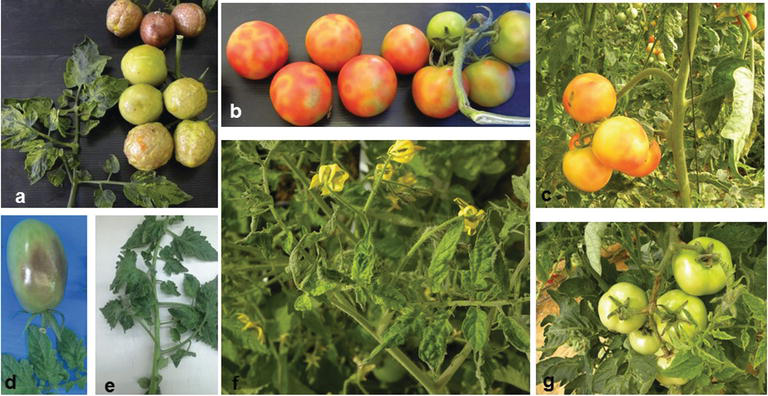
symptoms of tomato brown rugose fruit virus; Wikimedia
The US Department of Agriculture (USDA) is making efforts to strengthen pest prevention by setting up “early warning” systems. As part of this effort, the USDA-funded regional Integrated Pest Management Center in Raleigh, NC, has published a review of existing systems. These are intended to inform national phytosanitary agencies, such as APHIS, about pest species that might pose a threat to natural or agricultural resources. The ultimate goal is providing information that empowers the agency to enact effective preventive measures. [Noar et al. 2021. A full reference to the study is posted at the end of this blog.]
The review looked at six early warning systems’ goals, as well as their procedures for obtaining and disseminating information about potential threats. With one exception, these systems focus on plant pests.
The review did not undertake a rigorous analysis of the various programs’ efficacy.
The article points to the high economic costs associated with invasive plant pests. As a consequence of the huge volume of international trade – which is the principal vector of plant pests’ introduction – national phytosanitary agencies need information on which pests are moving most frequently, and on what commodities, so they can target the most risky pathways. The early warning systems are intended to do this before the pests are introduced to a new region. The several systems use different methodologies and criteria to identify such potential pests. They also are intended to raise awareness about high risk pests and pathways – but for different audiences.
Several of the early warning systems were set up and are managed by national phytosanitary agencies or their regional organizations. These include PestLens and the EPPO and NAPPO alert systems (described below). The article notes that these systems usually do not report diseases for which the causal agent has not been identified, because identification of the pathogen species is typically necessary before regulations can be adopted – and these are regulatory organizations. The authors do not analyze whether this constraint reduces the systems’ ability to provide timely warnings.
PestLens is an early warning system set up by APHIS. It therefore focuses on pests that might become quarantine pests – that is, subject to regulation under terms of the Plant Protection Act. Such pests must pose a defined threat to US agricultural and natural resources. PestLens monitors more than 300 sources, including scientific journals, reports from national phytosanitary agencies, Google alerts, newspapers, e-mail lists and other plant-health-related websites. PensLens staff evaluate the information for relevance to APHIS based on: a) whether the information is new to APHIS; b) whether the plant pest is of quarantine significance to the US; c) its potential economic impact if introduced; d) the likelihood of a pathway for introduction; and e) the likelihood that action by APHIS might be needed to prevent its introduction. Information considered relevant includes indication that a pest is associated with a previously unknown host, has been detected in a new location, or has been eradicated from a country. The information has not necessarily been confirmed by the country (warning included in PestLens notices).
When the PestLens criteria are met, the analysts write a brief article including the new information and any existing background, such as previously known host range and distribution. These articles are compiled into a weekly e-mail notification sent to PPQ employees and thousands of other subscribers. They are also archived on the PestLens website. APHIS staff evaluate the information and make decisions as to whether some regulatory action is appropriate.
I am puzzled because some of the five criteria appear to require a pest risk analysis. Pest risk analysis is a complex task that I do not believe PestLens is equipped to carry out – certainly not as quickly as is required by an alert system.
Update
A review of PestLens (Meissner et al. 2015; full citation at end of the blog) describes the system more fully. It found that during the period October 2012 – October, 2014, 73% of PestLens articles were based on articles in scientific journals; 17% on federal, state, or regional governmental sources; 8% fon news media sources; and 3% on other sources. The principal government pest reports used were from the web sites of IPPC, EPPO & NAPPO.
The majority of PestLens articles reporting new locations, interceptions, and new hosts came from journals. New pest descriptions, new reports of an organism as a pest, and articles on research of interest came exclusively from journals. Articles on pest detections, outbreaks, and eradications came largely from government sources.
Meissner et al. analyzed APHIS’ response to PestLens notices. They said that certain APHIS actions, such as the implementation of official control programs, initiation of research activities, or the formation of specliazed task groups were not captured in this analysis. They found that over a ten month period in 2014, APHIS used the PestLens notices to update its pest databases 350 times; updated pest datasheets or pest profiles on the PPQ website 16 times; evaluated a pest’s regulatory status (e.g., prepared a risk assessment) 11 times; and revised its regulations 4 times.
Meissner et al. consider that it is vital to maintain up-to-date databases, especially regarding pest host and distribution ranges. Another benefit from the PestLens system is a set of metrics to improve accountability, for example identifying duplication of efforts and providing permanent records of when actions are taken (or declined) and the rationale.
The European and Mediterranean Plant Protection Organization (EPPO) has 52 member countries stretching from Russia and Uzbekistan to Spain, Algeria, and Morocco, and including their off-shore islands. EPPO maintains a pest Alert List of species chosen by the EPPO Secretariat based on the scientific literature and suggestions by member’s phytosanitary agencies. Factors leading to a listing include newly described pests, reports of spread to new geographical locations, and reports of major outbreaks in the EPPO region. Each listed pest has a fact sheet which contains known hosts and distribution, the type of damage, the mode of dissemination, and potential pathways for spread. Some pests are selected for pest risk analysis (PRA). Once the PRA is completed, the pest might be placed on the EPPO A1/A2 lists, which are species recommended for regulation by the member states. Pests not selected for PRA stay on the EPPO Alert List temporarily, typically three years, then their information is archived.
The EPPO Secretariat also publishes a monthly Reporting Service newsletter, which details phytosanitary events that might threaten the EPPO region, including both officially designated quarantine pests as well as emerging ones. Information includes new hosts, new geographical locations, new pests, and new identification and detection methods.
The North American Plant Protection Organization (NAPPO) comprises Canada, the United States and Mexico. It has a web-based alert system that provides official pest reports from member countries. NAPPO also puts out Emerging Pest Alerts that contain news about plant pests and pathogens not established in this region. Sources are public, including scientific journals, newspapers, records from port interceptions, and domestic plant pest surveys. Generally NAPPO does not confirm its reports with the corresponding country’s phytosanitary agency.
4. IPPC Pest Reports
The International Plant Protection Convention (IPPC) has been ratified by more than 180 countries. The member countries’ phytosanitary agencies submit official pest reports concerning the occurrence, outbreak, spread, or eradication of organisms that are quarantine pests in that country or for neighboring countries and trading partners. These pest reports are posted on the IPPC website.
The International Plant Sentinel Network is a collaboration between the National Plant Diagnostic Network (NPDN) and the American Public Gardens Association. It is funded through cooperative agreements with APHIS under Section 10007 of the Farm Bill (Now Plant Protection Act §7721.) Launched in 2010, it has now grown to include more than 300 gardens across North America (information from the website).
The underlying premise is based on biogeography: plant-associated insects, fungi, and other pathogens introduced to plants that did not co-evolve with them (naïve plants) might cause unexpected damage. Since arboreta and botanical gardens cultivate many plant taxa outside their native range, they present an opportunity to observe new pest-host associations and the level of damage caused. Pests attacking native plants in North American botanical gardens might constitute “early detection” of a pest already in the country rather than a warning before the pest is introduced. Still, early detection is valuable.
The Program for Monitoring Emerging Diseases (ProMED) is a program of the International Society for Infectious Diseases (ISID). ProMED was launched in 1994 as an Internet service to identify unusual health events related to emerging and re-emerging infectious diseases and toxins affecting humans, animals and plants. It focuses on outbreaks in new geographic regions, newly described diseases, and diseases for which the causal agent is unknown. By its own estimation, ProMED is the largest publicly-available system conducting global reporting of infectious diseases outbreaks (information from the website). ProMED maintains several e-mail lists that disseminate information pertaining to disease outbreaks; subscribers can choose among lists to fit their areas of interest and their geographic region. ProMED has a much broader scope than the other early warning systems. Also, ituses informal and nontraditional sources, including local media, on-the-ground experts, and professional networks.
Stakeholders can access much of the information on these websites and use them to report findings of new alien species to phytosanitary agencies.
Gaps
The review of early warning systems has disappointing gaps. First, I am puzzled that the authors looked only at the U.S.-based sentinel gardens effort and did not consider a parallel international network. The International Plant Sentinel Network was established in 2013. It is coordinated by the Botanical Garden Conservation Initiative, headquartered at Kew Gardens, United Kingdom. At present, 67 gardens and arboreta are participating; they are located in China, Australia and New Zealand, South Africa, South America, and Europe (including the Caucuses Mountains). After all, it is this international network that could inform APHIS about potential pests when they observe attacks on North American plants growing in their facilities. I confess that it is not clear to me whether participating gardens and arboreta would take the initiative to inform APHIS of pest attacks on North American plant species. It might be that APHIS would need to send inquiries to participants, probably focused on named pests. If these caveats are true, the network might not be a fully functional “early warning” body.
Update
Indeed, the USFS International Programs office is cooperating with the International Plant Sentinel Network to have some botanic gardens around the world monitor several North American species planted at their locations for disease and pest problems. In June 2021 the USFS sought suggestions from contacts on which North American tree species should be monitored. Candidates could be tree species of high economic, ecological, or urban/landscape value. The candidate list would probably be limited to 10 species. They should represent a diverse range of conifers and hardwoods.
Second, the articles authors make no mention of one of the principal sources of information on plant pests – CABI (Center for Agriculture and Bioscience International). CABI is a global source of information on organisms’ distribution. It is particularly strong in Commonwealth countries – which are important sources of plant material imported into the U.S.
Third, they apparently did not assess phytosanitary alert systems in place or anticipated in Australia, New Zealand, and South Africa. This is a significant gap since these countries are leaders on phytosanitary issues. They are also potential sources of damaging pests.
Most disappointing is the lack of analysis of programs’ efficacy and weaknesses. The only step in this direction is contrasting ProMED’s willingness to report diseases for which the causal agent is unknown. PestLens, EPPO, and NAPPO refuse to do this. We desperately need an analysis of the extent to which this narrow concept of the task limits the ability of these systems to provide early warnings.
At least several of the networks, including PestLens and NAPPO, do not limit themselves to information that has been confirmed by countries – which might be reluctant to admit the presence of a damaging organism on their turf.
I suggest that it would have been particularly instructive to analyze the reasons why Australia’s early warning efforts failed to detect introduction of the myrtle rust pathogen sufficiently early to facilitate eradication.
This review did discuss how several of the networks tracked the global movement of the Tomato brown rugose fruit virus (ToBRFV). The virus was first detected in Jordan in 2015; this was reported by PestLens in 2016. PestLens reported the virus had spread to Israel 2017. The NAPPO system then reported the virus in Mexico in 2018. The virus was detected in the United States in 2018, although difficulties in taking official samples and diagnosing the virus probably delayed awareness of this outbreak. APHIS restricted imports of tomato and pepper seed, transplants and fruits from countries where the virus was known to be present in November, 2019. Still, APHIS acted after the virus had been detected in the country. ToBRFV has continued to spread; it is now found in Asia, Europe, the Middle East, and northern Africa. I am not completely convinced that this episode illustrates successful utilization of early warning networks. Did the apparently tardy action by APHIS arise from overconfidence that the virus would be limited to the Middle East? Or is it attributable to rules which limit agency actions until official confirmation of the detection? Another actor might have been delay in proving that the virus was being spread by the international seed trade; international phytosanitary rules require agencies to define the introductory pathway before regulating.
I hope other scientists will undertake a more comprehensive analysis of early warning systems. We need our phytosanitary systems to be made as effective as possible. Further evaluation of current efforts would provide valuable insight.
[A separate article reporting on the international sentinel gardens network from a British perspective is Marfleet, K. and S. Sharrock. 2020. The International Plant Sentinel Network: an update on phase 2. The International Journal of Botanic Garden Horticulture.]
SOURCES
Meissner, H., J. Fritz, L. Kohl, H. Moylett, J. Moan, S. Emerine, and A. Kaye. 2015. PestLens: An early-warning system supporting U.S. safeguarding against exotic plant pests. Bull. OEPP 45: 304-310
Noar, R.D, C.J. Jahant-Miller, S. Emerine, and R. Hallberg. 2021. Early Warning Systems as a Component of IPM to Prevent the Intro of Exotic Pests. Journal of IPM, (2021) 12(1): 16; 1–7 doi: 10.1093/jipm/pmab011
Posted by Faith Campbell
We welcome comments that supplement or correct factual information, suggest new approaches, or promote thoughtful consideration. We post comments that disagree with us — but not those we judge to be not civil or inflammatory.
For a detailed discussion of the policies and practices that have allowed these pests to enter and spread – and that do not promote effective restoration strategies – review the Fading Forests report at http://treeimprovement.utk.edu/FadingForests.htm
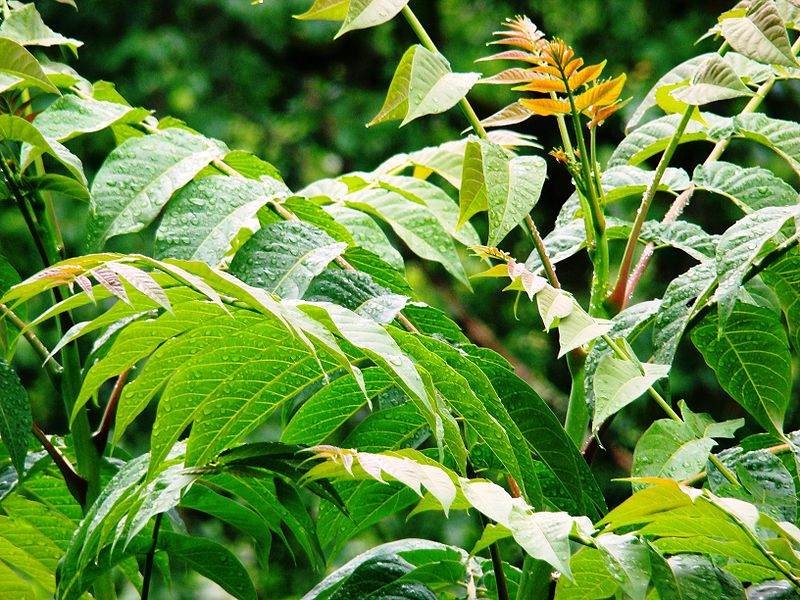
Ailanthus – one of the invasive species shared by South Africa and the U.S.
A few years ago, I posted a blog in which I pointed to a report on South Africa’s response to bioinvasion as a model for the U.S. and other countries. South Africa has published its second report. This report outlines the country’s status as of December 2019 and trends since the first report (i.e. since December 2016). (I describe the report’s findings on South Africa’s invasive species situation in a companion blog.) Again, I find it a good model of how a country should report its invasive species status, efforts, and challenges. In comparison, many U.S. efforts comes up short.
U.S. Reports Need to Be More Comprehensive
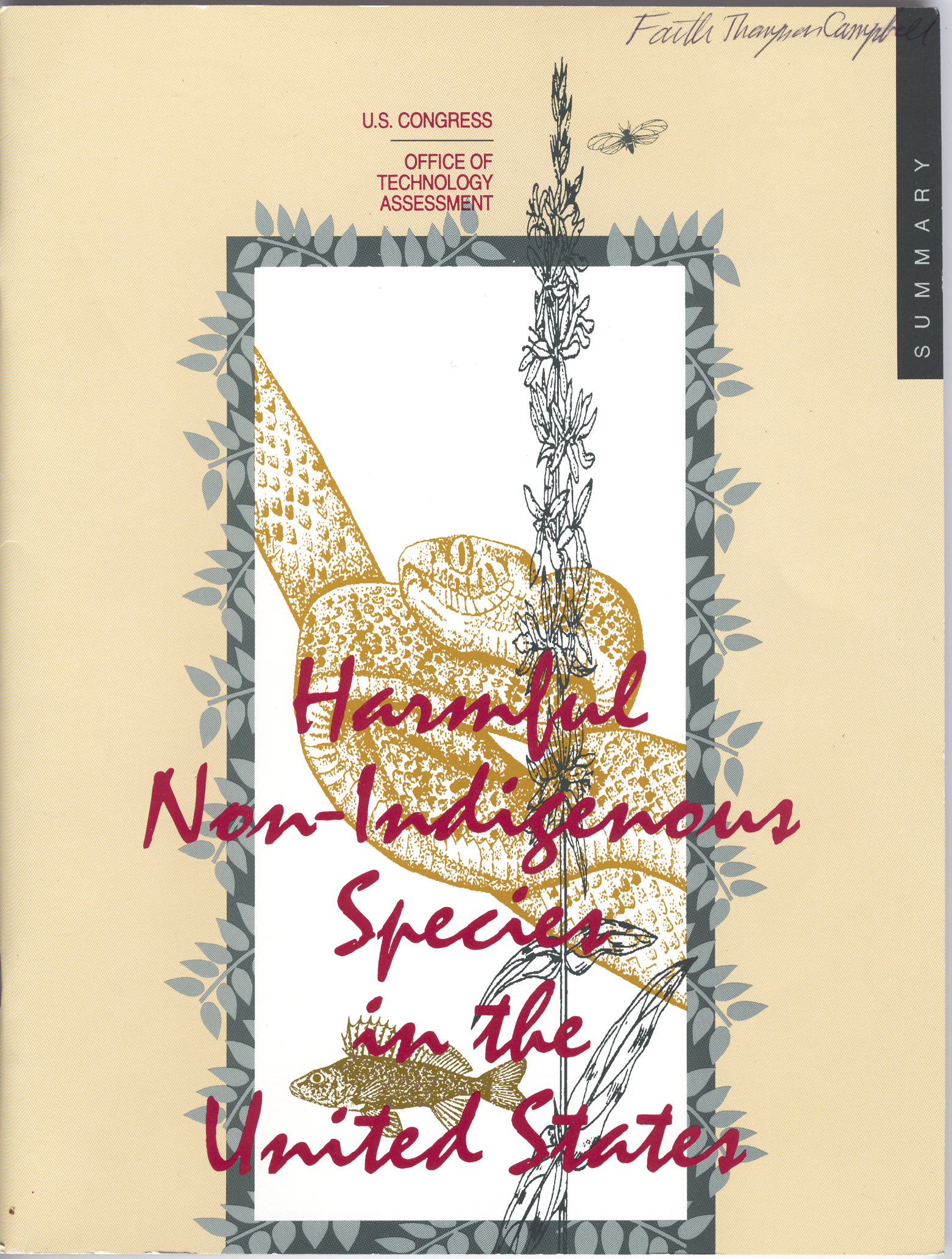
The South African report provides a national perspective on all taxa. Various United States agencies have attempted something similar a few times. The report issued by the Office of Technology Assessment in 1993 summarized knowledge of introduced species and evaluated then-current management programs.
The 2018 report by the U.S. Geological Service focused on data: the authors concluded that 11,344 species had been introduced and described the situation in three regions – the “lower 48” states, Alaska, and Hawai`i. However, the USGS did not evaluate programs and policies. The new USDA Forest Service report (Poland et al. 2021) describes taxa and impacts of invasive species in forest and grassland biomes, including associated aquatic systems. Again, it does not evaluate the efficacy of programs and policies.
The biennial national reports required by the Executive Order establishing the National Invasive Species Council (NISC) are most similar to the South African ones in intent. However, none has been comprehensive. For example, the most recent, issued in 2018, strives to raise concern by stating that invasive species effect a wide range of ecosystem services that underpin human well-being and economic growth. Some emphasis is given to damage to infrastructure. The report then sets out priority actions in six areas: leadership and prioritization, coordination, raising awareness, removing barriers, assessing federal capacities, and fostering innovation. NISC also issued a report in 2016 – this one focused on improving early detection and rapid response. NISC posted a useful innovation – a “report card” updating progress on priority actions — in October 2018. It listed whether actions had been completed, were in progress, or were no longer applicable. However, the “report card” gave no explanation of the status of various actions; the most notable omissions concerned the actions dismissed as “not applicable”. Worse, no report cards have been posted since 2018. I doubt if those or any more comprehensive reports will be forthcoming. This reflects the increasing marginalization of NISC. The Council has never had sufficient power to coordinate agencies’ actions, and now barely survives.
U.S. Reports Need to Be More Candid
The authors of the South African report made an impressive commitment to honest evaluation of the country’s gaps, continuing problems, progress, and strengths. As in the first report, they are willing to note shortcomings, even of programs that enjoy broad political support (e.g., the Working for Water program).
It is not clear whether decision-makers have acted — or will act — on the report’s findings. That is true in many countries, including the United States. However, that is separate whether decision-makers have an honest appraisal on which to base action.
Assessment of South Africa’s Invasive Species Programs
Here is a summary of what the authors say about South Africa’s invasive species program. I want to state clearly that my intention is not to criticize South Africa’s efforts. No country has a perfect program, and South Africa faces many challenges. These have been exacerbated by COVD-19.
The report identifies the areas listed below as needing change or improvement.
1) Absence of a comprehensive policy on bioinvasion. Such a policy would provide a vision for what South Africa aspires to achieve, clarify the government’s position, guide decision-makers, and provide a basis for coordinating programs by all affected parties (e.g., including conservation and phytosanitary agencies).
2) As in the first report, the authors call for monitoring program outcomes (results) rather than inputs (money, staffing, etc.) or outputs (e.g., acres treated). The authors also say data must be available for scrutiny. In those cases when data are adequate for assessing programs’ efficacy, they indicate that the control effort is largely ineffective.
3) Inadequate data in several areas. The report notes progress in developing and applying transparent and science-based criteria to species categorization as invasive (as distinct from relying on expert opinion). However, this change is taking time to implement, and sometimes results in species receiving a different rating. [I agree with the report that data gaps undermine understanding of the extent and impacts of bioinvasion, domestic pathways of spread, justification of expenditures, assessment of various programs’ efficacy (individually or overall), priority setting, and identifying changes needed to overcome programs’ weaknesses. However, I think filling these data gaps might demand time and resources that could better be utilized to respond to invasions – even when those invasions are not fully understood.]
4) Funding of bioinvasion programs by the National Department of Forestry, Fisheries, and the Environment has been fairly constant over 2012–2019, but this is a decline in real terms. The figure of 1 billion ZAR does not include spending by other government departments, national and provincial conservation bodies, municipalities, non-governmental organizations, and the private sector. Authors of the report expect funding to decrease in the future because of competing needs.
While at least 237 invasive species are under some management (see Table 5.1), funding is heavily skewed – 45% of funding goes to management of one invasive plant (black wattle); 72% to management of 10 species.
5) Need for policies to address the threat emerging from rising trade with other African countries, especially considering the probable adoption of the proposed African Continental Free Trade Area. Under this agreement, imported goods will only be inspected for alien species at the first port of entry, and most African countries have limited inspection capacity. [European pathologists Brasier, Jung, and others have noted the same issue arising in Europe, where imported plants move freely around the European Union once approved for entry by one member state.]
The authors of the South African report say programs’ efficacy would be considerably improved if species and sites were prioritized, and species-specific management plans developed. They warn that, in the absence of planning and prioritization, there is a risk that funding could be diluted by targeting too many species, leading to ineffective control and a concomitant increase in impacts.
In South Africa, regulations, permits, and other measures aimed at regulating legal imports of listed species are increasingly effective. However, there is still insufficient capacity to prevent accidental or intentional illegal introductions of alien species. There is also more enforcement of regulations requiring landowners to control invasive species. Six criminal cases have been filed and – as of December 2019, one conviction (guilty plea) obtained. However, the data do not allow an assessment of the overall level of compliance.
The report found little discernable progress on the proportion of pathways that have formally approved management plans. Management is either absent or ineffective for 61% of pathways. There has been no action to manage the ballast water pathway. On the other hand, in some cases, other laws focus explicitly on pathways, e.g., agricultural produce is regulated under the Agricultural Pests Act of 1983.
During the period December 2016 – December 2019, the Plant Inspection Services tested more than 12,000 plant import samples for quarantine pests and made 62 interceptions. The report calls for more detailed information from the various government departments responsible for managing particular pathways (e.g., the phytosanitary service), and for an assessments of the quality of their interventions.
The number of non-native taxa with some form of management has grown by 40% since December 2016 – although – as I have already noted — spending is highly skewed to a few plant species. The number and extent of site-specific management plans has also increased, apparently largely due to a few large-scale plans developed by private landowners. However, few of these plans have been formally approved by some unspecified overseer.
Citing the strengths and weaknesses described above, the current (second) report downgraded its assessment of governmental programs from “substantial” to “partial”.
Comparison to U.S.
How does the United States measure up on the elements that need change or improvement? I know of no U.S. government report that is as blunt in assessing the efficacy of our programs –individually or as a whole.
Nevertheless, each of the five weaknesses identified for South Africa also exist in the United States:
Re: lack of a comprehensive policy, I think the U.S. also suffers this absence. This is regrettable since the National Invasive Species Council (NISC) was set up in 1999.
Re: monitoring outcomes to assess programs’ efficacy, I think U.S. agencies do seem to be more focused on collecting data on programs’ results – see the Forest Service’ budget justification. However, I think too often the data collected focus on inputs and outputs.
Re: data gaps, I think all countries – including the U.S. — lack data on important aspects of bioinvasion. I differ from the South African report, however, in arguing for funding research aimed at developing responses rather than monitoring to clarify the extent of a specific invasive species. Information that does not lead to action seems to me to be a luxury given the low level of funding.
Re: funding, I find that, despite the existence of NISC, it remains difficult to get an overall picture of U.S federal funding of invasive species programs. Indeed, the cross-cut budget was dropped in 2018 at the Administration’s request. I expect all agencies are under-funded; I have often said so as regards key USDA programs. As in South Africa, funding is skewed to a few species that I think should be lower in priority (e.g., gypsy moth).
Re: upgrading invasive species programs to counter free-trade policies, I think U.S. trade policies place too high a priority on promoting agricultural exports to the detriment of efforts to prevent forest pest introductions. This imbalance might be present with regard to other taxa and pathways. See Fading Forests II here.
South African and U.S. agencies also face the same over-arching issues. For example, the U.S. priority-setting process seems to be a “black box.” Several USFS scientists (Potter et al. 2019) spent considerable effort to develop a set of criteria for ranking action on tree species that are hosts of damaging introduced pests. Yet there is no evidence that this laudable project influenced priorities for USFS funding.
SOURCES
Poland, T.M., P. Patel-Weynand, D.M Finch, C.F. Miniat, D.C. Hayes, V.M Lopez, editors. 2021. Invasive Species in Forests and Rangelands of the United States. A Comprehensive Science Synthesis for the US Forest Sector. Springer
Potter, K.M., Escanferla, M.E., Jetton, R.M., Man, G., Crane, B.S. 2019. Prioritizing the conservation needs of United States tree species: Evaluating vulnerability to forest P&P threats, Global Ecology and Conservation (2019), doi: https://doi.org/10.1016/j.gecco.2019.e00622.
SANBI and CIB 2020. The status of bioinvasions and their management in South Africa in 2019. pp.71. South African National BD Institute, Kirstenbosch and DSI-NRF Centre of Excellence for Invasion Biology, Stellenbosch. http://dx.doi.org/10.5281/zenodo.3947613
Posted by Faith Campbell
We welcome comments that supplement or correct factual information, suggest new approaches, or promote thoughtful consideration. We post comments that disagree with us — but not those we judge to be not civil or inflammatory.
For a detailed discussion of the policies and practices that have allowed these pests to enter and spread – and that do not promote effective restoration strategies – review the Fading Forests report at http://treeimprovement.utk.edu/FadingForests.htm
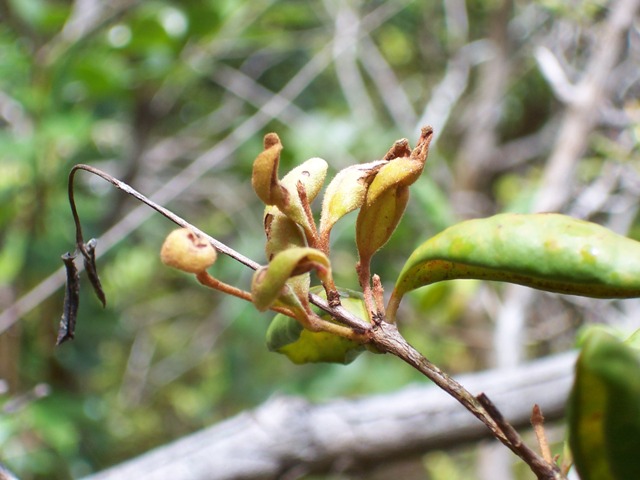
Eugenia koolauensis (endangered) damaged by ohia rust; photo courtesy of the U.S. Army Natural Resources Program, Oahu
I have written often about failings of the international phytosanitary systems – starting with my report Fading Forests II in 2004, and continuing in many blogs. As the International Year of Plant Health comes to an end, I do so again. I begin with a key recommendation.
Australia’s experience dealing with myrtle rust (Austropuccina psidii) demonstrates the need to integrate agencies responsible for conservation of natural ecosystems into the determination and implementation of phytosanitary policy.
These environmental agencies should be active participants in setting up surveillance and diagnostics protocols and on-the-ground surveillance, and should be directly involved in emergency response. Federal agricultural agencies have technical expertise in biosecurity but lack expertise in key elements of environmental management. In the Australian context, this recommendation is made by several studies cited by Carnegie and Pegg (2018) – full citation at the end of this blog. I strongly endorse the recommendation for the United States. In the U.S., the appropriate agencies would include USDA’s Forest Service and the Department of Interior’s Fish and Wildlife Service.
While the USDA Forest Service is (apparently) more involved in US phytosanitary efforts than its Australian counterpart, its voice in setting USDA phytosanitary policy is limited to the most narrow details, e.g., treatment protocols for wood packaging.
Carnegie and Pegg note a second common problem: the ongoing decline in forest entomology and pathology capacity in government agencies. This decline has long been decried by U.S. natural resource experts as depriving agencies of needed expertise – but we have not yet managed to raise agency budgets so as to reverse it.
The forests of Australia, New Zealand, nearby islands, and South Africa formed during the period of the supercontinent Gondwana – 300 million years ago. While the threat to these unique forests from non-native pests is severe, so far it arises from a limited number of organisms. These are Phytophthora cinnamomi, Austropuccinia psidii, polyphagous shot hole borer and Fusarium fungus (in South Africa), and – in the future, laurel wilt disease. All these organisms threaten multiple hosts. In contrast, the threat to America’s forests comes from more than 100 highly damaging non-native insects, pathogens, and nematodes already here. Some threaten multiple hosts. Plus there is the constant risk of new introductions. Surely our federal conservation agencies have important resources to defend and expertise to contribute to the effort.
Flaws in the System
The international phytosanitary rules adopted by both the World Trade Organization’s Agreement on the Application of Sanitary and Phytosanitary Measures [WTO SPS Agreement] and the International Plant Protection Convention [IPPC] are fundamentally flawed. That is, they require regulatory officials to be unrealistically certain about an organism’s “pest” potential before regulating it. Yet uncertainty is likely to be at its highest at two critical times: before invasion or at its earliest stage. These times are precisely when phytosanitary actions are likely to be most effective.
The effect of this demand for certainty is exacerbated by decision-makers’ caution when confronted with the potential that their action might harm an economic interest. The vast majority won’t impose a regulation until they are sure that the organism under consideration poses a major threat to plant health.
Yet at the same time, most phytosanitary officials rarely carry out the scientific studies that might answer such questions about the risk.
For example, USDA APHIS has created its own Catch 22. It has not funded laboratory tests to get preliminary information on how vulnerable North American tree genera are to the 38 new Phytophthora species detected in Southeast Asia [see earlier blog]. European scientists are doing this testing; it is unclear whether their work is supported by European governments. American scientists could build on the Europeans’ work since our continents share many plant genera – but since vulnerability might vary at the species level, we still must assess North American species separately. At the same time as APHIS is not sponsoring such tests, it refuses to propose acting under its NAPPRA authority link to temporarily prohibit imports of Asian hosts of the Phytophthoras because it lacks information demonstrating the risk they pose to North American plants!
Sometimes, other agencies step in to fill the gap. Thus, the USDA Forest Service funded research to demonstrate that strains of the ‘ōhi‘a rust pathogen not yet introduced to the U.S. posed a risk to native plants in Hawai`i. (See the linked description and additional information later in this blog.) The Forest Service has also funded “sentinel gardens” – plantings inside the U.S. and abroad that are closely monitored to detect new pests.
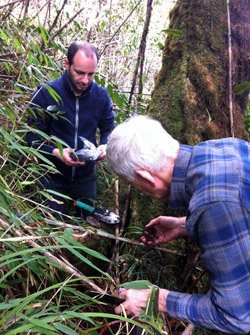
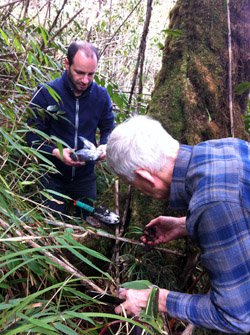
British forest pathologist Clive Brasier (white hair) searching for Phytophthora species in Vietnam
2) myrtle (or ohia or eucalyptus) rustAustropuccinia psidii; and
3) the ophiostomatoid laurel wilt fungusRaffaelealauricola.
These organisms present a variety of challenges to various countries. Individually and together, these pathogens threaten to transforms forest floras around the world.
Spread: the first two are spread internationally by movement of plants for planting but also spread locally by rain or wind. The third, laurel wilt fungus, arrived in the U.S. when its insect vector, the redbay ambrosia beetle Xyleborus glabratus, hitched a ride in solid wood packaging material.
How countries prepared for pathogen invasion – not always successfully
Numerous plant pathogens in the Phytophthora genus have long had the attention of phytosanitary officials. However, the species that causes sudden oak death (P. ramorum) was unknown when it was introduced to North America and Europe in the late 1980s or early 1990s. The established phytosanitary measures on two continents failed to detect and prevent its introduction.
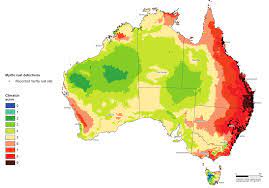
areas of Australia vulnerable to myrtle rust; Australian Department of Agriculture and Water Resources
The myrtle rust pathogen was already recognized by phytosanitary officials in Australia, New Zealand, and New Caledonia as a severe potential threat, especially to Eucalyptus in both natural forests and plantations. Its appearance in Hawai`i in 2005 raised the level of concern. However, that awareness neither prevented its entry to Australia (probably, although not certainly, on imported plants or foliage) nor prompted its detection early enough for eradication. New Zealand and New Caledonia became infested by wind transport of the pathogen from Australia. [For a thorough discussion of the Australia’s extensive preparations for possible introduction of this pathogen, see Carnegie and Pegg 2018, full citation at the end of this blog.]
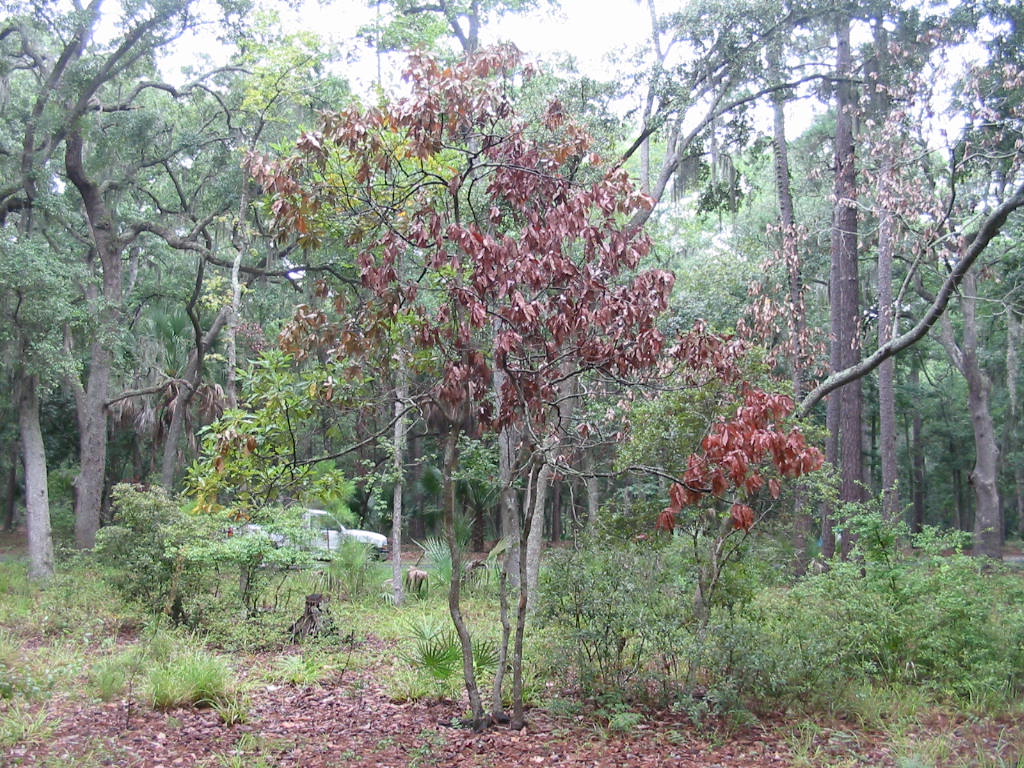
The laurel wilt fungus was unknown before it was detected in Georgia, U.S.A. Phytosanitary officials were certainly aware of the pest risk associated with wood packaging material (see Fading Forests II, chapter 3) but at the time the invasion was detected – 2003 – U.S. regulations required that the wood be debarked only, not treated to kill pests.
redbay tree killed by laurel wilt in Georgia
Pathogens are more difficult to detect and manage than insects. They also get less attention. I can think of three possible reasons: 1) Usually we can’t see a pathogen – we literally can’t put a face on the “enemy”. 2) Disease intensity can vary depending on ecological factors, so it is more difficult to understand than an insect feeding on a plant. 3) In recent decades, many invading insects have been linked to a singlepathway of introduction — wood packaging — while pathogens enter through association with a myriad of imports, especially a variety of imported plants. A single pathway is a concept that is easier to understand and address. Because pathogens get little attention, it is more difficult to obtain data quantifying their risks.
The rapid spread and high mortality of laurel wilt in one host – redbay trees (Persea borbonia) – and threat to a second—sassafras (Sassafras albidum) – have alerted scientists to this threat. The pathogen apparently threatens trees and shrubs in the Lauraceae family that are native to regions other than Southeast Asia. These areas include the tropical Americas, Australia, Madagascar, and islands in the eastern Atlantic (Azores, Canary Islands, and Madeira). I understand that Australian phytosanitary officials are aware of this risk, but I don’t know about officials in the other regions. For example, laurel wilt is not listed among the pathogens thought to pose the greatest risk in Europe, i.e., the A1 list of the European and Mediterranean Plant Protection Organization (EPPO)
Why do some organisms suddenly disperse widely? Who is figuring out why?
The myrtle rust pathogen Austropuccinia psidii experienced a burst of introductions after 2000: it was detected in Hawai`i in 2005, Japan in 2009, Australia in 2010, China in 2011, New Caledonia and South Africa in 2013, Indonesia and Singapore in 2016, and New Zealand in 2017. It is believed to have been carried to Hawai`i on cut vegetation for the floral trade; to New Caledonia and New Zealand by wind from Australia across the Tasman Sea. The introduction pathway to Australia has never been determined, although it first was detected in a nursery. I don’t have information on how it was introduced to Japan or China. Has anyone tried to figure out what triggered this expansion? Was it some fad in horticulture or floriculture? Would it not be useful to learn what happened so we can try to prevent a repetition?
Similar sudden dispersals occurred during roughly the same period for Phytophthora ramorum and the erythrina gall wasp (Quadrastichus erythrinae). The latter spread across the Indian and Pacific oceans within a dozen years of its discovery. Again, was there some fad that prompted international trade in host material? Or did the insect suddenly start utilizing transport facilities such as aircraft interiors or holds? Has anyone tried to figure this out? I doubt anyone is even searching for and recording the presence of the gall wasp now that it is so widespread.
Is the fungal genus Ceratocystis experiencing a similar dispersal burst now? Australian authorities (Carnegie and Pegg 2018) have noted Ceratocystis wilts threatening Acacia and Eucalyptus, as well as Metrosideros.
Efforts often wane at the management and restoration stages.
In the cases of all three pathogens, governments have reduced their efforts once they determined that they could not eradicate the pest.
In North America, USDA APHIS regulates movement of nursery stock with the goal of preventing spread of P. ramorum to the East. The agency has reduced the stringency of its regulations several times over the 18 years it has been regulated. These changes have been made at the urging of the nursery industry in California and Oregon, which are where the pathogen is present. Two years ago, a major regulatory failure resulted in infected plants being shipped to more than 100 retailers in more than a dozen states. This had huge costs to dozens, if not hundreds, of nurseries and state regulatory agencies. Yet APHIS has neither published a straightforward and complete analysis of what went wrong, nor promised to correct any weaknesses revealed by such an analysis. Another apparent regulatory failure is the appearance of the EU1 strain of P. ramorum in the country; this seems to indicate that introductions to North America have occurred more recently than the initial introduction in the late 1980s or early 1990s.
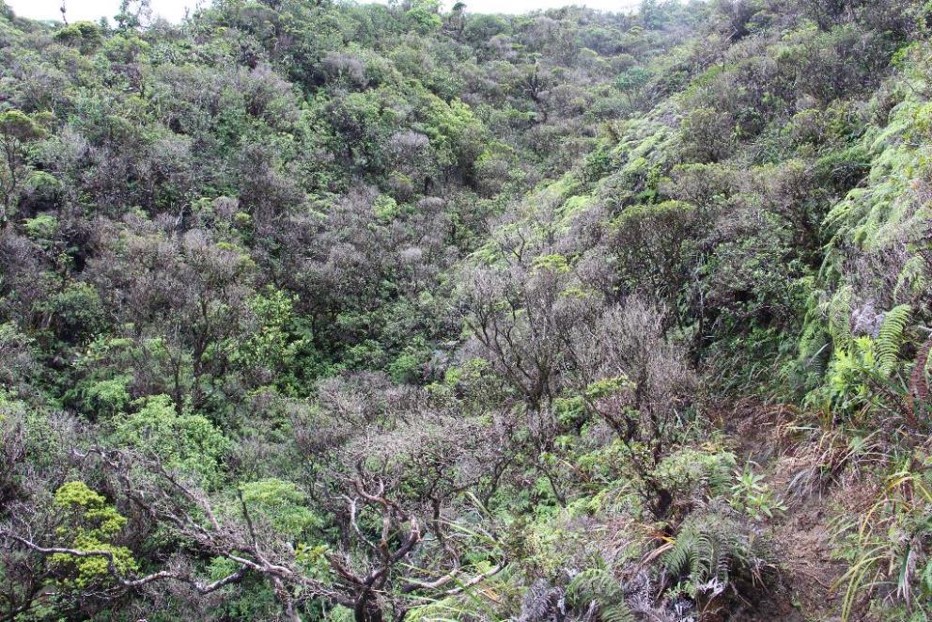
In Hawai`i, concern about the potential impact of myrtle rust on the Islands’ dominant native tree species, ‘ōhi‘a (Metrosideros polymorpha), spurred action. Although myrtle rust spread to all the islands within months, the state imposed an emergency rule prohibiting importation to the state of Myrtaceae plants or cut foliage in 2008. This action was relatively rapid, although it was three years after detection of the pathogen. The rule aimed to prevent introduction of possibly more virulent strains. However, it expired in 2009 (emergency rules are effective for only one year).
Concerned about the possible impacts of various strains, the USDA Forest Service sponsored studies in Brazil. Based on their findings, Hawai`i adopted a new permanent rule in 2020. It prohibited importation of plants or foliage of all Myrtaceae species.
Also, APHIS proposed in November 2019 a federal regulation to support the state’s action through its NAPPRA authority. However, it took seven years to resolve regulators’ concerns about the possible presence and virulence of various strains. During this time importation of high-risk materials was not prohibited. As of this writing, it has been 18 months since APHIS proposed the NAPPRA listing, so federal rules still allow imports of high-risk material.
a surprisingly bad outbreak of rust on ‘ōhi‘a in 2016; cause unclear but possibly related to extremely wet weather; photo by J.B. Friday
Meanwhile, the focus of on-the-ground conservation and restoration efforts in Hawai`i has shifted to different pathogens, those causing rapid ‘ōhi‘a death dontmovefirwood.org
In Australia and New Zealand, federal officials determined within months of detection that myrtle rust was too widespread to be eradicated. They now focus on trying to prevent introduction of additional strains. Within the country, Australia prohibits movement of Myrtaceae (hosts of myrtle rust) to the two states so far free of the pathogen (South and West Australia). However, some scientists believe enforcement of these regulations is too lax. In New Zealand, nurseries are reported to be very careful to produce plants free of the pathogen. Is this sufficient?
The Australian government also funds seed collection and other ex situ conservation efforts. But little funding has been available even for impact studies. In Australia, funding from both state (New South Wales) and federal authorities became available only after designation of three plant species as endangered. The federal government also has not designated myrtle rust as a “key threatening process,” which would have opened access to significant funds and possibly prompted more vigorous regulatory efforts. The rust is included as part of the process “novel biota threat to biodiversity”, but scientists and activists consider this to be insufficient. A conservation strategy https://www.anpc.asn.au/myrtle-rust/ was developed by a coalition of non-governmental organizations and state experts. While never adopted by the federal government, this plan became the basis for a state strategy adopted by New South Wales in 2018 – eight years after the pathogen was first detected. For a thorough discussion of weaknesses in the Australian phytosanitary system’s response to the myrtle rust introduction, see Carnegie and Pegg 2018, full citation at the end of this blog.
In June 2021, the Australian Center for Invasive Species Solutions (CISS) and the office of the Chief Environmental Biosecurity Officer (CEBO) released a revised National Environment and Community Biosecurity RD&E Strategy. The sponsors sought feedback on the strategy from biosecurity and biodiversity researchers, investors, practitioners, the community, government and industry. Comments are due by 16 July 2021. The strategy is posted at https://haveyoursay.awe.gov.au/necbrdes
In New Zealand, the science plan for myrtle rust was described as advisory. The little funding available precludes resistance breeding and seed collection. There is not even a national program to track the rust’s spread.
Difficulties in Assessing Impact
Myrtle rust affects largely new growth of host plants, including flowers and seedlings and root sprouts. Thus, in many – but not all – host species the threat is primarily to reproduction rather than immediate mortality of mature plants. This delay in impacts complicates assessments of the threat posed by the rust.
NGO Action in Australia
After several years’ effort to build a broader coalition to support implementation of the NGO Action Plan, the Plant Biosecurity Science Foundation sponsored an international workshop in March 2021. The goal was to increase understanding of the rust and its impact and who is doing what. Time was devoted to discussions on how coordinate efforts to both raise awareness and spur government action. State and federal officials played prominent roles in both preparation of the Action Plan and the workshop – and did not shy away from criticizing Australia’s handling of the threat. The descriptions of myrtle rust’s impacts presented at the conference were much more dire than those of a few years ago. Information on impacts has accumulated slowly due to the few scientists doing the work. See https://www.apbsf.org.au/myrtle-rust/
Greater alarm about this pathogen is warranted.
Australia – Evidence of Disaster
According to speakers at the workshop, myrtle rust is causing an expanding disaster in Australia, where the flora is dominated by Myrtaceae. As of spring 2021, myrtle rust is widespread and well established in several native ecosystems in the eastern mainland states of New South Wales and Queensland and part of the Northern Territory. The disease has been detected in Victoria and Tasmania but impact is limited to urban gardens. It has not yet been detected in South or Western Australia. At this time, 382 of Australia’s Myrtaceae species – in 57 genera – are known to host the rust. Three species have been officially listed as critically endangered. Rhodamnia rubescens and Rhodomyrtus psidioides are formerly widespread understory trees in rainforests. Lenwebbia sp. is narrowly endemic, growing in stunted cloud forests on clifftops in a single mountain range. However, experts predict extinction of 16 rainforest species within a generation. (For comparison, only 12 plant species in Australia have become extinct since arrival of the first Europeans 200 years ago.) Several speakers at the conference stressed the speed at which rust is putting plant taxa in peril. Wetlands dominated by Melaleuca are apparently under immediate threat.
[For a thorough discussion of the rust’s impact on plant communities, see Carnegie and Pegg 2018, full citation at the end of this blog.]
New Zealand The vulnerability of each of the 27 – 30 native plant species remains unclear three years after the rust’s introduction.
New Caledonia The highly endemic flora of this small island group appears to be at great risk.
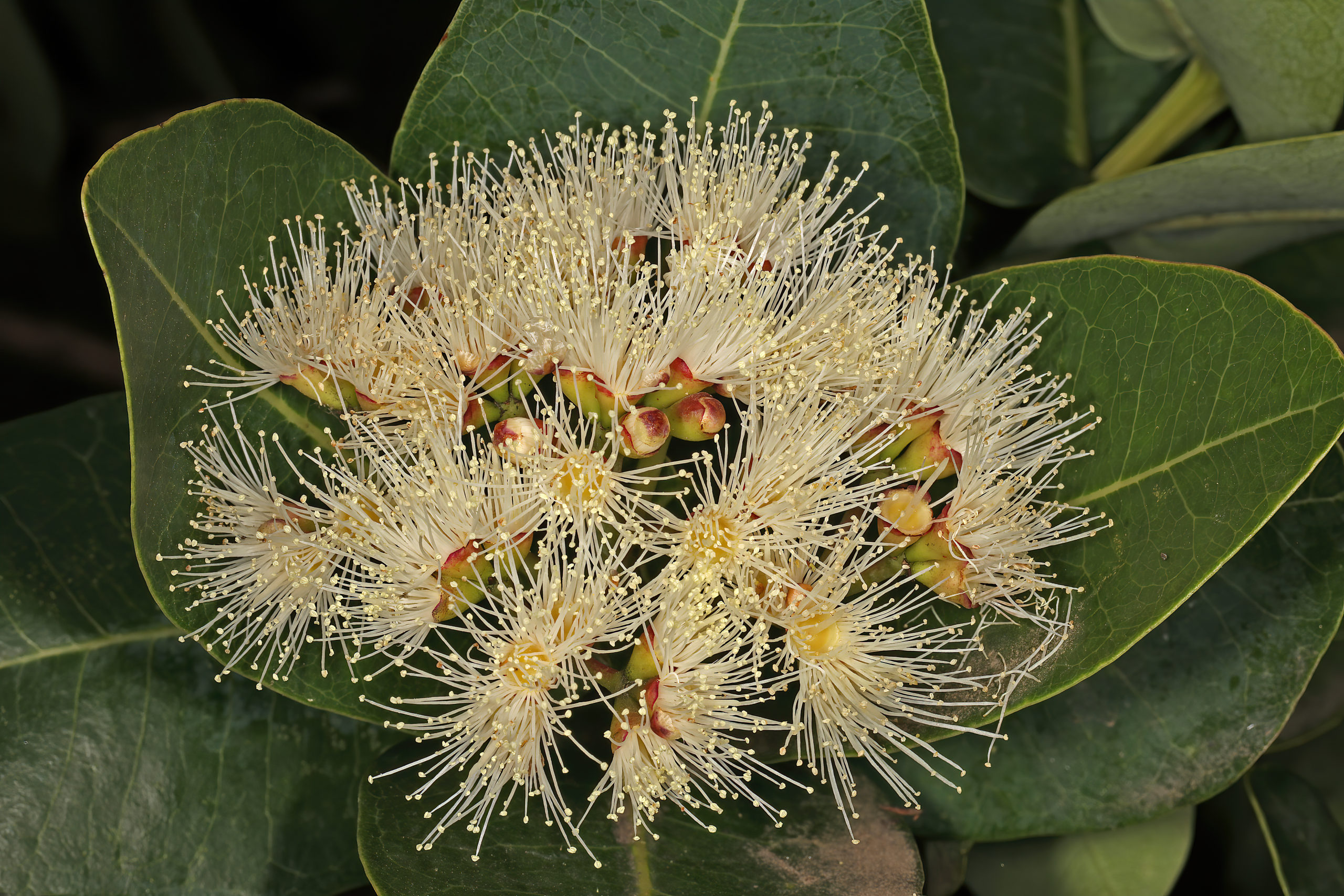
In Hawai`i, the rust has devastated one endangered plant species (Eugenia koolauensis) and damaged a non-endangered congener, E. reinwardtiana. The strain currently on the Islands does not threaten the dominant native tree species, ‘ōhi‘a (Metrosideros polymorpha).
Southern Africa
Syzygium cordatum South African plant in the Myrtaceae; photo courtesy of Bram van Wyk
South Africa has 24 native plant species in the Myrtaceae. I have been unable to learn the vulnerability of these species to the rust. South Africa relies heavily on plantation of Eucalyptus, some species of which might be vulnerable to the rust. The variant of the rust detected in South Africa 2013 is unique.
Hetropyxis sp. – South African plant in the Myrtacae; photo by Daniel L. Nikrent
Posted by Faith Campbell
We welcome comments that supplement or correct factual information, suggest new approaches, or promote thoughtful consideration. We post comments that disagree with us — but not those we judge to be not civil or inflammatory.
For a detailed discussion of the policies and practices that have allowed these pests to enter and spread – and that do not promote effective restoration strategies – review the Fading Forests report at http://treeimprovement.utk.edu/FadingForests.htm
SOURCES
Angus J. Carnegie, A.J. and G.S. Pegg. 2018. Lessons from the Incursion of Myrtle Rust in Australia. Annual Review of Phytopathology · August 2018
Jung, T.; Horta Jung, M.; Webber, J.F.; Kageyama, K.; Hieno, A.; Masuya, H.; Uematsu, S.; Pérez-Sierra, A.; Harris, A.R.; Forster, J.; et al.. The Destructive Tree Pathogen Phytophthora ramorum Originates from the Laurosilva Forests of East Asia. J. Fungi 2021, 7, 226. https://doi.org/10.3390/ open access!
They’re coming! As I have blogged frequently over the past year, imports through ports other than Los Angeles-Long Beach are rising – and with them the risk of pest introductions.
Demonstrating this phenomenon is the fact that the largest container ship ever to call on the North American East Coast will arrive this week. The “Marco Polo” can carry 16,022-TEU (twenty-foot equivalent; a standardized measure of container capacity). It is scheduled to call at Nova Scotia today (May 17), then work its way down the coast to New York-New Jersey on May 20, Norfolk on May 23, Savannah on May 26, and Charleston on May 28. Most of these ports have a history of receiving tree-killing pests: beech bark disease, beech leaf weevil, and brown spruce longhorned beetle at Halifax, NS; Asian longhorned beetle at New York and possibly Charleston; redbay ambrosia beetle at Savannah.
The ship’s owner CMA CGM (a French company operating around the globe), also holds the previous record for the largest ship to visit the east Coast: the 15,072-TEU “Brazil” called at New York-New Jersey in September 2020. CMA CGM North America President Ed Aldridge credited the ports’ significant increases in capacity for allowing the increased volume.
CMA CGM is focused on imports from the Indian Subcontinent and Southeast Asia. Ships headed to the North American East Coast are transitting the Suez Canal.
CMA CGM also operates the “Jules Verne” with a capacity of 16,022-TEU; and the “Ben Franklin” at 18,000-TEU. These ships serve trans-Pacific trade.
During the first 10 months of 2020, 15% of vessel calls were by ships with capacities of 10,000-TEU or higher, up from 11% in 2019.
I am alerting you to two publications about our “favorite” tree-killing pathogen, Phytopthora ramorum (sudden oak death).
SOD-infected rhododendron in a nursery in Indiana; photo by Indiana Department of Natural Resources
The Role of Nurseries in Spreading SOD
The first article informs the general public and raises important questions: “The Diseased Rhododendrons That Triggered a Federal Plant Hunt” by Ellie Shechet in The New Republic.
Ellie reviews the 2019 episode in which P. ramorum-infected rhododendron plants were shipped to retailers in the East and Midwest. Her article is based on interviews with state plant health and APHIS officials, several scientists and advocates (including me), and the executive director of the Oregon Association of Nurseries (OAN). Ellie notes that infected plants were found at more than 100 locations across 16 states.
Ellie notes that despite the risk to native plants in the eastern deciduous forest and the financial cost of implementing control actions (14 million plants were inspected in Washington State alone), plants have a “green” reputation; they are not recognized as potentially causing environmental harm.
The politics of the situation also are reviewed. She writes that the OAN representative has testified that he helped write the more relaxed regulatory approach that APHIS adopted by “federal order” in 2014 and formalized in changes to the regulations in 2019. APHIS denies this. [The article does not include the information that during this period, state regulatory officials detected P. ramorum-infected plants in between four and ten Oregon nurseries each year.] Ellie notes that individual consumers buying plants have few tools to try to ensure that plants they buy are not infected by SOD or other pathogens.
The fact is that the climate in the coastal areas of California, Oregon, Washington, and British Columbia is conducive to SOD, so the risk of diseased plants being produced there and sold is constant. The current APHIS regulations do not adequately address this, in my view!
Science: High Risk of Phytophthora Introductions from Southeast Asia
The second article reports results of intense scientific effort: Thomas Jung, Joan Webber, Clive Brasier, and other European plant pathologists report more completely on searches for P. ramorum and other Phytophthora species in East Asia. See the full citation at the end of this blog. [I blogged about their preliminary report a little over a year ago.] Jung et al. conclude that P. ramorum probably originates from the laurosilva forests growing in an arc from eastern Myanmar, across northern Laos, Vietnam, and southwestern China (Yunnan) to Shikoku & Kyushu islands in southwest Japan. The article notes that two other Phytophtoras – P. lateralis (cause of fatal disease on Port-Orford cedar) and P. foliorum – appear to be from the same area. Field science by this team has found 38 previously unknown Phytophthora species in these same forests – and expect that more are present.
Clive Brasier in Vietnam; UK Forestry Research
They warn that the lack of information about potential pathogens in many developing countries presents a high risk of introduction to naïve environments through burgeoning horticultural trade – especially since the World Trade Organization requires that a species be named and identified as posing a specific threat before phytosanitary regulations can be applied. [I addressed the issue of international phytosanitary rules in Fading Forests II; see the link at the end of the blog.]
Other Pathogen Risks from the Region
Phytophthoras transported on imported plants are not the only pathogens that could come from Asia. The vectors and associated pathogens causing laurel wilt disease across the Southeast and Fusariumdisease in California are believed also to originate in the same region of Asia. Unlike the Phytophthoras, which are transported primarily through the trade in plants for planting, these fungi travel with the vector beetles in wood packaging material. U.S. imports of goods from Asia – often packaged in wooden crates or pallets – have skyrocketed since July 2020. The ports of Los Angeles-Long Beach, which receive 50% of U.S. imports from Asia, handled 6.3 million TEU (twenty-foot equivalent containers) from Asia during the period July 2020 through February 2021. The average of close to 800,000 TEU per month for eight consecutive months is unprecedented. Other ports also saw increased import volumes from Asia during this period. [I discussed these shifts in my blog in January.] Imports from Asia in 2020 accounted for 67.4% of total US imports from the world. Imports from China specifically accounted for 42.1% of total US imports. [Data on import volumes is from several reports posted by the Journal of Commerce at its website: https://www.joc.com/maritime-news/]
SOURCE
Jung, T.; Horta Jung, M.; Webber, J.F.; Kageyama, K.; Hieno, A.; Masuya, H.; Uematsu, S.; Pérez-Sierra, A.; Harris, A.R.; Forster, J.; et al.. The Destructive Tree Pathogen Phytophthora ramorum Originates from the Laurosilva Forests of East Asia. J. Fungi 2021, 7, 226. https://doi.org/10.3390/ open access!
Posted by Faith Campbell
We welcome comments that supplement or correct factual information, suggest new approaches, or promote thoughtful consideration. We post comments that disagree with us — but not those we judge to be not civil or inflammatory.
For a detailed discussion of the policies and practices that have allowed these pests to enter and spread – and that do not promote effective restoration strategies – review the Fading Forests report at http://treeimprovement.utk.edu/FadingForests.htm
Posted by Scott J. Cameron, former Acting Assistant Secretary for Policy Management and Budget , US Department of the Interior
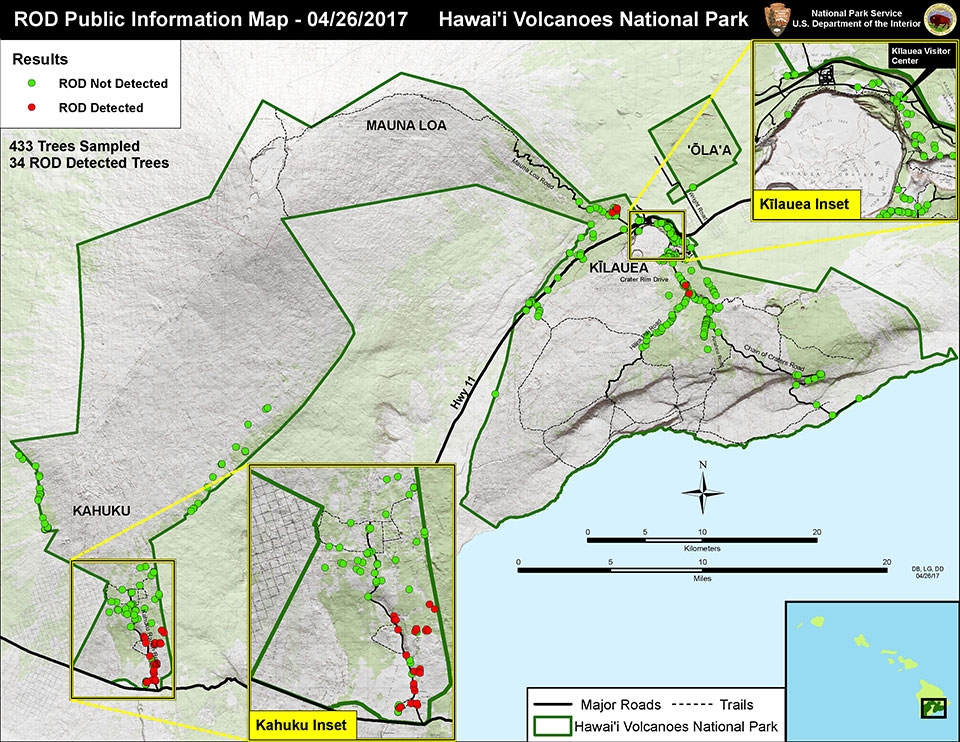
locations in Hawaii Volcanoes National Park where ohia trees were infected by rapid ohia death pathogen in 2017
In 2019 Congress passed the John D. Dingell, Jr. Conservation, Management, and Recreation Act. Among other things, it directed the Department of the Interior to “develop a strategic plan that will achieve, to the maximum extent practicable, a substantive annual net reduction of invasive species population or infested acreage on land or water managed by the Secretary.” This provision triggered a year-long process of public involvement and inter-bureau coordination. The result was a plan published in January 2021. It represents the first attempt by Interior at a Department-wide multi-taxa, multi-year approach to invasive species. It has the potential to spur integration of invasive species work across the Department’s many bureaus and to focus each bureau’s efforts on a set of common goals, strategies, and performance metrics.
While Congress’ language is open-ended, any planning exercise is constrained by the most recent President’s budget and existing law. It is up to those of us who are not, or at least no longer, executive branch employees to advocate for plans unbound by those constraints.
In that spirit, I offer eight recommendations to improve invasive species management. Four are within existing authorities; four more are outside the current budgetary and statutory framework. Many more ideas are without a doubt worth pursuing.
Opuntia (prickly pear) cactus – common plant in western National parks and on Bureau of Land Management lands; under threat by cactus moth
First, within existing funding and legal authorities, the Department has unfinished business that it can act on now.
Secure approval of the package of categorical exclusions under the National Environmental Policy Act (NEPA) — now awaiting approval by the President’s Council on Environmental Quality (CEQ). Over many years agencies have documented how invasive species control improves, rather than harms, the environment. Absent an applicable NEPA categorical exclusion approved by CEQ, though, each such action needs to run the time- and money-consuming gauntlet of NEPA compliance. In the meantime, the invasive plants germinate, the invasive animals reproduce, and what might have been a localized and inexpensive problem has expanded geographically and in terms of cost and complexity. In the Fall of 2020 Interior submitted hundreds of pages of documentation on numerous practices proven to control invasive species without harming the environment. Due to time and staffing constraints at CEQ, these categorical exclusions still await action. Interior and CEQ should take prompt steps to finish them.
Allocate to the US Geological Survey at least $10 million of the roughly $90 million remaining available to the Secretary in CARES Act appropriations for research on invasive zoonotic diseases. These are diseases like COVID-19 and West Nile virus that can move from one species to another. Many zoonotic diseases fit the definition of invasive species, since they are not native to the United States and endanger human health. In the case of COVID-19 funding is available to the Secretary of the Interior, without need for further Congressional action, from funds appropriated by the CARES Act. The availability of these funds will expire at the end of September 2021, so Interior should provide this research funding to USGS as soon as possible.
Join the existing Memorandum of Understanding between the Western Governors Association (WGA) and the US Department of Agriculture’s Forest Service. These groups have established “a framework to allow the U.S. Forest Service (USFS) and WGA to work collaboratively to accomplish mutual goals, further common interests, and effectively respond to the increasing suite of challenges facing western landscapes.” This provides a forum to improve coordination between the States and the federal government on the management of invasive species, and Interior needs to be part of that team.
Interior should work with USDA to accelerate and intensify efforts to systematically improve coordination between the interagency Wildland Fire Leadership Council and the interagency National Invasive Species Council. Both Councils have member agencies that practice vegetation management using similar tools and techniques, although for different purposes. The two Councils should identify a select number of initiatives in FY21 where their efforts would benefit both wildland fire management and invasive plant management .
swamp bay trees in Everglades National Park killed by laurel wilt; photo by Tony Pernas
Four steps to implement the strategic plan outside the scope of current law and the President’s Fiscal Year 2021 budget. I offer the following:
Improve implementation of the Lacey Act program to list injurious species. There are both legislative and administrative elements to this proposal.
In a federal District Court decision on May 19, 2015, on a lawsuit filed by the Association of Reptile Keepers, the Court undid the longstanding Fish and Wildlife Service policy that the Lacey Act allowed FWS to ban interstate transport of injurious species. On April 7, 2017, the D.C. Circuit Court of Appeals upheld the District Court’s view. These rulings mean that FWS authority only applies to international commerce. Unfortunately, the court’s interpretation of the law and legislative history are reasonable, so Congress needs to amend the law to make it clear that FWS is explicitly authorized to regulate interstate commerce in injurious species. The Department of the Interior should work with the Department of Justice and the Office of Management and Budget to develop the necessary bill language and submit it to Congress.
At the same time, the FWS injurious species listing process is notoriously slow, even causing Congress to occasionally list species legislatively. The fact that these legislative initiatives have sometimes been promoted by Members of Congress who normally are opposed to more federal regulation signals just how awkward the current FWS process is. Thus there might well be strong bipartisan support to amend the Lacey Act on the interstate commerce matter. Acting on its own authority, FWS should procure an independent third party review of the injurious species listing process and ask the contractor to make suggestions for “business process reengineering” to improve and streamline current practices, along with evaluating whether higher funding or new technology is needed.
The Bureau of Reclamation, Department of the Interior, and the Office of Management and Budget should develop legislative language to submit to Congress for the 2022 Water Resources Development Act, that explicitly authorizes an aquatic nuisance species program in the Bureau of Reclamation. It could parallel the relatively new authority enjoyed by the Army Corps of Engineers and mandate increased coordination between the two water agencies.
Any climate change legislation pursued by Congress and the Administration should include provisions for addressing invasive species. Climate change will make some North American habitats more suitable for foreign organisms, as cold-intolerant species might be able to survive in more northern latitudes in the U.S. than previously was the case. Second, the disruptive effect of climate change on North American ecosystem structure and trophic relationships at any latitude will make those ecosystems more vulnerable to invasion. Finally, the spread of invasive species may in and of itself exacerbate climate change, such as through the increased carbon dioxide emissions from rangeland wildfires aggravated by the dominance of invasive cheatgrass.
The Senate Committee on Environment and Public Works and the House Natural Resources Committee should each hold oversight hearings on how best to help state and local governments detect and respond to new invasive species that are not within the statutory purview of USDA/APHIS. This is a complex topic, important for both ecological and financial reasons. Over the years several attempts to address it have failed. A thoughtful review by Congress and the Administration, which perhaps would lead to passage of new statutory authority and funding, is worth exploring.
The Author:
Scott Cameron recently left the federal government, where he had served as Acting Assistant Secretary for Policy, Management and Budget at the U.S. Department of the Interior. In that capacity he oversaw Department-wide budget, invasive species, natural resource damage assessment and restoration, environmental compliance and numerous administrative functions of this $14 billion agency with 65,000 employees. Previously, Scott held other civil service job (e.g., at the White House Office of Management and Budget) & political appointments in the federal government, on the staff of the Governor of California, and on Congressional staffs. While not in government, Scott led formation of the Reduce Risk from Invasive Species Coalition.
CISP welcomes comments that supplement or correct factual information, suggest new approaches, or promote thoughtful consideration. We post comments that disagree with us — but not those we judge to be not civil or inflammatory.
Further information on the plant pests mentioned in the photo captions can be obtained at www.dontmovefirewood.org; click the “invasive species” button.
This February marks 15 years since USDA began full implementation of ISPM#15. It is 22 years since the U.S. and Canada began requiring China to treat wood packaging (in response to introductions of the Asian longhorned beetle). Nevertheless, numerous shipments containing wood packaging that does not comply with the international regulations continue to arrive at our borders – and to bring pests. During Fiscal Years 2010 through 2019, CBP detected 7,900 shipments of wood packaging that harbored a pest significant enough to be in a regulated taxonomic group. In 2020, 16.6 million TEU from Asia entered the U.S. (Mongelluzzo Jan 21). If pest approach rates are the same now as 10 years ago, perhaps 6,000 or more of these containers bore wood packaging infested by tree-killing insects.
The Bureau of Customs and Border Protection (CBP), in the Department of Homeland Security, has taken steps to strengthen its programs aimed at getting insects out of the wood packaging pathway (described here).
I wish USDA APHIS took a similarly active stance.You can help by contacting your Congressperson and senators to urge their support effective actions, such as those I suggested in my blog in January.
CPB’s 2017 Improvement
Until November 1, 2017, CBD allowed importers to escape punishment until they had been caught using wood packaging that did not comply with ISPM#15 five times in one year. On that date, CBD began issuing a penalty under Title 19 United States Code (USC) § 1595a(b) or under 19 USC § 1592 to any party responsible for a shipment with a documented wood packaging violation. At the time, I praised CBP’s action. I have tried to find out how many times over the past three years CBP has used that new provision to issue penalties, but CBP staff have not replied to my question.
CPB’s 2020 Improvement
CBD took another step forward in 2020. The agency incorporated measures to clean up solid wood packing material (SWPM) into its Customs-Trade Partnership Against Terrorism (CTPAT) program. I had been urging this since 2016. It took a while – but CBP used that time to ensure that its action would be integrated into the program and so stay in effect.
CTPAT is a voluntary public-private sector partnership engaging the principle participants in international supply chains — importers, carriers, consolidators, licensed customs brokers, and manufacturers.
By signing on, they agree to help CBP ensure the highest level of cargo security. Specifically, when an entity joins CTPAT, it agrees to work with CBP to protect the supply chain, identify security gaps, and implement specific security measures and best practices.
CTPAT member companies receive several benefits in return. Because they are considered to be of low risk, their shipments are less likely to be examined and delayed at a U.S. port of entry. When they are subjected to inspection, they go to the front of the line – again, reducing costly delays. The CTPAT web-based Portal system provides a library of training materials. (Information from the CBP website; full citation at end of the blog.)
At present, more than 11,400 certified partners have joined the program. These include U.S./Canada highway and rail carriers and Canadian manufacturers – who are not subject to the U.S.’ wood packaging regulation per se. Thus, CBD’s action seems to extend pest-prevention protection to a group of suppliers previously exempted from this phytosanitary program. Inclusion of many Mexican carriers and manufacturers is also welcome, since Mexican suppliers have always ranked high in numbers of shipments that violate the ISPM#15 requirements.
Specific Minimum Security Criteria
CBP’s action took the form of adding a long list of critical new agricultural components to the Minimum Security Criteria (MSC) it already used. These include:
Having written procedures for both security and agricultural inspections.
Carrying out CTPAT approved security and agricultural inspections of all conveyances and empty Instruments of International Traffic (e.g., shipping tanks, lift vans) prior to loading. The inspection must ensure that they are not contaminated with visible agricultural pests.
If visible pest contamination is found during the inspection, the partner business must wash or vacuum the conveyance to remove such contamination. The company must retain documentation demonstrating compliance for one year.
Vessels that visited Asian Gypsy Moth (AGM) high-risk areas during periods when the moths are flying must present a pre-departure AGM inspection certificate from an approved entity stating that the vessel is free of AGM life stages. The AGM inspections must be performed at the regulated port as close to vessel departure time as possible. CTPAT sea carriers must provide CPB with two-year port-of-call data at least 96 hours before arrival at a U.S. port.
Cargo staging areas, and the immediate surrounding areas, must be inspected on a regular basis to ensure these areas remain free of visible pest contamination.
CTPAT Members must have written procedures designed to prevent visible pest contamination to include compliance with ISPM#15 regulations. Visible pest prevention measures must be adhered to throughout the supply chain.
Members must establish and maintain a security training and awareness program to recognize and foster awareness of the security vulnerabilities to facilities, conveyances, and cargo at each point in the supply chain. The training program must be comprehensive and cover all of CTPAT’s security requirements. Personnel in sensitive positions must receive additional specialized training geared toward the responsibilities that the position holds.
Drivers and other personnel that conduct security and agricultural inspections of empty conveyances and Instruments of International Traffic (IIT) must be trained to inspect their conveyances/IIT for both security and agricultural purposes.
Training must be provided to applicable personnel on preventing visible pest contamination. Training must encompass pest prevention measures, regulatory requirements applicable to wood packaging materials, and identification of infested wood.
The actual Minimum Security Criteria can be found here.
(The summary of these criteria was provided by Stephen Brady, Senior Agriculture Operations Manager, Agriculture Programs and Trade Liaison, U.S. Customs and Border Protection.)
Inclusion of wood packaging in the CTPAT program should result in more efficient efforts to detect infested wood packaging before shipment — before the insect can reach North America. I believe it is fair to importers in that it requires action based on visible pest presence or damage. I applaud Customs and Border Protection for making the effort – internally and with the shipping industry — to add this protection.
I think fairness would be further served by CBP and APHIS adopting a program to inform importers which foreign suppliers of wood packaging have a record of providing “clean” vs. “infested” wood packaging. The U.S. importers would then be better able to avoid both contributing to the pest risk and being exposed to violation-associated delays.
Mongelluzzo, B. US imports from Asia hit record December level. Jan 19, 2021
Posted by Faith Campbell
We welcome comments that supplement or correct factual information, suggest new approaches, or promote thoughtful consideration. We post comments that disagree with us — but not those we judge to be not civil or inflammatory.
For a detailed discussion of the policies and practices that have allowed these pests to enter and spread – and that do not promote effective restoration strategies – review the Fading Forests report at http://treeimprovement.utk.edu/FadingForests.htm
container ship in Savannah harbor- capacity 6,188 containers; photo by F.T. Campbell
As I have blogged recently U.S. imports have soared since the summer. US imports from Asia during the first 11 months of 2020 were 2% higher than the figure from the first 11 months of 2019, despite the crash in imports in the spring.
The increased volume is not distributed evenly. Asian imports moving through the twin ports of Long Beach and Los Angeles (LA/LB) were 26.5% higher in November 2020 compared to November 2019. As a result, the ports’ marine terminals, longshore labor force, drayage truckers, and import distribution centers cannot keep up. As of early January, 62 container ships were at LA/LB – 29 being offloaded and 33 ships at anchor awaiting berths. Nineteen additional arrivals were scheduled within a few days. This is the largest backup in Southern California since the disruptions associated with the 2014-15 West Coast longshore labor dispute (Mongelluzzo, B. January 4, 2021).
As a result of the long delays at LA/LB, plus port expansion under way at other ports, the volume of imports entering elsewhere is rising – with a commensurate increase in the pest risk associated with wood packaging material there.
Imports from Asia through the Northwest Seaport Alliance (NWSA) of Seattle and Tacoma increased 9.9% in November 2020 compared to November 2019. Imports through Oakland were up 2.2% year over year (Mongelluzzo, B. January 4, 2021). These ports’ proportion of imports from Asia should rise even higher in the future. One company has begun a premium service from China directly to Oakland and Seattle. Shippers are expected to welcome this as an opportunity to avoid the congestion at LA/LB. Oakland also offers access to the large and affluent San Francisco Bay area, as well as rail transport to inland hubs such as Chicago, Memphis, Dallas, and Kansas City.
The principal disadvantage is that these ports can handle only ships carrying 3,500 to 6,500 TEU capacity [twenty-foot equivalent units; a standard measurement that counts incoming volume as though contained in twenty-foot-long containers] (Mongelluzzo, B. January 04, 2021). Other ports, e.g., LA/LB and Savannah, routinely handle ships carrying 10,000 or more TEUs.
As I have noted in earlier blogs, US Gulf Coast ports are expanding capacity significantly to handle vessels larger their current10,000 TEU limit. The Port of Houston is adding a new deepwater container berth and expanding its ship channel. At New Orleans, the U.S. Army Corps of Engineers is dredging the lower reaches of the Mississippi River. The Port of Mobile also has a dredging project under way. Tampa Bay plans to double its capacity over the next five years (Angell, January 4, 2021).
The Port of Savannah currently has 9 berths served by 36 cranes. The Port plans to increase capacity by 45% over the next decade – from 5.5 million TEUs to 8 million TEUs per year (https://gaports.com/facilities/port-of-savannah/).
Government Agencies’ Involvement
These port expansions are partially funded by U.S. government agencies. The Department of Transportation funds development of onshore facilities, while the U.S. Army Corps of Engineers carries out dredging of the waterways. We should insist that the environmental impact statements evaluating these projects include consideration of the invasive species risks associated with increased ship traffic. Potential harm comes from a wide range of organisms, which put an equally wide range of ecosystems at risk. For example, ship traffic has brought our country ruinous aquatic invertebrates in ballast water and sessile organisms on hulls; as well as costly Asian gypsy moths on ships’ superstructures and a series of tree-pest larvae in wooden dunnage and other packaging material (e.g., Asian longhorned beetle, emerald ash borer, redbay ambrosia beetle, possibly the invasive shot hole borers …).
The surge in imports from Asia has continued through the first half of 2021. Over this period, imports from Asia to the California ports of Los Angeles and Long Beach totaled 9,523,959 TEU, up 24.5% from the 7,649,095 TEU in the same period of 2019 (Mongelluzzo, B. July 12, 2021).
We welcome comments that supplement or correct factual information, suggest new approaches, or promote thoughtful consideration. We post comments that disagree with us — but not those we judge to be not civil or inflammatory.
For a detailed discussion of the policies and practices that have allowed these pests to enter and spread – and that do not promote effective restoration strategies – review the Fading Forests report at http://treeimprovement.utk.edu/FadingForests.htm