Non-Native Pests on North American Conifers: New Overview

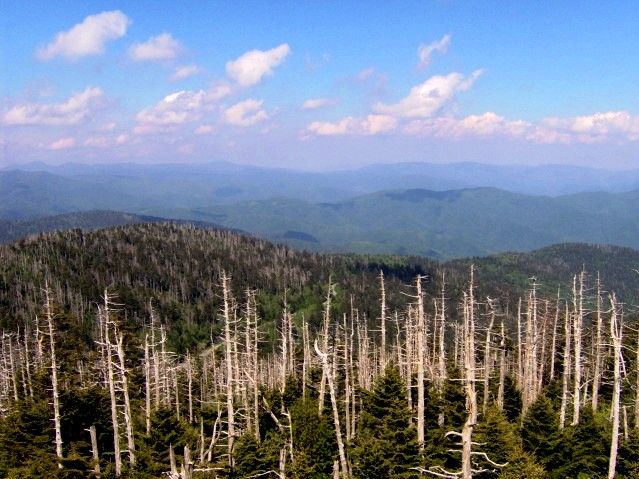
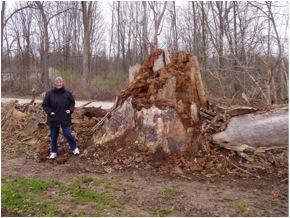
Fraser fir killed by balsam woolly adeligid
Clingman’s Dome, Tennessee

A recent study provides an overview of the threat non-native insects pose to conifers in North America. Unfortunately, pathogens are not included in the study. I provide a citation to the study (Mech et al., 2019) at the end of this blog.

The study’s authors based their analysis on 58 insects that specialize on conifers (trees in the families Cupressaceae, Pinaceae, and/or Taxaceae). These were derived from a list of over 500 herbivorous insects identified by Aukema et al. (2010) and Yamanaka et al.  (2015). Mech and colleagues determined that of the approximately 100 conifer species native to North America, 49 have been colonized by one or more of these 58 non-native insects. Three-quarters of the affected trees have been attacked by more than one non-native insect. One tree species was attacked by 21 non-native insects.

Looked at from the opposite perspective, one of the insects attacked 16 novel North American hosts.

Of these 58 insects, only six are causing high impacts, all in the orders Hymenoptera (i.e., sawflies) and Hemiptera (i.e., adelgids, aphids, and scales). (“High impact” is defined as causing mortality in the  localized host population, recognizing potential spread.)

These six are (1) Adelges piceae—balsam woolly adelgid; (2) Adelges tsugae—hemlock woolly adelgid; (3) Elatobium abietinum—green spruce aphid; (4) Gilpinia hercyniae—European spruce sawfly; (5) Matsucoccus matsumurae—red pine scale; and (6) Pristiphora erichsonii—larch sawfly. The high-impact pests included no wood borers, root feeders, or gall makers.

Mech and colleagues analyzed these relationships in an effort to determine factors driving bioinvaders’ impacts. They evaluated the probability of a non-native conifer specialist insect causing high impact on a novel North American host as a function of the following: (a) evolutionary divergence time between native and novel hosts; (b) life history traits of the novel host; (c) evolutionary relationship of the non-native insect to native insects that have coevolved with the shared North American host; and/or (d) the life history traits of the non-native insect.

They found that the major drivers of impact severity for those that feed on foliage and sap  (remember, they did not evaluate other feeding guilds) were:

1) Host’s evolutionary history – Divergence time in millions of years (mya) since North American species diverged from a coevolved host of the insect in its native range. The greatest probability of high impact for a leaf-feeding specialist was on a novel conifer that diverged from the native conifer host recently (~1.5–5 mya). The divergence time for peak impact was longer for sap‐feeders (~12–17 mya). The predictive power of the divergence-time factor was stronger for sap-feeders than for leaf feeders.

2) Shade tolerance and drought intolerance – A tree species with greater shade tolerance and lower drought tolerance is more vulnerable to severe impacts. This profile fits most species of Abies, Picea, and Tsuga. On the other hand, novel hosts with low shade tolerance and higher drought tolerance had a very low likelihood of suffering severe impacts.

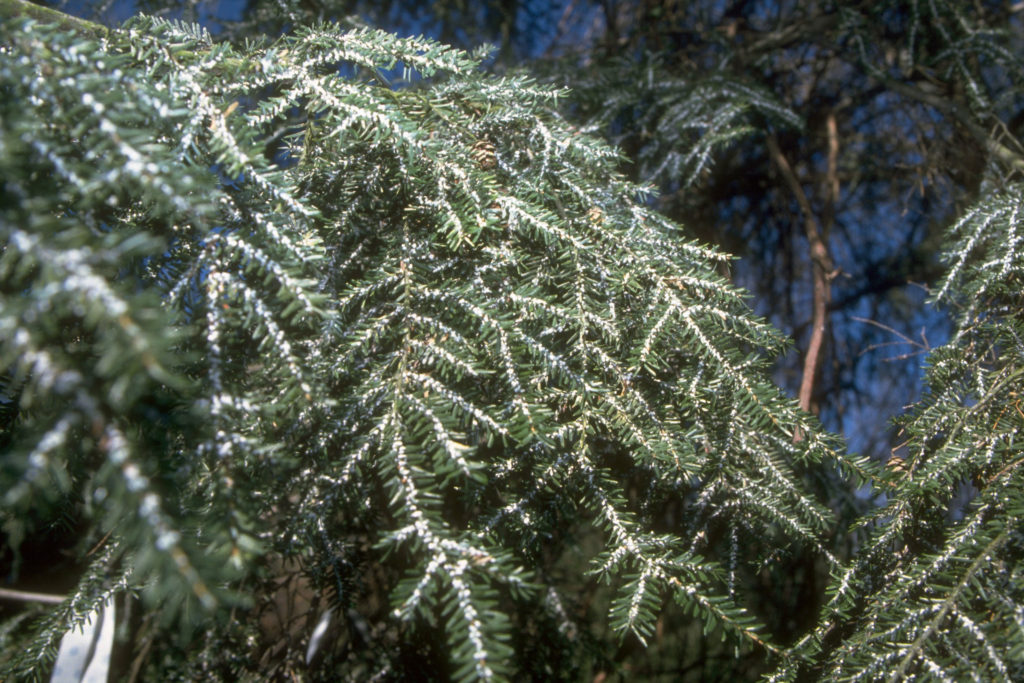
a bad infestation of hemlock woolly adelgid

3) Insect evolutionary history – When a non-native insect shares a host with a closely related herbivore native to North America, the invader is less likely to cause severe impacts. However, this factor in isolation had relatively poor predictive performance.

None of the insect life history traits examined, singly or in combination, had predictive value. The traits evaluated were feeding guild, native region, pest status in native range, number of native host genera, voltinism (frequency of egg-laying periods), reproductive strategy, fecundity, and/or mechanism of dispersal.

See Mech et al. (2019) for a discussion of hypotheses that might explain these findings.

My Questions Answered!

The authors inform me that their project will eventually include introduced insects attacking all kinds of trees. The more than 500 insect species that utilize woody hosts have been placed into one of three categories: 1) conifer specialist (only utilizes conifer hosts), 2) hardwood/woody angiosperm specialist (only utilizes hosts in a single angiosperm family), or 3) generalists (utilizes hosts in more than one angiosperm family or both angiosperms and conifers) (Mech pers. comm.) They began with the smallest group – the conifer specialists – so that they could more easily work out kinks in their procedures.

I had asked why the brown spruce longhorned beetle (Tetropium fuscum) – which is established in Nova Scotia – was not included in this study. According to the authors, this cerambycid beetle has been reported to feed occasionally on hardwood species, so it has been placed in the third group.noted above.

SOURCES

Aukema, J.E., D.G. McCullough, B. Von Holle, A.M. Liebhold, K. Britton, & S.J. Frankel. 2010. Historical Accumulation of Nonindigenous Forest Pests in the Continental United States. Bioscience. December 2010 / Vol. 60 No. 11

Mech,  A.M., K.A. Thomas, T.D. Marsico, D.A. Herms, C.R. Allen, M.P. Ayres, K.J. K. Gandhi, J. Gurevitch, N.P. Havill, R.A. Hufbauer, A.M. Liebhold, K.F. Raffa, A.N. Schulz, D.R. Uden, & P.C. Tobin. 2019.  Evolutionary history predicts high-impact invasions by herbivorous insects. Ecol Evol. 2019 Nov; 9(21): 12216–12230.

Yamanaka, T., Morimoto, N. , Nishida, G. M. , Kiritani, K. , Moriya, S. , & Liebhold, A. M. (2015). Comparison of insect invasions in North America, Japan and their Islands. Biological Invasions, 17, 3049–3061. 10.1007/s10530-015-0935-y [CrossRef] [Google Scholar]

Posted by Faith Campbell

We welcome comments that supplement or correct factual information, suggest new approaches, or promote thoughtful consideration. We post comments that disagree with us — but not those we judge to be not civil or inflammatory.

What the VLB Saga Tells Us About Detection Surveys

Setting Priorities for Surveillance

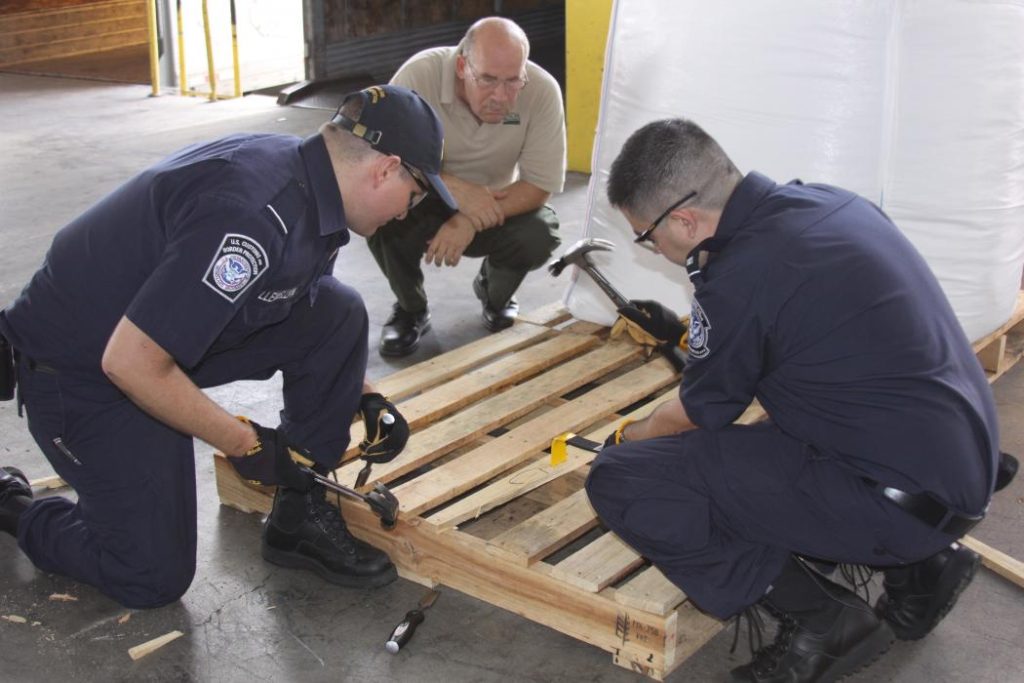
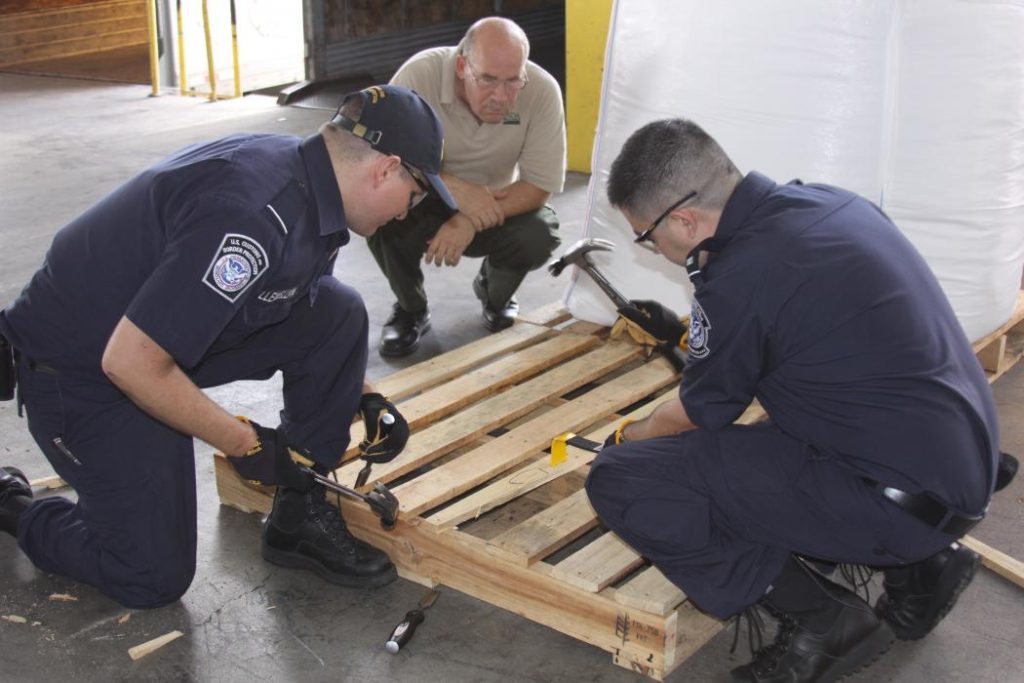
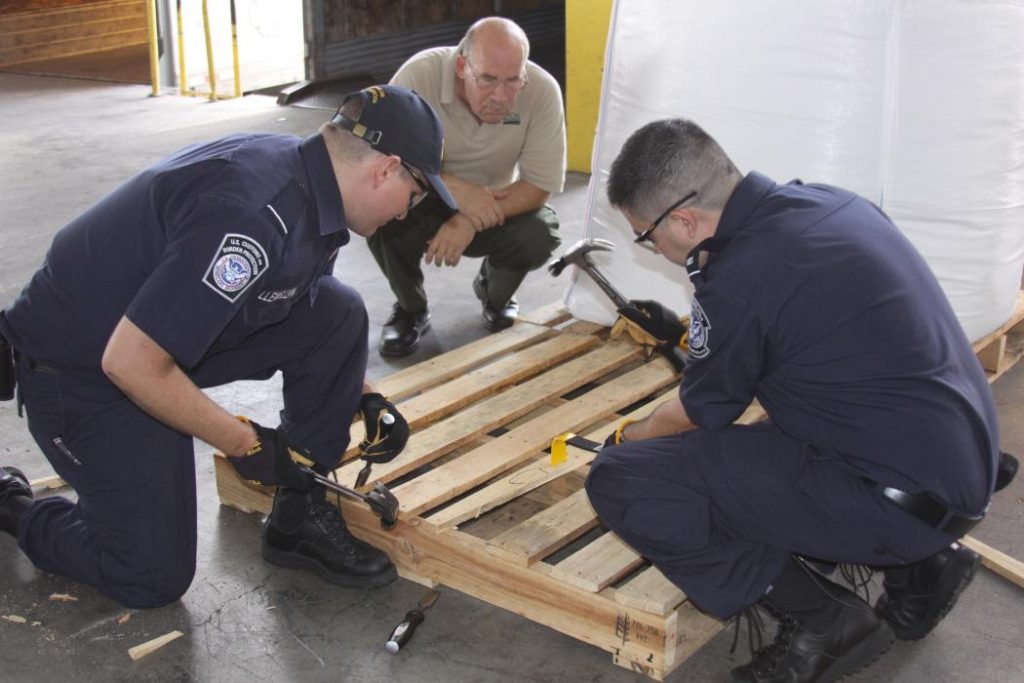
CBP inspects a pallet suspected for harboring an insect pest

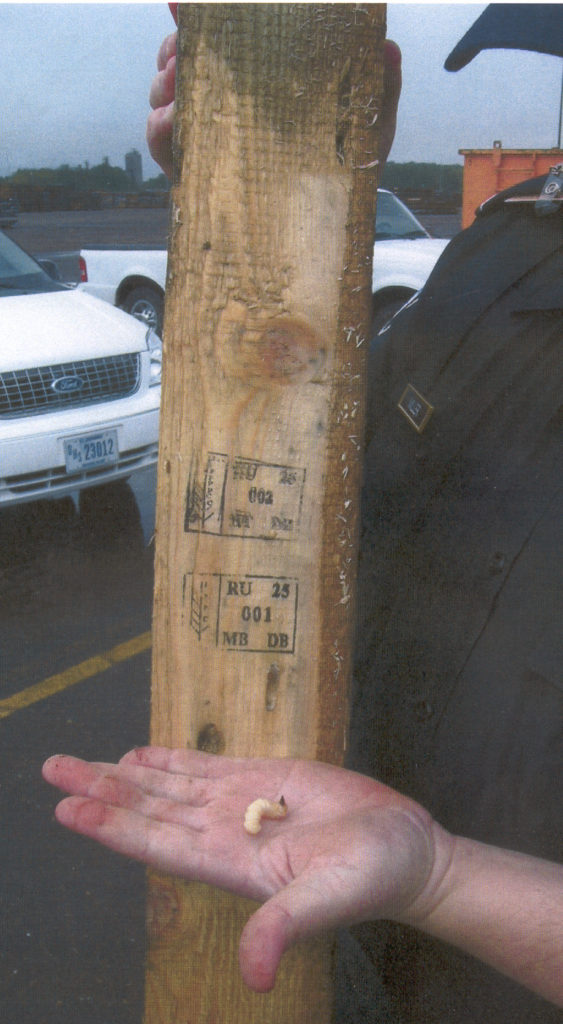
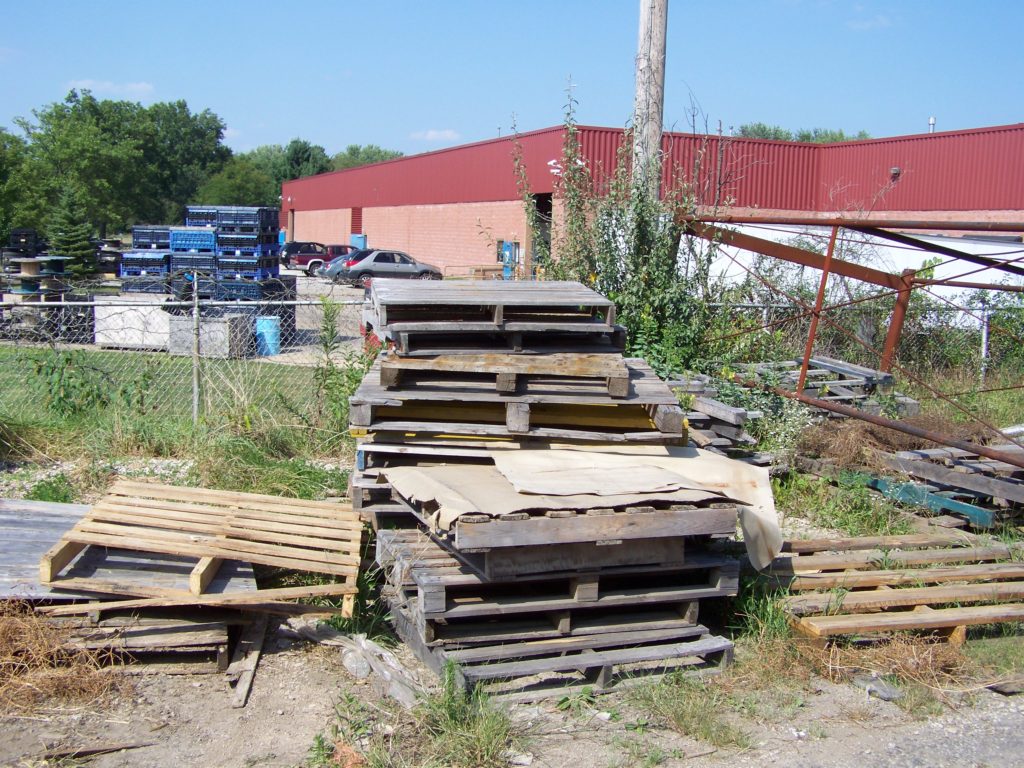
Despite Customs and Border Protection’s heroic efforts to target inspection of wood packaging shipments, based on histories of non-compliance of specific importers’ wood packaging (which I have often praised), the majority of larvae occurring in wood packaging would probably not be intercepted by inspectors. Instead, they would be transported to the cargo’s intended destinations (Wu et al. 2020). I described these problems in the preceding blog about the velvet longhorned beetle (VLB).

As I have noted in the past, CBD detects an average of 800 shipments per year with non-compliant wood packaging. That figure is less than five percent of the 16,500 infested shipping containers that might enter the country each year, based on the estimate by Haack et al., (2014) that one tenth of one percent of incoming wood packaging might be infected.

So there is always a need to improve surveillance for pests that inspection fails to catch. We can do that in at least the following ways:

1) better target detection efforts on the most likely areas where a pest might establish

2) improve collection and use of pest-related information to determine probable hosts, pathways of movement, and potential impacts.

Discovering How the Pest Moves

Sometimes improvements must be linked to individual species – although assisted by knowledge about species with similar life histories, e.g., similar hosts or flight periods or about its close relatives (see Ray’s development of a VLB lure; full citation at end of this blog).  

Other times, improvements might result from more generalizable adjustments.

For example, the pathway analysis undertaken by Krishnankutty and colleagues is one approach to improving geographic targetting. They analyzed aspects of  the velvet longhorned beetle’s pathways of introduction: 1) the types of imports associated with VLB-infested wood packaging; 2) ports where the beetle has been detected in recent years; plus 3) the presence and calculated probable volume of imports for the types of commercial operations considered likely to transport the beetle.

This analysis required access to detailed data from many sources. They included 1) interception data revealing the types of products most often associated with infested wood and the intended destinations of intercepted cargoes; 2) the North American Industry Classification System data listing locations of businesses likely to utilize these products; 3) the beetle’s climatic requirements; and 4) the locations of actual detections of VLB as revealed by Cooperative Agricultural Pest Survey (CAPS) and other trapping programs.

Approaches to Learning More

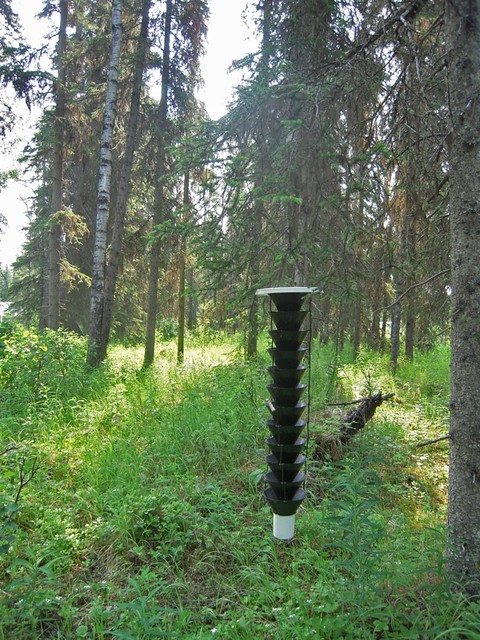
a Lindgren funnel trap

Relying on traps to detect new pests has several advantages. These include the relative ease of scaling up to larger areas, and – sometimes — the ability to use general lures that attract a variety of insects. Some insects are attracted only, or primarily, to specific lures. Labor intensiveness (and expense) varies with how many traps must be deployed, whether the sites are easily accessible, difficulty extracting trapped insects, and the difficulty sorting the dead insects to find the species of interest.

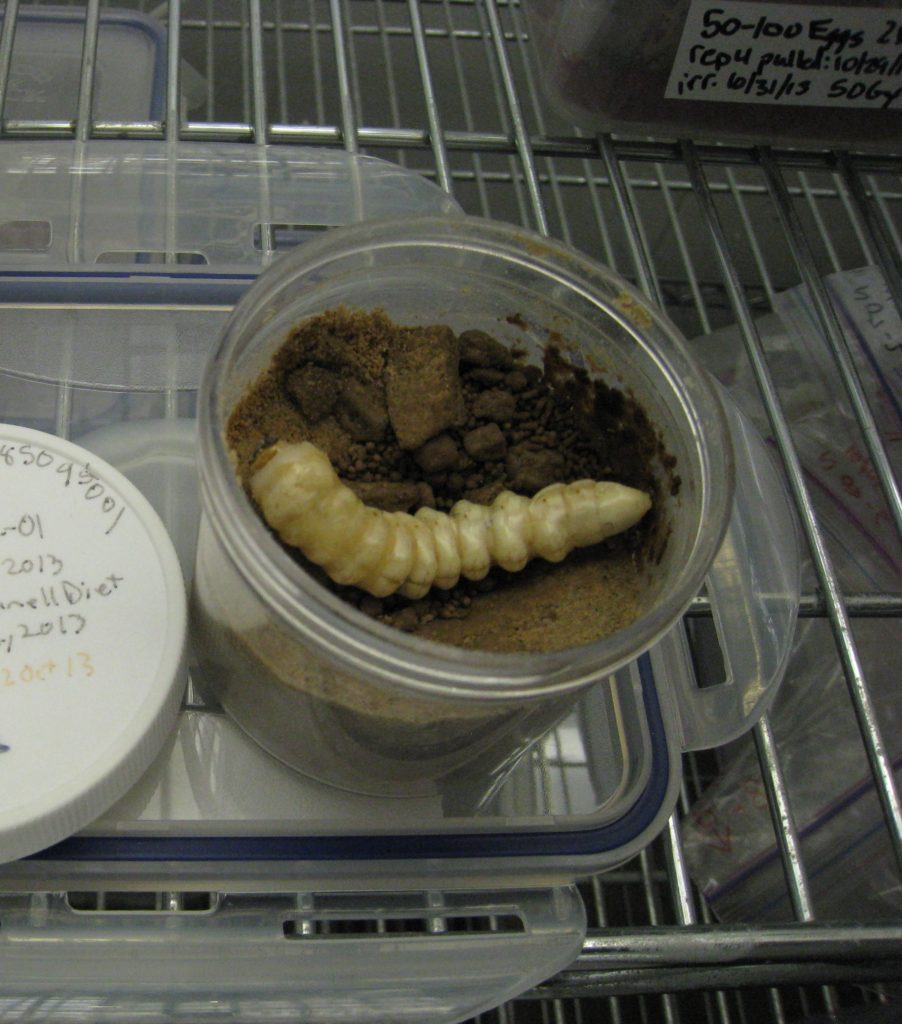
A second approach is more labor-intensive and expensive, but it gives more information on the target species. This approach is to rear intercepted insect larvae in logs inside containers (to prevent escape) until they reach maturity and emerge. This approach facilitates determination of the species (it is difficult to identify larvae) … and allows an evaluation of feeding behavior – which translates into assessment of the damage caused to the tree.

The Canadian Food Inspection Agency (CFIA) began applying this survey method in 2006. CFIA collects logs from trees in declining health at high risk sites, such as industrial zones, current and historic landfills, and disposal facilities where large volumes of international wood packaging and dunnage are stored for extended periods of time. The logs are obtained from trees removed as part of municipal hazard tree removal programs. CFIA takes the logs to one of four research laboratories (in Toronto, Nova Scotia, Montreal, and North Vancouver), where they are placed in rearing chambers and allowed time to see what insects emerge. The logs are also dissected to reveal the type of damage caused by the insects – that is, determine whether insect was cause of tree mortality [Bullas-Appleton et al. 2014) .

The United States is applying the same approach, but less systematically.

APHIS developed a short-term project aimed at addressing two challenges: identifying larvae found in wood packaging to the species level (larvae intercepted at the border are often identified only to family); and gaining valuable information about the failure of currently required phytosanitary treatments as regards particular genera and species.

In a cooperative project begun in 2012, the DHS Bureau of Customs and Border Protection (CBP) collected live larvae of Cerambycidae and Buprestidae (and, since September of 2015, Siricidae), intercepted during inspection at initially six, later 11 U.S. ports.

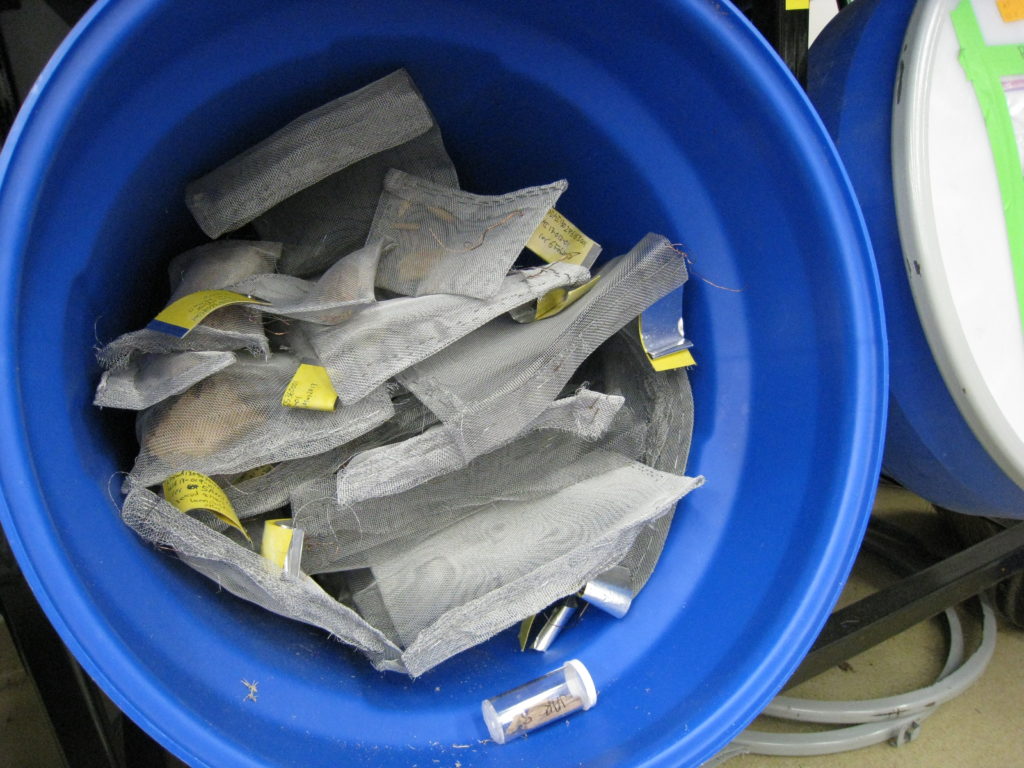
mesh bags in which APHIS is rearing larvae obtained from wood packaging inspected by CBD at ports of entry
photo by USDA APHIS

These larvae were sent to an APHIS containment facility where many were reared to adults. Upon emergence, adult specimens were killed and identified by experts working for the National Identification Service. DNA barcodes of dead larvae and the reared adults were defined and compared and any  new information was added to public genetic databases. These DNA barcodes have enhanced the capacity of anyone involved in pest interception and detection to rapidly identify larval stages. In 2017, APHIS determined that it had detected almost the full range of species that might be transported in wood packaging, and stopped funding the project.

As of June 2017, the APHIS project had received 1,289 intercepted wood borers (1,052 cerambycids, 192 buprestids and 45 siricids) from 45 countries (See Nadel et. al 2017). The extensive analysis of velvet longhorned beetle described in my previous blog link was greatly assisted by the resulting data.

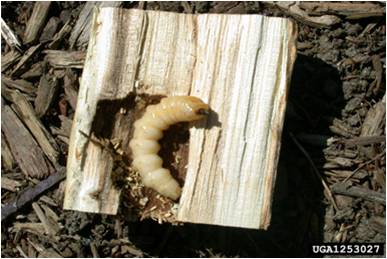
Cerambycid larva which was part of the study
photo USDA APHIS

Years before the APHIS project, USDA Forest Service wanted to try applying rearing techniques to aid early detection of insects in the country. At first, the scientists asked residents of Washington, D.C. to identify street trees that appeared to be infested with pests. Those trees were then cut and sections placed in rearing containers to allow scientists to determine what was causing the problem (Harvard Science).

The project was transferred in 2015 to Boston and New York. The Boston location is an arboretum; the advantage of this site is that it has 1) a diversity of tree species; 2) trained staff; and 3) detailed records of most trees on-site (Harvard Science). Project scientists now accept material from stressed, diseased, or dying trees. This material is loaded into sealed barrels and allowed two years for insects to emerge. Since 2015, project scientists have examined 8,605 beetles comprising 223 species. These studies have resulted in 16 new state records, records of some Scolytinae that are rarely collected from traditional trapping methods; documentation of  new host associations; and discovery of one previously undescribed species — Agrilus sp. 9895 (See DiGirolomo, Bohne and Dodds, 2019).

SOURCES

Bullas-Appleton, E., T. Kimoto, J.J. Turgeon. 2014. Discovery of Trichoferus campestris (Coleoptera: Cerambycidae) in Ontario, Canada and first host record in North America. Can. Entomol. 146: 111–116 (2014).

Marc DiGirolomo, Michael Bohne, Kevin Dodds. 2019. Presentation to the 19th Annual Meeting of the Continental Dialogue on Non-Native Forest Insects and Diseases https://continentalforestdialogue.files.wordpress.com/2019/12/bohne.continentaldialogue1.pdf  USFS – Durham, NH – 19th Dialogue meeting

Haack, R. A. 2006. Exotic bark- and wood-boring Coleoptera in the United States: recent establishments and interceptions. Can. J. For. Res. 36: 269–288.

Haack RA, Britton KO, Brockerhoff EG, Cavey JF, Garrett LJ, et al. (2014) Effectiveness of the International Phytosanitary Standard ISPM No. 15 on Reducing Wood Borer Infestation Rates in Wood Packaging Material Entering the United States. PLoS ONE 9(5): e96611. doi:10.1371/journal.pone.0096611

Krishnankutty, S.M., K. Bigsby, J. Hastings, Y. Takeuchi, Y. Wu, S.W. Lingafelter, H. Nadel, S.W. Myers, and A.M. Ray. 2020. Predicting Establishment Potential of an Invasive Wood-Boring Beetle, Trichoferus campestris (Coleoptera: Cerambycidae) in the United States. Annals of the Entomological Society of America, 113(2), 2020, 88-99.  https://doi.org/10.1093/aesa/saz051    

Nadel, H. S. Meyers, J. Molongoski, Y. Wu, S. Lingafelter, A. Ray, S. Krishnankutty, A. Taylor.  2017. Identification of Port Interceptions in Wood Packing Material Cumulative Progress Report, April 2012 – June 2017

Ray, A.M., J. Francese, Y. Zou, K. Watson, D.J Crook, and J.G. Millar. 2019. Isolation and identification of a male-produced aggregation sex pheromone for the velvet longhorned beetle, Trichoferus campestris. Scientific Reports 2019. 9:4459. https://doi.org/10.1038/s41598-019-41047-x

Posted by Faith Campbell

We welcome comments that supplement or correct factual information, suggest new approaches, or promote thoughtful consideration. We post comments that disagree with us — but not those we judge to be not civil or inflammatory.

Have we dodged a bullet? (more like a burst of fire from a submachine gun)

Many highly damaging wood-borers have been introduced to North America in wood packaging.

One woodborer, a beetle in the Cerambycidae, has been introduced multiple times to the United States — both before and after implementation of ISPM#15, the international regulations designed to stop such introductions. This is the velvet longhorned beetle (VLB) (Trichoferus (=Hesperophanes) campestris). Independent scientists have recently documented how VLB is introduced and where it is established.

I first blogged about the VLB three years ago. At that time, I asked why APHIS had not undertaken a quarantine and other actions to contain or eradicate the beetle, which was clearly established in an orchard in Utah (Wu et al. 2020; full source citations appear at the end of the blog). Now, the VLB is established in three states and has been detected in many more (details below).

It appears that the VLB will not cause significant damage. I hope this proves true, because it is certainly travelling here on a regular basis. While the most detailed study of the VLB’s potential impact in North America is not yet complete, early indications are that the beetle attacks mostly dying or dead trees.

A Widespread and Adaptable Pest

The VLB is native to China, Central Asia, Japan, Korea, Mongolia, and Russia. It has also been recorded in several European countries. The risk of introduction is broader, however. VLB has established throughout the Middle East and Europe, as well as parts of South and Central America. U.S. officials have intercepted live VLB individuals in shipments originating from these introduced populations, i.e., Brazil, Italy, Mexico, and Spain (Ray et al. 2019).

Wu et al. (2020) studied the genetic diversity of VLB specimens collected by in the United States by 1) trapping at several locations and 2) by testing those intercepted in wood packaging at U.S. ports. The scientists found high levels of diversity between and even within each limited geographic population. These results indicate that VLB has been introduced numerous times via the wood packaging pathway. They also found some evidence that introduced VLB populations might be expanding so it is important to understand pathways of spread within the country (Wu et al. 2020).

Where VLB is in the United States

The VLB is now officially considered to be established in Cook and DuPage counties, IL; Salt Lake County, UT; and Milwaukee, WI. [Krishnankutty et al. 2020).

However, adults have been detected in 26 counties in 13 additional states, plus Puerto Rico, since 1992. Since a trapping survey for woodborers began in 1999, this joint federal and state Cooperative Agricultural Pest Survey (CAPS) has trapped VLB in Colorado (2013), Illinois (2009), New Jersey (2007, 2013), New York (2014, 2016–2018), Ohio (2009, 2017–2019), Pennsylvania (2016), Rhode Island (2006), and Utah (2010, 2012–2019). (Krishnankutty et al. 2020). Also, Oregon detected VLB in 2019 (Oregon Department of Agriculture 2019).

Interceptions in Wood Packaging

The velvet longhorned beetle has been detected frequently in wood packaging since at least the middle 1980s (when APHIS began recording interceptions) (Haack 2006). (Haack’s study covered 1985-2000, before implementation of the International Standard on Phytosanitary Measures (ISPM) #15.)

APHIS’ official interception database listed 60 separate interceptions of VLB in the more recent ten plus-year period June 1997 – November 2017 – which overlaps pre- and post-implementation of ISPM#15. Eighty-eight percent of these interceptions were in wood packaging. Seven percent were in wood products. The remaining seven percent were in passenger baggage or unidentified products.

As has been the case generally since ISPM#15 was adopted, a high percentage — 65.4% — of the intercepted wood packaging during this period bore the mark certifying compliance with the ISPM#15 treatment requirements. Unsurprisingly, China was the origin of 81.6% of the intercepted shipments infested by pests (Krishnankutty et al. 2020).

In the most recent data studied, all from the period after implementation of ISPM#15 — 2012 – 2017, 28 VLB were found in analyses of a sample of wood packaging (Nadel et al. 2017). (I will discuss this study and other detection tools in a separate blog.)

In agreement with earlier findings, the most high-risk imports were determined to be wood packaging for stone, cement, ceramic tile, metal, machinery, manufactured wood products (furniture, decorative items, new pallets, etc.), and wood-processing facilities (Krishnankutty et al. 2020).

These findings largely confirm what we already know about the wood packaging pathway and high levels of non-compliance with ISPM#15 by Chinese shippers. What is APHIS going to do about this well-documented problem? APHIS certainly shouldn’t ignore these findings on the grounds that this particular wood-borer is less damaging than many others. Any chink in our phytosanitary programs that allows transport and entry of VLB can – does! – allow introduction of other woodborers.

The VLB also has been found in rustic furniture – often after the furniture has been sold to consumers. I discussed a 2016 example of this pathways in my February 2017 blog. Krishnankutty et al. (2020) suggest other possible pathways are wooden decorative items and nursery stock, particularly penjing (artificially dwarfed trees and shrubs).

Krishnankutty et al. (2020) note the importance of proper disposal of wood packaging once the cargo reaches its destination. Have any state phytosanitary officials enacted regulations targetting this source of invaders?

The Risk to North America’s Forests Is Unknown

A climate-based model described in Krishnankutty et al. (2020) suggests that climate appears to be suitable for VLB across much of the continental United States, northern Mexico, and southern Canada. Only Florida, southern Texas, and high elevation and coastal regions of the western United States and Mexico states are unlikely to support the velvet longhorned beetle, based on climate. (The study did not consider whether host trees would be present.)

Asian and European sources list a broad host range consisting of at least 40 genera of conifers, hardwoods, and fruit trees (Krishnankutty et al. 2020). Still, as noted above, new studies seem to indicate a minimal impact on healthy trees in North America. Indeed, the principal Utah outbreak is in an orchard littered with pruned material.

With so many suitable hosts across so much of the country, the potential for damage is frightening.

Setting Priorities for Surveillance

The availability of data on both port interceptions and multiple detected outbreaks provides an opportunity to test procedures for carrying out early detection surveys. Improving the efficacy of early detection is critical since – as Wu et al. (2020) note – — the majority of infesting larvae would probably not be intercepted and would subsequently be transported to the cargo’s intended destinations. This is despite CBP’s best efforts to target inspection of wood packaging shipments based on shippers’ histories of non-compliance, targeting that I strongly support.

In response to this concern, Krishnankutty et al. (2020) analyzed pathways of introduction – 1) the types of imports associated with VLB-infested wood packaging, 2) ports where the beetle has been detected in recent years, plus 3) the presence and calculated probable volume of imports of types of commercial operations considered likely to transport the beetle. These included wholesale and retail sellers of products known to be risky and businesses involved with wood fuel processing, log hauling, logging, and milling of saw lumber (Krishnankutty et al. 2020).

They could test the value of this approach by comparing the calculated “intended destination counties” declared at import to actual detections of T. campestris. VLB was detected (by CAPS or other surveys) in either the same or a neighboring county for 40% of the intended destination counties.

This seems to be a high introduction rate; detections will probably rise now that a species-specific lure is available. What could this mean for the establishment rate? Is anyone going to repeat the comparisons to track such changes? Unfortunately, we lack sufficient data to compare the VLB establishment rate (whatever it turns out to be) to the rate for other wood-borers.

Focusing on their original intentions, Krishnankutty and colleagues considered the 40% correlation between intended destinations and VLB detections to be sufficiently rewarding to be one basis for setting priorities for surveys (Krishnankutty et al. 2020).

Krishnankutty et al. (2020) say that recognition of three established populations and widespread destinations of potentially infested wood packaging to climatically suitable areas points to the need to determine whether additional populations are already established – or might soon become so. I add this need is further supported by the frequent detections of low numbers of the VLB in at least seven other states (see above). They call for enhanced surveillance to determine where the VLB is.

Improved surveillance is now facilitated by Dr. Ann Ray’s identification of a specific pheromone that can be synthesized in a lab and used to lure VLB to traps. The pheromone is much more effective in attracting VLB than previous food-like lures used by CAPS as general-purpose attractants for wood-boring insects.APHIS had provided about $50,000 over four years from the Plant Pest and Disease Management and Disaster Prevention program (which receives funding through the Farm Bill) to Dr. Ray’s search for the species-specific pheromone.

what happens when detection fails –
dead champion green ash in Michigan

I will discuss detection efforts in a separate blog.

SOURCES

Bullas-Appleton, E., T. Kimoto, J.J. Turgeon. 2014. Discovery of Trichoferus campestris (Coleoptera: Cerambycidae) in Ontario, Canada and first host record in North America. Can. Entomol. 146: 111–116 (2014).

Haack, R. A. 2006. Exotic bark- and wood-boring Coleoptera in the United States: recent establishments and interceptions. Can. J. For. Res. 36: 269–288.

Krishnankutty, S.M., K. Bigsby, J. Hastings, Y. Takeuchi, Y. Wu, S.W. Lingafelter, H. Nadel, S.W. Myers, and A.M. Ray. 2020. Predicting Establishment Potential of an Invasive Wood-Boring Beetle, Trichoferus campestris (Coleoptera:) in the United States. Annals of the Entomological Society of America, XX(X), 2020, 1–12

Nadel, H. S. Meyers, J. Molongoski, Y. Wu, S. Lingafelter, A. Ray, S. Krishnankutty, A. Taylor. 2017. Identification of Port Interceptions in Wood Packing Material Cumulative Progress Report, April 2012 – June 2017

Oregon Department of Agriculture, Plant Protection & Conservation Programs. 2019. Annual Report 2019.

 Ray, A.M., J. Francese, Y. Zou, K. Watson, D.J Crook, and J.G. Millar. 2019. Isolation and identification of a male-produced aggregation sex pheromone for the velvet longhorned beetle, Trichoferus campestris. Scientific Reports 2019. 9:4459. https://doi.org/10.1038/s41598-019-41047-x

Wu, Y., S.M. Krishnankutty, K.A. Vieira, B. Wang. 2020. Invasion of Trichoferus campestris (Coleoptera: Cerambycidae) into the United States characterized by high levels of genetic diversity and recurrent intros. Biological Invasions Volume 22, pages1309–1323(2020)

Posted by Faith Campbell

We welcome comments that supplement or correct factual information, suggest new approaches, or promote thoughtful consideration. We post comments that disagree with us — but not those we judge to be not civil or inflammatory.

Another New Pest Detected in California; Possible Threat to Native Shrubs

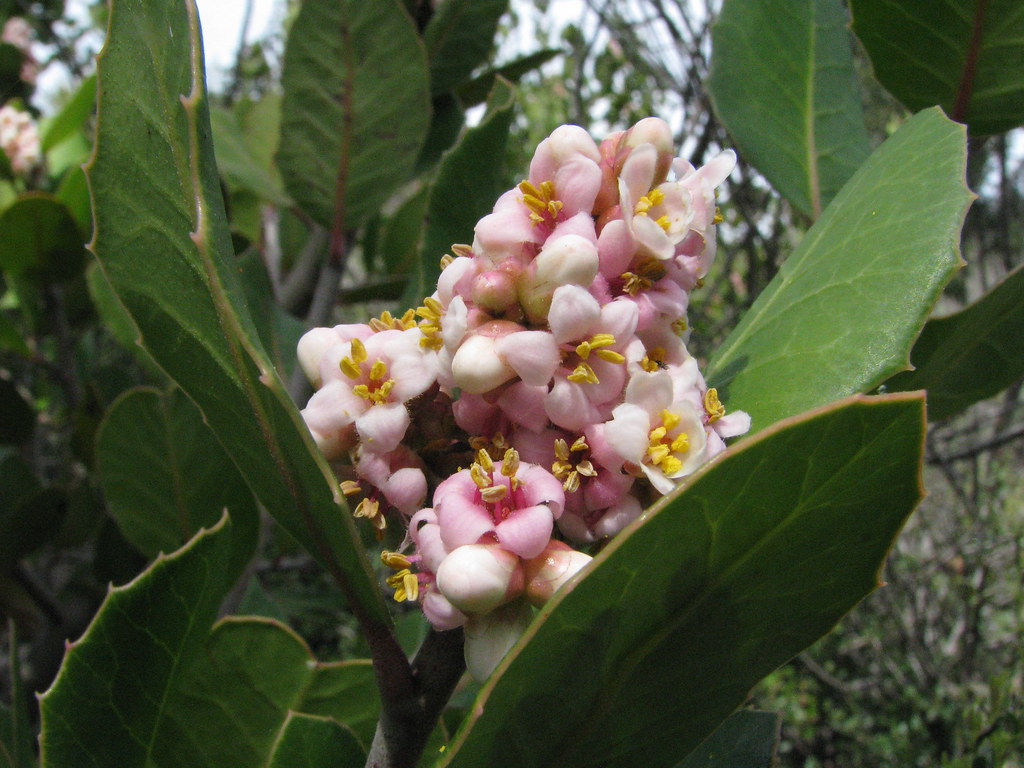
Rhus integrifolia

The California Department of Food and Agriculture (CDFA) is seeking comments  on the appropriate pest rating for Leptosillia pistaciae, a recently discovered fungus that causes pistachio canker.

The Department’s draft pest ranking assigns the highest Economic Impact score – three. It assigns a medium Environmental Impact – two. This is because the pathogen can kill an important native shrub, with possible follow-on consequences of reduced biodiversity, disrupted natural communities, or changed ecosystem processes.

CDFA states that there is no uncertainty in its evaluation, but I see, and describe here, numerous questions about the possible true extent of the invasion and possible host range.  

Comments are due on April 4, 2020.

The pathogen was detected in June 2019, when a habitat manager from an ecological reserve in San Diego County noticed multiple dead lemonade berry shrubs (Rhus integrifolia) in one of the parks. This is the first known detection of Leptosillia pistaciae in the United States and on this host. USDA APHIS has classified Leptosillia pistaciae as a federal quarantine pest. Rhus and Pistacia are in the same family, Anacardiaceae (cashews and sumacs).

According to the CDFA, Leptosillia pistaciae is the only member of this fungal genus known to be associated with disease symptoms on plants. Other species are endophytes or found in dead plant tissues. [It is not at all unusual for fungal species to be endophytes on some plant hosts but pathogenic on others. A California example is Gibberella circinata (anamorph Fusarium circinatum), which causes pitch canker on Monterey pine (Pinus radiata) but is an endophyte on various grass species (Holcus lanatus and Festuca arundinacea).]

(Reminder: this is the second new pest of native species detected in California state in 2019; I blogged about an ambrosia beetle in Napa County here. )

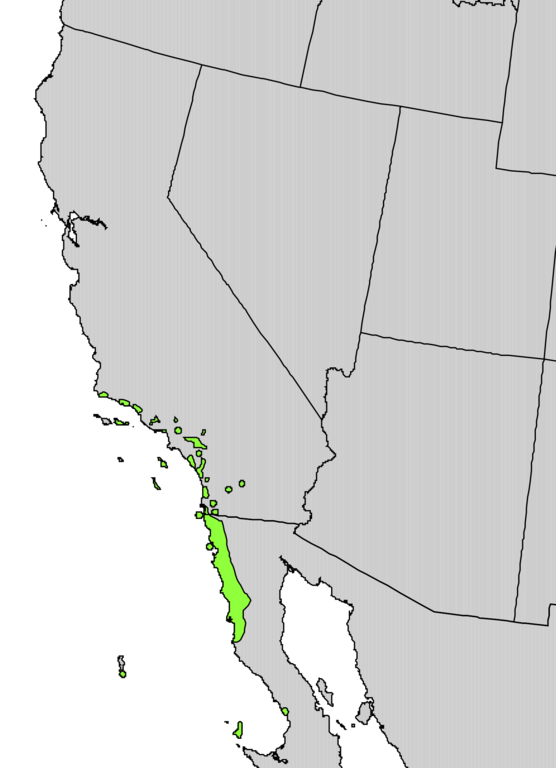
Rhus integrifolia (lemonade berry or lemonade sumac) is native to California. It grows primarily in the south, along the coast – from San Diego to San Luis Obispo. However, some populations are also found in the San Francisco Bay area. This and other sumacs are also sold in the nursery trade.

On pistachio trees in Italy, symptoms are observed in the winter and late spring. During the winter dormant season, trees had gum exudation and cracking and peeling of bark on trunks and branches. On trunks and large branches, cankers appeared first as light, dead circular areas in the bark; subsequently they became darker and sunken. Under the bark, cankers were discolored with necrotic tissues; in some cases, these extended to the vascular tissues and pith. During the active growing season, the symptomatic plants also showed canopy decline. Inflorescences and shoots, originating from infected branches or twigs, wilted and died. When the trunk was girdled by a canker, a collapse of the entire tree occurred.

range map for Rhus integrifolia

On lemonade berry, large clumps of dead adult shrubs were observed on the edge of hiking trails. Some shrubs that had completely dead foliage were re-sprouting from their bases. Trunks of shrubs that were not completely dead were copiously weeping sap and fluids and showed foliage browning and die back with symptoms of stress.

It is thought that spores could be spread by wind, rain splashing, and the movement of dead or dying trees, greenwaste, and infected nursery stock. Contaminated pruning tools might also transport the spores. The possibility of a latent phase – or perhaps asymptomatic hosts – adds to the probability of anthropomorphically assisted spread.

I question how much effort has been put into detection surveys, especially in natural systems with native Rhus species. California has three other native sumacs: R. ovata, R. aromatica, and Malosma laurina (CNPS; full citation at the end of the blog). In addition, there are numerous other species in the family, including poison oaks (Toxicodendron spp.) and the widespread invasive plant genus Schinus.

Furthermore, some plants in the family (other than pistachios) are grown for fruit or in ornamental horticulture, including two of the native sumacs and two non-native species, Rhus glabra and R. lanceolata, cashew, mango, and smoke trees (Cotinus spp.).

Yet CDFA confidently states that there are only two hosts and that it has been detected in only one population – that in San Diego. This is because CDFA considers only official records identified by a taxonomic expert and supported by voucher specimens.

CDFA states that the pathogen is likely to survive in all parts of the state where pistachios are grown – primarily in the Central Valley. California supplies 98% of the pistachios grown in the United States; the remainder is raised in Arizona and New Mexico. California production occurred on 178,000 acres in 2012. A map is included in a flyer on production available at the url listed at the end of this blog.

In discussing spread potential, no mention is made of possible human-assisted spread.

The CDFA document includes instructions for submitting comments; the deadline is April 4.

Sources:

Rhus and related species native to California: California Native Plant Society

https://calscape.org/loc-california/Rhus(all)/vw-list/np-1?

Rhus species used in horticultural plantings in California: CalFlora https://www.calflora.org//cgi-bin/specieslist.cgi?where-genus=Rhus 

Pistachio production information: https://apps1.cdfa.ca.gov/FertilizerResearch/docs/Pistachio_Production_CA.pdf

Posted by Faith Campbell.

We welcome comments that supplement or correct factual information, suggest new approaches, or promote thoughtful consideration. We post comments that disagree with us — but not those we judge to be not civil or inflammatory.

Happy 14th Anniversary for Wood Packaging? Probably Not: Noncompliance, Fraud, and Missing Data

CBP inspectors examining pallet
CBP photo

This month is the 14th anniversary of United States’ implementation of International Standard for Phytosanitary Measure (ISPM) #15 with the goal of reducing the risk of pest introduction via wood packaging. 

Implementation of the international standard has apparently reduced the “approach rate” of pests in wood packaging, but not sufficiently (See my previous blog).

In this International Year of Plant Health (USDA/APHIS full citation at end of this blog), it is essential to understand how well the wood packaging program is working. Evaluating its current efficacy is especially important for protecting our forests. One key scientific society recognizes this: organizers of  the Entomological Society of America’s Grand Challenges Summit in Orlando next November have chosen wood packaging as the theme.  

Unfortunately, information essential to evaluate the efficacy of ISPM#15 – both worldwide and as implemented by USDA APHIS – is not yet available.

Our most up-to-date information on U.S. enforcement is from Kevin Harriger, Executive Director for the Agriculture Programs and Trade Liaison office, U.S. Customs and Border Protection (CBP). In his report to the annual meeting of the Continental Dialogue of Non-Native Forest Insects and Diseases in November 2019, he stated that over the past three years, CBP detected a regulated pest, on average, in 30% of wood packaging intercepted because it was not compliant with ISPM#15. Unfortunately, Mr. Harriger did not provide the actual number of shipments inspected or seized.

The absence of specific numbers means I cannot compare the 2019 findings to previous years. My calculation of Mr. Harriger’s data provided to the Dialogue in previous years showed that over the nine-year period Fiscal Years 2010 through 2018, CBP detected 9,500 consignments harboring a regulated pest. Ninety-seven percent of the shipments found to be infested with a pest bore the ISPM#15 mark. The wood packaging was from nearly all trading countries. CBP staff say the reason for this high proportion of pests in wood packaging is fraud.

A European study of imports of stone from China over the period 2013-2016 focused on a recognized high-risk commodity. Nevertheless, the Europeans reached the same finding: 97.5% of consignments that harbored pests bore the ISPM#15 mark. They concluded that the ISPM-15 mark was of little value in predicting whether harmful organisms were present (Eyre et al. 2018).

There is considerable dispute about which categories of packaging are most likely to be infested. The categories are pallets, crates, spools for cable, and dunnage (wood used to brace cargo and prevent it from shifting). Unfortunately, Mr. Harriger shed no light on that issue. He did report that 78% of non-compliant shipments over the last three years was in packaging associated with “miscellaneous cargo”, e.g., machinery, including electronics; metals; tile and decorative stone (such as marble or granite counter tops). This association has been true for decades (see Haack et al. 2014). Another 20% of the non-compliances were associated with fruit and vegetable cargoes. This probably reflects the combination of large volumes of produce imports from Mexico and that country’s poor record of complying with wood packaging requirements.

It has been reported that in recent years, CBP inspectors have repeatedly found pests in dunnage bearing the ISPM#15 mark and associated with “break bulk” cargo (goods that must be loaded individually; not transported in containers or in holds as with oil or grain). Ships that carry this sort of. Problems appear to be acute in Houston. While most of the criticism of non-compliant wood packaging refers to countries in Asia and the Americas, at least one of the Houston importers obtains its dunnage in Europe.

There is even a question about the volume in incoming goods. CBD says that approximately 13 million loaded containers enter the country every year by rail, truck, air, or sea.  However, my calculation from U.S. Department of Transportation data (see reference) was that more than 22 million shipping containers entered the U.S. via maritime trade in 2017.

In 2017, CBP announced a new policy under which it will assess a penalty on each shipment in which the wood packaging does not comply with ISPM#15. Previously, no penalty was assessed until a specific importer had amassed five violations over a twelve-month period.

FY2019 was thus the second year under the new policy. I had hoped that Mr. Harriger would provide information on the number of penalties assessed and any indications that importers are strengthening their efforts to ensure that wood packaging complies. However, he did not.

He did report that CBP has expanded outreach to the trade. The goal is reducing all types of non-compliance – lack of documentation, pest presence, etc. in both wood packaging and shipping containers. Outreach includes awareness campaigns targetting trade, industry, affiliated associations, CBP employees, and international partners.

Still, authorities cannot know whether the actual “approach rate” of pests in wood packaging has changed in response to CBP’s strengthened enforcement because they lack a scientifically valid study. The most recent study – that reported in Haack et al. 2014 – relied on data up to 2009 – more than a decade ago. It indicated an approach rate of approximately 0.1% (Haack et al. 2014).

Unfortunately, USDA APHIS has not yet accepted researchers’ offer to update this study.

We do know that pests continue to be present in wood packaging 14 years after the U.S. put ISPM#15 into force.

I call for:

1) Determining the relative importance of possible causes of the persistent pest presence problem – fraud, accidental misapplication of treatments, or other failures of treatment;

2) Enhanced enforcement by APHIS as well as CBP;

3) Stepped up efforts to help US importers by APHIS and  the Foreign Agricultural Service– by, e.g., providing information on which foreign suppliers of wood packaging and dunnage have good vs. poor records; conveying importers’ complaints about specific shipments to the exporting countries’ National Plant Protection Organizations (NPPOs), such as Departments of Agriculture;

4) Raising pressure on foreign NPPOs and the International Plant Protection Convention more generally to ascertain the specific reasons ISPM#15 is failing and to fix the problems identified.

Alernative Materials – Plastic!

I have also advocated for shifting at least some wood packaging e.g., pallets and some crates – to alternative materials. For example, USDA APHIS could require exporters with bad records to use crates and pallets made from materials other than solid wood, e.g., plastic, metal, or oriented strand board. Or companies could make that shift themselves to avoid phytosanitary enforcement issues and penalties.

People recoil from the idea of using plastic and there are increasing concerns about the breakdown of plastics into tiny fragments, especially in water. But it’s also true that the world is drowning in plastic waste. Surely some of this could be recovered and made into crates and pallets with environmentally sound technology.

The Washington Post reported in November that an Israeli company is converting all kinds of trash – including food waste – into plastic, and molding that plastic into various items, including packing crates.

UBQ Materials takes in tons of rotting food, plastic bags, dirty paper, castoff bottles and containers, even broken toys. It then sorts, grinds, chops, shreds, cleans and heats it mess into first a slurry, then tiny pseudo-plastic pellets that can be made into everyday items like trays and packing crates.

Another Israeli company, Plasgad, uses plastic to make pallets, crates and other products.

Some who were skeptical now are more interested, including the president of the International Solid Waste Association  and the chief executive of the Plastic Expert Group. 

So – can we address three environmental problems at the same time – mountains of waste, methane gas releases contributing to climate change, and one (important) pathway for the movement of tree-killing pests?

SOURCES

Eyre, D., R. Macarthur, R.A. Haack, Y. Lu, and H. Krehan. 2018. Variation in Inspection Efficacy by Member States of SWPM Entering EU. Journal of Economic Entomology, 111(2), 2018, 707–715)

Haack RA, Britton KO, Brockerhoff EG, Cavey JF, Garrett LJ, et al. (2014) Effectiveness of the International Phytosanitary Standard ISPM No. 15 on Reducing Wood Borer Infestation Rates in Wood Packaging Material Entering the United States. PLoS ONE 9(5): e96611. doi:10.1371/journal.pone.0096611

Harriger, K., Department of Homeland Security Bureau of Customs and Border Protection, presentation to the Continental Dialogue on Non-Native Forest Insects and Diseases, November 2017.

U.S. Department of Transportation, Maritime Administration, U.S. Waterborne Foreign Container Trade by U.S. Customs Ports (2000 – 2017) Imports in Twenty-Foot Equivalent Units (TEUs) – Loaded Containers Only.

U.S. Department of Agriculture, Press Release No. 0133.20, January 27, 2020

Posted by Faith Campbell

We welcome comments that supplement or correct factual information, suggest new approaches, or promote thoughtful consideration. We post comments that disagree with us — but not those we judge to be not civil or inflammatory.

Growing Pathogen Threat from Southeast Asia – US Unprotected

APHIS can protect our native & agricultural plants – but will it?

Imports of large numbers of plants for planting from Southeast Asia represents a significant biosecurity risk for forestry, horticulture, and natural ecosystems in North America and Europe.  This threat is likely to grow unless APHIS takes action under its emergency authorities.

Recent pest introductions and related studies indicate that Southeast Asia is a newly-discovered center of origin for plant pathogens. Places of particular concern are Vietnam, southern Yunnan Province and Hainan Island of China, northern Laos, the eastern Himalayas, and Taiwan. Significant pathogens and associated insects apparently centered in these areas include the sudden oak death pathogen (Phytophthora ramorum) and other Phytophthora species; and several ambrosia beetles and associated fungi, including the laurel wilt fungus (Raffaelea lauricola) and its primary vector (Xyleborus glabratus), and the polyphagous (Euwallacea whitfordiaodendrus) and Kuroshio shot hole borers (Euwallacea kuroshio).

Southeast Asia is attractive to the plant trade because of the region’s high floral diversity, including such sought-after families as Ericaceae (rhododendrons). Indochina has more than 10,350 vascular plant species in 2,256 genera – equaling more than 20% of the world’s plant species (Jung et al. 2019).

Pathogens are notoriously difficult to detect during inspections at the time of shipment. One-time inspections of high volume imports are especially weak and prone to failure.

How do we protect America’s flora?

APHIS could — but has not yet — developed requirements that these countries institute integrated pest management procedures for their exporting nurseries – as provided under amendments to APHIS’ Q-37 regulation and ISPM#36. In any case, it is unlikely that such procedures would minimize the risk because many of the plants that would be imported would probably be wild-collected.

APHIS has – and should use – far more effective means to minimize risk. These are the Federal orders and listing process known as “not authorized for importation pending pest risk assessment” or NAPPRA. If – despite the scientific evidence – APHIS continues to allow high volumes of dangerous imports, the agency should immediately institute new phytosanitary controls to its inspection process. These include relying on risk-based inspection regimes and molecular high-through-put detection tools.

Supporting Material

SOD-killed tanoaks in Big Sur; photo provided by Matteo Garbelotto, UC Berkeley

Phytophthora species

A team of European pathologists, led by Thomas Jung and including Clive Brasier and Joan Webber (see full citation at the end of this blog) surveyed Phytophthora species by sampling rhizosphere soils in 25 natural and semi-natural forest stands, isolations from naturally fallen leaves, and waters in 16 rivers in temperate and subtropical montane and lowland regions of Vietnam during 2016 and 2017.

These studies detected 13 described Phytophthora species, five informally designated taxa, and 21 previously unknown taxa. Detections were made from soil samples taken from 84% of the forest stands and from all rivers.

As I reported in am earlier blog, P. ramorum and P. cinnamomi were among those species detected. Both the A1 and A2 mating types of both P. ramorum and P. cinnamomi co-occurred.

The survey also detected at least 15 species in other genera of oomycetes.

The scientists conclude that most of the 35 forest Phytophthora species detected are native to Vietnam or nearby surrounding areas, attributing species in Phytophthora clades (taxonomically related groups) 2, 5, 6, 7, 8, 9, and 10 as native to Indochina. Different clades were detected in high-elevation vs. lowland rivers, cooler (subtropical) vs. tropical streams, and in soils vs. streams. Given the relatively limited number and diversity of the sampled sites and ecosystem types, it is likely that the true Phytophthora diversity of Vietnam is markedly higher (Jung et al. 2019)  

Worrying diversity of Phytophthora has been detected in other areas of Southeast Asia. A 2013 survey in natural forests and streams of Taiwan detected 10 described species and 17 previously unknown taxa of which 9 were of hybrid origin. In three areas in northern Yunnan, a Chinese province adjacent to northern Vietnam, eight Phytophthora species were isolated from streams running through sclerophyllous oak forests; two were recovered from forest soil samples. In montane forests of the tropical island Hainan, located in the South China Sea close to Vietnam, six Phytophthora species were found (Jung et al. 2019).

These studies are being conducted in the context of scientists discovering numerous new species of Phytophthora in recent decades. Since 1999, the number of described species and informally designated taxa of Phytophthora has tripled. World-renowned experts Clive Brasier anticipates that between 200 and 600 species of Phytophthora are extant in natural ecosystems around the world (Jung et al. 2019).

In the Vietnam survey, P. ramorum was the most widespread species. While genetic studies indicate ancestral connections to the four P. ramorum lineages (genetic strains) introduced to North America or Europe, further studies are under way to clarify these relationships (Jung et al. 2019).

Jung and colleagues found P. cinnamomi to be the most common soilborne Phytophthora species at elevations above 700 m. Two genotypes of the P. cinnamomi A2 mating type are causing epidemics in numerous natural and managed ecosystems worldwide. There was some evidence that the more frost sensitive A2 mating type might be spreading into higher altitudes in Vietnam (Jung et al. 2019).

Most of the Phytophthora species detected in the rhizosphere were not associated with obvious disease symptoms. (The principal exception was the A2 mating type of P. cinnamomi in montane forests in northern Vietnam.) (Jung et al. 2019) This lack of disease greatly reduces the chances of detecting the oomycetes associated with any plants exported from the region – there are no symptoms.

Since southern Yunnan, northern Laos, and the eastern Himalayas belong to the same biogeographic area those areas might also harbor endemic P. ramorum populations. Further surveys are needed to confirm this hypothesis (Jung et al. 2019).

Phytophthora lateralis – causal agent of Port-Orford cedar root rot – also probably originated in the area, specifically Taiwan (Vettraino et al. 2017).

Implications for phytosanitary measures

Many of the native Asian forest Phytophthora species have co-evolved with a variety of tree genera also present in Europe and North America, including Fagaceae, Lauraceae, Aceraceae, Oleaceae, and Pinaceae. Numerous examples demonstrate a strong potential that trees in these families that have not previously been exposed to these Phytophthora species might be highly susceptible. Scientists have begun an extensive host range study of Phytophthora species from Asia and South and Central America. One part of this study found that five Asian Phytophthora species caused significant rot and loss of fine roots and lateral roots in three European species of chestnut and oak (Jung et al. 2019).

Other pathogens

Studies by separate groups of scientists have concluded that several beetle-fungus disease complexes are native to this same region.

Sassafras – photo by David Moynihan

Both the laurel wilt fungus Raffaelea lauricola and its primary vector Xyleborus glabratus probably originated in Southeast Asia; there are probably different strains or genetic makeups across their wide ranges. For example, Dreaden et al. 2019 found that the fungus population from Myanmar differed genetically from those found in Japan, Taiwan, and the United States. Others had already expressed concern about the possibility that new strains of R. lauricola might be introduced (Wuest et al. 2017, cited in Cognato et al. 2019).

Cognato et al. 2019 found that the beetle occurs in deciduous forests from southern Japan to Northeast India, so genetic variation across this range is likely. In fact, they have separated the species X. glabratus into three species. They found that some of the beetles might thrive at 40o North – the latitude of central Illinois, Indiana, and Ohio and southern Pennsylvania. The ability of the vector of laurel wilt disease to spread so far north poses an alarming threat to sassafras (Sassafras albidum) – which is a major understory tree in forests of these regions.

It is unknown whether these new species and X. glabratus lineages are associated with different fungal strains. In company with the pathologists cited above, Cognato et al. 2019 warn that preventing introduction of the three beetle species to other regions is prudent. Cognato et al. 2019 point out that if other beetle lineages from the southern extent of their range can tolerate hotter and drier conditions, they might pose a greater risk to host species in the more arid areas of California and Mexico. In addition, Central America is at great risk because of the numerous plant species in the vulnerable Lauraceae found there.

Also from the region are two beetle-fungus combinations killing trees in at least seven botanical families, including maples, oaks, and willows, in southern California. The polyphagous shot hole borer (Euwallacea whitfordiaodendrus) apparently is native to Vietnam (Eskalen et al. 2013) and the closely related Kuroshio shot hole borer (Euwallacea kuroshio) to Japan, Indonesia, and Taiwan (Gomez et al. 2018).  

What you can do

Getting APHIS to act

1) communicate concern about the risk to APHIS leadership and ask that the agency take action under its NAPPRA authority

2) communicate the same to intermediaries who can influence APHIS:

  • State phytosanitary agency – especially through regional plant boards and National Plant Board
  • Your Congressional representative and senators (especially if one or more serves on Agriculture or Appropriations committee)
  • Professional societies – American Phytophathological Society, Mycological Society, American Society of Entomologists, Society of American Foresters …

3) communicate the same to university leadership and ask that their lobbyists advocate to USDA

4) communicate the same to the media

2) Research on extent of North American tree species’ vulnerability to the Oomycetes and other associated microorganisms

Jung et al. 2019 say that studies are under way to identify potential pest-host relationships with important tree species. However, all the authors are Europeans. Is anyone carrying out tests on North American trees in the apparently most vulnerable families — Fagaceae, Lauraceae, Aceraceae, Oleaceae, and Pinaceae?

1) Communicate with colleagues, scientific societies, APHIS, Agriculture Research Service, National Institute of Food and Agriculture, and USFS to determine whether such tests are under way or planned.

2) In those cases where no studies are planned, work with above to initiate them.

Sources

Cognato, A.I., SM. Smith, Y. Li, T.H. Pham, and J. Hulcr. 2019. Genetic Variability Among Xyleborus glabratus Populations Native to Southeast Asia (Coleoptera: Curculionidae: Scolytinae: Xyleborini) and the Description of Two Related Species. Journal of Economic Entomology XX(XX), 2091, 1 – 11.

Dreaden, T.J., M.A. Hughes, R.C. Ploetz, A. Black and J.A. Smith. 2019. Genetic Analyses of the Laurel wilt Pathogen, Raffaelea lauricola, in Asia Provide Clues on the Source of the Clone that is Responsible for the Current USA Epidemic. Forests 2019, 10, 37

Eskalen, A., Stouthamer, R. Lynch, S.C., Twizeyimana, M., Gonzalez, A., and Thibault, T. 2013. Host range of Fusarium dieback and its ambrosia beetle (Coleoptera Scolytinae) vector in southern California. Plant Disease 97938-951.

Gomez, D.F., J. Skelton, M.S. Steininger, R. Stouthamer, P. Rugman-Jones, W. Sittichaya, R.J. Rabaglia, and J. Hulcr1/ 2018. Species Delineation Within the Euwallacea fornicatus (Coleoptera: Curculionidae) Complex Revealed by Morphometric and Phylogenetic Analyses. Insect Systematics and Diversity, (2018) 2(6): 2; 1–11

Jung, T., B. Scanu, C.M. Brasier, J. Webber, I. Milenkovic, T. Corcobado, M. Tomšovský, M. Pánek, J. Bakonyi, C. Maia, A. Baccová, M. Raco, H. Rees, A. Pérez-Sierra & M. Horta Jung. 2020. A Survey in Natural Forest Ecosystems of Vietnam Reveals High Diversity of both New and Described Phytophthora Taxa including P. ramorum. Forests, 2020, 11, 93   https://gcc02.safelinks.protection.outlook.com/?url=https%3A%2F%2Fwww.mdpi.com%2F1999-4907%2F11%2F1%2F93%2Fpdf&data=02%7C01%7C%7Cfcd843919a3348a4a56108d7974039ab%7Ced5b36e701ee4ebc867ee03cfa0d4697%7C0%7C1%7C637144174418121741&sdata=WayrZsxp3P9Kj0h1aDPZnzu4yjDGA2ZEuH9NZITFQF4%3D&reserved=

Vettraino,  A.M., C.M. Brasier, J.F. Webber, E.M. Hansen, S. Green, C.Robin, A. Tomassini, N. Bruni, A. Vannini. 2017. Contrasting microsatellite diversity in the evolutionary lineages of Phytophthora lateralis. Fungal Biology Vol. 121, Issue 2, February 2017, pp. 112-126

Posted by Faith Campbell

We welcome comments that supplement or correct factual information, suggest new approaches, or promote thoughtful consideration. We post comments that disagree with us — but not those we judge to be not civil or inflammatory.

New Ambrosia Beetle in California – Threat to Oaks?

valley oak at Jack London State Park (24 miles from Calistoga)

In November, scientists discovered a new ambrosia beetle in symptomatic valley oaks  (Quercus lobata) trees in Calistoga, Napa County. Some blue oaks (Q. douglasii) have also been attacked (Rabaglia et al. 2020). Trees associated with this outbreak showed wilting, defoliation, and broken branches. The infested wood was discolored, presumably by the fungus. The insect, Xyleborus monographus, is native to Europe.

Officials now know that this beetle is found throughout a 15-mile-long area in Napa and neighboring Lake and Sonoma counties. It has probably been there for several years (Rabaglia et al. 2020). One specimen of the beetle was trapped in Portland, Oregon in 2018, but no infestation was detected. The beetle has never been intercepted in California. Nor has it been found in traps designed to detect bark beetles which have been deployed in 11 counties – including several in the San Francisco Bay area but not including Napa or Sonoma.

Like all Xyleborus, adult females tunnel into tree’s trunks, carrying fungal spores in their mycangia (structures in the jaws in which microbes are harbored). Beetle larvae eat the fungi. Beetle reproduction is facilitated by sibling mating within the gallery and by the ability of unmated females to produce male offspring.

Sometimes the beetle’s associated fungi are pathogenic to living trees. One of the fungal species detected in the Calistoga infestation is Raffaelea montetyi, which is reported to be pathogenic to cork oak. The presence of this fungus had been reported in 2018, although the beetle species carrying it was not identified then. This is apparently the first report of this fungus in North America.

Known hosts of beetle X. monographus include European or Eurasian chestnut (Castanea sativa), beech (Fagus orientalis), and European and American oaks (including Q. lobata and Q. rubra).  The possible effects of the beetle and associated fungi on other oak species is unknown. Oaks are acknowledged to be important components of forests and woodlands in California. Ambrosia beetles often attack stressed trees. Since California forests are increasingly frequently stressed by drought, fire, and other pests, they might be especially vulnerable.

The California Department of Food and Agriculture is currently seeking comments on what pest rank to assign the insect.  The comment period closes on March 6th and I encourage you to consider providing your views.

In their draft document ranking risk, state officials note that a proven host — Q. lobata — is widespread in California and the insect is probably capable of establishing over much of the state. The possible economic impact was described as possibly affecting production of oaks in California nurseries and triggering quarantines.  (Does this mean CDFA expects impacts only on saplings? Is this realistic? CDFA made no mention of costs to urban areas for hazard tree management.)

The risk assessment notes that research by McPherson, et al. (2008) found that ambrosia beetles are attracted to oak trees already infected with sudden oak death (SOD) (Phytophthora ramorum). Therefore, X. monographus could have a synergistic impact with SOD on California oaks – which has already killed an estimated 1.9 to 3.3 million coast live and Shreve oaks.

SOURCE

Rabaglia, R.J. S.L. Smigh, P. Rurgman-Jones, M.F. Digirolomo, C. Ewing, and A. Eskalen. 2020. Establishment of a non-native xyleborine ambrosia beetle, Xyleborus monographus (Fabricius) (Coleoptera: Curculionidae: Scolytinae), new to North America in California. Zootaxa 478 (2): 269-276

Posted by Faith Campbell

We welcome comments that supplement or correct factual information, suggest new approaches, or promote thoughtful consideration. We post comments that disagree with us — but not those we judge to be not civil or inflammatory.

Add your comments – should APHIS open trade in maples from Korea?

exit hole of Anapolophora chinensis in Chinese penjing from circa 2001

APHIS has released a risk assessment in response to a petition from the Republic of Korea (ROK) seeking permission to export to the United States bunjae of three maple species (Acer buergerianum Miq., A. palmatum Thunb., and A. pseudosieboldianum Nakai).  The risk assessment is available here.  Scroll down to the deadline February 3.

Comments are accepted until 3 February. To comment, send an email to PPQPRAcomments@aphis.usda.gov. Include the name of the commodity assessed by the draft document (e.g., Korean maple bunjae) in the Subject line.

“Bunjae” is the Korean term for plants for planting equivalent to Japanese “bonsai” or Chinese “penjing”.  In this practice, trees are grown – often for years – using cultivation techniques such as pruning, root reduction, potting, defoliation, and grafting, to produce miniature specimens.

Importation of bunjae plants for planting in the Acer genus from several Asian countries was prohibited temporarily under the agency’s authority under the Plant Protection Act and regulations in 7 CFR 319.37, Subpart H- P4P to limit imports of a new suite of plant taxa as “not authorized pending pest risk analysis” (NAPPRA). 

The NAPPRA listing, finalized in 2013, followed numerous detections of Anoplophora and possibly other pests in penjing shipped from China to the United States, and one outbreak (in Takohma, Washington) that required expensive and destructive eradication measures. At that time, APHIS made the case that no effective mitigation existed to provide protection adequate to the risk. If APHIS is to agree to the ROK petition, it must demonstrate that any mitigation measures it accepts have overcome deficiencies identified in the original proposal to include Acer in the NAPPRA category.

APHIS will address risk management aspects, including and risk mitigation measures, after it has assessed stakeholder and country comments on each pest list or risk assessment. There will be an opportunity to comment on any proposed mitigation measures later.

The risk assessment now open for comment clearly demonstrates that the risks are severe. It concludes that 17 or 18 taxa or groups of species pose a “high” overall risk of introduction, establishment, and impacts.  Another 10 pose an overall “moderate” risk. In each case, the risk assessors concluded that the harvest and shipment procedures outlined in Section 1.4 of the Korean petition would not mitigate the risk. 

While the risk is greatest for maples (Acer spp.), many other types of plants also host pests evaluated in the risk assessment. Thus, the risk often affects fruit trees and grapes as well as alders, birches, dogwoods, elms, magnolias, oaks, poplars, walnuts, willows, rhododendron, even redwood.

My questions and concerns

I note that Table 3 of the risk assessment omits the Asian longhorned beetle (Anoplophora glabripennis), even ‘tho the species is discussed in the text and received an overall risk ranking of “high”. Is this a mistake? If the omission is deliberate, why is the reasoning not discussed in the risk assessment?

The assessments included in this document are brief and leave out many easily obtainable facts regarding damage, especially with regard to the Anoplophora, Lymantria, and Lycorma genera. The risk assessment notes when pest species are polyphagous, but it is uncertain how it incorporates that heightened risk of potential damage.

eradication clearcuts in Takoma, Washington in 2001
reason: escape of A. chinensis from Chinese penjing plants
while they were in “post entry quarantine”

I am also concerned about the document’s treatment of uncertainty.  First, “moderate uncertainty” is defined as “Additional or better evidence may or may not change rating.” How do the assessors evaluate this 50/50 tossup?  My concern is heightened by a statement in the text regarding two taxa, Cacopsylla albopontis & C. pseudosieboldiani. The assessment notes an absence of literature documenting that these taxa are pests in their native range, so their ability to cause damage if introduced to the U.S. is unknown. Consequently, the assessors did not analyze them further “as they are unlikely to cause unacceptable impacts.” As we all know, numerous arthropods and pathogens highly damaging in naïve environments – including in the US — were not pests / were barely known in their native ranges.

Regarding individual species, I note that the assessment says the wood-root fungus Daedalea dickinsii is usually found in older heartwood of roots, trunks, or branches. The assessors conclude that it is unlikely that this fungus would be associated with maple seedlings.  However, bunjae trees are not seedlings; they are deliberately miniaturized woody plants that are often years old.

Re: Anomala cuprea, the assessor seems to downplay the risk because the insect lacks a specific attraction to maples. While I agree that a generalist might be somewhat less likely to be on the bunjae when they are exported, a generalist might pose a threat to a wide range of woody plants if introduced. This higher level of possible impacts needs to be recognized in the assessment.

Several insect groups were excluded from further valuation despite being described as established in Korea and “only associated with Acer species”. Included in this group are several beetles, true bugs (including aphids and leafhoppers), and butterflies/moths (pp. 13-14 of the PRA). I found this language to be completely unclear. If the pests are in Korea and associated with maples, why were they not evaluated?  

Posted by Faith Campbell

We welcome comments that supplement or correct factual information, suggest new approaches, or promote thoughtful consideration. We post comments that disagree with us — but not those we judge to be not civil or inflammatory.

Last Chance! to comment on proposal to restrict imports of certain plant taxa

rust on `ohi`a; photo by J.B Friday, University of Hawaii

As I blogged in December, APHIS is seeking input on a proposal to place several plant taxa in the category “not authorized pending pest risk analysis” (NAPPRA). The purpose of this proposed listing is to prevent introduction of plant pests or probable invasive plant species.

I urge you to comment before the deadline – this Friday, January 24.

In comments prepared for the Center for Invasive species Prevention (CISP), I applauded APHIS’ continued reliance on this authority to improve phytosanitary protections for our natural and agricultural resources. I noted, however, several weaknesses in the proposal – including several pathogens that I think should have been included, but were not. I summarize these comments here. 

1) There have been lengthy delays in proposing and finalizing lists of species to be regulated under this authority. While I strongly support listing of all plants in the family Myrtaceae that are destined for Hawai`i in order to reduce the risk that additional strains of the `ohi`a rust pathogen Austropuccinia psidii might be introduced and prove more damaging to native Hawaiian vegetation than the strain already present on the islands. However, this proposal comes 15 years after the pathogen was detected in Hawai`i and six years after publication of scientific documentation of the existence of more damaging strains of the pathogen.

2) When lists have been presented, they failed to include all appropriate species.

I am disturbed that APHIS did not include in the NAPPRA proposal Ceratocystis lukuohia and Ceratocystis huliohia, two pathogens that are killing millions of ‘ōhi‘a trees in Hawai`i under the name “rapid ‘ōhi‘a death”.

3) APHIS must act under other regulatory provisions to close some of the gaps left by this proposal.

The listing of plants in the Myrtaceae (see number 1 above) under NAPPRA does nothing to halt imports of cut flowers and foliage, which are widely recognized to be the pathway by which the rust was introduced to Hawai`i.  APHIS notes that is should act under other regulatory authority to close this pathway; I hope you will urge APHIS to take such action quickly, preferably initially by issuing a Federal Order.

4) APHIS has proposed 26 plant taxa for inclusion in the NAPPRA category because they might themselves be invasive. These proposals are generally well supported and deserve your support. Several plant taxa appear to pose significant ecological threats: two taxa of mangroves (Bruguiera gymnorhiza and Lumnitzera racemose); a vine that grows in Asian and Indian Ocean mangrove forests, Derris trifoliate; and several aquatic plants (Crassula helmsii, Elatine ambigua, Luziola subintegra, Philydrum lanuginosum, Stratiotes aloides); and Ligustrum robustum.

Remember that at least 50 species of aquatic plants are already considered invasive in the United States. At least eight species of Ligustrum are also invasive.

Update: Listing finalized

On June 2, 2021 APHIS finalized the NAPPRA listing originally proposed in November 2019.

The agency added to the category 26 plant taxa because they are invasive; all plants in the Myrtaceae family when destined to Hawai`i, and 43 other plant taxa that are hosts of 17 quarantine pests. 

The only change from the proposed action was to drop listing of the subfamily Bambusoideae because it is already regulated under NAPPRA to prevent introduction of other quarantine pests.

APHIS had received 132 comments from producers, importers, industry groups, conservationists, scientists, plant pathologists, ecologists, administrators, teachers, students, and private citizens. Most reportedly supported the proposed listing of Myrtaceae destined for Hawai`i and expressed no concerns about the proposed listing of most other taxa. I have blogged previously about the threat to Hawaii’s unique flora posed by the pathogen Australopuccinia psidii (the subject of this NAPPRA listing) and other non-native organisms – here and here.

A complete list of taxa listed under NAPPRA and the resulting restrictions on importation is posted at https://www.aphis.usda.gov/aphis/ourfocus/planthealth/import-information/permits/plants-and-plant-products-permits/plants-for-planting/ct_nappra  

Posted by Faith Campbell

We welcome comments that supplement or correct factual information, suggest new approaches, or promote thoughtful consideration. We post comments that disagree with us — but not those we judge to be not civil or inflammatory.

For a detailed discussion of the policies and practices that have allowed these pests to enter and spread – and that do not promote effective restoration strategies – review the Fading Forests report at http://treeimprovement.utk.edu/FadingForests.htm
Sudden Oak Death – Bad News All Around

SOD in California;
photo by Joseph O’Brien. courtesy of Bugwood

We know that the international trade in living plants is a major pathway by which tree-killing pathogens are being spread – some of them again and again. According to Grünwald et al. (2019), Phytophthora ramorum, the pathogen that causes Sudden Oak Death (SOD), has been introduced to North America and Europe – probably from Asia – at least five times. One lineage or genetic strain – EU1 – has been established on both continents (strains explained here). There is strong evidence of two separate introductions to Oregon, at least 12 to California.

Jung et al. 2015 state definitively that the international movement of infested nursery stock and planting of reforestation stock from infested nurseries have been the main pathway of introduction and establishment of Phytophthora species in European forests.  

Clive Btasier in Vietnam
photo from UK Forest Research

Jung et al. 2020 have demonstrated that P. ramorum probably originated in Vietnam.  This region appears to be a center of diversity for Phytophtoras and other Oomycetes: baiting of soil and streams resulted in the detection of 13 described species, five informally designated taxa, and 21 previously unknown taxa of Phytophthoras plus at least 15 species in other genera. Noting the risk associated with any trade in plants from this region, the authors re-iterated past appeals that the international phytosanitary system replace the “outdated and scientifically flawed species-by-species regulation approach based on random visual inspections for symptoms of described pests and pathogens” by instituting “a sophisticated pathway regulation approach using pathway risk analyses, risk-based inspection regimes and molecular high-throughput detection tools.”

Pathogen’s Spread Proves U.S. Domestic Regulations Governing Nursery Trade Are Inadequate

Last year I blogged about the most recent spread of Phytophthora ramorum through the nursery trade.  As of now, we know that shipments of potentially infected plants had been sent to 18 states. Infected stock had been detected in nurseries in seven of these (Iowa, Illinois, Indiana, Kansas, Missouri, Nebraska, Oklahoma) plus the source state, Washington [COMTF Newsletter August 2019].

Since then, I learned [COMTF newsletter for December 2019]   that these plants were infected by the NA2 strain of the pathogen. This is the first time that this strain has been shipped to states outside the West Coast. It is unclear what the impact will be if – as is likely – infested plants are still extant in purchasers’ yards. Both the NA1 strain (the strain established in most infested forests of California and Oregon) and the NA2 strain belong primarily to the A2 mating type, so the potential spread of NA2 lineages might not exacerbate the probability of sexual reproduction of the pathogen.

I applaud agencies’ funding of genetic studies to determine the lineage of the pathogen involved. It not only helps narrow the possible sources of infected plants, but also could be important in determining risk and management options.

I have long criticized USDA’s P. ramorum regulatory program – see Fading Forests III and my blogs discussing the most recent revisions to the regulations here and here. I believe that both the earlier regulations and the revisions finalized last May provide inadequate protection for America’s forests. 

The updated regulations do take a couple of important positive steps. First, APHIS is now authorized to sample water, soil, pots, etc. – and to act when it finds evidence of the pathogen’s presence. APHIS also now mandated nurseries found to be infested to carry out a “critical control point analysis” to determine practices which facilitated establishment and persistence of P. ramorum.

However, these improvements are severely undermined by continuing the five-year-old practice of limiting close scrutiny to only those nurseries that tested positive for the pathogen in the recent past. The flaw in this approach was starkly demonstrated by the pathogen’s spread in 2019. The Washington State nursery that was the source of the infected plants had not previously been positive, so it was under routine nursery regulation, not the more stringent federal P. ramorum program.

Too often various iterations of the regulations have allowed infected plants to be shipped. Between 2003 and 2011, a total of 464 nurseries located in 27 states tested positive for the pathogen, the majority as a result of shipments traced from infested wholesalers (Campbell). The number of nurseries found to have infected plants has since declined, but not dropped to zero. These include 34 nurseries in 2010 (COMTF February 2011 newsletter), 21 in 2012, and 17 in 2013 (Pfister). During 2014, state inspectors detected the SOD pathogen in 19 nurseries – 11 in the three west-coast states and eight in other parts of the country (Maine-1, New York-2, Texas-1, and Virginia-4) COMTF newsletter December 2014). Despite the continuing presence of the pathogen in the nursery trade, APHIS formalized existing practices that narrowed the regulators’ focus to only those nurseries with a history of pathogen presence. This approach has been shown to fail – we need APHIS and the states to find a way to broaden their scrutiny.

The most immediate impact of the continuing presence of P. ramorum in the nursery trade is the burden borne by eastern states’ departments of agriculture. They are obligated to seek out in-state nurseries that might have received infected plants; inspect those plants; and destroy the infected plants, test nearby plants, and try to find and retrieve plants that had been sold. The heaviest, and most direct, burden is borne by the receiving nurseries. Anger about bearing this burden for 15 years doubtless prompted the National Plant Board to adopt a tart resolution calling on APHIS to carry out a review of its communications to the states during the 2019 incident. The NPB also questioned whether current program processes and guidance are effective in preventing spread of this pathogen. 

Unfortunately, the NPB had not commented formally on the rule change when it was proposed.

The states’ frustration is exacerbated by the fact that under the Plant Protection Act, when APHIS takes a regulatory action it prevents states from adopting more stringent regulations. While the law allows for exceptions if the state can demonstrate a special need, none of the five applications for an exemption pertaining to P. ramorum was approved (Porter and Robertson 2011). I have been unable to find evidence of petitions submitted in the nine years since 2011.

In Case You Needed A Reminder: P. ramorum is a Dangerous Pathogen – as Proved by the Situation in the West states and Abroad

Continuing Intensification of the Already Bad Infestations in the West

tanoak mortality in Big Sur
photo courtesy of Matteo Garbelotto, UC Berkeley

As of 2014 (see COMTF November 2018 newsletter available here), perhaps 50 million trees had been killed by P. ramorum in California and Oregon. The vast majority were tanoaks (Notholithocarpus densiflorus)  – an ecologically important tree. 

Since 2014, the disease has intensified and spread in response to recent wet winters. In 2016 (see COMTF

November 2016 newsletter here) disease was detected for the first time in a fifteenth California county and new outbreaks or more severe infestations were recorded in seven other counties.  In 2019, SOD was detected in the sixteenth county. Tanoak mortality in California increased by more than 1.6 million trees across 106,000 acres in 2018.

Perhaps more disturbing, the disease has also intensified on the eastern side of San Francisco Bay – an area thought to be less vulnerable because it is drier and where there are fewer of the principal sporulation host, California bay laurel (see COMTF March 2017 newsletter here).

A second disturbing event is the detection in Oregon forests of the EU1 strain of Phytophthora ramorum. The August 2015 detection was the first instance of this strain being detected in a forest in North America. Oregon authorities prioritized removing EU1-infected trees and treating (burning) the immediate area, which had expanded to more than 355 acres – all within the quarantine area in Curry County. The legislature provided $2.3 million for SOD treatments for 2017-2019 (Presentation by Chris Benemann of Oregon Department of Agriculture to the Continental Dialogue on Non-Native Forest Insects and Diseases; reported here).

The EU1 lineage is a different mating type than the NA1 lineage already established in Oregon. Scientists should study P. ramorum populations in Vietnam and Japan, where both mating types are present, to determine whether they are reproducing sexually. There is also the risk that the EU1 lineage might be more aggressive on conifers – as it has been in the United Kingdom (Grünwald et al. 2019).

The EU1 infestation was introduced to the forest from a nursery. The nursery had carried out the APHIS-mandated Confirmed Nursery Protocol, then closed.  I ask, what does this apparent transmission from nursery to forest say about the risk of transmission? Does it raise questions about the efficacy of the confirmed nursery protocol to clean up the area? Remember that a pond at the botanical garden in Kitsap, Washington has repeatedly tested positive, despite several applications of the clean-up protocols.

(For a discussion of the implications of mixing the various strains of P. ramorum, visit here)

These disasters remind us how sad it is that California and federal officials did not adopt aggressive management efforts aimed at slowing the pathogen’s spread at an early stage of  the epidemic. Experts on modeling the epidemiology of plant disease concluded three years ago that the sudden oak death epidemic in California could have been slowed considerably if aggressive and well-funded management actions had started in 2002 (Cunniffe, Cobb, Meentemeyer, Rizzo, and Gilligan 2016).

The Oregon Department of Forestry commissioned a study of the economic impact of the P. ramorum infestation that found few economic impacts to date, but potentially significant impacts in the future. It also noted potential harms to tribal cultural values and the “existence value” of tanoak-dominated forests and associated obligate species.

Situation Abroad

The situation in Europe is even worse than in North America. Two strains of P. ramorum are widespread in European nurseries and in tree plantations and wild heathlands of western the United Kingdom and Ireland. and here and here.  Jung et al. 2015 found 56 Phytophthora taxa in 66% of 2,525 forest and landscape planting sites across Europe that were probably introduced to those sites via nursery plantings.

larch plantation in UK killed by P. ramorum
photo from UK Forest Research

In Australia, Phytophthora dieback has infected more than one million hectares in Western Australia. More than 40% of the native plant species of the region are vulnerable to the causal agent, P. cinnamomi

 and here.  

Barber et al. 2013 reported 9 species of Phytophthora associated with a wide variety of host species in urban streetscapes, parks, gardens, and remnant native vegetation in urban settings in Western Australia. Phytophthora species were recovered from 30% of sampled sites.

In New Zealand, the endemic – and huge, long-lived – kauri tree (Agathis australis) is also suffering severe impacts from Phytophtoras and other pathogens (Bradshaw et al. 2020)

See the IUFRO Working Party 7.02.09 ‘Phytophthora Diseases of Forest Trees’ global overview (Jung et al. 2018), which covers 13 outbreaks of Phytophthora-caused disease in forests and natural ecosystems of Europe, Australia and the Americas.

The situation in the Eastern United States is Unclear

After 15 years of the nursery trade carrying P. ramorum to nurseries – and possibly yards and other plantings – in states east of the 100th Meridian, what is the risk that these forests will become infested? No one knows. We do known that the pathogen has been detected from 11 streams in six eastern states – four in Alabama; one in Florida; two in Georgia; one in Mississippi; one in North Carolina; and two in Texas. P. ramorum has been found multiple times in eight of these streams – two steams in Alabama, one each in Mississippi and North Carolina (see COMTF April 2019 newsletter available here). While established vegetative infections have not been detected, the question remains: how is the pathogen persisting? Scientists agree that P. ramorum cannot persist in the water; it must be established on some plant parts (roots?) or in the soil. Still, Grünwald et al. (2019) report that there is little evidence of plant infections resulting from stream splash in Oregon.

Unfortunately, fewer states are participating in the stream surveys – which are operated by the USDA Forest Service. In 2010, 14 states participated; in 2018, only seven (Alabama, Georgia, Mississippi, North Carolina, Pennsylvania, South Carolina, and Texas). Florida and Tennessee recently dropped out. The number of streams surveyed annually also has dropped – from 95 at the highest to only 47 in 2018 (see COMTF April 2019 newsletter available here). This reduced scrutiny makes it less likely that any infestation on plants will be detected. Risk maps (reproduced in Chapter 5 of Fading Forests III here) developed over more than a decade indicate that forests in the southern Appalachians and Ozarks are vulnerable to SOD.

Risks to other plants

The risk from Phytophthoras is not just P. ramorum and trees! Swiecki et al. 2018 report a large and increasingly diverse suite of introduced Phytophthora species pose an ever greater threat to both urban and non-urban plant communities in California. These threats are linked to planting of nursery stock. See also the information posted here.

Jung et al. 2018 cite numerous other authors’ findings of multiple Phytophthoras in Oregon and. California nurseries as well as in nurseries in various eastern states.

Nor is Phytophthoras the only pathogenic genus to pose a serious risk to America’s trees. I remind you of the fungus Fusarium euwallacea associated with the Kuroshio and polyphagous shot hole borers, which is known to kill at least 18 species of native plants in California and additional species in South Africa.   The laurel wilt fungus kills many trees and shrubs in the Lauraceae family. ‘Ohi‘a or myrtle rust kills several shrubs native to Hawai`i and threatens a wide range of plants in the Myrtaceae family in Australia and New Zealand; rapid ‘ohi‘a death fungi (Ceratocystis huliohia and Ceratocystis lukuohia)  [All described here] are killing the most widespread tree on the Hawaiian Islands.

Solutions – complete & implement modernized international and domestic phytosanitary regulations

Clearly, standard phytosanitary practice of regulating pests known to pose a threat does not work when many – if not most – of the damaging pests are unknown to science until introduced to a naïve ecosystem where they start causing noticeable levels of damage. We need a more proactive approach – as has long been advocated by forest pathologists, including Clive Brasier 2008 and later, Santini et al. 2013, Jung et al. 2016, Eschen et al. 2017.

National and international phytosanitary agencies have taken some steps toward adopting policies and programs that all hope will be more effective in preventing the continued spread of these highly damaging tree-killing pests. First, APHIS has had authority since 2011 – through the Not Authorized for Importation Pending Pest Risk Assessment (NAPPRA) program — to prohibit temporarily imports of plants suspected of transporting known damaging pathogens until the agency has conducted a pest risk analysis. However, utilization has lagged: only three sets of species have been proposed for listing in NAPPRA in the eight and a half years since the program was instituted in 2011. The third list of proposed species is currently open for public comment.

Another weakness is that the program still focuses on organisms known to pose a risk.

Second, in 2018 APHIS completed a decades-long effort to revise its plant import regulations (the “Q-37” regulations). APHIS now has authority to require foreign suppliers of living plants to carry out “hazard analysis and critical control point” programs and adopt integrated pest management strategies to ensure that the plants are pest-free during production and transport.

However, implementation of this new authority depends on APHIS negotiating agreements with individual countries that would govern specific types of plants exported to the U.S. APHIS has not yet announced completion of any programs under this authority. Nor is it clear which taxa or countries APHIS will prioritize.

APHIS’ action was anticipated by the international plant health community. In 2012, member states in the International Plant Protection Convention adopted International Standard for Phytosanitary Measure 36 (ISPM#36)  The standard sets up a two-level system of integrated measures, which are to be applied depending on the pest risk identified through pest risk analysis or a similar process. The “general” integrated measures are widely applicable to all imported plants for planting. The second level includes additional elements designed to address higher pest-risk situations that have been identified through pest risk analysis or other similar processes. 

However, the preponderance of international efforts to protect plant health continues to rely on visual inspections that look for species on a list of those known to be harmful. Yet we know that most damaging Phytophthoras were unknown before their introduction to naïve ecosystems.

Furthermore, use of fungicides and fungistatic chemicals – that mask infections but do not kill that pathogen – is still allowed before shipment.

(For more complete analyses of the Q-37 revision and ISPM#36, see chapters five and four, respectively, of Fading Forests III.)

The nursery industry is working with state regulators and APHIS to develop a voluntary program utilizing  integrated measures – the Systems Approach to Nursery Certification (SANC) program. https://sanc.nationalplantboard.org/

SOURCES

Bradshaw et al. 2020. Phytophthora agathidicida: research progress, cultural perspectives and knowledge gaps in the control and management of kauri dieback in New Zealand. Plant Pathology (2020) 69, 3–16 Doi: 10.1111/ppa.13104

Brasier CM. 2008. The biosecurity threat to the UK and global environment from international trade in plants. Plant Pathology 57: 792–808.

Brasier, C.M, S. Franceschini, A.M. Vettraino, E.M. Hansen, S. Green, C. Robin, J.F. Webber, and A.Vannini. 2012. Four phenotypically and phylogenetically distinct lineages in Phytophthora lateralis

Fungal Biology. Volume 116, Issue 12, December 2012, Pages 1232–1249

Campbell, F.T. Calculation by F.T. Campbell from tables in U.S. Department of Agriculture, Animal and Plant Health Inspection Service – National Plant Board.  2011.  Phytophthora ramorum Regulatory Working Group Reports.  January 2011.

Cunniffe, N.J., R.C. Cobb, R.K. Meentemeyer, D.M. Rizzo, and C.A. Gilligan. Modeling when, where, and how to manage a forest epidemic, motivated by SOD in Calif. PNAS, May 2016 DOI: 10.1073/pnas.1602153113

Grünwald, N.J., J.M. LeBoldus, and R.C. Hamelin. 2019. Ecology and Evolution of the Sudden Oak Death Pathogen Phytophthora ramorum. Annual Review of Phytopathology date? #?

Jung T, Orlikowski  L, Henricot B, et al. 2016. Widespread Phytophthora infestations in European nurseries put forest, semi-natural and horticultural ecosystems at high risk of Phytophthora diseases. Forest Pathology 46: 134–163.

Jung, T., A. Pérez-Sierra, A. Durán, M. Horta Jung, Y. Balci, B. Scanu. 2018. Canker and decline diseases caused by soil- and airborne Phytophthora species in forests and woodlands. Persoonia 40, 2018: 182–220   Open Access!

Jung, T. et al. 2015. Widespread Phytophthora infestations in European nurseries put forest, semi-natural and horticultural ecosystems at high risk of Phytophthora disease. Forest Pathology. November 2015; available from Resource Gate

Jung, T., B. Scanu, C.M. Brasier, J. Webber, I. Milenkovic, T. Corcobado, M. Tomšovský, M. Pánek, J. Bakonyi, C. Maia, A. Baccová, M. Raco, H. Rees, A. Pérez-Sierra & M. Horta Jung. 2020. A Survey in Natural Forest Ecosystems of Vietnam Reveals High Diversity of both New and Described Phytophthora Taxa including P. ramorum. Forests, 2020, 11, 93 https://gcc02.safelinks.protection.outlook.com/?url=https%3A%2F%2Fwww.mdpi.com%2F1999-4907%2F11%2F1%2F93%2Fpdf&data=02%7C01%7C%7Cfcd843919a3348a4a56108d7974039ab%7Ced5b36e701ee4ebc867ee03cfa0d4697%7C0%7C1%7C637144174418121741&sdata=WayrZsxp3P9Kj0h1aDPZnzu4yjDGA2ZEuH9NZITFQF4%3D&reserved=

Knaus, B.J., V.J. Fieland, N.J. Grunwald. 2015. Diversity of Foliar Phytophthora  Species on Rhododendron in Oregon Nurseries. Plant Disease Vol 99, No. 10 326 – 1332

Pfister, S. USDA APHIS. Presentation to the National Plant Board, August 2013

Porter, R.D. and N.C. Robertson. 2011. Tracking Implementation of the Special Need Request Process Under the Plant Protection Act. Environmental Law Reporter. 41.

Santini A, Ghelardini L, De Pace C, et al. 2013. Biogeographic patterns and determinants of invasion by alien forest pathogens in Europe. New Phytologist 197: 238–250.

Swiecki, T.J., E.A. Bernhardt, and S.J. Frankel. 2018. Phytophthora root disease and the need for clean nursery stock in urban forests: Part 1 Phytophthora invasions in the urban forest & beyond. Western Arborist Fall 2018

Tsao PH. 1990. Why many Phytophthora root rots and crown rots of tree and horticultural crops remain undetected