In the News: Big, Colorful Joro Spider

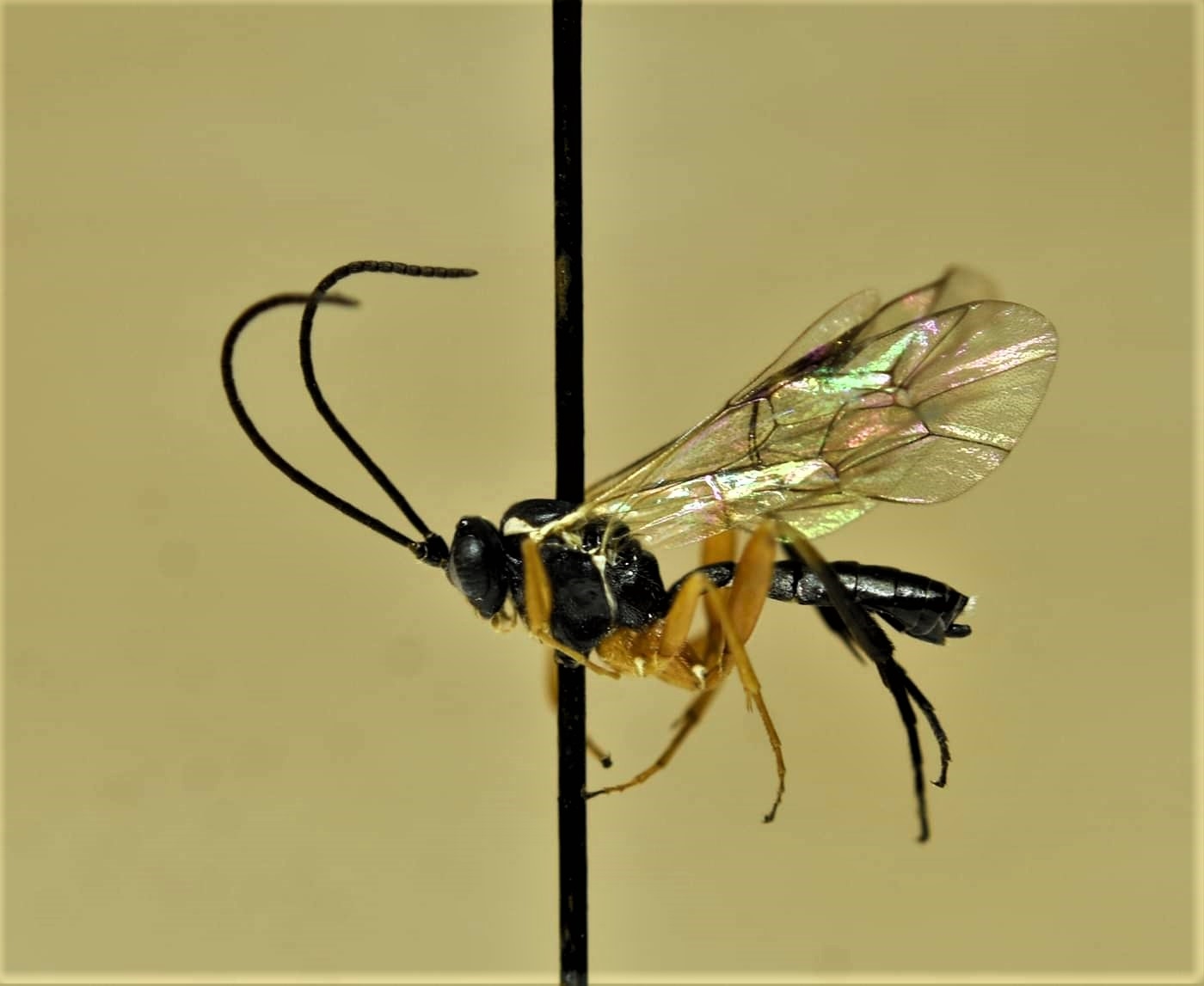
Joro spider; photo by Dorothy Kozlowski, University of Georgia

Lately there has been lots of media attention to an introduced spider which has attracted attention because it is large and showy – and very numerous in 2021. The Joro spider, (Trichonephila (formerly Nephila) clavata) is — like so many introduced organisms — from East Asia (Japan, China, Korea, and Taiwan) (Hoebeke, Huffmaster and Freeman 2015; full citation at the end of the blog).

The spider was originally found in 2013 at several locations in three counties of northeast Georgia. All were near warehouses and other facilities associated with Interstate-85, a major transport corridor (Hoebeke, Huffmaster and Freeman 2015).

The Joro spider is one of about 60 species of non-indigenous spiders (Araneae) that have been detected in North America. The majority originated in Europe and Asia (species list posted here; see Araneae).

The Joro spider is one of the golden orb-web spiders, a group with conspicuously large and colorful females that weave exceptionally large, impressive webs. One species of the genus, N. clavipes (L.), occurs in the Western Hemisphere. It is found throughout Florida, the West Indies, as far north as North Carolina, across the Gulf States, through Central America, and into South America as far south as Argentina. It is also known as the “banana spider” or “golden silk spider.” (Hoebeke, Huffmaster and Freeman 2015)

Hoebeke, Huffmaster and Freeman (2015) describe both the spider’s discovery in Georgia (by Huffmaster) and how to distinguish it from other large spiders in the southeastern U.S. South Carolina has posted a fact sheet here.

In Asia and northeast Georgia, the spider apparently overwinters as eggs. Spiderlings emerge from the egg cocoons in the spring. Males reach maturity by late August. Females become sexually mature in September and early October. Oviposition occurs from mid-October to November resulting in the production of only a single egg sac. Large, mature females were first observed beginning in late September and persisted until mid-November when temperatures began to cool significantly. Most spiders were found in large webs attached to the exterior of homes near porch lights, on wooden decks, or among shrubs and flowering bushes near homes (Hoebeke, Huffmaster and Freeman 2015). By 2021 the webs were so numerous as to be consider major nuisances.

Probable Introduction Pathways

Hoebeke, Huffmaster and Freeman (2015) think the spiders are frequently transported (as adults or egg masses) in cargo containers, on plant nursery stock, and on crates and pallets. If accidental transport were to occur in late August to early October from East Asia, then the spiders’ reproduction would be at its height and there would be a greater likelihood that egg masses might be deposited on structures or plant material being exported.

This thought is supported by an email sent to Hoebeke in 2016 that a Joro spider had been seen on the outside of a freight container in Tacoma, Washington.  There has been no report of additional sightings in Washington State (Hoebeke pers. comm.)

Spread within the United States

By 2021, the Joro spider had been detected in at least 30 counties in north and central Georgia, adjacent South Carolina; Hamilton and Bradley counties in Tennessee; and Rutherford and Jackson counties in North Carolina (Hoebeke pers. comm.).  See the map here.

Spread in the United States is probably associated with major transport routes. The original detections were 64 km northeast of Atlanta near a thriving business location on the I-85 business corridor,

It is also possible that spiderlings balloon, that is, ride air currents to move some distance. This distance can be miles, depends on the spider’s mass and posture, air currents, and on the drag of the silk parachute (Hoebeke, Huffmaster and Freeman 2015). The 2014 Madison County detection in northeast Georgia was not near transport corridors but in a rural mixed farm landscape, downwind from the other sites. Males also use ballooning to find females for mating (Gavriles 2020).

How might the Joro spider affect the local ecosystem?

Many questions exist about the Joro spiders’ impact. Will they outcompete other orb weaving spiders – either native or nonnative? Will they reduce other insect populations through predation? Scientists do not yet see  indication of displacement of native spiders or depletion of prey species (Gavriles 2020; Hoebeke pers. comm.) 

Potential Range – update

In March 2022, two University of Georgia scientists (Andy Davis and Benjamin Frick) published a study that evaluated the Joro spider’s cold tolerance by studying the spider’s physiology and survival during a brief (2 minute) freeze. They found that the Joro spider’s more rapid metabolic and heart rates means it could probably survive throughout most of the Eastern Seaboard. The scientists reiterate earlier information that the Joro spider does not appear to have much of an effect on local food webs or ecosystems.

SOURCES

Cannon, J. Palm-sized, invasive spiders are spinning golden webs across Georgia in ‘extreme numbers’ https://www.usatoday.com/story/news/nation/2021/09/29/scientists-say-invasive-joro-spiders-here-stay-georgia/5917913001/  accessed 21-11/5

Gavrilles, B. Like it or not, Joro spiders are here to stay. October 26, 2020 https://news.uga.edu/joro-spiders-are-here-to-stay/

Hoebeke, E. Richard. University of Georgia Department of Entomology

Hoebeke, E.R., W. Huffmaster, and B.J. Freeman. 2015 Nephila clavata L. Koch, the Joro Spider of East Asia, newly recorded from North America (Araneae: Nephilidae) PeerJ https://peerj.com/articles/763/#

Posted by Faith Campbell

We welcome comments that supplement or correct factual information, suggest new approaches, or promote thoughtful consideration. We post comments that disagree with us — but not those we judge to be not civil or inflammatory.

For a detailed discussion of the policies and practices that have allowed these pests to enter and spread – and that do not promote effective restoration strategies – review the Fading Forests report at http://treeimprovement.utk.edu/FadingForests.htm

The Lacey Act – Can It Protect US from Invasive Species?

Sean Connery as Hotspur, Shakespeare Henry IV Part I (BBC, “Age of Kings”)

[Starlings – one of the agricultural pests that prompted adoption of the Lacey Act – were introduced to the U.S. because they were mentioned by Shakespeare: Hotspur says “Nay, I’ll have a starling shall be taught to speak nothing but ‘Mortimer,’ and give it him, to keep his anger still in motion.”]

Americans are increasingly aware of the damage caused by invasive species. The law that ostensibly protects our environment from most potentially invasive animals is the Lacey Act – more specifically, the “injurious wildlife” sections of the law, now known as 18 U.S.C. 42 or title 18.

When it was adopted 120 years ago, the Lacey Act was not intended to protect the environment from the full range of possible animal bioinvaders. While Congress amended it several times in the first 60 years of its existence, the law still has many gaps that impede its usefulness for that purpose.

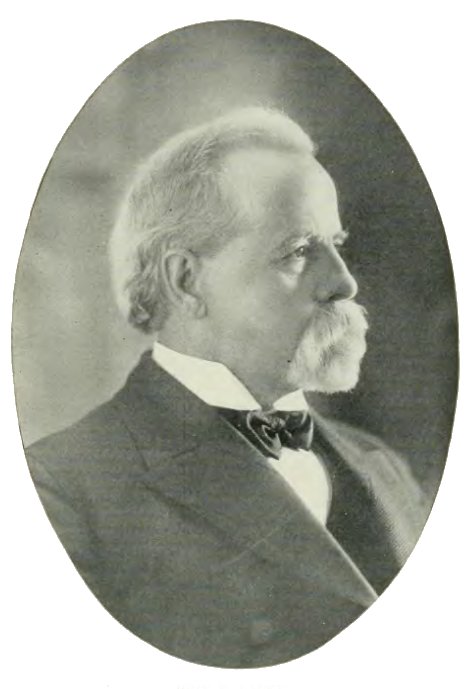
Rep. John F. Lacey via Wikimedia Commons

When first adopted in 1900, the injurious wildlife provisions of the Lacey Act prohibited importation only of wild mammals and birds that posed a threat to agriculture and horticulture. The statute was quite broad in that it prohibited importation of any wild bird or mammal without a permit; there was no requirement that a species be designated as “injurious” to be regulated. The Act was then administered by the U.S. Department of Agriculture. [For a detailed discussion of the Lacey Act’s changing provisions, see Jewell 2020; full reference at the end of this blog.]

In 1960 the Act was amended to expand the list of taxa eligible for designation as “injurious” to include fishes, mollusks, crustaceans, reptiles, and amphibians. Congress also expanded the justifications for listing a species as injurious. It added harm to people, to forestry, or to wildlife or US wildlife resources to the law’s original concerns for agriculture and horticulture. This second change brought the purposes of the Lacey Act closer to the mandate of the U.S. Fish and Wildlife Service (USFWS) – which had assumed responsibility for implementing the Act in 1939.

Unfortunately, Congress simultaneously took other action that greatly weakened USFWS’ ability to use the Act to protect the environment from introduced animals. First, it dropped the requirement that the Secretary approve, with a permit, any importation of a wild bird or mammal.

Second, the 1960 amendment clouded the originally clear prohibition of movement of listed species across state lines. The new language prohibits “any shipment between the continental United States, the District of Columbia, Hawaii, the Commonwealth of Puerto Rico, or any possession of the United States …”

For the next 57 years, the USFWS and Congress sometimes interpreted that language as continuing to prohibit transport between the states within the continental United States. However, this situation could not last. In 2017, acting in a case that had challenged the 2012 listing of several nonnative constrictor snakes as “injurious,” the D.C. Circuit court found that the plain language of §18 U.S.C. 42(a)(1) does not prohibit the transportation of injurious wildlife between states within the continental United States. So now, transportation of injurious wildlife among the continental states is not prohibited by the statute in most circumstances.

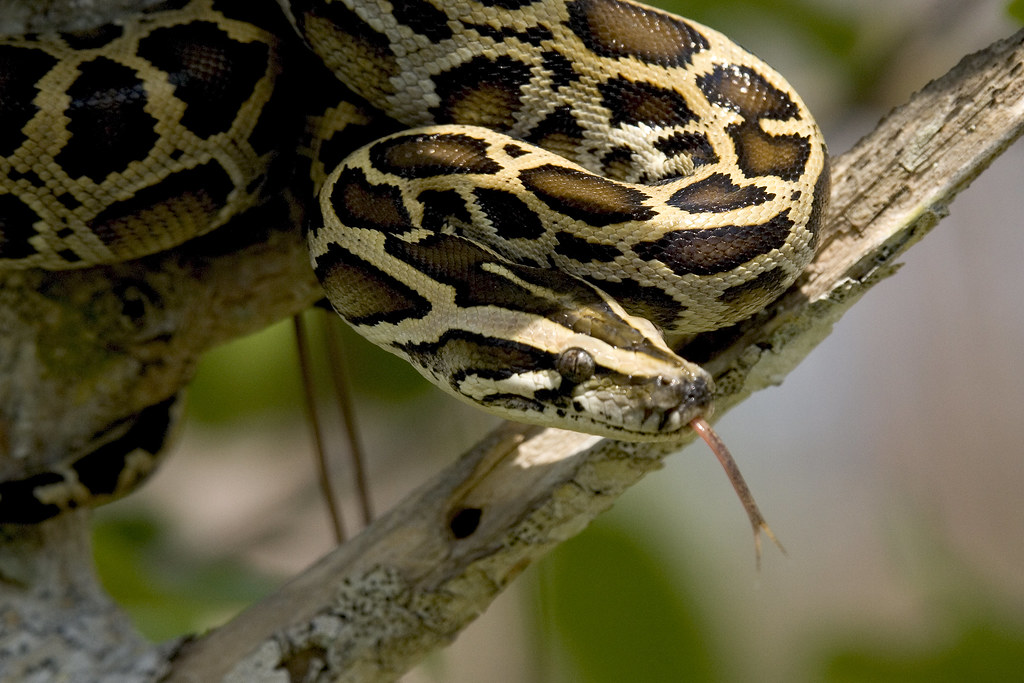
Burmese python; photo by R. Cammauf, Everglades National Park via Flickr

The Law’s Strengths

Some aspects of the law have been strengths. Since the term “injurious” has never been defined, the USFWS has been able to use its discretion to list species that are not necessarily invasive themselves but that might cause harm in some other way. For example, the salmon family and 20 genera of salamanders have been listed because they are vectors of harmful wildlife pathogens.

In addition, USFWS has listed entire genera or families of organisms – as long as each species within the taxon has been shown to possess the “injurious” trait(s). This flexibility has probably helped listings aimed at precluding importers from switching from the species that initially raised concerns to related species.

The Law’s Inherent Weaknesses

1) Legal shortfalls

Due to the confusion created by the 1960 amendment, the USFWS now lacks authority to prohibit interstate transport of species listed as “injurious”. This gap undermines the law’s efficacy in controlling spread of listed species once they are established within the U.S.

Also, the law does not prohibit other human actions that pertain to the presence and spread of species listed as “injurious,” e.g., sale, possession, or intra-state transport. Addressing these other aspects of invasive species policy was left to other players, such as states or resource managers.

2) Funding shortfall

Neither the Executive Branch nor Congress has ever provided specific funding for implementation of the Lacey Act. Only one USFWS staffer has the job of listing species under the Act. This situation might change now, since the American Rescue Plan Act adopted in spring 2021 does provide funding over the next five years for listing species that can vector pathogens harmful to people.

Staff’s Evaluation of Its Implementation of the Lacey Act

Since USFWS took over implementation of the Lacey Act in 1939, 36 taxonomic groups have been added to the “injurious wildlife” list. Seven of these listings comprise multiple species – either as genera or families. 

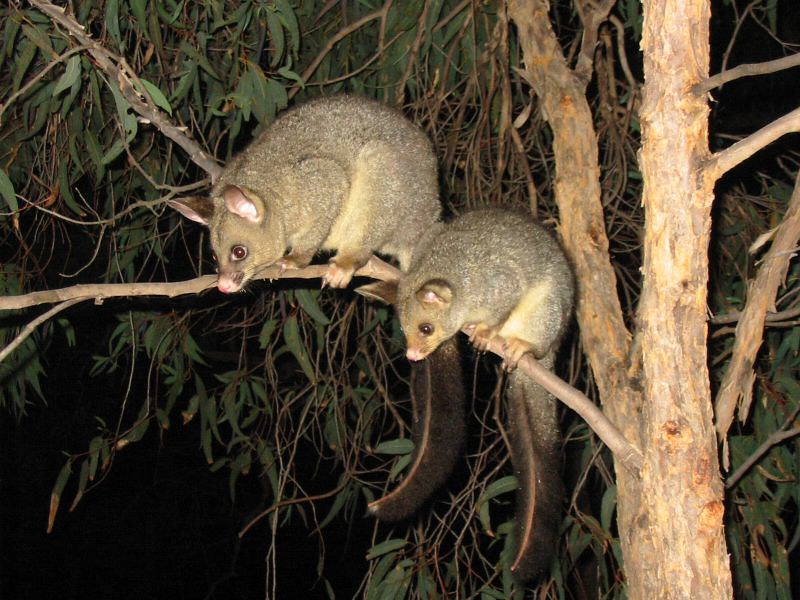
Two mammals have been listed since the late 1960s – brushtail possum in 2002 and raccoon dog in 1983. Recent listings have strongly focused on aquatic organisms. This is because the staff is housed in the Fish and Aquatic Conservation program and their expertise is in these species.

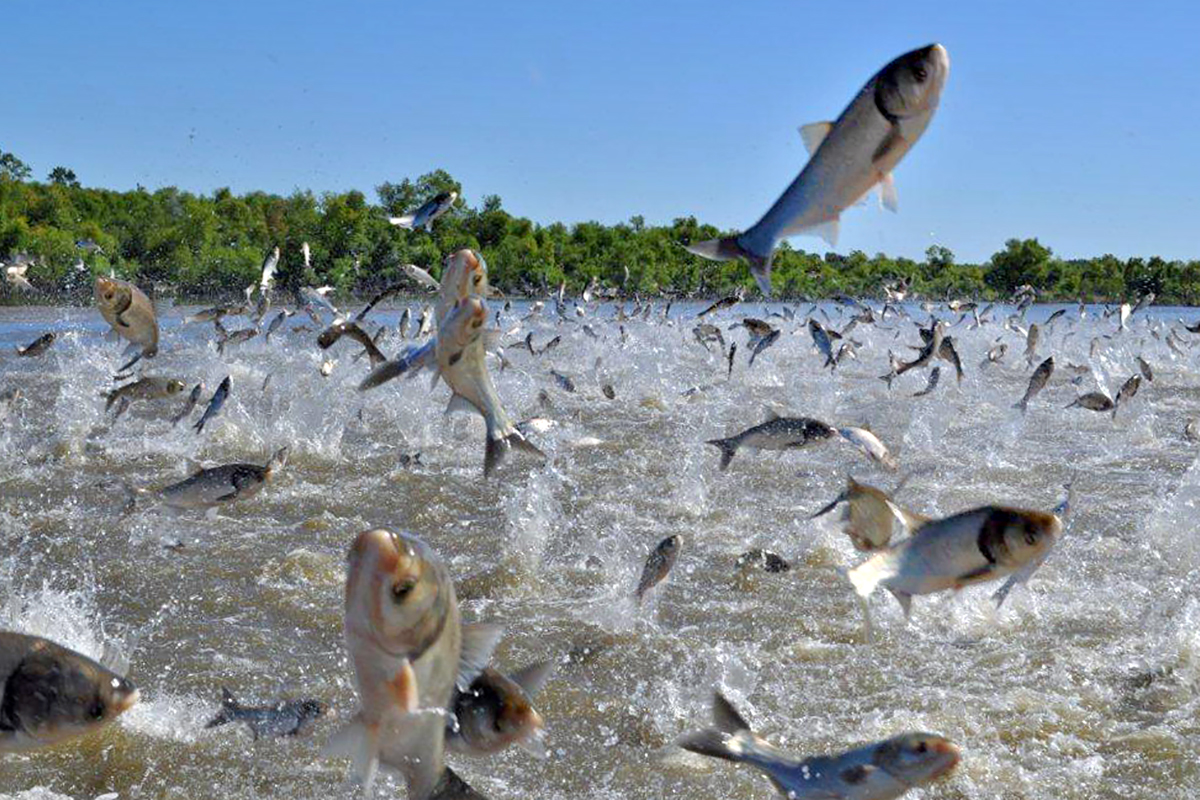
silver carp; photo by University of Illinois

Listing activity appeared to be building in the second decade of the 21st Century, with multi-species listings of fish, snakes, and salamanders between 2012 and 2016. However, there has been only one listing action since 2016 – and that was by an act of Congress (listing of the quagga mussel).

In two peer reviewed papers, the USFWS’ Jewell and Fuller provide a history of the Lacey Act’s injurious wildlife title and analyze the effects of listing of 307 species (those listed since 1952). They conclude that 98% of the species listings were “effective” because the listed species either had not been introduced subsequent to listing [288 species; 94% of the total number of listed species] or had not spread to additional states [12 species, 4% of the total]. Another way to calculate the latter figure is to say that 63% of all established species have remained within the state(s) where they were established at the time of listing. Only three species have been spread to additional states by human actions. In these cases, Jewell and Fuller considered the Lacey Act measures to be “ineffective”. For further details on the Jewell and Fuller evaluations of listing efficacy, see their article – full citation given at the end of this blog.

Jewell and Fuller do not evaluate the impacts of animal species introduced to the U.S. after 1960 that have never been listed under the Lacey Act, or speculate about whether listing those species might have minimized the risk of their introduction.

Jewell and Fuller consider listing of species not yet established in the U.S. to be most effective for two reasons. First, listing minimizes the probability that the species will be imported intentionally or unintentionally. Second, listing provides states with risk analyses and other information on which to rely in adopting their own restrictions, including possible prohibitions on sale or possession.

Jewell and Fuller also argue that even in the absence of legal authority to regulate interstate transport of listed species among the continental states, it is still worthwhile to list species that are already established in the U.S. They give six reasons. I summarize those reasons (placing them in my order, not Jewell and Fuller’s):

1) Listing can protect the islands of Hawai`i, Puerto Rico, and the Caribbean and Pacific territories. All are extremely vulnerable to invasive species.

2) If a species shares the traits of injuriousness with other species, particularly those in the same genus or family, then including the already-invasive species demonstrates why the related species should also be listed.

3) Many imported animals carry parasites and pathogens harmful to native species, and stopping the continued importation can reduce those threats that cause disease.

4) Prohibiting further importation of the invasive species can prevent individuals from being introduced to new areas where the species would not otherwise have arrived and can reduce propagule pressure that could introduce hardier individuals.

5) Listing can provide states and other jurisdictions with the technical information they need to pursue additional restrictions not federally authorized under 18 U.S.C. 42, such as transport into a state, possession, and sale.

6) Listing reduces propagule pressure and might enhance the efficacy of any eradication or control measures.

How to Improve the Lacey Act

1) Amend the Lacey Act to restore authority to regulate interstate movement of listed species – including among the continental states and emergency listing authority. Also establish a more streamlined listing process.

2) Strengthen implementation of the law by providing a specific, adequate appropriation to hire additional staff. Utilize the enhanced resources to assess species proactively using risk assessment tools.

It is not yet clear whether the Biden Administration will initiate a more active listing process, especially beyond the zoonotic disease vectors that are the subject of the American Rescue Plan Act.

Note: The “injurious wildlife” section of the Lacey Act (18 U.S.C. 42, or title 18) is separate from another part of the Lacey Act (16 U.S.C. 3371-3378) that is has always been more widely known. This provision regulates wildlife trafficking across State lines. It was later broadened to include plants and trafficking of wildlife and plants from foreign countries.

SOURCES

Jewell S.D. (2020) A century of injurious wildlife listing under the Lacey Act: a history. Management of Biological Invasions. Volume 11, Issue 3: 356–371, https://doi.org/10. 3391/mbi.2020.11.3.01 https://www.reabic.net/journals/mbi/2020/3/MBI_2020_Jewell.pdf

Jewell S.D., P.L. Fuller (2021) The unsung success of injurious wildlife listing under the Lacey Act. Management of Biological Invasions. Volume 12, Issue 3:527-545 https://www.reabic.net/journals/mbi/2021/3/MBI_2021_Jewell_Fuller.pdf

Alternative view – that Lacey Act implementation has failed to protect the U.S. – presented by the following authors:

Fowler, A.J., D.M. Lodge and J. Hsia. 2007. Failure of the Lacey Act to protect US ecosystems against animal invasions. Frontiers in Ecology and the Environment.

Springborn, M. C.M. Romagosa and R.P. Keller. 2011. The value of nonindigenous species risk assessment in international trade. Ecological Economics

Jenkins, P.T. 2012. Invasive animals and wildlife pathogens in the United States: the economic case for more risk assessments and regulation. Biological Invasions

Posted by Faith Campbell

We welcome comments that supplement or correct factual information, suggest new approaches, or promote thoughtful consideration. We post comments that disagree with us — but not those we judge to be not civil or inflammatory.

USFS invasive species report: Herculean effort that could have had greater impact

In February the USFS published a lengthy analysis of invasive species: Invasive Species in Forests and Rangelands of the United States. A Comprehensive Science Synthesis for the US Forest Sector (Poland et al. 2021; full citation at the end of the blog). More than 100 people contributed to the book; I helped write the chapters on legislation and regulations and international cooperation. The book is available for download at no cost here.

Chapters address impacts in terrestrial and aquatic systems; impacts on ecosystem processes; impacts on various sectors of the economy and cultural resources; interactions with climate change and other disturbances; management strategies for species and landscapes; tools for inventory and management. Each chapter evaluates the current status of knowledge about the topic and suggests research needs. There are also summaries of the invasive species situation in eight regions.

Miconia – one of many invasive plants damaging ecosystems in Hawai`i

I greatly appreciate the effort. Authors first met in 2015, and most chapters were essentially written in 2016. The long delay in its appearance came largely from negotiations with the publisher. The delay means some of the information is out of date. I am particularly aware that several experts – e.g., Potter, Guo, and Fei – have published about forest pests since the Aukema source cited. I wonder whether inclusion of their findings might change some of the conclusions about the proportion of introduced pests that cause noticeable impacts.

Since the report’s publication in February I have struggled with how to describe and evaluate this book. What is its purpose? Who is its audience? The Executive Summary says the report is a sector-wide scientific assessment of the current state of invasive species science and research in the U.S.

However, the Introduction states a somewhat different purpose. It says the report documents invasive species impacts that affect ecosystem processes and a wide range of economic sectors. This would imply an intention to enhance efforts to counter such effects– not just to shape research but also to change management. Indeed, the Conclusion of the Executive Summary (pp. xvi-xvii) is titled “An Imperative for Action”.

Tom Vilsack, Secretary of Agriculture

I am not the author to evaluate how effectively the book sets out research agendas. Regarding its usefulness in prompting policy-makers to do more, I regretfully conclude that it falls short.

Getting the balance right between an issue’s status and what needs to be done is difficult, perhaps impossible. I appreciate that the report makes clear how complex bioinvasion and ecosystem management and restoration are. Its length and density highlight the difficulty of making progress. This daunting complexity might well discourage agency leadership from prioritizing invasive species management.

On the other hand, summary sections sometimes oversimplify or bury important subtleties and caveats. The question of whether some key questions can ever be resolved by science is hinted at – but in detailed sections that few will read. The same is true regarding the restrictions imposed by funding shortfalls.

The Report Would Have Benefitted from Another Round of Editing

Editing this tome was a Herculean task. I feel like a curmudgeon suggesting that the editors do more! Nevertheless, I think the report would have been improved by the effort. One more round of editing – perhaps involving a wider range of authors – could have pulled together the most vital points to make them more accessible to policymakers. It could also have tightened the ecosystem-based descriptions of impacts, which are currently overwhelmed by too much information.

A precis for policymakers

A precis focused on information pertinent to policymakers (which the current Executive Summary does not) should contain the statement that the continued absence of a comprehensive investigation of invasive species’ impacts hampers research, management, and policy (mentioned only in §16.5, on p. 332). It should note situations in which insufficient funding is blocking recommended action. I note three examples: programs aimed at breeding trees resistant to non-native pests (resource issues discussed only in §§8.3.1 and 8.3.2, p. 195); sustaining “rapid response” programs (§6.4.3, p. 125); costs of ecosystem restoration, especially for landscape-level restoration (§16.4). I am sure there are additional under-funded activities that should be included!

cross-bred ash seedlings being tested for vulnerability to EAB; photo courtesy of Jennifer Koch

 Other important information that should be highlighted in such a precis includes the statement that many ecosystems have already reached a point where healthy functions are in a more tenuous balance due to invasive species (p. 51). Effective carbon storage and maintaining sustainable nutrient and water balance are at risk. Second, costs and losses caused by invasive forest pests generally fall disproportionately on a few economic sectors and households. They cannot be equated to governmental expenditures alone (p. 305).  Third, even a brief estimate of overall numbers of invasive species appears only in §7.4. Information about individual species is scattered because it is used as example of particular topic (e.g., impacts on forest or grassland ecosystems, or on ecosystem services, or on cultural values).

Ecosystem Impacts Overwhelmed

As noted above, the report laments the absence of a comprehensive investigation of invasive species’ impacts. Perhaps the editors intended this report to partially fill this gap. To be fair, I have long wished for a “crown to root zone” description of invasive species’ impacts at a site or in a biome. Concise descriptions of individual invasive species and their impacts are not provided by this report, but they can be found elsewhere. (The regional summaries partially address the problem of too much information – but they do not provide perspective on organisms that have invaded more than one region, e.g., emerald ash borer or white pine blister rust.) Another round of editing might have resulted in a more focused presentation that would be more easily applied by policymakers.

Welcome Straightforward Discussion of Conceptual Difficulties

I applaud the report’s openness about some important overarching concepts that science cannot yet formulate.  If supportable theories could be conceived, they would assist in the development of policies:

  • Despite decades of effort, scientists have not established a clear paradigm to explain an ecosystem’s susceptibility to invasion (p. 85). Invasibility is complex: it results from a dynamic interplay between ecosystem condition and ecological properties of the potential invader, especially local propagule pressure.
  • Scientists cannot predict how climate warming will change distributions of invasive species [see Chapter 4] and alter pathways. This inability hampers efforts to develop effective prevention, control, and restoration strategies (p. xi). Climate change and invasive species need to be studied together as interactive drivers of global environmental change with evolutionary consequences.

The Report’s Recommendations

Policy-oriented recommendations are scattered throughout the report. I note here some I find particularly important:

  • Measures of progress should be based on the degree to which people, cultures, and natural resources are protected from the harmful effects of invasive species.
  • Managers should assess the efficacy of all prevention, control, and management activities and their effect upon the environment. Such an evaluation should be based on a clear statement of the goals of the policy or action. [I wish the report explicitly recognized that both setting goals and measuring efficacy are difficult when contemplating action against a new invader that is new to science or when the impacts are poorly understood. Early detection / rapid response efforts are already undermined by an insistence on gathering information on possible impacts before acting; that delay can doom prospects for success.]
    • Risk assessment should both better incorporate uncertainty and evaluate the interactions among multiple taxa. Risk assessment tools should be used to evaluate and prioritize management efforts and strategies beyond prevention and early detection/rapid response.
    • Economic analyses aimed at exploring tradeoffs need better tools for measuring returns on invasive species management investments (§16.5).
  • Actions that might be understood as “restoration” aim at a range of goals along the gradient between being restored to a known historic state and being rehabilitated to a defined desired state. The report stresses building ecosystem resilience to create resistance to future invasions, but I am skeptical that this will work re: forest insects and disease pathogens.
  • Propagule pressure is a key determinant of invasion success. Devising methods to reduce propagule pressure is the most promising to approach to prevent future invasions (p. 115). This includes investing in quarantine capacity building in other countries can contribute significantly to preventing new invasions to the US.
  • Resource managers need additional studies of how invasive species spread through domestic trade, and how policies may differ between foreign and domestic sources of risk.

I appreciate the report’s attention to such often-ignored aspects as non-native earthworms and soil chemistry. I also praise the report’s emphasis on social aspects of bioinvasion and the essential role of engaging the public. However, I think the authors could have made greater use of surveys conducted by the Wisconsin Department of Natural Resources and The Nature Conservancy’s Don’t Move Firewood program.

Lost Opportunities

I am glad that the report makes reference to the “rule of 25” rather than “rule of 10s”. I would have appreciated a discussion of this topic, which is a current issue in bioinvasion theory. As noted at the beginning of this blog, the long time between when the report was written and when it was published might have hampered such a discussion

Also, I wish the report had explored how scientists and managers should deal with the “black swan” problem of infrequent introductions that have extremely high impacts. The report addresses this issue only through long discussions of data gaps, and ways to improve models of introduction and spread.

I wish the section on the Northwest Region included a discussion of why an area with so many characteristics favoring bioinvasion has so few damaging forest pests. Admittedly, those present are highly damaging: white pine blister rust, sudden oak death, Port-Orford cedar root disease, balsam woolly adelgid, and larch casebearer. The report also notes the constant threat that Asian and European gypsy moths will be introduced. (The Entomological Society of America has decided to coin a new common name for these insects; they currently to be called by the Latin binomial Lymatria dispar).

And I wish the section on the Southeast and Caribbean discussed introduced forest pests on the Caribbean islands. I suspect this reflects a dearth of research effort rather than the biological situation. I indulge my disagreement with the conclusion that introduced tree species have “enriched” the islands’ flora.

SOURCE

Poland, T.M., P. Patel-Weynand, D.M Finch, C.F. Miniat, D.C. Hayes, V.M Lopez, editors. 2021. Invasive species in Forests and Rangelands of the United States. A Comprehensive Science Synthesis for the US Forest Sector. Springer

Posted by Faith Campbell

We welcome comments that supplement or correct factual information, suggest new approaches, or promote thoughtful consideration. We post comments that disagree with us — but not those we judge to be not civil or inflammatory.

For a detailed discussion of the policies and practices that have allowed these pests to enter and spread – and that do not promote effective restoration strategies – review the Fading Forests report at http://treeimprovement.utk.edu/FadingForests.htm

The South African Report as a Model: U.S. Falls Short

Ailanthus – one of the invasive species shared by South Africa and the U.S.

A few years ago, I posted a blog in which I pointed to a report on South Africa’s response to bioinvasion as a model for the U.S. and other countries. South Africa has published its second report. This report outlines the country’s status as of December 2019 and trends since the first report (i.e. since December 2016). (I describe the report’s findings on South Africa’s invasive species situation in a companion blog.) Again, I find it a good model of how a country should report its invasive species status, efforts, and challenges. In comparison, many U.S. efforts comes up short.

U.S. Reports Need to Be More Comprehensive

The South African report provides a national perspective on all taxa. Various United States agencies have attempted something similar a few times. The report issued by the Office of Technology Assessment in 1993  summarized knowledge of introduced species and evaluated then-current management programs.

The 2018 report by the U.S. Geological Service focused on data: the authors concluded that 11,344 species had been introduced and described the situation in three regions – the “lower 48” states, Alaska, and Hawai`i. However, the USGS did not evaluate programs and policies. The new USDA Forest Service report (Poland et al. 2021) describes taxa and impacts of invasive species in forest and grassland biomes, including associated aquatic systems. Again, it does not evaluate the efficacy of programs and policies.

The biennial national reports required by the Executive Order establishing the National Invasive Species Council (NISC) are most similar to the South African ones in intent. However, none has been comprehensive. For example, the most recent, issued in 2018, strives to raise concern by stating that invasive species effect a wide range of ecosystem services that underpin human well-being and economic growth. Some emphasis is given to damage to infrastructure. The report then sets out priority actions in six areas: leadership and prioritization, coordination, raising awareness, removing barriers, assessing federal capacities, and fostering innovation. NISC also issued a report in 2016 – this one focused on improving early detection and rapid response. NISC posted a useful innovation – a “report card” updating progress on priority actions — in October 2018.   It listed whether actions had been completed, were in progress, or were no longer applicable. However, the “report card” gave no explanation of the status of various actions; the most notable omissions concerned the actions dismissed as “not applicable”. Worse, no report cards have been posted since 2018. I doubt if those or any more comprehensive reports will be forthcoming. This reflects the increasing marginalization of NISC. The Council has never had sufficient power to coordinate agencies’ actions, and now barely survives.

U.S. Reports Need to Be More Candid

The authors of the South African report made an impressive commitment to honest evaluation of the country’s gaps, continuing problems, progress, and strengths. As in the first report, they are willing to note shortcomings, even of programs that enjoy broad political support (e.g., the Working for Water program).

It is not clear whether decision-makers have acted — or will act — on the report’s findings. That is true in many countries, including the United States. However, that is separate whether decision-makers have an honest appraisal on which to base action.

Assessment of South Africa’s Invasive Species Programs

Here is a summary of what the authors say about South Africa’s invasive species program. I want to state clearly that my intention is not to criticize South Africa’s efforts. No country has a perfect program, and South Africa faces many challenges. These have been exacerbated by COVD-19.  

The report identifies the areas listed below as needing change or improvement.

1) Absence of a comprehensive policy on bioinvasion. Such a policy would provide a vision for what South Africa aspires to achieve, clarify the government’s position, guide decision-makers, and provide a basis for coordinating programs by all affected parties (e.g., including conservation and phytosanitary agencies).

2) As in the first report, the authors call for monitoring program outcomes (results) rather than inputs (money, staffing, etc.) or outputs (e.g., acres treated). The authors also say data must be available for scrutiny. In those cases when data are adequate for assessing programs’ efficacy, they indicate that the control effort is largely ineffective.

3) Inadequate data in several areas. The report notes progress in developing and applying transparent and science-based criteria to species categorization as invasive (as distinct from relying on expert opinion). However, this change is taking time to implement, and sometimes results in species receiving a different rating. [I agree with the report that data gaps undermine understanding of the extent and impacts of bioinvasion, domestic pathways of spread, justification of expenditures, assessment of various programs’ efficacy (individually or overall), priority setting, and identifying changes needed to overcome programs’ weaknesses. However, I think filling these data gaps might demand time and resources that could better be utilized to respond to invasions – even when those invasions are not fully understood.]

4) Funding of bioinvasion programs by the National Department of Forestry, Fisheries, and the Environment has been fairly constant over 2012–2019, but this is a decline in real terms. The figure of 1 billion ZAR does not include spending by other government departments, national and provincial conservation bodies, municipalities, non-governmental organizations, and the private sector. Authors of the report expect funding to decrease in the future because of competing needs.

While at least 237 invasive species are under some management (see Table 5.1), funding is heavily skewed – 45% of funding goes to management of one invasive plant (black wattle); 72% to management of 10 species.

5) Need for policies to address the threat emerging from rising trade with other African countries, especially considering the probable adoption of the proposed African Continental Free Trade Area. Under this agreement, imported goods will only be inspected for alien species at the first port of entry, and most African countries have limited inspection capacity. [European pathologists Brasier, Jung, and others have noted the same issue arising in Europe, where imported plants move freely around the European Union once approved for entry by one member state.]

The authors of the South African report say programs’ efficacy would be considerably improved if species and sites were prioritized, and species-specific management plans developed. They warn that, in the absence of planning and prioritization, there is a risk that funding could be diluted by targeting too many species, leading to ineffective control and a concomitant increase in impacts.

In South Africa, regulations, permits, and other measures aimed at regulating legal imports of listed species are increasingly effective. However, there is still insufficient capacity to prevent accidental or intentional illegal introductions of alien species. There is also more enforcement of regulations requiring landowners to control invasive species. Six criminal cases have been filed and – as of December 2019, one conviction (guilty plea) obtained. However, the data do not allow an assessment of the overall level of compliance.

The report found little discernable progress on the proportion of pathways that have formally approved management plans. Management is either absent or ineffective for 61% of pathways. There has been no action to manage the ballast water pathway. On the other hand, in some cases, other laws focus explicitly on pathways, e.g., agricultural produce is regulated under the Agricultural Pests Act of 1983.

During the period December 2016 – December 2019, the Plant Inspection Services tested more than 12,000 plant import samples for quarantine pests and made 62 interceptions. The report calls for more detailed information from the various government departments responsible for managing particular pathways (e.g., the phytosanitary service), and for an assessments of the quality of their interventions.

The number of non-native taxa with some form of management has grown by 40% since December 2016 – although – as I have already noted — spending is highly skewed to a few plant species. The number and extent of site-specific management plans has also increased, apparently largely due to a few large-scale plans developed by private landowners. However, few of these plans have been formally approved by some unspecified overseer.

Citing the strengths and weaknesses described above, the current (second) report downgraded its assessment of governmental programs from “substantial” to “partial”.  

Comparison to U.S.

How does the United States measure up on the elements that need change or improvement?  I know of no U.S. government report that is as blunt in assessing the efficacy of our programs –individually or as a whole.

Nevertheless, each of the five weaknesses identified for South Africa also exist in the United States:

  1. Re: lack of a comprehensive policy, I think the U.S. also suffers this absence. This is regrettable since the National Invasive Species Council (NISC) was set up in 1999.
  2. Re: monitoring outcomes to assess programs’ efficacy, I think U.S. agencies do seem to be more focused on collecting data on programs’ results – see the Forest Service’ budget justification. However, I think too often the data collected focus on inputs and outputs.
  3. Re: data gaps, I think all countries – including the U.S. — lack data on important aspects of bioinvasion. I differ from the South African report, however, in arguing for funding research aimed at developing responses rather than monitoring to clarify the extent of a specific invasive species. Information that does not lead to action seems to me to be a luxury given the low level of funding.
  4. Re: funding, I find that, despite the existence of NISC, it remains difficult to get an overall picture of U.S federal funding of invasive species programs. Indeed, the cross-cut budget was dropped in 2018 at the Administration’s request. I expect all agencies are under-funded; I have often said so as regards key USDA programs. As in South Africa, funding is skewed to a few species that I think should be lower in priority (e.g., gypsy moth). 
  5. Re: upgrading invasive species programs to counter free-trade policies, I think U.S. trade policies place too high a priority on promoting agricultural exports to the detriment of efforts to prevent forest pest introductions. This imbalance might be present with regard to other taxa and pathways. See Fading Forests II here.

South African and U.S. agencies also face the same over-arching issues. For example, the U.S. priority-setting process seems to be a “black box.” Several USFS scientists (Potter et al. 2019) spent considerable effort to develop a set of criteria for ranking action on tree species that are hosts of damaging introduced pests. Yet there is no evidence that this laudable project influenced priorities for USFS funding.

SOURCES

Poland, T.M., P. Patel-Weynand, D.M Finch, C.F. Miniat, D.C. Hayes, V.M Lopez, editors. 2021. Invasive Species in Forests and Rangelands of the United States. A Comprehensive Science Synthesis for the US Forest Sector. Springer

Potter, K.M., Escanferla, M.E., Jetton, R.M., Man, G., Crane, B.S. 2019. Prioritizing the conservation needs of United States tree species: Evaluating vulnerability to forest P&P threats, Global Ecology and Conservation (2019), doi: https://doi.org/10.1016/j.gecco.2019.e00622.

SANBI and CIB 2020. The status of bioinvasions and their management in South Africa in 2019. pp.71. South African National BD Institute, Kirstenbosch and DSI-NRF Centre of Excellence for Invasion Biology, Stellenbosch. http://dx.doi.org/10.5281/zenodo.3947613

Posted by Faith Campbell  

We welcome comments that supplement or correct factual information, suggest new approaches, or promote thoughtful consideration. We post comments that disagree with us — but not those we judge to be not civil or inflammatory.

For a detailed discussion of the policies and practices that have allowed these pests to enter and spread – and that do not promote effective restoration strategies – review the Fading Forests report at http://treeimprovement.utk.edu/FadingForests.htm

South Africa & Invasive Species: Threats to High Value Biodiversity and Human Well-Being

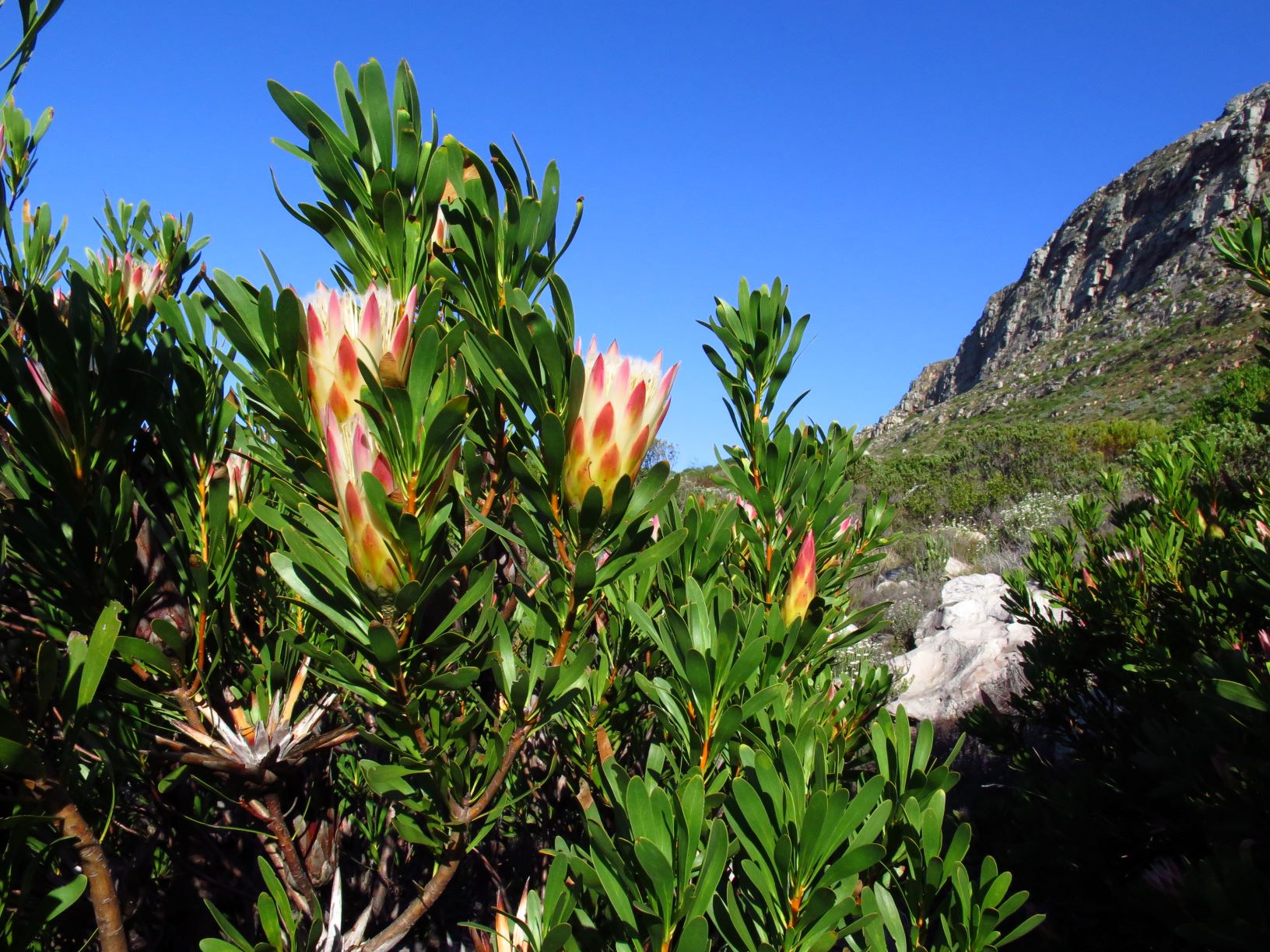
Protea repens and fynbos vegetation near Table Mountain; photo by Mike Wingfield

South Africa is a country of immense biological diversity. It is also one that recognizes the threat invasive species pose to its natural wealth – and to the economy and livelihoods of ordinary people.

Also, South Africans are trying hard to improve the country’s invasive species program. It recently released the second national report assessing how well it is curtailing introductions and minimizing damage. As I describe in a companion blog, I find these reports to contain exceptionally thorough and honest appraisals of South Africa’s invasive species programs. I address that value in the companion blog, where I compare the South African report — and its findings — to U.S. government reports on our invasive species programs.

In South Africa, bioinvasion ranks third – after cultivation and land degradation – as a threat to the country’s impressive biodiversity. Invasive species are responsible for 25% of all biodiversity loss. Certain taxa are at particular risk: native amphibians and freshwater fishes, and some species of plants and butterflies.

Particularly disturbing is the bioinvasion threat to the Fynbos biome. The report notes that 251 non-native species have been identified in this system. This finding causes concern because the Fynbos is a unique floral biome. In fact, it constitutes the principal component of one of only six floral kingdoms found on Earth: the Cape Floral Kingdom (or region). For more information, go here.

map of South Africa showing fynbos biome

Not surprisingly, invasive bird and plant species are most numerous around major urban centers. The report concludes that this is probably because most non-native birds are commensal with humans; most birds and plants were first introduced to urban centers; and there is greater sampling effort there. Indeed, the patterns of (detected) invasive plant richness are still highly sensitive to sampling effort.

South Africa is considered a leader on invasive species management. However, its record is spotty.

Successes

Biocontrol interventions are considered a success. South Africa has approved release of 157 biocontrol agents, including seven since 2016. All the recent agents (and probably most others) target invasive plants. The South African biocontrol community conducts a comprehensive review of their effectiveness at roughly 10-year intervals. The fourth assessment is currently under way. Also, the report considers eradication of non-native fish (primarily sport species) from several wetlands and river reaches to have been successful. (However, opposition by sport fishermen has delayed listing of some trout species as invasive.)

Failures

On the other hand, strategies to combat invasive plants, other than by biocontrol, appear to be having little success. Even the extent of plant invasions in national parks is poorly documented. Also, the report highlights ballast water as an inadequately managed pathway of invasion.

The report estimates that three new non-native species arrive in South Africa accidentally or illegally every year. Interestingly, reported species arrivals have declined in the current decade compared to the preceding one. The report’s authors consider this to probably be an underestimate caused by the well-known lag in detecting and reporting introductions. The apparent decline also is contrary to global findings. Table 1 in Seebens et al. 2020 (full citation at end of blog) projected that the African continent would receive approximately 767 new alien species between 2005 and 2050.

Even the introductory pathways are poorly known: the pathway for 54% of the taxa introduced to South Africa are unknown. Of the species for which the introductory pathway is known, horticultural or ornamental introductions of plants dominate – 15% of that total. A second important pathway – for accidental introductions – is shipping (5% of all introductions). Other pathways thought to be prominent during 2017–2019 are the timber trade, contaminants on imported animals, and natural dispersal from other African countries where they had previously been introduced.

PSHB symptoms on Vachellia sieberiana; photo by Trudy Paap

Polyphagous shothole borer

The report highlights as an example of a recent introduction that of the polyphagous shothole borer (PSHB, Euwallacea fornicatus). https://www.dontmovefirewood.org/pest_pathogen/polyphagous-shot-hole-borer-html/        http://nivemnic.us/south-africas-unique-flora-put-at-risk-by-polyphagous-shot-hole-borer/ See Box 3.1 in the report. This species is expected to have huge impacts, especially in urban areas. While most of the trees affected so far are non-native (e.g., maples, planes, oaks, avocadoes), several native trees are also reproductive hosts.  https://www.fabinet.up.ac.za/pshb  In response to the introduction, the government established an interdepartmental steering committee, which has developed a consolidated strategy and action plan. However, as of October 2020 the shot hole borer had not been listed under invasive species regulations, even on an emergency basis. It had been listed as a quarantine pest of agricultural plants (e.g., avocado) per the Agricultural Pests Act 1983.

As note in my blog assessing the report, the report bravely concludes that the government’s regulatory regime is only partially successful (whereas three years ago it graded it as “substantial”). The downgrade is the result of a more thorough evaluation of the regulatory regime’s effectiveness.

SOURCES

SANBI and CIB 2020. The status of bioinvasions and their management in South Africa in 2019. pp.71. South African National BD Institute, Kirstenbosch and DSI-NRF Centre of Excellence for Invasion Biology, Stellenbosch. http://dx.doi.org/10.5281/zenodo.3947613  

Seebens, H., S. Bacher, T.M. Blackburn, C. Capinha, W. Dawson, S. Dullinger, P. Genovesi, P.E. Hulme, M. van Kleunen, I. Kühn, J.M. Jeschke, B. Lenzner, A.M. Liebhold, Z. Pattison, J. Perg, P. Pyšek, M. Winter, F. Essl. 2020. Projecting the continental accumulation of alien species through to 2050. Global Change Biology. 2020;00:1 -13 https://onlinelibrary.wiley.com/doi/10.1111/gcb.15333

Posted by Faith Campbell

We welcome comments that supplement or correct factual information, suggest new approaches, or promote thoughtful consideration. We post comments that disagree with us — but not those we judge to be not civil or inflammatory.

For a detailed discussion of the policies and practices that have allowed these pests to enter and spread – and that do not promote effective restoration strategies – review the Fading Forests report at http://treeimprovement.utk.edu/FadingForests.htm

Interior’s Invasive Species Plan: Let’s Implement It!

Posted by Scott J. Cameron, former Acting Assistant Secretary for Policy Management and Budget , US Department of the Interior

locations in Hawaii Volcanoes National Park where ohia trees were infected by rapid ohia death pathogen in 2017

In 2019 Congress passed the John D. Dingell, Jr. Conservation, Management, and Recreation Act. Among other things, it directed the Department of the Interior to “develop a strategic plan that will achieve, to the maximum extent practicable, a substantive annual net reduction of invasive species population or infested acreage on land or water managed by the Secretary.”  This provision triggered a year-long process of public involvement and inter-bureau coordination. The result was a plan published in January 2021.  It represents the first attempt by Interior at a Department-wide multi-taxa, multi-year approach to invasive species.  It has the potential to spur integration of invasive species work across the Department’s many bureaus and to focus each bureau’s efforts on a set of common goals, strategies, and performance metrics.

While Congress’ language is open-ended, any planning exercise is constrained by the most recent President’s budget and existing law.  It is up to those of us who are not, or at least no longer, executive branch employees to advocate for plans unbound by those constraints. 

In that spirit, I offer eight recommendations to improve invasive species management. Four are within existing authorities; four more are outside the current budgetary and statutory framework.  Many more ideas are without a doubt worth pursuing.

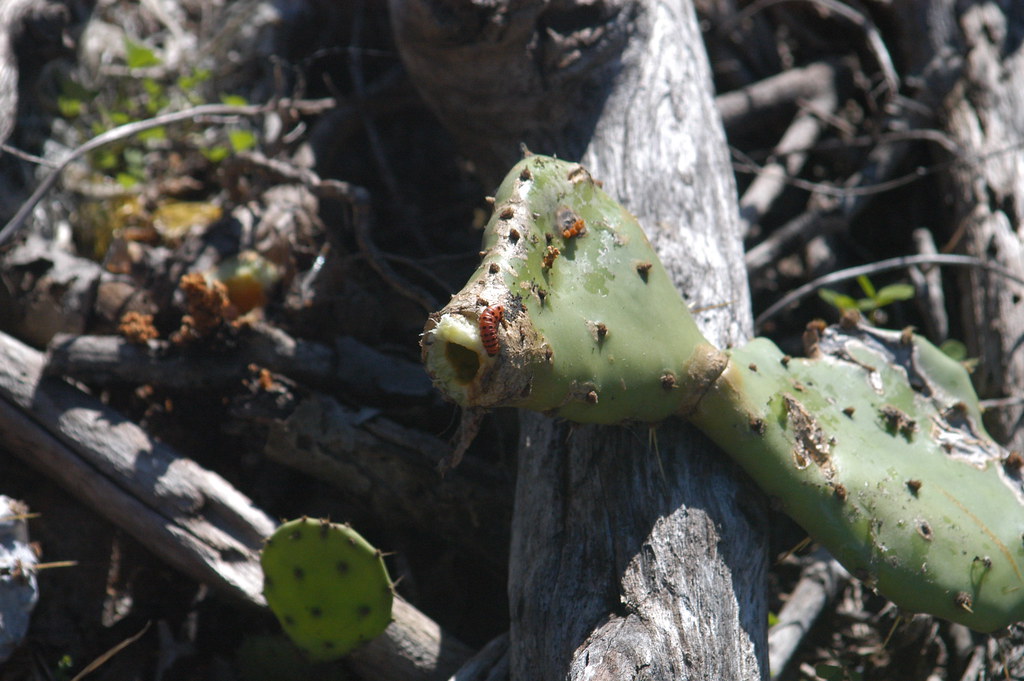
Opuntia (prickly pear) cactus – common plant in western National parks and on Bureau of Land Management lands; under threat by cactus moth

First, within existing funding and legal authorities, the Department has unfinished business that it can act on now.

  1. Secure approval of the package of categorical exclusions under the National Environmental Policy Act (NEPA) — now awaiting approval by the President’s Council on Environmental Quality (CEQ). Over many years agencies have documented how invasive species control improves, rather than harms, the environment.  Absent an applicable NEPA categorical exclusion approved by CEQ, though, each such action needs to run the time- and money-consuming gauntlet of NEPA compliance. In the meantime, the invasive plants germinate, the invasive animals reproduce, and what might have been a localized and inexpensive problem has expanded geographically and in terms of cost and complexity.  In the Fall of 2020 Interior submitted hundreds of pages of documentation on numerous practices proven to control invasive species without harming the environment.  Due to time and staffing constraints at CEQ, these categorical exclusions still await action.  Interior and CEQ should take prompt steps to finish them.
  • Allocate to the US Geological Survey at least $10 million of the roughly $90 million remaining available to the Secretary in CARES Act appropriations for research on invasive zoonotic diseases. These are diseases like COVID-19 and West Nile virus that can move from one species to another.  Many zoonotic diseases fit the definition of invasive species, since they are not native to the United States and endanger human health.  In the case of COVID-19 funding is available to the Secretary of the Interior, without need for further Congressional action, from funds appropriated by the CARES Act. The availability of these funds will expire at the end of September 2021, so Interior should provide this research funding to USGS as soon as possible. 
  • Join the existing Memorandum of Understanding between the Western Governors Association (WGA) and the US Department of Agriculture’s Forest Service. These groups have established “a framework to allow the U.S. Forest Service (USFS) and WGA to work collaboratively to accomplish mutual goals, further common interests, and effectively respond to the increasing suite of challenges facing western landscapes.”  This provides a forum to improve coordination between the States and the federal government on the management of invasive species, and Interior needs to be part of that team.
  • Interior should work with USDA to accelerate and intensify efforts to systematically improve coordination between the interagency Wildland Fire Leadership Council and the interagency National Invasive Species Council.  Both Councils have member agencies that practice vegetation management using similar tools and techniques, although for different purposes. The two Councils should identify a select number of initiatives in FY21 where their efforts would benefit both wildland fire management and invasive plant management .
swamp bay trees in Everglades National Park killed by laurel wilt; photo by Tony Pernas

Four steps to implement the strategic plan outside the scope of current law and the President’s Fiscal Year 2021 budget. I offer the following:

  1. Improve implementation of the Lacey Act program to list injurious species.  There are both legislative and administrative elements to this proposal.  

In a federal District Court decision on May 19, 2015, on a lawsuit filed by the Association of Reptile Keepers, the Court undid the longstanding Fish and Wildlife Service policy that the Lacey Act allowed FWS to ban interstate transport of injurious species. On April 7, 2017, the D.C. Circuit Court of Appeals upheld the District Court’s view. These rulings mean that FWS authority only applies to international commerce.  Unfortunately, the court’s interpretation of the law and legislative history are reasonable, so Congress needs to amend the law to make it clear that FWS is explicitly authorized to regulate interstate commerce in injurious species. The Department of the Interior should work with the Department of Justice and the Office of Management and Budget to develop the necessary bill language and submit it to Congress.

At the same time, the FWS injurious species listing process is notoriously slow, even causing Congress to occasionally list species legislatively.  The fact that these legislative initiatives have sometimes been promoted by Members of Congress who normally  are opposed to more federal regulation signals just how awkward the current FWS process is. Thus there might well be strong bipartisan support to amend the Lacey Act on the interstate commerce matter. Acting on its own authority, FWS should procure an independent third party review of the injurious species listing process and ask the contractor to make suggestions for “business process reengineering” to improve and streamline current practices, along with evaluating whether higher funding or new technology is needed.

  • The Bureau of Reclamation, Department of the Interior, and the Office of Management and Budget should develop legislative language to submit to Congress for the 2022 Water Resources Development Act, that explicitly authorizes an aquatic nuisance species program in the Bureau of Reclamation.  It could parallel the relatively new authority enjoyed by the Army Corps of Engineers and mandate increased coordination between the two water agencies.
  • Any climate change legislation pursued by Congress and the Administration should include provisions for addressing invasive species.  Climate change will make some North American habitats more suitable for foreign organisms, as cold-intolerant species might be able to survive in more northern latitudes in the U.S. than previously was the case. Second, the disruptive effect of climate change on North American ecosystem structure and trophic relationships at any latitude will make those ecosystems more vulnerable to invasion. Finally, the spread of invasive species may in and of itself exacerbate climate change, such as through the increased carbon dioxide emissions from rangeland wildfires aggravated by the dominance of invasive cheatgrass.
  • The Senate Committee on Environment and Public Works and the House Natural Resources Committee should each hold oversight hearings on how best to help state and local governments detect and respond to new invasive species that are not within the statutory purview of USDA/APHIS.  This is a complex topic, important for both ecological and financial reasons. Over the years several attempts to address it have failed.  A thoughtful review by Congress and the Administration, which perhaps would lead to passage of new statutory authority and funding, is worth exploring.

The Author:

Scott Cameron recently left the federal government, where he had served as Acting Assistant Secretary for Policy, Management and Budget at the U.S. Department of the Interior. In that capacity he oversaw Department-wide budget, invasive species, natural resource damage assessment and restoration, environmental compliance and numerous administrative functions of this $14 billion agency with 65,000 employees. Previously, Scott held other civil service job (e.g., at the White House Office of Management and Budget) & political appointments in the federal government, on the staff of the Governor of California, and on Congressional staffs. While not in government, Scott led formation of the Reduce Risk from Invasive Species Coalition.

CISP welcomes comments that supplement or correct factual information, suggest new approaches, or promote thoughtful consideration. We post comments that disagree with us — but not those we judge to be not civil or inflammatory.

Further information on the plant pests mentioned in the photo captions can be obtained at www.dontmovefirewood.org; click the “invasive species” button.

Projection: Alien Species Introductions Will Keep Going Up! Especially Arthropods!

Japanese knotweed

In 2017 I blogged about a study by Hanno Seebens and 44 coauthors that showed that the rate of new introductions of alien species has risen rapidly since about 1800 – and showed no sign of slowing down (a reference to the full article is at the end of this blog). Here’s a brief recap, followed by a 2020 update by Seebens and colleagues.

In 2017, Seebens et al. analyzed a database covering 45,813 first records of 16,926 alien species established in 282 distinct geographic regions. The year with the highest number of reported new detections was 1996 – 585, or an average of more than 1.5 sightings per day.

The authors found that the adoption of national and international biosecurity measures during the 20th Century had slowed introductions – but not sufficiently. Numbers of reported new introductions of fish and mammals had decreased since the early 1950s. However, first recorded introductions of vascular plant species remained high, and introductions of birds and reptiles also continued to rise, largely as pets in countries with strengthening economies.

For taxa introduced primarily accidentally on transport vectors or as contaminants of commodities (e.g., algae, insects, crustaceans, molluscs and other invertebrates), they found a strong correlation between their spread and the market value of goods imported into the region of interest – existing biosecurity regimes had not slowed down the accumulation of these alien taxa.

As a consequence, the authors expected that the numbers of new alien species would continue to increase.

As you are aware, since 2015 I have posted 15 blogs about the continued detections of tree pests in wood packaging, which remains one of the major pathways despite the international regulation ISPM#15. I have found it harder to track insect and pathogen introductions on imported plants, but it surely continues apace.

2020 Study Projects Continuing Rise in Introductions, Especially Arthropods 

Hanno Seebens and a smaller set of coauthors (see full reference at the end of this blog) have now produced an estimate of probable introduction rates in the future.  They looked at taxon–continent combinations for seven major taxonomic groups and eight continents (excluding Antarctica).

They found an overall increase in established alien species between 2005 and 2050 of 36%.

The study predicted that by the mid-21st Century, there will be distinct increases in alien species numbers, particularly for Europe, but also for Temperate Asia and North America, and for invertebrates in all regions. Europe ranked highest in absolute numbers of new alien species (~2,543; a 64% increase). Temperate Asia was projected to receive about 1,597 species (a 50% increase); North America about 1,484 (a 23% increase); South America about 1,391 (a 49% increase); and the Pacific Islands about 132. Only Australasia could expect a slower rise in introductions. The predicted trajectories of alien species numbers were surprisingly similar for mainland and island regions across taxonomic groups.

Invertebrates showed the highest relative increases. Rates of new detections of alien species were projected to accelerate for arthropods other than crustaceans worldwide, especially for North America (!). The study also projected higher relative increases for aquatic vascular plants and terrestrial insects

All drivers of introduction and invasion are predicted to intensify in the future. This is despite adoption of increasing numbers of countermeasures in recent decades. Most countries’ capacity to proactively counter the rising tide of invasive species is still poor. Furthermore, the principal drivers – intensification of trade and transport, land-use change, and access to new source pools – is expected to continue operating as now – “business as usual”.

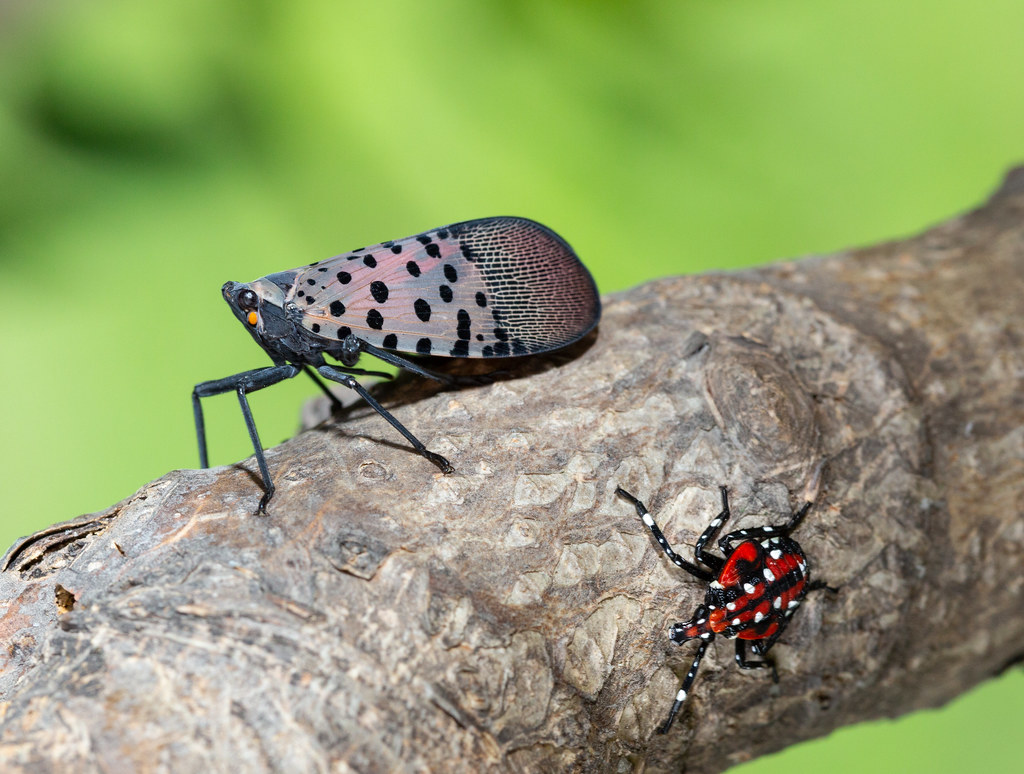
spotted lanternfly Holly Ragusa, Pennsylvania Department of Agriculture

Current Status of “New” Detections

Seebens et al. (2020) relied on the Alien Species First Records Database for first detection records up to 2005. More than half (54%) of the first-detection records in the database are vascular plants. Arthropods other than crustaceans made up 28% of the total, birds 6%, fishes 4%, mammals 3%, molluscs 2%, and crustaceans 2%. The 2020 study confirmed the earlier finding that the observed first-record rates of mammals changed at around 1950 from an increasing to a decreasing trend. Finally, the total numbers of non-native species in the Database is much lower in aquatic habitats. (The authors do not discuss whether this reflects actual introductions or gaps in reporting.)

In the database, Europe recorded 38% of all first records, North America 16%, Australasia 15%, South America 9%, Temperate Asia 9%, Africa 6%, Pacific Islands 5% and Tropical Asia 2%.

A comparison to the immediate past (1960-2005) showed that the rates of emerging non-native species were projected to accelerate during 2005-2050, especially for arthropods. As I noted above, North America is predicted to have high increases in absolute numbers. Increases are also predicted for birds. Declines are predicted for mammals and fishes.  

Asian giant hornet; photo from University of Florida Department of Entomology

Projected increases for Australasia were consistently lower than in the past.          

Caveats:

1) The authors assumed that past patterns of alien species accumulation will continue in the future. They did not attempt to predict efforts to strengthen biosecurity regulations and mitigation strategies.  

2) Projections were calculated in the absence of data on many underlying drivers for the historic periods and some taxonomic groups. However, observed trends of newly-detected alien species numbers during the 20th century were surprisingly stable despite distinct political and socio-economic changes.

Seebens and colleagues conclude that implementation of targeted biosecurity efforts can reduce the numbers of new alien species becoming established. However, a significant decrease in rates of alien species numbers on a large scale can only be achieved by a coordinated effort that crosses political borders.

SOURCES

Seebens et al.  2017. No saturation in the accumulation of alien species worldwide available (free access!) at https://www.nature.com/articles/ncomms14435

Seebens, H., S. Bacher, T.M. Blackburn, C. Capinha, W. Dawson, S. Dullinger, P. Genovesi, P.E. Hulme, M. van Kleunen, I. Kühn, J.M. Jeschke, B. Lenzner, A.M. Liebhold, Z. Pattison, J. Perg, P. Pyšek, M. Winter, F. Essl. 2020. Projecting the continental accumulation of alien species through to 2050. Global Change Biology. 2020;00:1 -13 https://onlinelibrary.wiley.com/doi/10.1111/gcb.15333


Posted by Faith Campbell

We welcome comments that supplement or correct factual information, suggest new approaches, or promote thoughtful consideration. We post comments that disagree with us — but not those we judge to be not civil or inflammatory.

For a detailed discussion of the policies and practices that have allowed these pests to enter and spread – and that do not promote effective restoration strategies – review the Fading Forests report at http://treeimprovement.utk.edu/FadingForests.htm

Asian giant hornet – US & Canada Differ – What are the Implications? – Updated!

Asian giant hornet; photo from University of Florida Department of Entomology

Asian giant hornet (AGH) (Vespa mandarinia) is the world’s largest hornet, reaching sizes of 1.5 – 2 inches long. Its native range includes much of Asia. While media attention has focused on the hornet’s frightening size, the real threat is to honey bees (Apis spp.) and – especially – to the many important crops that bees pollinate.

Over the past year or so, several detections of the Asian giant hornet have been found in the Pacific Northwest – in British Columbia and Washington State. Four of the sites are within a few miles of each other. Two others are separated by miles of open water from the mainland sites. As of mid-October, 18 hornets had been detected in Washington State.

USDA’s Animal and Plant Health Inspection Service (APHIS) has partnered with the Washington Department of Agriculture to try to eradicate the hornet – which will not be easy! However, the Canadian Food Inspection Service (CFIA) has decided not to designate the hornet as a quarantine pest. This decision seems to threaten divergent approaches to the bioinvader. Fortunately, the Province of British Columbia is trying to eradicate its populations – so perhaps the diverging federal approaches will not result in facilitating the hornet’s establishment and spread.

Where the Hornet Is Known to Be

The first detected outbreak of the Asian giant hornet was in Nanaimo, British Columbia – on Vancouver Island. A single hornet was detected in August 2019. [A Canadian commenter said in March 2021 that this turned out to be a different species, V. soror.] A nest was detected in September and destroyed by local beekeepers and BC government officials. However, another hornet was found on the mainland – in White Rock, B.C. – in November 2019 [CFIA Decision Document]. In 2020, there have been several unconfirmed sightings in the Cowichan Valley on Vancouver Island (van Westendorp, pers. comm.).

Meanwhile, beekeepers discovered two AGH outbreaks in Whatcom County, WA, on the U.S. side of the border. These discoveries were in December 2019 and May 2020. There were other, unconfirmed reports in both Washington and British Columbia. [USDA APHIS Environmental Assessment (EA)] Indeed, later in 2020, Washington reported a few more sightings — in the Birch Bay area, just south of Blaine and at a site about eight miles east of Blaine (van Westendorp, pers. comm.)

Three of the hornets found in spring 2020 were mated queens (Zhu et al. 2020), which means at least one colony successfully reproduced last year. One of the mated queens was the second detection in Whatcom County – in Custer, Washington. One article said that the locations of this spring’s queens meant either that the new queens travelled up to 35 kilometres (about 22 miles) before founding their nests or that they came from more than one colony. Either way, it probably means that giant hornets could spread faster than initially thought.

White Rock, BC and Blaine, Washington are a few miles apart on the Canada-U.S. border. Langley is 12 miles to the northeast of White Rock – in the Fraser Valley. Custer is 7 miles southeast of Blaine. Birch Bay is 5 miles south of Blaine. The most recent detection is 8 miles east of Blaine. So all these detections are in close proximity and might represent spread from a single introduction site – or maybe not!

Nanaimo and the Cowichan Valley are on Vancouver Island, which is separated from the other locations by a significant distance and open water. The two island sites are about 30 miles apart. They surely represent one or more separate introductions.

One study found that a single hornet collected from Blaine, Washington differed genetically from  a single hornet collected at Nanaimo on Vancouver Island. This suggests separate introductions. However, too little is known about the hornet’s genetic variability across Asia to allow conclusions about possibly separate origins (van Westendorp, pers. comm.; Wilson et al. 2020).

Areas at Risk

The area at risk is potentially much broader than the Pacific Northwest. APHIS’ initial analyses, based on plant hardiness zones, indicated that the hornet could thrive in virtually all the lower 48 states. APHIS’s Environmental Assessment did not address vulnerable areas in Canada or – apparently – in Hawai`i.

Zhu et al. (2020) carried out an assessment of areas most at risk and the hornet’s potential rate of spread. They found that areas with warm to cool annual mean temperature, high precipitation, and high human activity were most likely to be suitable for the hornet. Areas meeting these criteria are found across western and eastern North America, Europe, northwestern and southeastern South America, central Africa, eastern Australia, and New Zealand. Most of central North America and California are less suitable.

Spread could be rapid in the Pacific Northwest: they predicted that the hornet could reach Oregon in 10 years, eastern Washington and British Columbia within 20 years. This prediction is based in part by experience with the invasive congener V. velutina in Europe; it has expanded by 78 km/year in France, 18 km/year in Italy.

Oregon is relying on beekeepers to detect the hornet, which they expect will arrive even earlier than 10 years from now. The Oregon Department of Agriculture has suffered severe budget cuts because of the Covid-19 crash in state tax collections, so the program is trying to save money. As of the beginning of October, none of the hundreds of citizen reports has been a Vespa of any species (J. Vlach, Oregon Department of Agriculture, pers. comm).

Pathways of Introduction

It is not known how the hornet reached North America. Reports from other countries indicate that they can hitchhike in shipments of empty plant containers, or in the straw in which the containers are packed. In addition, some Asian cultures regard the hornets as delicacies, so deliberate importation is possible. Both APHIS and the Canadian Food Inspection Agency (CFIA) have intercepted such shipments (CFIA Decision document; USDA APHIS PPQ New Pest Response).

The Threat

The AGH typically feeds on a variety of terrestrial invertebrates including beetles, mantids, caterpillars, and spiders (EA). During the spring and summer, hornets attack their prey singly. However, in the Aautumn, hornet workers carry out mass attacks against other social Hymenoptera – including other species of Vespa, yellowjackets (Vespula spp.), various paper wasps (Polistes spp.), and honey bees (Apis spp.). Commercial honeybee colonies are typically lost when attacked en masse. They are especially vulnerable because they are more concentrated than wild bee colonies. [EA]

Commercial honeybee colonies pollinate a wide variety of crops, including tree fruits, cane fruits (berries), tree nuts, tomatoes, and even potatoes. Supplies of beef and milk might also be at risk because alfalfa hay is pollinated by bees. Of course, honey production would also be threatened. As USDA APHIS has stated, if the Asian giant hornet spreads it would become a new stress on top of the multiple existing causes of honeybee decline.

Also, there is a direct threat to people. The AGH has a painful sting that can result in anaphylaxis, cardiac arrest, and other complications in susceptible people. Officials emphasize that most people will not be at risk of stings. However, beekeepers are – their usual Personal Protective Equipment (PPE) is not adequate to ward off the hornet’s sting [APHIS EA & New Pest .

APHIS’ programmatic Environmental Assessment notes that the hornet might also pose a threat to vertebrates that nest in ground burrows and decayed trunks and roots near the ground. Burrows chosen by female hornets for nest construction can be surprisingly large, up to 60 cm (24 inches) in diameter. The EA notes that, in Washington State, badgers, marmots, ground squirrels, and other small mammals use dens or burrows. Among these, four pocket gophers and the American wolverine are federally listed under the Endangered Species Act in Washington State. [For a list, see the environmental assessment.] The EA does not discuss whether cavity-nesting birds might also be affected – although the hornets do prefer hollows near or at ground level. The authors of the EA expect vertebrates to abandon any burrows used by the hornet, so they would be displaced rather than harmed by pesticides applied by the program described below.  

APHIS program

APHIS and the Washington State Department of Agriculture (WSDA) have begun an eradication program. I think eradication will be challenging because it will be very difficult both to find nests and to destroy them.

  • Hornets nest typically in forested areas or urban green spaces. There are lots of suitable places in the Pacific Northwest! These wooded areas are interspersed with farms, orchards, and settlements that will provide vulnerable insects as food sources.  
  • Nest destruction involves excavating a hole two meters by two meters. This digging must be in woodlands, often right next to trees.

The key to successful eradication is finding and destroying the nests before they produce reproductive females and males – in autumn. Nest detection will be carried out as follows [EA]:

  • Starting in April, the agencies bottle traps in trees near the 2019 detection points. The traps are baited with a solution of rice cooking wine and orange juice to attract the worker bees. (The rice wine is added to discourage honeybees from visiting the trap.)  Traps catches help define areas where nests are located.

WSDA successfully tracked radio-tagged workers to a nest in mid-October. That nest was in a tree hollow, not underground.

WSDA scientists think there were approximately 200 queens in that single nest. Two were vacuumed out during the initial extraction. Inside the nest they found 76 emergent queens and 108 capped cells with pupae that they believe were also queens. Three more queens were trapped in a bucket of water. This nest had approximately 776 cells; large nests can have up to 4,000.  WSDA believes there are other nests in the area; they continue to search.

APHIS’ original plan to use pesticides to kill hornets in the nest has been dropped. Washington plans now to use vacuum extraction followed by introduction of CO2 and excavation of the nest.  Washington has also not decided whether to deploy traps with the pesticide fipronil (S. Spichiger, pers. comm.)

WSDA has also asked members of the public to set out homemade hornet traps, and to report any suspicious sightings.

Canada Takes Opposite Tack

The Canadian Food Inspection Agency (CFIA) announced in February 2020 (CFIA Decision Document) that it will not attempt to regulate the Asian giant hornet as a quarantine pest for Canada. Therefore, CFIA will place no restrictions on the import or movement of any commodities that may harbor the Asian giant hornet. CFIA will, however, require permits for deliberate importation of the hornets.

CFIA’s reasoning appears to focus on two factors:

  • The hornet is an indirect threat to plant health (since AGH attacks pollinators. CFIA has traditionally regulated quarantine pests based primarily on significant direct threats to plant health.
  • Under the international phytosanitary system, countries that designate an organism to be a quarantine pest must put in place the necessary measures to prevent its entry into the country, as well as officially control the pest when present. CFIA states that “High uncertainties about the pathways of entry puts into question the ability to manage this risk, and ultimately the ability and feasibility of regulating V. mandarinia as a quarantine pest.”

Neither APHIS nor CFIA has authority to regulate threats to human health.

Detection and Eradication Efforts in British Columbia  (information from van Westendorp, British Columbia Ministry of Agriculture)

In 2020, British Columbia has focused on detection surveillance. Target areas include vicinity of Nanaimo on Vancouver Island; Fraser Valley from White Rock in the West to Langley/Aldergrove in the East (along the US border); and after several credible (but non-verified) sightings, the Cowichan Valley on Vancouver Island. Because of resource limits, the surveillance effort has sought to engage local governments, border agencies, First Nations, forestry & mining companies, farmers, and beekeepers.  The ministry also placed numerous bottle traps and encouraged 170 beekeepers in the Fraser Valley to install and monitor traps in their apiaries. 

So far, only one AGH specimen has been sighted or collected in the three British Columbia survey areas during 2020 – the single specimen at Langley detected in May. However, the several detections along the U.S. side of the border (see above on recent detections) has spurred BC officials to intensify survey efforts in the Fraser Valley (van Westendorp). A specimen was collected adjacent to the US border in mid-October just north of the multiple detections in the US, and South of the Langley detection last spring (S. Spicher, pers. comm.).

British Columbia will continue to monitor well into the fall season and resume our surveillance in 2021 and 2022 (van Westendorp).

Hornets are clearly able to be transported and introduced. Vespa ducalis was detected in Vancouver, BC in 2019 and in Texas in 2020. Vespa velutina has become established in Europe (J. Vlach, Oregon Department of Agriculture, pers. comm).

SOURCES

CFIA Decision document: Vespa mandarinia (Asian giant hornet) February 2020. https://www.inspection.gc.ca/plant-health/plant-pests-invasive-species/insects/asian-giant-hornet/decision-document/eng/1593718645505/1593718645899

USDA APHIS Asian Giant Hornet Control Program in Washington State Final Environmental Assessment—July 2020

USDA AHIS PPQ New Pest Response

van Westendorp, Paul. British Columbia Ministry of Agriculture, pers. comm.

Wilson, T.M., J. Takahashi, S-Erik Spichiger, I. Kim, and P. van Westendorp. 2020. First Reports of Vespa mandarinia (Hymenoptera: Vespidae) in North America Represent Two Separate Maternal Lineages in WA State, US, and BC, Canada. Annals of the Entomological Society of America · October 2020

Zhu, G., J. Gutierrez Illan, C. Looney, and D.W. Crowder. 2020. Assessing the ecological niche and invasion potential of the Asian giant hornet. PNAS Latest Articles ECOLOGY

NPS Report Published in Journal – Has it Been Implemented? Can it Be?

invasive lake trout in Yellowstone National Park

The National Park Service has a legal mandate to manage lands and waters under its jurisdiction so as to “preserve unimpaired” their natural and cultural resources (NPS Organic Act 54 U.S.C. § 100101, et seq.) Invasive species undermine efforts to achieve that mission. In 2000, the NPS adopted a program to coordinate management of invasive plants. It’s not as effective as needed – see the strategic plan.  

However, only recently has NPS begun trying to prioritize and coordinate programs targetting the many animals and animal diseases which threaten Park resources. These organisms range from emerald ash borer and quagga mussels; to pythons, goats, and pigs; to diseases such as white nose syndrome of bats and avian malaria in Hawai`i.

In 2017, NPS released an internal study of the pervasive threat to Park resources posed by invasive animals and discussed steps to overcome barriers to more effective responses (Redford et al., 2017; full citation at end of this blog). The Chief of the Biological Resources Division initiated this report by asking a Science Panel to evaluate the extent of the invasive animal problem, assess management needs, review best practices, and assess potential models that could serve as a service-wide organizational framework. The report was to pay particular attention to innovative and creative approaches including, but not limited to, new genomic tools. I summarized the Panel’s  findings and conclusions in a blog when its report appeared in 2017.

Significantly, the Panel’s final report states that “a general record of failure to control invasive species across the system” was caused principally by a lack of support for invasive species programs from NPS leadership.

This report has now appeared in the form of a peer-reviewed article in the journal Biological Invasions by Dayer et al. 2019 (full citation at end of this blog). Although nine of the ten authors are the same on both reports there are substantive differences in content. For example, the journal article reiterates the principal findings and conclusions of the Panel’s final report, but in less blunt language.

What’s Been Watered Down

The toning down is seen clearly in the statements some of the panel’s six key findings.

Finding #1

            The panel’s report says:  invasive animals pose a significant threat to the cultural and natural values and the infrastructure of U.S. national parks. To date, the NPS has not effectively addressed the threat they pose.

            Dayer et al. says: the ubiquitous presence of invasive animals in parks undermines the NPS mission.

Finding #2

            The panel’s report says: managing invasive animals will require action starting at the highest levels, engaging all levels of NPS management, and will require changes in NPS culture and capacity.

            Dayer et al. says: coordinated action is required to meet the challenge.

Finding #4

            The panel’s report states: effective management of invasive animals will require stakeholder engagement, education, and behavior change.

            Dayer et al. says: public engagement, cooperation and support is [sic] critical.

Wording of the other three “key findings” was also changed, but these changes are less substantive.

Drayer et al. also avoid the word “failure” in describing the current status of NPS” efforts to manage invasive animal species. Instead, these authors conclude that the invasive species threat “is of sufficient magnitude and urgency that it would be appropriate for the NPS to formally declare invasive animals as a service-wide priority.”

Where the Documents Agree – Sort of

Both the Panel’s report and Dayer et al. state that invasive animal threats are under-prioritized and under-funded. They say that addressing this challenge must begin at the highest levels within the NPS, engage all levels of management, and will require investments from the NPS leadership.  Even within individual parks, they acknowledge that staffs struggle to communicate the importance of invasive animal control efforts to their park leadership, especially given competition with other concerns that appear to be more urgent. And they admit that parks also lack staff capacity in both numbers and expertise.

Also, both the Panel’s report and Dayer et al. urge the NPS to acknowledge formally that invasive animals represent a crisis on par with each of the three major crises that drove Service-wide change in the past: over-abundance of ungulates due to predator control; Yellowstone fire crisis (which led to new wildfire awareness in the country); and recognition of the importance of climate change.

The Panel suggested ways to update NPS’ culture and capacity: providing incentives for staff to (1) address long-term threats (not just “urgent” ones) and (2) put time and effort into coordinating with potential partners, including other park units, agencies at all levels of government, non-governmental organizations, private landowners, and economic entities. Dayer et al. mention these barriers but does not directly mention changing incentives as one way to overcome them.

Both the Panel’s report and Dayer et al. suggest integrating invasive animal threats and management into long-range planning goals for natural and cultural landscapes and day-to-day operations of parks and relevant technical programs (e.g., Biological Resources Division, Water Resources Division, and Inventory and Monitoring Division).

What is Missing from the Journal Publication

The Panel’s final report noted the need for increased funding. It said that such funding would need to be both consistent and sufficiently flexible to allow parks to respond to time-sensitive management issues. It proposes several approaches. These include incorporating some invasive species control programs (e.g., for weeds and wood borers) into infrastructure maintenance budgets; adopting invasive species as fundraising challenges for non-governmental partners (e.g., “Friends of Park” and the National Park Foundation); and adopting invasive species as a priority threat. Dayer et al. do not discuss funding issues.

The final internal report envisioned the NPS becoming a leader on the invasive species issue by 1) testing emerging best management practices, and 2) educating visitors on the serious threat that invasive species pose to parks’ biodiversity. As part of this process, the authors suggest that the NPS also take the lead in countering invasive species denialism.  Dayer et al. do not mention the issue of invasive species deniers.

Common Ground: Status of Invasive Animals in the Parks

The Panel’s report and Dayer et al. describe the current situation similarly:

  • More than half of the National parks that responded to the internal survey (245 of the 326 parks) reported problems associated with one or more invasive animal species.
  • The total number of species recorded was 331. This is considered to be an underestimate since  staffs often lack the ability to thoroughly survey their parks – especially for invertebrates.
  • Invasive species threats to Parks’ resources have been recognized for nearly 100 years. The original report notes that 155 parks reported the presence of one or more exotic vertebrate species in 1977. At that time, exotic animals were the fourth most commonly reported source of threats. In 1991, parks identified 200 unfunded projects to address exotic species, costing almost $30 million.
  • Only a small percentage of non-native animal invasions are under active management. Dayer et al. stated that 23% have management plans at the park unit level, and only 11% are reported as being ‘‘under control”.
  • Individual parks have effective programs targetting specific bioinvaders (examples are described in Redford et al;  a brief summary of these efforts is provided in my previous blog.    

Common Ground on Some Solutions

The report and Dayer et al. promote the same steps to improve invasive animal management across the Service. Both note that the NPS is adopting formal decision support tactics to update and strengthen natural resource management across the board. More specific steps include

  • establishing a coordination mechanism that enables ongoing and timely information sharing.
  • mainstreaming invasive species issue across the NPS branches or creating a cross-cutting IAS initiative among the Biological Resources Division, Water Resources Division, Inventory and Monitoring Division, Climate Change Response Program, and the regional offices.

While both documents call on the NPS to develop and test emerging technologies, the Panel’s final  report is more detailed, providing, in Table 5, a list of several areas of special interest, including remotely triggered traps, species-specific toxicants, toxicant delivery systems, drones, environmental DNA, and sterile-male releases. Dayer et al. mention eDNA and metabarcoding for ED/RR, biocontrol, and gene drives to control invasive pathogens. (Neither document discusses possible concerns regarding use of CRISPR and other gene-altering technologies, other than to say there would be public concerns that would need to be addressed.)

Both documents note the necessity of working with resource managers beyond park boundaries to detect and manage species before they arrive in parks. They note that developing and operationalizing such partnerships requires time and resources. Furthermore, invasive species prevention, eradication, and containment programs can be effective only with public support. They suggest strengthening NPS’ highly regarded public outreach and interpretation program to build such support, including through the use of citizen scientists.

The Panel’s final report said that the NPS should recognize that the condition of the ecosystem is the objective of efforts.  Its authors recognized that achieving this goal might require reconsidering how ecosystem management is organized within NPS so interacting stressors (e.g.,  fire) and management levers (e.g., pest eradication/suppression, prescribed fire) would be addressed. For this, the NPS would need to create a focused capacity to address the pressing issue of invasive animals in such a way that fosters integrated resource management within parks, focusing on fundamental values of ecosystem states, and not eradication targets. Dayer et al. called for the same changes without specifically labelling “condition of the ecosystem” as the goal.

Publication of Dayer et al. prompted me to find out what progress the NPS has made in responding to the “key findings” in the Panel’s final report (neither publication calls them “recommendations”). 

The National Park Service has acted on the recommendation to appoint an “invasive animal coordinator” within the Biological Resources Division. That person is Jennifer Sieracki. However, I wonder whether a person located in BRD is of sufficient stature to influence agency policy across all divisions. It is not clear whether there is active coordination with the national-level invasive plant coordinator.

Dr. Sieriaki responded to my query by noting the following new efforts 1) to improve outreach to partners and the public, and 2) to expand formal and informal partnerships with local, state, federal and tribal entities and local communities near parks.

  • NPS should soon finalize two formal partnerships with other agencies and organizations for outreach and management of invasive animal species.
  • NPS is working with researchers at the US Geological Survey to expand an existing modeling tool for identifying potential suitable habitat for invasive plant species to include invasive insects. This will help staff focus on the most likely locations for introductions and thus assist with early detection and control.
  • NPS has created a Community of Practice so NPS employees can seek each other’s advice on addressing invasive animal issues. A workshop of regional invasive species coordinators is planned for the coming months to guide direction of the service-wide program and identify other top priorities. (Seriacki pers. comm.)

I also wonder whether the NPS can achieve the top-level coordination and outreach to the public called for by both reports while complying with the terms of Public Law 116-9 – the John N. Dingle Jr. Conservation, Management, and Recreation Act, which was enacted a year ago. Title VII, Section 10(i)  of this law limits spending to carry out invasive species program management and oversight to 10% of appropriated funds. Less than 15% may be spent on investigations (research), development activities, and outreach and public awareness efforts (Section 10(h)). The law does allow spending for investigations regarding methods for early detection and rapid response, prevention, control, or management; as well as inspections and interception or confiscation of invasive species to prevent in-park introductions.

For more information, see my previous criticism of NPS failure to address invasive species issues here.

Posted by Faith Campbell

We welcome comments that supplement or correct factual information, suggest new approaches, or promote thoughtful consideration. We post comments that disagree with us — but not those we judge to be not civil or inflammatory.

See also my earlier discussion of the new legislation here.

SOURCES

Dayer, A.A., K.H. Redford, K.J. Campbell, C.R. Dickman, R.S. Epanchin-Niell, E.D. Grosholz, D.E. Hallac, E.F. Leslie, L.A. Richardson, M.W. Schwartz. 2019. The unaddressed threat of invasive animals in U.S. National Parks.  Biol Invasions

https://doi.org/10.1007/s10530-019-02128-0

Redford, K.H., K. Campbell, A. Dayer, C. Dickman, R. Epanchin-Niell, T. Grosholz, D. Hallac, L. Richardson, M. Schwartz. 2017. Invasive animals in U. S. National Parks: By a science panel. Natural Resource Report NPS/NRSS/BRD/NRR—2017/1564. NPS, Fort Collins, Colorado. Commissioned by the NPS Chief of Biological Resources Division. https://irma.nps.gov/DataStore/DownloadFile/594922

Jennifer Sieracki, Invasive Animal Coordinator, Biological Resources Division, National Park Service

Feral Hogs: Report Warns, “Spreading Fast, Act Early”

feral hogs in Missouri; photo by Missouri Department of Conservation

A new report by several experts confirms fears that the feral pig threat is widespread and re-emphasizes the value of taking action early. (I have blogged several times about efforts to manage damaged caused by feral hogs – see here and here.  

Lewis et al. (full reference at end of blog) used two national-scale data sets to estimate historical, current, and future potential population size of wild pigs in the U.S. from 1982 to 2016.

They found that both wild pig distribution and abundance have nearly tripled over this period (from ~2.4 to 6.9 million). If no effective action is taken and pigs spread to all available habitat, the U.S. wild pig population could reach ~21.4 million at some unspecified future date. This would represent a 210% increase above the 2016 population; or a 784% increase above the 1982 population.

The authors cite successful control of wild pigs in Colorado, New Mexico, Michigan, and Nebraska as evidence of the value of early detection and rapid response.

Lewis et al. provide brief summaries of economic and ecological damage caused by feral hogs. They damage a wide range of ecological communities, especially riparian areas, grasslands, and deciduous forests. Biological diversity is hurt through habitat destruction, direct predation, and competition for resources. In addition, wild pigs can host a suite of viruses, bacteria, and parasites, many of which can be transmitted to other wildlife, humans, and livestock.

The report notes that much of the recent spread of pigs has been caused by widespread and illegal releases of wild animals for sport hunting. Other contributing factors are land-use patterns, because hogs do well in agricultural areas. Warmer winter temperatures and increased forest mast production are also to blame – both related to climate-change

Wild pigs can persist in a range of environments, including cold northern climates, arid regions, and mixed forests. That is, all regions of the continental U.S. The vast majority of states – especially in the West, North, and East – could see major expansions in wild pig populations if animals are allowed to become established over currently unoccupied habitat.

While states that have had large established wild pig populations – e.g., Texas, California, and Florida – will not see major expansions, damage is already severe and widespread. Texas alone has an estimated 2.5 million feral hogs!

Preventing the alarming expansion of feral hog populations outlined above, Lewis et al. call for adoption and implementation of proactive management. The priority is to quickly identify and eradicate populations that invade unoccupied habitat. This applies particularly to those states which currently have low populations of feral hogs.

The same approach can be applied within states. Officials can use one data set to identify areas where wild pigs are currently absent and the predicted population density data to designate priority areas to counter spread. Such efforts should include public education and outreach, regulatory enforcement, and surveillance.

Lewis et al. note that implementation of the proposed strategy will require a coordinated effort among federal, state, and local governments and the public. They call especially for state regulations classifying feral hogs as an invasive and harmful species supported by action to halt pig translocation for the purposes of recreational sport hunting.

The authors promised that the findings of the study would be applied by the National Feral Swine Damage Management Program, which is led by USDA APHIS. One of the “tactics” to achieve Objective 2.4 in the APHIS Strategic Plan for 2019-2023 says the agency will “expand feral swine damage management for agricultural, livestock, property, ecological and human health and safety purposes.”  Still, states will find it challenging to take any actions opposed by hunters.

At the end of June 2019, the U.S. Department of Agriculture (USDA) announced a $75 million program called the Feral Swine Eradication and Control Pilot Program (FSCP). (This works out to about $15 million per year.) The program is a joint effort by the  Natural Resources Conservation Service (NRCS) and APHIS. It was established by the 2018 Farm Bill. Additional information is available at the program webpage.  

The webpage describes how to apply for funding for projects lasting up to three years. The pilot projects will consist broadly of three coordinated components: 1) feral swine removal by APHIS; 2) restoration efforts supported by NRCS; and 3) assistance to producers for feral swine control provided through partnership agreements with non-federal partners. 


The initial funding will target specific locations in the South that have experienced recent increases in wild pigs (shown on the map below). The goal is to reduce the numbers of pigs (and associated damage) in those identified localized areas of the South. These “pilot” areas have been identified by the USDA Secretary as under threat from feral swine. The first round of projects – 20 projects – are targetted at a few counties in Alabama, Arkansas, Florida, Georgia, Louisiana, Oklahoma, North Carolina, South Carolina, and Texas. APHIS has determined these states and California have highest feral swine populations. 

The new program builds on successes in recent years. Funding of APHIS’ feral hog program at about $20 million per year has helped several states become “pig free”. Idaho, Iowa, Maine, New Jersey and New York are currently monitoring (using eDNA and scat dogs) to make sure that the pigs are truly gone.


SOURCE

Lewis, J.S., J.L. Corn, J.J. Mayer, T.R. Jordan, M.L. Farnsworth, C.L. Burdett, K.C. VerCauteren, S.J. Sweeney, R.S. Miller. 2019. Historical, current, and potential population size estimates of invasive wild pigs (Sus scrofa) in the United States. Biological Invasions, Vol. 21, No. 7, pp. 2373-2384.

Posted by Faith Campbell

We welcome comments that supplement or correct factual information, suggest new approaches, or promote thoughtful consideration. We post comments that disagree with us — but not those we judge to be not civil or inflammatory.