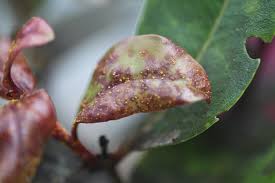
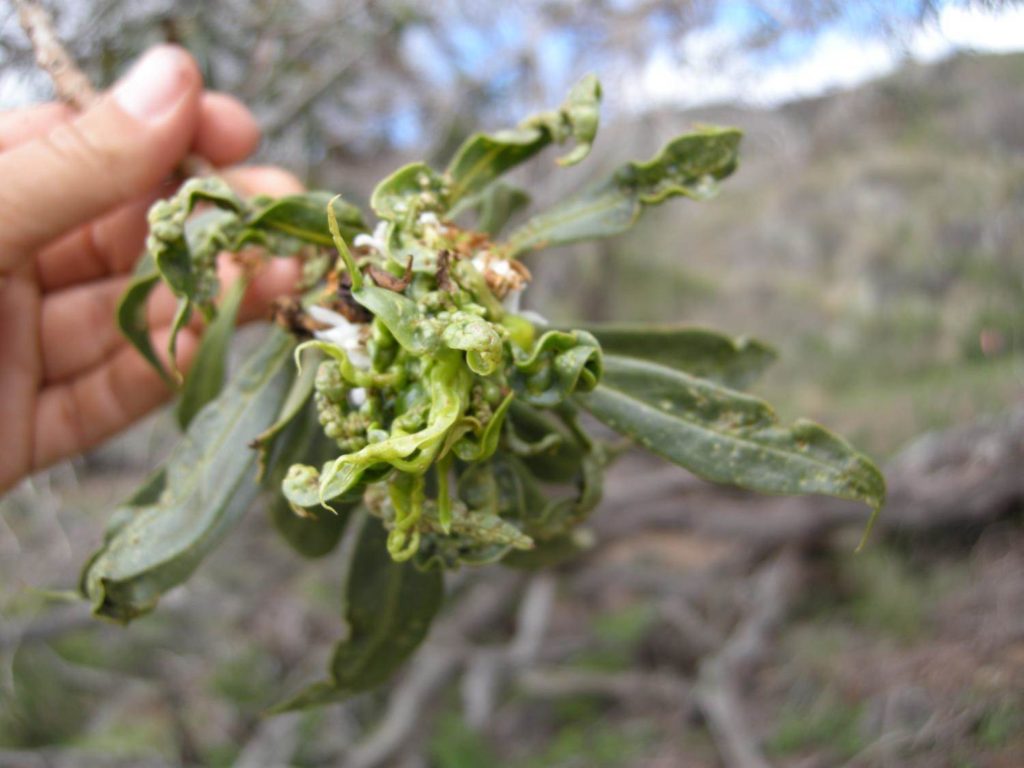
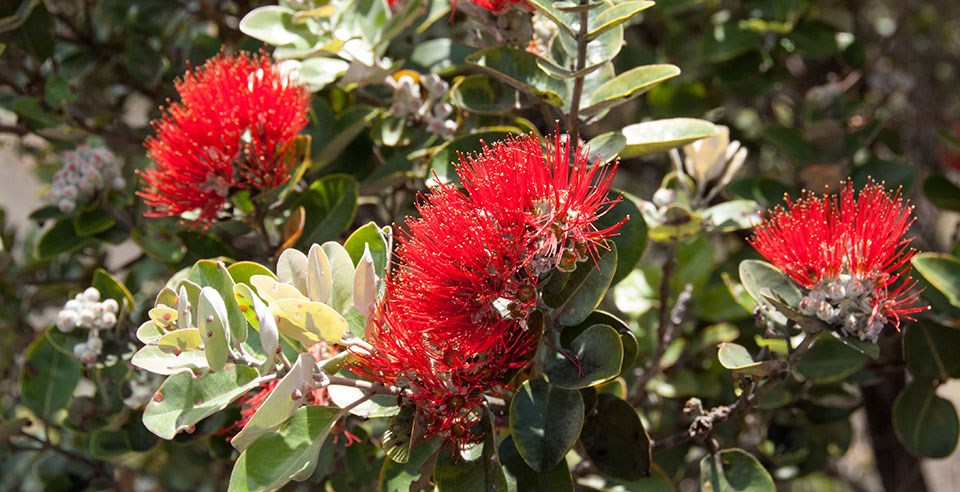
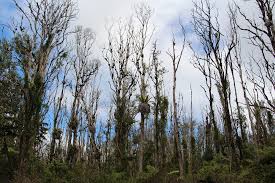
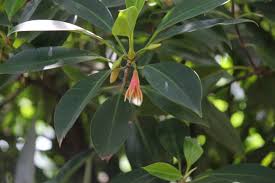
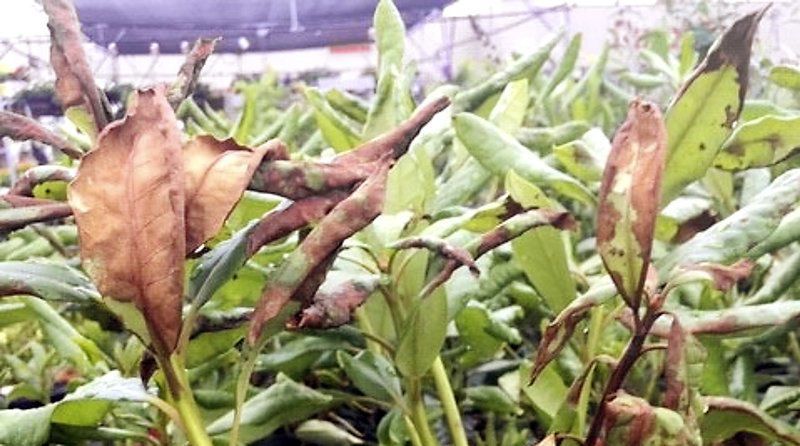
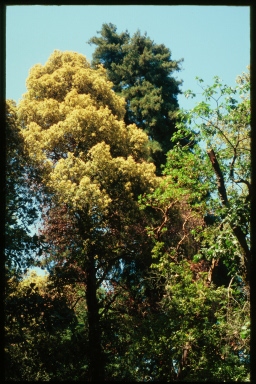
rust on `ohi`a; photo by J.B Friday, University of Hawaii
As I blogged in December, APHIS is seeking input on a proposal to place several plant taxa in the category “not authorized pending pest risk analysis” (NAPPRA). The purpose of this proposed listing is to prevent introduction of plant pests or probable invasive plant species.
I urge you to comment before the deadline – this Friday, January 24.
In
comments prepared for the Center for Invasive species Prevention (CISP), I
applauded APHIS’ continued reliance on this authority to improve phytosanitary protections
for our natural and agricultural resources. I noted, however, several
weaknesses in the proposal – including several pathogens that I think should
have been included, but were not. I summarize these comments here.
1)
There have been lengthy delays in proposing and finalizing lists of species to
be regulated under this authority. While I strongly support listing of all
plants in the family Myrtaceae that are destined for Hawai`i in order to reduce
the risk that additional strains of the `ohi`a rust pathogen Austropuccinia psidii might be
introduced and prove more damaging to native Hawaiian vegetation than the
strain already present on the islands. However, this proposal comes 15 years
after the pathogen was detected in Hawai`i and six years after publication of
scientific documentation of the existence of more damaging strains of the
pathogen.
2)
When lists have been presented, they failed to include all appropriate species.
I
am disturbed that APHIS did not include in the NAPPRA proposal Ceratocystis lukuohia and Ceratocystis huliohia, two pathogens that
are killing millions of ‘ōhi‘a trees in Hawai`i under the name “rapid ‘ōhi‘a death”.
3)
APHIS must act under other regulatory provisions to close some of the gaps left
by this proposal.
The listing of plants in the Myrtaceae
(see number 1 above) under NAPPRA does nothing to halt imports of cut flowers
and foliage, which are widely recognized to be the pathway by which the rust
was introduced to Hawai`i. APHIS notes
that is should act under other regulatory authority to close this pathway; I
hope you will urge APHIS to take such action quickly, preferably initially by
issuing a Federal Order.
4) APHIS has proposed 26 plant taxa for
inclusion in the NAPPRA category because they might themselves be invasive. These
proposals are generally well supported and deserve your support. Several plant
taxa appear to pose significant ecological threats: two taxa of mangroves (Bruguiera gymnorhiza and Lumnitzera racemose); a vine that grows
in Asian and Indian Ocean mangrove forests,
Derris trifoliate; and several aquatic plants (Crassula helmsii, Elatine ambigua, Luziola subintegra, Philydrum lanuginosum, Stratiotes
aloides); and Ligustrum robustum.
Remember that at least 50 species of aquatic plants are already considered invasive in the United States. At least eight species of Ligustrum are also invasive.
Update: Listing finalized
On June 2, 2021 APHIS finalized the NAPPRA listing originally proposed in November 2019.
The agency added to the category 26 plant taxa because they are invasive; all plants in the Myrtaceae family when destined to Hawai`i, and 43 other plant taxa that are hosts of 17 quarantine pests.
The only change from the proposed action was to drop listing of the subfamily Bambusoideae because it is already regulated under NAPPRA to prevent introduction of other quarantine pests.
APHIS had received 132 comments from producers, importers, industry groups, conservationists, scientists, plant pathologists, ecologists, administrators, teachers, students, and private citizens. Most reportedly supported the proposed listing of Myrtaceae destined for Hawai`i and expressed no concerns about the proposed listing of most other taxa. I have blogged previously about the threat to Hawaii’s unique flora posed by the pathogenAustralopuccinia psidii (the subject of this NAPPRA listing) and other non-native organisms – here and here.
We welcome comments that supplement or correct factual information, suggest new approaches, or promote thoughtful consideration. We post comments that disagree with us — but not those we judge to be not civil or inflammatory.
For a detailed discussion of the policies and practices that have allowed these pests to enter and spread – and that do not promote effective restoration strategies – review the Fading Forests report at http://treeimprovement.utk.edu/FadingForests.htm
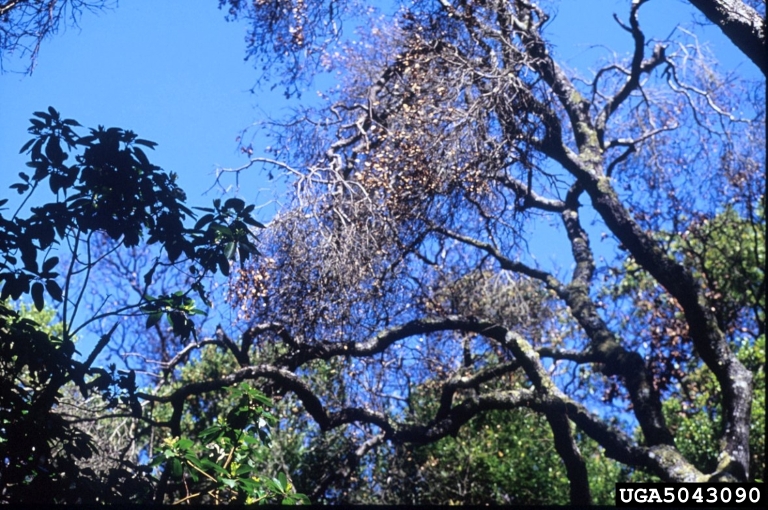
SOD in California; photo by Joseph O’Brien. courtesy of Bugwood
We know that the international trade in living plants is a major pathway by which tree-killing pathogens are being spread – some of them again and again. According to Grünwald etal. (2019), Phytophthora ramorum, the pathogen that causes Sudden Oak Death (SOD), has been introduced to North America and Europe – probably from Asia – at least five times. One lineage or genetic strain – EU1 – has been established on both continents (strains explained here). There is strong evidence of two separate introductions to Oregon, at least 12 to California.
Jung
et al. 2015 state definitively that
the international movement of infested nursery stock and planting of
reforestation stock from infested nurseries have been the main pathway of
introduction and establishment of Phytophthora
species in European forests.
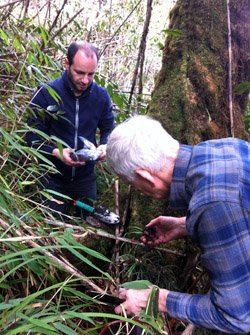
Clive Btasier in Vietnam photo from UK Forest Research
Jung et al. 2020 have demonstrated that P. ramorum probably originated in
Vietnam. This region appears to be a center of
diversity for Phytophtoras and other
Oomycetes: baiting of soil and streams resulted in the detection of 13
described species, five informally designated taxa, and 21 previously unknown
taxa of Phytophthoras plus at least
15 species in other genera. Noting the risk associated with any trade in plants
from this region, the authors re-iterated past appeals that the international
phytosanitary system replace the “outdated and scientifically flawed
species-by-species regulation approach based on random visual inspections for
symptoms of described pests and pathogens” by instituting “a sophisticated
pathway regulation approach using pathway risk analyses, risk-based inspection
regimes and molecular high-throughput detection tools.”
Pathogen’s Spread Proves U.S.
Domestic Regulations Governing Nursery Trade Are Inadequate
Last year I blogged about the most recent spread of Phytophthora ramorum through the nursery trade. As of now, we know that shipments of potentially infected plants had been sent to 18 states. Infected stock had been detected in nurseries in seven of these (Iowa, Illinois, Indiana, Kansas, Missouri, Nebraska, Oklahoma) plus the source state, Washington [COMTF Newsletter August 2019].
Since then, I learned [COMTF newsletter for December 2019] that these plants were infected by the NA2 strain of the pathogen. This is the first time that this strain has been shipped to states outside the West Coast. It is unclear what the impact will be if – as is likely – infested plants are still extant in purchasers’ yards. Both the NA1 strain (the strain established in most infested forests of California and Oregon) and the NA2 strain belong primarily to the A2 mating type, so the potential spread of NA2 lineages might not exacerbate the probability of sexual reproduction of the pathogen.
I applaud agencies’ funding of
genetic studies to determine the lineage of the pathogen involved. It not only
helps narrow the possible sources of infected plants, but also could be
important in determining risk and management options.
I have long criticized USDA’s P. ramorum regulatory program – see Fading Forests III and my blogs discussing the most recent revisions to the regulations here and here. I believe that both the earlier regulations and the revisions finalized last May provide inadequate protection for America’s forests.
The updated regulations do take a couple of important positive steps. First, APHIS is now authorized to sample water, soil, pots, etc. – and to act when it finds evidence of the pathogen’s presence. APHIS also now mandated nurseries found to be infested to carry out a “critical control point analysis” to determine practices which facilitated establishment and persistence of P. ramorum.
However, these improvements are
severely undermined by continuing the five-year-old practice of limiting close
scrutiny to only those nurseries that tested positive for the pathogen in the
recent past. The flaw in this approach was starkly demonstrated by the
pathogen’s spread in 2019. The Washington State nursery that was the source of
the infected plants had not previously been positive, so it was under routine
nursery regulation, not the more stringent federal P. ramorum program.
Too often various iterations of the regulations have allowed infected plants to be shipped. Between 2003 and 2011, a total of 464 nurseries located in 27 states tested positive for the pathogen, the majority as a result of shipments traced from infested wholesalers (Campbell). The number of nurseries found to have infected plants has since declined, but not dropped to zero. These include 34 nurseries in 2010 (COMTF February 2011 newsletter), 21 in 2012, and 17 in 2013 (Pfister). During 2014, state inspectors detected the SOD pathogen in 19 nurseries – 11 in the three west-coast states and eight in other parts of the country (Maine-1, New York-2, Texas-1, and Virginia-4) COMTF newsletter December 2014). Despite the continuing presence of the pathogen in the nursery trade, APHIS formalized existing practices that narrowed the regulators’ focus to only those nurseries with a history of pathogen presence. This approach has been shown to fail – we need APHIS and the states to find a way to broaden their scrutiny.
The most immediate impact of the continuing presence of P. ramorum in the nursery trade is the burden borne by eastern states’ departments of agriculture. They are obligated to seek out in-state nurseries that might have received infected plants; inspect those plants; and destroy the infected plants, test nearby plants, and try to find and retrieve plants that had been sold. The heaviest, and most direct, burden is borne by the receiving nurseries. Anger about bearing this burden for 15 years doubtless prompted the National Plant Board to adopt a tart resolution calling on APHIS to carry out a review of its communications to the states during the 2019 incident. The NPB also questioned whether current program processes and guidance are effective in preventing spread of this pathogen.
Unfortunately, the NPB had not
commented formally on the rule change when it was proposed.
The states’ frustration is
exacerbated by the fact that under
the Plant Protection Act, when APHIS takes a regulatory action it prevents
states from adopting more stringent regulations. While the law allows for
exceptions if the state can demonstrate a special need, none of the five
applications for an exemption pertaining to P.
ramorum was approved (Porter and Robertson 2011). I have been unable to
find evidence of petitions submitted in the nine years since 2011.
In Case You Needed A
Reminder: P. ramorum is a Dangerous Pathogen
– as Proved by the Situation in the West states and Abroad
Continuing Intensification of the Already Bad Infestations in the West
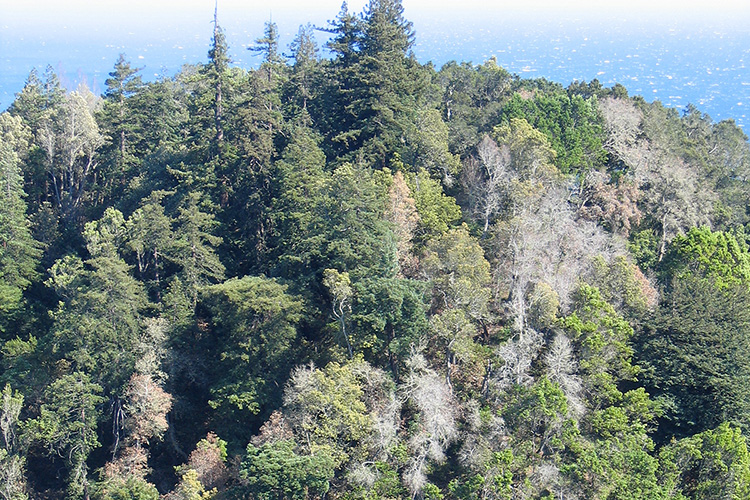
tanoak mortality in Big Sur photo courtesy of Matteo Garbelotto, UC Berkeley
As of 2014 (see COMTF November 2018 newsletter available here), perhaps 50 million trees had been killed by P. ramorum in California and Oregon. The vast majority were tanoaks (Notholithocarpus densiflorus) – an ecologically important tree.
Since
2014, the disease has intensified and spread in
response to recent wet winters. In 2016 (see COMTF
November 2016 newsletter here) disease was detected for the first time in a fifteenth California county and new outbreaks or more severe infestations were recorded in seven other counties. In 2019, SOD was detected in the sixteenth county. Tanoak mortality in California increased by more than 1.6 million trees across 106,000 acres in 2018.
Perhaps more disturbing, the disease has also intensified on the eastern side of San Francisco Bay – an area thought to be less vulnerable because it is drier and where there are fewer of the principal sporulation host, California bay laurel (see COMTF March 2017 newsletter here).
A second disturbing event is the detection in Oregon forests of the EU1 strain of Phytophthora ramorum. The August 2015 detection was the first instance of this strain being detected in a forest in North America. Oregon authorities prioritized removing EU1-infected trees and treating (burning) the immediate area, which had expanded to more than 355 acres – all within the quarantine area in Curry County. The legislature provided $2.3 million for SOD treatments for 2017-2019 (Presentation by Chris Benemann of Oregon Department of Agriculture to the Continental Dialogue on Non-Native Forest Insects and Diseases; reported here).
The EU1 lineage is a different
mating type than the NA1 lineage already established in Oregon. Scientists
should study P. ramorum populations
in Vietnam and Japan, where both mating types are present, to determine whether
they are reproducing sexually. There is also the risk that the EU1 lineage
might be more aggressive on conifers – as it has been in the United Kingdom (Grünwald etal. 2019).
The EU1 infestation was introduced to the forest from a nursery. The nursery had carried out the APHIS-mandated Confirmed Nursery Protocol, then closed. I ask, what does this apparent transmission from nursery to forest say about the risk of transmission? Does it raise questions about the efficacy of the confirmed nursery protocol to clean up the area? Remember that a pond at the botanical garden in Kitsap, Washington has repeatedly tested positive, despite several applications of the clean-up protocols.
(For a discussion of the implications of mixing the various strains of P. ramorum, visit here)
These disasters remind us how sad it
is that California and federal officials did not adopt aggressive management
efforts aimed at slowing the pathogen’s spread at an early stage of the epidemic. Experts on modeling the
epidemiology of plant disease concluded three years ago that the sudden oak
death epidemic in California could have been slowed considerably if aggressive and
well-funded management actions had started in 2002 (Cunniffe, Cobb,
Meentemeyer, Rizzo, and Gilligan 2016).
The Oregon Department of Forestry commissioned a study of the economic impact of the P. ramorum infestation that found few economic impacts to date, but potentially significant impacts in the future. It also noted potential harms to tribal cultural values and the “existence value” of tanoak-dominated forests and associated obligate species.
Situation Abroad
The situation in Europe is even worse than in North America. Two strains of P. ramorum are widespread in European nurseries and in tree plantations and wild heathlands of western the United Kingdom and Ireland. and here and here. Jung et al. 2015 found 56 Phytophthora taxa in 66% of 2,525 forest and landscape planting sites across Europe that were probably introduced to those sites via nursery plantings.
larch plantation in UK killed by P. ramorum photo from UK Forest Research
In Australia, Phytophthora dieback has infected more than one million hectares in Western Australia. More than 40% of the native plant species of the region are vulnerable to the causal agent,P. cinnamomi
Barber
et al. 2013 reported 9 species of Phytophthora associated with a wide variety
of host species in urban streetscapes, parks, gardens, and remnant native
vegetation in urban settings in Western Australia. Phytophthora species were recovered from 30% of sampled sites.
In
New Zealand, the endemic – and huge, long-lived – kauri tree (Agathis australis) is also suffering
severe impacts from Phytophtoras and
other pathogens (Bradshaw et al.
2020)
See
the IUFRO Working Party 7.02.09 ‘Phytophthora Diseases of Forest Trees’ global
overview (Jung et al. 2018), which covers
13 outbreaks of Phytophthora-caused
disease in forests and natural ecosystems of Europe, Australia and the
Americas.
The situation in
the Eastern United States is Unclear
After 15 years of the nursery trade carrying P. ramorum to nurseries – and possibly yards and other plantings – in states east of the 100th Meridian, what is the risk that these forests will become infested? No one knows. We do known that the pathogen has been detected from 11 streams in six eastern states – four in Alabama; one in Florida; two in Georgia; one in Mississippi; one in North Carolina; and two in Texas. P. ramorum has been found multiple times in eight of these streams – two steams in Alabama, one each in Mississippi and North Carolina (see COMTF April 2019 newsletter available here). While established vegetative infections have not been detected, the question remains: how is the pathogen persisting? Scientists agree that P. ramorum cannot persist in the water; it must be established on some plant parts (roots?) or in the soil. Still, Grünwald etal. (2019) report that there is little evidence of plant infections resulting from stream splash in Oregon.
Unfortunately, fewer states are participating in the stream surveys – which are operated by the USDA Forest Service. In 2010, 14 states participated; in 2018, only seven (Alabama, Georgia, Mississippi, North Carolina, Pennsylvania, South Carolina, and Texas). Florida and Tennessee recently dropped out. The number of streams surveyed annually also has dropped – from 95 at the highest to only 47 in 2018 (see COMTF April 2019 newsletter available here). This reduced scrutiny makes it less likely that any infestation on plants will be detected. Risk maps (reproduced in Chapter 5 of Fading Forests III here) developed over more than a decade indicate that forests in the southern Appalachians and Ozarks are vulnerable to SOD.
Risks to other
plants
The risk from Phytophthoras is not just P. ramorum and trees! Swiecki et al. 2018 report a large and increasingly diverse suite of introduced Phytophthora species pose an ever greater threat to both urban and non-urban plant communities in California. These threats are linked to planting of nursery stock. See also the information posted here.
Jung et al. 2018 cite numerous other authors’ findings of multiple Phytophthoras in Oregon and. California nurseries as well as in nurseries in various eastern states.
Nor is Phytophthoras the only pathogenic genus to pose a serious risk to America’s trees. I remind you of the fungus Fusariumeuwallacea associated with the Kuroshio and polyphagous shot hole borers, which is known to kill at least 18 species of native plants in California and additional species in South Africa. The laurel wilt fungus kills many trees and shrubs in the Lauraceae family. ‘Ohi‘a or myrtle rust kills several shrubs native to Hawai`i and threatens a wide range of plants in the Myrtaceae family in Australia and New Zealand; rapid ‘ohi‘a death fungi (Ceratocystis huliohia and Ceratocystis lukuohia) [All described here] are killing the most widespread tree on the Hawaiian Islands.
Solutions – complete &
implement modernized international and domestic phytosanitary regulations
Clearly,
standard phytosanitary practice of regulating pests known to pose a threat
does not work when many – if not most – of the damaging pests are unknown to
science until introduced to a naïve ecosystem where they start causing
noticeable levels of damage. We need a more proactive approach – as has long been
advocated by forest pathologists, including Clive Brasier 2008 and later,
Santini et al. 2013, Jung et al. 2016, Eschen et al. 2017.
National and international phytosanitary agencies have taken some steps toward adopting policies and programs that all hope will be more effective in preventing the continued spread of these highly damaging tree-killing pests. First, APHIS has had authority since 2011 – through the Not Authorized for Importation Pending Pest Risk Assessment (NAPPRA) program — to prohibit temporarily imports of plants suspected of transporting known damaging pathogens until the agency has conducted a pest risk analysis. However, utilization has lagged: only three sets of species have been proposed for listing in NAPPRA in the eight and a half years since the program was instituted in 2011. The third list of proposed species is currently open for public comment.
Another
weakness is that the program still focuses on organisms known to pose a risk.
Second, in 2018 APHIS completed a decades-long effort to revise its plant import regulations (the “Q-37” regulations). APHIS now has authority to require foreign suppliers of living plants to carry out “hazard analysis and critical control point” programs and adopt integrated pest management strategies to ensure that the plants are pest-free during production and transport.
However, implementation of this new
authority depends on APHIS negotiating agreements with individual countries
that would govern specific types of plants exported to the U.S. APHIS has not
yet announced completion of any programs under this authority. Nor is it clear
which taxa or countries APHIS will prioritize.
APHIS’ action was anticipated by the international plant health community. In 2012, member states in the International Plant Protection Convention adopted International Standard for Phytosanitary Measure 36 (ISPM#36) The standard sets up a two-level system of integrated measures, which are to be applied depending on the pest risk identified through pest risk analysis or a similar process. The “general” integrated measures are widely applicable to all imported plants for planting. The second level includes additional elements designed to address higher pest-risk situations that have been identified through pest risk analysis or other similar processes.
However,
the preponderance of international efforts to protect plant health continues to
rely on visual inspections that look for species on a list of those known to be
harmful. Yet we know that most damaging Phytophthoras
were unknown before their introduction to naïve ecosystems.
Furthermore,
use of fungicides and fungistatic chemicals – that mask infections but do not
kill that pathogen – is still allowed before shipment.
(For more complete analyses of the Q-37 revision and ISPM#36, see chapters five and four, respectively, of Fading Forests III.)
The
nursery industry is working with state regulators and APHIS to develop a voluntary
program utilizing integrated measures –
the Systems Approach to Nursery Certification (SANC) program. https://sanc.nationalplantboard.org/
SOURCES
Bradshaw
et al. 2020. Phytophthora
agathidicida: research progress, cultural perspectives and knowledge gaps in
the control and management of kauri dieback in New Zealand. Plant Pathology
(2020) 69, 3–16 Doi: 10.1111/ppa.13104
Brasier
CM. 2008. The biosecurity threat to the UK and global environment from
international trade in plants. Plant Pathology 57: 792–808.
Brasier, C.M, S. Franceschini, A.M.
Vettraino, E.M. Hansen, S. Green, C. Robin, J.F. Webber, and A.Vannini. 2012.
Four phenotypically and phylogenetically distinct lineages in Phytophthora lateralis
Fungal Biology. Volume 116, Issue
12, December 2012, Pages 1232–1249
Campbell, F.T.
Calculation by F.T. Campbell from tables in U.S. Department of Agriculture,
Animal and Plant Health Inspection Service – National Plant Board. 2011. Phytophthora ramorum Regulatory Working
Group Reports. January 2011.
Cunniffe, N.J., R.C. Cobb, R.K.
Meentemeyer, D.M. Rizzo, and C.A. Gilligan. Modeling
when, where, and how to manage a forest epidemic, motivated by SOD in Calif. PNAS, May 2016 DOI: 10.1073/pnas.1602153113
Grünwald,
N.J., J.M. LeBoldus, and R.C. Hamelin. 2019. Ecology and Evolution of the
Sudden Oak Death Pathogen Phytophthora ramorum. Annual Review of Phytopathology
date? #?
Jung
T, Orlikowski L, Henricot B, et al.
2016. Widespread Phytophthora infestations in European nurseries put forest,
semi-natural and horticultural ecosystems at high risk of Phytophthora
diseases. Forest Pathology 46: 134–163.
Jung,
T., A. Pérez-Sierra, A. Durán, M. Horta Jung, Y. Balci, B. Scanu. 2018. Canker
and decline diseases caused by soil- and airborne Phytophthora species in
forests and woodlands. Persoonia 40, 2018: 182–220 Open Access!
Jung,
T. et al. 2015. Widespread Phytophthora infestations in European
nurseries put forest, semi-natural and horticultural ecosystems at high risk of
Phytophthora disease. Forest
Pathology. November 2015; available from Resource Gate
Knaus, B.J., V.J. Fieland, N.J.
Grunwald. 2015. Diversity of Foliar Phytophthora
Species on Rhododendron in Oregon
Nurseries. Plant Disease Vol 99, No. 10 326 – 1332
Pfister,
S. USDA APHIS. Presentation to the National Plant Board, August 2013
Porter, R.D. and N.C.
Robertson. 2011. Tracking Implementation of the Special Need Request Process
Under the Plant Protection Act. Environmental Law Reporter. 41.
Santini
A, Ghelardini L, De Pace C, et al.
2013. Biogeographic patterns and determinants of invasion by alien forest
pathogens in Europe. New Phytologist 197: 238–250.
Swiecki,
T.J., E.A. Bernhardt, and S.J. Frankel. 2018. Phytophthora root disease and the need for clean nursery stock in
urban forests: Part 1 Phytophthora
invasions in the urban forest & beyond. Western Arborist Fall 2018
Tsao PH.
1990. Why many Phytophthora root rots and crown rots of tree and horticultural
crops remain undetected
Fiscal Year 2020 began on October 1, 2019. In December Congress adopted funding bills (appropriations) for the full fiscal year – which ends next September.
APHIS
In
its Agriculture Appropriations bill, Congress is holding steady or increasing
funding for several APHIS programs that are important for addressing
tree-killing pests:
tree and wood pests program – $60 million (this is the same as FY2019, and $4 million above the Administration’s request);
Pest Detection – $27.4 million (this is same as FY219 and as the Administration’s request);
Methods development – $20.686 million (about the same as in FY2019 and the Administration’s request).
Specialty crops program – increased to $192.013 million. The accompanying report mentions two specific organisms as priorities – navel orangeworm and sudden oak death (apparently in response to an Oregon economic study and because Sen. Merkley is on the Appropriations Committee). This was above the $186 million in both the House and Senate bills and considerably above the Administration’s request of $176 million.
The Agriculture Appropriations bill reiterates helpful language from past laws authorizing the Secretary of Agriculture “to transfer … funds available to … the Department [of Agriculture] such sums as may be deemed necessary” to respond to disease or pest emergencies that threaten any segment of the U.S. agricultural production industry. However, for the past decade the Office of Management and Budget has prevented frequent use of this power. APHIS did receive emergency funds to address the spotted lanternfly in February 2018 (APHIS Press Release No. 0031.18)
(You might remember that in 2017-2018 I put forward
amendments to the Farm Bill that would have broadened APHIS’ access to
emergency funds. I sought especially to ensure that efforts to protect native
vegetation and urban trees would be eligible for funding. Unfortunately, this
amendment was not enacted.)
USDA Forest Service
The overall Research and Development program is funded
at $305 million – a few million above what I advocated for. Of this total, $77 million is allocated to the
Forest Inventory and Analysis program. In the past, research on invasive
species has received about 10% of the total research funds. The USFS has been
directed by Congress to restructure its research program. I will monitor any
changes and determine the implications for invasive species concerns.
USFS engagement on pest issues with other federal
agencies and state, local government, and private land managers is carried out
through the Forest Health Management program under the State and Private
Forestry division. While neither the appropriations legislation nor the
accompanying report provides any direction on forest health activities,
program staff report that funding for the overall program totals $104 million –
about $6 million more than in FY2019. Program work on federal lands is funded
at $66
million. However, $3 million has been deducted as part of a budget reform. After the deduction, this allocation is about $7 million above the
funding level for FY 2019. Program work on non-federal “cooperative” lands is funded at $44 million. Congress has instructed that $2 million of this total be given to the eastern
states’ forest health monitoring cooperative. The total “cooperative” lands allocation is
$2 million above the FY2019 allocation.
Conclusion
I am very pleased by Congress maintaining or
increasing funds for APHIS’ forestry programs. I am somewhat concerned by the pressure
to reform USFS programs. I worry especially about the increasing focus on
managing pests on federal lands compared to non-federal lands because nearly
all damaging invasions begin on non-federal lands.
ash tree killed by emerald ash borer Ann Arbor, MI photo provided courtesy of former mayor John Hieftje
Posted by Faith Campbell
We
welcome comments that supplement or correct factual information, suggest new
approaches, or promote thoughtful consideration. We post comments that disagree
with us — but not those we judge to be not civil or inflammatory.
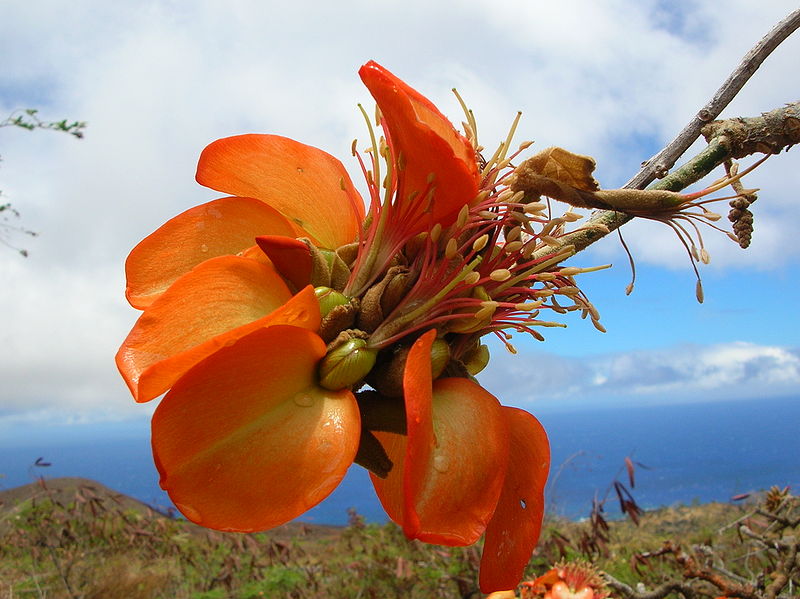
wiliwili flower photo by Forrest and Kim Starr, courtesy of creative commons
Hawaii’s
dryland forest is a highly endangered ecosystem. More than 90% of dry forests
are already lost due to habitat destruction and the spread of invasive plant
and animal species. However, a new publication documents some recovery of
wiliwili trees from one major pest. At the same time, a new pest is spreading
and killing naio, a critical dryland shrub. Both pests originated in countries that have rarely
if ever been a source of U.S. pests. This is worrying because phytosanitary
agencies have their hands full with imports from the usual sources. The role of
California as a source of invasive species in Hawai`i has long deserved federal
attention – but as far as I know has not received it.
Hope for Wiliwili Trees
The
Hawaiian endemic wiliwili tree, Erythrina
sandwicensis, occurs in lowland dry forests on all the major islands from
sea level to 600 m. Wililwili is a dominant overstory tree in these habitats.
(Unless otherwise noted, the principal source is Kaufman et al. in press – full
citation at end of blog.)
The tree has been severely affected by the introduced Erythrina gall wasp, Quadrastichus erythrinae (EGW). The gall wasp was detected on Oahu in 2005 and quickly spread to the other Hawaiian islands.
Arrival
of the EGW on Oahu was part of the insect’s rapid global range expansion. Originally from East Africa, it was first
detected in the Mascarene Islands and Singapore in 2003. At the time, it was unknown
to science. Within a few years it had spread across Asia, many Pacific islands
(including Hawai`i), and to the Americas, including Florida in 2006, Brazil in 2014
(Culik 2014), and Mexico in 2017 (Palacios-Torres 2017). Although apparently restricted
to the Erythrina genus as host, it
has lots of opportunities. This genus has 116 species distributed across
tropical and subtropical regions: 72 species in the Americas, 31 in Africa, and
12 in Asia.
The
severe damage to wiliwili (and to non-native Erythrina trees planted in urban areas and as windbreaks) prompted Hawaiian
officials to immediately initiate efforts to find a classical biological
control agent. The process moved rapidly. A candidate – a parasitic wasp
species new to science, Eurytoma
erythrinae – was found in East Africa in 2006. Host specificity testing was
carried out. Scientists quickly learned to rear the parasitic wasp in laboratories.
Release of the biocontrol agent was approved in November 2008 – only three and
a half years after the EGW was detected on Oahu.
The
biocontrol agent’s impact was quickly apparent. Establishment was confirmed
within 1–4 months at all release locations throughout Hawai`i. Reduced pest impacts
to trees were detected within two years. By 2018, only 33% of the foliage was
damaged on the majority of wiliwili trees. Damage to non-native Erythrina had also declined.
Results of Biocontrol
Agent’s Release
The
biocontrol agent’s efficacy in reducing EGW’s impacts on trees has been
evaluated for 10 years after the agent’s release. Monitoring was conducted at
sites on four of the six main islands. (The monitoring program and its findings
are described in Kaufman et al. in press).
I wonder how
many other biocontrol agents have been monitored so closely for such a long
time? Shouldn’t they all be?
Given
the uniqueness and importance of such long-term assessment, it is worth looking
at the data in detail.
1) Foliar Damage
and Tree Health
In
2008, before release of the biocontrol agent, more than 70% of young shoots in
wiliwili trees that were inspected were severely infested. The damage rating of
“severe” fell from about 80% of trees in 2008 to about 40% in 2011. About 20%
of trees surveyed – at sites on all islands – had no gall damage.
By
three years after release of the biocontrol agent (2011), mortality rates
attributed to stress from the EGW infestation for trees in natural areas fell
to 21%. Mortality rates for trees in botanical gardens was somewhat higher –
34%. Kaufman et al. proposed several
possible reasons: a) lingering presence of systemic insecticides that might
have harmed the biocontrol agents early in the releases; b) year-round sustenance
for the EGW as a result of the i) presence of alternative hosts and ii) supplemental
irrigation which maintained fresh foliage on the trees.
Less
intensive monitoring occurred during 2013 – 2018. It showed continuing substantial
suppression of EGW damage on Erythrina
foliage, although levels varied among locations. Sites with the lowest
precipitation and higher temperatures throughout the year had the slowest
recovery of wiliwili. Still, trees are now producing vegetative flushes and
healthier canopies during non-dormant periods.
2) Flower and Seed
Damage
Successful
reduction of infestations in flowers and seedpods was less immediate. Still, by
2011, seed-set had increased from less than 3% of trees setting and maturing
seed, to almost 30% with mature seed. The proportion of trees bearing
inflorescences also increased, with more than 60% of trees blooming three years
after introduction of the biocontrol agent. There was also a slow but steady
increase in seed production.
However,
in 2019, it remains unclear how infestation of seedpods will affect germination
and therefore future plant recruitment.
More
worrying, little recruitment was observed over the 10 years. Hawaiian
authorities have completed tests on, and are preparing a petition for release of,
a second biocontrol agent, Aprostocitus
nites. It is hoped that it will further suppress EGW in flowers and
seedpods.
Still, poor recruitment is likely due to the combined impacts of multiple invasive species in native environments. A significant factor is a second insect pest – a bruchid, Specularius impressithorax – which can cause loss of more than 75% of the seed crop. I hope authorities are seeking methods to reduce this insect’s impacts.
The Hawaiian species group of the IUCN has given the wiliwili tree the Reed Book designation of “vulnerable”.
Worries for Naio
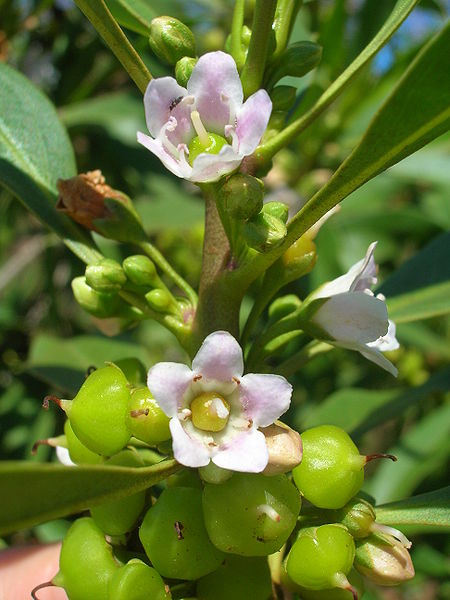
naio in bloom photo by Forrest and Kim Starr, courtesy of creative commons
Naio
(Myoporum sandwicense)is an integral component of native Hawaiian
ecosystems, especially in dry forests, lowlands, and upland shrublands.
However, it is also found in mesic and wet forest habitats. Naio is found on all
of the main Hawaiian Islands at elevations ranging from sea level to 3000 m.
The loss of this species would be not only a significant loss of native biological
diversity but also a structural loss to native forest habitats.
The
invasive non-native Myoporum thrips, Klambothrips
myopori, was detected on the Big Island (Hawai‘i Island) in 2009 – four
years after it was first detected on ornamental Myoporum species in California. At the time of the California
detection, the species was unknown to science. It is now known that this
species is native to Tasmania.
The
thrips feeds on and causes galls on plants’ terminal growth and can eventually
lead to death of the plant.
For close to a decade, the Myoporum thrips was restricted to the Big Island. It has now been found on Oahu (Wright pers. comm.) Alarmed by the high mortality of plants in California, in September 2010, the Hawaii Department of Lands and Natural Resources Division of Forestry and Wildlife and the University of Hawai‘i initiated efforts to determine spatial distribution, infestation rates, and overall tree health of naio populations on the Big Island. Monitoring took place at nine protected natural habitats for four years. This monitoring program was supported by the USFS Forest Health Protection program. (See also the chapter on naio by Kaufman et al. 2019 in Potter et al. 2019 – full citation at the end of this blog.)
naio damaged by thrips photo by Leyla Kaufman, University of Hawaii
The monitoring confirmed that the myoporum thrips has spread and colonized natural habitats on the leeward side of Hawai`i Island. Infestation rates increased considerably at all sites over the duration of the four-year sampling period. Trees experiencing high infestation levels also showed branch dieback.
Medium-elevation sites (between 500–999 m) had the highest infestations and dieback: over 70% of the shoots had the worst damage.. At two sites, over 70% of the monitored trees have died.
Even
though flowers and fruits were still seen at all sites, little to no plant
recruitment was observed at these sites. Thus another plant species important
in this endangered plant community is in decline.
Few
management strategies are available for this pest. They include preventing
spread to other islands and early detection followed by rapid application of pesticides.
Implications
and Conclusions
The Erythrina gall wasp and myoporum thrips are only two of the thousands of invasive species established in Hawai`i. Island ecosystems, especially Hawai`i, are well recognized as especially vulnerable to invasive species. It has been estimated that on average 20 new arthropod species become established in Hawai`i every year.
East Africa and Tasmania are new sources for invasive species. Phytosanitary agencies need to adjust their targetting of high-risk imports to recognize this reality. Regarding the Hawaiian introduction of the thrips, there was probably made an intermediary stop in California – which is not unusual. (See also ohia rust.)
I
applaud Hawaiian officials’ quick action to counter these pests. I wish their
counterparts in other states did the same.
There
are multiple threats to Hawaii’s dry forests, including habitat modification
and fragmentation; wild fires; seed predation by rodents; predation on seeds, seedling,
and saplings by introduced ungulates (e.g.
feral goats, pigs and deer); competition with invasive weeds; and damage by
invasive insect pests and diseases.
With
so much of Hawaii’s dry forests already lost, the release of biocontrol agents
targetting specific pests is only one element of a much-needed effort. Long-term protection of wiliwili and naio
depends on greater efforts to reduce all threats and to stimulate natural
regeneration of this ecosystem. These programs could include predator-proof
fencing to keep out ungulates; baiting rodents and snails; and active
collection. Breeding, and planting of threatened plant species in an effort to
protect both the individual species and the habitat.
Kaufman,
L.V., J. Yalemar, M.G. Wright. In press. Classical biological control
of the erythrina gall wasp, Quadrastichus erythrinae, in Hawaii.: Conserving an
endangered habitat. Biological Control. Vol. 142,
March 2020
Potter,
K.M. B.L. Conkling. 2019. Forest Health Monitoring: National Status, Trends,
and Analysis 2018. Forest Service Research & Development Southern Research
Station General Technical Report SRS-239
Kaufman,
L.V, E. Parsons, D. Zarders, C. King, and R. Hauff. 2019. CHAPTER 9. Monitoring
Myoporum thrips, Klambothrips myopori (Thysanoptera: Phlaeothripidae), in
Hawaii
Wright, Mark. 2005. Assistant
Professor and Extension Specialist, University of Hawaii. Personal
communication.
The National Park Service has a legal mandate to manage lands and waters under its jurisdiction so as to “preserve unimpaired” their natural and cultural resources (NPS Organic Act 54 U.S.C. § 100101, et seq.) Invasive species undermine efforts to achieve that mission. In 2000, the NPS adopted a program to coordinate management of invasive plants. It’s not as effective as needed – see the strategic plan.
However, only recently has NPS begun trying to prioritize and coordinate programs targetting the many animals and animal diseases which threaten Park resources. These organisms range from emerald ash borer and quagga mussels; to pythons, goats, and pigs; to diseases such as white nose syndrome of bats and avian malaria in Hawai`i.
In 2017, NPS released an internal study of the pervasive threat to Park resources posed by invasive animals and discussed steps to overcome barriers to more effective responses (Redford et al., 2017; full citation at end of this blog). The Chief of the Biological Resources Division initiated this report by asking a Science Panel to evaluate the extent of the invasive animal problem, assess management needs, review best practices, and assess potential models that could serve as a service-wide organizational framework. The report was to pay particular attention to innovative and creative approaches including, but not limited to, new genomic tools. I summarized the Panel’s findings and conclusions in a blog when its report appeared in 2017.
Significantly, the
Panel’s final report states that “a general record of failure to control
invasive species across the system” was caused principally by a lack of support
for invasive species programs from NPS leadership.
This
report has now appeared in the form of a peer-reviewed article in the journal Biological Invasions by Dayer et al. 2019 (full citation at end of
this blog). Although nine of the ten authors are the same on both reports there
are substantive differences in content. For example, the journal article
reiterates the principal findings and conclusions of the Panel’s final report,
but in less blunt language.
What’s Been Watered
Down
The
toning down is seen clearly in the statements some of the panel’s six key
findings.
Finding
#1
The panel’s report says: invasive animals pose a significant threat to
the cultural and natural values and the infrastructure of U.S. national parks.
To date, the NPS has not effectively addressed the threat they pose.
Dayer et al. says: the ubiquitous presence of invasive animals in parks
undermines the NPS mission.
Finding
#2
The panel’s report says: managing
invasive animals will require action starting at the highest levels, engaging
all levels of NPS management, and will require changes in NPS culture and
capacity.
Dayer et al. says: coordinated action is required to meet the challenge.
Finding
#4
The panel’s report states: effective
management of invasive animals will require stakeholder engagement, education,
and behavior change.
Dayer et al. says: public engagement, cooperation and support is [sic]
critical.
Wording
of the other three “key findings” was also changed, but these changes are less
substantive.
Drayer
et al. also avoid the word “failure”
in describing the current status of NPS” efforts to manage invasive animal
species. Instead, these authors conclude that the invasive species threat “is
of sufficient magnitude and urgency that it would be appropriate for the NPS to
formally declare invasive animals as a service-wide priority.”
Where the
Documents Agree – Sort of
Both
the Panel’s report and Dayer et al.
state that invasive animal threats are under-prioritized and under-funded. They
say that addressing this challenge must begin at the highest levels within the
NPS, engage all levels of management, and will require investments from the NPS
leadership. Even within individual parks,
they acknowledge that staffs struggle to communicate the importance of invasive
animal control efforts to their park leadership, especially given competition with
other concerns that appear to be more urgent. And they admit that parks also
lack staff capacity in both numbers and expertise.
Also,
both the Panel’s report and Dayer et al.
urge the NPS to acknowledge formally that invasive animals represent a crisis
on par with each of the three major crises that drove Service-wide change in
the past: over-abundance of ungulates due to predator control; Yellowstone fire
crisis (which led to new wildfire awareness in the country); and recognition of
the importance of climate change.
The
Panel suggested ways to update NPS’ culture and capacity: providing incentives
for staff to (1) address long-term threats (not just “urgent” ones) and (2) put
time and effort into coordinating with potential partners, including other park
units, agencies at all levels of government, non-governmental organizations,
private landowners, and economic entities. Dayer et al. mention these barriers but does not directly mention
changing incentives as one way to overcome them.
Both
the Panel’s report and Dayer et al.
suggest integrating invasive animal threats and management into long-range
planning goals for natural and cultural landscapes and day-to-day operations of
parks and relevant technical programs (e.g., Biological Resources Division,
Water Resources Division, and Inventory and Monitoring Division).
What is Missing
from the Journal Publication
The
Panel’s final report noted the need for increased funding. It said that such
funding would need to be both consistent and sufficiently flexible to allow
parks to respond to time-sensitive management issues. It proposes several
approaches. These include incorporating some invasive species control programs
(e.g., for weeds and wood borers)
into infrastructure maintenance budgets; adopting invasive species as
fundraising challenges for non-governmental partners (e.g., “Friends of Park” and the National Park Foundation); and
adopting invasive species as a priority threat. Dayer et al. do not discuss funding issues.
The final internal report envisioned the
NPS becoming a leader on the invasive species issue by 1) testing emerging best
management practices, and 2) educating visitors on the serious threat that
invasive species pose to parks’ biodiversity. As part of this process, the
authors suggest that the NPS also take the lead in countering invasive species
denialism. Dayer et al. do not mention the issue of invasive species deniers.
Common Ground:
Status of Invasive Animals in the Parks
The
Panel’s report and Dayer et al. describe
the current situation similarly:
More than half of the National parks that responded to the internal survey (245 of the 326 parks) reported problems associated with one or more invasive animal species.
The total number of species recorded was 331. This is considered to be an underestimate since staffs often lack the ability to thoroughly survey their parks – especially for invertebrates.
Invasive species threats to Parks’ resources have been recognized for nearly 100 years. The original report notes that 155 parks reported the presence of one or more exotic vertebrate species in 1977. At that time, exotic animals were the fourth most commonly reported source of threats. In 1991, parks identified 200 unfunded projects to address exotic species, costing almost $30 million.
Only a small percentage of non-native animal invasions are under active management. Dayer et al. stated that 23% have management plans at the park unit level, and only 11% are reported as being ‘‘under control”.
Individual parks have effective programs targetting specific bioinvaders (examples are described in Redford et al; a brief summary of these efforts is provided in my previous blog.
Common Ground on
Some Solutions
The
report and Dayer et al. promote the
same steps to improve invasive animal management across the Service. Both note
that the NPS is adopting formal decision support tactics to update and
strengthen natural resource management across the board. More specific steps include
establishing
a coordination mechanism that enables ongoing and timely information sharing.
mainstreaming
invasive species issue across the NPS branches or creating a cross-cutting IAS
initiative among the Biological Resources Division, Water Resources Division,
Inventory and Monitoring Division, Climate Change Response Program, and the
regional offices.
While
both documents call on the NPS to develop and test emerging technologies, the
Panel’s final report is more detailed,
providing, in Table 5, a list of several areas of special interest, including
remotely triggered traps, species-specific toxicants, toxicant delivery
systems, drones, environmental DNA, and sterile-male releases. Dayer et al. mention eDNA and metabarcoding
for ED/RR, biocontrol, and gene drives to control invasive pathogens. (Neither
document discusses possible concerns regarding use of CRISPR and other
gene-altering technologies, other than to say there would be public concerns that
would need to be addressed.)
Both
documents note the necessity of working with resource managers beyond park
boundaries to detect and manage species before they arrive in parks. They note
that developing and operationalizing such partnerships requires time and
resources. Furthermore, invasive species prevention, eradication, and
containment programs can be effective only with public support. They suggest
strengthening NPS’ highly regarded public outreach and interpretation program
to build such support, including through the use of citizen scientists.
The
Panel’s final report said that the NPS should recognize that the condition of
the ecosystem is the objective of efforts.
Its authors recognized that achieving this goal might require
reconsidering how ecosystem management is organized within NPS so interacting
stressors (e.g., fire) and management
levers (e.g., pest eradication/suppression, prescribed fire) would be addressed.
For this, the NPS would need to create a focused capacity to address the
pressing issue of invasive animals in such a way that fosters integrated
resource management within parks, focusing on fundamental values of ecosystem
states, and not eradication targets. Dayer et
al. called for the same changes without specifically labelling “condition
of the ecosystem” as the goal.
Publication of
Dayer et al. prompted me to find out
what progress the NPS has made in responding to the “key findings” in the
Panel’s final report (neither publication calls them “recommendations”).
The
National Park Service has acted on the recommendation to appoint an “invasive
animal coordinator” within the Biological Resources Division. That person is Jennifer Sieracki. However, I wonder whether a person located in BRD is of sufficient stature to
influence agency policy across all divisions. It is not clear whether there is active
coordination with the national-level invasive plant coordinator.
Dr.
Sieriaki responded to my query by noting the following new efforts 1) to
improve outreach to partners and
the public, and 2) to expand formal and informal partnerships with local,
state, federal and tribal entities and local communities near parks.
NPS should soon finalize
two formal partnerships with other agencies and organizations for outreach and
management of invasive animal species.
NPS is working with
researchers at the US Geological Survey to expand an existing modeling tool for
identifying potential suitable habitat for invasive plant species to include
invasive insects. This will help staff focus on the most likely locations for
introductions and thus assist with early detection and control.
NPS has created a
Community of Practice so NPS employees can seek each other’s advice on addressing
invasive animal issues. A workshop of regional invasive species coordinators is
planned for the coming months to guide direction of the service-wide program
and identify other top priorities. (Seriacki pers. comm.)
I also wonder whether the NPS can achieve the top-level coordination and outreach to the public called for by both reports while complying with the terms of Public Law 116-9 – the John N. Dingle Jr. Conservation, Management, and Recreation Act, which was enacted a year ago. Title VII, Section 10(i) of this law limits spending to carry out invasive species program management and oversight to 10% of appropriated funds. Less than 15% may be spent on investigations (research), development activities, and outreach and public awareness efforts (Section 10(h)). The law does allow spending for investigations regarding methods for early detection and rapid response, prevention, control, or management; as well as inspections and interception or confiscation of invasive species to prevent in-park introductions.
For more information, see my previous criticism of NPS failure to address invasive species issues here.
Posted by Faith Campbell
We welcome comments that supplement or correct factual information, suggest new approaches, or promote thoughtful consideration. We post comments that disagree with us — but not those we judge to be not civil or inflammatory.
See also my earlier discussion of the new legislation here.
SOURCES
Dayer,
A.A., K.H. Redford, K.J. Campbell, C.R. Dickman, R.S. Epanchin-Niell, E.D.
Grosholz, D.E. Hallac, E.F. Leslie, L.A. Richardson, M.W. Schwartz. 2019. The
unaddressed threat of invasive animals in U.S. National Parks. Biol Invasions
Redford,
K.H., K. Campbell, A. Dayer, C. Dickman, R. Epanchin-Niell, T. Grosholz, D.
Hallac, L. Richardson, M. Schwartz. 2017. Invasive animals in U. S. National Parks:
By a science panel. Natural Resource Report NPS/NRSS/BRD/NRR—2017/1564. NPS,
Fort Collins, Colorado. Commissioned by the NPS Chief of Biological Resources
Division. https://irma.nps.gov/DataStore/DownloadFile/594922
Jennifer Sieracki, Invasive Animal Coordinator,
Biological Resources Division, National Park Service
ash killed by emerald ash borer photo by Nate Siegert
USDA Forest Service has issued its annual summary of the nation’s forest health, based on various data sources.
The
report seeks to provide status and
trends at the national and regional levels as of 2017. It analyzes drivers of
tree mortality including insects and pathogens, fire, and weather (especially drought).
The report also discusses plant invasions in forests in the East. There is
considerable discussion of emerging methods to improve data collection and
analysis. Finally, it includes three case studies to illustrate the power of
these approaches for analyzing forest health issues at specific sites:
• Decline of bishop pine (Pinus muricata) stands in California’s
northern coastal areas;
• Impacts on naio (Myoporum sandwicense) on Hawaii’s Big Island of the myoporum thrips;
and
• Impacts of increasing temperatures on Great
Basin bristlecone pine (Pinus longaeva)
communities.
Tree-Killing
Insects and Pathogens
In
2017, the USFS Forest Health Protection (FHP’s) national Insect and Disease
Survey (IDS) covered 55.1% of the total forested area of the lower 48
states. In Alaska, surveys covered about
7.3% of the total forested area. In
Hawai`i, the surveys covered about 80.1 %.
The
FHP program and partners in State agencies identified 63 mortality-causing
agents and complexes that cumulatively affect 3.27 million hectares in the lower
48 states – 1.3% of the total 252 million hectares of forested land in these
states. They also identified 50 defoliating agents and complexes affecting approximately
2.34 million hectares.
Most
of the analyses focus on ecoregions developed by USFS scientists based on concepts
put forward by Bailey (1995). Ecoregions are made up of regions with similar
geology, climate, soils, potential natural vegetation, and natural communities.
The area of the lower 48 states is divided into 190 ecoregions (see Chapter 1,
esp. page 7).
Their damage, by type and level, was not evenly spread. Geographic hot spots of forest mortality were associated with bark beetle infestations in the West, and with emerald ash borer and southern pine beetle in the East. Hot spots of defoliation were associated with European gypsy moth and several native insects. Several native insects were the principal agents of defoliation in Alaska. In Hawai`i, about 37,000 hectares of mortality were listed officially as caused by an unknown agent, but the report attributes this mortality to rapid ‘ōhi‘a death.
The emerald ash borer was the most widespread single mortality agent in 2017, causing measurable tree mortality on 1.42 million hectares. In the program’s North Central region, 91% of the area suffering tree mortality was associated with the EAB. In one ecoregion – the Lake Whittlesey Glaciolacustrine Plain ecoregion (on the Ohio-Michigan border), about 73% of the mortality was caused by insects, especially the EAB. In a second, the Southwestern Great Lakes Morainal ecoregion (along the western shore of Lake Michigan in Wisconsin and Illinois), a quarter of the surveyed forest was experiencing exacerbated mortality due to EAB. The EAB also is causing mortality across 10,346 ha in the Northeast and more than 5,000 ha in the South.
However,
heightened mortality (rates above 1%) in several Great Plains ecoregions were
attributed largely to drought – even in the elm-ash-cottonwood forest type. However,
such biological factors as oak decline, bur oak blight (Tubakia iowensis), Dutch elm disease, and native pests of ash were
also significant. Emerald ash borer is mentioned rarely. I am confused by this finding
– perhaps it reflects the fact that EAB has not yet been detected in North
Dakota?
Other non-native pests that affect more than 5,000 ha in the lower 48 states were the Balsam woolly adelgid (20,758 hectares, primarily in the Northeast), beech bark disease (12,222 ha, primarily in the North Central region), oak wilt (9,573 ha, primarily in the North Central region), and sudden oak death (6,335 ha, in California). (All are described here.)
Still,
despite the numerous and widespread presence of EAB and other non-native
tree-killing insects and pathogens in the Central and Eastern States, in most
areas, tree mortality is low relative to tree growth. Indeed, in nearly all the
other North Central ecoregions, as well as those in the Northeast and South, 1%
or less of the forested area was exposed to mortality agents. Hot spots
associated with EAB were detected in Connecticut and eastern Kentucky.
Oak wilt was reported as a mortality agent in Michigan and Texas.
I am confused by the discrepancy between the findings of the Forest Health Protection (FHP’s) national Insect and Disease Survey and studies by other USFS scientists – as reported in earlier blogs. Thus, Randall Morin, speaking at the 81st Northeastern Forest Pest Council in March 2019, reported detecting an approximate 5% increase in mortality – measured by tree volume – nation-wide. The greatest increases in mortality above the background rate was the four-fold increase for redbay and the three-fold increase for ash trees (from 0.8% to 2.7%), beech (from 0.7% to 2.1%), and hemlock (from 0.5% to 1.7%). (The increase for ash was incorrectly stated in my earlier blog).
Other studies by, among others, Guo et al. 2019 and the Potter studies discussed the threat – present and future – rather than current changes in mortality levels. See my blog here.
All
note that their estimates are probably underestimates.
All
the studies agree that EAB, European gypsy moth, and oak wilt threaten the
greatest number of species (Potter et al. 2091b).
However, these reports also note the
widespread presence of other damaging invaders – several of which don’t appear
in the FHP survey. These include white pine blister rust (present in 94% of the
potential hosts’ ranges; 955 counties); and dogwood anthracnose (in 609
counties in the East; plus uncalculated number of counties in the West) (Morin
and the western counties were not calculated) (FIA “dashboards”).
whitebark pine in Crater Lake National Park killed by white pine blister rust photo by F.T. Campbell
Data
available from the West are less suited to the kind of analysis the FHP report
used (for an explanation, see chapter 5). In the FHP West Coast and Interior
West regions, principal mortality agents were bark beetles, drought, and fire.
Some ecoregions suffered up to 5% mortality. Using a different measurement tool
— annual mortality volume to gross annual volume growth (MRATIO) – the Southern
California Mountain and Valley Ecoregion had the highest damage – at 2.50. This
was attributed to a combination of prolonged drought, bark beetles, and fire.
Of 50 defoliation agents and complexes across the lower 48, the most widespread was the European gypsy moth. Across the continent, its impacts were detected on 39% of the total forested area of the lower 48 states (913,000 ha). Defoliation was particularly severe in the Northeast Region — again primarily by the European gypsy moth (869,000 ha). Other non-native defoliation agents affecting more than 5,000 ha in the lower 48 were the larch casebearer (25,891 ha in the North Central region, another 7,400 ha in the West Coast region) and winter moth (12,760 ha in the Northeast region). (The last is described here.)
The report concedes that death of tree species that are scattered in multi-species forests, such as most of the victims of non-native forest pests in the East, are not easily detected by the methodology the USFS uses. Examples cited by the report include emerald ash borer, hemlock woolly adelgid, laurel wilt, Dutch elm disease, white pine blister rust, and thousand cankers disease. (All are described here.)
Hence
the authors advise decision-makers to use other forest health indicators in
addition to this report.
I have already reported on studies by Morin, Liebhold, and colleagues and Kevin Potter and colleagues. Each finds ways to analyze Forest Inventory and Analysis (FIA) data to provide more detail on mortality caused by non-native insects and pathogens.
Invasive Plants
Invasive plants have already invaded a large proportion of rural forest in the East. Christopher Oswalt and colleagues used FIA data to assess the plant invasion status in 13 bioregions covering most of the temperate and boreal forests in the Eastern U.S. I blogged about Oswalt’s studies previously. Their findings are also reported here, in chapter 6:
Data
were analyzed on 71 invasive plant species;
Half
of the total area of 74 forest types was found to be invaded;
Plant invasions are almost twice as
likely on privately than publicly owned land. Ownership alone was the deciding
factor for the most-invaded forest types.)
The
types of forest most heavily invaded were loblolly-shortleaf pine (61%), elm-ash-cottonwood
(59%) oak-pine and oak-hickory (each 58%). The forest types least invaded were
northern types: spruce-fir (20%), aspen-birch (32%), and maple-beech-birch (34%).
However,
several forest type groups were excluded from the study; these included other
eastern softwoods; pinyon-juniper; exotic softwoods; other hardwoods; woodland
hardwoods; tropical hardwoods; and exotic hardwoods, and Fraser fir.
One-third
of publicly owned (federal, state, and local) forest land was invaded, compared
to 46% of private corporate forest and 59% of private non-corporate forest.
SOURCES
Bailey,
R.G.. 1995. Descriptions of the ecoregions of the United States. 2d ed.
Miscellaneous Publication No. 1391. Washington, D.C.: U.S. Department of
Agriculture Forest Service. 108 p.
Fei,
S., R.S. Morin, C.M. Oswalt, and A.M. 2019. Biomass losses resulting from
insect and disease invasions in United States forests
Guo,
Q., S. Feib, K.M. Potter, A.M. Liebhold, and J. Wenf. 2019. Tree diversity
regulates forest pest invasion. PNAS. www.pnas.org/cgi/doi/10.1073/pnas.1821039116
Morin,
R.S., K.W. Gottschalk, M.E. Ostry, A.M. Liebhold. 2018. Regional patterns of
declining butternut (Juglans cinerea
L.) suggest site characteristics for restoration. Ecology and
Evolution.2018;8:546-559
Morin,
R. A. Liebhold, S. Pugh, and S. Fie. 2019. Current Status of Hosts and Future Risk of EAB Across the Range of Ash:
Online Tools for Broad-Scale Impact Assessment. Presentation at the 81st
Northeastern Forest Pest Council, West Chester, PA, March 14, 2019
Potter,
K.M., B.S. Crane, W.W. Hargrove. 2017. A US national prioritization framework
for tree species vulnerability to climate change. New Forests (2017) 48:275–300
DOI 10.1007/s11056-017-9569-5
Potter,
K.M., M.E. Escanferla, R.M. Jetton, and G. Man. 2019a. Important Insect and
Disease Threats to United States Tree Species
and Geographic Patterns of Their Potential Impacts. Forests. 2019 10 304.
Potter,
K.M., M.E. Escanferla, R.M. Jetton, G. Man, and B.S. Crane. 2019b. Prioritizing
the conservation needs of United States tree species: Evaluating vulnerability
to forest insect and disease threats. Global Ecology and Conservation. (2019)
USDA
Forest Service. Forest Health Monitoring: National Status, Trends, and Analysis
2018. General Technical Report SRS-239.
June 2019. Editors Kevin M. Potter Barbara L. Conkling
The United Nations has designated 2020 as the International Year of Plant Health. I welcome the possibility of heightened awareness – although it could result in promises that are more optimistic than facts warrant.
APHIS
and probably other national and international phytosanitary bodies have planned
events to draw attention to the importance protecting of plant health. For
example, the APHIS website lists numerous meetings, some of which are special
events, e.g., Safeguarding 2020: North American
Safeguarding and Safe Trade Conference in Washington, DC, in August.Another event is a continuation
of the Entomological Society of America’s Grand
Challenges event, “Pre-border Prevention: A New Conversation on Invasive
Pest Pathways Through Trade” – which will take place in Orlando in November.
I
repeat that we should support the international phytosanitary community’s
efforts to raise political leaders’ awareness of the importance of preventing
phytosanitary disasters.
However,
at the same time, the international system that, for more than two decades, has
governed trade, with all its associated phytosanitary risks and regulations, is
falling apart.
The World Trade Organization – which is the basis for international trade rules – is under unprecedented threat. United States has blocked nomination of individuals to the World Trade Organization’s Dispute Panel. As of December 10, 2019 the Panel no longer has a quorum. As a result, experts expect countries to revert to the pre-WTO practice of bullying trade “partners” with whom they have a quarrel. They will probably erect tariffs and other barriers in order to force other parties to concede. Phytosanitary requirements might again be governed by individual countries’ bilateral agreements, leading to confusion and perhaps a “race to the bottom” in the name of facilitating trade.
Collapse of the WTO rules alarms me – despite my having criticized WTO restrictions on strong national phytosanitary measures over the past 25 years. (The restrictions were imposed by the WTO’s Agreement on the Application of Sanitary and Phytosanitary Measures – the SPS Agreement). For more details, see Fading Forests II. All-out country vs. country trade battles seldom put a priority on preventing the movement of pests. At least under WTO SPS, there has been a process for addressing pest problems.
Most phytosanitary issues – including development of international standards – are addressed under the International Plant Protection Convention. The IPPC is a separate organization from the WTO, so it might continue to function with fewer disruptions. Still, much of its clout comes from its recognition by the WTO SPS as the standard-setting body for plant health matters.
Rome – home of the IPPC
Of course, there are benefits associated with individual countries’ acting independently. Might the current collapse of trade rules allow the U.S. to adopt more stringent regulations governing introduction pathways of concern to us — for example, wood packaging? Can we hope that an administration focused on “America First” take aggressive phytosanitary actions to protect our agriculture and environment?
Unfortunately,
I see no indications that the U.S. Department of Agriculture – much less other
agencies – might seize this opportunity.
The United Kingdom has an even greater opportunity to act independently, since it is “Brexiting” the European Union in January 2020. In theory, the UK is now free to adopt its own phytosanitary measures. A House of Lords committee held extensive hearings to explore options in 2018.
Clive Brasier
While eminent plant pathologist Clive Brasier and others urged the UK to adopt more stringent rules based on a precautionary approach – for example, by banning imports of semi-mature trees with large root balls – the committee noted that the British government has often said that it wants to maintain “seamless” trade with the EU. It therefore seems unlikely that the UK will seize this opportunity to erect more effective phytosanitary barriers to prevent pest introductions to the islands.
Meantime, the European Union is making some mildly encouraging changes. Europe (including the UK) has the highest number of introduced tree-killing non-native pathogens of any continent – five times more than North America (Ghelardini 2017). Europe has a much more leaky phytosanitary system for plant imports than does the United States. See also Jung et al. (2015), Roy et al. (2014), the Montesclaros Declaration.
participants at the Montesclaros negotiation
In response to growing awareness of the plant pest threat, EU officials have gone through a multi-year process to strengthen phytosanitary rules governing movement of plants for planting (living plants, such as nursery stock). The process was described in Klapwijk et al. (2016) and discussed in my blog in October 2016. The new rules took effect in December 2019. The new European Commission regulation simplifies and harmonizes the “plant passport” system, under which plants are moved among EU member states. Plant imports that pose the greatest risk – called “priority pests” – are subject to enhanced measures concerning surveys, action plans for their eradication, contingency plans and simulation exercises. Plants for planting and plant products being imported into the EU will be subject to varying levels of restrictions, including prohibition of importation of those posing the highest risk. Less risky plants must be accompanied by a phytosanitary certificate issued by the phytosanitary agency of the exporting country (House of Lords report). The new system no longer depends on a list of harmful plant pests, but instead “sets out the conceptual nature of quarantine pests” and empowers the Commission to adopt measures to control certain pests (Klapwijk et al. (2016)).
Three years ago, Klapwijk et al. (2016) praised the new approach as a significant step forward. However, they note that the new rules still don’t provide for precautionary assessments of high-risk commodities. Nor do they actually restrict import of the highest-risk commodities, such as imports of large plants or plants in soil (my emphasis). Such restrictions still must be enacted separately. Organisms whose pest status is unknown will continue to be allowed into the EU. (See discussions of the impact of failing to curtail imports of “unknown unknowns” by Brasier (2008) and in Fading Forests II.
(While the U.S. also does not address organisms with unknown pest potential, it is much more stringent regarding sizes of plants, presence of soil or other growing media, and other issues. Furthermore, it has the NAPPRA process, which facilitates a more rapid response to emerging pest threats.)
Posted
by Faith Campbell
We
welcome comments that supplement or correct factual information, suggest new
approaches, or promote thoughtful consideration. We post comments that disagree
with us — but not those we judge to be not civil or inflammatory.
SOURCES
Brasier
CM. 2008. The biosecurity threat to the UK and global environment from
international trade in plants. Plant Pathology 57: 792–808.
Ghelardini,
L., Luchi, N., Pecori, F., Pepori, A.L., Danti, R., Della Rocca, G., Capretti,
P., Tsopelas, P. , Santini, A. 2017.
Ecology of invasive forest pathogens. Biological Invasions. June 2017
Jung,
T. et al. 2015 “Widespread Phytophthora infestations in European
nurseries put forest, semi-natural and horticultural ecosystems at high risk of
Phytophthora disease” Forest
Pathology. November 2015;
Klapwijk, M., Hopkins, A.J.M., Eriksson, L. Pettersson,
M., Schroeder, M., Lindelo¨w, A., Ro¨nnberg, J. Keskitalo, E.C.H., Kenis, M. 2016. Reducing the risk of invasive
forest pests and pathogens: Combining legislation, targeted management and
public awareness. Ambio 2016, 45(Suppl. 2):S223–S234 DOI 10.1007/s13280-015-0748-3
APHIS proposes to place numerous plant taxa on its list of plants for planting whose
importation is “not authorized pending pest risk analysis” (NAPPRA). Unfortunately, the proposal comes too late for some
pests; doesn’t apply to at least one significant pathway of entry; excludes some
highly damaging newly detected pathogens; and too often applies only to
agricultural pests. Nevertheless, the proposal is worth supporting – while
mentioning those caveats.
APHIS is accepting comments on the data sheets justifying the proposed listings until 24 January. The Data sheets can be obtained here. We encourage you to comment.
APHIS’
Regulatory Framework
Under
APHIS’ regulations in ‘‘Subpart— P4P’’ (7 CFR 319.37 through 319.37–14 …),
APHIS prohibits or restricts the importation of “plants for planting” – living plants,
plant parts, seeds, and plant cuttings – to prevent the introduction of “quarantine
pests” into the US. A “quarantine pest” is defined in § 319.37–1 as a plant
pest or noxious weed that is of potential economic importance to the United States
and not yet present in the country, or is present but not widely distributed
and is being officially controlled.
§
319.37–2a authorizes APHIS to identify those plant taxa whose importation is
not authorized pending pest risk analysis (NAPPRA) in order to prevent their introduction
into the United States. If the plant taxon has been determined to be a probable
invasive species, its importation is restricted from all countries and regions.
If the taxon has been determined to be a host of a plant pest, the list
includes (1) names of affected taxa, (2) the foreign places from which these
taxa’s importation is not authorized, and (3) the quarantine pests of concern.
APHIS finalized a rule giving itself the authority to place plant taxa in the NAPPRA program in 2011; it has previously used this process twice to restrict imports of plant taxa – most recently in 2017.
Plant Taxa that Host a Damaging Pest
or Pathogen
The proposed restrictions would apply to two plant families —
Myrtaceae taxa (when destined to Hawai`i), and the subfamily Bambusoideae
(bamboo); plus 43 other taxa that are likely to transport damaging insects,
pathogens, or viruses.
ohia in bloom; National Park Service photo
1)
All plants in the family Myrtaceae that are destined for Hawai`i.
The proposed restriction is intended to counter the risk that additional strains of the `ohi`a rust pathogen Austropuccinia psidii might be introduced and prove more damaging to native Hawaiian vegetation than the strain already present on the islands. (See description of `ohi`a rust here.
`Ohi`a
rust was detected in Hawai`i in 2005. Detection was followed by scientific
studies to determine whether different strains exist and, if so, whether they
posed a threat to Hawaiian vegetation. Under the circumstances, the proposed
action is disturbingly tardy.
Worse,
the pathogen was probably introduced to Hawai`i on imports of flower and
foliage cuttings, rather than entire plants or propagules. Unfortunately, the
section of APHIS’ regulations that governs imports of plants that can be grown
(“plants for planting”) does not apply to imports of cuttings (including
flowers). In the Federal Register notice, APHIS says it will issue a separate
proposal to tighten regulations on imports of cuttings and flowers. I hope they
move expeditiously on this rulemaking –
which will be more cumbersome in even the best case because it requires
a full rulemaking, not the expedited notice and comment process allowed under
the NAPPRA program.
It is disturbing that the proposal does not include the two Ceratocystis species that are killing millions of `ohi`a trees in Hawai`i link to DMF writeup. It is true that these were identified relatively recently – in 2017. However, other plant taxa proposed for inclusion in the NAPPRA category were also detected or determined to be the cause of a disease as recently as 2017.
ohia trees killed by Ceratocystis; Island of Hawaii; photo by J.B. Friday, University of Hawaii
2) APHIS proposes to include another
pest that might attack a native Hawaiian plant, Phyllanthus distichus. Another species in the genus, P. saffordii is endemic to Guam; it is
listed as endangered under the federal Endangered Species Act. Other Asian
gooseberries in the Phyllanthus genus
are grown in backyards in Hawai`i and other semitropical areas and there is
some interest in expanding commercial uses.
3)
APHIS proposes to include several plant taxa important in tropical agriculture
because of the threat that imports of those plants will transport diseases or
pests. These include two pathogens that threaten production of macadamia nuts (Neopestalotiopsis macadamiae and Pestalotiopsis macadamiae); and pests of
breadfruit, lychee, and durian.
4)
Some of the plant taxa that APHIS hopes to protect from new pests or pathogens
by placing hosts in the NAPPRA category are invasive. These include – in
Hawai`i – Syzygium jambos (rose
apple). It is named as a host of two
pests targetted by the proposed action – the `ohi`a rust pathogen Austropuccinia psidii and armored scale
insect Myrtaspis syzygii.
Euonymus bungeanus (winterberry euonymus) is in the same genus as
several plant species invasive across the continent. APHIS proposes to restrict its importation in
order to prevent introduction of the Euonymus yellow mottle associated virus
(EuYMaV), which has only that plant species as a known host.
5)
APHIS also proposes to add to the NAPPRA category several plant taxa that could
transport the Elm mottle virus (EMoV) because of the threat the virus poses to
several European elm species – and presumably also to North American elms. The
virus also attacks hydrangea and lilac.
In
several cases, some of the primary hosts of the target pest or pathogen are already
in NAPPRA for other reasons from some origins. Nearly all the woody hosts are
already required to undergo post-entry quarantine – which presumably APHIS now
considers to provide inadequate protection.
6) Also proposed are diseases or pests
that threaten grapevines and tomatoes.
Several of the proposed taxa are already
present in the US (including `ohi`a rust). Other proposed listings appear to be
precautionary actions to protect plant taxa that USDA expects to be
increasingly important economically in the future.
Plant
Taxa Proposed Because They Appear Likely to be Invasive
APHIS has proposed 26 plant taxa for inclusion in the NAPPRA category because they might themselves be invasive. Of greatest ecological concern are two taxa of mangroves which had been introduced by early 20th century plant explorer David Fairchild and have since been detected to be spreading in South Florida. These are Bruguiera gymnorhiza and Lumnitzera racemose. Also of concern is a vine that grows in Asian and Indian Ocean mangrove forests, Derris trifoliate.
Bruguiera gymnorhiza; Wikimedia Commons
Several proposed species are aquatic
plants that can form dense mats.
Other taxa proposed appear to possibly
threaten pastures or other agricultural uses.
Posted
by Faith Campbell
We
welcome comments that supplement or correct factual information, suggest new
approaches, or promote thoughtful consideration. We post comments that disagree
with us — but not those we judge to be not civil or inflammatory.
P. ramorum-infected rhododendron plants Indiana Department of Natural Resources
As you may remember, in June and July I blogged about a troubling outbreak of sudden oak death pathogen Phytophtora ramorum in the nursery trade. The discovery was made by Indiana authorities, who carefully inspected plants being sold in the state. They discovered that rhododendron plants imported from an Oklahoma wholesaler included infected plants.
By the end of May, Indiana state inspectors had destroyed more than 1,500 rhododendrons and prohibited sale of another 1,500 plants pending determination of their health. [source: Indianapolis Star 29 May, 2019] Over the next months, APHIS determined that more than 50 rhododendron plants found in Indiana nurseries had been infected [California Oak Mortality Task Force Newsletter August 2019 ].
In the spring and summer, APHIS and state authorities alerted 28 states that they might have received plants from the suspect sources – the suppliers of the Oklahoma wholesaler — one nursery in Washington State and two nurseries from Canada. In the end, APHIS determined that plants exposed to the pathogen had been sent to 18 states – Alabama, Arkansas, Iowa, Illinois, Indiana, Kansas, Kentucky, Michigan, Missouri, Nebraska, North Carolina, Ohio, Oklahoma, Pennsylvania, Tennessee, Texas, Virginia, and West Virginia. As of late July, P. ramorum-positive nursery stock had been detected in nurseries in seven of these (Iowa, Illinois. Indiana, Kansas, Missouri, Nebraska, Oklahoma) plus Washington [California Oak Mortality Task Force Newsletter August 2019].
As I pointed out in the earlier blog, this is just the latest of several occasions since 2004 in which infected plants have been widely distributed by the nursery trade, despite federal and state regulations. Also, at the time of this outbreak, APHIS had just formalized several steps relaxing the regulations that had been implemented through Federal Orders adopted in recent years. (See the earlier blog for details.)
APHIS actions
I wonder at APHIS’ delay in explaining to stakeholders the situation– and what it is doing about it! APHIS provided minimal information to me – by email rather than a public announcement; this email came a month after Indiana announced detection of the pathogen to the public (as reported in my blog). APHIS issued an official notice even later, in mid-July [California Oak Mortality Task Force (COMTF) Newsletter August 2019]. Neither notice was timely, given the serious risks to both nursery and naturally growing plants from the pathogen.
It
is now November and principal questions have not yet been answered. How did the
inspection systems in Washington and British Columbia fail to detect the
outbreaks before the plants were shipped? This lapse is especially worrisome
because APHIS requires testing of soil and standing water, not just visual
inspection of plants. Furthermore, rhododendrons are well known to be
vulnerable to the pathogen and therefore are a specified focus of detection
efforts!
The October COMTF newsletter includes a report by the Washington State Department of Agriculture that a nursery found positive in May will carry out a Critical Control Points (CCP) assessment. An “extensive fall certification survey” will also be conducted. Presumably, these efforts are aimed at determining how the outbreak occurred.
The Canadian Food Inspection Service (CFIA) described – briefly – its nationwide survey program. CFIA reported that one nursery was determined to be P. ramorum-positive in 2018, three in 2019. CFIA says that trace-forwards and trace-backs demonstrate that no Canadian nursery shipped infected plants to the U.S. in 2018 or 2019. So, apparently, none of the infected plants came from the Canadian nurseries.
I hope that Washington State and APHIS will soon determine the probable causes of the outbreak. APHIS should then promptly inform all stakeholders and engage them in developing improved programs and policies to minimize the likelihood that similar problems will occur again.
Phytosanitary officials from the states are apparently also seeking additional information from APHIS about what went wrong and how the agency plans to fix the problems. See the resolution adopted by the National Plant Board here
California
Action
A much more positive development is that the California Department of Food and Agriculture (CDFA) has introduced a Voluntary P. ramorum Pre-Quarantine Program. This is a voluntary inspection program specifically for nurseries in California counties that are not currently regulated for the pathogen – but that might be put under regulation in the future. Inspections and sampling will be administered by county regulatory officials and samples will be processed by the CDFA Plant Pest Diagnostics Center. If P. ramorum is detected at a participating nursery, the PQP nursery may become a federally regulated establishment.
Broader Implications
As I pointed out in Fading Forests III, APHIS and the states have struggled to prevent spread of tree-killing pests once they have established in the country. Even regulated pests – such as Phytophthora ramorum and the emerald ash borer — have escaped the regulations. APHIS and/or the states have chosen not to engage on other pests, such as redbay ambrosia beetle and laurel wilt disease and the polyphagous and Kuroshio shot hole borers and associated Fusarium fungus. In other cases, some states have acted – and asked APHIS to not get involved – e.g., thousand cankers disease of walnut. This situation heightens the risk to our urban, rural, and wildland forests. Americans need a hard-nosed discussion of how we can improve coordinated efforts to prevent pests’ spread.
Posted
by Faith Campbell
We
welcome comments that supplement or correct factual information, suggest new
approaches, or promote thoughtful consideration. We post comments that disagree
with us — but not those we judge to be not civil or inflammatory.
For more than a decade, most countries in the world have required that crates, pallets, spools, and dunnage made from wood be treated in accordance with the requirements of the International Standard for Phytosanitary Protection (ISPM)#15 that
this treatment be certified by applying an approved stamp to the wood. The goal
of the program is to “reduce significantly the risk of introduction and spread
of most quarantine pests that may be associated with that material.”
However,
experience and studies in both the United States and Europe demonstrate that the
ISPM#15 stamp is not a reliable indicator of whether the wood packaging is
pest-free.
1) In the United States, over a period of nine years – Fiscal Years 2010 through 2018 – U.S. Customs and Border Protection (CBP) detected 9,500 consignments harboring a pest in a regulated taxonomic group. Of the shipments found with infested wood packaging, 97% bore the ISPM#15 mark (See Harriger reference at the end of the blog). The wood packaging was from nearly all trading countries. 2) In the past two years, CBP inspectors have repeatedly found pests in dunnage bearing the ISPM#15 mark – as reported by U.S. importers of “break bulk” cargo into Houston. While most of the criticism of non-compliant wood packaging refers to countries in Asia and the Americas, at least one of the Houston importers obtains its dunnage in Europe.
3)
In Europe, a two-year intensive survey of wood packaging associated with
shipments of stone from China to the 28 European Union countries over the period
2013-2016 again found that 97.5% of
consignments found to harbor pests bore the ISPM#15 mark (Eyre et al. 2018). The scientists concluded
that the ISPM-15 mark was of little
value in predicting whether harmful organisms were present. (Eyre et al. 2018, p. 712)
As I have noted in previous blogs and policy briefs, the only in-depth study of the “approach rate” of pests in wood packaging, based on data which is now a decade old, found that 0.1% of incoming wood packaging transported a regulated pest (Haack et al. 2014). Given current trade volumes, as many as 17,650 containers per year (or 48 per day) transporting tree-killing insects might be entering the U.S. (My calculation of this estimate is explained in the blog on “risks of introduction” here.)
The
Haack study excluded imports from Mexico, Canada, and China. The first and
third countries have records of poor compliance with ISPM#15 requirements, so
the “approach rate” for all incoming shipments might well have been higher.
The
study of European imports focused on shipments of stone from China – which were
deliberately chosen to represent types of imports presenting a high risk of
transporting pests. Across Europe, over the four-year period, quarantine pests
were detected in 0.9% of the consignments – somewhat higher than the U.S.
number, as could be expected. However, there were large variations among participating
countries’ findings. Austria and France found 6.95% of consignments inspected
were infested, while half of European Union countries found none!
These differences demonstrate the importance of thorough inspections.
The data also indicate
that the problem is not decreasing. Austria detected pests in nearly one-fifth
(19.6%) of inspected shipments in 2016 – the final year of the study! However,
during that same year, only 1.5% of wood packaging lacked the ISPM#15 mark.
So How Should the
International Phytosanitary Community React to This Failure?
Data
cited in numerous studies indicate that ISPM#15 has probably succeeded in
reducing the presence of pests in wood packaging. This progress is good – but
insufficient. Our forests need further reductions.
In the meantime, however, the international standard has demonstrably failed to provide a secure method to evaluate the pest risk associated with wood packaging accompanying any particular shipment. The presence of the stamp on pieces of wood packaging does not reliably show that the wood is pest-free. Officials need to determine why. Is it fraud? That would mean deliberately placing the stamp on wood that had not been treated, which U.S. CBP staffers think is occurring (Harriger). The European Union audit team that visited China also thought they detected instances of fraud. They concluded that “the current system of official controls in China does not adequately ensure that SWPM which forms part of consignments of goods exported to the EU is marked and treated according to ISPM No. 15” (Eyre et al. 2018, p. 713). On the other hand, the US importers in Houston say they are pressing their European suppliers to provide pest-free dunnage.
What
more could we ask them to do to ensure that they are not receiving fraudulently
marked materials?
Perhaps
the problem has a different cause. Are the treatments themselves are less
effective than expected? One APHIS study found that twice as many larvae reared
from wood treated by methyl bromide fumigation survived to adulthood than
larvae reared from heat-treated wood; the reason is unclear (Nadel et al. 2016). Unfortunately, it is
apparently impractical to determine whether wood was heat treated by looking
for changes in the chemical profile of the wood (Eyre et al. 2018).
Nor
can we expect inspection of 100% of all risky consignments or detection of 100%
of quarantine pests in those consignments that are inspected. Therefore, the
European study authors concluded that inspection is best considered as a means
of gathering evidence of risk and a deterrent rather than a means of completely
preventing pest movement (Eyre et al.
2018).
The
European study authors called for review of ISPM#15 as a control system and to
investigate compliance at the source (Eyre et
al. 2018 p. 714).
What is APHIS
doing?
As I have noted previously – here and here – while U.S. CBP adopted a policy in 2017 under which it can penalize importers for each consignment not in compliance with ISPM#15, APHIS has not followed Custom’s lead on this. Instead, APHIS will apply a penalty only when an importer has accrued five violations over the period of a year. (The two agencies are acting under separate legal authorities.) This is yet another example of APHIS taking a less protective stance – as I described in earlier blogs.
Since
Customs is now applying the letter of the law, the most useful step would
probably be for APHIS (and the USDA Foreign Agriculture Service) to ramp up
efforts to assist U.S. importers which are trying to comply. The importers are
begging USDA to provide better information to them about foreign suppliers of wood
packaging and dunnage. Which have good vs.
poor records? USDA could also help importers trying to complain about specific
shipments to the exporting countries’ National Plant Protection Organizations
(NPPOs; departments of agriculture). In
addition, APHIS could augment its pressure on foreign NPPOs and the
International Plant Protection Convention more generally to ascertain the
reasons ISPM#15 is failing and to fix the problems.
APHIS has not been idle. The North American Plant Protection Organization (including Canada and Mexico) has sponsored two workshops intended to educate NPPOs and exporters in Asia and the Americas about the standard’s requirements. APHIS is planning to address wood packaging in an international symposium organized under the auspices of the International Year of Plant Health in July 2020 – I will provide details when they become available.
APHIS is collaborating with the Entomological Society of America to host a workshop on wood packaging at the ESA annual meeting in November 2020 – I will provide details when they become available. The Continental Dialogue on Non-Native Forest Insects and Diseases plans to link its annual 2020 meeting to this workshop.
More immediately, the Continental Dialogue on Non-Native Forest Insects and Diseases will have presentations on the wood packaging issue at its annual meeting in just 11 days! in Cleveland
In preparation for the 2020 meetings, APHIS should fund more studies and audits of wood packaging to document the current efficacy of the standard (that is, the pest approach rate); remember, Haack’s study relied on data which are now a decade old. Not only has time passed … Both the standard and U.S. enforcement policies have changed since 2009.
Significance of the
Wood Packaging Problems
The
apparent failure of the ISPM#15 standard to provide a reliable means to certify
treatment raises obvious issues regarding the risk of pest introductions.
However, the implications are much broader.
The premise of the international phytosanitary system – the Agreement on the Application of Sanitary and Phytosanitary Standards (SPS Agreement) and International Plant Protection Convention (IPPC) – is that importing countries should rely on exporting countries to take the actions necessary to meet the importing countries’ plant health goals. The ISPM#15 experience casts doubt on this premise. The exporters are not reliably ensuring the cleanliness of their wood packaging. Worse, wood packaging is easier to treat than fruits, vegetables, and living plants (plants for planting). The latter commodities are much more easily damaged or killed by treatments than are boards or even logs – which are, after all, already dead! (A longer discussion of the SPS Agreement and IPPC is found in Chapter III of Fading Forests II, available here.
I
hope that the international phytosanitary community will take advantage of the
heightened attention and effort associated with the International Year of Plant
Health in 2020 to re-examine all aspects of the current global phytosanitary system.
Posted by Faith Campbell
We
welcome comments that supplement or correct factual information, suggest new
approaches, or promote thoughtful consideration. We post comments that disagree
with us — but not those we judge to be not civil or inflammatory.
SOURCES
Eyre,
D., R. Macarthur, R.A. Haack, Y. Lu, and H. Krehan. 2018. Variation in
Inspection Efficacy by Member States of SWPM Entering EU. Journal of Economic
Entomology, 111(2), 2018, 707–715)
Nadel,
N., S. Myers, J. Molongoski, Y. Wu, S. Linafelter, A. Ray S. Krishnankutty, and
A. Taylor. 2016. Identificantion of Port Interceptions in Wood Packaging
Material: Cumulative Progress Report, April 2012 – August 2016