New report: Forest Disturbances in the West and their implications for sustainability

whitebark pine killed by white pine blister rust; Crater Lake National Park; photo by F.T. Campbell

Increasing frequency and severity of forest disturbances pose significant challenges to the sustainable management of forests in the West and to the goods and services they provide. A recent study (Barrett and Robertson 2021; full citation at end of blog) found that natural and human-caused disturbances affected 22.3% of forest land in the West over a 5-year period.  The study analyzed fire, drought, insects, disease, invasive plants, their interactions, and their socioeconomic impacts. Climate change was found to affect most disturbance processes now and is expected to continue to do so in the future.

The impacts of these disturbances varied; most disturbances did not result in stand-replacing mortality.

Overarching Findings on Disturbance Agents in Western Forests

  • Insect and disease outbreaks were the most extensive disturbance types. Each was estimated to affect 6.1 million hectares. Insect and disease outbreaks also caused the highest levels of tree mortality. This finding resulted from what was described as a relatively “low” threshold for “disturbance.” The authors set this threshold at disturbances that cause damage or mortality to 25% of trees in a stand or 50% of an individual tree species.

The overwhelmingly important causal agent was the mountain pine beetle (MPB; Dendroctonus ponderosae). Even after an approximately 50% drop in mortality after its peak years in the 2000s, MPB caused almost half the total area affected by all bark beetles combined  2000-2016.

The great majority of “pest” organisms causing disturbance in the West are native. Some non-native pests are important, though, and they are expected to become more important in the future. The most damaging non-native agent is white pine blister rust (WPBR; Cronaritum ribicola). Despite the largest control effort (in the 1930s), WPBR has caused drastic declines in white pines in the West. Currently attention focuses on high-elevation pines, especially whitebark pine (Pinus albicaulis), which is suffering extensive mortality from a combination of drought, MPB, and WPBR.

tanoak mortality in Big Sur, California; photo by Matteo Garbelotto

Other non-native pests discussed in the report are balsam woolly adelgid, larch casebearer, spruce aphid, and sudden oak death (SOD). The report notes the presence of a second strain of the causal agent of SOD (Phytophthora ramorum). In June 2021, a third strain was detected in Oregon forests (COMTF newsletter). There are mere mentions of goldspotted oak borer and polyphagous shot hole borer. The California fivespined ips (Ips paraconfusus) is reported to vector the fungus Fusarium circinatum which causes pitch canker disease in Monterey pine (Pinus radiata).

  • The second most extensive disturbance agent in the West is human activity – silvicultural management and conversion to non-forest land uses. These activities affected 4.4 million ha.
  • The third most extensive disturbance agent is grazing (primarily livestock). This affected 3.9 million ha.
  • Fire thus ranks fourth as a disturbance agent – as measured by extent. During a five-year period ending in 2017 or 2018, fire affected 3.7 million ha. (I don’t know whether this ranking will change in response to the fire cataclysms of the most recent years; apparently the latest year included in the data was 2017.) The area affected by fire during this period was double that of the period 1960 to 2000. However, fire frequency and extent were still considerably lower than in the 1920s through1940s, before the advent of fire suppression, especially in the drier forests of the interior West.
  • Other disturbance events – including those caused by weather and vegetation (presumably invasive plants) – affected far smaller areas: a total of 2.3 million ha.

Furthermore, drought and invasive plants – while increasing in extent & intensity – are often considered contributing factors rather than as proximate causes.

Data on past disturbance extents are poor for all these causes except fire. Analysis is further complicated by the high variability of disturbance events – year to year and across space. It is also often difficult to determine the ultimate causes. This makes the implications of these recent increases difficult to ascertain.

As the report points out, forest conditions are inherently dynamic, not stable. They note particularly human manipulation of fire – originally setting fires and then, more recently, suppressing them, has shaped the region’s forests for centuries. Fire suppression has significantly altered forest structure throughout the region, resulting in increasing fuel loads, decreasing resilience to fire and other disturbances.

Impacts of Climate Change

Fire suppression has also increased rates of carbon sequestration (see below).

The report notes that while past timber harvest, land clearing, insect outbreaks, and fires have reduced carbon stocks in forests across the United States to about half their maximum storage potential, recent vegetation and forest cover dynamics have resulted in net increases in carbon stocks in the West – despite CO2 emissions from trees killed by fire and insect damage since 2000.

In the future, climate change is expected to increase tree mortality substantially. In drier forests, mortality would result from increased fire incidence facilitated by a combination of longer fire season and decreased snowpack, reduced summer precipitation, and higher temperatures. In high-elevation and mesic forests, mortality would result from reduced snowpack, precipitation, and temperature.

About half of the West is likely to experience unprecedented climates by the end of this century. This change in climate could trigger changes in vegetation types and extent, net primary productivity, wildfire frequency, and expansion of the range of tree-damaging pests. Grasslands, chaparral, and montane forests are expected to expand; subalpine forests, tundra, and Great Basin woodlands are expected to contract. 

Except in Arizona, California, and New Mexico, bark beetles are having a larger impact on forest CO2 emissions than is fire. Future impacts are unclear. Under moderate climate conditions forests would grow faster than under more severe scenarios, but they would thereby generate more fuel for the fires likely to occur during dry years. These fires might ultimately lead to lower carbon stocks.

I have addressed the invasive plant data in a separate blog.

Reducing Impacts via Management

Barrett and Robertson (2021) suggest management actions that could reduce the impact of these disturbances. First, they mention actions aimed at reducing invasions by non-native insects, pathogens, and plants. Also, they name actions to ameliorate climate change, such as reducing greenhouse gas emissions or increasing carbon sequestration and storage to mitigate expected future damage from wildfire, drought, and beetles.

They recommended a series of on-the-ground management actions: fuel reduction treatments; thinning to reduce tree mortality from drought; favoring species that do not host specific pests; and planting genetically resistant varieties. They call for caution to prevent transport of pathogens to new areas during restoration planting of nursery stock or in “assisted migration” projects. Economic impacts of disturbance events on recreation could be mitigated by altering the timing and duration of recreational site visits. The authors also note that the best choices will differ both by site-specific factors and by management goals. They call for community education programs, cooperative stewardship across multiple agencies and landowners, and local and regional planning.

Details on Pest Impacts

Disease dominated in the high elevations of interior mountain ranges and in the precipitation-heavy regions of Oregon and Washington. Even in these locations, mortality levels are often low, resulting in multi-aged stands with complex structure. Patterns of disturbance are expected to change as pathogens and their hosts adapt to climate change. The microbes might evolve more rapidly than the host trees.

test planting of rust-resistant seedlings of whitebark pine at Crater Lake NP; photo by Richard Sniezko

Sudden oak death (SOD) is now the leading biotic cause of tree mortality in coastal forests of California [and possibly Oregon?]. In heavily infested areas SOD has caused conversion of previously tanoak-dominated stands. The report provides a summary of Oregon’s attempts to eradicate SOD from 2001 to 2012.

I am surprised by the failure to mention non-native pest impacts on two narrowly endemic species: Port-Orford cedar root disease and pitch canker disease in Monterrey pines – other than to mention the vector (above).

test planting of disease-resistant Port-Orford cedar; photo by Richard Sniezko

Insect outbreaks were most common in pine forests. Decades of fire suppression, and now climate change, have substantially altered forest conditions over millions of hectares, primarily increasing the density of shade-tolerant and fire-intolerant trees (e.g., true firs, Abies spp.). Balsam woolly adelgid (BWA; Adelges piceae) is now threatening subalpine fir stands in British Columbia, Oregon, Washington, Idaho, Montana, and Utah. BWA is ranked as the 10th most damaging forest insect, first among non-native species over the next few decades (2013-2027). The spruce aphid (Elatobium abietinum) is having its most significant impact in coastal Southeast Alaska on Sitka spruce and in Arizona on Engelmann spruce. Projected increases in temperature and the frequency of droughts in the West will likely make spruce aphid a more significant disturbance agent in coming decades.

risk map for goldspotted oak borer

In discussing the goldspotted oak borer (GSOB; Agrilus coxalis sic) in California and emerald ash borer (EAB; Agrilus planipennis) in Colorado, Barrett and Robertson (2021) say that the heterogeneity of western landscapes provides some buffer against invasion.  However, I note that GSOB threatens oaks throughout California (see the map at left). EAB threatens riparian areas of the Pacific states (see map below). These riparian areas are admittedly small in geographic extent but ecologically vital.

Barrett and Robertson (2021) expect seven tree species to suffer substantial levels of tree mortality in the near future.  Six are pines threatened in large part by mountain pine beetle, led by the two high-elevation five-needle pines, whitebark pine (58% of total basal area) and limber pine (44%). These are followed by lodgepole pine (39%), ponderosa pine (28%), pinyon pine (27%), Jeffrey pine (26%). The seventh is grand fir (25% of total basal area); the report does not specify which agents are responsible.

Data Issues

The report notes that insects and pathogens are only partially covered by existing monitoring programs. Pathogens are particularly hard to detect and to make conclusive attributions of causality.

SOURCE

Barrett, T.M. and G.C. Robertson, Editors. 2021. Disturbance and Sustainability in Forests of the Western United States. USDA Forest Service Pacific Northwest Research Station. General Technical Report PNW-GTR-992. March 2021

Posted by Faith Campbell

We welcome comments that supplement or correct factual information, suggest new approaches, or promote thoughtful consideration. We post comments that disagree with us — but not those we judge to be not civil or inflammatory.

For a detailed discussion of the policies and practices that have allowed these pests to enter and spread – and that do not promote effective restoration strategies – review the Fading Forests report at http://treeimprovement.utk.edu/FadingForests.htm

USFS report: treatment of introduced forest pests

still-healthy hemlocks in Cook Forest State Park, PA; photo by F.T. Campbell

In February the USFS published a lengthy analysis of invasive species: Invasive Species in Forests and Rangelands of the United States. A Comprehensive Science Synthesis for the US Forest Sector (Poland et al. 2021; full citation at the end of the blog). The book is available for download at no cost here.

In a separate blog, I evaluated several aspects of the report as they apply to invasive species generally. Here I focus on invasive insects and pathogens that attack North American tree species (that is, forest pests).

As I said in the separate blog, I doubt that the book will stimulate policy-makers to increase Forest Service resources allocated to invasive species research, much less management. Sections 14.5 and 16.5 of the report state that the continued absence of a comprehensive investigation of the impacts of invasive species, especially the full value of ecosystem services lost, is a barrier to policymakers seeking to develop priorities and realistic management strategies.

I think the book’s editors tried to provide as much information about impacts as possible given existing knowledge. But the book’s length, comprehensive inclusion of all bioinvaders, organizational structure, and the detailed discussions of theories and models reduce the contribution the book might make to management decisions. I did not find “lessons learned” that could be applied in the policy realm. 

Chapters address impacts in terrestrial and aquatic systems; impacts on ecosystem processes; impacts on various sectors of the economy and cultural resources; interactions with climate change and other disturbances; management strategies for species and landscapes; tools for inventory and management. Each chapter evaluates the current status of knowledge about the topic and suggests research needs. There are also summaries of the invasive species situation in eight regions.

The choice to organize the book around the chapters listed above means that some information one might expect to find in a book about invasive species is scattered or even absent. This is not a good resource for concise descriptions of individual invasive species and their impacts. That information is scattered among the chapters depending on whether some aspect of the species was chosen to illustrate a scientific challenge or success. The regional summaries partially remedy this problem – but they do not provide perspective on organisms that have invaded more than one region, e.g., emerald ash borer or white pine blister rust. To some extent, information about individual species is provided in the several subchapters on forest insects and pathogens. Or the reader of the PDF version can use the word search function!

Of course, information on several individual high-profile bioinvaders can be found in other publications; see the species write-ups and references posted at www.dontmovefirewood.org. Under these circumstances, a description of invasive species impacts from the ecosystem perspective is a welcome addition. I have long wished for a “crown to root zone” description of invasive species’ impacts.

HWA-killed hemlocks in Linville Gorge, NC; photo by Steven Norman, USFS

In this blog, I will focus on issues that the report raises that I found most interesting.

Information in the Report on Invasive Insects & Pathogens that Attack North American Trees

At several places the report states that non-native pests that have the potential to threaten the survival of an entire tree genus should be a high priority (p. 136) (what actions should be prioritized are not specified). They name the emerald ash borer (EAB) and Dutch elm disease. Elsewhere, EAB and hemlock woolly adelgid (HWA) are described as among the most significant threats to forests in the Eastern U.S. While EAB and HWA have certainly received considerable attention from the Forest Service, threats to elm have not. (I regret that the timing of the report precluded reference to Kevin Potter’s priority-setting publication. Potter is not listed as a co-author of the book.)

Hemlock woolly adelgid, emerald ash borer, chestnut blight, white pine blister rust (WPBR), and laurel wilt are cited as examples of highly virulent, host-specific agents that kill dominant, abundant, and ecologically unique hosts (p.18), resulting in exceptionally severe long-term impacts. WPBR and HWA specifically can have profound and far-reaching negative effects on ecosystem structure and function. These can rise to the level of an irreversible change of ecological state (p. 97). Of this list, no federal agency has allocated many resources to efforts to slow the spread of laurel wilt. The Forest Service is certainly tracking its spread and impacts.

Exaggerations or Errors

I think the report exaggerates the level of resources allocated to host resistance breeding. The report mentions programs targetting Dutch elm disease, beech bark disease, EAB, HWA and laurel wilt. It describes programs for white pines and Port-Orford cedar as examples of success. However, I would say that all the programs, except American chestnut, are starved for funds and other resources. The report’s authors concede this on p. 195.

TACF American chestnut in field trial; photo by F.T. Campbell

I think the report is too optimistic about the efficacy – so far – of biocontrol agents targeting HWA & EAB. On the other hand, I appreciate the report’s recognition that application of augmentative biocontrol of the Sirex woodwasp is more complicated in North America than in Southern Hemisphere countries (p. 162).

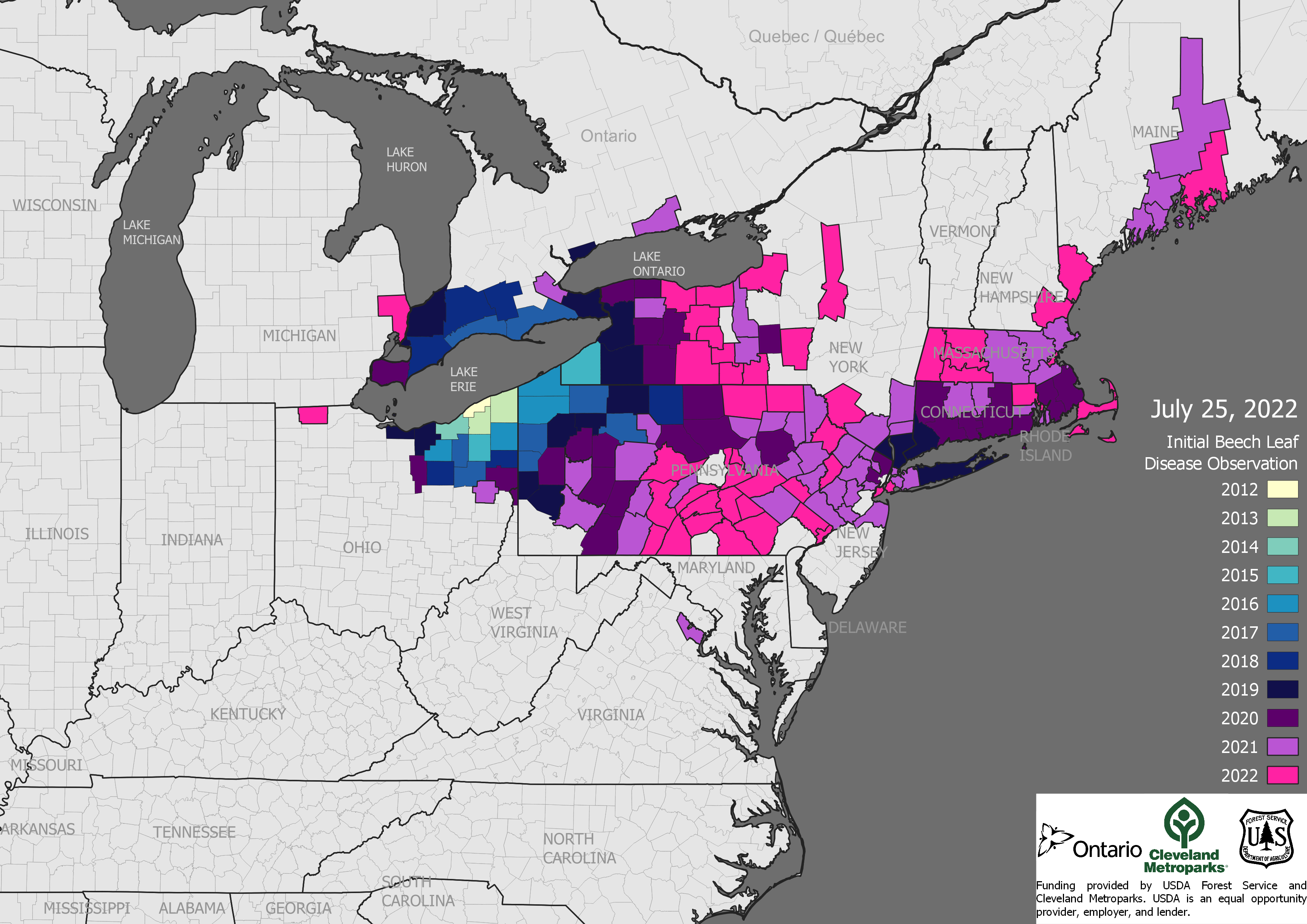
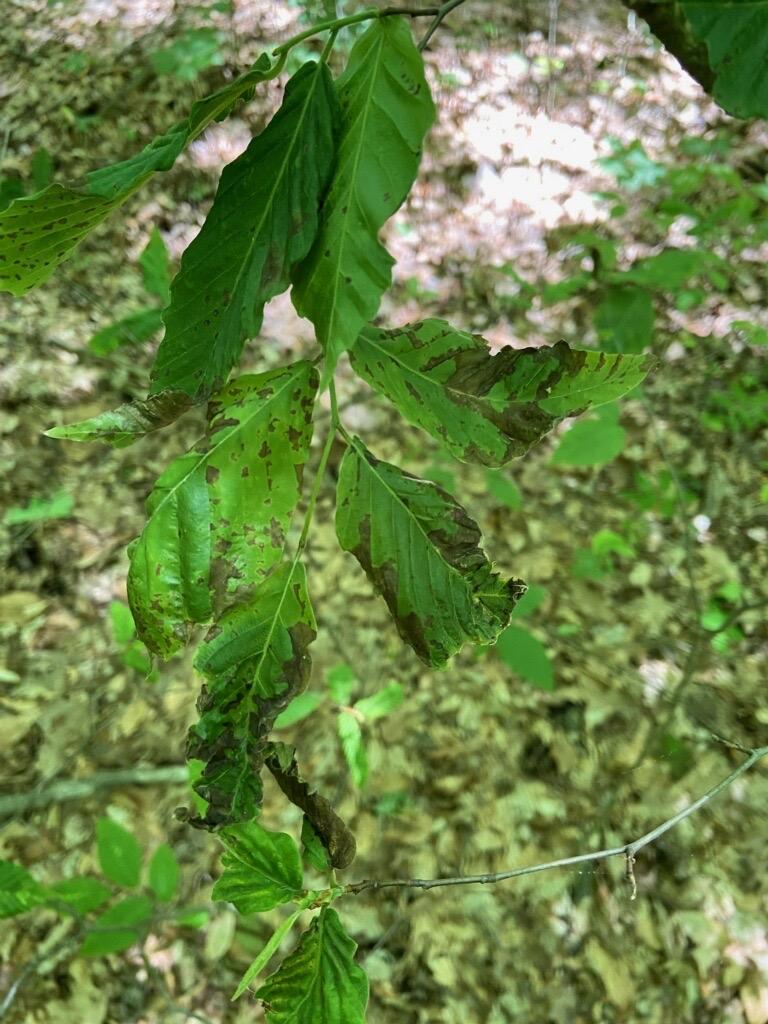
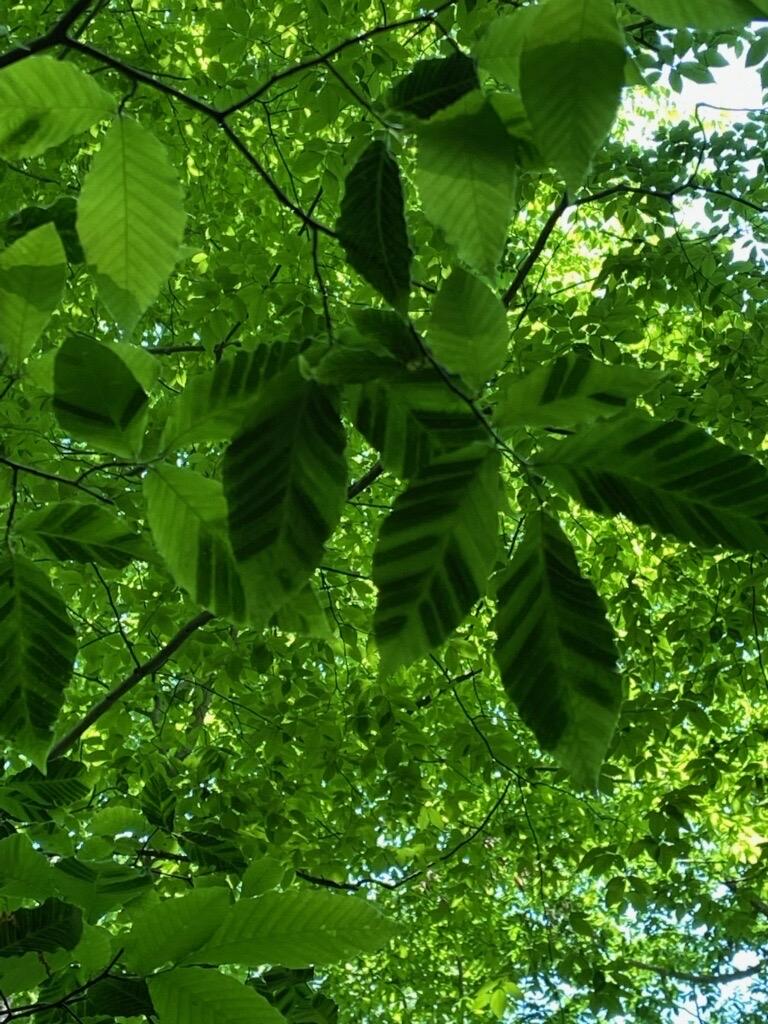
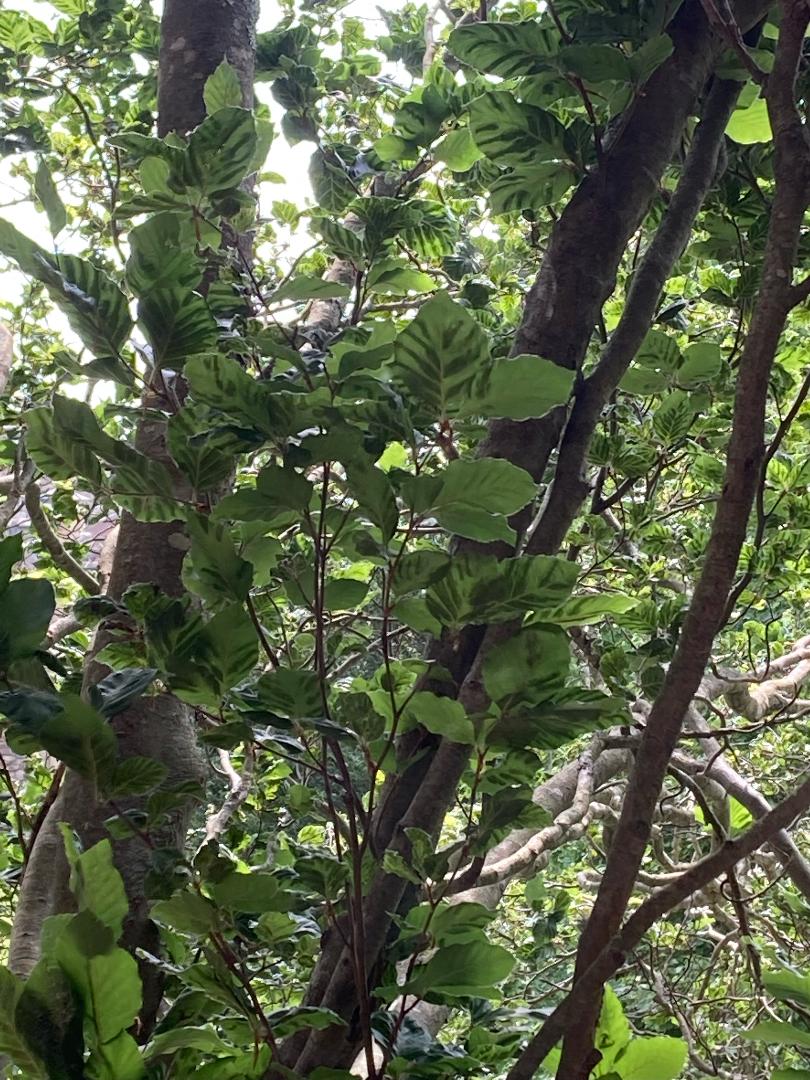
I am concerned about the statement that many plant pathogens are transported, but few have major impact. Examples in the U.S. are said to be WPBR, chestnut blight, and Phytophthora ramorum (p. 97). However, the report does not mention laurel wilt – which has a broad host range; nor rapid ‘ōhi‘a death — which threatens the most widespread tree species on the Hawaiian Islands. Nor does it mention several pathogens attacking single tree species, including beech bark disease, Port-Orford cedar root disease, and butternut canker. The report was written before recognition of beech leaf disease. The report notes that the three diseases it did mention have huge impacts. I am greatly disappointed that the report does not address how scientists and managers should deal with this “black swan” problem other than long discussions of data gaps, and ways to improve models of introduction and spread.

In addition, I am concerned that the discussion of economic factors that influence trade flows and accompanying invasive species (p. 308) focusses too narrowly on inspection alone, rather than other strategies for curtailing introduction. This section also shortens a description of the point made in Lovett et al. (2016). The report notes that Lovett et al. (2016) say that rates of introduction of wood-boring species decreased after ISPM#15 was implemented. However, the report leaves out the major caveat in that paper and the studies by Haack et al. (2014) and Leung et al. (2014) on which it is based: the reduction was insufficient to protect America from damaging introductions! [A further error has crept in: the Haack study explicitly excluded imports from China from their calculations. The Lovett paraphrase is not really clear on this matter.]

Curiosities/Concerns Re: Regional Write-Ups

I wish the sections on the Northwest and Southwest region discussed why areas with so many characteristics favoring introduction of plant pests – major ports, extensive transportation networks, major horticultural industry, extensive agriculture, and abundant urban and native forests – have so few damaging forest pests. (Admittedly, those present are highly damaging: white pine blister rust, sudden oak death, Port-Orford cedar root disease, pitch canker, balsam woolly adelgid, larch casebearer, polyphagous shot hole borer (I add Kuroshio shot hole borer), and banded elm bark beetle). The report does mention the constant threat of introduction of the European and Asian gypsy moths. (The Entomological Society of America has decided to coin a new common name for these insects; they currently to be called by the Latin binomial Lymatria dispar). The report notes that 22 species of non-native bark and ambrosia beetles have recently been introduced in the Southwest.

The report cites a decade-old estimate by Aukema et al. (2010) in saying that a small proportion of introduced pest species has killed millions of trees or pushed ecologically foundational species toward functional extinction. The figure was 14% of the more than 450 non-native forest insect species. I greatly regret that overlapping preparation and publication periods precluded inclusion of data from studies by Potter, Guo, and Fei.  http://nivemnic.us/what-fia-data-tell-us-about-non-native-pests-of-americas-forests/

Section 7.3 of the report discusses frameworks for setting priorities. It identifies five factors: 1) pest species having the greatest negative impacts; 2) uniqueness of the affected ecosystem or community; 3) state of the invasion in space and time; 4) management goals; 5) availability of effective tools. Examples of species meeting these criteria include EAB and Dutch elm disease (pest threatens entire host genus); white pine blister rust on whitebark pine (key species in a system with low arboreal diversity).
The report notes increasing understanding of critical aspects of several important pests’ biology and host interactions – but it does not sufficiently acknowledge the decades of effort required to achieve this knowledge. The time required for additional scientific advances will probably be equal or greater, given falling number of “ologists” in government and academia.

I appreciate inclusion of a discussion (Sections 8.3.1 and 8.3.2) on breeding trees resistant to introduced pests

dead Port-Orford cedar in Redwoods National Park; photo by Richard Sniezko, USFS

This section states that host resistance, forest genetics, and tree improvement might be the most effective approaches to managing many established pests. The section says such breeding does not require the use of genetically modified organisms, although transgenic or gene editing technologies can provide useful tools. I appreciate the report conceding that necessary infrastructure and expertise has been declining for two decades (p. 195).

In discussing international cooperation to reduce transport of invasive species, the report refers to increasing availability of data allowing identification of potentially damaging species in their regions of origin. Again, since this chapter was written, the Forest Service has increased its engagement on this approach: the USFS International Program is supporting sentinel plantings managed by the International Plant Sentinel Network (http://www.plantsentinel.org) … see my recent blog here.

SOURCE

Poland, T.M., P. Patel-Weynand, D.M Finch, C.F. Miniat, D.C. Hayes, V.M Lopez, editors. 2021. Invasive Species in Forests and Rangelands of the United States. A Comprehensive Science Synthesis for the US Forest Sector. Springer

Posted by Faith Campbell

We welcome comments that supplement or correct factual information, suggest new approaches, or promote thoughtful consideration. We post comments that disagree with us — but not those we judge to be not civil or inflammatory.

For a detailed discussion of the policies and practices that have allowed these pests to enter and spread – and that do not promote effective restoration strategies – review the Fading Forests report at http://treeimprovement.utk.edu/FadingForests.htm

The South African Report as a Model: U.S. Falls Short

Ailanthus – one of the invasive species shared by South Africa and the U.S.

A few years ago, I posted a blog in which I pointed to a report on South Africa’s response to bioinvasion as a model for the U.S. and other countries. South Africa has published its second report. This report outlines the country’s status as of December 2019 and trends since the first report (i.e. since December 2016). (I describe the report’s findings on South Africa’s invasive species situation in a companion blog.) Again, I find it a good model of how a country should report its invasive species status, efforts, and challenges. In comparison, many U.S. efforts comes up short.

U.S. Reports Need to Be More Comprehensive

The South African report provides a national perspective on all taxa. Various United States agencies have attempted something similar a few times. The report issued by the Office of Technology Assessment in 1993  summarized knowledge of introduced species and evaluated then-current management programs.

The 2018 report by the U.S. Geological Service focused on data: the authors concluded that 11,344 species had been introduced and described the situation in three regions – the “lower 48” states, Alaska, and Hawai`i. However, the USGS did not evaluate programs and policies. The new USDA Forest Service report (Poland et al. 2021) describes taxa and impacts of invasive species in forest and grassland biomes, including associated aquatic systems. Again, it does not evaluate the efficacy of programs and policies.

The biennial national reports required by the Executive Order establishing the National Invasive Species Council (NISC) are most similar to the South African ones in intent. However, none has been comprehensive. For example, the most recent, issued in 2018, strives to raise concern by stating that invasive species effect a wide range of ecosystem services that underpin human well-being and economic growth. Some emphasis is given to damage to infrastructure. The report then sets out priority actions in six areas: leadership and prioritization, coordination, raising awareness, removing barriers, assessing federal capacities, and fostering innovation. NISC also issued a report in 2016 – this one focused on improving early detection and rapid response. NISC posted a useful innovation – a “report card” updating progress on priority actions — in October 2018.   It listed whether actions had been completed, were in progress, or were no longer applicable. However, the “report card” gave no explanation of the status of various actions; the most notable omissions concerned the actions dismissed as “not applicable”. Worse, no report cards have been posted since 2018. I doubt if those or any more comprehensive reports will be forthcoming. This reflects the increasing marginalization of NISC. The Council has never had sufficient power to coordinate agencies’ actions, and now barely survives.

U.S. Reports Need to Be More Candid

The authors of the South African report made an impressive commitment to honest evaluation of the country’s gaps, continuing problems, progress, and strengths. As in the first report, they are willing to note shortcomings, even of programs that enjoy broad political support (e.g., the Working for Water program).

It is not clear whether decision-makers have acted — or will act — on the report’s findings. That is true in many countries, including the United States. However, that is separate whether decision-makers have an honest appraisal on which to base action.

Assessment of South Africa’s Invasive Species Programs

Here is a summary of what the authors say about South Africa’s invasive species program. I want to state clearly that my intention is not to criticize South Africa’s efforts. No country has a perfect program, and South Africa faces many challenges. These have been exacerbated by COVD-19.  

The report identifies the areas listed below as needing change or improvement.

1) Absence of a comprehensive policy on bioinvasion. Such a policy would provide a vision for what South Africa aspires to achieve, clarify the government’s position, guide decision-makers, and provide a basis for coordinating programs by all affected parties (e.g., including conservation and phytosanitary agencies).

2) As in the first report, the authors call for monitoring program outcomes (results) rather than inputs (money, staffing, etc.) or outputs (e.g., acres treated). The authors also say data must be available for scrutiny. In those cases when data are adequate for assessing programs’ efficacy, they indicate that the control effort is largely ineffective.

3) Inadequate data in several areas. The report notes progress in developing and applying transparent and science-based criteria to species categorization as invasive (as distinct from relying on expert opinion). However, this change is taking time to implement, and sometimes results in species receiving a different rating. [I agree with the report that data gaps undermine understanding of the extent and impacts of bioinvasion, domestic pathways of spread, justification of expenditures, assessment of various programs’ efficacy (individually or overall), priority setting, and identifying changes needed to overcome programs’ weaknesses. However, I think filling these data gaps might demand time and resources that could better be utilized to respond to invasions – even when those invasions are not fully understood.]

4) Funding of bioinvasion programs by the National Department of Forestry, Fisheries, and the Environment has been fairly constant over 2012–2019, but this is a decline in real terms. The figure of 1 billion ZAR does not include spending by other government departments, national and provincial conservation bodies, municipalities, non-governmental organizations, and the private sector. Authors of the report expect funding to decrease in the future because of competing needs.

While at least 237 invasive species are under some management (see Table 5.1), funding is heavily skewed – 45% of funding goes to management of one invasive plant (black wattle); 72% to management of 10 species.

5) Need for policies to address the threat emerging from rising trade with other African countries, especially considering the probable adoption of the proposed African Continental Free Trade Area. Under this agreement, imported goods will only be inspected for alien species at the first port of entry, and most African countries have limited inspection capacity. [European pathologists Brasier, Jung, and others have noted the same issue arising in Europe, where imported plants move freely around the European Union once approved for entry by one member state.]

The authors of the South African report say programs’ efficacy would be considerably improved if species and sites were prioritized, and species-specific management plans developed. They warn that, in the absence of planning and prioritization, there is a risk that funding could be diluted by targeting too many species, leading to ineffective control and a concomitant increase in impacts.

In South Africa, regulations, permits, and other measures aimed at regulating legal imports of listed species are increasingly effective. However, there is still insufficient capacity to prevent accidental or intentional illegal introductions of alien species. There is also more enforcement of regulations requiring landowners to control invasive species. Six criminal cases have been filed and – as of December 2019, one conviction (guilty plea) obtained. However, the data do not allow an assessment of the overall level of compliance.

The report found little discernable progress on the proportion of pathways that have formally approved management plans. Management is either absent or ineffective for 61% of pathways. There has been no action to manage the ballast water pathway. On the other hand, in some cases, other laws focus explicitly on pathways, e.g., agricultural produce is regulated under the Agricultural Pests Act of 1983.

During the period December 2016 – December 2019, the Plant Inspection Services tested more than 12,000 plant import samples for quarantine pests and made 62 interceptions. The report calls for more detailed information from the various government departments responsible for managing particular pathways (e.g., the phytosanitary service), and for an assessments of the quality of their interventions.

The number of non-native taxa with some form of management has grown by 40% since December 2016 – although – as I have already noted — spending is highly skewed to a few plant species. The number and extent of site-specific management plans has also increased, apparently largely due to a few large-scale plans developed by private landowners. However, few of these plans have been formally approved by some unspecified overseer.

Citing the strengths and weaknesses described above, the current (second) report downgraded its assessment of governmental programs from “substantial” to “partial”.  

Comparison to U.S.

How does the United States measure up on the elements that need change or improvement?  I know of no U.S. government report that is as blunt in assessing the efficacy of our programs –individually or as a whole.

Nevertheless, each of the five weaknesses identified for South Africa also exist in the United States:

  1. Re: lack of a comprehensive policy, I think the U.S. also suffers this absence. This is regrettable since the National Invasive Species Council (NISC) was set up in 1999.
  2. Re: monitoring outcomes to assess programs’ efficacy, I think U.S. agencies do seem to be more focused on collecting data on programs’ results – see the Forest Service’ budget justification. However, I think too often the data collected focus on inputs and outputs.
  3. Re: data gaps, I think all countries – including the U.S. — lack data on important aspects of bioinvasion. I differ from the South African report, however, in arguing for funding research aimed at developing responses rather than monitoring to clarify the extent of a specific invasive species. Information that does not lead to action seems to me to be a luxury given the low level of funding.
  4. Re: funding, I find that, despite the existence of NISC, it remains difficult to get an overall picture of U.S federal funding of invasive species programs. Indeed, the cross-cut budget was dropped in 2018 at the Administration’s request. I expect all agencies are under-funded; I have often said so as regards key USDA programs. As in South Africa, funding is skewed to a few species that I think should be lower in priority (e.g., gypsy moth). 
  5. Re: upgrading invasive species programs to counter free-trade policies, I think U.S. trade policies place too high a priority on promoting agricultural exports to the detriment of efforts to prevent forest pest introductions. This imbalance might be present with regard to other taxa and pathways. See Fading Forests II here.

South African and U.S. agencies also face the same over-arching issues. For example, the U.S. priority-setting process seems to be a “black box.” Several USFS scientists (Potter et al. 2019) spent considerable effort to develop a set of criteria for ranking action on tree species that are hosts of damaging introduced pests. Yet there is no evidence that this laudable project influenced priorities for USFS funding.

SOURCES

Poland, T.M., P. Patel-Weynand, D.M Finch, C.F. Miniat, D.C. Hayes, V.M Lopez, editors. 2021. Invasive Species in Forests and Rangelands of the United States. A Comprehensive Science Synthesis for the US Forest Sector. Springer

Potter, K.M., Escanferla, M.E., Jetton, R.M., Man, G., Crane, B.S. 2019. Prioritizing the conservation needs of United States tree species: Evaluating vulnerability to forest P&P threats, Global Ecology and Conservation (2019), doi: https://doi.org/10.1016/j.gecco.2019.e00622.

SANBI and CIB 2020. The status of bioinvasions and their management in South Africa in 2019. pp.71. South African National BD Institute, Kirstenbosch and DSI-NRF Centre of Excellence for Invasion Biology, Stellenbosch. http://dx.doi.org/10.5281/zenodo.3947613

Posted by Faith Campbell  

We welcome comments that supplement or correct factual information, suggest new approaches, or promote thoughtful consideration. We post comments that disagree with us — but not those we judge to be not civil or inflammatory.

For a detailed discussion of the policies and practices that have allowed these pests to enter and spread – and that do not promote effective restoration strategies – review the Fading Forests report at http://treeimprovement.utk.edu/FadingForests.htm

South Africa & Invasive Species: Threats to High Value Biodiversity and Human Well-Being

Protea repens and fynbos vegetation near Table Mountain; photo by Mike Wingfield

South Africa is a country of immense biological diversity. It is also one that recognizes the threat invasive species pose to its natural wealth – and to the economy and livelihoods of ordinary people.

Also, South Africans are trying hard to improve the country’s invasive species program. It recently released the second national report assessing how well it is curtailing introductions and minimizing damage. As I describe in a companion blog, I find these reports to contain exceptionally thorough and honest appraisals of South Africa’s invasive species programs. I address that value in the companion blog, where I compare the South African report — and its findings — to U.S. government reports on our invasive species programs.

In South Africa, bioinvasion ranks third – after cultivation and land degradation – as a threat to the country’s impressive biodiversity. Invasive species are responsible for 25% of all biodiversity loss. Certain taxa are at particular risk: native amphibians and freshwater fishes, and some species of plants and butterflies.

Particularly disturbing is the bioinvasion threat to the Fynbos biome. The report notes that 251 non-native species have been identified in this system. This finding causes concern because the Fynbos is a unique floral biome. In fact, it constitutes the principal component of one of only six floral kingdoms found on Earth: the Cape Floral Kingdom (or region). For more information, go here.

map of South Africa showing fynbos biome

Not surprisingly, invasive bird and plant species are most numerous around major urban centers. The report concludes that this is probably because most non-native birds are commensal with humans; most birds and plants were first introduced to urban centers; and there is greater sampling effort there. Indeed, the patterns of (detected) invasive plant richness are still highly sensitive to sampling effort.

South Africa is considered a leader on invasive species management. However, its record is spotty.

Successes

Biocontrol interventions are considered a success. South Africa has approved release of 157 biocontrol agents, including seven since 2016. All the recent agents (and probably most others) target invasive plants. The South African biocontrol community conducts a comprehensive review of their effectiveness at roughly 10-year intervals. The fourth assessment is currently under way. Also, the report considers eradication of non-native fish (primarily sport species) from several wetlands and river reaches to have been successful. (However, opposition by sport fishermen has delayed listing of some trout species as invasive.)

Failures

On the other hand, strategies to combat invasive plants, other than by biocontrol, appear to be having little success. Even the extent of plant invasions in national parks is poorly documented. Also, the report highlights ballast water as an inadequately managed pathway of invasion.

The report estimates that three new non-native species arrive in South Africa accidentally or illegally every year. Interestingly, reported species arrivals have declined in the current decade compared to the preceding one. The report’s authors consider this to probably be an underestimate caused by the well-known lag in detecting and reporting introductions. The apparent decline also is contrary to global findings. Table 1 in Seebens et al. 2020 (full citation at end of blog) projected that the African continent would receive approximately 767 new alien species between 2005 and 2050.

Even the introductory pathways are poorly known: the pathway for 54% of the taxa introduced to South Africa are unknown. Of the species for which the introductory pathway is known, horticultural or ornamental introductions of plants dominate – 15% of that total. A second important pathway – for accidental introductions – is shipping (5% of all introductions). Other pathways thought to be prominent during 2017–2019 are the timber trade, contaminants on imported animals, and natural dispersal from other African countries where they had previously been introduced.

PSHB symptoms on Vachellia sieberiana; photo by Trudy Paap

Polyphagous shothole borer

The report highlights as an example of a recent introduction that of the polyphagous shothole borer (PSHB, Euwallacea fornicatus). https://www.dontmovefirewood.org/pest_pathogen/polyphagous-shot-hole-borer-html/        http://nivemnic.us/south-africas-unique-flora-put-at-risk-by-polyphagous-shot-hole-borer/ See Box 3.1 in the report. This species is expected to have huge impacts, especially in urban areas. While most of the trees affected so far are non-native (e.g., maples, planes, oaks, avocadoes), several native trees are also reproductive hosts.  https://www.fabinet.up.ac.za/pshb  In response to the introduction, the government established an interdepartmental steering committee, which has developed a consolidated strategy and action plan. However, as of October 2020 the shot hole borer had not been listed under invasive species regulations, even on an emergency basis. It had been listed as a quarantine pest of agricultural plants (e.g., avocado) per the Agricultural Pests Act 1983.

As note in my blog assessing the report, the report bravely concludes that the government’s regulatory regime is only partially successful (whereas three years ago it graded it as “substantial”). The downgrade is the result of a more thorough evaluation of the regulatory regime’s effectiveness.

SOURCES

SANBI and CIB 2020. The status of bioinvasions and their management in South Africa in 2019. pp.71. South African National BD Institute, Kirstenbosch and DSI-NRF Centre of Excellence for Invasion Biology, Stellenbosch. http://dx.doi.org/10.5281/zenodo.3947613  

Seebens, H., S. Bacher, T.M. Blackburn, C. Capinha, W. Dawson, S. Dullinger, P. Genovesi, P.E. Hulme, M. van Kleunen, I. Kühn, J.M. Jeschke, B. Lenzner, A.M. Liebhold, Z. Pattison, J. Perg, P. Pyšek, M. Winter, F. Essl. 2020. Projecting the continental accumulation of alien species through to 2050. Global Change Biology. 2020;00:1 -13 https://onlinelibrary.wiley.com/doi/10.1111/gcb.15333

Posted by Faith Campbell

We welcome comments that supplement or correct factual information, suggest new approaches, or promote thoughtful consideration. We post comments that disagree with us — but not those we judge to be not civil or inflammatory.

For a detailed discussion of the policies and practices that have allowed these pests to enter and spread – and that do not promote effective restoration strategies – review the Fading Forests report at http://treeimprovement.utk.edu/FadingForests.htm

Federal Funding for Forest Pest Programs — Act Now! to Help Congress Decide

If you have not communicated to your Representative and senators your support for adequate funding of U.S. government programs to address non-native insects and pathogens threatening our forests, please do so now!

If political leaders do not hear from us that expanding these programs is important, these programs will continue to languish. It is easiest – and most direct – to inform your representative and Senators of your support. Please do so!  If you do not agree that these programs should be expanded & strengthened, I ask that you send a comment outlining what approach you think would be more effective in curtailing introductions, minimizing impacts, and restoring affected tree species. I can then initiate a discussion to explore these suggestions. [I already have endorsed the suggestion to create a CDC-like body to oversee management of non-native forest pests.] You can find your member of Congress here. Your Senators here.

Last week the Biden Administration sent to Congress its proposed budget for the fiscal year beginning October 1, 2021. I find it falls short in key areas. Next, the House and Senate will pass a package of appropriations bills to set actual funding levels. This is the moment to press for boosted funding. In an earlier blog I explained my reasons for seeking specific funding levels.

Asian longhorned beetles – introduced in wood packaging (USDA photo)

Two USDA agencies lead efforts to protect U.S. wildland, rural, and urban forests from non-native insects and pathogens. Their funding is set by two separate – and critical — appropriations bills:

  • USDA’s Animal and Plant Health Inspection Service (APHIS) has legal responsibility for preventing introduction of tree-killing pests; detecting newly introduced pests; and initiating eradication and containment programs intended to minimize their damage.  Funding for APHIS is contained in the Agriculture Appropriations bill.
  • USDA Forest Service (USFS)
    • The Forest Health Management (FHM) program provides funding and applied science to help partners manage pests. The program has two sides: the Cooperative component helps states and private forest managers, so it can address pests where they are first found – usually near cities – and when they spread. The federal lands component helps the USFS, National Park Service, and other federal agencies counter pests that have spread to the more rural/wildland areas that they manage.
    • The Research and Development (R&D) program supports research into pest-host relationships; pathways of introduction and spread;; management strategies (including biocontrol); and host resistance breeding

Forest Service funds are appropriated through the Interior Appropriations bill.

APHIS – the Administration’s official budget proposal, and justification, is here.

The Administration proposes a small increase for three of four APHIS programs that are particularly important for preventing introductions of forest pests or eradicating or containing those that do enter. The Administration proposed significant funding for a fourth program that plays a small but important role in managing two specific forest pests.

APHIS ProgramCurrent (FY 2021)FY22 Administration proposedFY 2022 Campbell recommended
Tree & Wood Pest$60.456 million$61 million$70 million
Specialty Crops$196.553 million209 million$200 million
Pest Detection$27.733 millionNo change$30 million
Methods Development$20.844 millionNo change$25 million

Tree and Wood Pests: It will be a major challenge for APHIS to eradicate the current outbreak of Asian longhorned beetles (ALB) in the swamps of South Carolina. APHIS should also address other pests. Even after cutting spending on the emerald ash borer (EAB), I think APHIS needs significantly more money in this account.

The Specialty Crops program is supported by such traditional USDA constituencies as the nursery and orchard industries, which probably explains the proposed increase. APHIS’ program to curtail spread of the sudden oak death (SOD) pathogen through interstate nursery trade receives funding from this program – about $5 million. I believe this program also now funds the agency’s efforts to slow spread of the spotted lanternfly.

SOD-infected rhododendrons in Indiana nursery in 2019

I would like the Pest Detection program to receive a small increase so the agency and its cooperators can better deal with rising trade volumes and associated pest risk. Similarly, Methods Development should receive a boost because of the need for improved detection and management tools.

USDA Forest Service – the Administration’s official budget proposal is here.  

While the Forest Health Management (FHM) and Research and Development (R&D) programs are the principal USFS programs that address introduced forest pests, neither has non-native pests as the principle focus. Non-native forest pests constitute only a portion of the programs’ activities. In the case of Research, this is a very small portion indeed.

President Biden’s budget proposes to spend $59.2 million on the Forest Health Management program and $313.5 million for Research. Both represent significant increases over spending during the current fiscal year. However, the FHM level is still below spending in recent years, although both the number of introduced pests and the geographic areas affected have been rising for decades.

In my earlier blog I suggested the funding levels:

USFS PROGRAMCurrent (FY21) FY22 Administration FY22  my recommendation
FHP Coop Lands$30.747 million$36.747 million$51 million (to cover both program work & personnel costs)
FHP Federal lands$15.485 million22.485 million$25 million (ditto)
    
Research & Develop$258.7 million; of which about $3.6 million allocated to invasive species$313.560 million$320 million; I seek report language instructing the USFS to spend more on invasive species

Under the FHM program, a table on pp. 46-47 of the budget justification lists existing and proposed spending on 14 pest taxa (plus invasive plants and subterranean termites). Spending on these 14 species is proposed to total $30.3 million. Of this amount, less than half – $14.9 million – is allocated to such high-profile invasive species of forests as the emerald ash borer (EAB), hemlock woolly adelgid (HWA),  sudden oak death (SOD), and threats to whitebark pine (recently listed as a threatened species under the Endangered Species Act). (The USFS does not engage in efforts to eradicate Asian longhorned beetle (ALB) outbreaks; it leaves that task to APHIS.) And of the nearly $15 million allocated to invasive non-native pests, more than half – $8 million – is allocated to European gypsy moths. While I agree that the gypsy moth program has been highly successful, I decry this imbalance. Other non-native pests cause much higher levels of mortality among hosts than does the gypsy moth.

dead whitebark pine at Crater Lake National Park; photo by FT Campbell

I applaud the modest increases in the Administration’s budget for other non-native forest pests. These range from tens to a few hundred thousand dollars per pest. FHM also supports smaller programs targetting rapid ohia death, beech leaf disease, the invasive shot hole borers in southern California, Mediterranean oak beetle, etc. Budget documents don’t report on these efforts.

The imbalance of funding allocated to damaging non-native pests compared to other forest management concerns is even worse in the Research program.  Of the $313.5 million proposed in the budget for the full research program, only $9.2 million is allocated to the 14 pest taxa (plus invasive plants and subterranean termites) specified in the table on pp. 46-47. Of this amount, less than half — $4.5 million – is allocated to the high-profile invasive species, e.g., ALB, EAB, HWA, SOD, and threats to whitebark pine. The budget does provide extremely modest increases for several of these species, ranging from $12,000 for ALB to $114,000 for EAB. Again, some smaller programs managed at the USFS regional level might address other pests. Still – the budget proposes that USFS R&D allocate only 1.4% of its total budget to addressing these threats to America’s forests! This despite plenty of documentation – including by USFS scientists – that non-native species “have caused, and will continue to cause, enormous ecological and economic damage.” (Poland et al. 2021; full citation at the end of the blog). Poland et al. go on to say:

Invasive insects and plant pathogens (or complexes involving both) cause tree mortality, resulting in canopy gaps, stand thinning, or overstory removals that, in turn, alter microenvironments and hydrologic or biogeochemical cycling regimes. These changes can shift the overall species composition and structure of the plant community, with associated effects on terrestrial and aquatic fauna. In the short term, invasive insects and diseases can generally reduce productivity of desired species in forests. Tree mortality or defoliation can affect leaf-level transpiration rates, affecting watershed hydrology. Tree mortality … also leads to enormously high costs for tree removal, other management responses, and reduced property values in urban and residential landscapes.

eastern hemlock in Shenandoah National Park; photo by FT Campbell

I seek report language specifying that at least 5% of research funding should be devoted to research in pathways of invasive species’ introduction and spread; their impacts; and management and restoration strategies, including breeding of resistant trees. Several coalitions of which the Center for Invasive Species is a member have agreed to less specific language, not the 5% goal.

Two other USFS programs contribute to invasive species management. The Urban and Community Forest program provided $2.5 million for a competitive grant program to help communities address threats to urban forest health and resilience. Of 23 projects funded in FY2020, 11 are helping communities recover from the loss of ash trees to EAB. (On average, each program received $109,000.)

The Forest Service’ International Program is helping academic and other partners establish “sentinel gardens” in China and Europe. North American trees are planted and monitored so researchers can identify insects or pathogens that attack them. This provides advance notice of organisms that could be damaging pests if introduced to the United States.

REFERENCE:

Invasive Species in Forests and Rangelands of the United States. Editors T.M. Poland, T. Patel-Weynand, D.M. Finch, C.F. Miniat, D.C. Hayes, V.M. Lopez  Open access!

Posted by Faith Campbell

We welcome comments that supplement or correct factual information, suggest new approaches, or promote thoughtful consideration. We post comments that disagree with us — but not those we judge to be not civil or inflammatory.

For a detailed discussion of the policies and practices that have allowed these pests to enter and spread – and that do not promote effective restoration strategies – review the Fading Forests report at http://treeimprovement.utk.edu/FadingForests.htm

International Phytosanitary System Impedes Prevention

Eugenia koolauensis (endangered) damaged by ohia rust; photo courtesy of the U.S. Army Natural Resources Program, Oahu

I have written often about failings of the international phytosanitary systems – starting with my report Fading Forests II in 2004, and continuing in many blogs. As the International Year of Plant Health comes to an end, I do so again. I begin with a key recommendation.

Australia’s experience dealing with myrtle rust (Austropuccina psidii) demonstrates the need to integrate agencies responsible for conservation of natural ecosystems into the determination and implementation of phytosanitary policy.

These environmental agencies should be active participants in setting up surveillance and diagnostics protocols and on-the-ground surveillance, and should be directly involved in emergency response. Federal agricultural agencies have technical expertise in biosecurity but lack expertise in key elements of environmental management. In the Australian context, this recommendation is made by several studies cited by Carnegie and Pegg (2018) – full citation at the end of this blog. I strongly endorse the recommendation for the United States. In the U.S., the appropriate agencies would include USDA’s Forest Service and the Department of Interior’s Fish and Wildlife Service.

While the USDA Forest Service is (apparently) more involved in US phytosanitary efforts than its Australian counterpart, its voice in setting USDA phytosanitary policy is limited to the most narrow details, e.g., treatment protocols for wood packaging. 

Carnegie and Pegg note a second common problem: the ongoing decline in forest entomology and pathology capacity in government agencies. This decline has long been decried by U.S. natural resource experts as depriving agencies of needed expertise – but we have not yet managed to raise agency budgets so as to reverse it.

The forests of Australia, New Zealand, nearby islands, and South Africa formed during the period of the supercontinent Gondwana – 300 million years ago. While the threat to these unique forests from non-native pests is severe, so far it arises from a limited number of organisms. These are Phytophthora cinnamomi, Austropuccinia psidii, polyphagous shot hole borer and Fusarium fungus (in South Africa), and – in the future, laurel wilt disease. All these organisms threaten multiple hosts. In contrast, the threat to America’s forests comes from more than 100 highly damaging non-native insects, pathogens, and nematodes already here. Some threaten multiple hosts. Plus there is the constant risk of new introductions. Surely our federal conservation agencies have important resources to defend and expertise to contribute to the effort.

Flaws in the System

The international phytosanitary rules adopted by both the World Trade Organization’s Agreement on the Application of Sanitary and Phytosanitary Measures [WTO SPS Agreement] and the International Plant Protection Convention [IPPC] are fundamentally flawed. That is, they require regulatory officials to be unrealistically certain about an organism’s “pest” potential before regulating it. Yet uncertainty is likely to be at its highest at two critical times: before invasion or at its earliest stage. These times are precisely when phytosanitary actions are likely to be most effective.

The effect of this demand for certainty is exacerbated by decision-makers’ caution when confronted with the potential that their action might harm an economic interest. The vast majority won’t impose a regulation until they are sure that the organism under consideration poses a major threat to plant health.

Yet at the same time, most phytosanitary officials rarely carry out the scientific studies that might answer such questions about the risk.

For example, USDA APHIS has created its own Catch 22. It has not funded laboratory tests to get preliminary information on how vulnerable North American tree genera are to the 38 new Phytophthora species detected in Southeast Asia [see earlier blog]. European scientists are doing this testing; it is unclear whether their work is supported by European governments. American scientists could build on the Europeans’ work since our continents share many plant genera – but since vulnerability might vary at the species level, we still must assess North American species separately. At the same time as APHIS is not sponsoring such tests, it refuses to propose acting under its NAPPRA authority link to temporarily prohibit imports of Asian hosts of the Phytophthoras because it lacks information demonstrating the risk they pose to North American plants!

Sometimes, other agencies step in to fill the gap. Thus, the USDA Forest Service funded research to demonstrate that strains of the ‘ōhi‘a rust pathogen not yet introduced to the U.S. posed a risk to native plants in Hawai`i. (See the linked description and additional information later in this blog.)  The Forest Service has also funded “sentinel gardens” – plantings inside the U.S. and abroad that are closely monitored to detect new pests.

British forest pathologist Clive Brasier (white hair) searching for Phytophthora species in Vietnam

Three pathogens illustrate the problems clearly:

1) brown alga in the Phytophthora genus;

2) myrtle (or ohia or eucalyptus) rust Austropuccinia psidii; and

3) the ophiostomatoid laurel wilt fungus Raffaelea lauricola.

These organisms present a variety of challenges to various countries. Individually and together, these pathogens threaten to transforms forest floras around the world.

Spread: the first two are spread internationally by movement of plants for planting but also spread locally by rain or wind. The third, laurel wilt fungus, arrived in the U.S. when its insect vector, the redbay ambrosia beetle Xyleborus glabratus, hitched a ride in solid wood packaging material. 

How countries prepared for pathogen invasion – not always successfully

Numerous plant pathogens in the Phytophthora genus have long had the attention of phytosanitary officials. However, the species that causes sudden oak death (P. ramorum) was unknown when it was introduced to North America and Europe in the late 1980s or early 1990s. The established phytosanitary measures on two continents failed to detect and prevent its introduction.

areas of Australia vulnerable to myrtle rust; Australian Department of Agriculture and Water Resources

The myrtle rust pathogen was already recognized by phytosanitary officials in Australia, New Zealand, and New Caledonia as a severe potential threat, especially to Eucalyptus in both natural forests and plantations. Its appearance in Hawai`i in 2005 raised the level of concern. However, that awareness neither prevented its entry to Australia (probably, although not certainly, on imported plants or foliage) nor prompted its detection early enough for eradication. New Zealand and New Caledonia became infested by wind transport of the pathogen from Australia. [For a thorough discussion of the Australia’s extensive preparations for possible introduction of this pathogen, see Carnegie and Pegg 2018, full citation at the end of this blog.]

The laurel wilt fungus was unknown before it was detected in Georgia, U.S.A. Phytosanitary officials were certainly aware of the pest risk associated with wood packaging material (see Fading Forests II, chapter 3) but at the time the invasion was detected – 2003 – U.S. regulations required that the wood be debarked only, not treated to kill pests.

redbay tree killed by laurel wilt in Georgia

Pathogens are more difficult to detect and manage than insects. They also get less attention. I can think of three possible reasons: 1) Usually we can’t see a pathogen – we literally can’t put a face on the “enemy”. 2) Disease intensity can vary depending on ecological factors, so it is more difficult to understand than an insect feeding on a plant. 3) In recent decades, many invading insects have been linked to a singlepathway of introduction — wood packaging — while pathogens enter through association with a myriad of imports, especially a variety of imported plants. A single pathway is a concept that is easier to understand and address. Because pathogens get little attention, it is more difficult to obtain data quantifying their risks.

The rapid spread and high mortality of laurel wilt in one host – redbay trees (Persea borbonia) – and threat to a second—sassafras  (Sassafras albidum) – have alerted scientists to this threat. The pathogen apparently threatens trees and shrubs in the Lauraceae family that are native to regions other than Southeast Asia. These areas include the tropical Americas, Australia, Madagascar, and islands in the eastern Atlantic (Azores, Canary Islands, and Madeira). I understand that Australian phytosanitary officials are aware of this risk, but I don’t know about officials in the other regions. For example, laurel wilt is not listed among the pathogens thought to pose the greatest risk in Europe, i.e., the A1 list of the European and Mediterranean Plant Protection Organization (EPPO)

Why do some organisms suddenly disperse widely? Who is figuring out why?

The myrtle rust pathogen Austropuccinia psidii experienced a burst of introductions after 2000: it was detected in Hawai`i in 2005, Japan in 2009, Australia in 2010, China in 2011, New Caledonia and South Africa in 2013, Indonesia and Singapore in 2016, and New Zealand in 2017. It is believed to have been carried to Hawai`i on cut vegetation for the floral trade; to New Caledonia and New Zealand by wind from Australia across the Tasman Sea. The introduction pathway to Australia has never been determined, although it first was detected in a nursery. I don’t have information on how it was introduced to Japan or China. Has anyone tried to figure out what triggered this expansion? Was it some fad in horticulture or floriculture? Would it not be useful to learn what happened so we can try to prevent a repetition?

Similar sudden dispersals occurred during roughly the same period for Phytophthora ramorum and the erythrina gall wasp (Quadrastichus erythrinae). The latter spread across the Indian and Pacific oceans within a dozen years of its discovery. Again, was there some fad that prompted international trade in host material? Or did the insect suddenly start utilizing transport facilities such as aircraft interiors or holds? Has anyone tried to figure this out? I doubt anyone is even searching for and recording the presence of the gall wasp now that it is so widespread.

Is the fungal genus Ceratocystis experiencing a similar dispersal burst now?  Australian authorities (Carnegie and Pegg 2018) have noted Ceratocystis wilts threatening Acacia and Eucalyptus, as well as Metrosideros.

Efforts often wane at the management and restoration stages.

In the cases of all three pathogens, governments have reduced their efforts once they determined that they could not eradicate the pest.

In North America, USDA APHIS regulates movement of nursery stock with the goal of preventing spread of P. ramorum to the East. The agency has reduced the stringency of its regulations several times over the 18 years it has been regulated. These changes have been made at the urging of the nursery industry in California and Oregon, which are where the pathogen is present. Two years ago, a major regulatory failure resulted in infected plants being shipped to more than 100 retailers in more than a dozen states. This had huge costs to dozens, if not hundreds, of nurseries and state regulatory agencies. Yet APHIS has neither published a straightforward and complete analysis of what went wrong, nor promised to correct any weaknesses revealed by such an analysis. Another apparent regulatory failure is the appearance of the EU1 strain of P. ramorum in the country; this seems to indicate that introductions to North America have occurred more recently than the initial introduction in the late 1980s or early 1990s.

In Hawai`i, concern about the potential impact of myrtle rust on the Islands’ dominant native tree species, ‘ōhi‘a (Metrosideros polymorpha), spurred action. Although myrtle rust spread to all the islands within months, the state imposed an emergency rule prohibiting importation to the state of Myrtaceae plants or cut foliage in 2008. This action was relatively rapid, although it was three years after detection of the pathogen. The rule aimed to prevent introduction of possibly more virulent strains. However, it expired in 2009 (emergency rules are effective for only one year).

Concerned about the possible impacts of various strains, the USDA Forest Service sponsored studies in Brazil. Based on their findings, Hawai`i adopted a new permanent rule in 2020. It prohibited importation of plants or foliage of all Myrtaceae species.

Also, APHIS proposed in November 2019 a federal regulation to support the state’s action through its NAPPRA authority. However, it took seven years to resolve regulators’ concerns about the possible presence and virulence of various strains. During this time importation of high-risk materials was not prohibited. As of this writing, it has been 18 months since APHIS proposed the NAPPRA listing, so federal rules still allow imports of high-risk material.

a surprisingly bad outbreak of rust on ‘ōhi‘a in 2016; cause unclear but possibly related to extremely wet weather; photo by J.B. Friday

Meanwhile, the focus of on-the-ground conservation and restoration efforts in Hawai`i has shifted to different pathogens, those causing rapid ‘ōhi‘a death dontmovefirwood.org

In Australia and New Zealand, federal officials determined within months of detection that myrtle rust was too widespread to be eradicated. They now focus on trying to prevent introduction of additional strains. Within the country, Australia prohibits movement of Myrtaceae (hosts of myrtle rust) to the two states so far free of the pathogen (South and West Australia). However, some scientists believe enforcement of these regulations is too lax. In New Zealand, nurseries are reported to be very careful to produce plants free of the pathogen. Is this sufficient?

The Australian government also funds seed collection and other ex situ conservation efforts. But little funding has been available even for impact studies. In Australia, funding from both state (New South Wales) and federal authorities became available only after designation of three plant species as endangered. The federal government also has not designated myrtle rust as a “key threatening process,” which would have opened access to significant funds and possibly prompted more vigorous regulatory efforts. The rust is included as part of the process “novel biota threat to biodiversity”, but scientists and activists consider this to be insufficient. A conservation strategy https://www.anpc.asn.au/myrtle-rust/ was developed by a coalition of non-governmental organizations and state experts. While never adopted by the federal government, this plan became the basis for a state strategy adopted by New South Wales in 2018 – eight years after the pathogen was first detected. For a thorough discussion of weaknesses in the Australian phytosanitary system’s response to the myrtle rust introduction, see Carnegie and Pegg 2018, full citation at the end of this blog.

In June 2021, the Australian Center for Invasive Species Solutions (CISS) and the office of the Chief Environmental Biosecurity Officer (CEBO) released a revised National Environment and Community Biosecurity RD&E Strategy. The sponsors sought feedback on the strategy from biosecurity and biodiversity researchers, investors, practitioners, the community, government and industry. Comments are due by 16 July 2021. The strategy is posted at https://haveyoursay.awe.gov.au/necbrdes  

In New Zealand, the science plan for myrtle rust was described as advisory. The little funding available precludes resistance breeding and seed collection. There is not even a national program to track the rust’s spread.

Difficulties in Assessing Impact

Myrtle rust affects largely new growth of host plants, including flowers and seedlings and root sprouts. Thus, in many – but not all – host species the threat is primarily to reproduction rather than immediate mortality of mature plants. This delay in impacts complicates assessments of the threat posed by the rust.

NGO Action in Australia

After several years’ effort to build a broader coalition to support implementation of the NGO Action Plan, the Plant Biosecurity Science Foundation sponsored an international workshop in March 2021. The goal was to increase understanding of the rust and its impact and who is doing what. Time was devoted to discussions on how coordinate efforts to both raise awareness and spur government action. State and federal officials played prominent roles in both preparation of the Action Plan and the workshop – and did not shy away from criticizing Australia’s handling of the threat.  The descriptions of myrtle rust’s impacts presented at the conference were much more dire than those of a few years ago. Information on impacts has accumulated slowly due to the few scientists doing the work. See https://www.apbsf.org.au/myrtle-rust/ 

Greater alarm about this pathogen is warranted.

Australia – Evidence of Disaster

According to speakers at the workshop, myrtle rust is causing an expanding disaster in Australia, where the flora is dominated by Myrtaceae.  As of spring 2021, myrtle rust is widespread and well established in several native ecosystems in the eastern mainland states of New South Wales and Queensland and part of the Northern Territory. The disease has been detected in Victoria and Tasmania but impact is limited to urban gardens. It has not yet been detected in South or Western Australia. At this time, 382 of Australia’s Myrtaceae species – in 57 genera – are known to host the rust. Three species have been officially listed as critically endangered. Rhodamnia rubescens and Rhodomyrtus psidioides are formerly widespread understory trees in rainforests. Lenwebbia sp. is narrowly endemic, growing in stunted cloud forests on clifftops in a single mountain range. However, experts predict extinction of 16 rainforest species within a generation. (For comparison, only 12 plant species in Australia have become extinct since arrival of the first Europeans 200 years ago.) Several speakers at the conference stressed the speed at which rust is putting plant taxa in peril. Wetlands dominated by Melaleuca are apparently under immediate threat.

[For a thorough discussion of the rust’s impact on plant communities, see Carnegie and Pegg 2018, full citation at the end of this blog.]

New Zealand The vulnerability of each of the 27 – 30 native plant species remains unclear three years after the rust’s introduction.

New Caledonia  The highly endemic flora of this small island group appears to be at great risk.

In Hawai`i, the rust has devastated one endangered plant species (Eugenia koolauensis) and damaged a non-endangered congener, E. reinwardtiana. The strain currently on the Islands does not threaten the dominant native tree species, ‘ōhi‘a (Metrosideros polymorpha).

Southern Africa

Syzygium cordatum South African plant in the Myrtaceae; photo courtesy of Bram van Wyk

South Africa has 24 native plant species in the Myrtaceae. I have been unable to learn the vulnerability of these species to the rust. South Africa relies heavily on plantation of Eucalyptus, some species of which might be vulnerable to the rust. The variant of the rust detected in South Africa 2013 is unique.

Hetropyxis sp. – South African plant in the Myrtacae; photo by Daniel L. Nikrent

Posted by Faith Campbell

We welcome comments that supplement or correct factual information, suggest new approaches, or promote thoughtful consideration. We post comments that disagree with us — but not those we judge to be not civil or inflammatory.

For a detailed discussion of the policies and practices that have allowed these pests to enter and spread – and that do not promote effective restoration strategies – review the Fading Forests report at http://treeimprovement.utk.edu/FadingForests.htm

SOURCES

Angus J. Carnegie, A.J. and G.S. Pegg. 2018. Lessons from the Incursion of Myrtle Rust in Australia. Annual Review of Phytopathology · August 2018

Jung, T.; Horta Jung, M.; Webber, J.F.; Kageyama, K.; Hieno, A.; Masuya, H.; Uematsu, S.; Pérez-Sierra, A.; Harris, A.R.; Forster, J.; et al.. The Destructive Tree Pathogen Phytophthora ramorum Originates from the Laurosilva Forests of East Asia. J. Fungi 2021, 7, 226. https://doi.org/10.3390/ open access!

EAB Threat to Eastern Europe

The emerald ash borer (EAB) was first detected in European Russia in 2003, in Moscow. By 2020, EAB was recorded in 16 provinces [=‘oblast’] of European Russia, especially to the West of Moscow towards the borders with Belarus and Ukraine.  

Russian scientists have documented that the emerald ash borer is spreading faster in the southwest of the country and in neighboring Ukraine than in the northwest (near St. Petersburg and the Baltic countries).

Despite an abundance of ash [both green ash (Fraxinus pennsylvanica) – native to North America – and European ash F. excelsior], EAB population density in the northwest remains low and damage is in scattered clusters.

However, in September 2020 officials detected an isolated outbreak in a St. Petersburg suburb, 520 km away from the apparent edge of the principal Russian population. The authors believe this outbreak has been present since 2015. They think it is the result of transport of EAB either by “insect-hitchhiking” on vehicles or by movement of plants for planting or other commodities.

The Petersburg population is only 130 km from Estonia and Finland – the border with the European Union.

A thousand kilometers to the south, in southwest Russian eastern Ukraine, an outbreak was reported in June 2019. By the next summer, EAB were detected more than 100 km to the West. While this outbreak is still 800 km from Ukraine’s border with eastern Europe (Poland, Slovakia, Hungary, Romania), the authors note that rapid spread is likely since F. excelsior and F. pennsylvanica have been extensively planted along roads, railways, field shelter belts, and urban greenings.

The slower spread in the North is attributed to colder temperatures, the local abundance of food, and possibly pressure by the native parasitoid Spathius polonicus Niezabitowski (note that USDA APHIS has approved two Spathius species as biocontrol agents in the U.S.). On the other hand, the climate is milder in Saint Petersburg (along the coast) than it is inland; and ash woodlands are common along the Baltic coast.

Noting that ash dieback (Hymenoscyphus fraxineus)  has devastated more than 95% of European ash populations, the authors express concern about the future of ash.

SOURCE

Musolin, D.L.; Selikhovkin, A.V.; Peregudova, E.Y.; Popovichev, B.G.; Mandelshtam, M.Y.; Baranchikov, Y.N.; Vasaitis, R. North-Westward Expansion of the Invasive Range of Emerald Ash Borer, Agrilus planipennis Fairmaire (Coleoptera: Buprestidae) towards the EU: From Moscow to Saint Petersburg. Forests 2021, 12, 502. https://doi.org/10.3390/f12040502

Posted by Faith Campbell

We welcome comments that supplement or correct factual information, suggest new approaches, or promote thoughtful consideration. We post comments that disagree with us — but not those we judge to be not civil or inflammatory.

For a detailed discussion of the policies and practices that have allowed these pests to enter and spread – and that do not promote effective restoration strategies – review the Fading Forests report at http://treeimprovement.utk.edu/FadingForests.htm

Funding – Appropriations – Crucial to Protecting Our Forests from Pests

Two USDA agencies lead efforts to protect U.S. wildland, rural, and urban forests from non-native insects and disease-causing pathogens:

  • USDA Animal and Plant Health Inspection Service (APHIS) has legal responsibility for preventing introduction of tree-killing pests, detecting newly introduced pests, and initiating eradication and containment programs intended to minimize the damage they cause.
  • USDA Forest Service (USFS)
    • Forest Health Management (FHM) program assists partner agencies to counter pests where they are first found – usually near cities – and when they spread. This work falls primarily to the Cooperative component of Forest Health Management program. The Federal lands component helps the USFS, National Park Service, and other federal agencies counter pests that have spread to more rural/wildland areas.
    • Research and Development (R&D) program supports research into pest-host relationships, introduction & spread pathways, management strategies (including biocontrol) and host resistance breeding

Since 2010, several new tree-killing pests have been detected in the US, including polyphagous and Kuroshio shot hole borers, spotted lanternfly, two rapid ʻōhiʻa death pathogens, and Mediterranean oak beetle. Over the same period. the Asian longhorned beetle has been detected in two new states – Ohio and South Carolina; the emerald ash borer expanded its range from 14 to 35 states; laurel wilt disease spread from five states to 11; a second strain of the sudden oak death fungus appeared in Oregon and California forests; and whitebark pine has been proposed by the US Fish and Wildlife Service for listing as Threatened under the Endangered Species Act. (I have blogged often about policy failures that have contributed to these introductions; today I am focused on agencies’ ability to respond.)

Funding agencies’ essential programs has fallen behind these calamities.  APHIS funding has been steady or has risen slowly – at least not dropping – but not enough to deal with the growing threat.

Meanwhile, the key USFS programs have been cut by half or more. In 2010, USFS FHP and Research, together, allocated $32 million to efforts to understand and manage a dozen introduced pests: Asian longhorned beetle, emerald ash borer, sudden oak death, hemlock woolly adelgid, goldspotted oak borer, laurel wilt, thousand cankers disease, European gypsy moth, Port-Orford cedar root disease, Sirex woodwasp, and white pine blister rust (especially on whitebark pine). By 2021, this total had fallen to about $10 million. There was no indication that any USFS R&D funding has been allocated to recently detected, highly damaging pests, i.e., rapid ʻōhiʻa death, the polyphagous and Kuroshio shot hole borers, Mediterranean oak beetle, or beech leaf disease. USFS FHP has funded work on some of these pests through its “emerging pest” fund – but that fund is limited to $500,000 for the entire country.

At present, more than 228 tree species growing in the “lower 48” states are infested by an exotic pest. The 15 most damaging of the introduced species threaten 41.1% of the total live forest biomass in the 48 conterminous states. Additional trees on the Hawaiian and other Pacific islands are also being killed by non-native insects and pathogens. Non-native forest pests have caused a 5% increase in total mortality by tree volume nation-wide. The greatest increases in mortality rates have been a four-fold increase for redbay; and a three-fold increase each for ash, beech, and hemlock.

Introductions of tree-killing pests occur because we import things! The highly damaging wood-borers can arrive in crates, pallets, and other forms of packaging made of wood. Other pests – especially plant diseases – come here on imported plants. Gypsy moth and spotted lanternfly egg masses can be attached to virtually any hard surface, e.g., steel slabs, vehicles, stone, containers, or ship superstructures.

Imports from Asia pose a particularly high risk – illustrated by the Asian longhorned beetle, emerald ash borer, polyphagous and Kuroshio shot hole borers, sudden oak death, and spotted lanternfly.

U.S. imports from Asia rose almost a third between 2019 and 2020. No part of the country is safe. While nearly half of imports from Asia enter via Los Angeles/Long Beach, California, another 21% entered via New York – New Jersey and Savannah. Other ports in the “Top 10” were the Northwest Seaport Alliance of Seattle and Tacoma, Oakland, Norfolk, Houston, Charleston, Baltimore, and Mobile.

Pests don’t stay in the cities where they first arrive. Instead, they proliferate and spread to other vulnerable trees – often assisted by people moving firewood, plants or household goods. For example, less than 20 years after their first detections, the emerald ash borer has spread to 35 states, the redbay ambrosia beetle to 11.

[For more information, read my earlier blogs posted here or species-specific descriptions here.]

Please contact your Representative and Senators and urge them to push for increased funding for key programs managed by these two agencies.  I describe funding needs below.  I list members of the appropriate Congressional subcommittees at the end of this blog.

APHIS headquarters

USDA APHIS programs (all included under “Plant Protection and Quarantine”)

APHIS ProgramFY 2020 (millions)FY 2021 (millions)FY 2022 ask
Tree & Wood Pest$60.000$60.456$70 million
Specialty Crops$192.000$196.553$200 million
Pest Detection$27.446$27.733$30 million
Methods Development$20.686$20.844$25 million

APHIS’ “Tree & Wood Pests” account has traditionally supported eradication and control efforts targeting only three insects: the Asian longhorned beetle (ALB), emerald ash borer (EAB), and gypsy moth. The program to eradicate the ALB has received about two-thirds of the funds — $40 million. There is encouraging progress in Massachusetts, New York, and Ohio. Clearly, this program must be maintained until final success is achieved. Plus the program must now counter the Charleston, South Carolina, outbreak, where more than 4,000 infested trees have been detected in an area of 58 square miles. (See my blog here, which describes the difficult conditions arising from wetlands in South Carolina.)

APHIS has terminated its emerald ash borer regulatory program, which had previously been funded at about $7 million per year. (See my blog). APHIS has said it will now focus on production and release of biocontrol agents, although it has not indicated the funding level. It is probable that EAB will now spread more rapidly to the mountain and Pacific Coast states, threatening both riparian woodlands and urban forests.

APHIS’ “Specialty Crops” program funds APHIS’ regulation of nursery operations to prevent spread of the sudden oak death pathogen. APHIS must improve that program to avoid a repetition of the 2019 incident, in which plants infected by the SOD pathogen were shipped to 14 states.

This budget line also supports efforts to manage the spotted lanternfly, which has spread from Pennsylvania to seven other mid-Atlantic states.

The “Pest Detection” budget line supports the collaborative state –federal program that detects newly introduced pests. Successful eradication and containment programs depend on early detection.

The “Methods Development” program assists APHIS in developing detection and eradication tools essential for an effective response to new pests.

USDA Forest Service

USFS PROGRAMFY20FY21  FY 22  ask
FHP Coop Lands$32 M$30.747M$51 million (to cover both program work & personnel costs)
FHP Federal lands$19 M$15.485M$25 million (ditto)
    
Research & Develop$305 million$258.7 million; of which about $3.6 million allocated to invasive species$320 million; seek report language specifying $5 million for invasive species

The Mission of the USDA Forest Service is “To sustain the health, diversity, and productivity of the Nation’s forests and grasslands to meet the needs of present and future generations.” To achieve this mission, the Forest Service needs adequate funding to address the difficult challenge of containing the spread of introduced pests, protecting host tree species from mortality caused by those pests, and restoring decimated tree species to the forest. Meeting this challenge requires gaining scientific understanding of the pest’s and host’s biology and what motivates people to avoid activities that facilitate pests’ spread (e.g., transporting firewood that might harbor wood-boring insects).

Given the hundreds of damaging non-native pests, the Forest Service must set priorities. One attempt to do so is “Project CAPTURE” (Conservation Assessment and Prioritization of Forest Trees Under Risk of Extirpation). Priority species for forests on the continent are listed below. A separate study is under way for forests in Hawai`i, Puerto Rico, and U.S. Virgin Islands.

  • Florida torreya (Torreya taxifolia)
  • American chestnut (Castanea dentata
  • Allegheny chinquapin (C. pumila)
  • Ozark chinquapin (C. pumila var. ozarkensis)
  • redbay (Persea borbonia)  
  • Carolina ash (Fraxinus caroliniana)
  • pumpkin ash (F. profunda)
  • Carolina hemlock (Tsuga caroliniana)
  • Port-Orford cedar (Chamaecyparis lawsoniana)
  • tanoak (Notholithocarpus densiflorus)
  • butternut (Juglans cinerea
  • eastern hemlock (Tsuga canadensis)
  • white ash (Fraxinus americana)
  • black ash (F. nigra)
  • green ash (F. pennsylvanica).

These 15 priority species should be the focus of both comprehensive gene conservation programs and tree breeding and restoration programs. Unfortunately, USFS programs do not reflect this recommendation.

Forest Health and Management Programs  (FHM)

Despite severe cuts (see above), FHM has continued its commitment to projects addressing Port-Orford-cedar root disease, threats to whitebark pine, and thousand cankers disease; plus it is support for managing “lingering” ash which appear to survive EAB attack. However, I am concerned about past reductions in programs targetting laurel wilt and sudden oak death. And as I noted above, several highly-damaging pests lack a “program” at all. I applaud establishment of an “emerging pest” line. However, competition will be fierce for the $500,000 – pitting the invasive shot hole borers in California against the coconut rhinoceros beetle and rapid ‘ōhi‘a death in Hawai`i, against beech leaf disease in Ohio to Massachusetts.

And where is federal leadership on managing continued spread of the emerald ash borer, now that the USDA APHIS has terminated its regulatory program?

USDA Forest Service Forest and Rangeland Research Program

Effective programs to prevent, suppress, and eradicate non-native pests depend on understanding of the pest-host relationship gained through research. In recent years, about 1.5% of the USFS Research budget has been allocated to the non-native pests listed above. Past reductions have hit programs targetting hemlock woolly adelgid, white pine blister rust, sudden oak death, and the Sirex woodwasp. Programs targetting several other high-impact pests, including the Asian longhorned beetle, emerald ash borer, goldspotted oak borer, thousand cankers disease, and laurel wilt have been funded at a steady rate. I could find no documentation of USDA Forest Service research into beech leaf disease, rapid ʻōhiʻa death, or other pests currently killing trees.

Members of Key Congressional Committees

Note that some Representatives or Senators are members of subcommittees that fund both APHIS and the USFS. It is especially important that they hear from their constituents!

APHIS is funded through the Agriculture appropriations bill. Members of the House Subcommittee on Agriculture and Rural Development:

  • Sanford Bishop Jr., Chairman              GA
  • Chellie Pingree                                     ME
  • Mark Pocan                                         WI
  • Lauren Underwood                              IL
  • Barbara Lee                                         CA
  • Betty McCollum                                  MN
  • Debbie Wasserman Schultz                FL
  • Henry Cuellar                                      TX
  • Grace Meng                                         NY
  • Jeff Fortenberry, Ranking Member   NE
  • Robert Aderholt                                   AL
  • Andy Harris                                         MD
  • David Valadao                                     CA
  • John Moolenaar                                     MI
  • Dan Newhouse                                       WA

Members of the Senate Subcommittee on Agriculture and Rural Development:

  • Tammy Baldwin, Chair                                  WI
  • John Merkley                                                   OR
  • Dianne Feinstein                                             CA
  • Jon Tester                                                        MT
  • Patrick Leahy                                                   VT
  • Brian Schatz                                                    HI
  • Martin Heinrich                                                NM
  • Ranking Republican John Hoeven                ND      
  • Mitch McConnell                                             KY
  • Susan Collins                                                   ME
  • Roy Blunt                                                        MO
  • Jerry Moran                                                     KS
  • Cindy Hyde-Smith                                           MS
  • Mike Braun                                                      IN

The USFS is funded through the Interior appropriations bill. Members of the House Subcommittee on Interior and Related Agencies: add states

  • Chellie Pingree, Chair                          ME
  • Betty McCollum                                  MN
  • Derek Kilmer                                       WA
  • Josh Harder                                         CA
  • Susie Lee                                             NV
  • Marcy Kaptur                                      OH
  • Matt Cartwright                                   PA
  • David Joyce, Ranking Member         NC
  • Mike Simpson                                      ID
  • Chris Stewart                                       UT
  • Mark Amodei                                      NV

Members of the Senate Subcommittee on Interior and Related Agencies:

  • Jeff Merkley, chair                              OR
  • Dianne Feinstein                                  CA
  • Patrick Leahy                                       VT
  • Jack Reed                                            RI
  • Jon Tester                                            MT
  • Chris van Hollen                                  MD
  • Martin Heinrich                                      NM
  • Ranking Rep. Lisa Murkowski             AK
  • Roy Blunt                                            MO
  • Mitch McConnell                                 KY
  • Shelly Moore Capito                            WV
  • Cindy Hyde-Smith                               MS  
  • Bill Hagerty                                         TN
  • Marco Rubio                                        FL

Posted by Faith Campbell

We welcome comments that supplement or correct factual information, suggest new approaches, or promote thoughtful consideration. We post comments that disagree with us — but not those we judge to be not civil or inflammatory.

For a detailed discussion of the policies and practices that have allowed these pests to enter and spread – and that do not promote effective restoration strategies – review the Fading Forests report at http://treeimprovement.utk.edu/FadingForests.htm

Pests in Northeastern Forests: What’s Alarming, What’s Not

map showing spread of beech scale, which facilitates beech bark disease

I recently participated in the 2021 annual meeting of the Northeast Forest Pest Council (virtual, of course). Speakers – most of them from state forestry agencies, but including students – presented a disturbing picture. Numerous established insects and diseases continue to spread. In some cases, they are resurging after weather-caused slow-downs. There are also a few bright spots.

The Alarming

To me the most alarming situation is that for American beech – because all three threats continue to expand.

Beech bark disease  Since 2000, BBD has spread across southern Quebec into Ontario, Michigan, and Wisconsin; the Blue Ridge in Virginia; and central New Jersey.

Beech leaf disease  Originally discovered near Cleveland in 2012, BLD has been spreading, primarily eastward.

BLD was detected for the first time in Massachusetts, in Plymouth and Bristol counties (on the coast North of Cape Cod). It might also be in Worcester. Both American and European beech trees of all sizes are affected; some of the largest are “on the verge” of death. (Felicia Hubacz)

The first detections in New Jersey are in Bergen and Essex counties – bordering southern New York. Both detections were by members of the public. Rosa Yoo says there is confusion about which state agency has the lead, so no official notices have been published (although the detection is recorded on the map). She hopes to establish long-term monitoring plots.

West Virginia now says that BLD is present in Tomlinson Run State Park in Hancock County. Kristen Carrington plans to focus detection efforts on the state’s norther panhandle which rises along the Pennsylvania border. She has established seven long-term monitoring plots.

Meanwhile, states where BLD was detected earlier continue to add new counties to the list of those infested. In New York, five new counties have been recorded. All the New York State finds have been on public lands, so the map doesn’t present the full picture (Carlson). In Connecticut, the disease is in all coastal counties and is more scattered in inland areas. Connecticut has set up some long-term monitoring plots. (Stafford)

New York is also trying to identify insect species associated with beech trees and beech litter – as a first step in trying to determine whether any vector the nematode that is thought to cause the disease. I suggest that it is also useful to understand which arthropod species might be at risk as beech decline. Don’t folks often lament the lack of this information for chestnut? Aren’t scientists praised for compiling initial lists for insects associated with ash?

Beech leaf mining weevil According to Jeff Ogden of the Nova Scotia Department of Lands and Forestry, this weevil has defoliated trees on 5987 hectares. First detected near Halifax in 2012, the weevil is now found throughout Nova Scotia. Some trees near Halifax have died.  Ogden believes the weevil could be spread on movement of logs with bark and leaf litter. Camping is very popular in Nova Scotia, so the firewood risk appears real.

Also alarming is the resurgence of hemlock woolly adelgid across the region. HWA had been suppressed for a few years by harsh winters, but that reprieve is over.  HWA is in 52 of 55 West Virginia counties (Kristen Carrington). Newly detected outbreaks are found across Pennsylvania and in the Adirondacks of New York. HWA continues to spread north – slowly – in New Hampshire and Vermont. In Nova Scotia, the outbreak detected in 2018 is spreading slowly to the West (Jeff Ogden).

All states are releasing a variety of biocontrol agents, often Laricobius nigrinus but also L. osakensis.  Various agents have been released for decades — for example, Connecticut has released more than 125,000 agents over more than 20 years. I do hope the two Laricobius beetles prove to be more effective in controlling the agelgid.

Several states note that elongate hemlock scale (Fiorinia externa) is now at least as damaging as the adelgid.

Pennsylvania is growing hemlocks for restoration purposes; New Jersey has begun a similar program. See my earlier blog about efforts to breed hemlocks resistant to the adelgid, available here.

Spotted lanternfly is now established in nine states — from Ohio and West Virginia to Connecticut. It continues to spread. In the longer-established infestation areas of southeastern Pennsylvania, black walnut has been severely damaged by early instar larvae. In New Jersey, eight counties are under quarantine, but the insect has been detected much more broadly. The newest state is Connecticut, which found populations in several counties and is drafting quarantine regulations. Massachusetts, Maine, and Vermont have found some egg masses or evidence of infestation on goods entering from Pennsylvania, but not yet an established population.

The Not So Alarming — but Still Concerning

Asian Longhorned Beetle Massachusetts is consistently finding fewer trees infested by the ALB. In 2020, they found only one! It was isolated in the middle of a golf course. Intensive surveys and trapping in the vicinity found no other infested tree.

This is great news! However, I worry that resources will be withdrawn too soon – especially with APHIS’ need to fund an eradication program for the same pest in a swampy forest area in South Carolina where it will be difficult to work. Already Massachusetts reported that it has fewer traps and staff, and some difficulties accessing the lure.

Early Detection Efforts

New Jersey and West Virginia have carried out surveys of sassafras stands for the redbay ambrosia beetle (also here). West Virginia is also surveying for Phytophthora ramorum (the sudden oak death pathogen) and walnut twig beetle (vector of thousand cankers disease). Funding for surveys of the former probably came from USFS Forest Health Protection; for the latter, from APHIS. I applaud these “early detection” efforts.

Too Late for “Early Detection” but Getting Welcome the Attention

New Hampshire noted rising concern about Jumping worms. The state has received 48 complaints since 2017; 43 of these were in 2020. This led to a spirited discussion about invasive worms’ impacts. Don Eggen noted that concern focuses on soils in unglaciated regions. Non-native worms can destroy the duff layer. Most of the research has been carried out in the Midwest. See my earlier blogs about invasive earthworms here.

Tim Tomon reported that the USFS Morgantown WV research office has sampled the Allegheny NF. They have found other invasive earthworms but not jumping worms. Rosa Yoo of New Jersey alerted participants to the jumping worm research and management group – JWORM 

Other Updates

Beech leaf disease 

The USDA Forest Service has published a Pest Alert on BLD. Google it now. When a url becomes available I will update this notice. The flyer includes contact information for a site that provides both detection training and a place to record your finds.  

Sudden Oak Death

The EU1 strain was detected in forest trees in Del Norte County, California in autumn 2020. This detection was both the first officially confirmed detection of P. ramorum in Del Norte County and the first detection of the EU1 strain in forest trees in California. The source is unclear. The nearest infestation is 12 miles away, along the Winchuk River in Curry County, OR; those trees are infected with the NA1 strain. The nearest known EU1 infestation is about 35 miles away. The site of the California EU1 infestation has minimal California bay laurel (Umbellularia californica). This detection has led to designation of Del Norte County as officially infested; it becomes the 16th California county so designated. [Information from the California Oak Mortality Task Force newsletter for December 2020, available here.]

Posted by Faith Campbell

We welcome comments that supplement or correct factual information, suggest new approaches, or promote thoughtful consideration. We post comments that disagree with us — but not those we judge to be not civil or inflammatory.

For a detailed discussion of the policies and practices that have allowed these pests to enter and spread – and that do not promote effective restoration strategies – review the Fading Forests report at http://treeimprovement.utk.edu/FadingForests.htm

Interior’s Invasive Species Plan: Let’s Implement It!

Posted by Scott J. Cameron, former Acting Assistant Secretary for Policy Management and Budget , US Department of the Interior

locations in Hawaii Volcanoes National Park where ohia trees were infected by rapid ohia death pathogen in 2017

In 2019 Congress passed the John D. Dingell, Jr. Conservation, Management, and Recreation Act. Among other things, it directed the Department of the Interior to “develop a strategic plan that will achieve, to the maximum extent practicable, a substantive annual net reduction of invasive species population or infested acreage on land or water managed by the Secretary.”  This provision triggered a year-long process of public involvement and inter-bureau coordination. The result was a plan published in January 2021.  It represents the first attempt by Interior at a Department-wide multi-taxa, multi-year approach to invasive species.  It has the potential to spur integration of invasive species work across the Department’s many bureaus and to focus each bureau’s efforts on a set of common goals, strategies, and performance metrics.

While Congress’ language is open-ended, any planning exercise is constrained by the most recent President’s budget and existing law.  It is up to those of us who are not, or at least no longer, executive branch employees to advocate for plans unbound by those constraints. 

In that spirit, I offer eight recommendations to improve invasive species management. Four are within existing authorities; four more are outside the current budgetary and statutory framework.  Many more ideas are without a doubt worth pursuing.

Opuntia (prickly pear) cactus – common plant in western National parks and on Bureau of Land Management lands; under threat by cactus moth

First, within existing funding and legal authorities, the Department has unfinished business that it can act on now.

  1. Secure approval of the package of categorical exclusions under the National Environmental Policy Act (NEPA) — now awaiting approval by the President’s Council on Environmental Quality (CEQ). Over many years agencies have documented how invasive species control improves, rather than harms, the environment.  Absent an applicable NEPA categorical exclusion approved by CEQ, though, each such action needs to run the time- and money-consuming gauntlet of NEPA compliance. In the meantime, the invasive plants germinate, the invasive animals reproduce, and what might have been a localized and inexpensive problem has expanded geographically and in terms of cost and complexity.  In the Fall of 2020 Interior submitted hundreds of pages of documentation on numerous practices proven to control invasive species without harming the environment.  Due to time and staffing constraints at CEQ, these categorical exclusions still await action.  Interior and CEQ should take prompt steps to finish them.
  • Allocate to the US Geological Survey at least $10 million of the roughly $90 million remaining available to the Secretary in CARES Act appropriations for research on invasive zoonotic diseases. These are diseases like COVID-19 and West Nile virus that can move from one species to another.  Many zoonotic diseases fit the definition of invasive species, since they are not native to the United States and endanger human health.  In the case of COVID-19 funding is available to the Secretary of the Interior, without need for further Congressional action, from funds appropriated by the CARES Act. The availability of these funds will expire at the end of September 2021, so Interior should provide this research funding to USGS as soon as possible. 
  • Join the existing Memorandum of Understanding between the Western Governors Association (WGA) and the US Department of Agriculture’s Forest Service. These groups have established “a framework to allow the U.S. Forest Service (USFS) and WGA to work collaboratively to accomplish mutual goals, further common interests, and effectively respond to the increasing suite of challenges facing western landscapes.”  This provides a forum to improve coordination between the States and the federal government on the management of invasive species, and Interior needs to be part of that team.
  • Interior should work with USDA to accelerate and intensify efforts to systematically improve coordination between the interagency Wildland Fire Leadership Council and the interagency National Invasive Species Council.  Both Councils have member agencies that practice vegetation management using similar tools and techniques, although for different purposes. The two Councils should identify a select number of initiatives in FY21 where their efforts would benefit both wildland fire management and invasive plant management .
swamp bay trees in Everglades National Park killed by laurel wilt; photo by Tony Pernas

Four steps to implement the strategic plan outside the scope of current law and the President’s Fiscal Year 2021 budget. I offer the following:

  1. Improve implementation of the Lacey Act program to list injurious species.  There are both legislative and administrative elements to this proposal.  

In a federal District Court decision on May 19, 2015, on a lawsuit filed by the Association of Reptile Keepers, the Court undid the longstanding Fish and Wildlife Service policy that the Lacey Act allowed FWS to ban interstate transport of injurious species. On April 7, 2017, the D.C. Circuit Court of Appeals upheld the District Court’s view. These rulings mean that FWS authority only applies to international commerce.  Unfortunately, the court’s interpretation of the law and legislative history are reasonable, so Congress needs to amend the law to make it clear that FWS is explicitly authorized to regulate interstate commerce in injurious species. The Department of the Interior should work with the Department of Justice and the Office of Management and Budget to develop the necessary bill language and submit it to Congress.

At the same time, the FWS injurious species listing process is notoriously slow, even causing Congress to occasionally list species legislatively.  The fact that these legislative initiatives have sometimes been promoted by Members of Congress who normally  are opposed to more federal regulation signals just how awkward the current FWS process is. Thus there might well be strong bipartisan support to amend the Lacey Act on the interstate commerce matter. Acting on its own authority, FWS should procure an independent third party review of the injurious species listing process and ask the contractor to make suggestions for “business process reengineering” to improve and streamline current practices, along with evaluating whether higher funding or new technology is needed.

  • The Bureau of Reclamation, Department of the Interior, and the Office of Management and Budget should develop legislative language to submit to Congress for the 2022 Water Resources Development Act, that explicitly authorizes an aquatic nuisance species program in the Bureau of Reclamation.  It could parallel the relatively new authority enjoyed by the Army Corps of Engineers and mandate increased coordination between the two water agencies.
  • Any climate change legislation pursued by Congress and the Administration should include provisions for addressing invasive species.  Climate change will make some North American habitats more suitable for foreign organisms, as cold-intolerant species might be able to survive in more northern latitudes in the U.S. than previously was the case. Second, the disruptive effect of climate change on North American ecosystem structure and trophic relationships at any latitude will make those ecosystems more vulnerable to invasion. Finally, the spread of invasive species may in and of itself exacerbate climate change, such as through the increased carbon dioxide emissions from rangeland wildfires aggravated by the dominance of invasive cheatgrass.
  • The Senate Committee on Environment and Public Works and the House Natural Resources Committee should each hold oversight hearings on how best to help state and local governments detect and respond to new invasive species that are not within the statutory purview of USDA/APHIS.  This is a complex topic, important for both ecological and financial reasons. Over the years several attempts to address it have failed.  A thoughtful review by Congress and the Administration, which perhaps would lead to passage of new statutory authority and funding, is worth exploring.

The Author:

Scott Cameron recently left the federal government, where he had served as Acting Assistant Secretary for Policy, Management and Budget at the U.S. Department of the Interior. In that capacity he oversaw Department-wide budget, invasive species, natural resource damage assessment and restoration, environmental compliance and numerous administrative functions of this $14 billion agency with 65,000 employees. Previously, Scott held other civil service job (e.g., at the White House Office of Management and Budget) & political appointments in the federal government, on the staff of the Governor of California, and on Congressional staffs. While not in government, Scott led formation of the Reduce Risk from Invasive Species Coalition.

CISP welcomes comments that supplement or correct factual information, suggest new approaches, or promote thoughtful consideration. We post comments that disagree with us — but not those we judge to be not civil or inflammatory.

Further information on the plant pests mentioned in the photo captions can be obtained at www.dontmovefirewood.org; click the “invasive species” button.