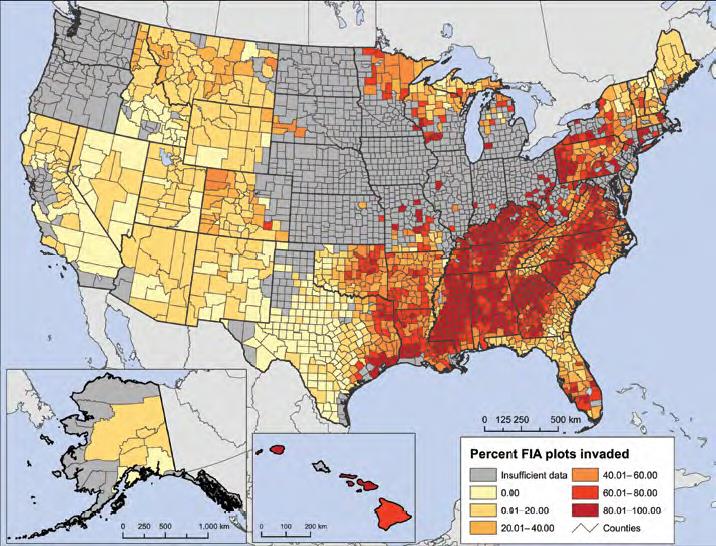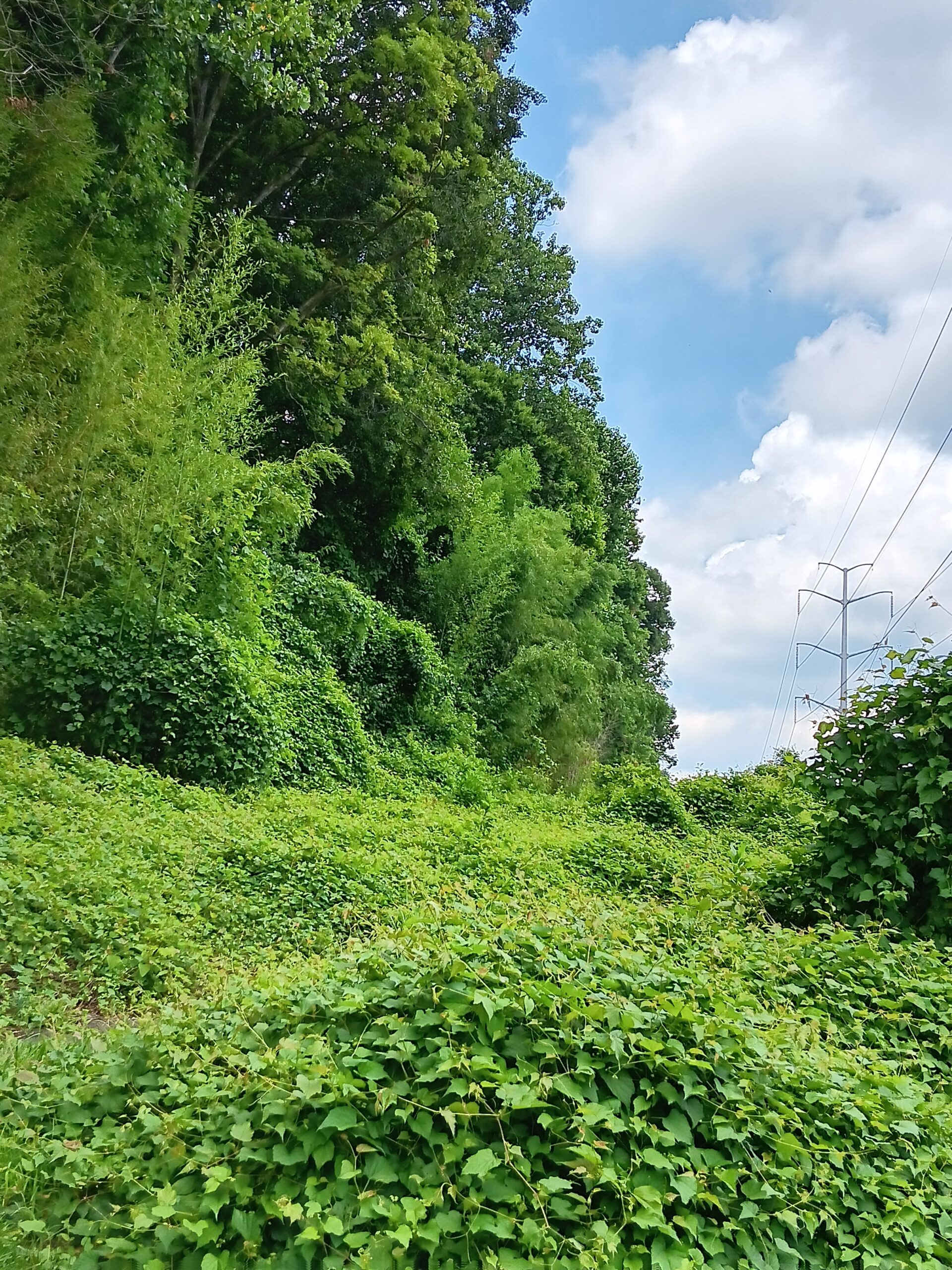
US invasive species — updated USGS database now on-line

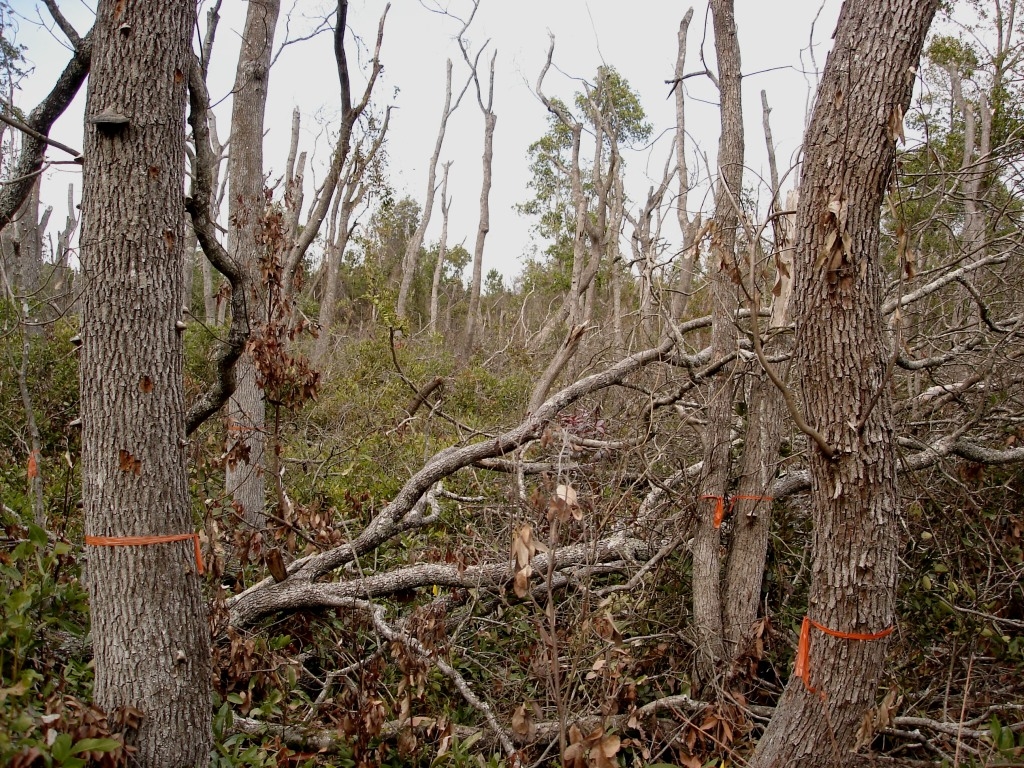
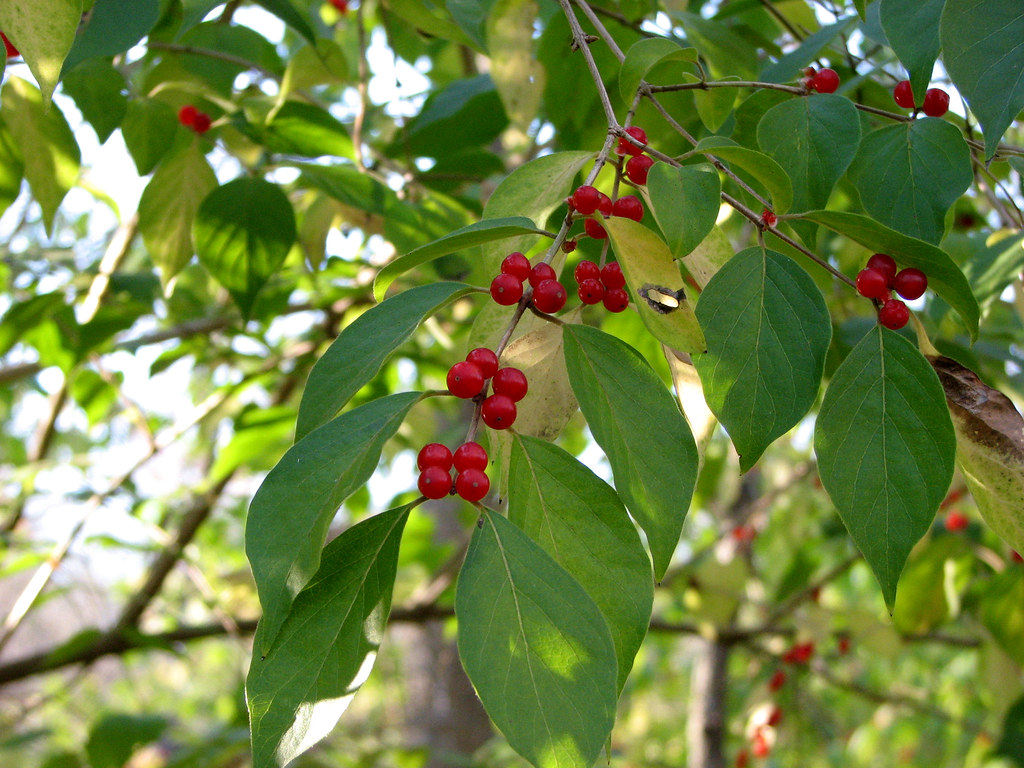
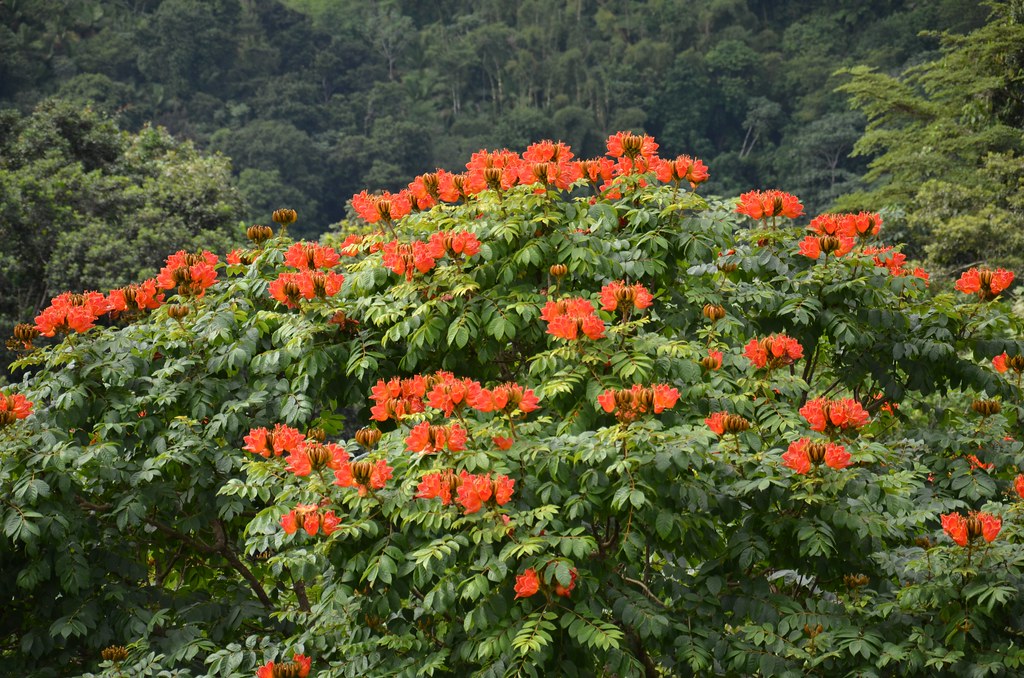
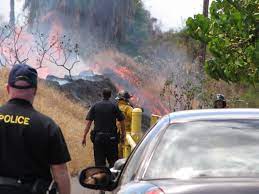
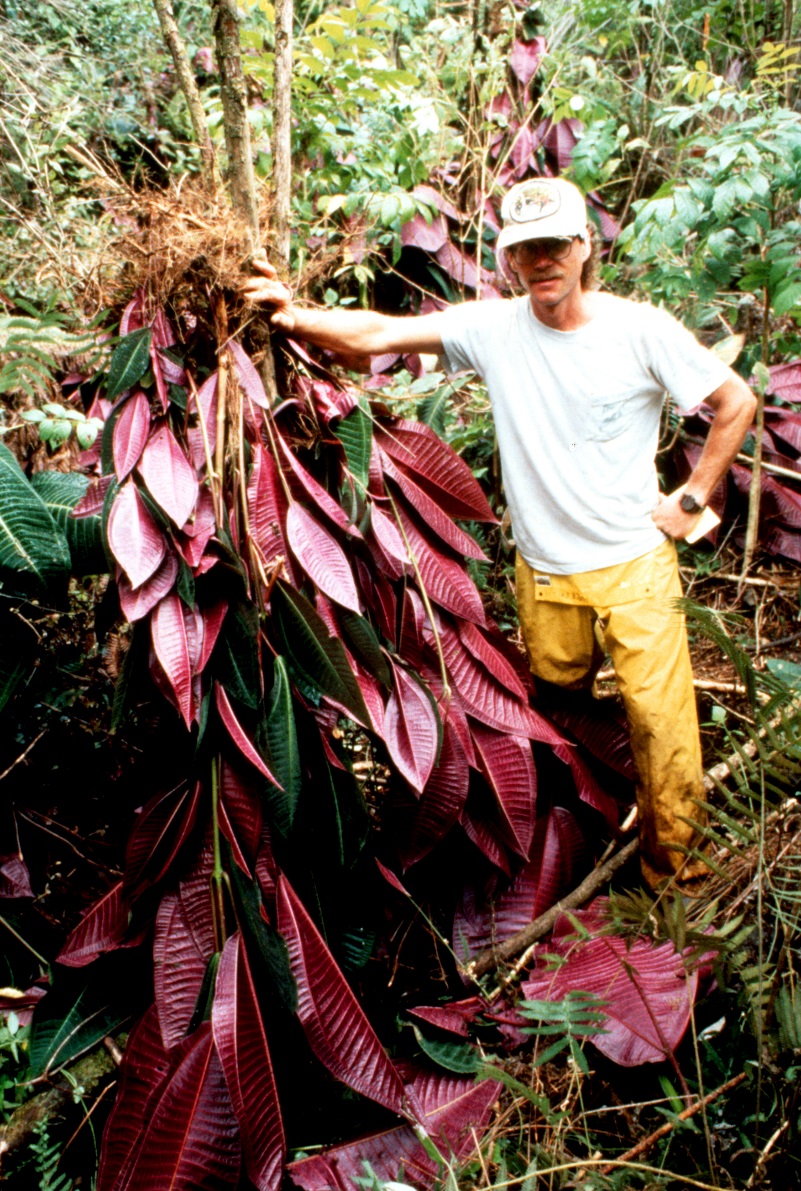
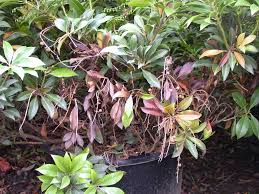
ōhiʻa rust on Hawai`i; photo by J.B. Friday

The U.S. Geological Survey (USGS) has published an updated register of introduced species in the United States. The master list contains 14,700 records, of which 12,571 are unique scientific names. The database is divided into three sub-lists: Alaska, with 545 records; Hawai`i, with 5,628 records; and conterminous (lower 48) United States, with 8,527 records.

The project tracks all introduced (non-native) species that become established, because they might eventually become invasive. The list includes all taxa that are non-native everywhere in the locality (Alaska, Hawai`i, or 48 conterminous states) and established (reproducing) anywhere in that locality.

Each record has information on taxonomy, a vernacular name, establishment means (e.g.,  unintentionally, or assisted colonization), degree of establishment (established, invasive, or widespread invasive), hybrid status, pathway of introduction (if known), habitat (if known), whether a biocontrol species, dates of introduction (if known; currently 47% of the records), associated taxa (where applicable), native and introduced distributions (when known), and citations for the authoritative source(s) from which this information is drawn. 

The 2022 version is more complete re: plant pathogens than earlier iterations; I thank the hard-working compilers for their efforts!

Hawai`i

wiliwili tree (Erythrina sandwicensis); photo by Forest and Kim Starr

Among the non-native species listed as being in Hawai`i are 3,603 Arthropods, including the following about which I have blogged:

The list also includes 25 fungi, among them the two species of Ceratocystis that cause rapid ʻōhiʻa death; DMF & blog 270 and the ʻōhiʻa or myrtle rust, Austropuccinia psidii.

Also listed are 95 mollusk species and 20 earthworm species. I wonder who is studying the worms’ impacts? I doubt any is native to the Islands.

The Hawaiian list contains 1,557 non-native plant species. Families with largest representation are Poaceae (grass) – 223 species; Fabaceae (beans) – 156 species; and Asteraceae – 116 species. About a third of the plant species – 529 species – are designated as “widespread invaders”. This number is fifteen times higher than the numbers in lists maintained by either the Hawaiian Ecosystems At Risk project (106 species) [HEAR unfortunately had to shut down a decade ago due to lack of funds]; or Hawaiian Invasive Species Council (80 species). Furthermore, some of the species listed by HEAR and HISC are not yet widespread; the lists are intended to facilitate rapid responses to new detections.  We always knew Hawai`i was being overrun by invasive species!

Among the 529 most “widespread invaders” are the following from the most introduced families:

  • Poaceae – Agrostis stolonifera, 6 Cenchrus spp, 2 Cortaderia spp, 3 Eragrostis,8 Paspalum, 4 Setaria spp, 2 Urochloa (Poacae)
  • Fabaceae – 3 Acacia, 2 Prosopis

Other families have fewer introduced species overall, but notable numbers of the most widespread invaders:

  • Euphorbiaceae – 8 spp. of Euphorbia
  • Cyperaceae – 6 spp. of Cyperus
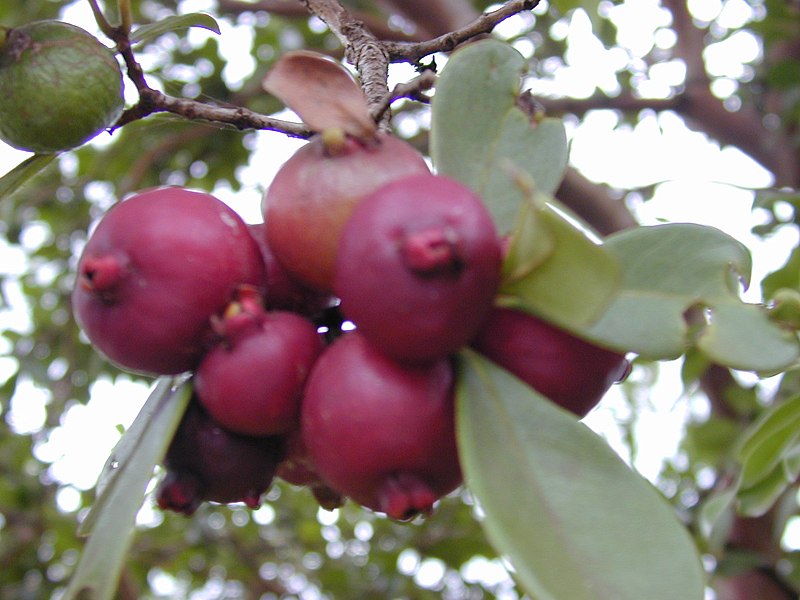
  • Myrtaceae – Melaleuca quinquenervia, 2 Psidium, Rhodomyrtus tomentosa rose myrtle, 3 Syzygium [rose myrtle has been hard-hit by the introduced myrtle rust fungus]
  • Zingiberaceae – 3spp. Hedychium (ginger)
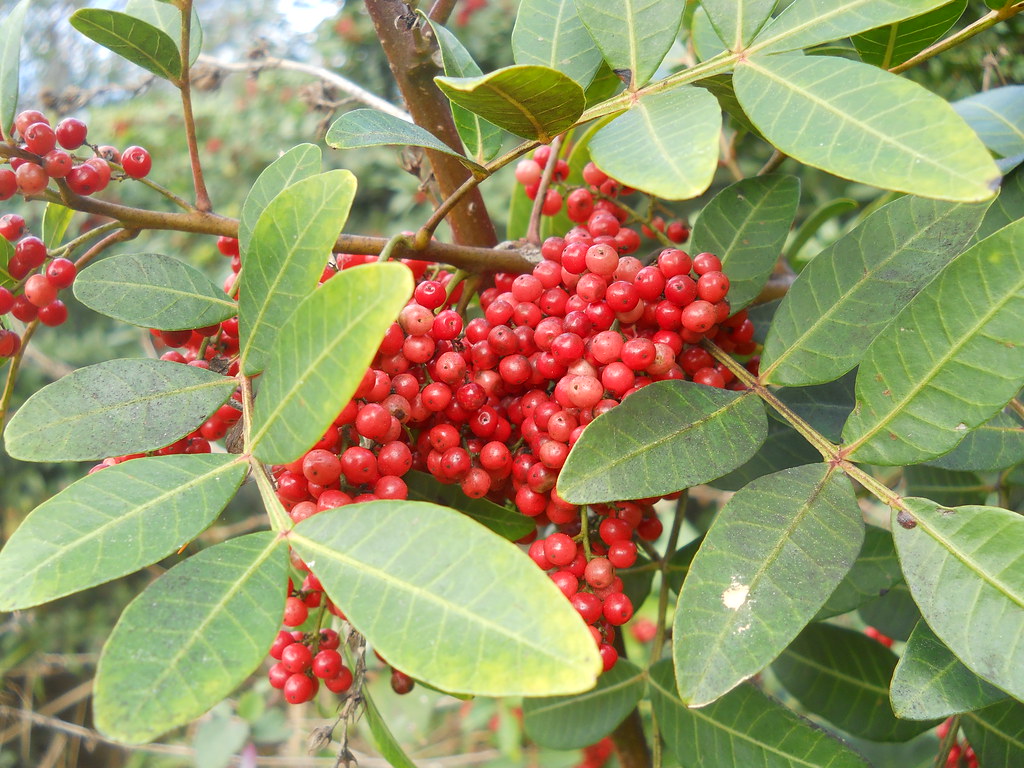
  • Anacardiaceae — Schinus molle (Peruvian peppertree); USGS considers congeneric S. terebinthifolia to be somewhat less widespread.

Plus many plant taxa familiar to those of us on the continent: English ivy, privet, castor bean, butterfly bush, Ipomoea vines  … and in more limited regions, Japanese climbing fern Lygodium japonicum.

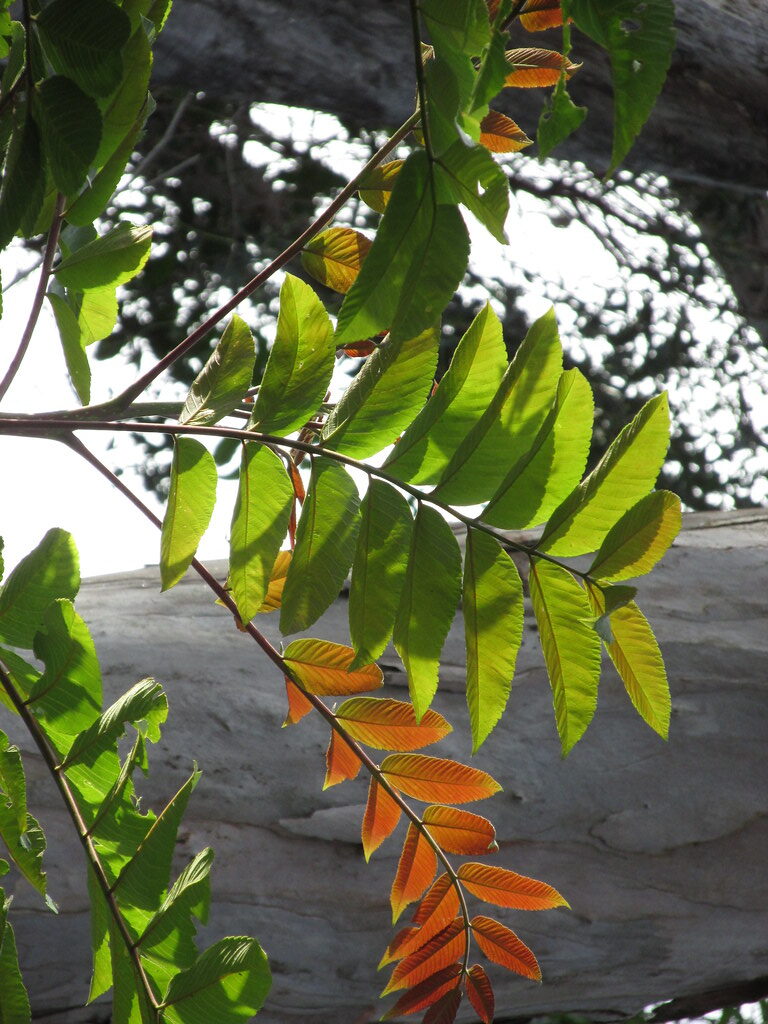
Rhus sandwicensis; photo by Forest and Kim Starr

I learned something alarming from the species profiles posted on the HISC website: the Hawaiʻi Division of Forestry and Wildlife and Hawaiʻi Department of Agriculture are considering introduction of a species of thrips, Pseudophilothrips ichini, as a biocontrol agent targetting S. terebinthifolia. I learned in early 2019, when preparing comments on Florida’s proposed release of this thrips, that Pseudophilothrips ichini can reproduce in low numbers on several non-target plant species, including two native Hawaiian plants that play important roles in revegetating disturbed areas. These are Hawaiian sumac Rhus sandwicensis and Dodonea viscosa. The latter in particular is being propagated and outplanted in large numbers to restore upland and dryland native ecosystems. While the environmental assessment prepared by the USDA Animal and Plant Service says the thrips causes minimal damage to D. viscosa, I am concerned because of the plant species’ ecological importance.  Of course, the two Schinus species are very damaging invasive species in Hawai`i … but I think introducing this thrips is too risky. [To obtain a copy of CISP’s comments, put a request in comments section. Be sure to include your email address in your comment; the section algorithm does not include email addresses (how inconvenient!).]

Continental (lower 48) states

Among the 8,500 species listed in the USGS Register for the 48 continental states are 4,369 animals, among them 3,800 arthropods; 3,999 plants; and just 89 fungi. Among the arthropods, there are 1,045 beetles and 308 lepidopterans. The beetles listed include 12 Agrilus (the genus which includes emerald ash borer and goldspotted oak borer.) It does not include the elm zig-zag sawfly USGS staff have not found any publications documenting its U.S. occurrences. Among the microbes are six Phytophthora (P. cinnamomi, P. lateralis, P. pseudocryptogea, P. quercina, P. ramorum, P. tentaculata). Profiles of several of these species are posted at www.dontmovefirewood.org; click on “invasive species”, then scroll using either Latin or common name.

elm zig-zag sawfly; photo by Gyorgy Czoka via Bugwood

Citation:

Simpson, Annie, Pam Fuller, Kevin Faccenda, Neal Evenhuis, Janis Matsunaga, and Matt Bowser, 2022, United States Register of Introduced and Invasive Species (US-RIIS) (ver. 2.0, November 2022): U.S. Geological Survey data release, https://doi.org/10.5066/P9KFFTOD

United States Register of Introduced and Invasive Species; US-RIIS ver. 2.0, 2022

 If you would like to contribute to future versions of the US-RIIS, please email the project leaders at us-riis@usgs.gov

Posted by Faith Campbell

We welcome comments that supplement or correct factual information, suggest new approaches, or promote thoughtful consideration. We post comments that disagree with us — but not those we judge to be not civil or inflammatory.

For a detailed discussion of the policies and practices that have allowed these pests to enter and spread – and that do not promote effective restoration strategies – review the Fading Forests report at http://treeimprovement.utk.edu/FadingForests.htm

or
www.fadingforests.org

Plants Sold – Increasing % of Exotics

carnation (Dianthus caryophyllus) photo by Noordzee23 via Wikimedia; carnations have been big sellers for 250 years

Plants sold in nurseries directly influence urban landscapes by providing gardens and other habitats that support humans and birds, insects, and other organisms. Doug Tallamy, though, has described ways that non-native plants fall short in providing habitat for native wildlife. Of course, non-native plants also indirectly influence natural landscapes by acting as a major source of invasive species. [see blog – includes links to regional invasive plant lists; and here] Imported plants also can carry non-native insects and pathogens – about which I blog frequently! To review these blogs, scroll down below the archives to the “categories” section and click on “plants as pest vectors”.

Now Kinlock, Adams, and van Kleunen (full citation at the end of this blog) have published a new paper that sheds more light on these issues. They analyzed the ornamental plants sold in US nurseries over 225 years (from 1719 to 1946). Their database, drawn from an earlier publication by Adams (see Sources at end of blog), included records of 5,098 ornamental vascular plant species offered for sale by 319 US nursery catalogs published over this period.

They note that present-day urban yards in the continental United States are planted in a diverse array of plants and the plants are predominately non-native species. Also, there is relatively little variation in species planted from one region to another, especially when compared to regional variation in natural areas). These patterns reflect the history of US horticulture.

Seventy percent (3,587) of the 5,098 ornamental vascular plant species offered by the 319 nurseries over those 200 years were non-native to the continental United States. They believe that the number of non-native species offered for sale has probably continued to increase in the 70 years since their study ended. They cite a study showing that 91% of tree species sold by nurseries in southern California during the 20th and early 21st centuries were not native to that state. A similar figure comes from a study of cultivated plants grown in Minneapolis–Saint Paul. There 66% of plants were non-native. (Kinlock, Adams, and van Kleunen note that 70% of species cultivated in yards of five British cities are non-native. In contrast, only 23% of cultivated plants in 18 Chinese cities were non-native.)

Kinlock, Adams, and van Kleunen note that two examples of non-native plants that have become invasive were among most common species available from nurseries beginning in the mid-19th Century: Japanese honeysuckle (Lonicera japonica) was available in 78 nurseries, and Japanese barberry (Berberis thunbergia) in 46 nurseries.

Japanese honeysuckle; photo by Chuck Bargeron, Bugwood

 Historical Trends

The earliest commercial horticulture in colonies that became the United States was in the mid-17th Century. It involved imports of Eurasian fruit trees to establish orchards to provide familiar foods. Ornamental horticulture became popular earlier than I expected. Prince Nurseries was established in 1732 in Flushing, NY. It was followed by additional nurseries in New York, Philadelphia, and Massachusetts. Originally these businesses imported Old World nursery stock and seeds – again to provide familiar foods and take advantage of relationships with European contacts.

Nurseries proliferated in the 1820s in the population centers of the Atlantic coast. As people of European ancestry moved west, so did nurseries. Kinlock, Adams, and van Kleunen point out an interesting aspect of these changes: proliferation of both was aided by technology: steamboats, canals, highways, and improved mail service. Before 1800, nearly all nurseries were in the Mid-Atlantic, New England, and South. Nurseries appeared in the Great Lakes region by the 1830s. Expansion of rail lines connected nurseries from coast to coast by the 1870s. By 1890, there were more than 4,500 nurseries across the continent.

California, Florida, and Oregon are now the states with the most horticultural operations and sales (as of 2019).

The types of plants offered for sale proliferated throughout the 19th Century.  The species richness of US nursery flora peaked in the early 20th Century. It decreased in the 1925 – 1946 period, possibly attributable to some combination of war-related interruptions to trade and a shift in gardeners’ focus away from ornamentals to vegetables. Another factor was adoption of international and interstate phytosanitary regulations in the early 20th Century. The post-World War II economic boom led to a new diversification of US nursery flora. In one study, a Los Angeles nursery experienced the largest increase in species richness during 1990–2011. They believe this increase was probably matched across the country. Global plant collection and importation mediated by US botanical gardens and nurseries remain active.

planting of Eucalyptus seedlings in California during 1980s; National Archives photo

Over time, nursery floras in the various regions became more similar to each other. The floras of Mid-Atlantic and New England nurseries differed before 1775, then became similar. Nurseries in the Great Lakes region also shifted toward offerings in neighboring regions. Later, nurseries in the South and West also began offering a higher proportion of species commonly sold across the continent. The nursery floras of Great Lakes and Great Plains regions were consistently similar. Still, the flora in Western nurseries still retain some unique aspects. California is the only state with a Mediterranean climate. Nurseries there sought adapted plant species, especially from an entirely new source — Australasia. (The authors note that Acacia and Eucalyptus genera, while important in California horticulture, are invaders in Mediterranean zones worldwide.) One might expect the need for plants in the Southwest to be drought-tolerant would prompt a unique nursery flora. However, the ubiquity of irrigation since the late 19th Century has blunted this necessity. Still, nursery flora in the desert biome had the most phylogenetic uniformity. The article does not discuss pressure to choose xeriscapes or otherwise adjust to current water shortages.

Pinus mogu – sought for xerescapes; photo by Krysztof Ziamk Kenraiz via Wikimedia

Growing Importance of Non-Native Species – Especially from Asia

Kinlock, Adams, and van Kleunen define “native” species as those native to the state in which it is sold; “adventive” species as native to the continental United States but not the specific state; and non-native or alien species as not native to the continental United States.

Applying these definitions, the proportion of native species in nursery flora has been consistently around 30-40% — except during the American Revolution. It rose to 70% in catalogs or advertisements published from 1775 to 1799. The authors do not speculate whether this reflected jingoism or interruptions in trade. The proportion of plant species that were adventive was 4% in the earliest period, then rose to 13% with improved transportation.  

A large proportion of the native species offered in the late 18th and early 19th centuries were grown for export to Europe (think John Bartram).

Rhodendron maximum; sent to Europe by John Bartram (& invasive in Great Britain and Ireland!); photo from Pl@ntNet.identify

Throughout the 19th and 20th centuries, plants from new regions of the world with unique genetic lineages became increasingly available. Until the mid-19th Century, most non-native plants came from Europe and Eurasia. Beginning in 1850, plants native to temperate Asia composed an increasing percentage of non-native nursery flora. In the period 1900 – 1924, 19% of the ornamental nursery flora originated from temperate Asia. By the next period, 1925 – 1946, this percentage rose to 20.8%.At the same time, North American species (including some from Mexico, Canada, or Alaska) composed 21.9% of the nursery flora. (see graph).

% of species from various origins; North America – medium blue; temperate Asia – dark pink; Europe – tan; Eurasia – fuscia; Southern America – blue-green; Africa – yellow-green; Americas – olive

Plants from East Asia were particularly desirable for both biological and social reasons. First, because of climatic similarities between the two regions, East Asian plants thrived in the eastern United States. Second, popular ornamental genera had higher species richness in East Asia. Important social or cultural factors were a growing fascination with Japanese and Chinese-style gardens: forced “opening” of access to those countries in the 1840s and 1850s; and plant collecting expeditions sponsored by British and American institutions and private collectors. In 1898, the US Department of Agriculture established the Section of Seed & Plant Introduction; its purpose was to collect and cultivate economically useful non-native plants from throughout South America and Asia.

As I noted above, diversity of species in nursery offerings reached a peak in the first years of the 20th Century, concurrent with the first wave of US-sponsored plant collections; indeed, 70 species that were first listed after 1911 in their dataset were introduced by the USDA introduction program between 1912 -1942.

Commodore Perry in Japan; Library of Congress

Counter-pressures and Counter-measures

There were counter pressures during this period that – as mentioned above—probably contributed to a decline in plant introductions in later years. In the 1890s, several US states began requiring inspection of imported plant materials (spurred by plant disease outbreaks caused by spread of San Jose scale from California).

Congress adopted the Plant Quarantine Act in 1912; USDA implemented it through stringent regulations issued in 1919 (Quarantine-37). I have already noted interruption of trade associated with WWI and WWII. Kinlock et al. don’t mention the Great Depression that intervened, but I think it played a role, too. On the other hand, Q-37 was relaxed to target particular species or regions based on pest risk analysis. The article says the relaxation began in the 1930s, but I believe it actually was during the 1970s; see Liebhold et al. 2012. I have blogged several times about how well the current regulations – including the “NAPPRA” program – prevent introductions of invasive plants or damaging plant pests. To review these blogs, scroll down below the archives to the “categories” section and click on “plants as pest vectors”.

dogwood anthracnose; photo by Robert Anderson, USFS; via Bugwood

SOURCES

Adams, D.W. 2004. Restoring American Gardens: An encyclopedia of heirloom ornamental plants. Timber Press

Kinlock, N.L., D.W. Adams, M. van Kleunen. 2022. An ecological and evolutionary perspective of the historical US nursery flora. Plants People Planet. 2022;1–14. wileyonlinelibrary.com/journal/ppp3

Liebhold, A.M., E.G. Brockerhoff, L.J. Garrett, J.L. Parke, and K.O. Britton. 2012. Live Plant Imports: the Major Pathway for Forest Insect and Pathogen Invasions of the US. www.frontiersinecology.org

Posted by Faith Campbell

We welcome comments that supplement or correct factual information, suggest new approaches, or promote thoughtful consideration. We post comments that disagree with us — but not those we judge to be not civil or inflammatory.

For a detailed discussion of the policies and practices that have allowed these pests to enter and spread – and that do not promote effective restoration strategies – review the Fading Forests report at http://treeimprovement.utk.edu/FadingForests.htm

or
www.fadingforests.org

Plant Invasions’ Impacts on Wildlife

spotted knapweed (Centaurea maculosa); photo by Alan Vernon via Wikipedia

Litt and Pearson (full citation at the end of the blog) are trying to improve scientists’ ability to predict the impact of biological invasions. Their goal is to predict which organisms will be winners, which losers, in the face of anthropogenic ecosystem change.

They focus on exotic plant invasions, because they are ubiquitous. Furthermore, plant invasions affect ecosystems by reassembling the plant community in ways that affect the niches used by native animals and hence the animals’ success under the new conditions. After determining the differences between the traits exhibited by invasive plants vs. the native plants they are displacing, scientists can then identify which native animals are most likely to be affected, as well as how and why they might respond to exotic plant invasion. [Note that Doug Tallamy is looking at similar issues.]

Litt and Pearson have developed a framework to assess how plants’ traits might affect associated wildlife. Applying the framework requires certain baseline information about the ecosystem in question.

This knowledge is applied in stepwise fashion:

1) Identify the fauna of interest and their linkage to the native plant community. This association might be food or habitat values such as shelter. Then the researcher determines the relevant plant traits of importance to that animal and approximates the strength of the animal’s dependence on these traits. Note that the focus is on plant traits relevant to the animal users, rather than specific plant species.

2) Determine overall importance of the plant traits for the area under study by (a) averaging dependence of a representative subsample of individuals to obtain a community-level value for each plant species or functional group and (b) quantifying the relative abundance of the plant functional group in the community (e.g., cover or biomass).

3) Plot the way the animal species’ abundance changes with resource abundance.

4) Understand how the invasive plants will alter the distributions of the native plants’ traits and potentially introducing novel traits that might alter the faunal community.

Litt and Pearson reviewed earlier studies to test how well this framework explained the responses of three groups of fauna to plant invasions in different ecosystems.

searching for spotted knapweed; photo by Oregon Department of Agriculture

Spiders in invaded grasslands

Intermountain grasslands of western Montana are heavily invaded; non-native plants already comprise 25–60% of average total plant cover.

One group of native spiders construct their irregular webs entirely within a single plant. A second group – orb weavers – suspend their larger webs from multiple plants. The former depend on the architectural complexity of individual plants; they can build larger webs in plant species possessing greater branching and/or longer branches of the flowering stalks. Orb spiders depend more on the complexity of the overall plant community.

Plant architecture is closely tied to the plant’s functional groups, that is, whether they are grasses or forbs.

These grasslands are generally dominated by perennial grasses. The irregular-web spiders can use grasses, but strongly favor forbs, particularly those with the most complex flowering structures. Orb weavers are generalists, incorporating multiple plant species; but they also tend to favor forbs, presumably because they are more robust.

Invasive plants in the Western Montana grasslands are of two types: an annual grass, cheatgrass (Bromus tectorum), and numerous perennial and annual forbs. Cheatgrass largely replaces the dominant native grasses with a similar architecture – although cheat is shorter. The exotic forbs, which can collectively invade at levels comparable to cheatgrass, tend to be taller and more complex structurally than the native forbs. Thus, invasion by exotic forbs strongly shifts the community-level distribution of the key trait toward greater structural complexity by replacing the dominant, but structurally simplistic, native grasses, and the more diminutive native forbs. These changes increased the abundance of both spider groups, but especially the specialist irregular web weavers. They find the new conditions meet their needs. Both spider groups appeared to expand their realized niches in response to invasion, i.e., they are able to use a broader range of plant architectures than was available in the native system.

Chaetodipus sp. photo by J.N. Stuart

Rodents in semi-desert grasslands invaded by Lehmann lovegrass

In the semi-desert grasslands of the American southwest, native grasses and forbs provide food and habitat for a variety of rodents. This vegetation influences which species of rodents are present in two ways: the size of the plants’ seeds and the density of vegetative cover. Litt and Steidl examined both. They divided the rodents into separate guilds based on diet and preferred vegetative cover. The two sets of guilds did not overlap for all species.

In southern Arizona, the native plant community is dominated by several grass species and herbaceous forbs; most species produce relatively large seeds. Vegetative cover is generally low, but varies in a patchy fashion. The rodent communities in uninvaded native grasslands are dominated by seed-eaters that prefer sparse cover.

Invasion of these grasslands by Lehmann lovegrass (Eragrostis lehmanniana) results in increased vegetative cover but the grass produces very small seeds that probably provide little to no food for  rodents. Another result is a decrease in overall abundance of arthropods. The new conditions favor different rodent species from those most common in uninvaded habitat.

Two more specialized seed-eating rodent species, which seek both lower cover and larger seeds, decreased in abundance. A rodent species which favors lower vegetative cover and feeds on larger invertebrates also declined. In contrast, abundance increased for two other rodent species that prefer more dense cover and are more opportunistic in their feeding. One species surprised the scientists: Dipodomys merriami increased in abundance, despite the fact that this species favors more open environments. Perhaps other functional traits or biotic interactions are important to this species? There was no apparent change in abundance for three other species, suggesting either a lack of statistical power (2 were less abundant) or that these rodents were able to persist through a balance of positive and negative changes in food and habitat characteristics.

Lucy’s warbler [nest in saguaro, not cottonwood); photo by Dominic Sherony

Warblers in Riparian Habitats in the Southwest

Riparian habitats in the same desert region have been aggressively invaded by the exotic shrub saltcedar (Tamarix spp.). Litt and Pearson consider the findings of Mahoney et al. of this invasion’s impact on two ecologically similar warbler species. One, the yellow warbler (Setophaga petechia), is very widely distributed across North America; it is considered a generalist. The other, Lucy’s warbler (Oreothlypis luciae), is endemic to a small region of the southwest United States and northern Mexico.

The two species have similar feeding behaviors but differ in their nesting requirements. The yellow warbler constructs open cup nests in the branches of shrubs and trees. Lucy’s warbler nests in cavities in larger trees excavated by others. Hence, these species were expected to respond similarly to changes in food resources and foraging habitat, but differ in their responses to changes in nesting substrate.

Native vegetation in the region consists primarily of willows and cottonwoods in the riparian corridors, with oak and mesquite woodlands in the adjacent uplands. Saltcedar invasion rapidly displaces the willows; it takes much longer to displace cottonwoods since are large and long-lived. Upland vegetation is uninvaded and unaffected. While saltcedar is structurally similar to native willows, its leaf architecture allows more light to penetrate in saltcedar stands. This can exacerbate heat stress on nestlings in these hot, arid environments, as well as expose the nestlings to nest predation. These effects are exacerbated by the presence of a biocontrol leaf beetle (Diorhabda spp.), which cause widespread defoliation of saltcedar during nesting season. Meantime, the cavity nests used by Lucy’s warbler are barely affected.

The study by Mahoney et al. showed that in low-invasion riparian sites, the two warblers occur at comparable abundances. When saltcedar invasion replaces willows, yellow warblers decline by ~50% while there is no apparent change in abundance of Lucy’s warblers.

Litt and Pearson point out that their framework is based on two key assumptions that establish the context for its efficacy.

The first is that bottom-up forces fuel ecological processes. Plants are key to making the sun’s energy available to consumer animals and – thence to predators. Consumers’ and predators’ top-down effects are secondary. The authors’ framework thus provides better predictions of community outcomes when systems are predominantly structured by bottom-up forces. As top-down forces increase or when invasive plants differentially affect multiple dimensions of the consumer niche space, it will be more challenging to track and predict outcomes, as our rodent example demonstrates.

The second assumption is that exotic plant invasions will most strongly influence bottom-up processes. Invasive plants displace native plants and their plant traits, thus directly affecting consumers by altering the quality and quantity of food and habitat resources. However, plant community changes caused by plant invasions can also affect predators directly and indirectly via several interactions. These changes in predators’ abundance and/or their per capita effects on prey might create feedbacks that can complicate interpreting and predicting invasion outcomes.

Litt and Pearson concluded that their approach is promising but has inherent limitations linked to the dynamic nature of ecological systems.

[Ecologists continue to evaluate the impacts of saltcedar eradication efforts on another bird species, the federally endangered southwestern willow flycatcher (Empidonax extimus trailii). See, for example, Goetz, A., I. Moffit and A.A. Sher. 2022. Recovery of a native tree following removal of an invasive competitor with implications for endangered bird habitat. Biological Invasions Vol. 24, pp. 2769-2793.]

SOURCE

Litt, A.R. and D.E. Pearson. 2022. A functional ecology framework for understanding and predicting animal responses to plant invasion. Biol Invasions   https://doi.org/10.1007/s10530-022-02813-7 

& Supporting Information [warblers in riparian ecosystems invaded by tamarisk]

Posted by Faith Campbell

We welcome comments that supplement or correct factual information, suggest new approaches, or promote thoughtful consideration. We post comments that disagree with us — but not those we judge to be not civil or inflammatory.

For a detailed discussion of the policies and practices that have allowed these pests to enter and spread – and that do not promote effective restoration strategies – review the Fading Forests report at http://treeimprovement.utk.edu/FadingForests.htm

or
www.fadingforests.org

Tree Planting – Warning from New Zealand

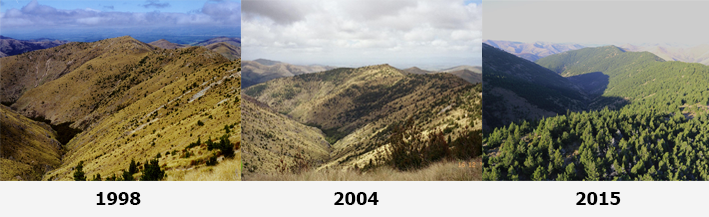
Pinus radiata plantation in New Zealand; photo by Jon Sullivan

As countries and conservation organizations ramp up tree planting as one solution to climate change, I worry that many of the plantings will use species not native to the region – with the risk of promoting more bioinvasions. My second fear is that inadequate attention will be paid to ensuring that the propagules thrive.

Warning from New Zealand

New Zealand has adopted a major afforestation initiative (“One Billion Trees”). This program is ostensibly governed by a policy of “right tree, right place, right purpose”. However, Bellingham et al. (2022) [full citation at end of blog] say the program will probably increase the already extensive area of radiata pine plantations and thus the likelihood of exacerbated invasion. They say the species’ potential invasiveness and its effects in natural ecosystems have not been considered.

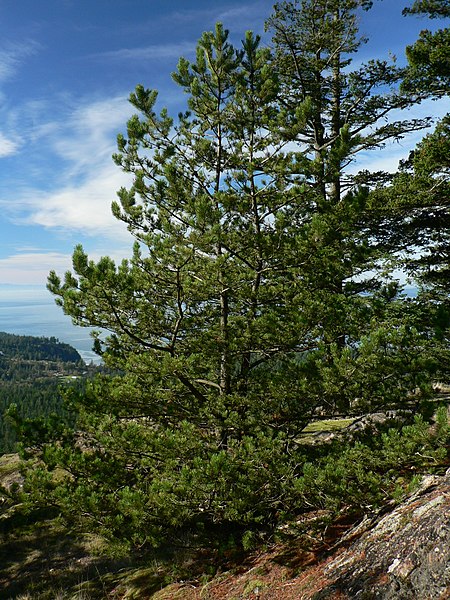
Bellingham et al. set out to raise the alarm by evaluating the current status of radiata, or Monterrey, pine  (Pinus radiata) in the country. They note that the species already occupies ~1.6 M ha; the species makes up 90% of the country’s planted forests. Despite the species having been detected as spreading outside plantations in 1904, it is generally thought not to have invaded widely.

The authors contend that, to the contrary, radiata pine has already invaded several grasslands and shrublands, including three classes of ecosystems that are naturally uncommon. These are geothermal ecosystems, gumlands (infertile soils that formerly supported forests dominated by the endemic and threatened kauri tree Agathis australis), and inland cliffs. Invasions by pines – including radiata pine – are also affecting primary succession on volcanic substrates, landslides on New Zealand’s steep, erosion-prone terrain, and coastal sand dunes. Finally, pine invasions are overtopping native Myrtaceae shrubs during secondary succession. Bellingham et al. describe the situation as a pervasive and ongoing invasion resulting primarily from spread from plantations to relatively nearby areas.

kauri; photo by Natalia Volna, iTravelNZ

The New Zealanders cite data from South America and South Africa on the damaging effects of invasions by various pine species, especially with respect to fire regimes.

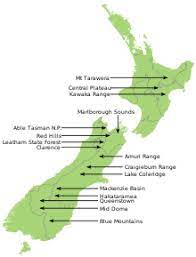
Furthermore, their modelling indicates that up to 76% of New Zealand’s land area is climatically capable of supporting radiata pine — most of the country except areas above 1000 m in elevation or receiving more than 2000 mm of rainfall per year. That is, all but the center and west of the South Island. This model is based on current climate; a warmer/drier climate would probably increase the area suitable to radiata pine.

These invasions by radiata pine have probably been overlooked because the focus has been on montane grasslands (which are invaded by other species of North American conifers). [See below — surveys of knowledge of invasive plants’ impacts.]

Bellingham et al. recognize the economic importance of radiata pine. They believe that early detection of spread from plantations and rapid deployment of containment programs would be the most effective management strategy. They therefore recommend

1) taxing new plantations of non-indigenous conifers to offset the costs of managing invasions, and

2) regulating these plantations more strictly to protect vulnerable ecosystems.

They also note several areas where additional research on the species’ invasiveness, dispersal, and impacts is needed.

Survey of Awareness of Invasive Plants

A few months later a separate group of New Zealand scientists published a study examining tourists’ understanding of invasive plant impacts and willingness to support eradication programs (Lovelock et al.; full citation at end of the blog). One of the invasive plant groups included in the study are conifers introduced from North America and Europe. These conifers are invading montane grasslands, so they are not the specific topic of the earlier article. The other is a beautiful flowering plant, Russell lupine.  These authors say that both plant groups have profound ecological, economic, and environmental impacts. However, the conifers and lupines are also highly visible at places valued by tourists. Lovelock et al. explored whether the plants’ familiarity – and beauty – might affect how people reacted to descriptions of their ecosystem impacts.

Visitors from elsewhere in New Zealand were more aware of invasive plants’ impacts and more willing to support eradication programs for these species specifically. Asian visitors had lower awareness and willingness to support eradication of the invasives than tourists from the United Kingdom, Europe, or North America. This pattern remained after the tourists were informed about the plants’ ecological impacts. All groups were less willing to support eradication of the attractive Russell lupine than the conifers.

Conifers invading montane grasslands are perhaps the most publicized invasive plants in New Zealand [as noted above]. Lovelock et al. report that New Zealand authorities have spent an estimated $NZ166 million to eradicate non-native conifers over large tracts of land on the South Island. Still, only about half the New Zealand visitors surveyed were aware of the ecological problems caused by wild conifers.

invasive lupines in New Zealand; photo by Michael Button via Flickr

Russell lupine (Lupinus × russellii) is invading braided river systems, modifying river flows, reducing nesting site availability for several endangered birds, and provides cover for invasive predators. While initially planted in gardens, the lupines were soon being deliberately spread along the roads to ‘beautify’ the landscape. Foreign tourists often specifically seek river valley invaded by the lupine because pictures of the floral display appear in both official tourism promotional material & tourist-related social media. It is not surprising, then, that even among New Zealanders, only a third were aware of the lupines’ environmental impacts.

The oldest participants (those over 60) had the lowest acceptance of wild conifers. Participants 50–59 years old were most aware of ecological problems caused by wild conifers. Participants 30–39 years old showed the highest acceptance of wild conifers and lowest awareness of ecological issues.

Female participants showed a higher preference for the landscape with wild conifers (45.90%) than males (36.89%). Female participants were also half as aware of ecological problems (25.62% v. 46.12% among male participants).

Nearly all survey participants (96.1%) preferred the landscape with flowering lupine; only 19.4% were aware of associated ecological problems. New Zealand domestic visitors were more aware. After the impacts of lupines were explained, half decided to support eradication. However, the same proportion of all survey participants (42.5%) still wanted to see lupines in the landscape.

Once again, participants older than 50 were more aware of ecological problems arising from lupine invasions.  Both men and women greatly preferred the landscape with Russell lupins.

While the authors do not explore the ramifications of the finding that younger people are less aware of invasive species impacts, I think they bode ill for future protection of the country’s unique flora and fauna. They did note that respondents had a high level of acceptance overall for these species on the New Zealand landscapes.

While the study supported use of simple environmental messaging to influence attitudes about invasive species, also showed that need to consider such social attributes as nationality and ethnicity. So Lovelock et al. call for investigation of how and why place of origin and ethnicity are important in shaping attitudes towards invasives. Conveying conservation messages will be more difficult because tourist materials often contain photographs of the lupines. Much of this information comes from informal media such as social media, which are beyond the control of invasive species managers.

SOURCES

Bellingham, P.J., E.A. Arnst, B.D. Clarkson, T.R. Etherington, L.J. Forester, W.B. Shaw,  R. Sprague, S.K. Wiser, and D.A. Peltzer. 2022. The right tree in the right place? A major economic tree species poses major ecological threats. Biol Invasions Vol.: (0123456789) https://doi.org/10.1007/s10530-022-02892-6  

Lovelock B., Y. Ji, A. Carr, and C-J. Blye. 2022.  Should tourists care more about invasive species? International and domestic visitors’ perceptions of invasive plants and their control in New Zealand.  Biological Invasions (2022) 24:3905–3918 https://doi.org/10.1007/s10530-022-02890-8

Posted by Faith Campbell

We welcome comments that supplement or correct factual information, suggest new approaches, or promote thoughtful consideration. We post comments that disagree with us — but not those we judge to be not civil or inflammatory.

For a detailed discussion of the policies and practices that have allowed these pests to enter and spread – and that do not promote effective restoration strategies – review the Fading Forests report at http://treeimprovement.utk.edu/FadingForests.htm

or
www.fadingforests.org

Invasions cost protected areas more than $22 billion in 35 years

Burmese python in Everglades National Park; photo by Bob Reed, US FWS

Scientists continue to apply data collected in an international database (InvaCost; see “methods” section of Cuthbert et al.; full citation at end of this blog) to estimate the economic costs associated with invasive alien species (IAS). These sources reported $22.24 billion in economic costs of bioinvasion in protected areas over the 35-year period 1975 – 2020. Because the data has significant gaps, no doubt invasions really cost much more.

Moodley et al. 2022 (full citation at end of this blog) attempt to apply these data to analyze economic costs in protected areas. As they note, protected areas are a pillar of global biodiversity conservation. So it is important to understand the extent to which bioinvasion threatens this purpose. 

Unfortunately, the data are still too scant to support any conclusions. Such distortions are acknowledged by Moodley et al. I will discuss the data gaps below a summary of the study’s findings.

The Details

Of the estimated $22.24 billion, only 4% were observed costs; 96% were “potential” costs (= extrapolated or predicted based on models). Both had generally increased in more recent years, especially “potential” costs after 1995. As is true in other analyses of InvaCost data, the great majority (73%) of observed costs covered management efforts rather than losses due to impacts. The 24% of total costs ascribed to losses, or damage, exceeded the authors’ expectation. They had thought that the minimal presence of human infrastructure inside protected areas would result in low records of “economic” damages.

The great majority (83%) of reported management costs were reactive, that is, undertaken after the invasion had occurred. In terrestrial environments, there were significantly higher bioinvasion costs inside protected areas than outside (although this varied by continent). However, when considering predicted or modelled costs, the importance was reversed: expected management costs represented only 5% while these “potential” damages were 94%.

Higher expenditures were reported in more developed countries – which have more resources to allocate and are better able to carry out research documenting both damage and effort. 

More than 80% of management costs were shouldered by governmental services and/or official organizations (e.g. conservation agencies, forest services, or associations). The “agriculture” and “public and social welfare” sectors sustained 60% of observed “damage” and 89% of “mixed damage and management” costs respectively. The “environmental” and “public and social welfare” sectors together accounted for 94% of all the “potential” costs (predicted based on models) generated by invasive species in protected areas; 99% of damage costs. With the partial exception of the agricultural sector, the economic sectors that contribute the most to movement to invasive species are spared from carrying the resulting costs.

Lord Howe Island, Australia; threatened by myrtle rust; photo by Robert Whyte, via Flickr

Invasive plants dominated by numbers of published reports – 64% of reports of observed costs, 79% of reports of “potential”. However, both actual and “potential” costs allotted to plant invasions were much lower than for vertebrates and invertebrates. Mammals and insects dominated observed animal costs.

It is often asserted that protected areas are less vulnerable to bioinvasion because of the relative absence of human activity. Moodley et al. suggest the contrary: that protected areas might be more vulnerable to bioinvasion because they often host a larger proportion of native, endemic and threatened species less adapted to anthropogenic disturbances. Of course, no place on Earth is free of anthropogenic influences; this was true even before climate change became an overriding threat. Plenty of U.S. National parks and wilderness areas have suffered invasion by species that are causing significant change (see, for example, here, here, and here).

Despite Best Efforts, Data are Scant and Skewed

Economic data on invasive species in protected areas were available for only a tiny proportion of these sites — 55 out of 266,561 protected areas.

As Moodley et al. state, their study was hampered by several data gaps:

  1. Taxonomic bias – plants are both more frequently studied and managed in protected areas, but their reported observed costs are substantially lower than those of either mammals or insects.
  2. The data relate to economic rather than ecological effects. The costliest species economically might not cause the greatest ecological harm.
  3. Geographical bias – studies are more plentiful in the Americas and Pacific Islands. However, studies from Europe, Africa and South America more often report observed costs. The South African attention to invasive species (see blogs here, here, and here), and economic importance of tourism to the Galápagos Islands exacerbate these data biases.
  4. Methodological bias – although reporting bioinvasion costs has steadily increased, it is still erratic and dominated by “potential” costs = predictions, models or simulations.

I note that, in addition, individual examples of high-cost invasive species are not representative. The highest costs reported pertained to one agricultural pest (mango beetle) and one human health threat (mosquitoes).

Great Smokey Mountains National Park; threatened by mammals (pigs), forest pests, worms, invasive plants … Photo by Domenico Convertini via Flickr

As these weaknesses demonstrate, a significant need remains for increased attention to the economic aspects of bioinvasion – especially since political leaders pay so much greater attention to economics than to other metrics. However, the reported costs – $22.24 billion over 35 years, and growing! – are sufficient in the view of Moodley et al. to support advocating investment of more resources in invasive species management in protected areas, including – or especially – it is not quite clear — preventative measures.

SOURCES

Cuthbert, R.N., C Diagne, E.J. Hudgins, A. Turbelin, D.A. Ahmed, C. Albert, T.W. Bodey, E. Briski, F. Essl, P.J. Haubrock, R.E. Gozlan, N. Kirichenko, M. Kourantidou, A.M. Kramer, F. Courchamp. 2022. Bioinvasion cost reveals insufficient proactive management worldwide. Science of The Total Environment Volume 819, 1 May, 2022, 153404

Moodley, D., E. Angulo, R.N. Cuthbert, B. Leung, A. Turbelin, A. Novoa, M. Kourantidou, G. Heringer, P.J. Haubrock, D. Renault, M. Robuchon, J. Fantle-Lepczyk, F. Courchamp, C. Diagne. 2022.  Surprisingly high economic costs of bioinvasions in protected areas. Biol Invasions. https://doi.org/10.1007/s10530-022-02732-7

Posted by Faith Campbell

We welcome comments that supplement or correct factual information, suggest new approaches, or promote thoughtful consideration. We post comments that disagree with us — but not those we judge to be not civil or inflammatory.

For a detailed discussion of the policies and practices that have allowed these pests to enter and spread – and that do not promote effective restoration strategies – review the Fading Forests report at http://treeimprovement.utk.edu/FadingForests.htm

or www.fadingforests.org
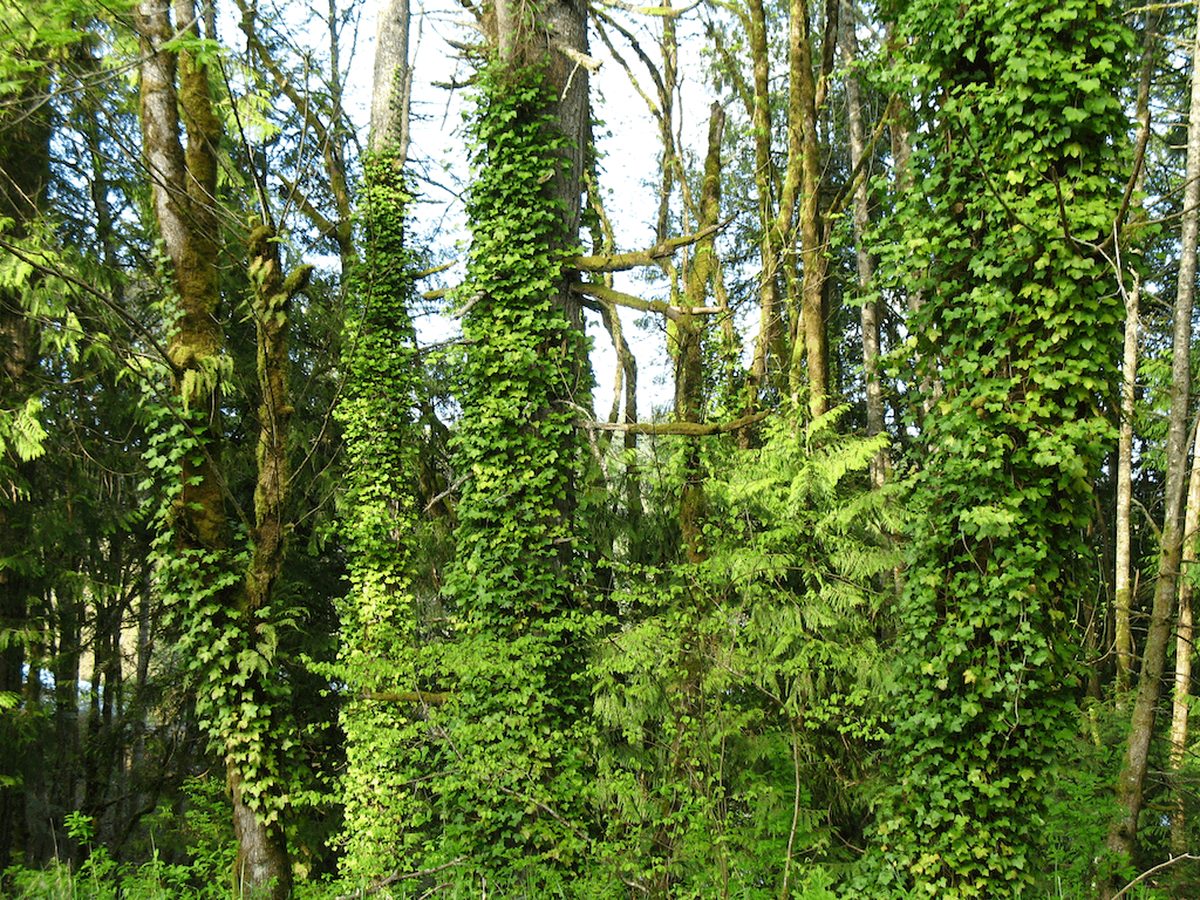
Comment to APHIS on its Strategic Plan

APHIS is seeking stakeholder input to its new strategic plan to guide the agency’s work over the next 5 years.

The strategic plan framework is a summary of the draft plan; it provides highlights including the mission and vision statements, core values, strategic goals and objectives, and trends or signals of change we expect to influence the agency’s work in the future. APHIS is seeking input on the following questions:

  • Are your interests represented in the plan?
  • Are there opportunities for APHIS to partner with others to achieve the goals and objectives?
  • Are there other trends for which the agency should be preparing?
  • Are there additional items APHIS should consider for the plan?

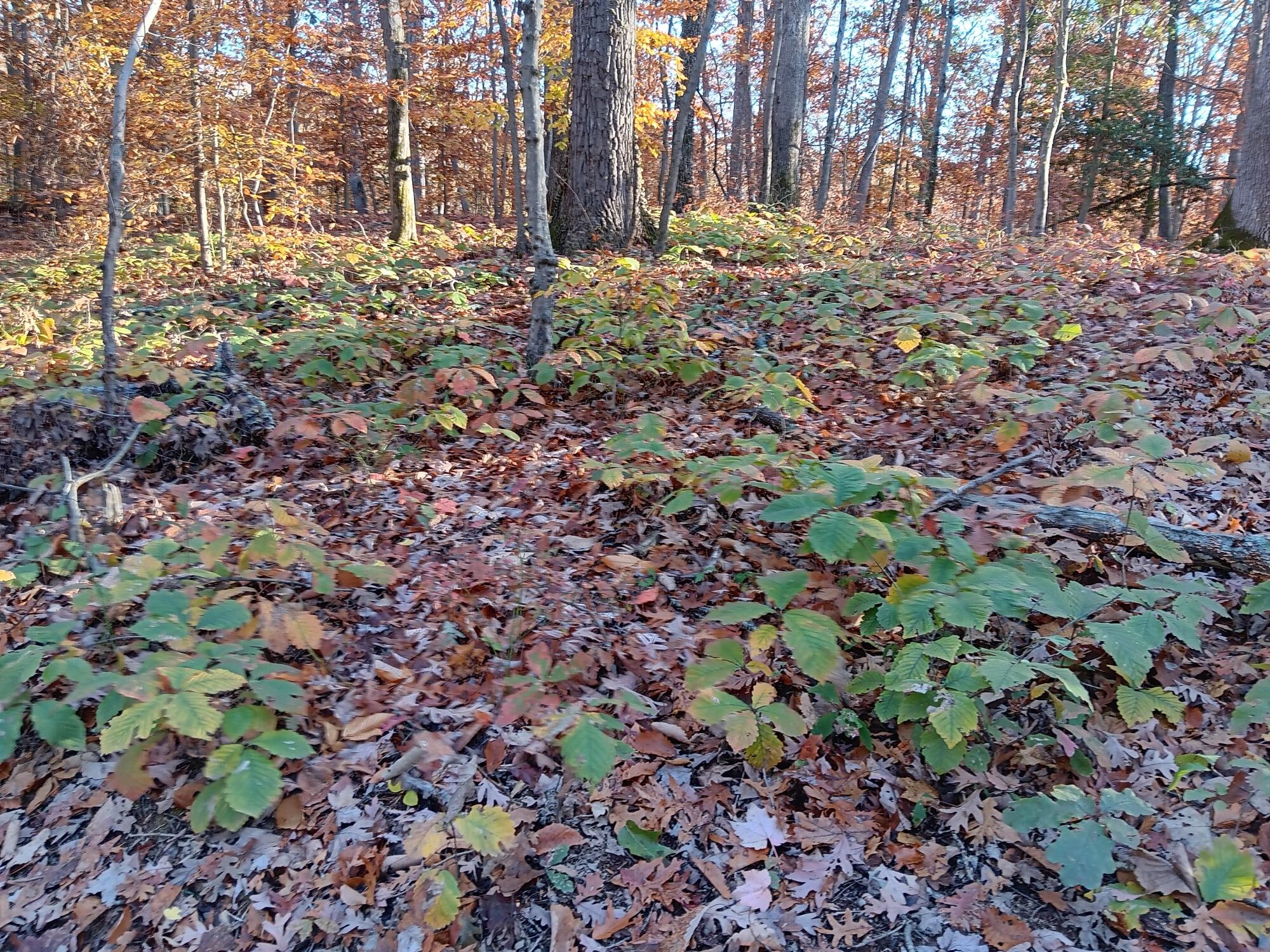
range of American beech – should APHIS be doing more to protect it from 3 non-native pests?

The strategic plan framework is available at https://www.regulations.gov/document/APHIS-2022-0035-0001

To comment, please visit: https://www.regulations.gov/docket/APHIS-2022-0035

Comments must be received by July 1, 2022, 11:59pm (EST).

Posted by Faith Campbell

We welcome comments that supplement or correct factual information, suggest new approaches, or promote thoughtful consideration. We post comments that disagree with us — but not those we judge to be not civil or inflammatory.

For a detailed discussion of the policies and practices that have allowed these pests to enter and spread – and that do not promote effective restoration strategies – review the Fading Forests report at http://treeimprovement.utk.edu/FadingForests.htm

or www.fadingforests.org
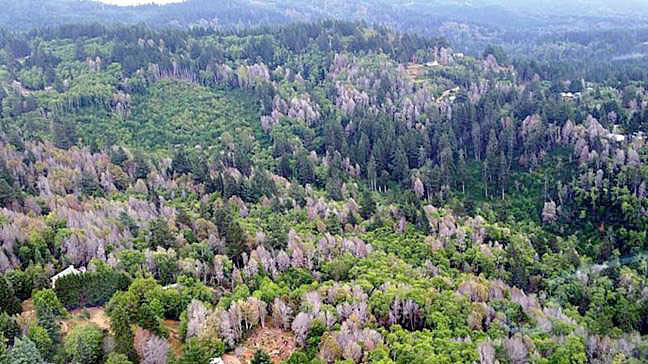
Two Teams with a New Take: Insect Losses Due to Invasive Plants

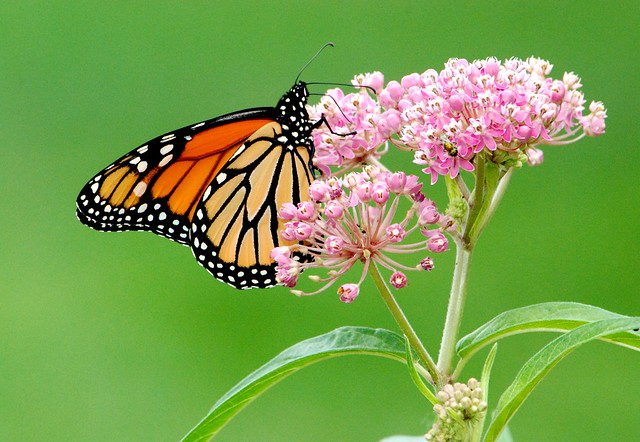
monarch butterfly on swamp milkweed; photo by Jim Hudgins, USFWS

I have been impressed recently by two groups of scientists who are trying to broaden understanding of the impacts of invasive plants by examining the interactions of those plants with insects. As they note, herbivorous insects are key players in terrestrial food webs; they transfer energy captured by plants through photosynthesis to other trophic levels. This importance has been recognized since Elton first established the basic premises of food webs (1927) [Burghardt et al.; full citation at end of blog] Arthropods comprise significant members of nearly every trophic level and are especially important as pollinators. If introduced plants cause changes to herbivore communities, there will probably be effects on predators, parasites, and other wildlife through multitrophic interactions [Lalk et al.; Tallamy, Narango and Mitchell].

[I briefly summarize the findings of a third group of scientists at the end of this blog. The third group looks at the interaction between agriculture – that is, planting of non-native plants! – and climate change.]

One approach to studying this issue, taken by Douglas Tallamy of the University of Delaware and colleagues, is to look at the response of herbivorous insects to NIS woody plants fairly generally. They integrate their studies with growing concern about the global decline in insect populations and diversity. They note that scientists have focused on light pollution, development, industrial agriculture, and pesticides as causes of these declines. They decry the lack of attention to disruption of specialized evolutionary relationships between insect herbivores and their native host plants due to widespread domination by non-indigenous plants [Richard, Tallamy and Mitchell].

In their studies, Tallamy and colleagues consider not just invasive plants, but also non-native plants deliberately planted as crops or ornamentals, or in forestry. They point out that such introduced plants have completely transformed the composition of plant communities in both natural and human-dominated ecosystems around the globe. At least 25% of the world’s planted forests are composed of tree species not native to their locale. At least one-sixth of the globe is highly vulnerable to plant invasions, including biodiversity hotspots [Richard, Tallamy and Mitchell].

A different approach, taken by Lalk and colleagues, is more closely linked to concern about impacts of the plants themselves. They have chosen to pursue knowledge about relationships between individual species of invasive woody plants and the full range of arthropod feeding guilds – pollinators, herbivores, twig and stem borers, leaf litter and soil organisms. In so doing, they decry the general absence of data.

Both teams agree that:

  • Invasive plants are altering ecosystems across broad swaths of North America and the impacts are insufficiently understood.
  • The invasive plant problem will get worse because non-native species continue to be imported and planted. (Reminder: the Tallamy team considers impacts of deliberate planting as well as bioinvasion.)
  • Plant-insect interactions are the foundation of food webs, so changes to them will have repercussions throughout ecosystems.

Tallamy team

Non-native plants have replaced native plant communities to a greater or lesser extent in every North American biome – including anthropogenic landscapes [Burghardt]. The first trophic level in suburban and urban ecosystems throughout the U.S. is dominated by plant species that evolved in Southeast Asia, Europe, and South America [Tallamy and Shropshire]. Abundant non-native plants not only dominate plant biomass; they also reduce native plant taxonomic, functional and phylogenetic diversity and heterogeneity. Thus, they indirectly alter the abundance of native insects  [Burghardt; Richard, Tallamy and Mitchell].

I think these articles might actually underestimate the extent of these impacts. While Richard, Tallamy and Mitchell report that more than 3,300 species of non-native plants are established in continental U.S., years ago Rod Randall said that more than 9,700 non-native plant species were naturalized in the U.S. (probably includes Hawai` i.   The Tallamy team cites USDA Forest Service data showing 9% of forests in the southeast are invaded by just 33 common invasive plant species [Richard, Tallamy and Mitchell], I have cited that and other sources showing even greater extents of plant invasion in the east and here; other regions and here

The Tallamy team has conducted several field experiments that demonstrate that the presence of non-native plants suppress numbers and diversity of native lepidopteran caterpillars. These non-native woody plants have not replaced the ecological functions of the native plants that used to support insect populations. This is true whether or not the non-native plants are deliberately planted or are invading various ecosystems on their own. [Richard, Tallamy and Mitchell]. (Of course, they expect plant invasions to grow; they note that some of the many ornamental species that are not yet invasive will become so.)

The result is disruption of the ecological services delivered by native plant communities, including the focus of their studies: plants’ most fundamental contribution to ecosystem function: generation of food for other organisms [Burghardt].

They note that plants’ relationship to insects differs depending on the insects’ feeding guilds — folivores, wood eaters, detritivores, pollinators, frugivores, and seed-eaters; and among herbivores with different mouthparts — chewing or sucking; and as host plant specialists or generalists. They decry studies that fail to recognize these differences [Tallamy, Narango, and Mitchell].

The Tallamy team explores why insect populations decline among non-native plants. That is,  

1) Do insects directly requiring plant resources have lower fitness when using non-native plants; do they not recognize them as viable host plants; or do they avoid them altogether? 

2) Are reductions in numbers of specialist herbivores mitigated by generalists? A decade of research shows that both specialists and generalists decline.

The team’s studies focus on lepidopteran larvae (caterpillars). Insect herbivores are both the largest taxon of primary consumers and extremely important in transferring energy captured by plants through photosynthesis to other trophic levels [Burghardt]. In addition, insects with chewing mouthparts are typically more susceptible to defensive secondary metabolites contained in leaves than are insects with sucking mouthparts that tap into poorly defended xylem or phloem fluids [Tallamy, Narango and Mitchell].
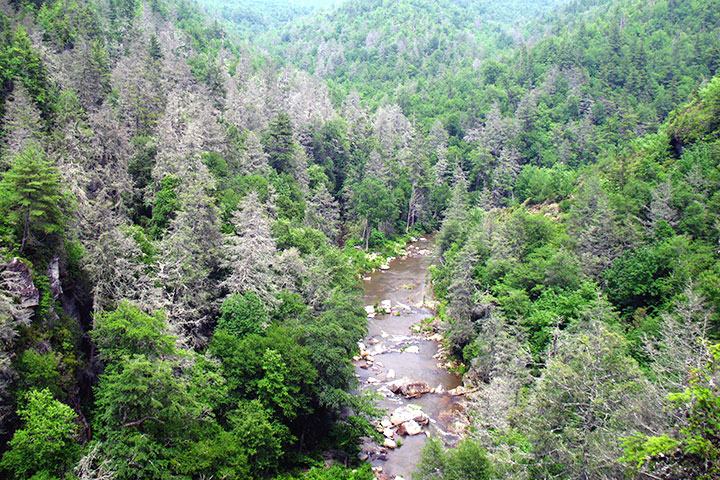
A study by Burghardt et al. found that 75% of all lepidopteran species and 93% of specialist species were found exclusively on native plant species. Non-native plants that were in the same genus as a native plant often supports a lepidopteran community that is a similar but depauperate subset of the community found on its native congener. In fact, the insect abundance and species richness supported by non-native congeners of native species was reduced by 68%.

A meta-analysis of 76 studies by other scientists found that, with few exceptions, caterpillars had higher survival and were larger when reared on native host plants. Plant communities invaded by non-native species had significantly fewer Lepidoptera and less species richness. In three of eight cases examined, non-native plants functioned as ecological traps, inducing females to lay eggs on plants that did not support successful larval development. Richard, Tallamy and Mitchell cite as an example the target of many conservation efforts, monarch butterflies (Danaus plexxipus), which fail to reproduce when they use nonnative swallowworts (Vincetoxicum species.) instead of related milkweeds (Asclepias species.).

Tallamy and Shropshire ranked 1,385 plant genera that occur in the mid-Atlantic region by their ability to support lepidopteran species richness. They found that introduced ornamentals are not the ecological equivalents of native ornamentals. This means that solar energy harnessed by introduced plants is largely unavailable to native specialist insect herbivores.

Tallamy, Narango, and Mitchell describe the following patterns:

1) Insects with chewing mouthparts are typically more susceptible to defensive secondary metabolites contained in leaves than are insects with sucking mouthparts that tap into poorly defended xylem or phloem fluids. As a result, sucking insects find novel non-indigenous plants to be acceptable hosts more often. However, there are more than 4.5 times as many chewing (mandibulate) insect herbivores than sucking (haustellate) species. It follows that the largest guild of insect herbivores is also the most vulnerable to non-native plants as well as being the most valuable to insectivores.
native azalea Rhododendron periclymenoides; photo by F.T. Campbell

2) Woody native species, on average, support more species of phytophagous insects than herbaceous species.

3) Although insects are more likely to accept non-native congeners or con-familial species as novel hosts, non-native congeners still reduced insect abundance and species richness by 68%.
4) Host plant specialists are less likely to develop on evolutionarily novel non-indigenous plants than are insects with a broader diet. There are far more specialist species than generalists, so generalists will not prevent serious declines in species richness and abundance when native plants are replaced by non-indigenous plants. In addition, non-native plants cause significant reductions in species richness and abundance even of generalists. In fact, generalists are often locally specialized on particular plant lineages and thus may function more like specialists than expected.

5) Any reduction in the abundance and diversity of insect herbivores will probably cause a concomitant reduction in the insect predators and parasitoids of those herbivores – although few studies have attempted to measure this impact beyond spiders, which are abundant generalists. The vast majority of parasitoids are highly specialized on particular host lineages.

6) Studies comparing native to non-native plants must avoid using native species that support very few phytophagous insects as their baseline, e.g., in the mid-Atlantic region tulip poplar trees (Liriodendron tulipifera) and Yellowwood (Cladrastus kentuckea).

7) Insects that feed on well-defended living tissues such as leaves, buds, and seeds are less likely to be able to include non-native plants in their diets than are insects that develop on undefended tissues like wood, fruits, and nectar. Although this hypothesis has never been formally tested, they note the ease with which introduced wood borers – emerald ash borer, Asian longhorned beetle, polyphagous and Kuroshio shot-hole borers, redbay ambrosia beetle, Sirex woodwasp (all described in profiles posted here — have become established in the US.

palamedes swallowtail Papilio palamedes; photo by Vincent P. Lucas; this butterfly depends on redbay, a tree decimated by laurel wilt disease vectored by the redbay ambrosia beetle

Lalk and Colleagues

As noted, Lalk and colleagues have a different frame; they focus on individual introduced plant species rather than starting from insects. They also limit their study to invasive plants. The authors say there is considerable knowledge about interactions between invasive herbaceous plants and arthropod communities, but less re: complex interactions between invasive woody plants and arthropod communities, including mutualists (e.g., pollinators), herbivores, twig- and stem-borers, leaf-litter and soil-dwelling arthropods, and other arthropod groups.

They ask why this knowledge gap persists when invasive shrubs and trees are so widespread and causing considerable ecological damage. They suggest the answer is that woody invaders rarely encroach on high-value agricultural systems and some are perceived as contributing ecosystem services, including supporting some pollinators and wildlife.

Lalk and colleagues seek to jump-start additional research by summarizing what is currently known about invasive woody plants’ interactions with insects. They found sufficient data about 11 species – although even these data are minimal. They note that all have been cultivated and sold in the U.S. for more than 100 years. All but one (mimosa) are listed as a noxious weed by at least one state; two states (Rhode Island and Georgia) don’t have a noxious weed list. None of the 11 is listed under the federal noxious weed statute.

Ailanthus altissima

Illustrations of how minimal the existing information is:

  • Tree-of-heaven (Ailanthus altissima) is noted to be supporting expanded populations of the Ailanthus webworm moth (Atteva aurea), which is native to Central America; and to be the principal reproductive host for SLF (Lycorma delicatua)  https://www.dontmovefirewood.org/pest_pathogen/spotted-lanternfly-html/
  • Chinese tallow (Triadica sebifera) is thought to benefit both native generalist bee species and non-indigenous European honeybees (Apis mellifera).
  • Chinese privet (Ligustrum sinense) appears to suppress populations of butterflies, bees, and beetles.

Lalk and colleagues then review what is known about interactions between individual invasive plant species in various feeding guilds. They point out that existing data on these relationships are scarce and sometimes contradictory.

They believe this is because interactions vary depending on phylogenetic relationships, trophic guild, and behavior (e.g., specialized v. generalist pollinator). Arthropods can be “passengers” of a plant invasion. That is, they can be affected by that invasion, with follow-on effects to other arthropods in the community. Also, arthropods can be “drivers” of invasion, increasing the success of the invasive plants.

They then summarize the available information on various interactions. For example, they note that introduced plants can compete with native plants in attracting pollinators, causing cascading effects. Or they can increase pollination services to native plants by attracting additional pollinators.

They note that herbivore pressure on invasive plants can have important impacts on growth, spread, and placement within food webs. They note that these cases support the “enemy release hypothesis”, although they think there are probably additional driving mechanisms.

Lalk and colleagues note that most native twig- and stem-borers (Coleoptera: Buprestidae, Curculionidae, Cerambycidae; Hymenoptera: Siricidae) are not considered primary pests but that some of our most damaging insect species are wood borers (see above).

Some of these borers are decomposers; in that role, they are critical in nutrient cycling.

Arthropods in leaf litter and soil also serve important roles in the decomposition and cycling of nutrients, which affects soil biota, pH, soil nutrients, and soil moisture. They act as a trophic base in many ecosystems. Lalk and colleagues suggest these arthropod communities probably change with plant species due to differences in leaf phytochemistry. They cite one study that found litter community composition differed significantly between litter beneath tree-of-heaven, honeysuckle (Lonicera maackii), and buckthorn (Rhamnus cathartica) compared to litter underneath surrounding native trees.

Recommendations

Both the Tallamy and Lalk teams call for ending widespread planting of non-native plants. Lalk and colleagues discuss briefly the roles of

  • The nursery industry (including retailers); they produce what sells.
  • Scientists and educators have not sufficiently informed home and land owners about which species are invasive or about native alternatives.
  • Private citizens buy and plant what their neighbors have, what they consider aesthetically pleasing, or what is being promoted.
  • States have not prohibited sale of most invasive woody plants. Regulatory actions are not a straightforward matter; they require considerable time, supporting information, and compromise.

Tallamy team calls for restoration ecologists in the eastern U.S. to consider the number of Lepidopterans hosted by a plant species when deciding what to plant. For example, oaks (Quercus), willows (Salix), native cherries (Prunus)and birches (Betula) host orders of magnitude more lepidopteran species in the mid-Atlantic region than tulip poplar.(Those lepidopteran in turn support breeding birds and other insectivorous organisms.) [Tallamy & Shropshire]

Lalk and colleagues focused on identifying several key knowledge gaps:

  • How invasive woody plants affect biodiversity and ecosystem functioning
  • How they themselves function in different habitats.
  • Do non-native plants drive shifts in insect community composition, and if so, what is that shift, and how does it affect other trophic levels?
  • How do IAS woody plants affect pollinators?

The authors do not minimize the difficulty of separating such possible plant impacts from other factors, including climate change and urbanization.

Global Perspective

oil palm plantation in Malaysia; © CEphoto, Uwe Aranas

Outhwaite et al. (full citation at end of this blog) note that past studies have shown that insect biodiversity changes are driven primarily by land-use change (which is another way of saying planting of non-native species – as Dr. Tallamy and colleagues describe it) and increasingly by climate change. They south to examine whether these drivers interact. They found that the combination of climate warming and intensive agriculture is associated with reductions of almost 50% in the abundance and 27% in the number of species within insect assemblages relative to levels in less-disturbed habitats with lower rates of historical climate warming. These patterns were particularly clear in the tropics (perhaps partially because of the longer history of intensive agriculture in temperate zones). They found that high availability of nearby natural habitat (that is, native plants) can mitigate these reductions — but only in low-intensity agricultural systems.

Outhwaite et al. reiterate the importance of insect species in ecosystem functioning, citing pollination, pest control, soil quality regulation & decomposition. To prevent loss of these important ecosystem services, they call for strong efforts to mitigate climate change and implementation of land-management strategies that increase the availability of natural habitats.

SOURCES

Burghardt, K. T., D. W. Tallamy, C. Philips, and K. J. Shropshire. 2010. Non-native plants reduce abundance, richness, and host specialization in lepidopteran communities. Ecosphere 1(5):art11. doi:10.1890/ES10-00032.

Lalk, S. J. Hartshorn, and D.R. Coyle. 2021. IAS Woody Plants and Their Effects on Arthropods in the US: Challenges and Opportunities. Annals of the Entomological Society of America, 114(2), 2021, 192–205 doi: 10.1093/aesa/saaa054

Outhwaite, C.L., P. McCann, and T. Newbold. 2022.  Agriculture and climate change are shaping insect biodiversity worldwide. Nature 605 97-192 (2022)  https://www.nature.com/articles/s41586-022-04644-x

Richard, M. D.W. Tallamy and A.B. Mitchell. 2019. Introduced plants reduce species interactions. Biol Invasions

Tallamy, D.W., D.L. Narango and A.B. Mitchell. 2020. Ecological Entomology (2020), DOI: 10.1111/een.12973 Do Non-native plants contribute to insect declines?

Tallamy, D.W. and K.J. Shropshire. 2009. Ranking Lepidopteran Use of Native Versus Introduced Plants Conservation Biology, Volume 23, No. 4, 941–947 2009 Society for Conservation Biology DOI: 10.1111/j.1523-1739.2009.01202.x

Posted by Faith Campbell

We welcome comments that supplement or correct factual information, suggest new approaches, or promote thoughtful consideration. We post comments that disagree with us — but not those we judge to be not civil or inflammatory.

For a detailed discussion of the policies and practices that have allowed these pests to enter and spread – and that do not promote effective restoration strategies – review the Fading Forests report at http://treeimprovement.utk.edu/FadingForests.htm

Spring wildflowers – why is one valley invaded while neighboring one is not?

I post here photos from two creek valleys in northern Virginia.

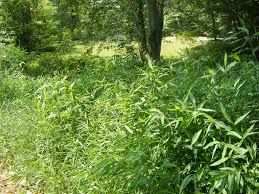
The Accotink creek valley is completely overrun by invasive plants … the herbaceous layer is made up of lesser celandine (Ficaria verna Huds; Ranunculus ficaria L.) and – in some places — Leucojum.

Neighboring Pohick creek valley still supports native hebaceous plants – skunk cabbage, spring beauties, trout lillies.

They both flow through wealthier suburbs in Fairfax County.

?????

P.S. In a ditch connecting to Pohick creek I have found this aquatic plant:

Plant is rooted, but leaves float on the water surface. In March the leaves were wide with scalloped edges; by April they are longer – lanceolate? I have seen it nowhere else. Anyone know what it is? Local authorities say it is not water chestnut (Trapa).

Posted by Faith Campbell

We welcome comments that supplement or correct factual information, suggest new approaches, or promote thoughtful consideration. We post comments that disagree with us — but not those we judge to be not civil or inflammatory.

For a detailed discussion of the policies and practices that have allowed these pests to enter and spread – and that do not promote effective restoration strategies – review the Fading Forests report at http://treeimprovement.utk.edu/FadingForests.htm

Plants Depend on Animals – and They are Disappearing

black berry eating hawthorn berries; photo by Paul D. Vitucci

Articles by Evan Fricke and colleagues remind us to look more broadly at bioinvasion to consider the impact on ecosystem function and evolution. They focus on animal interactions with plants in the shared environment, especially animals’ role as seed dispersers.

The authors also remind us that natural barriers explain why there are different species in different areas and thus how evolution and speciation follow different paths in different places. Think of Galapagos finches evolving in isolation from a few ancestors that somehow made it over the ocean from mainland South America.

These points are made in two recent articles.

In the first, Fricke and Svenning 2020 (full citation at end of this blog) note that about half of all plant species depend on animals to disperse their seeds. Animal seed dispersal is influenced by several drivers of global change, including local or generalized extinction (= defaunation); bioinvasion; and habitat fragmentation. The decline of large vertebrates has a particularly important role in these interactions.

Their study focused on fleshy-fruited plants that are dispersed by animals. (The study does not include nuts, e.g., acorns, which are presumably subject to some of the same pressures.) They expect evolution of the affected plants and animals to proceed differently as a result of the new partnerships, but they did not study any such interactions.

Their study covered animal seed-dispersal interactions with plants at 410 locations. The data encompassed 24,455 unique animal-plant pairs involving 1,631 animal and 3,208 plant species. Three quarters of the animals were birds; most of the rest were mammals, primarily bats and primates. Only 1% were in other animal groups – lizards, tortoises, or fish.

fruit bats on Luzon, Philippines; photo by Francesco Vernonesi; Flickr.com

They found that introduced plants and animals are twice as likely as native species to interact with introduced partners. The resulting interactions are likely to amplify biotic homogenization in future ecosystems. Already, introduced species have largely replaced missing native frugivore species in some places. In fact, mutualisms in which either or both the plant and animal is an introduced species are now about seven times higher than decades ago.

These mutual-benefit interactions of introduced species are even more prevalent in areas where human modification of the environment is greater. The proportion of introduced species and of novel interactions caused by introduced plant or animal species was higher for oceanic island systems than for continental bioregions. This finding adds a new dimension to the already recognized heightened susceptibility of remote islands to invasion and their loss of native species. Continental bioregions’ networks typically had few introduced animals and a greater prevalence of intro plants than animals.

Fricke and colleagues think plant-frugivore networks are likely to increasingly favor a relatively few introduced generalists over many native species, reducing the uniqueness of future biotas. The result might be to reduce resilience of terrestrial ecosystems by, first, allowing perturbations to propagate more quickly; and, second, by exposing disparate ecosystems to similar drivers. They called for giving higher priority to managing increasing ecological homogenization.

In the second article, Fricke, Ordonez, Rogers, and Svenning (2022) note that climate change requires many plant species to shift their populations hundreds of meters to tens of kilometers per year to track their climatic niche. Earth is also experiencing the formation of novel communities as species introductions and shifting ranges result in co-occurrence of species that do not share co-evolutionary history. They conclude that the novel mutualistic interaction networks will influence whether certain plant species persist and spread.

These authors examined four scenarios to assess how current long-distance dispersal has been affected by past defaunation and invasion and how it is threatened by species endangerment. These scenarios are as follows:

1st scenario (current scenario) = natural and introduced ranges of extant species today.

2nd scenario (natural scenario) = mammal and bird ranges as they would be if unaffected by extinctions, range contractions, or introductions.

3rd scenario (extinction scenario) = those bird and mammal species listed as vulnerable or endangered by the IUCN go extinct.

4th scenario (extirpation of introduced species scenario) = introduced species are extirpated.

Fricke and colleagues estimate that extinction of at least local populations of seed-dispersing mammals and birds has already reduced the capacity of plants to track climate change by 60% globally. The effect is strongest in temperate regions and regions with little topographic complexity. Two examples are eastern North America and Europe. These regions face a double threat: rapid climate change and loss of large mammals that provided long-distance dispersal.

The extinction scenario is most evident in Southeast Asia and Madagascar. The remaining animal seed dispersers are already threatened or endangered. Fricke and colleagues project that future loss of vulnerable and endangered species from their current ranges would result in a further reduction of 15% in the capacity of plants to track climate change.

The contrary situation is found on islands which have few native mammals. Introduced species are now important long-distance seed dispersers. In some cases, the introduced animals are dispersing invasive plant seeds, e.g., on Hawai`i feral hogs are spreading the invasive plant strawberry guava (Psidium cattleianum).

strawberry guava on Maui; photo by Forest and Kim Starr

People’s actions have resulted in ecoregions disproportionately losing the species that provide long-distance seed dispersal function, i.e., large mammals. In other words, human activities have caused not only rapid climate change—requiring broad-scale range shifts by plants—but also defaunation of the birds and mammals needed by plants to do so. Habitat fragmentation and other land-use changes will likely amplify existing constraints on plant range shifts.

Fricke and colleagues say their findings emphasize the importance of not only promoting habitat connectivity to maximize the functional potential of current seed dispersers but also restoring biotic connectivity through the recovery of large-bodied animals to increase the resilience of vegetation communities under climate change.

SOURCES

Fricke, E. C., & Svenning, J. C. (2020). Accelerating homogenization of the global plant–frugivore meta-network. Nature585(7823), 74-78. https://www.nature.com/articles/s41586-020-2640-y

Fricke, E. C., Ordonez, A., Rogers, H. S., & Svenning, J. C. (2022). The effects of defaunation on plants’ capacity to track climate change. Science375(6577), 210-214. https://www.science.org/doi/full/10.1126/science.abk3510

Posted by Faith Campbell

We welcome comments that supplement or correct factual information, suggest new approaches, or promote thoughtful consideration. We post comments that disagree with us — but not those we judge to be not civil or inflammatory.

For a detailed discussion of the policies and practices that have allowed these pests to enter and spread – and that do not promote effective restoration strategies – review the Fading Forests report at http://treeimprovement.utk.edu/FadingForests.htm

What Do Invasive Species Cost?

brown tree snake Boiga irregularis; via Wikimedia; one of the species on which the most money is spent on preventive efforts

In recent years a group of scientists have attempted to determine how much invasive species are costing worldwide. See Daigne et al. 2020 here.

Some of these scientists have now gone further in evaluating these data. Cuthbert et al. (2022) [full citation at end of blog] see management of steadily increasing numbers of invasive, alien species as a major societal challenge for the 21st Century. They undertook their study of invasive species-related costs and expenditures because rising numbers and impacts of bioinvasions are placing growing pressure on the management of ecological and economic systems and they expect this burden to continue to rise (citing Seebens et al., 2021; full citation at end of blog).

They relied on a database of economic costs (InvaCost; see “methods” section of Cuthbert et al.) It is the best there is but Cuthbert et al. note several gaps:

  • Only 83 countries reported management costs; of those, only 24 reported costs specifically associated with pre-invasion (prevention) efforts.
  • Data comparing regional costs do not incorporate consideration of varying purchasing power of the reporting countries’ currencies.  
  • Data available are patchy so global management costs are probably substantially underestimated. For example, forest insects and pathogens account for less than 1% of the records in the InvaCost database, but constitute 25% of total annual costs ($43.4 billion) (Williams et al., in prep.) .

Still, their findings fit widespread expectations.  

These data point to a total cost associated with invasive species – including both realized damage and management costs – of about $1.5 trillion since 1960.  North America and Oceania spent by far the greatest amount of all global money countering bioinvasions. North America spent 54% of the total expenditure of $95.3 billion; Oceania spent 30%. The remaining regions each spent less than $5 billion.

Cuthbert et al. set out to compare management expenditures to losses/damage; to compare management expenditures pre-invasion (prevention) to post-invasion (control); and to determine potential savings if management had been more timely.

Economic Data Show Global Efforts Could Be – But Aren’t — Cost-Effective

The authors conclude that countries are making insufficient investments in invasive species management — particularly preventive management. This failure is demonstrated by the fact thatreported management expenditures ($95.3 billion) are only 8% of total damage costs from invasions ($1.13 trillion). While both cost or losses and management expenditures have risen over time, even in recent decades, losses were more than ten times larger than reported management expenditures. This discrepancy was true across all regions except the Antarctic-Subantarctic. The discrepancy was especially noteworthy in Asia, where damages were 77-times higher than management expenditures.

Furthermore, only a tiny fraction of overall management spending goes to prevention. Of the $95.3 billion in total spending on management, only $2.8 billion – less than 3%  – has been spent on pre-invasion management. Again, this pattern is true for all geographic regions except the Antarctic-Subantarctic. The divergence is greatest in Africa, where post-introduction control is funded at more than 1400 times preventive efforts. It is also significant for Asia and South America.

Even in North America – where preventative actions were most generously funded – post-introduction management is funded at 16 times that of prevention.

Cuthbert et al. worry particularly about the low level of funding for prevention in the Global South. They note that these conservation managers operate under severe budgetary constraints. At least some of the bioinvasion-caused losses suffered by resources under their stewardship could have been avoided if the invaders’ introduction and establishment had been successfully prevented.

While in the body of the article Cuthbert et al. seem uncertain about why funding for preventive actions is so low, in their conclusions they offer a convincing (to me) explanation. They note that people are intrinsically inclined to react when impact becomes apparent. It is therefore difficult to motivate proactive investment when impacts are seemingly absent in the short-term, incurred by other sectors, or in different regions, and when other demands on limited funds may seem more pressing. Plus efficient proactive management will prevent any impact, paradoxically undermining evidence of the value of this action!

Aedes aegypti mosquito; one of the species on which the most money is spent for post-introduction control; photo by James Gathany; via Flickr

Delay Costs Money

The reports contained in the InvaCost database indicate that management is delayed an average of 11 years after damage was first been reported. Cuthbert et al. estimate that these delays have caused an additional cost of about $1.2 trillion worldwide. Each $1 of management was estimated to reduce damage by $53.5 in this study. This finding, they argue, supports the value of timely invasive species management.

They point out that the Supplementary Materials contain many examples of bioinvasions that entail large and sustained late-stage expenditures that would have been avoided had management interventions begun earlier.

Although Cuthbert et al. are not as clear as I would wish, they seem to recognize also that stakeholders’ varying perceptions of whether an introduced species is causing a detrimental “impact” might also complicate reporting – not just whether any management action is taken

Cuthbert et al. are encouraged by two recent trends: growing investments in preventative actions and research, and shrinking delays in initiating management. However, these hopeful trends are unequal among the geographic regions.

Which Taxonomic Groups Get the Most Money?

About 42% of management costs ($39.9 billion) were spent on diverse or unspecified taxonomic groups. Of the costs that were taxonomically defined, 58% ($32.1 billion) was spent on invertebrates [see above re: forest pests]; 27% ($14.8 billion) on plants; 12% ($6.7 billion) on vertebrates; and 3% ($1.8 billion) on “other” taxa, i.e. fungi, chromists, and pathogens. For all of these defined taxonomic groups, post-invasion management dominated over pre-invasion management.  

When considering the invaded habitats, 69% of overall management spending was on terrestrial species ($66.1 billion); 7% on semi-aquatic species ($6.7 billion); 2% on aquatic species ($2.0 billion); the remainder was “diverse/unspecified”. For pre-invasion management (prevention programs), terrestrial species were still highest ($840.4 million). However, a relatively large share of investments was allocated to aquatic invaders ($624.2 million).

Considering costs attributed to individual species, the top 10 targetted for preventive efforts were four insects, three mammals, two reptiles, and one alga. Top expenditures for post-invasion investments went to eight insects [including Asian longhorned beetle], one mammal, and one bird.

Asian longhorned beetle

Just two of the costliest species were in both categories: insects red imported fire ant(Solenopsis invicta) and Mediterranean fruitfly (Ceratitis capitate). None of the species with the highest pre-invasion investment was among the top 10 costliest invaders in terms of damages. However, note the lack of data on fungi, chromists, and pathogens. (I wrote about this problem in an earlier blog.)

Discussion and Recommendations

Cuthbert et al. conclude that damage costs and post-invasion spending are probably growing substantially faster than pre-invasion investment. Therefore, they call for a stronger commitment to enhancing biosecurity and for more reliance on regional efforts rather than ones by individual countries. Their examples of opportunities come from Europe.

Drawing parallels to climate action, the authors also call for greater emphasis on during decision-making to act collectively and proactively to solve a growing global and inter-generational problem.

Cuthbert et al. focus many of their recommendations on improving reporting. One point I found particularly interesting: given the uneven and rapidly changing nature of invasive species data, they think it likely that future invasions could involve a new suite of geographic origins, pathways or vectors, taxonomic groups, and habitats. These could require different management approaches than those in use today.

As regards data and reporting, Cuthbert et al. recommend:

1) reducing bias in cost data by increasing funding for reporting of underreported taxa and regions;

2) addressing ambiguities in data by adopting a harmonized framework for reporting expenditures. For example, agriculture and public health officials refer to “pest species” without differentiating introduced from native species. (An earlier blog also discussed the challenge arising from  these fields’ different purposes and cultures.)

3) urging colleagues to try harder to collect and integrate cost information, especially across sectors;

4) urging countries to report separately costs and expenditures associated with different categories, i.e., prevention separately from post-invasion management; damage separately from management efforts; and.

5) creating a formal repository for information about the efficacy of management expenditures.

While the InvaCost database is incomplete (a result of poor accounting by the countries, not lack of effort by the compilers!), analysis of these data points to some obvious ways to improve global efforts to contain bioinvasion. I hope countries will adjust their efforts based on these findings.

SOURCE

Cuthbert, R.N., C. Diagne, E.J. Hudgins, A. Turbelin, D.A. Ahmed, C. Albert, T.W. Bodey, E. Briski, F. Essl, P. J. Haubrock, R.E. Gozlan, N. Kirichenko, M. Kourantidou, A.M. Kramer, F. Courchamp. 2022. Bioinvasion costs reveal insufficient proactive management worldwide. Science of The Total Environment Volume 819, 1 May 2022, 153404

Seebens, H. S. Bacher, T.M. Blackburn, C. Capinha, W. Dawson, S. Dullinger, P. Genovesi, P.E. Hulme, M.van Kleunen, I. Kühn, J.M. Jeschke, B. Lenzner, A.M. Liebhold, Z. Pattison, J. Perg, P. Pyšek, M. Winter, F. Essl. 2021. Projecting the continental accumulation of alien species through to 2050. Glob Change Biol. 2021;27:970-982.

Williams, G.M., M.D. Ginzel, Z. Ma, D.C. Adams, F.T. Campbell, G.M. Lovett, M. Belén Pildain, K.F. Raffa, K.J.K. Gandhi, A. Santini, R.A. Sniezko, M.J. Wingfield, and P. Bonello 2022. The Global Forest Health Crisis: A Public Good Social Dilemma in Need of International Collective Action. submitted

Posted by Faith Campbell

We welcome comments that supplement or correct factual information, suggest new approaches, or promote thoughtful consideration. We post comments that disagree with us — but not those we judge to be not civil or inflammatory.

For a detailed discussion of the policies and practices that have allowed these pests to enter and spread – and that do not promote effective restoration strategies – review the Fading Forests report at http://treeimprovement.utk.edu/FadingForests.htm