Europe moves to curtail forest pest introductions – but strongest measures are hampered by trade rules

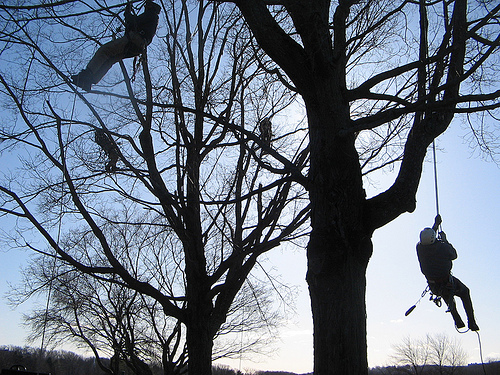
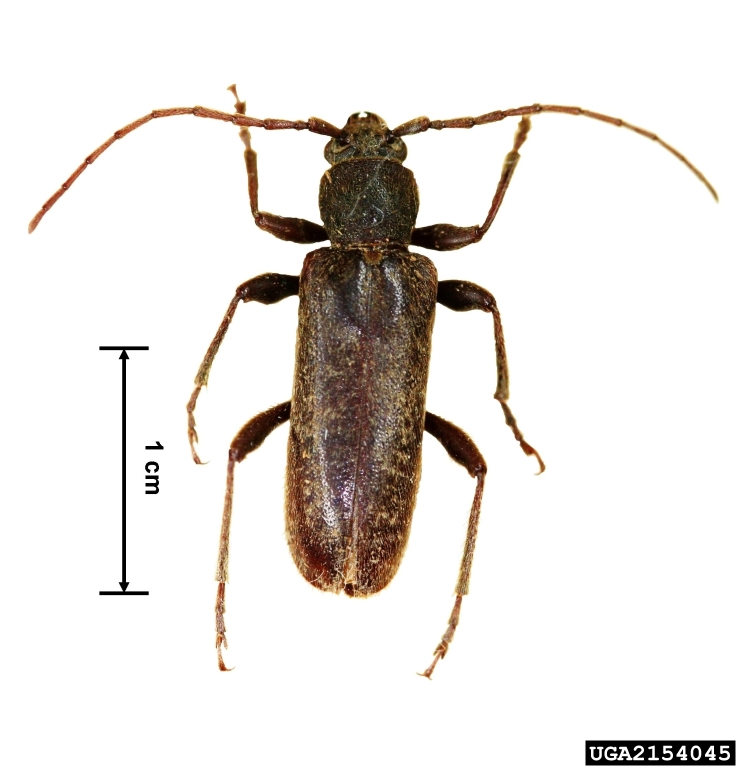
alb-in-euro-on-tree-doris-holling-wslALB in Europe; photo by Doris Holling WSL

Maartje J. Klapwijk and several colleagues have recently taken a hard look at non-native forest pests in Europe.  They conclude that current European legislation is inadequate to prevent forest/tree pest introduction, establishment and spread in the European Union. (A link to the article is provided at the end of this post.)


Some of the proactive steps that they recommend, however, will be difficult to enact. International trade rules (World Trade Organization, Agreement on the Application of Sanitary and Phytosanitary Measures – SPS Agreement) require that countries prove that the target commodity in trade presents a significant pest risk – proof that is difficult to obtain before damage has actually occurred.


(I have written extensively about this “Catch 22” – see Fading Forests II here)


Furthermore, European Union rules prevent countries from taking proactive measures to restrict potentially pest-infested plants or wood products being traded from one EU member country to another.  However, member countries’ vary in their levels of concern about tree-killing pests. As a result, phytosanitary measures are quite weak in some countries. Once a pest-infested shipment enters a country with a weak phytosanitary system it can be moved freely to any other member country.


Thus, international and EU rules together create a significant risk that a pest will enter, establish, and then be spread by commerce to the rest of the Union.


The authors note that growing trade in living plants and wood products has brought a rise in non-native tree pests becoming established in Europe. The number of alien invertebrate species has increased two-fold since 1950; the number of fungal species has increased four-fold since 1900. Few studies have attempted to quantify the economic impacts of non-native tree-killing pests in Europe. But the authors say that the introduced pests will cause economic damage either directly by reducing the revenue of the country or imposing control costs; or indirectly through trade restrictions or reduced values of real estate.


Among the recent introductions are the pinewood nematode from North America; Asian and Citrus longhorned beetles and ash dieback fungus from Asia; and sudden oak death and other Phytophthora species. (I described the extent of Phytophtphora infestations in European nurseries in a blog posted on April 25.) As a partial response, EU countries have created a network of nurseries intended to serve as an early warning system against further introductions of alien tree pests.  (Descriptions of these pests and where they are found are available on the website of the European and Mediterranean Plant Pest Organization (EPPO) here)

alb-in-europeALB introduction sites in Europe


The European Union regulates invasive species through the Environment Directorate-General (DG Environment).  However, tree-killing pests and other plant health concerns are the responsibility of a different governmental body, the Directorate-General Health and Food Safety (DG SANCO).


Maartje J. Klapwijk and colleagues note the risk associated with:

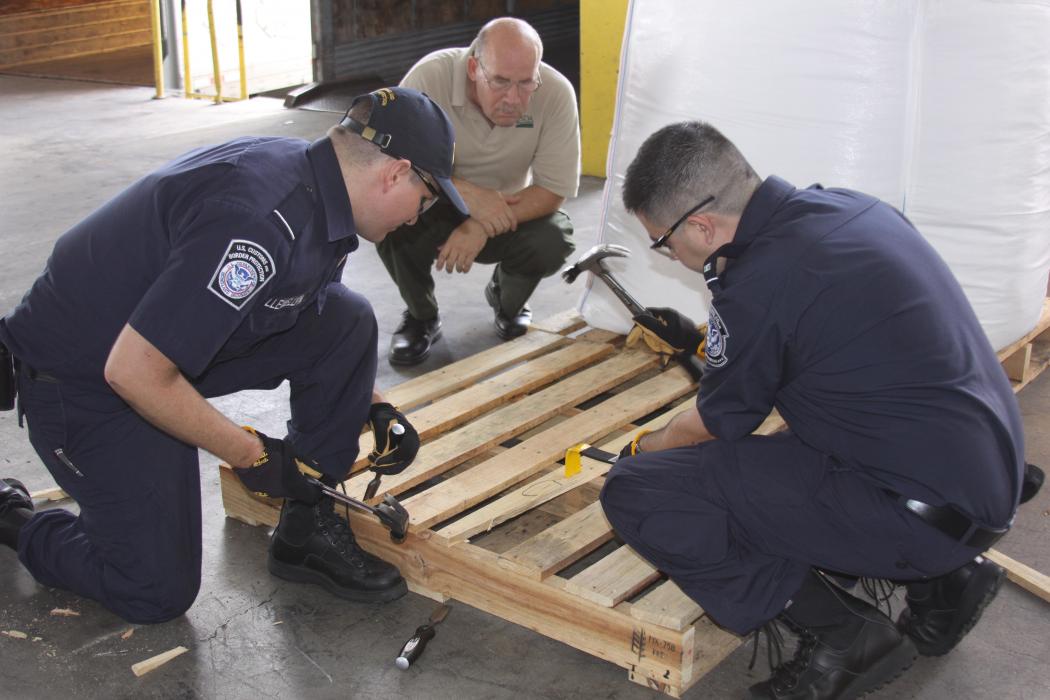
  • crates, pallets, and other forms of wood packaging;
  • wood chips (Europe imports more than 4 million tons of wood pellets as fuel in order to meet its carbon emission reduction goals)  ; and
  • especially – living plants.


They note that the international community has adopted two international related sanitary agreements : ISPM#15 (wood packaging) and ISPM#36 (living plants).  The European Union requires certificates stating that imported plants are free from harmful organisms and that phytosanitary measures stipulated by the importing country have been applied. However, limited resources mean that only a small proportion of living plants, plant material, soil and wood products arriving in Europe can be inspected. “The main purpose of the inspections is to verify whether shipments comply with regulations, rather than to stop potentially harmful organisms …” (my emphasis).  Reflecting the differences in levels of concern among EU member states noted above, there are large differences in inspection intensity among the EU member states.


The pertinent European legislation is Directive 2000/29/EC. It relies on a ‘‘black-list’’ of plants and plant products that are banned from import and specifies procedures to apply when any of these banned products is found in the EU. According to Klapwijk and colleagues, these quarantine lists provide insufficient protection because harmful organisms that enter the EU often are unknown prior to establishment.


Aware of the current system’s inadequacies, the EC has proposed a new regulation which would simplify and harmonize plant passports, allow for stricter measures against pests, and address emerging risks from certain living plant imports from some non-EU countries. Instead of listing harmful plant pests, the proposed regulation “sets out the conceptual nature of quarantine pests” and empowers the Commission to adopt measures to control certain pests.


Klapwijk and colleagues praise these actions as a significant step forward. However, they note that the new rules still don’t provide for precautionary assessments of high-risk commodities. Nor do they restrict import of the highest-risk commodities, such as imports of large plants or plants in soil. (my emphasis)


The authors note that other countries take a more pro-active, precautionary stance. Australia and New Zealand require that all imported plant products be assessed and proved safe before import. The U.S. restricts the size of imported plants and does not allow imported plants to be in soil. (The U.S. has proposed a new approach that relies increasingly on integrated measures or systems approaches rather than port-of-entry inspection.  However, this proposal has been pending for more than three years. (APHIS explains its proposal here)


The question is, do trade rules allow Europe to apply the same restrictions as other countries? As Klapwijk and colleagues note, the EU cannot adopt more rigorous phytosanitary measures without providing scientific evidence for this necessity. Preparing a risk assessment to make this case will involve considerable work. As part of this process, Europe should announce that it wishes to raise its “level of protection” and that more stringent phytosanitary measures are needed to achieve that new goal.


Meanwhile, the EU can enhance its active detection efforts and “rapid response” capabilities. The new EC directive will require countries in which a new pest is detected to eradicate or contain the pest. However, the response continues to depend on investments and actions by individual Member States – which have often been insufficient.


Klapwijk and colleagues endorse the suggestion by Hulme et al. (2009) that the European Commission establish a single agency to respond to introductions of any kind of invasive species (not just tree pests) – modeled on the European Centre for Disease Prevention and Control.


Finally, Klapwijk and colleagues note the importance of engaging the public.  Citizens’ participation can enhance early detection and strengthen public support for management strategies.


CONCLUSIONS


We Americans are very lucky that the U.S. Department of Agriculture had fairly stringent rules governing plant imports before the World Trade Organization and SPS Agreement were negotiated in the 1990s.  We don’t have the burden of proving that imports of large plants (small trees!) in soil is too risky. (This not to say that U.S. regulations should not be tightened further for the most high-risk imports. See Fading Forests III here).  Europeans should be able to build their case for more restrictive trade rules on existing risk assessments and practices utilized by the U.S., Australia, New Zealand, and others; on the numerous studies published in recent years that describe recent introductions to Europe and the pathways by which they entered; and by the number of those introductions alone.  (To see what has been introduced, visit the website of the European and Mediterranean Plant Pest Organization (EPPO) here)


One important step in improving U.S. rules would be to finalize the proposal – put forward in 2013 – to depend more on integrated measures or systems approaches rather than inspection at the port of entry.  Join with me in urging the Secretary of Agriculture to finalize this proposal before he leaves office in January.   Contact me via the “contact us” button on the webpage to learn how you can help.


The United Kingdom has voted to leave the European Union. This means that the U.K. has the opportunity – and burden – of developing its own phytosanitary regulations. The U.K. has some of the leading forest pathologists and entomologists. The risk is obvious to all – especially Phytophthora ramorum in larch plantations and ash dieback disease in many areas of the country. I hope that the British will seize this opportunity to adopt really effective phytosanitary regulations that can serve as a model for the rest of Europe – and possibly even the U.S.


Sources


Maartje J. Klapwijk, Anna J. M. Hopkins, Louise Eriksson, Maria Pettersson, Martin Schroeder,A°ke Lindelo¨w, Jonas Ro¨nnberg, E. Carina H. Keskitalo, Marc Kenis. 2016. Reducing the risk of invasive forest pests and pathogens: Combining legislation, targeted management and public awareness. Ambio 2016, 45(Suppl. 2):S223–S234  DOI 10.1007/s13280-015-0748-3


Hulme, P.E. 2009. Trade, transport and trouble: Managing invasive species pathways in an era of globalization.  Journal of Applied Ecology 46:10-18


Posted by Faith Campbell

Invaders Put Another Bird at Risk

iwi2_jamespetruzzi_u

i`iwi; photo by James Petruzzi; courtesy of American Bird Conservancy

As noted in an earlier blog (“When Will Invasive Species Get the Respect They Deserve?” May 2016),  invasive species can cause extinctions – especially on islands.  I have posted other blogs about the invasional meltdown in Hawai`i (“Hawaii’s unique forests now threatened by insects and pathogens” October 2015).

A further demonstration of the meltdown is the decision by the US Fish and Wildlife Service (USFWS) to propose listing  another Hawaiian honeycreeper (bird) – the i`iwi (Drepanis (Vestiaria) coccinea) as a threatened species.  Already, some 20 Hawaiian forest birds are protected under the Endangered Species Act.  Many, although not all, are threatened by the same factors as the i`iwi.

The proposal, which summarizes an extensive supporting report, is available here.  USFWS is accepting comments on the proposal that are submitted to the USFWS’  website before November 21.

The proposal documents the tragedy of Hawai`i. The i`iwi was once almost ubiquitous on the islands, from sea level to the tree line. Today the bird is missing from Lanai; and reduced to a few individuals on Oahu, Molokai, and west Maui. Remaining populations of i`iwi are largely restricted to forests above ~ 3,937 ft (1,200 m) on Hawaii Island (Big Island), east Maui, and Kauai.

In the past, hunting for the bird’s striking red feathers and agricultural conversion doubtless affected the i`iwi’s populations. Since the early 20th Century, though, the threats have all been invasive species.

The USFWS has concluded that the principal threat is disease: introduced avian malaria  — caused by the protozoan Plasmodium relictum and vectored by introduced mosquitoes (Culex quinquefasciatus). A second disease, Avian pox (Avipoxvirus sp.), is also present but scientists have not been able to separate its effects from those of malaria. Both vectored by the southern house mosquito.

I`iwi are very susceptible to avian malaria; in lab tests, 95% of birds died.

iiwi_hakalaunwr5_danieljlebbinabc_u

I’iwi on `ohi`a blossom at Hakalau NWR; photo by Daniel J. Lebbin; courtesy of American Bird Conservancy

I`iwi alive now have survived because they live in forests at sufficiently high elevations; there, cooler temperatures reduce the numbers of mosquitoes, and thus transmission of the disease.  However, the birds must fly to lower elevations in certain seasons to find flowering plants (the i`iwi feeds on nectar) – and then becomes exposed to mosquitoes.

Worse, climate change has already caused warming at higher elevations, and is projected to have a greater impact in the future.  The rising temperatures predicted to occur – even if countries meet their commitments from the December 2015 meeting of the UN Framework Convention on Climate Change – will result in upslope movement of mosquitoes. As a result, according to three studies reviewed by the USFWS, the i`iwi will lose 60 – 90% of its current (already limited) disease-free range by the end of this century, with significant effects occurring by 2050.

I`iwi occur primarily in closed canopy, montane wet or montane mesic forests composed of tall-stature `ohi`a (Metrosideros polymorpha) trees or in mixed forests of `ohi`a and koa (Acacia koa) trees. The i`iwi’s diet consists primarily of nectar from the flowers of `ohi`a  and several other plants, with occasional insects and spiders.

hakalau-forest01a

Hakalau National Wildlife Refuge; USFWS photo

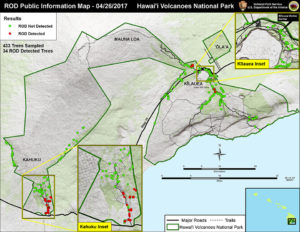
The i`iwi’s dependence on `ohi`a creates another peril, because `ohi`a trees are vulnerable to alien diseases – both ohia rust and, especially, rapid ohia death or Ceratocystis ohia wilt. (Read descriptions of both diseases here.  As of September 2016, rapid ohia death has been found only on Hawai`i – the “Big Island”. However, 90% of all i`iwi currently reside on the Big Island! Worse, in future the relatively large area of high-elevation `ohi`a dominated forest on the Big Island was expected to be the principal refuge of the i`iwi from the anticipated climate-driven up-slope movement of malaria. However, as just noted, the Big Island’s trees are now being killed by disease. If rapid ohia death continues to spread across the native `ohi`a forests – on Hawai`i and potentially on the other islands – it  will directly threaten i`iwi by eliminating the limited, malaria-free native forest areas that remain for the species.

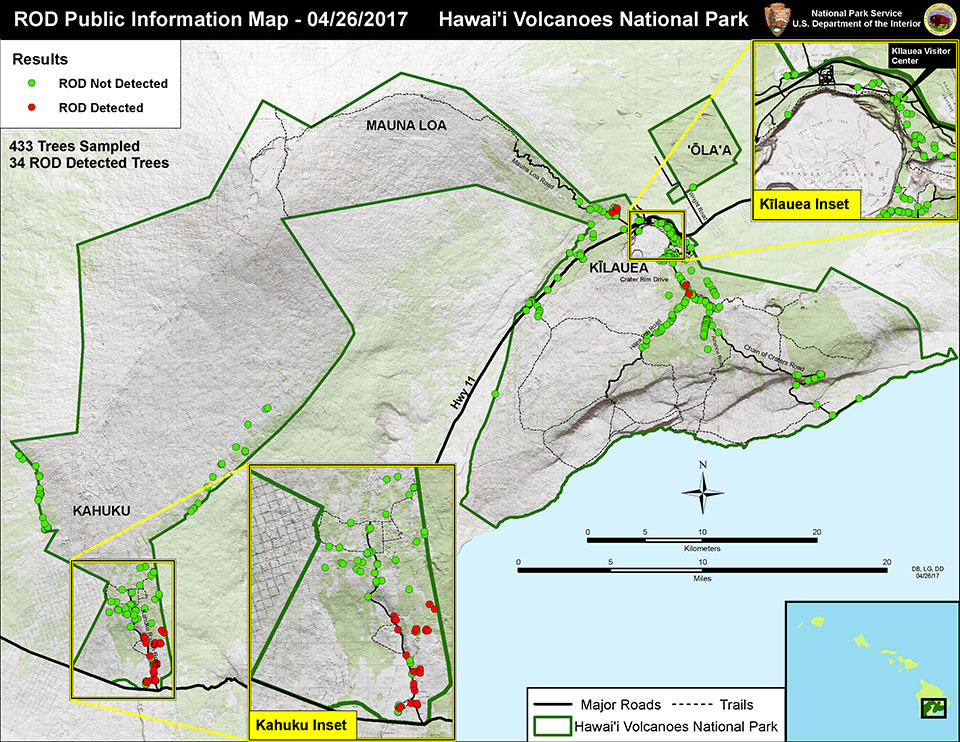
Rapid `ohi`a death (ROD) is caused by two distinct strains of the widely introduced pathogen Ceratocystis fimbriata.  It was first detected in the Puna District of Hawai`i in 2012. The disease has since been detected across a widening area of the Big Island, including on the dry side of island in Kona District (See map here.  The total area infested has increased rapidly, from ~6,000 acres in 2012 to 38,000 acres in June 2016.  Since symptoms do not emerge for more than a year after infection, the infested area is probably larger.  ROD kills `ohi`a in all size and age classes. There is no apparent limit based on soil types, climate, or elevation. O`hi`a growing throughout the islands appears to be vulnerable, from cracks in new volcanic areas to weathered soils; in dry as well as mesic and wet climates. The pathogen is probably spread by spores sticking to wood-boring insects and – over short distances – wind transport of insect frass.

Federal and state agencies are spending $850,000 on research on the disease, possible vectors, and potential containment measures.  Additional funds would be needed to implement any strategies, and to expand outreach  to try to limit human movement of infected plants or soil.

The Hawaii Department of Agriculture adopted an interim rule in August, 2015  which restricts the movement of `ohi`a plants, plant parts, wood, and frass and sawdust from Hawai`i Island to neighboring islands. Soil was included in the interim rule with an effective date of January 1, 2016. In March 2016, HDOA approved permit conditions for movement of soil to other islands. The interim rule is expected to be made permanent at a meeting of the Board of Agriculture on 18 October.

Other invasive species threatening the i`iwi are feral ungulates, including pigs (Sus scrofa), goats (Capra hircus), and axis deer (Axis axis).  All degrade `ohi`a forest habitat by spreading nonnative plant seeds and grazing on and trampling native vegetation. Their impact is exacerbated by the large number of invasive nonnative plants, which prevent or retard regeneration of `ohi`a forest. Drought combined with invasion by nonnative grasses have promoted increased fire frequency and the conversion of mesic `ohi`a woodland to exotic grassland in many areas of Hawaii.

The feral pigs pose a particular threat because by wallowing and overturning tree ferns (Cibotium spp.)  they create pools of standing water in which the mosquitoes breed.  The US FWS has concluded that management of feral pigs – across large landscapes – might be a strategic component of programs aimed at managing avian malaria and pox.

One possible source of hope: research into genetic manipulation of the mosquito disease vector by using tools from synthetic biology and genomics (see draft species status report . Considerable research is probably necessary before such a tool might be implemented.

Plant Pest Threat to Endangered Animals is Not Limited to Hawai`i

The USFWS is struggling to deal with the threat posed by plant pests to listed species. In San Diego, California, FWS personnel are trying to decide how to address the threat posed by the Kuroshio shot hole borer (read description here  to willows which constitute essential riparian habitat for the least Bell’s vireo.

Numerous cactus species that have been listed as endangered or threatened might be attacked by two insects from Argentina, the cactus moth and Harissia cactus mealybug (see my blog from October 2015; or read descriptions here .

Endangered Species Agencies Need to Coordinate with Phytosanitary Agencies

A growing number of species listed under the Endangered Species Act are being threatened by damage to plants from non-native plant insects and pathogens. This growing damage affects not just listed plants – such as the cacti mentioned in this and the October blogs; but also plants that are vitally important habitat components on which listed animals depend. The USFWS needs to engage with other federal and state agencies and academic institutions which are working to prevent introduction of additional plant pests, slow the spread of those already in the United States, and develop and implement strategies intended to restore plant species that have been seriously depleted by such pests. The USFWS should, therefore, work more closely with USDA Animal and Plant Health Inspection Service and Forest Service. USFWS must, of course, continue to work with experts in wildlife and wildlife disease.

Similarly, state wildlife agencies also need to coordinate their efforts with their counterparts in state departments of Agriculture and divisions of Forestry.

Many agencies in Hawai`i play crucial roles in protecting the Islands’ unique plant and animal communities:

  • U.S. Department of the Interior: Fish and Wildlife Service, National Park Service, United States Geological Service Biological Resources Division
  • US. Department of Agriculture: APHIS, Forest Service, Agriculture Research Service, National Institute of Food and Agriculture
  • US. Department of Homeland Security Bureau of Customs and Border Protection.
  • Hawai`i State Department of Agriculture and Department of Land and Natural Resources

Hawaiians of all types – federal and state employees and agencies, academics, and conservationists – deserve our thanks for promptly taking action of rapid ohia death.  All parties should make every effort to obtain the remainder of the funds needed to carry forward crucial research on ROD and avian malaria.  Those of us from the mainland need to support and help their efforts.

Posted by Faith Campbell

New Alarms About Phytophthora species in U.S. Nurseries


CDFA photo monkeyflower

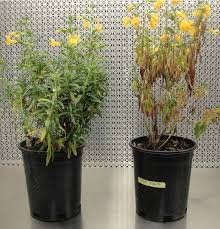
sticky monkey flower – plant on right is infested by P. tentaculata; photo by Suzanne Rooney-Latham, California Department of Food & Agriculture


In April, I posted a blog reporting on a study in Europe that documented 64 Phytophthora taxa detected in woody plant nurseries or forest restoration plantings. The presence of Phytophthora was widespread,  if not universal:  91% of the 732 nurseries analyzed and 66% of forest and landscape plantings had at least one Phytophthora taxon present.

The risk of serious disease in native European plants appears to be substantial:  one or more of 19 Phytophthora species which can attack native European or widely-planted trees and shubs were isolated from 84% of ornamental planted stands. Hundreds of previously unknown Phytophthora–host associations were observed.

These percentages could be underestimates, because detection of Phytophthora infestation is difficult. One of the principal difficiulties is that the majority of infested plants in nurseries did not display symptoms.

How does the situation in Europe compare to that that in the United States? We don’t know, because no-one has carried out a similarly wide-ranging, nation-wide study. However, some partial studies indicate reason for concern.


Knaus et al. 2015 summarized their own findings from Oregon and those of earlier state-by-state studies:

  • Knaus and colleagues surveyed symptomatic Rhododendron in seven nurseries in Oregon and found evidence of widespread infestation. P. syringae was found in all seven nurseries; P. plurivora in six. Nine other taxa were found in one or a few nurseries. Which Phytophthora species were present varied greatly across nurseries and – within individual nurseries – by season (spring or fall).
  • Surveys by Schwingle and colleagues of 45 nurseries in Minnesota in 2002-2003 and fewer nurseries in 2004 and 2005 found five Phytophthora species.
  • A survey by Warfield and colleagues of 14 North Carolina nurseries in 2003 found three Phytophthora species.
  • Donohue and Lamour surveyed 29 Tennessee nurseries in 2004-2005; they found seven Phytophthora species.
  • A survey of 1,619 California nurseries in 2005 and 2006 carried out by Yakabe and colleagues found eight Phytophthora species (but see below).
  • A survey of 10 Maryland nurseries by Bienapfl and Balci in 2010-2012 found 10 Phytophthora species; six of these were on plants that had arrived recently from West Coast suppliers.
  • A set of repeated surveys of four Oregon nurseries in 2006 – 2009 by Parke and colleagues found 16 Phytophthora species on rhododendron tissues (most of studies looked only at lesions on leaves)

All these studies found the P. citricola complex to be the most widespread. In West Coast nurseries, P. syringae was common.

Knaus et al. conclude that since there is a great amount of heterogeneity among Oregon nurseries, it is likely that, as more nurseries are surveyed, a greater amount of Phytophthora diversity may be discovered within nurseries.

Most of the surveys reported by Knaus and colleagues were done in response to detection of the sudden oak death pathogen (SOD), P. ramorum, on plants shipped from California and Oregon in the interstate plant trade. Since funding for tracking P. ramorum and other Phytophthora species in nursery stock has fallen considerably (see below), it is unlikely that such surveys will be repeated or expanded to other states – despite the apparent widespread presence of these actual or potential pathogens.

Crisis in Native Plant Nurseries in California – What Does it Mean for Other States?

California has discovered the widespread presence of Phytophthora in native plants used to restore native habitats after disturbance, e.g., construction of water or other projects. These pathogens were traced to native plant nurseries. Nursery stock had been planted before the infestation problem was realized – so restoration managers are now trying to clean up both the nurseries and the restoration sites. This situation was discussed during a special session of the 6th SOD Science Symposium in San Francisco in June 2016. More than 170 people attended the session – demonstrating a high level of concern in the native plant community. Abstracts and presentations will be available at http://ucanr.edu/sites/sod6/.

The problem was first discovered in 2012 when a nursery noted severe dieback of sticky monkey flower (Diplacus (Mimulus) aurantiacus). The California Department of Food and Agriculture (CDFA) identified the cause as P. tentaculata – which is a federally-designated “quarantine pest”. It had never before been detected in the United States.

Native plant nursery owners and restoration ecologists responded quickly by sending many samples for identification. Between January 2014 and June 2016, CDFA evaluated 1,500 samples from nurseries and field sites. One quarter of the samples were positive for at least one Phytophthora species. In total, 25 species were detected, although 70% of the samples belonged to one of six taxa.

Little is known about root pathogens of California’s native plants. The sample results revealed a long list of newly detected associations.  However, it has also proved especially difficult to detect symptoms on some plants. Finally, since only symptomatic plants were sampled, it is likely that additional plant-Phytophthora associations remain to be detected.

No one knows which plant-Phytophthora associations are capable of creating epidemics of plant disease. At least two species have raised particular concern:

Among the “lessons learned” are two previously identified following the detection of P. ramorum in horticultural nurseries a decade earlier and reinforced now:

  • artificial irrigation of plants in nurseries facilitates infestations and movement of infested plant material; and
  • re-use of infested pots facilitates spread of these infestations.


Therefore, both nursery managers and regulators need to be alert to this risk in all types of nurseries. The necessary changes in nursery practices will take time. See the talk by Alisa Shor from the Parks Conservancy, which operates the nursery for the Golden Gate National Recreation Area when the meeting presentations are posted at http://ucanr.edu/sites/sod6/. Shor described the extensive efforts made by Parks Conservancy nurseries to clean up and adopt new procedures.


Agencies responsible for restoration projects face a daunting task. They have found dozens of Phytophthora taxa at already-planted sites, including the two identified above as federal quarantine species. Managers must develop best management practices that apply to contract specifications for equipment and workers operating on those sites; for nurseries wishing to bid to supply plants; and for planting protocols. Meanwhile, existing restoration regulations require them to restore plant cover quickly – which cannot be done by relying on seed – which is less likely to harbor a pathogen than the containerized plants now used.

As noted above, the high-risk nursery practices identified in this case match those identified over the past decade in response to the spread of sudden oak death (SOD) through nursery stock. Ted Sweicki, an ecologist long engaged on SOD and related issues and now advising the restoration agencies, noted that it is easier to prevent introduction of a Phytophthora to a site then to clean up the site afterwards. He advocated adoption of systems approach to mitigate Phytophthora presence in nurseries. Ted said this is not a new idea! However, adoption of such practices has been far too slow in the horticultural trade. Ted was hopeful that this new crisis in California would have a different result because:

  • Owners of native plant nurseries are strongly concerned about the environment;
  • Restoration agencies are averse to being responsible for introduction of Phytophthora species to their lands; and
  • These agencies make purchases that are sufficiently large to empower the agencies to compel nurseries to comply with strict protocols.

People in other states should not rest easy. There is no reason to think this problem is limited to California. Other states need to be looking at the diversity of Phytophthora species in their nurseries and plantings. But are they doing so?

Meanwhile, federal funds that have supported studies of the genetics of P. ramorum in both West Coast forests and in nurseries are rapidly disappearing. The information provided by these studies has been crucial to tracing movement of various strains of the pathogen.

As noted in my earlier blog, none of the 59 Phytophthora taxa thought to be alien in Europe had been intercepted at European ports of entry. In the U.S., it has not been determined how the P. tentaculata detected in 2012 was introduced.  Authorities suspect it was introduced on plant imports.

These situations reinforce the importance of APHIS promptly finalizing its 2013 proposed revision to regulations governing imported plants [http://federalregister.gov/a/2013-09737]. The proposed rule would establish APHIS’ authority to require foreign plant suppliers to adopt “critical control point”-type systems approaches to improve the cleanliness of plants intended for export to the United States.  Such an approach is authorized by both a North American regional standard (RSPM#24; go here) and an international standard (ISPM#36; go here) for plant protection.

You can give APHIS a push by writing your member of Congress and Senators. Ask them to urge the Secretary of Agriculture to finalize this proposal.

As regards plants being shipped within the country, the U.S. nursery trade is working with federal and state regulators to develop and encourage adoption of similar, but voluntary, integrated systems approaches to minimize pest presence on plants being sold interstate. This proposed approach is being tested by eight nurseries across the country. However, full adoption is still years away. To learn more about the “SANC” program (“A Systems Approach to Nursery Certification”), go here.


See also http://www.suddenoakdeath.org/welcome-to-calphytos-org-phytophthoras-in-native-habitats/

SOURCES

Jung, T. et al. 2015 “Widespread Phytophthora infestations in European nurseries put forest, semi-natural and horticultural ecosystems at high risk of Phytophthora disease” Forest Pathology. November 2015; available from Resource Gate

Knaus, B.J., V.J. Fieland, N.J. Grunwald. 2015. Diversity of Foliar Phytophthora  Species on Rhododendron in Oregon Nurseries. Plant Disease Vol 99, No. 10 326 – 1332


Posted by Faith Campbell

Why doesn’t state government take action to contain pests that threaten to cost 20 million Californians $1,800 apiece?

(The total cost will exceed $36 billion – which will be borne largely by homeowners and municipalities – meaning their taxpayers.  The state will bear little of this cost.)

PB036597 fate-sm smwillow tree in Tijuana River riparian area felled by KSHB.  Photo by John Boland; used by permission

(To see more scary photos of the damage along the Tijuana River taken by John Boland, go here.

The polyphagous (PSHB) and Kuroshio (KSHB) shot hole borers pose a great threat to many tree species in California – native species in natural and urban settings; non-native species used in plantings; and agricultural crops. Yet the state government is frozen in inaction.

These two shot hole borers attack hundreds of tree species; at least 40 are reproductive hosts. For details, view the write-up here or visit the UC Riverside website here.

Some of the important reproductive hosts for PSHB are listed here; those that are also known to support reproduction of the Kuroshio shot hole borer are marked by an asterisk.

  • Box elder (Acer negundo)
  • Big leaf maple (Acer macrophyllum) *
  • California sycamore (Platanus racemosa)
  • Several willows (Salix spp.)
  • Cottonwoods  (Populus fremontii & P. trichocarpa)
  • Several  oaks (Quercus agrifolia, Q. engelmannii, Q. lobata)

Several widespread exotic species also support PSHB reproduction: they include the invasive castor bean (Ricinus communis) and widely-planted London plane tree (Platanus x acerifolia).

US Forest Service scientist Greg McPherson has analyzed the vulnerability to PSHB of urban forests in cities in three regions of southern California: the Inland Empire, Coastal Southern California, and Southwest Desert. Together, these comprise 4,244 sq. miles and have 20.5 million residents. Dr. McPherson found that:

1) Approximately 26.8 million trees – 37.8% of the region’s 70.8 million trees – are at risk. Trees at risk include

  • 5 million coast live oaks,
  • 4 million ash,
  • 3 million sycamores and plane trees,
  • 9 million stone fruit or flowering Prunus species,
  • 5 million avocadoes, and
  • 8 million citrus trees.

2) The cost for removing and replacing the 26.8 million trees would be approximately $36.2 billion. This amount averages to $1,768 per capita.

3) The value of ecosystem services forgone each year due to the loss of these trees is $1.4 billion.

4) These estimates are conservative because they:

  • do not include costs associated with damage to people and property from tree failures, as well as increased risk of fire and other hazards
  • may undervalue benefits of trees to human health and well-being; and
  • do not include newly detected host species or the shot borers’ spread.

These disasters are highly likely to occur given the extent of current infestations and difficulty in curtailing spread of the beetle/fungus complex.


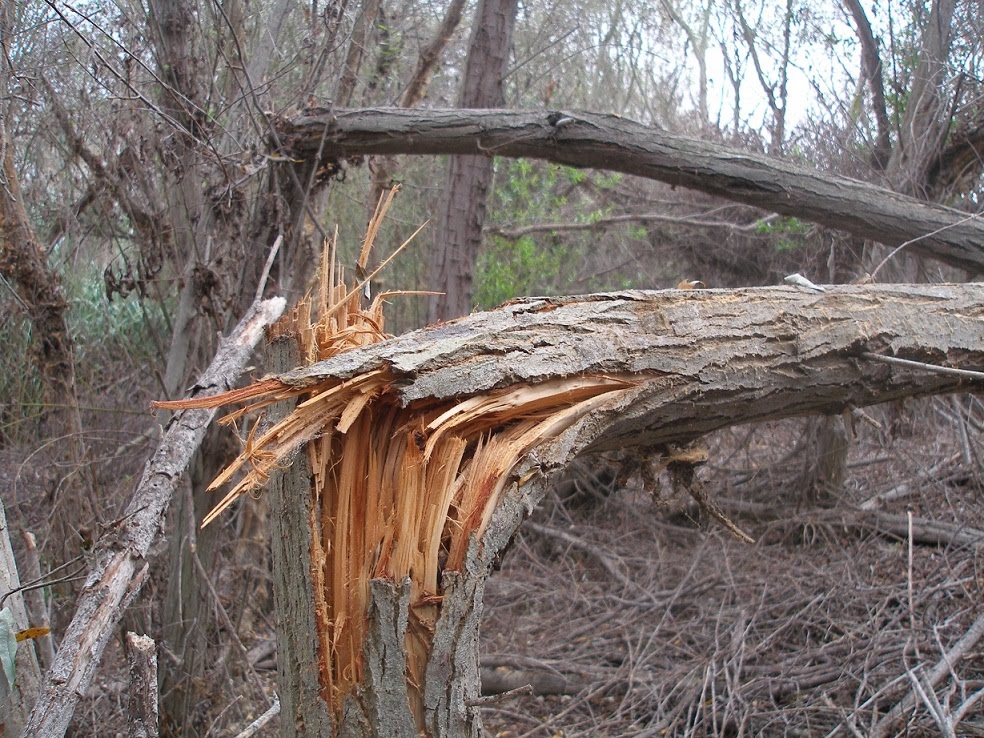
Natural areas – especially riparian areas – are also at risk.  John Boland reports that 70% of willows studied in the Tijuana River riparian area on the California/Mexico border were infested by KSHB.  Tree branches and boles weakened by beetle attack broke in the first winter storms in early 2016.  In some sections, “native riparian forest … went from a dense stand of tall willows to a jumble of broken limbs in just a few months.”  Trees growing in the wettest parts of the riparian area were most heavily attacked and damaged.  Three highly invasive plant species – castor bean, salt cedar, and giant reed – are barely or not attacked by KSHB.  The result of the damage to native willows and likely proliferation of the invasive plants is likely to be significant alteration of the entire biological system.

(While no one knows how KSHB reached the Tijuana River, John Boland says there is a greenwaste “recycling” center in the valley. See picture below, taken by John Boland.)

OLYMPUS DIGITAL CAMERA

Regulatory action could help protect wildland, rural, and urban forests in the rest of the state – and possibly beyond. Scientists’ analysis of climate indicates that most of the urban and agricultural areas in California are at risk. The scientists have also begun analyzing the potential risk to other parts of country.


Why is the California government so unwilling to tackle a threat of this magnitude?

I have written about this inaction several times as it applies to the goldspotted oak borer. See my blogs on 1) California’s inaction on firewood in July 2015; 2) GSOB and firewood in September 2015;  3) contrasting states’ action on mussels with inaction on firewood posted in December 2015;  and 4) the threats to oaks, posted in April 2016.

In October CISP joined an eminent forest entomologist, Dr. David Wood of the Department of Natural Resources at the University of California, Berkeley.  We petitioned the California Department of Food and Agriculture to regulate movement of firewood within the state. CDFA refused, saying that the absence of control points through which firewood could be funneled made efforts to regulate its movements impractical. (For copies of our letter and CDFA’s reply, contact me through the “contact” button on the CISP website.)

While there are many questions about practical aspects of implementing and enforcing such regulations, I do not believe they are insurmountable.

I concede that CDFA has provided significant funds for firewood outreach campaigns. But people care about the threat posed by these pests and want CDFA to act. In the meantime, concerned people have formed formal partnerships linking local, county, state, and federal officials and academics to coordinate efforts to manage both GSOB and the PSHB and KSHB.  Groups’ efforts can be viewed here and here. CalFire and the California Fire Wood Task Force are active participants.

During a recent conference call sponsored by the California Agricultural Commissioners and Sealers Association’ Pest Prevention Committee, participants reinforced the damaging consequences of CDFA’s  inaction:

  • While scientists are developing new tools for detection of the polyphagous and Kuroshio beetles and the fungi, there are no funds to support their use in a more intensive detection trapping effort!!!!! Call participants discussed various potential funding sources (e.g., from competitive grant programs operated by various agencies).  Some survey efforts have been funded – by USDA APHIS:
    1. UC Riverside Professor Richard Stouthamer received Farm Bill §10007 funds for two years to develop traps and lures for PSHB.
    2. CDFA participates in a national woodborer survey which is funded by APHIS.
  • In the absence of CDFA designation of PSHB, KSHB, or GSOB as regulated pests, neither state nor county agencies have a firm foundation on which to base regulations to curtail movement of firewood, greenwaste, or other pathways by which these pests can be spread to new areas.

It is clear from the discussion during the call that many people understand the need for regulations to ban movement of firewood out of southern California. But so far they have not succeeded in building sufficient political support to bring this about.


Meanwhile, other federal agencies are beginning to perceive the risk posed by these pests – and are struggling to develop responses. The US Fish and Wildlife Service (USFWS) is trying to develop strategies to protect the forested wetlands, which are habitats for the endangered least Bell’s vireo (a bird) and other endangered species. However, the USFWS lacks funds to carry forward desired detection and other programs. The USFWS offices in California are trying to engage agency leadership on this threat. So far, Endangered Species Act §7 requirements have not restricted removal of infested trees in wetlands already invaded by PSHB or KSHB.


Santa Monica National Recreation Area is the first National Park Service unit to pay attention. I have written in the past that the National Park Service should adopt a nation-wide policy banning visitors from bringing their own firewood to campgrounds (see my blogs from August and October 2015). In the absence of a nation-wide policy, action by individual units is important.


The USDA Forest Service is already engaged, especially with detection and outreach. However, the USFS also does not have nation-wide policy restricting campers from taking their own firewood to campgrounds on National forests.


Many Californians are pushing for action … they need our help! If you live in California, contact your state legislators. If you live elsewhere, your forests are also at risk from the state’s failure to act.  So, if you know someone who lives there, ask that person to contact his/her legislators. Ask the legislators to demand state designation of PSHB, KSHB, and GSOB as quarantine pests and adoption of state firewood regulations.


SOURCE:

Memorandum from Greg McPherson, USDA Forest Service, to John Kabashima Re: Potential Impact of PSHB and FD on Urban Trees in Southern California, April 26, 2016


Posted by Faith Campbell

Experts describe forest pests’ impact, call for action


Sixteen scientists and policy analysts (including me) have published a new study reviewing recent work on numbers, pathways and impacts of non-native, tree-killing insects and pathogens. I encourage you to read the article. It provides a concise and compelling overview of the threat to our wildland, rural, and urban forests from non-native insects and diseases and proposes some thought-provoking solutions.

SOD Parke diseased plant

rhododendron infected by sudden oak death; photo by Jennifer Parke, Oregon State University

Meanwhile, here are our conclusions:

Current policies for preventing introductions have reduced the numbers of pests introduced via the various pathways (e.g., wood packaging and horticultural plants – but not sufficiently to counter pests’ rising opportunities for introduction resulting from burgeoning global trade. [Emphasis mine.]


At the current efficacy of implementing the international regulations governing wood packaging [ISPM #15] ( Haack et al., 2014),  and given growing trade, Leung et al. 2014 project that by 2050 – just 35 years from now – up to three times as many wood-boring insects may be introduced to the U.S. as are currently here.


(I discussed this high risk in blogs posted at this site on July 15 and August 22, 2015.)


The new paper presents several options for improving prevention. These include: measures to ensure exporters ship “clean” plants and wood packaging; post-entry quarantines to raise the likelihood that pests will be detected; placing all genera of North American woody plants on USDA’s NAPPRA list of genera not currently approved for import and awaiting risk assessment; and improved surveillance and eradication programs. We also note the importance of improving data collection and allowing  researchers outside USDA access to those data to support independent evaluation of policy’s effectiveness.


As Aukema et al. demonstrated six years ago, non-native forest insects have accumulated in U.S. forests at a steady rate of about 2.5 per year over the last 150 yrs. While the rate of introduction has not changed, the types of insects introduced have. In the 20th Century, plant-associated insects dominated the introductions. In recent years wood-boring insects associated with wood packaging materials have dominated. Some of these wood-borers also are highly damaging! (See emerald ash borer, redbay ambrosia beetle/laurel wilt, and polyphagous shot hole borer/Fusarium here). Lack of information precludes a similar analysis for pathogens; although we all know that the 20 or so high-profile pathogens cause great devastation – see descriptions here.


The whole country is at risk; although the highest numbers of tree-killing insects and pathogens are established in the Northeast and Midwest, Pacific Coast states are catching up (and certainly already have their share of devastating insects and pathogens).  See the map below.  You can check the pests in your state by visiting the interactive map here .

map

map developed by USFS; published in Aukema et. al 2010.

Our new article notes that these non-native pests are the only disturbance agent that has effectively eliminated entire tree species or genera from U.S. forests in the span of decades. Follow-on effects include alterations of ecosystem functions and huge costs to various stakeholders, especially residents and governments of (sub)urban areas.


These impacts can persist for centuries as a result of altered species composition, which affects multiple trophic levels.


We followed Aukema et al. 2011’s results in estimating the direct annual economic impact of non-native forest insects to be at least:  $2 billion in municipal government expenditures, $1.5 billion in lost residential property values, and $1 billion in homeowner expenditures for tree removal and replacement or treatment. These costs and losses contrast with the paltry $216 million estimated in federal government expenditures.


Aukema et al. 2011 noted that these expenses cannot be summed across cost categories because of the potential for double-counting. We note that these figures are probably underestimates for several reasons. They did not include the introduced diseases such as sudden oak death. Nor do they  include pests detected recently, such as the polyphagous shot hole borer.  Finally, our paper excluded consideration of insects or pathogens native to some part of North America, such as the goldspotted oak borer. (For more information about these organisms, consult the write-ups here.)


As our article notes, the billions of dollars in annual economic damages (and un-quantified ecological impacts) are economic externalities. That is, the importers who benefit from the economic activity do not pay directly for preventing or responding to the associated pest introductions.


The article discusses several policy options that we believe would greatly reduce unacceptable risks. These options include several bold actions:


  • Require importers to switch from packaging made from wooden boards to packaging made from materials other than solid wood (fiberboards ok). This change is both highly protective and potentially cost-effective. Such a switch would have to be justified under the terms of international trade agreements – but given the high levels of damage caused by wood-boring pests, I don’t think that hurdle is insurmountable.
  • Greatly strengthen measures aimed at preventing pest introduction on imports of plants. One step would be restricting imports of all genera of “woody” plants native to North America by designating them as “not authorized for importation pending pest risk assessment” (NAPPRA). Another protective step would be to promptly finalize the Q-37 revision proposed by USDA in April 2013 and immediately initiate negotiations with principal foreign suppliers of temperate climate woody vegetation to implement the pest-minimization procedures contained in that revised regulation, as well as in ISPM#36.


Other options discussed are straight-forward and simpler:


  • Tighten enforcement of existing regulations by ending the practice of allowing an importer to be detected five times in a year with wood packaging that does not comply with regulatory requirements before imposing a penalty. When a new year starts, that importer gets a “clean slate”! Is this how agencies enforce regulations that they are serious about?
  • Expand efforts to assist trade partners in adopting clean trade measures.
  • Expand and integrate surveillance programs for new pest outbreaks, and providing timely and adequate funding for emergency eradication efforts.


SOURCES


Aukema, J.E., B. Leung, K. Kovacs, C. Chivers, K. O. Britton, J. Englin, S.J. Frankel, R. G. Haight, T. P. Holmes, A. Liebhold, D.G. McCullough, B. Von Holle.. 2011. Economic Impacts of Non-Native Forest Insects in the Continental United States PLoS One September 2011 (Volume 6 Issue 9)

Aukema, J.E., D.G. McCullough, B. Von Holle, A.M. Liebhold, K. Britton, & S.J. Frankel. 2010. Historical Accumulation of Nonindigenous Forest Pests in the Continental United States. Bioscience. December 2010 / Vol. 60 No. 11


Haack, R. A., K. O. Britton, E. G. Brockerhoff, J. F. Cavey, L. J. Garrett, M. Kimberley, F. Lowenstein, A. Nuding, L. J. Olson, J. Turner, and K. N. Vasilaky. 2014. Effectiveness of the international phytosanitary standard ISPM no. 15 on reducing wood borer infestation rates in wood packaging material entering the United States. Plos One 9:e96611.


Leung, B., M. R. Springborn, J. A. Turner, and E. G. Brockerhoff. 2014. Pathway-level risk analysis: the net present value of an invasive species policy in the US. Frontiers in Ecology and the Environment 12:273-279.


Posted by Faith Campbell

European study buttresses case for revolutionary changes to phytosanitary system

PHYTRA_06[1]

rhododendron in Europe sickened by P. ramorum; photo from EPPO website


A recently published study by European researchers [Jung, T. et al. 2015] documents the failure of current European and global phytosanitary programs and calls for “a new holistic and integrated systems approach”.  The authors specifically criticize Article VI.2 of the International Plant Protection Convention  because it requires that a plant pest be identified and its risks assessed before a country may adopt a phytosanitary measures.  The authors call this requirement “paradoxical” given the large number of potentially damaging plant pests that remain unknown to science.


The study focuses on the genus Phytophthora, which contains about 150 identified species and perhaps 500 species not yet identified by scientists.  The identified species include plant pathogens which are responsible for more than 66% of all fine root diseases & more than 90% of all collar rots of woody plant species.  Examples include the pathogens responsible for the Irish potato famine, sudden oak death, Port-Orford-cedar root disease, the die-off of many endemic plant species in Western Australia and damage to many other species in Europe and North America, and mortality and decline of oaks and alders across Europe.


The authors note that

  • Most of the ~150 currently known species and designated taxa of Phytophthora were unknown to science before they turned up in new environments on other continents as invasive aggressive pathogens of native plants.
  • Forty-four of the 64 Phytophthora taxa detected in the present study were unknown to science before 1990.
  • None of the 59 putatively exotic Phytophthora taxa detected in the present study had been intercepted at European ports of entry. (Some of these introductions are known to be recent; see UK reports on the 4th P. ramorum lineage ) and P. lawsonii detections in the U.K., France and the Netherlands in 2010.)
  • In many cases, had a Phytophthora been detected, the detection would not have resulted in rejection of the shipment because only 5 Phytophthora species are regulated under European regulations.
  • Spread of the quarantine organism ramorum was not halted despite the presence of strict quarantine regulations.


I have written several times about the threat to U.S. trees and forests from insects and – especially – pathogens introduced via the trade in live plants; see Fading Forests II and III .  Fading Forests II discusses the threat from unknown pests and the roadblocks to managing that threat raised by the World Trade Organization’s Agreement on the Application of Sanitary and Phytosanitary Measures and the implementing procedures adopted by the International Plant Protection Convention.  Fading Forests III discusses USDA APHIS efforts to adopt more effective regulatory approaches through adoption of both international and regional standards (ISPM#36 and RSPM#24) and revision of its own Q-37 regulations.

Jung and his 65 (!) coauthors present some frightening facts about the situation in European nurseries and forest, landscape, and ornamental plantings:

  • They found a total of 68 Phytophthora taxa (species, informally designated taxa, and previously unknown taxa). 49 taxa were found in nurseries, 56 in forest and landscape plantings.
  • 91% of the 732 nurseries analyzed had at least 1 Phytophthora taxon present; in the 101 infested nurseries in which more than 5 stands were tested, an average of 3.6 Phytophthora taxa per nursery were detected
  • 66% of forest & landscape plantings had at least 1 Phytophthora taxon present
  • The majority of infested plants in nurseries did not display symptoms; the sampling methods for plantings relied to a large extent on symptoms, so the presence of symptomless plants could not be evaluated.
  • Hundreds of previously unknown Phytophthora–host associations were observed.
  • One or more of 19 Phytophthora which can attack native European or widely-planted trees and shubs were isolated from 84% of ornamental planted stands. Two such pathogens were detected in 11.8% of those stands.
  • In a single British ornamental and amenity planting, 15 different Phytophthora taxa were isolated from 33 different species and varieties of plants. Smaller numbers were isolated from smaller numbers of sampled plants in other countries.
  • The infestation rate for various types of plantings ranged from 94% for riparian plantings through 83.1% for horticultural plantings to 79.3% for forest plantings. About half of amenity and ornamental plantings had one or more infestations.
  • 64% of oak plantings were infested by at least one Phytophthora species associated with decline of mature oak stands. Eight of the 9 plantings of Laurus nobilis in Spain and the UK hosted Phytophthora. Rates varied for other types of trees.
  • In total, 755 ornamental plantings of 281 broadleaved woody and herbaceous species were sampled in 8 countries. 45% had at least one of the 21 Phytophthora taxa known to damage a wide range of European and widely planted exotic tree and shrub species. About 10% of the tested stands had more than one.


As the authors state, their results clearly demonstrate that the vast preponderance of nursery stands across Europe are infested by a large array of Phytophthora species.  Nurseries and other plantings relied on as sources of plants for afforestation and other outplantings are routinely infected by the most aggressive Phytophthora pathogens that attack the respective tree or crop species. The result is continuous high-frequency spread of these aggressive pathogens to planted forests and horticultural systems — and will inevitably result in their introduction to the wider environment.


They estimate that 4.8 million ha of the 6 million ha of new forests planted in Europe over the past 20 years are potentially infested by Phytophthora pathogens.  Another 17.6 million ha of forests replanted after harvesting or fire were possibly established with Phytophthora-infested nursery stock.


Why has this happened? The authors note that under current nursery growing practices, individual plants often flow largely unregulated through several nurseries both within and between countries before being sold to a consumer. In addition, such common nursery practices as reusing containers, irrigating with unfiltered surface water or recirculated water, poor drainage and failure to remove dead plants and debris all contribute to establishment and spread of Phythothora.  These same criticisms have been made by U.S. scientists – and incorporated into APHIS’ revised regulations for management of sudden oak death and the nursery-regulatory SANC program now being tested.


Is the situation equally bad in North America?  Jung et al. cite several publications that cumulatively demonstrate high infestation rates of U.S. ornamental nurseries with at least 31 Phytophthora species.  They say that the situation in forest nurseries is largely unknown.

Certainly both continents are at high risk of additional introductions.  U.S. plant imports reached 3.2 billion in 2007 (Liebhold et al. 2012). I am unaware of a more recent calculation … In 2010, ten European countries cumulatively imported 4.3 billion living plants from overseas; almost all were imported first to the Netherlands.  The principal source was Africa (3.6 billion). Asia shipped 456 million plants; North America 181 million; South America 81 million; Oceania only 2.4 million plants. Between 2007 and 2010, the volume of imported woody plants increased by 44%, and in 2010, the proportion of woody plants reached 20.8% of all imported plants.  Only 3% of the imported consignments are subject to phytosanitary inspections.


As Jung et al. note, their study joins an ever-longer list of analyses that have concluded that current international plant health protocols based on random visual inspections for symptoms of listed quarantine organisms have failed and must be changed fundamentally.  (See, for example, the writing of Clive Brasier  and the Montesclaros Declaration.


Jung et al. call for adoption of a pathway regulation approach based on pathway risk analyses, and risk-based inspection regimes performed by an adequate number of skilled staff using molecular high-throughput detection tools. Nurseries wishing to ship plants internationally would have to comply with mandatory best practices. The requirements must be supported by rigorous enforcement and bold outreach campaigns. This approach would minimize the risks of further introductions and dissemination of both known and, even more importantly, unknown potential pathogens.


MY CONCLUSION


Revising the international phytosanitary regime will be difficult, requiring 170 countries to agree to amend both the World Trade Organization’s SPS Agreement and the International Plant Protection Convention. The difficulties will be not only political. Allowing countries to regulate unknown organisms that are potential pests will open a door to protectionist restrictions.  The countries that wrote these agreements have long sought to block protectionist restrictions by requiring that phytosanitary measures be based on scientific analyses of specific risks.


However, as Jung et al. – and before them many others, especially Clive Brasier  – have demonstrated, the current requirement that each pathogen be identified and its risk analyzed before  regulations are adopted is counter to the scientific fact that most pathogens and arthropods are not known to science.  The knowledge gap is many times greater when the question is how those microorganisms and arthropods will interact with millions of plant species if introduced to novel habitats.


Meanwhile, USDA APHIS has begun trying to close some of the regulatory gaps.  In 2011 APHIS adopted regulations creating a temporary holding category, called “Not Authorized (for importation) Pending Pest Risk Analysis,” or NAPPRA. Now, APHIS has authority to temporarily prohibit import of certain types of plants, from specific countries of origin, that it considers to pose a particular pest risk. The temporary ban gives APHIS time to complete a pest risk analysis and then enact appropriate safeguards to ensure that imported plants will be as pest-free as possible.  However, APHIS has been unable to utilize this new power.  The agency proposed a second round of “NAPPRA” species in May 2013, but nearly 3 years later it has not finalized that action. Even if fully implemented, NAPPRA does not address the problem of unknown pests and pathogens.


APHIS has also proposed a major revision of its plant import regulations (called “Q-37”).  This change would implement the IPPC standard on living plants (ISPM#36) and authorize APHIS to require foreign suppliers of plants to apply hazard identification and mitigation practices to ensure plants are pest-free. APHIS proposed this rule change 3 years ago, in 2013.  Again, the change has not yet been finalized.


What You Can Do

Write to your member of Congress and Senators and ask them to urge the Secretary of Agriculture to finalize the two pending regulations – to add the second round of species to the NAPPRA list and to update the Q-37 regulations.


SOURCES

Jung, T. et al. 2015 “Widespread Phytophthora infestations in European nurseries put forest, semi-natural and horticultural ecosystems at high risk of Phytophthora disease” Forest Pathology. November 2015; available from Resource Gate

Liebhold, A.M., E.G. Brockerhoff, L.J. Garrett, J.L. Parke, and K.O. Britton. 2012. Live Plant Imports: the Major Pathway for Forest Insect and Pathogen Invasions of the US. www.frontiersinecology.org



Posted by Faith Campbell

Threats to America’s Magnificent Oaks

Oak trees are immensely symbolic to many people and many are magnificent. Congress even designated the red oak as America’s “national tree”.

5504878

Photo of Q. rubra leaves by Becca MacDonald, Sault College; www.bugwood.org


Of course, there are many kinds – from those that span many states to those that grow in just some special areas. USDA’s Plants database lists more than 300 native species for the U.S. alone.  Many provide substantial ecosystem services and all parts of the country would be poorer without them.

Despite our oaks’ importance, we are doing far too little to protect them from the full range of non-native insects and diseases that pose threats.

CURRENT THREATS IN THE EAST

In the East (from the Atlantic to the Great Plains), oaks are under attack from at least four non-native pests:

  • One of these, the European gypsy moth (Lymantria dispar), is the target of major containment and suppression programs operated by USDA Animal and Plant Health Inspection Service (APHIS), the US Forest Service and the states. In fact, the US Forest Service spends half of its entire budget for studying and managing non-native pests on the European gypsy moth. In part, this is because the European gypsy moth is so widespread, with outbreaks from Nova Scotia to Wisconsin and south across eastern Ohio to Virginia. (See the map of EGM range here). It also attacks a wide range of tree and shrub species.

But other oak-killing insects and diseases, some with the potential to be at least as damaging, receive far fewer resources.

  • Oak wilt (caused by the fungus Ceratocystis fagacearum) is widespread from central Pennsylvania across Iowa, down the Appalachians in West Virginia and North Carolina-Tennessee border, in northern Arkansas and with large areas affected in central Texas. There is an isolated outbreak in New York State.  (See map here). According to the US Forest Service, oak wilt is one of the most serious tree diseases in the eastern U.S.  It attacks primarily red oaks and live oaks. It is spread by both bark-boring beetles and root grafts.
  • From Long Island along the coast into Nova Scotia and into central Massachusetts, oaks are being killed by the winter moth (Operophtera brumata). Like the gypsy moth, the winter moth has a wide host range. (For more information, see here). A small program led by Joseph Elkington of the University of Massachusetts has focused on biocontrol.  Biocontrol agents have successfully reduced winter moth damage in Nova Scotia and the Pacific Northwest. First results are promising in New England.

CURRENT THREATS IN THE WEST

In the West, millions of oaks have been killed by several pathogens and insects that are established and spreading; and additional threats loom.

  • Coast live oaks, canyon live oaks, California black oaks, Shreve’s oaks, and tanoaks growing in coastal forests from Monterey County north to southern Oregon that catch fog/rain are being killed by sudden oak death and here. Sudden oak death has killed over one million tanoaks as well as hundreds of thousands of coast live oaks and other trees. In early days of the infestation, Oregon – with considerable help from the US Forest Service – tried to eradicate a small infestation in Curry County. The inherent difficulty in managing a pathogen and interruptions in funding caused that effort to fail. The state is now focused on trying to slow spread of the disease.
  • In California, coast live oaks, black oaks, and canyon oaks in the southern part of the state – primarily in San Diego County, but also parts of San Bernardino, Orange, and Los Angeles counties – are being killed by goldspotted oak borer and here.  At least 100,000 black oaks have been killed in less than 20 years.  Neither the State of California nor USDA APHIS has adopted regulations aimed at preventing spread of the goldspotted oak borer, despite oaks being at risk throughout California.
  • Two more wood-boring beetles threaten oaks in southern California. In five counties in the region, coast live oaks, canyon live oaks, Engelman oaks, and valley oaks – and many other kinds of trees – are being killed by a disease transmitted by the polyphagous and Kuroshio shot hole borers and here.  The polyphagous and Kuroshio shot hole borers attack more than 300 plant species, including tree species that anchor the region’s riparian areas as well as half of the trees planted in urban areas of the region.
  • Also, oaks on the West coast would be attacked by gypsy moths should they reach the area. The risk is two-fold – the Asian gypsy moth continually is carried to the area on ships bearing imports from Asia (as discussed in my blog in March). And the European gypsy moth is sometimes taken across the country on travellers’ vehicles, outdoor furniture, or firewood. Both the West Coast states and USDA search vigilantly for any signs of gypsy moth arrival.

Or course, other non-native pests can also be introduced or spread to new, vulnerable, areas. I have blogged about the risk to the East from sudden-oak-death infested plants moving in the nursery trade (see blogs from July 2015). The polyphagous and Kuroshio shot hole borers might also threaten forests in other warm regions of the country such as the Gulf Coast, where some known and potential host trees grow.

ADDITIONAL THREATS

Two apparent threats have come to our attention recently:  fungi in the genus Diplodia and another disease called foamy bark canker.  There is some uncertainty whether the insects or pathogens are non-native. Both are apparently closely linked to drought stress.

  • two Diplodia fungi – Diplodia corticola and quercivora – have been detected in both Florida and California. These fungi were previously known to kill oaks in the Mediterranean region.

According to Mullerin and Smith (2015), one or both of these fungi might be native to North America. Diplodia corticola was first identified in the 1980’s in cork oaks (Quercus suber L.) in Mediterranean countries.  It has since been determined to be the cause of mortality in other species of European oaksD. corticola was first reported in California in 1998 in coast live oak trees (Q. agrifolia) that had been colonized by bark and ambrosia beetles. There, it has been an important factor in the deaths of thousands of acres of coast and canyon live oaks (Q. chrysolepis) since 2002 (Mullerin and Smith 2015). In California, periodic diebacks since the late 1970s have been associated with droughts.  Symptoms have mainly shown up in coast live oak (Q. agrifolia), black oak (Q. kelloggii), and valley oak (Q. lobata). Dieback is noticeable in at least 20 California counties, throughout most of the range of coast live oak. (See here.)

The first detection of D. corticola in southern Florida was in 2010; D. quercivora was detected in 2013. In Florida, these fungi attack live oaks (Quercus virginiana).  Almost all the symptomatic trees in Florida grow in cultivated settings where they are exposed to various stresses. In addition, most of the state experienced severe drought in 2010, the year reports of dieback began (Mullerin and Smith 2015).

Host range studies indicate that 33 species of oaks and one species of chestnut that grow in the Southeast are vulnerable, to varying degrees, to D. corticola. Oaks in the red oak group (Section Lobatae) are more vulnerable than are white oaks (Section Quercus) (Mullerin and Smith 2015). In the test, the most vulnerable appear to be the following species native to the Southeast: Q. laurifolia, Q. virginiana, Q. geminata, Q. chapmanni, Q. laevis (turkey oak), Q. phellos, Q. pumila, and Q. incana. (source: poster presented by  Dreaden, Black, Mullerin, Smith at the 2016 USDA Invasive Species Research Forum.)

It is unknown how Diplodia corticola & Diplodia quercivora colonize oaks. However, members of the family (Botryosphaeriaceae) generally enter plants through wounds, including leaf scars, or stomata open for gas exchange. They often live harmlessly as endophytes within the plant, becoming pathogenic when the plant is stressed by environmental factors such as drought, flooding, heat, freezing, herbicide use, or soil compaction (Mullerin and Smith 2015).


  • Foamy bark canker is new disease of oak species caused by a newly discovered species of species of fungus (Geosmithia pallida). The pathogen is vectored by the Western oak bark beetle (Pseudopityophthorus pubipennis). The disease complex has great potential to cause extensive damage to oaks in California.  Still little is known about the disease’ overall distribution, establishment and incidence.

Declining coast live oak trees have been observed since 2012 throughout urban landscapes in Los Angeles, Orange, Riverside, Santa Barbara, Ventura, and Monterey counties in California. Fungal colonies were observed within beetle galleries (Lynch et al. 2014). The Western oak bark beetle is thought to be a native. It commonly attacks trees weakened by other agents; it has not previously been associated with disease. However, the disease vector might be a different, similar beetle; scientists are collecting more, from a larger geographic area, to determine whether it is the native species or something else.  In Europe, the fungus appears to have be associated with a range of bark-boring insects and is widely distributed. There is no previous published record of the fungus occurring in the United States (Lynch et al. 2014).

Symptoms can be viewed here.

SOURCES

Dreaden, T. A. Black, S. Mullerin, and J. Smith risk to oaks from Diplodia cor+cola and D. quercivora, two emergent fungal pathogens (poster at Annapolis 2016) Includes map showing distribution in Florida.

Drill,S. New pest alert for Foamy Canker Disease on Coast Live Oak. 2014. http://ucanr.edu/blogs/blogcore/postdetail.cfm?postnum=13707

Lynch, S.C., D.H. Wang,  J.S. Mayorquin, P.F. Rugman-Jones, R. Stouthamer, A. Eskalen. 2014. First Report of Geosmithia pallida Causing Foamy Bark Canker, a New Disease on Coast Live Oak (Quercus agrifolia), in Association with Pseudopityophthorus pubipennis in California. APS Journals Plant DiseaseSeptember 2014, Volume 98, Number 9 Page 1276 http://apsjournals.apsnet.org/doi/abs/10.1094/PDIS-03-14-0273-PDNhttp://apsjournals.apsnet.org/doi/abs/10.1094/PDIS-03-14-0273-PDN

Lynch, S., S. Rooney-Latham, A. Eskalen. [DATE?]  Foamy Bark Canker A New Insect-Disease Complex on Coast Live Oak in California Caused by Western Oak Bark Beetle and Geosmithia sp.

Mullerin, S. & J.A. Smith. 2015. Bot Canker of Oak in FL Caused by Diplodia corticola & D. quercivora. Emergent Pathogens on Oak and Grapevine in North America. FOR318


Posted by Faith Campbell

How should regulators address strains of pathogens?

Species of tree-killing pathogens can have several “strains” that may vary in virulence or hosts affected.

`ohi`a`ohi`a tree on Hawai`i

This is a phenomenon well known to pathologists, but regulators have not adapted their programs to address it. Once a pathogenic species is determined to be established in the country, APHIS considers the entire species to be “non- actionable” and will not attempt to prevent introduction of any new strains. As the examples below illustrate, allowing introduction and spread of new strains poses risks to North America’s trees.

World-renowned British forest pathologist Clive Brasier has spoken out often on the risk posed by various strains of a pathogen. He has also written about the potential for pathogen species to hybridize and for that hybrid to threaten new hosts.

How widespread a problem is this? Some of the pathogens causing the greatest damage have several strains that vary in their virulence and host range.

  •  The sudden oak death pathogen, Phytophthora ramorum is known to have four strains: NA1, NA2, EU1 and EU2. The EU1 lineage has primarily been found in European nurseries and forests. It has also been recovered from several nurseries and waterways on the U.S. west coast. Last year, the EU1 lineage was detected in a forest in Oregon (see my blog posted 15August 2015). This is troubling for two reasons:
    * the EU1 lineage is more aggressive than the NA1 lineage already present in the forests of California and Oregon. Some of the individual tree which now appear to be resistant to the NA1 lineage might succumb to the EU1 lineage.
    * The EU1 and NA1 lineages belong to opposite mating types, so they can potentially reproduce, thereby increasing the genetic variability of the pathogen. (Sexual reproduction in P. ramorum can only occur when opposite mating types meet; in the absence of opposite mating types, all reproduction is clonal.)

• The guava rust or myrtle rust pathogen, Puccinia psidii, also has several strains which vary in their virulence. Already, a new strain introduced to Jamaica in the 1930s caused extensive damage to the allspice industry – although a different strain had been on the island for decades (Carnegie 2016).

Hawaiian conservationists worry that a more virulent strain of P. psidii might be introduced and threaten additional species of Myrtaceae on the Islands – especially the `ohi`a tree which is the major canopy tree in 80% of the Islands’ remaining native forest. These forests are key to maintaining the Islands’ watersheds and biodiversity, especially because `ohi`a nectar is the principal food source for many of the remaining native and rare bird species. (See writeup here)

Multiple strains of `ohi`a rust have been identified in the pathogen’s native range of Brazil. Using funds from the USDA Forest Service, scientists in Brazil (Costa da Silva et al. 2014) tested five of the strains; three proved to be highly virulent on most `ohi`a seedlings tested. `Ohi`a from several locations were tested; none showed significant resistance to these three strains of the P. psidii pathogen.

The tests were carried out under conditions highly conducive to infection, so the results cannot be used to predict epidemiological behavior and ecological ramifications in natural conditions. Nevertheless, the results do support the need for greater efforts to prevent introduction of new strains to the Islands.

Additional tests are under way to determine whether the Brazilian strains are more virulent than that strain currently found in Hawai`i and to learn more about possible variation in vulnerability among `ohi`a trees from a greater variety of sites.
• The pathogen that causes Port-Orford cedar root disease (Phytophthora lateralis) has now been found to have four lineages. Scientists compared isolates from the pathogen’s putative native range on Taiwan to isolates from the North American west coast (where it has been established since early in the 20th Century) and Europe (where it began killing trees in the 1990s). They found one slow- growing strain from Taiwan, one fast-growing strain from North America and Europe, and one of intermediate growth from a small area of the United Kingdom (Brasier et al. 2012).

Sometimes, pathogens behaving in unexpected ways are initially thought to be a strain or lineage, but are later classified as a novel species. Thus the Ceratocystis causing `ohi`a wilt was initially thought to be a strain of C. fimbricata, a widespread fungus that has been on the Hawaiian Islands for decades. Scientists now think it is a new species (Keith 2016).

Pathogens are difficult to manage. The vast majority of species remain undescribed. They are difficult to detect until they cause noticeable damage. For a longer discussion of the challenges posed by pathogens and other unknown organisms, read Chapter 3 of Fading Forests II, available here.

However, the great threat to our forests necessitates that APHIS and other phytosanitary agencies (in states and around the world) develop improved methods for addressing the challenge that pathogens pose. Our forests simply cannot afford introductions of more tree-killing fungi, oomycetes, and other pathogens.

At a minimum, APHIS should respond to evidence that a particular pathogen is composed of multiple strains with varying virulence by agreeing to designate such novel strains as “actionable” and applying all its authorities and powers to prevent introduction and spread of the novel strains.

As I noted in my blog of earlier this month, APHIS also needs to develop more effective strategies for addressing introduction and spread of pathogens generally. USDA should assist such efforts to improve controls over pathogens by bringing about prompt finalization of two APHIS initiatives:
1) Prohibiting temporarily plants suspected of transporting known damaging pathogens. This action is allowed under the NAPPRA (not authorized for importation pending pest risk assessment) program.
2) Requiring foreign suppliers of living plant imports to implement “hazard analysis and critical control point” programs to ensure that the plants are pest-free during production and transport. This approach is allowed under ISPM#36 and would be authorized under pending changes to APHIS’ “Q-37” regulation. (See Federal Register Vol. 78, No. 80 April 25, 2013.)

(See longer discussions of these programs in Fading Forests III, available here.)
Sources

Clive M. Brasier, C.M, S. Franceschini, A.M. Vettraino, E.M. Hansen, S. Green, C. Robin, J.F. Webber, and A.Vannini. 2012. Four phenotypically and phylogenetically distinct lineages in Phytophthora lateralisFungal Biology. Volume 116, Issue 12, December 2012, Pages 1232–1249

Carnegie, A.J., A. Kathuria, G.S. Pegg, P. Entwistle, M. Nagel, F.R. Giblin. 2016. Impact of the invasive rust Puccinia psidii (myrtle rust) on native Myrtaceae in natural ecosystems in Australia. Biol Invasions (2016) 18:127–144 DOI 10.1007/s10530-015-0996-y

Costa da Silva, A., Magno Teixeira de Andrade, P. Couto Alfenas, A., Neves Graca, R., Cannon, P., Hauff, R., Cristiano Ferreira, D., and Mori, S. 2014. Virulence and Impact of Brazilian Strains of Puccinia psidii on Hawaiian `Ohi`a (Metrosideros polymorpha). Pacific Science (2014), vol. 68, no. 1:7-56
Keith, L. 2016. Ceratocystis fimbriata, Rapid O’hi’a Death: Unraveling the mystery. 27th USDA Interagency Research Forum on Invasive Species January 12-15, 2016 Annapolis, Maryland


Posted by Faith Campbell

How should APHIS manage pathogens with Multiple Hosts?

large redbay tree on Jekyll Island, Georgia; afterwards killed by laurel wilt

Horton House w redbay


North America and other continents have been invaded by a growing number of tree-killing organisms – primarily pathogens – that attack a wide range of hosts100 species or more. Examples include sudden oak death / Phytopthora ramorum**, laurel wilt**, and the Fusarium fungus transported by the polyphagous and Kushiro borers**. These pathogens are more difficult to manage because of the range of potential hosts. Furthermore, a single introduced species can threaten numerous host species across large areas.
This is not a new phenomenon. Root rot caused by Phytophthora cinnamomi reached North America in the late 18th or early 19th Century, where it eliminated chestnut and chinkapin from low-elevation sites. P. cinnamomi is found in countries around the world. In Australia, it is killing a wide range of trees and shrubs across several plant families that constitute important components of Australia’s flora, including Myrtaceae, Proteaceae, Epacridaceae and Papilionaceae. There have been significant ecological impacts to plant communities and dependent wildlife in southeast and southwest Australia (Carnegie et al. 2016).

Nevertheless, the apparent proliferation of tree-killing organisms with multiple vulnerable hosts is troubling. So is the rapidity with which these organisms have been spread to distant places.

The disease called variously guava, eucalyptus, or myrtle rust – caused by Puccinia psidii** – attacks plants in “only” one family – the Myrtaceae. Its host list now includes more than 450 species in 73 genera. More than 200 of these are native species in Australia – where more than 10% of the plant species are members of this family. At least some of these plants are highly vulnerable to the rust; more than half of the individuals of the small tree Rhodomyrtus psidioides surveyed in a recent study were dead less than four years after the pathogen was introduced (Carnegie et al. 2016). New Zealand also has large numbers of Myrtaceae.

Guava rust is believed to be native to South and Central America. It was introduced to the Caribbean and southern Florida by the first decades of the 20th Century. Recently, the pathogen began to move. A new strain arrived in Florida in the 1990s. The rust was detected in Hawai`i in 2005. There, it is killing the native endangered shrub Eugenia koolauensis and an invasive shrub Syzygium jambos. In the past decade, guava rust has also invaded Japan, China, Australia, South Africa and New Caledonia (Carnegie et al. 2016).

Laurel wilt** also attacks “only” one plant family, the Lauraceae. While the United States is home to a relatively small number of plants in this family, Central America is a center of endemism for the family. In the United States, concern has focused on the disease’s threat to the avocado industry. However, the pathogen’s principal wild host, redbay, is likely to be virtually eliminated from U.S. forests except as seedlings too small to be attacked. (One ray of hope: Professor Jason Smith at the University of Florida is making progress on breeding redbays resistant to the disease.) Given the large number of presumably vulnerable trees and shrubs in Mexico and Central America, the spread of laurel wilt into Texas is worrisome.

Other pathogens attack shrubs and trees across several families. I noted Phyotphthora cinnamomi above. Other Phytophthoras share this ability.

Phytophthora ramorum** has a host list exceeding 130 herbaceous, shrub, and tree species in families ranging from maples to rhododendrons, oaks to hemlocks. P. ramorum is established in coastal parts of California and southern Oregon; and in western United Kingdom and Ireland. Another Phytophthora, P. kernoviae,** has a similarly broad host range. It is also established in the United Kingdom.

Fusarium dieback is caused by the fungus Fusarium euwallacea, which is transported by two beetles in the Euwallacea genus, called the polyphagous** and Kushiro shot hole borers. The beetle is known to attack more than 300 species of trees, shrubs, and vines in more than 58 plant families; hosts include species of oaks, maples, sycamores, hollies, and willows.

These multi-host pathogens are extremely difficult to contain – or even to detect early in the invasion. Australia tried to contain Puccinia rust, but conceded failure after only a few months. USDA APHIS does not have containment programs for any of three pathogens described here – despite the danger they pose to trees and other native vegetation.

Industry groups sometimes fund efforts to protect their crops. Avocado growers have spurred research on both laurel wilt and the Fusarium fungus — threats to their crop. However, academic researchers working on the impacts of laurel wilt on native ecosystems must scramble for funds. This is exactly the kind of research that requires – and deserves – increased public funding.

What should be done? Phytosanitary agencies need to improve greatly programs aimed at preventing introduction of pathogens to naïve hosts in new geographies. For the U.S., APHIS has already advocated two important improvements:
1) Prohibiting temporarily plants suspected of transporting known damaging pathogens. This action is allowed under the NAPPRA (not authorized for importation pending pest risk assessment) program.
2) Requiring foreign suppliers of living plant imports to implement “hazard analysis and critical control point” programs to ensure that the plants are pest-free during production and transport. This approach is allowed under ISPM#36 and would be authorized under pending changes to APHIS’ “Q-37” regulation. [See Federal Register Vol. 78, No. 80 April 25, 2013]

(See longer discussions of these programs in Fading Forests III, available here.)

Unfortunately, implementation of both of these programs has stalled. A list of plants proposed in May 2013 for NAPPRA restrictions has still not been finalized. Revisions to the Q-37 regulation proposed in April 2013 have also not been finalized.

USDA leadership should promptly implement these long-delayed improvements.
** indicates those pathogens and insect/pathogen complexes that are described briefly here 

Source

Carnegie, A.J., A. Kathuria, G.S. Pegg, P. Entwistle, M. Nagel, F.R. Giblin. 2016. Impact of the invasive rust Puccinia psidii (myrtle rust) on native Myrtaceae in natural ecosystems in Australia. Biol Invasions (2016) 18:127–144 DOI 10.1007/s10530-015-0996-y

Posted by Faith Campbell

Hawaii’s unique forests now threatened by insects and pathogens – APHIS & State should act

We have known since Darwin that oceanic islands can be cradles of speciation & endemism. Hawai`i exemplifies the phenomenon. Ninety-eight percent of native flowering plants are endemic (Cox). The density of native insect species in Hawai`i is higher than on mainland North America (Yamanaka).`ohi`a

We have known since Elton or earlier that oceanic islands are highly vulnerable to bioinvasion because their unique species did not evolve defenses against predation, herbivory, competition, or diseases; or the ability to adapt to changed soil chemistry or increased fire frequency.

Chapter 8 of the Office of Technology Assessment study of harmful invasive species states:

“Hawaii has a unique indigenous biota, the result of its remote location, topography, and climate. Many of its species, however, are already lost, and at least one-half of the wild species in Hawaii today are non-indigenous. New species have played a significant role in the extinction of indigenous species in the past and continue to do so. Hawaii, the Nation, and the world would lose something valuable as the indigenous fauna and flora decline.”

I apologize for not addressing the disasters wreaked on Hawai’i’s fauna and non-arboreal flora by invasive mammals and birds, plants, and such animal diseases as avian malaria and avian pox. For more on these topics, see the other sources listed below and the websites maintained by the Hawai`i Invasive Species Council and Coordinating Group on Alien Pest Species. Cox notes that alien species span all trophic groups and threaten the complete replacement of the native terrestrial biota.

Outside of land clearing for ranches and other uses, much of the damage to Hawaii’s native forest trees has been caused by introduced mammals – especially pigs and goats; and invasive plants. Few of the enormous number of non-native insects that have established in Hawai`i appear to have attacked native trees. More than 2,600 non-native insects have been introduced; their number equals three-quarters of the NIS insects established in North America, yet Hawai`i constitutes less than 0.01% of the area of North America. The ratio of non-native to native insect species is higher for Hawai`i than for the other geographic areas studied by Yamanaka and colleagues (mainland North America, “mainland” Japan, and two offshore Japanese islands) (Yamanaka).

More than 13% of the non-native insects (=~350) in Hawai`i were introduced intentionally for biological control of agricultural pests and non-native plants (Yamanaka). Cox, Elton, and the Office of Technology Assessment discuss briefly the sometimes damaging effects of these deliberate introductions.

I am aware of only one NIS insect that has seriously threatened a native tree species: the Erythrina gall wasp, which killed many native wiliwili trees as well as lots of introduced coral trees planted in towns and as windbreaks. Biocontrol agents have helped prevent continuing damage from the gall wasp.

Disease pathogens have so far proved greater threats to Hawaiian native trees than introduced insects. Koa wilt is killing koa, especially at lower elevations. It is not certain whether the pathogenic Fusarium fungus is introduced or native; it has been found on all four major islands. Koa is second only to `ohi`a (see below) in abundance in mid to upper elevation Hawaiian forests. It is extremely important ecologically and culturally (koa was the tree from which large, ocean-going canoes were made). Koa also has a wood valued for a range of uses.

`Ohi`a lehua is the most widespread tree on the Islands, dominating approximately 80% of Hawai`i’s remaining native forest (about 965,000 acres, 1500 square miles). These forests are home to Hawai`i’s one native mammal (Hawaiian hoary bat) and 30 species of forest birds (Loope and LaRosa). One threat to `ohi`a comes from `ohi`a or eucalyptus rust.  Detected in April 2005, it had spread to all the major islands by August. Fortunately, the strain of `ohi`a rust established in Hawai`i is not very virulent on `ohi`a, but it has killed many plants of an endangered native shrub, Eugenia koolauensis and in Australia it has killed many plants in the Myrtaceae family. Hawaiian conservationists worry that a different, more virulent, strain might be introduced on plants or cut foliage shipped to the Islands from either foreign sources or the U.S. mainland.

A new, apparently more damaging, pathogen was detected in 2010. This new disease is caused by two newly discovered species of the fungal genus Ceratocystis — Ceratocystis lukuohia and C. huliohia. By October 2015 the disease has killed 50% of the `ohi`a trees in several scattered locations totaling 6,000 acres on the southeast lowlands of Hawai`i (the “Big Island”). Tree mortality was nearing the boundary of Hawaii Volcanoes National Park. Hawaii Volcanoes pioneered methods for controlling invasive pigs and plants that threatened to destroy the Park’s forests. Through 40 years of sustained effort, Hawaii Volcanoes has brought those threats under control. Now the Park faces loss of its invaluable `ohi`a forest to this pathogen – which will be infinitely harder to keep out of the Park. (For updates on “rapid ohia death” visit the write-up here.)

The Hawai`i Department of Agriculture has adopted an emergency regulation aimed at preventing transport of infected wood or tree parts from the Big Island to other islands.

Although tree-killing insects and pathogens have so far not been as damaging in Hawai`i as might be expected, the Islands are highly vulnerable due to the large volumes of cargo and people from around the globe which land on the Islands and the few tree species native there. The Erythrina gall wasp has island-hopped from the east coast of Africa to Hawai`i and many islands in between. `Ohi`a rust is native to tropical America and probably reached the islands on cut stems used in floral decorations. It is unknown where the Ceratocytis fimbriata strain evolved or how it reached Hawai`i.

USDA APHIS is responsible for preventing introduction of new plant pests to Hawai`i from non-U.S. jurisdictions (as well as from Guam). APHIS has traditionally paid little attention to plant pests that are thought likely to threaten “only” Hawai`i but not plant (agricultural) resources on the mainland.

Hawaiian authorities are responsible for preventing introductions from the Mainland – but they struggle with inadequate resources to address the huge volumes of incoming freight and they sometimes hesitate to act. (Hawai`i Department of Agriculture considered restricting shipments of foliage in the Myrtacea to minimize the risk of introduction of a new strain of `ohi`a rust, but in the end did not adopt such a measure.)

Hawai`i’s unique biota is an irreplaceable treasure. All Americans should act to prevent introduction additional introductions to the Islands.

SOURCES:
Cox, George W. Alien Species in North America and Hawaii Impacts on Natural Ecosystems 1999
Elton, Charles S. The Ecology of Invasions by Animals and Plants 1958; see especially Chapter 4: The Fate of Remote Islands
Loope, L. and LaRosa, A.M. `Ohi`a Rust (Eucalyptus Rust) (Puccinia psidii Winter) Risk Assessment for Hawai`i
U.S. Congress Office of Technology Assessment. 1993. Harmful Non-Indigenous Species In the United States. OTA-F-565; available at http://govinfo.library.unt.edu/ota/Ota_1/DATA/1993/9325.PDF

Yamanaka, T., N. Morimoto, G.M. Nishida, K. Kiritani, S. Moriya, A.M. Liebhold. 2015. Comparison of insect invasions in North America, Japan and their Islands. Biol Invasions DOI 10.1007/s10530-015-0935-y

Posted by Faith Campbell