Wood Packaging – Customs Efforts & Recent Detections

As noted in my blog of July 15, damaging pests continue to enter the country in wood packaging. The most comprehensive study indicates that tree-killing pests are found in an estimated 13,000 containers entering the country each year – or 35 per day.
These pests are present despite requirements adopted 9 or more years ago that wood packaging be treated.

Types of cargo packaged in wood are inspected by agricultural specialists within the Bureau of Customs and Border Protection , a division of the Department of Homeland Security. CBP agricultural specialists work at 167 sea, air and land ports of entry.  See an article about CBP efforts to curb introductions of tree-killing pests posted at http://www.cbp.gov/frontline/2014/12/frontline-december-forest-prime-evil.

CBP agriculture specialists in Laredo, Texas, examine a wooden pallet for signs of insect infestation. [Note presence of an apparent ISPM stamp on the side of the pallet] Photo by Rick Pauza

According to the CBP in the above article, the types of commodities imported that have the highest rates of SWPM-related pest interceptions are metal and stone products (including tile), machinery (such as automobile parts and farm equipment), electronics, bulk food shipments and finished wood articles.
These imports have a long-standing record of pest presence – as described in Chapter 4 of my lengthy report on tree-killing pests.

According to the CBP , 48% of the wood packaging entering the country that does not comply with the treatment requirements comes from Mexico. Mexican maquiladoras are factories that import material and equipment duty-free, then assemble a wide range of products – auto parts, apparel, electronics, furniture, and appliances. Mexico’s 3,000 maquiladoras account for half of Mexico’s exports.
China has the second worst record.
Of course, we import lots of stuff from both countries! However, the China situation is particularly disturbing because the U.S. has required that wood packaging from China be treated since the beginning of 1999 – 16 years!
The ports receiving highest numbers of shipments with non-compliant wood packaging materials have consistently been those along the U.S.-Mexico border, especially in Texas: Laredo, Pharr, more recently Brownsville & Houston. Other ports receiving high volumes of non-compliant wood packaging include Blaine, Washington; Long Beach, California; and Romulus, Michigan.

USDA APHIS and CBP have cooperated in a program under which insect larvae found in wood packaging are identified as to species. In recent years, they have studied larvae detected in wood packaging from eight ports – Long Beach, Seattle; 2 ports in Florida; and three cities on the Texas-Mexico border. (Remember, there are 167 ports of entry across the country, so this sample represented 5% of all ports.) Found at these ports were an unreported total of insects, including 116 individuals in the same family as Asian longhorned beetle (Cerambycids). Forty-three were from China (including 5 ALB), 20 from Russia, and seven from Mexico (Philip Berger, APHIS, at the annual meeting of the Continental Dialogue on Non-Native Forest Insects and Diseases, November 2014)

Most familiar – and frightening! – examples of pests introduced via wood packaging include Asian longhorned beetle, emerald ash borer, redbay ambrosia beetle and its accompanying fungus, and possibly polyphagous shot hole borer and its accompanying fungus – all described here.

The prospect of receiving additional insects from Asia scares everyone. What if a new pest is as bad as the four we already have? The emerald ash borer has already caused the removal of an estimated 50 million trees and continues to spread to ash trees – and now white fringe trees – throughout America east of the Great Plains. Laurel wilt disease (transmitted by the redbay ambrosia beetle) is rapidly eradicating redbay trees in the southeast, including in Everglades National Park – one of the icons of the American conservation movement. The Asian longhorned beetle has already caused removal of more than 124,000 trees from our cities, suburbs, and nearby woodlands – at a cost to federal taxpayers of more than $500 million. If it escapes eradication programs, it threatens trees in 10% of America’s forests. The polyphagous shot hole borer threatens numerous tree species that, collectively, make up more than half the trees planted in urbanareas in Southern California.

While no one denies the threat from insects native to Asia, we should not be complacent about insects from Mexico. Although we are neighbors, our forests are separated by deserts – allowing insects to evolve there to which our trees are vulnerable. Three wood-boring beetles native to Mexico and possibly some U.S. border states are already causing havoc to U.S. trees – goldspotted oak borer, soapberry borer, and walnut twig beetle and its accompanying fungus (all described here).  The first two were introduced to vulnerable forests through movement of firewood, not wood packaging. The third – the walnut twig beetle – might be native to California, although thousand cankers disease is killing native California walnuts throughout the state so something is different than it used to be.

goldspotted oak borer

When Customs officials detect wood packaging that does not comply with ISPM #15 (“noncompliance” means one of three things: the wood does not bear the ISPM #15 stamp; or the stamp appears to be fraudulent; or signs of pests are detected), that wood must be re-exported immediately, usually with the associated commodity. If any insects present pose an immediate risk of introduction, e.g., if adults are emerging, the shipment might need to be fumigated before re-export.
Re-exported shipments – and any treatments – cause importers to lose income and face costly delays. Still, the continuing presence of non-compliant wood packaging indicates that these inconveniences are insufficient to prompt importers to take all precautions possible to ensure that packaging used by their suppliers and brokers comply with the requirements.

Why don’t importers use alternative packaging made from plastic, steel, or composites that would not harbor tree-killing insects? Plastic pallets also weigh much less than wooden ones, so transport costs are reduced. Customs has pointed out the advantages. … Still, packaging material made from wood is comparatively plentiful, cheap, easy to repair, biodegradable. So it continues to dominate the market.
What steps can be taken by the U.S. government and importers to minimize the presence of insects in packaging?
• U.S. policy allows an importer to be caught 5 times in 1 year with wood packaging that does not comply with the regulatory requirements. Requirements adopted a decade or more ago should be enforced strictly! The Bureau of Customs and Border Protection and USDA APHIS should instead penalize all importers whose wood packaging does not comply with the regulations.
• The Bureau of Customs and Border Protection should incorporate the wood packaging requirements into its “Customs-Trade Partnership Against Terrorism” (C-TPAT) program .
• USDA APHIS should re-examine the economic pros and cons of requiring importers to switch to packaging made from materials other than wooden boards. The new review should incorporate the high economic and ecological costs imposed by insects introduced via the wood packaging pathway.
• The President’s Office of Management and Budget should allow APHIS to finalize regulations – proposed in 5 years ago! – that would apply the same treatment requirements to wood packaging used in trade between the US and Canada. (Canada has been ready to adopt this measure for several years.)
• Importer’ contracts with suppliers routinely specify penalties for delivery delays; the contracts should be amended to add penalties for noncompliant wood packaging.
• A decade ago, USDA APHIS funded research which developed an ingenious method for detecting mobile pests inside a container. It was an LED light attached to a sticky trap. Placed inside a container, the light attracted snails, insects and possibly other living organisms. The whole mechanism was attached to a mailing container that could be pre-addressed for sending to a lab that could identify the pests. Why was this tool never implemented?

Posted by Faith Campbell

Alarming Genetic Variability Appears in SOD in Oregon & – as of 2020 – in California

Oregon authorities have announced that a dying tanoak detected by an aerial survey in the quarantine zone in Curry County, Oregon has proved to be in the EU1 clonal lineage. This is the first report of the EU1 lineage in North American forests. All other isolates of the causative pathogen Phytophthora ramorum in North American forests are the NA1 lineage.  [See below for a discussion of P. ramorum clonal lineages.]

014_14

Dying tanoak (in California).  Photo by F.T. Campbell
The infected tree is near a small private nursery that had been reported infested with the EU1 lineage of P. ramorum in 2012. The nursery carried out the APHIS-mandated Confirmed Nursery Protocol, then closed. Genetic testing suggests this nursery is the probable source population for the EU1infestation of the tree.This incident conveys several lessons:

  •  Discovery of the EU1 lineage of P. ramorum in the forest appears to confirm that nursery infestations can infect plants in the forest.
  •  The importance of genetic testing of samples from every infestation to determine which clonal lineage is present.

The discovery has troubling implications: The EU1 lineage consistently is a more aggressive pathogen than the NA1 clonal lineage already present in forests in California and Oregon. The EU1 lineage kills several types of conifer trees in Europe, including western hemlock (Tsuga heterophylla).
Furthermore, the EU1 lineage is of the opposite mating type as NA1, creating at least a small potential for sexual reproduction and increased variability in the pathogen population. (Sexual reproduction in P. ramorum can only occur when opposite mating types meet; in the absence if opposite mating types, all reproduction is clonal.)
The Oregon Department of Forestry is attempting to eradicate this small infestation. Host plants on the infested site have been cut and piled and will be burned as soon as wildfire risk abates. (Burning of other, lower priority sites has been delayed by inadequate funding). Authorities will also continue intensive surveys and will monitor soil and vegetation before and after treatment. Some funding for this work will come from the USDA Forest Service Forest Health Protection program  and USDA-APHIS.

LINEAGES:
The Phytophthora ramorum pathogen is known to have four separate genetic lineages. The NA1lineage is the form of the pathogen established in forests of California and Oregon. This lineage is also the most common lineage in U.S. nurseries. However, two other genetic lineages are also found in U.S. nurseries: NA2 and EU1 (Coats and Chastagener 2009; Mascheretti et al. 2009). Indeed, NA2 was the most common lineage in Canadian nurseries (Goss et al. 2011).
The EU1 strain is widespread in European nurseries and in tree plantations and wild heathlands of southwest England, Wales, parts of Scotland, and Ireland. In 2012, a new, fourth strain was detected in Northern Ireland and a small area in southwest Scotland. This strain is called EU2.This strain is attacking larch, beech, fir, and hemlock trees at these sites (California Oak Mortality newsletter 2015).

Most EU1 and all EU2 type isolates belong to the A1 mating type, whereas the two North American strains belong primarily to the A2 mating type (Hansen et al. 2003). While P. ramorum apparently reproduces sexually only rarely, the presence of both mating types – in nurseries and especially in forests – does increase the possibility that sexual reproduction will occur. Sexual reproduction would allow the pathogen to evolve and perhaps become more aggressive.

NEW SITUATION:

The EU1 strain was detected in forest trees in Del Norte County, California in autumn 2020. This detection was both the first officially confirmed detection of P. ramorum in Del Norte County and the first detection of the EU1 strain in forest trees in California. The source is unclear. The nearest infestation is 12 miles away  in Curry County, Oregon; those trees are infected with the NA1 strain. The nearest known EU1 infestation is about 35 miles away. The site of the California EU1 infestation has minimal California bay laurel (Umbellularia californica). This detection has led to designation of Del Norte County as officially infested; it becomes the 16th California county so designated. [Information from the California Oak Mortality Task Force newsletter for December 2020, available here.]

SOURCES

California Oak Mortality Task Force newsletter [http://www.suddenoakdeath.org/news-and-events/newsletter-archive/ ] April 2015.

Coats, K. and G. Chastagener. 2009. Understanding the mechanisms behind detections of Phytophthora ramorum in Washington State nurseries and streams utilizing microsatellite genotype information. Fourth Sudden Oak Death Science Symposium, June 15-18, Santa Cruz, CA.

Goss, E.M., M. Larsen, A. Vercauteren, S. Werres, K. Heungens, and N.J. Grünwald. 2011. Phytophthora ramorum in Canada: Evidence for Migration Within North America and from Europe. Phytopathology. January 2011, Volume 101, Number 1. Pages 166-171

Hansen, E.M., P.W. Reeser, W. Sutton, L.M. Winton, and N. Osterbauer. 2003. First Report of A1 Mating Type of Phytophthora ramorum in North America. Plant Disease, October 2003, Volume 87, Number 10. Page 1267.

Mascheretti, S., P.J.P. Croucher, M. Kozanitas, L. Baker, M. Garbelotto.2009.Genetic epidemiology of the Sudden Oak Death pathogen Phytophthora ramorum in Calif.Molecular Ecology 18: 4577-4590.

Posted by Faith T. Campbell

SOD in the East

At present, sudden oak death (SOD) is killing trees and shrubs in forests along the Pacific coast from far southern Oregon to Monterey County in California – a stretch of more than 400 miles.

However, numerous tree and shrub species native to forests in the East also are vulnerable to the pathogen. These include several oak trees (northern red, chestnut, white, and pin oaks), sugar maple, black walnut; and such shrubs as mountain laurel and rhododendrons.

While no infestations of SOD have been found in the wild in the East, the pathogen is already present in some nurseries and continues to be transported to disease-free parts of the Southeast in shipments of nursery plants – as described in my previous blog.

Nine eastern states monitor streams to detect the pathogen in water. These states are AL, FL, GA, MS, NC, NY, PA, SC, & TX. As of 2013, six states had detected the pathogen in a total of 11 streams and ponds; all were outside nurseries that had previously had infested plants. These positive streams were distributed as follows: AL-4; FL-1; GA-2; MS-1; NC-1; TX-2.

In 2014, only four states (instead of six) detected the SOD pathogen in at least one stream: AL-4; FL-1; MS-2; and NC-2. Two of these streams were new – one each in AL and FL.

One of the AL detections is in a stream associated with a nursery that had not previously been determined to have infested plants. Authorities plans to sample vegetation near this stream. In the past, once a stream had tested positive, it remained positive in all subsequent years. However, the testing methods are not perfect so some variation in findings can be expected.

Infested plants were found growing in the ground (outside a nursery) at three sites: one each at homes in CT and MA; and a commercial business site in LA. These searches were undertaken because officials knew that these residents or businesses had bought plants from an infested nursery in earlier years.

As noted in my previous blog, SOD has been detected in eight nurseries in the East: ME-1, NY-2, TX-1, VA-4). The TX nursery became infested by plants received from a California nursery. I am very concerned about the presence of the pathogen in four Virginia nurseries, because the Commonwealth falls in the geographic region thought to be most vulnerable to the pathogen [see risk maps in the SOD writeup at http://www.dontmovefirewood.org/gallery-of-pests or in Chapter 5 of Fading Forests III.

Is the Government Preventing Movement of Sudden Oak Death (SOD) to Vulnerable Areas in the East?

Are the Rules Working?

APHIS adopted a new approach to regulating interstate trade in SOD hosts in early 2014. One year later, spring 2015, it is too soon to provide a thorough evaluation of whether this approach is effective in ending the risk that the disease will be moved to new areas on nursery plants. But some problems have already shown up, suggesting that the approach has serious weaknesses and will not succeed as intended.

1) APHIS’s new program is unlikely to find either new or cryptic infestations quickly.

When APHIS put its program into force in March 2014, 23 nurseries in California, Oregon, and Washington that had tested positive for the pathogen in the previous three years signed up to participate in the program – thus complying with the requirements for continuing to ship SOD host plants interstate. By the end of 2014, three of those nurseries had dropped out – so they can now ship plants only to retailers/purchasers within their states. A fourth nursery was expelled from the program because of its continuing inability to eradicate the pathogen from its premises. This nursery is no longer allowed to ship SOD hosts out of state.

At the same time, two additional nurseries joined the program. So as of the end of 2014, 21 nurseries were participating. Seven participating nurseries are in California; all have tested free of the pathogen in spring 2015. Ten participating nurseries are in Oregon; four of these nurseries tested positive for the pathogen in spring 2015.

Many more nurseries in the three states that had been tested for the pathogen over the past three years and found not to be infested are now allowed to ship plants interstate without being subject to the new APHIS requirements. (For example, in 2013 California tested plants in 1,575 nurseries; only one positive nursery was found.) The issue now is whether these nurseries are truly clean of the pathogen, and will remain so. Since the SOD pathogen was extremely difficult to detect in plants (the system relied upon before 2014), I am concerned that nurseries that tested “clean” before 2014 might have harbored a cryptic infestation that escaped detection.

Such cryptic pre-existing infestations – and any new infestation that establishes in a nursery not currently subject to the regulation due to a previous infestation – will probably escape detection for months because, under the current APHIS program, the presence of SOD in these nurseries will be detected only under one of the following conditions:

  • The nursery owner reports symptoms of infestation;
  • The state detects symptomatic plants during a routine state inspection; or
  • The nursery is identified as the source of infested plants purchased by someone (this is called a trace-back investigation).

Some nurseries that had been shipping SOD host plants interstate under the previous APHIS regulations chose to stop shipping host plants interstate and so did not agree to abide by the new requirements. I know that five Oregon nurseries opted out; APHIS has not told me how many nurseries in California and Washington also opted out.

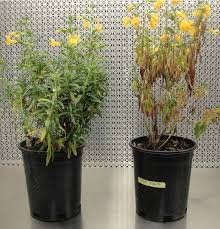
SOD Parke diseased plant

picture of infested rhododendron plant;

courtesy of Jennifer Parke, Oregon State University

  • The risk that nursery plants will spread SOD continues.

How large is this risk? One measure is how many nurseries are infested with the disease – either through a new introduction or as a result of an earlier infestation that was not detected.

During 2014, state inspectors detected the SOD pathogen in 19 nurseries – almost the same number as in 2013, and slightly more than half the number in 2012. (For a discussion of the SOD pathogen in nurseries in recent years, read Chapter V in Fading Forests III. Eleven of these nurseries were in the three west-coast states that have been regulated most tightly in the past (CA-1, OR-8, WA-2); eight nurseries were in other parts of the country (ME-1, NY-2, TX-1, and VA-4).

Fourteen of the 19 nurseries had tested positive for the pathogen during the previous three years. Consequently, they had been subject to the new regulation from its implementation.

However, two nurseries had tested positive before 2011, but not during the key 2011-2013 period. Under the terms of the 2014 regulation, these nurseries were not subject to APHIS’s new regulation and they continued to ship plants. This raises concerns about whether infestations in some nurseries might not be detected under the new regime before they ship plants to disease-free areas.

Eight of the 19 infested nurseries were interstate shippers (CA-1; OR-4; WA-1; TX-1; VA-1). Six had shipped plants in the previous six months.

Five of these infested interstate shippers stayed in the new APHIS program, carried out Critical Control Point Assessments, and adopted specific mitigation actions that were approved by APHIS and state officials. They continue to ship SOD host plants interstate.

Four of the eight infested nurseries left the program, either voluntarily or by compulsion. Nurseries not in the APHIS program may now ship SOD host plants only to destinations within their states; they are subject to regulation by their state agencies (usually, departments of agriculture).

Eleven of the nurseries detected to be infested by the SOD pathogen in 2014 shipped only to retailers within their own states; these nurseries are regulated by the appropriate state rather than by APHIS.


Strengths and Weaknesses of the New Regime

 So, what do I see as the strengths of the new regulatory regime? Most important, inspectors test the soil, water, and pots, not just symptomatic plants. This approach, recommended by scientists for years before APHIS adopted it, is paying off: inspections detected the pathogen twice in potting media, six times in a nursery’s soil, and 15 times in water on nursery premises.

The greatest weakness is the three-year cutoff for including nurseries in the APHIS program; as demonstrated already, nurseries can be clean for three years and then again be found to be infested. It has always been difficult to determine whether these “repeat” nurseries were infested all along, but somehow escaped detection; or have become infested through a new introduction of the pathogen.

Questions also arise because of the reliance on state regulation of nurseries shipping only within the state. Some state agencies appear to be much more aggressive than others in searching for symptoms of infestation and requiring cleanup.

Another possible problem is that the regulatory inspection effort focuses on five genera — Camellia, Kalmia, Pieris, Rhododendron, and Viburnum — but plants in other genera are also hosts. During 2014, detections were made on the following genera that are not among the “high-risk” hosts — Gaultheria, Prunus, Syringa and Vaccinium; and seven new host species were detected in the forest or in nurseries. One of these apparently new hosts, Vinca, is a widely planted ground cover (“periwinkle”) shipped in flats of often sad-looking rooted cuttings.

One good sign is that the nursery trade and state agricultural agencies are seeking ways to decrease the movement of plant pests via the nursery trade. Examples of such pest movement are not limited to SOD or other tree-killing pests; for example, boxwood blight was first detected in the United States in 2011; by 2013 it was known to be in nine eastern states and Oregon.

The nursery trade (through their trade associations, AmericanHort and the Society of American Florists), state agencies, and APHIS have developed a voluntary program called Systems Approach to Nursery Certification, or SANC. The collaborating organizations devoted several years to developing an agreed-upon set of standards and procedures aimed at making their facilities as free of disease and pests as possible. Now they are testing whether the program works in practice. Eight plant growers from across the country – and the appropriate state agencies – have agreed to:

  • Assess the facility for situations and practices that create a risk of pest infestation;
  • Identify best management practices that will mitigate those risks; and
  • Develop new facility-management manuals that apply those practices.

The SANC managers expect the pilot program to take 3 years (2018).

The principal sources for the information in this blog are the monthly newsletters prepared by the California Oak Mortality Task Force (COMTF), found at http://www.suddenoakdeath.org/ and the USDA APHIS program updates found at http://www.aphis.usda.gov/wps/portal/aphis/ourfocus/planthealth/sa_domestic_pests_and_diseases/sa_pests_and_diseases/sa_plant_disease/sa_pram/ct_phytophthora_ramorum_sudden_oak_death/