Birds v. mosquitoes: hope in Hawai`i

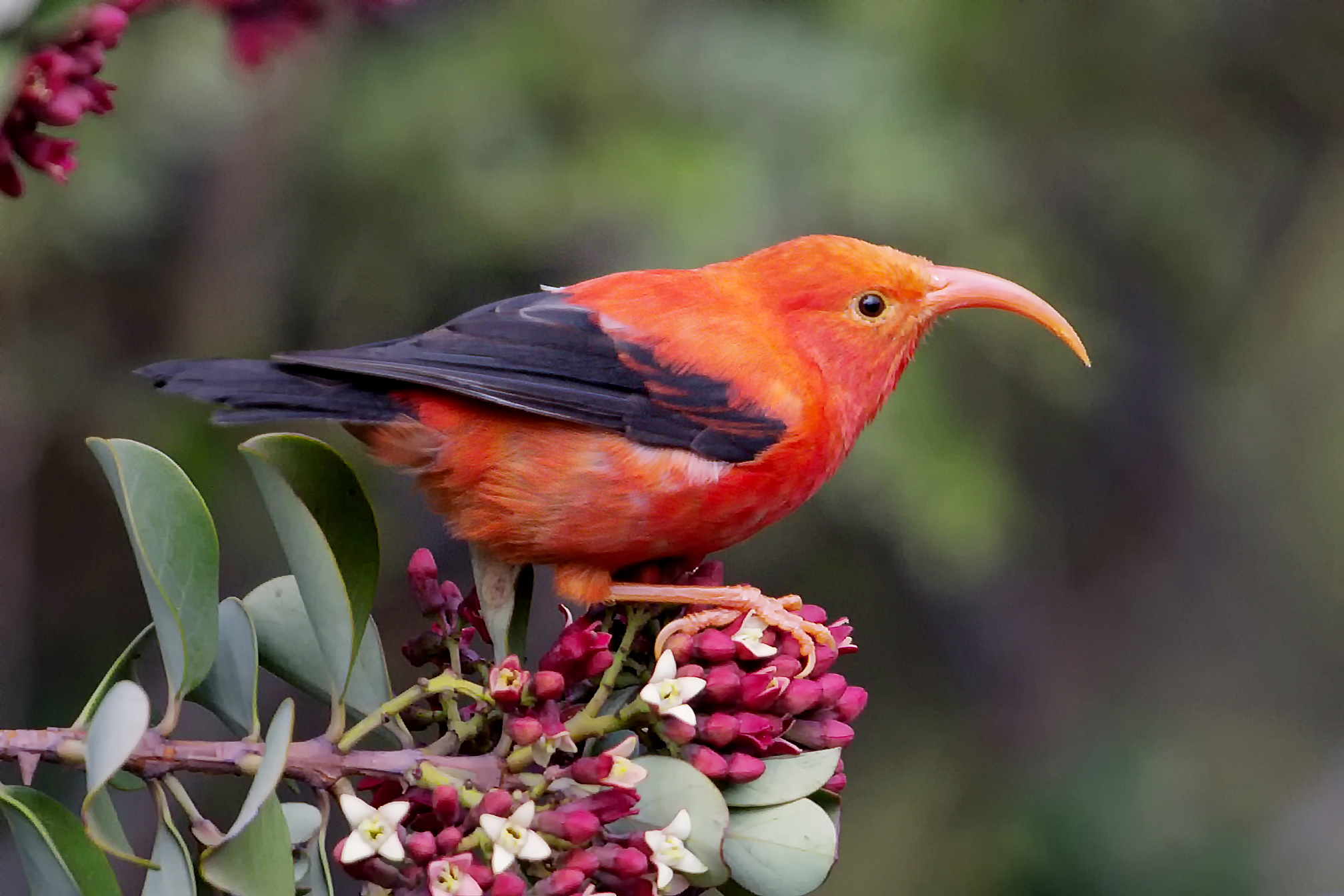
‘i‘iwi (Drepanis coccinea) – formerly very common from low to high elevations; photo by James Petruzzii_U

The endangered honeycreepers (birds) of Hawaiian forests are receiving the attention they deserve – and desperately need. There is good news! Promising and significant efforts are under way, matched to a recent strategic plan.  However, it is too early to know their results.

Nearly two and a half years ago, I blogged about efforts by a multi-agency consortium (“Birds, Not Mosquitoes” ). It was working to suppress populations of non-native mosquitoes, which vector two lethal diseases: avian malaria (Plasmodium relictum) and avian pox virus (Avipoxvirus). A single bite from an infected mosquito is enough to weaken and kill birds of some species, e.g., the ‘i‘iwi.

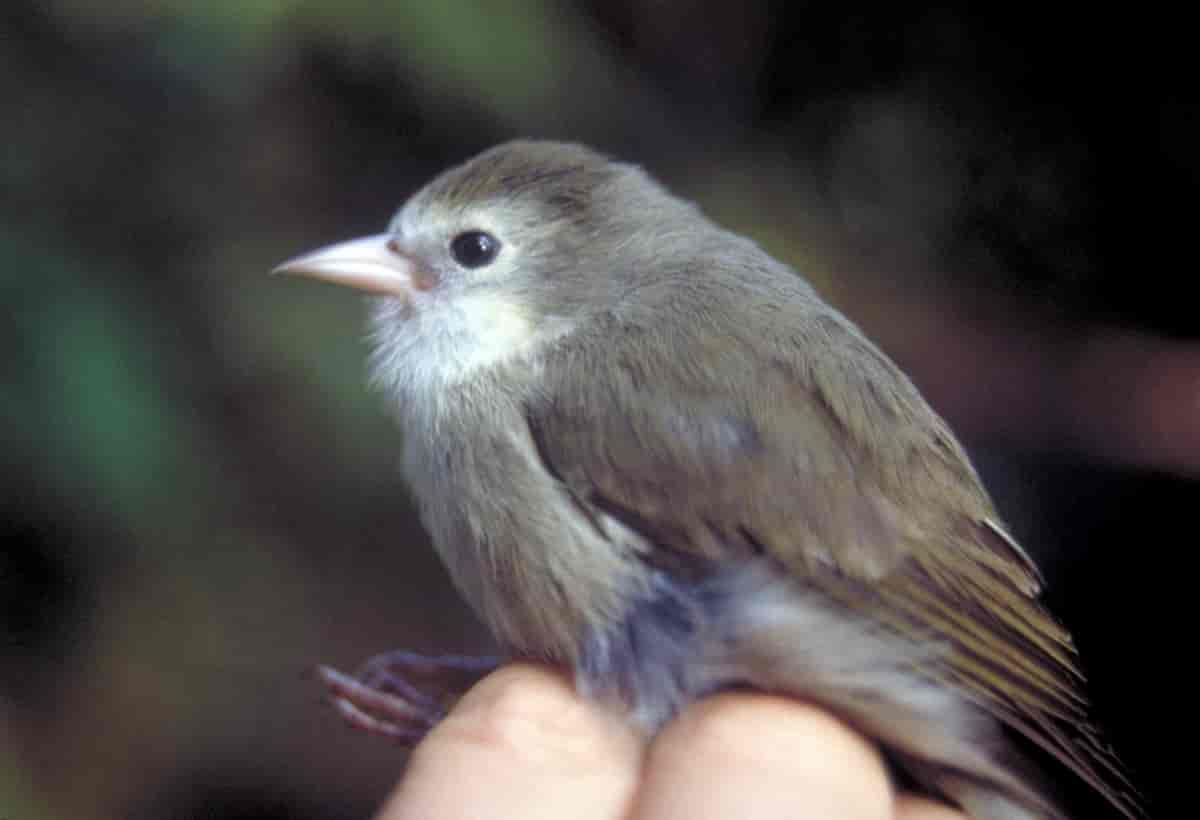
The threats from these diseases – and their spread to higher elevations as mosquitoes respond to climate change – pile on top of – other forms of habitat loss and inroads by other invasive species. All of the 17 species of honeycreeper that have persisted until now are listed as endangered or threatened under the federal Endangered Species Act. Four are in danger of extinction within as little as 1 – 2 years. These are ‘Akeke`e (Loxops caeruleirostris), ‘Akikiki (Oreomsytis bairdi)), Kiwikiu (Maui parrotbill, (Pseudonestor xanthophrys), and `Akohekohe (Palmeria dolei).

Akikiki; photo by Carter Atkinson, USGS

All these bird species are endemic to the Hawaiian archipelago — found nowhere else on Earth. They are already remnants. Nearly 80 bird species have gone extinct since people first colonized the Hawaiian Islands 1,500 years ago. Eight of these extinctions were recognized in October 2021.  Extinction of the final cohort would compromise the integrity of unique ecosystems as well as the Islands’ natural and cultural heritage.

I rejoice to report that the federal government has responded to the crisis. In late 2022 several Interior Department agencies adopted a multiagency Strategy for Preventing the Extinction of Hawaiian Forest Birds. The strategy specifies responsibilities for the key components of the program. These include: a) planning and implementing landscape-level mosquito control using Incompatible Insect Technique (IIT); b) translocating birds to higher elevation sites on other Hawaiian islands; c)  establishing captive populations of at-risk birds; and d) developing next-generation tools that increase the scope or efficacy of these actions. All these activities are being developed and conducted through intensive consultation with Native Hawaiians.

On August 8, 2023, the Secretary of Interior announced the allocation of $15,511,066 for conservation and recovery efforts for Hawaiian forest birds. About $14 million of the total was from the Bipartisan Infrastructure Law (Public Law 117-58). The funds are being channelled primarily through the U.S. Fish and Wildlife Service (FWS) ($7.5 million) and the National Park Service (NPS) ($6 million). Other sources of funding are the “State of the Birds” Program (FWS – $963,786); the national-level competitive Natural Resource grants program (NPS – $450,000); and the Biological Threats Program of the U.S. Geological Survey (USGS – $100,000).

What Is Under Way

I do worry continuing these efforts will be harder once their funding is subject to annual appropriations. However, they are a good start!

Steps have been taken on each of the four key component of the Strategy for Preventing the Extinction of Hawaiian Forest Birds:  

a) Planning and implementing landscape-level mosquito control using Incompatible Insect Technique (IIT – see below) to reduce the mosquito vector of avian malaria.

  • The Consortium has obtained all necessary state permits, regulatory approval of the approach by the U.S. Environmental Protection Agency, and done required consultations under the Endangered Species Act.
  • The Department of the Interior has funded a public-private partnership between the National parks and The Nature Conservancy (TNC) to develop, test, and carry out the first deployments of IIT. These occurred in May 2023 at high-elevation sites on the island of Maui. The next releases are planned for Kaua`i.
  • Consortium participants are carrying out the consultations and scientific preparations need to support the next deployment on the Big Island.

b) Translocating birds to higher elevation sites on the one island where they exist – Hawai`i.

  • Initial planning has begun to guide translocation of the endangered Kiwikiu (Maui parrotbill) and Akohekohe to higher-elevation, mosquito-free, habitats on the Big Island.

c) Establishing captive populations of the most at-risk species

  • To facilitate captive breeding of the four most endangered species, the two existing aviaries in Hawai`i need to be expanded. Space must be provided for at least 80 more birds. A contract has been signed for construction of this new aviary space.

d) Developing next-generation tools that increase the scope or efficacy of these actions.

  • Lab capacity has been expanded to monitor the effectiveness of IIT, as well as for developing next-generation mosquito control tools.
those who decide funding work here … & they work for us!!!!

The Incompatible Insect Technique (IIT) explained

The incompatible insect technique has been used successfully elsewhere to combat mosquitoes that transmit human diseases. Many insect taxa – including mosquitoes – harbor a naturally-occurring bacteria (Wolbachia). This bacterium has more than one strain or type. When a male mosquito with one type of Wolbachia mates with a female mosquito bearing a different, incompatible type, resulting eggs do not hatch. The IIT project releases male mosquitoes that have an incompatible strain of the bacterium than do local females. (Male mosquitoes do not bite animals seeking a blood meal, so releasing them does not increase the threat to either birds or people.) Implementation requires repeat treatment of sites at a cost of more than $1 million per site per year. It is hoped that this cost will fall with more experience.

Funding for the Strategy’s Four Components

As I noted above, much of the funding for these efforts has come from the Bipartisan Infrastructure Law (Public Law 117-58). Grants under this one-time statute are intended to cover project costs for perhaps five years. Other sources of funds are Congressional appropriations to Interior Department agencies under programs which presumably will continue to be funded in future years. These include the “State of the Birds” program; Endangered Species Act (ESA) implementation, especially its §6 Cooperative Endangered Species Conservation Fund; and State Wildlife Grants administered by the U.S. Fish and wildlife Service. However, funding under these programs is never guaranteed and competition is fierce. I hope participants – and the rest of us! – can be effective in lobbying for future funds required to save Hawaii’s birds from extinction.

a) Deploying IIT

Over Fiscal Years 2017 – 2021 (ending September 2021), Interior Department agencies supported the IIT program by:

  • Providing $948,000  to the State of Hawai`i from “State of the Birds”, State Wildlife Grants, and Endangered Species Act (ESA) §6;
  • The U.S. Fish and Wildlife Service  provided $545,000 plus staff time’ 
  • National Park Service  provided $1.2 million for IIT preparations at Haleakala National Park and surrounding state and Nature Conservancy lands
  • U.S. Geological Survey provided about $7.05 million in research on Hawaiian forest birds, invasive mosquitoes, and avian malaria.

The State of Hawai’i allocated $503,000 and employee staff time.

In addition,

  • the National Fish and Wildlife Fund provided a total of $627,000 in grants to TNC and American Bird Conservancy for Wolbachia IIT.
  • TNC committed to supporting some of the initial costs to deploy Wolbachia IIT for the first site in Hawai`i through a contractor (see below)
  • American Bird Conservancy provided funding for coordination and public outreach.

In FY2022 (which ended in September 2022),

  • NPS provided $6 million for on-the-ground work on Maui, also development and initial production of Wolbachia IIT.
  • Interior Department Office of Native Hawaiian Relations provided in-kind services to engage with Native communities’ members

b) Moving endangered birds to mosquito-free areas at high elevations on the Big Island

This is planned to begin by 2030. Interior committed unspecified funds to planning and consultation with Native Hawaiians.

c) Rearing captive birds

 FWS supports operation of the two existing aviaries through two funding channels: $700,000 annually provided directly to the aviaries, plus another $500,000 per year through ESA §6through the State of Hawai`i. The San Diego Zoo – which operates the aviaries — provides $600,000 – $800,000 per year in the form of in-kind services, staffing, veterinarians, and administrative support. Interior’s Office of Native Hawaiian Relations provided in-kind services to support to engagement with Native Hawaiian community members

d) Regarding exploration of “next-generation” mosquito control tools

The FWS provided $60,000 to a scientific laboratory to study precision-guided Sterile Insect Technique (pgSIT) tools to protect bird species threatened by avian malaria.

Funding for the portions of these programs dependent upon annual appropriations is uncertain. Current signs are promising: House and Senate bills to fund for the current year (Fiscal Year 2024) – which began in October 2023! – both support at least some aspects of the program. According to American Bird Conservancy, the Senate appropriations bill has allocated $2.5 million to parts of the program. According to the Committee report, the House appropriations bill allots $4.7 million to the State of the Birds program to respond to urgent needs of critically endangered birds. The report goes on to direct the FWS to “incorporate adaptation actions into new and revised recovery plans and recovery implementation strategies, such as with the mosquito vector of avian pox & malaria in the revised Hawaiian Forest Birds recovery plan. …” Per the report, the Appropriations Committee “continues to encourage the [NPS] to respond to the urgent landscape-scale needs of critically endangered forest birds with habitats in national parks.” The report then specifies species threatened by non-native mosquitoes carrying avian malaria and other pathogens. Finally, the report allocates $500,000 to the U.S. Geological Survey for research on the Hawaiian forest birds.

Meanwhile, the American Bird Conservancy is preparing to advocate for $20 million for FY25 through “State of the Birds” Activities and associated NPS and USGS programs. The details of this amount have not yet been laid out.

CISP will support this request and urges you to do so also. We will suggests ways to help when we know more.

Posted by Faith Campbell

We welcome comments that supplement or correct factual information, suggest new approaches, or promote thoughtful consideration. We post comments that disagree with us — but not those we judge to be not civil or inflammatory.

For a detailed discussion of the policies and practices that have allowed these pests to enter and spread – and that do not promote effective restoration strategies – review the Fading Forests report at http://treeimprovement.utk.edu/FadingForests.htm

or

www.fadingforests.org

U.S. Department of the Interior’s Guidance on Nature-Based Solutions

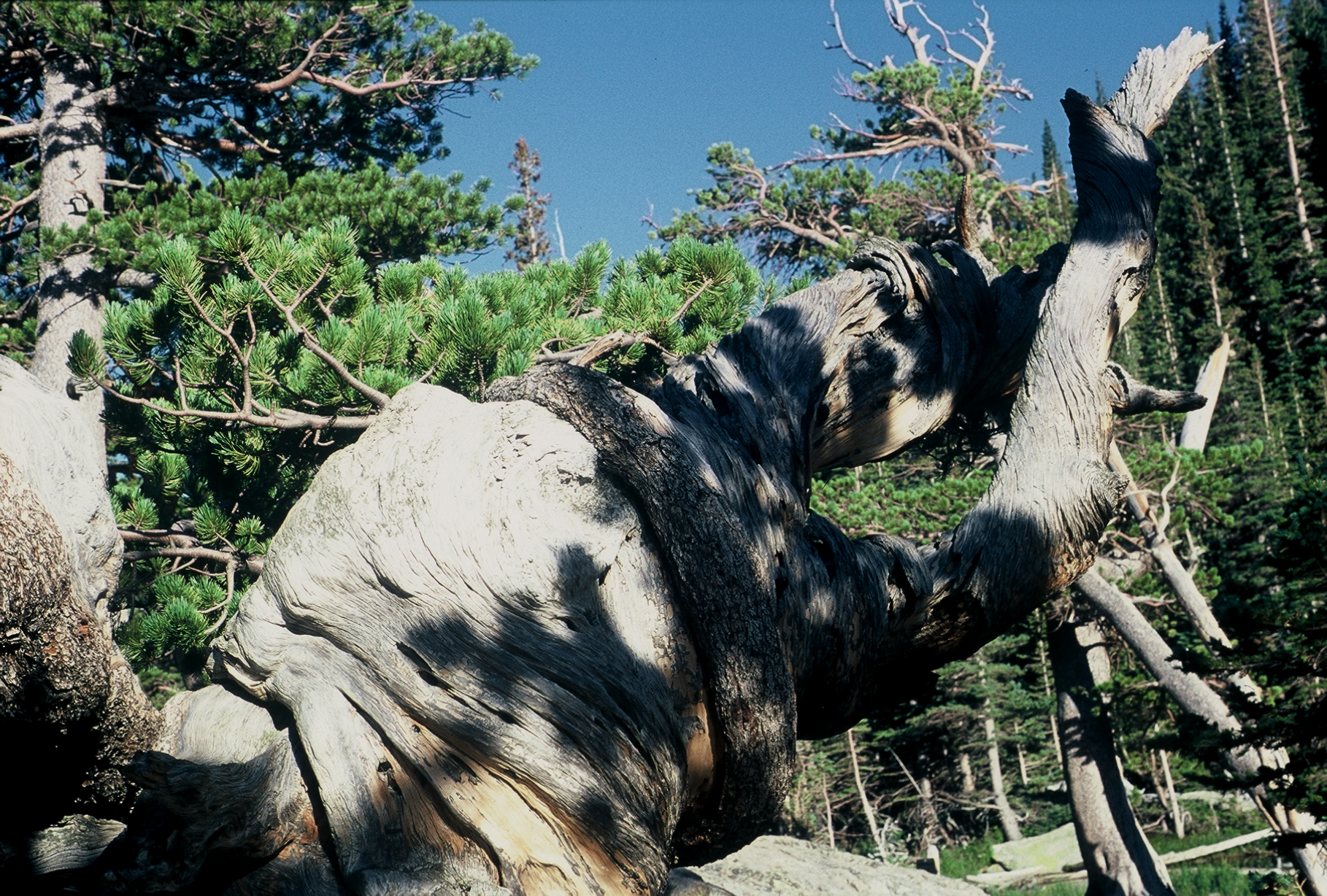
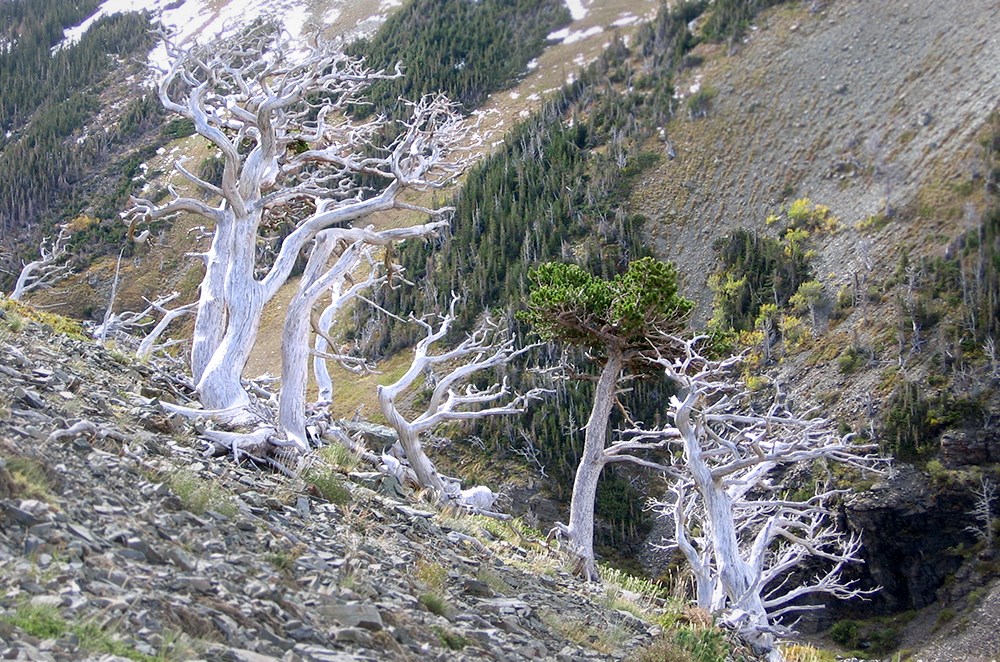
whitebark pine in Glacier National Park killed by white pine blister rust; National Park Service photo

As I noted in the accompanying blog, the U.S. Department of Interior has also weighed in on how to mitigate climate change as part of the Nation’s response to COP24 of the UN Framework Convention on Climate Change.

Interior’s Nature-Based Solutions “Roadmap” (citation at the end of the blog) is 480 pages long! It includes lots of pictures and extensive lists of examples of various types of projects. The document reviews “nature-based” restoration techniques, the benefits they provide in various realms (ecosystem, economy, social values); and the challenges or barriers likely to be encountered. These analyses cover six types of ecosystems – coastal (further divided into five subgroups), forests, grasslands (two types), inland wetland habitats, riverine habitats (three subgroups), and built environments. The obvious emphasis on aquatic and semi-aquatic habitats reflects the Department’s responsibilities. The threat from invasive species is recognized in each case. Plus there are separate chapters discussing management/removal of invasive pests and pathogens, plants, and vertebrates in all types of ecosystems.

The document’s purpose is to provide Interior’s staff – and others who are interested – with reliable information on determining the conditions and goals under which “nature-based” strategies perform best, the benefits they are likely to provide, instructive examples, and additional resources. Much of the information is intended to help staff persuade skeptics that a “nature-based” approach can solve a climate-related problem, such as sea level rise, as well as, or better than, “grey” infrastructure. This includes discussion of: construction and maintenance costs, efficacy in solving a specific problem, and managing conflicts over land use. Also, it considers benefits to other realms, for example, protecting biodiversity and providing opportunities for recreation and mental and physical well-being.

I will focus on aspects dealing with forests. These occur in several chapters. Each chapter has a brief description of the climate and other services provided by that ecosystem type, followed by sections on ways forward (“Technical Approach”), factors affecting site suitability, tools and training resources, likely benefits and outcomes (economic and ecological), barriers and solutions, and examples of projects.

The forest chapter (Chapter 10) discusses forest conservation and restoration with an emphasis on improving forest health, including fuels management, reforestation, and addressing threats from native and non-native pests. One proposed solution is thinning. This measure is said to enhance tree health and promote invasive plants. The “Roadmap” does not recognize that experts consider thinning is helpful in managing native pests such as mountain pine beetle but not non-native pests.

I was startled to find another suggestion – to plant native tree species that are resistant to non-native pests to restore stands. The “Roadmap” refers readers to the National Park Service Resilient Forests Initiative for Region 1 [which reaches from Virginia to Maine]. The Initiative encourages collaboration among parks with similar issues; provides park-specific resource briefs for 39 parks in the Region; and offers management strategies for a host of problems. These include invasive species control, prescribed fire, deer management, silvicultural treatments, tree planting, and fencing. My confusion is that – as far as I know – there are no sources of trees resistant to the non-native pests plaguing forests of the Northeast, e.g., beech, butternut, chestnut, hemlocks, ash, and oaks.

test planting of pathogen-resistant whitebark pine seedlings in Glacier National Park; photo by Richard Sniezko

In the “Tools” section Chapter 10 lists forest restoration guides published by the U.S. Forest Service (USFS) and the International Union of Forest Research Organizations. The “Examples” section includes a few thinning projects.

Chapter 16 advises on enhancing urban forests, which provide many benefits. The chapter stresses the importance of ensuring that projects’ budgets can support protecting trees from such risks as flooding, fire, pests, disease, “invasive species” (presumably other than insects or pathogens), and climate change. The authors note that urban trees are often more susceptible to pests because of their proximity to human activities that facilitate pests’ spread. However, there is no mention that such pests spread to nearby natural forests. They warn against planting a single tree species. An issue noted but not discussed in detail is the use of non-native species in urban forests, some of which have already become invasive.

Three chapters discuss invasive species per se — insects and pathogens (Chap. 26), plants (Chap 27), and vertebrates (Chap. 28) Each chapter summaries invasion stages and stresses the importance of preventing new introductions, detecting them early, and responding rapidly. Most of the text deals with managing established populations – with the emphasis on applying integrated pest management (IPM).  Each raises caveats about biological control agents possibly attacking non-target organisms. Again, the authors emphasize the necessity of ensuring availability of adequate resources to carry out the program.

Chapter 26 addresses Invasive and Nuisance Insects and Pathogens. Examples listed include Asian longhorned beetle, emerald ash borer, hemlock woolly adelgid, spongy moth, Dutch elm disease, sudden oak death, laurel wilt, white pine blister rust, chestnut blight and butternut canker. (All these invaders are profiled under the “invasive species” tab here). The examples also include several native pests, e.g., mountain pine beetle, southern pine beetle, and several pathogens, including Swiss needlecast. I am confused by a statement that priorities for management should be based on pests’ traits; my understanding of the science is that other factors are more important in determining a pest’s impact. See, for example, Lovett et al. 2006.This chapter reiterates the impractical advice to plant trees resistant to the damaging pest. I also wonder at the following statement:

“The process of detection and prevention will need to continue over time to prevent reintroductions or reinvasions of nuisance or invasive pests and pathogens. In some cases, long-term management will be required to contain and prevent spread.” [p. 425] I believe long-term management will required in all cases!

The tools listed in the chapter include various DOI websites re: training and funding; the USDA website listing states’ plant diagnostic laboratories; a USDA IPM “road map”; The Nature Conservancy’s guidebook for assessing and managing invasive species in protected areas; the DOI Strategic Plan; and the University of Georgia’s Center for Invasive Species and Ecosystem Health.

Chapter 27 discusses invasive and nuisance plants. It starts by noting that an estimated 5,000 non-native plant species are stablished in the US. While not all are invasive, there is still potential for these plants to spread and cause harm. The authors state that controlling such plants reduces fire risk and lowers demand for water in arid areas.

The authors say early management is crucial to eradicate or control invasive plant species. Because plant invasions cross property lines, agencies must form partnerships with other agencies and private landowners. Because invasive and nuisance plant species are so widespread, managers must set priorities. The “Roadmap” suggests focusing on sites at the highest risk, e.g., heavily trafficked areas. Continued effort will be necessary to prevent reinvasions or reintroductions. However, long-term management and containment can be incredibly costly and labor-intensive.

lesser celandine invade bottomlands of Delaware Water Gap National Recreation Area

The “Roadmap” complains that many invasive and nuisance plant species are still offered for sale; in fact, that this is the primary pathway by which invasive plants enter the US, (While which we have known this for decades, it is encouraging to see a U.S. government report say:  “Advocating for federal regulation and cohesive local policies for preventing invasive [plant] sales is essential to avoid disjointed state rulings.” – even if it does not specify which agencies should take the lead.  

In the “Tools” section the chapter lists two USFS guides on managing invasive plants; two California Invasive Plant Council guides; the Interior Department’s 2021 Invasive Species Strategic Plan; EDDMapS (a University of Georgia site on which members of the public can report invasive species); and the TNC guidebook for Assessing and Managing Invasive Species in Protected Areas.

Chapter 28 addresses invasive & nuisance vertebrates (called “wildlife”). It notes that invasive animals are present in more than half of all US National parks. It briefly mentions the Lacey Act as providing legal power to curb the introduction and spread of these animals. It does not discuss strengths and weaknesses of this statute, both of which are substantial. This chapter repeats the odd wording from the pest and pathogen chapter – that in some cases long-term management will be required to contain and prevent spread of invasive species. I find it doubtful that short-term actions will be effective in virtually all cases.

Tools listed include Interior guides on IPM, funding sources, and protecting aquatic systems along with the Department of Interior’s 2021 Invasive Species Strategic Plan. Other tools include the USDA guide on IPM, EDDMapS, and the TNC guidebook.

Forests were also mentioned in the discussion of assisted migration of coastal wetlands to avoid drowning by rising seas (Chapter 1). The text notes that forests upland from coastal wetlands might be killed – either as a result of waterlogging as sea levels rise or as deliberate action to make room for the new marsh. Mortality in either case will reduce carbon sequestration. The authors also note the probability that invasive plants – shrubs in the woods, Phragmites on the edge of the wetland — will be present and have to be controlled.

SOURCES

Lovett, G.M, C.D. Canham, M.A. Arthur, K.C. Weathers, R.D. Fitzhugh. 2006. Foret Ecosystem Responses to Exotic Pests and pathogens in Eastern North America. BioScience Vol 56 No. 5 May 2006.

Warnell, K., S. Mason, A. Siegle, M. Merritt, & L. Olander. 2023. Department of the Interior Nature-Based Solutions Roadmap. NI R 23-06. Durham, NC: Nicholas Institute for Energy, Environment & Sustainability, Duke University. https://nicholasinstitute.duke.edu/publications/department-interior-nature-based-solutions-roadmap.

Posted by Faith Campbell

We welcome comments that supplement or correct factual information, suggest new approaches, or promote thoughtful consideration. We post comments that disagree with us — but not those we judge to be not civil or inflammatory.

For a detailed discussion of the policies and practices that have allowed these pests to enter and spread – and that do not promote effective restoration strategies – review the Fading Forests report at http://treeimprovement.utk.edu/FadingForests.htm

or

www.fadingforests.org

What do “Self-Introduced” & “Door-Knocker” Species Tell Us?

Woldstedtius flavolineatus – one of at least 13 taxa of non-native ichneumonid wasps established in restoration forests in Hawaiian Forest National wildlife rfefuge; photo by Torgrim Breiehagen for the Norwegian Biodiversity Information Centre; via Wikipedia

As we know, non-native insects and pathogens pose a significant and accelerating threat to biodiversity in forests and other ecosystems. They undermine some conservation programs and reduce ecosystem services and quality of life in urban areas. Nevertheless, damaging introductions continue.  

Two recent articles have advocated accelerating biocontrol programs. These articles have reminded us  of ongoing failures of international and national biosecurity programs, including that of the US. The articles also make interesting suggestions regarding ways to be more pro-active in preventing introductions.

1. “Self-introductions” of invaders’ enemies

Weber et al. (full citation at end of blog) provide many examples of unintentional “self-introductions” of natural enemies of arthropod pests and invasive plants. In fact, “self-introductions” of natural enemies of arthropod pests might exceed the number of species introduced intentionally. These introductions have been facilitated by the usual factors: the general surge in international trade; lack of surveillance for species that are not associated with live plants or animals; inability to detect or intercept microorganisms; huge invasive host populations that allow rapid establishment of their accidentally introduced natural enemies; and lack of aggressive screening for pests already established.

Among the examples illustrating failures of biosecurity programs:

  • Across six global regions, nearly two-thirds of parasitoid Hymenoptera species were introduced unintentionally. The proportion varies significantly by region. For example, four-fifths of these insects in New Zealand arrived accidentally.
  • The  unintentional spread of the glassy-winged sharpshooter (Homalodisca vitripennis) and a biocontrol agent Cosmocomoidea ashmeadi has been so rapid among islands in the Pacific Ocean (including Hawai`i) they are considered ‘biomarkers’ of biosecurity failures.
  • Regarding the United States specifically, an estimated 67% of beneficial insects introduced to Hawai`i and 64% of parasitoid Hymenoptera introduced to the mainland U.S. were accidental “self-introductions.”

Weber et al. consider their figures to be underestimates. The situation is particularly uncertain regarding pathogens that kill arthropods. Many microbial species are not yet described.

spotted lanternfly; photo by Stephen Ausmus, USDA

In some cases, these “self-introduced” arthropods have proved beneficial. Two examples are Entomophaga maimaiga and Lymantria dispar nucleopolyhedrovirus (LdNPV), which help control the spongy moth (Lymantria dispar). In other cases the “self-introduced” creatures are pests themselves. A prominent example is the invasion by the spotted lanternfly (Lycorma delicatula). This was facilitated by the widespread presence of the highly invasive plant Ailanthus altissima. It illustrates what Weber et al. call “receptive bridgehead effects.” That is, once an invasive pest is well-established, the chance that its natural enemies will find a suitable host and also establish in the pest’s invaded range is much higher.

Weber et al. reaffirm that there are many good reasons not to allow such random invasions of diverse non-native species – including their natural enemies. Deliberately introduced biocontrol agents are chosen after determining their efficacy, host-specificity, and climatic suitability. Random introductions, on the other hand, might favor generalist species, which could threaten non-target species. Accidental introductions might also be accompanied by pathogens and hyperparasitoids that could compromise the efficacy of biocontrol agents.

In short, unintentionally introduced natural enemies might have about the same level of success in controlling the target pest’s populations as do intentionally introduced agents. However, unintentional introductions of both pests and pathogens carry additional risks of non-target impacts and contamination with their own natural enemies that would hamper the efficacy of the biocontrol agent. Weber et al. conclude that delays in releasing a deliberately chosen and evaluated biocontrol agent reduce the probability that it will successfully establish instead of an unintentionally introduced organism.

cactus moth larva on Opuntia; photo by Doug Beckers via Flickr

It is especially likely that an arthropod – whether or not a biocontrol agent – will spread within a geographic region. Weber et al. say both the U.S. and Canada have received more than a dozen species intentionally introduced into the other country. They also cite spread of the cactus moth, Cactoblastis cactorum, into Florida from several Caribbean countries. The cactus moth has spread and now threatens the center of diversity of flat-padded Opuntia cacti in the American southwest and Mexico.

Another example is California: 44% of invading terrestrial macroinvertebrates that have established in the state came from populations established elsewhere in the US and Canada (Hoddle 2023). This number exceeds the total number of invasive macroinvertebrates in the state that originated anywhere in Eurasia (Weber et al.).

True, it is very difficult to prevent natural spread. But a lot of this spread is facilitated by human activities, e.g., transporting vectors such as living plants, firewood, outdoor furniture or storage “pods.” I have complained often — here and here and here — that interstate movement of invasive plant pests is particularly poorly controlled.

Some scientists and regulators have responded to these situations by improving phytosanitary programs. California officials, in 2019, set up a program to fund projects aimed at developing integrated pest management strategies for species thought to have a high invasion potential before they arrive. I urge other states to do the same. This would probably be most effective in controlling the target species – and in relation to cost — if developed by regional consortia.

Weber et al. suggest that given continuing unintentional introductions of non-native species, phytosanitary agencies need to focus on those invasion pathways that are particularly likely to result in invasions, e.g. live plants, raw lumber (including wood packaging), and bulk commodities e.g. quarried rock. 

The authors also suggest research opportunities that arise from biocontrol agents’ “self-introductions”. These include:

  • Comparing actual host ranges to those predicted by laboratory and other studies;
  • Quantifying the role of Allee effects, for example by studying the spread of the glassy-winged sharpshooter and its biocontrol agent across the Pacific region;
  •  Using molecular analyses to disentangle multiple routes of entry (e.g., the “invasive bridgehead effect”) and hybridization.

2. Door-knocker species

Hoddle (2023) suggests further that early detection programs should focus on “door-knocker” species — those likely to enter and cause significant negative impacts. In an earlier article (Hoddle, Mace and Steggall 2018) argued that the benefits of a pro-active biocontrol program outweigh the costs. The authors say the information gained would cut the time needed to deploy effective biocontrol. Ultimately, this could reduce the prolonged and even irreversible ecological and economic disruption from invasive pests, associated pesticide applications, and lost ecological services.

Asian citrus psyllid  (Diaphorina citri); USDA photo by Justin Wendell; Hoddle cites this species as one that a pro-active biocontrol program should have targetted

Hoddle calls funding pro-active biocontrol research programs before they’re needed as analogous to buying insurance. The owners of insurance policies hope not to need them but benefit when catastrophe strikes. Furthermore, the information gained from early research might identify natural enemy species that could “self-introduce” along with the invading host. Finally, proactive research might clarify whether the increasing number of natural enemy species that are “self-introducing” pose a threat to non-target organisms.

Recognizing the difficulty of identifying an “emerging invasive species” before its introduction, Hoddle endorses other components of prevention programs:

  • Collaborating with non-U.S. scientists to identify and mitigate invasion bridgeheads. Such efforts would both lessen bioinvasion threats and possibly aid in determining native ranges and facilitating location of natural enemies.
  • Sentinel plantings, such as those established under the International Plant Sentinel Network. These plantings can also support research on natural enemies of key pests.
  • Integrating online platforms, networks, professional meetings, and incursion monitoring programs into “horizon scans” for potential invasive species. He mentions specifically PestLens; online community science platforms, e.g., iNaturalist; international symposia; and official pest surveillance, e.g., U.S. Forest Service’s bark beetles survey and surveys done by the California Department of Food and Agriculture and border protection stations.
date palm mealybug (Pseudaspidoproctus hyphaeniacus); threat to native Washingtonia palms of California; one of pests tracked by PestLens

Weber et al. also support the concept of sentinel plant nurseries – especially because accidental plant and herbivore invasions often occur at the same points of entry.

Both Weber et al. and Hoddle urge authorities not to strengthen regulations governing biocontrol introductions. Weber et al. say that would be to make perfect the enemy of the good. The need is to balance solving problems with avoiding creation of new problems.

SOURCES

Hoddle, M.S., K. Mace, J. Steggall. 2018.   Proactive biological control: A cost-effective management option for invasive pests. California Agriculture. Volume 72, No. 3

Hoddle. M.S. 2023. A new paradigm: proactive biological control of invasive insect pests. BioControl https://doi.org/10.1007/s10526-023-10206-5

Weber, D.C. A.E. Hajek, K.A. Hoelmer, U. Schaffner, P.G. Mason, R. Stouthamer, E.J. Talamas, M. Buffington, M.S. Hoddle, and T. Haye. 2020. Unintentional Biological Control Chapter for USDA Agriculture Research Service. Invasive Insect Biocontrol and Behavior Laboratory. https://www.ars.usda.gov/research/publications/publication/?seqNo115=362852

Posted by Faith Campbell

We welcome comments that supplement or correct factual information, suggest new approaches, or promote thoughtful consideration. We post comments that disagree with us — but not those we judge to be not civil or inflammatory.

For a detailed discussion of the policies and practices that have allowed these pests to enter and spread – and that do not promote effective restoration strategies – review the Fading Forests report at http://treeimprovement.utk.edu/FadingForests.htm

or

www.fadingforests.org

Sobering News: Invasive Grasses, Trees, and Killer Pests in Hawai`i

At CISP, our hearts go out to all those affected by the terrible August fires on Maui. May the departed rest in peace. May the living find comfort and all that is needed for recovery.

Fire and Invasive Grasses

A fire in non-native grasses on Maui in 2009; photo by Forrest and Kim Starr

Major U.S. and international media continue to detail the fires’ devastation, especially in Lahaina. As time has passed, more news has highlighted the role that the widespread presence of introduced, fire-prone grasses played in the rapid growth and spread of Maui’s fires.  

For example, The Washington Post devoted seven paragraphs in one story to the issue of grasses. The story quotes several experts: Alison Nugent, an associate atmospheric scientist at the University of Hawaii’s Water Resources Research Center; Jeff Masters, a meteorologist for Yale Climate Connections; and Clay Trauernicht, a fire researcher at the University of Hawaii.

These and others have been widely quoted in the many recent articles. I am glad that they – and the media – are making clear that climate change is not the sole factor causing damaging wildfires. It is clear that Maui’s recent weather patterns – including the high-velocity winds and drought – have been within the range of normal climate patterns. Fluctuations in the Pacific’s weather have also been normal, especially under the influence of the current El Niño.

The dangers caused by Hawai’i’s fire-prone grasses are also clear – and have been for years. Experts have identified policy weaknesses at the county and state level. Also, they have specified changes to land management that could better prevent or mitigate wildfires. There has been far too little action.

On the other hand, there are hopeful signs.

endangered ‘akikiki photo by Carter Atkinson, USGS

The Hawai’i Wildfire Management Organization, a nonprofit, is educating and engaging communities state-wide. Elizabeth Pickett, a Co-Executive Director, presented an overview of wildfire at the Hawai’i Invasive Species Awareness Month in February 2023. The Big Island Invasive Species Committee has successfully eradicated two species of pampas grass on Hawai’i Island – after 13 years’ work. A native species has been planted where pampas formerly grew.

Another Post article reported on efforts by staff and fire departments to protect the Maui Bird Conservation Center, which houses critically endangered Hawaiian birds found nowhere else on Earth, including some currently extinct in the wild. As I have blogged previously, the palila, kiwikiu, ‘akikiki, ‘alalā [Hawaiian crow; extinct in the wild] and other birds are dying from avian malaria, carried by nonnative mosquitoes.  The Center on Maui and another on the Big Island are run by the San Diego Zoo Wildlife Alliance. Conservationists have completed field trials of a proposed mosquito suppression process for Maui and are seeking public comments for a similar program on Kaua’i. These programs represent groundbreaking and long-awaited progress on countering a principal threat to the survival of Hawai`i’s unique avifauna. Loss of the Center and its birds would have devastated post-suppression efforts to rebuild and restore bird populations in the wild.

The Post carried a second story about the effort to protect Hawai`i’s endangered birds – a full page of print, even longer – with many photos, on the web. The article mentions the “Birds, Not Mosquitoes” program and varying views about it. I rejoice that the dire situation for the Islands’ biodiversity is getting attention in the Nation’s capital. Again, see my earlier blog.

Plant Invasions in Hawaiian Forests

A team of scientists from the USDA Forest Service and Natural Resources Conservation Service, plus the Hawaii Division of Forestry and Wildlife, has carried out a new assessment of the extent of invasive plant species in forests on the Hawaiian Islands (Potter et al. 2023; full citation at end of blog).

The results of their analysis are – in their words – “sobering”. They portend “a more dire future for Hawai`i`s native forests.”

First, regarding the recent fires, Potter et al. found significantly higher cover by invasive grasses on Forest and Inventory Analysis (FIA) plots on Hawai‘i and Maui than on O‘ahu, Kaua‘i, and Lana‘i. Grass invasions were particularly high on the eastern coast of Maui – near Lahaina. Even so, the authors say their study’s methods resulted in a gross underestimate of areas invaded by fire-prone grasses. That is, most of Hawai’i’s xerophytic dry forests were converted to grasslands before the FIA program began. Therefore these grasslands are not included in FIA surveys.  

Psidium cattleyanum; photo by Forrest and Kim Starr

The extent of current invasions in wetter forests is already significant – but trends point to an even more worrying future.

  • Naturalized non-native plant taxa constitute half of the Hawaiian flora.
  • 56% of Hawaii’s 553,000 ha of forest land contained non-native tree species; about 39% of these forest lands are dominated by non-native tree species. Invasive plant species of particular concern were found in the understory of 27% of surveyed forest plots.
  • Across all islands, six of the ten most abundant species are non-native: Psidium cattleyanum, Schinus terebinthifolius, Leucaena leucocepahala, Ardisia elliptica, Psidium guajava, and Acacia confusa.
  • While less than one-third (29%) of large trees across the Islands are non-native, this proportion increases to about two-thirds of saplings (63%) and seedlings (66%). Potter et al. focus on the likelihood that plant succession will result in transformation of these forests’ canopies from native tree species to non-native species.
  • 75% of forests in lower-elevation areas of all islands are already dominated by non-native tree species.  “Only” 31% of higher-elevation forests are so dominated. These montane forests have been viewed as refugia for native species, but all are invaded to some extent – and likely to become more degraded.
  • Potter et al. say the high elevation forests might be more resistant to domination by non-natives. Such a result would be counter to well-documented experience, though. Even the authors report that the montane rainforests and mesophytic forests of O‘ahu and Kaua‘i are heavily invaded by non-native tree species. Such species constitute 86% or more of large trees, saplings, and seedlings in mesophytic forests; 45% of large trees and 66% of seedlings in their montane rainforests.
  • The most abundant tree species in Hawai`i is the invasive species Psidium cattleyanum (strawberry guava). It was recorded on 88, or37%, of 238 FIA plots. There are nearly twice as many P. cattleyanum saplings as Hawai`i’s most widespread native species, ‘ohi’a lehua (Metrosideros polymorpha).
  • Widescale replacement of native trees by non-native species is likely. Several factors favor these changes: 1) tree disease – rapid ‘ohi’a death has had drastic impacts on ‘ohi’a populations on several islands; 2) invasions by forbs and grasses; 3) soil damage and other disturbances caused by invasive ungulates; and 4) climate change. If succession conforms to these trends, non-native tree species could eventually constitute 75% or more of the forest tree stems and basal area on all islands and across forest types and elevations. 

Loss of Hawai’i’s native tree species would be disastrous for biodiversity at the global level. More than 95% of native Hawaiian tree species are endemic, occurring nowhere else in the world.

The authors analyzed plant presence data from 238 FIA plots. Plots spanned the state’s various climates, soils, elevations, gradients, ownership, and management. However, access issues precluded inclusion of forests from several islands: Moloka‘i, Kaho’olawe, and Ni‘ihau. I know that Moloka‘i, at least, has a protected forest reserve (a Nature Conservancy property) at the island’s highest elevations.

Protecting Native Trees

Federal, state, and private landowners have carried out numerous actions to protect native forests. These efforts might be having some success. For example, forests on public lands, in conservation reserves, or in areas fenced to exclude ungulates were less impacted by non-native plants than unfenced plots, on average. However, the authors could not determine how much of this difference was the result of management or because protections were established in forests with the lowest presence of IAS species. Fencing did not prevent invasions by forbs and grasses – possibly because they are so widespread that seed sources are everywhere.

Hawaii’s two National parks (Hawai`i Volcanoes and Haleakala) have made major efforts to control invasive plants. Hawai`i Volcanoes, on the Big Island, began its efforts in the 1980s; Haleakala (on Maui) more recently. This might be one explanation for the fact that a smaller proportion of the forests on these two islands have been invaded. These efforts have not fully protected the parks, however. Low elevation native rainforests now have a high presence of non-native shrubs. Such forests on Hawai`i Island also have significant invasions by non-native woody vines, forbs and grasses.

More discouraging, intensive efforts have not returned lowland wet forest stands to a native-dominated state. Native tree species are not regenerating—even where there is plentiful seed from native canopy trees and managers have repeatedly removed competing non-native understory plants.

Potter et al. conclude that other approaches will be needed. They suggest deliberate planting of native and non-invasive non-native species or creation of small artificial gaps that might facilitate recovery of native tree species. In montane forests on Hawai`i and Maui, where native tree seedlings account for more than 70% of all tree seedlings, they propose enhancing early detection/rapid response efforts targetting invasive forbs. This would include both National parks.Certainly Haleakala National Park has this priority in mind. It launched a serious effort to try to eradicate Miconia calvescens when this tree first was detected.

Lloyd Loope, much-mourned scientist with US Geological Survey, attacking Miconia on Maui

Potter et al. note the challenge of managing remnant xerophytic dry forests, where natural regeneration of native plants has been strongly limited by invasive grasses; loss of native pollinators and seed dispersers; and the increasing frequency and intensity of droughts. They note that expanded management efforts must be implemented for decades, or longer, to be successful.

Native Trees at Risk to Nonnative Insects

Beyond the scope of the Potter et al. study is the fact that at least two dry forest endemic trees have faced their own threats from non-native insects.

The Erythrina gall wasp, Quadrastichus erythrinae, appeared in Hawai`i in 2005; it originates in east Africa. It attacks the endemic tree, wiliwili, Erythrina sandwicensis.  I believe a biocontrol agent, Eurytoma erythrinae, first released in 2008, has effectively protected the wiliwili tree, lessening this threat.

The Myoporum thrips, Klambothrips myopori, from Tasmania, was detected on the Big Island in 2009. It threatens a second native tree. Naio, (Myoporum sandwicense), grows in dry forests, lowlands, upland shrublands, and mesic and wet forest habitats from sea level to 3000 m. The loss of this species would be both a signifcant loss of native biodiversity and a structural loss to native forest habitats. The thrips continues to spread; a decade after the first detection, it was found on the leeward (dry) side of Hawai`i Island with rising levels of infestation and tree dieback.

Rhus sandwicensis on Maui; photo by Forrest and Kim Starr

Two native shrubs, Hawaiian sumac Rhus sandwicensis and Dodonea viscosa, might be at risk from a biocontrol agent in the future. APHIS has approved a biocontrol for the highly invasive Brazilian pepper, Schinus terebinthifolia. Brazilian pepper is the second-most abundant non-native tree species in the State. It was found on 28 of 238 (12%) FIA plots. However, the APHIS-approved biocontrol agent is a thrips—Pseudophilothrips ichini. It is known to attack both of these two native Hawaiian shrubs. The APHIS approval allowed release of the thrips only on the mainland US. However, many insects have been introduced unintentionally from the mainland to Hawai`i. Furthermore, Hawaiian authorities were reported to be considering deliberate introduction of P. ichini to control peppertree on the Islands.

In Conclusion

In conclusion, Potter et al. found that most Hawaiian forests are now hybrid communities of native and non-native species; indeed, a large fraction are novel forests dominated by non-native trees. Business-as-usual management will probably mean that the hybrid forests – and probably those in which the canopy is currently dominated by native species—will follow successional trajectories to novel, non-native- dominated woodlands. This likelihood results in a more dire future for native plants in Hawaiian forests than has been previously described.

Potter at al. hope that their findings can guide research and conservation on other islands, especially those in the Pacific. However, Pacific islands already have the most naturalized species globally for their size—despite what was originally considered their protective geographic isolation.

SOURCE

Potter, K.M., C. Giardina, R.F. Hughes, S. Cordell, O. Kuegler, A. Koch, E. Yuen. 2023. How invaded are Hawaiian forests? Non-native understory tree dominance signals potential canopy replacement. Landsc Ecol  https://doi.org/10.1007/s10980-023-01662-6

Posted by Faith Campbell

We welcome comments that supplement or correct factual information, suggest new approaches, or promote thoughtful consideration. We post comments that disagree with us — but not those we judge to be not civil or inflammatory.

For a detailed discussion of the policies and practices that have allowed these pests to enter and spread – and that do not promote effective restoration strategies – review the Fading Forests report at http://treeimprovement.utk.edu/FadingForests.htm

or

www.fadingforests.org

Let’s Not Dismiss Conservation of Biodiversity While Seeking Carbon Storage in Forests

red deer on farm in New Zealand; photo by Bernard Spragg via Flickr

Among the non-native species damaging forest systems are mammals – introduced deer, goats and sheep, and swine, … These animals have the greatest impacts on island systems that are sufficiently isolated that they have no native terrestrial mammals, e.g., Hawai`i and New Zealand. Several New Zealanders have published a study of their impacts (Allen et al.; full citation at end of the blog). The focus of their analysis is the native forests’ ability to sequester carbon and thus mitigate climate change. The scientists are well aware, however, that forests provide many other ecosystem values and services, including biodiversity, water supply and quality, etc.

Introduced ungulates can have many direct effects: reduction and damage to understory biomass, depletion of seedling regeneration, exacerbated soil erosion, and local nutrient imbalances. Mammals’ browsing can modify the composition of plant communities by favoring abundance of unpalatable species. Changes also can alter ecosystem functions associated with nutrient cycling, e.g., by reducing nutrient returns to the soil and altering rates of litter decomposition

In these ways, introduced ungulates exert long-term impacts on forests’ capacity to store carbon.

Allen et al. aimed to determine the extent of these effects on forests’ capacity to store carbon, both above- and below-ground, and on forest structure and diversity. The authors compared data from 26 pairs of sites across New Zealand – half with ungulate exclosures and half adjacent unfenced control plots. The ungulate exclosures had all been established for at least 20 years. All the sites were in species-rich communities of conifers and broadleaved evergreen angiosperm trees. These forests (1) cover about one-third of the country’s remaining mature natural forest; (2) contain tree species of a wide range of palatability to ungulate herbivores; and (3) have been named a conservation priority for forest carbon management. The ungulates present on the plots were European red deer (Cervus elaphus), fallow deer (Dama dama), sika deer (Cervus nippon), and feral goats (Capra hircus).

They assert that New Zealand is a good place to do this type of study because ungulate introductions are relatively recent so their impacts are well documented.

Allen et al. found that managing invasive ungulates makes valuable contributions to conserving biodiversity but not to carbon sequestration. They found little difference in total ecosystem carbon between ungulate exclosures and unfenced control plots. Most of the difference they did find was explained by the biomass of the largest tree within each plot. As they point out, these large trees have been unaffected by invasive ungulates introduced during the last 20–50 years. However, they believe ungulate-caused changes in understory biomass, species composition, and functional diversity might result in major shifts in the diversity and composition of regenerating species. Hence, longer term consequences for both ecosystem processes and storage of forest carbon storage can be expected.

Indeed, excluding ungulates did increase the abundance and diversity of saplings and small trees. The basal area of the smallest class of tree size was 70% greater. Species richness of small trees and saplings was 44% and 68% higher, respectively. This difference had little impact on overall carbon storage, however, because the small trees and saplings store only about 5%. In contrast, the largest tree size class (dbh =/>30 cm), with their roots, contributed 44% of total ecosystem carbon in both exclosure and control plots. The largest effects of exclosures on carbon stocks were in early successional stands, e.g., those affected by such major disturbances as windthrow, volcanic activity, or landslides.

Climate change is expected to cause surprising interactions among forest productivity, herbivory, disturbance. Allen et al. suggest that authorities should focus on excluding ungulates on these highly productive regenerating forests rather than old-growth forests. I am disturbed by this suggestion. It exposes the most biologically diverse forests to continuing damage.

Data gaps

New Zealand has many long-lived, slow-growing tree species. Recruitment of understory trees is already low across both main islands. This situation has been attributed to ungulate browsing. Over centuries, this might result in shifts in the canopy composition. Allen et al. call for additional research to increase our understanding of how browsing and other short-and long-term drivers affect the regeneration of large trees. Also, data on soil CO2 emissions needs better integration.

Australian brushtail possum; photo by Peter Firminger via Flickr

The study did not consider the impact of other introduced mammals, such as feral pigs (Sus scrofa), rodents, and Australian brushtail possum (Trichosurus vulpecula). The possum is known to damage New Zealand trees. The scientists did not explain this omission; I assume it might have been the result of either lack of resources to support a broader study or differences in management strategies – or both?

I note that the study also did not address the extent to which non-native pathogens threaten these large trees. In response to my query, Kara Allen said that their plots did not include many kauri (Agathis australis) trees, so the severe dieback disease caused by Phytophthora agathidicida did not affect their results. Naturally regenerating kauri is limited to a small area of warm temperate rainforests located at the top of the North Island. So kauri potentially play a relatively small role in terms of overall carbon stocks in New Zealand’s forests. On the other hand, Allen says that myrtle rust (Austropuccinia psidii) could have a major impact on New Zealand forests’ carbon storage. Trees in the host family, Myrtaceae, are ecologically important across both islands. Also, they comprise a large portion of overall forest carbon stocks (ranked in the top 5 largest families for above- and belowground biomass). An example is southern rata (Mterosideros umbellata), which are preferentially fed on by Australian brush possum.

southern rata; photo by Stan Shebs

Bernd Blossey, (free access!) who has long studied the role of high deer populations in North American forests, praises the study’s attempt to measure data, not just rely on models, and its inclusion of soil. However, he notes other limitations of the New Zealand study:

  • The small exclosures (20 x 20 m) are subject to edge effects. Some of Blossey’s exclosures occupy 2 hectares.
  • Twenty  years  is too short a time for analysis of such long-term processes as carbon sequestration and regeneration of slow-growing trees. Therefore, any results must be considered preliminary. Furthermore, no one recorded any differences in carbon sequestration of the paired plots at the time the exclosures were set up.
  • There’s no mention of possible impacts by introduced earthworms. 

Dr. Blossey recognizes that the current study’s authors cannot re-do actions taken decades in the past. Still, the data gaps reduce the value of the findings.

I conclude that uncertainties continue due to:  the long timelines of species’ regeneration and growth to full sizes; the requirement for large exclosures; the complexity of factors affecting carbon sequestration; and probably other influences.. Managers trying to maximize carbon sequestration are forced to act without truly knowing the best strategy or how their actions will affect the future. 

For more about invasive mammals’ impacts in U.S. forests, also see the study by USFS scientists, Poland et al. (full citation listed in sources). One can enter “mammal” in the search box for the on-line PDF.

SOURCES

Allen, K., P.J. Bellingham, S.J. Richardson, R.B. Allen, L.E. Burrows, F.E. Carswell, S.W.Husheer, M.G. St. John, D.A. Peltzer, M. Whenua. 2023.  Long-term exclusion of invasive ungulates alters tree recruitment and functional traits but not total forest carbon. Ecological Applications. 2023; e2836. https://onlinelibrary.wiley.com/r/eap

Poland, T.M., Patel-Weynand, T., Finch, D., Miniat, C. F., and Lopez, V. (Eds) (2019), Invasive Species in Forests and Grasslands of the United States: A Comprehensive Science Synthesis for the United States Forest Sector.  Springer Verlag. The on-line version as at https://link.springer.com/book/10.1007/978-3-030-45367-1

Posted by Faith Campbell

We welcome comments that supplement or correct factual information, suggest new approaches, or promote thoughtful consideration. We post comments that disagree with us — but not those we judge to be not civil or inflammatory.

For a detailed discussion of the policies and practices that have allowed these pests to enter and spread – and that do not promote effective restoration strategies – review the Fading Forests report at http://treeimprovement.utk.edu/FadingForests.htm

or

www.fadingforests.org

US invasive species — updated USGS database now on-line

ōhiʻa rust on Hawai`i; photo by J.B. Friday

The U.S. Geological Survey (USGS) has published an updated register of introduced species in the United States. The master list contains 14,700 records, of which 12,571 are unique scientific names. The database is divided into three sub-lists: Alaska, with 545 records; Hawai`i, with 5,628 records; and conterminous (lower 48) United States, with 8,527 records.

The project tracks all introduced (non-native) species that become established, because they might eventually become invasive. The list includes all taxa that are non-native everywhere in the locality (Alaska, Hawai`i, or 48 conterminous states) and established (reproducing) anywhere in that locality.

Each record has information on taxonomy, a vernacular name, establishment means (e.g.,  unintentionally, or assisted colonization), degree of establishment (established, invasive, or widespread invasive), hybrid status, pathway of introduction (if known), habitat (if known), whether a biocontrol species, dates of introduction (if known; currently 47% of the records), associated taxa (where applicable), native and introduced distributions (when known), and citations for the authoritative source(s) from which this information is drawn. 

The 2022 version is more complete re: plant pathogens than earlier iterations; I thank the hard-working compilers for their efforts!

Hawai`i

wiliwili tree (Erythrina sandwicensis); photo by Forest and Kim Starr

Among the non-native species listed as being in Hawai`i are 3,603 Arthropods, including the following about which I have blogged:

The list also includes 25 fungi, among them the two species of Ceratocystis that cause rapid ʻōhiʻa death; DMF & blog 270 and the ʻōhiʻa or myrtle rust, Austropuccinia psidii.

Also listed are 95 mollusk species and 20 earthworm species. I wonder who is studying the worms’ impacts? I doubt any is native to the Islands.

The Hawaiian list contains 1,557 non-native plant species. Families with largest representation are Poaceae (grass) – 223 species; Fabaceae (beans) – 156 species; and Asteraceae – 116 species. About a third of the plant species – 529 species – are designated as “widespread invaders”. This number is fifteen times higher than the numbers in lists maintained by either the Hawaiian Ecosystems At Risk project (106 species) [HEAR unfortunately had to shut down a decade ago due to lack of funds]; or Hawaiian Invasive Species Council (80 species). Furthermore, some of the species listed by HEAR and HISC are not yet widespread; the lists are intended to facilitate rapid responses to new detections.  We always knew Hawai`i was being overrun by invasive species!

Among the 529 most “widespread invaders” are the following from the most introduced families:

  • Poaceae – Agrostis stolonifera, 6 Cenchrus spp, 2 Cortaderia spp, 3 Eragrostis,8 Paspalum, 4 Setaria spp, 2 Urochloa (Poacae)
  • Fabaceae – 3 Acacia, 2 Prosopis

Other families have fewer introduced species overall, but notable numbers of the most widespread invaders:

  • Euphorbiaceae – 8 spp. of Euphorbia
  • Cyperaceae – 6 spp. of Cyperus
  • Myrtaceae – Melaleuca quinquenervia, 2 Psidium, Rhodomyrtus tomentosa rose myrtle, 3 Syzygium [rose myrtle has been hard-hit by the introduced myrtle rust fungus]
  • Zingiberaceae – 3spp. Hedychium (ginger)
  • Anacardiaceae — Schinus molle (Peruvian peppertree); USGS considers congeneric S. terebinthifolia to be somewhat less widespread.

Plus many plant taxa familiar to those of us on the continent: English ivy, privet, castor bean, butterfly bush, Ipomoea vines  … and in more limited regions, Japanese climbing fern Lygodium japonicum.

Rhus sandwicensis; photo by Forest and Kim Starr

I learned something alarming from the species profiles posted on the HISC website: the Hawaiʻi Division of Forestry and Wildlife and Hawaiʻi Department of Agriculture are considering introduction of a species of thrips, Pseudophilothrips ichini, as a biocontrol agent targetting S. terebinthifolia. I learned in early 2019, when preparing comments on Florida’s proposed release of this thrips, that Pseudophilothrips ichini can reproduce in low numbers on several non-target plant species, including two native Hawaiian plants that play important roles in revegetating disturbed areas. These are Hawaiian sumac Rhus sandwicensis and Dodonea viscosa. The latter in particular is being propagated and outplanted in large numbers to restore upland and dryland native ecosystems. While the environmental assessment prepared by the USDA Animal and Plant Service says the thrips causes minimal damage to D. viscosa, I am concerned because of the plant species’ ecological importance.  Of course, the two Schinus species are very damaging invasive species in Hawai`i … but I think introducing this thrips is too risky. [To obtain a copy of CISP’s comments, put a request in comments section. Be sure to include your email address in your comment; the section algorithm does not include email addresses (how inconvenient!).]

Continental (lower 48) states

Among the 8,500 species listed in the USGS Register for the 48 continental states are 4,369 animals, among them 3,800 arthropods; 3,999 plants; and just 89 fungi. Among the arthropods, there are 1,045 beetles and 308 lepidopterans. The beetles listed include 12 Agrilus (the genus which includes emerald ash borer and goldspotted oak borer.) It does not include the elm zig-zag sawfly USGS staff have not found any publications documenting its U.S. occurrences. Among the microbes are six Phytophthora (P. cinnamomi, P. lateralis, P. pseudocryptogea, P. quercina, P. ramorum, P. tentaculata). Profiles of several of these species are posted at www.dontmovefirewood.org; click on “invasive species”, then scroll using either Latin or common name.

elm zig-zag sawfly; photo by Gyorgy Czoka via Bugwood

Citation:

Simpson, Annie, Pam Fuller, Kevin Faccenda, Neal Evenhuis, Janis Matsunaga, and Matt Bowser, 2022, United States Register of Introduced and Invasive Species (US-RIIS) (ver. 2.0, November 2022): U.S. Geological Survey data release, https://doi.org/10.5066/P9KFFTOD

United States Register of Introduced and Invasive Species; US-RIIS ver. 2.0, 2022

 If you would like to contribute to future versions of the US-RIIS, please email the project leaders at us-riis@usgs.gov

Posted by Faith Campbell

We welcome comments that supplement or correct factual information, suggest new approaches, or promote thoughtful consideration. We post comments that disagree with us — but not those we judge to be not civil or inflammatory.

For a detailed discussion of the policies and practices that have allowed these pests to enter and spread – and that do not promote effective restoration strategies – review the Fading Forests report at http://treeimprovement.utk.edu/FadingForests.htm

or

www.fadingforests.org

Invasions cost protected areas more than $22 billion in 35 years

Burmese python in Everglades National Park; photo by Bob Reed, US FWS

Scientists continue to apply data collected in an international database (InvaCost; see “methods” section of Cuthbert et al.; full citation at end of this blog) to estimate the economic costs associated with invasive alien species (IAS). These sources reported $22.24 billion in economic costs of bioinvasion in protected areas over the 35-year period 1975 – 2020. Because the data has significant gaps, no doubt invasions really cost much more.

Moodley et al. 2022 (full citation at end of this blog) attempt to apply these data to analyze economic costs in protected areas. As they note, protected areas are a pillar of global biodiversity conservation. So it is important to understand the extent to which bioinvasion threatens this purpose. 

Unfortunately, the data are still too scant to support any conclusions. Such distortions are acknowledged by Moodley et al. I will discuss the data gaps below a summary of the study’s findings.

The Details

Of the estimated $22.24 billion, only 4% were observed costs; 96% were “potential” costs (= extrapolated or predicted based on models). Both had generally increased in more recent years, especially “potential” costs after 1995. As is true in other analyses of InvaCost data, the great majority (73%) of observed costs covered management efforts rather than losses due to impacts. The 24% of total costs ascribed to losses, or damage, exceeded the authors’ expectation. They had thought that the minimal presence of human infrastructure inside protected areas would result in low records of “economic” damages.

The great majority (83%) of reported management costs were reactive, that is, undertaken after the invasion had occurred. In terrestrial environments, there were significantly higher bioinvasion costs inside protected areas than outside (although this varied by continent). However, when considering predicted or modelled costs, the importance was reversed: expected management costs represented only 5% while these “potential” damages were 94%.

Higher expenditures were reported in more developed countries – which have more resources to allocate and are better able to carry out research documenting both damage and effort. 

More than 80% of management costs were shouldered by governmental services and/or official organizations (e.g. conservation agencies, forest services, or associations). The “agriculture” and “public and social welfare” sectors sustained 60% of observed “damage” and 89% of “mixed damage and management” costs respectively. The “environmental” and “public and social welfare” sectors together accounted for 94% of all the “potential” costs (predicted based on models) generated by invasive species in protected areas; 99% of damage costs. With the partial exception of the agricultural sector, the economic sectors that contribute the most to movement to invasive species are spared from carrying the resulting costs.

Lord Howe Island, Australia; threatened by myrtle rust; photo by Robert Whyte, via Flickr

Invasive plants dominated by numbers of published reports – 64% of reports of observed costs, 79% of reports of “potential”. However, both actual and “potential” costs allotted to plant invasions were much lower than for vertebrates and invertebrates. Mammals and insects dominated observed animal costs.

It is often asserted that protected areas are less vulnerable to bioinvasion because of the relative absence of human activity. Moodley et al. suggest the contrary: that protected areas might be more vulnerable to bioinvasion because they often host a larger proportion of native, endemic and threatened species less adapted to anthropogenic disturbances. Of course, no place on Earth is free of anthropogenic influences; this was true even before climate change became an overriding threat. Plenty of U.S. National parks and wilderness areas have suffered invasion by species that are causing significant change (see, for example, here, here, and here).

Despite Best Efforts, Data are Scant and Skewed

Economic data on invasive species in protected areas were available for only a tiny proportion of these sites — 55 out of 266,561 protected areas.

As Moodley et al. state, their study was hampered by several data gaps:

  1. Taxonomic bias – plants are both more frequently studied and managed in protected areas, but their reported observed costs are substantially lower than those of either mammals or insects.
  2. The data relate to economic rather than ecological effects. The costliest species economically might not cause the greatest ecological harm.
  3. Geographical bias – studies are more plentiful in the Americas and Pacific Islands. However, studies from Europe, Africa and South America more often report observed costs. The South African attention to invasive species (see blogs here, here, and here), and economic importance of tourism to the Galápagos Islands exacerbate these data biases.
  4. Methodological bias – although reporting bioinvasion costs has steadily increased, it is still erratic and dominated by “potential” costs = predictions, models or simulations.

I note that, in addition, individual examples of high-cost invasive species are not representative. The highest costs reported pertained to one agricultural pest (mango beetle) and one human health threat (mosquitoes).

Great Smokey Mountains National Park; threatened by mammals (pigs), forest pests, worms, invasive plants … Photo by Domenico Convertini via Flickr

As these weaknesses demonstrate, a significant need remains for increased attention to the economic aspects of bioinvasion – especially since political leaders pay so much greater attention to economics than to other metrics. However, the reported costs – $22.24 billion over 35 years, and growing! – are sufficient in the view of Moodley et al. to support advocating investment of more resources in invasive species management in protected areas, including – or especially – it is not quite clear — preventative measures.

SOURCES

Cuthbert, R.N., C Diagne, E.J. Hudgins, A. Turbelin, D.A. Ahmed, C. Albert, T.W. Bodey, E. Briski, F. Essl, P.J. Haubrock, R.E. Gozlan, N. Kirichenko, M. Kourantidou, A.M. Kramer, F. Courchamp. 2022. Bioinvasion cost reveals insufficient proactive management worldwide. Science of The Total Environment Volume 819, 1 May, 2022, 153404

Moodley, D., E. Angulo, R.N. Cuthbert, B. Leung, A. Turbelin, A. Novoa, M. Kourantidou, G. Heringer, P.J. Haubrock, D. Renault, M. Robuchon, J. Fantle-Lepczyk, F. Courchamp, C. Diagne. 2022.  Surprisingly high economic costs of bioinvasions in protected areas. Biol Invasions. https://doi.org/10.1007/s10530-022-02732-7

Posted by Faith Campbell

We welcome comments that supplement or correct factual information, suggest new approaches, or promote thoughtful consideration. We post comments that disagree with us — but not those we judge to be not civil or inflammatory.

For a detailed discussion of the policies and practices that have allowed these pests to enter and spread – and that do not promote effective restoration strategies – review the Fading Forests report at http://treeimprovement.utk.edu/FadingForests.htm

or www.fadingforests.org

Plants Depend on Animals – and They are Disappearing

black berry eating hawthorn berries; photo by Paul D. Vitucci

Articles by Evan Fricke and colleagues remind us to look more broadly at bioinvasion to consider the impact on ecosystem function and evolution. They focus on animal interactions with plants in the shared environment, especially animals’ role as seed dispersers.

The authors also remind us that natural barriers explain why there are different species in different areas and thus how evolution and speciation follow different paths in different places. Think of Galapagos finches evolving in isolation from a few ancestors that somehow made it over the ocean from mainland South America.

These points are made in two recent articles.

In the first, Fricke and Svenning 2020 (full citation at end of this blog) note that about half of all plant species depend on animals to disperse their seeds. Animal seed dispersal is influenced by several drivers of global change, including local or generalized extinction (= defaunation); bioinvasion; and habitat fragmentation. The decline of large vertebrates has a particularly important role in these interactions.

Their study focused on fleshy-fruited plants that are dispersed by animals. (The study does not include nuts, e.g., acorns, which are presumably subject to some of the same pressures.) They expect evolution of the affected plants and animals to proceed differently as a result of the new partnerships, but they did not study any such interactions.

Their study covered animal seed-dispersal interactions with plants at 410 locations. The data encompassed 24,455 unique animal-plant pairs involving 1,631 animal and 3,208 plant species. Three quarters of the animals were birds; most of the rest were mammals, primarily bats and primates. Only 1% were in other animal groups – lizards, tortoises, or fish.

fruit bats on Luzon, Philippines; photo by Francesco Vernonesi; Flickr.com

They found that introduced plants and animals are twice as likely as native species to interact with introduced partners. The resulting interactions are likely to amplify biotic homogenization in future ecosystems. Already, introduced species have largely replaced missing native frugivore species in some places. In fact, mutualisms in which either or both the plant and animal is an introduced species are now about seven times higher than decades ago.

These mutual-benefit interactions of introduced species are even more prevalent in areas where human modification of the environment is greater. The proportion of introduced species and of novel interactions caused by introduced plant or animal species was higher for oceanic island systems than for continental bioregions. This finding adds a new dimension to the already recognized heightened susceptibility of remote islands to invasion and their loss of native species. Continental bioregions’ networks typically had few introduced animals and a greater prevalence of intro plants than animals.

Fricke and colleagues think plant-frugivore networks are likely to increasingly favor a relatively few introduced generalists over many native species, reducing the uniqueness of future biotas. The result might be to reduce resilience of terrestrial ecosystems by, first, allowing perturbations to propagate more quickly; and, second, by exposing disparate ecosystems to similar drivers. They called for giving higher priority to managing increasing ecological homogenization.

In the second article, Fricke, Ordonez, Rogers, and Svenning (2022) note that climate change requires many plant species to shift their populations hundreds of meters to tens of kilometers per year to track their climatic niche. Earth is also experiencing the formation of novel communities as species introductions and shifting ranges result in co-occurrence of species that do not share co-evolutionary history. They conclude that the novel mutualistic interaction networks will influence whether certain plant species persist and spread.

These authors examined four scenarios to assess how current long-distance dispersal has been affected by past defaunation and invasion and how it is threatened by species endangerment. These scenarios are as follows:

1st scenario (current scenario) = natural and introduced ranges of extant species today.

2nd scenario (natural scenario) = mammal and bird ranges as they would be if unaffected by extinctions, range contractions, or introductions.

3rd scenario (extinction scenario) = those bird and mammal species listed as vulnerable or endangered by the IUCN go extinct.

4th scenario (extirpation of introduced species scenario) = introduced species are extirpated.

Fricke and colleagues estimate that extinction of at least local populations of seed-dispersing mammals and birds has already reduced the capacity of plants to track climate change by 60% globally. The effect is strongest in temperate regions and regions with little topographic complexity. Two examples are eastern North America and Europe. These regions face a double threat: rapid climate change and loss of large mammals that provided long-distance dispersal.

The extinction scenario is most evident in Southeast Asia and Madagascar. The remaining animal seed dispersers are already threatened or endangered. Fricke and colleagues project that future loss of vulnerable and endangered species from their current ranges would result in a further reduction of 15% in the capacity of plants to track climate change.

The contrary situation is found on islands which have few native mammals. Introduced species are now important long-distance seed dispersers. In some cases, the introduced animals are dispersing invasive plant seeds, e.g., on Hawai`i feral hogs are spreading the invasive plant strawberry guava (Psidium cattleianum).

strawberry guava on Maui; photo by Forest and Kim Starr

People’s actions have resulted in ecoregions disproportionately losing the species that provide long-distance seed dispersal function, i.e., large mammals. In other words, human activities have caused not only rapid climate change—requiring broad-scale range shifts by plants—but also defaunation of the birds and mammals needed by plants to do so. Habitat fragmentation and other land-use changes will likely amplify existing constraints on plant range shifts.

Fricke and colleagues say their findings emphasize the importance of not only promoting habitat connectivity to maximize the functional potential of current seed dispersers but also restoring biotic connectivity through the recovery of large-bodied animals to increase the resilience of vegetation communities under climate change.

SOURCES

Fricke, E. C., & Svenning, J. C. (2020). Accelerating homogenization of the global plant–frugivore meta-network. Nature585(7823), 74-78. https://www.nature.com/articles/s41586-020-2640-y

Fricke, E. C., Ordonez, A., Rogers, H. S., & Svenning, J. C. (2022). The effects of defaunation on plants’ capacity to track climate change. Science375(6577), 210-214. https://www.science.org/doi/full/10.1126/science.abk3510

Posted by Faith Campbell

We welcome comments that supplement or correct factual information, suggest new approaches, or promote thoughtful consideration. We post comments that disagree with us — but not those we judge to be not civil or inflammatory.

For a detailed discussion of the policies and practices that have allowed these pests to enter and spread – and that do not promote effective restoration strategies – review the Fading Forests report at http://treeimprovement.utk.edu/FadingForests.htm

What Do Invasive Species Cost?

brown tree snake Boiga irregularis; via Wikimedia; one of the species on which the most money is spent on preventive efforts

In recent years a group of scientists have attempted to determine how much invasive species are costing worldwide. See Daigne et al. 2020 here.

Some of these scientists have now gone further in evaluating these data. Cuthbert et al. (2022) [full citation at end of blog] see management of steadily increasing numbers of invasive, alien species as a major societal challenge for the 21st Century. They undertook their study of invasive species-related costs and expenditures because rising numbers and impacts of bioinvasions are placing growing pressure on the management of ecological and economic systems and they expect this burden to continue to rise (citing Seebens et al., 2021; full citation at end of blog).

They relied on a database of economic costs (InvaCost; see “methods” section of Cuthbert et al.) It is the best there is but Cuthbert et al. note several gaps:

  • Only 83 countries reported management costs; of those, only 24 reported costs specifically associated with pre-invasion (prevention) efforts.
  • Data comparing regional costs do not incorporate consideration of varying purchasing power of the reporting countries’ currencies.  
  • Data available are patchy so global management costs are probably substantially underestimated. For example, forest insects and pathogens account for less than 1% of the records in the InvaCost database, but constitute 25% of total annual costs ($43.4 billion) (Williams et al., in prep.) .

Still, their findings fit widespread expectations.  

These data point to a total cost associated with invasive species – including both realized damage and management costs – of about $1.5 trillion since 1960.  North America and Oceania spent by far the greatest amount of all global money countering bioinvasions. North America spent 54% of the total expenditure of $95.3 billion; Oceania spent 30%. The remaining regions each spent less than $5 billion.

Cuthbert et al. set out to compare management expenditures to losses/damage; to compare management expenditures pre-invasion (prevention) to post-invasion (control); and to determine potential savings if management had been more timely.

Economic Data Show Global Efforts Could Be – But Aren’t — Cost-Effective

The authors conclude that countries are making insufficient investments in invasive species management — particularly preventive management. This failure is demonstrated by the fact thatreported management expenditures ($95.3 billion) are only 8% of total damage costs from invasions ($1.13 trillion). While both cost or losses and management expenditures have risen over time, even in recent decades, losses were more than ten times larger than reported management expenditures. This discrepancy was true across all regions except the Antarctic-Subantarctic. The discrepancy was especially noteworthy in Asia, where damages were 77-times higher than management expenditures.

Furthermore, only a tiny fraction of overall management spending goes to prevention. Of the $95.3 billion in total spending on management, only $2.8 billion – less than 3%  – has been spent on pre-invasion management. Again, this pattern is true for all geographic regions except the Antarctic-Subantarctic. The divergence is greatest in Africa, where post-introduction control is funded at more than 1400 times preventive efforts. It is also significant for Asia and South America.

Even in North America – where preventative actions were most generously funded – post-introduction management is funded at 16 times that of prevention.

Cuthbert et al. worry particularly about the low level of funding for prevention in the Global South. They note that these conservation managers operate under severe budgetary constraints. At least some of the bioinvasion-caused losses suffered by resources under their stewardship could have been avoided if the invaders’ introduction and establishment had been successfully prevented.

While in the body of the article Cuthbert et al. seem uncertain about why funding for preventive actions is so low, in their conclusions they offer a convincing (to me) explanation. They note that people are intrinsically inclined to react when impact becomes apparent. It is therefore difficult to motivate proactive investment when impacts are seemingly absent in the short-term, incurred by other sectors, or in different regions, and when other demands on limited funds may seem more pressing. Plus efficient proactive management will prevent any impact, paradoxically undermining evidence of the value of this action!

Aedes aegypti mosquito; one of the species on which the most money is spent for post-introduction control; photo by James Gathany; via Flickr

Delay Costs Money

The reports contained in the InvaCost database indicate that management is delayed an average of 11 years after damage was first been reported. Cuthbert et al. estimate that these delays have caused an additional cost of about $1.2 trillion worldwide. Each $1 of management was estimated to reduce damage by $53.5 in this study. This finding, they argue, supports the value of timely invasive species management.

They point out that the Supplementary Materials contain many examples of bioinvasions that entail large and sustained late-stage expenditures that would have been avoided had management interventions begun earlier.

Although Cuthbert et al. are not as clear as I would wish, they seem to recognize also that stakeholders’ varying perceptions of whether an introduced species is causing a detrimental “impact” might also complicate reporting – not just whether any management action is taken

Cuthbert et al. are encouraged by two recent trends: growing investments in preventative actions and research, and shrinking delays in initiating management. However, these hopeful trends are unequal among the geographic regions.

Which Taxonomic Groups Get the Most Money?

About 42% of management costs ($39.9 billion) were spent on diverse or unspecified taxonomic groups. Of the costs that were taxonomically defined, 58% ($32.1 billion) was spent on invertebrates [see above re: forest pests]; 27% ($14.8 billion) on plants; 12% ($6.7 billion) on vertebrates; and 3% ($1.8 billion) on “other” taxa, i.e. fungi, chromists, and pathogens. For all of these defined taxonomic groups, post-invasion management dominated over pre-invasion management.  

When considering the invaded habitats, 69% of overall management spending was on terrestrial species ($66.1 billion); 7% on semi-aquatic species ($6.7 billion); 2% on aquatic species ($2.0 billion); the remainder was “diverse/unspecified”. For pre-invasion management (prevention programs), terrestrial species were still highest ($840.4 million). However, a relatively large share of investments was allocated to aquatic invaders ($624.2 million).

Considering costs attributed to individual species, the top 10 targetted for preventive efforts were four insects, three mammals, two reptiles, and one alga. Top expenditures for post-invasion investments went to eight insects [including Asian longhorned beetle], one mammal, and one bird.

Asian longhorned beetle

Just two of the costliest species were in both categories: insects red imported fire ant(Solenopsis invicta) and Mediterranean fruitfly (Ceratitis capitate). None of the species with the highest pre-invasion investment was among the top 10 costliest invaders in terms of damages. However, note the lack of data on fungi, chromists, and pathogens. (I wrote about this problem in an earlier blog.)

Discussion and Recommendations

Cuthbert et al. conclude that damage costs and post-invasion spending are probably growing substantially faster than pre-invasion investment. Therefore, they call for a stronger commitment to enhancing biosecurity and for more reliance on regional efforts rather than ones by individual countries. Their examples of opportunities come from Europe.

Drawing parallels to climate action, the authors also call for greater emphasis on during decision-making to act collectively and proactively to solve a growing global and inter-generational problem.

Cuthbert et al. focus many of their recommendations on improving reporting. One point I found particularly interesting: given the uneven and rapidly changing nature of invasive species data, they think it likely that future invasions could involve a new suite of geographic origins, pathways or vectors, taxonomic groups, and habitats. These could require different management approaches than those in use today.

As regards data and reporting, Cuthbert et al. recommend:

1) reducing bias in cost data by increasing funding for reporting of underreported taxa and regions;

2) addressing ambiguities in data by adopting a harmonized framework for reporting expenditures. For example, agriculture and public health officials refer to “pest species” without differentiating introduced from native species. (An earlier blog also discussed the challenge arising from  these fields’ different purposes and cultures.)

3) urging colleagues to try harder to collect and integrate cost information, especially across sectors;

4) urging countries to report separately costs and expenditures associated with different categories, i.e., prevention separately from post-invasion management; damage separately from management efforts; and.

5) creating a formal repository for information about the efficacy of management expenditures.

While the InvaCost database is incomplete (a result of poor accounting by the countries, not lack of effort by the compilers!), analysis of these data points to some obvious ways to improve global efforts to contain bioinvasion. I hope countries will adjust their efforts based on these findings.

SOURCE

Cuthbert, R.N., C. Diagne, E.J. Hudgins, A. Turbelin, D.A. Ahmed, C. Albert, T.W. Bodey, E. Briski, F. Essl, P. J. Haubrock, R.E. Gozlan, N. Kirichenko, M. Kourantidou, A.M. Kramer, F. Courchamp. 2022. Bioinvasion costs reveal insufficient proactive management worldwide. Science of The Total Environment Volume 819, 1 May 2022, 153404

Seebens, H. S. Bacher, T.M. Blackburn, C. Capinha, W. Dawson, S. Dullinger, P. Genovesi, P.E. Hulme, M.van Kleunen, I. Kühn, J.M. Jeschke, B. Lenzner, A.M. Liebhold, Z. Pattison, J. Perg, P. Pyšek, M. Winter, F. Essl. 2021. Projecting the continental accumulation of alien species through to 2050. Glob Change Biol. 2021;27:970-982.

Williams, G.M., M.D. Ginzel, Z. Ma, D.C. Adams, F.T. Campbell, G.M. Lovett, M. Belén Pildain, K.F. Raffa, K.J.K. Gandhi, A. Santini, R.A. Sniezko, M.J. Wingfield, and P. Bonello 2022. The Global Forest Health Crisis: A Public Good Social Dilemma in Need of International Collective Action. submitted

Posted by Faith Campbell

We welcome comments that supplement or correct factual information, suggest new approaches, or promote thoughtful consideration. We post comments that disagree with us — but not those we judge to be not civil or inflammatory.

For a detailed discussion of the policies and practices that have allowed these pests to enter and spread – and that do not promote effective restoration strategies – review the Fading Forests report at http://treeimprovement.utk.edu/FadingForests.htm

Global Loss of Floristic Uniqueness

Hakalau Forest, Hawai“i; nearly 90% of Hawaiian flora is unique to the Islands

A recent article by Yang et al. 2021 (full citation at the end of this blog) seeks to determine the extent to which introduced plants reduce the uniqueness of regional floras. They analyzed data from 658 regions covering about 65.7% of the Earth’s ice-free land surface and about 62.3% of the planet’s known plant species.

They found strong homogenization of plant species’ taxonomic and phylogenetic diversity results from introductions of plant species to ecosystems beyond their native range. Homogenization caused by regional extinctions of native floral species occurs much less frequently.

There are two aspects of a region’s floral uniqueness. One is the number of species that it shares with other regions. This is taxonomic uniqueness. The other is the distinctiveness of the evolutionary history of the region. When several species are endemic to a region’s flora, and lack close relatives in other regions, that equals phylogenetic uniqueness.

The effect of a species introduction differs depending on which of these aspects one focuses on. Thus, naturalization of a species closely related to native species (e.g., a congeneric species) will have less impact on the phylogenetic floristic uniqueness of the region than naturalization by a distantly related species. Taxonomic uniqueness, however, will be affected to the same degree, irrespective of the phylogenetic distance between the naturalized and native species.

Yang et al. found strong homogenization of plant diversity. They found that species introductions increased the taxonomic similarity in 90.7% of all regional pairs and phylogenetic similarity in 77.2% of all region pairs. Most homogenization results from introductions of plant species to ecosystems beyond their native range. Homogenization caused by regional extinctions of native floral species occurs much less frequently.

This loss of regional biotic uniqueness or distinctiveness changes biotic interactions and species assemblages. These, in turn, have ecological and evolutionary consequences at larger scales and higher levels.

The degree of homogenization between regions’ floras depends on three factors:

1) The distance between the donor and recipient regions. Since nearby regions share more species, an introduction from a more distant origin is more likely to be a novel species and so contribute to homogenization of “donor” and “receiving” floras.

2) Climatic similarity, especially temperature. A plant species introduced from a climatically similar but geographically distant place is more likely to establish than a species from a different climatic zone. As a result, the recipient area’s flora is changed to more closely resemble the flora of the donor region with which it shares climatic conditions – regardless of the distance between them.

3) The level of exchange of goods and people between two regions. The higher the rate of exchange between two regions, the greater the chance that a species will be introduced and become established. Yang et al. used the existence of current or past administrative relationships (e.g., colonial relationship) between two regions as a proxy for intensity of trade and transport between donor and recipient regions. They found that floras of regions with current or past administrative links have taxonomically become more similar to each other than the floras of regions with no such links.

flora of the Cape Floral Kingdom – South Africa; photo from Michael Wingfield

Establishment of introduced species can increase floristic similarity of the donor and recipient regions (= floristic homogenization) when the species is native to one of the two regions and naturalizes in the other, or when it is not native to both regions and naturalizes in both. On the other hand, a species introduction can decrease the floristic similarity of the two regions (i.e., enhance floristic differentiation) when the species is not native to both regions but naturalized in only one.  

Homogenization hotspots differed slightly depending on whether one focused on taxonomic or phylogenetic aspects.

The regions with the greatest average increase in taxonomic similarity with other regions due to naturalized alien species were New Zealand, portions of Australia, and many oceanic islands. The Australasian situation probably reflects its long biogeographic isolation from other parts of the globe and its highly unique native flora. As a result, nearly all non-native plants introduced to Australasia strongly increase levels of its floristic similarity to the rest of the world. Oceanic islands have species-poor floras with large proportions of unique endemics. They have also received high numbers of naturalized alien plants.

Hotspots of phylogenetic homogenization on continents are the same as those for taxonomic homogenization, but this is not true for islands. Yang et al. think this is because islands’ native floras were established by natural colonization from nearby continental floras so – despite subsequent speciation – they retain their phylogenetic relationship to the donor areas’ floras.  

Yang et al. concede that they lacked high-quality data on native and naturalized alien species lists for a third of Earth’s ice-free terrestrial surface, especially Africa, Eastern Europe, and tropical Asia. They believe, however, that data from these regions are unlikely to change the overall finding.  (Scientists are beginning to compile lists of forest pests in Africa). link to blog

Yang et al. note that introduction and naturalization of alien species are likely to increase in the future, thusaccelerating floristic homogenization. The ecological, evolutionary and socioeconomic consequences are largely unknown.They call for stronger biosecurity regulations of trade and transport and other measures to protect native vegetation.

SOURCE

Yang, Q., P. Weigelt, T.S. Fristoe, Z. Zhang, H. Kreft, A. Stein, H. Seebens, W. Dawson, F. Essl, C. König, B. Lenzner, J. Pergl, R. Pouteau, P. Pyšek, M. Winter, A.L. Ebel, N. Fuentes, E.L.H. Giehl, J. Kartesz, P. Krestov, T. Kukk, M. Nishino, A. Kupriyanov, J.L. Villaseñor, J.J. Wieringa, A. Zeddam, E. Zykova  and M. van Kleunen. 2021. The global loss of floristic uniqueness. NATURE COMMUNICATIONS (2021) 12:7290. https://doi.org/10.1038/s41467-021-27603-y

Posted by Faith Campbell

We welcome comments that supplement or correct factual information, suggest new approaches, or promote thoughtful consideration. We post comments that disagree with us — but not those we judge to be not civil or inflammatory.

For a detailed discussion of the policies and practices that have allowed these pests to enter and spread – and that do not promote effective restoration strategies – review the Fading Forests report at http://treeimprovement.utk.edu/FadingForests.htm