
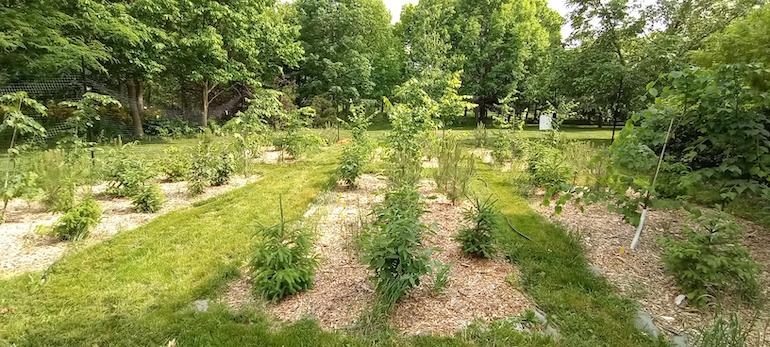
During the USDA Interagency Forum on Invasive Species, Dr. Eliana Torres Bedoya, from the Bonello lab at Ohio State, provided insights gained from a sentinel garden project operating for the last five years.
The gardens were established in six locations: two in China in the Nanjing area, one each in Italy, Sweden, Ohio, and New Hampshire. The network required collaboration among scientists in several countries, a difficult task in itself. (Jiri Hulcr of the University of Florida has also stressed the importance of mutually beneficial collaborations.)
The focus was on detecting and identifying novel fungal pathogens abroad before they ever enter a country, in an approach called ex patria sentinel plantings. Altogether, 32 tree species were planted in at least one location. For example, Chinese and European tree species were planted in the U.S. to identify potential threats to China and Europe. Conversely, North American species were planted in Europe and China to detect potential threats to the U.S. As noted, the reciprocity is crucial to establishing and maintaining a long-term relationship.
Key information gained to date:
- While the scientists isolated several potential pathogens from symptomatic plants, analysis of all plants’ leaf microbiomes showed that asymptomatic plants harbored many more potential pathogens that had not been isolated.
Healthy plants tend to harbor larger and often more diverse microbial communities. This study found that asymptomatic plants supported a significantly more abundant, richer, and taxonomically diverse leaf-associated fungal community than symptomatic plants. Importantly, this pattern pertains also to the subset of taxa classified as potential plant pathogens.
- Detection of the full range of fungal pathogens requires that samples must be collected both early and mid-to-late in the growing season because microbes present differ.
- Core leaf microbiomes were associated with specific tree species, no matter where they were planted. However, the constituents of the core microbiome were outnumbered by other organisms driven primarily by the location of the planting. This had been expected.
Other contributing factors – in declining order – were geographic location, tree species, season, and host health status. In other words, the phylogenetic relationship.
The drivers of fungal community composition interact in complex ways. For instance, the effect of the plant’s health on pathogenic fungal communities might depend on the host species. This relationship can be further modulated by seasonal variation and geographic context.
Implications:
- Sentinel gardens can facilitate identification of novel host-pathogen interactions in symptomatic and asymptomatic plants, so they should be adopted / supported by governmental and regional phytosanitary agencies.
- The findings demonstrate the need to expand surveillance beyond symptomatic plants – at both sentinel gardens and plant health border inspection stations. Phytosanitary agencies should employ both full microbial community molecular characterization to detect threats in asymptomatic plants and traditional symptom-based approaches. These modern approaches are described in Munck and Bonello 2018 (full reference at end of the blog).
- Enrico Bonello (pers. comm.) thinks it is likely that similar context-dependent interactions among host and fungus species, season, and geography also drive disease infection and virulence.
Eliana Torres Bedoya (pers. comm.) clarifies that the leaf microbiome is the community of microorganisms living on and within tree leaves. These microbes can contribute to protecting trees against pathogens, enhance tolerance to environmental stressors such as drought or pollution, and influence how trees interact with their surroundings. Because the composition of the leaf microbiome responds to changes in climate, location, and tree species, it also serves as a valuable indicator of forest health and environmental change.
There are several approaches to studying microbial communities in leaves. One is the traditional, culture-based method, which relies on isolating and cultivating microorganisms on nutrient media. While this approach is effective for recovering fast-growing and easily culturable taxa, it has a major limitation: the vast majority of environmental microbes are not readily culturable under standard laboratory conditions. As a result, full understanding requires use of culture-independent methods. One technique widely used is metabarcoding. This technique involves extracting total DNA from leaf tissue and amplifying a phylogenetically informative genetic marker specific to the microbial group of interest (for example, the internal transcribed spacer (ITS) region for fungi or the 16S rRNA gene for bacteria). The amplified regions are then sequenced using high-throughput sequencing platforms. After a series of processing steps, the sequences are clustered into Amplicon Sequence Variants (ASVs), which represent unique DNA sequences that can be used as proxies for microbial taxa present in the sample. Torres Bedoya and Bonello used the ASVs for comparative analysis.
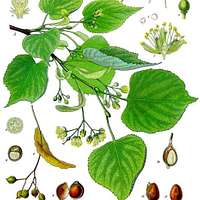
In her presentation, Torres Bedoya provided examples of the complexities arising when trying to detect fungi associated with trees. Eleven potentially pathogenic fungal genera were found to be more abundant in asymptomatic Northern red oak (Quercus rubra) trees (a North American species) planted in both Europe and China. Five ASVs were more abundant in asymptomatic Fraxinus mandshurica trees (an Asian species) planted in Sweden. In this case, the season when the leaves were sampled explained a higher proportion of the variance in the community composition than did the health status of the host. Molecular methods detected 10 genera not revealed through isolation from little-leaf linden species (Tilia cordata) trees (a European species) planted in China and the US.
This “proof of concept” study considered only fungi associated with leaves. As shown above, learning the true plant health risk associated with any tree taxon’s leaves is already complicated and resource-demanding. To fully exploit the power of the ex patria sentinel plantings approach, phytosanitary officials must provide additional resources (land, people, equipment, money) to enable screening of all plant parts, above and below-ground, and all potentially pathogenic taxa, including nematodes, phytoplasmas, and viruses. These systems must be maintained over years.
Reference
Munck, I.A., Bonello, P. 2018. Modern approaches for early detection of forest pathogens are sorely needed in the United States. Forest Pathology 48 (5). doi:10.1111/efp.1445
Posted by Faith Campbell
We welcome comments that supplement or correct factual information, suggest new approaches, or promote thoughtful consideration. We post comments that disagree with us — but not those we judge to be not civil or inflammatory.
For a detailed discussion of the policies and practices that have allowed these pests to enter and spread – and that do not promote effective restoration strategies – review the Fading Forests report at https://treeimprovement.tennessee.edu/
or