Port of Mobile, Alabama Photo by Port of Mobile Authority
In August and September I blogged about the rapid increase in volumes of imports from Asia, especially China, in 2020. At the time, the information available to me focused on the Pacific coast ports, especially Long Beach and Los Angeles.
In the earlier blogs, I mentioned three concerns:
1. Had the collapse in trade and travel during spring 2020 so reduced user fees that Department of Homeland Security Bureau of Customs and Border Protection (CBP) had to furlough Agriculture Quarantine Inspectors? AQI inspections provide important incentives for importers to follow U.S. and international rules to reduce the risk that pests will be present in imports, for example, in wood packaging.
2. The list of imports from China in the first half of 2020 includes $1 billion worth of nursery stock. This is down about 7% from 2019. However, from the perspective of preventing plant diseases and pests, these imports continue to be high risk and are still not adequately addressed by U.S. policy.
3. Other Asian regions are gaining in import share. Thus we can expect to see more pests arriving from countries other than China, like Vietnam.
Cutbacks in Numbers of Inspectors?
CBP staff have told me that they are shifting AQI inspectors from covering incoming passengers – which are still far fewer than before the Pandemic – to inspecting cargo. By doing so, CBP has avoided cutting back on the total number of inspections of imported goods and associated wood packaging.
This is fortunate since Congress has not passed a new Covid-19 financing bill that might have included an increase in the appropriation for DHS CBP. The Continuing Resolution currently in effect funds the government only until December 11. So we have another chance to ask for an increase in appropriated funds for CBP (and APHIS!) for the remainder of Fiscal Year 2021 (which ends on October 1, 2021).
Volumes of Imports from Asia – Especially China
As I reported in the earlier blog, while U.S. imports from China declined significantly in 2019 and early 2020 compared to earlier years, by the summer imports had rebounded — more than doubled (by value) between March and July.
Shifts in U.S. Ports
According to the Journal of Commerce, there is a gradual shift away from the twin ports of Los Angeles and Long Beach in the proportion of imported goods entering the country. LA-LB handled 37.7% of the loaded twenty-foot equivalent containers (TEUs) entering the United States in 2018. This fell to 33.5% in July 2020. The initial reason was a decrease in imports from East Asia (including China, Hong Kong, Japan, South Korea, and Taiwan) compared to Southeast Asia, Europe, then South America and, finally, South Asia (primarily India).
Other source regions – e.g., the Caribbean, Middle East, Pacific, Africa, and Atlantic – were all below 2% of total numbers of TEU in all three years, and changed minimally over this period.
Another reason for the shift in ports utilized by importers is congestion and delays at North American Pacific coast ports, especially Los Angeles-Long Beach. U.S. imports from Asia moving through LA-LB increased 22% in both September and August from the same months last year – 828,880 TEU in September after 832,210 TEU in August.
Congestion is also a problem at the Canadian ports of Vancouver and Prince Rupert – which have actually seen small decreases in numbers of incoming containers.
One result is a small but significant shift to Gulf Coast ports, which have become more accessible through the widening of the Panama Canal in 2016. Before the Canal was widened, these ports handled less than 3% of total US imports from Asia. In the first nine months of 2020, US Gulf ports handled 608,387 TEU from Asia – or 5.2% of total US imports from Asia. This was a 5% increase from the same period last year.
These ports, stretching from Houston to Tampa, benefit from easy and relatively cheap rail transport to inland U.S. and even Canadian cities. Another factor is the heavy presence of Walmart – which has major distribution centers in Mobile and Houston.
The Gulf coast ports are expected to expand their importance as gateways for Asian imports as ocean carriers add more capacity between the two regions and ports upgrade and expand. New Orleans and Houston plan major expansions. Port Tampa Bay notes its proximity to markets around the Southeast. Already, import volumes into Tampa during the first nine months of 2020 were nearly double the prior year’s level. Tampa hopes to double its capacity over the next five years.
U.S. imports from Asia in October were 22.6% higher than a year ago. Imports through the East and Gulf coast ports jumped 14.6% and 48.4% from September 2020. Houston and Baltimore saw the greatest increases since September. There were also shifts in Pacific ports. Still, the Los Angeles-Long Beach port complex handled 49% of total US imports from Asia in October 2020.
Pest Risks to the Gulf Coast from Southeast Asia
Rising volumes of imports into the Gulf Coast present new opportunities for non-native insects and pathogens. The warm, wet climate of the region might be far more suitable to some insects and pathogens from tropical and subtropical Asia than the dry climate of southern California (except for areas that are irrigated artificially, such as golf courses, parks, and plant nurseries!).
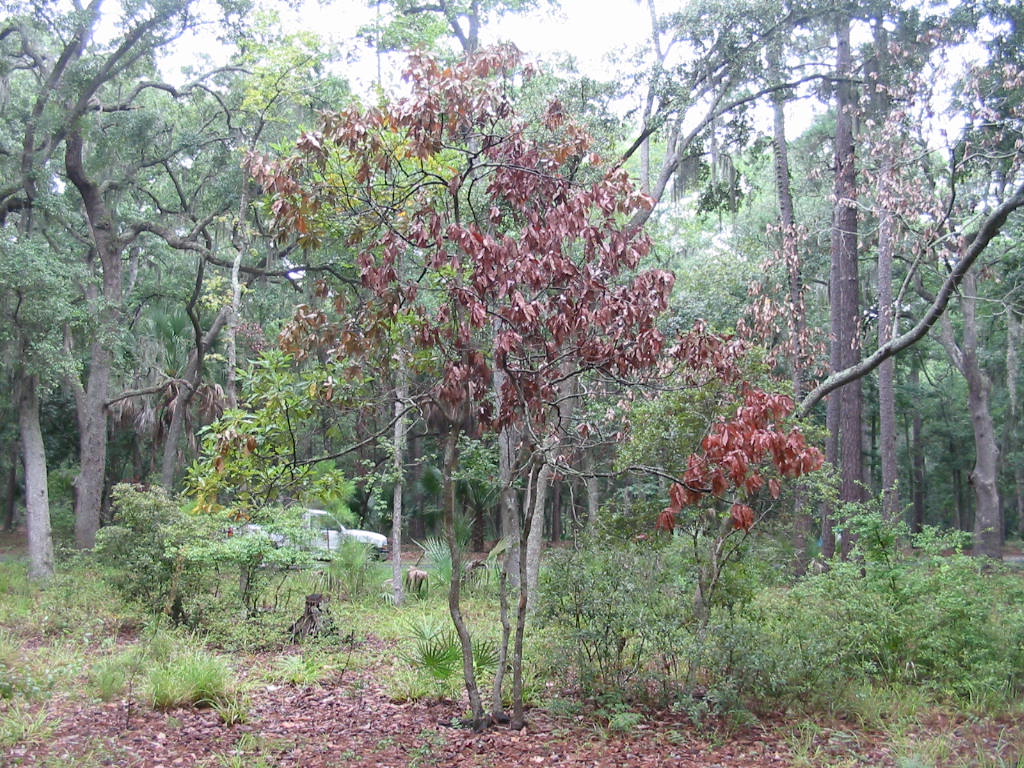
redbay grove killed by laurel wilt; Photo by Scott Cameron
Already, the redbay ambrosia beetle and its associated pathogenic fungus has decimated native redbay and swamp bay trees and now threatens sassafras (see write-up under the “invasive species” tab here.)
Another Southeast Asian ambrosia beetle – the polyphagous shot hole borer with its associated pathogenic fungus – might also find the Gulf Coast states more inviting than southern California. In California, it is causing the greatest damage to trees that are artificially irrigated. Numerous tree species native to or grown in the Gulf states are known hosts, e.g., box elder, sweetgum, and southern magnolia. (PSHB is described under the “invasive species” tab here.) Both ambrosia beetles apparently were introduced via wood packaging material.
Southeast Asia is also the place of origin of other pathogens which – in this case – would more probably be introduced on imported plants rather than wood. These include the numerous species of Phytophthora recently detected in Vietnam.
As this region receives more goods from Asia, and as those goods arrive more rapidly so more likely to arrive alive, it is imperative that all stakeholders increase their vigilance to detect new invaders. And that they join others pressing for improved policies aimed at preventing introductions.
Posted by Faith Campbell
We welcome comments that supplement or correct factual information, suggest new approaches, or promote thoughtful consideration. We post comments that disagree with us — but not those we judge to be not civil or inflammatory.
For a detailed discussion of the policies and practices that have allowed these pests to enter and spread – and that do not promote effective restoration strategies – review the Fading Forests report here.
In 2017 I blogged about a study by Hanno Seebens and 44 coauthors that showed that the rate of new introductions of alien species has risen rapidly since about 1800 – and showed no sign of slowing down (a reference to the full article is at the end of this blog). Here’s a brief recap, followed by a 2020 update by Seebens and colleagues.
In 2017, Seebens et al. analyzed a database covering 45,813 first records of 16,926 alien species established in 282 distinct geographic regions. The year with the highest number of reported new detections was 1996 – 585, or an average of more than 1.5 sightings per day.
The authors found that the adoption of national and international biosecurity measures during the 20th Century had slowed introductions – but not sufficiently. Numbers of reported new introductions of fish and mammals had decreased since the early 1950s. However, first recorded introductions of vascular plant species remained high, and introductions of birds and reptiles also continued to rise, largely as pets in countries with strengthening economies.
For taxa introduced primarily accidentally on transport vectors or as contaminants of commodities (e.g., algae, insects, crustaceans, molluscs and other invertebrates), they found a strong correlation between their spread and the market value of goods imported into the region of interest – existing biosecurity regimes had not slowed down the accumulation of these alien taxa.
As a consequence, the authors expected that the numbers of new alien species would continue to increase.
As you are aware, since 2015 I have posted 15 blogs about the continued detections of tree pests in wood packaging, which remains one of the major pathways despite the international regulation ISPM#15. I have found it harder to track insect and pathogen introductions on imported plants, but it surely continues apace.
2020 Study Projects Continuing Rise in Introductions, Especially Arthropods
Hanno Seebens and a smaller set of coauthors (see full reference at the end of this blog) have now produced an estimate of probable introduction rates in the future. They looked at taxon–continent combinations for seven major taxonomic groups and eight continents (excluding Antarctica).
They found an overall increase in established alien species between 2005 and 2050 of 36%.
The study predicted that by the mid-21st Century, there will be distinct increases in alien species numbers, particularly for Europe, but also for Temperate Asia and North America, and for invertebrates in all regions. Europe ranked highest in absolute numbers of new alien species (~2,543; a 64% increase). Temperate Asia was projected to receive about 1,597 species (a 50% increase); North America about 1,484 (a 23% increase); South America about 1,391 (a 49% increase); and the Pacific Islands about 132. Only Australasia could expect a slower rise in introductions. The predicted trajectories of alien species numbers were surprisingly similar for mainland and island regions across taxonomic groups.
Invertebrates showed the highest relative increases. Rates of new detections of alien species were projected to accelerate for arthropods other than crustaceans worldwide, especially for North America (!). The study also projected higher relative increases for aquatic vascular plants and terrestrial insects
All drivers of introduction and invasion are predicted to intensify in the future. This is despite adoption of increasing numbers of countermeasures in recent decades. Most countries’ capacity to proactively counter the rising tide of invasive species is still poor. Furthermore, the principal drivers – intensification of trade and transport, land-use change, and access to new source pools – is expected to continue operating as now – “business as usual”.
spotted lanternfly Holly Ragusa, Pennsylvania Department of Agriculture
Current Status of “New” Detections
Seebens et al. (2020) relied on the Alien Species First Records Database for first detection records up to 2005. More than half (54%) of the first-detection records in the database are vascular plants. Arthropods other than crustaceans made up 28% of the total, birds 6%, fishes 4%, mammals 3%, molluscs 2%, and crustaceans 2%. The 2020 study confirmed the earlier finding that the observed first-record rates of mammals changed at around 1950 from an increasing to a decreasing trend. Finally, the total numbers of non-native species in the Database is much lower in aquatic habitats. (The authors do not discuss whether this reflects actual introductions or gaps in reporting.)
In the database, Europe recorded 38% of all first records, North America 16%, Australasia 15%, South America 9%, Temperate Asia 9%, Africa 6%, Pacific Islands 5% and Tropical Asia 2%.
A comparison to the immediate past (1960-2005) showed that the rates of emerging non-native species were projected to accelerate during 2005-2050, especially for arthropods. As I noted above, North America is predicted to have high increases in absolute numbers. Increases are also predicted for birds. Declines are predicted for mammals and fishes.
Asian giant hornet; photo from University of Florida Department of Entomology
Projected increases for Australasia were consistently lower than in the past.
Caveats:
1) The authors assumed that past patterns of alien species accumulation will continue in the future. They did not attempt to predict efforts to strengthen biosecurity regulations and mitigation strategies.
2) Projections were calculated in the absence of data on many underlying drivers for the historic periods and some taxonomic groups. However, observed trends of newly-detected alien species numbers during the 20th century were surprisingly stable despite distinct political and socio-economic changes.
Seebens and colleagues conclude that implementation of targeted biosecurity efforts can reduce the numbers of new alien species becoming established. However, a significant decrease in rates of alien species numbers on a large scale can only be achieved by a coordinated effort that crosses political borders.
Seebens, H., S. Bacher, T.M. Blackburn, C. Capinha, W. Dawson, S. Dullinger, P. Genovesi, P.E. Hulme, M. van Kleunen, I. Kühn, J.M. Jeschke, B. Lenzner, A.M. Liebhold, Z. Pattison, J. Perg, P. Pyšek, M. Winter, F. Essl. 2020. Projecting the continental accumulation of alien species through to 2050. Global Change Biology. 2020;00:1 -13 https://onlinelibrary.wiley.com/doi/10.1111/gcb.15333
Posted by Faith Campbell
We welcome comments that supplement or correct factual information, suggest new approaches, or promote thoughtful consideration. We post comments that disagree with us — but not those we judge to be not civil or inflammatory.
For a detailed discussion of the policies and practices that have allowed these pests to enter and spread – and that do not promote effective restoration strategies – review the Fading Forests report at http://treeimprovement.utk.edu/FadingForests.htm
dead ash along Accotink Creek, Fairfax County, Virginia photo by F.T. Campbell
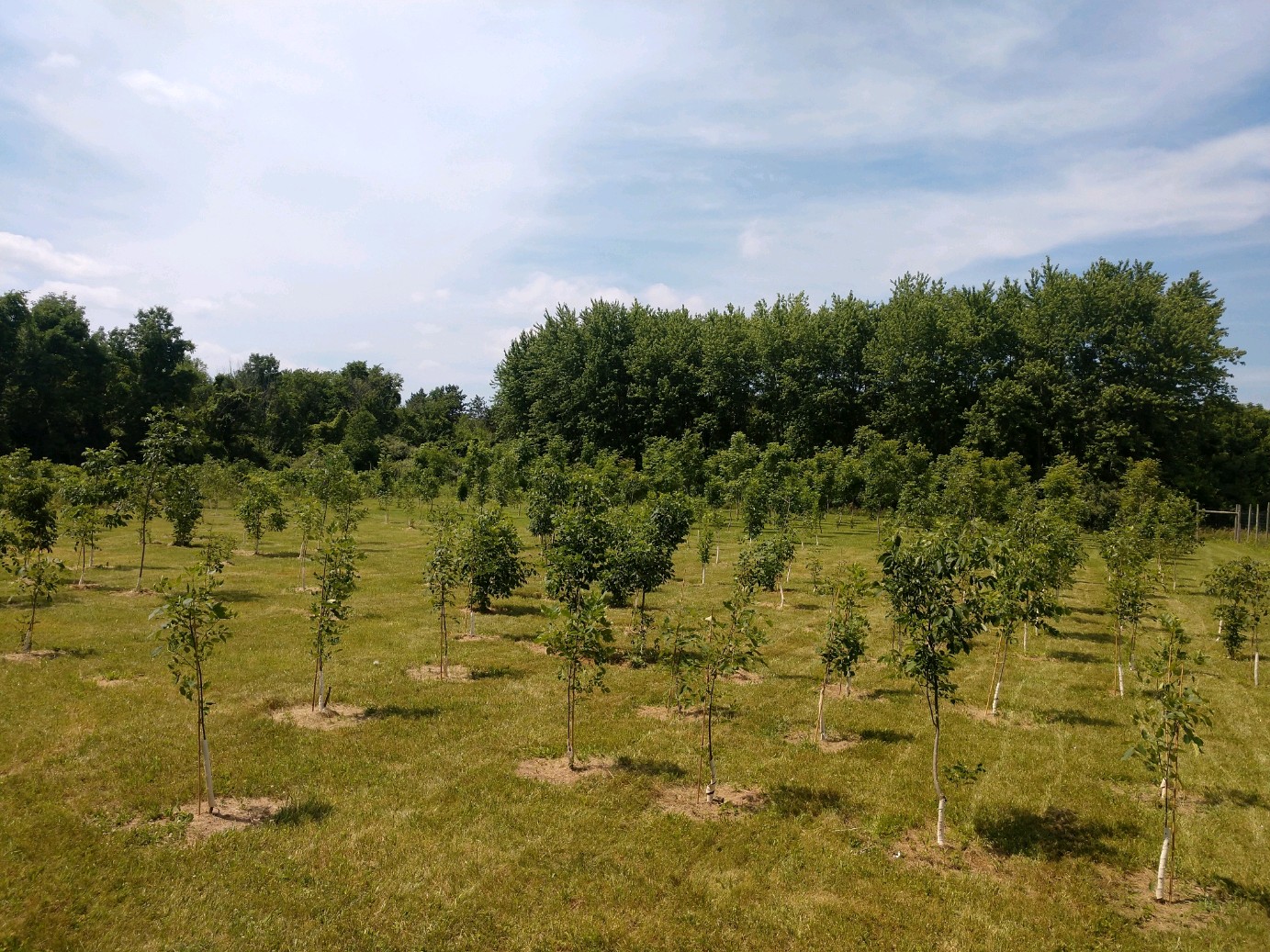
As we all know, the emerald ash borer (EAB) has killed millions of ash trees in its invaded range across eastern North America. However, field studies have detected robust regeneration of ash seedlings and saplings in various invaded areas. Ward et al. 2021 (full citation at end of blog) set out to determine whether this regeneration will result in recovery of mature ashes that can perform their ecological role. They conclude that it will not. Instead, they say, the EAB invasion will probably alter successional patterns and composition of large areas of naturally regenerating forests, causing a cascade of ecological impacts in ash-containing ecosystems
Ward and colleagues used USDA Forest Service Forest Inventory and Analysis (FIA data) to quantify ash recruitment and regeneration across the entire eastern United States. Theirs is the first study to evaluate trends across the region, rather than specific locations or stands. They related the FIA recruitment data to EAB spread, as measured by USDA Animal and Plant Health Inspection Service’ (APHIS) record of the first EAB detection in each county.
FIA inventories in 2002-2007 and 2013-2018 show large numbers of ash seedlings and saplings in counties invaded in the first wave of invasion, 2002–2006. These areas had higher densities of both seedlings and saplings than plots in other counties. The earliest-invaded counties were in areas that had extraordinarily high densities of ash before the EAB invasion, so the numbers of seedlings and saplings probably reflected that abundant seed source.
However, by the 2013-2018 inventory ash trees in the smallest overstory class (12.7 cm dbh) were dying at faster rates than they were recruited from seedlings or saplings in all 362 counties recorded by APHIS as EAB-infested before 2013. Ward and colleagues found these negative population trajectories on plots that have been invaded for more than about 10 years. This trend suggests that ash will continue to decline in abundance and may become functionally extinct across the invaded range.
Some U.S. Forest Service biologists are more optimistic about ash recovery in response to biocontrol of the EAB. See their podcast here.
In the risk of functional extinction, ash trees are unfortunately not unique. The authors note similar impacts from the invasion of the hemlock woolly adelgid and beech bark disease.
Data Reveal History of Invasion (spread)
Ward and colleagues focused on the risk of mortality for young ashes as they developed from seedlings to saplings, and, eventually, to overstory trees. The youngest “overstory” trees are 12.7 to 17 cm dbh. FIA data show that even the largest trees in this class are 3 cm smaller than trees that produce seeds.
Mortality was initially uniformly low – less than 2.1% — as measured by the first FIA inventory (2002–2007). This is not surprising because EAB was detected only in 2002, and then in only few counties. (EAB had probably been present for a decade before it was detected.)
By the 2013-2018 FIA inventory, mortality had quadrupled to 8–11% in counties invaded during the 2002–2006 period. In the counties invaded during the 2007–2012 period, morality also rose to 3-5%. Both measurements included all diameter classes. Annual mortality rates in the FIA 2013-2018 inventory were still highest for the counties invaded during 2002–2006 except for the largest trees (those greater than 40 cm dbh). By the time of the 2013-2018 FIA survey, overstory ash densities near the epicenter had since declined substantially. They had been nearly eliminated in some counties in southeastern Michigan. There were still sufficient numbers of smaller trees in the region to exhibit an elevated mortality rate – more than 10% per year in several counties in Michigan, Indian, and Ohio. By contrast, in the most recently invaded areas – those counties recorded by APHIS as infested after 2013 – there was very little change in ash densities compared to the 2002-2007 period. This is hardly surprising since it takes years for mortality to reach levels observable by the FIA process.
dead ash on edge of Pohick Bay, Fairfax County, Virginia photo by F.T. Campbell
Considering trees just entering the overstory category (those with diameters of 12.7 cm dbh), annual mortality increased substantially across the region. Between the first FIA inventory (conducted in 2002-2007) and the second inventory (conducted in 2013-2018), their average annual mortality rose more than four-fold, from 0.08 trees per ha to 0.37 trees per ha. By 2013-2018, recruitment in the 2002–2006 invasion cohort was about 50% less than tree mortality levels; recruitment and mortality were about equivalent for the counties invaded in the 2007–2012 period. Recruitment was [still] significantly higher than mortality for the counties recorded as invaded in 2013–2018. However, Ward and colleagues expect mortality rates of this cohort to accelerate over the next five to 10 years – even in areas with lower ash densities.
Ward and colleagues note that many of the young ash trees were dying before they could reach reproductive age – which they estimated to be about 20 years with a dbh of about 20 cm.
As the invasion progresses and hosts are depleted, mortality rates could slow, but, for ash to persist, it is critical that sufficient numbers of trees reach reproductive age before succumbing to residual EAB populations.
Other factors that might influence ash include competition with trees in other genera. The biocontrol agents now becoming established in young ash forests might increase the likelihood of ash persistence. Still, seed production and seedling survival will need to be frequent and widespread if they are to offset expected mortality. Resilience might also vary depending on individual species’ vulnerability to changes in the climate and to EAB (green and black ash are more vulnerable than white ash).
SOURCE
Ward, S.F., A.M. Liebhold, R.S. Morin, S. Fei. 2021. Population dynamics of ash across the eastern USA following invasion by emerald ash borer. Forest Ecology and Management 479 (2021) 118574
Posted by Faith Campbell
We welcome comments that supplement or correct factual information, suggest new approaches, or promote thoughtful consideration. We post comments that disagree with us — but not those we judge to be not civil or inflammatory.
For a detailed discussion of the policies and practices that have allowed these pests to enter and spread – and that do not promote effective restoration strategies – review the Fading Forests report at http://treeimprovement.utk.edu/FadingForests.htm
Asian giant hornet; photo from University of Florida Department of Entomology
Asian giant hornet (AGH) (Vespa mandarinia) is the world’s largest hornet, reaching sizes of 1.5 – 2 inches long. Its native range includes much of Asia. While media attention has focused on the hornet’s frightening size, the real threat is to honey bees (Apis spp.) and – especially – to the many important crops that bees pollinate.
Over the past year or so, several detections of the Asian giant hornet have been found in the Pacific Northwest – in British Columbia and Washington State. Four of the sites are within a few miles of each other. Two others are separated by miles of open water from the mainland sites. As of mid-October, 18 hornets had been detected in Washington State.
USDA’s Animal and Plant Health Inspection Service (APHIS) has partnered with the Washington Department of Agriculture to try to eradicate the hornet – which will not be easy! However, the Canadian Food Inspection Service (CFIA) has decided not to designate the hornet as a quarantine pest. This decision seems to threaten divergent approaches to the bioinvader. Fortunately, the Province of British Columbia is trying to eradicate its populations – so perhaps the diverging federal approaches will not result in facilitating the hornet’s establishment and spread.
Where the Hornet Is Known to Be
The first detected outbreak of the Asian giant hornet was in Nanaimo, British Columbia – on Vancouver Island. A single hornet was detected in August 2019. [A Canadian commenter said in March 2021 that this turned out to be a different species, V. soror.] A nest was detected in September and destroyed by local beekeepers and BC government officials. However, another hornet was found on the mainland – in White Rock, B.C. – in November 2019 [CFIA Decision Document]. In 2020, there have been several unconfirmed sightings in the Cowichan Valley on Vancouver Island (van Westendorp, pers. comm.).
Meanwhile, beekeepers discovered two AGH outbreaks in Whatcom County, WA, on the U.S. side of the border. These discoveries were in December 2019 and May 2020. There were other, unconfirmed reports in both Washington and British Columbia. [USDA APHIS Environmental Assessment (EA)] Indeed, later in 2020, Washington reported a few more sightings — in the Birch Bay area, just south of Blaine and at a site about eight miles east of Blaine (van Westendorp, pers. comm.)
Three of the hornets found in spring 2020 were mated queens (Zhu et al. 2020), which means at least one colony successfully reproduced last year. One of the mated queens was the second detection in Whatcom County – in Custer, Washington. One article said that the locations of this spring’s queens meant either that the new queens travelled up to 35 kilometres (about 22 miles) before founding their nests or that they came from more than one colony. Either way, it probably means that giant hornets could spread faster than initially thought.
White Rock, BC and Blaine, Washington are a few miles apart on the Canada-U.S. border. Langley is 12 miles to the northeast of White Rock – in the Fraser Valley. Custer is 7 miles southeast of Blaine. Birch Bay is 5 miles south of Blaine. The most recent detection is 8 miles east of Blaine. So all these detections are in close proximity and might represent spread from a single introduction site – or maybe not!
Nanaimo and the Cowichan Valley are on Vancouver Island, which is separated from the other locations by a significant distance and open water. The two island sites are about 30 miles apart. They surely represent one or more separate introductions.
One study found that a single hornet collected from Blaine, Washington differed genetically from a single hornet collected at Nanaimo on Vancouver Island. This suggests separate introductions. However, too little is known about the hornet’s genetic variability across Asia to allow conclusions about possibly separate origins (van Westendorp, pers. comm.; Wilson et al. 2020).
Areas at Risk
The area at risk is potentially much broader than the Pacific Northwest. APHIS’ initial analyses, based on plant hardiness zones, indicated that the hornet could thrive in virtually all the lower 48 states. APHIS’s Environmental Assessment did not address vulnerable areas in Canada or – apparently – in Hawai`i.
Zhu et al. (2020) carried out an assessment of areas most at risk and the hornet’s potential rate of spread. They found that areas with warm to cool annual mean temperature, high precipitation, and high human activity were most likely to be suitable for the hornet. Areas meeting these criteria are found across western and eastern North America, Europe, northwestern and southeastern South America, central Africa, eastern Australia, and New Zealand. Most of central North America and California are less suitable.
Spread could be rapid in the Pacific Northwest: they predicted that the hornet could reach Oregon in 10 years, eastern Washington and British Columbia within 20 years. This prediction is based in part by experience with the invasive congener V. velutina in Europe; it has expanded by 78 km/year in France, 18 km/year in Italy.
Oregon is relying on beekeepers to detect the hornet, which they expect will arrive even earlier than 10 years from now. The Oregon Department of Agriculture has suffered severe budget cuts because of the Covid-19 crash in state tax collections, so the program is trying to save money. As of the beginning of October, none of the hundreds of citizen reports has been a Vespa of any species (J. Vlach, Oregon Department of Agriculture, pers. comm).
Pathways of Introduction
It is not known how the hornet reached North America. Reports from other countries indicate that they can hitchhike in shipments of empty plant containers, or in the straw in which the containers are packed. In addition, some Asian cultures regard the hornets as delicacies, so deliberate importation is possible. Both APHIS and the Canadian Food Inspection Agency (CFIA) have intercepted such shipments (CFIA Decision document; USDA APHIS PPQ New Pest Response).
The Threat
The AGH typically feeds on a variety of terrestrial invertebrates including beetles, mantids, caterpillars, and spiders (EA). During the spring and summer, hornets attack their prey singly. However, in the Aautumn, hornet workers carry out mass attacks against other social Hymenoptera – including other species of Vespa, yellowjackets (Vespula spp.), various paper wasps (Polistes spp.), and honey bees (Apis spp.). Commercial honeybee colonies are typically lost when attacked en masse. They are especially vulnerable because they are more concentrated than wild bee colonies. [EA]
Commercial honeybee colonies pollinate a wide variety of crops, including tree fruits, cane fruits (berries), tree nuts, tomatoes, and even potatoes. Supplies of beef and milk might also be at risk because alfalfa hay is pollinated by bees. Of course, honey production would also be threatened. As USDA APHIS has stated, if the Asian giant hornet spreads it would become a new stress on top of the multiple existing causes of honeybee decline.
Also, there is a direct threat to people. The AGH has a painful sting that can result in anaphylaxis, cardiac arrest, and other complications in susceptible people. Officials emphasize that most people will not be at risk of stings. However, beekeepers are – their usual Personal Protective Equipment (PPE) is not adequate to ward off the hornet’s sting [APHIS EA & New Pest .
APHIS’ programmatic Environmental Assessment notes that the hornet might also pose a threat to vertebrates that nest in ground burrows and decayed trunks and roots near the ground. Burrows chosen by female hornets for nest construction can be surprisingly large, up to 60 cm (24 inches) in diameter. The EA notes that, in Washington State, badgers, marmots, ground squirrels, and other small mammals use dens or burrows. Among these, four pocket gophers and the American wolverine are federally listed under the Endangered Species Act in Washington State. [For a list, see the environmental assessment.] The EA does not discuss whether cavity-nesting birds might also be affected – although the hornets do prefer hollows near or at ground level. The authors of the EA expect vertebrates to abandon any burrows used by the hornet, so they would be displaced rather than harmed by pesticides applied by the program described below.
APHIS program
APHIS and the Washington State Department of Agriculture (WSDA) have begun an eradication program. I think eradication will be challenging because it will be very difficult both to find nests and to destroy them.
Hornets nest typically in forested areas or urban green spaces. There are lots of suitable places in the Pacific Northwest! These wooded areas are interspersed with farms, orchards, and settlements that will provide vulnerable insects as food sources.
Nest destruction involves excavating a hole two meters by two meters. This digging must be in woodlands, often right next to trees.
The key to successful eradication is finding and destroying the nests before they produce reproductive females and males – in autumn. Nest detection will be carried out as follows [EA]:
Starting in April, the agencies bottle traps in trees near the 2019 detection points. The traps are baited with a solution of rice cooking wine and orange juice to attract the worker bees. (The rice wine is added to discourage honeybees from visiting the trap.) Traps catches help define areas where nests are located.
WSDA successfully tracked radio-tagged workers to a nest in mid-October. That nest was in a tree hollow, not underground.
WSDA scientists think there were approximately 200 queens in that single nest. Two were vacuumed out during the initial extraction. Inside the nest they found 76 emergent queens and 108 capped cells with pupae that they believe were also queens. Three more queens were trapped in a bucket of water. This nest had approximately 776 cells; large nests can have up to 4,000. WSDA believes there are other nests in the area; they continue to search.
APHIS’ original plan to use pesticides to kill hornets in the nest has been dropped. Washington plans now to use vacuum extraction followed by introduction of CO2 and excavation of the nest. Washington has also not decided whether to deploy traps with the pesticide fipronil (S. Spichiger, pers. comm.)
WSDA has also asked members of the public to set out homemade hornet traps, and to report any suspicious sightings.
Canada Takes Opposite Tack
The Canadian Food Inspection Agency (CFIA) announced in February 2020 (CFIA Decision Document) that it will not attempt to regulate the Asian giant hornet as a quarantine pest for Canada. Therefore, CFIA will place no restrictions on the import or movement of any commodities that may harbor the Asian giant hornet. CFIA will, however, require permits for deliberate importation of the hornets.
CFIA’s reasoning appears to focus on two factors:
The hornet is an indirect threat to plant health (since AGH attacks pollinators. CFIA has traditionally regulated quarantine pests based primarily on significant direct threats to plant health.
Under the international phytosanitary system, countries that designate an organism to be a quarantine pest must put in place the necessary measures to prevent its entry into the country, as well as officially control the pest when present. CFIA states that “High uncertainties about the pathways of entry puts into question the ability to manage this risk, and ultimately the ability and feasibility of regulating V. mandarinia as a quarantine pest.”
Neither APHIS nor CFIA has authority to regulate threats to human health.
Detection and Eradication Efforts in British Columbia (information from van Westendorp, British Columbia Ministry of Agriculture)
In 2020, British Columbia has focused on detection surveillance. Target areas include vicinity of Nanaimo on Vancouver Island; Fraser Valley from White Rock in the West to Langley/Aldergrove in the East (along the US border); and after several credible (but non-verified) sightings, the Cowichan Valley on Vancouver Island. Because of resource limits, the surveillance effort has sought to engage local governments, border agencies, First Nations, forestry & mining companies, farmers, and beekeepers. The ministry also placed numerous bottle traps and encouraged 170 beekeepers in the Fraser Valley to install and monitor traps in their apiaries.
So far, only one AGH specimen has been sighted or collected in the three British Columbia survey areas during 2020 – the single specimen at Langley detected in May. However, the several detections along the U.S. side of the border (see above on recent detections) has spurred BC officials to intensify survey efforts in the Fraser Valley (van Westendorp). A specimen was collected adjacent to the US border in mid-October just north of the multiple detections in the US, and South of the Langley detection last spring (S. Spicher, pers. comm.).
British Columbia will continue to monitor well into the fall season and resume our surveillance in 2021 and 2022 (van Westendorp).
Hornets are clearly able to be transported and introduced. Vespa ducalis was detected in Vancouver, BC in 2019 and in Texas in 2020. Vespa velutina has become established in Europe (J. Vlach, Oregon Department of Agriculture, pers. comm).
USDA APHIS Asian Giant Hornet Control Program in Washington State Final Environmental Assessment—July 2020
USDA AHIS PPQ New Pest Response
van Westendorp, Paul. British Columbia Ministry of Agriculture, pers. comm.
Wilson, T.M., J. Takahashi, S-Erik Spichiger, I. Kim, and P. van Westendorp. 2020. First Reports of Vespa mandarinia (Hymenoptera: Vespidae) in North America Represent Two Separate Maternal Lineages in WA State, US, and BC, Canada. Annals of the Entomological Society of America · October 2020
Zhu, G., J. Gutierrez Illan, C. Looney, and D.W. Crowder. 2020. Assessing the ecological niche and invasion potential of the Asian giant hornet. PNAS Latest Articles ECOLOGY
Recent information raises several troubling/worrisome issues:
1. The overall collapse in trade and travel has severely cut into the collection of user fees. These fees pay for Agriculture Quarantine Inspectors, putting jobs at risk. Their inspections provide important incentives for importers to follow U.S. and international rules to limit pests.
2. The list of imports from China in 2020 includes $1 billion worth of nursery stock. This is down about 7% from 2019. However, from the perspective of preventing plant diseases and pests, these imports continue to be high risk and still not adequately addressed by U.S. policy.
3. Other Asian regions are gaining in import share. Thus we can expect to see more pests arriving from countries other than China, like Vietnam.
Loss of User Fees Could Mean Loss of Inspectors
The collapse of trade and travel has a more troubling result: severe reductions in user fees collected from travelers and importers to fund DHS/Customs and Border Protection Agriculture Quarantine Inspectors. In a recent opinion piece, several former administrators of APHIS warn that current user fee collections are insufficient to sustain inspectors’ employment. A reserve fund will also be depleted this month. APHIS estimates that it will require an appropriation of $630 million to fund these agricultural inspections through the next fiscal year (October 2020 – September 2021).
Agricultural inspectors focus on plant and animal imports – including horticultural stock, seeds, fruits, and vegetables – both in commercial shipments and in passengers’ baggage. They are also called in when CBP inspectors suspect pests are present in wood packaging.
I do not consider inspection to be the most effective strategy to prevent introductions. That is, I think inspections are less effective than regulations requiring treatments and pre-shipment pest-mitigation measures. However, losing inspectors – even temporarily – will undermine detection and enforcement as an incentive for importers to comply with U.S. and international rules. This funding crisis is therefore a serious concern. Please ask your senators and member of Congress to support increasing the appropriation for DHS CBP by $650 million to keep these inspectors on the job.
Imports from Asia Skyrocket
New data show that containerized US import volumes from Asia rocketed 91% between March and August. During the same five-month period a year ago, import volumes rose only 36% — so the 2020 increase is more than double the earlier pace. Numbers of incoming containers from Asia nearly doubled at the ports New York/New Jersey; Los Angeles/Long Beach, California; and Savannah, Georgia. The California ports are reported to be working nearly at capacity. This has resulted in higher handling costs and delays in trucking imports out of the port to their destinations.
Import volumes from Vietnam and India continue outpace the market generally.
Update: Imports from China Continue to Decline Relative to Other Source Regions
In August I posted a blog reporting a significant reduction in imports from China recently – first as a result of new tariffs in 2019, and second, as a result of the global economic crash associated with the Covid-19 virus.
Imports from China decreased by 16% in 2019 compared to 2018, then rose slightly in the first months of 2020. My focus then – and now – is on declining imports of heavy goods — the types of imports most likely to be packaged in wooden crates or on wooden pallets that can transport pests.
Import volumes from China rose later in the year, as the U.S. economy began to rebound. Official data from the U.S. Bureau of the Census shows US imports from China had more than doubled (by value) since March — from $19.8 billion in March to $40.7 billion in July. Still, imports of heavy items and most consumer items – other than computers – have decreased in 2020 compared to 2019.
Included in this list of imports is $1 billion worth of nursery stock – down about 7% from 2019. Nursery stock imports are rarely included in Census reports, so I value this information. Of course, these imports – even ‘though declining – still represent a series plant pest risks. One study showed that imported plants carry a pest risk 12 times higher than wood packaging material (Liebhold et al. 2012; see full reference at end of blog).
rhododendron infected by sudden oak death – photo courtesy of Jennifer Parke
Important Shifts in Sources of U.S. Imports
Data show a broad and years-long decline in the share of U.S. imports that come from China. This decline is best seen in declining volumes of imports arriving at the ports of Los Angeles, Long Beach, Northwest Sea Alliance and another port in the region. Imports arriving at these ports declined 5.3% in May 2019 compared to May 2018. At that time, this decline was blamed on importers having stocked up in advance of threatened US tariffs on goods from China. Bureau of the Census data show a 2% reduction in loaded twenty-foot-long containers (TEUs) entering Long Beach in calendar year to date 2019 compared to calendar year to date 2020 (through August).
Commercial data sources indicate even larger declines. According to the Journal of Commerce, the twin ports of Los Angeles and Long Beach handled 37.7% of the loaded TEUs entering the United States in 2018. This fell to 33.5% in July 2020 — a drop of 4.2 percentage points in just 18 months. The author of this article said the reason was a fall in imports from East Asia (including China, Hong Kong, Japan, South Korea, and Taiwan) compared to Southeast Asia, Europe, then South America and, finally, South Asia (primarily India). The article provides a table quantifying shifting sources of U.S. imports:
Total US Market Share Imports by Source Region
SOURCE 2018 2019 2020YTD 2018-2020 change
East Asia 61.6% 58% 54.5% -7.1%
Europe 14.9% 15.8% 16.9% +1.9%
Southeast Asia 8.3% 10.5% 11.9% +3.6%
South America 8.2% 10.5% 11.9% +3.6%
South Asia 2.7% 3.1% 3.1% +0.5%
Other source regions – e.g., the Caribbean, Middle East, Pacific, Africa, and Atlantic – were all below 2% of total numbers of TEU in all three years, and changed not at all or minimally over this period.
As I noted in the earlier blog, the pest risk persists. First, imports from China continue, and the most recent data (for the period 2011-2016) indicate significant numbers of shipments continue to be in violation of requirements for wood packaging (APHIS database / pers. comm). Remember, USDA passed up an opportunity to raise the issue of non-compliant wood packaging with Chinese phytosanitary officials.
Plus other regions also are the source of pests. I wrote about the risk from Mexico in the previous blog. The region of Southeast Asia has already been the source of highly damaging pests, e.g., redbay ambrosia beetle and polyphagous shot hole borer.
distribution of laurel wilt, carried by redbay ambrosia beetle
Scientists have also detected numerous known and previously unknown species of the brown alga genus Phytophthora in Vietnam and Taiwan. Of course, this is the genus that includes the pathogens that cause sudden oak death, black ink disease, potato blight, and numerous other plant diseases. APHIS has not accepted my urging to undertake rapid assessments of the vulnerability of North American trees to these newly discovered microbes.
SOURCE
Liebhold, A.M., E.G. Brockerhoff, L.J. Garrett, J.L. Parke, and K.O. Britton. 2012. Live Plant Imports: the Major Pathway for Forest Insect and Pathogen Invasions of the US. www.frontiersinecology.org
Posted by Faith Campbell
We welcome comments that supplement or correct factual information, suggest new approaches, or promote thoughtful consideration. We post comments that disagree with us — but not those we judge to be not civil or inflammatory.
For a detailed discussion of the policies and practices that have allowed these pests to enter and spread – and that do not promote effective restoration strategies – review the Fading Forests report at http://treeimprovement.utk.edu/FadingForests.htm

Reminder: Friday is the deadline for commenting on APHIS’ draft environmental assessment for the Asian longhorned beetle eradication program in South Carolina. Comments should be submitted at https://beta.regulations.gov/commenton/APHIS-2020-0086-0001
The Center for Invasive Species Prevention submitted comments that supported the eradication effort because of the well-documented threat that the ALB poses to the forests of North America. We also supported the preferred alternative in the EA.
However, we found the environmental assessment (EA) to be deficient in several ways:
the EA does not identify the host species present in the program area – not even of the 5,800 trees inspected by the program as of mid-August.
the EA provides no estimate of the proportion of deciduous trees and shrubs in the area that are host species. Conifers dominate the area. This means that any fauna dependent on deciduous trees and shrubs for food and shelter already contend with limited resources. Consequently, while we concur with the EA that any impacts will be localized, they might be exacerbated by the relative rarity of hardwood species in the local area. It is particularly important that the EA address this question since the Programmatic EIS was written under the assumption that forests at risk to the ALB are like those in the Northeast and Midwest, where hardwoods dominate.
Without knowing the proportion of deciduous flora comprised of host species, no one can evaluate the amount of wildlife food that could be removed or treated by pesticides. Some wildlife species are potentially vulnerable, including those that feed on pollen and nectar (i.e., bees and other pollinators) and those that feed on insects and other invertebrates. The latter include two species listed federally as threatened species: the frosted flatwood salamander (Ambystoma cingulatum) and northern long-eared bat (Myotis septentrionalis). Also vulnerable are birds, 96% of which feed their young on insects and other invertebrates. I worry about sublethal effects and possible bioaccumulation. Aquatic organisms, especially invertebrates, might also be affected.
The information gaps in the EA highlight weaknesses in the Programmatic EIS, on which it relies. The most important gap is the dearth of pesticide dose/mortality data for terrestrial amphibians. Apparently, EPA has not required such studies before approving pesticides.
Posted by Faith Campbell
We welcome comments that supplement or correct factual information, suggest new approaches, or promote thoughtful consideration. We post comments that disagree with us — but not those we judge to be not civil or inflammatory.
For a detailed discussion of the policies and practices that have allowed these pests to enter and spread – and that do not promote effective restoration strategies – review the Fading Forests report at http://treeimprovement.utk.edu/FadingForests.htm
APHIS has apparently passed up an opportunity to pressure China to clean up its wood packaging – although China ranks among the countries that most often violates ISPM#15 and sends wood packaging infested by quarantine pests. (See the blogs under the category “wood packaging” on this site.)
In May, a large delegation of APHIS employees met (virtually) with an equally large delegation of its Chinese counterpart to negotiate “technical protocols” linked to the Phase 1 trade agreement with China. The focus of the negotiations was on Chinese phytosanitary barriers that block exports of US products to China.
The two countries have now signed technical protocols to allow the United States to export to China a wide range of commodities estimated to be worth between $700 million and $760 million annually when the agreement is fully implemented. These commodities include barley for processing, hay, some fruits (blueberries, avocados, nectarines), almond meal, and chipping potatoes.
Some of the agreements cap years of effort. The example cited is chipping potatoes. Negotiations continue on some other U.S. exports to China, including logs.
An article in APHIS’ online newsletter reports that “On the import side, we are working on the requirements for China’s requested commodities….” Presumably these would be exports to the U.S. The examples listed were all fruits.
US & Chinese delegations (APHIS photo)
I inquired whether wood packaging was part of the negotiation.
Andrea B. Simao, Assistant Deputy Administrator and Director of PPQ’s Phytosanitary Issues Management unit, replied that SWPM was not raised “since there has [sic] not been significant issues.” Instead, she detailed efforts in the ongoing negotiations to persuade China that U.S. phytosanitary treatments are sufficient to control various pathogens in logs: oak wilt, phosphine on conifers, pinewood nematode.
Apparently the focus was fully on US exports and nobody raised US concerns about the risks of imports from China. This approach fits the Administration’s emphasis on exporting agricultural commodities to China. However, this is not reality. Over the past five years, I have frequently cited USDA’s own data – which demonstrate the likelihood that wood packaging will transport tree-killing pests from China to the U.S.
APHIS PPQ Deputy Administrator Osama El-Lissy & Chinese counterpart Li Jainwei sign agreement (APHIS photo)
Please inform your Member of Congress and Senators (or candidates for House or Senate) about how you feel about this failure of USDA to protect America’s natural resources. We must raise the political heat in order to pressure USDA into placing as high a priority on protecting US natural resources as it does on supporting agricultural exports.
Posted by Faith Campbell
We welcome comments that supplement or correct factual information, suggest new approaches, or promote thoughtful consideration. We post comments that disagree with us — but not those we judge to be not civil or inflammatory.
For a detailed discussion of the policies and practices that have allowed these pests to enter and spread – and that do not promote effective restoration strategies – review the Fading Forests report at http://treeimprovement.utk.edu/FadingForests.htm
U.S. phytosanitary policy is set by politicians – the Secretary of Agriculture, trade officials, and members of the House and Senate. Elected or appointed state officials determine how aggressively trees are protected in their jurisdictions. To fix the problems, those politicians need to hear from those of us who know about the pest risk associated with wood packaging and other imports.
Politics is how our country makes important decisions. And in politics, the squeaky wheel gets the grease.
Election seasons provide opportunities to raise issues. Politicians pay more attention to constituents’ concerns when they are courting our votes.
Further, if new people take up positions in January (whether elected or appointed), they will be more open to learning about issues new to them than were the people who have occupied an office for some time.
These messages need to be repeated periodically. Proctor and Gamble does not make its profits by asking us to buy their toothpaste once a year. We cannot duplicate a major corporation’s advertising budget – but we can speak up!
Tell your member of Congress and senators that you are worried that our trees are still being put at risk by insects arriving in wood packaging or diseases being spread by shipments of plants. Ask them to urge theUSDA Secretary to take action to curtail introductions of additional tree-killing pests.
Ask your friends and neighbors to join you in communicating these concerns to their Congressional representatives and senators.
If you are a member of an association – a scientific or professional society, an environmental advocacy group, a homeowners’ association – ask your association and fellow members to join you in communicating these concerns to their Congressional representatives and senators.
Write letters to the editors of your local newspaper or TV news station.
What should we say?
Our goal should be to hold foreign suppliers responsible for complying with ISPM#15. Here are five pieces of a comprehensive approach. It is best to advocate for all. However, if you feel more comfortable focusing on one or two specific actions, please do so!
1) One approach is to penalize violators. APHIS should:
Fine an importer for each new shipment found to be out of compliance with ISPM#15 in those cases where the foreign supplier of that shipment has a record of repeated violations.
Prohibit imports in packaging made from solid wood (boards, 4 x 4s, etc.) from foreign suppliers that have a record of repeated violations.
Allow continued imports from those same suppliers as long as they are contained in other types of packaging materials, including plastic, metals, fiberboards.
APHIS has the authority to take these action under the “emergency action” provision (Sec. 5.7) of the World Trade Organization Agreement on Sanitary and Phytosanitary Standards. (See a lengthy discussion of the SPS agreement in Chapter III of Fading Forests II, available here.) http://treeimprovement.utk.edu/FadingForests.htm
USDA and CBP should take other steps to help importers comply with ISPM#15.
USDA should also step up efforts to help U.S. importers to determine – and then use – those foreign suppliers of wood packaging and dunnage have good compliance records.
APHIS should join the DHS CBP in providing incentives to importers to join an expanded Customs-Trade Partnership Against Terrorism program (C-TPAT) that would require participants to assume full responsibility for ensuring that their packaging complies with IPPC standards.
The Government should strengthen underlying regulations.
Once a new president is elected, urge him to instruct the Office of Management and Budget to allow APHIS to finalize regulations – proposed more than five years ago! – that would apply ISPM#15 to wood packaging used in trade between the US and Canada. (Canada has been ready to adopt this measure for several years.)
USDA needs to understand the “approach rate” of pests in wood packaging in order to identify and fix weaknesses in its policies. To reach this understanding, APHIS should authorize Robert Haack to repeat the study documented in Haack et al. (2014). Furthermore, APHIS should collaborate with foreign counterparts to determine the relative importance of possible causes of the persistent pest presence problem – fraud, accidental misapplication of treatments, or other failures of treatment. Once the study has been completed, APHIS and its colleagues should work through the IPPC to fix the problems.
There are also recommendations of the Tree-Smart Trade program at www.tree-smart-trade.org Tree-Smart also has a Twitter account: @treeSMARTtrade
Posted by Faith Campbell
We welcome comments that supplement or correct factual information, suggest new approaches, or promote thoughtful consideration. We post comments that disagree with us — but not those we judge to be not civil or inflammatory.
For a detailed discussion of the policies and practices that have allowed these pests to enter and spread – and that do not promote effective restoration strategies – review the Fading Forests report at http://treeimprovement.utk.edu/FadingForests.htm
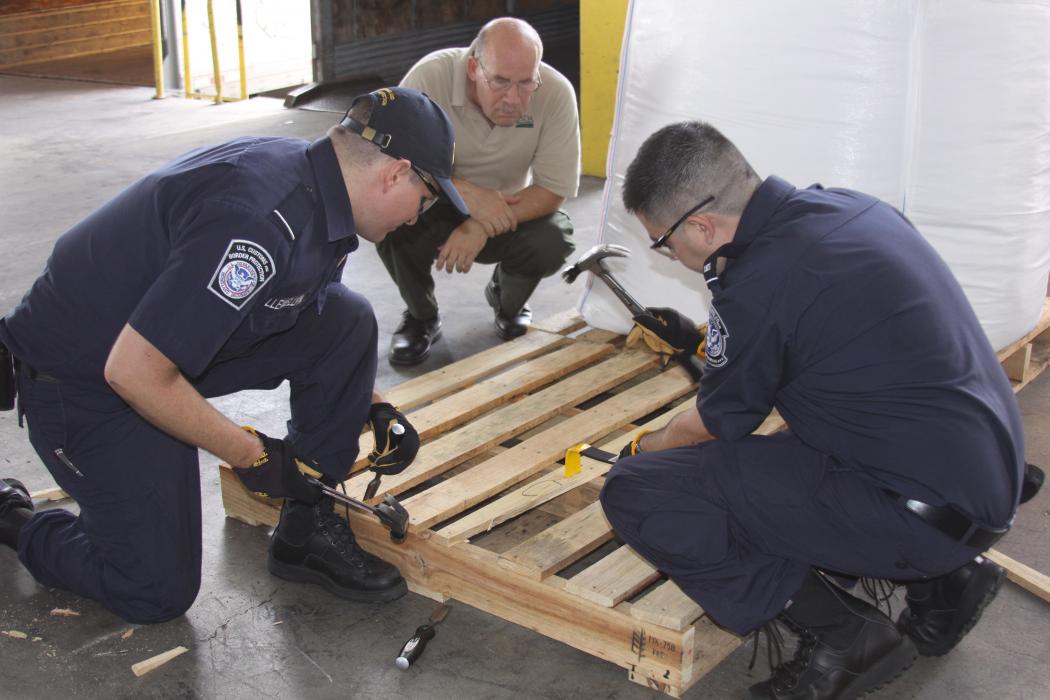
I first blogged about wood packaging in July 2015 – it was my first blog! I have written 15 times about wood packaging since. To see the series, visit www.nivemnic.us, scroll down below “archives” to “categories”, click on “wood packaging”.
For five years, I have called upon USDA to act. It’s long past time to replace decade-old policies that have failed to prevent introductions. More recently, I have begun calling for revising the international phytosanitary system, too.
As I’ve demonstrated in my blogs – and documented by Aukema et al. 2011 and others—wood-boring beetles have been among the most damaging tree-killing pests introduced to the U.S. Local governments, homeowners, and businesses spend billions of dollars each year to manage dying and dead trees. Landowners bear added costs in reduced property values. The ecosystem impacts are substantial, but still poorly quantified.
International efforts – i.e., ISPM#15 – have apparently reduced the rate at which wood-borer pests approach our shores. However, the reduction has not been sufficient to prevent a tripling of the number of non-native wood-borers established in U.S. by 2050 (Leung et al. 2014) — as I have demonstrated over and over.
Also, I have documented again and again the continued presence of wood-borers in incoming wood packaging and resulting introductions (visit the “wood packaging” category in the blog archives).
Part of the blame for inadequate protection from pests might arise from the specific requirements of current international standards (see Nadel et al. 2016 and Krishnankutty et al. 2020b). But I think most of the blame falls on APHIS’ choice to be forgiving, rather than strict, in enforcing its own regulations that implement the international standard.
There is widespread evidence of exporters’ failures to implement international standards. The evidence is clear: we cannot rely on exporters to meet either international standards or importing country’s phytosanitary requirements. The same countries – and even individual exporting businesses! – fail to comply with ISPM#15 year after year (Haack et al. 2014; APHIS interception database). APHIS has not taken effective action to end imports from these scofflaws.
U.S. phytosanitary policy is set by politicians. Politicians pay more attention to constituents’ concerns during election seasons – so NOW is the time to press for changes! I will discuss how to do this in an accompanying second blog.
U.S. imports have decreased significantly in recent years, especially from the two countries with the worst records of non-compliance with ISPM#15 (Mexico and China). But economic collapse is not a long-term strategy for reducing pest risk.
Quantifying Pest Risk for Wood Packaging: We Don’t Know
Here’s my best estimate of the pest risk associated with wood packaging. Remember, though, that key data remain missing.
Haack et al. published a landmark analysis of pest approach rates in 2014, using data from 2009. However, they did not include imports from China, Mexico, or Canada. Given the history of interceptions, it is probable that a recalculation of the approach rate that included China and Mexico would raise the estimate. It is more difficult to provide a more accurate estimate re: Canada, because CBP rarely inspects those shipments. (The U.S. and Canada do not require each other to treat wood packaging.)
As of mid-October 2019, CBP said it received 11 million containers at seaports annually (CBP website). If 75% of those incoming sea-borne containers have wood packaging (per Meissner et al. 2009), that equals 8,250,000 containers. If 0.1% of those containers with wood packaging is infested (per Haack et al. 2014), we are receiving 8,250 infested shipping containers via maritime shipping – even now, when imports have decreased substantially. This is more than 22 infested containers every day.
As of a decade ago, Chinese shipments were only half as likely to be enclosed in wood packaging as are shipments from other exporters. Perhaps this reflects a greater reliance on air shipments – air shipments globally are half as likely as maritime shipments to be encased in packaging made of wood (Meissner et al. 2009). Despite the lower proportion of wood packaging use, shipments from China still rank second (to Mexico) in the number of shipments detected as infested. In part, the data reflect inspection priorities: due to the great damage caused by Asian insects to North American trees and their record of poor compliance, CBP targets shipments from China for more intense scrutiny. Still, the high number of detections reflects continuing non-compliance by Chinese exporters. And remember: first, the U.S. and Canada began requiring treatment of wood packaging from China at the end of 1998 – 21 years ago! And second, APHIS almost never penalizes importers for poor compliance.
Understanding the pest risk from Mexico and Canada is important, because they are our second and third largest trading partners. As of October 2019, the numbers of shipping containers arriving overland (by truck or rail) from these countries annually were 13.7 million (CBP website). No one has estimated the proportion of these containers that contain wood packaging. If it is the same proportion as in maritime shipments, the approach rate would be another 10,275 infested containers per year – or 28 per day.
The total of maritime and land-based shipments that are probably infested (excluding air shipments) – would be 18,525 containers annually or 50 per day.
If I am right that shipments from China and Mexico have a higher pest-infestation rate than the 0.1% global estimate developed by Haack et al. (2014), the pest approach rate is probably higher than the 18,525 containers given above.
(I noted in my previous blog that insect species arriving from our neighbors pose a lower risk than the species from Asia or Europe – although the risk is not “0”. I addressed the Mexican woodborers in the previous blog. The risk from Canada could arise from non-native woodborers established in that country but not yet in the U.S. e.g., brown spruce longhorned beetle. Another risk is that shipments from off-shore origins might be transshipped through Canada and escape inspection because they are claimed to have been re-packaged there – as CBP staff have told me.)
The point is, we don’t know how many pests are reaching the U.S. daily. The current approach rate might be significantly higher or lower than Haack and colleagues estimated a decade ago due to
Exclusion of China, Mexico, and Canada from the original study.
Changes in the treatment requirements of ISPM#15.
Another decade of experience – which might have led to better compliance (however, see below).
Despite my urging, APHIS has not agreed to a study to update Haack’s estimate.
It is also true that shipping containers provide shelter for a vast range of hitchhiking organisms in addition to insects in the wood, e.g., other insects’ eggs attached to the sides of the container, snails, weed seeds, even vertebrates.
Enforcement: One Agency Steps Up
When ISPM#15 was adopted, APHIS expected that importers would clean up their supply chains in order to avoid the lost income and costly delays that result from CBP interception of a non-compliant shipment. However, the data clearly show that this disincentive to violate ISPM#15 is insufficient to prompt companies to fix the problem. We need to find a more efficacious approach.
Clearly, enforcement in the form of penalties had been rare before 2017. CBP staff reported that as of January 2017 (before the agency strengthened its own enforcement effort), only about 30 of the nearly 21,000 non-compliant import shipments had received a financial penalty. CBP staff cited two reasons for the low penalty rate: 1) USDA policy requires that an importer be caught five times in a year with non-compliant wood packaging before imposing a fine; and 2) APHIS had not designated wood packaging as a high-risk commodity. After CBP initiated more aggressive enforcement in November 2017, enforcement actions rose by 400% (John Sagle, CBP. pers. comm) – although from a very low starting point!
Data on CBP interceptions in 2019 (Harriger) show decreases in the number of non-compliant shipments from earlier years in all categories: a 19% decrease below the 2010-2018 average of shipments intercepted; a 13% decrease in number of shipments intercepted because the wood packaging lacked the ISPM#15 mark; a decrease of 6% in the number of shipments intercepted that had a quarantine pest. Still, percentages based on absolute numbers don’t tell the whole story. They can be affected by inspection effort and other variables. So while these decreases are encouraging, it is still too early to determine the impact of CBP’s enforcement upgrade.
Unfortunately, there has not yet been the substantive/overall change needed in federal policy. At a minimum, APHIS continues to allow importers five violations per twelve month period.
While the cities that import the most goods – especially from Asia – would seem to be at particular risk, experience shows that pests can be introduced anywhere. This is demonstrated by establishment of the Asian longhorned beetle in semi-rural Clermont County, Ohio and the velvet longhorned beetle in Utah (Krishnankutty, et al. 2020a).
“Treated” Wood Still Transports Pests
According to interception data provided to me by CBP (Harriger), 97% of pest-infested shipments detected over a period of 6 years (FYs 2010 – 2015) bore the stamp indicating they’d been treated in compliance with ISPM#15. These shipments came from all importing countries. Unfortunately, CBP has not provided the necessary breakdown of its data in more recent years to calculate this proportion.
Krishnankutty et al. (2020b) analyzed wood packaging from 42 countries intercepted by CBP over six years (April 2012 – January 2018). They found that 87% of the infested wood packaging included in this study bore the ISPM mark. This is a lower non-compliance rate than that shown by CBP data, but still too high.
European scientists carried out an intensive survey of wood packaging associated with shipments of stone from China to the 28 European Union countries during 2013-2016. They also found that 97.5% of consignments that harbored pests bore the ISPM#15 mark (Eyre et al. 2018). The problem did not decrease over time.
The possible causes of this problem are long-known. What effort is APHIS making to determine their relative importance? Is it fraud? Is it accidental misapplication of the treatments? Is it that the treatments do not work as well as necessary?
By comparing Haack’s estimate with the CBP data, I estimate that CBP is detecting and halting the importation of 4 – 8% of the shipments that actually contain pest-infested wood. Wu et al. (2020) concurred that the majority of infesting larvae would probably not be intercepted – despite CBP’s best efforts – and would be transported to the cargo’s intended destinations.
Since CBP inspects only about 2% of incoming shipments, this detection rate demonstrates the value of CBP’s program to target likely violators. It deserves praise. But it is obviously too low a “catch” rate to provide an adequate level of protection for our forests. I do not believe that increasing the inspection workforce and effort will result in substantial improvement in this rate. Instead, we need action to curtail imports of wood packaging from countries and exporters with records of non-compliance.
What Federal Agencies Are Doing to Better Prevent Introductions
Other than CBP’s welcome newly rigorous enforcement policy, most actions have focused on educating exporters, importers, shippers, customs brokers, and exporting countries’ phytosanitary agencies.
Since upgrading its enforcement actions, CBP has expanded its long-standing educational efforts. APHIS co-sponsored workshops for agricultural agencies and exporters in Asia and the Americas earlier in the decade.
APHIS also planned to host international symposia on wood packaging issues as part of events recognizing 2020 as the International Year of Plant Health. These symposia have been postponed by travel and other restrictions arising from the coronavirus pandemic.
Posted by Faith Campbell
We welcome comments that supplement or correct factual information, suggest new approaches, or promote thoughtful consideration. We post comments that disagree with us — but not those we judge to be not civil or inflammatory.
For a detailed discussion of the policies and practices that have allowed these pests to enter and spread – and that do not promote effective restoration strategies – review the Fading Forests report at http://treeimprovement.utk.edu/FadingForests.htm
SOURCES
Aukema, J.E., B. Leung, K. Kovacs, C. Chivers, K. O. Britton, J. Englin, S.J. Frankel, R. G. Haight, T. P. Holmes, A. Liebhold, D.G. McCullough, B. Von Holle.. 2011. Economic Impacts of Non-Native Forest Insects in the Continental United States PLoS One September 2011 (Volume 6 Issue 9)
Eyre, D., R. Macarthur, R.A. Haack, Y. Lu, and H. Krehan. 2018. Variation in Inspection Efficacy by Member States of SWPM Entering EU. Journal of Economic Entomology, 111(2), 2018, 707–715)
Haack, R. A. 2006. Exotic bark- and wood-boring Coleoptera in the United States: recent establishments and interceptions. Can. J. For. Res. 36: 269–288.
Haack, R.A., F. Herard, J. Sun, J.J. Burgeon. 2009. Managing Invasive Populations of Asian Longhorned Beetle and Citrus Longhorned Beetle: A Worldwide Perspective. Annu. Rev. Entomol. 2010. 55:521-46.
Haack, R. A., K. O. Britton, E. G. Brockerhoff, J. F. Cavey, L. J. Garrett, M. Kimberley, F. Lowenstein, A. Nuding, L. J. Olson, J. Turner, and K. N. Vasilaky. 2014. Effectiveness of the international phytosanitary standard ISPM no. 15 on reducing wood borer infestation rates in wood packaging material entering the United States. Plos One 9:e96611.
Krishnankutty, S.M., K. Bigsby, J. Hastings, Y. Takeuchi, Y. Wu, S.W. Lingafelter, H. Nadel, S.W. Myers, and A.M. Ray. 2020a. Predicting Establishment Potential of an Invasive Wood-Boring Beetle, Trichoferus campestris (Coleoptera) in the United States. Annals of the Entomological Society of America, XX(X), 2020, 1–12
Krishnankutty, S., H. Nadel, A.M. Taylor, M.C. Wiemann, Y. Wu, S.W. Lingafelter, S.W. Myers, and A.M. Ray. 2020b. Identification of Tree Genera Used in the Construction of Solid Wood-Packaging Materials That Arrived at U.S. Ports Infested With Live Wood-Boring Insects. Commodity Treatment and Quarantine Entomology
Leung, B., M.R. Springborn, J.A. Turner, E.G. Brockerhoff. 2014. Pathway-level risk analysis: the net present value of an invasive species policy in the US. The Ecological Society of America. Frontiers of Ecology.org
Meissner, H., A. Lemay, C. Bertone, K. Schwartzburg, L. Ferguson, L. Newton. 2009. Evaluation of Pathways for Exotic Plant Pest Movement into and within the Greater Caribbean Region. Caribbean Invasive Species Working Group (CISWG) and USDA APHIS Plant Epidemiology and Risk Analysis Laboratory
Nadel, H. S. Meyers, J. Molongoski, Y. Wu, S. Lingafelter, A. Ray, S. Krishnankutty, A. Taylor. 2017. Identification of Port Interceptions in Wood Packing Material Cumulative Progress Report, April 2012 – June 2017
Oregon Department of Agriculture, Plant Protection & Conservation Programs. 2019. Annual Report 2019.
USDA APHIS interception database – pers. comm. January 2017.
Wu, Y., S.M. Krishnankutty, K.A. Vieira, B. Wang. 2020. Invasion of Trichoferus campestris (Coleoptera: Cerambycidae) into the United States characterized by high levels of genetic diversity and recurrent intros. Biological Invasions Volume 22, pages1309–1323(2020)
A shipping container being off-loaded in Long Beach
In 2018, China supplied 21.2% of all U.S. imports of goods. Import volumes had been rising rapidly: 427% since China joined WTO in 2001 (17 years!).
However, volumes of U.S. imports from China dropped significantly following imposition of tariffs in the second half of 2019. See a graph published in the Washington Post. U.S. Census Bureau data show U.S. imports from China declined 16% in 2019 compared to 2018 (from $539 billion to $452 billion). The Post graph shows imports from China have begun to rise again in 2020, although they are still far below levels in 2016-2018.
What might this imply for imports of pests?
2019 Imports from China
Heavy goods – are the ones most likely to be packaged in wooden crates or on wooden pallets that can transport pests. These include metal and stone products (including tile); machinery (such as automobile parts and farm equipment); electronics; bulk food shipments; and finished wood articles
Many goods imported from China are heavy so their packaging might facilitate pest invasions. Unfortunately, the various websites combine types of imports in different categories, so it is difficult to compare data from the various years. Worse, while I easily found data for 2019 and 2020, I could not find 2018 data (it must be there somewhere!). Still, six of the top eleven categories in 2019 appear to fall into the “heavy” categories.
Also, China is the third largest supplier of agricultural imports, primarily processed fruits and vegetables, including juices (together, about $1.5 billion), snack foods ($222 million), spices ($167) million, and fresh vegetables ($160 million).
Trade from Hong Kong is reported separately, but it is not a significant amount – $6.3 billion in 2018; and is declining. Electrical machinery is the largest category, at $980 million.
2020 Imports from China
Import volumes declined substantially during the first five months of 2020, compared to the same period in 2019:
Cell phones & related equipment fell 18.53%
Computers fell 4.86%
Miscellaneous textile rose 300%
Motor vehicle parts fell 26%
Seats excluding medical and dental fell 32.5%
The principal sea ports receiving goods from China during the period January – May 2020 were
Los Angeles $35.27 billion – fell 31.9%
Long Beach $10.61 billion – fell 22%
Newark $9.21 billion – fell 28%
Savannah $8.38 billion
Oakland $4.94 billion
Houston $4.29 billion
Pest Implications
These reduced volume of imports would seem to promise a reduced pest risk. Other factors point in the same direction.
Mode of transport is also significant, that is, air freight versus sea or land transport. In the first five months of 2020, https://ustr.gov/countries-regions/china-mongolia-taiwan/peoples-republic-china a quarter of U.S. imports from China, or $36 billion, entered through just four airports: Chicago’s O’Hare, Los Angeles, Anchorage, and JFK in New York. It is also encouraging that the volumes shipped by air apparently rose. The data show that at O’Hare imports rose 8.4%; at Los Angeles they rose 22%. The website does not provide data for Anchorage or New York. This could be a temporary fluke, for example, if importers were trying to acquire supplies quickly, before new tariffs took effect.
A larger proportion of goods shipped by air might result in a lower approach rate for wood-boring insects, since airborne goods are probably less likely to be packaged in wood. More than a decade ago, Meissner et al. (2009) found that only a third of air shipments (from all countries) were packaged in wood, compared to three-quarters of maritime shipments. I wonder if this is the reason that they found that shipments from China were only half as likely to be enclosed in wood packaging as were shipments from other exporting countries.
Even if China is cutting its imports in quantity, significant problems with quality persist. China consistently ranks second (to Mexico) in the number of shipments containing wood packaging that does not comply with international and U.S. regulations. Over the period 2011-2016, shipments from China constituted 11% of shipments detected by the Bureau of Customs and Border Protection as non-compliant (APHIS database / pers. comm).
So the pest risk persists. Remember that in 1986 – about the time the Asian longhorned beetle and the emerald ash borer were introduced from China – the U.S. imported only $3.8 billion worth of goods from that country. Of course, the U.S. did not require treatment of wood packaging from China until January 1999. My previous blogs have frequently documented the continuing presence of pests in wood packaging from China. To see the series, visit www.nivemnic.us, scroll down below archives to “categories”, click on “wood packaging”.
goldspotted oak borer
Because Mexico has an even worse record of compliance with wood packaging regulations than does China, it is good news that U.S. imports from there fell even more precipitously (see graph here). Pests that might be introduced in wood from Mexico generally pose less of a risk, but the risk is not zero! Three woodborers from Mexico – goldspotted oak borer, soapberry borer, and walnut twig beetle – have proved lethal to naïve species growing in the U.S. Each is described here.
Conclusion
Although the presumably temporary collapse of global trade might provide a respite from pest introductions, it is not a long-term strategy. Furthermore, resulting decreases in user fees will reduce the CBP’s inspection staff. I call again for revision of the international phytosanitary system to focus on preventing the movement of plant pests. The designation of 2020 as the International Year of Plant Health means now is the appropriate time to initiate such action.
Posted by Faith Campbell
We welcome comments that supplement or correct factual information, suggest new approaches, or promote thoughtful consideration. We post comments that disagree with us — but not those we judge to be not civil or inflammatory.
For a detailed discussion of the policies and practices that have allowed these pests to enter and spread – and that do not promote effective restoration strategies – review the Fading Forests report at http://treeimprovement.utk.edu/FadingForests.htm

SOURCES
Haack, R.A., F. Herard, and J. Sun, and J.J. Turgeon. 2010. Managing Invasive populations of Asian longhorned beetle and citrus longhorned beetle: a worldwide perspective. Annual Review of Entomology 55: 521-546.
Meissner, H., A. Lemay, C. Bertone, K. Schwartzburg, L. Ferguson, L. Newton. 2009. Evaluation of Pathways for Exotic Plant Pest Movement into and within the Greater Caribbean Region. Caribbean Invasive Species Working Group (CISWG) and USDA APHIS Plant Epidemiology and Risk Analysis Laboratory