The House Appropriations Committee has acted on funding for APHIS & USFS in Fiscal Year (FY) 23 – which begins on October 1. While several programs have been funded at an adequate level, funding for others – e.g., APHIS’ “Tree & Wood Pests) still falls short. Please contact your senators and ask them to urge members of the Senate Appropriations Committee to increase funding for this program. Members of the Senate Agriculture and Interior Appropriations subcommittees (those with jurisdiction) are listed at the end of this blog. My rationale for the “asks” are in my earlier blog.
APHIS funding in $ millions
Program
FY 2021 (millions)
FY 2022 enacted
FY 2023 Pres’ request
Our ask
House bill
Tree & Wood Pests
$60.456
$61.217
$62.854
$70
$62.562
Specialty Crops
$196.553
$209.553
$219.533
$219
$219.698
Pest Detection
$27.733
$28.218
$29.854
$30
$29.825
Methods Development
$20.844
$21.217
$21.854
$23
$31.807
The House bill provides significant funding for many traditional agricultural concerns – livestock health, cotton pests, citrus diseases and pests. Programs we lobbied for received less than the Administration requested with the exceptions of Methods Development and Specialty Crops. I found no explanation for the $10 million increase for methods development.
The Committee Report specifies increases for several pests under Specialty Crops, e.g., citrus and grapes. The report also specifies that $18.3 million should be spent to control spotted lanternfly, which is a pest of both agriculture (especially grapes) and forests. The Committee asks APHIS to keep it informed about progress tackling this pest. (Rep. Andy Harris, ranking Republican on the Agriculture Appropriations subcommittee, has an active SLF infestation in his district.)
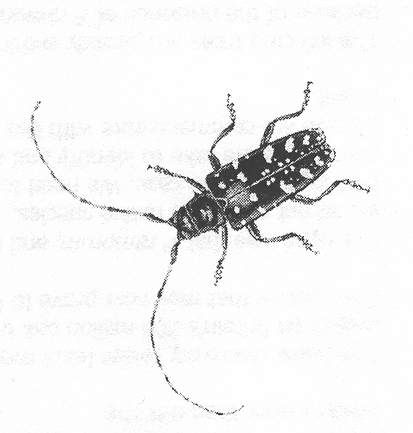
The report also instructs APHIS to maintain funding for Asian longhorned beetle at previous levels – within the Tree & Wood Pest account. This means that any savings arising from APHIS’ declaration that parts of the Ohio infestation have eradicated must still be spent on this pest. There are several outbreaks where such funds might be spent, including in New York, Massachusetts, remaining areas in Ohio, and South Carolina.
As in past years, the House Report reiterates members’ expectation that the USDA Secretary will use the authority provided in this bill to transfer funds from the USDA Commodity Credit Corporation to obtain funds to address animal and plant pest emergencies that threaten American agriculture. The Committee has appropriated additional money which is intended to enhance, not replace, use of CCC funds. [The Office of Management and Budget has severely curtailed APHIS access to emergency funds.]
=======================
The House Committee has asked that USFS develop a research program that reflects priorities on, inter alia, invasive species. This falls short of my request for earmarking a specific (small) percentage of research funding for invasive species, but it does show Congressional interest in this problem.
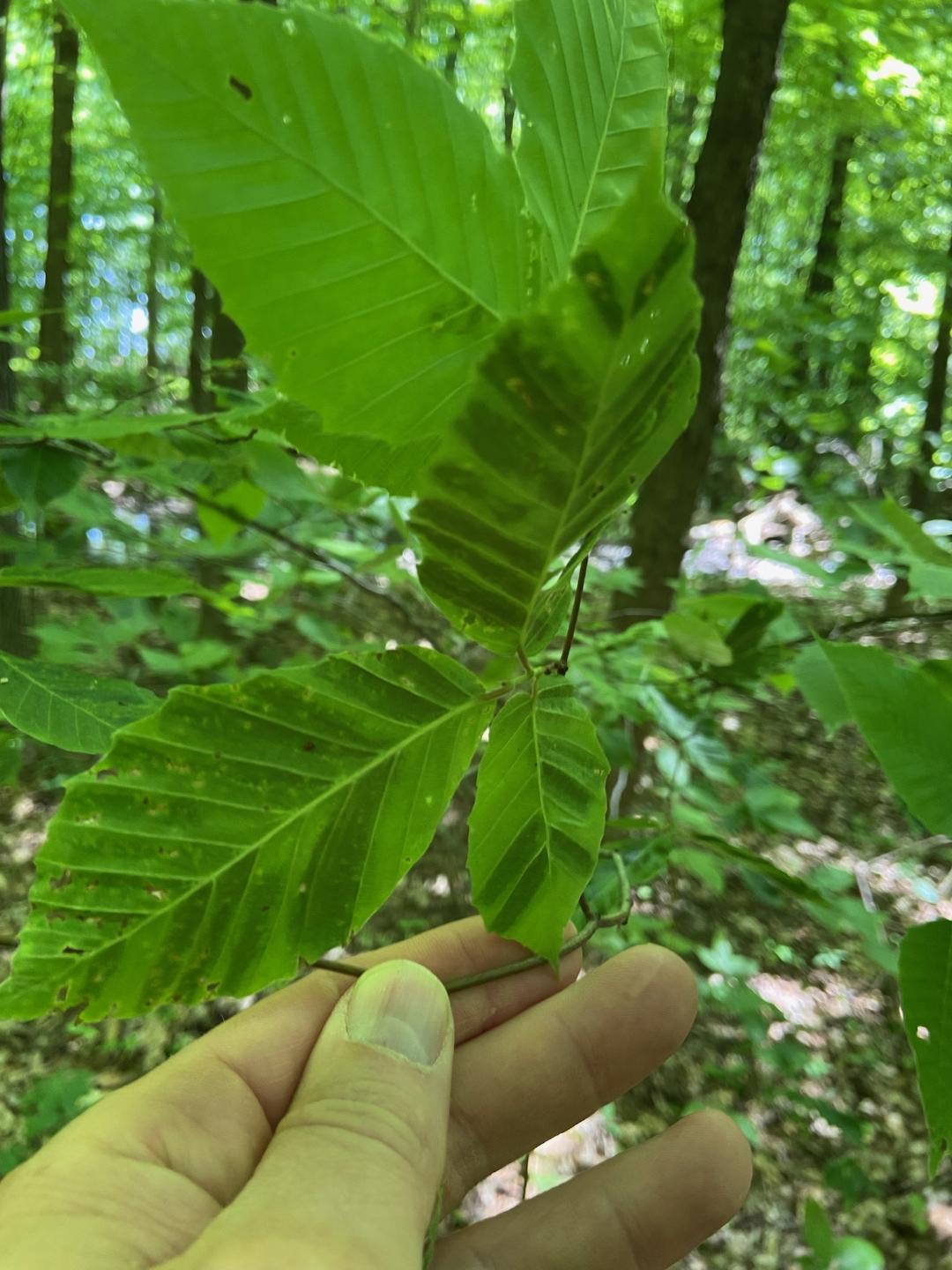
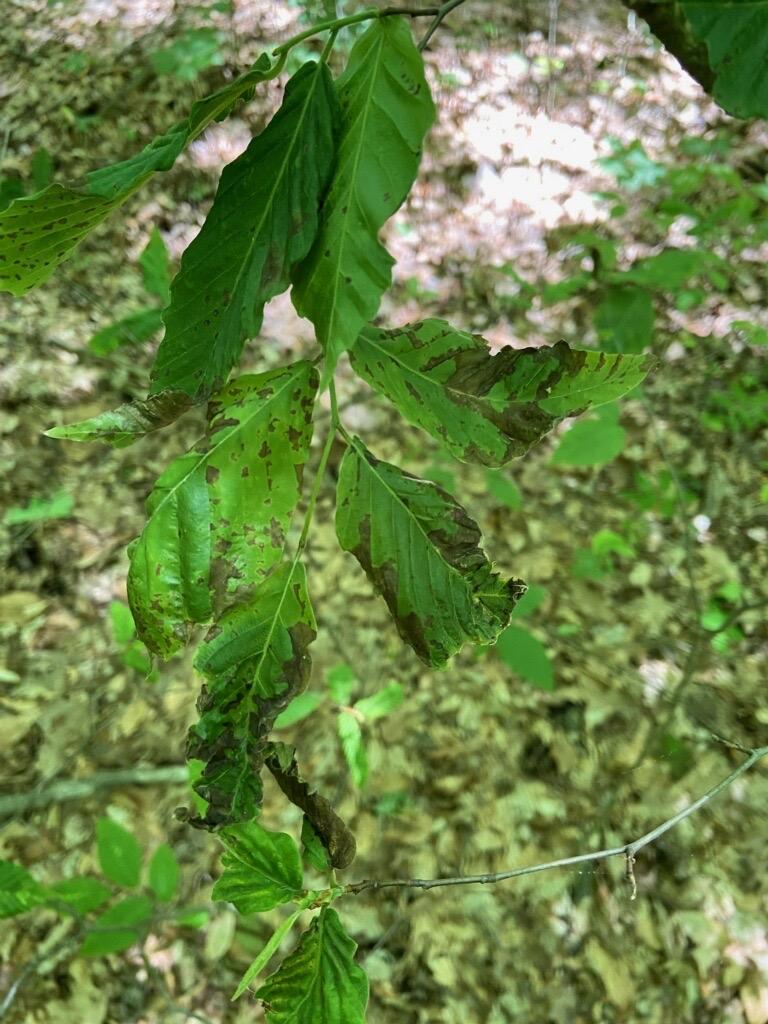
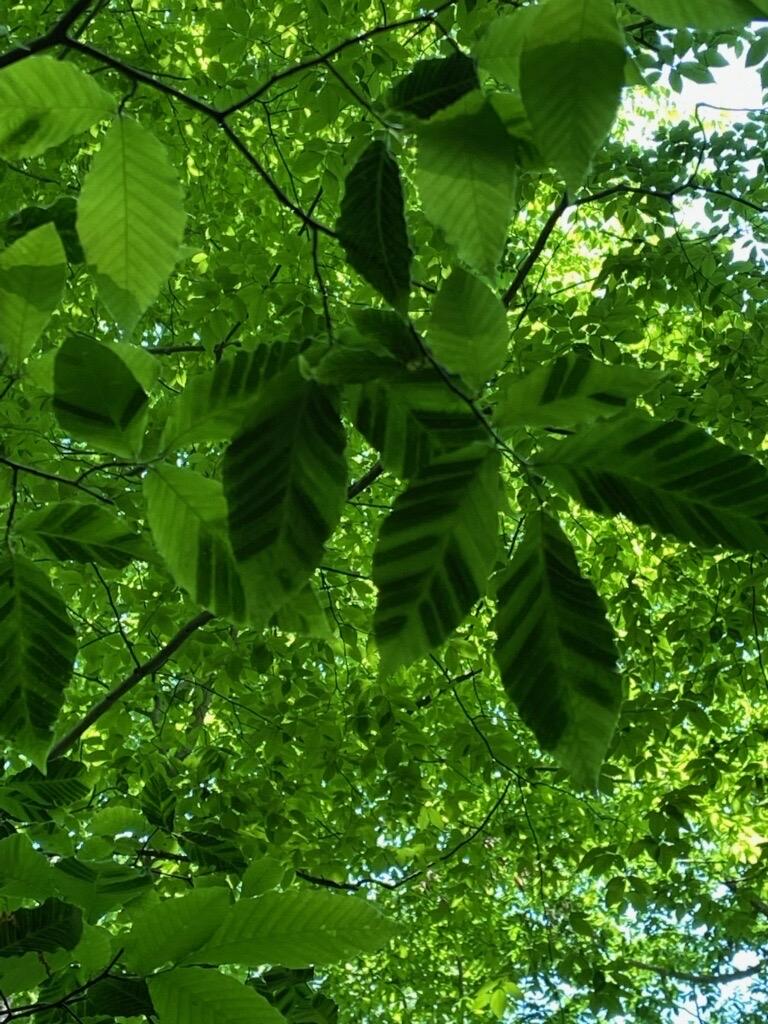
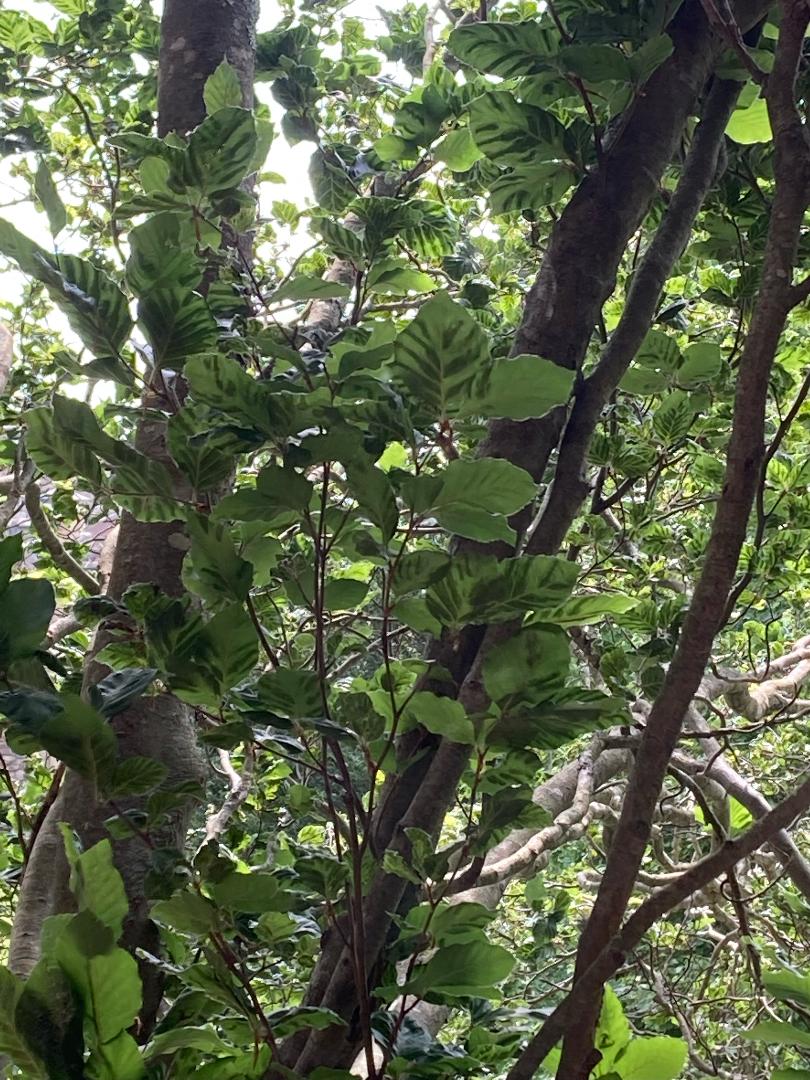
one of the diseases needing USFS research: beech leaf disease (photo by Dr. Chagas de Freitas)
In the part of the budget that funds actual management work, Forest Health Management, apparently the $52 million appropriation reflects only a modest increase of funding for managing invasive species everywhere – on federal lands, i.e. National forests and non-federal lands, i.e., “coop” lands. I appreciate the attention to invasive species, especially emerald ash borer; but worry about allocating most funding to managing the impacts rather than pro-actively addressing introduction and spread to new areas.
USFS funding in $ millions
Program
FY 2021
FY 2022 enacted
FY 2023 Pres’ request
My ask
House bill
R&D
$296.6
$317.8
$317.8
$360.4
[FIA]
$37.7 ($15 M increase)
S&P FHM
$46,232
same?
$59.232
$82
$52.232
Research & Development – The Committee Report noted members’ interest in funding specific laboratories, programs, & projects, including several listed areas. The Committee expects USFS to develop a research program that reflects members’ priorities & other priorities critical to forest health, particularly with respect to climate change adaptation, preventing spread of insects and diseases, and watershed improvement
The report states several times that the USFS should assist in control of the emerald ash borer and other invasive pests, especially in areas where ash tree mortality has been high. Such statements are under State and Private Forestry, under both the Forest Health Management and Urban and Community Forests programs. The Committee earmarks $4 million under UCF for management & reforestation – including tree planting & removals — in communities most severely impacted by EAB and other pests. The efforts should prioritize regional, multi-organization collaborations in urban communities most severely impacted by invasive pests like EAB. The committee asks for a report from USFS on major invasive species and progress of remediation and replanting programs.
===========================
Key Members of the Senate Appropriations Committee
STATE
MEMBER
APHIS APPROP
USFS APPROP
AK
Lisa Murkowski
X
Calif
Diane Feinstein
X
X
FL
Marco Rubio
X
HI
Brian Schatz
X
IN
Mike Braun
X
KS
Jerry Moran
X
KY
Mitch McConnell
X
X
MD
Chris Van Hollen
X
ME
Susan Collins
X
MS
Cindy Hyde-Smith
X
X
MO
Roy Blunt
X
X
MT
Jon Tester
X
X
ND
John Hoeven
X
NM
Martin Heinrich
X
X
OR
Jeff Merkley
X
X
RI
Jack Reed
X
TN
Bill Hagerty
X
VT
Patrick Leahy
X
X
WV
Shelly Moore Capito
X
WI
Tammy Baldwin
X
Posted by Faith Campbell
We welcome comments that supplement or correct factual information, suggest new approaches, or promote thoughtful consideration. We post comments that disagree with us — but not those we judge to be not civil or inflammatory.
For a detailed discussion of the policies and practices that have allowed these pests to enter and spread – and that do not promote effective restoration strategies – review the Fading Forests report at http://treeimprovement.utk.edu/FadingForests.htm
symptoms of beech leaf disease; photo by Dr. Chagas de Freitas
Three webinars during April and May provided updates on efforts to address three non-native, tree-killing pests: hemlock woolly adelgid (HWA), link invasive shot hole borers (ISHB), link and beech leaf disease (BLD) link. I attended each and summarize here.
Hemlock conservation in North Carolina – the NC Hemlock Restoration Initiative (HRI) see SaveHemlocksNC.org
I was pleased to learn about the major effort under way in North Carolina, where eastern and Carolina hemlocks are extremely important components of multiple ecosystems. In 2013, the Commissioner of Agriculture decided to make protecting hemlocks a signature project. He wanted to ensure that three state agencies – the Forest Service, Wildlife Department, and State Parks – worked together to improve the efficacy of treating trees. (Treatments available at the time were expensive and time-consuming.)
HRI treatment at Conestee Falls; HRI photo
Thom Green described the result: North Carolina’s Hemlock Restoration Initiative (HRI). The initiative is administered by the Western North Carolina Communities – a non-governmental organization with strong connections to rural communities and a history of successful collaborative projects that support agriculture and forestry. It engages state agencies, local and county governments, local NGOs, and federal agencies and works on both public and private lands with the goal of ensuring that hemlocks can survive to maturity.
HRI staff work with local partners to identify priority hemlock conservation areas (HCAs). It then sends a “strike team” to guide the partners in treating as many trees as possible. (North Carolina allows non-licensed volunteers to apply pesticides under supervision; also, landowners can treat trees on their own property.) These collaborative projects can treat up to 1,000 trees per day.
The chemicals used are imidacloprid and, where poor tree health justifies emergency treatment, dinotefuran. These are usually applied as a soil drench because it is easier for people to transport the equipment into the woods. Bark spray is used in sensitive areas. They have found that imidacloprid provides five to seven years of protection. A new product, CoreTech, is even easier to transport and works much faster than imidacloprid, however, it costs more.
The HRI believes it is minimizing non-target impacts of the neonictenoid imidacloprid because:
hemlocks are pollinated by wind, not insects
hemlocks don’t exude resins that attract insects
pesticide applications are tightly targetted at the base of trunk, with 10-foot setbacks from water
long intervals between treatments (5 – 7 years) allow soil invertebrates to recover
The program has treated 100,000 trees between 2016 and 2021 on state and private lands. Now they are starting the second round of treatments for trees treated at the beginning of the program.
Treatment priorities are based primarily on the extent to which the trees are able to take up the chemical, evaluated by the percentage of the crown that is alive and the density of foliage. Since imidacloprid can take a year to reach the canopy of a mature tree, it is used only on trees with greater than half the crown rated as healthy. When trees have a lower status, dinotefuran is added (because it can reach the canopy within weeks). Trees with less than 30% live crown are not treated.
The Initiative also supports biocontrol programs. It has assisted releases of Laricobiusnigrinis (a beetle in the family Derodontidae) and helps volunteers monitor releases and survival. Dr. Green reports that L. nigrinis has spread almost throughout western North Carolina but that questions remain regarding its impact on tree health. He thinks biocontrol is not yet reliable as stand-alone tool; success will require a suite of predatory insects.
The HRI measures the success of various treatments (Hurray!). “Impact plots” are established at the start of treatment. Staff or volunteers return every three years to monitor all aspects of the health of a few designated trees – including untreated ones. So far, they have seen encouraging responses in crown density and new growth.
Invasive Shot Hole Borers (ISHB) in California
See www.ishb.org and video recordings of the meeting at:
A host of scientists from California spent two full days describing research and management projects funded by specific state legislation – Assembly Bill (AB)-2470 on two invasive shot hole borers.
Adoption of this legislation resulted largely from lobbying by John Kabashima. Additional funding was provided by CalFire (the state’s forestry agency). The agency responsible for managing invasive species – California Department of Food and Agriculture (CDFA) had designated these organisms as not a threat to agriculture. So it did not fund many necessary activities.
The Problem and Where It Is
“Fusarium dieback” is the disease caused by this insect-pathogen complex. The insects involved are two ambrosia beetles in the Euwallacea genus – the polyphagous (E. whitfordiodendrus) and Kuroshio (E. Kuroshio) shot hole borers. link to DMFAccording to Dr. Bea Nabua-Behermann, Urban Forestry and Natural Resources Advisor with University of California Cooperative Extension (UCCE), other fungi are present on both beetle species but its matching Fusarium sp. is the principal associated fungus and is required for the beetle’s reproduction. These are Fusarium euwallaceae and F. kuroshium.
As of spring 2022, the beetle/fungus complex has spread as far north as Santa Barbara /Santa Clarita; and inland to San Bernardino and Riverside (see the map here). They are very widespread in Orange and San Diego counties. At least 65 tree species in southern California are reproductive hosts (globally, it is 77 species; see full list here). The preferred and most succeptible hosts are several species in the Acer, Parkinsonia, Platanus, Quercus, and Salix genera. Box elder (A. negundo) is so susceptible that it is considered a sentinel tree.
Because the beetles spend most of their life inside trees, their life cycle leaves few opportunities to combat them. Females (only) fly but tend to bore galleries on their natal tree. Several speakers on the webinar said management should focus on heavily infested “amplifier trees”. Much spread is human assisted since the beetles can survive in dead wood for months if it is damp enough for the fungus. Possible vectors are green waste, firewood, and even large wood chips or mulch.
Management – from Trapping to Rapid Response to Restoration
Akiv Eskalen of University of California Davis discussed trapping and monitoring techniques to confirm presence of the insect and pathogen. Also, he talked about setting priorities for treating trees based on the presence of reproductive hosts, host value, infestation level, and whether the trees pose a safety hazard. The disease causes too little damage to some hosts to warrant management. He emphasized the importance of preventing spread. This requires close monitoring of infested trees to see whether beetles move to neighbors. Dr. Eskalen described a major and intensive monitoring and treatment program at Disneyland. The 600 acres of parks, hotels, and parking lots have ~16,000 trees belonging to 681 species.
Several speakers described on-going efforts in Orange County. Danny Hirchag (IPM manager for Orange County Parks) described how his agency is managing 60,000 acres of variable woodlands containing 42,000 trees, of which 55% are hosts of ISHB and their associated fungi. Of greatest concern are California sycamore and coast live oak in areas of heavy public use. The highest priority is protecting public safety; next is protecting historic trees (which can’t be replaced); third is minimizing impacts to ecosystem services. Orange County Parks is currently removing fewer than 50 trees each year. Hirchag noted the importance of collaborating in the research trials conducted by the University of California Cooperative Extension.
infested California sycamore; photo by Bea Nabua-Behermann
Maximiliano Regis and Rachel Burnap, of County of Los Angeles Department of Agricultural Commissioner/Weights and Measures, described Los Angeles County’s efforts more broadly. The challenge is clear: LA County has more than 160 parks. In 2021, they placed nearly 2,500 traps, mapped infected trees, carried out on-ground surveys to find amplifier trees, removed both amplifier and hazard trees (using funds provided by CalFire), and educated the public. Their efforts were guided by an early detection-rapid response (ED/RR) Plan (2019) developed by Rosi Dagit (see below). While London plane trees (Platanus x hispanica) and California sycamores (Platanus racemose) were initially most affected, now black locusts (Robinia pseudoacacia) and box elders (Acer negundo) are succumbing. [Note: both are widespread across North America.] The researchers are trying to determine why some areas are largely untouched, despite the presence of the same tree species. Regis and Burnap noted the increasing difficulty getting confirmation of the pathogen’s presence because laboratories are overwhelmed. They continue looking for funding sources.
Rosi Dagit, Senior Conservation Biologist, Resource Conservation District of the Santa Monica Mountains, described the creation of that ED/RR system for Los Angeles County as a whole, without regard for property lines. Participants established random study plots across the entire Santa Monica Mountains Natural Recreation Area (NRA), based on proximity to areas of particularly sensitive ecological concerns. The fact that the NRA’s forests are aging and that the risk of infestations is especially high in riparian forests helped persuade policy-makers to fund the effort. The accompanying rapid response plan informs everyone about what to do, who should do it, and who pays. This information incorporates agencies’ rules about what and where to plant. It also provides measures to evaluate whether the action was effective. It did take more than two years for the county to set staffing needs etc.
John Kabashima link discussed his criteria for replanting and ecosystem restoration following tree removal in the southern California region. He recommends prompt removal of amplifier trees – especially box elder and California sycamore. He relies on replanting guidance developed by UC-Irvine (which is on the website) – especially avoiding monocultures. Kabashima reiterated the importance of close monitoring to track beetle populations and responding quickly if they build up.
Economics of Urban Forests and Cities Most at Risk
Karen Jetter (an economist at the UC Agriculture Issues Center) has developed a model to compare the costs of an early detection program to the environmental and monetary costs of infestation by Fusarium disease. She noted that early detection and monitoring programs are often hard to justify because — when they are successful — nothing changes! She found that averted or delayed costs (including tree removals, lost ecosystem services, lost landscape asset value [replanting value] and the cost to replant) always far exceeded the cost of monitoring programs. Unfortunately, a written report about this effort (Jetter, K., A. Hollander, B.E. Nobua-Behrmann, N. Love, S. Lynch, E. Teach, N. Van Dorne, J. Kabashima, and J. Thorne. 2022. Bioeconomic Modeling of Invasive Species Management in Urban Forests; Final Report) appears to be available only through the University of California “collaborative tools” website dedicated to practitioners and stakeholders engaged on ISHB issues. If you are not a member of the list, contact me using the comment button and ask that I send it to you. Include your email address (the comment process makes determining emails difficult if not impossible.)
Shannon Lynch (UC Davis) developed a model to estimate vulnerability of urban areas based on phylogenetic structure (relationship between tree species), host abundance, and number of beetle generations/year (linked to temperature). She found that areas with less favorable host communities can become vulnerable if the climate becomes favorable. Where the host community is already favorable, climate not important.
She evaluated 170 California cities based on their tree inventories. The cities at highest risk were San Diego, Los Angeles, the San Francisco Bay area, and the Central Valley – e.g., Sacramento. For areas lacking tree inventories, she based her risk determination on the estimated number of generations of beetles per year – based on climate. This analysis posited a very high risk in the eastern half of southern California and the Central Valley. Participants all recognized the need to apply this model to cities in Arizona and Nevada.
Possible Management Strategies
Shannon Lynch (UC Davis) studied whether endophytes might be used to kill the Fusarium fungi. She reported finding 771 fungal strains and 657 bacterial strains in tree microbiomes. Some of the fungal isolates impeded growth of the Fusarium fungi in a petri dish. She began testing whether these fungi can be used to inoculate cuttings that are to be used for restoration. She also planned to test more endophytes, and more native plant species to explore creation of a multi-fungus cocktail.
Richard Stouthamer of UC Riverside is exploring possible biocontrol agents. Of three he has evaluated, the most promising is Phasmastichus sp., which is new to science. He is still trying to establish laboratory cultures so he can test its host specificity.
symptoms of beech leaf disease; photo by Dr. Chagas de Freitas
At this meeting, scientists described research aimed at improving basic understanding of beech leaf disease’s causal agents, its mechanisms of spread, etc. Their findings are mostly preliminary.
These findings are of greatest importance now:
presence of the nematodes varies considerably across leaf surface – if one collects samples from the wrong site on leaf, one won’t detect nematode (Paulo Vieria, Agriculture Research Service)
developing predictive risk maps that combines temperature, humidity, elevation, soils (Ersan Selvi, Ohio State). So far, he has found that BLD is greater in humid areas – including under closed forest canopies. The USFS is funding studies aimed at incorporating disease severity in detection apps.
determining extent of nematode presence. Sharon Reed of Ontario has found nematode DNA in trap fluids throughout the Province. It is much more common at known disease sites. Reed is also studying the presence of arthropods on beech leaves and buds.
Longer term findings and questions
possible vectors:
nematode DNA has been detected from birds – although it is not clear whether the DNA came from bird feces, feathers, or dust (DK Martin)
a few live nematodes have been extracted from the excrement of caterpillars that fed on infected leaves (Mihail Kantor, ARS)
nematode damage to leaves:
presence of the nematode in leaf buds before they open (Vieria and Joe Mowery, both ARS). The nematode can create considerable damage in leaf buds before they open. Nematodes are present as early as October of the preceding year.
damage to leaves by nematode (Mowery, ARS) Leaf epidermal cells are distorted, stomata blocked, chlorobasts are larger than normal, irregular shape
possible management tools
are there parasites that might attack the nematode? (Paulo Vieria, ARS)
experimental treatment of infested trees using phosphite (Kandor, ARS)
ecology: how do root microbiomes compare on infested and healthy trees? (Caleb Kime, Ohio State; and David Burke, Vice President for Science at Holden Arboretum)
infested European beech in Rhode Island; photo by Dr. Nathanial A. Mitkowski
Posted by Faith Campbell
We welcome comments that supplement or correct factual information, suggest new approaches, or promote thoughtful consideration. We post comments that disagree with us — but not those we judge to be not civil or inflammatory.
For a detailed discussion of the policies and practices that have allowed these pests to enter and spread – and that do not promote effective restoration strategies – review the Fading Forests report at http://treeimprovement.utk.edu/FadingForests.htm
spruce budworm; photo by Jerry E. Dewey, USFS; via Bugwood
The 64th Forest Pest Management Forum was held in December 2021. This is the largest and most significant gathering of forest pest management experts, managers, and practitioners in Canada. The proceedngs are available here. I summarize the contents. (This is my third review of recent reports on invasive species by Canadians. See also here and here. I appeciate the opportunity to learn about forest pest issues across such a large proportion of North America!
As usual, much of the attention was given to native pests, e.g.,
mountain pine beetle (Dendroctonus ponderosae) in Yukon, Alberta [declining numbers and areas affected]; Saskatchewan [none found in boreal forest]
Jack pine budworm (Choristoneura pinus) – Saskatchewan, Manitoba, Ontario. [damage to jack pine in the Northwest Territories is caused by an unknown agent]
spruce pests, including spruce budworm (Choristoneura fumiferana) across the country: from Yukon and Northwest Territories to New Brunswick; Nova Scotia; Newfoundland and Labrador
aspen defoliators – British Columbia; Northwest Territories; Alberta; Saskatchewan;
Swiss Needle Cast – British Columbia
Septoria leaf and stem blight in hybrid poplars (Populus genus) spreading in British Columbia; fears it could threaten black cottonwood, a keystone species in riparian ecosystems
hemlock mortality caused by HWA in Nova Scotia; photo by Celia Boone, NSDLF
The meeting also reported the following on non-native forest pests:
Asian longhorned beetle (Anoplophora glabripennis) — Canada has been declared free of ALB; national grid-based detection surveys continue – visual surveys at 10 sites; none found
emerald ash borer (Agrilus planipennis) — trapping focused on high-risk locations and urban centers outside established regulated areas with no new detections in 2021. Saskatchewan continues to regulate EAB as a quarantine pest – after its detection in Winnipeg in November 2017. In New Brunswick, EAB has spread throughout the region where it was originally discovered in early 2021. In Nova Scotia, EAB remains undetected outside of the regulated area of Halifax
spongy moth (Lymantria dispar dispar) – trapping continues across Canada; detections in all provinces except Newfoundland – Labrador. Officials think they have eradicated an incipient population in Manitoba. Outbreaks are intensifying in Ontario and Québec (spongy moth is also expanding in northern US)
brown spruce longhorned beetle (Tetropium fuscum) – widespread trapping in Nova Scotia detected no new finds.
hemlock woolly adelgid(Adelges tsugae) is a priority species. Hemlock is a major component of the forested regions in the eastern provinces and HWA threatens to cause potentially irreparable damage to hemlock-dominated areas. Visual detection surveys were conducted at more than 180 high risk locations in eastern Canada. HWA has been confirmed in 7 counties of Nova Scotia – 2 of them new; plus a new infestation in Ontario.
beech leaf-mining weevil(Orchestes fagi) — continues to spread, with 22,129 ha of damage and mortality in areas near Halifax, Nova Scotia. The report makes no mention of beech leaf disease and here.
Dutch elm disease (Ophiostoma ulmi & O.novo-ulmi) – spreading rapidly in parts of Saskatchewan; major control effort in Manitoba, where 38 communities are participating in a provincial program and Winnipeg has its own program.
elm zig zag sawfly(Aproceros leucopoda) – Canadian authorities are apparently considering what their response should be [see also Martelet al. 2022. (open access!)
elm zigzag sawfly; photo by Gyorgy Csoka Hungarian Forest Research Organization; via Bugwood
Canadian authorities have active surveillance programs targetting three species established in the U.S. which they worry will enter Canada:
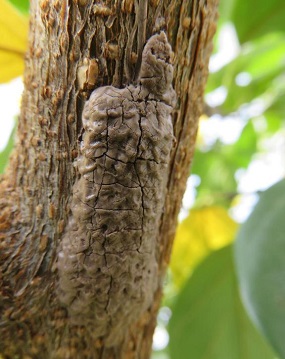
spotted lanternfly eggs; New York Dept. of Environmental Conservation photo
oak wilt (Ceratocystis fagacearum) – visual surveys at more than 60 sites in Ontario, Québec, New Brunswick and Nova Scotia; so far, no detections.
spotted lanternfly (Lycorma delicatula) authorities noted the many possible pathways of introduction
brown-tail moth (Euproctis chrysorrhoea) – rising population in Maine; several additional public reports of sightings in New Brunswick.
Policy
Canada has a National Forest Pest Strategy adopted by the Canadian Council of Forest Ministers (CCFM) in 2007. The CCFM Forest Pest Working Group (FPWG) plays a major role in advancing this Strategy. It also provides a national forum for generating ideas and exchanging information about forest pest management among federal, provincial, and territorial government agencies.
According to officials of the Canadian Food Inspection Agency (CFIA), the government has initiated limited pathway-based surveys to detect introduced pests associated with wood packaging material (crates, pallets, etc.). [See additional blogs posted here under “wood packaging” category. E.g., this one. The agency is also developing an efficient, safe and feasible management program for handling shipborne dunnage. CFIA expected to publish a revised directive in spring 2022, then fully implement it by fall 2022.
Presentations on Individual Pests
The Proceedings include abstracts of presentations on individual species. The abstracts rarely provide the final findings.
Emma J. Hudgins, of Carleton University, reported on ways to optimize control of EAB in the U.S. She found that the best management strategy combined site-focused activities – such as biocontrol — and spread-focused (quarantine) management measures. This combined strategy vastly outperformed efforts based on limiting propagule pressure or managing single sites. In other words, quarantines should be refined rather than abandoned – as the US has done.
Oregon ash forest on the Willamette River, Oregon; photo by W. Williams, Oregon Dept. of Forestry
Chris MacQuarrie of the Canadian Forest Service reviewed use of biocontrol agents targetting EAB. Canada has approved release of three agents also approved in the United States: Tetrastichus planipennisi in 2013; Oobius agrili in 2015; Spathius galinae in 2017. Canada began trying to evaluate their impacts in 2018 – but the results are not included in the abstract.
Lucas Roscoe, also of the Canadian Forest Service, reviewed biocontrol efforts targetting hemlock woolly adelgid. The abstract doesn’t provide conclusions.
Kevin Porter and James Brandt assessed the risk of the spruce budworm (Choristoneura fumiferana) outbreaks in Eastern Canada’s Forests. The insect is the most widely distributed and destructive pest of spruce-fir forests in Canada; it is native to much of boreal and hemiboreal North America. Outbreaks occur periodically. Cumulative tree defoliation and mortality can result in significant losses of important timber and non-timber resources, affecting the forest industry and forest-dependent communities.
Stefan Zeglen and Nicolas Feau reported on the importance of environmental conditions in causing one disease. Swiss Needle Cast (caused by the usually innocuous endophyte Nothophaeocryptopus gaeumannii) has become pathogenic on Douglas-fir, causing up to 60% growth loss. This results from changing climate – and is expected to worsen with rising temperatures and humidity.
Posted by Faith Campbell
We welcome comments that supplement or correct factual information, suggest new approaches, or promote thoughtful consideration. We post comments that disagree with us — but not those we judge to be not civil or inflammatory.
For a detailed discussion of the policies and practices that have allowed these pests to enter and spread – and that do not promote effective restoration strategies – review the Fading Forests report at http://treeimprovement.utk.edu/FadingForests.htm
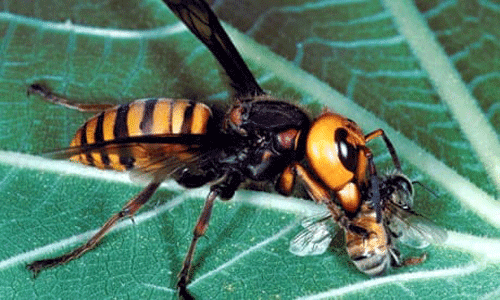
Asian giant hornet (Vespa mandarinia); photo by University of Florida Dept. of Entomology
Washington State’s “Giant Hornet – Hornet Herald” for June asks people to help with detecting this pest by monitoring paper wasp nests (hornets attack them). Hornet visits last 5 – 10 minutes while the hornet removes paper wasp larvae. How to help:
Locate paper wasp nests that you have access to and can monitor through October. Then log the nest locations using the form here
Visit the nests each week, observe them, and then log your nest activity on a different form – here. Please monitor the nests for at least 5 minutes during the day once per week, but you can check the nests for as long and as often as you would like.
If you would like guidance on how to become a citizen-science monitor or trapper of Asian giant hornets – or presumably other bioinvaders – go here
Meanwhile, Washington State Department of Agriculture entomologists are in South Korea testing several hornet attractants and studying hornet foraging behavior. The goal is to improve Washington’s trapping and tracking techniques.
Of course, 2022 is only half over, but so far neither Washington nor British Columbia has confirmed any detections.
Posted by Faith Campbell
We welcome comments that supplement or correct factual information, suggest new approaches, or promote thoughtful consideration. We post comments that disagree with us — but not those we judge to be not civil or inflammatory.
For a detailed discussion of the policies and practices that have allowed these pests to enter and spread – and that do not promote effective restoration strategies – review the Fading Forests report at http://treeimprovement.utk.edu/FadingForests.htm
boxwood garden at Gunston Hall – home of founding father George Mason; Virginia; photo by Roger 4336 via Wikimedia
Boxwood blight is a disease caused by a group of fungal pathogens. While boxwoods are horticultural plants in the U.S. – important ones! – they are keystone forest species in several regions of the tropics and subtropics.
The situation with boxwood blight is yet another example of a too-frequent pattern for plant pathogens. This pattern applies even to plant taxa that are important to the ornamental horticulture industry – not only plants that are important in natural ecosystems. [See other blogs posted here under the category “plants as pest vectors”, e.g., here. The boxwood blight pathogens:
are of unknown origin;
have a wide range of known hosts; additional hosts probable;
have been introduced to many new sites over about 30 years;
have caused considerable economic, aesthetic, and ecological harm;
are a threat to centers of endemism;
have no known methods to treat plants in forests;
are spread by international plant trade;
complicate detection by having hosts that sometimes are asymptomatic; or symptoms can be suppressed by fungicides;
apparently few efforts to apply phytosanitary measures to prevent further spread.
Also typical: concerned scientists are trying to promote adoption of phytosanitary measures. This takes the form of a study by Barke, Coop and Hong (full citation at the end of the blog; unless otherwise stated, information in this blog is from this source). They use several models based largely on climatic factors to predict additional geographic areas where else boxwood blight might establish.
I think it is most unfortunate that the U.S. horticultural industry prefers to avoid federal regulation despite the significant costs to its members. Instead, it has advocated for a primarily voluntary response (see below). This undermines efforts to restructure regulatory programs to improve phytosanitary agencies’ management of pathogens. Since the U.S. is such a powerful player on this issue, reducing pressure on APHIS to find more effective measures has global implications. I recognize that preventing transmission of unknown and cryptic pathogens is an intrinsically difficult task. However, tackling this problem should be a top priority for people concerned about retaining healthy floral communities.
Specifics About Boxwood Blight
Boxwood blight is caused by two ascomycete fungi, Calonectria pseudonaviculata [synonym Cylindrocladium buxicola] and Calonectria henricotiae. Both can infect and blight boxwood foliage, resulting in rapid plant death. C. henricotiae is known from only five countries in Europe; C. pseudonaviculata is currently established in 24 countries in three geographic areas: Europe and western Asia; New Zealand; and North America (30 US states and British Columbia). The disease caused by C. pseudonaviculata could spread well beyond its currently invaded range in these regions.
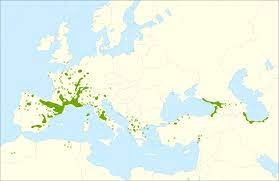
range of Buxus sempervirens; via Wikimedia
Native plants in the family Buxaceae grow in tropical or subtropical areas around the world. Plants in the genera Buxus, Didymeles, Haptanthus, Pachysandra, Sarcococca, and Styloceras are found in some areas of western and southern Europe; Turkey and the Caucuses into Iran; several countries in southeast and east Asia (China, Japan, South Korea, Vietnam, Indonesia); coastal Australia; high elevation areas of Africa, including Madagascar; parts of South America (southern Brazil, Uruguay, northern Argentina, and southern Chile, and foothills of the Andes); parts of Central America and the Caribbean. Asia is home to about 40 species of Buxus, four species of Pachysandra, and 11 species of Sarcococca. In the Andes region, all five species of Styloceras are endemic. Central America and the Caribbean are home to about 50 species of Buxus; there are 37 species endemic to Cuba! Madagascar has nine endemic Buxus species.
Many Buxus species occur in small and isolated distributions resulting from both natural causes (e.g., island endemism) and anthropogenic disturbances (including deforestation and invasions of by other non-native pests, such as the box tree moth Cydalima perspectalis in Europe and western Asia).
In native stands of Buxus sempervirens in Georgia and northern Iran, where C. pseudonaviculata was detected in 2010, the disease has caused rapid and intensive defoliation of boxwood plants of different ages. [See also Lehtijarvi, Dogmus-Lehtijarvi and Oskay. Boxwood Blight in Turkey: Impact on Natural Boxwood Populations and Management Challenges. Baltic Forestry 2017, vol. 23(1)] Infected plants are also vulnerable to attacks by secondary opportunistic pathogens that can lead to eventual death. Damage to these forests could lead to reductions in soil stability and subsequent declines in water quality and flood protection, changes in forest structure and composition, and declines in Buxus-associated biodiversity (at least 63 species of lichens, fungi, chromista and invertebrates might be obligate).
Barke, Coop and Hong expect excessive heat and seasonal dryness at one extreme and excessive cold at the other to limit areas in North America and Europe/central Asia where the disease can establish. Areas with oceanic rather than continental climates are probably more vulnerable. However, heat and aridity barriers could be overcome by artificial irrigation of horticultural plantings.
Indeed, the conditions favoring C. pseudonaviculata establishment – warm temperatures and high humidity or water on the leaves – are commonly found in production nurseries. Overhead irrigation exacerbates the risk. Production nurseries also have large numbers of host plants in close proximity – so it is easy for disease to spread (Douglas).
I am reminded that the causal agent of sudden oak death, Phytophthora ramorum, has been spread from production nurseries located in hot, dry areas that were considered unsuitable to the pathogen – because conditions inside the nursery were suitable.
wild Buxus on island of Corsica; photo by Sten Porse via Wikimedia
As I noted, the origin of C. pseudonaviculata is unknown. Barke, Coop and Hong think it is most likely in eastern Asia, which is thought to be the likely native region of box tree moth. However, they cannot rule out some other center of diversity for Buxaceae species e.g., the Caribbean or Madagascar.
Barke, Coop and Hong call for additional studies to
Explore potential effects of climate change on establishment risk, especially higher latitude areas expected to see increasing humidity, precipitation, and rising temperatures.
Determine ability of C. pseudonaviculata microsclerotia to survive higher temperatures, e.g. in parts of the U.S. Deep South that may have ideal growing conditions during cool seasons.
Modify the CLIMEX model developed for this study to predict the potential distribution of C. henricotiae, a closely related but genetically distinct species with greater tolerance of higher temperatures.
They call for a strict phytosanitary protocol for risk mitigation of accidental intro, with effective surveillance for early detection, and development of a recovery plan.
Regulatory (non) Response
Boxwood blight was first detected in the United Kingdom in mid-1990s; then in New Zealand in 2002. Only then was the causal agent determined. It was first detected in the U.S. in October 2011 (in Connecticut). It was quickly determined to be established in the mid-Atlantic region. Apparently the British, other European countries, and APHIS all decided the pathogen was too widespread to regulate (Douglas).
The U.S. is relying on a voluntary program. The nursery industry, through its Horticultural Research Institute (HRI), and the National Plant Board developed guidance for best management practices – updated as recently as 2020.
boxwood blight symptoms; Oregon State University; via Flickr
In contrast, APHIS has acted to regulate the boxwood tree moth, Cydalima perspectalis. The moth was first detected in North America near Toronto in 2018. U.S. nurseries in six states received infected plants in spring 2021. On May 26, 2021, APHIS prohibited importation of host plants from Canada, including boxwood (Buxus spp), Euonymus (Euonymus spp), and holly (Ilex spp).
In July 2021, the moth was detected in Niagara County, New York. It was thought that the moths had flown or been blown into the area from Canada. New York adopted an intrastate quarantine of three counties (Erie, Niagara, and Orleans) in December 10, 2021. APHIS followed with an interstate quarantine on March 23, 2022.
SOURCES
Barke, B.S., L. Coop and C. Hong. 2022. Potential Distribution of Invasive Boxwood Blight Pathogen (Calonectria pseudonaviculata) as Predicted by Process-Based and Correlative Models. Biology 2022, 11, 849. https://doi.org/10.3390/biology11060849 www.mdpi.com/journal/biology
We welcome comments that supplement or correct factual information, suggest new approaches, or promote thoughtful consideration. We post comments that disagree with us — but not those we judge to be not civil or inflammatory.
For a detailed discussion of the policies and practices that have allowed these pests to enter and spread – and that do not promote effective restoration strategies – review the Fading Forests report at http://treeimprovement.utk.edu/FadingForests.htm
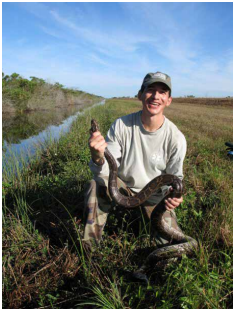
Burmese python in Everglades National Park; photo by Bob Reed, US FWS
Scientists continue to apply data collected in an international database (InvaCost; see “methods” section of Cuthbert et al.; full citation at end of this blog) to estimate the economic costs associated with invasive alien species (IAS). These sources reported $22.24 billion in economic costs of bioinvasion in protected areas over the 35-year period 1975 – 2020. Because the data has significant gaps, no doubt invasions really cost much more.
Moodley et al. 2022 (full citation at end of this blog) attempt to apply these data to analyze economic costs in protected areas. As they note, protected areas are a pillar of global biodiversity conservation. So it is important to understand the extent to which bioinvasion threatens this purpose.
Unfortunately, the data are still too scant to support any conclusions. Such distortions are acknowledged by Moodley et al. I will discuss the data gaps below a summary of the study’s findings.
The Details
Of the estimated $22.24 billion, only 4% were observed costs; 96% were “potential” costs (= extrapolated or predicted based on models). Both had generally increased in more recent years, especially “potential” costs after 1995. As is true in other analyses of InvaCost data, the great majority (73%) of observed costs covered management efforts rather than losses due to impacts. The 24% of total costs ascribed to losses, or damage, exceeded the authors’ expectation. They had thought that the minimal presence of human infrastructure inside protected areas would result in low records of “economic” damages.
The great majority (83%) of reported management costs were reactive, that is, undertaken after the invasion had occurred. In terrestrial environments, there were significantly higher bioinvasion costs inside protected areas than outside (although this varied by continent). However, when considering predicted or modelled costs, the importance was reversed: expected management costs represented only 5% while these “potential” damages were 94%.
Higher expenditures were reported in more developed countries – which have more resources to allocate and are better able to carry out research documenting both damage and effort.
More than 80% of management costs were shouldered by governmental services and/or official organizations (e.g. conservation agencies, forest services, or associations). The “agriculture” and “public and social welfare” sectors sustained 60% of observed “damage” and 89% of “mixed damage and management” costs respectively. The “environmental” and “public and social welfare” sectors together accounted for 94% of all the “potential” costs (predicted based on models) generated by invasive species in protected areas; 99% of damage costs. With the partial exception of the agricultural sector, the economic sectors that contribute the most to movement to invasive species are spared from carrying the resulting costs.
Lord Howe Island, Australia; threatened by myrtle rust; photo by Robert Whyte, via Flickr
Invasive plants dominated by numbers of published reports – 64% of reports of observed costs, 79% of reports of “potential”. However, both actual and “potential” costs allotted to plant invasions were much lower than for vertebrates and invertebrates. Mammals and insects dominated observed animal costs.
It is often asserted that protected areas are less vulnerable to bioinvasion because of the relative absence of human activity. Moodley et al. suggest the contrary: that protected areas might be more vulnerable to bioinvasion because they often host a larger proportion of native, endemic and threatened species less adapted to anthropogenic disturbances. Of course, no place on Earth is free of anthropogenic influences; this was true even before climate change became an overriding threat. Plenty of U.S. National parks and wilderness areas have suffered invasion by species that are causing significant change (see, for example, here, here, and here).
Despite Best Efforts, Data are Scant and Skewed
Economic data on invasive species in protected areas were available for only a tiny proportion of these sites — 55 out of 266,561 protected areas.
As Moodley et al. state, their study was hampered by several data gaps:
Taxonomic bias – plants are both more frequently studied and managed in protected areas, but their reported observed costs are substantially lower than those of either mammals or insects.
The data relate to economic rather than ecological effects. The costliest species economically might not cause the greatest ecological harm.
Geographical bias – studies are more plentiful in the Americas and Pacific Islands. However, studies from Europe, Africa and South America more often report observed costs. The South African attention to invasive species (see blogs here, here, and here), and economic importance of tourism to the Galápagos Islands exacerbate these data biases.
Methodological bias – although reporting bioinvasion costs has steadily increased, it is still erratic and dominated by “potential” costs = predictions, models or simulations.
I note that, in addition, individual examples of high-cost invasive species are not representative. The highest costs reported pertained to one agricultural pest (mango beetle) and one human health threat (mosquitoes).
Great Smokey Mountains National Park; threatened by mammals (pigs), forest pests, worms, invasive plants … Photo by Domenico Convertini via Flickr
As these weaknesses demonstrate, a significant need remains for increased attention to the economic aspects of bioinvasion – especially since political leaders pay so much greater attention to economics than to other metrics. However, the reported costs – $22.24 billion over 35 years, and growing! – are sufficient in the view of Moodley et al. to support advocating investment of more resources in invasive species management in protected areas, including – or especially – it is not quite clear — preventative measures.
SOURCES
Cuthbert, R.N., C Diagne, E.J. Hudgins, A. Turbelin, D.A. Ahmed, C. Albert, T.W. Bodey, E. Briski, F. Essl, P.J. Haubrock, R.E. Gozlan, N. Kirichenko, M. Kourantidou, A.M. Kramer, F. Courchamp. 2022. Bioinvasion cost reveals insufficient proactive management worldwide. Science of The Total Environment Volume 819, 1 May, 2022, 153404
Moodley, D., E. Angulo, R.N. Cuthbert, B. Leung, A. Turbelin, A. Novoa, M. Kourantidou, G. Heringer, P.J. Haubrock, D. Renault, M. Robuchon, J. Fantle-Lepczyk, F. Courchamp, C. Diagne. 2022. Surprisingly high economic costs of bioinvasions in protected areas. Biol Invasions. https://doi.org/10.1007/s10530-022-02732-7
Posted by Faith Campbell
We welcome comments that supplement or correct factual information, suggest new approaches, or promote thoughtful consideration. We post comments that disagree with us — but not those we judge to be not civil or inflammatory.
For a detailed discussion of the policies and practices that have allowed these pests to enter and spread – and that do not promote effective restoration strategies – review the Fading Forests report at http://treeimprovement.utk.edu/FadingForests.htm
loblolly pine – tree species showing highest value in this study; via Flickr
More scientists are examining the importance of American forests in providing ecosystem services – and the threat to those values raised by non-native pests and other factors. This is a broader perspective than used in the past – and it includes climatechange. also here
Jeannine Cavender-Bareu and colleagues (full citation at the end of this blog) found that changes in the abundance and composition of US trees have the potential to undermine the benefits and societal values derived from those forests now. They examined threats associated with increasing invasive pests and pathogens, greater frequency of major fires, and climate change. Together, these constitute a complex set of global change drivers – and the impact of each is accelerating.
The authors tried to measure the impact of these forces on forests’ ability to provide five key ecosystem services. Two are “regulating” services—regulation of climate and air quality. The other three are “provisioning” services—production of wood products, food crops, and Christmas trees.
Unfortunately, they could not find sufficient data to analyze five other ecosystem services, which are equally or more important. They include both regulatory and provisioning services: water management, such as erosion control, flood and storm surge regulation; urban heat island regulation and energy savings; providing habitats for species (biodiversity); recreation; or ornamental, spiritual, and aesthetic values.
Cavender-Bareu and colleagues concluded that the value of the five analyzed services provided by 400 tree species across the contiguous United States over the years 2010-2012 is $114 billion per year. The non-market “regulatory” values far exceeds their current commercial value.
Climate regulation via carbon storage in tree biomass provides 51% of this net annual value;
Human health improvements linked to trees’ filtering of air pollution provide an additional 37% of the annual net value.
Provisioning services, such as wood products, fruit and nut crops, and Christmas trees, provide only 12% of the net annual value. (By my calculation, wood products constituate almost three-quarters of this sum.)
The authors then tried to identify which tree lineages, e.g., taxonomic families, genera, or species, provide the greatest proportion of each of these ecosystem services. They also identified threats to these lineages. Together, this knowledge allows managers to target forestry management practices to the specific lineages within a landscape where ecosystem service are most at risk.
Table 1 in the article ranks 10 tree genera by the aggregate net value they provide: pine, oak, maple, Douglas-fir, hemlock, cherry/almond, spruce, hickories, yellow or tulip poplar, and ash. The table also provides separate dollar values for each of the five benefits.
Two lineages—pines and oaks — provide 42% of the value of these services (annually, pines = $25.4 billion; oaks = $22.3 billion). They note that these high values result from the large number of pine and oak species occupying diverse ecological niches. Oaks have the highest annual values for climate moderation or carbon storage ($10.7 billion) and air quality regulation ($11 billion). Oaks’ air quality regulation value reflects three factors: the genus’ abundance, the trees’ size, and the large numbers planted in cities and suburbs, that is, near human populations affected by pollution. Other than this issue of location, closely related tree species tend to have similar air quality regulation values.
Many lineages provide wood products, but the amounts vary widely among related species. Pines dominate annual net revenues from wood products at $7.4 billion, due in part to their high volume and higher than average price. The most valuable species in the context of this study’s set of ecosystem services are loblolly pine (Pinus taeda) and Douglas-fir (Pseudotsuga menziesii).
Edible fruits are concentrated in two lineages — family Rosaceae, especially genera Prunus and Malus; and family Rutaceae, genus Citrus. This category demonstrates the impact of disease: annual net returns from citrus products were actually negative during the 2010 – 2012 period due to abnormally low market prices and the prevalence of citrus greening disease in Florida, Arizona and California.
northern red oak – high value for timber & carbon sequestration; photo by dcrjsr via Wikimedia
Trees at Risk
As climate change progresses, the mix of tree species that provide critical ecosystem services will be altered—with unknown consequences. There could be increases in some services but also widely-expected losses in ecosystem benefits and human well-being.
An estimated 81% of tree species are projected to have at least 10% of their biomass exposed to climates outside their current climate envelope, impacting nearly 40% of total tree biomass in the contiguous U.S. An estimated 40% of species are projected to face increasing fire frequency. In both cases, individual species’ vulnerability depends more on where that species grows than on its genetic lineage. This analysis demonstrates a threatening interaction between these two disturbance agents: the species most valuable for carbon storage are also the most at risk from the increasing fire threat.
Known (established) pests threaten 16% of tree species and potentially affect up to 40% of total tree biomass. At greatest risk are the oak and pine genera (due to mountain pine beetle and oak wilt) plus most of the crop species. The authors cite chestnut blight and Dutch elm disease as examples of pests decimating once-dominant tree species — ones provided many services. In contrast to climate and fire risks, genetic relationships explain much of the risk of pest damage because most pests attack individual species, genera, or families. (There are exceptions – sudden oak death and the Fusarium fungi vectored by invasive shot hole borers attack species across a wide range of families.)
Cavender-Bareu and colleagues conclude that major losses to pest attack of dominant species and lineages that currently provide high-value ecosystem services would undermine forest capacity to provide important benefits—at least for decades. They note that pest threats appear to be increasing partially as a consequence of climate change, demonstrating that multiple threats can interact and exacerbate outcomes. They say policy interventions aimed at slowing pests’ spread will probably be necessary to preserve the ecosystem service of climate and air quality regulation.
The high diversity of tree taxa in U.S. forests might buffer losses of ecosystem service if the most valuable lineages (oaks and pines) are compromised. However, other species will be needed to fill the voids their loss creates. Ensuring this possibility will require intentional management of forests and trees in the face of myriad and simultaneous threats.
The authors also show how tree-provided ecosystem services are distributed across the U.S. depending largely on the locations of forests, tree plantations, and orchards. Climate and air quality regulation occurs everywhere forests grow. Timber production is concentrated in a subset of the regions that also produce high climate regulation and air pollution removal, including the Southeast, Pacific Northwest, Northeast, and Upper Midwest.
The most valuable tree crops are grown on the coasts, often where forests do not grow—e.g., California; and in several Southwestern, Southern, and Eastern states.
Cavender-Bareu and colleagues found that climate change threatens species in all parts of the continent. Wildfires are expected to increase especially in California and the Intermountain West, which they say coincides with high annual storage of carbon. (This finding is opposite from those of Quirion et al. (2021) which pointed to the slow growth of pines in this region as reducing carbon storage potential.)
Cavender-Bareu and colleagues found that pest threats are highest in the Southwest and Southeast. These pests (native and non-native) are predicted to disproportionally affect species that generate high annual net values for climate regulation, air quality regulation, and wood products – e.g., pines and oaks. As noted above, these values are driven by their abundance. They note that mountain pine beetle and oak wilt have not yet reached areas with high wood product production in Northeast and Southeast.
Other studies (see Aukema et al. 2010) and here & here show that the greatest threats from non-native pests are to the Northeast/Midwest, and the Pacific coast – and Hawai`i & here.
Rock Creek Park, Washington, D.C. – an urban forest! photo by Bonnachaven
Cavender-Bareu and colleagues’ analysis advances our understanding of the threat several change drivers pose to benefits Americans receive from our forests. However, we must remember that some of the most important ecosystem services were not included because of insufficient data. Missing services:
1) most urban ecosystems. Inclusion of urban trees in the analysis would significantly increase the value of avoided health damage due to tree-based removal of air pollution. Urban trees also help regulate climate change (Nowak et al. estimate 643 M Mg of carbon are stored in urban areas, at a value of $2.31 billion annually).
2) many other regulating ecosystem services, such as erosion control, flood regulation, storm surge regulation, urban heat island regulation, energy savings due to shade, and species habitat / biodiversity.
3) recreation, ornamental, spiritual, and aesthetic values.
A complete accounting would also require estimates of the damage trees cause and the cost of their maintenance. For example, the full cost of irrigating almond trees; allergies and irritations due to tree pollen and sap; injuries to people and property caused by falling trees and limbs; trees’ role in spreading fires; trees’ contribution to volatile organic compounds (a pollutant).
The estimated annual values of the climate and air quality regulation have large uncertainty. These arise from uncertainty re: the social cost of carbon, the value of a statistical life, and uncertainty in the air pollution dose–mortality response function. The estimated annual values of the provisioning services are more precise because they are calculated from the market price for the per unit value of tree crops, wood products, and Christmas trees, as well as reliable data on production volume.
SOURCES
Aukema, J.E., D.G. McCullough, B. Von Holle, A.M. Liebhold, K. Britton, & S.J. Frankel. 2010. Historical Accumulation of Nonindigenous Forest Pests in the Continental United States. Bioscience. December 2010 / Vol. 60 No. 11
Cavender-Bareu, J.M., E. Nelson, J.E. Meireles, J.R. Lasky, D.A. Miteva, D.J.Nowak, W.D. Pearse, M.R. Helmus, A.E. Zanne, W.F. Fagan, C. Mihiar, N.Z. Muller, N.J.B. Kraft, S. Polasky. 2022. The hidden value of trees — Quantifying the ecosystem services of tree lineages and their major threats across the contiguous. PLOS Sustainability and Transformation April 5, 2022.
Quirion BR, Domke GM, Walters BF, Lovett GM, Fargione JE, Greenwood L, Serbesoff-King K, Randall JM & Fei S (2021) Insect and Disease Disturbances Correlate With Reduced Carbon Sequestration in Forests of the Contiguous United States. Front. For. Glob. Change 4:716582. Volume 4 Article 716582 doi: 10.3389/ffgc.2021.716582
APHIS is seeking stakeholder input to its new strategic plan to guide the agency’s work over the next 5 years.
The strategic plan framework is a summary of the draft plan; it provides highlights including the mission and vision statements, core values, strategic goals and objectives, and trends or signals of change we expect to influence the agency’s work in the future. APHIS is seeking input on the following questions:
Are your interests represented in the plan?
Are there opportunities for APHIS to partner with others to achieve the goals and objectives?
Are there other trends for which the agency should be preparing?
Are there additional items APHIS should consider for the plan?
range of American beech – should APHIS be doing more to protect it from 3 non-native pests?
Comments must be received by July 1, 2022, 11:59pm (EST).
Posted by Faith Campbell
We welcome comments that supplement or correct factual information, suggest new approaches, or promote thoughtful consideration. We post comments that disagree with us — but not those we judge to be not civil or inflammatory.
For a detailed discussion of the policies and practices that have allowed these pests to enter and spread – and that do not promote effective restoration strategies – review the Fading Forests report at http://treeimprovement.utk.edu/FadingForests.htm
This blog asks YOU!!! to support funding for key USDA programs. Each is essential for protecting the resilience of the Nation’s forests in the face of invasive pests. Please help by contacting your members of the House and Senate Appropriations Committees. I provide a list of members – by state – at the end of this blog.
While the two key federal programs overlap, they are separately managed: USDA’s Animal and Plant Health Inspection Service (APHIS) and USDA’s Forest Service (USFS). These two agencies are funded by different subcommittees of the House and Senate’s Appropriations committees. APHIS is funded by the Subcommittees on Agriculture and Related Agencies. USFS is funded by the Subcommittees on Interior.
Your letter or email need be no more than a couple paragraphs. To make the case for greater funding, feel free to pick-and-choose from the information that follows. Your greatest impact comes from speaking specifically about what you know and where you live.
These are the specific dollar things we’d like you to ask for. The rationale for each is below.
Appropriations for APHIS programs (in $millions)
Program
FY 2021
FY 2022 CR
FY 2023 Pres’ request
Please ask
Tree & Wood Pest
$60.456
$61.217
$63
$70
Specialty Crops
$196.553
$209.553
$219
$219
Pest Detection
$27.733
$28.218
$29
$30
Methods Development
$20.844
$21.217
$22
$23
Appropriations for USFS programs (in $millions)
Program
FY 2021
FY 2022 CR
FY 2023 Pres’ request
Please ask
Forest Health Protection Coop Lands
$30.747
$30.747
$36,747
$51
FHP Federal Lands
$15.485
$15.485
$22.485
$32
Research & Development
$258.760
$258.760
$317.773
$317.733
% for forest invaders
~1%?
?
0
$16 M
Background on the Threat
I’m sure you are familiar with the many ecosystem services provided by America’s forests and woodlands – wildland, rural, and urban. (Besides – maybe you just love trees!) I assume you also know that these forests are under threat from a growing number of non-native insects and pathogens.
For a quick review, see earlier blogs re: 1) an estimate that 41% of forest biomass in the “lower 48” states is at risk to mortality caused by the most damaging 15 species; black ash swamps of the upper Midwest; unique forest ecosystems of Hawai`i; riparian forests in the far West; stream canyons of the Appalachian range and; high-elevation forests of the West; and unique forests of Southwest Oregon. Also, see the thorough discussion of these pests’ impacts in Invasive Species in Forests and Grasslands of the United States: A Comprehensive Science Synthesis for the United States Forest Sector – blog; link available here]
Meanwhile, newly-discovered pests continue to appear and require research and management. The most troubling current example is beech leaf disease. It’s killing beech trees from Ohio to Maine and south to Virginia.
These introduced pests usually first appear in cities or suburbs because they arrive on imported goods shipped to population centers. The immediate result is enormous damage to urban forests. A recently published article (“Hotspots of pest-induced US urban tree death, 2020–2050”), projects that, by 2050, 1.4 million street trees in urban areas and communities will be killed by introduced insect pests. Removing and replacing these trees is projected to cost cities $30 million per year. Additional urban trees – in parks, other plantings, on homeowners’ properties, and in urban woodlands – are also expected to die.
As we know, newly-arrived pests don’t stay in those cities. Some spread on their own. Others are carried far and wide on firewood, plants, patio furniture, even storage pods. And so they proliferate in rural and wildland forests, including US National Forests.
As we know too well, many pests—especially the highly damaging wood-borers—arrive in inadequately treated crates, pallets, and other forms of packaging made of wood. Other pests—e.g., spotted lanternfly —take shelter, or lay their eggs, in or on virtually any exposed hard surface, such as steel or decorative stone.
Imports from Asia have historically transported the most damaging pests. Unfortunately, imports from Asia have reached unprecedented volume – currently they’re running at a rate of 20 million shipping containers per year. Research findings lead to an estimate that at least 7,500 of these containers are carrying a tree-killing pest. The “Hotspots” authors found that if a new woodborer that attacks maples or oaks is introduced, it could kill 6.1 million trees and cost American cities $4.9 billion over 30 years. The risk would be highest if this pest were introduced to the South – and southern ports are receiving more direct shipments from Asia!
Some types of pests—especially plant diseases and sap sucking insects —come on imported plants. A principle example is sudden oak death (SOD; and which attacks more than 100 species of trees and shrubs). Other examples are the rapid ʻōhiʻa death pathogen that threatens Hawai`i’s most widespread tree, ʻōhiʻa lehua; and beech leaf disease, a newly discovered threat that is killing beech trees in a band stretching from Ohio to Maine.
Background on Specific USDA Funding Requests
APHIS
To reduce the risk of new pest introductions and strengthen response to many important pests, please ask your member of Congress and Senators to support appropriations that support key APHIS programs in the table above. (I assume you know that APHIS is responsible for preventing introduction and spread of invasive pests. While most port inspections are carried out by the Department of Homeland Security’s Bureau of Customs and Border Protection, APHIS sets the policy guidance. APHIS also inspects imports of living plants.)
Thank your member for the incremental increases in funding for these programs in FY22 but suggest that a more substantial investment is warranted.
The Tree and Wood Pests account supports eradication and control efforts targeting principally the Asian longhorned beetle (ALB) and spongy (formerly gypsy) moth. Eradicating the ALB normally receives about two-thirds of the funds. The programs in Massachusetts, New York, Ohio, and South Carolina must continue until eradication succeeds.
The Tree and Wood Pests account formerly also funded APHIS’ emerald ash borer (EAB) regulatory program. APHIS terminated this program in January 2021. The probable result is that EAB will spread more rapidly to the mountain and Pacific Coast states. Indeed, the “Hotspots” article identified Seattle and Takoma as likely to lose thousands of ash trees in coming decades. This result shows what happens when APHIS programs are inadequately funded.
Re: the plant diseases and sap sucking insects that enter the country on imported plants, APHIS’ management is through its Specialty Crops program. Repeatedly, SOD-infected plantsand have been shipped from nurseries in the Pacific Coast states to vulnerable states across the East and South. Clearly this program needs re-assessment and – perhaps – additional funding.
The Specialty Crops program also is home to APHIS’ efforts to counter the spotted lanternfly, which has spread from Pennsylvania to Maryland, Delaware, New Jersey, Virginia, West Virginia, Ohio, even Indiana. This pest threatens both native trees and agricultural crops – including hops, grapes, apples, and more. California has adopted a state quarantine in hopes of preventing its introduction to that state. Still, APHIS has not established a quarantine.
Please ask the Congress to support the Administration’s request for $219 million for the Specialty Crops program. However, urge them to adopt report language to ensure that APHIS allots adequate funding under this budget line to management of both sudden oak death and spotted lanternfly.
Two additional APHIS programs are the foundation for effective pest prevention. First, the Pest Detection program is key to the prompt detection of newly introduced pests that is critical to successful pest eradication or containment. Please ask the Congress to fund Pest Detection at $30 million. Second, the “Methods Development” program enables APHIS to improve development of essential detection and eradication tools. Please ask the Congress to fund Methods Development at $23 million.
Please ask your member of Congress to support the Administration’s request for a $50.794 million fund for management of emergencies threatening America’s agricultural and natural resources. This program includes a $6 million increase for work with the Climate Conservation Corps specifically targetting invasive species. Although the details are not yet clear, the program’s focus will be to improve surveillance and mitigation methods.
US Forest Service
The USFS has two programs critical to managing non-native tree-killing pests – Forest Health Management (or Protection; FHP) and Research and Development (R&D). FHP provides technical and financial assistance to USFS units (e.g., National forests and regions), other federal agencies, states, municipalities, and other partners to detect and manage introduced pests – including several that APHIS regulates and dozens that it does not. R&D funds efforts to understand non-native insects, diseases, and plants – which are usually scientific mysteries when they first are detected. Of course, this knowledge is crucial to effective programs to prevent, suppress, and eradicate the bioinvader. See the table at the beginning of the blog for specific funding requests for each program.
The Forest Health Management Program (FHP) has two funding streams: Federal Lands and Cooperative Lands (all forests under non-federal management, e.g., state and private forests, urban forests). Both subprograms must be funded in order to ensure continuity of protection efforts – which is the only way they can be effective. Some members of Congress prefer to focus federal funding on National forests. However, allowing pests to proliferate until they reach a federal forest border will only expose those forests to exacerbated threats. Examples of tree-killing pests that have spread from urban areas to National forests include the hemlock woolly adelgid, emerald ash borer, polyphagous and Kuroshio shot hole borers, sudden oak death, and laurel wilt disease. [All profiled here]
Adequate funding for FHP is vital to realizing the Administration’s goals of ensuring healthy forests and functional landscapes; supporting rural economies and underserved communities; enhancing climate change adaptation and resilience; and protecting biological diversity.
Please ask your Member of Congress and Senators to provide $51 million for work on non-federal cooperative lands. This level would partially restore capacity lost over the last decade. Since Fiscal Year (FY) 2010, spending to combat 11 specified non-native insects and pathogens fell by about 50%. Meanwhile, the pests have spread. Also, please ask your Member and Senators to support a $32 million appropriation for the Federal Lands subprogram for FY23 which is allocated to pests threatening our National forests directly.
A vital component of the FHP program is its leadership on breeding pest-resistant trees to restore forests decimated by pests. FHP’s Dorena Genetic Resource Center, in Oregon, has developed Port-Orford cedar seedlings resistant to the fatal root-rot disease. and blog. These seedlings are now being planted by National forests, the Bureau of Land Management, and others. In addition, pines with some resistance to white pine blister rust are also under development. The Dorena Center offers expert advice to various partners engaged in resistance-breeding for Oregon’s ash trees and two tree species in Hawai`i, koa and ʻōhiʻa. and blog.
The USFS research program is well funded at $317 million. Unfortunately, only a tiny percentage of this research budget has been allocated to improving managers’ understanding of specific invasive species and, more generally, of the factors contributing to bioinvasions. Funding for research conducted by USFS Research stations on ten non-native pests decreased from $10 million in Fiscal Year 2010 to just $2.5 million in Fiscal Year 2020 – less than 1% of the total research budget. This cut of more than 70% has crippled the USFS’ ability to develop effective tools to manage the growing number of pests.
To ensure the future health of America’s forests, please ask your Member of Congress and Senators to request the Subcommittee to include in its report instructions that USFS increase the funding for this vital research area to 5% of the total research budget. The $16 million would fund research necessary to improving managers’ understanding of invasive forest insects’ and pathogens’ invasion pathways and impacts, as well as to developing effective management strategies. Addressing these threats is vital to supporting the Administration’s priorities of increasing adaptation and resilience to climate change and implementing nature-based solutions.
The USFS Research and Development program should expand its contribution to efforts to breed trees resistant to non-native pests; programs deserving additional funding include hemlocks resistant to hemlock woolly adelgid; ashes resistant to emerald ash borer; beech resistant to both beech bark disease and beech leaf disease; link to DMF and elms resistant to Dutch elm disease. The Research program also continues studies to understand the epidemiology of laurel wilt disease, which has spread to sassafras trees in Kentucky and Virginia.
Members of House Appropriations Committee
STATE
MEMBER
APHIS APPROP
USFS APPROP
AL
Robert Aderholt
X
Calif
Barbara Lee David Valadao Josh Harder
X X
X
FL
Debbie Wasserman Scultz
X
GA
Sanford Bishop
X
ID
Mike Simpson
X
IL
Lauren Underwood
X
MD
Andy Harris
X
ME
Chellie Pingree
X
X
MI
John Moolenaar
X
MN
Betty McCollum
X
X
NV
Susie Lee Mark Amodei
X X
NY
Grace Meng
X
OH
Marcy Kaptur David Joyce
X X
PA
Matt Cartwright
X
TX
Henry Cuellar
X
UT
Chris Stewart
X
WA
Dan Newhouse Derek Kilmer
X
X
WI
Mark Pocan
X
Members of Senate Appropriations Committee
STATE
MEMBER
APHIS APPROP
USFS APPROP
AK
Lisa Murkowski
X
Calif
Diane Feinstein
X
X
FL
Marco Rubio
X
HI
Brian Schatz
X
IN
Mike Braun
X
KS
Jerry Moran
X
KY
Mitch McConnell
X
X
MD
Chris Van Hollen
X
ME
Susan Collins
X
MS
Cindy Hyde-Smith
X
X
MO
Roy Blunt
X
X
MT
Jon Tester
X
X
ND
John Hoeven
X
NM
Martin Heinrich
X
X
OR
Jeff Merkley
X
X
RI
Jack Reed
X
TN
Bill Hagerty
X
VT
Patrick Leahy
X
X
WV
Shelly Moore Capito
X
WI
Tammy Baldwin
X
Posted by Faith Campbell
We welcome comments that supplement or correct factual information, suggest new approaches, or promote thoughtful consideration. We post comments that disagree with us — but not those we judge to be not civil or inflammatory.
For a detailed discussion of the policies and practices that have allowed these pests to enter and spread – and that do not promote effective restoration strategies – review the Fading Forests report at http://treeimprovement.utk.edu/FadingForests.htm
monarch butterfly on swamp milkweed; photo by Jim Hudgins, USFWS
I have been impressed recently by two groups of scientists who are trying to broaden understanding of the impacts of invasive plants by examining the interactions of those plants with insects. As they note, herbivorous insects are key players in terrestrial food webs; they transfer energy captured by plants through photosynthesis to other trophic levels. This importance has been recognized since Elton first established the basic premises of food webs (1927) [Burghardt et al.; full citation at end of blog] Arthropods comprise significant members of nearly every trophic level and are especially important as pollinators. If introduced plants cause changes to herbivore communities, there will probably be effects on predators, parasites, and other wildlife through multitrophic interactions [Lalk et al.; Tallamy, Narango and Mitchell].
[I briefly summarize the findings of a third group of scientists at the end of this blog. The third group looks at the interaction between agriculture – that is, planting of non-native plants! – and climate change.]
One approach to studying this issue, taken by Douglas Tallamy of the University of Delaware and colleagues, is to look at the response of herbivorous insects to NIS woody plants fairly generally. They integrate their studies with growing concern about the global decline in insect populations and diversity. They note that scientists have focused on light pollution, development, industrial agriculture, and pesticides as causes of these declines. They decry the lack of attention to disruption of specialized evolutionary relationships between insect herbivores and their native host plants due to widespread domination by non-indigenous plants [Richard, Tallamy and Mitchell].
In their studies, Tallamy and colleagues consider not just invasive plants, but also non-native plants deliberately planted as crops or ornamentals, or in forestry. They point out that such introduced plants have completely transformed the composition of plant communities in both natural and human-dominated ecosystems around the globe. At least 25% of the world’s planted forests are composed of tree species not native to their locale. At least one-sixth of the globe is highly vulnerable to plant invasions, including biodiversity hotspots [Richard, Tallamy and Mitchell].
A different approach, taken by Lalk and colleagues, is more closely linked to concern about impacts of the plants themselves. They have chosen to pursue knowledge about relationships between individual species of invasive woody plants and the full range of arthropod feeding guilds – pollinators, herbivores, twig and stem borers, leaf litter and soil organisms. In so doing, they decry the general absence of data.
Both teams agree that:
Invasive plants are altering ecosystems across broad swaths of North America and the impacts are insufficiently understood.
The invasive plant problem will get worse because non-native species continue to be imported and planted. (Reminder: the Tallamy team considers impacts of deliberate planting as well as bioinvasion.)
Plant-insect interactions are the foundation of food webs, so changes to them will have repercussions throughout ecosystems.
Tallamy team
Non-native plants have replaced native plant communities to a greater or lesser extent in every North American biome – including anthropogenic landscapes [Burghardt]. The first trophic level in suburban and urban ecosystems throughout the U.S. is dominated by plant species that evolved in Southeast Asia, Europe, and South America [Tallamy and Shropshire]. Abundant non-native plants not only dominate plant biomass; they also reduce native plant taxonomic, functional and phylogenetic diversity and heterogeneity. Thus, they indirectly alter the abundance of native insects [Burghardt; Richard, Tallamy and Mitchell].
I think these articles might actually underestimate the extent of these impacts. While Richard, Tallamy and Mitchell report that more than 3,300 species of non-native plants are established in continental U.S., years ago Rod Randall said that more than 9,700 non-native plant species were naturalized in the U.S. (probably includes Hawai` i. The Tallamy team cites USDA Forest Service data showing 9% of forests in the southeast are invaded by just 33 common invasive plant species [Richard, Tallamy and Mitchell], I have cited that and other sources showing even greater extents of plant invasion in the east and here; other regions and here.
The Tallamy team has conducted several field experiments that demonstrate that the presence of non-native plants suppress numbers and diversity of native lepidopteran caterpillars. These non-native woody plants have not replaced the ecological functions of the native plants that used to support insect populations. This is true whether or not the non-native plants are deliberately planted or are invading various ecosystems on their own. [Richard, Tallamy and Mitchell]. (Of course, they expect plant invasions to grow; they note that some of the many ornamental species that are not yet invasive will become so.)
The result is disruption of the ecological services delivered by native plant communities, including the focus of their studies: plants’ most fundamental contribution to ecosystem function: generation of food for other organisms [Burghardt].
They note that plants’ relationship to insects differs depending on the insects’ feeding guilds — folivores, wood eaters, detritivores, pollinators, frugivores, and seed-eaters; and among herbivores with different mouthparts — chewing or sucking; and as host plant specialists or generalists. They decry studies that fail to recognize these differences [Tallamy, Narango, and Mitchell].
The Tallamy team explores why insect populations decline among non-native plants. That is,
1) Do insects directly requiring plant resources have lower fitness when using non-native plants; do they not recognize them as viable host plants; or do they avoid them altogether?
2) Are reductions in numbers of specialist herbivores mitigated by generalists? A decade of research shows that both specialists and generalists decline.
The team’s studies focus on lepidopteran larvae (caterpillars). Insect herbivores are both the largest taxon of primary consumers and extremely important in transferring energy captured by plants through photosynthesis to other trophic levels [Burghardt]. In addition, insects with chewing mouthparts are typically more susceptible to defensive secondary metabolites contained in leaves than are insects with sucking mouthparts that tap into poorly defended xylem or phloem fluids [Tallamy, Narango and Mitchell].
A study by Burghardt et al. found that 75% of all lepidopteran species and 93% of specialist species were found exclusively on native plant species. Non-native plants that were in the same genus as a native plant often supports a lepidopteran community that is a similar but depauperate subset of the community found on its native congener. In fact, the insect abundance and species richness supported by non-native congeners of native species was reduced by 68%.
A meta-analysis of 76 studies by other scientists found that, with few exceptions, caterpillars had higher survival and were larger when reared on native host plants. Plant communities invaded by non-native species had significantly fewer Lepidoptera and less species richness. In three of eight cases examined, non-native plants functioned as ecological traps, inducing females to lay eggs on plants that did not support successful larval development. Richard, Tallamy and Mitchell cite as an example the target of many conservation efforts, monarch butterflies (Danaus plexxipus), which fail to reproduce when they use nonnative swallowworts (Vincetoxicum species.) instead of related milkweeds (Asclepias species.).
Tallamy and Shropshire ranked 1,385 plant genera that occur in the mid-Atlantic region by their ability to support lepidopteran species richness. They found that introduced ornamentals are not the ecological equivalents of native ornamentals. This means that solar energy harnessed by introduced plants is largely unavailable to native specialist insect herbivores.
Tallamy, Narango, and Mitchell describe the following patterns:
1) Insects with chewing mouthparts are typically more susceptible to defensive secondary metabolites contained in leaves than are insects with sucking mouthparts that tap into poorly defended xylem or phloem fluids. As a result, sucking insects find novel non-indigenous plants to be acceptable hosts more often. However, there are more than 4.5 times as many chewing (mandibulate) insect herbivores than sucking (haustellate) species. It follows that the largest guild of insect herbivores is also the most vulnerable to non-native plants as well as being the most valuable to insectivores.
native azalea Rhododendron periclymenoides; photo by F.T. Campbell
2) Woody native species, on average, support more species of phytophagous insects than herbaceous species.
3) Although insects are more likely to accept non-native congeners or con-familial species as novel hosts, non-native congeners still reduced insect abundance and species richness by 68%.
4) Host plant specialists are less likely to develop on evolutionarily novel non-indigenous plants than are insects with a broader diet. There are far more specialist species than generalists, so generalists will not prevent serious declines in species richness and abundance when native plants are replaced by non-indigenous plants. In addition, non-native plants cause significant reductions in species richness and abundance even of generalists. In fact, generalists are often locally specialized on particular plant lineages and thus may function more like specialists than expected.
5) Any reduction in the abundance and diversity of insect herbivores will probably cause a concomitant reduction in the insect predators and parasitoids of those herbivores – although few studies have attempted to measure this impact beyond spiders, which are abundant generalists. The vast majority of parasitoids are highly specialized on particular host lineages.
6) Studies comparing native to non-native plants must avoid using native species that support very few phytophagous insects as their baseline, e.g., in the mid-Atlantic region tulip poplar trees (Liriodendron tulipifera) and Yellowwood (Cladrastus kentuckea).
7) Insects that feed on well-defended living tissues such as leaves, buds, and seeds are less likely to be able to include non-native plants in their diets than are insects that develop on undefended tissues like wood, fruits, and nectar. Although this hypothesis has never been formally tested, they note the ease with which introduced wood borers – emerald ash borer, Asian longhorned beetle, polyphagous and Kuroshio shot-hole borers, redbay ambrosia beetle, Sirex woodwasp (all described in profiles posted here — have become established in the US.
palamedes swallowtail Papilio palamedes; photo by Vincent P. Lucas; this butterfly depends on redbay, a tree decimated by laurel wilt disease vectored by the redbay ambrosia beetle
Lalk and Colleagues
As noted, Lalk and colleagues have a different frame; they focus on individual introduced plant species rather than starting from insects. They also limit their study to invasive plants. The authors say there is considerable knowledge about interactions between invasive herbaceous plants and arthropod communities, but less re: complex interactions between invasive woody plants and arthropod communities, including mutualists (e.g., pollinators), herbivores, twig- and stem-borers, leaf-litter and soil-dwelling arthropods, and other arthropod groups.
They ask why this knowledge gap persists when invasive shrubs and trees are so widespread and causing considerable ecological damage. They suggest the answer is that woody invaders rarely encroach on high-value agricultural systems and some are perceived as contributing ecosystem services, including supporting some pollinators and wildlife.
Lalk and colleagues seek to jump-start additional research by summarizing what is currently known about invasive woody plants’ interactions with insects. They found sufficient data about 11 species – although even these data are minimal. They note that all have been cultivated and sold in the U.S. for more than 100 years. All but one (mimosa) are listed as a noxious weed by at least one state; two states (Rhode Island and Georgia) don’t have a noxious weed list. None of the 11 is listed under the federal noxious weed statute.
Ailanthus altissima
Illustrations of how minimal the existing information is:
Tree-of-heaven (Ailanthus altissima) is noted to be supporting expanded populations of the Ailanthus webworm moth (Atteva aurea), which is native to Central America; and to be the principal reproductive host for SLF (Lycorma delicatua) https://www.dontmovefirewood.org/pest_pathogen/spotted-lanternfly-html/
Chinese tallow (Triadica sebifera) is thought to benefit both native generalist bee species and non-indigenous European honeybees (Apis mellifera).
Chinese privet (Ligustrum sinense) appears to suppress populations of butterflies, bees, and beetles.
Lalk and colleagues then review what is known about interactions between individual invasive plant species in various feeding guilds. They point out that existing data on these relationships are scarce and sometimes contradictory.
They believe this is because interactions vary depending on phylogenetic relationships, trophic guild, and behavior (e.g., specialized v. generalist pollinator). Arthropods can be “passengers” of a plant invasion. That is, they can be affected by that invasion, with follow-on effects to other arthropods in the community. Also, arthropods can be “drivers” of invasion, increasing the success of the invasive plants.
They then summarize the available information on various interactions. For example, they note that introduced plants can compete with native plants in attracting pollinators, causing cascading effects. Or they can increase pollination services to native plants by attracting additional pollinators.
They note that herbivore pressure on invasive plants can have important impacts on growth, spread, and placement within food webs. They note that these cases support the “enemy release hypothesis”, although they think there are probably additional driving mechanisms.
Lalk and colleagues note that most native twig- and stem-borers (Coleoptera: Buprestidae, Curculionidae, Cerambycidae; Hymenoptera: Siricidae) are not considered primary pests but that some of our most damaging insect species are wood borers (see above).
Some of these borers are decomposers; in that role, they are critical in nutrient cycling.
Arthropods in leaf litter and soil also serve important roles in the decomposition and cycling of nutrients, which affects soil biota, pH, soil nutrients, and soil moisture. They act as a trophic base in many ecosystems. Lalk and colleagues suggest these arthropod communities probably change with plant species due to differences in leaf phytochemistry. They cite one study that found litter community composition differed significantly between litter beneath tree-of-heaven, honeysuckle (Lonicera maackii), and buckthorn (Rhamnus cathartica) compared to litter underneath surrounding native trees.
Recommendations
Both the Tallamy and Lalk teams call for ending widespread planting of non-native plants. Lalk and colleagues discuss briefly the roles of
The nursery industry (including retailers); they produce what sells.
Scientists and educators have not sufficiently informed home and land owners about which species are invasive or about native alternatives.
Private citizens buy and plant what their neighbors have, what they consider aesthetically pleasing, or what is being promoted.
States have not prohibited sale of most invasive woody plants. Regulatory actions are not a straightforward matter; they require considerable time, supporting information, and compromise.
Tallamy team calls for restoration ecologists in the eastern U.S. to consider the number of Lepidopterans hosted by a plant species when deciding what to plant. For example, oaks (Quercus), willows (Salix), native cherries (Prunus)and birches (Betula) host orders of magnitude more lepidopteran species in the mid-Atlantic region than tulip poplar.(Those lepidopteran in turn support breeding birds and other insectivorous organisms.) [Tallamy & Shropshire]
Lalk and colleagues focused on identifying several key knowledge gaps:
How invasive woody plants affect biodiversity and ecosystem functioning
How they themselves function in different habitats.
Do non-native plants drive shifts in insect community composition, and if so, what is that shift, and how does it affect other trophic levels?
How do IAS woody plants affect pollinators?
The authors do not minimize the difficulty of separating such possible plant impacts from other factors, including climate change and urbanization.
Outhwaite et al. (full citation at end of this blog) note that past studies have shown that insect biodiversity changes are driven primarily by land-use change (which is another way of saying planting of non-native species – as Dr. Tallamy and colleagues describe it) and increasingly by climate change. They south to examine whether these drivers interact. They found that the combination of climate warming and intensive agriculture is associated with reductions of almost 50% in the abundance and 27% in the number of species within insect assemblages relative to levels in less-disturbed habitats with lower rates of historical climate warming. These patterns were particularly clear in the tropics (perhaps partially because of the longer history of intensive agriculture in temperate zones). They found that high availability of nearby natural habitat (that is, native plants) can mitigate these reductions — but only in low-intensity agricultural systems.
Outhwaite et al. reiterate the importance of insect species in ecosystem functioning, citing pollination, pest control, soil quality regulation & decomposition. To prevent loss of these important ecosystem services, they call for strong efforts to mitigate climate change and implementation of land-management strategies that increase the availability of natural habitats.
SOURCES
Burghardt, K. T., D. W. Tallamy, C. Philips, and K. J. Shropshire. 2010. Non-native plants reduce abundance, richness, and host specialization in lepidopteran communities. Ecosphere 1(5):art11. doi:10.1890/ES10-00032.
Lalk, S. J. Hartshorn, and D.R. Coyle. 2021. IAS Woody Plants and Their Effects on Arthropods in the US: Challenges and Opportunities. Annals of the Entomological Society of America, 114(2), 2021, 192–205 doi: 10.1093/aesa/saaa054
Richard, M. D.W. Tallamy and A.B. Mitchell. 2019. Introduced plants reduce species interactions. Biol Invasions
Tallamy, D.W., D.L. Narango and A.B. Mitchell. 2020. Ecological Entomology (2020), DOI: 10.1111/een.12973 Do Non-native plants contribute to insect declines?
Tallamy, D.W. and K.J. Shropshire. 2009. Ranking Lepidopteran Use of Native Versus Introduced Plants Conservation Biology, Volume 23, No. 4, 941–947 2009 Society for Conservation Biology DOI: 10.1111/j.1523-1739.2009.01202.x
Posted by Faith Campbell
We welcome comments that supplement or correct factual information, suggest new approaches, or promote thoughtful consideration. We post comments that disagree with us — but not those we judge to be not civil or inflammatory.
For a detailed discussion of the policies and practices that have allowed these pests to enter and spread – and that do not promote effective restoration strategies – review the Fading Forests report at http://treeimprovement.utk.edu/FadingForests.htm