USFS invasive species report: Herculean effort that could have had greater impact

In February the USFS published a lengthy analysis of invasive species: Invasive Species in Forests and Rangelands of the United States. A Comprehensive Science Synthesis for the US Forest Sector (Poland et al. 2021; full citation at the end of the blog). More than 100 people contributed to the book; I helped write the chapters on legislation and regulations and international cooperation. The book is available for download at no cost here.

Chapters address impacts in terrestrial and aquatic systems; impacts on ecosystem processes; impacts on various sectors of the economy and cultural resources; interactions with climate change and other disturbances; management strategies for species and landscapes; tools for inventory and management. Each chapter evaluates the current status of knowledge about the topic and suggests research needs. There are also summaries of the invasive species situation in eight regions.

Miconia – one of many invasive plants damaging ecosystems in Hawai`i

I greatly appreciate the effort. Authors first met in 2015, and most chapters were essentially written in 2016. The long delay in its appearance came largely from negotiations with the publisher. The delay means some of the information is out of date. I am particularly aware that several experts – e.g., Potter, Guo, and Fei – have published about forest pests since the Aukema source cited. I wonder whether inclusion of their findings might change some of the conclusions about the proportion of introduced pests that cause noticeable impacts.

Since the report’s publication in February I have struggled with how to describe and evaluate this book. What is its purpose? Who is its audience? The Executive Summary says the report is a sector-wide scientific assessment of the current state of invasive species science and research in the U.S.

However, the Introduction states a somewhat different purpose. It says the report documents invasive species impacts that affect ecosystem processes and a wide range of economic sectors. This would imply an intention to enhance efforts to counter such effects– not just to shape research but also to change management. Indeed, the Conclusion of the Executive Summary (pp. xvi-xvii) is titled “An Imperative for Action”.

Tom Vilsack, Secretary of Agriculture

I am not the author to evaluate how effectively the book sets out research agendas. Regarding its usefulness in prompting policy-makers to do more, I regretfully conclude that it falls short.

Getting the balance right between an issue’s status and what needs to be done is difficult, perhaps impossible. I appreciate that the report makes clear how complex bioinvasion and ecosystem management and restoration are. Its length and density highlight the difficulty of making progress. This daunting complexity might well discourage agency leadership from prioritizing invasive species management.

On the other hand, summary sections sometimes oversimplify or bury important subtleties and caveats. The question of whether some key questions can ever be resolved by science is hinted at – but in detailed sections that few will read. The same is true regarding the restrictions imposed by funding shortfalls.

The Report Would Have Benefitted from Another Round of Editing

Editing this tome was a Herculean task. I feel like a curmudgeon suggesting that the editors do more! Nevertheless, I think the report would have been improved by the effort. One more round of editing – perhaps involving a wider range of authors – could have pulled together the most vital points to make them more accessible to policymakers. It could also have tightened the ecosystem-based descriptions of impacts, which are currently overwhelmed by too much information.

A precis for policymakers

A precis focused on information pertinent to policymakers (which the current Executive Summary does not) should contain the statement that the continued absence of a comprehensive investigation of invasive species’ impacts hampers research, management, and policy (mentioned only in §16.5, on p. 332). It should note situations in which insufficient funding is blocking recommended action. I note three examples: programs aimed at breeding trees resistant to non-native pests (resource issues discussed only in §§8.3.1 and 8.3.2, p. 195); sustaining “rapid response” programs (§6.4.3, p. 125); costs of ecosystem restoration, especially for landscape-level restoration (§16.4). I am sure there are additional under-funded activities that should be included!

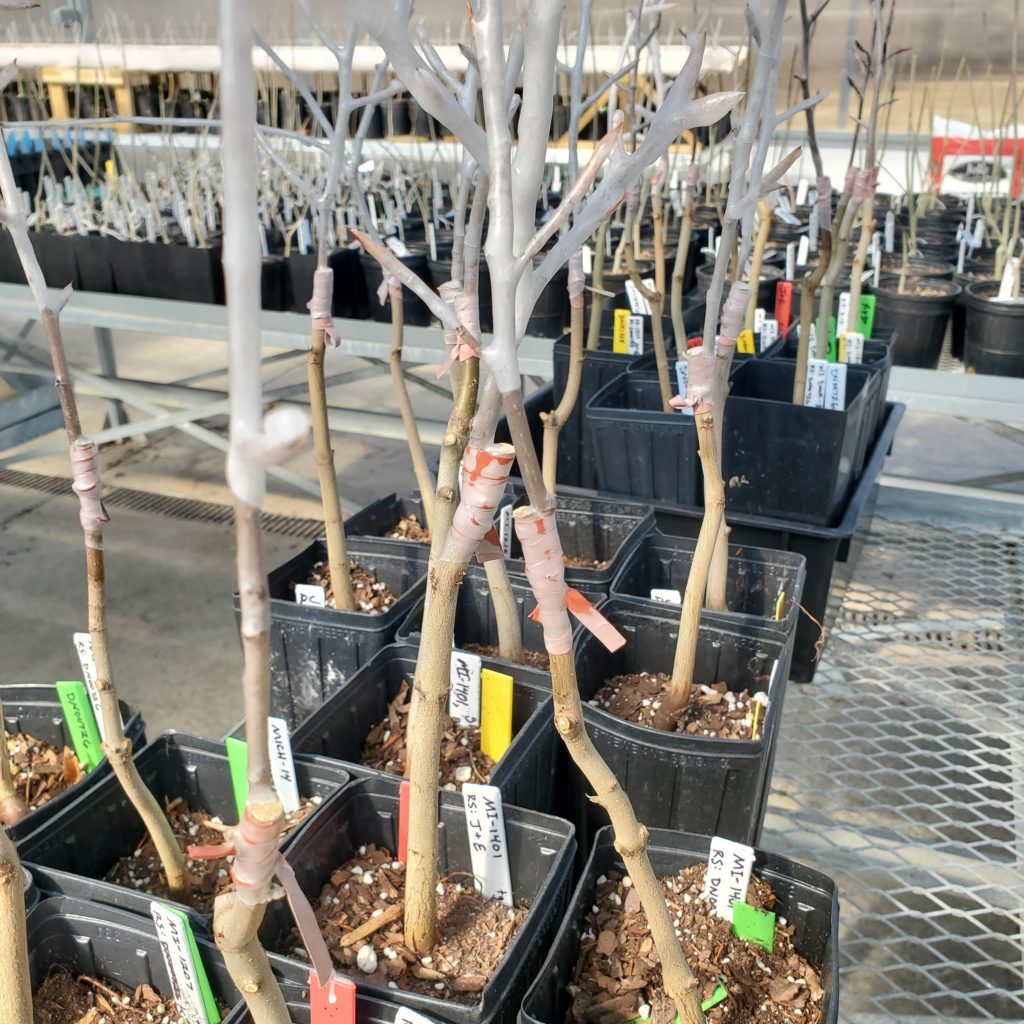
cross-bred ash seedlings being tested for vulnerability to EAB; photo courtesy of Jennifer Koch

 Other important information that should be highlighted in such a precis includes the statement that many ecosystems have already reached a point where healthy functions are in a more tenuous balance due to invasive species (p. 51). Effective carbon storage and maintaining sustainable nutrient and water balance are at risk. Second, costs and losses caused by invasive forest pests generally fall disproportionately on a few economic sectors and households. They cannot be equated to governmental expenditures alone (p. 305).  Third, even a brief estimate of overall numbers of invasive species appears only in §7.4. Information about individual species is scattered because it is used as example of particular topic (e.g., impacts on forest or grassland ecosystems, or on ecosystem services, or on cultural values).

Ecosystem Impacts Overwhelmed

As noted above, the report laments the absence of a comprehensive investigation of invasive species’ impacts. Perhaps the editors intended this report to partially fill this gap. To be fair, I have long wished for a “crown to root zone” description of invasive species’ impacts at a site or in a biome. Concise descriptions of individual invasive species and their impacts are not provided by this report, but they can be found elsewhere. (The regional summaries partially address the problem of too much information – but they do not provide perspective on organisms that have invaded more than one region, e.g., emerald ash borer or white pine blister rust.) Another round of editing might have resulted in a more focused presentation that would be more easily applied by policymakers.

Welcome Straightforward Discussion of Conceptual Difficulties

I applaud the report’s openness about some important overarching concepts that science cannot yet formulate.  If supportable theories could be conceived, they would assist in the development of policies:

  • Despite decades of effort, scientists have not established a clear paradigm to explain an ecosystem’s susceptibility to invasion (p. 85). Invasibility is complex: it results from a dynamic interplay between ecosystem condition and ecological properties of the potential invader, especially local propagule pressure.
  • Scientists cannot predict how climate warming will change distributions of invasive species [see Chapter 4] and alter pathways. This inability hampers efforts to develop effective prevention, control, and restoration strategies (p. xi). Climate change and invasive species need to be studied together as interactive drivers of global environmental change with evolutionary consequences.

The Report’s Recommendations

Policy-oriented recommendations are scattered throughout the report. I note here some I find particularly important:

  • Measures of progress should be based on the degree to which people, cultures, and natural resources are protected from the harmful effects of invasive species.
  • Managers should assess the efficacy of all prevention, control, and management activities and their effect upon the environment. Such an evaluation should be based on a clear statement of the goals of the policy or action. [I wish the report explicitly recognized that both setting goals and measuring efficacy are difficult when contemplating action against a new invader that is new to science or when the impacts are poorly understood. Early detection / rapid response efforts are already undermined by an insistence on gathering information on possible impacts before acting; that delay can doom prospects for success.]
    • Risk assessment should both better incorporate uncertainty and evaluate the interactions among multiple taxa. Risk assessment tools should be used to evaluate and prioritize management efforts and strategies beyond prevention and early detection/rapid response.
    • Economic analyses aimed at exploring tradeoffs need better tools for measuring returns on invasive species management investments (§16.5).
  • Actions that might be understood as “restoration” aim at a range of goals along the gradient between being restored to a known historic state and being rehabilitated to a defined desired state. The report stresses building ecosystem resilience to create resistance to future invasions, but I am skeptical that this will work re: forest insects and disease pathogens.
  • Propagule pressure is a key determinant of invasion success. Devising methods to reduce propagule pressure is the most promising to approach to prevent future invasions (p. 115). This includes investing in quarantine capacity building in other countries can contribute significantly to preventing new invasions to the US.
  • Resource managers need additional studies of how invasive species spread through domestic trade, and how policies may differ between foreign and domestic sources of risk.

I appreciate the report’s attention to such often-ignored aspects as non-native earthworms and soil chemistry. I also praise the report’s emphasis on social aspects of bioinvasion and the essential role of engaging the public. However, I think the authors could have made greater use of surveys conducted by the Wisconsin Department of Natural Resources and The Nature Conservancy’s Don’t Move Firewood program.

Lost Opportunities

I am glad that the report makes reference to the “rule of 25” rather than “rule of 10s”. I would have appreciated a discussion of this topic, which is a current issue in bioinvasion theory. As noted at the beginning of this blog, the long time between when the report was written and when it was published might have hampered such a discussion

Also, I wish the report had explored how scientists and managers should deal with the “black swan” problem of infrequent introductions that have extremely high impacts. The report addresses this issue only through long discussions of data gaps, and ways to improve models of introduction and spread.

I wish the section on the Northwest Region included a discussion of why an area with so many characteristics favoring bioinvasion has so few damaging forest pests. Admittedly, those present are highly damaging: white pine blister rust, sudden oak death, Port-Orford cedar root disease, balsam woolly adelgid, and larch casebearer. The report also notes the constant threat that Asian and European gypsy moths will be introduced. (The Entomological Society of America has decided to coin a new common name for these insects; they currently to be called by the Latin binomial Lymatria dispar).

And I wish the section on the Southeast and Caribbean discussed introduced forest pests on the Caribbean islands. I suspect this reflects a dearth of research effort rather than the biological situation. I indulge my disagreement with the conclusion that introduced tree species have “enriched” the islands’ flora.

SOURCE

Poland, T.M., P. Patel-Weynand, D.M Finch, C.F. Miniat, D.C. Hayes, V.M Lopez, editors. 2021. Invasive species in Forests and Rangelands of the United States. A Comprehensive Science Synthesis for the US Forest Sector. Springer

Posted by Faith Campbell

We welcome comments that supplement or correct factual information, suggest new approaches, or promote thoughtful consideration. We post comments that disagree with us — but not those we judge to be not civil or inflammatory.

For a detailed discussion of the policies and practices that have allowed these pests to enter and spread – and that do not promote effective restoration strategies – review the Fading Forests report at http://treeimprovement.utk.edu/FadingForests.htm

South Africa & Invasive Species: Threats to High Value Biodiversity and Human Well-Being

Protea repens and fynbos vegetation near Table Mountain; photo by Mike Wingfield

South Africa is a country of immense biological diversity. It is also one that recognizes the threat invasive species pose to its natural wealth – and to the economy and livelihoods of ordinary people.

Also, South Africans are trying hard to improve the country’s invasive species program. It recently released the second national report assessing how well it is curtailing introductions and minimizing damage. As I describe in a companion blog, I find these reports to contain exceptionally thorough and honest appraisals of South Africa’s invasive species programs. I address that value in the companion blog, where I compare the South African report — and its findings — to U.S. government reports on our invasive species programs.

In South Africa, bioinvasion ranks third – after cultivation and land degradation – as a threat to the country’s impressive biodiversity. Invasive species are responsible for 25% of all biodiversity loss. Certain taxa are at particular risk: native amphibians and freshwater fishes, and some species of plants and butterflies.

Particularly disturbing is the bioinvasion threat to the Fynbos biome. The report notes that 251 non-native species have been identified in this system. This finding causes concern because the Fynbos is a unique floral biome. In fact, it constitutes the principal component of one of only six floral kingdoms found on Earth: the Cape Floral Kingdom (or region). For more information, go here.

map of South Africa showing fynbos biome

Not surprisingly, invasive bird and plant species are most numerous around major urban centers. The report concludes that this is probably because most non-native birds are commensal with humans; most birds and plants were first introduced to urban centers; and there is greater sampling effort there. Indeed, the patterns of (detected) invasive plant richness are still highly sensitive to sampling effort.

South Africa is considered a leader on invasive species management. However, its record is spotty.

Successes

Biocontrol interventions are considered a success. South Africa has approved release of 157 biocontrol agents, including seven since 2016. All the recent agents (and probably most others) target invasive plants. The South African biocontrol community conducts a comprehensive review of their effectiveness at roughly 10-year intervals. The fourth assessment is currently under way. Also, the report considers eradication of non-native fish (primarily sport species) from several wetlands and river reaches to have been successful. (However, opposition by sport fishermen has delayed listing of some trout species as invasive.)

Failures

On the other hand, strategies to combat invasive plants, other than by biocontrol, appear to be having little success. Even the extent of plant invasions in national parks is poorly documented. Also, the report highlights ballast water as an inadequately managed pathway of invasion.

The report estimates that three new non-native species arrive in South Africa accidentally or illegally every year. Interestingly, reported species arrivals have declined in the current decade compared to the preceding one. The report’s authors consider this to probably be an underestimate caused by the well-known lag in detecting and reporting introductions. The apparent decline also is contrary to global findings. Table 1 in Seebens et al. 2020 (full citation at end of blog) projected that the African continent would receive approximately 767 new alien species between 2005 and 2050.

Even the introductory pathways are poorly known: the pathway for 54% of the taxa introduced to South Africa are unknown. Of the species for which the introductory pathway is known, horticultural or ornamental introductions of plants dominate – 15% of that total. A second important pathway – for accidental introductions – is shipping (5% of all introductions). Other pathways thought to be prominent during 2017–2019 are the timber trade, contaminants on imported animals, and natural dispersal from other African countries where they had previously been introduced.

PSHB symptoms on Vachellia sieberiana; photo by Trudy Paap

Polyphagous shothole borer

The report highlights as an example of a recent introduction that of the polyphagous shothole borer (PSHB, Euwallacea fornicatus). https://www.dontmovefirewood.org/pest_pathogen/polyphagous-shot-hole-borer-html/        http://nivemnic.us/south-africas-unique-flora-put-at-risk-by-polyphagous-shot-hole-borer/ See Box 3.1 in the report. This species is expected to have huge impacts, especially in urban areas. While most of the trees affected so far are non-native (e.g., maples, planes, oaks, avocadoes), several native trees are also reproductive hosts.  https://www.fabinet.up.ac.za/pshb  In response to the introduction, the government established an interdepartmental steering committee, which has developed a consolidated strategy and action plan. However, as of October 2020 the shot hole borer had not been listed under invasive species regulations, even on an emergency basis. It had been listed as a quarantine pest of agricultural plants (e.g., avocado) per the Agricultural Pests Act 1983.

As note in my blog assessing the report, the report bravely concludes that the government’s regulatory regime is only partially successful (whereas three years ago it graded it as “substantial”). The downgrade is the result of a more thorough evaluation of the regulatory regime’s effectiveness.

SOURCES

SANBI and CIB 2020. The status of bioinvasions and their management in South Africa in 2019. pp.71. South African National BD Institute, Kirstenbosch and DSI-NRF Centre of Excellence for Invasion Biology, Stellenbosch. http://dx.doi.org/10.5281/zenodo.3947613  

Seebens, H., S. Bacher, T.M. Blackburn, C. Capinha, W. Dawson, S. Dullinger, P. Genovesi, P.E. Hulme, M. van Kleunen, I. Kühn, J.M. Jeschke, B. Lenzner, A.M. Liebhold, Z. Pattison, J. Perg, P. Pyšek, M. Winter, F. Essl. 2020. Projecting the continental accumulation of alien species through to 2050. Global Change Biology. 2020;00:1 -13 https://onlinelibrary.wiley.com/doi/10.1111/gcb.15333

Posted by Faith Campbell

We welcome comments that supplement or correct factual information, suggest new approaches, or promote thoughtful consideration. We post comments that disagree with us — but not those we judge to be not civil or inflammatory.

For a detailed discussion of the policies and practices that have allowed these pests to enter and spread – and that do not promote effective restoration strategies – review the Fading Forests report at http://treeimprovement.utk.edu/FadingForests.htm

Federal Funding for Forest Pest Programs — Act Now! to Help Congress Decide

If you have not communicated to your Representative and senators your support for adequate funding of U.S. government programs to address non-native insects and pathogens threatening our forests, please do so now!

If political leaders do not hear from us that expanding these programs is important, these programs will continue to languish. It is easiest – and most direct – to inform your representative and Senators of your support. Please do so!  If you do not agree that these programs should be expanded & strengthened, I ask that you send a comment outlining what approach you think would be more effective in curtailing introductions, minimizing impacts, and restoring affected tree species. I can then initiate a discussion to explore these suggestions. [I already have endorsed the suggestion to create a CDC-like body to oversee management of non-native forest pests.] You can find your member of Congress here. Your Senators here.

Last week the Biden Administration sent to Congress its proposed budget for the fiscal year beginning October 1, 2021. I find it falls short in key areas. Next, the House and Senate will pass a package of appropriations bills to set actual funding levels. This is the moment to press for boosted funding. In an earlier blog I explained my reasons for seeking specific funding levels.

Asian longhorned beetles – introduced in wood packaging (USDA photo)

Two USDA agencies lead efforts to protect U.S. wildland, rural, and urban forests from non-native insects and pathogens. Their funding is set by two separate – and critical — appropriations bills:

  • USDA’s Animal and Plant Health Inspection Service (APHIS) has legal responsibility for preventing introduction of tree-killing pests; detecting newly introduced pests; and initiating eradication and containment programs intended to minimize their damage.  Funding for APHIS is contained in the Agriculture Appropriations bill.
  • USDA Forest Service (USFS)
    • The Forest Health Management (FHM) program provides funding and applied science to help partners manage pests. The program has two sides: the Cooperative component helps states and private forest managers, so it can address pests where they are first found – usually near cities – and when they spread. The federal lands component helps the USFS, National Park Service, and other federal agencies counter pests that have spread to the more rural/wildland areas that they manage.
    • The Research and Development (R&D) program supports research into pest-host relationships; pathways of introduction and spread;; management strategies (including biocontrol); and host resistance breeding

Forest Service funds are appropriated through the Interior Appropriations bill.

APHIS – the Administration’s official budget proposal, and justification, is here.

The Administration proposes a small increase for three of four APHIS programs that are particularly important for preventing introductions of forest pests or eradicating or containing those that do enter. The Administration proposed significant funding for a fourth program that plays a small but important role in managing two specific forest pests.

APHIS ProgramCurrent (FY 2021)FY22 Administration proposedFY 2022 Campbell recommended
Tree & Wood Pest$60.456 million$61 million$70 million
Specialty Crops$196.553 million209 million$200 million
Pest Detection$27.733 millionNo change$30 million
Methods Development$20.844 millionNo change$25 million

Tree and Wood Pests: It will be a major challenge for APHIS to eradicate the current outbreak of Asian longhorned beetles (ALB) in the swamps of South Carolina. APHIS should also address other pests. Even after cutting spending on the emerald ash borer (EAB), I think APHIS needs significantly more money in this account.

The Specialty Crops program is supported by such traditional USDA constituencies as the nursery and orchard industries, which probably explains the proposed increase. APHIS’ program to curtail spread of the sudden oak death (SOD) pathogen through interstate nursery trade receives funding from this program – about $5 million. I believe this program also now funds the agency’s efforts to slow spread of the spotted lanternfly.

SOD-infected rhododendrons in Indiana nursery in 2019

I would like the Pest Detection program to receive a small increase so the agency and its cooperators can better deal with rising trade volumes and associated pest risk. Similarly, Methods Development should receive a boost because of the need for improved detection and management tools.

USDA Forest Service – the Administration’s official budget proposal is here.  

While the Forest Health Management (FHM) and Research and Development (R&D) programs are the principal USFS programs that address introduced forest pests, neither has non-native pests as the principle focus. Non-native forest pests constitute only a portion of the programs’ activities. In the case of Research, this is a very small portion indeed.

President Biden’s budget proposes to spend $59.2 million on the Forest Health Management program and $313.5 million for Research. Both represent significant increases over spending during the current fiscal year. However, the FHM level is still below spending in recent years, although both the number of introduced pests and the geographic areas affected have been rising for decades.

In my earlier blog I suggested the funding levels:

USFS PROGRAMCurrent (FY21) FY22 Administration FY22  my recommendation
FHP Coop Lands$30.747 million$36.747 million$51 million (to cover both program work & personnel costs)
FHP Federal lands$15.485 million22.485 million$25 million (ditto)
    
Research & Develop$258.7 million; of which about $3.6 million allocated to invasive species$313.560 million$320 million; I seek report language instructing the USFS to spend more on invasive species

Under the FHM program, a table on pp. 46-47 of the budget justification lists existing and proposed spending on 14 pest taxa (plus invasive plants and subterranean termites). Spending on these 14 species is proposed to total $30.3 million. Of this amount, less than half – $14.9 million – is allocated to such high-profile invasive species of forests as the emerald ash borer (EAB), hemlock woolly adelgid (HWA),  sudden oak death (SOD), and threats to whitebark pine (recently listed as a threatened species under the Endangered Species Act). (The USFS does not engage in efforts to eradicate Asian longhorned beetle (ALB) outbreaks; it leaves that task to APHIS.) And of the nearly $15 million allocated to invasive non-native pests, more than half – $8 million – is allocated to European gypsy moths. While I agree that the gypsy moth program has been highly successful, I decry this imbalance. Other non-native pests cause much higher levels of mortality among hosts than does the gypsy moth.

dead whitebark pine at Crater Lake National Park; photo by FT Campbell

I applaud the modest increases in the Administration’s budget for other non-native forest pests. These range from tens to a few hundred thousand dollars per pest. FHM also supports smaller programs targetting rapid ohia death, beech leaf disease, the invasive shot hole borers in southern California, Mediterranean oak beetle, etc. Budget documents don’t report on these efforts.

The imbalance of funding allocated to damaging non-native pests compared to other forest management concerns is even worse in the Research program.  Of the $313.5 million proposed in the budget for the full research program, only $9.2 million is allocated to the 14 pest taxa (plus invasive plants and subterranean termites) specified in the table on pp. 46-47. Of this amount, less than half — $4.5 million – is allocated to the high-profile invasive species, e.g., ALB, EAB, HWA, SOD, and threats to whitebark pine. The budget does provide extremely modest increases for several of these species, ranging from $12,000 for ALB to $114,000 for EAB. Again, some smaller programs managed at the USFS regional level might address other pests. Still – the budget proposes that USFS R&D allocate only 1.4% of its total budget to addressing these threats to America’s forests! This despite plenty of documentation – including by USFS scientists – that non-native species “have caused, and will continue to cause, enormous ecological and economic damage.” (Poland et al. 2021; full citation at the end of the blog). Poland et al. go on to say:

Invasive insects and plant pathogens (or complexes involving both) cause tree mortality, resulting in canopy gaps, stand thinning, or overstory removals that, in turn, alter microenvironments and hydrologic or biogeochemical cycling regimes. These changes can shift the overall species composition and structure of the plant community, with associated effects on terrestrial and aquatic fauna. In the short term, invasive insects and diseases can generally reduce productivity of desired species in forests. Tree mortality or defoliation can affect leaf-level transpiration rates, affecting watershed hydrology. Tree mortality … also leads to enormously high costs for tree removal, other management responses, and reduced property values in urban and residential landscapes.

eastern hemlock in Shenandoah National Park; photo by FT Campbell

I seek report language specifying that at least 5% of research funding should be devoted to research in pathways of invasive species’ introduction and spread; their impacts; and management and restoration strategies, including breeding of resistant trees. Several coalitions of which the Center for Invasive Species is a member have agreed to less specific language, not the 5% goal.

Two other USFS programs contribute to invasive species management. The Urban and Community Forest program provided $2.5 million for a competitive grant program to help communities address threats to urban forest health and resilience. Of 23 projects funded in FY2020, 11 are helping communities recover from the loss of ash trees to EAB. (On average, each program received $109,000.)

The Forest Service’ International Program is helping academic and other partners establish “sentinel gardens” in China and Europe. North American trees are planted and monitored so researchers can identify insects or pathogens that attack them. This provides advance notice of organisms that could be damaging pests if introduced to the United States.

REFERENCE:

Invasive Species in Forests and Rangelands of the United States. Editors T.M. Poland, T. Patel-Weynand, D.M. Finch, C.F. Miniat, D.C. Hayes, V.M. Lopez  Open access!

Posted by Faith Campbell

We welcome comments that supplement or correct factual information, suggest new approaches, or promote thoughtful consideration. We post comments that disagree with us — but not those we judge to be not civil or inflammatory.

For a detailed discussion of the policies and practices that have allowed these pests to enter and spread – and that do not promote effective restoration strategies – review the Fading Forests report at http://treeimprovement.utk.edu/FadingForests.htm

Congressional Action to Protect Trees from Non-Native Pests

Representative Peter Welch (D-VT)

Rep. Peter Welch of Vermont has reintroduced his bill to improve programs intended to prevent introduction of non-native forest pests and enhance efforts to reduce their impacts. The latter provisions include support for breeding trees resistant (or tolerant) to the pest. I hope H.R. 1389 will be adopted – then spur new efforts to conserve and restore forest trees! Please follow my suggestion below.

The Invasive Species Prevention and Forest Restoration Act H.R. 1389 is co-sponsored by Reps. Brian Fitzpatrick (PA), Annie Kuster & Chris Pappas (NH), and Elise Stefanik (NY).

For updates, visit https://www.congress.gov/search?q={%22congress%22:[%22117%22],%22source%22:%22all%22,%22search%22:%22HR%201389%22}&searchResultViewType=expande

When he introduced the bill, Rep. Welch said 

“Invasive species are devastating to forests which are a central part of Vermont’s economy and our way of life. This bill will fund efforts to revitalize damaged forests and highlight the need for making this a priority within the federal government.”

Major provisions of H.R. 1389:

  • Expands USDA APHIS’ access to emergency funding to combat invasive species when existing federal funds are insufficient and broadens the range of actives that these funds can support.
  • Establishes a grant program to support institutions focused on researching methods to restore native tree species that have been severely damaged by invasive pests.
  • Authorizes funding to implement promising research findings on how to protect native tree species.
  • Mandates a study to identify actions needed to overcome the lack of centralization and prioritization of non-native insect and pathogen research and response within the federal government, and develop national strategies for saving tree species.

As I have described in earlier blogs, the measures adopted by federal and state governments to prevent non-native pathogen and insect pest introductions – and the funding to support this work – have been insufficient to meet the growing challenges. In just the past decade, several new tree-killing pests have been detected: polyphagous and Kuroshio shot hole borers, spotted lanternfly, two rapid ʻōhiʻa death pathogens, Mediterranean oak beetle, velvet longhorned beetle. Over the same period, the Asian longhorned beetle has been detected in Ohio and South Carolina; the emerald ash borer expanded its range from 14 to 35 states; the redbay ambrosia beetle and its associated fungus spread from five states to 11; a second strain of the sudden oak death fungus appeared in Oregon forests; and whitebark pine has been proposed by the US Fish and Wildlife Service for listing as Threatened under the Endangered Species Act.

During this same period, funding for the USDA Forest Service Forest Health Protection program has been cut by about 50%; funding for USFS Research projects targetting 10 high-profile non-native pests has been cut by about 70%.

One reason for this disconnect between need and resources is that the non-native tree pest problem is largely out of sight and therefore does not lend itself to the long-term public attention needed to remediate the threats. It is up to us to raise the political profile of these issues.

On the positive side, the passage of time has brought forth new solutions, a deeper understanding of the genetics of plants and animals, new measures for igniting public awareness and invasive identification, new technologies and strategies for helping trees adapt, and a recognition of what resources and organization it will take to mount a proper solution to the problem.

“Project CAPTURE” (Conservation Assessment and Prioritization of Forest Trees Under Risk of Extirpation) has proposed priority species for enhanced conservation efforts. Top priorities in the continental states are listed below. A separate study is under way for forests in Hawai`i, Puerto Rico, and U.S. Virgin Islands.

dead redbay on Jekyll Island, Georgia
  • Florida torreya (Torreya taxifolia)
  • American chestnut (Castanea dentata
  • Allegheny chinquapin (C. pumila)
  • Ozark chinquapin (C. pumila var. ozarkensis)
  • redbay (Persea borbonia)  
  • Carolina ash (Fraxinus caroliniana)
  • pumpkin ash (F. profunda)
  • Carolina hemlock (Tsuga caroliniana)
  • Port-Orford cedar (Chamaecyparis lawsoniana)
  • tanoak (Notholithocarpus densiflorus)
  • butternut (Juglans cinerea
  • eastern hemlock (Tsuga canadensis)
  • white ash (Fraxinus americana)
  • black ash (F. nigra)
  • green ash (F. pennsylvanica).

For a brief explanation of Project CAPTURE, see my earlier blog here. For an in-depth description of the Project CAPTURE process and criteria for setting priorities, read Potter, K.M., M.E. Escanferla, R.M. Jetton, and G. Man. 2019. Important Insect and Disease Threats to United States Tree Species and Geographic Patterns of Their Potential Impacts. Forests 2019, 10. https://www.fs.usda.gov/treesearch/pubs/58290

Please ask your representative to co-sponsor H.R. 1389. Please ask your senators to sponsor a companion bill. For more information, contact Alex Piper at Alex.Piper@mail.house.gov or 202-306-6569 .

H.R. 1389 is endorsed by Vermont Woodlands Association, American Forest Foundation, Center for Invasive Species Prevention, the Reduce Risk from Invasive Species Coalition,, Entomological Society of America, and North American Invasive Species Management Association.

Posted by Faith Campbell

We welcome comments that supplement or correct factual information, suggest new approaches, or promote thoughtful consideration. We post comments that disagree with us — but not those we judge to be not civil or inflammatory.

For a detailed discussion of the policies and practices that have allowed these pests to enter and spread – and that do not promote effective restoration strategies – review the Fading Forests report at http://treeimprovement.utk.edu/FadingForests.htm

Interior’s Invasive Species Plan: Let’s Implement It!

Posted by Scott J. Cameron, former Acting Assistant Secretary for Policy Management and Budget , US Department of the Interior

locations in Hawaii Volcanoes National Park where ohia trees were infected by rapid ohia death pathogen in 2017

In 2019 Congress passed the John D. Dingell, Jr. Conservation, Management, and Recreation Act. Among other things, it directed the Department of the Interior to “develop a strategic plan that will achieve, to the maximum extent practicable, a substantive annual net reduction of invasive species population or infested acreage on land or water managed by the Secretary.”  This provision triggered a year-long process of public involvement and inter-bureau coordination. The result was a plan published in January 2021.  It represents the first attempt by Interior at a Department-wide multi-taxa, multi-year approach to invasive species.  It has the potential to spur integration of invasive species work across the Department’s many bureaus and to focus each bureau’s efforts on a set of common goals, strategies, and performance metrics.

While Congress’ language is open-ended, any planning exercise is constrained by the most recent President’s budget and existing law.  It is up to those of us who are not, or at least no longer, executive branch employees to advocate for plans unbound by those constraints. 

In that spirit, I offer eight recommendations to improve invasive species management. Four are within existing authorities; four more are outside the current budgetary and statutory framework.  Many more ideas are without a doubt worth pursuing.

Opuntia (prickly pear) cactus – common plant in western National parks and on Bureau of Land Management lands; under threat by cactus moth

First, within existing funding and legal authorities, the Department has unfinished business that it can act on now.

  1. Secure approval of the package of categorical exclusions under the National Environmental Policy Act (NEPA) — now awaiting approval by the President’s Council on Environmental Quality (CEQ). Over many years agencies have documented how invasive species control improves, rather than harms, the environment.  Absent an applicable NEPA categorical exclusion approved by CEQ, though, each such action needs to run the time- and money-consuming gauntlet of NEPA compliance. In the meantime, the invasive plants germinate, the invasive animals reproduce, and what might have been a localized and inexpensive problem has expanded geographically and in terms of cost and complexity.  In the Fall of 2020 Interior submitted hundreds of pages of documentation on numerous practices proven to control invasive species without harming the environment.  Due to time and staffing constraints at CEQ, these categorical exclusions still await action.  Interior and CEQ should take prompt steps to finish them.
  • Allocate to the US Geological Survey at least $10 million of the roughly $90 million remaining available to the Secretary in CARES Act appropriations for research on invasive zoonotic diseases. These are diseases like COVID-19 and West Nile virus that can move from one species to another.  Many zoonotic diseases fit the definition of invasive species, since they are not native to the United States and endanger human health.  In the case of COVID-19 funding is available to the Secretary of the Interior, without need for further Congressional action, from funds appropriated by the CARES Act. The availability of these funds will expire at the end of September 2021, so Interior should provide this research funding to USGS as soon as possible. 
  • Join the existing Memorandum of Understanding between the Western Governors Association (WGA) and the US Department of Agriculture’s Forest Service. These groups have established “a framework to allow the U.S. Forest Service (USFS) and WGA to work collaboratively to accomplish mutual goals, further common interests, and effectively respond to the increasing suite of challenges facing western landscapes.”  This provides a forum to improve coordination between the States and the federal government on the management of invasive species, and Interior needs to be part of that team.
  • Interior should work with USDA to accelerate and intensify efforts to systematically improve coordination between the interagency Wildland Fire Leadership Council and the interagency National Invasive Species Council.  Both Councils have member agencies that practice vegetation management using similar tools and techniques, although for different purposes. The two Councils should identify a select number of initiatives in FY21 where their efforts would benefit both wildland fire management and invasive plant management .
swamp bay trees in Everglades National Park killed by laurel wilt; photo by Tony Pernas

Four steps to implement the strategic plan outside the scope of current law and the President’s Fiscal Year 2021 budget. I offer the following:

  1. Improve implementation of the Lacey Act program to list injurious species.  There are both legislative and administrative elements to this proposal.  

In a federal District Court decision on May 19, 2015, on a lawsuit filed by the Association of Reptile Keepers, the Court undid the longstanding Fish and Wildlife Service policy that the Lacey Act allowed FWS to ban interstate transport of injurious species. On April 7, 2017, the D.C. Circuit Court of Appeals upheld the District Court’s view. These rulings mean that FWS authority only applies to international commerce.  Unfortunately, the court’s interpretation of the law and legislative history are reasonable, so Congress needs to amend the law to make it clear that FWS is explicitly authorized to regulate interstate commerce in injurious species. The Department of the Interior should work with the Department of Justice and the Office of Management and Budget to develop the necessary bill language and submit it to Congress.

At the same time, the FWS injurious species listing process is notoriously slow, even causing Congress to occasionally list species legislatively.  The fact that these legislative initiatives have sometimes been promoted by Members of Congress who normally  are opposed to more federal regulation signals just how awkward the current FWS process is. Thus there might well be strong bipartisan support to amend the Lacey Act on the interstate commerce matter. Acting on its own authority, FWS should procure an independent third party review of the injurious species listing process and ask the contractor to make suggestions for “business process reengineering” to improve and streamline current practices, along with evaluating whether higher funding or new technology is needed.

  • The Bureau of Reclamation, Department of the Interior, and the Office of Management and Budget should develop legislative language to submit to Congress for the 2022 Water Resources Development Act, that explicitly authorizes an aquatic nuisance species program in the Bureau of Reclamation.  It could parallel the relatively new authority enjoyed by the Army Corps of Engineers and mandate increased coordination between the two water agencies.
  • Any climate change legislation pursued by Congress and the Administration should include provisions for addressing invasive species.  Climate change will make some North American habitats more suitable for foreign organisms, as cold-intolerant species might be able to survive in more northern latitudes in the U.S. than previously was the case. Second, the disruptive effect of climate change on North American ecosystem structure and trophic relationships at any latitude will make those ecosystems more vulnerable to invasion. Finally, the spread of invasive species may in and of itself exacerbate climate change, such as through the increased carbon dioxide emissions from rangeland wildfires aggravated by the dominance of invasive cheatgrass.
  • The Senate Committee on Environment and Public Works and the House Natural Resources Committee should each hold oversight hearings on how best to help state and local governments detect and respond to new invasive species that are not within the statutory purview of USDA/APHIS.  This is a complex topic, important for both ecological and financial reasons. Over the years several attempts to address it have failed.  A thoughtful review by Congress and the Administration, which perhaps would lead to passage of new statutory authority and funding, is worth exploring.

The Author:

Scott Cameron recently left the federal government, where he had served as Acting Assistant Secretary for Policy, Management and Budget at the U.S. Department of the Interior. In that capacity he oversaw Department-wide budget, invasive species, natural resource damage assessment and restoration, environmental compliance and numerous administrative functions of this $14 billion agency with 65,000 employees. Previously, Scott held other civil service job (e.g., at the White House Office of Management and Budget) & political appointments in the federal government, on the staff of the Governor of California, and on Congressional staffs. While not in government, Scott led formation of the Reduce Risk from Invasive Species Coalition.

CISP welcomes comments that supplement or correct factual information, suggest new approaches, or promote thoughtful consideration. We post comments that disagree with us — but not those we judge to be not civil or inflammatory.

Further information on the plant pests mentioned in the photo captions can be obtained at www.dontmovefirewood.org; click the “invasive species” button.

Invasive Plants in National parks – Progress?

Japanese stiltgrass in Shenandoah National Park; photo by Jake Hughes, NPS

The recent appearance of a study by National Park Service (NPS) scientists quantifying the threat posed by invasive plants prompted me to seek updates on this issue. In May 2018, I blogged about NPS’ Invasive Plant Program Strategic Plan, which was issued in 2016. At the time, I got the impression that the program was struggling to gain support from NPS leadership in Washington, as well as leaders of individual parks. Has the situation improved since then?

The recent study, by Kathryn Miller and colleagues, focuses on National parks in the East, from Virginia to Maine. (I provide a full reference at the end of this blog.) I look forward to a planned follow-up article that will try to clarify drivers of invasion. 

The Miller study appears to have been undertaken to partially fulfill one of the goals of the NPS’ 2016  Invasive Plant Program Strategic Plan. One of the actions under Goal 1 in the Plan was to quantify the invasive plant threat, the effort needed to manage it, and then to communicate the gap between needs and available resources. Miller et al. have quantified the threat to National parks in one region (not the entire country). However, they have communicated the gap between effort and need in only the most general way.

Protecting the forests in eastern National parks is valuable from many perspectives. The forests in these parks are older and have higher stand-level tree diversity than surrounding unprotected forests. Protecting their long-term condition also corresponds to the National Park Service’s (NPS) stated mission, as established in its Organic Act.

The study relied on National Park Service Inventory and Monitoring Program data from 1,479 permanent forest plots covering 39 eastern NP units located from Virginia to Maine. The data were collected over 12 years, in three survey cycles (2007–2010, 2011–2014, and 2015–2018).

The authors note that in forest ecosystems, invasive plants can reduce native diversity, alter forest structure, suppress tree regeneration, alter nutrient cycling, and modify disturbance regimes.  Some – the shrubs and vines – also threaten human health by promoting increases in tick populations and associated Lyme disease risks.

Unsurprisingly, the data showed invasive plants to be widespread, and increasing. In 80% of the park units, there was a significant increase in at least one trend measuring abundance. Any decrease in plant invaders tended to be in herbaceous or graminoid species; that decrease was often counterbalanced by an approximately equivalent increase in invasive shrubs or vines. In 35 of the park units, more than half of the plots had at least one invasive plant species when the 2015-2018 survey began. In 10 parks (a quarter of those surveyed), every plot had at least one.

The most widespread species is Japanese stiltgrass (Microstegium vimineum). It is present in more than 75% of all park units and 30% of all 1,400 plots. This dominance is true despite the fact that stiltgrass does not extend north of Roosevelt-Vanderbilt National Historic Site in New York state (41o N latitude). Stiltgrass is also the most aggressive invader. 

The second most widespread invaders are a group of shrubs and vines, including most notably Japanese barberry (Berberis thunbergii), Japanese honeysuckle (Lonicera japonica), multiflora rose (Rosa multiflora), and wineberry (Rubus phoenicolasius). I note – although the articles does not – that several of these have been deliberately planted – either to “enhance” ecosystems (multiflora rose) or as ornamentals (barberry). [Lehan et al. 2013 (full reference at end of blog) found that 95% of 125 shrub species  introduced to the U.S. were introduced deliberately.] I know of no examples of deliberate planting of Japanese stiltgrass.

The most frequently detected non-grass herbaceous species is garlic mustard (Alliaria petiolata), which was detected in 20% of plots. Garlic mustard is found throughout the study area (Virginia to Maine). Tree-of-heaven (Ailanthus altissima) is the most common invasive tree. It is found in only 9% of plots and does not grow north of Roosevelt-Vanderbilt NHS. Again, both were intentionally introduced – and not noted as such in the article.

Because they could not identify the source populations for each plot, the study could not directly measure rates of establishment and expansion. The data did allow tracking rough trends in each park.

Parks with the highest abundance tended to be near densely populated areas. However, this pattern was not universal. For example, Prince William Forest Park in the outer Virginia suburbs of the District of Columbia metro area was one of two of the least invaded park units. 

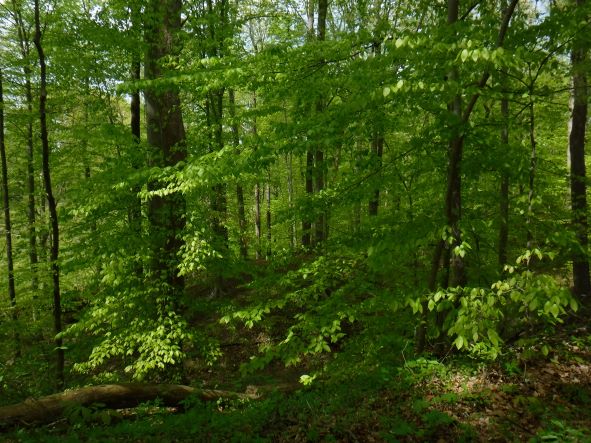
Prince William Forest Park

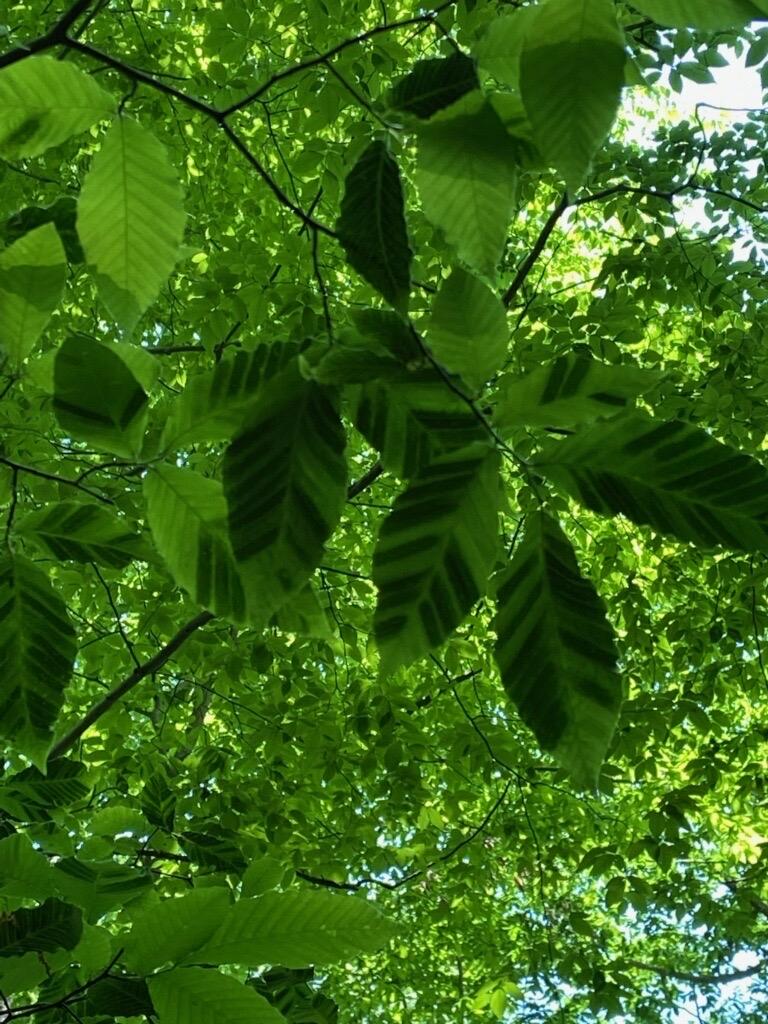
(note the prevalence of beech – I fear for the arrival of beech leaf disease!)

Total invasives increased significantly in 21 of the 39 parks for at least one metric. In 10 parks (a quarter of all parks), total invasives increased significantly in two of the three metrics. Antietam National Battlefield experienced the steepest increases.

The authors note that invasive plants continue to establish and expand, even in already heavily invaded forests. Thus they found little evidence of saturation. This finding conflicts with invasion theory. They also found antagonistic interactions between invasive species to be common.

The authors said managers should prioritize efforts to control Japanese stiltgrass and the shrubs and vinesdue to their widespread occurrence, rapid expansion, ability to suppress tree regeneration and understory diversity, and – in the case of the shrubs and vines, link to ticks.

The authors noted the need to better understand the drivers and impacts of invasive plants in eastern forests. They mentioned the overabundance of white-tailed deer (Odocoileus virginianus), latitude, climate change, fragmentation and urbanization. I have urged them to include analysis of deliberate planting of various species on lands within the park units or nearby. They have said that they will do so in the planned follow-up article.

The authors propose that deferred management of natural resources receive attention and sustained commitment on par with the attention to deferred maintenance of the park units’ infrastructure. The maintenance backlog has been addressed through recent legislation: the Great America Outdoors Act which provided $6.5 billion over five years to address deferred maintenance projects in all 419 national park units. I believe that these projects will not address invasive species, which are managed under the “Natural Resources” budget account, not “Maintenance”. Some “Maintenance” projects probably will include control of invasive plants. A former Interior Department official has suggested that resource management activities might be funded under another section of the legislation, which provides $900 million under the Land and Water Conservation program. I hope this is true.

National Park Service’ Overall Invasive Plant Program Now

In response to the mandate in the John D. Dingell, Jr. Conservation, Management, and Recreation Act (Public Law 116-9), the Department of Interior has issued a department-wide invasive species strategy. Will issuance of the new strategy provide impetus to the NPS to seek funding to implement its 2016 invasive plant strategic plan? Will Congress provide funds for this purpose?

Finding out the current status of National Park Service took a little effort. The NPS’ website has “popular” information about the efforts of individual regional Invasive Plant Management Teams (see links at the end of this blog). These posts provide only the briefest overview of program achievements and do not compare those accomplishments to the goals in the 2016 plan.

However, Terri Hogan, Invasive Plant Program Manager in the Biological Resources Division, provided following information:

NPS leadership now supports the agency’s invasive plant effort. The national Invasive Plant Program (IPP) contributes to the annual Natural Resource Stewardship and Science Directorate (NRSS)’ Biological Resource Division (BRD) work plan. All is guided by the “Four Pillars to Guide Natural Resource Activities and Investments”, adopted in 2016. 

It is not clear that invasive species have the highest priority under this regime. The four “pillars” are

  • Holding the line – includes conserving biodiversity by removing invasive plants
  • Managing amid Continuous Change – includes conducting risk assessment and taking other actions to contain future exotic species
  • Leveraging for Conservation at Scale
  • Enhancing Stewardship and Science Access and Engagement

Cooperation with owners of neighboring private lands has been enhanced by engagement of the Western Governors Association and state and local political leaders. Many parks participate in Partnerships for Invasive Species Management (PRISMs), CISMS, and Cooperative Weed Management areas (CWMAs). This collaboration has been strengthened by adoption of the John D. Dingell, Jr. Act (see above).

In practice, the focus appears to still be on the Invasive Plant Management Teams (IPMTs). There are now 17 teams. Fifteen are funded through the national office. One is funded by an individual park; one funded through a regional office. Annual reports have been published for FYs 2017 and 2018. The FY19 report has been held up but should be posted soon.

The reports provide brief description of the overall program and vignettes of particular activities. There are more detailed – but still anecdotal – reports for each of the teams. It is difficult to determine whether there has been overall progress. For example, the reported total infested acreage increased from 133,658 acres in FY17 to 301,195 acres in FY18. This presumably reflects more intense monitoring as well as a probable increase in real infections. (The infested acreage figures do not address intensity of invasion on these acres.) The teams cumulatively treated 8,937 acres in FY 2017; 8,331 acres in FY 2018. They carried out inventory and monitoring projects on 169,057 acres in FY17, 210,000 acres in FY18.

Since the Miller article concerns the region from Virginia to Maine, I checked the FY17 and FY 18 reports from the Invasive Plant Management Teams from the Mid-Atlantic, National Capital Area, and Northeastern regions. The Mid-Atlantic team emphasized work on wavyleaf basketgrass and meadows in parks established to protect cultural or historic sites. The National Capital Area team emphasized partnerships and success eradicating Giant Hogweed (Heracleum mantegazzianum) on private land neighboring Rock Creek Park. The Northeastern Team serves 25 parks; the report emphasized leveraging resources and testing efficacy of pre-emergent herbicide for control of Japanese stiltgrass. With this exception, the teams do not appear to be prioritizing the species recommended for action by the Miller study.

Brief, “popular” articles about the NPS’ invasive plant effort are available here

Invasive Plant Management Teams – Biological Resources Division (U.S. National Park Service) (nps.gov)

NPS 20 Years of Invasive Plant Management 

20 Years of Action in 2020: Invasive Plant Management Teams 

20th Years of Action – The NPS IPMT Program 

SOURCES

Lehan, N.E., J.R. Murphy, L.P. Thornburn, and B.A. Bradley. 2013. Accidental Introductions are an Important Source of Invasive Plants in the Continental United States. American Journal of Botany 100(7): 1287–1293. 2013.

Miller, K. M., B. J. McGill, A. S. Weed, C. E. Seirup, J. A. Comiskey, E. R. Matthews, S. Perles, & J. Paul Schmit. 2020. Long-term trends indicate that invasive plants are pervasive and increasing in eastern national parks. Ecology. 00(00):e02239. 10.1002/eap.2239

Posted by Faith Campbell

We welcome comments that supplement or correct factual information, suggest new approaches, or promote thoughtful consideration. We post comments that disagree with us — but not those we judge to be not civil or inflammatory.

For a detailed discussion of the policies and practices that have allowed these pests to enter and spread – and that do not promote effective restoration strategies – review the Fading Forests report at http://treeimprovement.utk.edu/FadingForests.htm

Decision!! California Department of Food & Agriculture Upgrades Ranking of Phytophthora occultans

Ceanothus ferrisiae; photo by John Rusk

In January 2021, the California Department of Food and Agriculture announced the pest rating for Phytophthora occultans, one of two species of Phytophthora it was reviewing. (Once at the website, click on “comment” – next to name Heather Sheck.)

I blogged about this action in December.

Five people or organizations submitted comments. The most comprehensive comments were submitted by Elizabeth Bernhardt, Ph. D. and Tedmund Swiecki Ph.D. of Phytosphere Research. Another scientist was Tyler Bourret, who had been the first to detect P. occultans in California when working as a student in 2015-16. The third scientist was Jennifer Parke, a plant pathologist at Oregon State University who has worked with Phytophthora species in agriculture and wildland settings for 36 years. Additional comments were submitted by the Phytophthoras in Native Habitats Work Group and me.

All commenters raised some issues. First was the lack of information on the true distribution of P. occultans in California. CDFA restated that it that relies on official records and survey information, and that those records support a “low” rating.

Several issues relate to the definitions that CDFA applies in assigning ranks. They are so restrictive that – in my view – they result in underestimates of pathogens’ potential impacts.

One example is how CDFA recognizes first detections of a pathogen. As Bernhardt and Swiecki point out, CDFA’s consideration of only “official” samples prevents timely action to protect California’s agriculture and native vegetation. In the case of P. occultans, CDFA took no action for two years after the pathogen was first reported in the state. This detection had been confirmed by a CDFA laboratory.

A second example is host range. CDFA says it assigns a host range rating of “wide” (rating of “3”) only to pathogens that have host ranges of hundreds of species. This means that pathogens with dozens of known hosts across several plant families are given a ranking of “moderate” (2). Furthermore, the agency considers only “official” samples in defining hosts. This approach precludes consideration of the high probability that additional hosts would be found in future, including federally listed species in the genera Ceanothus and Arctostaphylos. Bernhardt and Swiecki named two additional hosts based on field work. CDFA responded to the second point by adding a reference to the likely expansion of the host range in the “Uncertainty” section of the document.

Similarly, CDFA gives a reproductive potential rating of “3” only to pathogens spread by a vector or that infect seeds.

CDFA staffers who manage specific pests lack authority to change these too stringent ranking criteria. The agency leadership need to adopt more realistic criteria.

CDFA responded by accepting many of the additional factors raised primarily by Bernhardt and Swiecki. This resulted in raising the overall score from 11 to 14, and changing the ranking from “C” to “B”.


Posted by Faith Campbell

We welcome comments that supplement or correct factual information, suggest new approaches, or promote thoughtful consideration. We post comments that disagree with us — but not those we judge to be not civil or inflammatory.

For a detailed discussion of the policies and practices that have allowed these pests to enter and spread – and that do not promote effective restoration strategies – review the Fading Forests report at http://treeimprovement.utk.edu/FadingForests.htm

APHIS Deregulates Emerald Ash Borer – Now it is up to the States

APHIS formally proposed to stop regulating movement of firewood, nursery stock, and other articles that can transport the emerald ash borer (EAB) in 2018; I blogged in opposition to this proposal at the time.  Now APHIS has evaluated the 2018 comments on its proposal and has decided to proceed with its plans.

I recently blogged about the current and probable future status of ash. A study confirmed that robust regeneration of ash seedlings and saplings seen in various invaded areas will not result in recovery of mature ashes that can perform their ecological role. 

APHIS received 146 comments on the proposal. Twenty-five supported the proposal as written; 121 raised concerns. Many of the latter were a few sentences without supporting information. These comments and the final rulemaking can be read here.

How has APHIS responded to the serious questions raised? Dismissively.

I certainly concede that EAB has been difficult to manage and has spread rapidly. However, I continue tobelieve that maintaining the quarantine serves important purposes and the analysis APHIS provides does not justify terminating of the regulatory program. I remain concerned.

Neither the proposal nor the final regulation tells us how much money and staff resources have been dedicated to detection or enforcement of the regulations in recent years. Therefore we don’t know how many resources are now available for supporting other activities that the agency thinks are more effective. APHIS also refuses to provide specific information on how it will allocate the freed-up resources among its (minimal) continuing efforts. For example, APHIS has supported resistance-breeding programs. Will it help them expand to additional species, e.g., black and Oregon ash?

How Does APHIS Propose to Curtail EAB Spread?

APHIS states in the final rule that it is ending the domestic quarantine regulation so that it can allocate resources to more effective strategies for managing and containing EAB. The agency wants to reallocate funds “to activities of greater long-term benefit to slowing the spread of EAB … These activities include further development and deployment of EAB biocontrol organisms; further research into integrated pest management of EAB that can be used at the local level to protect an ash population of significant importance to a community; and further research, in tandem with other Federal agencies, into the phenomenon of “lingering ash … ”

However, APHIS has not funded detection efforts since 2019. (Detection methods were only partially effective, but they gave us some information on where EAB had established.) APHIS is now ending regulation of the movement of vectors. APHIS concedes that biocontrol agents cannot be effective in preventing pest spread. So – what efforts – other than continued support for the “Don’t Move Firewood” campaign – will APHIS make to slow the spread of EAB?

Environmental and Economic Impacts: Not Adequately Assessed

Second, APHIS still has not analyzed the economic or environmental impact of the more rapid spread of EAB to the large areas of the country that are not yet infested – especially the West Coast – that are likely to result from deregulation. As even APHIS concedes, the EAB is currently known to occupy only 27% of the range of native Fraxinus species within conterminous US. There are additional large ash populations in Canada and Mexico – although neither country commented on the proposal — unfortunately!

Instead, APHIS largely restates its position from the proposal that it is too difficult to calculate such impacts. Furthermore, that it is APHIS’ “experience that widely prevalent plant pests tend, over time, to spread throughout the geographical range of their hosts …” In other words, APHIS denies the value of delaying invasions – yet that has always been a premise underlying any quarantine program.

The final regulation refers to an updated economic analysis, but no such document is posted on the official website. The rule does not mention costs to homeowners, property owners, municipal governments, etc. I believe it would not be so difficult to estimate costs to these entities by applying costs of tree removal in the Midwest to tree census data from major West Coast cities. Also, it might have been possible to provide some estimate of the ecological values in riparian forests by analogy to data from the Midwest developed by Deborah McCullough and others.

Biological Control: Effective – or Not

In the final regulation, APHIS concedes that the biocontrol agents currently being released have geographic and other limitations. However, APHIS does not address concerns raised by me and others about their efficacy. APHIS does say explicitly that it has not [yet?] begun efforts to find biocontrol agents that might be more effective in warmer parts of the ash range, especially the Pacific Northwest and  riparian areas of the desert Southwest. However, APHIS has conceded that these areas are almost certain to be invaded – so should it not take precautionary action?  

APHIS states several times that it cannot promise specific funding allocations among program components or strategies – such as resistance breeding – that might be pursued in the future. The agency stresses the value of flexibility.

U.S. Forest Service biologists have higher expectations; see their podcast here.

I wish to clarify that I do not oppose use of biocontrol; I strongly supported then APHIS Deputy Administrator Ric Dunkle’s decision to initiate biocontrol efforts for EAB early in the infestation. My objections are to overly optimistic descriptions of the program’s efficacy.

Firewood: Outreach Only, No National Regulation

As noted, APHIS has promised to continue support for public outreach activities, especially the “Don ‘t Move Firewood” campaign. The program’s message will continue to encourage the public to buy firewood where they burn it and to refrain from moving firewood from areas that are under Federal quarantine for other pests of firewood (e.g., Asian longhorned beetle). This campaign and the new National Plant Board guidelines link stress that firewood is a high-risk pathway for many pests of national or regional concern; they do not focus on any particular species. Leigh Greenwood, director of Don’t Move Firewood, thinks this is a good approach.

In 2010, the National Firewood Task Force recommended that APHIS regulate firewood at the national level. APHIS does explain why the agency did not do so. The agency says national regulations would be overly restrictive for some states and that requiring heat treatment would not be feasible in the winter for producers in Northern states. Finally, a Federal regulation would not address a significant non-commercial pathway – campers. [I have serious questions about APHIS’ assertion that it can regulate only commercial movement of vectors across state lines. Contact me directly for details on this.]

Perhaps APHIS is not required to analyze the probable overarching efficacy of the several efforts of 50 states. Given the states’ many perspectives and obvious difficulty in coordinating their actions on phytosanitary and other policies, I fear a scattered approach that will result in faster spread of EAB. I hope the National Plant Board guidelines on firewood regulation and outreach can overcome the history.

Most federally-managed recreation areas adopted an education campaign on firewood in autumn 2016; I blogged about it then.

Imported Wood Will be Minimally Regulated

APHIS clarifies that it will take enforcement actions against imports of ash wood only if inspectors detect larvae but can identify them just to family level and not below. APHIS will allow the importation if the larvae can be identified as EAB specifically. This policy reflects international standards, which do not allow a country to erect restrictions targetting a pest from abroad if that pest is also present inside the country and is not under an official control program. (See my discussion of the WTO Agreement on Sanitary and Phytosanitary Standards in Chapter 3 and Appendix 3 of Fading Forests II, available here.) 

APHIS does not discuss how it will react to pests identified to the genus – several other Agrilus also pose pest risks. (See here and here.)

APHIS recommends that states leery of accepting yet more EAB-infested wood from abroad petition the agency under the Federally Recognized State Managed Phytosanitary Program (FRSMP) program, under which APHIS would take action to prevent movement of infested material to that particular state.

Lessons Learned

Finally, one commenter asked whether APHIS would analyze the program to learn what could have improved results. APHIS replies that the agency “tend[s] to reserve such evaluations for particular procedures or policies in order to limit their scope …” I hope APHIS is serious about “considering” doing a “lessons learned” evaluation. It is important to understand what could have been done better to protect America’s plant resources.

My take: the EAB experience proves, once again, that quarantine zones must extent to probable locations – beyond the known locations. The pest is almost always more widely distributed than documented. This has been true for EAB, sudden oak death, ALB, citrus canker … Failure to regulate “ahead” of the pest guarantees failure. I recognize that adopting this stance probably requires a change in the law (or at least understanding of it) and of current international standards adopted by the International Plant Protection Convention (IPPC). However, absent a more aggressive approach, programs are doomed to be constantly chasing the pest’s posterior.

Finally, let us mourn the loss of ash so far, the future losses … and opportunities missed.

Posted by Faith Campbell

We welcome comments that supplement or correct factual information, suggest new approaches, or promote thoughtful consideration. We post comments that disagree with us — but not those we judge to be not civil or inflammatory.

For a detailed discussion of the policies and practices that have allowed these pests to enter and spread – and that do not promote effective restoration strategies – review the Fading Forests report at http://treeimprovement.utk.edu/FadingForests.htm

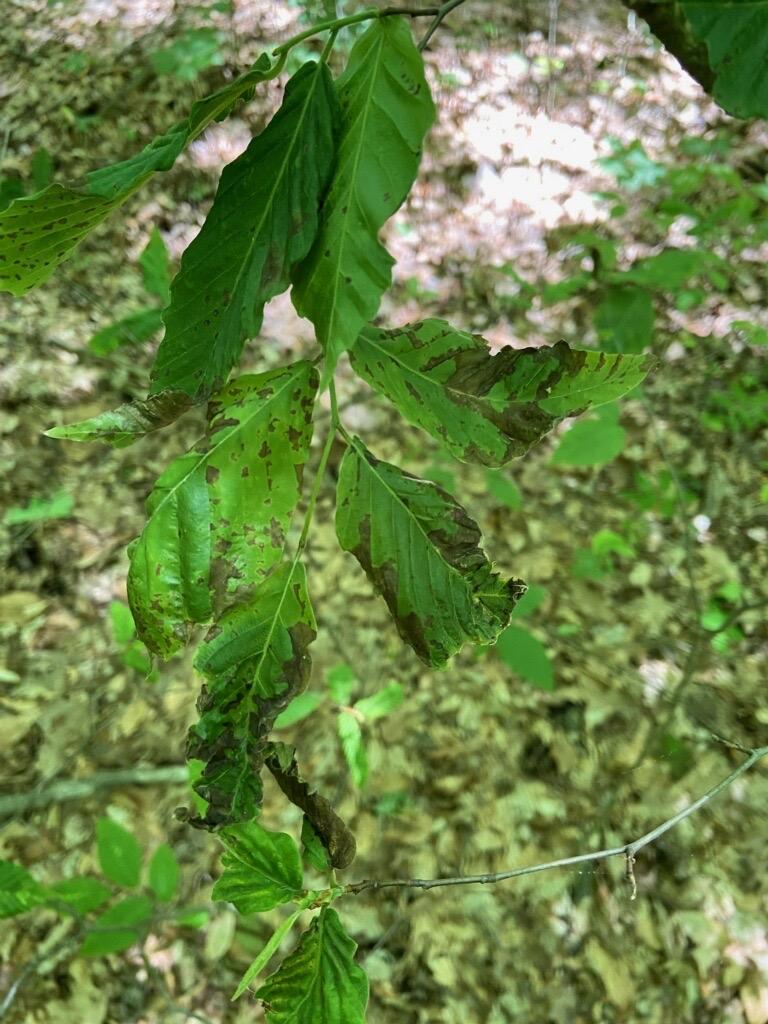
Beech leaf disease found in four new states, 31 new counties

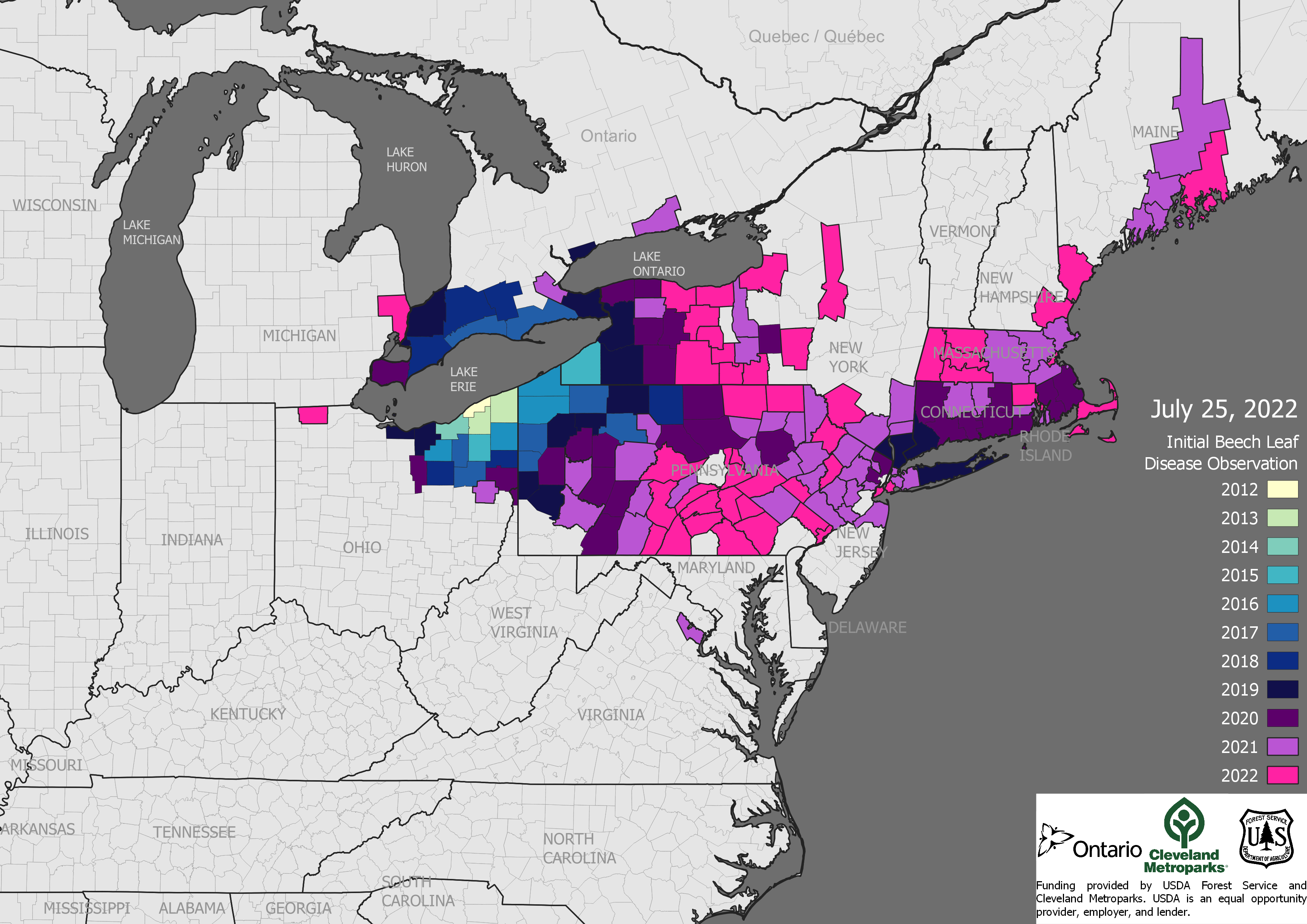
2020 detections of beech leaf disease

On the first day of winter, Daniel Volk, Forest Health Project Coordinator for Cleveland (OH) Metroparks reported that a coordinated survey has confirmed the presence of beech leaf disease link to DMF in four new states — Massachusetts, New Jersey, Rhode Island, and West Virginia. In all, the disease is now known to be established in 71 counties in the US and Canada. Funding was provided by the USFS Forest Health Management “emerging pest” program.

2021 survey efforts will focus on high risk counties adjacent to affected counties.  

Cleveland Metroparks has several resources available on its  website and will continue to post updated information there as it becomes available.

I posted a blog urging recipients to participate in these searches last June link  I hope you will do so again in 2021.

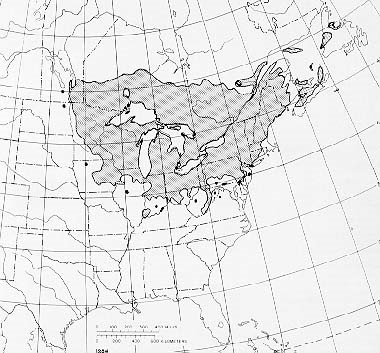
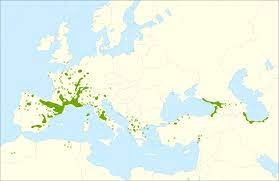
range of American beech

Posted by Faith Campbell

We welcome comments that supplement or correct factual information, suggest new approaches, or promote thoughtful consideration. We post comments that disagree with us — but not those we judge to be not civil or inflammatory.

For a detailed discussion of the policies and practices that have allowed these pests to enter and spread – and that do not promote effective restoration strategies – review the Fading Forests report at http://treeimprovement.utk.edu/FadingForests.htm

Urgent!! Send Comments to California on risk from new Phytophthoras

Arctostaphylos uva-ursi (bear berry); photo by Sten Porse, Commons.Wikipedia

The California Department of Food and Agriculture (CDFA) is seeking input on proposed pest ratings for two species of Phytophthora: Phytophthora occultans and Phytophthora quercetorum. Each has the potential for being a serious pest in California and being spread throughout the United States. Therefore it is important to weigh in on this process. The first deadlines for comments is December 18.

These risk rating proposals can be found at https://blogs.cdfa.ca.gov/Section3162/ The website also has instructions for sending comments. This process can be clumsy so, if it doesn’t work, send your comments directly to the webmaster.

In general, the State assigns each potential pest a rating of A, B, or C. Those rated “A” are most likely to cause harm and also most subject to State regulation. Under “B”, the County Agricultural Commissioners have discretion to take regulatory actions. Pests ranked at “C “are not subject to any State enforced regulatory actions. The “C” rating is supposed to be assigned to pests that are widely distributed in the state and are expected to have a “medium” to “low” impact on vegetation (cultivated or wild) in the state.

Phytophthora occultans

Proposed for risk rank “C “. Comments are due December 18th.

Phytophthora occultans is a recently described species found in nurseries in Europe and in some U.S. states (including Oregon). It was recently detected in the San Francisco area of California.

The State proposes to rate  Phytophthora occultans as a level  “C” pest. This is insufficient. A rank of “B” is more appropriate, for the following reasons.

1) The data presented in the CDFA proposal are too limited to judge the species’ distribution in California. The proposal refers to only “two detections, two years apart, in San Francisco County.” By ranking it “C”, CDFA seems to assume the pathogen is widespread, based on detections in Europe and other states, without U.S. evidence

The available record does not indicate that CDFA made any attempt to determine the extent of the P.occultans infestations — no survey of other plants at the contractor’s nursery or at other nurseries and no consultation with a larger group of stakeholders. 

2) CDFA limits discussion of possible impacts to hosts listed in the literature –which belong to multiple plant families. It makes no mention that additional hosts are likely to be discovered (as has often happened with regard to the host ranges of other pathogens in the Phytophthora genus).  If the host range expands, as I expect it will, the impact to restoration activities, rare plants, wildlands and nurseries is more likely to be significant, not medium to low. 

Furthermore, several of the known host species are congeners of species that are federally listed as endangered or threatened, i.e., species in the genera Ceanothus and Arctostaphylos. I think it is highly unwise to disregard in risk assessments the probability that listed species will prove to be hosts.

In conclusion, please submit comments to California Department of Food and Agriculture urging it to assign a risk rating of “B” to Phytophthora occultans.

Phytophthora quercetorum

Proposed for risk rank “C “. Comments are due January 9th. See https://blogs.cdfa.ca.gov/Section3162/

Instructions are contained in the proposal. If this process doesn’t work (sometimes it is clumsy), send your comments directly to the webmaster.

Over the past 5 years, P. quercetorum has been detected in association with oak trees, primarily coast live oak (Quercus agrifolia), in four counties in California, two in the Central Valley (Fresno, Sacramento), two on either side of the San Francisco Bay (Alameda, San Francisco). There have been no interceptions of the species by CDFA border inspectors. The species had earlier been associated with oak roots and rhizosphere soil of oak forests in the eastern and north central US. Its pathogenicity is said to be unknown – and difficult to separate from impacts of other, often co-occuring Phytophthoras. CDFA assigns a rank of “high” with regard to economic impact, although it says there are no reports quantifying economic losses in plant production facilities.

CDFA believes that the species is likely to be able to establish wherever its hosts can grow (a rank of “high”). Hosts include red maple (Acer rubrum), English ivy (Hedera helix), several eastern oaks, and a second California oak, interior live oak (Q. wislizeni). CDFA assigns this a rank of “moderate” host range.

The environmental impact is ranked as “high” since the pest could lower biodiversity, disrupt natural communities, or change ecosystem processes; and the pest significantly impacts cultural practices, home/urban gardening or ornamental plantings.

The overall ranking for the “Consequences of Introduction” is “high”.

However, the recommended ranking is “C”, which – again – means the pest is not subject to any State enforced regulatory actions. “C” rated pests are widely distributed in the state and are expected to have a “medium” to “low” impact on vegetation (cultivated or wild) in the state.

Why would CDFA recommend “no action” for yet another Phytophthora species that is known to attack two of the state’s most ecologically important oaks and possibly many more species? Even when the exact impacts are unclear … Especially when the principal means of spread is planting trees in restoration areas – a deliberate human action.

According to the USDA Forest Service, coast live oak (Quercus agrifolia) is a conspicuous tree in lower-elevation oak woodlands of California, which collectively occupy about 10 million. It is co-dominant in the southern oak woodlands. CLO trees generally occur on mesic sites such as north slopes, alluvial terraces, canyon bottoms, or upper streambanks. Coast live oak woodlands are some of the most important habitats to wildlife in California; they provide habitat for black bear, black-tailed deer, rodents and lagomorphs, and various upland game and nongame birds – including those that feed on acorns and cavity nesters. The birds including the federally endangered least Bell’s vireo and least tern.  

Coast live oak is more fire resistant than other California oak species. 

Coast live oak is favored for use in rehabilitation projects throughout its range. It is used in watershed improvement, restoration, and wildlife habitat rehabilitation projects.

CLO is already under pressure by predation by deer and cattle; sudden oak death (SOD; causal agent Phytophthora ramorum); goldspotted oak borer (GSOB – Agrilus auroguttatus); and sometimes the polyphagous shot hole borer (PSHB; Euwallacea whitfordiodendrus) and its associated Fusarium fungus. [These three non-native organisms are described here.]

range of Q. wislizeni; USDA Forest Service map

According to the USDA Forest Service, interior live oak (Quercus wislizeni) occurs over about 16% of California’s landscape, especially in the Inner Coast Ranges, the foothills of the southern Cascade Range, and the Sierra Nevada. Among California’s red oaks, interior live oak has the highest tolerance for xeric conditions. It usually dominates the “scrub” or “live oak” chaparral vegetation types in the Inner Coast Ranges and the Sierra Nevada.

CNPS Calscape lists several insects associated with the species.

Posted by Faith Campbell

We welcome comments that supplement or correct factual information, suggest new approaches, or promote thoughtful consideration. We post comments that disagree with us — but not those we judge to be not civil or inflammatory.

For a detailed discussion of the policies and practices that have allowed these pests to enter and spread – and that do not promote effective restoration strategies – review the Fading Forests report at http://treeimprovement.utk.edu/FadingForests.htm