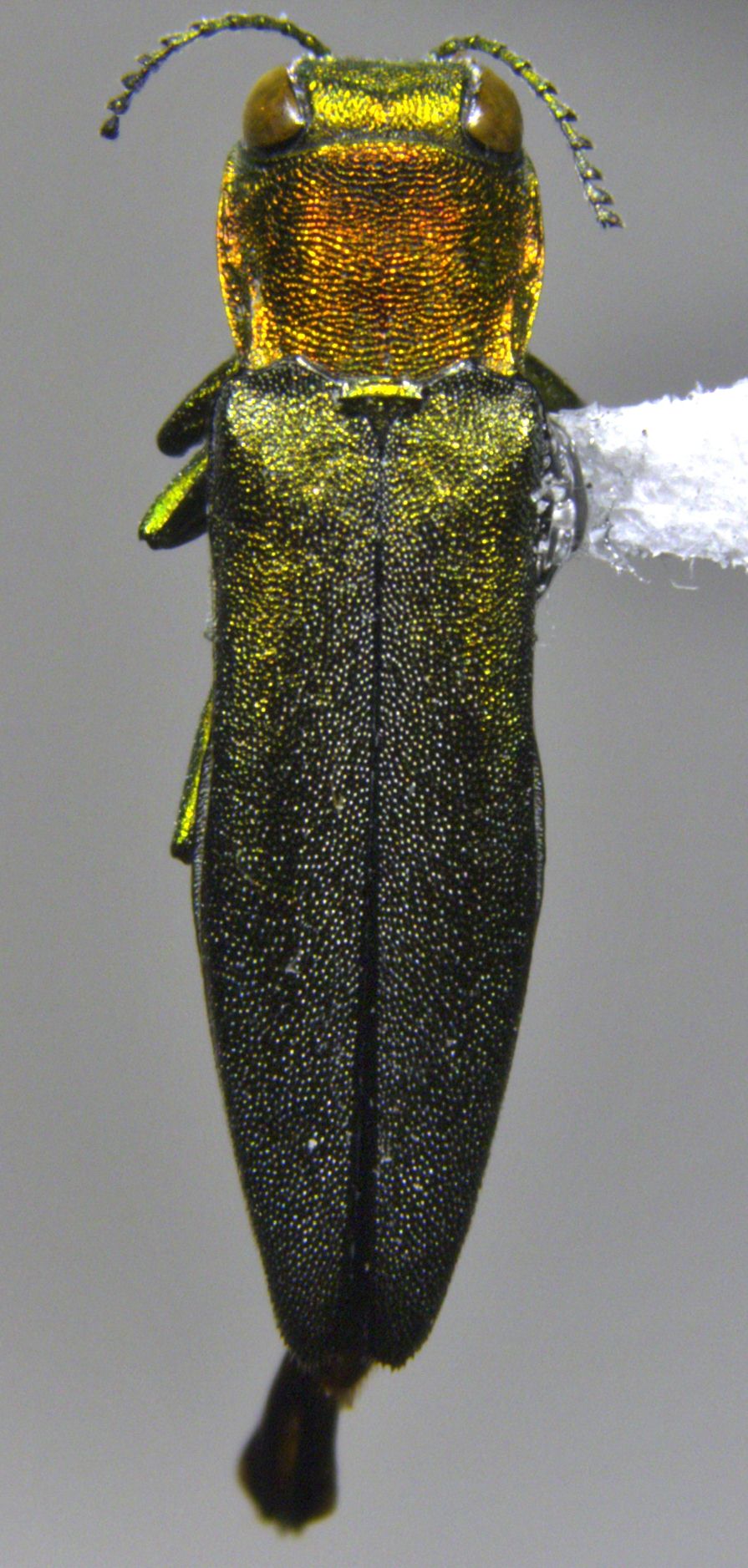
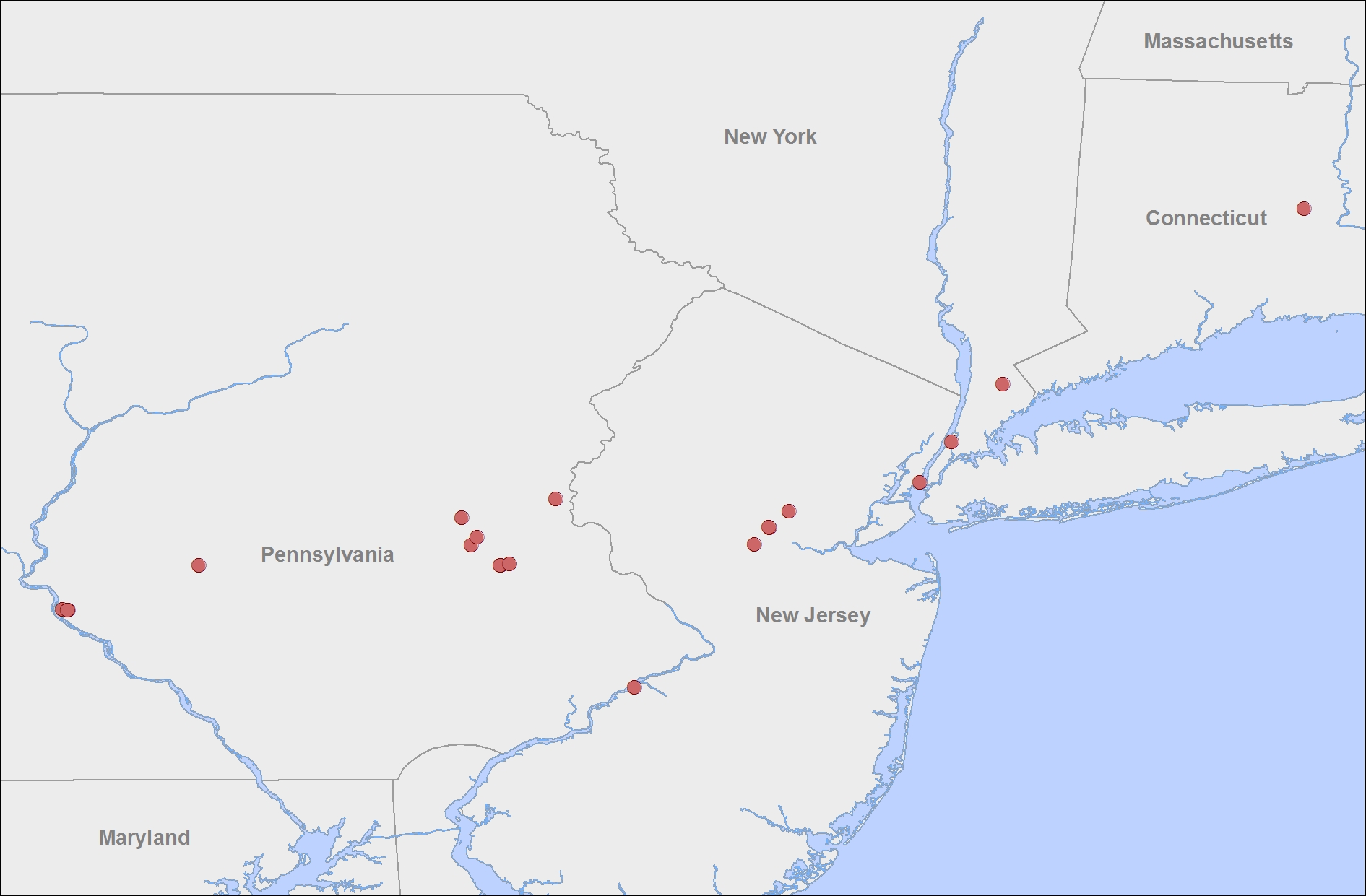
The native hardwood trees of southern California are under threat from several non-native insects and insect/pathogen complexes. I provided some recent information on one of these, the Kuroshio shot hole borer, in April; and a description of Californians’ efforts to counter the threat in August of last year. I think it is time to provide a more comprehensive update on the species.
I have blogged several times about the damage being caused to riparian trees in southern California by the polyphagous and Kuroshio shot hole borers – collectively referred to as the “invasive shot hole borers” or ISHB.
One of the most interesting sources of information about the shot hole borers are the series of visual surveys carried out by Orange County Parks under the leadership of Cathy Nowak (who has now retired). The most recent surveys were conducted in spring 2018 while deciduous trees were still dormant, so those estimates are based on the number of beetle gallery holes detected. An estimated 52,000 trees in the County’s parks are infested by either PSHB or KSHB. Eight regional parks and one historic house were surveyed. Only one large park remains uninfested. Comparing the results in 2018 to those of earlier surveys showed that percentages of host trees (in which the beetle can reproduce) that are infested rose over 2 years or less in seven of the parks – from a 9% increase in one park to a five-fold increase at another park with very low numbers of trees and low overall infestation rate earlier. The second highest increase is 89%.
The most heavily hit hosts are species long recognized as hosts See writeup on the borers here. Those with infestation rates exceeding 70% in one or more parks were
Acacia sp
Alnus rhobifolia (white alder)
Baccharis salicifolia (mule fat)
Erythrina caffra (coral tree)
Koelreuteria bipinnata (Chinese Flame tree*)
Koelreuteria paniculata (golden raintree)
Liquidambar styrachiflua (sweetgum)
Parkinsonia aculeate (palo verde)
Platanus occidentalis (American Sycamore)
Platanus racemose (California sycamore)
Platanus x hispanica (London plane)
Populus fremontii (Fremont cottonwood)
Populus trichocarpa (black cottonwood)
Quercus robur (English oak)
Salix spp. (willow)
* Chinese flame trees support ISHB only within cankered wood – other parts of the tree excrete thick gumming sap that protects.
Current information supports the vulnerability of California sycamore, and guidance that those seeking to learn whether the beetles have established should focus their surveys on sycamores.
As I have noted numerous times, several reproductive hosts are widespread in other parts of the country and could presumably support infestations there. These include box elder (not included in the Orange County surveys), sweetgum, and two magnolias – southern magnolia (M. grandiflora) and sweet bay (M. virginiana). Thirty-eight percent of the Magnolia grandiflora in one park were infested, although none was in three other parks. Koelreuteria spp. are a widely planted exotic across the country – although their role in spreading the disease appears to be limited by fact that they support ISHB development only in cankered wood. Birches have not been determined to be reproductive hosts, although one birch tree in one park had insect exit holes. Casuarina cunnninghamiana is also not known to be a reproductive host; trees in this genus are widespread invaders in Florida.
The good news is that none of a total of 12 southern live oaks (Quercus virginiana) growing in three parks had been attacked.
The goldspotted oak borer attacks California black oak, coast live oak, and canyon live oak. It is now widespread and continuing to spread in San Diego County. Officials report that is now established in more than 10 parks in the County.
There is a heavy GSOB infestation in Idyllwild, on the eastern edge of Riverside County. This outbreak is clearly linked to importation of infested firewood. Due to the heavy 2017 fire season, planned removal of “amplifying” trees (heavily infested trees that support large numbers of reproducing beetles) did not occur – and the outbreak is growing. Trees in the San Bernardino National Forest are at risk; 13 were removed in 2017.
In Los Angeles County, so far only one site has been infested – Green Valley (which includes both private land and nearby portions of the Angeles National Forest). An estimated 50,000 oaks are in the area. Officials are removing the “amplifier” trees; they expect they might have to remove close to 3,000 trees at a cost of $6 million. Officials are also treating some trees.
A newly detected heavy infestation has been detected at campgrounds in the Trabuco Ranger District in the Cleveland National Forest. Forest Service officials are debating management options, with an eye to protecting as many coast live oaks as possible. They have had success in the past by treating some trees with chemicals.
Meanwhile, scientists will be trying to evaluate the effect of fire since the 2017 fires burned several infested areas, e.g., Weir Canyon in Orange County.
The principal management strategy is to identify and remove heavily infested “amplifier” trees. The wood and bark must be disposed of properly and quickly – if the wood is left on the ground over night, people take it – thereby spreading the insects. High-value trees that are not heavily infested can be protected by application of the topical contact insecticide Carbaryl on the lower trunk. Officials are also experimenting with oak restoration using either planting of acorns or promoting root sprouting of trees that have had to be cut down.
Thousand Cankers Disease
Thousand cankers disease of walnuts is very widespread throughout California, but it is not causing widespread rapid tree deaths. Juglans californica has multiple stems. If one is killed, the others usually survive. The impact on J. hindsii is greater because it has a single stem and is grown as a street tree. California officials last conducted a survey of walnuts in the state in 2015, at the height of the drought. They appear to be confident that the age of this survey has not affected their assessment of the risk.
Posted by Faith Campbell
We welcome comments that supplement or correct factual information, suggest new approaches, or promote thoughtful consideration. We post comments that disagree with us — but not those we judge to be not civil or inflammatory.
As the federal government continues to dawdle in responding to invasive species challenges, some states are ramping up their efforts in significant ways.
California: New Legislation Creates a Program – but Only for One Year
The California state legislature has created a new invasive species program that focuses on those bioinvaders that threaten native ecosystems and the urban environment. It thus addresses some of the criticisms that I have previously levelled at the California Department of Food and Agriculture (CDFA) [see my earlier blogs here and here]
The new program has been established for one year; it will have to be renewed by the legislature next year.
The program results from adoption of legislation that combines what were initially two bills:
Assemblyman Timothy Grayson introduced AB 2470. This bill provided a legal foundation for the California Invasive Species Council and its Invasive Species Advisory Committee. It also provided funding for early detection and control projects targetting high-priority species, including weed management areas; and for supportive research and diagnostics work by the University of California.
Assemblywomen Lorena Gonzalez-Fletcher introduced AB 2054 focused specifically on the invasive shot hole borers [see descriptions of the polyphagous and Kuroshio shot hole borer here https://www.dontmovefirewood.org/ ]. The “Protect California Trees with Shot Hole Borer Beetle Prevention” (1) established a framework for a coordinated statewide effort; (2) instructed the Invasive Species Council of California and the California Invasive Species Advisory Committee to coordinate with state and local agencies and stakeholder groups to develop a plan to suppress the disease spread by this beetle.
The final legislation provided the full $5 million for addressing the shot hole borer but cut funding for the other components of the combined programs to just $2 million (so, a total of $7 million).
State officials have begun developing a shot hole borer management plan; they are expected to get input from a subcommittee by the Invasive Species Advisory Committee. The Advisory Committee held a meeting in mid-July to begin carrying out its coordinating functions.
Congratulations and thanks go to John Kabashima, who retired from his position as extension horticultural advisor with the University of California’s Division of Agriculture and Natural Resources. John has devoted two years to building the alliances needed to make this happen.
Minnesota: New Funding for Research
In 2014, the Minnesota legislature created the Minnesota Invasive Terrestrial Plants and Pests Center at the University of Minnesota. The Center applies science-based solutions to protect the state’s terrestrial ecosystems and agricultural resources. It utilizes an allocation from the Environment and Natural Resources Trust Fund to support a competitive research grant program. The current funding level is $3.5 million. Recently funded projects include evaluating the role of fungi in protecting ash trees from emerald ash borer and disease, genetic control of invasive insects, and use of goats in invasive plant control
The Center’s draft list of priority insects, plant pathogens, and invasive plants includes numerous forest pests. Among the 40 insect species listed, 19 are forest pests. Those in the top ten include mountain pine beetle, emerald ash borer, European and Asian gypsy moths, two elm beetles, and Asian longhorned beetle. Nineteen of 39 plant pathogens are tree-killers. Among the top ten are Dutch elm disease, oak wilt, Japanese oak wilt, Annosum root rot, sudden oak death, thousand cankers disease, and white pine blister rust.
In both cases, the lists include species that are already present and those not yet in the state (or even on the continent).
Western Governors’ Association: Initiative on Biosecurity
Incoming chairman, Hawaiian Gov. David Ige, has announced a Biosecurity and Invasive Species Initiative. The Initiative will focus on the impacts that invasive species have on ecosystems, forests, rangelands, watersheds, and infrastructure in the West, and examine the role that biosecurity plays in addressing these risks. Governor Ige hosted a webinar on 12 July [not yet posted on the WGA website] on which he was joined by such experts as Chuck Bargeron, Center for Invasive Species & Ecosystem Health, University of Georgia; Pam Fuller, Program Leader, Nonindigenous Aquatic Species Database, USGS; Stinger Guala, Director of Biodiversity Information Serving Our Nation (BISON), USGS; Jamie Reaser, Executive Director, National Invasive Species Council; and Lori Scott, Interim President & CEO, and Chief Information Officer, NatureServe. The Association is sponsoring regional workshops on various components of the invasive species response on the following dates
Lake Tahoe, NV Sept 17-18 – prevention, control, management of established species
Cheyenne, WY Oct 11 -12 – restoration
Helena, MT Nov 14 – early detection and rapid response
Hawai`i Dec 9 & 10 – biosecurity and agriculture
Posted by Faith Campbell
We welcome comments that supplement or correct factual information, suggest new approaches, or promote thoughtful consideration. We post comments that disagree with us — but not those we judge to be not civil or inflammatory.
There is widespread agreement that the most important pathways for long-distance transport of non-native forest insects are wood packaging (crates, pallets, dunnage, etc.) and imports of live plants (which APHIS calls “plants for planting”). Sources (at end of blog): Aukema et al. 2010; Liebhold et al. 2012; Meurisse et al. 2018 and many others. See also my earlier blogs by scrolling down to the “categories” section and clicking on “wood packaging”.
According to Meurisse et al., by the middle of this decade, world maritime freight trade had reached about 10 billion metric tonnes, and air transport of cargo had reached 50 million tonnes – much of it packaged in wood.
As the world’s biggest importer, the United States receives about 27 million shipping containers each year (CBP to FT Campbell). A study carried out in 2005 – 2007 (Meissner et al. 2009) indicated that 75% of maritime shipments entering the U.S. contained wood packaging; 33% of air shipments contained wood packaging. These are significant increases over earlier estimates that put the number of containers entering the country at 25 million. An even older analysis estimated that 52% of incoming containers had wood packaging.
APHIS has recognized the pest risk associated with wood packaging for 20 years – since the Asian longhorned beetle was detected in a second city – Chicago – in 1998. APHIS and its Canadian counterpart (Canadian Food Inspection Agency) acted rapidly to adopt, first, domestic regulations governing wood packaging from China (in December 1998), then a regional standard for wood packaging, and finally to help bring about adoption of International Standard for Phytosanitary Measures (ISPM) No. 15 in 2002. A detailed description of these actions can be found in my report Fading Forests II available here.
However, as I have demonstrated often, ISPM#15 has reduced the threat – but insufficiently. Dr. Robert Haack and his coauthors (2014) found that of each thousand shipments containing wood packaging that enters the country, one harbors a quarantine pest. Applying this estimate to the current volume of incoming containers and the higher proportion containing wood packaging results in an estimate that up to 20,000 shipping containers containing infested wood packaging enter the country each year – or approximately 55 per day.
The actual approach rate might be less. There are two variables that I lack sufficient data to quantify.
First, a significant proportion of the incoming containers come from Mexico or Canada – our second and third largest trading partners. The risk of damaging pests arriving from our neighbors is less than the risk accompanying shipments from overseas – although it is not “0”. Several woodborers native to Mexico have been introduced to U.S. ecosystems and are killing trees in these new environments, e.g., goldspotted oak borer, walnut twig beetle, and soapberry borer (all described in write-ups here). It is true that these beetles were probably introduced to vulnerable parts of the U.S. in firewood rather than wood packaging. There are also reasons to be concerned about pest introductions from Canada. Threats arise from both non-native pests established in the country e.g., brown spruce longhorned beetle and European beech leaf weevil, and pests in shipments from off-shore origins that are re-packaged in Canada (Yemshanov et al. 2012 and my earlier blog from April 2017).
The second variable on which I lack data is the proportion of the 27 million containers that are transported by air, and are thus half as likely to contain wood packaging.
To account for these unknowns, I have nearly halved the number of shipping containers likely to transport pests from off-shore – so 14 million instead of 27 million. Again applying Haack’s estimate, the result is 10,500 shipping containers containing infested wood packaging entering the country every year – or approximately 29 every day.
Update with more precise data (August 24) :
Re: the two variables, I have found partial answers from a U.S. Department of Transportation website which provides data on imports of loaded chipping containers (in TEUs) for 68 ports. (For the website, go here – click on “trade statistics”, then “US Waterborne trade” (1st bullet)]
As of 2017, 22,360,941 loaded shipping containers entered the U.S. via maritime transport. Applying the estimate of 75% of these containers holding wood packaging, we find that slightly less than 17 million containers entered the country with wood packaging. Applying Robert Haack’s estimate that one in a thousand is infested with a quarantine insect, we anticipate that 17,000 of these containers were transporting a pest that threatens our country. That is 46 containers every day.
Ports which received the largest numbers of containers, according to the DoT database:
Long Beach/Los Angeles — 8.4 million containers
New York — 3.4 million containers
Savannah — 1.8
Norfolk — 1.2
Houston — 1 million containers
We need answers!
The point is, we don’t know how many pests are reaching the United States daily. Or if the current approach rate is significantly higher or lower than in the past. Despite my urging, APHIS has not undertaken a study to update Haack’s estimate – which is based on 2009 data. In the intervening nine years, several changes were made to ISPM#15 to make it more effective. The most important was restricting the size of bark remnants that may remain on the wood.
Also, we might hope that experience with implementing the standard has led to better compliance. Unfortunately, available data do not encourage belief that compliance has improved.
Customs and Border Protection (CBP) reports annually to the Continental Dialogue on Non-Native Forest Insects and Diseases on the number of import shipments with wood packaging that have been detected as not complying with ISPM#15. Over a period of eight years – Fiscal years 2010 through 2017 – CBP detected nearly 24,000 non-compliant shipments. While most (17,413) of the non-compliances were crates or pallets that lacked the required mark showing treatment in accordance with ISPM#15, in 6,388 cases the wood packaging actually harbored a pest in a regulated taxonomic group. This works out to about 800 infested shipments detected each year.
By comparing Dr. Haack’s estimate with the CBP data, I estimate that Customs is detecting and halting the importation of four to eight percent of the shipments that actually contain pest-infested wood. Since CBP inspects only about two percent of incoming shipments, this detection rate demonstrates the value of CBP’s program to target likely violators – and deserves praise. But it is obviously too low a “catch” rate to provide an adequate level of protection for our forests.
Indeed, using the older, lower estimates of both numbers of shipping containers and the proportion that contain wood packaging, Leung et al. 2014 concluded that continuing to implement ISPM#15 at the efficacy level described by Haack et al. would result in a tripling of the number of non-native wood-boring insects introduced into the U.S. by 2050.
CBP inspector views Cerambycid larvae found in wood packaging that bears ISPM#15 stamp
Closer examination of the data raises more troubling questions. On average, 97% of the 6,388 shipments containing infested wood pieces detected by CBP were found in wood that bore the ISPM#15 stamp indicating that it had been treated. The proportion of infested shipments bearing the stamp has not changed over the past eight years. This is alarming and we need to understand the reason. Does this finding indicate widespread fraud? I understand that most inspectors believe this is the cause. Other possible explanations are accidental misapplication of the treatments or the treatments simply not working as expected. APHIS researchers have found that larvae from wood subjected to methyl bromide fumigation were more likely to survive to adulthood than those intercepted in wood that had been heat treated (Nadel et al. 2016). Does this indicate that methyl bromide fumigation is less effective? What effort is APHIS making to determine which of these explanations is correct?
Certain countries have a long-standing record of non-compliance with ISPM#15. APHIS’ database of pest interceptions on wood packaging over the period Fiscal Year 2011 to FY 2016 contains 2,547 records of insect detections from dozens of countries. The countries of origin with the highest numbers of shipments detected to have pests present were Mexico, China, Italy, and Costa Rica. These numbers reflect in part the huge volumes of goods imported from both Mexico and China. But China and Italy stand out for their poor performance. (The U.S. does not regulate – or inspect! – wood packaging from Canada; see blog here.)
Meissner et al. say that as of a decade ago, Chinese shipments were only half as likely to be enclosed in wood packaging as are shipments from other exporters. Yet shipments from China still rank second in the number of non-compliant shipments; they make up 11% of all interceptions. In part, the data reflect inspection priorities: due to the great damage caused by Asian insects to North American trees and the past record of poor compliance, CBP targets shipments from China for more intense scrutiny. Still, the high number of detections reflects continuing non-compliance by Chinese exporters. And remember – the U.S. and Canada began requiring treatment of wood packaging from China at the end of 1998 – nearly 20 years ago! [Feb 17 blog]
We don’t import a lot of goods from Italy – but Italian shipments of decorative stone and tile have always been plagued by high levels of pests in accompanying wood packaging. Indeed, more pests have been found in wood supporting tiles and stone than any other type of commodity in 24 of the 25 years preceding 2014 (Haack et al. 2014).
What is APHIS doing to pressure these countries to improve their compliance? As I blogged in October, link the Bureau of Customs and Border Protection began imposing a financial penalty on first-time violators in November 2017. Since interception data do not provide an adequate measure of the pest approach rate (see Haack et al 2014 for an explanation), APHIS should commission an analysis of Agriculture Quarantine Inspection Monitoring data to determine the pest approach rate before and after the CBP action in order to determine whether the more aggressive enforcement has led to reductions in non-compliant shipments at the border.
What Can Be Done to Slow or Eliminate this Pathway?
I reiterate my call for holding foreign suppliers responsible for complying with ISPM#15. One approach is to penalize violators. Now that the Bureau of Customs and Border Protection has toughened its enforcement, the U.S. Department of Agriculture should drop its decade-old policy of allowing importers to accumulate five (detected) violations in a calendar year before applying the civil penalties authorized by the Plant Protection Act.
Another step APHIS should take would be to prohibit use of packaging made from solid wood (boards, 4 x 4s, etc.) by foreign suppliers which have a record of repeated violations over the 12 years that ISPM#15 has been in effect – or the 19 + years for exporters from Hong Kong & mainland China. Officials should allow continued imports from those same suppliers as long as they are contained in other types of packaging materials, including plastic, metals, fiberboards …
SOURCES
Aukema, J.E., D.G. McCullough, B. Von Holle, A.M. Liebhold, K. Britton, & S.J. Frankel. 2010. Historical Accumulation of Nonindigenous Forest Pests in the Continental United States. Bioscience. December 2010 / Vol. 60 No. 11
Haack, R. A., K. O. Britton, E. G. Brockerhoff, J. F. Cavey, L. J. Garrett, M. Kimberley, F. Lowenstein, A. Nuding, L. J. Olson, J. Turner, and K. N. Vasilaky. 2014. Effectiveness of the international phytosanitary standard ISPM no. 15 on reducing wood borer infestation rates in wood packaging material entering the United States. Plos One 9:e96611.
Hulme, P.E. 2009. Trade, transport and trouble: Managing invasive species pathways in an era of globalization. Journal of Applied Ecology 46:10-18
Jung, T. et al. 2015 “Widespread Phytophthora infestations in European nurseries put forest, semi-natural and horticultural ecosystems at high risk of Phytophthora disease” Forest Pathology. November 2015; available from Resource Gate
Klapwijk, M.J., A.J. M. Hopkins, L. Eriksson, M. Pettersson, M. Schroeder, A. Lindelo¨w, J. Ro¨nnberg, E.C.H. Keskitalo, M. Kenis. 2016. Reducing the risk of invasive forest pests and pathogens: Combining legislation, targeted management and public awareness. Ambio 2016, 45(Suppl. 2):S223–S234 DOI 10.1007/s13280-015-0748-3
Koch, F.H., D. Yemshanov, M. Colunga-Garcia, R.D. Magarey, W.D. Smith. 2011. Potential establishment of alien-invasive forest insect species in the United States: where and how many? Biol Invasions (2011) 13:969–985
Leung, B., M.R. Springborn, J.A. Turner, E.G. Brockerhoff. 2014. Pathway-level risk analysis: the net present value of an invasive species policy in the US. The Ecological Society of America. Frontiers of Ecology.org
Levinson, M. The Box: How the Shipping Container Made the World Smaller and the World Economy Bigger Princeton University Press 2008
Liebhold, A.M., E.G. Brockerhoff, L.J. Garrett, J.L. Parke, and K.O. Britton. 2012. Live Plant Imports: the Major Pathway for Forest Insect and Pathogen Invasions of the US. www.frontiersinecology.org
Meissner, H., A. Lemay, C. Bertone, K. Schwartzburg, L. Ferguson, L. Newton. 2009. Evaluation of Pathways for Exotic Plant Pest Movement into and within the Greater Caribbean Region. Caribbean Invasive Species Working Group (CISWG) and USDA APHIS Plant Epidemiology and Risk Analysis Laboratory
Meurisse, N. D. Rassaati, B.P. Hurley, E.G. Brockerhoff, R.A. Haack. 2018. Common Pathways by which NIS forest insects move internationally and domestically. Journal of Pest Science. https://doi.org/10.1007/s10340-018-0990-0
Nadel, H., S. Myers, J. Molongoski, Y. Wu, S. Linafelter, A. Ray, S. Krishnankutty, A. 2016. Identificantion of Port Interceptions in Wood Packaging Material Cumulative Progress Report, April 2012 – August 2016
Yemshanov, D., F.H. Koch, M. Ducey, K. Koehler. 2012. Trade-associated pathways of alien forest insect entries in Canada. Biol Invasions (2012) 14:797–812
Posted by Faith Campbell
We welcome comments that supplement or correct factual information, suggest new approaches, or promote thoughtful consideration. We post comments that disagree with us — but not those we judge to be not civil or inflammatory.
In mid-May, the House Committee on Appropriations adopted two bills crucial to funding efforts to counter tree-killing non-native insects and diseases. Please let them know you are grateful.
APHIS funding
The Agriculture appropriations bill funds APHIS (and other USDA agencies) for Fiscal Year 2019 (which begins on October 1). The new bill provides a total of $998,353,000 to APHIS, an increase of $16.4 million above the FY18 level and $259 million above the Administration’s request. ( I blogged about the Administration’s alarming request here.) You can find the bill here; the more informative report is posted here. Use search words to find specific APHIS programs.
The pest-related funding is apportioned among several areas:
Tree and Wood Pest Program. Unlike in previous years, the House bill does not cut funds for this program – which funds efforts to eradicate or contain the Asian longhorned beetle, emerald ash borer, and European gypsy moth. Instead, it maintains funding at the FY18 level of $54 million. Under the circumstances, this is good news. Thank you for your efforts to educate members of the House subcommittee on agricultural appropriations about this crucial program! (In past years, we relied on the Senate to restore funding for the Tree and Wood Pest Program.)
Specialty Crop Pests Program. The House increased funding by $10.8 million here, and specified that $15 million target the spotted lanternfly. This recently detected Asian leafhopper is spreading in southeastern Pennsylvania and was recently confirmed in Virginia’s Shenandoah Valley. It is a pest of native hardwood trees as well as of orchard and other crops.
Also, the Committee used its report to stress several concerns:
Access to emergency funding. In the report, the House Appropriations Committee reiterates its longstanding instruction that the USDA Secretary continue to use his authority to transfer funds from the Commodity Credit Corporation. They support using these funds – above and beyond appropriated funds – for the arrest and eradication of animal and plant pests and diseases that threaten American agriculture.
Brown Apple Moth vs. Emerald Ash Borer. Interestingly, the House Appropriations Committee encourages APHIS to engage state and international regulatory bodies as it moves to deregulate the light brown apple moth. The Committee expresses concern that if APHIS simply withdraws federal regulation without the necessary work with other officials, it will shift, not reduce, the regulatory burden. Then growers would carry the burden of preventing spread of the pest. I wish the Committee had made the same statement vis a vis the emerald ash borer! APHIS also plans to stop regulating this insect which continues to threaten still-uninvaded portions of the United States and Mexico.
Micornesia and Hawai’i. The Committee also instructs the Secretary of Agriculture to report to both the House and Senate Committees on Appropriations its progress implementing the Regional Biosecurity Plan for Micronesia and Hawai`i. This plan combines efforts by the U.S. Department of Defense, Department of the Navy, and the island governments to prevent transport of invasive species as a consequence of relocating military personnel from a base in Okinawa, Japan. More information is available here.
Forest Service funding
The Interior appropriations bill funds the US Forest Service (as well as Interior Department and Environmental Protection Agency).
Forest Health Management Program. The bill provides an increase of $19.5 million above FY18 levels for the forest health management program ($30 million above the Administration’s request). The Committee instructs the Forest Service to “work in concert with Federal agencies, States, and other entities to prioritize the allocation of these funds to address the greatest threats.” The emerald ash borer, “bark beetle” (which ones?) and cogon grass are expressly mentioned. The report is posted here. (It is unclear what actions the Forest Service is expected to take on the EAB, since regulations intended to curtail people from moving infested wood will soon be dropped by APHIS. The Forest Service could support breeding of ash trees resistant to the beetle.)
Forest Service Research. The Interior appropriations bill also maintained funding for Forest Service research at the FY18 level of $297 million – rather than cutting it to $259 million as advocated by the Administration. The Committee has called for the USFS to act within one year to “strengthen” its research program. The Committee expressly avoids endorsing several priorities advocated by Members of Congress while waiting for the Forest Service to implement this instruction.
If your representative is a member of the House Appropriations Committee (members listed here), please thank them for supporting APHIS’ and USFS’ programs. These funding increases shift several years of decline and are a true win for protecting our forests from non-native insects and pathogens!
Posted by Faith Campbell
We welcome comments that supplement or correct factual information, suggest new approaches, or promote thoughtful consideration. We post comments that disagree with us — but not those we judge to be not civil or inflammatory.
Worsening Threats to Hawaii’s Rich – and Rare — Native Forests
As I have written in previous blogs (October 2015; October 2016), the beautiful ‘ōhi‘a lehua (Metrosideros polymorpha) tree is ecologically and culturally the most important tree n the Hawaiian Islands. ‘Ōhi‘a trees dominate approximately 80% of Hawai`i’s remaining native forest. Loss of the species could result in significant changes to the structure, composition, and, potentially, the function, of forests on a landscape level. ‘Ōhi‘a forests are home to the Islands’ one native terrestrial mammal (Hawaiian hoary bat) as well as about 100 plant species listed as endangered by the U.S. Fish and Wildlife Service. Also 30 species of forest birds – in particular, the unique endemic honeycreeper subfamily — depend on ‘ōhi‘a. Eighteen of 19 extant Hawaiian honeycreepers in the main Hawaiian islands, including 12 of 13 bird species listed as endangered by the U.S. Fish and Wildlife Service, depend on ‘ōhi‘a for critical habitat.
Unfortunately, the threat to ‘ōhi‘a trees from three fungi appears to be rising.
“Rapid ‘ōhi‘a death” is caused by two fungi, Ceratocystis lukuohia and C. huliohia (formerly considered to be strains of Ceratocystis fimbriata). Rapid ‘ōhi‘a death has spread since 2010 to most districts of one island: Hawai`i or the “Big” Island. The total area affected is 135,000 acres. Still, most ʻōhiʻa forest on Hawai`i is still healthy, and the disease has not yet been found on any of the other islands. Scientists have begun exploring trees’ varying susceptibility and the possibility of breeding more resistant trees to be used for restoration. For more information, read the recently updated description here.
Ōhi‘a trees are also under attack by a third introduced fungus, called ‘ōhi‘a rust, guava rust, or myrtle rust. This is caused by Austropuccinia psidii (formerly named Puccinia psidii). Ōhi‘a rust has been established on all the Hawaiian islands since 2005. Until recently, it had caused little damage to ‘ōhi‘a – although it attacks several additional native plant species and has devastated the endangered endemic plant Eugenia koolauensis. This shrub can reproduce now only in nurseries where it can be treated for the fungus. In late 2017, an outbreak of the disease caused widespread defoliation and mortality of ‘ōhi‘a across hundreds of acres in at least four locations on windward portions of two islands, O‘ahu and Moloka‘i. It is not yet known whether this new damage resulted from introduction of a new, more virulent strain or from a period of unusually wet weather creating more favorable conditions for the fungus. For more information, read the recently updated description here. (Myrtle rust threatens plants in the Myrtaceae family across the Pacific; more than 450 species have been identified as hosts. Some species in Australia have been severely affected.)
Severe Attacks on Redbay and other Laurels in the Southeast.
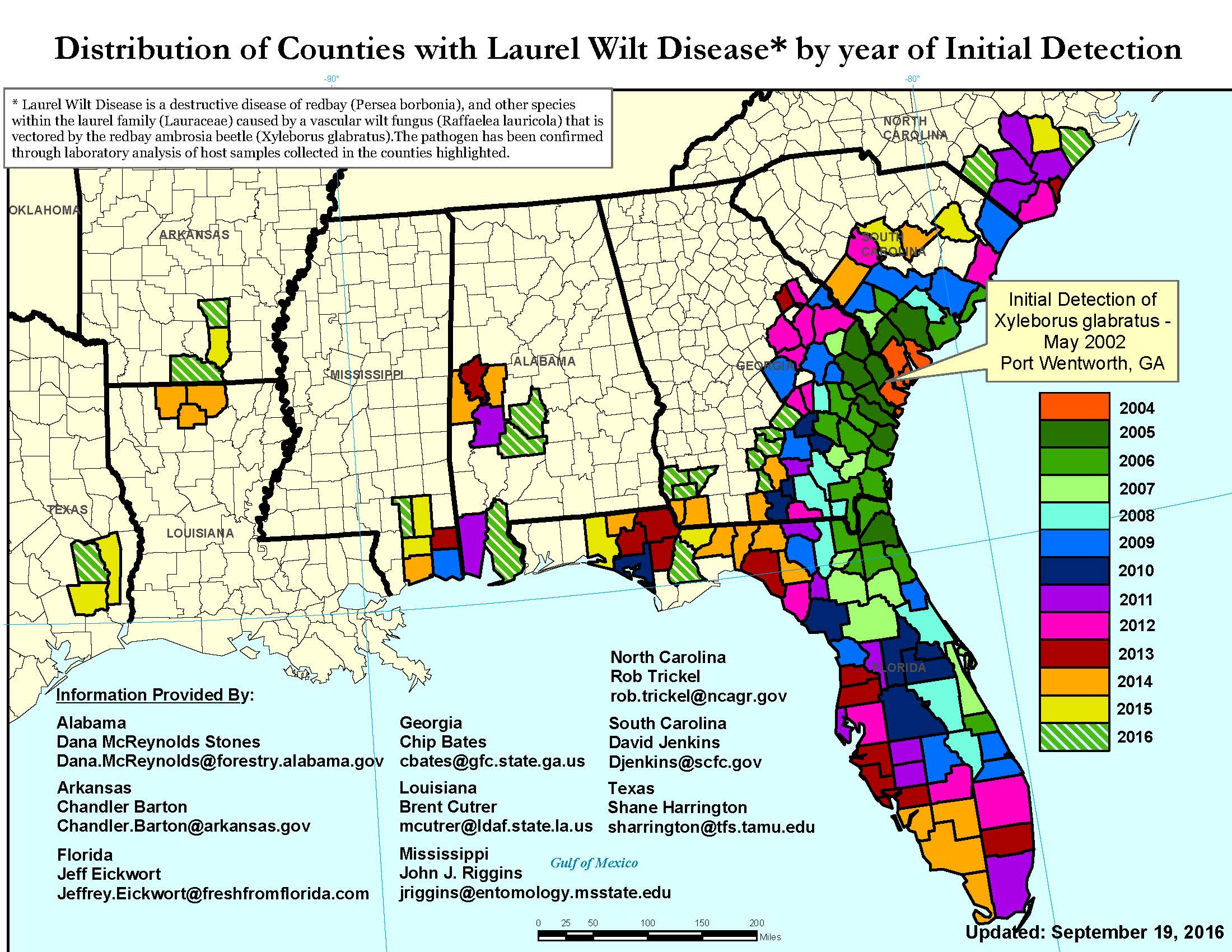
Since the turn of the century, redbay trees (Persea borbonia) in coastal regions of the Southeast have been dying because of laurel wilt disease. This is caused by the fungus Raffaelea lauricola, which in turn is vectored by the redbay ambrosia beetle (Xyleborus glabratus). Both the beetle and disease have spread rapidly since there were detected in 2002 near Savannah, Georgia. The disease now is found in eight states, reaching from eastern North Carolina south along most of the Florida peninsula; across the Gulf states with several locations in Alabama and Mississippi; and to isolated outbreaks in Louisiana and Texas. Already an estimated 320 million trees – nearly one-third of all redbays – have been killed. Mortality is highest where the disease first became established: Georgia (two-thirds of redbays killed), South Carolina (42% of redbays killed), and Florida (36% of redbays killed). In contrast, redbay mortality appears to be quite low in Alabama and Mississippi although mortality caused by disease might have been masked by application of fire or other silvicultural practices.
Other forest trees and shrubs in the Lauraceae family are also at risk. These include swamp bay (Persea palustris), which contribute greatly to the biological diversity of the “tree islands” scattered through the Everglades; sassafras (Sassafras albidum), which occupies a large range reaching into Michigan and southern New England; and two rare species – pondspice (Litsea aestivalis) and the federally listed pondberry (Lindera melissifolia). Northern spicebush (Lindera benzoin), another shrub in the Lauraceae family, does not attract the beetle so it is unlikely to sustain disease. In the West, California bay laurel has been determined by laboratory studies to be vulnerable.
Redbay is important to wildlife and has some use in horticulture. However, most attention has focused on the threat to avocados (Persea americana); the disease was detected in commercial orchards in 2012.
Concerned about loss of this ecologically important tree, scientists have begun efforts to breed redbays that are resistant to, or tolerant of, the disease. In addition to efforts by university scientists, the newly formed consortium Forest.Health (https://forest.health/) has listed redbay as a high priority for resistance breeding. For more information, read the updated description here.
initial damage caused by Kuroshio shot hole borer in Tijuana River Valley; I lack access to photos of recovery. Photo by John Boland
Hope in southern California – possible ecological limits to shot hole borer / fungal disease
John Boland, an ecologist who has studied southern California riparian wetlands for decades, reports that willows in the Tijuana River are recovering from attack by the Kuroshio shot hole borer and the fungi it vectors. After two years, the beetle-vectored disease had infested 88% of the willows in the valley (a total of 355,510 trees). An estimated 24% of the willows had been killed (95,791 trees). Nearly all of the infested and killed trees grew in the wettest parts of the riparian forests. (Photo above illustrates damage at this stage of the invasion.)
However, 71,280 of the willow trees have resprouted. By late 2017, these resprouts had created a new forest canopy that was about 5 meters tall. (Previously, the canopy had been about 20 meters tall). The median rate of infestation of these resprouting willows was 6% in 2017, down from 97% in 2015-2016. Some insect boring holes have healed.
In contrast, willows growing in drier parts of the valley were rarely attacked initially, but are now increasingly infested. In 2017, the median infestation rate was 78%, up from 9% in 2015-16. However, few trees have been killed.
Dr. Boland believes that the severity of the initial attack reflected the vulnerability of “soft trees”. Trees growing in the wetter parts of the Tijuana River Valley are inundated by sewage from the Mexican city. As a result of this artificial fertilization, they grow quickly and their wood is less dense.
For more information about the Kuroshio and phytophagous shot hole borers and their associated fungi, read the description here.. Dr. Boland’s study has been made available to participants in the southern California emerging forest pest groups but I cannot find a publicly available source on the Web.
We welcome comments that supplement or correct factual information, suggest new approaches, or promote thoughtful consideration. We post comments that disagree with us — but not those we judge to be not civil or inflammatory.
citrus longhorned beetle – entered country several times in imported bonzai plants
After about 20 years, APHIS has finalized important changes to the regulations which govern imports of living plants (what they call “plants for planting”; the regulation is sometimes called “the Quarantine 37” rule). The new regulation takes effect on April, 18, 2018.
I congratulate APHIS on this important achievement!
[Twenty years is a long time – so changes happen. When APHIS released its Advance Notice of Proposed Rulemaking (ANPR) in December 2004 and its proposed rule in April 2013, I was employed by The Nature Conservancy and submitted comments for that organization. I will refer to those earlier comments in this blog. However, I now represent the Center for Invasive Species Prevention, so my comments here on the final regulations reflect the position of CISP, not the Conservancy.]
APHIS’ 2004 ANPR came after years of preparation. Then, more than eight years passed until the formal proposal was published on April 25, 2013. Comments were accepted from the public until January 30, 2014. During this nine-month period, 17 entities commented, including producers’ organizations, state departments of agriculture, a foreign phytosanitary agency (The Netherlands), private citizens, and The Nature Conservancy. [You can view the ANPR and proposal, comments on these documents, and APHIS’ response here — although you need to click on “Restructuring of Regulations on the Importation of Plants for Planting” and then “Open Docket Folder” to pursue the older documents.]
In the beginning, APHIS had a few goals it hoped to achieve: to allow the agency to respond more quickly to new pest threats, to apply practices that are more effective at detecting pests than visual inspection at points of import, and to shift much of the burden of preventing pest introductions from the importer and APHIS to the exporter.
Progress has been made toward some of these goals outside this rule-making. APHIS instituted a process to temporarily prohibit importation of plants deemed to pose an identifiable risk until a pest risk assessment has been completed (the NAPPRA process). APHIS has further enhanced its ability to act quickly when a pest risk is perceived by relying increasingly on “Federal Orders”.
At the same time, APHIS participated actively in efforts by international phytosanitary professionals to adopt new “standards.” These define a new approach to ensure that plants in international trade are (nearly) pest-free. Both the North American Plant Protection Organization’s regional standard (RSPM#24) and the International Plant Protection Organization’s global standard (ISPM#36) envision a system under which countries would no longer rely primarily on inspections at ports-of-entry. Instead, they would negotiate with the supplier or exporting country to develop programs to certify that growers’ pest management programs are effective. Both standards detailed: 1) how the place of production might manage pest risk and ensure traceability of plants; 2) how the importing and exporting countries might collaborate to administer the program; 3) how audits (including site visits) would ensure the program’s efficacy; and 4) what actions various parties might take in cases of noncompliance.
It was hoped that these international standards would lead to widespread adoption of “integrated pest management programs” composed of similar requirements – similar to the impact of ISPM#15 for wood packaging. However, living plants are more complex pest vectors than the wooden boards of crates and pallets, so each country was expected to negotiate its own specific programs – something not encouraged for wood packaging.
APHIS’ decades-long effort to amend its regulations is warranted because of the high risk of non-native insects and – especially – pathogens being introduced via international trade in living plants. U.S. examples include white pine blister rust, chestnut blight, dogwood anthracnose, and sudden oak death (all described briefly here )
According to Liebhold et al. 2012 (full reference at end of blog), 12% of incoming plant shipments in 2009 were infested by a quarantine pest. This is an approach rate that is 100 times greater than the 0.1% rate documented for wood packaging (Haack et al. 2014). I have discussed the living plant introductory pathway and efforts up to 2014 to get it under control in my report, Fading Forests III.
Shortcomings of the Final Q 37 Rule
So – how well does this final rule meet APHIS’ objectives?
First, will it shift much of the burden of preventing new pest introductions from the importer and APHIS to the exporter, while ensuring the system’s efficacy? In my view, on behalf of CISP, it falls short.
The new rule sets up a process under which APHIS might require that some types of imported plants be produced and shipped under specified conditions intended to reduce pest risk. However, non-American entities have little incentive to protect America’s natural and agricultural resources and from invasive species. So any new process needs severe penalties for violators.
We have seen how widespread and persistent compliance failures are for wood packaging under ISPM#15. http://nivemnic.us/wood-packaging-again-11-years-after-ispm15-problems-persist/ For this reason, I (on behalf of the Conservancy) had suggested that APHIS formally adopt a specific goal of “no new introductions”. I recognized that this goal was unachievable per se, but suggested that it should stand as a challenge and be the basis for adopting stringent restrictions on plant imports. I suggested limiting plant imports to those either a) produced under integrated pest management measures systems (verified by third-party certification) or b) plants brought into facilities operating under post-entry quarantine conditions — and following other best management practices that had been developed and supervised by independent, scientifically-based bodies.
In my current view, APHIS’ regulation falls far short of either this goal of shifting burdens or setting a truly stringent requirement. In fact, APHIS has explicitly backed away from its own original goals and procedures.
The new regulation does authorize APHIS to choose to set up import programs under which the exporting country agrees to produce plants for the U.S. market under a system of integrated pest risk management measures (IPRMM) approved by APHIS. In accordance with the international standards, the programs established under this new power will address how the place of production will manage pest risk and ensure traceability of plants; how APHIS and the exporting country will administer the program; how plant brokers will ensure plants remain pest-free while in their custody; how audits will be performed to ensure program efficacy; and what actions various parties will take in cases of noncompliance.
How efficacious this new approach will be in preventing new introductions will depend on how aggressive APHIS is in both choosing the plant taxa and places of-origin to be managed under such IPRMM programs and in negotiating the specific terms of the program with the exporting country.
It is discouraging that APHIS has ratcheted down how frequently it expects to rely on the IPRMM approach. In the explanatory material accompanying the final regulation, APHIS clarifies that did not intend that IPRMM would be used for all imports of living plants. The IPRMM framework is described as only one of several means to achieve the goal of preventing introduction of quarantine pests. APHIS will choose the “least restrictive measures” needed to prevent introduction of quarantine pests. To clarify its position, APHIS changed the introductory text to indicate that IPRMM will be applied when such measures are necessary to mitigate risk – that is, “when the pest risk associated with the importation of a type of plants for planting can only be addressed through use of integrated measures.” [Emphases added]
The final rule is also discouraging in some of its specifics.
Whereas the draft regulation specified steps that places of production must take to ensure traceability of the plants they produce, in the final regulation the traceability elements specified in each IPRMM agreement will depend on the nature of the quarantine pests to be managed. Again, APHIS seeks to ensure that its requirements are not unnecessarily restrictive.
Although the international standard had specified severe penalties when a grower or broker violated the terms of the IPRMM agreement, APHIS proposed to base the regulatory responses to program failures on existing bilateral agreements with the exporting country. Despite the Conservancy’s plea that APHIS follow ISPM#36 in adopting more specific and severe penalties, APHIS has not done so. The one bright spot is that APHIS may verify the efficacy of any remedial measures imposed by the phytosanitary agency of the exporting country to correct problems at the non-compliant place of production. [Emphasis added]
APHIS is relaxing the detailed requirements for state post-entry quarantine agreements – despite the Conservancy’s concern that such agreements’ provisions could be influenced by political pressure and other nonscientific factors.
Two Improvements
I am pleased that APHIS has retained requirements applied to plant brokers, despite one commenter’s objections. Brokers handling international shipments of plants grown under an IPRMM program must both handle the plants themselves in ways that prevent infestation during shipment and maintain the integrity of documentation certifying the origin of the plants. A weakness, in my current view, is that APHIS will allow brokers to mix consignments of plants from more than one producer operating under the IPRMM program. APHIS does warn that if non-compliant (infested) plants are detected at import, all the producers whose plants were in the shipment would be subject to destruction, treatment, or re-export.
A major improvement under the new regulation is that APHIS will now operate under streamlined procedures when it wishes to amend the requirements for importing particular plants (whether a taxon, a “type”, or a country of origin). Until now, APHIS has been able to make such changes only through the cumbersome rulemaking process, Instead, APHIS will now issue a public notice, accept public comments, and then specify the new requirements through amendment of the “Plants for Planting Manual” [ https://www.aphis.usda.gov/import_export/plants/Manuals/ports/downloads/plants_for_planting.pdf ] APHIS estimates that such changes can be finalized four months faster under the new procedure.
A Final Caveat
Finally, APHIS needs to be able to measure what effect the new procedures have on preventing pest introductions. Such measurement depends on a statistically sound monitoring scheme. APHIS has stated in some documents that the current Agriculture Quarantine Inspection Monitoring (AQIM) system doesn’t serve this purpose. APHIS needs to develop a valid monitoring program.
References
Haack RA, Britton KO, Brockerhoff EG, Cavey JF, Garrett LJ, et al. (2014) Effectiveness of the International Phytosanitary Standard ISPM No. 15 on Reducing Wood Borer Infestation Rates in Wood Packaging Material Entering the United States. PLoS ONE 9(5): e96611. doi:10.1371/journal.pone.0096611
Liebhold, A.M., E.G. Brockerhoff, L.J. Garrett, J.L. Parke, and K.O. Britton. 2012. Live Plant Imports: the Major Pathway for Forest Insect and Pathogen Invasions of the US. www.frontiersinecology.org
Posted by Faith Campbell
We welcome comments that supplement or correct factual information, suggest new approaches, or promote thoughtful consideration. We post comments that disagree with us — but not those we judge to be not civil or inflammatory.
Your help is needed to prevent cuts to vitally important programs that protect America’s forests from non-native insects and pathogens.
USDA APHIS
The USDA Animal and Plant Health Inspection Service (APHIS) is responsible for preventing introductions of new pest that threaten plants – including forest trees — and for carrying out programs to eradicate or contain those that slip through their safeguards. I have blogged often about the unacceptable level of risk that the agency accepts, which enables new pests to be introduced. For examples, search “international trade” or “invasive species policy” on this site.
To see the President’s budget proposal, download the USDA budget justification here; search for “animal and plant”]
APHIS’ most important programs to counter tree-killing pests are funded through the “tree and wood pest” and “specialty crops” accounts. The former account pays for efforts to eradicate the Asian longhorned beetle (ALB), and to slow the spread of the emerald ash borer (EAB). As part of the latter program, it also funds APHIS’ engagement in regulating movement of firewood from quarantined areas.
For several years, the “tree and wood pest” account has been funded at $54 million. This is not sufficient, but we now face worse. The Administration has proposed cutting funding for the “tree and wood pest” account by more than half (from $54 million to $25 million). This level of funding would not even maintain the ALB eradication effort!
USDA smokejumpers search for ALB
The specialty crop account funds APHIS program to prevent sudden oak death from being spread via the nursery trade. It is slated for a cut of 18.7% (from $172 million to $139 million).
The Administration has proposed cuts to other programs that also would undermine protection for forest trees:
24% cut (from $21 million to $16 million) to methods development. This is the program under which APHIS develops new techniques for detecting, monitoring, and controlling pests.
5% cut (from $27 million to $22 million) to funding for pest detection. It is counterproductive to reduce programs to detect pests, since early discovery is crucial to successful eradication.
APHIS funds work on the spotted lanternfly (in Pennsylvania) and the polyphagous and Kuroshio shot hole borers (in California) through Section 10007 of the Farm Bill. The Farm Bill sets a funding limit for each year that is not subject to annual appropriations so these programs are not at immediate risk of being defunded. Also, APHIS can request emergency funding from the Commodity Credit Corporation. In February 2018, APHIS obtained $17.5 million in such emergency funding to support enhanced eradication efforts targetting spotted lanternfly in Pennsylvania. APHIS will continue to rely on Section 10007 funds to address this pest in other states to which it has apparently spread (Virginia, possibly Delaware, Maryland, and New Jersey).
Please ask your Congressional Representative and Senators to oppose these proposed cuts!
APHIS receives its annual appropriation through the Agriculture Appropriations bill. This legislation is written by the House and Senate Agriculture Appropriations subcommittees. Members of these subcommittees are listed below. These legislators are especially influential in determining funding for APHIS programs.
House:
Robert Aderholt, Alabama, Chairman
Kevin Yoder, Kansas
Tom Rooney, Florida
David Valadao, California
Andy Harris, Maryland
David Young, Iowa
Steven Palazzo, Mississippi
Sanford Bishop, Georgia, Ranking Member
Rosa DeLauro, Connecticut
Chellie Pingree, Maine
Mark Pocan, Wisconsin
Senate:
John Hoeven, North Dakota
Thad Cochran, Mississippi
Mitch McConnell, Kentucky
Susan Collins, Maine
Roy Blunt, Missouri
Jerry Moran, Kansas,
Marco Rubio, Florida
Jeff Merkley, Oregon
Diane Feinstein, California
Jon Tester, Montana
Tom Udall, New Mexico
Patrick Leahy, Vermont
Tammy Baldwin, Illinois
USDA Forest Service
The Administration has proposed damaging decreases in both research and management programs that target non-native insects and pathogens.
Research & Development
The research budget proposal contains numerous figures which don’t appear to add up. I have contacted USFS budget officials to learn how to understand these apparent discrepancies. To read the overall USFS budget, go here.
The budget proposes cutting overall research by 14.8% — from $306,216,000 to $260,800,000. According to the table on p. 30 of the budget justification, invasive species research is allocated $28,558,000. The text says this is 17% of the total Research budget – but my calculation is that it is 10.9%. The discrepancy apparently resulted from a failure to adjust to last-minute changes in funding amounts. The invasive species allocation is described as being a decrease of $3,217,000 from the FY18 figure. Despite these cuts, invasive species are described as one of six “strategic program areas”.
The Forest Service provides a table breaking out funding for work by the research stations on more than a dozen individual pest species or groups of species. The table listing this spending (on pp. 45-46) shows a total of $7,591,000 for FY18 and $6,271,000 for FY 19. The $22 million remaining in the “invasive species” program is apparently spent by staff at headquarters or possibly regional offices. I am trying to find out what this larger category of expenditures includes.
Furthermore, the $6.2 million total includes programs targetting several native species (western bark beetles, southern pine beetle), as well as subterranean termites and invasive plants. If one subtracts expenditures for those species, only $3,091,000 is allocated to non-native tree-killing insects and pathogens in FY18 and $3,252,000 for FY19. This is 1.2% of the overall research budget. Cuts for the individual species range from 19% to 21%.
Since 2010, total funding for research on the ten specified non-native insects and pathogens has fallen by more than 60% — from about $8 million to $3 million. The table listing expenditures on individual species cannot be complete; for example, it does not include efforts to breed pest-resistant elm and beech. Nor does it include recently detected pests, such as spotted lanternfly and polyphagous and Kuroshio shot hole borers – which I hope the Forest Service is studying.
The budget foresees a 42% cut in staff-years from FY18 to FY19 – from 1,469 to 855. USFS Research staffs have been falling for several years (illustrative graph is available in Chapter 6 of Fading Forests III here.) Supportive funds to cover costs of travel, fieldwork, student assistants, and grants to universities have also fallen precipitously, further impeding research efforts.
State & Private/ Forest Health Management
The Administration’s proposed budget for the USFS proposes a cut of 8.5% in the program that actually combats damaging pests. The cut to funding for pest-management projects on federal lands is 6.5% ($55,123,000 to $51,495,000). The cut to funding for work on state and private lands (the “cooperative lands” account) is 11% ($38,735,000 to $34,376,000). The budget assumes corresponding cuts to staff by 11% (341 staff-years).
The justification notes that, with this budget, the Service will be able to treat fewer acres, so the agency will “focus on the most pressing needs for forest restoration and reducing communities’ risk to wildfire”.
I consider the ostensible focus to be highly misguided. Even the budget justification concedes that pests and pathogens cause billions of dollars of damage each year and that pest-management methods are more effective when treatments are applied regardless of land ownership. Indeed, history shows that pests enter and first establish in urban and suburban areas that receive the imports that transport pests, like wood packaging or nursery stock. If the USFS fails to help counter pests at these introduction sites, it dooms itself to dealing with well-established invaders – at best an enormous and expensive effort, at worst, failure.
As noted earlier, the table on pp. 45-46 lists spending on individual pest species. The total given is $21,356,000 in FY18; the proposal cuts spending to $19,407,000 in FY19. As above, I subtract expenditures for native species (western bark beetles, southern pine beetle), subterranean termites, and invasive plants. The resulting subtotals are $12,874,000 for FY18 and $11,681,000 for FY19. As usual, the gypsy moth receives the bulk of the expenditures — 62% for both years. To meet the lower total mandated for FY19, spending is cut 8 – 9% for each non-native species listed.
In FY10, spending on the 11 named non-native insects and pathogens was $24 million. By FY18, it had fallen by nearly 50% — to $12.8 million. Pest species suffering the largest cuts are the Asian longhorned beetle (zeroed out), hemlock woolly adelgid (52% decrease), oak wilt (27% decrease), sudden oak death (18% decrease), and the combination of goldspotted oak borer, thousand cankers disease, and laurel wilt (15% decrease). The budget justification document does not provide sufficient information to allow me to judge the wisdom of the individual cuts.
It is troubling that the table makes no mention of other invaders – e.g., polyphagous & Kuroshio shot hole borers, spotted lanternfly, velvet longhorned beetle, winter moth (this last is mentioned in the narrative). The first four are relatively new pests with costs that could impose catastrophic damage if they are not countered by adequate programs.
Urban Forestry and International Programs
The budget proposes to eliminate funding for both urban forestry and international programs. I consider both programs important to invasive species management. The former strengthens forestry programs and public support for them in the very places where new pests are most likely to be introduced! The international program supports cooperation with foresters in foreign countries – the sources for potentially invasive insects and pathogens, as well as locales that can provide possible agents for biological control.
Please ask your Congressional Representative and Senators to oppose these proposed cuts!
The Forest Service receives its annual appropriation through the Interior Appropriations bill. This legislation is written by the House and Senate Interior Appropriations subcommittees. Members of these subcommittees are listed below. Again, please let them know of your concerns.
House:
Ken Calvert, California, Chairman
Mike Simpson, Idaho
Tom Cole, Oklahoma
David Joyce, Ohio
Chris Stewart, Utah, Vice Chair
Mark Amodei, Nevada
Evan Jenkins, West Virginia
Betty McCollum, Minnesota, Ranking Member
Chellie Pingree, Maine
Derek Kilmer, Washington
Marcy Kaptur, Ohio
Senate:
Lisa Murkowski, Alaska
Thad Cochran, Mississippi
Lamar Alexander, Tennessee
Roy Blunt, Missouri
John Hoeven, North Dakota
Mitch McConnell, Kentucky
Steve Daines, Montana
Shelly Moore Capito, West Virginia
Diane Feinstein, California
Patrick Leahy, Vermont
Jack Reed, Rhode Island
John Tester, Montana
Jeff Merkley, Oregon
Chris Van Hollen, Maryland
Posted by Faith Campbell
We welcome comments that supplement or correct factual information, suggest new approaches, or promote thoughtful consideration. We post comments that disagree with us — but not those we judge to be not civil or inflammatory.
I recently attended USDA’s annual Interagency Research Forum on Invasive Species in Annapolis, MD, and have good and bad news to report about forest pests – mostly about insects but also a little on weeds.
Bad News
New pest: The European leaf-mining weevil is killing American beech in Nova Scotia. Jon Sweeney of Natural Resources Canada thinks it could spread throughout the tree species’ range. (I alerted you to another new pest of beech – beech leaf disease – at the beginning of December. Beech is already hard-hit by beech bark disease.)
New information added in June: according to Meurisse et al. (2018), the weevil overwinters under the bark of beech and trees that are not hosts, so it can be transported by movement of firewood and other forms of unprocessed logs and branches. [Meurisse, N. D. Rassaati, B.P. Hurley, E.G. Brockerhoff, R.A. Haack. 2018. Common Pathways by which NIS forest insects move internationally and domestically. Journal of Pest Science. https://doi.org/10.1007/s10340-018-0990-0]
Other bad news concerns the spread of already-established pests:
Hemlock woolly adelgid has been detected in Nova Scotia – where it has probably been present for years.
Emerald ash borer has been detected in Winnipeg, Manitoba – home to an estimated 350,000 ash trees. Winnipeg is 1,300 km (870 miles) from Saulte Ste. Marie, the closest Canadian outbreak. The closest U.S. outbreak is in Duluth, Minnesota — 378 miles.
Despite strenuous efforts by Pennsylvania (supported, but not adequately, by APHIS), (see my blog from last February ), spotted lanternfly has been detected in Delaware,New York, and Virginia. A map showing locations of apple orchards in the Winchester, Virginia area is available here.
There is continued lack of clarity about biology and impact of velvet longhorned beetle (see my blog from last February.) The Utah population appears to be growing. APHIS is funding efforts to develop trapping tools to monitor the species.
Alerted at the Forum, I investigated a disease on oak trees caused by the pathogen Diplodia corticola. Already recorded in Florida, California, Massachusetts and Maine, last year the disease was also detected in West Virginia. Forest pathologists Danielle Martin and Matt Kasson don’t expect this disease to cause widespread mortality. However, they do expect it to weaken oaks and increase their vulnerability to other threats.
spread of laurel wilt disease
Laurel wilt disease is one of the worst of the established non-native pests. Two speakers at the Forum described its ecological impacts.
Dr. John Riggins of the University of Mississippi reported that 24 native herbivorous insects are highly dependent on plants vulnerable to the laurel wilt insect-pathogen complex. One of these, the Palamedes swallowtail butterfly (Papilio palamedes) has suffered a three-fold to seven-fold decline in populations at study sites after the death of redbay caused by laurel wilt.
Dr. Frank Koch of the USDA Forest Service expects that the disease will spread throughout most of the range of another host, sassafras. (See a map of the plant’s range). With the climate changing, the insect is unlikely to suffer winter cold mortality in the heart of the tree’s range in Kentucky, West Virginia, and Virginia.
Apparently many birds depend on spicebush, a shrub in the Lauraceae family, but there is no easily available data on any changes to its distribution or health.
Good News
Other speakers at the Forum provided encouraging information.
Scientists described progress on breeding American elm trees resistant to or tolerant of the introduced Dutch elm disease (DED). USFS scientists led by James Slavicek and Kathleen Knight are trying to improve the genetic diversity and form of disease-tolerant American elms and to develop strategies for restoring them to the forest.
More than 70 seedlings planted in an orchard are being inoculated with the DED pathogen to test the trees’ tolerance. The project continues to collect seeds or cuttings from apparently resistant or tolerant trees. If you are aware of a large surviving elm in a natural setting (not urban planting), please contact the program via its website.
The project is also experimenting with methods for restoring trees in the forest. In one such experiment, elms, sycamores, and pin oaks have been planted at sites in Ohio where openings had been created by the death of ash attacked by emerald ash borer. Survival of the elm seedlings has been promising.
In the East, walnut trees appear to recover from thousand cankers disease. One factor, according to Matt Ginzel of Purdue University, is that the thousand canker disease fungus, Geosmithia morbida, is a weak annual canker that would not cause branch or tree mortality in the absence of mass attack by the walnut twig beetle. Another factor is the greater reliability of precipitation in the East. Dr. Ginzel is now studying whether mass attack by the beetle is sufficient – alone – to kill walnut trees.
In Ontario, Laurel Haavik, U.S. Forest Service, finds both low impacts (so far) and evidence of resistance in some pine trees.
Also, scientists are making progress in developing tools for detecting and combatting highly damaging pests.
Richard Stouthammer of U.C. Riverside has detected an effective chemical attractant for use in monitoring polyphagous and Kuroshio shot hole borers. He is testing other pheromones that could improve the attractant’s efficacy. He has also detected some chemicals that apparently repel the beetles. His colleague, pathologist Akiv Eskalen, is testing endophytes that attack the beetles’ Fusarium fungus.
Several scientists are identifying improved techniques for surveillance trapping for wood-boring beetles. These include Jon Sweeney of Natural Resources Canada and Jeremy Allison of the Great Lakes Forestry Centre.
Progress has also been made in biocontrol programs targetting non-native forest pests.
Winter moth
Joseph Elkington of the University of Massachusetts reports success following 12 years of releases of the Cyzenis moth – a classical biocontrol agent that co-evolved with the winter moth in Europe. The picture is complex since the moths are eaten by native species of insects and small mammals and parasitized by a native wasp. However, native predators didn’t control the winter moth when it first entered Massachusetts.
Jian Duan of the Agriculture Research Service reported that biocontrol agents targeting the are having an impact on beetle densities in Michigan, where several parasitoids were released in 2007 to 2010. The larval parasitoid Tetrasrticus planipennisi appears to be having the greatest impact. A survey of ash saplings at these sites in 2015 found that more than 70% lacked fresh EAB galleries. In other trees, larval density was very low – a level of attack that Duan thinks the trees can survive.
However, Tetrasrticus has a short ovipositor so it is unlikely to be able to reach EAB larvae in larger trees with thicker bark. Furthermore, most of the biocontrol agents were collected at about 40o North latitude. It is unclear whether they will be as successful in controlling EAB outbreaks farther South.
Consequently, Duan noted the need to expand the rearing and release of a second, larger braconid wasp Spathius galinae, continue exploration in the southern and western edges of the EAB native range for new parasitoids; and continue work to determine the role of the egg parasitoids.
A brochure describing the U.S. EAB biocontrol program is available here
Canada began its EAB biocontrol program in 2013, using parasitoids raised by USDA APHIS. While evaluating the efficacy of these releases, Canada is also testing whether biocontrol can protect street trees.
Scientists have been searching for a suite of biocontrol agents to control HWA for 25 years. Scientists believe that they need two sets of agents – those that will feed on the adelgid during spring/summer and those that will feed on HWA during winter/spring.
The first agent, Sasajiscymnus tsugae, was released in large numbers beginning in 1995. It is easy to rear. However, there are questions regarding its establishment and impact.
Laricobius nigrinus – a winter/spring feeder from the Pacific Northwest – was released beginning in 2003. It is widely established, especially in warmer areas. A related beetle, L. osakensis, was discovered in a part of Japan where eastern North American populations of HWA originated. Releases started in 2012. Scientists are hopeful that this beetle will prove more effective than some of the other biocontrol agents.
Winter cold snaps in the Northeast have killed HWA. While HWA populations often rebound quickly, predatory insects might suffer longer-term mortality. This risk intensifies the importance of finding agents that attack HWA during the spring or summer. Two new agents – the silver flies Leucopis artenticollis and L. piniperda – may be able to fill this niche. Both are from the Pacific Northwest. Initial releases have established populations.
4) USDA scientists are at earlier stages of actively seeking and testing possible biocontrol agents targetting Asian longhorned beetle and spotted lanternfly.
5) Invasive Plant Management
A study in New York City shows that invasive plant removal can have lasting effects. Lea Johnson of the University of Maryland studied vegetation dynamics in urban forest patches in New York City. Her publications are available here.
In the 1980s New York undertook large scale restoration of its parks, including removal of invasive plants – especially multiflora rose, porcelainberry (Ampelopsis) and oriental bittersweet (Celastris). The goal was to establish self-sustaining forest with regeneration of native species. In 2006, Dr. Johnson was asked to evaluate the parks’ vegetation. She compared restored sites and similar sites without restoration.
I find it promising that Dr. Johnson found persistent differences in forest structure and composition as much as 15 or 20 years after restoration was undertaken. Treated sites had significantly lower invasive species abundance, a more complex forest structure, and greater native tree recruitment.
Still, shade intolerant species were abundant on all sites. The native shade tolerant species that had been planted did not do as well because gaps in the canopy persist.
CONCLUSIONS
As always, the annual Interagency Research Forum on Invasive Species provides an excellent opportunity to get an overview of non-native pest threats to America’s forests and the ever-wider range of scientists’ efforts to combat those threats. Presenters from universities as well as USDA, Canadian, and state agencies describe the status of host tree and pest species, advance promising technologies for detection, monitoring and control, and – increasingly – strategies for predicting potential pests’ likely impact. The networking opportunities are unparalleled.
Posted by Faith Campbell
We welcome comments that supplement or correct factual information, suggest new approaches, or promote thoughtful consideration. We post comments that disagree with us — but not those we judge to be not civil or inflammatory.
As I wrote in my blog in October, the Department of Homeland Security Bureau of Customs and Border Protection (CBP) has reversed a previous policy and now has the option to impose a financial penalty on importers when any of their shipments does not comply with the international standard for wood packaging (International Standard for Phytosanitary Measure Number 15 – or ISPM#15). The penalties are assessed under Custom’s authority per Title 19 United States Code (USC) § 1595a(b) or 19 USC § 1592.
The Department of Agriculture has its own legal authority to penalize shippers whose wood packaging violates regulations implementing ISPM#15. However, USDA not taken the equivalent step of using its own authority to crack down on violators. Why not?
APHIS’ legal authority stems from the Plant Protection Act of 2000 [7 U.S.C. §7701, et seq. (2000)] (The text is posted here)
This law provides broad authority to APHIS to penalize non-compliant importers, using both civil and criminal penalties. Under Section 7734 (b):
“Any person that violates this chapter … may, after notice and opportunity for a hearing on the record, be assessed a civil penalty by the Secretary…” The penalty can vary from $50,000 to $1 million, depending on whether the importer is an individual or a corporation; the number of violations adjudicated in the proceeding; the gravity of the violation; and the importer’s ability to pay. Civil penalties can be assessed regardless of whether the violation was intentional (in the language of the statute, “willful”).
Under Section 7734(a), the Department may seek criminal penalties in cases when the importer “knowingly” violated the law and its implementing regulations. Criminal penalties include both fines and imprisonment. To apply a criminal penalty, USDA must convict the importer in a trial – prove the violation beyond a reasonable doubt.
It is puzzling that USDA has not acted on this authority.
As we all know, the biological diversity of America’s forests’ is severely threatened by wood-borers that can enter the country in wood packaging. Tree mortality caused by non-native pests has been estimated to cost municipalities $1.7 billion per year (Aukema et al. 2011). For discussions of introduced pests’ impacts, see the sources listed at the end of this blog.
Nearly 12 years after APHIS adopted regulations implementing the formal International Standard for wood packaging, significant numbers of shipments that do not comply with the regulations continue to arrive. In the fiscal year that ended on September 30, Customs detected 2,000 shipments in which the wood packaging did not bear the mark certifying that the wood had been treated in accordance with ISPM#15. In nearly 900 additional shipments, CBP detected damaging pests in the wood packaging. (For more detail on this issue, see my blog from last February.) link. So, the need to improve compliance is manifest. Imposing a financial penalty strikes me as an available and useful strategy to achieve that improvement.
The new CBP policy is a much-needed step. Now USDA should reinforce that action by implementing its own enforcement powers. The USDA’s Office of General Counsel and APHIS should be asked what is preventing implementation and what can be done to move this forward. Effective action to interdict forest pests requires strong enforcement by both CBP and USDA. Right now, it looks like the Department of Homeland Security cares about U.S. forests more than the Department of Agriculture.
SOURCES
Aukema, J.E., B. Leung, K. Kovacs, C. Chivers, K. O. Britton, J. Englin, S.J. Frankel, R. G. Haight, T. P. Holmes, A. Liebhold, D.G. McCullough, B. Von Holle.. 2011. Economic Impacts of Non-Native Forest Insects in the Continental United States PLoS One September 2011 (Volume 6 Issue 9)
Lovett, G.M., M. Weiss, A.M. Liebhold, T.P. Holmes, B. Leung, K.F. Lambert, D.A. Orwig , F.T. Campbell, J. Rosenthal, D.G. McCullough, R. Wildova, M.P. Ayres, C.D. Canham, D.R. Foster, S.L. LaDeau, and T. Weldy. 2016. Nonnative forest insects and pathogens in the United States: Impacts and policy options. Ecological Applications, 0(0), 2016, pp. 1–19. DOI 10.1890/15-1176.1 Recommendations available at www.caryinstitute.org/tree-smart-trade
Posted by Faith Campbell
We welcome comments that supplement or correct factual information, suggest new approaches, or promote thoughtful consideration. We post comments that disagree with us — but not those we judge to be not civil or inflammatory.
Agrilussmaragdifrons – photo by Ryan Rieder, New Jersey Department of Agriculture
At least 11 non-native metallic wood-boring beetles in the genus Agrilus have been introduced to either the United States or Canada – or both. The most recent detection is Agrilus smaragdifrons Ganglbauer, which feeds on the invasive plant tree of heaven (Ailanthus altissima). This information comes largely from an important new paper by noted entomologist E. Richard Hoebeke at the University of Georgia and others (see the reference Hoebeke et al. 2017 at the end of this blog).
Two more Agrilus species that are native to Mexico and – in one case, also Arizona – have been introduced to separate parts of the U.S. and are killing naïve hosts there. These are A. prionus (which attacks soapberry trees in Texas) and A. auroguttatus (the goldspotted oak borer, which attacks several oak trees in California). Both species are described here
The genus Agrilus is considered to be the largest genus of the entire Animal Kingdom; it has over 3,000 valid species (Hoebeke et al. 2017).
Most of the Agrilus introduced to North America do not attack trees. Several attack crops such as grapes, currants and gooseberries, and rasberries (Hoebeke et al. 2017; (Jendek and Grebennikov 2009; reference at the end of the blog). Others attack horticultural plants including roses, wisteria, and mimosa (Jendek and Grebennikov 2009).
Still others attack plants that are invasive, such as honeysuckles (Lonicera spp). One, A. hyperici Creutzer, was deliberately introduced as a biocontrol agent targeting St. John’s wort (Hypericum perforatum L.) (Jendek and Grebennikov 2009).
However, Agrilus sulcicollis attacks oaks, beech, chestnut and other trees in the Fagaceae family in its native Europe. The beetle was detected in Ontario in 2006 (Jendek and Grebennikov 2009).
The most recently detected East Asian “jewel” beetle, Agrilus smaragdifrons, was discovered by analysis of Agrilus species caught in surveillance programs targeting other species – usually emerald ash borer (EAB) (A. planipennis). The beetle was first identified in traps deployed by the New Jersey Department of Agriculture. Unlike in many trapping programs, New Jersey screened the trap catches for all beetles in the family Buprestidae (which includes EAB). In 2015, two samples from separate trapping sites in the state contained a distinct but unrecognized species. These were identified by Dr. Hoebeke as the East Asian A. smaragdifrons (Hoebeke et al. 2017).
Alerted to the new species, scientists conferred and found additional detections of the species. An EAB biosurveillance program in New England utilizing the native ground-nesting wasp Cerceris fumipennis also detected the A. smaragdifrons in at least one location in central Connecticut in 2015. (The wasps capture beetles in the Buprestid family to feed to their young. By observing which species of beetles are brought to their nests by the wasps, scientists can learn which species are present in an area.)
Pennsylvania has collected A. smaragdifrons in surveillance programs targeting either EAB or spotted lantern fly (Lycorma delicatula (White))(Hoebeke et al. 2017).
locations where A. smaragdifrons has been detected; map from Hoebeke et al. 2017
It turned out that A. smaragdifrons has been in the U.S. for several years. One scientist photographed the beetle – without knowing what it was – in 2011 in New Jersey and posted the image at BugGuide (http://bugguide.net/node/view/1139674/bgimage ; accessed by Hoebeke and colleagues on 1 May 2017).
Recent field observations in China and the U.S. have observed both adults and larvae feeding on tree of heaven. In Beijing, many Ailanthus trees in gardens or along roadsides have succumbed to attack by this wood-borer. Other tree species on the grounds of Beijing Forestry University have not been attacked by A. smaragdifrons (Hoebeke et al. 2017). Still, no proper host-specificity test has yet been conducted on the beetle.
Of course, Ailanthus is widespread across North America, from southern Canada to Florida, and even along river courses in the arid Southwest. According to the USDA Forest Service (see the third on-line reference at the end of the blog), Ailanthus is known to be present in 42 states. It is most abundant in the Mid-Atlantic and Northeastern states. For example, 18% of the forest plots inventoried by the USDA Forest Service Forest Inventory Analysis program in West Virginia had Ailanthus present. Efforts are under way to try to find biocontrol agents (Hoebeke et al. 2017).
Importance of analyzing by-catch in insect detection surveys.
While most managers of pest surveys ignore the non-target species caught in their traps (“by-catch”), this detection shows that examining the by-catch can sometimes result in discovering previously unknown species. (Other examples of such detections include the pine pest Sirex noctilio in New York in 2004 and the oak-feeding Agrilus sulcicollis in Ontario and later Michigan.
Hoebeke and his colleagues strongly recommend that scientists pay attention to non-target insects captured in their surveys, especially those insects that show up in any abundance for the first time.
SOURCES
Hoebeke, E.R., E. Jendek, J.E. Zablotny, R. Rieder, R. Yoo, V.V. Grebennikov and L. Ren. 2017. First North American Records of the East Asian Metallic Wood-Boring Beetle Agrilus smaragdifrons Ganglbauer (Coleoptera: Buprestidae: Agrilinae), a Specialist on Tree of Heaven (Ailanthus altissima, Simaroubaceae) Proceedings of the Entomological Society of Washington, 119(3):408-422.
This article demonstrates how to distinguish the Ailanthus beetle from other Agrilus species.
Jendek, E. and V.V. Grebennikov. 2009. Agrilus sulcicollis (Coleoptera: Buprestidae), a new alien species in North America. Canadian Entomologist 141: 236–245.
Maryland has declared A. smaragdifrons its “invasive species of the month” for December 2017. Visit http://mdinvasivesp.org/invader_of_the_month.html
Information about Ailanthus as an invasive plant is available at
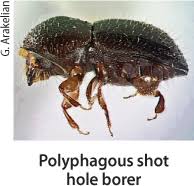
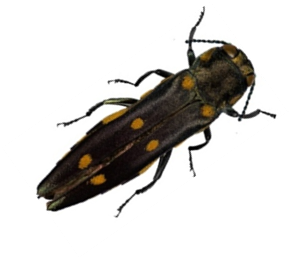


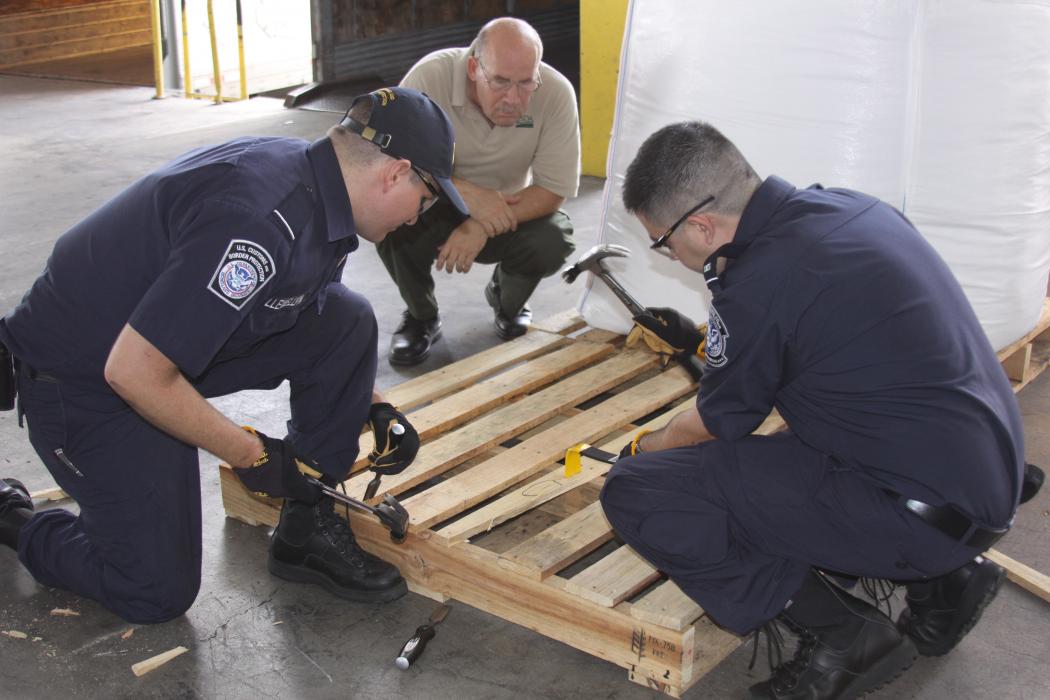 CBP inspecting wood packaging; CBP photo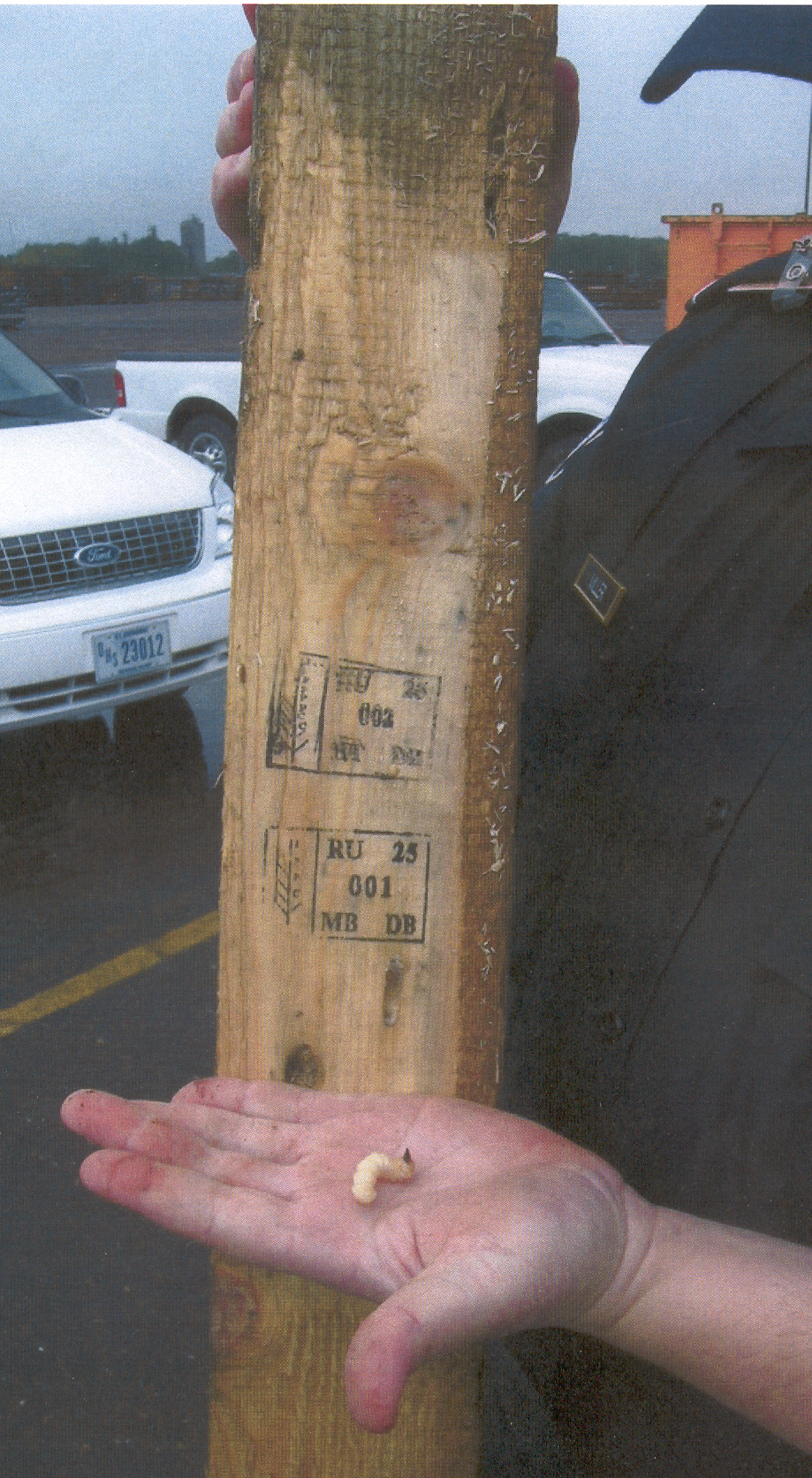
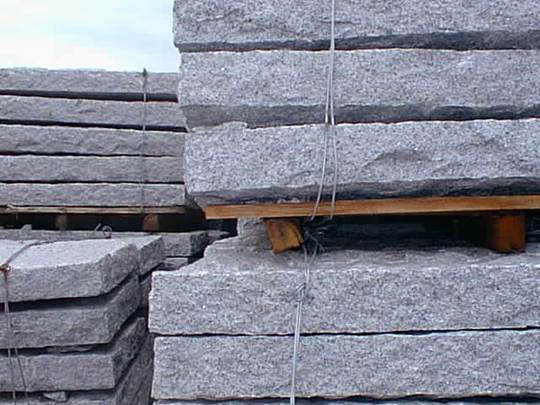 shipment of decorative stone with wood packaging
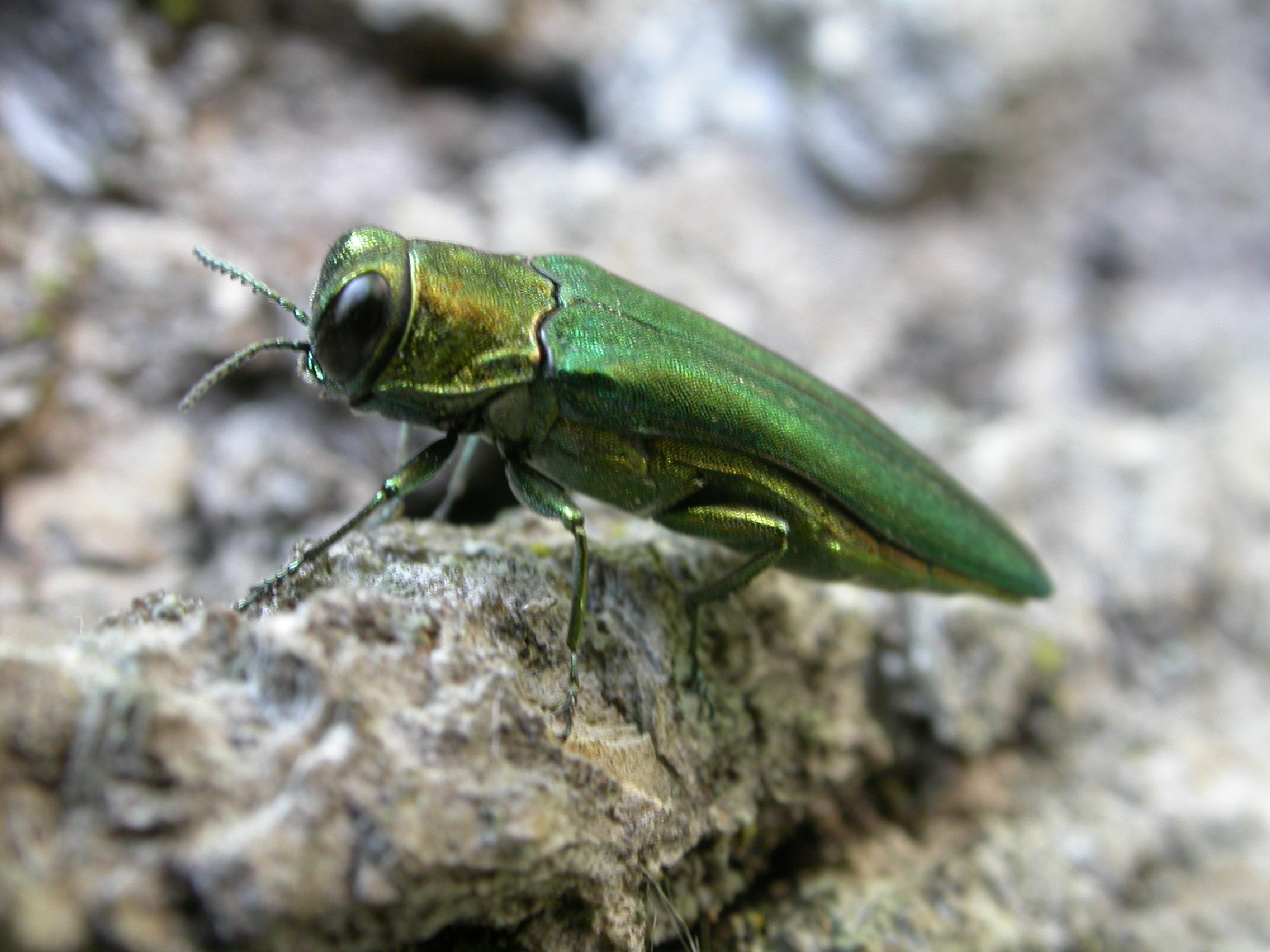
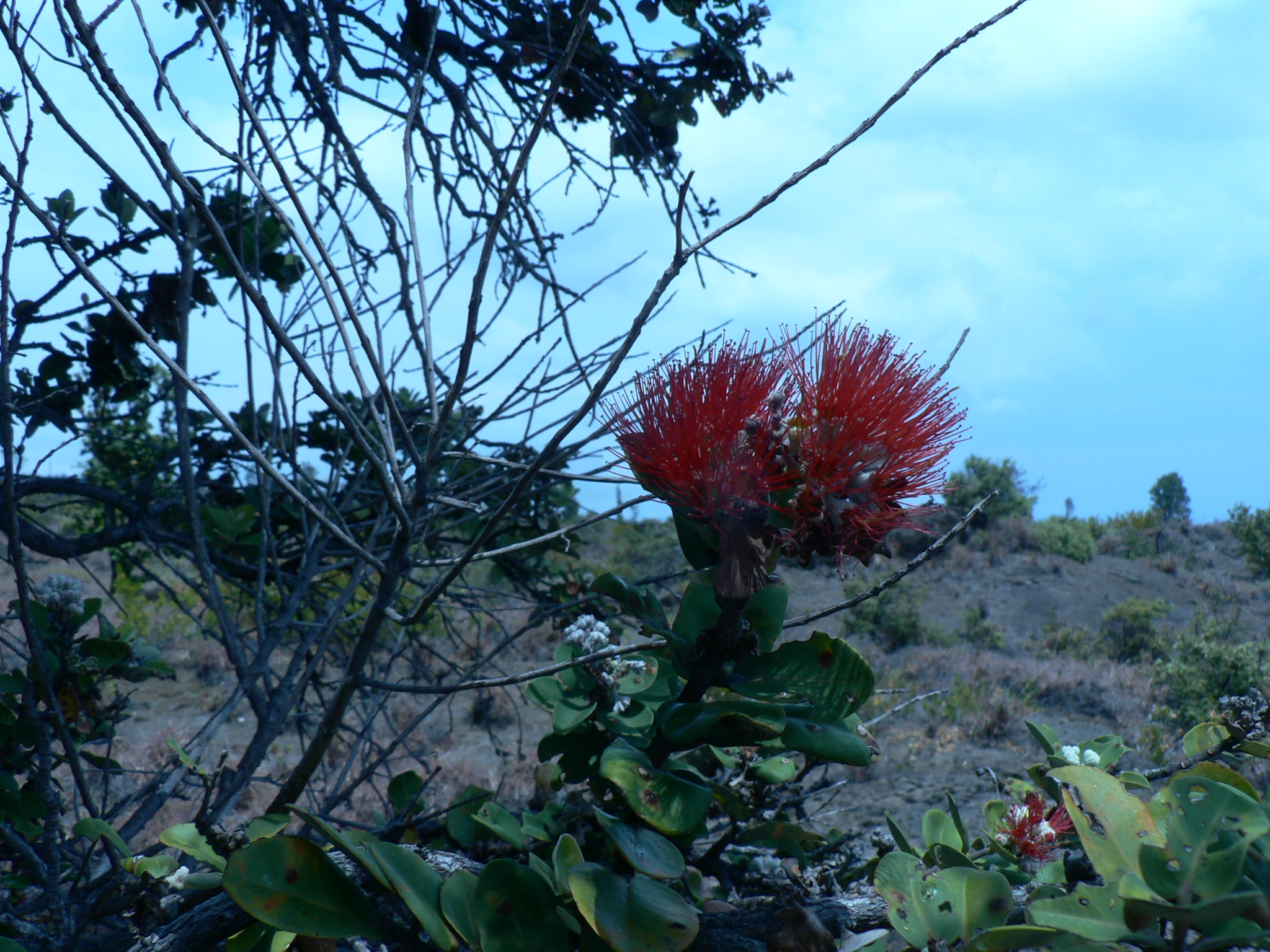
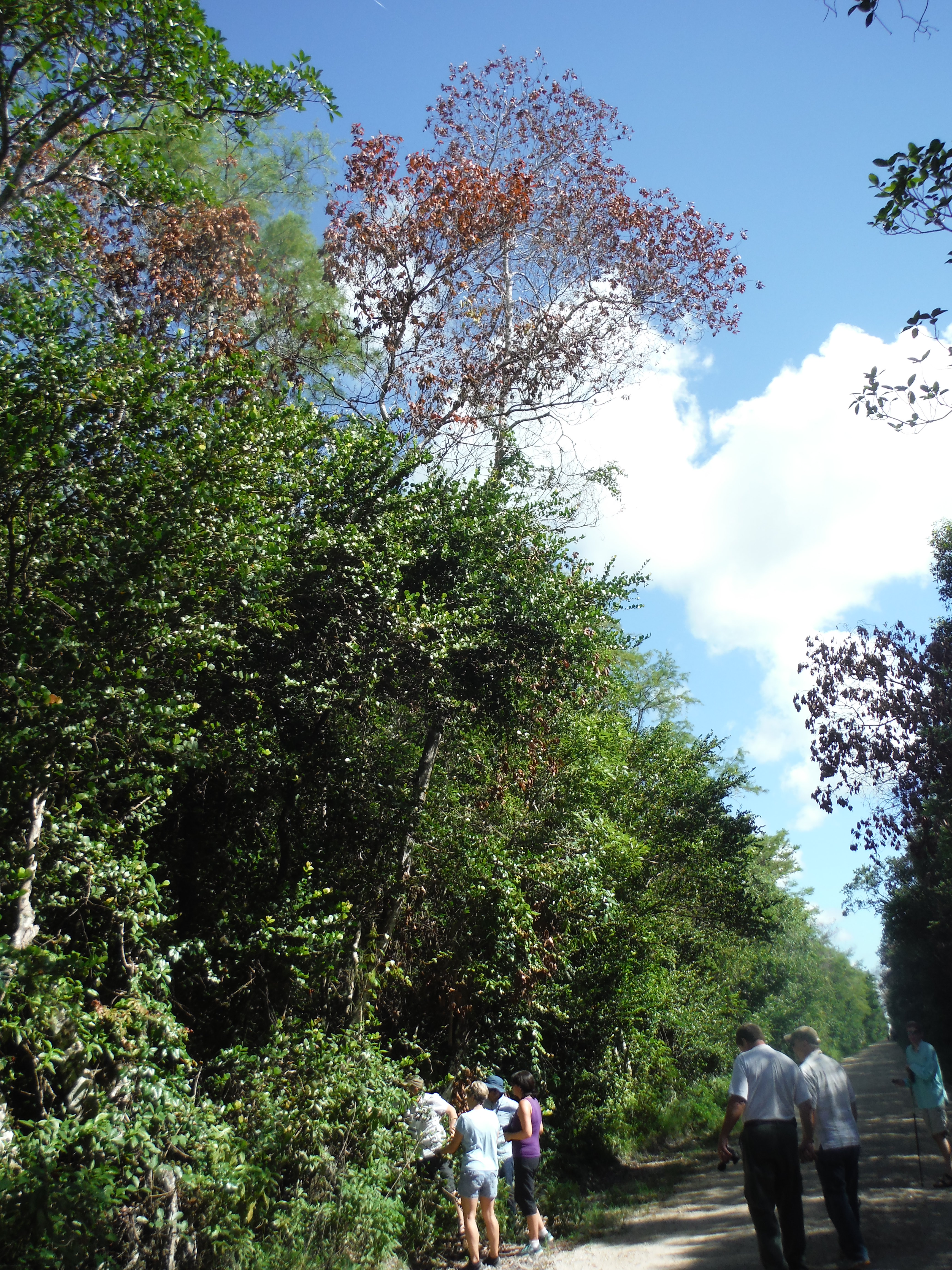 laurel-wilt killed swamp bay in the Everglades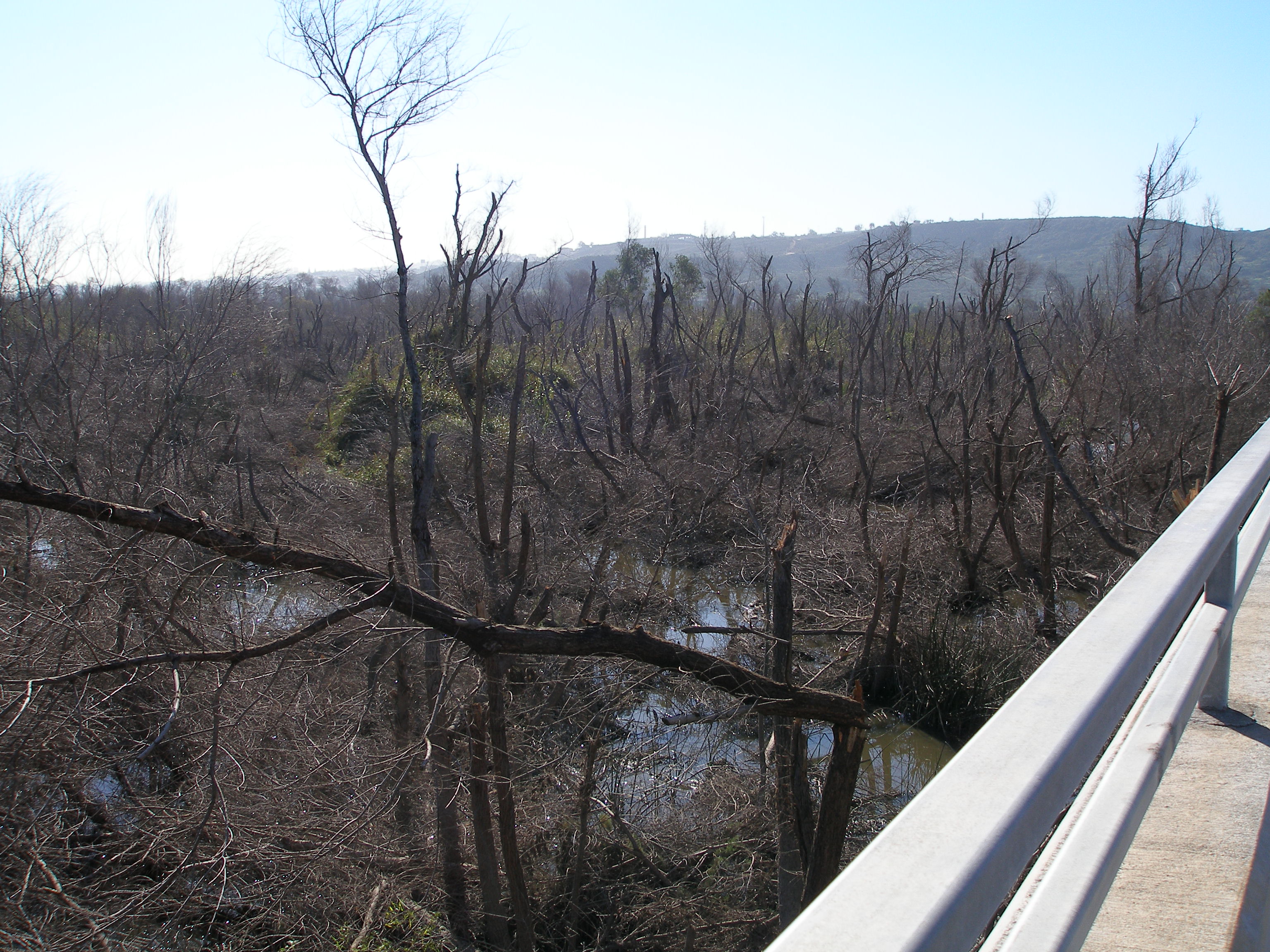
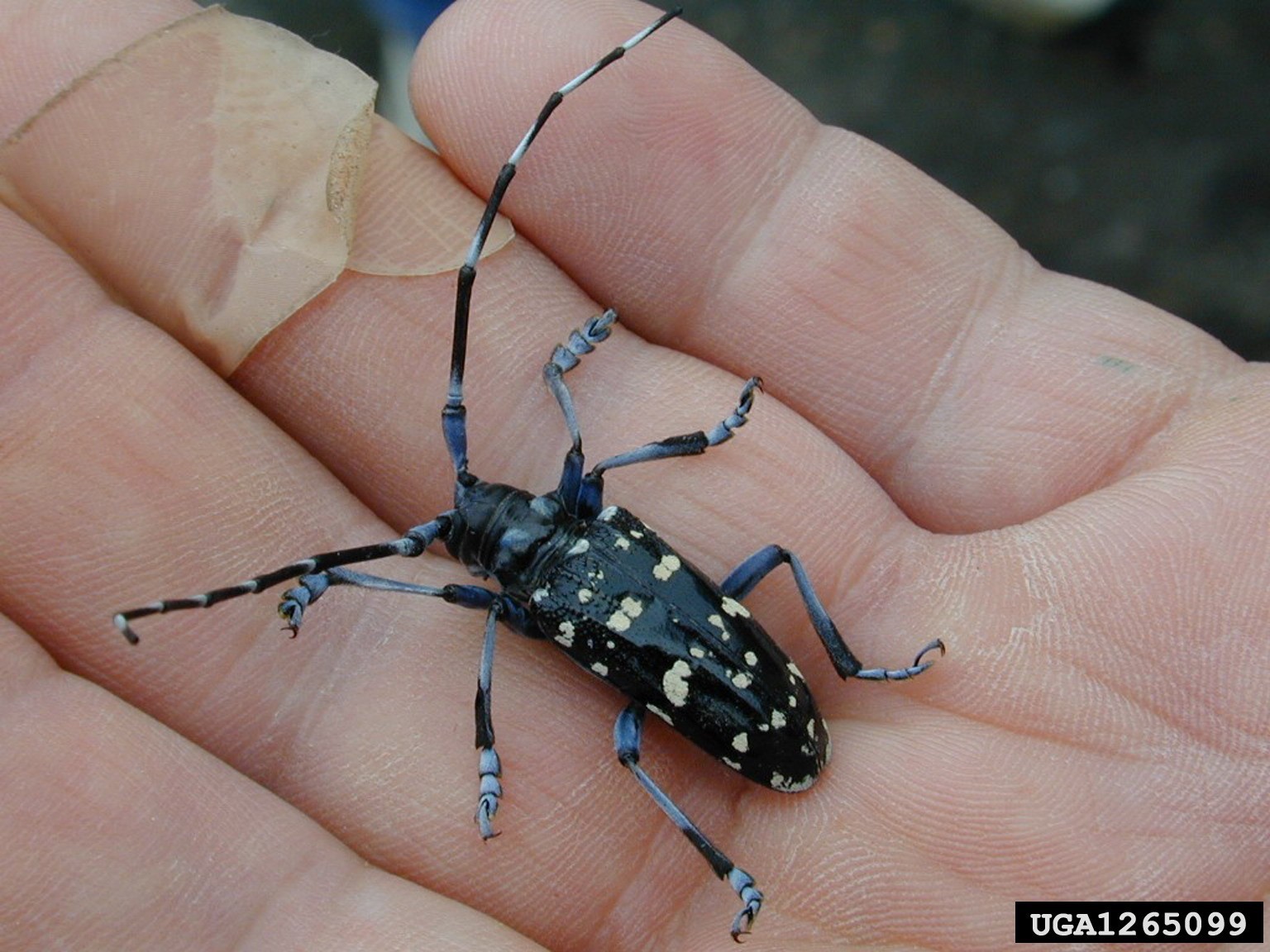
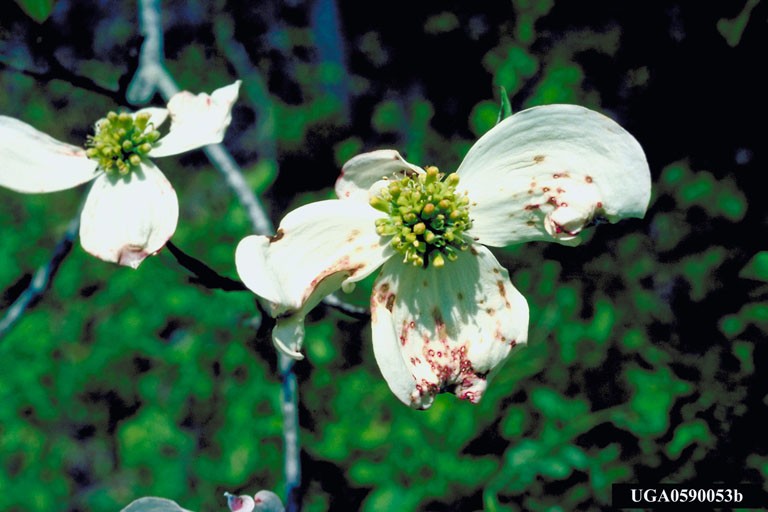 dogwood anthracnose