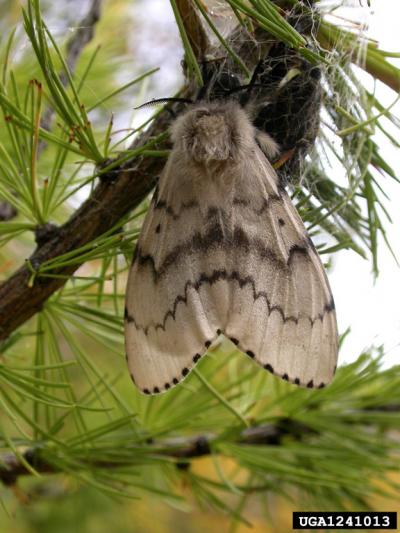
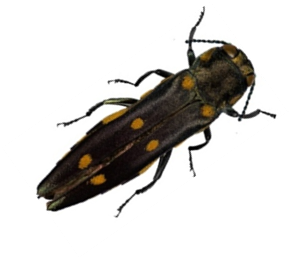
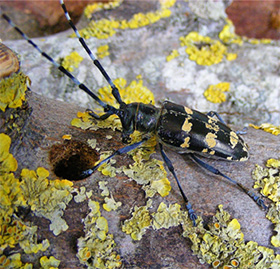
 ALB in Europe; photo by Doris Holling WSL
Maartje J. Klapwijk and several colleagues have recently taken a hard look at non-native forest pests in Europe. They conclude that current European legislation is inadequate to prevent forest/tree pest introduction, establishment and spread in the European Union. (A link to the article is provided at the end of this post.)
Some of the proactive steps that they recommend, however, will be difficult to enact. International trade rules (World Trade Organization, Agreement on the Application of Sanitary and Phytosanitary Measures – SPS Agreement) require that countries prove that the target commodity in trade presents a significant pest risk – proof that is difficult to obtain before damage has actually occurred.
(I have written extensively about this “Catch 22” – see Fading Forests II here)
Furthermore, European Union rules prevent countries from taking proactive measures to restrict potentially pest-infested plants or wood products being traded from one EU member country to another. However, member countries’ vary in their levels of concern about tree-killing pests. As a result, phytosanitary measures are quite weak in some countries. Once a pest-infested shipment enters a country with a weak phytosanitary system it can be moved freely to any other member country.
Thus, international and EU rules together create a significant risk that a pest will enter, establish, and then be spread by commerce to the rest of the Union.
The authors note that growing trade in living plants and wood products has brought a rise in non-native tree pests becoming established in Europe. The number of alien invertebrate species has increased two-fold since 1950; the number of fungal species has increased four-fold since 1900. Few studies have attempted to quantify the economic impacts of non-native tree-killing pests in Europe. But the authors say that the introduced pests will cause economic damage either directly by reducing the revenue of the country or imposing control costs; or indirectly through trade restrictions or reduced values of real estate.
Among the recent introductions are the pinewood nematode from North America; Asian and Citrus longhorned beetles and ash dieback fungus from Asia; and sudden oak death and other Phytophthora species. (I described the extent of Phytophtphora infestations in European nurseries in a blog posted on April 25.) As a partial response, EU countries have created a network of nurseries intended to serve as an early warning system against further introductions of alien tree pests. (Descriptions of these pests and where they are found are available on the website of the European and Mediterranean Plant Pest Organization (EPPO) here)
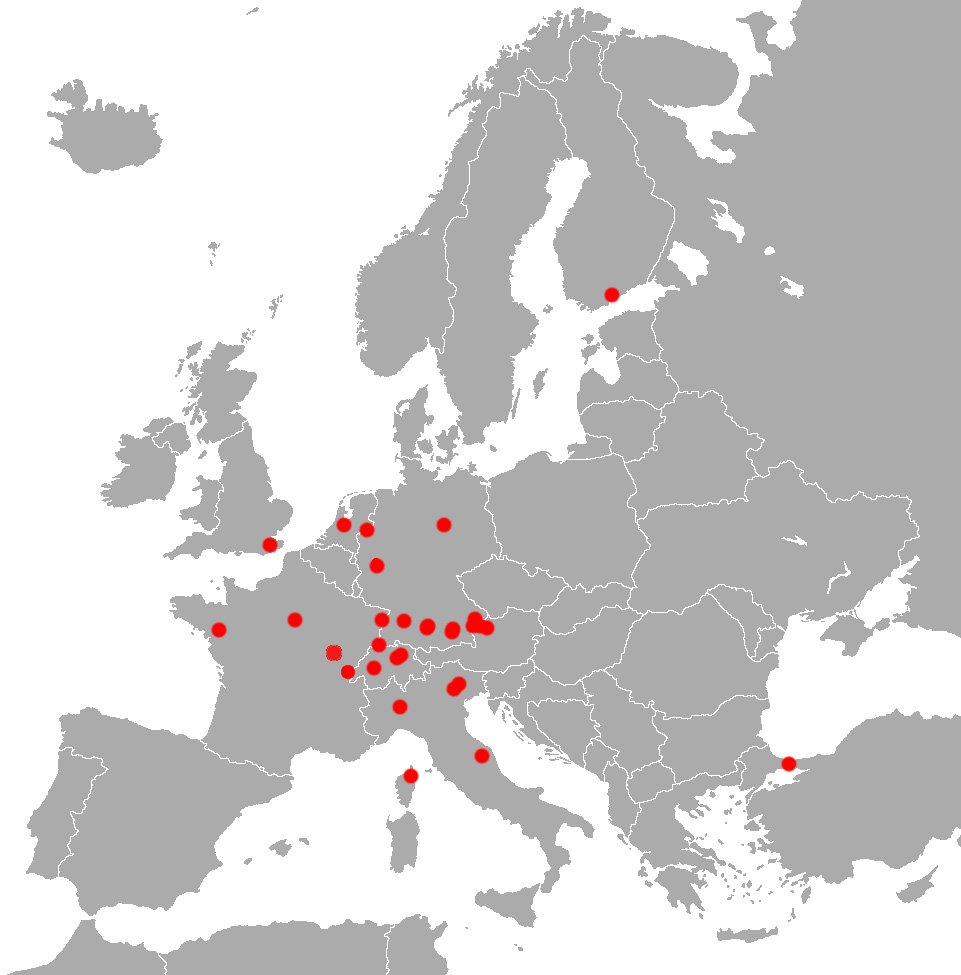 ALB introduction sites in Europe
The European Union regulates invasive species through the Environment Directorate-General (DG Environment). However, tree-killing pests and other plant health concerns are the responsibility of a different governmental body, the Directorate-General Health and Food Safety (DG SANCO).
Maartje J. Klapwijk and colleagues note the risk associated with:
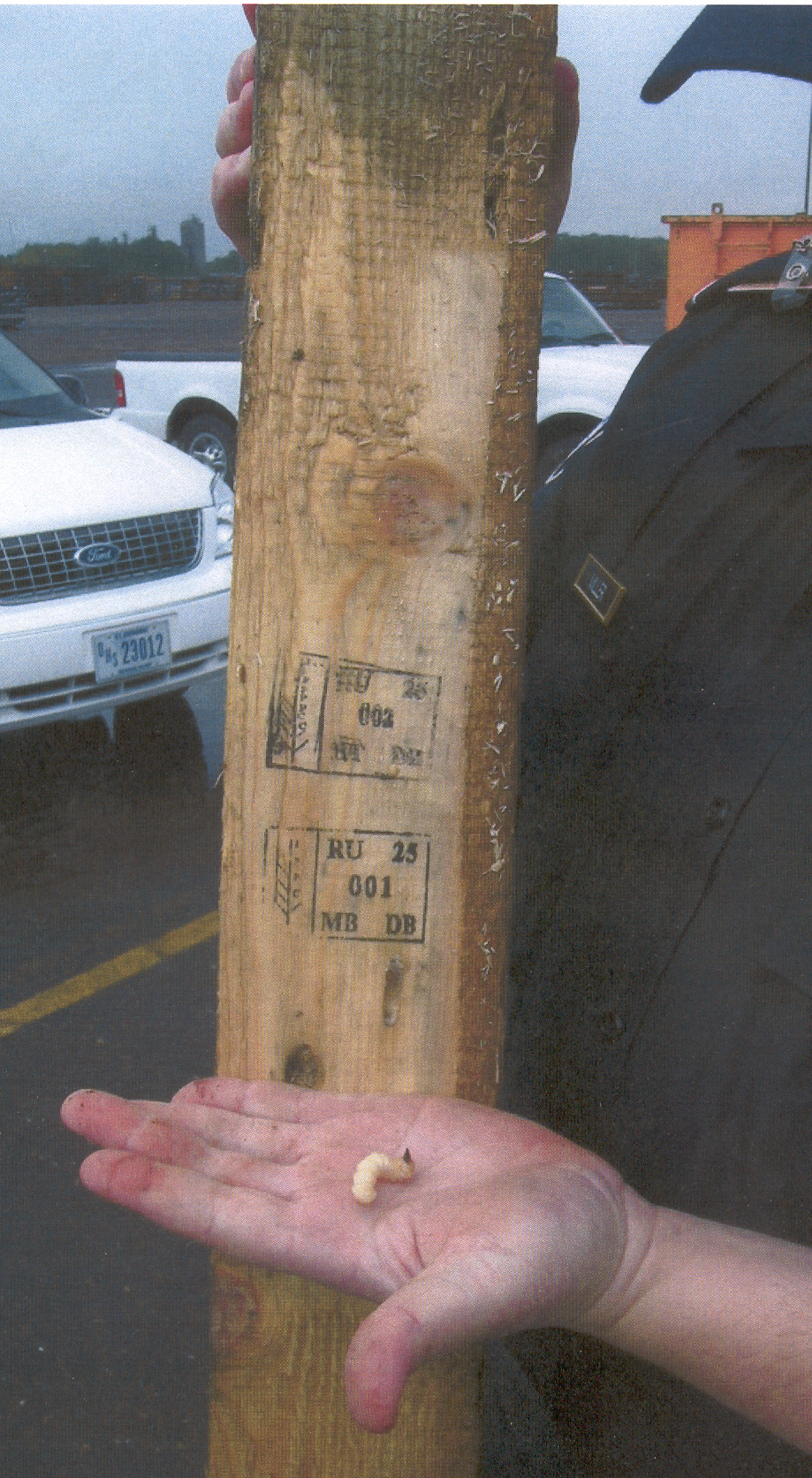
- crates, pallets, and other forms of wood packaging;
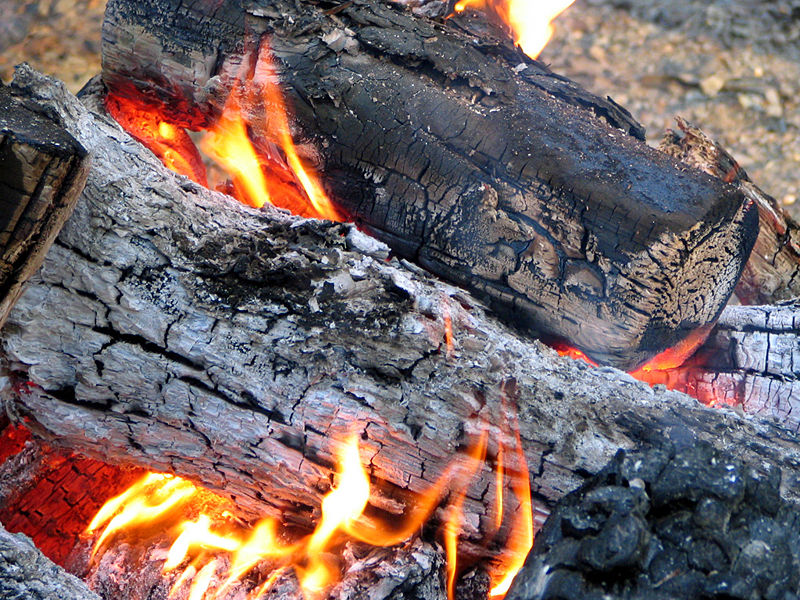
- wood chips (Europe imports more than 4 million tons of wood pellets as fuel in order to meet its carbon emission reduction goals) ; and
- especially – living plants.
They note that the international community has adopted two international related sanitary agreements : ISPM#15 (wood packaging) and ISPM#36 (living plants). The European Union requires certificates stating that imported plants are free from harmful organisms and that phytosanitary measures stipulated by the importing country have been applied. However, limited resources mean that only a small proportion of living plants, plant material, soil and wood products arriving in Europe can be inspected. “The main purpose of the inspections is to verify whether shipments comply with regulations, rather than to stop potentially harmful organisms …” (my emphasis). Reflecting the differences in levels of concern among EU member states noted above, there are large differences in inspection intensity among the EU member states.
The pertinent European legislation is Directive 2000/29/EC. It relies on a ‘‘black-list’’ of plants and plant products that are banned from import and specifies procedures to apply when any of these banned products is found in the EU. According to Klapwijk and colleagues, these quarantine lists provide insufficient protection because harmful organisms that enter the EU often are unknown prior to establishment.
Aware of the current system’s inadequacies, the EC has proposed a new regulation which would simplify and harmonize plant passports, allow for stricter measures against pests, and address emerging risks from certain living plant imports from some non-EU countries. Instead of listing harmful plant pests, the proposed regulation “sets out the conceptual nature of quarantine pests” and empowers the Commission to adopt measures to control certain pests.
Klapwijk and colleagues praise these actions as a significant step forward. However, they note that the new rules still don’t provide for precautionary assessments of high-risk commodities. Nor do they restrict import of the highest-risk commodities, such as imports of large plants or plants in soil. (my emphasis)
The authors note that other countries take a more pro-active, precautionary stance. Australia and New Zealand require that all imported plant products be assessed and proved safe before import. The U.S. restricts the size of imported plants and does not allow imported plants to be in soil. (The U.S. has proposed a new approach that relies increasingly on integrated measures or systems approaches rather than port-of-entry inspection. However, this proposal has been pending for more than three years. (APHIS explains its proposal here)
The question is, do trade rules allow Europe to apply the same restrictions as other countries? As Klapwijk and colleagues note, the EU cannot adopt more rigorous phytosanitary measures without providing scientific evidence for this necessity. Preparing a risk assessment to make this case will involve considerable work. As part of this process, Europe should announce that it wishes to raise its “level of protection” and that more stringent phytosanitary measures are needed to achieve that new goal.
Meanwhile, the EU can enhance its active detection efforts and “rapid response” capabilities. The new EC directive will require countries in which a new pest is detected to eradicate or contain the pest. However, the response continues to depend on investments and actions by individual Member States – which have often been insufficient.
Klapwijk and colleagues endorse the suggestion by Hulme et al. (2009) that the European Commission establish a single agency to respond to introductions of any kind of invasive species (not just tree pests) – modeled on the European Centre for Disease Prevention and Control.
Finally, Klapwijk and colleagues note the importance of engaging the public. Citizens’ participation can enhance early detection and strengthen public support for management strategies.
CONCLUSIONS
We Americans are very lucky that the U.S. Department of Agriculture had fairly stringent rules governing plant imports before the World Trade Organization and SPS Agreement were negotiated in the 1990s. We don’t have the burden of proving that imports of large plants (small trees!) in soil is too risky. (This not to say that U.S. regulations should not be tightened further for the most high-risk imports. See Fading Forests III here). Europeans should be able to build their case for more restrictive trade rules on existing risk assessments and practices utilized by the U.S., Australia, New Zealand, and others; on the numerous studies published in recent years that describe recent introductions to Europe and the pathways by which they entered; and by the number of those introductions alone. (To see what has been introduced, visit the website of the European and Mediterranean Plant Pest Organization (EPPO) here)
One important step in improving U.S. rules would be to finalize the proposal – put forward in 2013 – to depend more on integrated measures or systems approaches rather than inspection at the port of entry. Join with me in urging the Secretary of Agriculture to finalize this proposal before he leaves office in January. Contact me via the “contact us” button on the webpage to learn how you can help.
The United Kingdom has voted to leave the European Union. This means that the U.K. has the opportunity – and burden – of developing its own phytosanitary regulations. The U.K. has some of the leading forest pathologists and entomologists. The risk is obvious to all – especially Phytophthora ramorum in larch plantations and ash dieback disease in many areas of the country. I hope that the British will seize this opportunity to adopt really effective phytosanitary regulations that can serve as a model for the rest of Europe – and possibly even the U.S.
Sources
Maartje J. Klapwijk, Anna J. M. Hopkins, Louise Eriksson, Maria Pettersson, Martin Schroeder,A°ke Lindelo¨w, Jonas Ro¨nnberg, E. Carina H. Keskitalo, Marc Kenis. 2016. Reducing the risk of invasive forest pests and pathogens: Combining legislation, targeted management and public awareness. Ambio 2016, 45(Suppl. 2):S223–S234 DOI 10.1007/s13280-015-0748-3
Hulme, P.E. 2009. Trade, transport and trouble: Managing invasive species pathways in an era of globalization. Journal of Applied Ecology 46:10-18
Posted by Faith Campbell
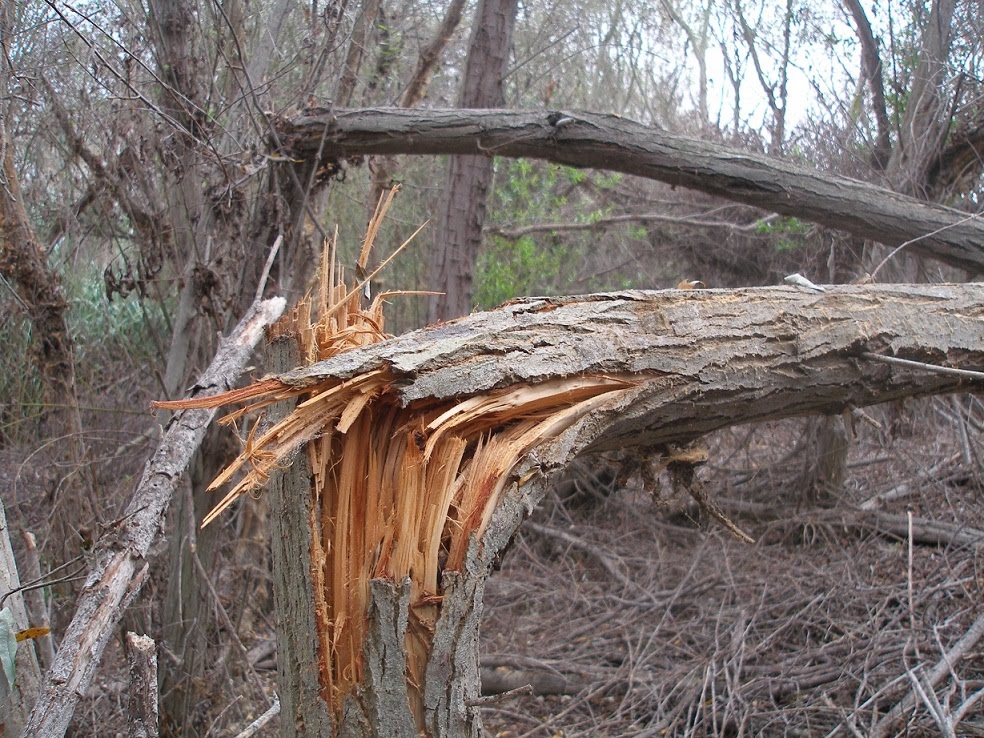 willow tree in Tijuana River riparian area felled by KSHB. Photo by John Boland; used by permission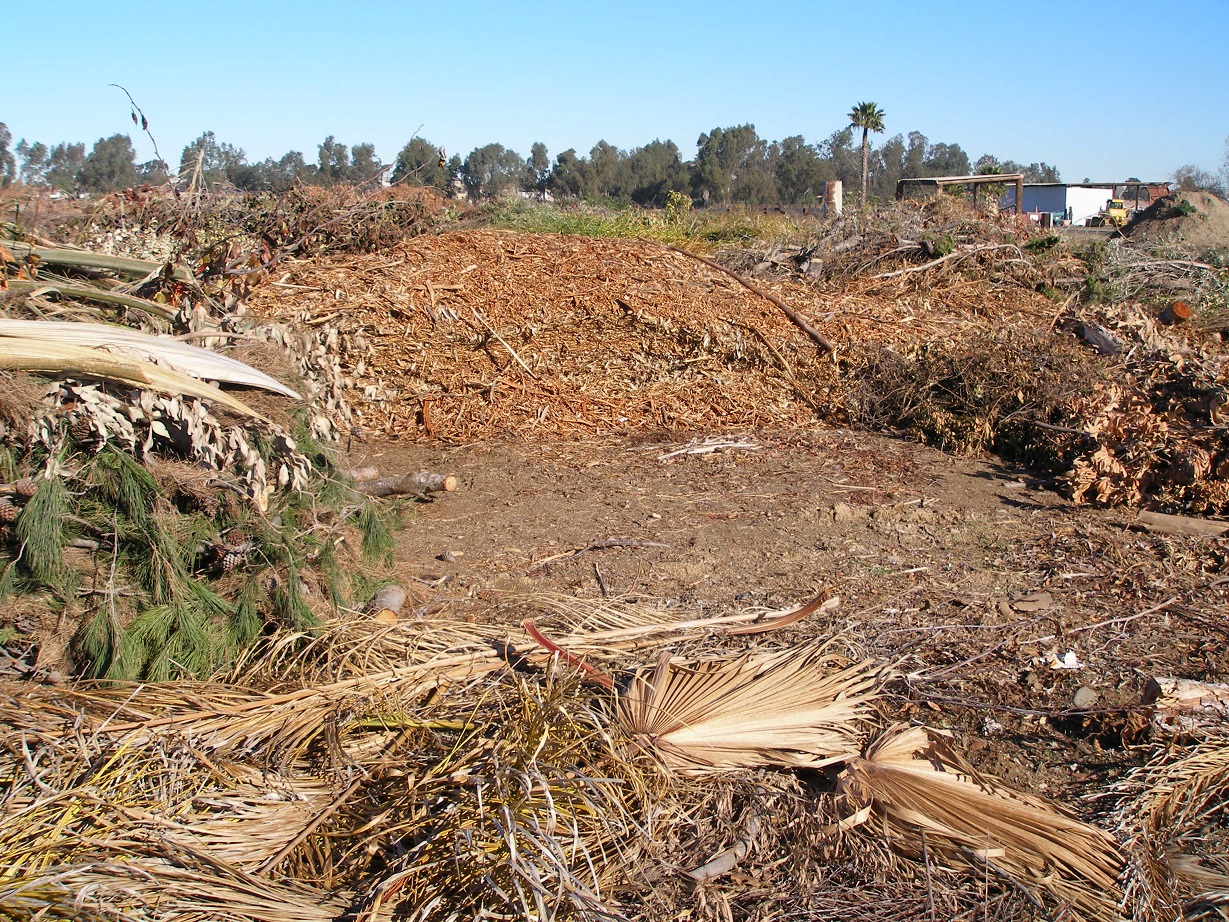
 PSHB damage to coast live oak;