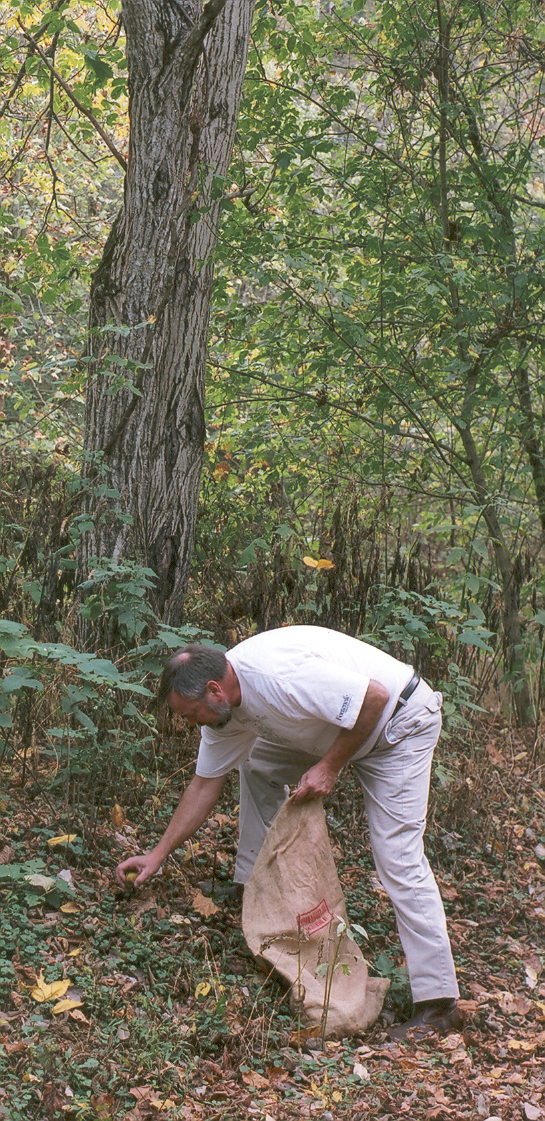
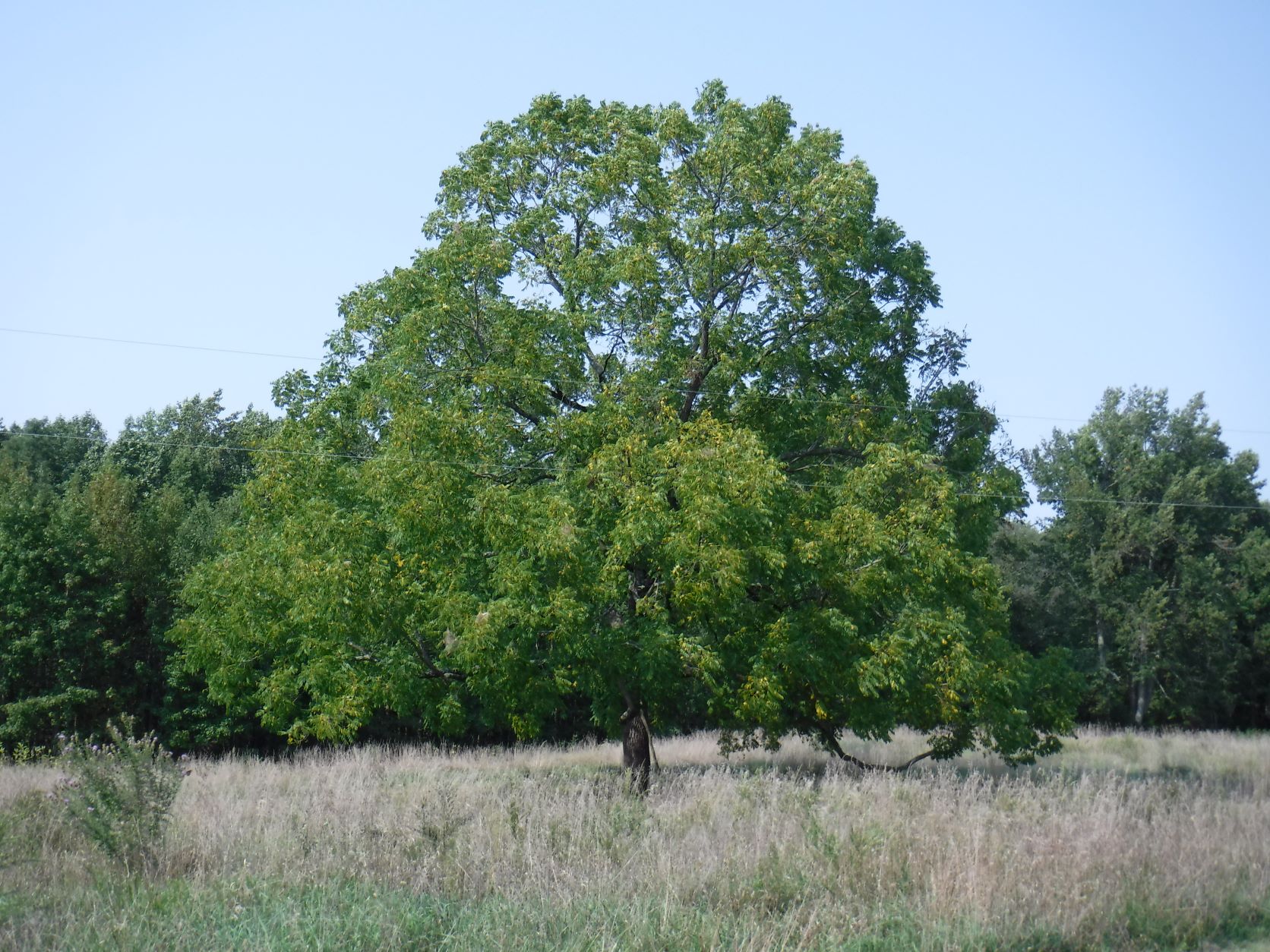
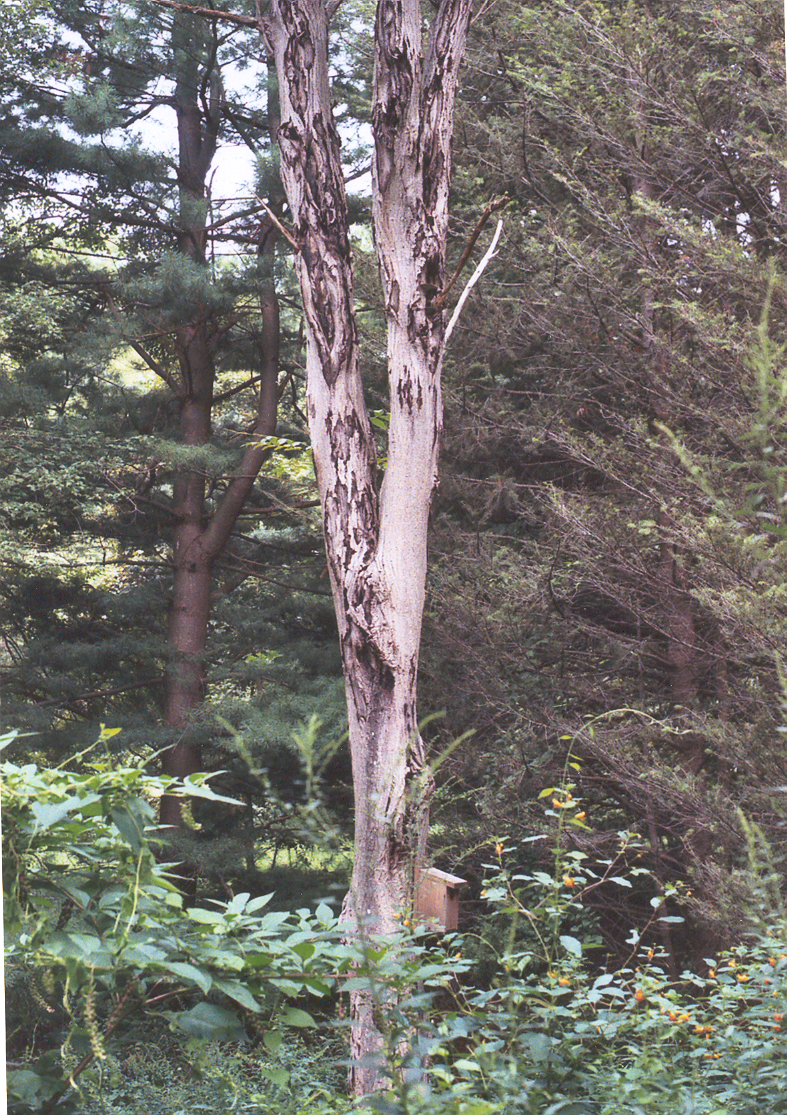
Scott Schlarbaum collecting butternuts; photo by F.T. Campbell
I have blogged several times about the need to enhance efforts to breed trees resistant to the most damaging of the hundreds of introduced insects and pathogens. Others concur – see reports by the National Academy of Sciences in 2018; several publications by USFS scientists Richard Sniezko and Jennifer Koch; a workshop hosted by Purdue w/ USFS support, the creation and efforts of several consortia – Whitebark Pine Ecosystem Foundation, Great Lakes Basin Forest Health Collaborative, Forest Restoration Alliance …
Also, Richard J. A. Buggs, of the Royal Botanic Gardens, Kew, recently summarized barriers to tree breeding. It was published as an especially thoughtful editorial in Plants People Planet in anticipation of the International Year of Plant Health in 2020 (see reference at the end of this blog). That issue included several related articles, also noted below.
R.J.A. Buggs’ Perspective on Tree Breeding
Buggs says the need for tree resistance research is greater than ever before. First, damage caused by introduced insects and pathogen is rising. Plus, we now recognize trees’ importance in capturing atmospheric carbon. He sees encouraging signs of growing public awareness of both factors. Also, he thinks citizen science might reduce the cost of some activities … although he doesn’t name which they are.
Dr. Buggs lists six major hindrances to breeding programs, including some aspects that I, at least, have not considered:
1) Trees’ size and long generation times mean research is necessarily slow. One result is it is hard to formulate research proposals that match funding cycles. This in turn means a dependence on long-term institutional commitment from well-funded organizations, and such institutions are rare.
I point out that the U.S. government – especially the USFS – is one such institution. Unfortunately, it has so far been reluctant to take commit major resources to breeding pest-resistant trees. Every year I urge you to lobby Congress on appropriations for the agency. In this context, do you understand that while the USFS Research budget receives approximately $300 million each year, less than $5 million of that total is allocated to researching invasive species (of all taxa)? Some gaps are filled by projects funded by the Forest Health Program. You will have a new opportunity to lobby Congress for Fiscal Year 2023 in the spring!
2) On the other hand, reliance on long-term institutional funding shelters projects from multidisciplinary peer-review that could introduce improved technology or methods. This lack of peer review also contributes to a perception among other scientists that tree resistance research is a scientific backwater.
3) Similarly, studies requiring a long time horizon don’t fit publication schedules. Again, the result is that the findings often appear only in institutional reports or conference proceedings. This means they are hard to find and often lack external peer review at not only the proposal stage but also before publication.
4) The long decades without clear success in dealing with Dutch elm disease (but see recent encouraging developments here) and chestnut blight (see The American Chestnut Foundation here) gave the impression that resistance breeding of forest trees is impossible. Buggs says pest resistance problems are easier to tackle for other trees.
TACF American chestnut; photo by F.T. Campbell
5) Those considering what efforts to fund might demand complete resistance to the pest. This goal is not only unrealistic – it is often unnecessary. Often lower levels of resistance or tolerance can result in trees that can be self-sustaining. Dr. Sneizko concurs; see his article appearing in this issue.
6) Forest stakeholders differ over the goal of developing resistant trees. Some think any human intervention is unwarranted in wilderness areas. Some want a tree as similar as possible to pre-epidemic trees. Others want a tree that produces more timber.
Other Significant Articles
A second article in the same issue of Plants People Planet (Federman and Zankowski) discusses the USDA’s commitment to new approaches in tree resistance research.
I found a third article that discusses British approaches to mitigating tree pests to be more informative than Federman and Zankowski – although somewhat worrying. Spence, Hill and Morris praise the U.K.’s Plant Health Risk Register, which they say has enhanced vigilance on possible new pest introductions. However, the authors describe resistance breeding as a strategy to be considered “when a pest has established such that a tree population is unable to recover, and where a genetic basis for resistance is demonstrable in a proportion of the tree population.” Dr. Sneizko, and others – and I! – call for initiating exploration of the potential for resistance breeding much earlier in an invasion.
A fourth article – by Richard Sniezko and colleagues — describes encouraging levels of partial resistance to white pine blister rust in two western white pines and evidence for both qualitative and quantitative resistance to Phytophtohora lateralis in Port-Orford Cedar.
Port-Orford test seedlings; photo courtesy of Richard Sniezko
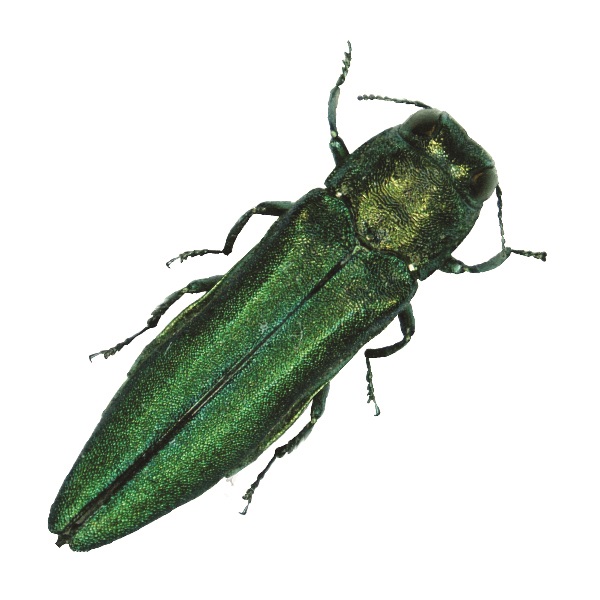
A fifth – by Showalter et al. — reports encouraging levels of resistance to both emerald ash borer DMF and ash dieback in European ash. The authors conclude that a breeding program might be a viable solution to both pests.
We welcome comments that supplement or correct factual information, suggest new approaches, or promote thoughtful consideration. We post comments that disagree with us — but not those we judge to be not civil or inflammatory.
For a detailed discussion of the policies and practices that have allowed these pests to enter and spread – and that do not promote effective restoration strategies – review the Fading Forests report at http://treeimprovement.utk.edu/FadingForests.htm
A group of scientists has published a report on Canada’s invasive species programs (see reference at the end of this blog). It compares the structures and procedures of Canada’s federal government to those in the U.S., Australia, and New Zealand.
The report focuses on proactive measures aimed at preventing introductions, including cross-border introductions from the U.S. It does not describe efforts to prevent spread between provinces. Nor does it address efforts by provincial or territorial governments, Tribes, or non-governmental organizations (NGOs).
The authors seek to understand how federal infrastructure, strategies, and decisions have contributed to outcomes. Their principal recommendation is that Canada should accord protecting biodiversity as much importance as preventing direct economic impacts from invasive species – unlike now and in the past. Those economic impacts are substantial, estimated at $34.5 billion (Canadian) each year.
The authors think that such a focus is appropriate because Canadians depend on the stability and function of a wide range of ecosystems and express strong interest in protecting their environment. Canada has also accepted obligations to protect biological diversity by joining the Convention on Biological Diversity (CBD). One of those obligations was that, by 2020, the country would have put in place plans targetting high risk species and pathways of introduction..
The report notes that Canada faces some unique challenges: three coastlines, the intimate relationship with the U.S. (i.e., a long border and diverse shared water bodies), vast area, and very low human population density. The last might result in fewer incidents of human-mediated dispersal. However, it is likely to present logistical challenges in detecting and managing any invaders. In addition, common, popular Canadian recreational activities — camping, boating, and fishing — can contribute to invasive species’ introduction and spread.
hemlock mortality due to hemlock wooly adelgid in Nova Scotia; HWA had spread from the U.S. Photo courtesy of Celia Boone, NS Department of Land and Resources
Canada’s Biosecurity Efforts
Canada adopted its Invasive Alien Species Strategy in 2002. The plan addresses four stages of invasion: 1) prevention of new introductions; 2) early detection of newly introduced species; 3) rapid response to new invaders; and 4) management of species that are established and spreading.
The report laments that Canada lacks centralized oversight of it biosecurity efforts in preventing new introductions across all pathways. That is, responsibilities are divided among several agencies, depending on the associated commodity or resource. One result is that similar pathways are regulated differently. One example is ship-mediated vectors. Ballast water is strictly regulated by both Canadian regulations and the 2004 Convention for Control and Management of Ship’s Ballast Water and Sediments (which took effect in 2017). However, commercial fishing and recreational boats are not federally regulated.
In accordance with the CBD, the Canadian government submitted a report in 2018, claiming to be on track to achieve its 2020 targets. The government had identified priority pathways: shipping, horticulture, aquarium/pet trade, transport containers, road construction, and recreation (e.g., boating). Several had been regulated at least partially, including wood packaging, forestry products, and plant products. Legislative and regulatory tools had been strengthened, including risk assessments and management plans for ballast water, recreational boating, and wood packaging. (I cannot explain the conflicting assessments of the regulation of recreational boating.) Also, national plans had been developed for several priority species, including the Asian subspecies of Lymantriadispar and emerald ash borer. The country acknowledged gaps with regard to emerging animal diseases, the pet trade, and dispersal across the U.S. border.
Comparing Canada to Other Countries (see Table 2)
The United States: I am disappointed by the report’s comparison of Canadian and U.S. invasive species programs because it considers formal structures rather than how the programs work in reality. The Canadian report allots much greater authority to the U.S.’ interagency National Invasive Species Council (NISC) than I think it actually enjoys.
The report notes the abundance of U.S. data on invasive species’ distribution and hosts. It cites specifically the USDA Forest Service Forest Inventory Analysis. It also notes the importance of several transborder non-governmental organizations, including North American Invasive Species Management Association (NAISMA) and EDDmaps and binational entities such as the Great Lakes Fishery Commission.
Australia: The Canadian report praises the existence of an Inspector-General of Biosecurity who conducts independent reviews of biosecurity issues. It also applauds the coordinating role of the Intergovernmental Agreement on Biosecurity, which sets roles, responsibilities and governance agreements for biosecurity responses at all levels of government. Finally, it notes that the Department of Agriculture, Water and Environment (DAWE) created a National Priority List of Environmental Pests, Weeds and Diseases.
I have no independent understanding of how successful Australia has been in addressing invasive species. However, several forest health experts appear to have been dissatisfied with the country’s response to the introduction of Eucalyptus rust; see my blog.
New Zealand: Again, the report praises centralization of policy and government efforts in the Ministry for Primary Industries (MPI) under the provisions of the Biosecurity Act of 1993. The MPI advises the Minster for Biosecurity – which has no counterpart in the government of Canada. The report also notes that while New Zealand expects landowners and individuals to manage their own biosecurity risks, they can claim compensation if they suffer loss due to a biosecurity action, e.g., destruction of nursery stock. The Canadians think this provision might encourage people to report invasive species. New Zealanders are trying to create an all-citizen “team” to address invasive species. One way they promote this idea is to issue awards recognizing individuals’ efforts.
I wish the Canadian report had also looked at South Africa, which has done such a good job in its invasive species reports.
Four Case Studies
The report includes four case studies: a “historical failure”, a “historical success”, and two substantial current threats.
Preventing introductions of zebra and quagga mussels is described as a “historical failure”. There was no relevant preventive measure in place at the time they were introduced. Since preventive measures were made compulsory, no invasive species have been documented as becoming established in the Great Lakes via the ballast water pathway. Such introductions have occurred in less well-regulated marine systems.
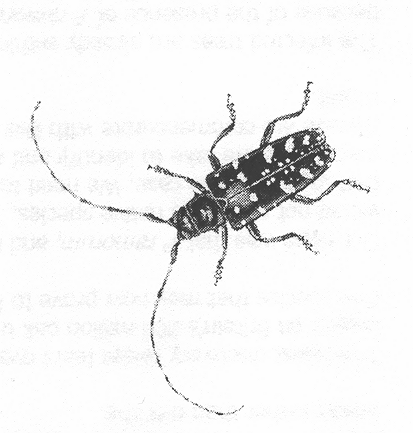
Eradication of the Asian longhorned beetle (ALB) is described as a “historical success”. The initial Toronto outbreak was not completely eradicated; a small residual population was detected about a decade later and eradicated then. The report notes that the Toronto outbreaks were noticed by citizens rather than the relevant government agency. So “success” is attributable to chance and astute citizens rather than rigorous enforcement. I note that most U.S. detections of wood borer infestations are also detected by citizens. It is probably unrealistic to expect all detections to result from official programs.
The threat to Canada from the spotted lanternfly (SLF) is high since it could cross the land border from the U.S. Its principal host, Ailanthus, is widespread in southern Canada – not just in the East but also in Saskatchewan and Alberta. The insect’s egg masses are easily transported on a wide variety of vehicles. The report does not enumerate how many trucks or trains cross the border each year. The report laments that Canada has not adopted a clear monitoring plan aimed at detecting early SLF introduction.
Finally, four species of carp native to Asia threaten to invade the Great Lakes, for example through the Chicago canal or Sandusky River. Canada has asked citizens to be on the alert, and is exploring use of eDNA monitoring systems.
Lessons and Recommendations
The report highlights lessons learned in its four-country review and makes a series of recommendations:
1) Value biodiversity as well as economic and industrial interests.
The Canadian Species at Risk Act (its endangered species legislation) does not mention invasive species as a cause of endangerment. The Natural Sciences and Engineering Research Council now provides a centralized repository of biodiversity monitoring data which will help overcome data limitations associated with invasive species surveillance and risk modelling.
2) Consolidate regulatory frameworks
Canada should follow Australia and New Zealand in assigning a single body to be responsible for biosecurity. It should set biosecurity priorities, coordinate research and management at various government levels, and lay the groundwork for consistent actions.
3) Strengthen partnerships with the public and Indigenous communities
The report’s authors praise New Zealand’s efforts to engage all citizens in biosecurity. Canada would benefit from enhanced educational efforts – which are stronger now thanks to the growing availability of phone apps. Canada should ensure that Indigenous communities’ perspectives and knowledge are integrated into the program.
4) Strengthen partnerships with other countries
Canada should prioritize discussion of biosecurity with its trading partners, particularly in developing multinational trade agreements. This is a key improvement that the U.S. could make, too.) It is particularly important to strengthen collaboration with the U.S.
4) Adapt to future conditions
Canada will need to anticipate changes due to population increase and climate change. Research needs to recognize and overcome current taxonomic and geographic biases. Also, research should focus on developing new technologies and treatment techniques proactively, before they are needed. One area of concern will be migration corridors (or “assisted migration”) undertaken to protect biodiversity as the climate changes.
5) Anticipate conflict
The government must expect different perspectives among stakeholders. Greater transparency in education campaigns might help prevent disagreements from becoming serious barriers to action.
SOURCE
Reid CH, Hudgins EJ, Guay JD, Patterson S, Medd AM, Cooke SJ, and Bennett JR. 2021. The state of Canada’s biosecurity efforts to protect BD from species invasions. FACETS 6: 1922– 1954. doi:10.1139/facets-2021-0012 Published by: Canadian Science Publishing
Posted by Faith Campbell
We welcome comments that supplement or correct factual information, suggest new approaches, or promote thoughtful consideration. We post comments that disagree with us — but not those we judge to be not civil or inflammatory.
For a detailed discussion of the policies and practices that have allowed these pests to enter and spread – and that do not promote effective restoration strategies – review the Fading Forests report at http://treeimprovement.utk.edu/FadingForests.htm
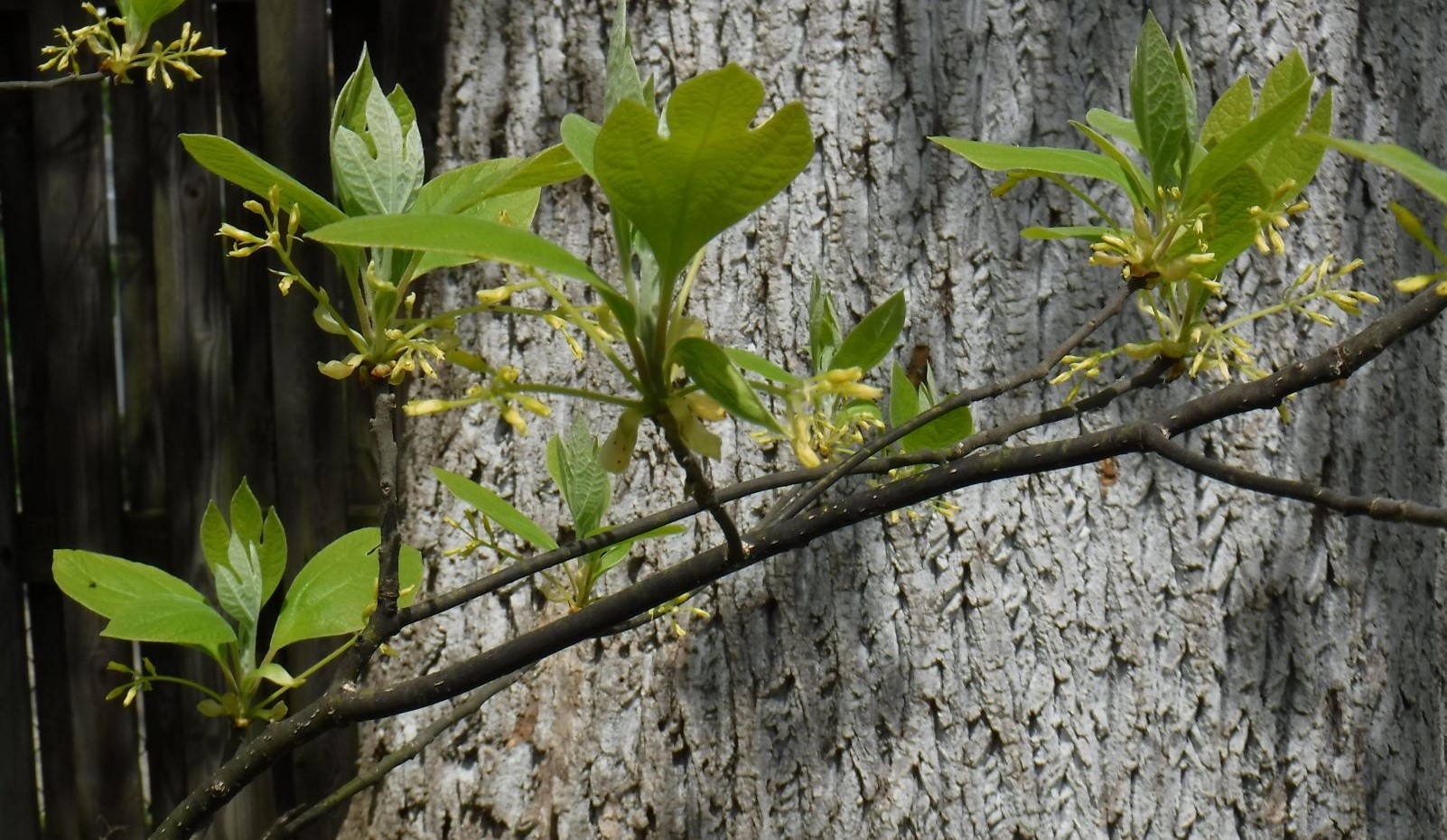
sassafras – vulnerable to the rapidly spreading laurel wilt disease; photo by F.T. Campbell
In summer 2019 I posted several blogs summarizing my analysis of forest pest issues after 30 years’ engagement. I reported the continuing introductions of tree-killing insects and pathogens; their relentless spread and exacerbated impacts. I noted the continued low priority given these issues in agencies tasked with preventing and solving these problems. Also, Congress provides not only insufficiently protective policies but also way too little funding. I decried the impediments created by several Administrations; anti-regulatory ideology and USDA’s emphasis on “collaborating” with “clients” rather than imposing requirements.
In my blogs, I called for renewed effort to find more effective strategies – as I had earlier advocated in my “Fading Forests” reports (link provided at the end of this blog), previous blogs, and Lovett et al. 2016
Areas of Progress
Now two years have passed. I see five areas of progress – which give me some hope.
1) Important Activities Are Better Funded than I had realized
a) The US Forest Service is putting significant effort into breeding trees resistant to the relevant pests, more than I had realized. Examples include elms and several conifer species in the West – here and here.
b) USDA has provided at least $110 million since FY2009 to fund forest pest research, control, and outreach under the auspices of the Plant Pest and Disease Disaster Prevention Program (§10201 of the Farm Bill). This total does not include additional funding for the spotted lanternfly. Funded projects, inter alia: explored biocontrol agents for Asian longhorned beetle and emerald ash borer; supported research at NORS-DUC on sudden oak death; monitored and managed red palm weevil and coconut rhinoceros beetle; and detected Asian defoliators. Clearly, many of these projects have increased scientific understanding and promoted public compliance and assistance in pest detection and management.
This section of the Farm Bill also provided $3.9 million to counter cactus pests – $2.7 million over 10 years targetting the Cactoblastismoth & here and $1.2 million over four years targetting the Harissia cactus mealybug and here.
flat-padded Opuntia cactus – vulnerable to the Cactoblastis moth; National Park Service photo
2) Additional publications have documented pests’ impacts – although I remain doubtful that they have increased decision-makers’ willingness to prioritize forest pests. Among these publications are the huge overview of invasive species published last spring (Polandet al.) and the regional overview of pests and invasive plants in the West (Barrettet al.).
3) There have been new efforts to improve prediction of various pests’ probable virulence (see recent blogs and here.
4) Attention is growing to the importance of protecting forest health as a vital tool in combatting climate change — see Feiet al., Quirionet al., and IUCN. We will have to wait to see whether this approach will succeed in raising the priority given to non-native pests by decision-makers and influential stakeholders.
Rep. Peter Welch
5) Some politicians are responding to forest pest crises – In the US House, Peter Welch (D-VT) is the lead sponsor of H.R. 1389. He has been joined – so far – by eight cosponsors — Rep. Kuster (D-NH), Pappas (D-NH), Stefanik (R-NY), Fitzpatrick (R-PA), Thompson (D-CA), Ross (D-NC), Pingree (D-ME), and Delgado (D-NY). This bill would fund research into, and application of, host resistance! Also, it would make APHIS’ access to emergency funds easier. Furthermore, it calls for a study of ways to raise forest pests’ priority – thus partially responding to the proposal by me and others (Bonello et al. 2020; full reference at end of blog) to create federal Centers for Forest Pest Control and Prevention.
This year the Congress will begin work on the next Farm Bill – might these ideas be incorporated into that legislation?
What Else Must Be Done
My work is guided by three premises:
1) Robust federal leadership is crucial:
The Constitution gives primacy to federal agencies in managing imports and interstate trade.
Only a consistent approach can protect trees (and other plants) from non-native pests that spread across state lines.
Federal agencies have more resources than state agencies individually or in likely collective efforts – even after decades of budget and staffing cuts.
2) Success depends on a continuing, long-term effort founded on institutional and financial commitments commensurate with the scale of the threat. This requires stable funding; guidance by research and expert staff; and engagement by non-governmental players and stakeholders. Unfortunately, as I discuss below, funding has been neither adequate nor stable.
3) Programs’ effectiveness needs to be measured. Measurement must focus on outcomes, not just effort (see National Environmental Coalition on Invasive Species’ vision document).
Preventing New Introductions – Challenges and Solutions
We cannot prevent damaging new introductions without addressing two specific challenges.
1) Wood packaging continues to pose a threat despite past international and national efforts. As documented in my recent blogs, the numbers of shipping containers – presumably with wood packaging – are rising. Since 2010, CBP has detected nearly 33,000 shipments in violation of ISPM#15. The numbers of violations are down in the most recent years. However, a high proportion of pest-infested wood continues to bear the ISPM#15 mark. So, ISPM#15 is not as effective as it needs to be.
We at CISP hope that by mid-2022, a new analysis of the current proportion of wood packaging harboring pests will be available. Plus there are at least two collaborative efforts aimed at increasing industry efforts to find solutions – The Nature Conservancy with the National Wooden Pallet and Container Association; and the Cary Institute with an informal consortium of importers using wooden dunnage.
2) Imports of living plants (“plants for planting”) are less well studied so the situation is difficult to assess. However, we know this is a pathway that has often spread pests into and within the US. There have been significant declines in overall numbers of incoming shipments, but available information doesn’t tell us which types of plants – woody vs. herbaceous, plant vs. tissue culture, etc. – have decreased.
APHIS said, in a report to Congress (reference at end of blog), that introductions have been curbed – but neither that report nor other data shows me that is true.
Scientists are making efforts to improve risk assessments by reducing the number of organisms for which no information is available on their probable impacts (the “unknown unknowns”).
Solving Issues of Prevention
While I have repeatedly proposed radical revisions to the international phytosanitary agreements (WTO SPS & IPPC) that preclude prevention of unknown unknowns (see Fading Forests II and blog), I have also endorsed measures aimed at achieving incremental improvements in preventing introductions, curtailing spread, and promoting recovery of the affected host species.
The more radical suggestions focus on: 1) revising the US Plant Protection Act to give higher priority to preventing pests introductions than to facilitating free trade (FF II Chapter 3); 2) APHIS explicitly stating that its goal is to achieve a specific, high level of protection (FF II Chapter 3); 3) APHIS using its authority under the NAPPRA program to prohibit imports of all plants belonging to the 150 genera of “woody” plants that North America shares with Europe or Asia; 4) APHIS prohibiting use of packaging made from solid wood by countries and exporters that have a record of frequent violations of ISPM#15 in the 16 years since its implementation.
Another action leading to stronger programs would be for APHIS to facilitate outside analysis of its programs and policies to ensure the agency is applying the most effective strategies (Lovett et al. 2016). The pending Haack report is an encouraging example.
I have also suggested that APHIS broaden its risk assessments so that they cover wider categories of risk, such as all pests that might be associated with bare-root woody plants from a particular region. Such an approach could speed up analyses of the many pathways of introduction and prompt their regulation.
Also, APHIS could use certain existing programs more aggressively. I have in mind pre-clearance partnerships and Critical Control Point integrated pest management programs. APHIS should also clarify the extent to which these programs are being applied to the shipments most likely to transport pests that threaten our mainland forests, i.e. imports of woody plants belonging to genera from temperate climates. APHIS should promote more sentinel plant programs. Regarding wood packaging, APHIS could follow the lead of CBP by penalizing importers for each shipment containing noncompliant SWPM.
Getting APHIS to prioritize pest prevention over free trade in general, or in current trade agreements, is a heavy lift. At the very least, the agency should ensure that the U.S. prioritize invasive species prevention in negotiations with trading partners and in developing international trade-related agreements. I borrow here from the recent report on Canadian invasive species efforts. (I complained about APHIS’ failure to even raise invasive species issues during negotiation of a recent agricultural trade agreement with China.)
Solving Issues of Spreading Pests
The absence of an effective system to prevent a pest’s spread within the U.S. is the most glaring gap in the so-called federal “safeguarding system”. Yet this gap is rarely discussed by anyone – officials or stakeholders. APHIS quarantines are the best answer – although they are not always as efficacious as needed – witness the spread of EAB and persistence of nursery outbreaks of the SOD pathogen.
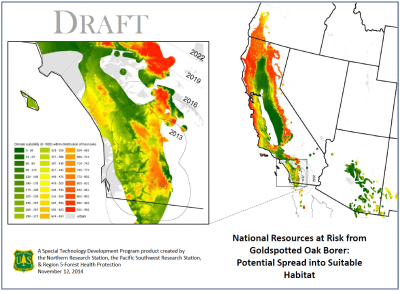
areas at risk to goldspotted oak borer
APHIS and the states continue to avoid establishing official programs targetting bioinvaders expected to be difficult to control or that don’t affect agricultural interests. Example include laurel wilt, and two boring beetles in southern California – goldspotted oak borer, Kuroshio shot hole borer and polyphagous shot hole borer and their associated fungi.
One step toward limiting pests’ spread would come from strengthening APHIS’ mandate in legislation, as suggested above. A second, complementary action would be for states to adopt quarantines and regulations more aggressively. For this to happen, APHIS would need to revise its policies on the “special needs exemption” [7 U.S.C. 7756]. Then states could adopt more stringent regulations to prevent introduction of APHIS-designated quarantine pests (Fading Forests III Chapt 3).
Finally, APHIS should not drop regulating difficult-to-control species – e.g., EAB. There are repercussions.
APHIS’ dropping EAB has not only reduced efforts to prevent the beetle’s spread to vulnerable parts of the West. It has also left states to come up with a coherent approach to regulating firewood; they are struggling to do so.
Considering interstate movement of pests via the nursery trade, the Systems Approach to Nursery Certification (SANC) program) is voluntary and was never intended to include all nurseries. Twenty-five nurseries were listed on the program’s website as of March 2020. It is not clear how many nurseries are participating now. The program ended its “pilot” phase and “went live” in January 2021. Furthermore, the program has been more than 20 years in development, so it cannot be considered a rapid response to a pressing problem.
Solving Issues of Recovery and Restoration via Resistance Breeding
I endorse the findings of two USFS scientists, Sniezko and Koch citations. They have documented the success of breeding programs when they are supported by expert staff and reliable funding, and have access to appropriate facilities. The principle example of such a facility is the Dorena Genetic Resource Center in Oregon. Regional consortia, e.g., Great Lakes Basin Forest Health Collaborative and Whitebark Pine Ecosystem Foundation are trying to overcome gaps in the system. I applaud the growing engagement of stakeholders, academic experts, and consortia. Questions remain, though, about how to ensure that these programs’ approaches and results are integrated into government programs.
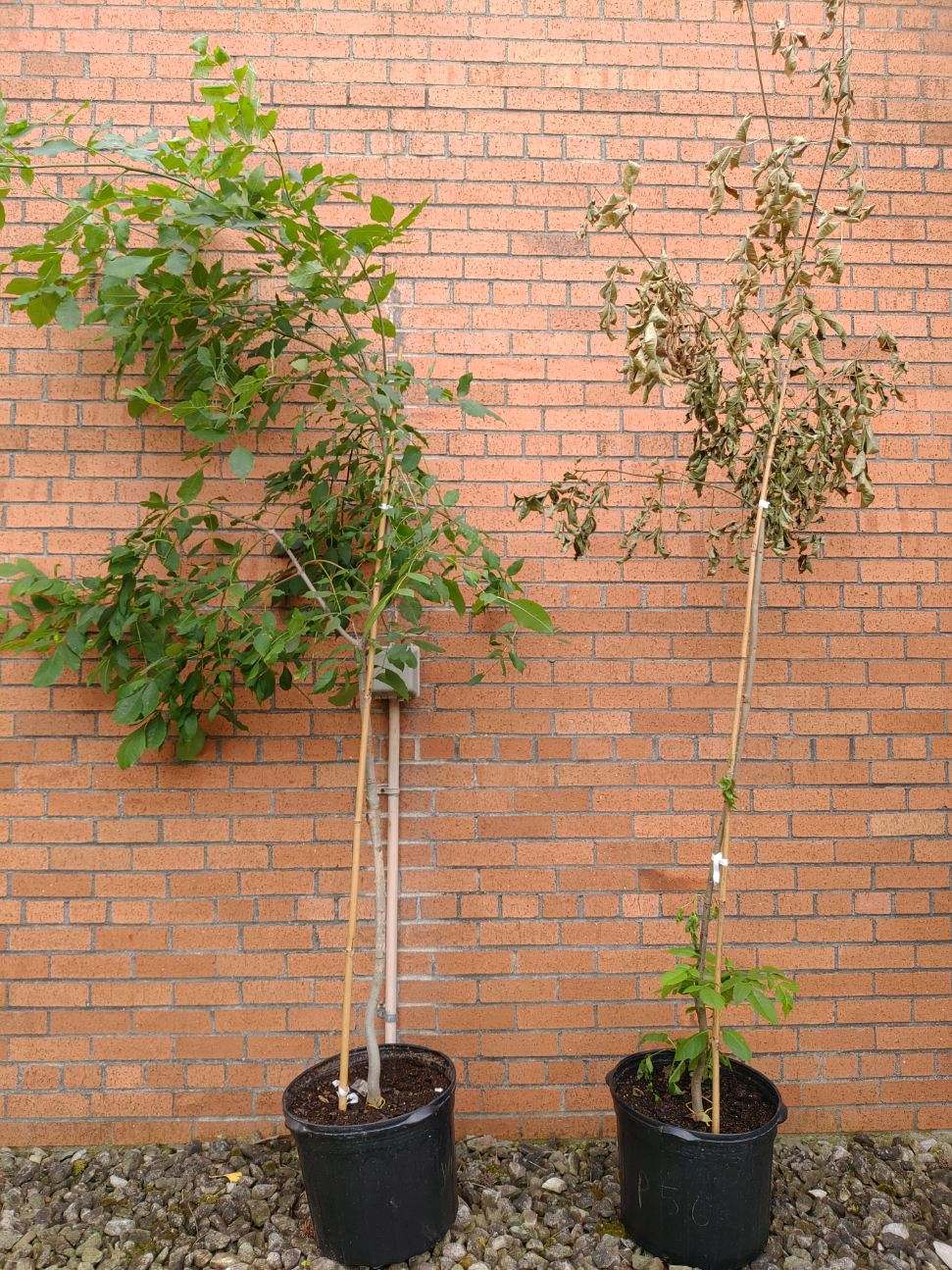
resistant and vulnerable ash seedlings; photo courtesy of Jennifer Koch, USFS
In Bonello et al., I and others call for initiating resistance breeding programs early in an invasion. Often other management approaches, e.g., targetting the damaging pest or manipulating the environment, will not succeed. Therefore the most promising point of intervention is often with by breeding new or better resistance in the host. This proposal differs slightly from my suggestion in the “30 years – solutions” blog, when I suggested that USFS convene a workshop to develop consensus on breeding program’s priorities and structure early after a pest’s introduction.
Funding Shortfalls
I have complained regularly in my publications (Fading Forests reports) and blogs about inadequate funding for APHIS Plant Protection program and USFS Forest Health Protection and Research programs. Clearly the USDA Plant Pest and Disease Management and Disaster Program has supported much useful work. However, its short-term grants cannot substitute for stable, long-term funding. In recent years, APHIS has held back $14 – $15 million each year from this program to respond to plant health emergencies. (See APHIS program reports for FYs 20 and 21.) This decision might be the best solution we are likely to get to resolve APHIS’ need for emergency funds. If we think it is, we might drop §2 of H.R. 1389.
Expanding Engagement of Stakeholders
Americans expect a broad set of actors to protect our forests. However, these groups have not pressed decision-makers to fix the widely acknowledged problems: inadequate resources – especially for long-term solutions — and weak and tardy phytosanitary measures. Employees of federal and state agencies understand these issues but are restricted from outright advocacy. Where are the professional and scientific associations, representatives of the wood products industry, forest landowners, environmental NGOs and their funders, plus urban tree advocates – who could each play an important role? The Entomological Society’s new “Challenge” is a welcome development and one that others could copy.
SOURCES
Bonello, P., Campbell, F.T., Cipollini, D., Conrad, A.O., Farinas, C., Gandhi, K.J.K., Hain, F.P., Parry, D., Showalter, D.N, Villari, C. and Wallin, K.F. (2020) Invasive Tree Pests Devastate Ecosystems—A Proposed New Response Framework. Front. For. Glob. Change 3:2. doi: 10.3389/ffgc.2020.00002
Green, S., D.E.L. Cooke, M. Dunn, L. Barwell, B. Purse, D.S. Chapman, G. Valatin, A. Schlenzig, J. Barbrook, T. Pettitt, C. Price, A. Pérez-Sierra, D. Frederickson-Matika, L. Pritchard, P. Thorpe, P.J.A. Cock, E. Randall, B. Keillor and M. Marzano. 2021. PHYTO-THREATS: Addressing Threats to UK Forests and Woodlands from Phytophthora; Identifying Risks of Spread in Trade and Methods for Mitigation. Forests 2021, 12, 1617 https://doi.org/10.3390/f12121617ý
Krishnankutty, S., H. Nadel, A.M. Taylor, M.C. Wiemann, Y. Wu, S.W. Lingafelter, S.W. Myers, and A.M. Ray. 2020. Identification of Tree Genera Used in the Construction of Solid Wood-Packaging Materials That Arrived at U.S. Ports Infested With Live Wood-Boring Insects. Journal of Economic Entomology 2020, 1 – 12
Liebhold, A.M., E.G. Brockerhoff, L.J. Garrett, J.L. Parke, and K.O. Britton. 2012. Live plant imports: the major pathway for forest insect and pathogen invasions of the US. Front. Ecol. Environ. 2012; 10(3):135-143
Lovett, G.M., M. Weiss, A.M. Liebhold, T.P. Holmes, B. Leung, K.F. Lambert, D.A. Orwig, F.T. Campbell, J. Rosenthal, D.G. McCullough, R. Wildova, M.P. Ayres, C.D. Canham, D.R. Foster, SL. Ladeau, and T. Weldy. 2016. NIS forest insects and pathogens in the US: Impacts and policy options. Ecological Applications, 26(5), 2016, pp. 1437–1455
Mech, A.M., K.A. Thomas, T.D. Marsico, D.A. Herms, C.R. Allen, M.P. Ayres, K.J. K. Gandhi, J. Gurevitch, N.P. Havill, R.A. Hufbauer, A.M. Liebhold, K.F. Raffa, A.N. Schulz, D.R. Uden, & P.C. Tobin. 2019. Evolutionary history predicts high-impact invasions by herbivorous insects. Ecol Evol. 2019 Nov; 9(21): 12216–12230.
Poland, T.M., Patel-Weynand, T., Finch, D., Miniat, C. F., and Lopez, V. (Eds) (2019), Invasive Spp in Forests and Grasslands of the US: A Comprehensive Science Synthesis for the US Forest Sector. Springer Verlag. (in press).
Roy, B.A., H.M Alexander, J. Davidson, F.T Campbell, J.J Burdon, R. Sniezko, and C. Brasier. 2014. Increasing forest loss worldwide from invasive pests requires new trade regulations. Front Ecol Environ 2014; 12(8): 457–465
Schulz, A.N., A.M. Mech, M.P. Ayres, K. J. K. Gandhi, N.P. Havill, D.A. Herms, A.M. Hoover, R.A. Hufbauer, A.M. Liebhold, T.D. Marsico, K.F. Raffa, P.C. Tobin, D.R. Uden, K.A. Thomas. 2021. Predicting non-native insect impact: focusing on the trees to see the forest. Biological Invasions.
We welcome comments that supplement or correct factual information, suggest new approaches, or promote thoughtful consideration. We post comments that disagree with us — but not those we judge to be not civil or inflammatory.
For a detailed discussion of the policies and practices that have allowed these pests to enter and spread – and that do not promote effective restoration strategies – review the Fading Forests report at http://treeimprovement.utk.edu/FadingForests.htm
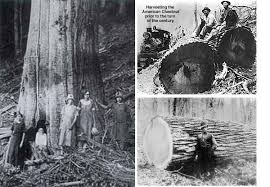
American chestnut – nearly eradicated by a disease introduced on imported plants
Shipments of living plants (called by phytosanitary agencies “plants for planting”) have long been recognized as the most “effective” pathway for transporting pests. To those of us concerned about forest ecosystems, the focus is on woody plants. I have no reason to think herbaceous plant imports are any less risky.
International Rules Impede Prevention Efforts
Efforts to prevent pest introductions via shipments of plants for planting suffered a severe setback when the World Trade Organization Agreement on the Application of Sanitary and Phytosanitary Standards (SPS Agreement) came into force in 1995. Two years later the International Plant Protection Convention (IPPC) was amended to conform to those new trade rules.
David McNamara, then Assistant Director of the European and Mediterranean Plant Protection Organization, identified the ramifications of the new regime: phytosanitary agency officials “have come to realize that our work has changed from ‘preventing introduction of pests while not interfering unduly with trade’ to ‘facilitating trade while doing our utmost to prevent pest introduction.’” [See Chapter 3 of Fading Forests II (2003), available here where I detail how the SPS Agreement and IPPC rules changed phytosanitary policy.]
Rome – IPPC headquarters
I was not alone in raising the alarm about the ramifications of the new regime: that phytosanitary regulations target only pests known to cause damage; that commodities from all sources be treated as if they posed equal pest risks, which is not true; that phytosanitary rules impose the lowest level of restriction on trade required to achieve the chosen level of protection.
Scientists Try to Reverse the Damaging Requirements
Clive Brasier
For example, world-renowned UK pathologist Clive Brasier (2008; full reference at end of the blog) criticized the requirement that pests be identified before they can be regulated. Dr. Brasier estimated that 90% of plant pathogens might be unknown to science, and thus not eligible for regulation under the WTO/IPPC regime. This means that damaging pests are frequently regulated only after they have been introduced and initiated the essentially permanent alteration of the receiving (naïve) environment. He called for an approach based on Darwinian evolutionary theory: maintenance of the geographic barriers that separate species.
A growing number of scientists have reiterated the criticisms in hopes of persuading regulators to reverse the flaws identified in the international trade rules. More than 70 scientists affiliated with the International Union of Forest Research Organizations signed the Montesclaros Declaration in 2011. Circa 2015 – 20 years after the SPS Agreement came into force – several publications reiterated these criticisms and provided scientific support for changing the rules: Roy et al. 2014; Eschen, Roques and Santini 2015; Jung et al. 2015; Klapwijk et al. 2016; and now Barwell et al. 2021. Summaries follow.
Roy et al. (2014) said the WTO SPS rules have been largely ineffective at protecting forests and other ecosystems (natural or managed) for two main reasons: (1) their primary aim is to promote international trade rather than protect the environment and (2) they require that a species be identified as a pest before it can be regulated, even though invading organisms are often either “new” (i.e. scientifically unknown) species or not troublesome within their native ranges.
Eschen, Roques and Santini (2015) found that regulators’ focus on known pests meant that 90% of the exotic insect pests detected in Europe 1995–2004 had not been designated for regulation before they became established on the continent.
Klapwijk et al. (2016) concluded that the European Union phytosanitary rules have provided insufficient protection because often harmful organisms that enter the EU were unknown, and therefore unregulated, before establishment. A pending amendment would still not provide for precautionary assessments of high-risk commodities or provide for restrictions on the highest-risk commodities, such as imports of large plants or plants in soil. Green et al. (2021) call the international system “fallible” in the face of huge volumes of imports, including large, semi-mature trees. As Jung et al. 2018 point out, the scientific community has repeatedly urged regulators to require the use of preventative system approaches for producing Phytophthora-free nursery stock.
Scott Schlarbaum, University of Tennessee, and I reiterated these issues and cited additional examples in Chapter 7 of Fading Forests III. Since 2015 I have blogged numerous times about the risks associated with imported plants for planting and detection of numerous previously unknown Phytophthora species in Vietnam. [On the website, scroll to the bottom of the monthly listing of blogs, find the “categories” section, click on “plants as pest vectors”.]
Billions of Plant on the Move
Shipment of plants among America, Europe and Asia put all three continents at risk. First, North America, Europe and Asia share more than 100 genera of tree species (USDA 2000), so introduced insects and microbes are likely to find suitable hosts in their new home.
Second, North America and Europe import high volumes of plants. The U.S. imported an estimated 3.2 billion plant “units” (cuttings, rooted plants, tissue culture, etc.) in 2007 (Liebhold et al. 2012). By 2020, imports had declined to 1.8 B plant units plus nearly 723,000 kilograms of woody plant seeds (USDA 2021). Epanchin-Niell (pers. comm.) found that in the period FY2010-FY2012, the U.S. imported an average of about 300 million woody plant units per year (in 16,700 shipments). The plants included representatives of 175 woody plant genera. Europe imports even more plants; just 10 continental countries imported 4.3 billion living plants from overseas in 2010; 20.8% were woody plants (Jung 2015). The United Kingdom, home to famously enthusiastic gardeners, imported £1.3 billion worth of plants in 2018 (Green et al. 2021). Eschen, Roques and Santini (2015) document the rising number of invertebrate pests and pathogens associated with these imports. Green et al. (2021) note the risk to social values, especially tree plantings to sequester carbon, posed by rising introductions of tree-killing pathogens.
In response to the obvious failings of the international phytosanitary system, non-governmental experts have sought strict limits on imports of plant taxa and types posing the highest risk. Campbell and Schlarbaum (2003 and 2014) and Roy et al. (2014) advocate allowing entry of woody plants only in the form of seed and tissue cultures. Lovett et al. (2016) calls for applying APHIS’ NAPPRA authority to prohibit imports of woody plants in the 150 genera that North America shares with Europe and Asia. (I have criticized how NAPPRA is applied in earlier blogs – here and here.) Eschen, Roques and Santini (2015) suggest requiring that most imported plants be subjected to post-entry quarantine.
illustration of poor management practices that facilitate infection by Phytopthora ramorum; from nursery education material circulated by Washington State University
Yet, I see no evidence that either American or European governments are willing to consider substantial alteration of the international system – even in order to curb the highest risk. The current WTO/IPPC system at least contemplates another solution: requiring that imported plants be produced under clean stock or critical control point production programs. See ISPM#36 and RSPM#24 and USDA APHIS’ revision of the Q-37 regulation. Use of critical control point approaches has been suggested by Campbell and Schlarbaum (2014). It is also part of the comprehensive program called for by Jung et al. (2015). Jung et al. (2015) note the need for rigorous enforcement as well as campaigns to develop consumer awareness, creating an incentive for the nursery industry to distribute only clean stock. However, the non-governmental authors advocate application of critical control point programs to far more plant taxa than the phytosanitary officials have envisioned, so apparent agreement between advocates and officials is illusory. Attempts to create such a program are more advance domestically, for example see Swiecki, et al, 2021.
New Ways to Fix the System?
Unwilling to challenge the WTO/IPPC system directly, national phytosanitary officials are instead adopting approaches and technologies aimed at reducing the number of species that remain “unknown”. New molecular identification techniques are facilitating rapid identification of difficult-to-distinguish microbes at ports or as part of screening or monitoring programs. This advance is cheered by scientists [e.g., Eschen, Roques and Santini (2015); Jung et al. (2015)] as well as phytosanitary officials.
Authorities are also attempting to improve inspection at the border by targetting shipments thought to be of high risk.
Both these actions have limited efficacy, however. Eschen, Roques and Santini (2015) still say that given the difficulty of reliably identifying fungi and fungal-like organisms, authorities should reject any consignment with disease symptoms. Furthermore, greater certainty in identifying organisms does not overcome information gaps about their invasibility or possible virulence.
Targetting based on past interceptions, a mainstay of inspection programs, is increasingly considered unreliable – scientists warn about the “bridgehead effect”. That is, when non-native pests establish in new countries and then are transported from there [see Bertelsmeier and Ollier (2021); although this article concerns ants].
Others are exploring strategies to improve authorities’ ability to evaluate poorly known species’ possible impacts. There is enthusiastic endorsement of the concept of “sentinel” plantings. These are a tool to detect pests that attack tree species growing outside the host tree’s natural range. Others are trying to identify species traits or other factors that can be used to predict impacts, as explored below.
Scientists’ Efforts in North America
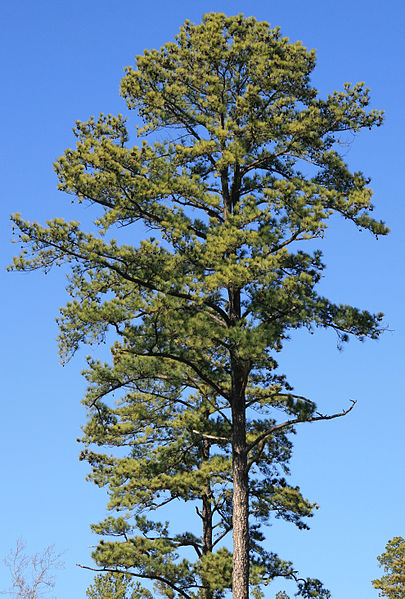
loblolly pine (Pinus taeda) — one of the pines tested by Li et al. photo by Dcrjsr, via Wikimedia
One team assessed 111 fungi associated with 55 Asian and European scolytine beetle species. None was found to be virulent pathogens on two pine species and two oak species native to the Southeastern U.S. (defined as having an impact similar to Dutch elm disease or laurel wilt). Twenty-two fungal species were minor pathogens (Li et al. 2021).
Mech et al. (2019) are trying to rank threats by non-native insects pose to North American tree species. (They did not evaluate pathogens). They evaluated the probability of a non-native insect causing high impact on a novel North American host as a function of the following: (a) evolutionary divergence time between native and novel hosts; (b) life history traits of the novel host; (c) evolutionary relationship of the non-native insect to native insects that have coevolved with the shared North American host; and (d) the life history traits of the non-native insect. The team has published its analyses of insects that specialize on conifers and hardwoods; they will publish on generalist insect pests in the near future. The insects evaluated were those identified in studies by Aukema et al. (2010) and Yamanaka et al. (2015).
Regarding conifers, the factors driving impacts were found to be:
1) The time (in millions of years) since a North American host tree species diverged from a coevolved host of the insect in its native range.
2) The tree host species’ shade and drought tolerance.
3) The presence or absence of a closely related native herbivore in North America.
None of the insect life history traits examined, singly or in combination, had predictive value.
There are interesting differences when considering hardwoods. Schultz et al. (2021) find that the most important predictive factor is an insect trait: being a scolytine beetle. Two tree-related factors are moderately predictive: moderate density of the wood, and divergence time between native and novel hardwood hosts.While this last factor is shared with the analysis of insects on conifers, the divergence period itself differs. For hardwood trees there is no predictive value tied to whether a related native insect attacks the North American host.
[For details, see also the blogs posted here and here.]
In a report issued earlier this year, in response to §10110 of the Agriculture Improvement Act (Farm Bill) of 2018 (USDA 2021), APHIS claims that recent changes to managing plant imports has cut interceptions via the plants for planting pathway to 2% of total forest pest interceptions during the period 2013 – 2018. The contributing agency actions are listed as
• Developing an offshore greenhouse certification program that gives U.S. producers a more reliable supply chain of healthy plant cuttings;
• Implementing risk-based sampling to focus port inspections on higher-risk shipments [but note questions about this approach raised by Eschen, Roques and Santini (2015)].
• Began using of molecular diagnostics at ports to detect high-risk pests that physical inspection would miss;
• Restricting imports of some plants under authority of the NAPPRA program; and
• Increasingly applying standardized systems approaches.
APHIS says its preclearance programs span 23 countries and cover 68 different types of commodities. In addition, APHIS has certified 25 offshore facilities in 12 countries. However, the report does not say how many of these agreements cover production of woody plants – those most likely to transport forest pests.
APHIS has had a greenhouse certification program with Canada since 1996. A high proportion of U.S. woody plant imports comes from Canada. The recent report (USDA 2021) lists source countries for the highest numbers of pest interceptions for plants for planting – although not in order of detections. Canada is listed – in bold type. The meaning of this highlight is not explained. (China is also listed in bold.) More disturbing, the report makes no mention of the suspicion that at least some of the plants infested by Phytophthora ramorum that were shipped to 18 states in spring 2019 originated in a British Columbia nursery.
Scientists’ Efforts in Europe
The focus in Europe appears to be on pathogens, specifically the Phytophthora genus. Europeans are responding to several recently-introduced highly damaging diseases caused by species in the genus that were unknown to science before introduction. Barwell and colleagues (full reference at end of the blog) sought to explain the species’ impact as measured by traits such as number of countries invaded, latitudinal limits, and host range. They evaluated factors they thought would be easily discerned, such as species’ traits, phylogeny and time since description (as a proxy for extent of scientific understanding of the species’ behavior). The most predictive traits were thermal minima, oospore wall index and growth rate at optimum temperature. They found that root-attacking species of Phytophthora were reported in more countries and on more host families than foliar-attacking species.
Japanese larch plantation in Britain killed by Phytophthora ramorum; photo from UK Forest Research
Progress – but Still Incomplete Solution to the SPS/IPPC Conundrum
Perhaps these efforts to close information gaps earlier in the invasion process will be accepted by the phytosanitary agencies and the findings will be incorporated into their decision-making. If this happens, scientists’ efforts might contribute substantially to overcoming the challenges created by the SPS/IPPC system. Presumably acting on scientific findings is more acceptable than the more radical approach that I and others have suggested. Still, there remain the “unknown unknowns” – and the SPS/IPPC system continues to hinder measures that might be effective in preventing their introduction.
Meanwhile, the British are pursuing both a nursery certification/accreditation program and a coordinated strategy for early detection of Phytophthora pathogens in the nursery trade. Green et al. (2021) found that nursery owners could not justify the cost of adopting best management practices if they were aimed at preventing the presence of Phytophthora alone. They could if the program sought to curtail the presence and spread of numerous plant pathogens. A decade ago in the U.S., The Nature Conservancy explored a possible structure combining a clean stock system with insurance. The latter would reimburse participating nurseries for inventory lost to pests as long as the nursery used prescribed pest-avoidance strategies. The SANC program attempts to incentivize adoption of clean stock systems by the American nursery industry. However, it does not include the insurance concept.
Another helpful step would be to change the pest risk assessment process by assessing the risks more broadly. Perhaps the analysis could evaluate the risks associated with – and determine effective measures to counter – certain organisms, i.e.:
(a) pests associated with any bare-root woody plants from a particular region, for example East Asia; (b) pests associated with roots or stems, without limiting the study to particular kinds of plants or geographic regions of origin; or
(c) single types of pests, such as a fungal pathogen without regard to its species, on any imported plant (regardless of taxon or country of origin), especially learning how to prevent their presence.
SOURCES
Aukema, J.E., D.G. McCullough, B. Von Holle, A.M. Liebhold, K. Britton, & S.J. Frankel. 2010. Historical Accumulation of Nonindigenous Forest Pests in the Continental United States. Bioscience. December 2010 / Vol. 60 No. 11
Barwell, L.J., A. Perez-Sierra, B. Henricot, A. Harris, T.I. Burgess, G. Hardy, P. Scott, N. Williams, D.E. L. Cooke, S. Green, D.S. Chapman, B.V. Purse. 2021. Evolutionary trait-based approaches for predicting future global impacts of plant pathogens in the genus Phytophthora. Journal of Applied Ecology 2021; 58:718-730
Brasier C.M. 2008. The biosecurity threat to the UK and global environment from international trade in plants. Plant Pathology 57: 792–808.
Eschen, R., A. Roques and A. Santini. 2015. Taxonomic dissimilarity in patterns of interception and establishment of alien arthropods, nematodes and pathogens affecting woody plants in Europe. Journal of Conservation Biogeography Diversity and Distributions (Diversity Distrib.) (2015) 21, 36–45
Green, S., D.E.L. Cooke, M. Dunn, L. Barwell, B. Purse, D.S. Chapman, G. Valatin, A. Schlenzig, J. Barbrook, T. Pettitt, C. Price, A. Pérez-Sierra, D. Frederickson-Matika, L. Pritchard, P. Thorpe, P.J.A. Cock, E. Randall, B. Keillor and M. Marzano. 2021. PHYTO-THREATS: Addressing Threats to UK Forests and Woodlands from Phytophthora; Identifying Risks of Spread in Trade and Methods for Mitigation. Forests 2021, 12, 1617 https://doi.org/10.3390/f12121617ý
Jung, T., et al. 2015. Widespread Phytophthora infestations in European nurseries put forest, semi-natural and horticultural ecosystems at high risk of Phytophthora diseases. Forest Pathology. November 2015.
Jung, T., A. Pérez-Sierra, A. Durán, M. Horta Jung, Y. Balci, B. Scanu. 2018. Canker and decline diseases caused by soil- and airborne Phytophthora species in forests and woodlands. Persoonia 40, 2018: 182–220
Klapwijk, M.J., A.J. M. Hopkins, L. Eriksson, M. Pettersson, M. Schroeder, A. Lindelo¨w, J. Ro¨nnberg, E.C.H. Keskitalo, M. Kenis. 2016. Reducing the risk of invasive forest pests and pathogens: Combining legislation, targeted management and public awareness. Ambio 2016, 45(Suppl. 2):S223–S234 DOI 10.1007/s13280-015-0748-3
Li, Y., C. Bateman, J. Skelton, B. Wang, A. Black, Y. Huang, A. Gonzalez, M.A. Jusino, Z.J. Nolen, S. Freeman, Z. Mendel, C. Chen, H. Li, M. Kolařík, M. Knížek, J. Park, W. Sittichaya, P.H. Thai, S. Ito, M. Torii, L. Gao, A.J. Johnson, M. Lu, J. Sun, Z. Zhang, D.C. Adams, J. Hulcr. 2021. Pre-invasion assessment of exotic bark beetle-vectored fungi to detect tree-killing pathogens. Phytopathology. https://doi.org/10.1094/PHYTO-01-21-0041-R
Liebhold, A.M., E.G. Brockerhoff, L.J. Garrett, J.L. Parke, and K.O. Britton. 2012. Live plant imports: the major pathway for forest insect and pathogen invasions of the US. Front. Ecol. Environ. 2012; 10(3):135-143
Mech, A.M., K.A. Thomas, T.D. Marsico, D.A. Herms, C.R. Allen, M.P. Ayres, K.J. K. Gandhi, J. Gurevitch, N.P. Havill, R.A. Hufbauer, A.M. Liebhold, K.F. Raffa, A.N. Schulz, D.R. Uden, & P.C. Tobin. 2019. Evolutionary history predicts high-impact invasions by herbivorous insects. Ecol Evol. 2019 Nov; 9(21): 12216–12230.
Roy, B.A., H.M Alexander, J. Davidson, F.T. Campbell, J.J. Burdon, R. Sniezko, and C. Brasier. 2014. Increasing forest loss worldwide from invasive pests requires new trade regulations. Frontiers in Ecology and the Environment 12(8), 457-465
Schulz, A.N., A.M. Mech, M.P. Ayres, K. J. K. Gandhi, N.P. Havill, D.A. Herms, A.M. Hoover, R.A. Hufbauer, A.M. Liebhold, T.D. Marsico, K.F. Raffa, P.C. Tobin, D.R. Uden, K.A. Thomas. 2021. Predicting non-native insect impact: focusing on the trees to see the forest. Biological Invasions.
Swiecki, T. J., Bernhardt, E. A., Frankel, S. J., Benner, D., & Hillman, J. (2021). An accreditation program to produce native plant nursery stock free of Phytophthora for use in habitat restoration. Plant Health Progress, PHP-02. https://apsjournals.apsnet.org/doi/abs/10.1094/PHP-02-21-0025-FI
United States Department of Agriculture Animal and Plant Health Inspection Service and Forest Service. 2000. Pest Risk assessment for Importation of Solid Wood Packing Materials into the United States.
Yamanaka, T., Morimoto, N., Nishida, G. M., Kiritani, K. , Moriya, S. , & Liebhold, A. M. (2015). Comparison of insect invasions in North America, Japan and their Islands. Biological Invasions, 17, 3049–3061. 10.1007/s10530-015-0935-y
Posted by Faith Campbell
We welcome comments that supplement or correct factual information, suggest new approaches, or promote thoughtful consideration. We post comments that disagree with us — but not those we judge to be not civil or inflammatory.
For a detailed discussion of the policies and practices that have allowed these pests to enter and spread – and that do not promote effective restoration strategies – review the Fading Forests report at http://treeimprovement.utk.edu/FadingForests.htm
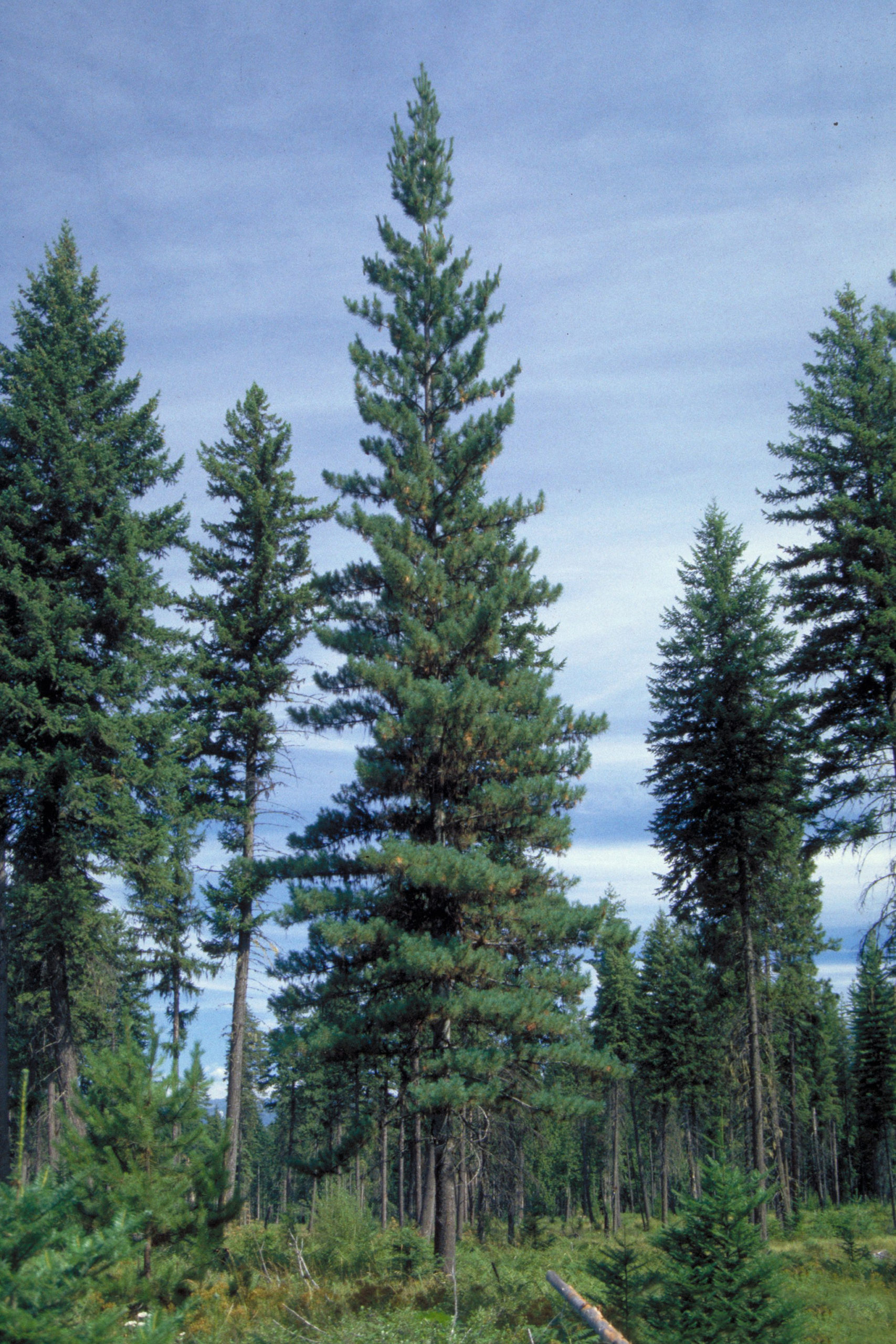
western white pine in Idaho; photo by Chris Schnepf, #1171053 Bugwood
In this blog I will use one site-specific study to demonstrate what forest resources we are losing as a result of non-native pest introductions – in this case, the pathogen causing white pine blister rust.
The study was carried out nearly a decade ago by two eminent USFS pathologists working in the forests of southwest Oregon (Coos, Curry, Douglas, Jackson, Josephine, and Lane counties). Ellen and Don Goheen analyzed the current and past presence of two giants of western forests, sugar pine (Pinus lambertiana) and western white pine (P. monticola), changes in their status, and causes of mortality.
Southwest Oregon is a region of high climatic, geologic, and floristic diversity. Its forests contain 26 species of conifers including three species of five-needle pines: sugar pine, western white pine, and whitebark pine (P. albicaulis). Of these, sugar pine is widely distributed in mixed conifer forests on a variety of sites but primarily at lower elevations or otherwise with warmer climates. Western white pine is more widely distributed, including at higher elevations and on ultramafic soils (defined here) in the Siskiyou Mountains. Whitebark pine is limited to the highest elevations on the Cascade crest and in scattered island populations in the Siskiyou Mountains.
Sugar and western white pines have great aesthetic, ecological, and economic value. They are large: 50% of the live sugar pines and 18% of the western white pines sampled in the study are 30 inches dbh or greater. They can reach heights for 200 feet. In the study area, sugar pines constituted just 5% of the live trees, but 17% of the basal area. These large trees provide important nesting cavities for wildlife.
All three five-needle pines are vulnerable to white pine blister rust (WPBR), which is caused by the introduced pathogen Cronartium ribicola. They are also vulnerable to lethal levels of infestation by the native mountain pine beetle (MPB; Dendroctonus ponderosae). What have been the combined impacts of these major pests?
As of the first decade of the 21st Century, WPBR and MPB are causing substantial mortality in all size classes, from saplings to large trees. Half of the total basal area of western white pine, 30% of the total basal area of sugar pines is comprised dead trees. The impact of MPB has been exacerbated by substantial increases in tree densities arising from decades of fire exclusion.
sugar pine in the Sierra Nevada; photo by S. Rae, via Flickr
Status Now
Looking at all forests in Oregon and Washington, sugar, western white, and whitebark pines, combined, were reported on 14% of plots (a total of 2,128 plots) included in the Forest Inventory and Analysis (FIA) monitoring program. On these plots, western white was found on a little more than half (58%); sugar pine on one-third; and whitebark pine on only 16%.
Dead pines were found on a quarter of these 2,128 plots. Three quarters of the dead pines showed symptoms of WPBR, while 86% showed evidence of mountain pine beetle infestation. Among living pines, 32% were infected with WPBR, 10% had bark beetle attacks.
The intensive study of five-needle pines in southwest Oregon was based on both the FIA plots and other plots laid out as part of a separate Continuous Vegetation Survey. (See the methods section of the source.) Thus, the total for this study was 2,749 plots. In this study area, five-needle pines were more common than in the wider region. The three species grew on 31% of the 2,749 permanent plots examined — twice as high as the average for all of Oregon and Washington. Sugar pine grew on 64% of the five-needle pine plots; western white pine on 53%; whitebark on only 0.5%.
Agents of Mortality in Southwest Oregon
WPBR was ubiquitous – in more than 93% of pine stands surveyed. Already, 13% of the sugar pines and 17% of western white pines were dead. This proportion is far higher than the 5% of trees of all tree species in the same stands that were dead. In both hosts, 80 – 90% of dead seedlings and saplings had been killed by WPBR. Additional losses are probable: most of the surviving pole-sized and smaller trees had cankers near their boles, so the scientists thought they would probably soon succumb.
The mountain pine beetle’s impact is even worse, especially on larger trees. Trees killed by MPB attacks were encountered in 84% of surveyed stands. MPB had infested 73% of dead large sugar pines (> 20 cm (8 in) dbh), 69% of dead large western white pines.
Other agents, including root diseases, dwarf mistletoes, and pine engraver beetles influence five-needle pine health in southwest Oregon to a much lesser extent than WPBR or MPB. The exception is the Siskiyou Mountains, where the ultramafic soils provide suboptimal growing conditions. These agents might weaken trees to some extent, thus predisposing them to MPB infestation. WPBR infections might have similar effects by killing tops and numerous branches of large trees.
Specifics
1. Mountain pine beetle is native to southwest Oregon. Levels of infestation have varied over the decades since measurements began in the 1950s. Infestations have probably increased substantially in recent decades, linked to the cooler, shaded conditions found in dense stands that have resulted from fire suppression. In addition to the infestations on western white and sugar pines described above, MPBs have caused significant mortality in mature whitebark pines. There is evidence of infestation on 31% of all dead whitebark pines.
In southwest Oregon, MPB have killed five-needle pines in most years; here, they are less closely tied to drought than in other parts of the West.
2. White pine blister rust probably reached southwest Oregon in the 1920s. Its presence and intensity is greatly influenced by climate and environmental conditions. Southwest Oregon has a Mediterranean climate that is less favorable to rust spread — yet, the disease is widespread and devastating. The combination of microsites supporting cooler and moister conditions – perhaps especially where fogs linger – mean that disease is most prevalent on flat or gently sloping areas and northern aspects, at higher elevations.
Blister rust requires an alternate host, usually gooseberry (Ribes spp), to complete its life cycle. Perhaps surprisingly, in southwest Oregon it is not necessary for Ribes to be close to the pines for the trees to become infected. One reason is probably the presence of other alternate hosts in the Castilleja (paintbrushes) and Pedicularis (louseworts) genera. The other likely explanation is transport by fog banks of spores from Ribes in canyons and valleys to the higher-elevation slopes.
Despite the high levels of mortality caused by WPBR and MPB, there is substantial regeneration of both western white and sugar pines. However, the numerous seedlings are unlikely to grow into dominant trees unless released from the competition found in overstocked, dense stands. Therefore, even in the absence of WPBR, the Goheens consider the seedlings’ futures to be tenuous if they are not eventually exposed to more sunlight through management or natural disturbance.
These Threats Have Been Present for Decades
The Goheens compared their findings to those of several past studies; the results confirm that five-needle pines have suffered high levels of mortality since the 1950s due to WPBR and other factors. All the western white pines had disappeared from two of four sites. Significant declines were observed at the two other sites in the Umpqua and Rogue River National forests.
Forest stands in 10 “Areas of Special Interest” that in 1825 were open, park-like stands with widely spaced trees had become dense dominated by Douglas-fir, true firs, and incense-cedar.
Sugar pines, which in 1825 had made up as much as a third of the trees in the low elevation stands had been reduced to very low numbers.
The Goheens note that all these threats are directly caused or greatly influenced by human activities. Noting that sugar and western white pines provide many values in the forests of southwest Oregon, they called for management using appropriate, integrated, silvicultural prescriptions to ensure the future of western white and sugar pines in southwest Oregon.
SOURCE
Goheen, E.M. and D.J. Goheen. 2014. Status of Sugar and Western White Pines on Federal Forest Lands in SW OR: Inventory Query and Natural Stand Survey Results. USDA Forest Service Pacific Northwest Region. SWOFIDSC-14-01 January 2014
Posted by Faith Campbell
We welcome comments that supplement or correct factual information, suggest new approaches, or promote thoughtful consideration. We post comments that disagree with us — but not those we judge to be not civil or inflammatory.
For a detailed discussion of the policies and practices that have allowed these pests to enter and spread – and that do not promote effective restoration strategies – review the Fading Forests report at http://treeimprovement.utk.edu/FadingForests.htm
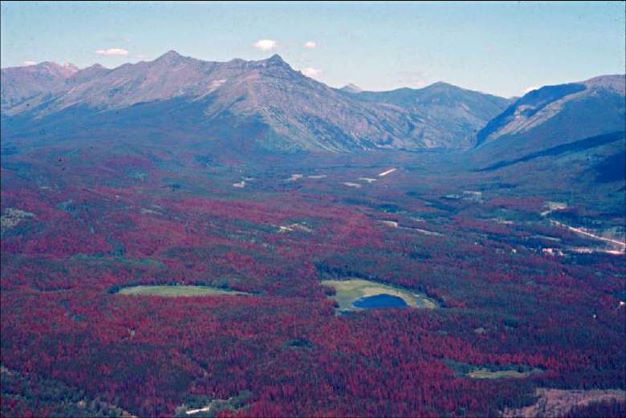
lodgepole pines killed by mountain pine beetle in British Columbia; photo courtesy of Wikipedia
Natural systems, especially forests, could provide as much as 37% of the near-term mitigation necessary to meet Paris global climate goals. In the US, conservation, restoration, and improved land management could provide carbon sequestration equivalent to an estimated 21% of current net annual emissions.
However, the current U.S. forest carbon sink, which includes soils and standing and downed wood as well as live trees, might be in jeopardy due to increasing levels of disturbance, conversion, and/or declining sequestration rates in old growth stands.
Insects and plant diseases are one such disturbance agent. Acting alone or in combination with other forest stressors, they can damage or kill large numbers of trees in short periods of time, thereby reducing carbon sequestration and increasing emissions of stored carbon through decomposition of wood in dead or injured trees.
Historically, native and introduced insects and diseases have impacted an estimated 15% of the total U.S. forest cover annually. This impact is likely to increase. One study (Feiet al., 2019) found that an estimated 41% of the live forest biomass in the contiguous U.S. could be impacted by the 15 most damaging introduced pests already established in the U.S. Continuing introductions of new pests and exacerbated effects of native pests associated with climate change portend worsening losses of live trees. These rising impact of pests, combined with more frequent and severe fires and other forest disturbances, are likely to negate efforts to improve forests’ carbon sequestration capacity.
Sources of information about introduced pests’ impacts is available from, inter alia Campbell and Schlarbaum Fading Forests II and III, Lovett et al 2016, Poland et al. 2021, many blogs on this site, and pests’ profiles posed here under “invasive species” tab. Chapter 4 of Poland et al. (2021) provides a summary of what is known about interactions between invasive species and climate change – both climate impacts on bioinvaders and bioinvaders’ effect on carbon sequestration.
The United States and other major polluting countries have certain advantages. Their strong economies have the scientific and financial resources needed to implement effective invasive species prevention and forest management strategies. At the same time, many of them receive the most new forest pests – because they are major importers. These introduced pests pose the most serious and urgent near-term ecological threat to their forests and all the ecosystem services forests provide.
So, reducing insect and disease impacts to forests can simultaneously serve several goals—carbon sequestration, biodiversity conservation, and protecting the myriad economic and societal benefits of forests. See the recent IUCN report on threatened tree species.
A Major New Study
A new study by Quirion et al. (2021) takes another step in quantifying the threat to U.S. forests’ ability to sequester carbon by analyzing data from National Forest Inventory plots. Unfortunately, the re-measurement data for the period 2001 – 2019 are not available in the NFI for the Rocky Mountain states, which represents a critical data gap in the NFI program. This gap might not have had a significant impact on the national findings, however, because while the insect damage level (measured by an earlier inventory round) was quite severe in the Rocky Mountain States, the relatively slow growth of trees in that region means carbon sequestration rates are low.
Forest stand productivity – and carbon sequestration — will typically decline immediately after pest outbreaks, then recover or even increase beyond pre-outbreak levels depending on the productivity and maximum achieved biomass of replacement plant species and related soil characteristics. However, when prevalence of the disturbance increases, by, for example, more frequent pest outbreaks, carbon stocks in standing trees and sequestration rates can be reduced for extended periods.
Findings
Nationally, insects and diseases have decreased carbon sequestration by live trees on forest land by 12.83 teragrams carbon per year. This equals ~ 9% of the contiguous states’ total annual forest carbon sequestration and equivalent to the CO2 emissions from over 10 million passenger vehicles driven for one year.
This estimate includes the impacts of both native and introduced insects and diseases, because the NFI database does not distinguish between them.
Insect-caused mortality had a larger impact than disease-caused mortality (see below). Forest plots recently impacted by insect disturbance sequestered on average 69% less carbon in live trees than plots with no recent disturbance. Plots recently impacted by disease disturbance sequestered on average 28% less carbon in live trees than plots with no recent disturbance.
Ecoprovinces in which the greatest annual reductions in live tree carbon sequestration due to pests were the Southern Rocky Mountain Steppe, Cascade Mixed Forest, Midwest Broadleaf Forest, and Laurentian Mixed Forest. (Ecoprovinces are outlined – but not named – in Quirion et al. 2021; more complete information is provided in the supplementary material.)
If this study had been carried out in the 1920’s, when chestnut blight and white pine blister rust were spreading across vast areas and killing large trees, the impact of diseases would have been much higher. Today, the most widespread impacts of diseases are on either small trees (e.g., redbay succumbing to laurel wilt) or slow-growing, high-elevation trees (e.g., whitebark and limber pine to white pine blister rust). As long as no equivalents of those earlier diseases are introduced, insects will probably continue to have the larger impacts.
western white pine killed by blister rust; photo from National Archives
Quirion et al. 2021 note that their estimates should be considered conservative. The USFS’s inventory records only major disturbances. That is, when mortality or damage is equal to or exceeds 25% of trees or 50% of an individual tree species’ count on an area of at least 0.4 ha. This criterion largely excludes less severe pest disturbances, including those from which trees recover but which might have temporary negative effects on carbon sequestration.
The study’s authors note that their work has important limitations. The dearth of data from the Rocky Mountain states is one. Other factors not considered include transfers of carbon from live biomass to dead organic matter, soils, and salvaged or preemptively harvested wood products. As trees die from pests or diseases, their carbon becomes dead wood and decays slowly, producing a lag in the carbon emissions to the atmosphere. A small fraction of the carbon in dead wood might be incorporated into soil organic matter, further delaying the emissions. A full accounting of the carbon consequences of pests and diseases would require assessment of these lags, probably through a modeling study.
affects of mountan pine beetle on lodgepole pine in Rocky Mountain National Park, Colorado photo from Wikimedia
Actions to Maintain Carbon Sequestration
Quirion et al. (2021) outline several actions that would help protect the ability of America’s forests to sequester carbon. These suggestions address both native and introduced pests, since both contribute to the threatened reduction in capacity.
Concerning native pests, the authors call for improved forest management, but warn that measures must be tailored to species and environmental context.
Concerning introduced insects and pathogens, Quirion et al. (2021) call for strengthening international trade policies and phytosanitary standards, as well as their enforcement. The focus should be on the principal pathways: wood packaging (click on “wood packaging” category for on this blog site) and imported plants (click on “plants as vectors” category for on this blog site). Specific steps to reduce the rate of introduction of wood-boring insects include enforcement to increase compliance with the international treatment standard (ISPM#15), requiring trade partners – especially those which have repeatedly shipped infested packaging – to switch to packaging made from alternative materials. Introductions via the plant trade could be reduced by requiring foreign shippers to employ integrated management and critical control point systems (per criteria set by the U.S.) and using emergency powers (e.g., NAPPRA) to further restrict imports of the plants associated with the highest pest risk, especially plant species that are congeneric with native woody plants in North America. See Lovett et al 2016; Fading Forests II & III
As backup, since even the most stringent prevention and enforcement will not eliminate all risk, the authors urge increased funding for and research into improved inspection, early detection of new outbreaks, and strategic rapid response to newly detected incursions.
To reduce impacts of pests established on the continent – both recently and years ago – they recommend increasing and stabilizing dedicated funding for classical biocontrol, research into technologies such as sterile-insect release and gene drive, and host resistance breeding.
Thinning is useful in reducing damage by native bark beetles to conifers. However, it has not been successful in controlling introduced pests for which trees do not have an evolved resistance. Indeed, preemptive harvesting of susceptible species can harm forest ecosystems directly through impacts of the harvesting operation and indirectly as individual trees that may exhibit resistance are removed, reducing the species’ ability to develop resistance over time.
Further research is needed to clarify several more issues, including whether introduced pests’ impacts are additive to, or interact with, those of native species and/or other forest stressors.
SOURCE
Quirion BR, Domke GM, Walters BF, Lovett GM, Fargione JE, Greenwood L, Serbesoff-King K, Randall JM & Fei S (2021) P&P Disturbances Correlate With Reduced Carbon Sequestration in Forests of the Contiguous US. Front. For. Glob. Change 4:716582. [Volume 4 | Article 716582] doi: 10.3389/ffgc.2021.716582
SOURCES of additional information
Campbell, F.T. and S.E. Schlarbaum. Fading Forest reports at http://treeimprovement.utk.edu/FadingForests.htm
Lovett, G.M., M. Weiss, A.M. Liebhold, T.P. Holmes, B. Leung, K.F. Lambert, D.A. Orwig, F.T. Campbell, J. Rosenthal, D.G. McCullough, R. Wildova, M.P. Ayres, C.D. Canham, D.R. Foster, S.L. Ladeau, and T. Weldy. 2016. Nonnative forest insects and pathogens in the United States: Impacts and policy options. Ecological Applications, 26(5), 2016, pp. 1437-1455
Poland, T.M., Patel-Weynand, T., Finch, D., Miniat, C. F., and Lopez, V. (Eds) (2019), Invasive Species in Forests and Grasslands of the United States: A Comprehensive Science Synthesis for the United States Forest Sector. Springer Verlag. Available for download at no cost at https://www.fs.usda.gov/treesearch/pubs/61982
Posted by Faith Campbell
We welcome comments that supplement or correct factual information, suggest new approaches, or promote thoughtful consideration. We post comments that disagree with us — but not those we judge to be not civil or inflammatory.
For a detailed discussion of the policies and practices that have allowed these pests to enter and spread – and that do not promote effective restoration strategies – review the Fading Forests report at http://treeimprovement.utk.edu/FadingForests.htm
large Kaua’i thrush; specimen photographed by Huub Veldhuizen van Zanten / Naturalis Biodiversity Center; via Wikimedia commons
I usually blog about tree pests but the bioinvasion disasters in Hawai`i and Guam also attract my attention. I have blogged in the past about insect or pathogen threats to Hawaiʻi’s ‘ōhi‘a trees and other native plants of Hawaiʻi and Guam.
Some of the most difficult and tragic of the invasive species threats in Hawaiʻi are avian diseases vectored by introduced mosquitos. Avian pox and especially avian malaria have already caused extinction of numerous bird species, and continue to threaten many of the remaining endemic species.
I regret that it takes extinction to bring overdue attention to the threats to Hawaiian birds. The USFWS has proposed to remove eight species of Hawaiian birds and one from Guam from the list of endangered species because they are extinct.
Distressing as is the current determination of extinctions, it is just the tip of iceberg. Since people colonized the Hawaiian Islands 1,500 years ago, 71 bird species have become extinct, 48 before the arrival of Europeans and 23 since Captain James Cook’s arrival in 1778. Historically, more than 50 different honeycreepers lived in Hawaiʻi; today, only 17 species remain. Eight of these have been federally listed as endangered or threatened under the Endangered Species Act. A ninth bird species – a flycatcher – also has been listed. Another honeycreeper, i`iwi (Drepanis (Vestiaria) coccinea) is listed as threatened on Kauaʻi. As noted, the USFWS now says eight of these species (six honeycreepers, an ʻĀkepa, and one thrush) are actually extinct.
FWS will accept comments received or postmarked on or before November 29, 2021. To have an impact, comments must be substantive, not just a statement of support or opposition. The USFWS action includes 14 other species, among them the ivory-billed woodpecker, Bachman’s warbler, a bat, fish, and freshwater mussels.
Maui nakupu’u specimen photographed by Huub Veldhuizen van Zanten / Naturalis Biodiversity Center; via Wikimedia Commons
In describing the threats to the Pacific Island birds, the USFWS proposal focuses on non-native diseases, specifically avian pox and avian malaria. USFWS also mentions introduced vertebrates – especially predators such as cats, rats, and mongoose; and invasive plants. Because it does not deal with those bird species that continue to exist, the notice does not mention prospective threats. For example, constant vigilance is needed against possible introduction (from Guam) of the brown tree snake. Also needed is a strategy to counter rapid ‘ōhi‘a death, which threatens widespread mortality of the ‘ōhi‘a lehua tree (Metrosideros polymorpha).
I`iwi feeding on ohi’a in Hakalau Forest NWR, Hawai’i; photo by Daniel J. Lebbin, American Bird Conservancy
The USFWS proposal describes significant efforts over the past 50 years to restore bird species, including implementation of two recovery plans and numerous surveys trying to find remnant populations. However, none of these projects could counter the effects of the mosquito-vectored pox virus (Avipoxvirus) and avian malaria (Plasmodium relictum). The primary vector, Culex quinquefasciatus, was introduced to the islands in 1826. It has already reached the 6000 feet elevation level. Two other mosquitoes, Aedes albopictus and A. aegypti, may also spread avian pox. The former has been present in Hawai`i since 1896. The Aedes mosquitoes are – so far – at elevations of ~4,000 feet. However, they are expected to spread higher as the climate warms. The Hawaiian honeycreepers (subfamily Drepanidinae) are highly susceptible to these diseases. As a result, many of these bird species have disappeared from areas below ~ 4,500 feet (1,372 meters) over the last century.
One result of climate change is that mosquitoes are now able to penetrate even higher, up to 6000 feet. Only the islands of Hawai`i (the Big Island) and Maui have forests above this higher elevation.
The descriptions of the eight species purported to be extinct demonstrates the impact of many threats, but especially the diseases. Of the eight species, four are found on the island of Kauaʻi. Three were listed as endangered in 1967, when the U.S.’ first endangered species law came into force. The fourth was listed just a few years later, in 1970. The highest elevation on Kauaiʻ is 5,100 feet.
Kauaʻi ʻakialoa (Akialoa stejnegeri) listed (as Hemignathus stejnegeri) in 1967, about the time of the last confirmed observations. The species used to be widespread on Kauaʻi and occupied all forest types above 656 feet (200 meters).
Kauaʻi nukupuʻu (Hemignathus hanapepe) listed as endangered in 1967. At the time of listing, only two individuals had been reported during the 20th Century. The original extent of its geographic range is unknown.
Kauaʻi ‘o‘o (Moho braccatus) listed as endangered in 1967. At the time of listing, the population size was estimated at 36 individuals. The last plausible record was a vocal response to a recording in 1987. Its last known habitat was the dense ‘ōhi‘a lehua forest in the valleys of Alakaʻi Wilderness Preserve. It reportedly fed on various invertebrates and the fruits and nectar from ‘ōhi‘a lehua, lobelia, and other flowering plants. The original extent of its geographic range is unknown.
Large Kauaʻi thrush (Myadestes myadestinus) listed as endangered in 1970. At the time of listing, the population size was estimated at 337 individuals. The last unconfirmed and confirmed sightings occurred in the late 1980s.
Three of the putatively extinct species are found on the island of Maui. Maui’s highest point, Haleakalā, reaches 10,000 feet. Two of these species were listed in 1970. The third was discovered in 1973! This demonstrates how difficult it is to survey dense forests on steep, highly uneven volcanic slopes – especially when the substrate is a’a lava!
Maui ʻĀkepa (Loxops coccineus ochraceus) listed (as Loxops ochraceus) in 1970. At the time of listing, its population was estimated at 230 individuals. The Maui ʻĀkepa preys on various insects and drinks the nectar of ‘ōhi‘a lehua flowers and uses the tree for nesting. The original extent of the geographical range is unknown, but thought probably to include Molokai and Lānaʻi. By the late 19th century all reports were from mid- to high-elevation forests; possibly the birds had already succumbed to the mosquito-vectored diseases. However, even recent surveys have been at too low intensity to definitively demonstrate that the species is extinct.
Maui Nukupuʻu (Hemignathus lucidus affinis) listed (as Hemignathus affinis) in 1970. It probably formerly inhabited Molokai. Even in the late 19th century observers noted the restricted distribution and low population density of Maui nukupuʻu. The species was rediscovered in 1967 in the upper reaches of Kīpahulu Valley in Haleakalā National Park, East Maui. The last confirmed sighting was in 1996, from the nearby Hanawī Natural Area Reserve
Po‘ouli (Melamprosops phaeosoma) listed as endangered in 1975, two years after its discovery. At the time of listing, its population was estimated at 140. Fossil evidence indicated it once had a much broader geographic and habitat range. It foraged on tree branches, preferring several native shrubs and trees, including ‘ōhi‘a lehua. Attempts were made to breed the species in captivity in the early 2000s, but these failed. The last two birds known to exist were last seen in December 2003 and January 2004.
Kipahulu Valley on Maui; photo by Kim and Forrest Starr
The eighth species is from Molokai, which has no elevation higher than 4900 feet.
Molokai Creeper (Paroeomyza flammea) listed in 1970. At the time of listing, the Molokai creeper was considered extremely rare. It gleaned insects from vegetation and bark in wet ‘ōhi‘a lehua, forests. Molokai creeper was common in 1907, but by the 1930s, it was considered in danger of extinction. It was last detected in 1963.
Time is running out for Hawaiʻi’s native birds. In 2016 the USFWS listed yet another Hawaiian honeycreeper, the formerly ubiquitous ʻiʻiwi. (Drepanis (Vestiaria) coccinea), as threatened on Kauaʻi. Conservationists recognize the need to combat the mosquitoes.
While I mourn the recent extinction of several Hawaiian forest birds, I celebrate the decision by Hawaiian-based conservation entities to adopt innovative strategies to counter the invasive species threat.
An Innovative and Bold Initiative
The delisting proposal mentions a hopeful development: creation of a multi-agency consortium called “Birds, Not Mosquitoes”. Participating agencies include the Hawaiʻi Department of Land and Natural Resources, Hawaiʻi Department of Health, U.S. Fish and Wildlife Service, University of Hawaiʻi, U.S. Geological Survey, National Park Service, American Bird Conservancy, The Nature Conservancy of Hawaiʻi, Coordinating Group on Alien Pest Species, Island Conservation, and Pacific Rim Conservation. Also involved are the Kauaʻi Forest Bird Recovery Project, Maui Forest Bird Recovery Project, University of Kentucky, and Michigan State University.
Culex quinquefasciatus PIXNIO
The partnership is exploring methods to suppress the mosquito populations. The current focus is on using a common, naturally-occurring bacteria as a “mosquito birth control”. Many insects, including some mosquitoes, carry a naturally-occurring bacterium, Wolbachia. If male and female mosquitoes of the same species carry different, “incompatible” strains of Wolbachia, the eggs wonʻt hatch. The Incompatible Insect Technique (IIT) currently under consideration would intentionally infect male mosquitoes with a specific strain of Wolbachia. These males would then be released to mate with the wild females – and produce infertile eggs. Male mosquitoes donʻt bite humans or birds; the female needs the blood meal to produce eggs.
This method has been successfully used around the globe to reduce populations of mosquitoes that carry human diseases such as dengue fever and malaria. Because of the conservation crisis, the “Birds, Not Mosquitoes” program is seeking permits to moves the project forward as quickly as possible while also ensuring full compliance with all state and federal requirements. Small trial releases would need to happen first to validate success in the field, with larger landscape-scale releases to follow.
Research in Hawaiʻi that is not part of the multi-agency “Birds not Mosquitoes” project is exploring genetic techniques to control mosquitoes. Any such strategy must meet careful safety standards and be registered with federal agencies and within Hawai‘i before use. Because any genetic technique to control mosquitoes is assumed to be more than a decade away and could face considerable public opposition, it likely would not be available in time to prevent additional extinctions of Hawaiʻi’s endemic forest birds.
The “Birds, Not Mosquitoes program” is a multi-year effort to develop the tool, establish the best approach for deploying the tool, and then sustain the effort to keep invasive mosquito populations suppressed. Success can save at least 12 bird species in Hawai`i from extinction, and benefit many more. Funding needs over the next five years are:
* FY2022 – $3 Million
* FY2023 – $5 Million
* FY2024 – 2026 – $7 Million per year
Please contact your Representative and Senators and urge them to support funding for this effort in the Interior Appropriations bills for the coming years.
SOURCE
DEPARTMENT OF THE INTERIOR Fish and Wildlife Service Endangered and Threatened Wildlife and Plants; Removal of 23 Extinct Species From the Lists of Endangered and Threatened Wildlife and Plants ACTION: Proposed rule. 50 CFR Part 17 Federal Register / Vol. 86, No. 187 / Thursday, September 30, 2021
Posted by Faith Campbell
We welcome comments that supplement or correct factual information, suggest new approaches, or promote thoughtful consideration. We post comments that disagree with us — but not those we judge to be not civil or inflammatory.
For a detailed discussion of the policies and practices that have allowed these pests to enter and spread – and that do not promote effective restoration strategies – review the Fading Forests report at http://treeimprovement.utk.edu/FadingForests.htm
As of September 2021, a number of new publications or presentations focus on four major forest pests: the Asian longhorned beetle, emerald ash borer, sudden oak death, and the Asian gypsy moth. Here’s a summary.
In many ways, the ALB is the poster child for wood-borers introduced in wood packaging (SWPM). ALB has been transported multiple times in the 30 or more years since the world opened to goods from China. Outbreaks have been detected in ~50 locations in North America, Europe, the Middle East (Trotter 2021, full citation at end of the blog), even in Asia – it was detected in Japan in 2002 (eradicated) and 2020 (Shoda-Kagaya 2021). Put another way, 33 countries recorded outbreaks as of July 2021 (Porth 2021). About half of the 50 outbreaks have been eradicated; the remaining are under active management, including four of the largest populations in the U.S. (Trotter 2021)
A Canadian genetic study (Porth 2021) of five U.S. outbreaks (New York/New Jersey, Massachusetts, Illinois, and Ohio) and the two outbreaks in Toronto indicated two major sources of ALB: the North China plain and Korea (source of the Massachusetts populations). The second Toronto outbreak probably began with survivors of the first that escaped eradication. I note that shortly after the New York and Chicago outbreaks were detected, scientists said the most likely source was the northern plains of China, where China had planted large stands of poplars which quickly were attacked by ALB. These trees were made into crates and pallets to support to booming exports.
In Japan, ALB attacks elms, birches, and willows, not maples. Longer study will provide additional information about hosts (Shoda-Kagaya 2021).
A Swiss study (Augustinus 2021) confirms others’ finding that imports of stone are particularly likely to be associated with ALB-infested SWPM.
As I noted in an earlier blog, the latest U.S. outbreak in South Carolina presents several challenges. There are indications that the beetle completes its life cycle much faster in the subtropical climate – possibly within eight months (compared to two years in Massachusetts and Ohio). Also, APHIS is exploring new methods to destroy infested or vulnerable trees because workers can’t use heavy chipping equipment in swamps (Trotter 2021)
swamp in South Carolina where ALB is established; blue arrows indicate red maples photo by David Coyle
The EAB has been transported much less frequently in SWPM but once introduced it has proved much more difficult to eradicate or even contain. As a result it has caused much greater destruction. In North America, EAB is established in 35 states and five provinces. In the U.S. alone, an estimated 8.7 billion ash trees are under threat; this represents 2.5% of all U.S. aboveground biomass (de Andrade 2021).
In Europe, EAB is currently established in one province of Ukraine and 18 provinces of Russia. These include areas in St. Petersburg and in the Lower Volga basin that are separated from the core invasion range (Moscow) by 470 and 370 km, respectively. In Moscow EAB has caused mass mortality of European ash (F. excelsior); initial damage had been to the introduced North American species, green ash (Fraxinus pennsylvanica) (Volkovitsh, Bienkowski and Orlova-Bienkowskaja 2021).
In January 2021, USDA APHIS ended its 19-year domestic quarantine and regulation of movement of EAB-infested wood (e.g., firewood). Blogs objecting to this APHIS is now focused on applying classical biocontrol. As of September 2020, PPQ and its partners had released ~ 8 million parasitoid wasps in 350 counties in 30 states and Washington, DC (APHIS report; Duan 2021). APHIS reports successful recovery of wasp offspring in 22 states. The agency claims those recoveries demonstrate that the wasps are reproducing, becoming established in the areas where they were released, and most important, attacking and killing the beetles.
Duan (2021) says long-term study sites in Maryland, Michigan, Connecticut, Massachusetts and New York indicate that two of the four introduced biocontrol agents, the larval parasitoids Testrastichus planipennisi and Spathius galinae, have established co-existing populations via niche partitioning on different ash tree size classes. T. planipennis dominates on saplings and small ash trees while S. galinae predominates in pole- and sawtimber-sized trees. Duan says both parasitoids appear to have played a significant role in suppressing EAB populations, although he admits that it is too early to tell if we will see significant improvement in ash recovery and regeneration.
De Andrade (2021) has begun what he hopes will be a range-wide analysis of the impact of the biocontrol effort. He notes that Spathius galinae – although first releases began as recently as 2015 – is showing the best results, possibly because it does attack EAB larvae in larger trees. It will be some years before the efficacy of the program can be determined.
In its FY2020 annual report (citation at end of blog), APHIS notes that the disease sudden oak death was confirmed as present in a 16th California county (Del Norte) that year. This detection thus connects quarantined areas from south of San Francisco to the one county in southwest Oregon (Curry County) where the disease is wreaking havoc.
The report notes that the causal pathogen, Phytophthora ramorum, can be moved through nursery stock. APHIS took its most important recent action regarding nursery transmission in FY2019, when it relaxed regulatory requirements. In May 2019 – during FY 2020 — a large “spill” of the pathogen on nursery stock from West Coast nurseries resulted in possibly infected plants being shipped to 18 states. The FY2020 report says nothing about this event. Instead, APHIS reports that in FY 2020, 25 nurseries participated in the interstate regulatory program and the agency released two from strict post-infection regulation. PPQ also supports annual surveys, with 23 states participating.
rhododendron seized in 2019 because it was infected by SOD; photo by Indiana Department of Natural Resources
In 2021 there was an even larger incident of infected plants being shipped to nurseries. We’ll see if APHIS includes this failure in next year’s Annual Report.
The several species of Lymatria native to Asia are considered to pose a serious threat to North American forests. Tussock moths in East Asia have a much wider host range than the European Lymantria dispar dispar established in eastern North America. In many cases, the females fly – a behavior which would undermine the control measures applied in the East. Finally, beginning in the early 1990s, new trade patterns created opportunities for these moths to reach North America.
Several leaders of the U.S. and Canadian efforts to prevent their establishment have just published a fascinating history of how the prevention program targetting East Asian tussock moths was adopted (Mastro et al. 2021). The history notes that the first detections of AGM in the Pacific Northwest and British Columbia in the early 1990s posed several challenges to the phytosanitary agencies. These challenges were:
how to justify under international trade rules regulating insects belonging to what was then thought to be the broad species Lymatria dispar. That species had been established (ever more widely) in eastern North America since 1869. While this crisis arose before adoption of the World Trade Organization, its Agreement on the Application of Sanitary and Phytosanitary Standards, and the new language of the International Plant Protection Organization, the U.S. negotiating position was that it should be “against the rules” to regulate new introductions of established pests. For a thorough discussion of these issues, go to Fading Forests II.
how to manage introductions via ships rather than the plant-origin commodities that they usually regulate.
The threat prodded the agencies to overcome these obstacles – a welcome exercise of initiative! Within a few years, APHIS and its Canadian counterpart (Canadian Food Inspection Service) developed a multi-layered monitoring and inspection program that was applied first to Russia and later to Japan, Korea, and China. Adoption of regulations was assisted by a simultaneous determination by scientists that the tussock moths of Asia actually belong to several species, including but not limited to L. dispar asiatica and L. dispar japonica. I blogged about recent successes and failures of this program and about a recent analysis of additional related species that also should probably be regulated.
Asian gypsy moths on a ship in Nakhodka harbor; USDA photo
Mastro et al. (2021) report that AGM incursions in the U.S. have been discovered on 62 occasions between 1991 and 2019. These have resulted in expensive projects which have – so far – prevented establishment of AGM. These efforts are expensive for both APHIS and the states. APHIS has also funded intensive surveillance efforts, including under the Plant Pest and Disease Management and Disaster Prevention Program (Section 7721). In Fiscal Years 2018 through 2020, APHIS funded surveillance of “Asian defoliators” at more than $1 million each year.
APHIS ANNUAL REPORT FOR FY2020
In its most recent annual report (Helping U.S. Agriculture Thrive— Across the Country and Around the World Plant Protection and Quarantine: Fiscal Year 2020), APHIS provides some of the data on pests cited above. In addition, it reports the number of inspections conducted; pests intercepted and identified; and other agency activities.
Notably, APHIS claims credit for negotiating the agricultural components of the U.S.-China Phase One Economic and Trade Agreement (adopted in May 2020). APHIS says this agreement was the culmination of 20 years effort — and helped open the Chinese market to almost $1 billion annually in sales of U.S. agricultural commodities. When the agreement was announced, I blogged about my frustration that APHIS did not use take this opportunity to press the Chinese to ensure that their wood packaging is pest-free. Chinese wood packaging violates U.S. import rules more often than any other country and U.S. forests need not pay the price. [or something like that.]
As I noted above, the APHIS report makes no mention of the huge “spill” of the sudden oak death pathogen through the nursery trade in 2019 (FY2020). How can APHIS justify this omission?
SOURCES
Augustinus, B. Optimizing surveillance for priority and other quarantine forest pests in Switzerland. IUFRO Prague September 20 – 24, 2021
De Andrade, R. Emerald Ash Borer biocontrol in US IUFRO Prague September 20 – 24, 2021/
Duan, J. USDA Agriculture Research Service, Newark, DE in USDA document substituting for the 2022 USDA Forest Pest conference (“Annapolis”)”
Mastro, V.C., A.S. Munson, B. Wang, T. Freyman, & L.M. Humble. 2021. History of the Asian Lymantria species Program: A Unique Pathway Risk Mitigation Strategy. Journal of Integrated Pest Management, (2021) 12(1): 31; 1–10
Porth, Ilga. Universite Laval. Next-generation-sequencing-based biosurveillance for Anoplophora glabripennis IUFRO Prague September 20 – 24, 2021
Shoda-Kagaya, E. Current status of three invasive cerambycid pests in Japan. IUFRO Prague September 20 – 24, 2021
Trotter, R.T. USDA Forest Service, Hamden, CT in USDA document substituting for the 2022 USDA Forest Pest conference (“Annapolis”)
USDA APHIS PPQ Annual Report FY2020 Helping U.S. Ag Thrive— Across the Country and Around the World. Plant Protection and Quarantine: Fiscal Year 2020
Volkovitsh, M.G.; Bienkowski, A.O.; Orlova-Bienkowskaja, M.J. 2021. Emerald Ash Borer Approaches the Borders of the European Union and Kazakhstan and Is Confirmed to Infest European Ash. Forests
2021, 12, 691. https:// doi.org/10.3390/f12060691
Posted by Faith Campbell
We welcome comments that supplement or correct factual information, suggest new approaches, or promote thoughtful consideration. We post comments that disagree with us — but not those we judge to be not civil or inflammatory.
For a detailed discussion of the policies and practices that have allowed these pests to enter and spread – and that do not promote effective restoration strategies – review the Fading Forests report at http://treeimprovement.utk.edu/FadingForests.htm
Kew Gardens U.K., home to Botanic Gardens Conservation International; Wikipedia
A massive international effort has completed a “Global Tree Assessment: State of Earth’s Trees”. This is the result of five years’ effort; it aims at a comprehensive assessment of the conservation status of all the Earth’s trees. As a result of their work, the authors issue a call to action and include specific recommendations.
The leads were the Botanic Gardens Conservation International (BGCI) and International Union for Conservation of Nature’s (IUCN) Species Survival Commission (SSC) Global Tree Specialist Group. They were assisted by about 60 cooperating institutions and more than 500 individual experts. The Morton Arboretum was a major U.S. contributor. Here, my focus is on the global assessment. An accompanying blog contains my analysis of reports on the Morton Arboretum report for the U.S.
The Global Tree Assessment is the largest initiative in the history of the IUCN Red List process. (This process is described in Box 3 of the report, on p. 12; and on p. 40.) As of the end of 2020, IUCN Red List assessments evaluated 28,463 tree species, representing half of all known tree species. Organizers hope to complete comprehensive conservation assessments of all tree species for inclusion on the IUCN Red List by 2023. Other sources utilized included draft Red List profiles and national-level assessments of those species that are found in only one country.
SUMMARY OF FINDINGS
Using these sources, the Global Tree Assessment evaluated 58,497 tree species worldwide. The study determined that 30% are threatened with extinction. This number could change significantly if a large proportion of the 7,700 species (13.2%) recorded as “Data Deficient” turn out to be at risk. At least 142 species are recorded as already extinct in the wild. Two-fifths (41.5%) are considered to be not at risk. Detailed species’ evaluations are provided at GlobalTreeSearch or GlobalTree Portal.
Brazilian forest converted to cattle pasture
The principal threats to trees globally are forest clearance and other forms of habitat loss (at least 65% of species) and direct exploitation for timber and other products (27% or more). The spread of non-native pests is said to affect 5% of the species.Climate change is having a measurable impact on 4% of the species and is expected to increase. (The situation in the United States differs significantly. Overexploitation plays almost no role and on-going habitat loss is important for only a few of the at-risk species.)
The authors decry the lack of attention, historically, to tree endangerment given trees’ ecological, cultural and economic importance. They hope that increased attention to the biodiversity crisis — an estimated 1 million animal and plant species threatened with extinction — and trees’ importance as carbon sinks will lead to increased conservation of trees and forests. They warn, however, that tree-planting programs must put the right species in the right place, including utilizing species that are under threat. In other words, tree planting practices need to change. They note that a community of botanists and conservationists is ready to assist.
Centers of tree species diversity – and of species under threat – are in Central and South America, followed by the other tropical regions of Southeast Asia and Africa. Fifty-eight percent of tree species are single country endemics. The highest proportion of endemism is found in New Zealand, Madagascar and New Caledonia. The region with the highest proportion of native tree species under threat is tropical Africa, especially Madagascar. The highest numbers of species “Not Evaluated” or “Data Deficient” are in IndoMalaya (tropical Asia) and Oceania. In those regions, about a third of species fall in one of those categories.
forest in Central America
The assessment authors fear ecosystem collapse caused by major, large-scale disturbance events. Examples are recent unprecedented fires in California, southern Australia, Indonesia, and the Amazon (although they don’t mention Siberia). They also note mass mortality events over large areas of forest caused by other factors, including drought and heat stress and the increased incidence of pests. These events have led to a worrying decline of dominant tree species currently evaluated as “Least Concern.” Citing a 2010 report, they list as examples spruce in Alaska, lodgepole pine in British Columbia, aspen in Saskatchewan and Alberta, and Colorado pinon pine (Pinus edulis) in the American southwest.
The authors emphasize the importance of preventing extinction of monotypic tree families. Such events would represent a disproportionate loss of unique evolutionary history, biological diversity, and potential for future evolution. Of the 257 plant families that include trees, 12 are monotypic. They are scattered around the tropics and former Gondwanaland; none is found in the Neo- or Paleoarctic regions. While extinctions to date have rarely affected plants above the rank of genus, the global assessment authors worry that the on-going sixth extinction wave might result in extinctions at the genus or family level.
In this context, the assessment made a particular effort to evaluate the status of species representing the survival of Gondwanian Rainforest lineages. They found that 29% of these tree species are threatened with extinction. Two case studies focus on Australia. They mention habitat conversion but not two non-native pathogens widespread in Australia, Phytophthora cinnamomi andAustropucciniapsidii.
formerly common, now endangered, Australian tree Rhodamnia rubescens, infected by Austropuccinia psidii; photo courtesy of Flickr
The proportion of total tree diversity designated as threatened is highest on island nations, e.g., 69% of the trees on St. Helena, 59% of the trees on Madagascar, 57% of the trees on Mauritius. Hawai`i is not treated separately from the United States as a whole. According to Megan Barstow of BGCI (pers. comm.), the just updated IUCN Red List includes 214 threatened tree species in Hawai`i.
[For the U.S. overall, the IUCN reports 1,424 tree species, of which 342 (24%) are considered threatened. In the companion U.S. assessment, the Morton Arboretum and collaborators found that 11% of 841 continental U.S. tree species are threatened.]
MAIN THREATS TO TREES
Habitat loss
Over the past 300 years, global forest area has decreased by about 40%. Conversion of land for crops and pasture continues to threaten more tree species than any other known threat. Additional losses are caused by conversion for urban and industrial development and transport corridors, and by changes in fire regimes. In total, these factors cumulatively threaten 78% of all tree species, 84% if one includes conversion to wood plantations.
Caribbean mahogany (Swietenia mahogani); photo by Miguel Vieria
Forest Exploitation
Exploitation, especially for timber, is the second greatest threat globally, affecting 27% of tree species (more than 7,400 tree species). The report focuses on centuries of harvest of valuable tropical timbers and exploitation for fuelwood, with an emphasis on Madagascar, where nearly half of all tree species (117 out of 244 tree species) are threatened.
Pests and diseases
Tree species are impacted by a wide range of pests and diseases that are spread by natural and artificial causes. Invasive and other problematic species are recorded as threats for 1,356 tree species (5%) recorded on the IUCN Red List. This figure might be low because some of the information is outdated (see my discussion of American beech in the companion blog about the North American report, here.) Also, climate change is altering the survival opportunities for many pests and diseases in new environments. The example given is the ash genus (Fraxinus), under attack by not only the emerald ash borer in North America and now Russia and Eastern Europe but also the disease Ash Dieback across Europe. The report refers readers to the International Plant Sentinel Network for early warning system of new and emerging pest and pathogen risks, as well as help in coordinating responses.
black ash (Fraxinus nigra) swamp; Flickr
Climate Change
Climate change is impacting all forest ecosystems and is emerging as a significant recorded threat to individual tree species. In the IUCN Red List assessments, climate change and severe weather is recorded as a threat in 1,080 (4%) cases. Trees of coastal, boreal and montane ecosystems are disproportionately impacted. The authors note that the actual impact of climate change is probably more widespread, as it is also impacting fire regimes and the survival, spread, and virulence of pests.
CURRENT CONSERVATION EFFORTS
In Protected areas
Currently, 15.4% of the global terrestrial surface has formal protection status. The IUCN study authors recognize in situ conservation of trees through protection of existing natural habitats as the best method for conserving tree diversity. It is therefore encouraging that at least 64% of all tree species are included in at least one protected area. However, representation is higher for species that are not threatened – 85% are represented in a conservation area while only 56% of threatened trees species are. Nor does the report assess the effectiveness of protection afforded by the various in situ sites. The authors express hope that the parallel IUCN Red List of Ecosystems will contribute to understanding of the efficacy of conservation efforts targetting forests.
The Global Trees Campaign is a joint initiative of Fauna & Flora International (FFI) and BGCI. Since 1999 the campaign has worked to conserve more than 400 threatened tree species in more than 50 countries. The current focus is on six priority taxa = Acer, Dipterocarps, Magnolia, Nothofagus, Oak, and Rhododendron.
Rhododendron in Cook Forest State Park, PA; photo by F.T. Campbell
In Botanic gardens and seed banks
Especially for species under threat, conservation outside their native habitat – ex situ conservation – is an essential additional component. Currently 30% of tree species are recorded as present in at least one botanic garden or seed bank. Again, representation is higher for species that are not threatened – 45% are represented compared to only 21% of threatened tree species. For 41 species, ex situ conservation provides the only hope of survival, since they are extinct in the wild.
AN URGENT CALL FOR ACTION
The authors and collaborators who prepared the Global Tree Assessment hope that this report will help prompt action and better coordination of priorities and resources to better ensure that all tree species are supported by in situ conservation sites and by appropriate management plans. They state several times the importance of restoration plantings relying on native species. The purpose of plantings needs to include conservation of biological diversity, not just accumulation of carbon credits. The Ecological Restoration Alliance of Botanic Gardens (https://www.erabg.org/) is demonstrating that forest restoration can benefit biodiversity conservation. In many cases, propagation methods need to be developed. Also, projects must include aftercare and monitoring to ensure the survival of planted seedlings.
The IUCN assessment notes that ex situ conservation is an important backup. Education, capacity-building and awareness-raising are needed to equip, support, and empower local communities and other partners with the knowledge and skills to help conserve threatened trees.
Policy
The report say it does not address policy and legislation – a gap that fortunately is not quite true. The report both summarizes pertinent international agreements but also provides specific recommendations.
The international agreements that pertain to tree and forest conservation include:
Convention on Biological Diversity (CBD) and several specific programs: the Forestry Programme, Protected Area Programme and Sustainable Use Programme.
Global Strategy for Plant Conservation (GSPC), which is now developing post-2020 targets.
United Nations Framework Convention on Climate Change (UNFCCC) and countries’ implementing pledges to conserve carbon sinks, e.g., REDD+ (Reducing Emissions from Deforestation and Forest Degradation)
United Nations Strategic Plan for Forests 2017-2030
Global Plan of Action for the Conservation and Sustainable Use of Forest Genetic Resources
Convention on International Trade in Endangered Species, which currently protects 560 tree species, including 308 of the most threatened timbers
The report also mentions the voluntary New York Declaration on Forests, under which more than 200 entities – including governments, businesses, and Indigenous communities — have committed to eliminating deforestation from their supply chains. The supply chains touched on include those for major agricultural commodities, production of which is one of the greatest threat to trees.
SPECIFIC RECOMMENDATIONS
1. Strengthen tree conservation action globally through the formation of a new coalition that brings together existing resources and expertise, and applies lessons from the Global Trees Campaign to radically scale up tree conservation.
2. Use information in the GlobalTree Portal on the conservation status of individual tree species and current conservation action to plan additional action at local, national, and international levels, and for priority taxonomic groups. Build on the Portal by strengthening research on “Data Deficient” tree species, and collating additional information threatened species to avoid duplication of efforts and ensure conservation action is directed where it is needed most.
3. Ensure effective conservation of threatened trees within the protected area network by strengthening local knowledge, monitoring populations of threatened species and, where necessary, increasing enforcement of controls on illegal or non-sustainable harvesting of valuable species. Extend protected area coverage for threatened tree species and species assemblages that are currently not well-represented in protected areas.
4. Ensure that all globally threatened tree species are conserved in well-managed and genetically representative ex situ living and seed bank collections, with associated education and restoration programs.
5. Align work with the UN Decade on Ecosystem Restoration 2021–2030, engaging local communities, government forestry agencies, the business community, and other interested parties to ensure that the most appropriate tree species, including those that are threatened, are used in tree planting and restoration programs.
6. Improve data collection for national inventory and monitoring systems and use this information to reduce deforestation in areas of high tree diversity in association with REDD+ and Nationally Determined Contributions (NDCs).
7. Increase the availability of government, private and corporate funding for threatened tree species, and ensure that funding is directed to species and sites that are in greatest need of conservation.
SOURCE
Global Tree Assessment State of Earth’s Trees September 2021 Botanic Gardens Conservation International available here
Posted by Faith Campbell
We welcome comments that supplement or correct factual information, suggest new approaches, or promote thoughtful consideration. We post comments that disagree with us — but not those we judge to be not civil or inflammatory.
For a detailed discussion of the policies and practices that have allowed these pests to enter and spread – and that do not promote effective restoration strategies – review the Fading Forests report at http://treeimprovement.utk.edu/FadingForests.htm
habitat of the Florida torreya tree; photo via Creative Commons
In August, the Morton Arboretum announced completion of a series of reports on the conservation status of major tree genera native to the continental United States. It is available here. The series of reports provides individual studies on Carya, Fagus, Gymnocladus, Juglans, Pinus, Taxus, and selected Lauraceae (Lindera, Persea, Sassafras). (Links to the individual reports are provided at the principal link above.)
The project was funded by the USDA Forest Service and the Institute of Museum and Library Services, The Morton Arboretum and Botanic Gardens Conservation International U.S.
Each report provides a summary of the ecology, distribution, and threats to species in the genus, plus levels of ex situ conservation efforts. The authors hope that the data in these reports will aid in setting conservation priorities and coordinating activities among stakeholders. The aim is to further conservation of U.S. keystone trees.
These reports are part of the overall “Global Tree Assessment: State of Earth’s Trees” compiled under the auspices of Botanic Gardens Conservation International (BGCI) and IUCN SSC Global Tree Specialist Group. I discuss the global assessment in a separate blog to which I will link. The global report evaluates species’ status according to both the International Union of Conservation of Nature’s (IUCN) Red List and NatureServe. The process used is explained in each both the international and U.S. reports. For the U.S. overall, the global assessment identifies 1,424 species of tree, of which 342 (24%) are considered threatened. Hawai`i specifically is home to 241 endangered tree species (Megan Barstow, BGCI Conservation Officer, pers. comm.). See my blogs about threats to Hawaiian trees.
Quercus lobata (valley oak) at Jack London State Park, California
Like the global assessment, these individual studies of nine genera–carried out by the Morton Arboretum–are a monumental accomplishment. They vary in size and format. The report on oaks was completed first and is the most comprehensive. It is 220 pages, incorporating individual reports on 28 species of concern. The report on pines is 40 pages. It contains summary information and tables on all 37 pine species native to the United States, but lacks write-ups on individual species. The report on Lauracae is 25 pages; it evaluates the threat to five species in three genera from laurel wilt disease. The report on walnuts is 23 pages. It includes brief descriptions of six individual species, including butternut. The report on hickories (Carya spp.) is 20 pages. It provides brief description of 11 species. The report on yews is 18 pages. It covers three species. The report on Fagus addresses the single species in the genus, American beech. It is 17 pages. The shortest report is on another single species, Kentucky coffeetree; it is 15 pages.
Coverage of Threats from Non-Native Insects and Diseases in the Morton Arboretum Reports
In keeping with my focus, I concentrated my review of these nine reports on their handling of threats from non-native insects and pathogens. Six of the reports make some reference to pests – although the discussion is not always adequate, in my view. There are puzzling failures to mention some pathogens.
Genera subject to minimal threats from pests (native or non-native) include the monotypic Kentucky coffeetree (Gymnocladus dioicus), whichis considered by the IUCN to be Vulnerable due habitat fragmentation, rarity on the landscape, and population decline.
A second such genus is Carya spp., the hickories. The entire genus is assessed by the IUCN as of Least Concern. The Morton study ranked two species, C. floridana and C. myristiciformis, as of conservation concern.
Three evaluators – the IUCN, the Morton Arboretum, and Potter et al. (2019) – agree that one of the three U.S. yew species, Florida torreya (Taxus floridana or Torreya taxifolia), is Critically Endangered because of its extremely small range, low population, and deer predation. Indeed, Potter et al. (2019) ranked Florida torreya as first priority of all forest trees in the continental United States for conservation efforts. However, the Morton Arboretum analysis makes no mention of the canker disease reported by, among others, the U.S. Forest Service.
A third of the 28 oak (Quercus spp.) species considered to be of conservation concern per the Morton study criteria are reported to be threatened by non-native pests. Pest threats to oak species not considered to be of conservation concerned were not evaluated in the report.
The Morton report records 37 pine species (Pinus spp.) as native to the U.S. Native and introduced insects and pathogens are a threat to many, especially in the West.
Two reports – those on the Lauraceae and beech – focus almost exclusively on threats from non-native pests. The report on walnuts (Juglans spp.) divides its attention between non-native pests and habitat conversion issues. This approach comes into some question as a result of the recent decision by state plant health officials to that thousand cankers disease does not threaten black walnut (J. nigra) in its native range.
black walnut (J. nigra) photo by F.T. Campbell
Here I examine five of the individual genus reports in greater detail.
Oaks
The Morton report says that more than 200 oak species are known across North America, of which 91 are native in the United States. The study concludes that 28 of these native oaks are of conservation concern based on extinction risk, vulnerability to climate change, and low representation in ex situ collections. [The IUCN Red List recognizes 16 U.S. oak species as globally threatened with extinction.] Nearly all of the Morton’s report 28 species are confined to small ranges. In the U.S., regional conservation hotspots are in coastal southern California, including the Channel Islands; southwest Texas; and the southeastern states.
The summary opening section of the Morton report says 10 (36%) of the threatened oaks face a threat by a non-native pathogen. It admits that lack of information probably results in an underestimation of the pest risk. I found it difficult to confirm this overall figure by studying the detailed species reports because in some cases the threatening pathogen is not currently extant near the specific tree species’ habitat. I appreciate the evaluators’ concern about the potential for the pathogen, e.g., Phytophthora ramorum or oak wilt, to spread from its current range to vulnerable species growing on the other side of the continent. However, I wish the overview summary at the beginning of the report were clearer as to which species are currently being infected, which face a potential threat.
The report emphasizes the sudden oak death pathogen (SOD; Phytophthora ramorum), stating that it which currently poses a significant risk to wild populations of Q. parvula. However, the situation is more complex. As I note in my blog on threats to oaks, Q. parvula is divided into two subspecies. In the view of California officials, one, Q. p. var. shrevei, is currently threatened by SOD but the other, Q. p. var. parvula, (Santa Cruz Island oak) is currently outside the area infested by the pathogen. Perhaps the Morton Arboretum evaluators consider the potential risk to the second subspecies to be sufficient to justify stating that the pathogen poses a significant threat to the entire species; but I would appreciate greater clarity on this matter.
The report also mentions the potential threat to several rare oak species in the Southeast if SOD spreads there. While the Morton report rarely discusses species that have not been assessed as under threat, it does note that two species ranked as being of Least concern – coast live oak (Q. agrifolia) and California black oak (Q. kelloggii) – have been highly affected by SOD.
The Fusarium disease vectored by the polyphagous and Kuroshio shot hole borers is mentioned as a threat to Engelmann (Q. engelmannii)and valley (Q. lobata) oaks. The latter, in particular, is considered by the Morton Arboretum assessors to be already much diminished by habitat conversion.
In the East, hydrological changes have facilitated serious damage to Ogelthorpe oak (Q. oglethorpensis) by the fungus that causes chestnut blight–Cryphonectria parasitica.
The Morton study mentions oak wilt (Ceratocystis or Bretziellafagacearum) as an actual or potential factor in decline of oaks in the red oak clade (Sect. Lobatae). Only one of the oak species discussed – Q. arkansana – is in the East, were oak wilt is established. The rest are red oaks in California, where oak wilt is not yet established. Again, there is no discussion of the impact of oak wilt on widespread species not now considered to be of conservation concern.
In the individual species profiles making up the bulk of the Morton report on oaks, but not in the summary, the Morton report also mentions the goldspotted oak borer (Agrilus auroguttatus) as an actual or potential factor in decline of the same oaks in the red oak group. The following species – Q. engelmanni, Q. agrifolia, Q. parvula, Q. pumila — are in California and at most immediate threat.
The Morton study also mentions several native insects that are attacking oaks, and oak decline. It calls for further research to determine their impacts on oak species of concern.
For analyses of the various pests’ impacts on oaks broadly, not focused on at-risk tree species, see my recent blog updating threats to oaks, posted here, and the pest profiles posted at www.dontmovefirewood.org
Pines
The Morton report lists 12 pine species as priorities out of the total of 37 species native to the United States. The report notes that the majority of the at-risk species in the West are threatened primarily by high mortality from one or more pests, in particular native bark beetles.
Six of the 12 priority species are five-needle pines affected by white pine blister rust (WPBR; Cronartium ribicola). The report contains maps showing the distribution of WPBR. In some cases, the native mountain pine beetle (Dendroctonus ponderosae) contributes to immediate mortality. Presentation of recommendations is scattered and sometimes seems contradictory. Thus, P. longaeva (bristlecone pine) is said by the IUCN to be stable and is not listed among the 12 threatened species, but the Morton Arboretum assessors called for its receiving high conservation priority. P. albicaulis (whitebark pine) is a candidate for listing as Threatened under the Endangered Species Act, but the Morton Arboretum authors did not single it out for priority action beyond listing it among the dozen at-risk species.
P. albicaulis (whitebark pine) at Crater Lake National Park; photo courtesy of Richard Sniezko, USFS
The report also notes impacts by Phytopthora cinnamomi on pines; a maps shows the distribution of this non-native pathogen. A third non-native pathogen — pitch canker (Fusarium circinatum) — is mentioned as affecting Monterrey pine (P. radiata). Torrey pine (Pinus torreyana) is also affected by pitch canker, but this pathogen is ranked by the Morton study as causing only moderate mortality in association with other factors. Torrey pine is ranked as critically endangered and decreasing in populations.
The report also publishes the rankings developed by Potter et al. (2019). P. torreyana was the top-ranked pine, ranked at 18 (less urgent than, eastern hemlock).
The Morton study authors concluded that native U.S. pines are under serious threat. However, their economic, ecological, and cultural importance makes them obvious targets for continued conservation priority.
For my analysis of the various pests’ impacts on pines broadly, see the pest profiles posted at www.dontmovefirewood.org
Lauraecae
The Morton group analyzed five of the 13 species native to the United States, chosen based on three factors – tree-like habit, susceptibility to laurel wilt disease, and distribution in areas currently affected by the disease. They note the importance of Sassafras as a monotypic genus.
Horton House before death of the redbay trees; photo by F.T. Campbell
The Morton study notes the conservation status of several species needs changing due to the rapid spread of laurel wilt disease. I applaud this willingness to adjust, although I would be inclined to assign a higher ranking based on the most recent data from Olatinwo et al. (2021), cited here.
Redbay (Persea borbonia) was assessed in 2018 as IUCN Least Concern; it is now being re-assessed, with a probable upgrade to Vulnerable. The Morton study says that recent evidence points towards the ecological extinction of P. borbonia from coastal forest ecosystems. Potter et al. (2019) ranked redbay as fifth most deserving of conservation effort overall.
Silk bay (Persea humilis), endemic to Florida, is currently being assessed for the IUCN; it is recommended that it be designated as Near Threatened.
Swamp bay (Persea palustris) is widespread. It is being assessed for the IUCN; it is recommended for the Vulnerable category.
Sassafras (Sassafras albidum) is widely distributed. Sassafras had been assessed as of Least Concern as recently as the 2020 edition of the IUCN Red List. The Morton study notes that the current distribution of laurel wilt disease spans only a small percent of its range, so it does not pose an imminent threat to sassafras. However, cold-tolerance tests for the disease’s vector indicate the possibility of northward spread into more of the sassafras’ distribution. I note that laurel wilt is currently present in northern Kentucky and Tennessee.
American Beech
The Morton report notes that beech (Fagus grandifolia) is very widespread and a dominant tree in forests throughout the Northeastern United States and Canada. It is the only species in the genus native to North America, so presumably of high conservation interest. The report also notes its ecological importance (see also Lovett et al. 2006).
Beech bark disease is reported by the Morton Arboretum to have devastated Northeastern populations. The disease is well established in all beech-dominated forests in the United States, though it occurs on less than 30% of American beech’s full distribution. After mature beech die, thickets of young, shade-tolerant root sprouts and seedlings grow up, preventing regeneration of other tree species. Nevertheless, American beech was listed as of Least Concern by the IUCN in 2017.
The report makes no mention of beech leaf disease, which came to attention after the Morton assessment project had been almost completed. I think this is a serious gap that undermines the assessment not just of the species’ status in the wild but also of the efficacy of conservation efforts.
healthy American beech; photo by F.T. Campbell
Walnuts
The Morton team evaluated five species of walnut (Juglans californica, J. hindsii, J. major, J. microcarpa, and J. nigra); and butternut (J. cinerea). Thousand cankers disease – caused by the fungus Geosmithia morbida, which is vectored by the walnut twig beetle (Pityophthorus juglandis) – is reported by the Morton team as second in importance to butternut canker. However, as I noted in a recent blog, the states that formerly considered the disease to pose a serious threat no longer think so and are terminating their quarantine regulations. This decision too recent for consideration by the Morton team.
One of the walnuts — Juglans californica (Southern Calif walnut) — is considered threatened by habitat loss. The rest of the walnuts are categorized by the IUCN as of Least Concern.
cankered butternut in New England; photo by F.T. Campbell
Butternut (Juglans cinerea), however, is considered by the IUCN to be Endangered. Although present across much of the Eastern deciduous forest, it is uncommon. It has suffered an estimated 80% population decline as a result of the disease caused by the butternut canker fungus Ophiognomonia clavigignenti-juglandacearum.
SOURCES
Beckman, E., Meyer, A., Pivorunas, D., Hoban, S., & Westwood, M. (2021). Conservation Gap Analysis of Am beech. Lisle, IL: The Morton Arboretum. August 2021
Beckman, E., Meyer, A., Pivorunas, D., Hoban, S., & Westwood, M. (2021). Conservation Gap Analysis of Native U.S. Hickories. Lisle, IL: The Morton Arboretum.
Beckman, E., Meyer, A., Pivorunas, D., Hoban, S., & Westwood, M. (2021). Conservation Gap Analysis of Kentucky Coffeetree. Lisle, IL: The Morton Arboretum.
Beckman, E., Meyer, A., Denvir, A., Gill, D., Man, G., Pivorunas, D., Shaw, K., & Westwood, M. (2019). Conservation Gap Analysis of Native U.S. Oaks. Lisle, IL: The Morton Arboretum.
Beckman, E., Meyer, A., Pivorunas, D., Hoban, S., & Westwood, M. (2021). Conservation Gap Analysis of Native U.S. Pines. Lisle, IL: The Morton Arboretum.
Beckman, E., Meyer, A., Pivorunas, D., Hoban, S., & Westwood, M. (2021). Conservation Gap Analysis of Native U.S. Laurels. Lisle, IL: The Morton Arboretum. August 2021
Beckman, E., Meyer, A., Pivorunas, D., Hoban, S., & Westwood, M. (2021). Conservation Gap Analysis of Native U.S. Walnuts. Lisle, IL: The Morton Arboretum. August 2021
Beckman, E., Meyer, A., Pivorunas, D., Hoban, S., & Westwood, M. (2021). Conservation Gap Analysis of Native U.S. Yews. Lisle, IL: The Morton Arboretum.
Lovett, G.M., C.D. Canham, M.A. Arthur, K.C., Weathers, and R.D. Fitzhugh. 2006. Forest Ecosystem Responses to Exotic Pests and Pathogens in Eastern North America. BioScience Vol. 56 No. 5 May 2006)
Olatinwo, R.O., S.W. Fraedrich & A.E. Mayfield III. 2021. Laurel Wilt: Current and Potential Impacts and Possibilities for Prevention and Management. Forests 2021, 12, 181.
Potter, K.M., M.E. Escanferla, R.M. Jetton, G. Man, B.S. Crane. 2019. Prioritizing the conservation needs of United States tree species: Evaluating vulnerability to forest insect and disease threats. Global Ecology and Conservation (2019), doi: https://doi.org/10.1016/
Posted by Faith Campbell
We welcome comments that supplement or correct factual information, suggest new approaches, or promote thoughtful consideration. We post comments that disagree with us — but not those we judge to be not civil or inflammatory.
For a detailed discussion of the policies and practices that have allowed these pests to enter and spread – and that do not promote effective restoration strategies – review the Fading Forests report at http://treeimprovement.utk.edu/FadingForests.htm