SOD – Frightening Genetics

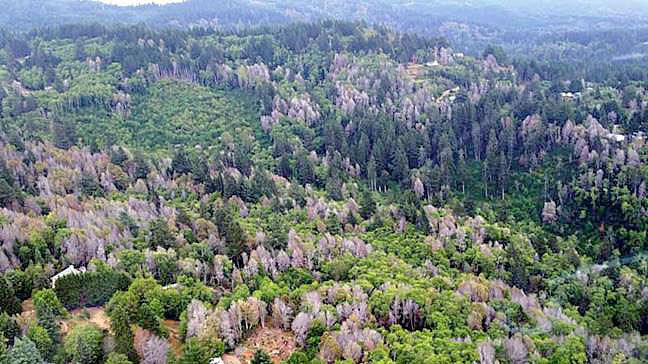
tanoak killed by SOD; photo by Joseph O’Brien, via Bugwood

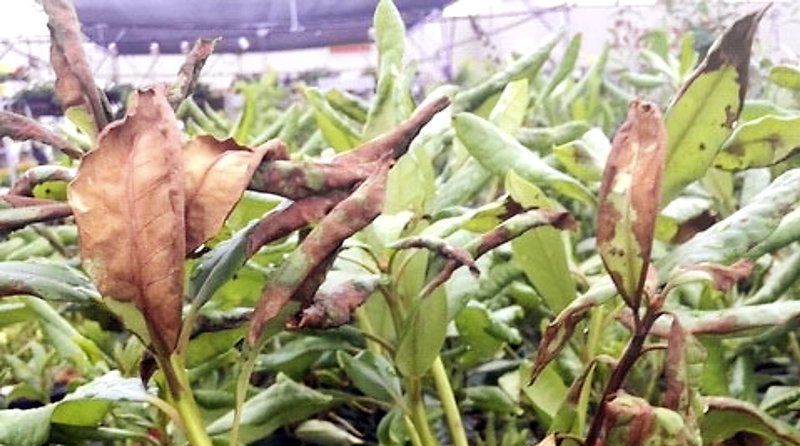
I am belatedly catching up with developments regarding sudden oak death (SOD; Phytophthora ramorum). The situation is worsening, with three of the four existing strains now established in U.S. forests. Nursery outbreaks remain disturbingly frequent.

This information comes primarily from the California Oak Mortality Task Force’s (COMTF) newsletters posted since October; dates of specific newsletters are shown in brackets.

Alarming presence of variants & hybridization

The long-feared risk of hybridization among strains has occurred. Canadian authorities carrying out inspections of a British Columbia nursery found a hybrid of European (EU1) and North American (NA2) clonal lineages. These hybrids are viable, can infect plants and produce spores for not only long-term survival but also propagation. So far the hybrid has been found in a single nursery; it has not spread to natural forests. The pathogen is considered eradicated in that nursery, so it is hoped it cannot reproduce further. [December 2021 newsletter, summarizing research by R. Hamelin et al.]

Noted British forest pathologist Clive Brasier warned in 2008 about the risk of hybrids evolving in nurseries which harbor multiple strains of related pathogens. (See full citation at end of the blog.)

The threat is clear: three of the four known variants are already established in forests of the Pacific Northwest – NA1, NA2, and EU1. (For an explanation of P. ramorum strains and mating types, go here.)

In Oregon, the EU1 strain was detected in a dying tanoak (Notholithocarpus densiflorus) tree in the forests of Curry County in 2015. Genetic analysis revealed that the forest EU1 isolates were nearly identical to EU1 isolates collected in 2012 from a nearby nursery during routine monitoring. This detection was considered to be evidence that multiple distinct P. ramorum introductions had occurred. The scientists expressed concern that the presence of this strain – which is of the A1 mating type while the widely established NA1 population of the pathogen in the forest is of the A2 mating type — makes the potential for sexual recombination more likely. Therefore, the state prioritized eradication of the EU1 forest infestation [Grünwald et al. 2016]. (For an explanation of P. ramorum strains and mating types, go here.)

The NA2 strain was detected in 2021, 33 km north of the closest known P. ramorum infestation. Because Oregonians genotype all detections on the leading front of the infection, they completed Koch’s postulates and found this surprising result [February 2022]. NA2 is thought to be more aggressive than the NA1 lineage [February 2022]. Surveys and sampling quickly determined that the outbreak is well established — 154 positive detections [February 2022] across more than 500 acres [October 2021]. Oregon Department of Forestry immediately began treatments; the goal is to prevent overlap with existing NA1 and EU1 populations. [April 2022; summarizing research by Peterson et al.] Given the number of infected trees and the new variant, Oregon pathologists believe this to be a separate introduction to Oregon forests that has been spreading in the area for at least four years [February 2022].

Scientists [April 2022; summarizing research by Peterson et al.] again note evidence of repeated introductions of novel lineages into the western US native plant communities; this region is highly vulnerable to Phytophthora establishment, justifying continued monitoring for P. ramorum not only in nurseries but also in forests.

SOD in Oregon; photo by Oregon Department of Forestry

The EU1 strain is also present in northern California, specifically in Del Norte County. It was detected there in 2020. Despite removal of infected and nearby host trees (tanoaks) and treatment with herbicide to prevent resprouting, the EU1 strain was again detected on tanoaks in 2021. The detected strain is genetically consistent with the EU1 outbreak in Oregon forests. Oddly, the usual strain found in North American forests, the NA1 strain, was not detected in Del Norte Co. in 2021 [February 2022].

One encouraging research finding [April 2022; summarizing research by Daniels, Navarro, and LeBoldus] is that established treatment measures have had significant impact on both the NA1 & EU1 lineages. They found on average 33% fewer positive samples at treated sites where NA1 is established; 43% reduction in P. ramorum prevalence at EU1 sites. Prevalence of P. ramorum in soil was not affected by treatment.

SOD Spread in Forests

In California, the incidence of new Phytophthora ramorum infections fell in 2021 to a historic low – estimated 97,000 dead trees across 16,000 acres, compared to ~885,000 dead trees across 92,000 acres in 2019 [April 2022]. It is agreed that the reason is the wave of mortality sparked by the very wet 2016-2017 winter has subsided and has been followed by several years of drought [February 2022].

data showing decline in new SOD detections in California in 2021 (no data collected in 2020)

In Oregon, however, SOD continues to spread. In 2010, the OR SOD Program had conceded that eradication was no longer feasible. Instead, authorities created a Generally Infested Area (GIA) where removal of infested tanoaks was now optional (not mandated) on private and state-owned lands. Since then, SOD has continued to spread and intensify within the designated zone. The GIA has been expanded eight times since its establishment in 2012; it now it covers 123 sq. mi. There has also been an immediate increase in tanoak mortality [December 2021].

In 2021, two new infestations were detected outside the GIA. One outbreak is on the Rogue River-Siskiyou National Forest along the Rogue River, 6 miles north of any previously known infestation. The second is just outside Port Orford [February 2022], 33 km north of the closest known infestation. This second infestation is composed of the NA2 variant [see above]. The Oregon Department of Agriculture (ODA) established emergency quarantines at these sites and began eradication efforts at both sites. The Oregon legislature appropriated $1.7 million to Oregon Department of Forestry to carry out an integrated pest management program to slow spread of the disease [February 2022].

Scientific research indicates that this situation might get worse. While it has long been recognized that California bay laurel (= Oregon myrtle) (Umbellularia californica) and tanoak are the principal hosts supporting sporulation and spread, it has now been determined that many other native species in the forest can support sporulation. Chlamydospore production was highest on bigleaf maple (Acer macrophyllum)and hairyCeanothus (Ceanothus oliganthus). All the other hosts produced significantly fewer spores than tanoak and myrtle [October 2021; summarizing research by Rosenthal, Fajardo, and Rizzo]

Furthermore, studies that aggregate observations of disease on all hosts, not paying attention to their varying levels of susceptibility, might lead scientists to misinterpret whether the botanic diversity slows spread of the pathogen [October 2021 summarizing research by Rosenthal, Simler-Williamson, and Rizzo].

Monitoring to detect any possible spread to the East

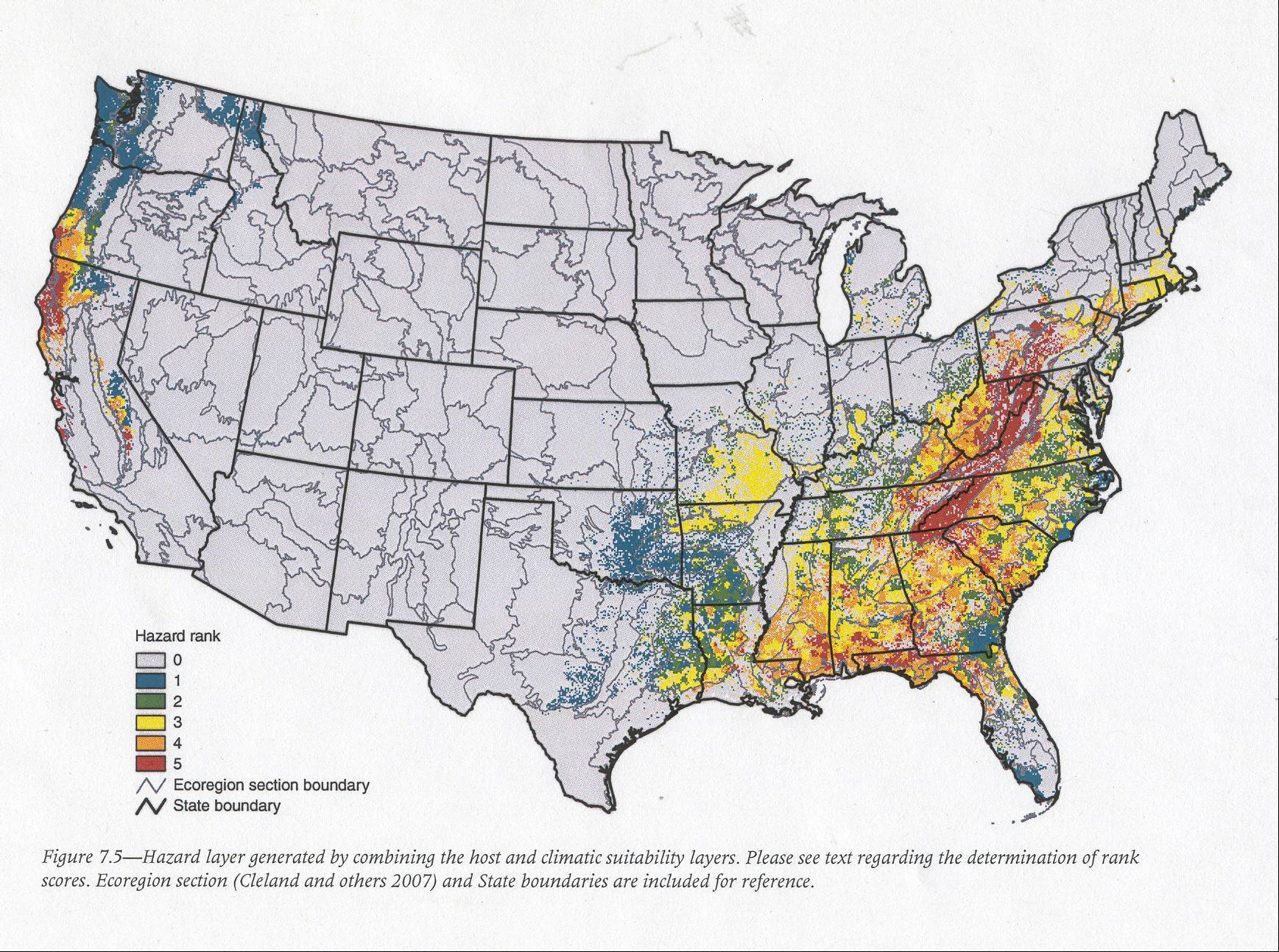
SOD risk map based on climate & presence of host species; USFS

The USDA Forest Service continues its Cooperative Sudden Oak Death Early Detection Stream Survey in the East. In 2021, 12 states participated – Alabama, Florida, Georgia, Illinois, Maryland, Mississippi, North Carolina, Pennsylvania, South Carolina, Texas, West Virginia, and Wisconsin. Samples were collected from 79 streams in the spring. Two streams were positive, both in Alabama. Both are associated with nurseries that were positive for P. ramorum more than a decade ago [October 2021].

Continued infestations in the nurseries

USDA Animal and Plant Health Inspection Service (APHIS) reported that in 2021, the agency supported compliance activities, diagnostics, and surveys in nurseries in 22 states. P. ramorum was detected at 17 establishments. Eight were new; nine had been positive previously. These included seven nurseries that ship intrastate – all had been positive previously. Six were already under compliance agreements. Also positive were three big box stores – none previously infected; and six nurseries that sell only within one state – five new. Infections at the big box outlets and half the intrastate nurseries were detected as a result of trace-forwards from other nurseries.

P. ramorum was detected in 300 samples in 2021 – 144 from plants in the genus Viburnum; 106 from Rhodendron (including azalea); and much lower numbers from other genera.

APHIS funds states for annual nursery surveys, compliance activities, and diagnostics through the: Plant Protection Act Section 7721 and the Cooperative Agricultural Pest Survey (CAPS) program. Table 4 lists states receiving survey funds. APHIS also supported compliance and diagnostic activities in California, Louisiana, Oklahoma, Oregon, Pennsylvania, Washington, and several states through Florida.

APHIS’ report – which provides few additional  details about the nursery  detections – can be found here.

California:

The California Department of Food and Agriculture (CDFA) reported that three of the eight nurseries regulated under either the federal or state sudden oak death program tested positive in 2021. This was down from five positive nurseries in 2020 [February 2022]. (In the past, numbers of nurseries testing positive have declined during droughts, risen during wet years.) At one interstate-shipping nursery 145 positive Viburnum tinus plants were detected by regulators in December 2021. Apparently the detection efforts were prompted by a trace-back from a nursery in an (unnamed) other state [April 2022].

Oregon:

Oregon continues to struggle with the presence of Phytopththora ramorum in the state’s nurseries. Early in 2021 the situation looked good. Three of eight interstate shippers and two intrastate shippers “passed” their sixth consecutive inspection with no P. ramorum detected so they were released from state and federal program inspection requirements. A fourth interstate-shipping nursery had ceased operating. By the end of the year, however, circumstances had deteriorated. One of the four interstate shippers still under regulatory scrutiny appeared to be badly infested. After routine autumn monitoring detected an infected plant, subsequent delimitation samplings detected 30 additional positive foliar samples and a large number (24) of samples were inconclusive. By spring 2022 six nurseries had to be inspected following trace-forwards from out-of-state nurseries. No P. ramorum was detected in five of these nurseries; the sixth had one positive foliar sample, so it is now under more stringent regulatory supervision [April 2022].

Washington:

Washington has only one interstate shipping nursery that is regulated under APHIS’ program; it tested negative in autumn 2021 [December 2021]. Meanwhile, USDA & Washington Department of Agriculture (WSDA) decided to deregulate the Kitsap County Botanical Garden where P. ramorum had been detected in 2015. Since then, more than 5,000 samples have been collected; 99.1% have tested negative. The last positive plant sample was collected in February 2016. Under a compliance agreement, the botanical garden will continue the best management practices deemed successful in eradicating the pathogen [December 2021]. However, water at the site continues to test positive [February 2022]. These water detections – in Washington and Alabama (above) – raise troubling questions.

Meanwhile, in late winter [April 2022], WSDA had to conduct two trace-forward investigations on plants that shipped from (unnamed) out-of-state nurseries. As of the April newsletter, 13 samples from four locations were all negative.

A stubborn problem has been the persistence of SOD infections in nurseries after the Confirmed Nursery Protocol has been carried out. Research indicates the reason might be that the pathogen is still there in the form of soilborne inoculum in buried, infested leaf debris [December 2021 newsletter; summarizing research by Peterson, Grünwald, and Parke].

Another native tree identified as host

photo by Miguel Vieira; via Wikimedia

Dieback on golden chinquapin, Chrysolepis chrysophylla, a slow growing, evergreen tree native to the U.S. west coast has been confirmed as caused by Phytophthora ramorum. The detection was in a part of Marin County, California heavily infested by P. ramorum since early in the epidemic. Affected trees were large overstory trees. Unlike other hosts in the Fagaceae, there were no external bole cankers [April 2022 newsletter; summarizing research by Rooney-Latham, Blomquist, Soriano, and Pastalka].

SOURCES

Brasier, C.M. 2008. The biosecurity threat to the UK and global environment from international trade in plants. Plant Pathology (2008) 57, 792-808

Grunwald, N.J., M.M. Larsen, Z.N. Kamvar, P.W. Reeser, A. Kanaskie, J. Laine and R. Wiese. 2016. First Report of the EU1 Clonal Lineage of Phytophthora ramorum on Tanoak in an Oregon Forest. Disease Notes. May 2016, Vol. 100, No. 5, p. 1024

Posted by Faith Campbell

We welcome comments that supplement or correct factual information, suggest new approaches, or promote thoughtful consideration. We post comments that disagree with us — but not those we judge to be not civil or inflammatory.

For a detailed discussion of the policies and practices that have allowed these pests to enter and spread – and that do not promote effective restoration strategies – review the Fading Forests report at http://treeimprovement.utk.edu/FadingForests.htm

What Do Invasive Species Cost?

brown tree snake Boiga irregularis; via Wikimedia; one of the species on which the most money is spent on preventive efforts

In recent years a group of scientists have attempted to determine how much invasive species are costing worldwide. See Daigne et al. 2020 here.

Some of these scientists have now gone further in evaluating these data. Cuthbert et al. (2022) [full citation at end of blog] see management of steadily increasing numbers of invasive, alien species as a major societal challenge for the 21st Century. They undertook their study of invasive species-related costs and expenditures because rising numbers and impacts of bioinvasions are placing growing pressure on the management of ecological and economic systems and they expect this burden to continue to rise (citing Seebens et al., 2021; full citation at end of blog).

They relied on a database of economic costs (InvaCost; see “methods” section of Cuthbert et al.) It is the best there is but Cuthbert et al. note several gaps:

  • Only 83 countries reported management costs; of those, only 24 reported costs specifically associated with pre-invasion (prevention) efforts.
  • Data comparing regional costs do not incorporate consideration of varying purchasing power of the reporting countries’ currencies.  
  • Data available are patchy so global management costs are probably substantially underestimated. For example, forest insects and pathogens account for less than 1% of the records in the InvaCost database, but constitute 25% of total annual costs ($43.4 billion) (Williams et al., in prep.) .

Still, their findings fit widespread expectations.  

These data point to a total cost associated with invasive species – including both realized damage and management costs – of about $1.5 trillion since 1960.  North America and Oceania spent by far the greatest amount of all global money countering bioinvasions. North America spent 54% of the total expenditure of $95.3 billion; Oceania spent 30%. The remaining regions each spent less than $5 billion.

Cuthbert et al. set out to compare management expenditures to losses/damage; to compare management expenditures pre-invasion (prevention) to post-invasion (control); and to determine potential savings if management had been more timely.

Economic Data Show Global Efforts Could Be – But Aren’t — Cost-Effective

The authors conclude that countries are making insufficient investments in invasive species management — particularly preventive management. This failure is demonstrated by the fact thatreported management expenditures ($95.3 billion) are only 8% of total damage costs from invasions ($1.13 trillion). While both cost or losses and management expenditures have risen over time, even in recent decades, losses were more than ten times larger than reported management expenditures. This discrepancy was true across all regions except the Antarctic-Subantarctic. The discrepancy was especially noteworthy in Asia, where damages were 77-times higher than management expenditures.

Furthermore, only a tiny fraction of overall management spending goes to prevention. Of the $95.3 billion in total spending on management, only $2.8 billion – less than 3%  – has been spent on pre-invasion management. Again, this pattern is true for all geographic regions except the Antarctic-Subantarctic. The divergence is greatest in Africa, where post-introduction control is funded at more than 1400 times preventive efforts. It is also significant for Asia and South America.

Even in North America – where preventative actions were most generously funded – post-introduction management is funded at 16 times that of prevention.

Cuthbert et al. worry particularly about the low level of funding for prevention in the Global South. They note that these conservation managers operate under severe budgetary constraints. At least some of the bioinvasion-caused losses suffered by resources under their stewardship could have been avoided if the invaders’ introduction and establishment had been successfully prevented.

While in the body of the article Cuthbert et al. seem uncertain about why funding for preventive actions is so low, in their conclusions they offer a convincing (to me) explanation. They note that people are intrinsically inclined to react when impact becomes apparent. It is therefore difficult to motivate proactive investment when impacts are seemingly absent in the short-term, incurred by other sectors, or in different regions, and when other demands on limited funds may seem more pressing. Plus efficient proactive management will prevent any impact, paradoxically undermining evidence of the value of this action!

Aedes aegypti mosquito; one of the species on which the most money is spent for post-introduction control; photo by James Gathany; via Flickr

Delay Costs Money

The reports contained in the InvaCost database indicate that management is delayed an average of 11 years after damage was first been reported. Cuthbert et al. estimate that these delays have caused an additional cost of about $1.2 trillion worldwide. Each $1 of management was estimated to reduce damage by $53.5 in this study. This finding, they argue, supports the value of timely invasive species management.

They point out that the Supplementary Materials contain many examples of bioinvasions that entail large and sustained late-stage expenditures that would have been avoided had management interventions begun earlier.

Although Cuthbert et al. are not as clear as I would wish, they seem to recognize also that stakeholders’ varying perceptions of whether an introduced species is causing a detrimental “impact” might also complicate reporting – not just whether any management action is taken

Cuthbert et al. are encouraged by two recent trends: growing investments in preventative actions and research, and shrinking delays in initiating management. However, these hopeful trends are unequal among the geographic regions.

Which Taxonomic Groups Get the Most Money?

About 42% of management costs ($39.9 billion) were spent on diverse or unspecified taxonomic groups. Of the costs that were taxonomically defined, 58% ($32.1 billion) was spent on invertebrates [see above re: forest pests]; 27% ($14.8 billion) on plants; 12% ($6.7 billion) on vertebrates; and 3% ($1.8 billion) on “other” taxa, i.e. fungi, chromists, and pathogens. For all of these defined taxonomic groups, post-invasion management dominated over pre-invasion management.  

When considering the invaded habitats, 69% of overall management spending was on terrestrial species ($66.1 billion); 7% on semi-aquatic species ($6.7 billion); 2% on aquatic species ($2.0 billion); the remainder was “diverse/unspecified”. For pre-invasion management (prevention programs), terrestrial species were still highest ($840.4 million). However, a relatively large share of investments was allocated to aquatic invaders ($624.2 million).

Considering costs attributed to individual species, the top 10 targetted for preventive efforts were four insects, three mammals, two reptiles, and one alga. Top expenditures for post-invasion investments went to eight insects [including Asian longhorned beetle], one mammal, and one bird.

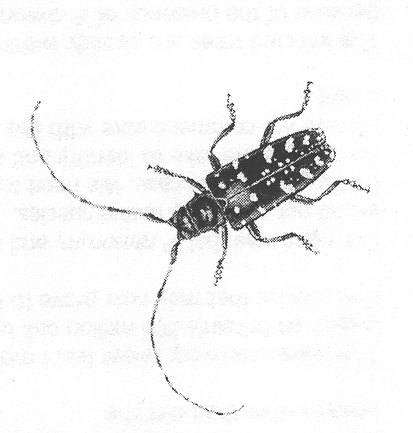
Asian longhorned beetle

Just two of the costliest species were in both categories: insects red imported fire ant(Solenopsis invicta) and Mediterranean fruitfly (Ceratitis capitate). None of the species with the highest pre-invasion investment was among the top 10 costliest invaders in terms of damages. However, note the lack of data on fungi, chromists, and pathogens. (I wrote about this problem in an earlier blog.)

Discussion and Recommendations

Cuthbert et al. conclude that damage costs and post-invasion spending are probably growing substantially faster than pre-invasion investment. Therefore, they call for a stronger commitment to enhancing biosecurity and for more reliance on regional efforts rather than ones by individual countries. Their examples of opportunities come from Europe.

Drawing parallels to climate action, the authors also call for greater emphasis on during decision-making to act collectively and proactively to solve a growing global and inter-generational problem.

Cuthbert et al. focus many of their recommendations on improving reporting. One point I found particularly interesting: given the uneven and rapidly changing nature of invasive species data, they think it likely that future invasions could involve a new suite of geographic origins, pathways or vectors, taxonomic groups, and habitats. These could require different management approaches than those in use today.

As regards data and reporting, Cuthbert et al. recommend:

1) reducing bias in cost data by increasing funding for reporting of underreported taxa and regions;

2) addressing ambiguities in data by adopting a harmonized framework for reporting expenditures. For example, agriculture and public health officials refer to “pest species” without differentiating introduced from native species. (An earlier blog also discussed the challenge arising from  these fields’ different purposes and cultures.)

3) urging colleagues to try harder to collect and integrate cost information, especially across sectors;

4) urging countries to report separately costs and expenditures associated with different categories, i.e., prevention separately from post-invasion management; damage separately from management efforts; and.

5) creating a formal repository for information about the efficacy of management expenditures.

While the InvaCost database is incomplete (a result of poor accounting by the countries, not lack of effort by the compilers!), analysis of these data points to some obvious ways to improve global efforts to contain bioinvasion. I hope countries will adjust their efforts based on these findings.

SOURCE

Cuthbert, R.N., C. Diagne, E.J. Hudgins, A. Turbelin, D.A. Ahmed, C. Albert, T.W. Bodey, E. Briski, F. Essl, P. J. Haubrock, R.E. Gozlan, N. Kirichenko, M. Kourantidou, A.M. Kramer, F. Courchamp. 2022. Bioinvasion costs reveal insufficient proactive management worldwide. Science of The Total Environment Volume 819, 1 May 2022, 153404

Seebens, H. S. Bacher, T.M. Blackburn, C. Capinha, W. Dawson, S. Dullinger, P. Genovesi, P.E. Hulme, M.van Kleunen, I. Kühn, J.M. Jeschke, B. Lenzner, A.M. Liebhold, Z. Pattison, J. Perg, P. Pyšek, M. Winter, F. Essl. 2021. Projecting the continental accumulation of alien species through to 2050. Glob Change Biol. 2021;27:970-982.

Williams, G.M., M.D. Ginzel, Z. Ma, D.C. Adams, F.T. Campbell, G.M. Lovett, M. Belén Pildain, K.F. Raffa, K.J.K. Gandhi, A. Santini, R.A. Sniezko, M.J. Wingfield, and P. Bonello 2022. The Global Forest Health Crisis: A Public Good Social Dilemma in Need of International Collective Action. submitted

Posted by Faith Campbell

We welcome comments that supplement or correct factual information, suggest new approaches, or promote thoughtful consideration. We post comments that disagree with us — but not those we judge to be not civil or inflammatory.

For a detailed discussion of the policies and practices that have allowed these pests to enter and spread – and that do not promote effective restoration strategies – review the Fading Forests report at http://treeimprovement.utk.edu/FadingForests.htm

Reminder: ask your MC & Senators to sponsor tree-restoration bill!

The Invasive Species Prevention and Forest Restoration Act (H.R. 1389) is before Congress. It is co-sponsored by Reps. Peter Welch [VT], Ann Kuster and Chris Pappas [NH], Chellie Pingree [ME], Elise Stefanik and Antonio Delgado [NY], Brian Fitzpatrick [PA], Mike Thompson [CA], Deborah Ross [NC].

Ask your Member of Congress/Representative to co-sponsor this bill. Ask your Senators to sponsor a companion bill.

In summary, this bill will:

  • Expand USDA APHIS’ access to emergency funds to eradicate or contain newly detected pest outbreaks.
  • Establish a pair of grant programs to support strategies aimed at restoring tree species decimated by non-native plant pests or noxious weeds. Such strategies include biological control of pests and enhancement of a tree host’s pest resistance.
    1. One grant program supports research to explore and develop these strategies.
    2. The second program support application of resistance breeding and other measures to restore forest tree species. Funded programs must incorporate a majority of the following components: collection and conservation of native tree genetic material; production of sufficient numbers of propagules; preparation of planting sites in the species’ former habitat; planting and post-planting maintenance.
  • Mandate a study to identify actions to overcome the shortfall of mission, leadership, and prioritization; identify agencies’ expertise and resources; improve coordination among agencies and with partners; and develop national strategies for saving tree species.

Organizations eligible for these grants include federal agencies; state cooperative institutions; colleges or universities offering a degree in the study of food, forestry, and agricultural sciences; and nonprofit entities with non-profit status per §501(c)(3) of the Internal Revenue Code.

Endorsements: Vermont Woodlands Association, American Forest Foundation, The Association of Consulting Foresters (ACF), Audubon Vermont, Center for Invasive Species Prevention, Ecological Society of America, Entomological Society of America, Maine Woodland Owners Association, Massachusetts Forest Alliance, National Association of State Foresters (NASF), National Woodland Owners Association (NWOA), The Nature Conservancy (TNC) Vermont, New Hampshire Timberland Owners Association, North American Invasive Species Management Association (NAISMA), Pennsylvania Forestry Association, Reduce Risk from Invasive Species Coalition, The Society of American Foresters (SAF), and a broad group of university professors and scientists.

Legislative Point of Contact: Alex Piper, Legislative Assistant, office of Rep. Welch. Contact me – providing your email! – if you wish me to send you Alex’ contact information.  [The “contact” form does not provide your email and I will not reply in a public way.]

Posted by Faith Campbell

We welcome comments that supplement or correct factual information, suggest new approaches, or promote thoughtful consideration. We post comments that disagree with us — but not those we judge to be not civil or inflammatory.

For a detailed discussion of the policies and practices that have allowed these pests to enter and spread – and that do not promote effective restoration strategies – review the Fading Forests report at http://treeimprovement.utk.edu/FadingForests.htm

Interactions of 2 (of 3) Threats to Beech

American beech (Fagus grandifolia) is a widespread and beautiful tree of the eastern deciduous forest. Its range reaches from Nova Scotia to eastern Wisconsin, then south to Mississippi and Louisiana and east to mid-Georgia. It is an important food source for 40 wildlife species, particularly in the northern parts of its range where few other species produce hard mast. (See Lovett et al. 2006.)

Threats

Unfortunately American beech is under threat from three non-native organisms or complexes: 1) beech bark disease, 2) beech leaf disease, and 3) beech leaf mining weevil. A fourth pest, a previously unknown – and still unnamed bark beetle in the genus Agrilus – has been detected in New York City on European beech trees. It is not yet known whether it will attack American beech and, if so, whether it will also cause serious damage (Michael Bohne, USFS, pers. comm.)  

symptoms of beech bark disease; photo by Linda Haugen, USFS; via Bugwood

Beech bark disease (BBD) results from the interaction of the introduced European beech scale insect (Cryptococcus fagisuga) and several fungi in the Neonectria genus – some of which are also introduced. The resulting disease has been killing American beech trees since the beginning of the 20th Century. It has spread from Nova Scotia to much of the tree’s range. It has dramatically altered the composition and structure of stands containing beech.

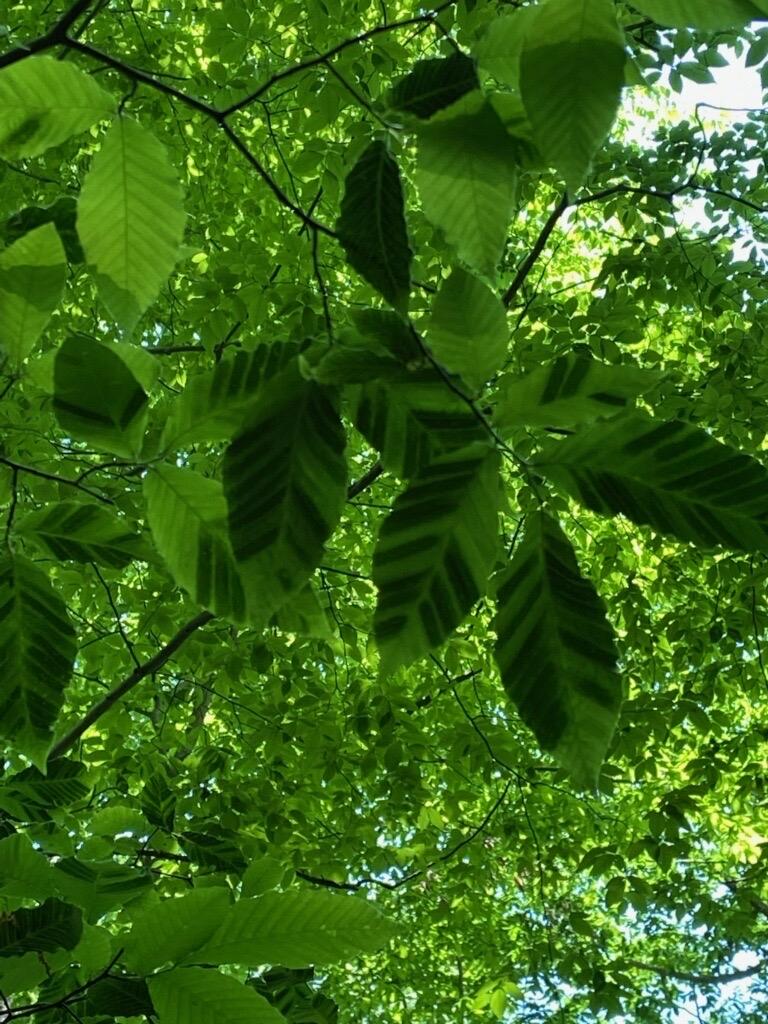
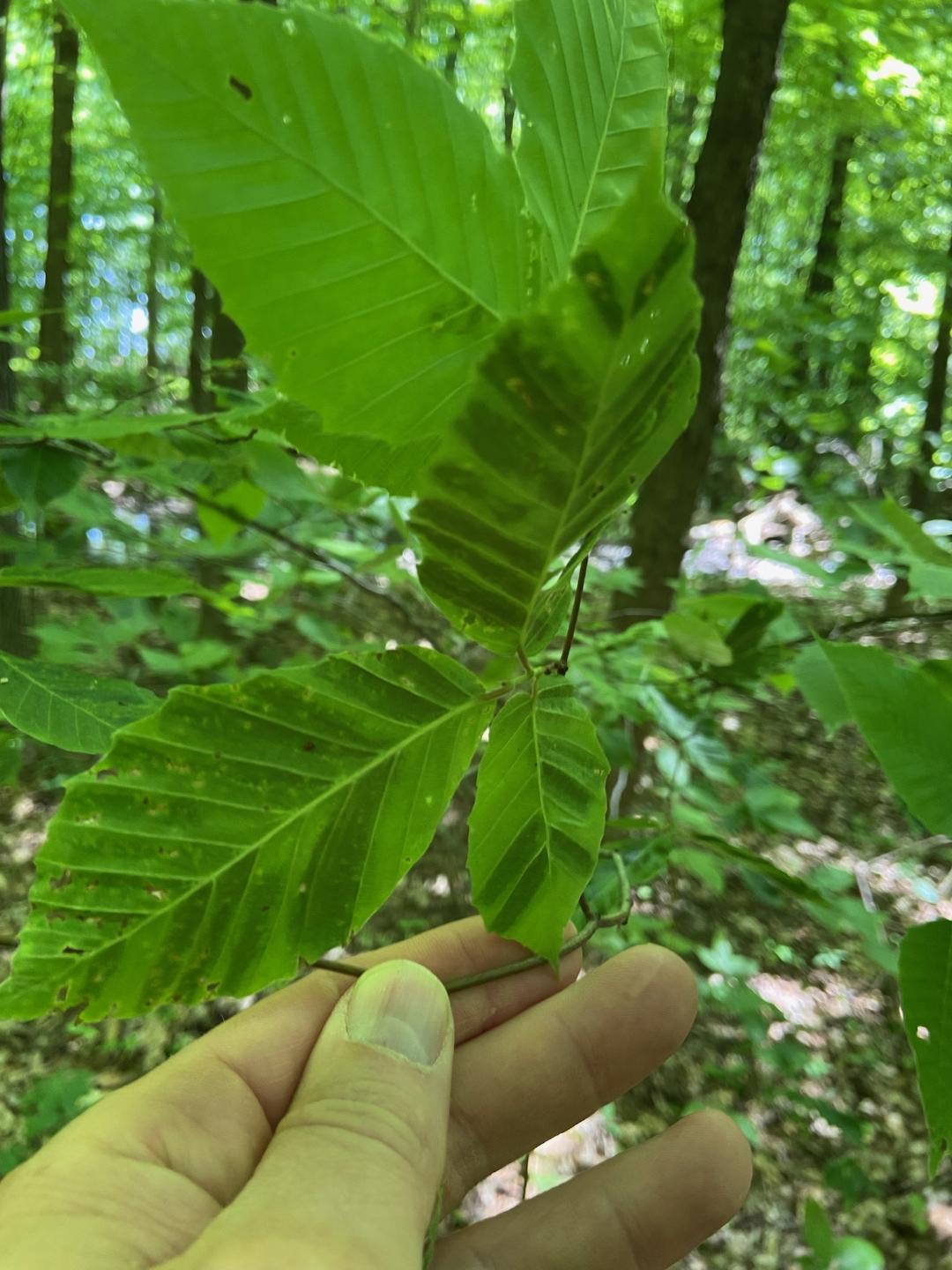
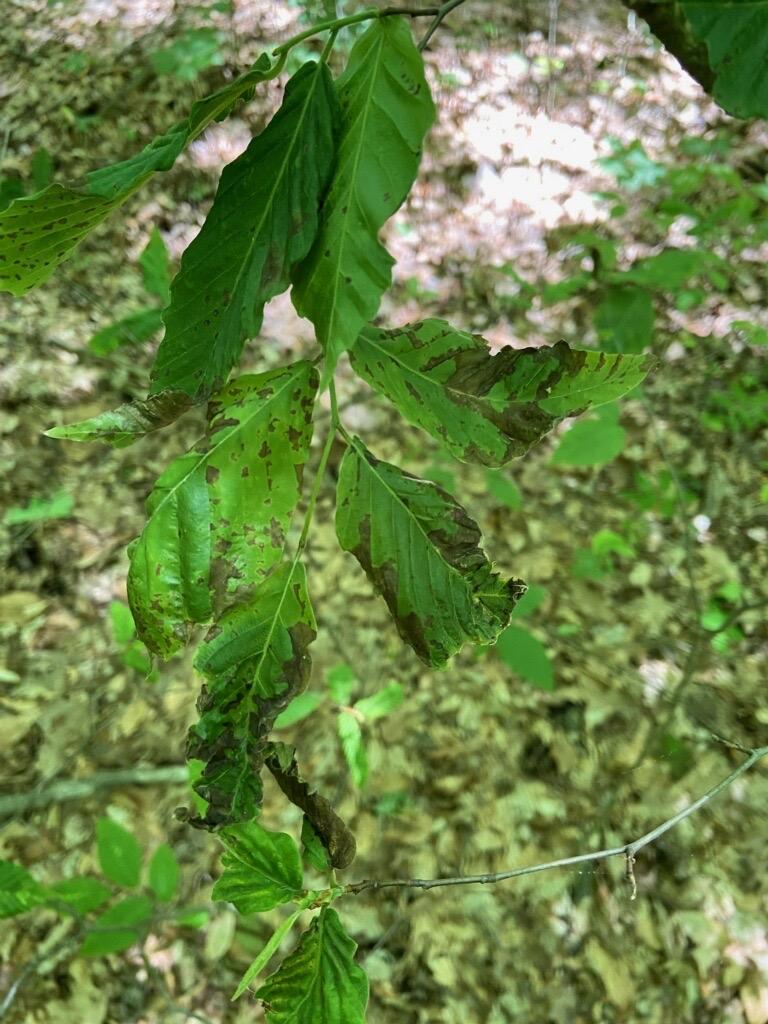
symptoms of beech leaf disease; photo provided by Jennifer Koch, USFS

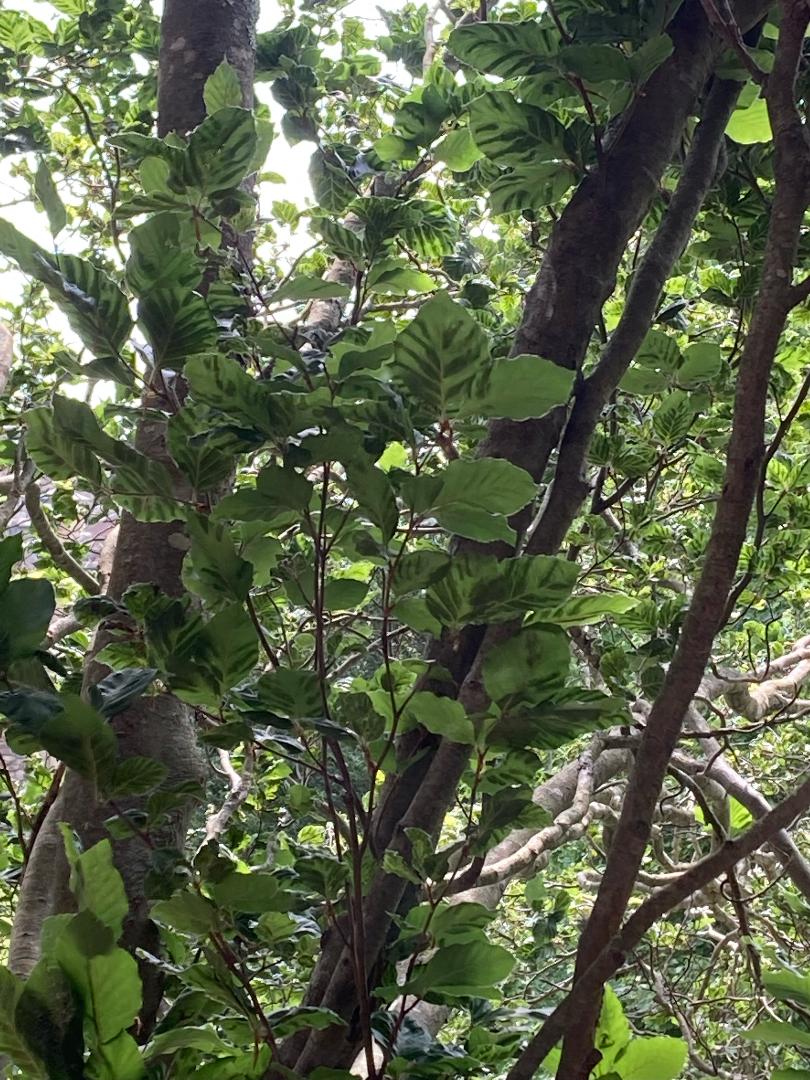
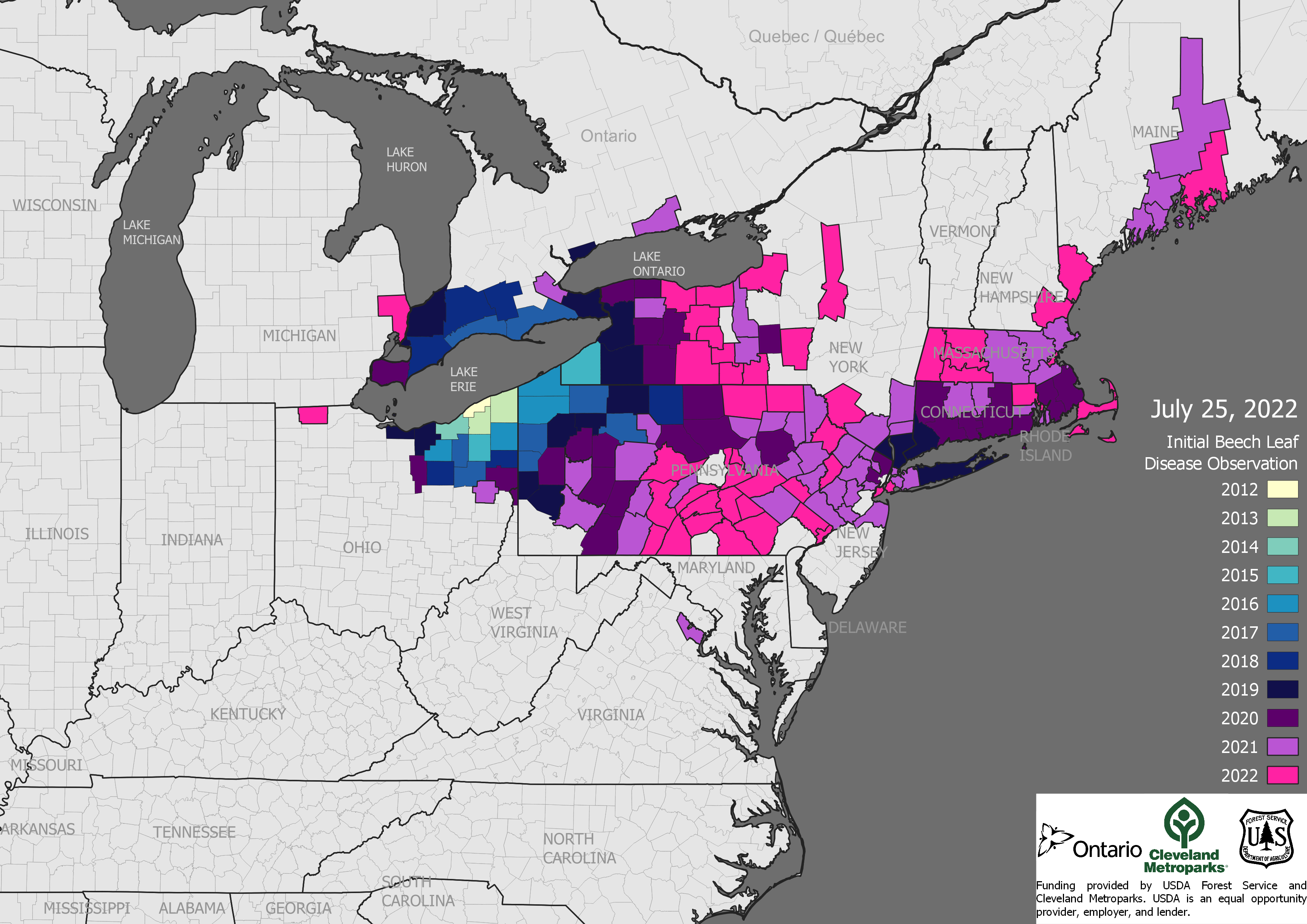
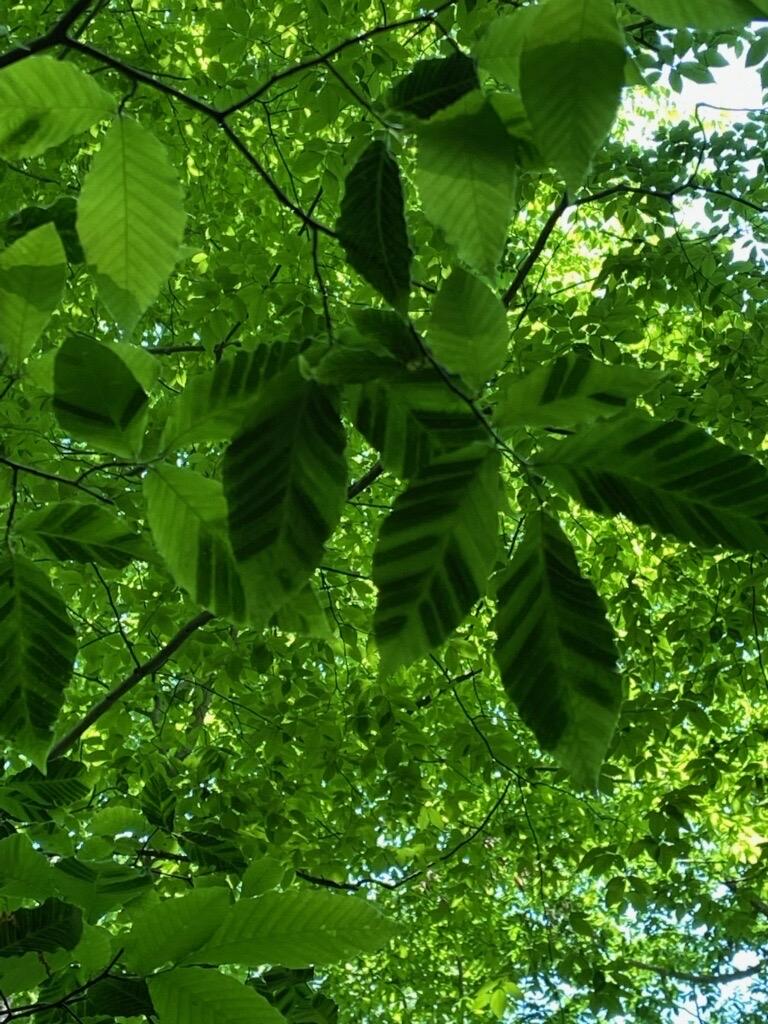
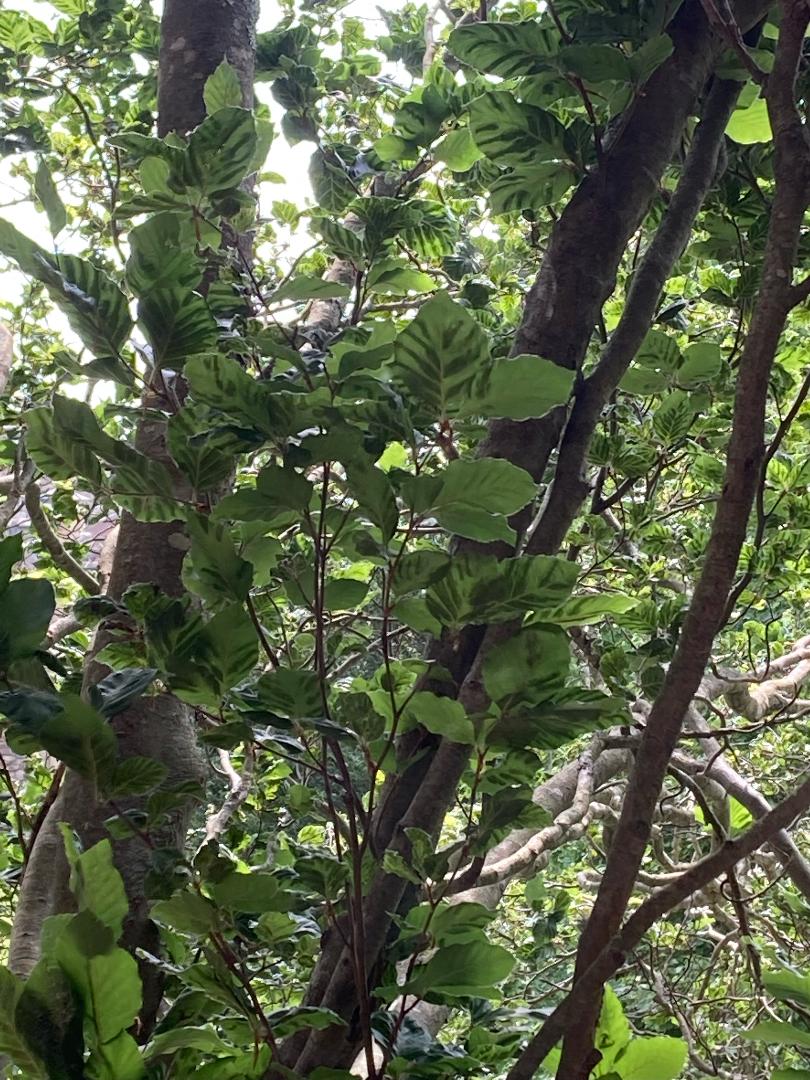
Beech leaf disease (BLD) was initially detected in 2012, near Cleveland. As of December, 2021, it has spread due east across New York, Pennsylvania, and New Jersey to the Atlantic, then up the coast through Connecticut and eastern Massachusetts, with a separate outbreak in central Maine. The disease is apparently associated with a nematode, Litylenchus crenatae ssp. mccanni, although additional pathogens, like bacteria, might also play a role. The origin of the North American population of the nematode is unknown; it is a related but separate subspecies from a Japanese nematode (Reed et al. 2022).

American beech defoliated by leaf mining weevil; photo courtesy of Jon Sweeney, CFS

Beech leaf mining weevil (Orchestes fagi) is, so far, limited to Nova Scotia. However, it is expected that the weevil will continue spreading throughout the range of American beech through both natural dispersal and human-assisted movement. Repeated defoliation by the weevil might increases mortality rates in forests that are surviving in the “aftermath” stage of BBD (Sweeney et al. 2020).

A new study (Reed et al. 2022) concludes that, despite being detected only 10 years ago, BLD has already become pervasive in forests surrounding Lake Erie in the U.S. and Ontario. While somewhat more prevalent in U.S. states on the eastern side of the Great Lakes (on 54% of trees) than in Ontario (on 46% of trees), BLD is spreading rapidly and affecting every canopy layer. Mortality is highest in seedlings and saplings; understory saplings die within 2 – 5 years. The occasional mortality of overstory trees occurs within seven years of [observed] infection. Defoliation and mortality of saplings allow more light to pass through to the understory; this is expected to alter plant communities on the forest floor.

Beech scale is more widespread in Ontario (found on 60% of trees) than in the U.S. (38% of trees). This is not surprising since the scale was detected in Ontario in 1960, 24 years before it was detected in portions of Ohio, New York and Pennsylvania included in the study (in 1984). Throughout this region, beech scale is disproportionately affecting overstory trees.

Only 4% of trees throughout the study area are infected with Neonectria cankers. In other words, full-scale beech bark disease is not yet widespread and is spreading surprisingly slowly. Scientists do not understand this phenomenon.

These findings are based on a network of monitoring plots a network of monitoring plots set up in 2019 set up in areas surrounding the Great Lakes. They comprise 34 plots at 17 locations in southwest Ontario and 30 plots at 25 locations in Ohio, Pennsylvania, and New York. In total the plots hold 646 live American beech trees — 412 saplings; 85 in the intermediate/suppressed (subcanopy) category; and 149 in the dominant/codominant (canopy) class.

Forest composition is similar throughout the study area. The most common species in association with American beech are sugar and red maples (Acer spp.), and white and green ash (Fraxinus spp.). Other tree species present include eastern hemlock (Tsuga canadensis), white pine (Pinus strobus), oaks (Quercus spp.), and birches (Betula spp.). Study plots had few invasive plants – although the invasive species present are well-documented to invade forests.

Ontario disease assessment

In Ontario, BLD was identified in 25 of the 34 plots.  It was present on 171 saplings, 53 intermediate trees, and 70 dominant trees. Both prevalence and severity were greatest on intermediate trees. Beech scale was present at all 34 plots. While scales were found on trees of all sizes, they were almost two times more prevalent and were more severe on mature trees than saplings. Neonectria cankers were detected at 34 plots. Neonectria was rare but most severe on dominant trees. Fewer than one third of saplings and one-sixth of mature trees were pest free.

U.S. disease assessment  

BLD was present in 17 of the 30 plots. It was found on 75 saplings, 30 intermediate trees, and 38 dominant trees. Saplings and dominant trees had similar levels of disease; intermediate trees had significantly less. However, BLD severity was twice as high on saplings compared to mature trees. BLD was present on more than half of the seedlings assessed – 46 out of 82. Beech scale was present in 20 of the 30 plots. It was significantly less common and severe on saplings than on mature trees. Neonectria cankers were present in only 4 of 30 plots. Canker prevalence and severity did not differ significantly among size classes.

Distribution and Effects of Beech Scale and BBD

While beech scale attack facilitates invasion by the Neonectria fungi, the disease – BBD complex – had the most limited distribution of the three pests in this study. It was found on only ~4% of beech trees throughout the study area. The disease was first reported there in the early 2000s. Although no one knows why, it has spread more slowly there than in areas to the east (Reed et al. 2022).

As is the case with beech scale, BBD disproportionately affects large diameter trees. Typically, BBD kills more than half of mature beech within 10 years of its arrival. Dying trees produce prolific root sprouts resulting in dense beech sapling understories that impede regeneration of less shade-tolerant tree species. The persistence of thickets of disease-vulnerable small beech perpetuates the disease. BBD is the only forest disease in North America that can inadvertently intensify itself by increasing densities of its host while suppressing other species.

Beech Forest Community Change in Response to Combined Impacts of BBD and BLD

It is unclear how forests will change as beech die. Some expect saplings of species already present — red maple, white ash, and, especially sugar maple — to exploit the canopy gaps. Of course, white and green ash are under attack by the emerald ash borer; DMF their ability to reach the canopy will depend on the success of biocontrol agents.

However, if BBD or BLD resistant beech survive or if BLD fails to persist, future forests might instead consist of beech thickets that would prevent all but the most shade tolerant species from establishing. Heavy deer predation on maple seedlings and saplings might also play a role. A third possibility is that morbidity from BBD and BLD might lead to uneven-aged conditions that allow younger trees — perhaps even shade intolerant species e.g., oaks — to establish.

Invasive plants also have the potential to fill gaps left by declining beech. While maple-beech forests often have sparse understories due to low understory light levels, pest-caused canopy gaps are expected to increase the abundance of invaders, especially in small woodlots and forests near urban areas. Several shade-tolerant invasive shrubs are already present in low numbers: Japanese barberry (Berberis thunbergii), tatarian honeysuckle (Lonicera tatarica), multiflora rose (Rosa multiflora), and buckthorn (Frangula sp.). Reed et al. (2022) note that these species, plus privet and autumn olive, can take advantage of small canopy gaps, especially when soils are disturbed, e.g., by active intervention to counteract the loss of beech.

Precautionary Research and Management

Reed et al. (2022) call for enhanced monitoring of beech forests focused on

  • the timing of BLD presence relative to tree age and size – which might affect competitiveness of sprouting beech in the understory; and
  • compositional and structural change in forests with BLD or to which it is likely to spread

They also recommend abandoning the management approach for BBD currently recommended by foresters. It calls for removing scale-susceptible beech so that resistant genotypes increase in prevalence. In forests with both BBD and BLD, they conclude, management of natural regeneration is unlikely to succeed because BLD will kill sprouts and saplings that might be resistant to scale. They recommend instead active management of the forest to promote mast-producing, shade intolerant species, such as oaks and hickories.

They also recommend increased support for resistance-breeding programs. Such programs already target BBD, based on the estimated 1% of American beech that show some resistance. Now those programs need to incorporate BLD resistance. (Reed et al. note that small numbers of beech show few or no BLD symptoms so might possess resistance or tolerance.)

grafted beech for resistance breeding; photo by Rachel Kappler, then USFS (now Great Lakes Basin Initiative & Holden Arboretum)

Unfortunately, the Canadian beech breeding program’s future funding is highly uncertain. To counter this threat, in part, Reed et al. (2022) suggest cryopreserving beech embryos from Canada to develop a beech conservation collection that would be available for a more robust, future Canadian breeding program. The USFS is trying to develop methods to screen trees for resistance to BLD, specifically to the nematode (J. Koch, USFS, pers. comm.)

Another approach would actively manage beech stands in which potentially BLD-resistant beech grow to help these trees reach the canopy and reproduce. In the absence of management, any BLD-resistant beech seedlings might be overtopped by faster growing, shade-intolerant species – especially if the gaps promote soil drying or sun scald.

Finally, breeding programs need to factor in the beech leaf mining weevil, DMF which — as I noted in the beginning — is spreading across Nova Scotia and could spread to the rest of the native range of beech (Sweeney et al., 2020).

The Department of Agriculture has created a website on the Department’s plant-breeding efforts. It includes a subwebsite on USFS efforts. However, I did not find much useful information there.

SOURCES

Lovett, G.M., C.D. Canham, M.A. Arthur, K.C. Weathers, and R.D. Fitzhugh. 2006. Forest Ecosystem Responses to Exotic Pests and Pathogens in Eastern North America. BioScience Vol. 56 No. 5 May 2006)

Reed, S.F., D. Volk, D.K.H. Martin, C.E. Hausman, T. Macy, T. Tomon, S. Cousins. 2022. The distribution of beech leaf disease and the causal agents of beech bark disease (Cryptoccocus fagisuga, Neonectria faginata, N. ditissima) in forests surrounding Lake Erie and future implications Forest Ecology and Management 503 (2022) 119753

Sweeney J.D., Hughes, C., Zhang, H., Hillier, N.K., Morrison, A. and Johns R. (2020) Impact of the Invasive Beech Leaf-Mining Weevil, Orchestes fagi, on American Beech in Nova Scotia, Canada. Frontiers in Forests and Global Change | www.frontiersin.org 1 April 2020 | Volume 3 | Article 46

Posted by Faith Campbell

We welcome comments that supplement or correct factual information, suggest new approaches, or promote thoughtful consideration. We post comments that disagree with us — but not those we judge to be not civil or inflammatory.

For a detailed discussion of the policies and practices that have allowed these pests to enter and spread – and that do not promote effective restoration strategies – review the Fading Forests report at http://treeimprovement.utk.edu/FadingForests.htm

Breeding Pest Resistance in Trees – Thoughtful Perspectives

Scott Schlarbaum collecting butternuts; photo by F.T. Campbell

I have blogged several times about the need to enhance efforts to breed trees resistant to the most damaging of the hundreds of introduced insects and pathogens. Others concur – see reports by the National Academy of Sciences in 2018; several publications by USFS scientists Richard Sniezko and Jennifer Koch; a workshop hosted by Purdue w/ USFS support, the creation and efforts of several consortia – Whitebark Pine Ecosystem Foundation, Great Lakes Basin Forest Health Collaborative, Forest Restoration Alliance …

Also, Richard J. A. Buggs, of the Royal Botanic Gardens, Kew, recently summarized barriers to tree breeding. It was published as an especially thoughtful editorial in Plants People Planet in anticipation of the International Year of Plant Health in 2020 (see reference at the end of this blog). That issue included several related articles, also noted below.

 R.J.A. Buggs’ Perspective on Tree Breeding

Buggs says the need for tree resistance research is greater than ever before. First, damage caused by introduced insects and pathogen is rising. Plus, we now recognize trees’ importance in capturing atmospheric carbon. He sees encouraging signs of growing public awareness of both factors. Also, he thinks citizen science might reduce the cost of some activities … although he doesn’t name which they are.

Dr. Buggs lists six major hindrances to breeding programs, including some aspects that I, at least, have not considered:

1) Trees’ size and long generation times mean research is necessarily slow. One result is it is hard to formulate research proposals that match funding cycles. This in turn means a dependence on long-term institutional commitment from well-funded organizations, and such institutions are rare.

I point out that the U.S. government – especially the USFS – is one such institution. Unfortunately, it has so far been reluctant to take commit major resources to breeding pest-resistant trees. Every year I urge you to lobby Congress on appropriations for the agency. In this context, do you understand that while the USFS Research budget receives approximately $300 million each year, less than $5 million of that total is allocated to researching invasive species (of all taxa)? Some gaps are filled by projects funded by the Forest Health Program. You will have a new opportunity to lobby Congress for Fiscal Year 2023 in the spring!

2) On the other hand, reliance on long-term institutional funding shelters projects from multidisciplinary peer-review that could introduce improved technology or methods. This lack of peer review also contributes to a perception among other scientists that tree resistance research is a scientific backwater.

3) Similarly, studies requiring a long time horizon don’t fit publication schedules. Again, the result is that the findings often appear only in institutional reports or conference proceedings. This means they are hard to find and often lack external peer review at not only the proposal stage but also before publication.

4) The long decades without clear success in dealing with Dutch elm disease (but see recent encouraging developments here) and chestnut blight (see The American Chestnut Foundation here) gave the impression that resistance breeding of forest trees is impossible. Buggs says pest resistance problems are easier to tackle for other trees.

TACF American chestnut; photo by F.T. Campbell

5) Those considering what efforts to fund might demand complete resistance to the pest. This goal is not only unrealistic – it is often unnecessary. Often lower levels of resistance or tolerance can result in trees that can be self-sustaining. Dr. Sneizko concurs; see his article appearing in this issue.

6) Forest stakeholders differ over the goal of developing resistant trees. Some think any human intervention is unwarranted in wilderness areas. Some want a tree as similar as possible to pre-epidemic trees. Others want a tree that produces more timber.

Other Significant Articles

A second article in the same issue of Plants People Planet (Federman and Zankowski) discusses the USDA’s commitment to new approaches in tree resistance research.

I found a third article that discusses British approaches to mitigating tree pests to be more informative than Federman and Zankowski – although somewhat worrying. Spence, Hill and Morris praise the U.K.’s Plant Health Risk Register, which they say has enhanced vigilance on possible new pest introductions. However, the authors describe resistance breeding as a strategy to be considered “when a pest has established such that a tree population is unable to recover, and where a genetic basis for resistance is demonstrable in a proportion of the tree population.” Dr. Sneizko, and others – and I!  – call for initiating exploration of the potential for resistance breeding much earlier in an invasion.

A fourth article – by Richard Sniezko and colleagues —  describes encouraging levels of partial resistance to white pine blister rust in two western white pines and evidence for both qualitative and quantitative resistance to Phytophtohora lateralis in Port-Orford Cedar.

Port-Orford test seedlings; photo courtesy of Richard Sniezko

A fifth – by Showalter et al. — reports encouraging levels of resistance to both emerald ash borer DMF and ash dieback in European ash. The authors conclude that a breeding program might be a viable solution to both pests.

SOURCE

Special issue of Plants People Planet for 2020  — the International Year of Plant Health. https://nph.onlinelibrary.wiley.com/toc/25722611/2020/2/1

Posted by Faith Campbell

We welcome comments that supplement or correct factual information, suggest new approaches, or promote thoughtful consideration. We post comments that disagree with us — but not those we judge to be not civil or inflammatory.

For a detailed discussion of the policies and practices that have allowed these pests to enter and spread – and that do not promote effective restoration strategies – review the Fading Forests report at http://treeimprovement.utk.edu/FadingForests.htm

Forest Pests: What’s Improved, What’s Still to Do

sassafras – vulnerable to the rapidly spreading laurel wilt disease; photo by F.T. Campbell

In summer 2019 I posted several blogs summarizing my analysis of forest pest issues after 30 years’ engagement. I reported the continuing introductions of tree-killing insects and pathogens; their relentless spread and exacerbated impacts. I noted the continued low priority given these issues in agencies tasked with preventing and solving these problems. Also, Congress provides not only insufficiently protective policies but also way too little funding. I decried the impediments created by several Administrations; anti-regulatory ideology and USDA’s emphasis on “collaborating” with “clients” rather than imposing requirements.

In my blogs, I called for renewed effort to find more effective strategies – as I had earlier advocated in my “Fading Forests” reports (link provided at the end of this blog), previous blogs, and Lovett et al. 2016

Areas of Progress

Now two years have passed. I see five areas of progress – which give me some hope.

1) Important Activities Are Better Funded than I had realized

a) The US Forest Service is putting significant effort into breeding trees resistant to the relevant pests, more than I had realized. Examples include elms and several conifer species in the West – here and here.

b) USDA has provided at least $110 million since FY2009 to fund forest pest research, control, and outreach under the auspices of the Plant Pest and Disease Disaster Prevention Program (§10201 of the Farm Bill). This total does not include additional funding for the spotted lanternfly. Funded projects, inter alia: explored biocontrol agents for Asian longhorned beetle and emerald ash borer; supported research at NORS-DUC on sudden oak death; monitored and managed red palm weevil and coconut rhinoceros beetle; and detected Asian defoliators. Clearly, many of these projects have increased scientific understanding and promoted public compliance and assistance in pest detection and management.  

This section of the Farm Bill also provided $3.9 million to counter cactus pests – $2.7 million over 10 years targetting the Cactoblastis moth & here and $1.2 million over four years targetting the Harissia cactus mealybug and here.

flat-padded Opuntia cactus – vulnerable to the Cactoblastis moth; National Park Service photo

2) Additional publications have documented pests’ impacts – although I remain doubtful that they have increased decision-makers’ willingness to prioritize forest pests. Among these publications are the huge overview of invasive species published last spring (Poland et al.) and the regional overview of pests and invasive plants in the West (Barrett et al.).

3) There have been new efforts to improve prediction of various pests’ probable virulence (see recent blogs and here.

4) Attention is growing to the importance of protecting forest health as a vital tool in combatting climate change — see Fei et al., Quirion et al., and IUCN. We will have to wait to see whether this approach will succeed in raising the priority given to non-native pests by decision-makers and influential stakeholders.

Rep. Peter Welch

5) Some politicians are responding to forest pest crises – In the US House, Peter Welch (D-VT) is the lead sponsor of H.R. 1389.  He has been joined – so far – by eight cosponsors — Rep. Kuster (D-NH), Pappas (D-NH), Stefanik (R-NY), Fitzpatrick (R-PA), Thompson (D-CA), Ross (D-NC), Pingree (D-ME), and Delgado (D-NY). This bill would fund research into, and application of, host resistance! Also, it would make APHIS’ access to emergency funds easier. Furthermore, it calls for a study of ways to raise forest pests’ priority – thus partially responding to the proposal by me and others (Bonello et al. 2020; full reference at end of blog) to create federal Centers for Forest Pest Control and Prevention.

This year the Congress will begin work on the next Farm Bill – might these ideas be incorporated into that legislation?

What Else Must Be Done

My work is guided by three premises:

1) Robust federal leadership is crucial:

  1. The Constitution gives primacy to federal agencies in managing imports and interstate trade.
  2. Only a consistent approach can protect trees (and other plants) from non-native pests that spread  across state lines.
  3. Federal agencies have more resources than state agencies individually or in likely collective efforts – even after decades of budget and staffing cuts.

2) Success depends on a continuing, long-term effort founded on institutional and financial commitments commensurate with the scale of the threat. This requires stable funding; guidance by research and expert staff; and engagement by non-governmental players and stakeholders. Unfortunately, as I discuss below, funding has been neither adequate nor stable.

3) Programs’ effectiveness needs to be measured. Measurement must focus on outcomes, not just effort (see National Environmental Coalition on Invasive Species’ vision document).

Preventing New Introductions – Challenges and Solutions

We cannot prevent damaging new introductions without addressing two specific challenges.

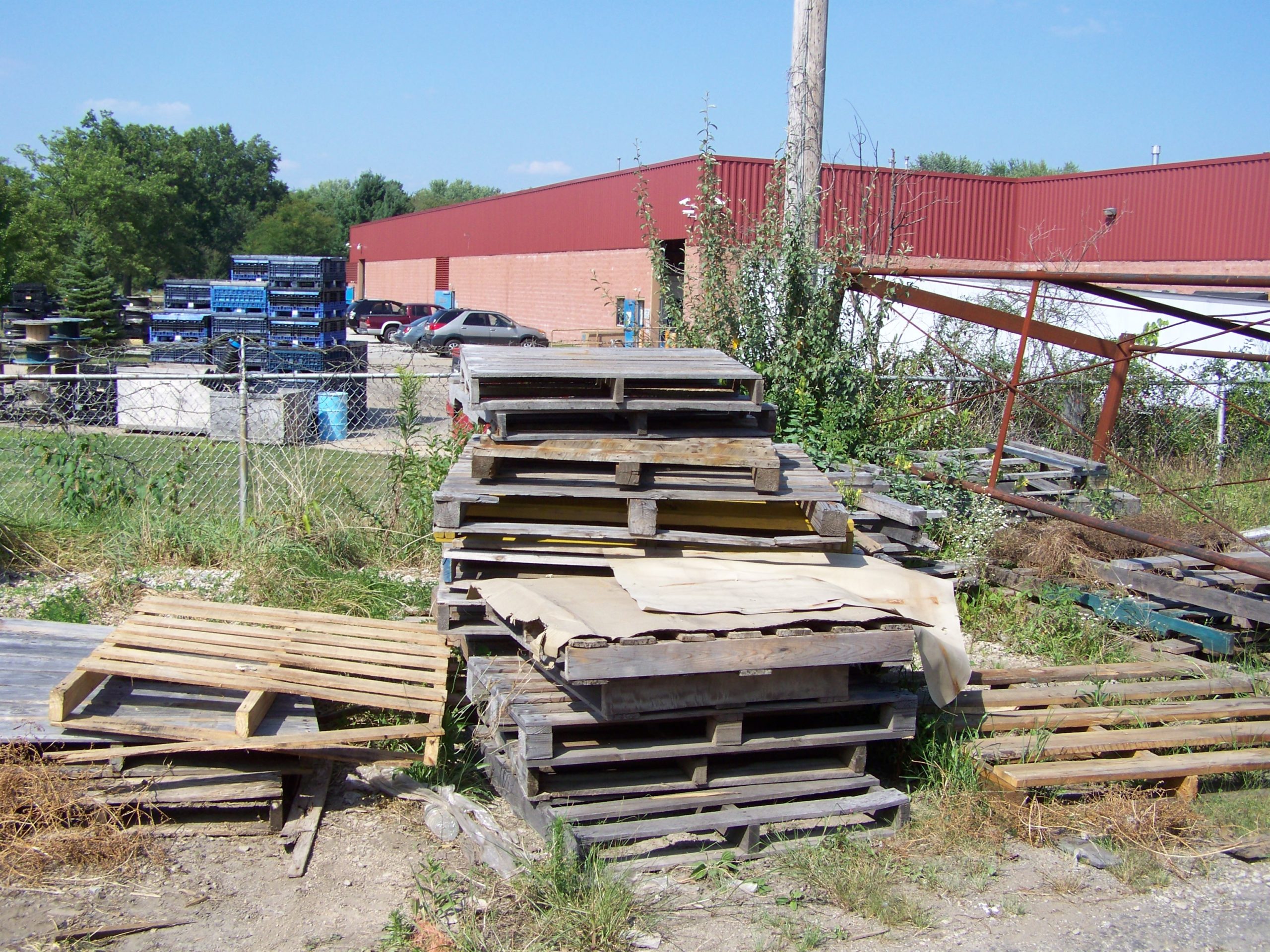
1) Wood packaging continues to pose a threat despite past international and national efforts. As documented in my recent blogs, the numbers of shipping containers – presumably with wood packaging – are rising. Since 2010, CBP has detected nearly 33,000 shipments in violation of ISPM#15. The numbers of violations are down in the most recent years. However, a high proportion of pest-infested wood continues to bear the ISPM#15 mark. So, ISPM#15 is not as effective as it needs to be.

We at CISP hope that by mid-2022, a new analysis of the current proportion of wood packaging harboring pests will be available. Plus there are at least two collaborative efforts aimed at increasing industry efforts to find solutions – The Nature Conservancy with the National Wooden Pallet and Container Association; and the Cary Institute with an informal consortium of importers using wooden dunnage.

2) Imports of living plants (“plants for planting”) are less well studied so the situation is difficult to assess. However, we know this is a pathway that has often spread pests into and within the US. There have been significant declines in overall numbers of incoming shipments, but available information doesn’t tell us which types of plants – woody vs. herbaceous, plant vs. tissue culture, etc. – have decreased.

APHIS said, in a report to Congress (reference at end of blog), that introductions have been curbed – but neither that report nor other data shows me that is true.

Scientists are making efforts to improve risk assessments by reducing the number of organisms for which no information is available on their probable impacts (the “unknown unknowns”).

Solving Issues of Prevention   

While I have repeatedly proposed radical revisions to the international phytosanitary agreements (WTO SPS & IPPC) that preclude prevention of unknown unknowns (see Fading Forests II and blog), I have also endorsed measures aimed at achieving incremental improvements in preventing introductions, curtailing spread, and promoting recovery of the affected host species.

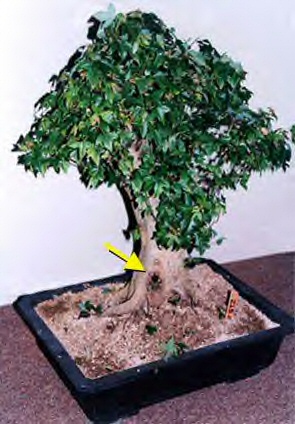
citrus longhorned beetle exit hole in bonsai tree; USDA APHIS photo

The more radical suggestions focus on: 1) revising the US Plant Protection Act to give higher priority to preventing pests introductions than to facilitating free trade (FF II Chapter 3); 2) APHIS explicitly stating that its goal is to achieve a specific, high level of protection (FF II Chapter 3); 3) APHIS using its authority under the NAPPRA program to prohibit imports of all plants belonging to the 150 genera of “woody” plants that North America shares with Europe or Asia; 4) APHIS prohibiting use of packaging made from solid wood by countries and exporters that have a record of frequent violations of ISPM#15 in the 16 years since its implementation.

Another action leading to stronger programs would be for APHIS to facilitate outside analysis of its programs and policies to ensure the agency is applying the most effective strategies (Lovett et al. 2016). The pending Haack report is an encouraging example.

I have also suggested that APHIS broaden its risk assessments so that they cover wider categories of risk, such as all pests that might be associated with bare-root woody plants from a particular region. Such an approach could speed up analyses of the many pathways of introduction and prompt their regulation.

Also, APHIS could use certain existing programs more aggressively. I have in mind pre-clearance partnerships and Critical Control Point integrated pest management programs. APHIS should also clarify the extent to which these programs are being applied to the shipments most likely to transport pests that threaten our mainland forests, i.e. imports of woody plants belonging to genera from temperate climates. APHIS should promote more sentinel plant programs. Regarding wood packaging, APHIS could follow the lead of CBP by penalizing importers for each shipment containing noncompliant SWPM.

Getting APHIS to prioritize pest prevention over free trade in general, or in current trade agreements, is a heavy lift. At the very least, the agency should ensure that the U.S. prioritize invasive species prevention in negotiations with trading partners and in developing international trade-related agreements. I borrow here from the recent report on Canadian invasive species efforts. (I complained about APHIS’ failure to even raise invasive species issues during negotiation of a recent agricultural trade agreement with China.)

Solving Issues of Spreading Pests

The absence of an effective system to prevent a pest’s spread within the U.S. is the most glaring gap in the so-called federal “safeguarding system”. Yet this gap is rarely discussed by anyone – officials or stakeholders. APHIS quarantines are the best answer – although they are not always as efficacious as needed – witness the spread of EAB and persistence of nursery outbreaks of the SOD pathogen.

areas at risk to goldspotted oak borer

APHIS and the states continue to avoid establishing official programs targetting bioinvaders expected to be difficult to control or that don’t affect agricultural interests. Example include laurel wilt, and two boring beetles in southern California – goldspotted oak borer, Kuroshio shot hole borer and polyphagous shot hole borer and their associated fungi.

One step toward limiting pests’ spread would come from strengthening APHIS’ mandate in legislation, as suggested above. A second, complementary action would be for states to adopt quarantines and regulations more aggressively. For this to happen, APHIS would need to revise its policies on the “special needs exemption” [7 U.S.C. 7756]. Then states could adopt more stringent regulations to prevent introduction of APHIS-designated quarantine pests (Fading Forests III Chapt 3).

Finally, APHIS should not drop regulating difficult-to-control species – e.g., EAB. There are repercussions. 

APHIS’ dropping EAB has not only reduced efforts to prevent the beetle’s spread to vulnerable parts of the West. It has also left states to come up with a coherent approach to regulating firewood; they are struggling to do so.

Considering interstate movement of pests via the nursery trade, the Systems Approach to Nursery Certification (SANC) program) is voluntary and was never intended to include all nurseries. Twenty-five nurseries were listed on the program’s website as of March 2020. It is not clear how many nurseries are participating now. The program ended its “pilot” phase and “went live” in January 2021. Furthermore, the program has been more than 20 years in development, so it cannot be considered a rapid response to a pressing problem.

Solving Issues of Recovery and Restoration via Resistance Breeding

I endorse the findings of two USFS scientists, Sniezko and Koch citations. They have documented the success of breeding programs when they are supported by expert staff and reliable funding, and have access to appropriate facilities. The principle example of such a facility is the Dorena Genetic Resource Center in Oregon. Regional consortia, e.g., Great Lakes Basin Forest Health Collaborative and Whitebark Pine Ecosystem Foundation are trying to overcome gaps in the system. I applaud the growing engagement of stakeholders, academic experts, and consortia. Questions remain, though, about how to ensure that these programs’ approaches and results are integrated into government programs.

resistant and vulnerable ash seedlings; photo courtesy of Jennifer Koch, USFS

In Bonello et al., I and others call for initiating resistance breeding programs early in an invasion. Often other management approaches, e.g., targetting the damaging pest or manipulating the environment, will not succeed. Therefore the most promising point of intervention is often with by breeding new or better resistance in the host. This proposal differs slightly from my suggestion in the “30 years – solutions” blog, when I suggested that USFS convene a workshop to develop consensus on breeding program’s priorities and structure early after a pest’s introduction.

Funding Shortfalls

I have complained regularly in my publications (Fading Forests reports) and blogs about inadequate funding for APHIS Plant Protection program and USFS Forest Health Protection and Research programs. Clearly the USDA Plant Pest and Disease Management and Disaster Program has supported much useful work. However, its short-term grants cannot substitute for stable, long-term funding. In recent years, APHIS has held back $14 – $15 million each year from this program to respond to plant health emergencies. (See APHIS program reports for FYs 20 and 21.) This decision might be the best solution we are likely to get to resolve APHIS’ need for emergency funds. If we think it is, we might drop §2 of H.R. 1389.

Expanding Engagement of Stakeholders 

Americans expect a broad set of actors to protect our forests. However, these groups have not pressed decision-makers to fix the widely acknowledged problems: inadequate resources – especially for long-term solutions — and weak and tardy phytosanitary measures. Employees of federal and state agencies understand these issues but are restricted from outright advocacy. Where are the professional and scientific associations, representatives of the wood products industry, forest landowners, environmental NGOs and their funders, plus urban tree advocates – who could each play an important role? The Entomological Society’s new  “Challenge” is a welcome development and one that others could copy.

SOURCES

Bonello, P., Campbell, F.T., Cipollini, D., Conrad, A.O., Farinas, C., Gandhi, K.J.K., Hain, F.P., Parry, D., Showalter, D.N, Villari, C. and Wallin, K.F. (2020) Invasive Tree Pests Devastate Ecosystems—A Proposed New Response Framework. Front. For. Glob. Change 3:2. doi: 10.3389/ffgc.2020.00002

Green, S., D.E.L. Cooke, M. Dunn, L. Barwell, B. Purse, D.S. Chapman, G. Valatin, A. Schlenzig, J. Barbrook, T. Pettitt, C. Price, A. Pérez-Sierra, D. Frederickson-Matika, L. Pritchard, P. Thorpe, P.J.A. Cock, E. Randall, B. Keillor and M. Marzano. 2021. PHYTO-THREATS: Addressing Threats to UK Forests and Woodlands from Phytophthora; Identifying Risks of Spread in Trade and Methods for Mitigation. Forests 2021, 12, 1617 https://doi.org/10.3390/f12121617ý

Krishnankutty, S., H. Nadel, A.M. Taylor, M.C. Wiemann, Y. Wu, S.W. Lingafelter, S.W. Myers, and A.M. Ray. 2020. Identification of Tree Genera Used in the Construction of Solid Wood-Packaging Materials That Arrived at U.S. Ports Infested With Live Wood-Boring Insects. Journal of Economic Entomology 2020, 1 – 12

Liebhold, A.M., E.G. Brockerhoff, L.J. Garrett, J.L. Parke, and K.O. Britton. 2012. Live plant imports: the major pathway for forest insect and pathogen invasions of the US. Front. Ecol. Environ. 2012; 10(3):135-143

Lovett, G.M., M. Weiss, A.M. Liebhold, T.P. Holmes,  B. Leung, K.F. Lambert, D.A. Orwig, F.T. Campbell, J. Rosenthal, D.G. McCullough, R. Wildova, M.P. Ayres, C.D. Canham, D.R. Foster, SL. Ladeau, and T. Weldy. 2016. NIS forest insects and pathogens in the US: Impacts and policy options. Ecological Applications, 26(5), 2016, pp. 1437–1455

Mech,  A.M., K.A. Thomas, T.D. Marsico, D.A. Herms, C.R. Allen, M.P. Ayres, K.J. K. Gandhi, J. Gurevitch, N.P. Havill, R.A. Hufbauer, A.M. Liebhold, K.F. Raffa, A.N. Schulz, D.R. Uden, & P.C. Tobin. 2019.  Evolutionary history predicts high-impact invasions by herbivorous insects. Ecol Evol. 2019 Nov; 9(21): 12216–12230.

Poland, T.M., Patel-Weynand, T., Finch, D., Miniat, C. F., and Lopez, V. (Eds) (2019), Invasive Spp in Forests and Grasslands of the US: A Comprehensive Science Synthesis for the US Forest Sector.  Springer Verlag. (in press).

Roy, B.A., H.M Alexander, J. Davidson, F.T Campbell, J.J Burdon, R. Sniezko, and C. Brasier. 2014. Increasing forest loss worldwide from invasive pests requires new trade regulations. Front Ecol Environ 2014; 12(8): 457–465

Schulz, A.N.,  A.M. Mech, M.P. Ayres, K. J. K. Gandhi, N.P. Havill, D.A. Herms, A.M. Hoover, R.A. Hufbauer, A.M. Liebhold, T.D. Marsico, K.F. Raffa, P.C. Tobin, D.R. Uden, K.A. Thomas. 2021. Predicting non-native insect impact: focusing on the trees to see the forest. Biological Invasions.

United States Department of Agriculture Animal and Plant Health Inspection Service. Report on the Arrival in the US of Forest Pests Through Restrictions on the Importation of Certain Plants for Planting. https://www.caryinstitute.org/sites/default/files/public/downloads/usda_forest_pest_report_2021.pdf

Posted by Faith Campbell

We welcome comments that supplement or correct factual information, suggest new approaches, or promote thoughtful consideration. We post comments that disagree with us — but not those we judge to be not civil or inflammatory.

For a detailed discussion of the policies and practices that have allowed these pests to enter and spread – and that do not promote effective restoration strategies – review the Fading Forests report at http://treeimprovement.utk.edu/FadingForests.htm

The Lacey Act – Can It Protect US from Invasive Species?

Sean Connery as Hotspur, Shakespeare Henry IV Part I (BBC, “Age of Kings”)

[Starlings – one of the agricultural pests that prompted adoption of the Lacey Act – were introduced to the U.S. because they were mentioned by Shakespeare: Hotspur says “Nay, I’ll have a starling shall be taught to speak nothing but ‘Mortimer,’ and give it him, to keep his anger still in motion.”]

Americans are increasingly aware of the damage caused by invasive species. The law that ostensibly protects our environment from most potentially invasive animals is the Lacey Act – more specifically, the “injurious wildlife” sections of the law, now known as 18 U.S.C. 42 or title 18.

When it was adopted 120 years ago, the Lacey Act was not intended to protect the environment from the full range of possible animal bioinvaders. While Congress amended it several times in the first 60 years of its existence, the law still has many gaps that impede its usefulness for that purpose.

Rep. John F. Lacey via Wikimedia Commons

When first adopted in 1900, the injurious wildlife provisions of the Lacey Act prohibited importation only of wild mammals and birds that posed a threat to agriculture and horticulture. The statute was quite broad in that it prohibited importation of any wild bird or mammal without a permit; there was no requirement that a species be designated as “injurious” to be regulated. The Act was then administered by the U.S. Department of Agriculture. [For a detailed discussion of the Lacey Act’s changing provisions, see Jewell 2020; full reference at the end of this blog.]

In 1960 the Act was amended to expand the list of taxa eligible for designation as “injurious” to include fishes, mollusks, crustaceans, reptiles, and amphibians. Congress also expanded the justifications for listing a species as injurious. It added harm to people, to forestry, or to wildlife or US wildlife resources to the law’s original concerns for agriculture and horticulture. This second change brought the purposes of the Lacey Act closer to the mandate of the U.S. Fish and Wildlife Service (USFWS) – which had assumed responsibility for implementing the Act in 1939.

Unfortunately, Congress simultaneously took other action that greatly weakened USFWS’ ability to use the Act to protect the environment from introduced animals. First, it dropped the requirement that the Secretary approve, with a permit, any importation of a wild bird or mammal.

Second, the 1960 amendment clouded the originally clear prohibition of movement of listed species across state lines. The new language prohibits “any shipment between the continental United States, the District of Columbia, Hawaii, the Commonwealth of Puerto Rico, or any possession of the United States …”

For the next 57 years, the USFWS and Congress sometimes interpreted that language as continuing to prohibit transport between the states within the continental United States. However, this situation could not last. In 2017, acting in a case that had challenged the 2012 listing of several nonnative constrictor snakes as “injurious,” the D.C. Circuit court found that the plain language of §18 U.S.C. 42(a)(1) does not prohibit the transportation of injurious wildlife between states within the continental United States. So now, transportation of injurious wildlife among the continental states is not prohibited by the statute in most circumstances.

Burmese python; photo by R. Cammauf, Everglades National Park via Flickr

The Law’s Strengths

Some aspects of the law have been strengths. Since the term “injurious” has never been defined, the USFWS has been able to use its discretion to list species that are not necessarily invasive themselves but that might cause harm in some other way. For example, the salmon family and 20 genera of salamanders have been listed because they are vectors of harmful wildlife pathogens.

In addition, USFWS has listed entire genera or families of organisms – as long as each species within the taxon has been shown to possess the “injurious” trait(s). This flexibility has probably helped listings aimed at precluding importers from switching from the species that initially raised concerns to related species.

The Law’s Inherent Weaknesses

1) Legal shortfalls

Due to the confusion created by the 1960 amendment, the USFWS now lacks authority to prohibit interstate transport of species listed as “injurious”. This gap undermines the law’s efficacy in controlling spread of listed species once they are established within the U.S.

Also, the law does not prohibit other human actions that pertain to the presence and spread of species listed as “injurious,” e.g., sale, possession, or intra-state transport. Addressing these other aspects of invasive species policy was left to other players, such as states or resource managers.

2) Funding shortfall

Neither the Executive Branch nor Congress has ever provided specific funding for implementation of the Lacey Act. Only one USFWS staffer has the job of listing species under the Act. This situation might change now, since the American Rescue Plan Act adopted in spring 2021 does provide funding over the next five years for listing species that can vector pathogens harmful to people.

Staff’s Evaluation of Its Implementation of the Lacey Act

Since USFWS took over implementation of the Lacey Act in 1939, 36 taxonomic groups have been added to the “injurious wildlife” list. Seven of these listings comprise multiple species – either as genera or families. 

Two mammals have been listed since the late 1960s – brushtail possum in 2002 and raccoon dog in 1983. Recent listings have strongly focused on aquatic organisms. This is because the staff is housed in the Fish and Aquatic Conservation program and their expertise is in these species.

silver carp; photo by University of Illinois

Listing activity appeared to be building in the second decade of the 21st Century, with multi-species listings of fish, snakes, and salamanders between 2012 and 2016. However, there has been only one listing action since 2016 – and that was by an act of Congress (listing of the quagga mussel).

In two peer reviewed papers, the USFWS’ Jewell and Fuller provide a history of the Lacey Act’s injurious wildlife title and analyze the effects of listing of 307 species (those listed since 1952). They conclude that 98% of the species listings were “effective” because the listed species either had not been introduced subsequent to listing [288 species; 94% of the total number of listed species] or had not spread to additional states [12 species, 4% of the total]. Another way to calculate the latter figure is to say that 63% of all established species have remained within the state(s) where they were established at the time of listing. Only three species have been spread to additional states by human actions. In these cases, Jewell and Fuller considered the Lacey Act measures to be “ineffective”. For further details on the Jewell and Fuller evaluations of listing efficacy, see their article – full citation given at the end of this blog.

Jewell and Fuller do not evaluate the impacts of animal species introduced to the U.S. after 1960 that have never been listed under the Lacey Act, or speculate about whether listing those species might have minimized the risk of their introduction.

Jewell and Fuller consider listing of species not yet established in the U.S. to be most effective for two reasons. First, listing minimizes the probability that the species will be imported intentionally or unintentionally. Second, listing provides states with risk analyses and other information on which to rely in adopting their own restrictions, including possible prohibitions on sale or possession.

Jewell and Fuller also argue that even in the absence of legal authority to regulate interstate transport of listed species among the continental states, it is still worthwhile to list species that are already established in the U.S. They give six reasons. I summarize those reasons (placing them in my order, not Jewell and Fuller’s):

1) Listing can protect the islands of Hawai`i, Puerto Rico, and the Caribbean and Pacific territories. All are extremely vulnerable to invasive species.

2) If a species shares the traits of injuriousness with other species, particularly those in the same genus or family, then including the already-invasive species demonstrates why the related species should also be listed.

3) Many imported animals carry parasites and pathogens harmful to native species, and stopping the continued importation can reduce those threats that cause disease.

4) Prohibiting further importation of the invasive species can prevent individuals from being introduced to new areas where the species would not otherwise have arrived and can reduce propagule pressure that could introduce hardier individuals.

5) Listing can provide states and other jurisdictions with the technical information they need to pursue additional restrictions not federally authorized under 18 U.S.C. 42, such as transport into a state, possession, and sale.

6) Listing reduces propagule pressure and might enhance the efficacy of any eradication or control measures.

How to Improve the Lacey Act

1) Amend the Lacey Act to restore authority to regulate interstate movement of listed species – including among the continental states and emergency listing authority. Also establish a more streamlined listing process.

2) Strengthen implementation of the law by providing a specific, adequate appropriation to hire additional staff. Utilize the enhanced resources to assess species proactively using risk assessment tools.

It is not yet clear whether the Biden Administration will initiate a more active listing process, especially beyond the zoonotic disease vectors that are the subject of the American Rescue Plan Act.

Note: The “injurious wildlife” section of the Lacey Act (18 U.S.C. 42, or title 18) is separate from another part of the Lacey Act (16 U.S.C. 3371-3378) that is has always been more widely known. This provision regulates wildlife trafficking across State lines. It was later broadened to include plants and trafficking of wildlife and plants from foreign countries.

SOURCES

Jewell S.D. (2020) A century of injurious wildlife listing under the Lacey Act: a history. Management of Biological Invasions. Volume 11, Issue 3: 356–371, https://doi.org/10. 3391/mbi.2020.11.3.01 https://www.reabic.net/journals/mbi/2020/3/MBI_2020_Jewell.pdf

Jewell S.D., P.L. Fuller (2021) The unsung success of injurious wildlife listing under the Lacey Act. Management of Biological Invasions. Volume 12, Issue 3:527-545 https://www.reabic.net/journals/mbi/2021/3/MBI_2021_Jewell_Fuller.pdf

Alternative view – that Lacey Act implementation has failed to protect the U.S. – presented by the following authors:

Fowler, A.J., D.M. Lodge and J. Hsia. 2007. Failure of the Lacey Act to protect US ecosystems against animal invasions. Frontiers in Ecology and the Environment.

Springborn, M. C.M. Romagosa and R.P. Keller. 2011. The value of nonindigenous species risk assessment in international trade. Ecological Economics

Jenkins, P.T. 2012. Invasive animals and wildlife pathogens in the United States: the economic case for more risk assessments and regulation. Biological Invasions

Posted by Faith Campbell

We welcome comments that supplement or correct factual information, suggest new approaches, or promote thoughtful consideration. We post comments that disagree with us — but not those we judge to be not civil or inflammatory.

New Study on Forest Carbon and Pests: The Picture is Ugly

lodgepole pines killed by mountain pine beetle in British Columbia; photo courtesy of Wikipedia

Natural systems, especially forests, could provide as much as 37% of the near-term mitigation necessary to meet Paris global climate goals. In the US, conservation, restoration, and improved land management could provide carbon sequestration equivalent to an estimated 21% of current net annual emissions.

However, the current U.S. forest carbon sink, which includes soils and standing and downed wood as well as live trees, might be in jeopardy due to increasing levels of disturbance, conversion, and/or declining sequestration rates in old growth stands.

Insects and plant diseases are one such disturbance agent. Acting alone or in combination with other forest stressors, they can damage or kill large numbers of trees in short periods of time, thereby reducing carbon sequestration and increasing emissions of stored carbon through decomposition of wood in dead or injured trees.

Historically, native and introduced insects and diseases have impacted an estimated 15% of the total U.S. forest cover annually. This impact is likely to increase. One study (Fei et al., 2019) found that an estimated 41% of the live forest biomass in the contiguous U.S. could be impacted by the 15 most damaging introduced pests already established in the U.S. Continuing introductions of new pests and exacerbated effects of native pests associated with climate change portend worsening losses of live trees. These rising impact of pests, combined with more frequent and severe fires and other forest disturbances, are likely to negate efforts to improve forests’ carbon sequestration capacity.

Sources of information about introduced pests’ impacts is available from, inter alia Campbell and Schlarbaum Fading Forests  II and III, Lovett et al 2016, Poland et al. 2021, many  blogs on this site, and pests’ profiles posed here under “invasive species” tab. Chapter 4 of Poland et al. (2021) provides a summary of what is known about interactions between invasive species and climate change – both climate impacts on bioinvaders and bioinvaders’ effect on carbon sequestration.

The United States and other major polluting countries have certain advantages. Their strong economies have the scientific and financial resources needed to implement effective invasive species prevention and forest management strategies. At the same time, many of them receive the most new forest pests – because they are major importers. These introduced pests pose the most serious and urgent near-term ecological threat to their forests and all the ecosystem services forests provide.

So, reducing insect and disease impacts to forests can simultaneously serve several goals—carbon sequestration, biodiversity conservation, and protecting the myriad economic and societal benefits of forests. See the recent IUCN report on threatened tree species.

A Major New Study

A new study by Quirion et al. (2021) takes another step in quantifying the threat to U.S. forests’ ability to sequester carbon by analyzing data from National Forest Inventory plots. Unfortunately, the re-measurement data for the period 2001 – 2019 are not available in the NFI for the Rocky Mountain states, which represents a critical data gap in the NFI program. This gap might not have had a significant impact on the national findings, however, because while the insect damage level (measured by an earlier inventory round) was quite severe in the Rocky Mountain States, the relatively slow growth of trees in that region means carbon sequestration rates are low.

Forest stand productivity – and carbon sequestration — will typically decline immediately after pest outbreaks, then recover or even increase beyond pre-outbreak levels depending on the productivity and maximum achieved biomass of replacement plant species and related soil characteristics. However, when prevalence of the disturbance increases, by, for example, more frequent pest outbreaks, carbon stocks in standing trees and sequestration rates can be reduced for extended periods.

Findings

  • Nationally, insects and diseases have decreased carbon sequestration by live trees on forest land by 12.83 teragrams carbon per year. This equals ~ 9% of the contiguous states’ total annual forest carbon sequestration and equivalent to the CO2 emissions from over 10 million passenger vehicles driven for one year.
  • This estimate includes the impacts of both native and introduced insects and diseases, because the NFI database does not distinguish between them.
  • Insect-caused mortality had a larger impact than disease-caused mortality (see below). Forest plots recently impacted by insect disturbance sequestered on average 69% less carbon in live trees than plots with no recent disturbance. Plots recently impacted by disease disturbance sequestered on average 28% less carbon in live trees than plots with no recent disturbance.
  • Ecoprovinces in which the greatest annual reductions in live tree carbon sequestration due to pests were the Southern Rocky Mountain Steppe, Cascade Mixed Forest, Midwest Broadleaf Forest, and Laurentian Mixed Forest. (Ecoprovinces are outlined – but not named – in Quirion et al. 2021; more complete information is provided in the supplementary material.)

If this study had been carried out in the 1920’s, when chestnut blight and white pine blister rust were spreading across vast areas and killing large trees, the impact of diseases would have been much higher. Today, the most widespread impacts of diseases are on either small trees (e.g., redbay succumbing to laurel wilt) or slow-growing, high-elevation trees (e.g., whitebark and limber pine to white pine blister rust). As long as no equivalents of those earlier diseases are introduced, insects will probably continue to have the larger impacts.

western white pine killed by blister rust; photo from National Archives

Quirion et al. 2021 note that their estimates should be considered conservative. The USFS’s inventory records only major disturbances. That is, when mortality or damage is equal to or exceeds 25% of trees or 50% of an individual tree species’ count on an area of at least 0.4 ha. This criterion largely excludes less severe pest disturbances, including those from which trees recover but which might have temporary negative effects on carbon sequestration.

The study’s authors note that their work has important limitations. The dearth of data from the Rocky Mountain states is one. Other factors not considered include transfers of carbon from live biomass to dead organic matter, soils, and salvaged or preemptively harvested wood products.  As trees die from pests or diseases, their carbon becomes dead wood and decays slowly, producing a lag in the carbon emissions to the atmosphere.  A small fraction of the carbon in dead wood might be incorporated into soil organic matter, further delaying the emissions.  A full accounting of the carbon consequences of pests and diseases would require assessment of these lags, probably through a modeling study.

affects of mountan pine beetle on lodgepole pine in Rocky Mountain National Park, Colorado photo from Wikimedia

Actions to Maintain Carbon Sequestration

Quirion et al. (2021) outline several actions that would help protect the ability of America’s forests to sequester carbon. These suggestions address both native and introduced pests, since both contribute to the threatened reduction in capacity.

Concerning native pests, the authors call for improved forest management, but warn that measures must be tailored to species and environmental context.

Concerning introduced insects and pathogens, Quirion et al. (2021) call for strengthening international trade policies and phytosanitary standards, as well as their enforcement. The focus should be on the principal pathways: wood packaging (click on “wood packaging” category for on this blog site) and imported plants (click on “plants as vectors” category for on this blog site). Specific steps to reduce the rate of introduction of wood-boring insects include enforcement to increase compliance with the international treatment standard (ISPM#15), requiring trade partners – especially those which have repeatedly shipped infested packaging – to switch to packaging made from alternative materials. Introductions via the plant trade could be reduced by requiring foreign shippers to employ integrated management and critical control point systems (per criteria set by the U.S.) and using emergency powers (e.g., NAPPRA) to further restrict imports of the plants associated with the highest pest risk, especially plant species that are congeneric with native woody plants in North America. See Lovett et al 2016; Fading Forests II & III

As backup, since even the most stringent prevention and enforcement will not eliminate all risk, the authors urge increased funding for and research into improved inspection, early detection of new outbreaks, and strategic rapid response to newly detected incursions.

To reduce impacts of pests established on the continent – both recently and years ago – they recommend increasing and stabilizing dedicated funding for classical biocontrol, research into technologies such as sterile-insect release and gene drive, and host resistance breeding.

Thinning is useful in reducing damage by native bark beetles to conifers. However, it has not been successful in controlling introduced pests for which trees do not have an evolved resistance. Indeed, preemptive harvesting of susceptible species can harm forest ecosystems directly through impacts of the harvesting operation and indirectly as individual trees that may exhibit resistance are removed, reducing the species’ ability to develop resistance over time.

Further research is needed to clarify several more issues, including whether introduced pests’ impacts are additive to, or interact with, those of native species and/or other forest stressors.

SOURCE

Quirion BR, Domke GM, Walters BF, Lovett GM, Fargione JE, Greenwood L, Serbesoff-King K, Randall JM & Fei S (2021) P&P Disturbances Correlate With Reduced Carbon Sequestration in Forests of the Contiguous US. Front. For. Glob. Change 4:716582.  [Volume 4 | Article 716582] doi: 10.3389/ffgc.2021.716582

SOURCES of additional information

Campbell, F.T. and S.E. Schlarbaum. Fading Forest reports at http://treeimprovement.utk.edu/FadingForests.htm

Lovett, G.M., M. Weiss, A.M. Liebhold, T.P. Holmes, B. Leung, K.F. Lambert, D.A. Orwig, F.T. Campbell, J. Rosenthal, D.G. McCullough, R. Wildova, M.P. Ayres, C.D. Canham, D.R. Foster, S.L. Ladeau, and T. Weldy. 2016.  Nonnative forest insects and pathogens in the United States: Impacts and policy options.  Ecological Applications, 26(5), 2016, pp. 1437-1455

Poland, T.M., Patel-Weynand, T., Finch, D., Miniat, C. F., and Lopez, V. (Eds) (2019), Invasive Species in Forests and Grasslands of the United States: A Comprehensive Science Synthesis for the United States Forest Sector.  Springer Verlag. Available for download at no cost at https://www.fs.usda.gov/treesearch/pubs/61982

Posted by Faith Campbell

We welcome comments that supplement or correct factual information, suggest new approaches, or promote thoughtful consideration. We post comments that disagree with us — but not those we judge to be not civil or inflammatory.

For a detailed discussion of the policies and practices that have allowed these pests to enter and spread – and that do not promote effective restoration strategies – review the Fading Forests report at http://treeimprovement.utk.edu/FadingForests.htm

Resistance Breeding – a Useful Strategy

Port-Orford cedar resistance trials at Dorena Center; photo courtesy of Richard Sniezko, USFS

I have written several times about the importance of the United States adopting a comprehensive program to address all aspects of introduced forest pests including breeding of trees resistant to the introduced pests. See Fading Forests III from seven years ago; an earlier blog; and Bonello et al. 2020 (full citation at end of blog), in which we proposed the creation of a federal Center for Forest Pest Control and Prevention to implement end-to-end integrated responses to forest pest invasions. A similar view is being voiced internationally; see, e.g., Buggs et al. 2020.

I have seen efforts to restore pest-decimated tree species to the forest lagging. I complained in a recent blog link that the recent USDA Forest Service report on invasive species (Poland et al. 2021) gave a misleading impression that significant effort was being made on resistance breeding to address several pests.

The USFS does support breeding trees resistant to pests, but in my view this support has been inadequate – including in the USFS report. Others think so, too — see Sniezko and Koch 2017. This insufficiency only grows, despite USDA claims to recognize that promoting resistance to introduced forest pests is an essential component of achieving its strategic goals of maintaining or enhancing productivity while ensuring responsible stewardship of resilient natural resources (Federman and Zankowski 2019).

Work at the Dorena Genetic Research Center

The principal and most notable and successful resistance breeding effort has been the Dorena Genetic Resource Center. The Center was established by, and is funded through the USFS Region 6 Genetic Resource (part of the National Forest System) and Forest Health Management programs. The Center has a solid foundation in the expertise and facilities needed to carry out breeding efforts. Also, it has a 50-plus-year track record.

Dorena has supported breeding of white (five-needle) pines and Port-Orford cedar. Dorena also now provides expertise and some facilities to partners exploring a) breeding Oregon ash to resist the emerald ash borer and b) two Hawaiian trees (koa and ‘ōhi‘a) to resist introduced pathogens (see below). Dorena staff is assisting low-budget, shoe-leather efforts to explore breeding of other trees at risk to non-native pests. These programs are described briefly in Box 8 of Poland et al. 2021. Despite this valuable effort with proven success funding to continue Dorena’s work is tenuous.

White Pine Blister Rust — Efforts to develop resistance to white pine blister rust (WPBR) DMF in five-needle pine species (nine grow across the country) began more than 50 years ago. Currently Dorena focuses on whitebark pine (Pinus albicaulis), denizen of high elevations in the West, along with western white pine (P. monticola), sugar pine (P. lambertiana) , limber pine (P. flexilis), southwestern white pine (P. strobiformis), and foxtail pine (P. balfouriana). Testing whitebark for resistance to WPBR began in 2002. Seedling families from >1,300 parent trees are in various stages of testing. The discovery that some whitebark populations have much higher levels and frequency of partial resistance has allowed rapid distribution of seed. The first restoration plantings in the Pacific Northwest were in 2009.

3-year old seedlings of whitebark pine at Crater Lake National Park; photo by Richard Sniezko, USFS

There are many collaborators – especially the National Park Service, Washington State’s Department of Natural Resources, several Tribes, the Whitebark Pine Ecosystem Foundation, and American Forests. However, planting has been hampered by the high cost of restoration in these high elevation ecosystems, lack of frequent good seed crops on the resistant parent trees, and lack of approval to plant in designated wilderness areas. In the areas with the highest levels of resistant parents, management activities that encourage natural regeneration might be successful. In late 2020 the U.S. Fish and Wildlife Service proposed to list whitebark pine as a Threatened species

Oregon ash (F. latifolia) has not yet been attacked by the emerald ash borer, but all expect EAB to spread to the West coast. Dorena and cooperators have already collected seed from ash trees in Oregon and obtained funding for additional collections, to include Washington and California. The seeds are being stored at both Dorena and the USDA Agriculture Research Service facility at Ft. Collins, Colorado. Seedlings from two dozen families have also been planted at Dorena and a center operated by Washington State University, plus at a USFS Northern Research Station research center in Ohio, where EAB is established and they can be tested for resistance to the insect’s attack.

Koa and ‘ōhi‘a in Hawaii — Regeneration of the koa tree (Acacia koa) has been undercut by the koa wilt pathogen, Fusarium oxysporum f. sp. koae. Dorena initiated efforts with the Hawaii Agricultural Research Center (HARC) to respond in 2003. There has been rapid progress screening seedlings to identify resistant parent trees establishing seed orchards, delineating seed zones, and releasing seed with confirmed levels of resistance for reforestation and restoration (Sniezko and Koch 2017; see also Dudley et al. 2020).

‘ōhi‘a trees killed by rapid ‘ōhi‘a death; photo courtesy of J.R. Friday

When the threat to Hawaii`s most widespread tree ‘ōhi‘a (Metrosideros polymorpha) from rapid ‘ōhi‘a death (ROD) pathogens became apparent, the Dorena staff provided advice on breeding strategies. Its Center Geneticist is part of an ad hoc resistance team. Scientists have identified surviving trees in stands affected by ROD on the Big Island using a variety of methods. These include aerial surveys by drones and fixed-wing aircraft. They then began collecting seeds and cuttings. As of spring 2021, they have collected cuttings or seeds from more than 300 ‘ōhi‘a trees belonging to five varieties. The effort is low-cost, using Americorps volunteers coordinated by a single full-time person, a USFS employee. The program is still in its infancy. It will have to find funding to expand its scope to an operational resistance program once more information on resistance is has been obtained.

Other Efforts

Most other breeding programs are small and poorly funded. In fact, they have been described by one USFS scientist as “hobby projects” of a few scientists determined to try this strategy. Not only are efforts minimal; but also retirement of those few scientists can bring an end to the individual project.

There were greater efforts in the past. I have a document (of unknown origin) from 2011 that describes breeding efforts funded by both the National Forest System and USFS Research and Development. Table 1 listed 16 projects for western conifers; Table 2 listed 32 projects funded by R&D. During this period, the USFS provided start-up funds for the Healthy Forests Initiative, a consortium that sought to prove the concept that genetic engineering could quickly produce an American chestnut able to live and reproduce in its native range. This support was in addition to support for The American Chestnut Foundation backcross hybridization program link.

Part of the problem is the longstanding decline in funding and staffing of USFS research program. A graph in Chapter 6 of FFIII shows the decline in numbers of forest entomologists and pathologists over the 20-year period 1985–2007. Wheeler et al. 2015 discuss the parallel decline in tree breeders and geneticists (citation at end of this blog).

Cuts continue. Funding for research conducted by the USFS Research stations on ten non-native pests decreased from $10 million in Fiscal Year 2010 to just $2.5 million in Fiscal Year 2020 – a cut of more than 70%. I have lobbied for increased appropriations for decades.

The need for new approaches and increased effort is more widely asserted. One example is the group I am working with that promotes a new Center for Forest Pest Control and Prevention. Link A second example is the University of Florida’s recent conference of forest health researchers, representatives of the forest products industry, non-governmental organizations, and leaders of universities with forest-resource programs. This group suggested forming a united organization to increase capacity to improve forest health research. An article outlining the proposal is available here.

The Role of Biotechnology in Breeding Resistant Trees

what happened? same tree a few years apart — a TACF hybrid chestnut

Part of the discussion on forest research explores the proper role of biotechnology in tree species’ restoration. Purdue University hosted a related workshop in April 2021, in which I took part. (“Society and Policy Influences on Biotechnology Risk Assessment for Restoration of Threatened Forest Tree Species”). I hope participants will soon publish a paper based on our discussions.

Meanwhile, Revive & Restore, a wildlife conservation organization promoting the incorporation of biotechnologies into standard conservation practice, sponsored a workshop in June 2020. The 57 conservationists, wildlife biologists, restoration specialists, conservation geneticists, ethicists, and social scientists who participated agreed on an appropriate structure for using biotechnology. These included:

  • A broader definition of risk and application of new risk assessment tools;
  • Consideration of the risks of not taking action, as well as going ahead with a proposal;
  • Transparency about social and cultural values and engaging stakeholders
  • Monitoring results to ensure actions have been successful, manage uncertainty, and codify lessons learned.

In the literature I read, the workshops I participate in (e.g., National Academy of Sciences 2019; Purdue’s), biotechnology is seen as a potentially helpful set of tools that must be integrated into broader programs, all having research, tree improvement, restoration, and reforestation components. Such programs must have sustained management and resources stemming from public support. (For more complete descriptions of components of a resistance breeding program, see Sniezko and Koch 2017 (full reference below); or Chapter 6 of FFIII). Activities that must be incorporated include:

  • Germplasm collection and storage (applying the varied strategies that are appropriate);
  • Research to detect and test potential resistance or tolerance;
  • Research to identify techniques for producing propagules;
  • Planting sites that will be secure for decades;
  • Site preparation & planting;
  • Post-planting maintenance; and
  • Monitoring to determine success or problems

During the Purdue workshop, and in my writing, I have emphasized the principal hindrance to progress is the lack of resources being allocated to resistance breeding. USFS and academic scientists determined to pursue breeding approach must scrounge for funds. I describe some of their efforts below.

Collaborations on Breeding for Specific Species

(still) healthy hemlocks in Cook Forest State Park, Pennsylania; photo by F.T. Campbell

USFS Hemlock Woolly Adelgid (HWA) Initiative [apparently no website]

This initiative was developed under the leadership and direction of FHP staff. The list of cooperators includes dozens of state, federal, university and private organizations. The annual budget has averaged between $2.5 and $3.5 million. Most resources are apparently allocated to biocontrol, but some funding has been provided for breeding activities, including:

  • Seed collection and storage for both Carolina and eastern hemlocks. Two seed orchards have been established in western North Carolina. I believe they are protected from the hemlock woolly adelgid (HWA) by application of pesticides.
  • Research on these tree species’ silviculture and ecology, including manipulation of sunlight levels to protect seedlings from the adelgid and promote growth

The 2021-2025 Program – currently under review – foresees more integrated pest management applying biocontrol, chemical control, and silviculture. It aims to maintain the health of hemlocks being used in breeding programs and “explore” hemlock replacement options, such as hybrids or HWA-tolerant hemlocks (Mayfield et al. 2021). This effort is encouraging, but I have heard complaints from academics that they can’t get funding to pursue what they regard as promising breeding strategies.

Other small programs to breed resistant hemlocks are under way. The Forest Restoration Alliance (formerly the Alliance to Save Threatened Forests) asks citizens to identify surviving hemlocks and balsam firs. The Alliance has collected and propagated both cuttings and seeds and is testing their resistance.

Ash and Other Trees of the Upper Midwest

To date, few resources have been allocated to resistance breeding of ash. Between 2003 and 2017, only about 7% of research funds allocated to ash and emerald ash borer DMF have been devoted to host resistance. Of the host resistance research, 61% applied to identifying mechanisms, 14% to use of transgenics to develop resistance, only 7% (0.5% of the total research) has supported actual breeding for resistance (Sniezko and Koch 2017).

In May 2021 the USFS announced it was seeking funds from the water-focused Great Lakes Restoration Initiative. The USFS expects to receive up to $5.4 million for reforestation, ecosystem restoration. and forest health improvements on non-federal lands in the Great Lakes basin. (This includes parts of the states of Illinois, Indiana, Michigan, Minnesota, New York, Ohio, Pennsylvania and Wisconsin). The announcement doesn’t mention resistance breeding for ash, beech, hemlock, or other trees in the region. I hope some of the new funds will be allocated to this strategy.

“lingering” ash; photos courtesy of Jennifer Koch, USFS

In an encouraging show of entrepreneurship, USFS scientists and others have formed the Great Lakes Basin Forest Health Collaborative – a partnership with Holden Forests and Gardens, American Forests, and USFS (Kappler et al. 2021). The purpose of the Collaborative is to advance resistance breeding for these important tree species. The initial focus is on the five ash species in the region, especially black ash (Fraxinus nigra) link to blog The Collaborative is recruiting a network of partners, and will provide training and technology transfer. The partners will provide volunteers and other resources. Partners do not have to be within the region if their work helps the Great Lakes Basin, but plantings have to be there.

Partners will help identify survivor trees with potential resistance (e.g., “lingering” ash); establish clone banks and/or seed orchards; and manage seed collections. Each partner will operate independently, but in collaboration with the others. The initial focus is on obtaining representative seed collections of ash and hemlock. Then cloning, testing resistance, and crosses can begin. Eventually select lines will be chosen for bulking up and reintroduction.

In future the Collaboration hopes to engage in breeding hemlocks and identifying beech trees that remain healthy in areas heavily impacted by beech leaf disease (BLD).

Other efforts under way include the Monitoring and Managing Ash (MaMA) Program, based in the Ecological Research Institute in New York State.

Beech trees with resistance to beech bark disease (BBD) were identified as early as the 1980s, but a breeding program was begun only in 2002. A collaborative, multi-agency effort has resulted in the establishment of five regional American beech seed orchards with four others in progress as of 2017. Partners provide a cost-effective process for identifying resistant parent trees. State and National Forest personnel surveyed natural forests for candidate trees and then tested each tree and identified markers associated with resistance (Sniezko and Koch 2017).

Challenges Beyond Breeding

Large-scale restoration of tree species across much of their ranges will require significant inputs of funds, over long time periods, as well as resolving daunting logistical issues.

Some think the most likely scenario will be to plant focal areas, or islands, that can aid future natural regeneration (Sniezko and Koch 2017). The American Chestnut Foundation (TACF) anticipates it will take 1,000 years to re-establish American chestnut DMF across its range through a process of three phases: long-term research and demonstration plantings; a relatively small-scale public horticultural program using trees and/or pollen made available by TACF; and a larger-scale public restoration program using progeny from years of outcrossing and production. (This assumes APHIS approves release of the transgenic “Darling 58” tree, plus – I believe – progress in developing resistance to root disease caused by Phytophthora cinnamomi). Already good progress using focal areas has started with several white pine species, and a national plan is in the works for whitebark pine.

Such efforts will require access to land that can be protected from other uses, e.g., development for decades or centuries. Also it will require management of sites to protect propagules from browsing wildlife (deer, rabbits!), provide adequate water and light, and probably give plantings a competitive advantage in relation to other plants growing there …

non-resistant elms will grow anywhere! photo by F.T. Campbell

And there is the issue of how a relatively small number of resistant propagules will succeed in spreading their improved genetics in areas where non-improved elm, ash, beech and hemlock are reproducing naturally. Is reproduction of unimproved trees likely to continue in the face of new and old pests’ spread? If biocontrol agents succeed in reducing a pest’s impact on a host tree species, will that enhance the competitive ability of unimproved trees to the disadvantage of genetically improved conspecifics? What are realistic expectation for programs, and for their success?

Criteria for Success

Woodcock, Marzano, and Quine (2019) analyzed five breeding programs to identify aspects that contribute to success. Four of the programs were in North America; they targetted chestnut, western white pines, and Sitka spruce & white pine weevil. They concluded that 

  • Success is influenced by the level of resistance present in individual trees, the frequency of resistance in the population, and the heritability of resistance.
  • It is important to consider current and potential future risks to the species in addition to the target pest or pathogen— the benefits of trees resistant to a specific threat are negated if it is susceptible to other threats.
  •  Demand [for a resistant tree to plant] should be evaluated, and the priorities of potential supporters and end users should inform the methods used to produce resistant trees.
  •  Operational deployment should balance the urgency of the threat with the consequences if resistant material does not perform as hoped. Urgency might differ for an emerging pest or pathogen.
  • Deployment strategies should be informed by the risks of imposing a strong selection pressure on the pest or pathogen to evolve to overcome host resistance, and by potential impacts on partially resistant trees.
  • Continued monitoring of field performance is important for evaluation, and can help to identify and mitigate emerging threats (e.g. new pathogen strains).

SOURCES

Bonello, P., F.T. Campbell, D. Cipollini, A.O. Conrad, C. Farinas, K.J.K. Gandhi, F.P. Hain, D. Parry, D.N. Showalter, C. Villari, and K.F. Wallin. 2020. Invasive tree pests devastate ecosystems – A proposed new response framework. Frontiers in Forests and Global Change. January 2020. Volume 3, Article 2 

Buggs, R.J.A. 2020 Changing perceptions of tree resistance research. Plants, People, Planet. 2020; 2: 2– 4. https://doi.org/10.1002/ppp3.10089

Dudley, N.; Jones, T.; Gerber, K.; Ross-Davis, A.L.; Sniezko, R.A.; Cannon, P.; Dobbs, J. 2020. Establishment of a Genetically Diverse, Disease-Resistant Acacia koa A. Gray Seed Orchard in Kokee, Kauai: Early Growth, Form, and Survival. Forests 2020, 11, 1276

Federman, S. and P. Zankowski. 2019. Strategic science planning for responsible stewardship and plant protection at the U.S. Department of Agriculture. Plants, People, Planet © New Phytologist Trust 2019;00:1–4. https://doi.org/10.1002/ ppp3.10075

Kappler, R., C. Blashka, D. burke, E. Hall, C. Pike, J. Koch. 2021. Great Lakes Basin Forest Health Collaborative: What it’s all about. North American Forest Insect Work Conference 28 May 2021

Mayfield, A.E. III, Salom, S., Jetton, R., Havill, N., Rhea, R., and Mausel, D. 2021. North American Forest Insect Work Conference 28 May 2021. Spread, impact and management of HWA in eastern North America

National Academies of Sciences, Engineering, and Medicine. 2019. Forest Health and Biotechnology: Possibilities and Considerations. Washington, DC: The National Academies Press. https://doi.org/10.17226/25221.

Poland, T.M., P. Patel-Weynand, D.M Finch, C.F. Miniat, D.C. Hayes, V.M Lopez, editors. 2021. Invasive Species in Forests and Rangelands of the United States. A Comprehensive Science Synthesis for the US Forest Sector. Springer

Sniezko, R.A. and J. Koch. 2017. Breeding trees resistant to insects & diseases: putting theory into application. Biol Invasions. 2017. 19:3377-3400. DOI 10.1007/s10530-017-1482-5

Wheeler, N.C., K.C. Steiner, S.E. Schlarbaum, D.B. Neale. 2015. The Evolution of Forest Genetics and Tree Improvement Research in the United States, Journal of Forestry, Volume 113, Issue 5, September 2015, Pages 500–510, https://doi.org/10.5849/jof.14-120

Woodcock, P., M. Marzano, C.P. Quine. 2019. Key lessons from resistant tree breeding programmes in the Northern Hemisphere. Annals of Forest Science (2019)76:51 https://doi.org/10.1007/s13595-019-0826-y

Posted by Faith Campbell

We welcome comments that supplement or correct factual information, suggest new approaches, or promote thoughtful consideration. We post comments that disagree with us — but not those we judge to be not civil or inflammatory.

For a detailed discussion of the policies and practices that have allowed these pests to enter and spread – and that do not promote effective restoration strategies – review the Fading Forests report at http://treeimprovement.utk.edu/FadingForests.htm

The South African Report as a Model: U.S. Falls Short

Ailanthus – one of the invasive species shared by South Africa and the U.S.

A few years ago, I posted a blog in which I pointed to a report on South Africa’s response to bioinvasion as a model for the U.S. and other countries. South Africa has published its second report. This report outlines the country’s status as of December 2019 and trends since the first report (i.e. since December 2016). (I describe the report’s findings on South Africa’s invasive species situation in a companion blog.) Again, I find it a good model of how a country should report its invasive species status, efforts, and challenges. In comparison, many U.S. efforts comes up short.

U.S. Reports Need to Be More Comprehensive

The South African report provides a national perspective on all taxa. Various United States agencies have attempted something similar a few times. The report issued by the Office of Technology Assessment in 1993  summarized knowledge of introduced species and evaluated then-current management programs.

The 2018 report by the U.S. Geological Service focused on data: the authors concluded that 11,344 species had been introduced and described the situation in three regions – the “lower 48” states, Alaska, and Hawai`i. However, the USGS did not evaluate programs and policies. The new USDA Forest Service report (Poland et al. 2021) describes taxa and impacts of invasive species in forest and grassland biomes, including associated aquatic systems. Again, it does not evaluate the efficacy of programs and policies.

The biennial national reports required by the Executive Order establishing the National Invasive Species Council (NISC) are most similar to the South African ones in intent. However, none has been comprehensive. For example, the most recent, issued in 2018, strives to raise concern by stating that invasive species effect a wide range of ecosystem services that underpin human well-being and economic growth. Some emphasis is given to damage to infrastructure. The report then sets out priority actions in six areas: leadership and prioritization, coordination, raising awareness, removing barriers, assessing federal capacities, and fostering innovation. NISC also issued a report in 2016 – this one focused on improving early detection and rapid response. NISC posted a useful innovation – a “report card” updating progress on priority actions — in October 2018.   It listed whether actions had been completed, were in progress, or were no longer applicable. However, the “report card” gave no explanation of the status of various actions; the most notable omissions concerned the actions dismissed as “not applicable”. Worse, no report cards have been posted since 2018. I doubt if those or any more comprehensive reports will be forthcoming. This reflects the increasing marginalization of NISC. The Council has never had sufficient power to coordinate agencies’ actions, and now barely survives.

U.S. Reports Need to Be More Candid

The authors of the South African report made an impressive commitment to honest evaluation of the country’s gaps, continuing problems, progress, and strengths. As in the first report, they are willing to note shortcomings, even of programs that enjoy broad political support (e.g., the Working for Water program).

It is not clear whether decision-makers have acted — or will act — on the report’s findings. That is true in many countries, including the United States. However, that is separate whether decision-makers have an honest appraisal on which to base action.

Assessment of South Africa’s Invasive Species Programs

Here is a summary of what the authors say about South Africa’s invasive species program. I want to state clearly that my intention is not to criticize South Africa’s efforts. No country has a perfect program, and South Africa faces many challenges. These have been exacerbated by COVD-19.  

The report identifies the areas listed below as needing change or improvement.

1) Absence of a comprehensive policy on bioinvasion. Such a policy would provide a vision for what South Africa aspires to achieve, clarify the government’s position, guide decision-makers, and provide a basis for coordinating programs by all affected parties (e.g., including conservation and phytosanitary agencies).

2) As in the first report, the authors call for monitoring program outcomes (results) rather than inputs (money, staffing, etc.) or outputs (e.g., acres treated). The authors also say data must be available for scrutiny. In those cases when data are adequate for assessing programs’ efficacy, they indicate that the control effort is largely ineffective.

3) Inadequate data in several areas. The report notes progress in developing and applying transparent and science-based criteria to species categorization as invasive (as distinct from relying on expert opinion). However, this change is taking time to implement, and sometimes results in species receiving a different rating. [I agree with the report that data gaps undermine understanding of the extent and impacts of bioinvasion, domestic pathways of spread, justification of expenditures, assessment of various programs’ efficacy (individually or overall), priority setting, and identifying changes needed to overcome programs’ weaknesses. However, I think filling these data gaps might demand time and resources that could better be utilized to respond to invasions – even when those invasions are not fully understood.]

4) Funding of bioinvasion programs by the National Department of Forestry, Fisheries, and the Environment has been fairly constant over 2012–2019, but this is a decline in real terms. The figure of 1 billion ZAR does not include spending by other government departments, national and provincial conservation bodies, municipalities, non-governmental organizations, and the private sector. Authors of the report expect funding to decrease in the future because of competing needs.

While at least 237 invasive species are under some management (see Table 5.1), funding is heavily skewed – 45% of funding goes to management of one invasive plant (black wattle); 72% to management of 10 species.

5) Need for policies to address the threat emerging from rising trade with other African countries, especially considering the probable adoption of the proposed African Continental Free Trade Area. Under this agreement, imported goods will only be inspected for alien species at the first port of entry, and most African countries have limited inspection capacity. [European pathologists Brasier, Jung, and others have noted the same issue arising in Europe, where imported plants move freely around the European Union once approved for entry by one member state.]

The authors of the South African report say programs’ efficacy would be considerably improved if species and sites were prioritized, and species-specific management plans developed. They warn that, in the absence of planning and prioritization, there is a risk that funding could be diluted by targeting too many species, leading to ineffective control and a concomitant increase in impacts.

In South Africa, regulations, permits, and other measures aimed at regulating legal imports of listed species are increasingly effective. However, there is still insufficient capacity to prevent accidental or intentional illegal introductions of alien species. There is also more enforcement of regulations requiring landowners to control invasive species. Six criminal cases have been filed and – as of December 2019, one conviction (guilty plea) obtained. However, the data do not allow an assessment of the overall level of compliance.

The report found little discernable progress on the proportion of pathways that have formally approved management plans. Management is either absent or ineffective for 61% of pathways. There has been no action to manage the ballast water pathway. On the other hand, in some cases, other laws focus explicitly on pathways, e.g., agricultural produce is regulated under the Agricultural Pests Act of 1983.

During the period December 2016 – December 2019, the Plant Inspection Services tested more than 12,000 plant import samples for quarantine pests and made 62 interceptions. The report calls for more detailed information from the various government departments responsible for managing particular pathways (e.g., the phytosanitary service), and for an assessments of the quality of their interventions.

The number of non-native taxa with some form of management has grown by 40% since December 2016 – although – as I have already noted — spending is highly skewed to a few plant species. The number and extent of site-specific management plans has also increased, apparently largely due to a few large-scale plans developed by private landowners. However, few of these plans have been formally approved by some unspecified overseer.

Citing the strengths and weaknesses described above, the current (second) report downgraded its assessment of governmental programs from “substantial” to “partial”.  

Comparison to U.S.

How does the United States measure up on the elements that need change or improvement?  I know of no U.S. government report that is as blunt in assessing the efficacy of our programs –individually or as a whole.

Nevertheless, each of the five weaknesses identified for South Africa also exist in the United States:

  1. Re: lack of a comprehensive policy, I think the U.S. also suffers this absence. This is regrettable since the National Invasive Species Council (NISC) was set up in 1999.
  2. Re: monitoring outcomes to assess programs’ efficacy, I think U.S. agencies do seem to be more focused on collecting data on programs’ results – see the Forest Service’ budget justification. However, I think too often the data collected focus on inputs and outputs.
  3. Re: data gaps, I think all countries – including the U.S. — lack data on important aspects of bioinvasion. I differ from the South African report, however, in arguing for funding research aimed at developing responses rather than monitoring to clarify the extent of a specific invasive species. Information that does not lead to action seems to me to be a luxury given the low level of funding.
  4. Re: funding, I find that, despite the existence of NISC, it remains difficult to get an overall picture of U.S federal funding of invasive species programs. Indeed, the cross-cut budget was dropped in 2018 at the Administration’s request. I expect all agencies are under-funded; I have often said so as regards key USDA programs. As in South Africa, funding is skewed to a few species that I think should be lower in priority (e.g., gypsy moth). 
  5. Re: upgrading invasive species programs to counter free-trade policies, I think U.S. trade policies place too high a priority on promoting agricultural exports to the detriment of efforts to prevent forest pest introductions. This imbalance might be present with regard to other taxa and pathways. See Fading Forests II here.

South African and U.S. agencies also face the same over-arching issues. For example, the U.S. priority-setting process seems to be a “black box.” Several USFS scientists (Potter et al. 2019) spent considerable effort to develop a set of criteria for ranking action on tree species that are hosts of damaging introduced pests. Yet there is no evidence that this laudable project influenced priorities for USFS funding.

SOURCES

Poland, T.M., P. Patel-Weynand, D.M Finch, C.F. Miniat, D.C. Hayes, V.M Lopez, editors. 2021. Invasive Species in Forests and Rangelands of the United States. A Comprehensive Science Synthesis for the US Forest Sector. Springer

Potter, K.M., Escanferla, M.E., Jetton, R.M., Man, G., Crane, B.S. 2019. Prioritizing the conservation needs of United States tree species: Evaluating vulnerability to forest P&P threats, Global Ecology and Conservation (2019), doi: https://doi.org/10.1016/j.gecco.2019.e00622.

SANBI and CIB 2020. The status of bioinvasions and their management in South Africa in 2019. pp.71. South African National BD Institute, Kirstenbosch and DSI-NRF Centre of Excellence for Invasion Biology, Stellenbosch. http://dx.doi.org/10.5281/zenodo.3947613

Posted by Faith Campbell  

We welcome comments that supplement or correct factual information, suggest new approaches, or promote thoughtful consideration. We post comments that disagree with us — but not those we judge to be not civil or inflammatory.

For a detailed discussion of the policies and practices that have allowed these pests to enter and spread – and that do not promote effective restoration strategies – review the Fading Forests report at http://treeimprovement.utk.edu/FadingForests.htm