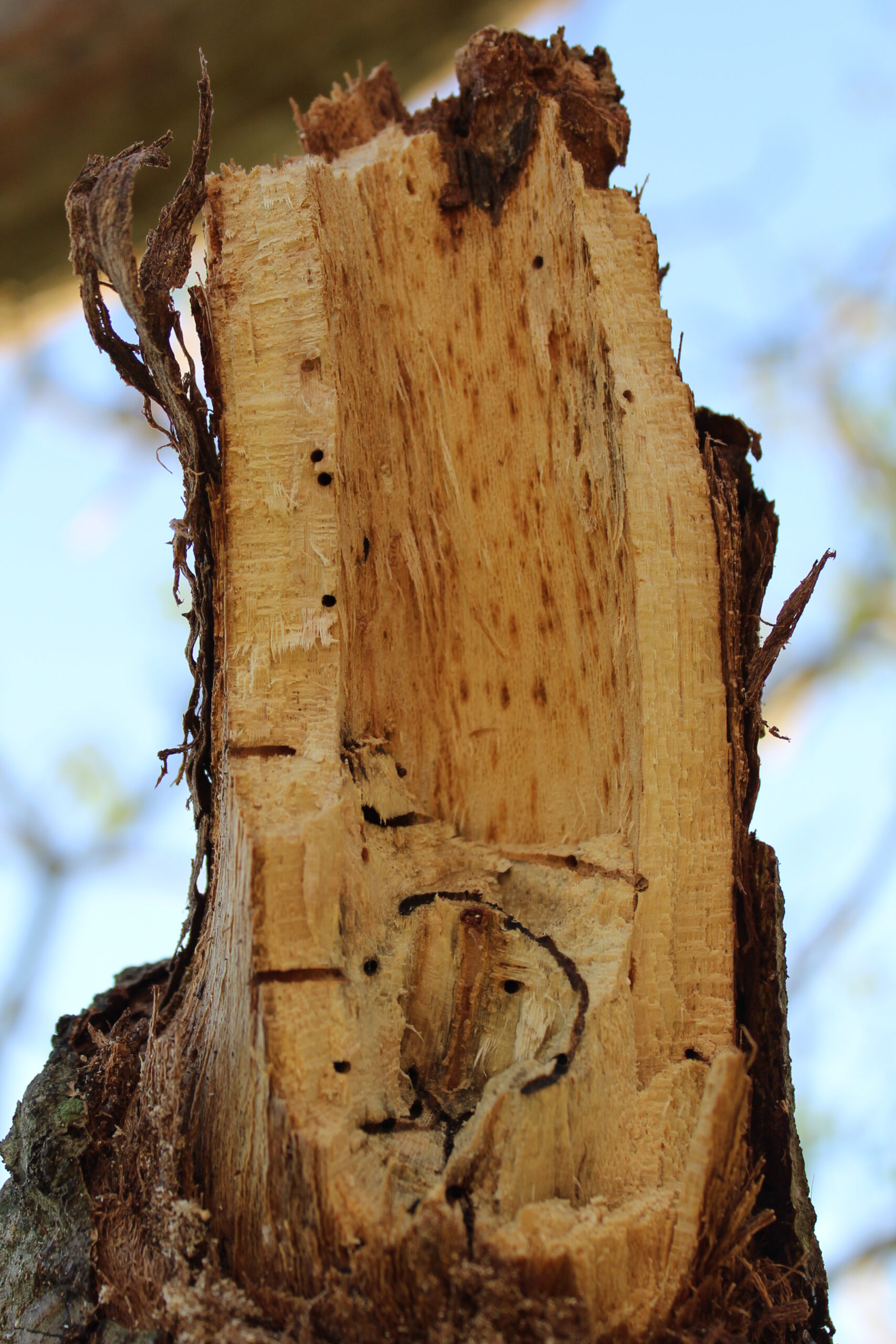
A complex of closely related ambrosia beetles continues to be introduced to new places and cause increasing damage. The most widespread is the polyphagous shot hole borer (PSHB) Euwallacea fornicatus ss. Other members of the complex include the Kuroshio shot hole borer (KSHB) E. kuroshio and a third species, E. interjectus. Each beetle harbors its own plant-pathogenic fungus – all in the Fusarium genus.
Places invaded and impacts
The PSHB is established in the U.S. (southern and central California), Israel, South Africa, & Australia. The outbreak in South Africa covers the largest geographic area; the PSHB-Fusarium disease has been found in eight of the country’s nine provinces (every province except Limpopo) (Bierman et al. 2022). The South Africa outbreak is the most extensive geographically of all of them (Mudede et al. 2025).
The KSHB is established in southern California, from where it has spread to neighboring Mexico. E. interjectus is established in Santa Cruz County in California.
A fourth member of the species complex, E. perbrevis, has been established for decades on several Hawaiian islands and for at least 20 years in Florida. E. perbrevis has also been detected in nurseries in the Netherlands, but authorities reported it has been eradicated. E. perbrevis has long been known to be present in northern Queensland; this region might be part of its native range.
South America
In 2023 PSHB had been detected in Argentina – reported as E. fornicatus. A few weeks ago it was reported in neighboring Uruguay (PestLens for June 26, 2025). The beetle in South America is a different haplotype (genetic strain) than that introduced in South Africa, Israel, and California. It is more similar to specimens found in European greenhouses (Ceriani-Nakamurakare & others) As of 2022, scientists had identified 43 haplotypes (genetic variants) of E. fornicatus s.s. identified around the world; the greatest diversity is in several Asian countries (P. Rugman-Jones, pers. comm). The other species also comprise several haplotypes.
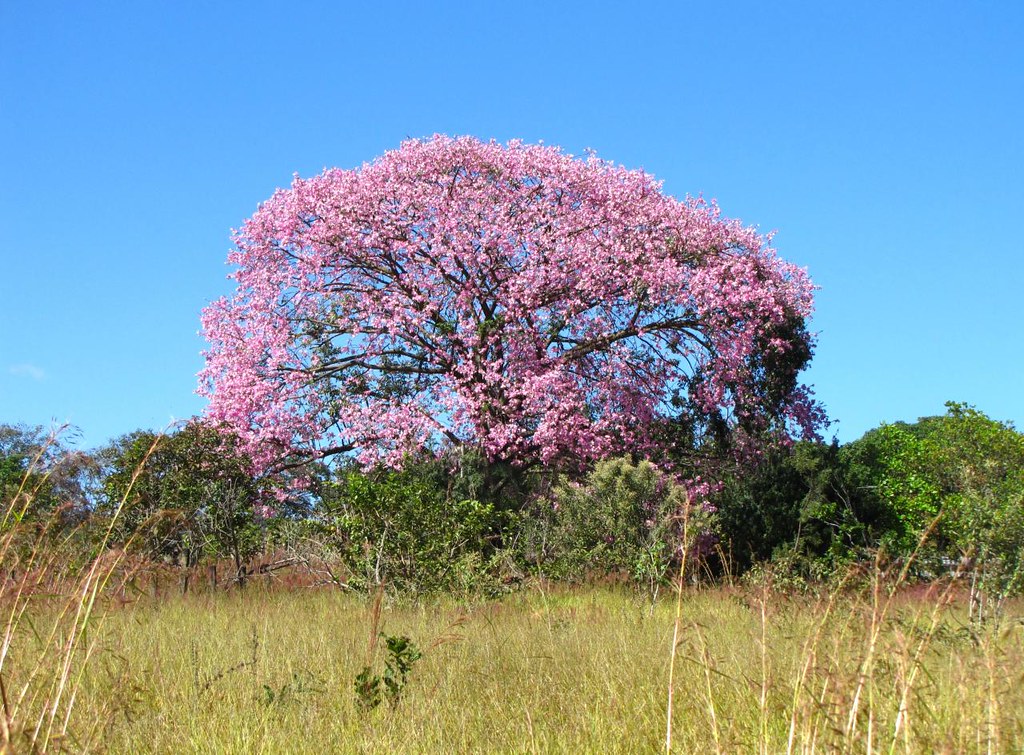
In South America the beetle has been observed attacking several new hosts. The most frequently attacked hosts are are Acer japonicum (Japanese maple) and a Ficus sp. Other hosts that support the full life cycle of the beetle and its associated fungus are Bauhinia forficata (cow’s foot), Ceiba speciosa (floss silk tree), Diospyros inconstans (jacuiba), Ficus aspera (mosaic fig), Fraxinus excelsior (European ash), Gardenia thunbergia (white gardenia), Geoffroea decorticans (chañar), Myrsine laetevirens, and Neltuma (Prosopis) caldenia (caldén) plants (PestLens June 26, 2025).
South Africa
The beetle and disease have been present since 2012 or earlier although it was not detected until 2017 (Winzer et al.). (This delay in detection is typical; in California PSHB was present for probably nine years before it was detected.) Winzer et al. decry the communication failure that resulted in the delayed official detection in South Africa and propose a system to correct the breakdown.
The haplotype (genetic strain) is the same as that found in Vietnam and introduced in California and other sites (Mudede et al.).
The South Africa outbreak is the most extensive geographically of all the outbreaks globally; within five years of its official detection, the PSHB-Fusarium disease was confirmed to be present in eight of the country’s nine provinces (every province except Limpopo) (Bierman et al. 2022).
More than 100 tree species – native and exotic – have been confirmed as hosts. Sources differ on the specific number: Mudede et al. report 130 species; Townsend et al. 2025 report 162. Both figures include both hosts that support reproduction of the insect and those that do not.
Mudebe et al. cite other studies that project the Fusarium disease will cause a decline in tree populations over a 10-year period of between 3.5% and 15.5%. They estimate the cost of removing urban trees killed by the disease will be $USD18.45 billion.
The impact in South Africa might differ from other invaded areas. Mudebe et al. report that over the five years of the study none of the Platanus species or A. buergerianum was dying despite being heavily infested. They say this suggests that trees can survive for more than 5 years.
Townsend et al. present a more disturbing picture. Their study examined PSHB impacts in plots in native forests in two provinces — KNZ (where PSHB first detected) and Western Cape. Over five years, PSHB invaded seven forest types; the only forest type not invaded was mangroves. PSHB colonization was detected on 43 native tree species. Eighteen species were recorded as competent hosts (able to support PSHB reproduction), eight as kill-competent hosts (can be killed by PSHB).
Over the five years 11 individual trees belonging to seven species died as a result of PSHB infestations. Some died very rapidly (within 2–5 years of first infestation); some died after apparently minor levels of infestation.
Each year of the study trees had a 7.5% increased chance of PSHB infestations; the number of entrance holes rose by over 10%. This means – no surprise – that the longer PSHB is active in the enviro the more trees it will infest, the higher its impact will be on hosts, & the higher the # of dispersing individuals produced. This will substantially increase the chances & rates of additional areas becoming infested, especially in areas close to infestation borders. Townsend et al. state that PSHB populations might be increasing exponentially – as occurred in California and Israel.
Townsend et al. discuss factors that might explain differing levels of infestation. Currently, a higher proportion of trees in the study plots in KwaZulu-Natal were infested than in the plots in Western Cape. The most likely explanation is that PSHB established there first – before 2012 compared to possibly five years later in the Western Cape. Other factors might be that source populations in the Western Cape were often found in alien tree species in urban areas distant from the study plots, while in KwaZulu-Natal, the beetles were frequently found in indigenous trees within monitoring plots. Forests in KZN are also fragmented, unlike the nearly contiguous woodlands in the Western Cape, and closer to urban areas with high PSHB infestation levels.
Although the PSHB’s spread into natural forests seems to be slow, Townsend et al. warn that they expect an increase in the rate of infestations as progressively more competent host individuals are infested. They fear severe ecological effects from rapid mortality of some key tree species, especially those sensitive to comparatively few attacks. They mention the native Erythrina caffra (coral tree), which is an important component of coastal forest ecosystems, especially in KwaZulu-Natal.
Other native trees at particular risk of PSHB infestations are Diospyros glabra, Ficus, Sparmannia africana, Trichelia emetic, and Vepris lanceolata. Townsend et al. remind us that each native tree species has a specific role in normal ecosystem functioning and supports a unique suite of species. Even if attacked trees do not die, Fusarium infection might weaken them, thereby increasing their susceptibility to other pathogens and pests, decreasing their longevity, or reducing their ability to produce fruits and flowers which can have long-term direct & indirect effects on normal ecosystem functioning & resilience.
Remember, South Africa is a biodiversity hotspot, home to its own Floral Kingdom!
The South Africans are trying to find more efficient methods for tracking spread of PSHB. Mudede et al. 2025 tested whether Google street view (GSV) images can be used to monitor its spread in urban forests. The test took place in Johannesburg. The test demonstrated that GSV images can be useful for mapping and monitoring PSHB-FD infestation on Platanus trees – but not on trees with rougher bark, e.g., Acer. While there were no false positives for any host species, most of the maple trees were misclassified as non-infested (false negatives).
Vietnam
Even in its native range, PSHB is a threat – in this case, to plantations utilizing non-native or exotic tree species. Thu et al. describe a growing number of pests threatening reforestation efforts in Vietnam. Surveys over the period 2011 to 2020 revealed outbreaks by 14 new insect species and 2 pathogens. Only two of the trouble-causing species are themselves non-native to Vietnam. One of these is PSHB. Thu et al. report the species’ range has spread rapidly in the country.
Thu et al. inform us that Vietnam has a high diversity of forest trees – and that almost nothing is known about pests that attack these trees.
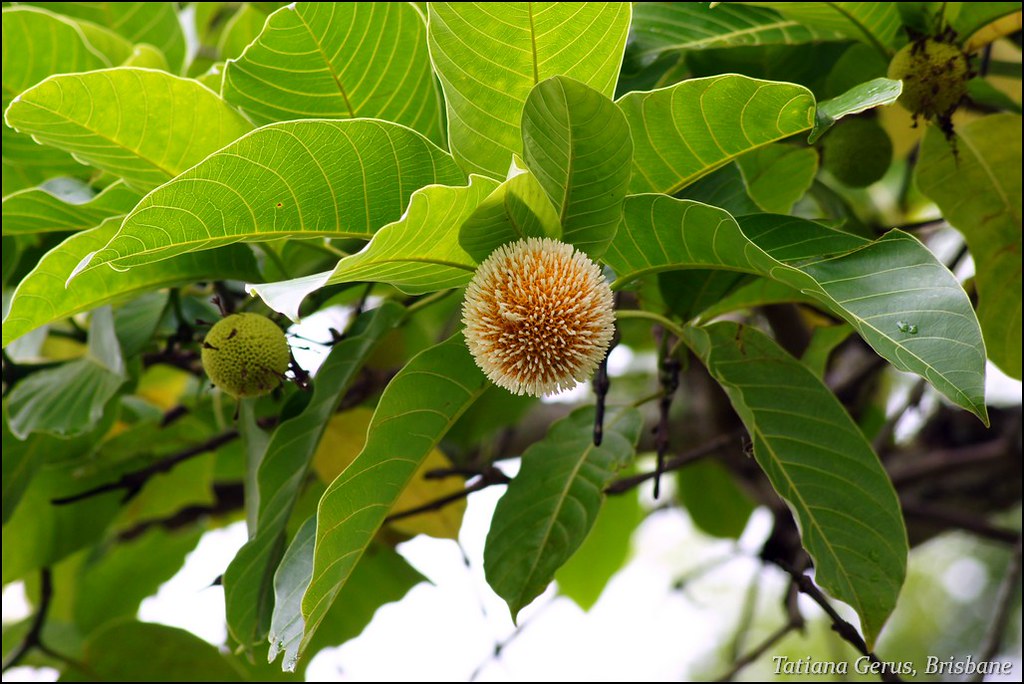
I welcome their call for higher investment in selection and breeding of hosts resistant to the various pests. The limited effort so far has identified provences of Neolamarckia cadamba and Nauclea orientalis that display some resistance to PSHB. Thu et al. advocate breeding programs to address the main biotic threats. They also recommend several actions to improve biosecurity, including enhanced hygiene in tree nurseries; improved silvicultural practices to minimize damage to trees; diversification of tree species being grown; and strengthening biosecurity and quarantine programs. They note that early detection of pest outbreaks is critical, so the country should develop forest health monitoring protocols for extensive forest reserves – sentinel plantings and remote sensing to detect trees under stress.
On a personal level, I found it interesting that Mudede et al. report that Google street view imagery determined that the invasive tree Ailanthus altissima dominates the street tree population in Istanbul – despite not having been intentionally planted. I visited Istanbul in April – and saw evidence of invasive vines and possibly the North American tree Cercis canadensis.
SOURCES
Ceriani-Nakamurakare, E., A.J. Johnson, D.F. Gomez. 2023. Uncharted Territories: First report of Euwallacea fornicates (Eichhoff) in South America with new reproductive host records. Zootaxa, 5325 (2), 289-297. https://doi.org/10.11646/zootaxa.5325.10
Mudede, M.F., S.W. Newete, K. Abutaleb, M.J. Byrn. 2025 Monitoring a polyphagous shot hole borer infestation in an urban forest using Google street view in the City of Johannasburg, South Africa Biol Invasions (2025) 27:144 https://doi.org/10.1007/s10530-025-03595-4
Thu, P.Q., D.N. Quang, N.M. Chi, T.X. Hung, L.V. Binh, B. Dell. 2021. New and Emerging Insect Pest and Disease Threats to Forest Plantations in Vietnam. Forests 2021, 12, 1301. https://doi.org/10.3390/f12101301
Townsend, G., M. Hill, B.P. Hurley, and F. Roets. 2025 Escalating threat: increasing impact of the polyphagous shot hole borer beetle, Euwallacea fornicatus, in nearly all major South African forest types. Biol Invasions (2025) 27:88 https://doi.org/10.1007/s10530-025-03551-2
Winzer, L.F, K.T. Faulkner, T. Paap, and J.R.U. Wilson. Preprint. From detection to action—a proposed workflow to ensure first reports of alien spp from molecular analyses are acted upon DOI: https://doi.org/10.3897/arphapreprints.e162421
Pest-lens link: https://pestlens.info/
Posted by Faith Campbell
We welcome comments that supplement or correct factual information, suggest new approaches, or promote thoughtful consideration. We post comments that disagree with us — but not those we judge to be not civil or inflammatory.
For a detailed discussion of the policies and practices that have allowed these pests to enter and spread – and that do not promote effective restoration strategies – review the Fading Forests report at http://treeimprovement.utk.edu/FadingForests.htm
Or