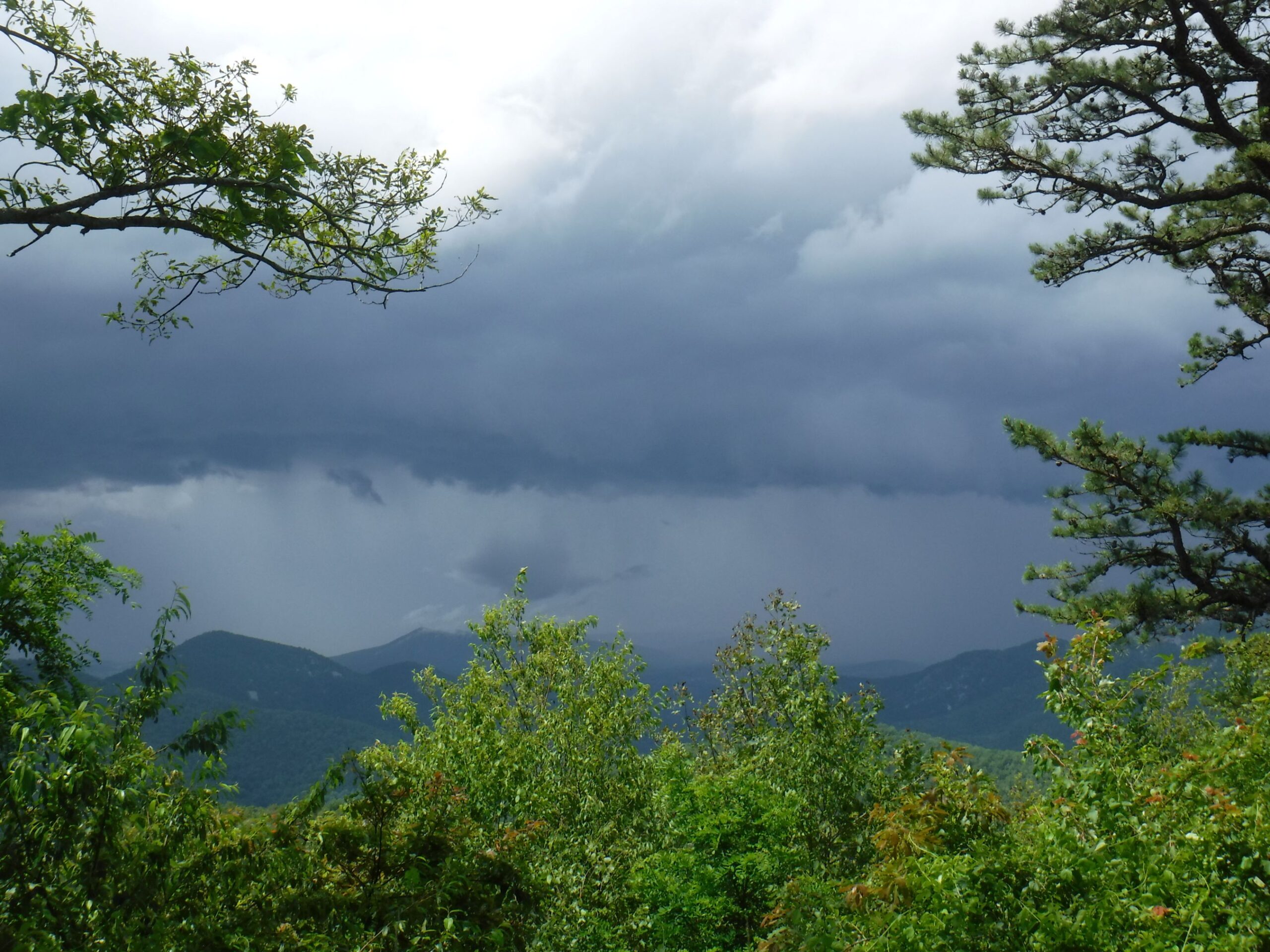
In June I visited Shenandoah National Park (SHNP) (above) for the first time in years. The Park’s forests are mostly mature secondary forests, having recovered over the 90 years since establishment from earlier logging and clearing for small-scale farms and pasture.
While I loved the forest and the vistas, I was aware of which species are missing …
Five years ago I blogged about a study by Anderson-Teixeira et al. (full citation at the end of this blog) that reported on the changes in the forests of SHNP and the neighboring Smithsonian Conservation Biology Institute (SCBI). This is important because, as Fei et al. (2019) (full citation at the end of this blog) documented, nine of the 15 most damaging introduced forest pests grow in eastern forests. In fact, the greatest increase in biomass loss has occurred in Eastern forests. Seven are found specifically in SHNP (Potter et al. 2019; full citation at the end of the blog).
Anderson-Teixeira et al. report that non-native forest pests caused a loss of about a quarter of ecosystem above-ground biomass between 1991 and 2013 across 66 sites. These invasions occurred after the worst impacts of chestnut blight, which entered the country ~120 years ago – before “modern” phytosanitary programs were instituted. Still, total above-ground biomass has largely recovered through germination and growth by trees in other genera. Greatest increases have been by tulip poplar (Liriodendron); oaks (Quercus); ash (Fraxinus) – but see below; birch (Betula); and maples (Acer). And while several taxa were lost from monitoring plots in SHNP and SCBI, a-diversity also remained steady.
So what does that look like on the ground?
American chestnut used to dominate many Eastern forests, composing more than one-third of the pollen assemblage in some stands (Fei et al.) According to Anderson-Teixeira et al., chestnut trees larger than 10 cm DBH disappeared by 1910, killed by chestnut blight. In past decades I frequently saw chestnut root sprouts when hiking. The National Park Service now urges visitors to hike to low elevation sections of the South River Trail to see such sprouts.
In the 1980’s, groves of eastern hemlocks occupied about 9,800 acres in SHNP, primarily in shaded valleys and along streams. Invasion by the hemlock woolly adelgid killed 95% of these hemlocks. Anderson-Teixeira et al. document the species’ disappearance from their study plots by 2007. Park staff treated more than 20,000 hemlocks using injections of imidacloprid. In 2015, the Park began partnering with Virginia Polytechnic Institute and State University in releasing predatory biocontrol beetles (Laricobius spp.) While the beetles have shown promising establishment and spread, it is now recognized that additional biocontrol agents will be needed to suppress the adelgid. The Park plans to allow releases of predatory silver flies (Leucotaraxis spp.) in remaining hemlock sites and will begin to phase out the imidacloprid treatments.
I remember the hemlocks! But this year, at least in the creek valleys where I hiked, I saw almost no remnants – not even fallen logs.
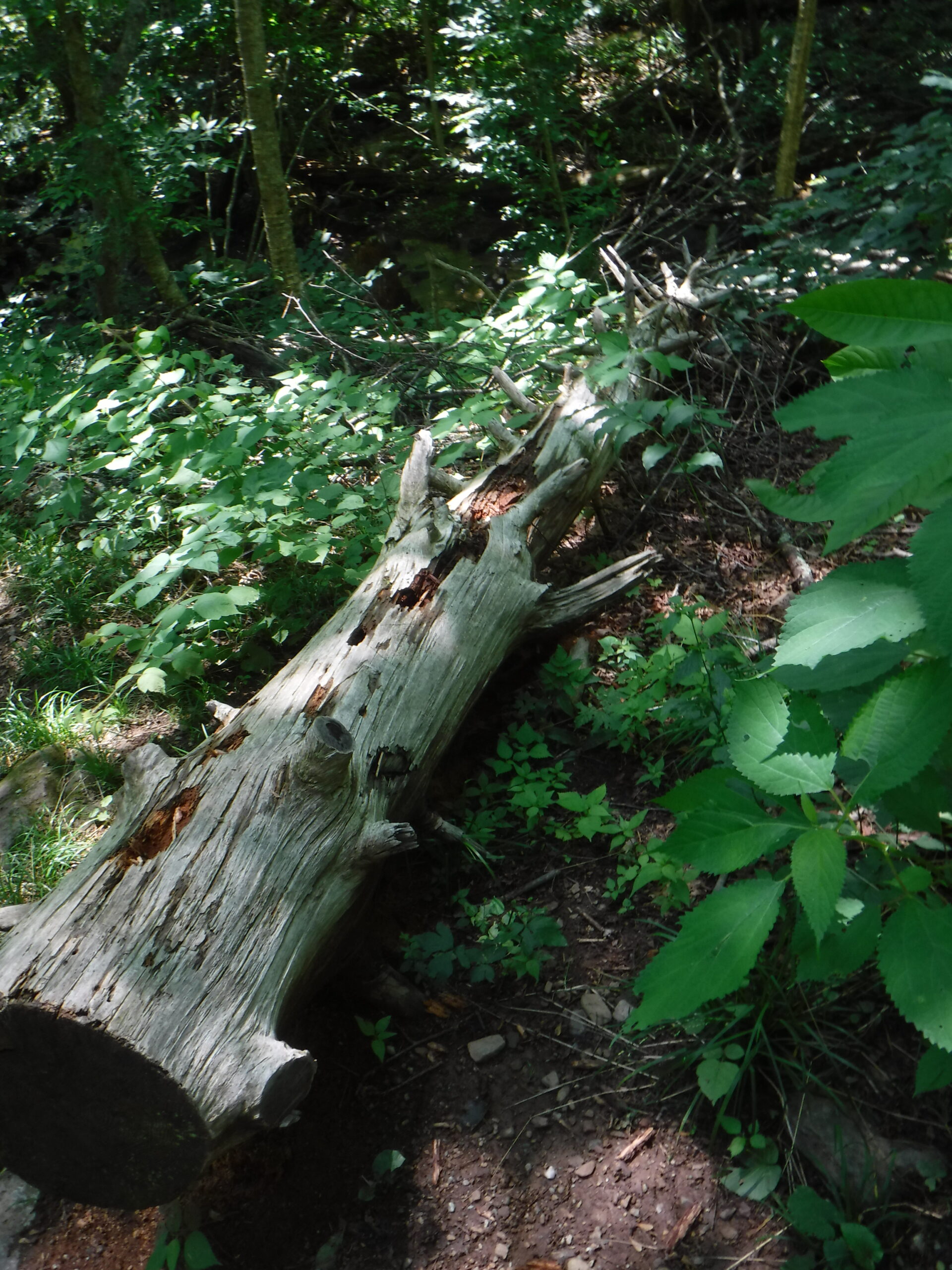
And I remember the flowering dogwoods. They are almost gone now from the Appalachian chain, killed by dogwood anthracnose. Their status in SHNP is unclear. Anderson-Teixeira et al. report flowering dogwoods only from the Smithsonian property. There, they declined by almost 90% from the study plots from 2008 to 2019. The Park’s list of tree and shrub species reports that flowering dogwood is still “abundant”; my visit was too late in the season to observe how visible flowering dogwoods still are. Certainly the species survives the disease better in open settings, e.g., meadows and roadsides. I don’t know how the three other native Cornus species were affected.
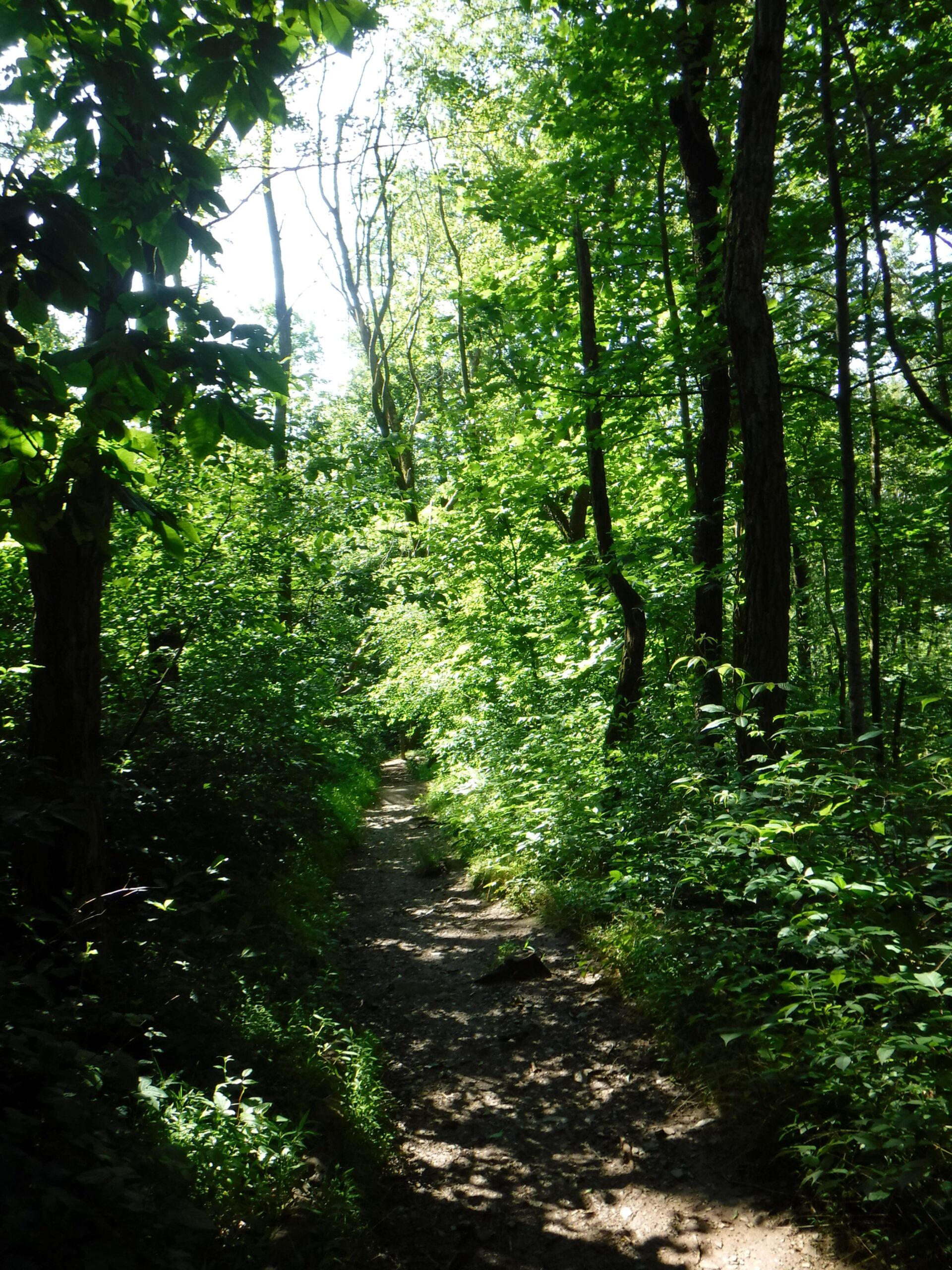
Dead ash are still visible. Ash trees made up about 5% of the Park’s forest cover. Anderson-Teixeira et al. report that ash aboveground biomass was increasing in SHNP and stable on the SBCI property before arrival of the emerald ash borer (EAB). EAB-caused mortality was first detected in 2016. In just three years — by 2019 – 28% of green, white, and black ash had died; this meant a loss of 30% of ashes’ aboveground biomass. Ninety-five percent of remaining live trees were described as “unhealthy’’. In an effort to retain ash trees for visitor enjoyment, reduce threats to visitors from hazard trees, and to preserve a portion of the park’s ash tree communities until host-specific biological controls become available, SHNP staff – supported by specially trained volunteers and interns, Virginia Department of Forestry and Fairfax County – began treating high-value ash with emamectin benzoate. They began at Loft Mountain Campground, a location (elevation 3,300 feet) where ash trees make up most of the forest. Three hundred forty three trees were treated there — exceeding expectations for what could be accomplished in a single year. The park hopes to treat an additional 200-400 trees. They will target ash trees around campgrounds, picnic areas, overlooks and other areas frequently used by visitors. These efforts were supported by the Shenandoah National Park Trust and here.
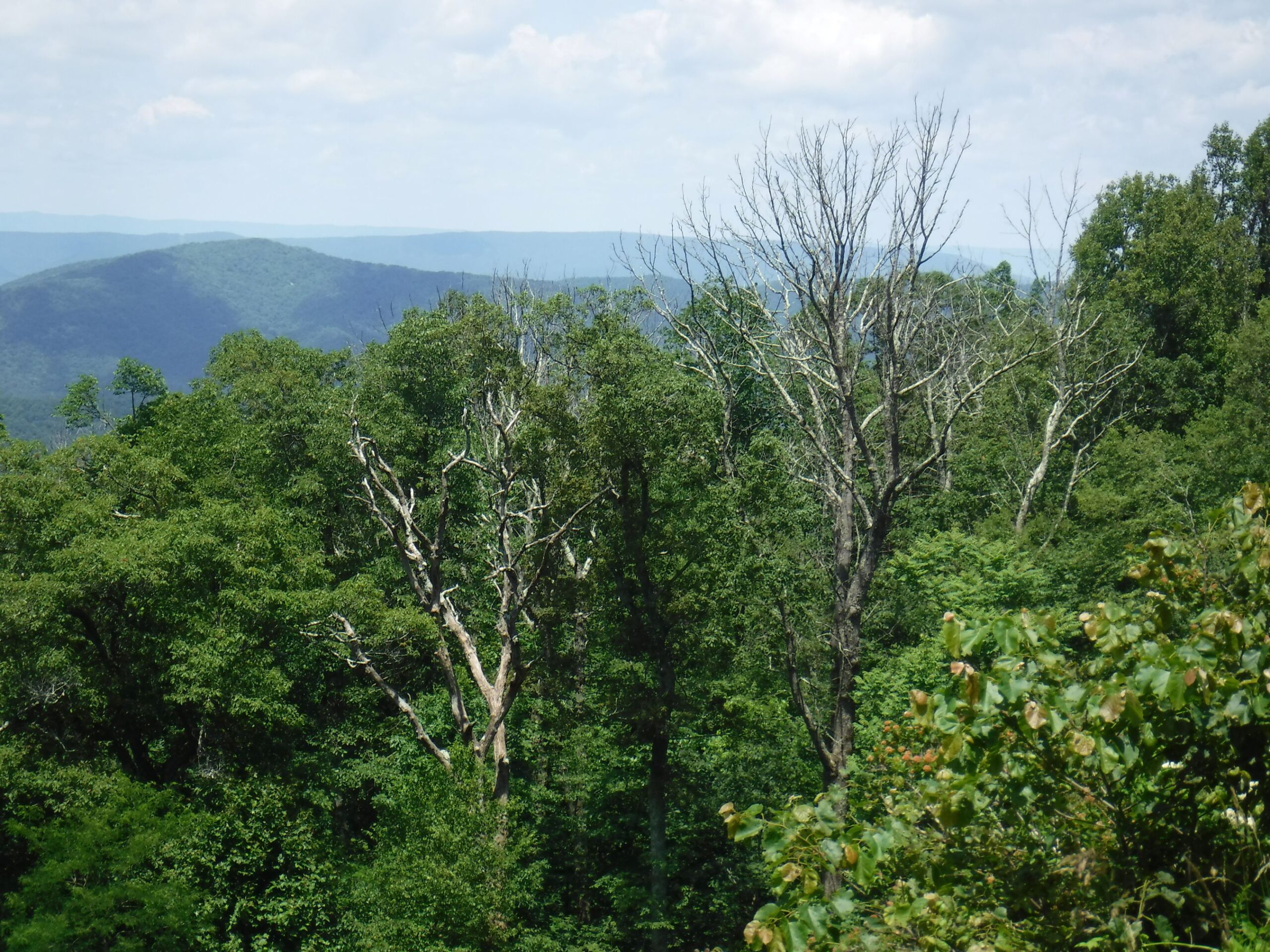
I saw many dead oaks – probably the result primarily of repeated attacks by the spongy moth link beginning in 1982. Oak-dominated study plots in SHNP lost on average 25% of individuals and 15% of above-ground biomass. After 1995, when spraying of Bacillus thuringiensis var. curstaki improved control efforts (at the expense of native moths), oak aboveground biomass increased gradually, driven by individual tree growth rather than recruitment. Oak abundance continues to decline due to oak decline and absence of management actions to promote regeneration (Anderson-Teixeira et al.). These authors do not mention oak wilt although a decade-old map shows the disease to be present just to the west of the Blue Ridge (visible here).
Fortunately Shenandoah National Park has relatively few American beech, so it will be less affected by beech leaf disease (BLD). The Blue Ridge is also far from large waterbodies — which promote the disease. However, I did see some beech sprouting in creek valleys – probably in gaps opened when the hemlocks died. These valleys with higher humidity are the type of ecosystem most conducive to the disease! Anderson-Teixeira et al. note that they did not analyze the impact of beech bark disease – which was the disease of concern before arrival of BLD and continues to be present.
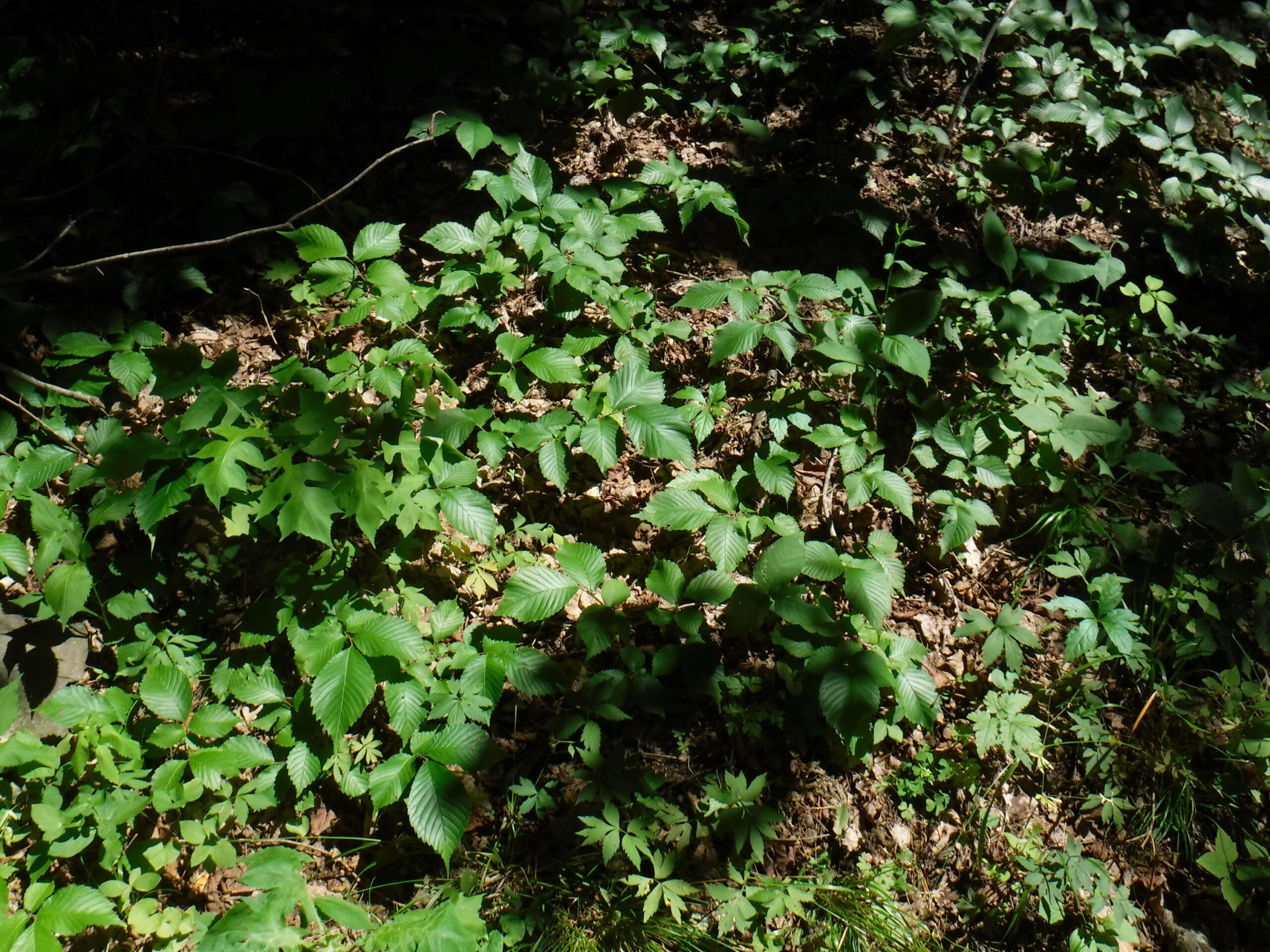
They also did not evaluate the impacts of balsam woolly adelgid, described as having decimated high-elevation populations of firs (Abies balsamea); white pine blister rust on eastern white pine; or EAB on fringetree (Chionanthus virginicus) in SCBI. Nor did they document the impact of thousand cankers disease (TCD) on walnuts or butternuts. This concerns me because they report that the disease “appears to be affecting Juglans spp. in our plots.” Furthermore, butternut (J. cinera) had been ‘‘common’’ in 1939, but had disappeared from SHNP by 1987. On the Smithsonian property, the four individuals found originally had declined by half – to two living individuals. Butternut has suffered high levels of mortality throughout its range from butternut canker.
The understory tree redbud (Cercis canadensis) also declined precipitously – by almost76% from 1995 to 2018 in SCBI plots. While Anderson-Teixeira et al. do not speculate why, a few years ago a wider decline was reported.
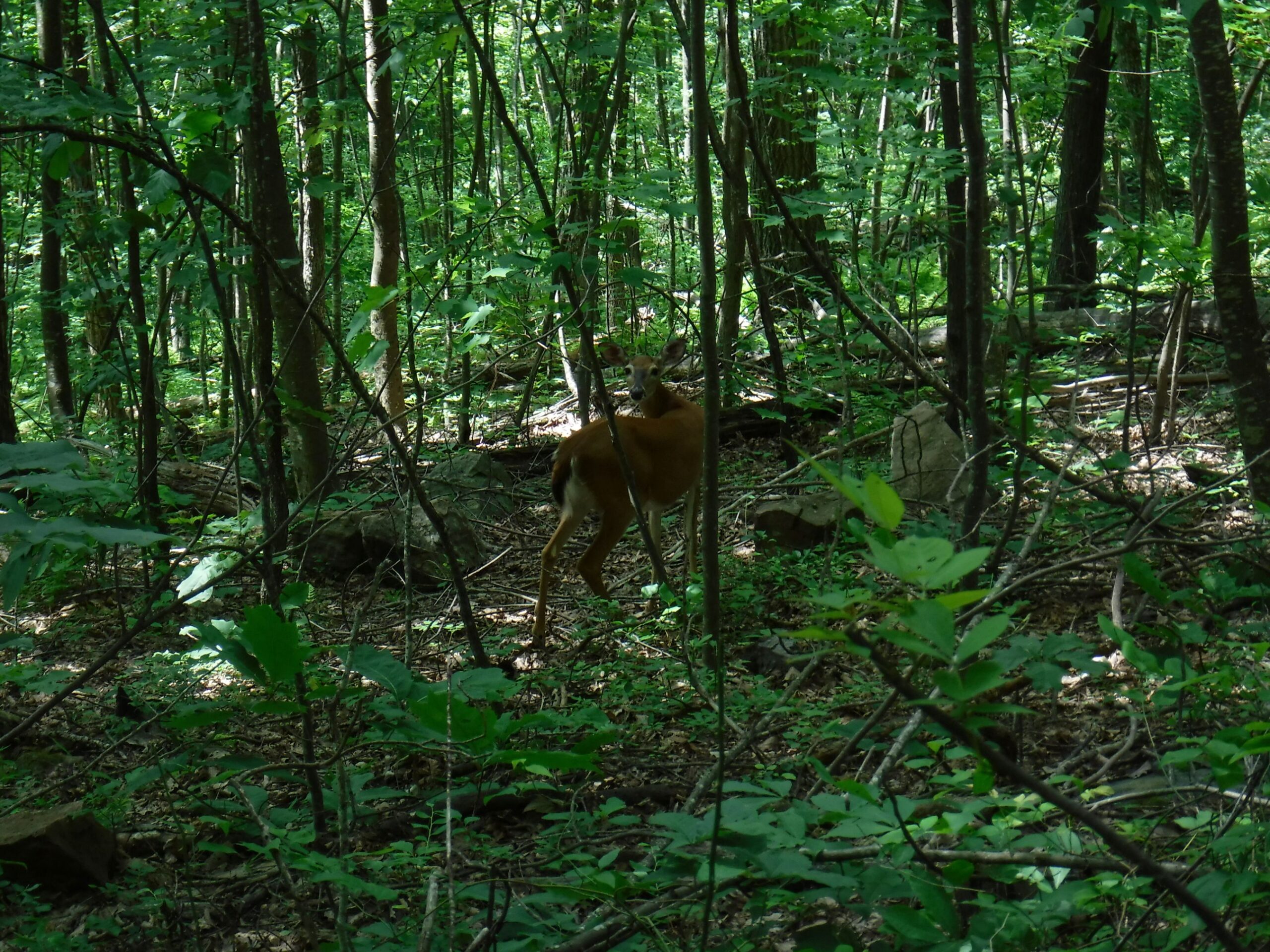
Of course, Shenandoah also has been invaded by non-native plants! So I saw some plants that should not be there. At least the mid- and high-elevations that I visited appear to be much less abundant in the Park than in coastal and piedmont regions of Virgina. Ailanthus is listed as “common” in the Park. I didn’t see Japanese stiltgrass but it is clearly present at lower elevations. I was particularly disturbed to see oriental bittersweet along trails located in all three sections of the Park.
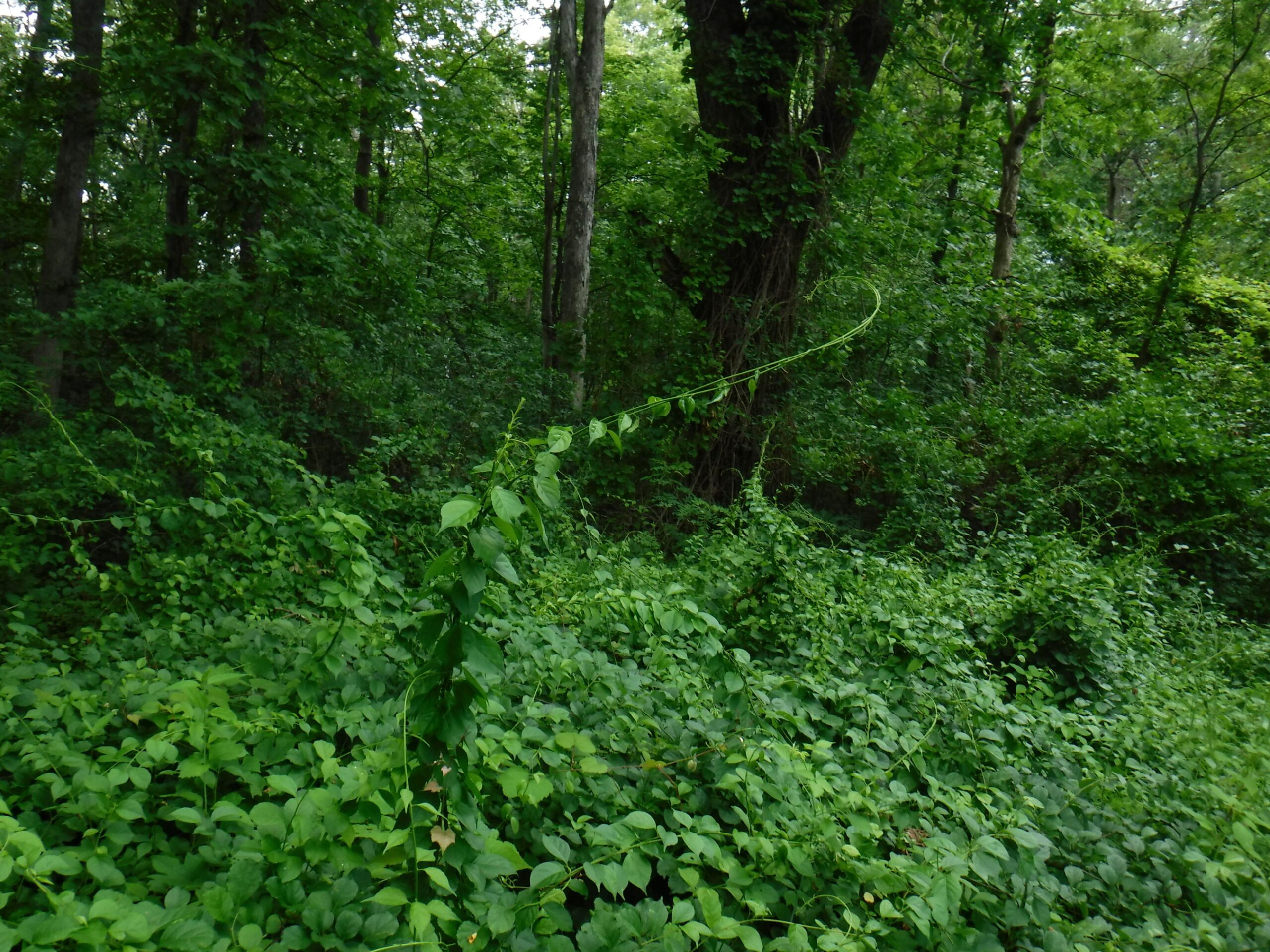
The Blue Ridge PRISM is targeting 12 species: autumn olive, garlic mustard, Japanese honeysuckle, Japanese stiltgrass, kudzu, mile-a-minute, multiflora rose, oriental bittersweet, porcelainberry, privet, tree of heaven, and wavyleaf grass.
SOURCES
Anderson-Teixeira, K.J., V. Herrmann, W.B. Cass, A.B. Williams, S.J. Paull, E.B. Gonzalez-Akre, R. Helcoski, A.J. Tepley, N.A. Bourg, C.T. Cosma, A.E. Ferson, C. Kittle, V. Meakem, I.R. McGregor, M. N. Prestipino, M.K. Scott, A.R. Terrell, A. Alonso, F. Dallmeier, & W.J. McShea. 2021. Long-Term Impacts of Invasive Insects & Pathogens on Composition, Biomass, & Diversity of Forests in Virginia’s Blue Ridge Mountains. Ecosystems
Fei, S., R.S. Morin, C.M. Oswalt, & A.M. Liebhold. 2019. Biomass losses resulting from insect & disease invasions in United States forests. Proceedings of the National academy of Sciences.
Potter, K.M., M.E. Escanferla, R.M. Jetton, G. Man, & B.S. Crane. 2019. Prioritizing the conservation needs of United States tree spp: Evaluating vulnerability to forest insect & disease threats. Global Ecology & Conservation.
Posted by Faith Campbell
We welcome comments that supplement or correct factual information, suggest new approaches, or promote thoughtful consideration. We post comments that disagree with us — but not those we judge to be not civil or inflammatory.
For a detailed discussion of the policies and practices that have allowed these pests to enter and spread – and that do not promote effective restoration strategies – review the Fading Forests report at http://treeimprovement.utk.edu/FadingForests.htm
Or