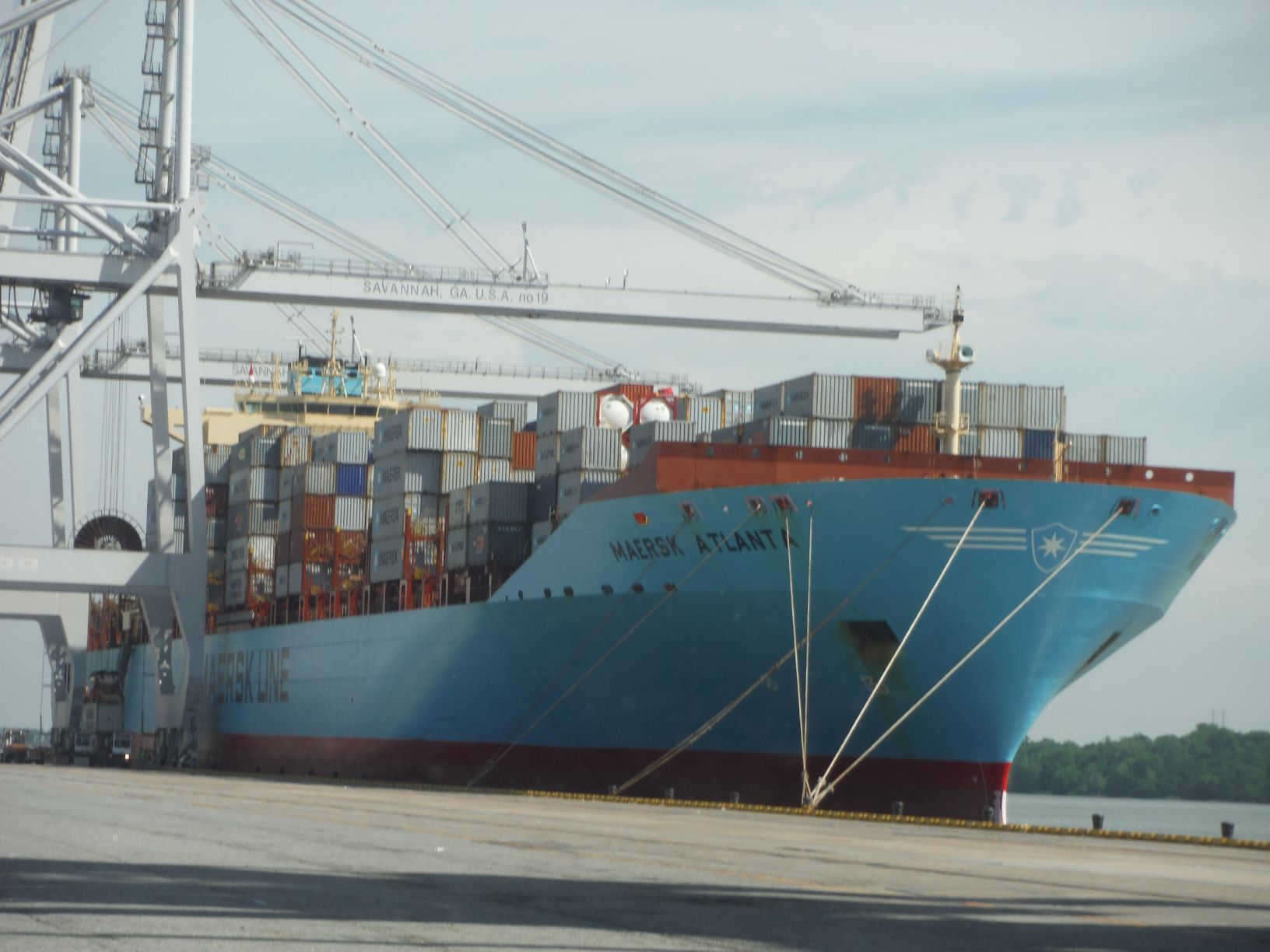
The Washington Post has summarized data on the number of container ships travelling from China to U.S. west coast ports for the first half of 2025. It compares those numbers to the same period in 2024.
For the first four months, the trips exceeded 2024 levels, often by considerable amounts, as importers sought to get their goods before President Trump imposed high tariffs. Thus, the number of container ships arriving at Los Angeles, Long Beach, Oakland, Seattle, and Tacoma during each month:
- January: 17% increase
- February: 32% increase
- March: 14% increase
- April: 5% increase
In May, landings from China decreased by 33%! Those ships arriving also carried fewer containers.
When measured by the value of imported goods, imports from China fell 20% nationwide when we compare April 2024 to April 2025. This decrease was seen at four of the five west coast ports; the exception was Tacoma.
When President Trump “paused” the 145% increase in tariffs on Chinese goods, the prices shippers charge for transporting containers doubled – from less than $3,000 per container to $6,000. This change probably portends a rebound in import volumes.
I always worry about containers from China (see Haack et al. 2022; full citation at the end of this blog; and this blog). For more than 30 years they have too often been the means by which wood-boring insects are introduced to North American forests. I fret even more when import volumes are rising – especially when importers are in a rush. I suspect that neither exporters nor importers pay much attention to whether the crates and pallets have been treated properly.
I have asked the Bureau of Customs and Border Protection for comment, but have not yet received a reply.
Please note that these data do not include information about imports from other Asian countries … or shipments destined for U.S. ports in the Gulf or Atlantic (via the expanded Panama Canal) or to Canadian ports.
SOURCE
Haack RA, Hardin JA, Caton BP and Petrice TR (2022) Wood borer detection rates on wood packaging materials entering the United States during different phases of ISPM#15 implementation and regulatory changes. Frontiers in Forests and Global Change 5:1069117. doi: 10.3389/ffgc.2022.1069117
Posted by Faith Campbell
We welcome comments that supplement or correct factual information, suggest new approaches, or promote thoughtful consideration. We post comments that disagree with us — but not those we judge to be not civil or inflammatory.
For a detailed discussion of the policies and practices that have allowed these pests to enter and spread – and that do not promote effective restoration strategies – review the Fading Forests report at http://treeimprovement.utk.edu/FadingForests.htm
Or