Fifteen years ago, Paine, Steinbauer, and Lawson (2011) worried that insects in South America, Africa, Asia, and Europe that adapt to attacking Eucayptus trees planted there might be introduced to Australasia and threaten the genus in its native range. Their analysis applies to species in all three genera considered to be “eucalypts” — Angophora, Corymbia and Eucalyptus.
Some insects native to those continents have made this host shift already. Paine, Steinbauer, and Lawson reported that such host switching was especially prevalent among lepidopterans. They name several from Brazil, the Chilean cossid moth, Chilecomadia valdiviana, and southern African Coryphodema tristis. In their view, Brazilian eucalypt plantations’ proximity to native vegetation facilitates host-switching. Still, at that time they thought that there were no established pathways for introduction of the South American moths to Australia.
Host-switching is exceptionally common in Asia. Paine, Steinbauer, and Lawson (2011) thought the risk was greatest from insects on native eucalypts in near-neighbors Papua New Guinea, Timor, and The Philippines. An earlier risk assessment evaluating 10 insect species from the region concluded that most are polyphagous and probably switched to eucalypts. Two woodborers – Agrilus opulentus and A. sexsignatus –seem to have coevolved with Eucalyptus deglupta in New Guinea and The Philippines.
According to the same authors, most of the insects that have switched hosts are either polyphagous or normally feed on other myrtaceous species native to these regions. Thus, the Brazilian moth Thyrinteina arnobia feeds on Psidium guajava and several other Myrtaceae. Sarsina violascens is also a pest of Psidium species, as well as species in the Asteraceae, and Oleaceae. And the foliar rust Austropuccinia psidii was first described from Psidium guajava in Brazil and boasts a wide host range in the Myrtaceae in South America. It has been introduced to many regions with plants in the Myrtaceae, notably Hawai`i, Australia, South Africa, New Caledonia, and New Zealand. At least 15 Myrtaceae species in Australia are threatened with extinction.
Still, few non-native insects were damaging eucalypts in Australia’s native forests or plantations as of 2011. Those few are highly polyphagous. Several, if not most, were introduced in the first half of the 20th Century.
Why so few? Paine, Steinbauer, and Lawson (2011) suggest three possibilities: (a) Australia’s diverse endemic insects already occupy most niches, so they exclude new, foreign competitors; (b) most introduced insects were not previously exposed to Myrtaceae in their native range; and (c) Australia has strong quarantine procedures aiming to limit introductions of non-native herbivores.
The fact that none of the introduced insects has adapted to feed significantly on mature eucalypts’ above-ground tissues seems to me to point to protection provided by the adult trees’ phytochemicals and leaf structure. Paine, Steinbauer, and Lawson (2011) discuss some aspects of leaf structure and wax coatings.
As to Australia’s quarantine procedures, as I reported before, the country has been much less proactive regarding plant pests and diseases that threaten tree species rather than agricultural crops. Significant new programs were established only after 2000, when Plant Health Australia (PHA) was incorporated. The PHA is supposed to facilitate preparedness and response arrangements between governments and industry for plant pests (once an alien pest has become established, management becomes responsibility of the land manager). In 2005, federal, state, and territorial governments and plant industry bodies signed a legally-binding agreement — the Emergency Plant Pest Response Deed (EPPRD). As of 2022, 38 were engaged. It sets up a process to implement management and funding of agreed responses to the detection of exotic plant pests – including cost-sharing and owner reimbursement.
Still, studies documented significant gaps in post-border forest biosecurity systems and the country’s response to the anticipated introduction of the foliar rust Austropuccinia psidii was disappointing. This prompted yet another initiative: development of the National Forest Biosecurity Surveillance Strategy (NFBSS) in 2018. The strategy was; accompanied by an Implementation Plan and appointment of a National Forest Biosecurity Coordinator. The forest sector fund a significant proportion of the proposed activities for the first five years. Still, Drs. Carnegie and Nahrung thought that in-country forest pest surveillance was still too fragmented.
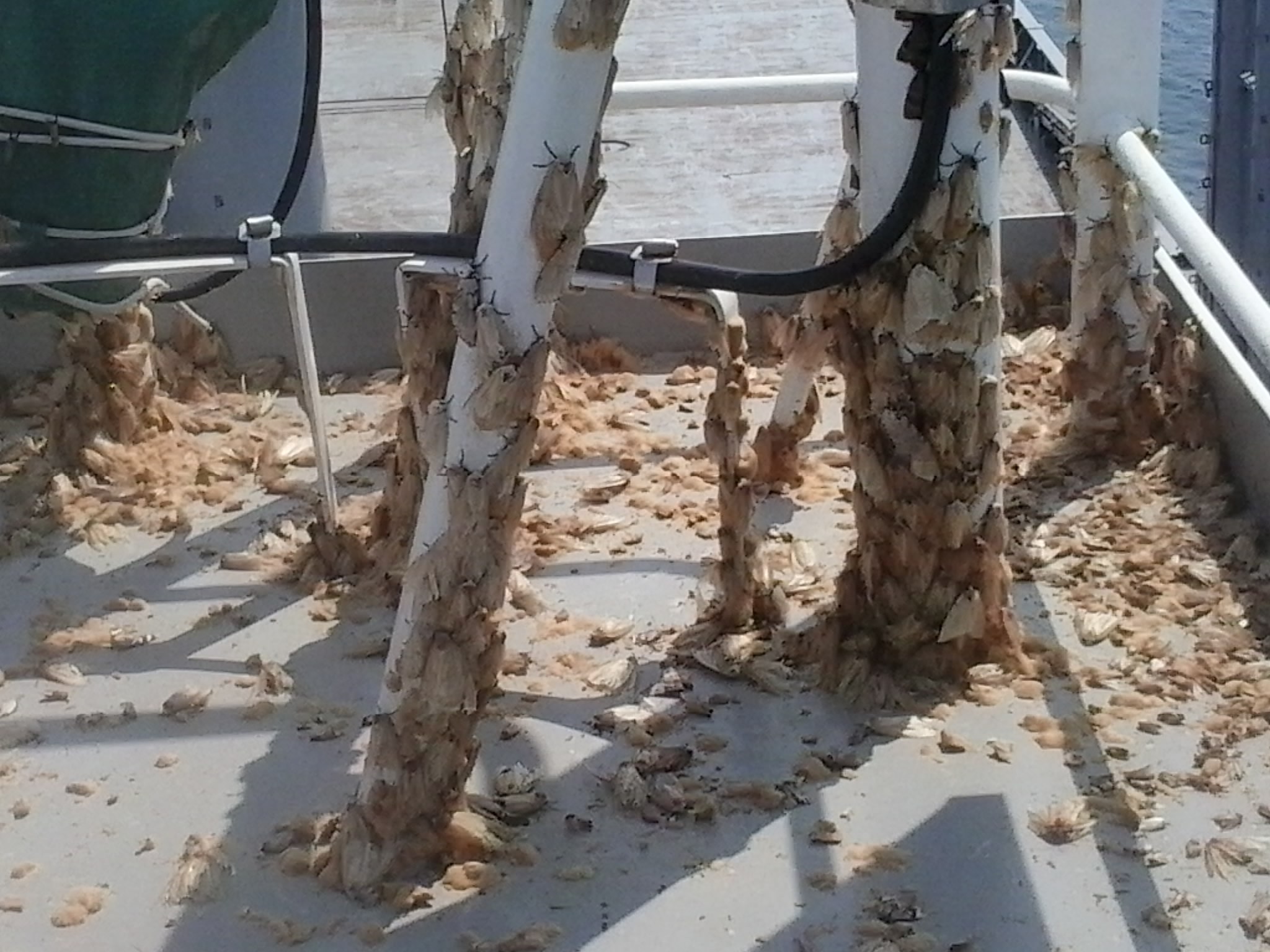
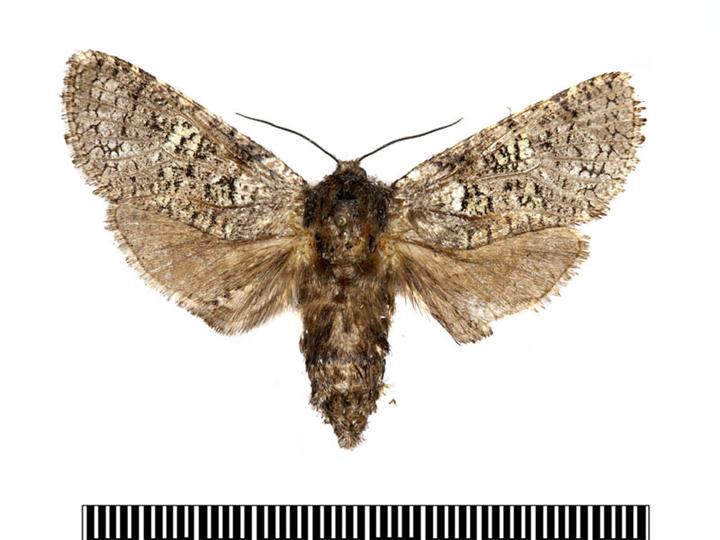
Paine, Steinbauer, and Lawson (2011) consider the Asian spongy moths Lymantria dispar and Orgyia thyellina to pose serious threats. Five eucalypt species were assessed to be at risk of attack as are two preferred host oaks in Europe, Quercus pubescens and Q. robur. They note high volumes of imports from East Asia of containers, vehicles, and machinery, which are known to transport spongy moth egg-masses. It is not known whether the numerous natural enemies of Australia’s diverse lymantriid fauna [which includes four in the genus Lymantria] might provide some protection. These experts also worried that the highly polyphagous Asian longhorned beetle (Anoplophora glabripennis) might arrive in Australia. Eucalypts are not recognized as hosts.
Australia has adopted an enhanced surveillance program for ships arriving from Asian and European Lymantria ranges during female flight periods. Described here. Nahrung and Carnegie (2021) though that the high priority assigned to Lepidoptera exceeded the actual risk; only two non-native species had established in Australia over 130 years.
Paine, Steinbauer, and Lawson (2011) suggest several research topics aimed at reducing the risk to eucalypts in Australia. These include interactions between these insects and mechanisms by which insects adapt to new hosts; host chemistry and resistance mechanisms), chemical ecology (including host selection), population and community dynamics, including possible biocontrol agents, and pathway and risk analysis.
On the other hand, Carnegie and Nahrung (2019) called for developing more effective methods of detection, especially of Hemiptera and pathogens. They also promoted national standardization of data collection. Finally, they advocated inclusion of technical experts from state governments, research organizations and industry in developing and implementing responses to pest incursions. They noted that surveillance and management programs must expect and be prepared to respond to introductions of unanticipated species. They had found that 85% of the pests detected over the last 20 years—and 75% of subsequently mid-to high-impact species established—were not on high-priority pest list.
SOURCES
Carnegie A.J. and H.F. Nahrung. 2019. Post-Border Forest Biosecurity in AU: Response to Recent Exotic Detections, Current Surveillance and Ongoing Needs. Forests 2019, 10, 336; doi:10.3390/f10040336 www.mdpi.com/journal/forests
Nahrung, H.F. and A.J. Carnegie. 2021. Border interceptions of forest insects established in Australia: intercepted invaders travel early and often. NeoBiota 64: 69–86. https://doi.org/10.3897/neobiota.64.60424
Paine, T.D., M.J. Steinbauer, and S.A. Lawson. 2011. Native & Exotic Pests of Eucalyptus: A Worldwide Perspective. Annu. Rev. Entomol. 2011. 56:181-201
Native & Exotic Pests of Eucalyptus: A Worldwide Perspective
Posted by Faith Campbell
We welcome comments that supplement or correct factual information, suggest new approaches, or promote thoughtful consideration. We post comments that disagree with us — but not those we judge to be not civil or inflammatory.
For a detailed discussion of the policies and practices that have allowed these pests to enter and spread – and that do not promote effective restoration strategies – review the Fading Forests report at http://treeimprovement.utk.edu/FadingForests.htm
Or