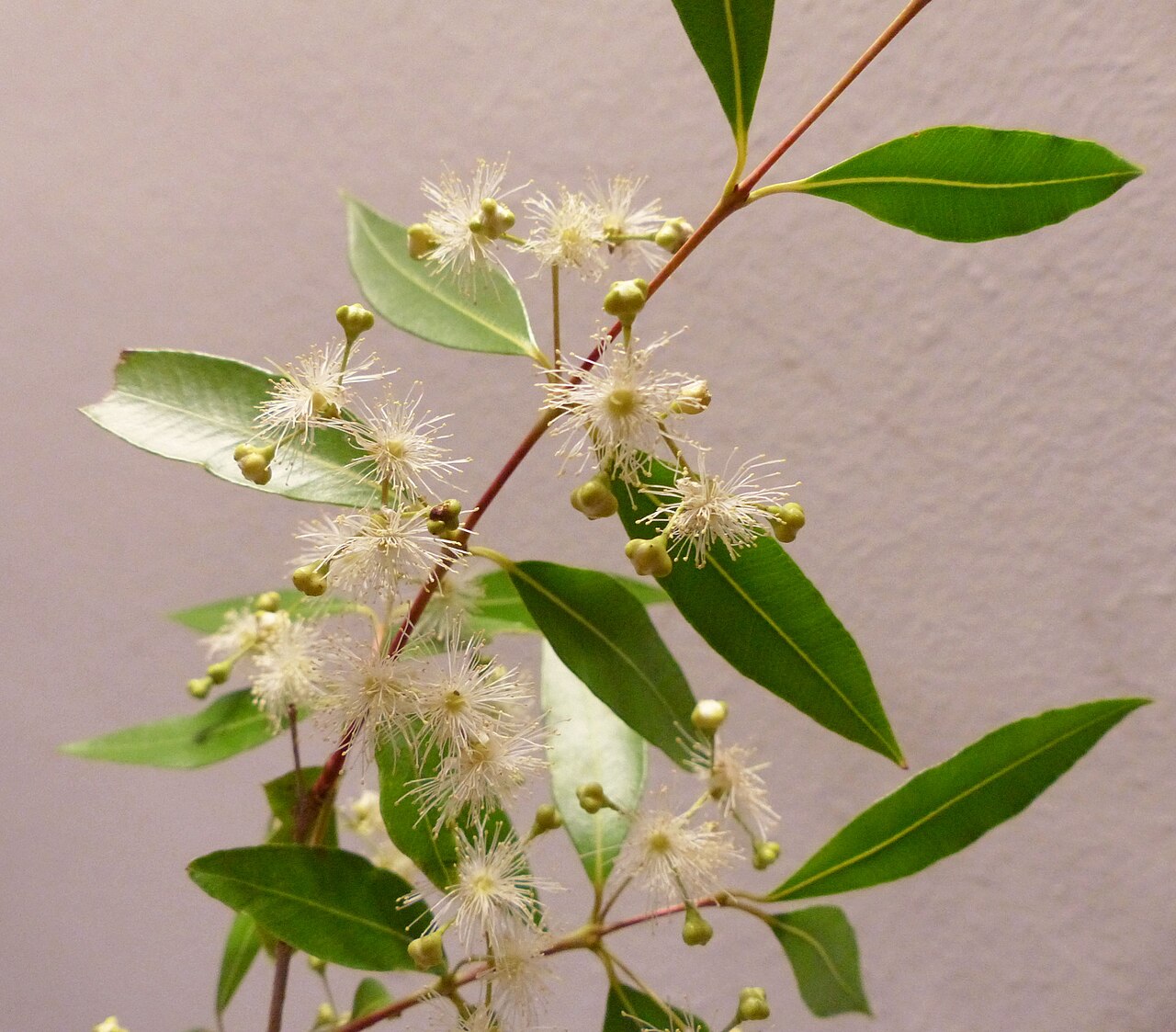
Pests that have followed their hosts to plantations outside the trees’ native ranges might threaten native plants in their new, introduced ranges. That is, the countries where the plantations are located.
Eucalypts
Eucalypts are now the most widely planted hardwood timber taxon in the world (Paine et al 2011). The 700 – 800 species in the three genera considered “eucalypts” (Angophora, Corymbia, and Eucalyptus) host a highly diverse fungal community — more than 500 species have been identified of just one type, leaf-infecting fungi (Crous et al. 2019).
As I described in a related blog, link dozens of leaf pathogens have been transported to countries hosting eucalypt plantations. Among them, two families – Mycosphaerellaceae and Teratosphaeriaceae – are prominent in both numbers of introductions and potential to cause serious diseases.

Pérez et al. (2009) reported that a relatively large number of Mycosphaerellaceae and Teratosphaeriaceae are found on Eucalyptusin Uruguay. The authors cite one troubling case of host shifting: Mycosphaerella lateralis is causing leaf disease on a Musa cultivar (banana!) which is not in the Myrtaceae.
A follow-up study by the same authors (Pérez et al. 2013) surveyed several native forests, paying special attention to those located close to Eucalyptus plantations. They found five species belonging to the Mycosphaerellaceae and Teratosphaeriaceae clades on native Myrtaceous trees; three of these had previously been reported on Eucalyptus in Uruguay. Those occurring on both Eucalyptus and native Myrtaceae included Pallidocercospora heimii, Pseudocercospora norchiensis, and Teratosphaeria aurantia. A fourth species, Mycosphaerella yunnanensis, not previously recorded in Uruguay, was found on the leaves of two native Myrtaceous hosts. Pérez et al. (2013) believe circumstances indicate that all these fungi have been introduced. They warn that these apparent jumps to new hosts have the potential to result in serious disease problems and they should be carefully monitored. This finding is more than a decade old; I have not found a more recent report.
On the global level, Pérez et al. (2013) report, at least 23 species of Mycosphaerellaceae and Teratosphaeriaceae have been found on non-Eucalyptus species in the Myrtaceae. These hosts are in several plant orders, including Myrtales, Proteales, Fabaes and Apiales. The authors express “considerable concern” about the apparent ease of movement in these fungi between hosts. I have been unable to learn more details about these introductions.
Arthropod pests have also been spread to many Eucalyptus-growing regions in North and South America, Europe, and Africa since the 1980s – but not to Asia or New Zealand (Paine et al. 2011). blog
Pines
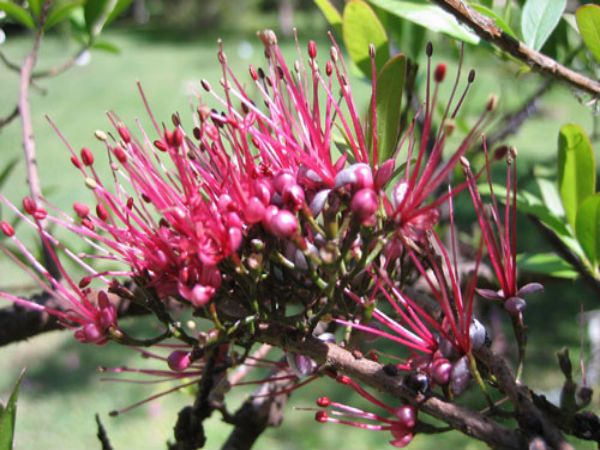
Pines – a genus restricted naturally to the Northern Hemisphere – is second in popularity for intensively managed plantations. South America has 4.6 million hectares of pine plantations (Lantschner and Villacide 2025). Most are in Brazil, Chile, Uruguay, and Argentina (Payn et al. 2015).
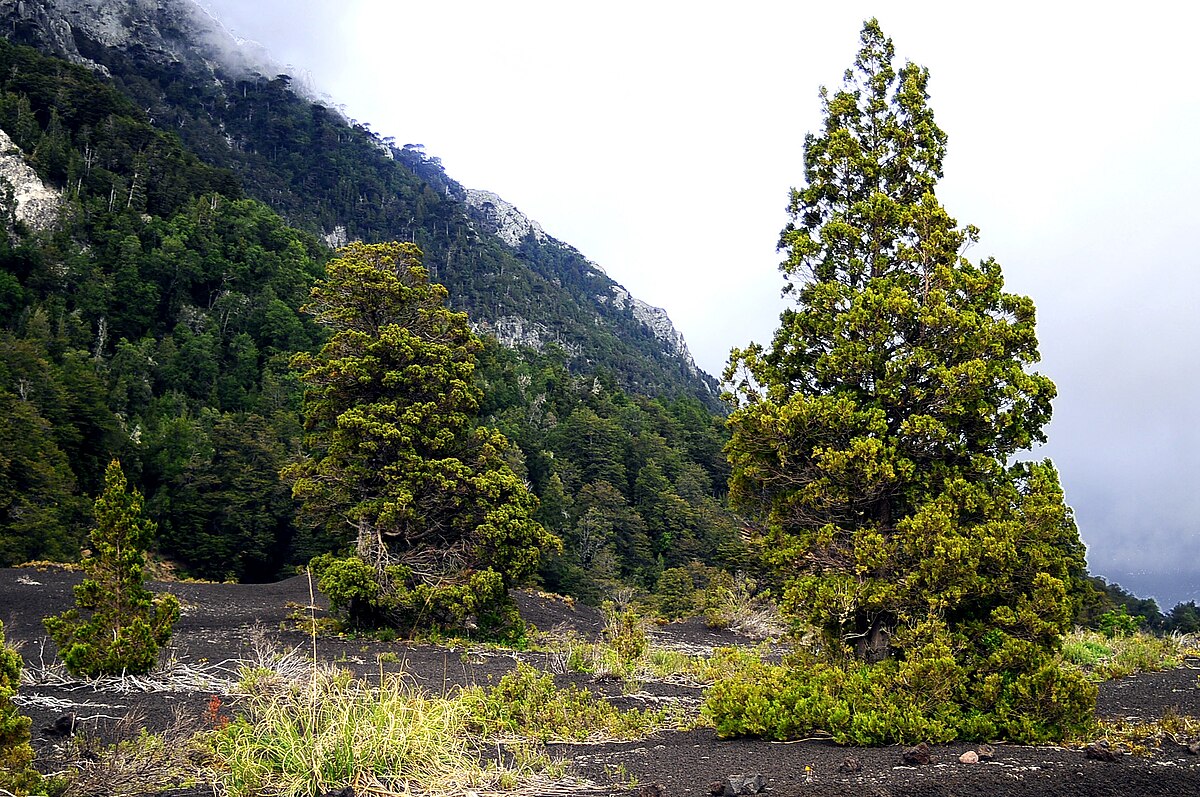
As I reported in an earlier blog, some of the insect pests that followed pines to South America have entered native forests. The most alarming of which I am aware is the aphid Cinara cupressi. It attacks the native conifer Austrocedrus chilensis, which forms pure and mixed stands with southern hemisphere beech (Nothofagus spp.) across approximately 160,000 hectares (Villacide and Fuetealba 2025). Cordilleran cypress is also under attack by the oomycete Phytophthora austrocedri, an oomycete of unknown origin.
Some scientists express concern about phytosanitary measures … but are their countries speaking up in meetings of the International Plant Protection Convention?
Studies by Crous et al. and Pérez et al. clearly show that pathogens from Australia continue to be transported to regions where eucalypt plantations are grown – despite the fact that most of the movement of tree genetic material is in the form of seeds – which should be less likely to transport pathogens than trade in plants. Pérez et al. (2009) explicitly raise concerns about the effectiveness of current quarantine procedures. Crous et al. (2019) state that the quarantines continue to fail in many parts of the world.
See my critique of the international phytosanitary system under the IPPC by visiting the Fading Forest II report (see link below) and reading other blogs under the categories “invasive species policy” and “plants as vectors of pests”.
SOURCES
Crous, P.W., M.J. Wingfield, R. Cheewangkoon, A.J. Carnegie, T.I. Burgess, B.A. Summerell, J. Edwards, P.W.J. Taylor, and J.Z. Groenewald. 2019. Foliar pathogens of eucalypts. Studies in Mycology 94:125-298 (2019)
Lantschner, V. and J. Villacide. 2025. Invasion Potential of the Recently Established Woodwasp Sirex obesus. Neotropical Entomology. (2025) 54:117 https://doi.org/10.1007/s13744-025-01347-6
Paine, T.D., M.J. Steinbauer, and S.A. Lawson. 2011. Native & Exotic Pests of Eucalyptus: A Worldwide Perspective. Annu. Rev. Entomol. 2011. 56:181-201
Payn, T., J-M. Carnus, P. Freer-Smith, M. Kimberley, W. Kollert, S. Liu, C. Orazio, L. Rodriguez, L. Neves Silva, M.J. Wingfield. 2015. Changes in planted forests & future global implications. Forest Ecology and Management 352 (2015)
Pérez, C.A., M.J. Wingfield, N.A. Altier, and R.A. Blanchette. 2009. Mycosphaerellaceae & Teratosphaeriaceae associated with Eucalyptus leaf diseases & stem cankers in Uruguay For. Path. 39 (2009) 349–360 doi: 10.1111/j.1439-0329.2009.00598.x www3.interscience.wiley.com
Pérez, C.A., M.J. Wingfield, N. Altier, and R.A. Blanchette. 2013. Species of Mycosphaerellaceae and Teratosphaeriaceae on native Myrtaceae in Uruguay: evidence of fungal host jumps. Fungal Biology Volume 117, Issue 2, February 2013.
Villacide, J. and A. Fuetealba. 2025. Pests in plantations: Challenging traditional productive paradigms in the Southern Cone of America. Forest Ecology and Management 597 (2025) 123127
Posted by Faith Campbell
We welcome comments that supplement or correct factual information, suggest new approaches, or promote thoughtful consideration. We post comments that disagree with us — but not those we judge to be not civil or inflammatory.
For a detailed discussion of the policies and practices that have allowed these pests to enter and spread – and that do not promote effective restoration strategies – review the Fading Forests report at http://treeimprovement.utk.edu/FadingForests.htm
Or