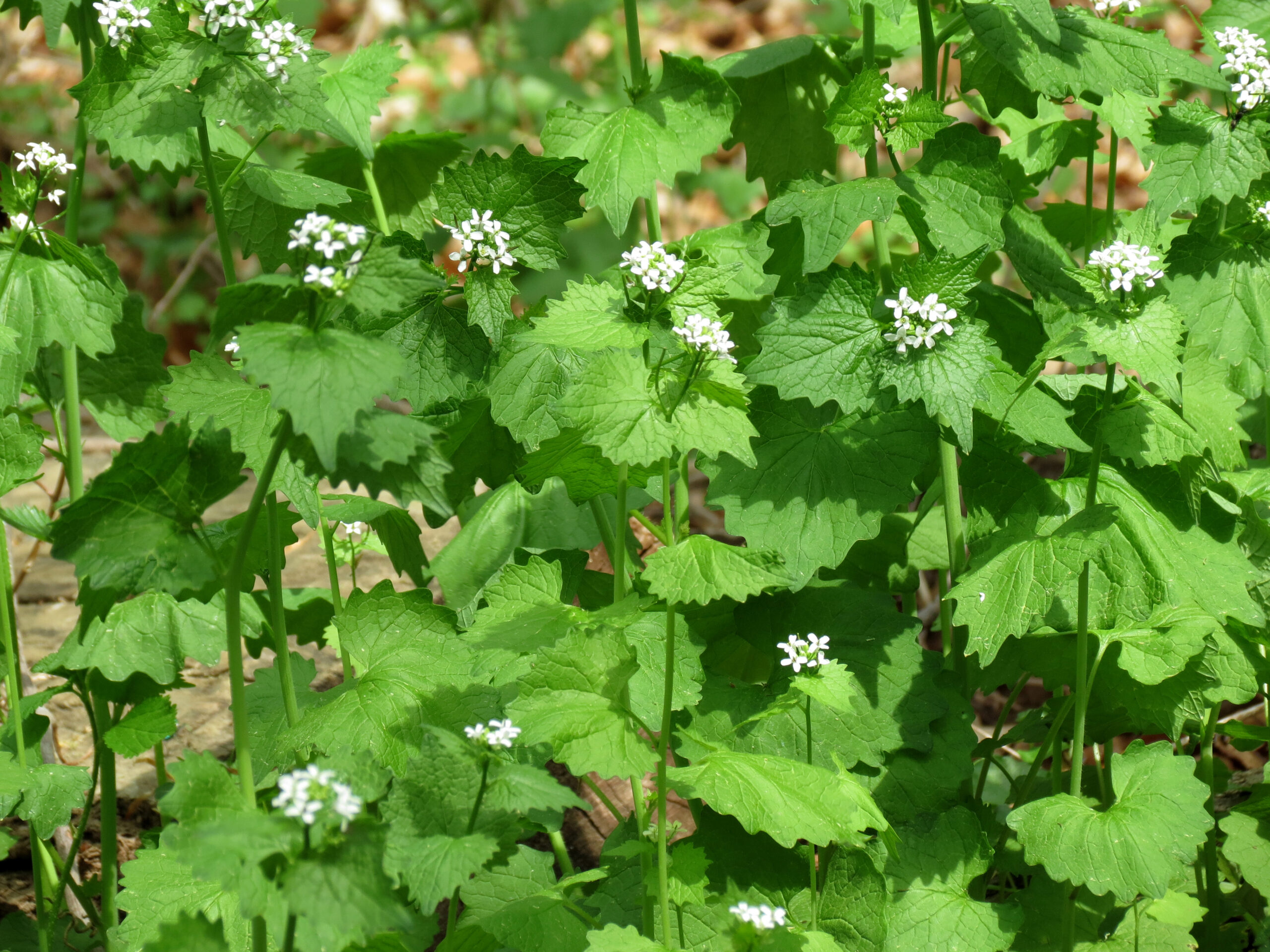
I welcome a recent series of studies documenting the extent of plant invasions in forests of the eastern United States and the socio-economic conditions that contribute to a state of affairs increasingly recognized as a crisis. I wish, however, that the authors had devoted more attention to the role of deliberate planting of non-native species and the resulting propagule pressure.
I summarize here findings of two studies written by largely the same scientists and relying on the same underlying data: surveys of forest plots conducted under the Forest Inventory and Analysis (FIA) program. In this blog, if focus on the extent of invasive plant presence in the forests of the eastern United States. In an accompanying blog I will summarize the status of plant invasions in forests nation-wide.
As I have noted in earlier blogs, link a decade ago one or more invasive plant species had already invaded 46% of FIA plots in the eastern U.S. (Oswald et al. 2015). This situation has worsened. Updated data show that 52.8% of these plots contain invasive plants. In the USFS Southern Region, invasive plants have been documented on 55.3 million ha. In the Northern Region, they are found on 36.9 million ha. (Only ~20% of FIA plots in the Northern Region were surveyed for invasive plants.) In some counties of the 37 states constituting these two USFS regions, 80% of inventoried forest plots contain invasive plants. Areas with lower levels of invasion are found in parts of New England, the Great Lakes states, southern Appalachians, southeastern coastal plain, and western Texas and Oklahoma (Potter et al. 2026). Spread of these bioinvaders is largely unchecked – either throughout the East or “just” in the South. In any case, the extent and intensity of these invasions are so great that their complete removal – or elimination of their impacts – is “practically impossible” (Potter et al., 2024; Potter et al. 2026). [It is not clear whether the scientists mean “nearly” or “in practice”. Or that this difference is important.]
[In comparison, in the West less than 30% of FIA plots are invaded, on average. In Hawai`i, more than70% are (Potter et al. 2026).]
The scientists analyzing the FIA data warn that the extent and impact of plant invasions in eastern forests is undoubtedly worse than these data indicate. The records include only some of the non-native plant species present — those considered to be the worst invaders at the time regional lists were compiled – apparently in the first years of the 21st Century (Potter et al. 2026).
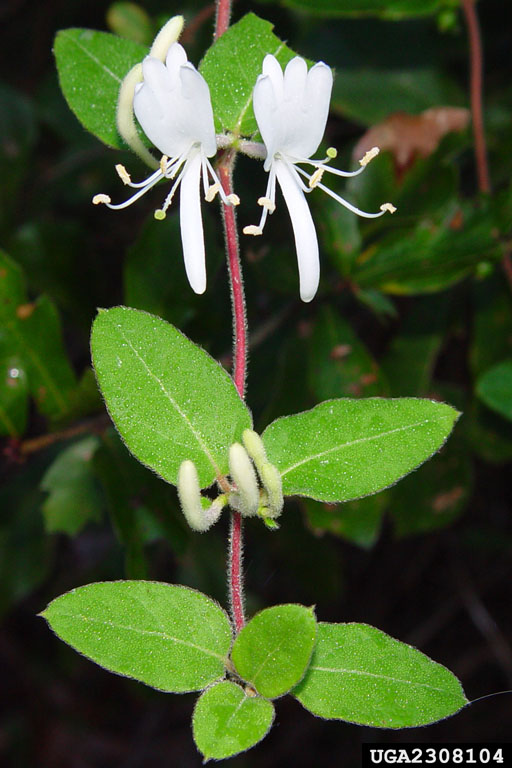
The scientists emphasize the role of disturbance in promoting plant invasions. They cite various studies as well as the FIA data to document that forest edges facilitate non-native plant establishment and spread into forests. They stress various aspects of suburban development, including roads and other transportation corridors. It follows that invasion rates are highest in the “wildland-urban interface (WUI).” [The wildlife-urban interface is the zone of transition between unoccupied land and human development; the zone where structures meet or intermix with undeveloped land and its vegetation.] They worry that the WUI is growing faster than any other land use type in the country – and especially rapidly in the East. As a result, the scientists expect more and worse invasions in the future (Potter et al., 2024 and Potter et al. 2026).
I appreciate that they highlight the uniqueness of WUI ecosystems. Housing development in the WUI has numerous effects on natural ecosystems, including habitat modification and fragmentation followed by diffusion of the direct and indirect effects of anthropogenic activities into neighboring ecosystems at different scales. As regards specifically non-native plants, this transmission occurs through a combination of (1) human-driven disturbances to native ecosystems that promote plant invasion and (2) providing a source of non-native plant propagules in their yards and gardens. These plants can then spread into and establish in nearby ecosystems (in this case, forests). [I note that tree-killing arthropods and pathogens also can be introduced in the WUI.] (Scroll below “Archives” to “Categories”, click on “forest pests” and “wood packaging”.)
They also found that plant invasions are more strongly related to older, than more recent, land-cover changes. Survey plots that have been located in the WUI since 1990 or earlier had on average 2.6% more invasive plant cover and 0.33 more invasive plant species than those that were classified as being in the WUI in 2000 or 2010. Their explanation is that the WUI forests experienced decreased spatial integrity, increased forest-developed area edges, and falling proportions of forest in the surrounding landscapes. In addition, the human population in the vicinity might have grown. All these factors that would increase forest fragmentation and the plots’ susceptibility to invasion.
The other side of the coin is propagule pressure. Both Potter et al (2024) and Potter et al. (2026) note that the flora of residential landscapes – rural as well as suburban – is typically dominated by non-native plant species. Still, I think these studies downplay the impact of this ubiquity of non-native plants in all anthropogenic landscapes.
In discussing the higher invasion rates found in survey plots located in WUIs dating from the 1990s they made no mention of human activities that promote plant invasions. There are several. Plants growing in those older yards had one or two more decades to flower – and for their fruits and seeds to be transported into the forest by birds, wind, or water. Residents might have decided to beautify their neighborhood by planting shrubs or flowers in the woods. Maybe they succumbed to the temptation to dump yard waste in the woods – thinking it would be absorbed by “nature”. Since plant invasions take time to unfold, these additional years of human-mediated exposure are highly relevant. Another factor is that people who choose to live in wooded surroundings probably choose horticultural plants that thrive under such conditions – exactly those best able to establish beyond the property line.
Another opportunity to discuss these factors came from the discovery that plant invasion rates are higher in association with “interface” rather than “intermix” WUI forests. [“WUI interface forests” are those where settled areas abut wildlands. In “WUI intermix forests” the structures are scattered.] They speculate about reasons. Potter, et al. (2024) mention that invasions originating from older housing developments have had more time to establish (or at least to be detected) given the well-known lag associated with plant invasions.
I wish they had focused more on the probable difference in suburban development across time. While I was growing up in expanding suburbs in the 1950s, I observed that the earlier housing developments were either built on land that had been cleared to support agriculture or the builders cleared the forest to make construction easier and cheaper. More recently, wealthier buyers have sought residences on more wooded sites – so creating an “intermix” WUI. Potter et al. (2024) speculate that locations in the “interface” WUI are closer to high-density urbanization so have higher exposure to non-native plants. They do not discuss whether the “interface” WUIs are older, thus giving associated plantings longer years to proceed through the stages of bioinvasion.
The Role of Deliberate Planting?
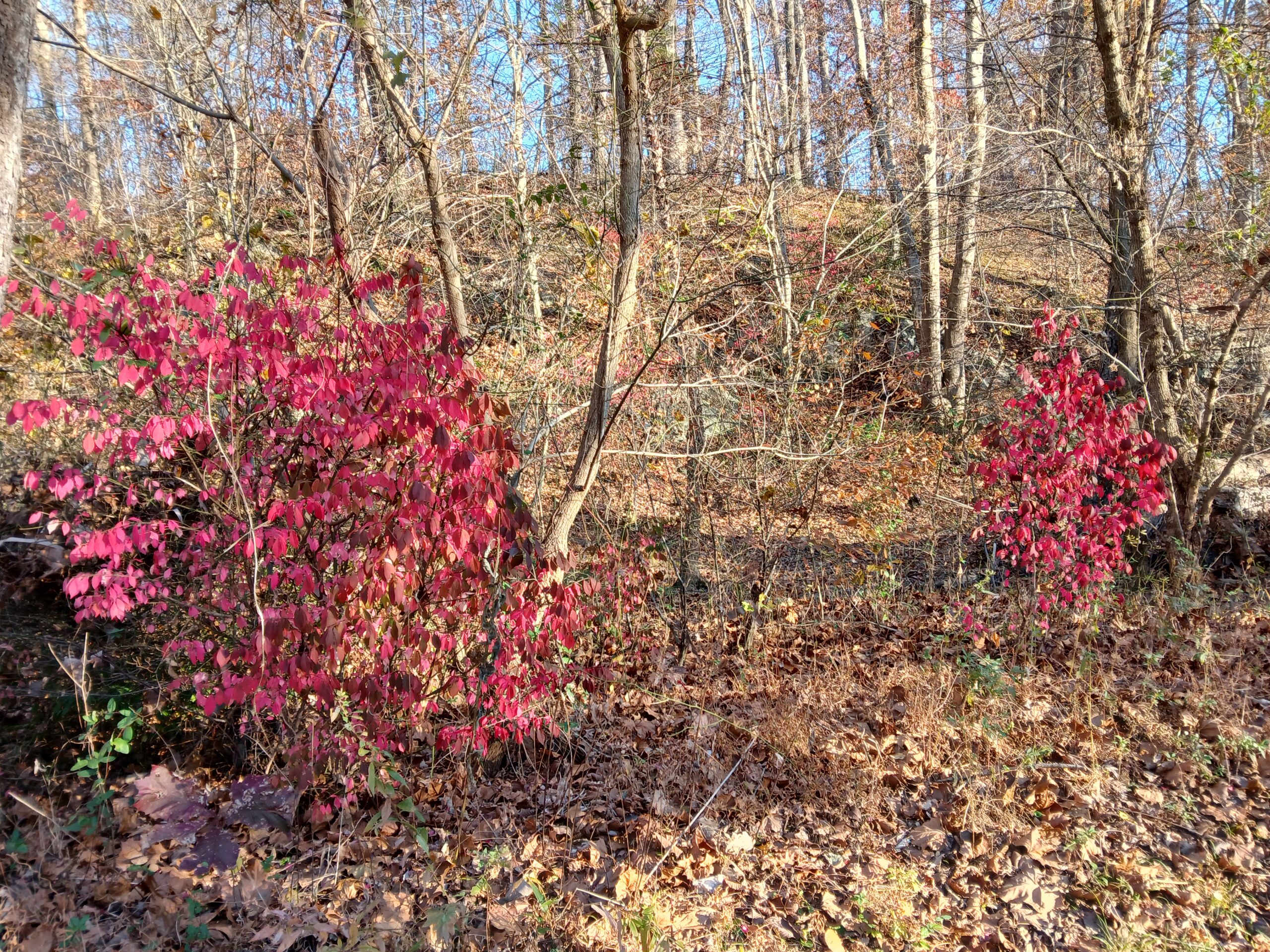
I recognize that these authors analyzed mountains of data. However, I wish they had incorporated the findings of numerous scientists who have analyzed the role of deliberate planting – especially ornamental horticulture – in facilitating introduction and spread of invasive plants. (Scroll below “Archives” to “Categories” and click on “invasive plants”. Also See Reichard and White 2001 and Mack 2000).
As I hope USFS scientists are aware, recent studies confirm the continuing role of ornamental horticulture in plant invasions. Kinlock et al. (2025) blog 440 found that more than 1,600 plant species sold by nursery and seed catalogs over 200 years had “naturalized” somewhere in the continental 48 states. They do not discuss what proportion of these species are truly damaging invaders. Fertakos and Bradley (2024) found that species were likely to establish if they were introduced to as few as eight locations. Beaury et al. (2024) found that half of 89 plant species recognized as invasive are sold in the same locations where they are invasive. Another 25 species are sold by one or more nurseries located in an area that is currently unsuitable for those species, but that will become more suitable for invasion as temperatures warm.
Potter et al. (2026) acknowledge that the ornamental plant trade is likely to continue introducing new plant species into U.S. forests. However, they recommend only updating the lists of invasive plants to be included in future surveys. Apparently these lists have not been updated since 2004.
Potter et al. (2024) go farther, urging efforts to encourage homeowners to plant more native and environmentally friendly private landscapes. They note that such advocacy is complicated by the fact that non-native – even invasive – species provide valued ecosystem and cultural services.
I add that the nursery industry and their customers enjoy enormous lobbying clout.
Many associations – native plant societies, regional or state invasive plant councils, etc. – are pursuing this approach. To research these efforts, visit the websites for the state native plant societies and the Southeast Exotic Pest Plant Council, Mid-Atlantic Invasive Plant Council, and Midwest Invasive Plant Network. These voluntary efforts have yielded some success. But they have not resulted in adequate protection for our ecosystems. Dr. Douglas Tallamy points out that even non-invasive, non-native plants disrupt food webs.
The insufficient attention to the role of the plant trade in articles intended to be comprehensive has crucially important impacts. As both Potter, et al. (2024) and Potter et al. (2026) affirm, determining which factors are most important in facilitating plant invasions of eastern American forests is the necessary foundation for identifying and implementing the most efficient and effective counter measures.
These scientists are employees of the U.S. Department of Agriculture. If departmental leadership interpret their studies as justifying inaction on regulating plant sales, USDA’s regulatory agencies will not respond. And we will continue failing to curtail introduction and spread of damaging plant invasions.
I agree with the authors on the need for enhanced monitoring and management of WUI zones in the East to detect new species or new locations of invasion and the need to develop better tools for these purposes. However, I ask all stakeholders to follow Evans et al. (2024), who urge prioritizing for state regulation those species in the ornamental trade that are projected to remain or become abundant under evolving climate conditions. Or, more aggressively, follow Beaury et al. (2023)’s call for regulating the nursery trade in a manner consistent with the scope of the horticultural trade at the national level. That would require legislation, since the Federal Noxious Weed Act does not currently address long-established, widespread species. Beaury et al. (2023) also note that existing state restrictions are outdated, tend to include only a few weeds that plague agriculture rather than those that invade natural systems, and are irregularly enforced.
I conclude by agreeing with the scientists that managing the disturbance component of plant invasions points to protecting particularly forests of high conservation value. They suggest adoption of land-use planning rules aimed at this goal. However, as they point out, such action will be extremely unlikely given the magnitude of predicted land-use changes in the country and powerful demographic factors driving them. I would add other barriers: the lobbying clout of the real estate industry and homeowners plus the local nature of zoning decisions.
SOURCES
Beaury, E.M., J.M. Allen, A.E. Evans, M.E. Fertakos, W.G. Pfadenhauer, B.A. Bradley. 2023. Horticulture could facilitate invasive plant range infilling and range expansion with climate change. BioScience 2023 0 1-8 https://doi.org/10.1093/biosci/biad069
Evans, A.E., C.S. Jarnevich, E.M. Beaury, P.S. Engelstad, N.B. Teich, J.M. LaRoe, B.A. Bradley. 2024. Shifting hotspots: Climate change projected to drive contractions and expansions of invasive plant abundance habitats. Diversity and Distributions 2024;30:4154
Fertakos, M.E. and B.A. Bradley. 2024. Propagule pressure from historic U.S. plant sales explains establishment but not invasion. Ecology Letters 2024;27:e14494 doi: 10.1111/ele.14494
Kinlock, N.L., D.W. Adams, W. Dawson, F. Essl, J. Kartesz, H. Kreft, M. Nishino, Jan Pergl, P. Pyšek, P. Weigelt and M. van Kleunen. 2025. Naturalization of ornamental plants in the United States depends on cultivation and historical land cover context. Ecography 2025: e07748 doi: 10.1002/ecog.07748
Oswalt, C.M., S. Fei, Q. Guo, B.V. Iannone III, S.N. Oswalt, B.C. Pijanowski, K.M. Potter. 2016. A subcontinental view of forest plant invasions. NeoBiota. 24:49-54 http://www.srs.fs.usda.gov/pubs/48489
Potter, K.M., K.H. Riitters, B.V. Iannone III, Q. Guo and S. Fei. 2024. Forest plant invasions in the eastern United States: evidence of invasion debt in the wildland‑urban interface. Landsc Ecol (2024) 39:207 https://doi.org/10.1007/s10980-024-01985-y
Potter, K.M., B.V. Iannone III, K.H. Riitters, Q. Guo, K. Pandit, C.M. Oswalt. 2026. US Forests are Increasingly Invaded by Problematic Non-Native Plants. Forest Ecology and Management 599 (2026) 123281
Posted by Faith Campbell
We welcome comments that supplement or correct factual information, suggest new approaches, or promote thoughtful consideration. We post comments that disagree with us — but not those we judge to be not civil or inflammatory.
For a detailed discussion of the policies and practices that have allowed these pests to enter and spread – and that do not promote effective restoration strategies – review the Fading Forests report at http://treeimprovement.utk.edu/FadingForests.htm
Or