Nitrogen-fixing tree species have been recognized as damaging to invaded ecosystems for decades. These trees increase soil N availability through increased N content in litterfall. The elevated soil N availability might persist long after the mature individuals responsible for creating such litterfall have ceased to exist. When this happens, some plant species able to exploit increases in nutrients and light, e.g., non-native grasses and forbs, might quickly dominate post-control succession.
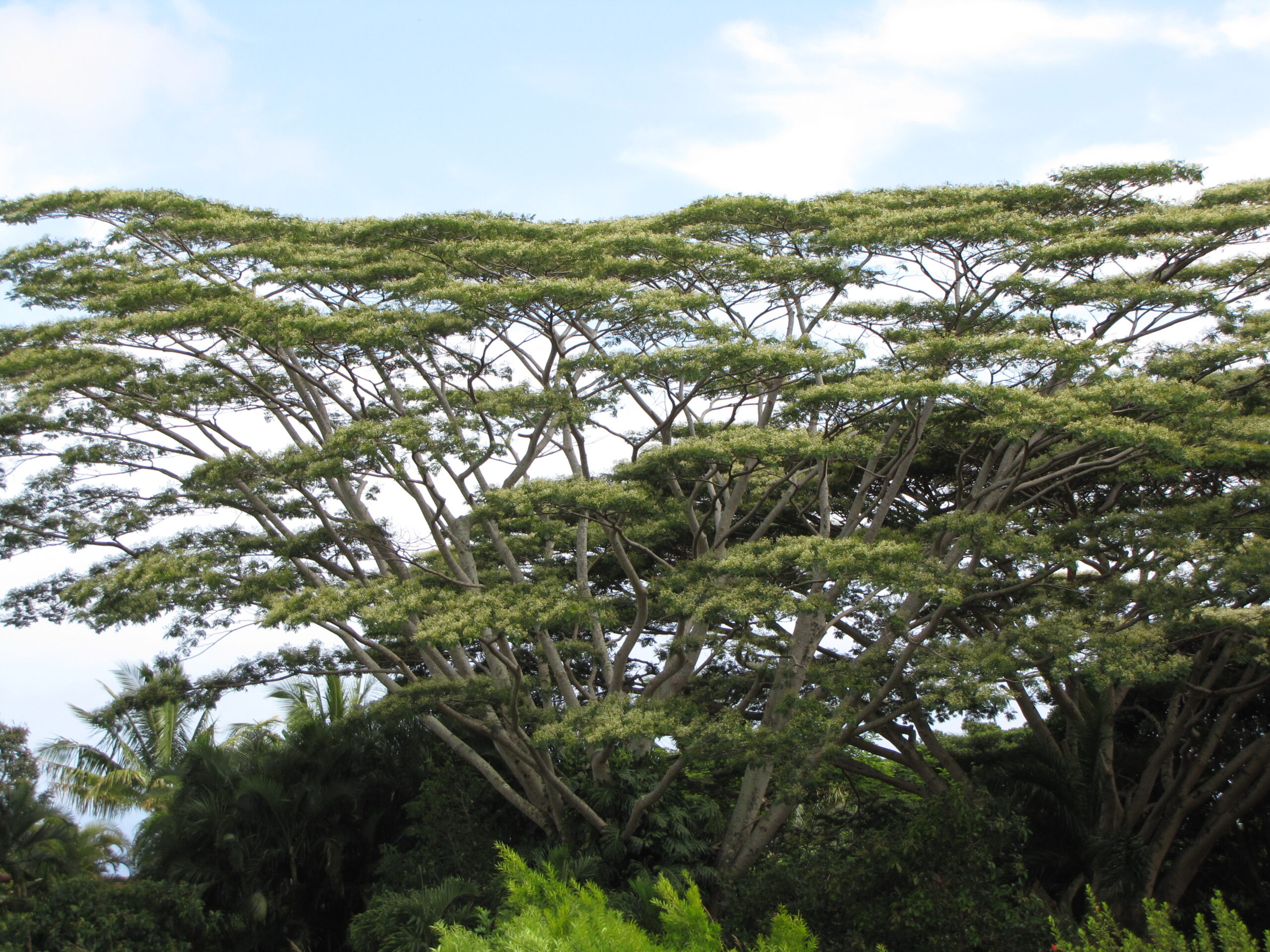
In Hawai`i one of the worst nitrogen-fixing tree species is albizia (Falcataria falcata) [formerly Falcataria moluccana, Paraserianthes falcataria, or Albizia falcataria]. This fast-growing species has aggressively invaded across the archipelago, transforming composition, structure, and function of remnant lowland wet forests. There are an estimated four million F. falcata trees across the Hawaiian islands; 720,000 large trees (i.e., > 25 cm DBH). The trees spread rapidly once established because the small seeds remain attached to the lighweight pods, which can be blown for long distances in wind storms (J.B. Friday, University of Hawaii, pers. comm.).
Stands with contiguous overstory F. falcata canopies reduce light availability to 20% of ambient levels; adding in understory vegetation further reduces light to ~5% of ambient levels. Albizia’s abundant and persistent seedbank promotes its return to dominance after mature individuals controlled.
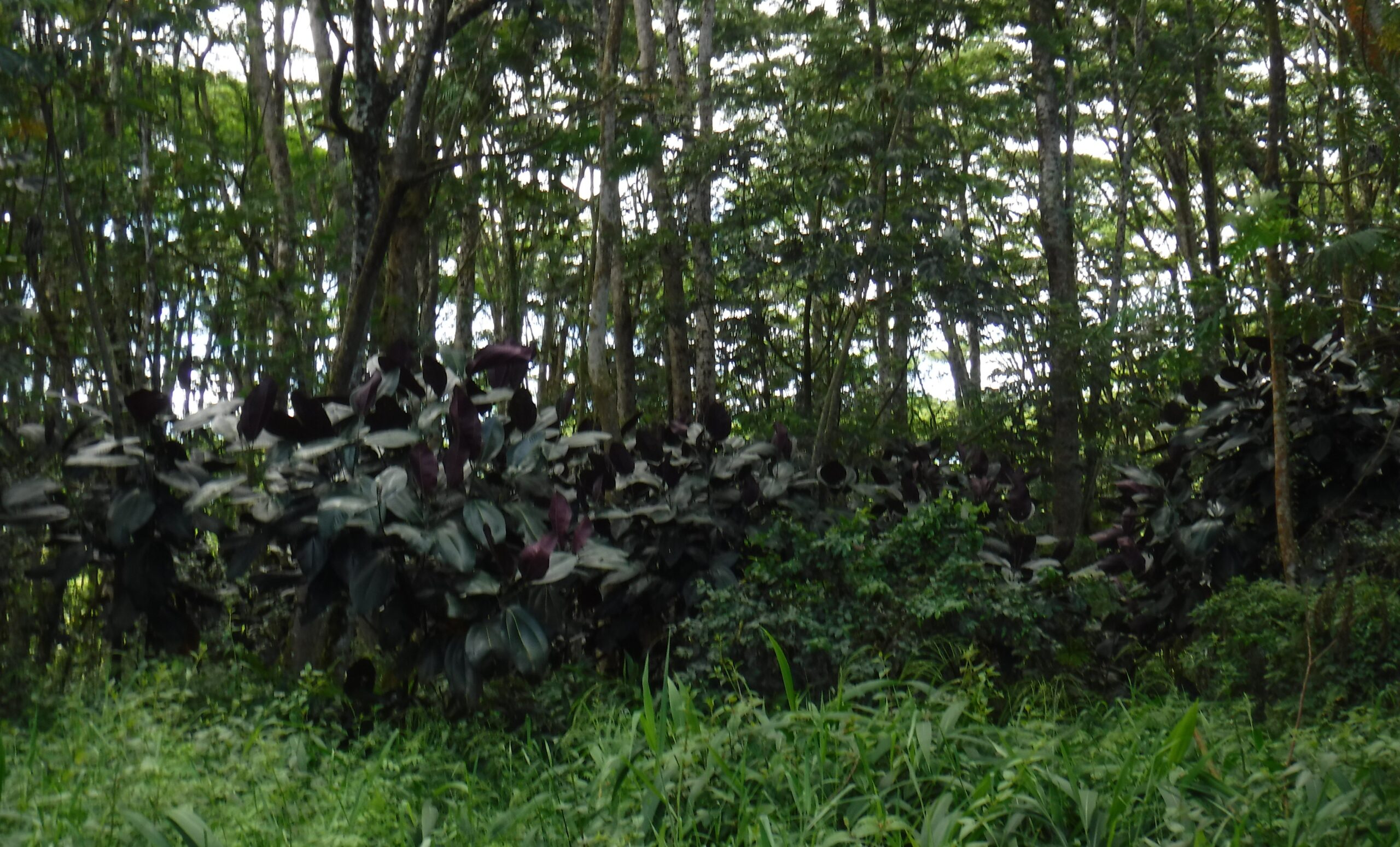
Beyond the conservation threats, albizia also poses a threat to residential communities & agricultural lands. The trees are some of the fastest growing species in the world, easily growing 5 m in height annually over the first few years and reaching up to 40 m. When their brittle branches fall they crush structures and entire trees can topple during windstorms. The damage is exacerbated by trees’ widespread presence. When Tropical Storm Iselle hit Hawai‘i island in 2014, over 10,000 people were stuck in their subdivisions or on their farms because fallen albizia had blocked all their access roads (Friday, pers. comm.).
Until recently control efforts have relied largely on clearing the land using large machinery (e.g., bulldozers). This is expensive and – worse – not very effective because the magnitude of disturbance to the soil disturbance often leads to explosive germination of the trees’ seeds.
There has been success recently through application of a target-specific herbicide (aminopyralid) at low doses (Leary et al. 2014). Hughes et al. (2025) found that herbicide-killed F. falcata quickly lost their leaves. This litterfall increased litter inputs of N and P that translated to increased soil nutrient availability that is exploited by extant understory vegetation (non-native grasses and forbs). These plants formed a continuous layer that severely limited germination of F. falcata seeds. In their study plots the number of saplings per ha after three years was only 18, despite the presence of perhaps 8 million seeds!
As an early successional pioneer species, F. falcata requires high light conditions to germinate, persist, & grow. The rapid growth & thorough occupation of the understory by other species prevents the species’ re-establishment. However, these aggressive non-native plants also prevent restoration of native Hawaiian species. There is little to no regeneration of native plants under albizia, either on stands that established on abandoned agricultural or ranch lands or under trees that spread into native forests.
Hughes et al. (2025) suggest manipulating the succession trajectory by planting desired species – either native species or species that have cultural importance to native Hawaiians – under albizia stands before herbicide treatment. If the land is to be restored to agricultural use, mechanical clearing would be used rather than herbicide used as felling the brittle dead trees is hazardous to equipment operators, and standing dead trees would pose a risk to farmers. In a forest setting, understory planting before herbicide treatment of the canopy-forming F. falcata stands would allow desired species to take maximum advantage of the increased resources (i.e., light and nutrients) (Friday pers. comm.).
Even after invasive N-fixing trees have been physically removed, the soil legacy effects of transformed microbial communities, depleted native seedbanks, increased available soil N, and dominance by undesirable weed species are daunting barriers to restoration of native species. With intensive management, though, these lands can be restored to agricultural production. Dozens of acres of papaya farms have been established on areas in the Puna district of Hawai‘i island on lands formerly occupied by albizia (Friday, pers. comm.).
In this case, re-establishment by native species is not expected due to their scarcity in study areas. These areas had experienced significant disturbance (i.e., fire, and/or conversion to agriculture) before albiziast and establishment. Instead, the proposal’s objective is primarily to understand whether, how, and to what extent F. falcata stands could be eliminated from areas in a manner that constrains the species’ seedling recruitment and subsequent re-establishment leading to overstory dominance once again (Friday, pers. comm.).
Hughes et al. (2025) emphasize the need for long-term follow-up to ensure that F. falcata does not re-establish later on. The species’seeds retain 70 – 90% viability following 18 months in storage; possibly some much longer. Also, a few saplings did still establish. The non-native grass invasion might lead to declines in soil N availability that provide opportunities for secondary invasion by N2-fixing treesin light gaps. Dr. Friday reports that practitioners revisit treated areas to kill these seedling while they are still 10 – 20 feet tall.
Conclusions
Hughes et al. (2025) assert that management of this large, fast-growing, & disruptive invasive tree is possible by exploiting its weakness of shade intolerance. Dr. Friday agrees that fast-growing timber species, e.g., Eucalyptus, could outcompete regenerating albizia. However, will there be a market for locally grown timber? Dr. Friday doubts the possibility of agro-forestry plantings of smaller or slower-growing species because of the danger that the overtopping dead F. falcate would fall on and crush agricultural workers or structures.
The fall hazard would presumably apply in other parts of the Pacific & elsewhere where F. faclata poses the same invasiveness problems.
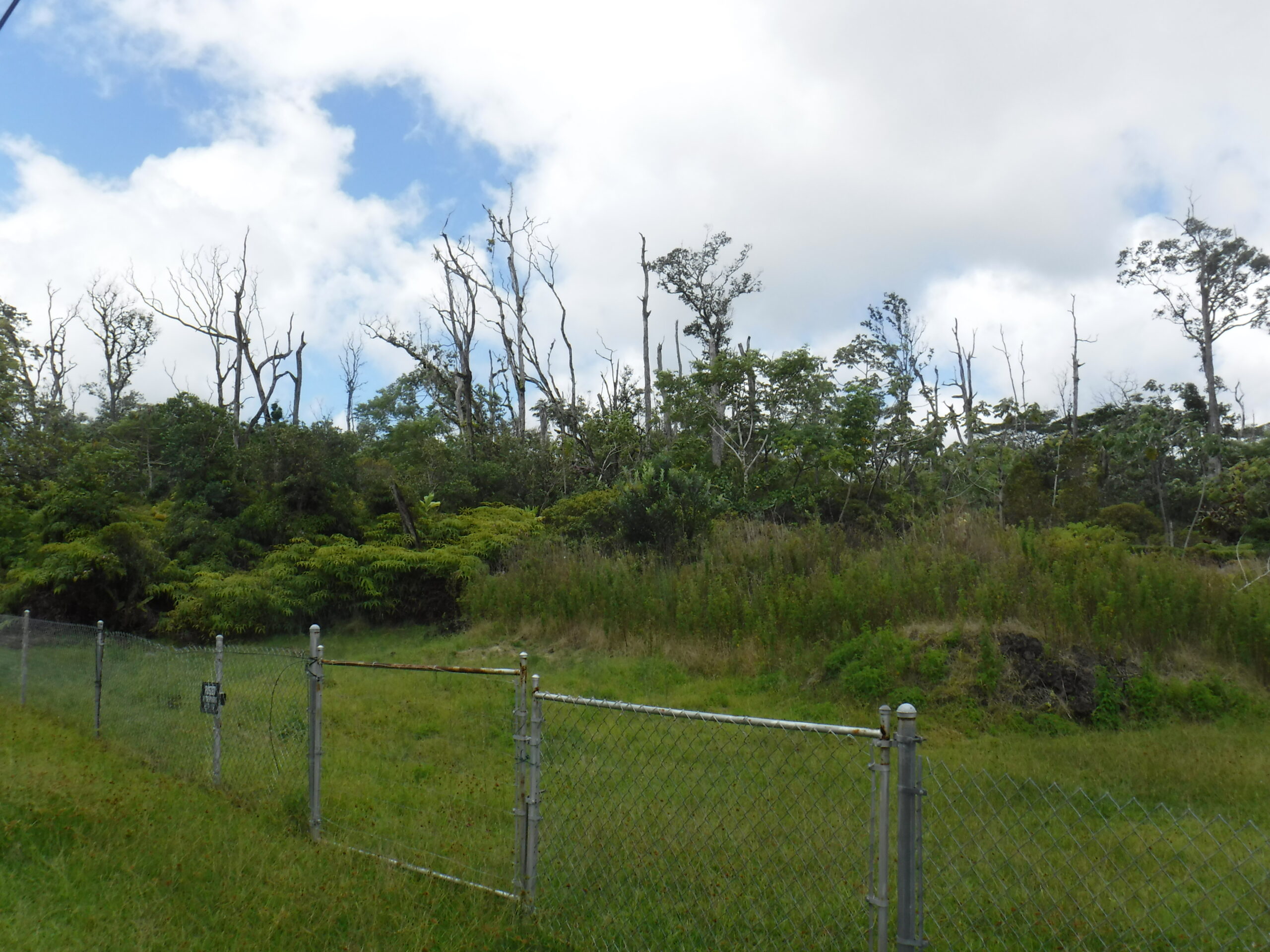
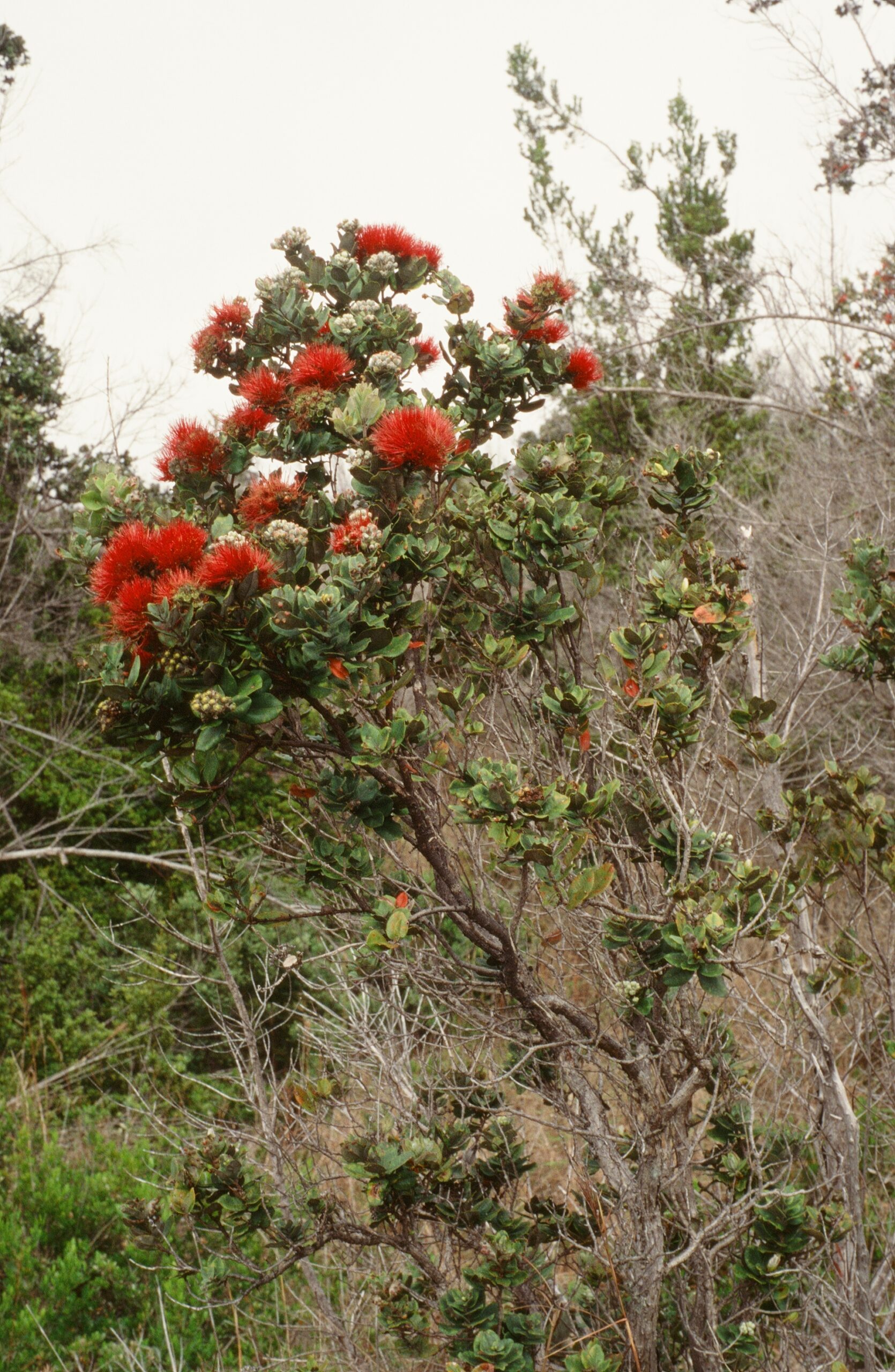
Hughes et al. (2025) do not mention that the native tree that was probably most widespread before the disturbances is ʻōhiʻa lehua (Metrosideros polymorpha). In precisely the same lowland region of the Big Island where they conducted their study, ʻōhiʻa has been killed by a newly introduced disease, rapid ʻōhiʻa rust (ROD). This new invader greatly complicates any effort aimed at restoring native plant species.
SOURCES
Hughes, R.F., C. Morrison, E. Bufil, J. Leary. 2025. Ecosystem response to management of an invasive N-fixing tree in Hawai`i. Trees, Forests and People 21 (2025) 100932
Leary, J., J. B. Friday, S. Kaye, and F. Hughes. 2014. Proper technique of injecting albizia (Falcataria moluccana L.) with the herbicide Milestone ® (active ingredient aminopyralid).
Dr. Friday provided the following more local references:
https://plantpono.org/high-risk-plants/falcataria-moluccana-albizia
https://dlnr.hawaii.gov/hisc/info/biocontrol/latest-biocontrol/falcataria-molucca
Posted by Faith Campbell
We welcome comments that supplement or correct factual information, suggest new approaches, or promote thoughtful consideration. We post comments that disagree with us — but not those we judge to be not civil or inflammatory.
For a detailed discussion of the policies and practices that have allowed these pests to enter and spread – and that do not promote effective restoration strategies – review the Fading Forests report at http://treeimprovement.utk.edu/FadingForests.htm