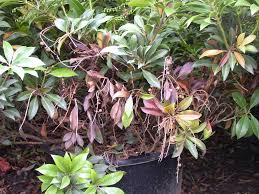
A group of scientists (See Khusnitdinova et al., 2026; full reference at the end of this blog.) contend that landscape interfaces—e.g., crop–forest edges, riparian zones, abandoned agricultural fields and orchards, and nursery–wildland transitions—are active zones of pathogen exchange. Biological and abiotic vectors collectively move pathogens from crops to wild plants, and vice versa. These exchanges create conditions speed up the evolution of pathogen aggressiveness and dispersal traits and promote the selection of generalist pathogen lineages capable of infecting both cultivated and wild hosts. In this way, crop-natural ecotones become not just passive transition zones but centers of adaptation.
The stronger or novel pathogens don’t stay in the specific local area; they are spread by a variety of human activities. Establishing large monocultures of crops and simplifying biological diversity at the landscape level boost inoculum production, limit host genetic diversity, and diminish natural regulation. Pathogens present in irrigation water can be spread during floods. Improperly sanitized green waste and compost can harbor viable oomycete propagules. Foot traffic and heavy equipment can move contaminated soil. Movement of infested plants for planting can transport the disease to a different continent. One example cited by Khusnitdinova et al. (2026) is the spread of numerous Phytophthora spp. from nurseries to forests and shrublands. A second example is rapid ʻōhiʻa death. They say it demonstrates that 1) a combination of human movement, forestry activities, and animal vectors can enable rapid local and landscape-scale spread; and 2) management measures (biobarriers, access control, restriction of animal movements, and phytosanitary inspection of planting material) can curtail that spread.
Meanwhile, the changing climate is causing shifts in the latitudinal and elevational distribution of plants and their associates; changing reproduction rates and latent periods; altering ranges and connectivity; and affecting disease incidence and severity. The direction is not always predictable; while drought or heat might reduce fungal and oomycete epidemics, the same conditions increase host stress and so might worsen disease outcomes.
Plant health scientists can use these concentrated geographic areas to focus plant disease surveillance. By integrating molecular and genomic tools with remote sensing and Geographic Information System (GIS)-based monitoring, plant health agencies can more quickly detect newly emerging diseases and implement effective action to counter the threat.
However, Khusnitdinova et al. (2026) warn that surveillance employing these technological advances can reduce the risk that a pathogen will “spill over” from an anthropogenic to a natural ecosystem or vice versa only if pertinent sectors are transformed. Yes, they need resources: funding, staff, facilities. Also required is unification – or at least coordination. Khusnitdinova et al. (2026) advocate abandoning the compartmentalization that currently separatesforest health studies from invasive-plant and infectious-disease ecology studies. Instead, agencies should consider managed and natural systems together. They should conduct joint surveillance programs, share data standards, and coordinate management of the transition zones. In other words, apply a “One Health” landscape-based approach to the entire landscape.
Khusnitdinova et al. (2026) add that implementing such combined surveillance programs is especially vital in biodiversity-rich regions which have limited monitoring capacity. Might I suggest Hawai’i?
Other facts that challenge traditional phytosanitary practices
Khusnitdinova et al. (2026) provide strong evidence that pathogens change – sometimes quickly. Is the current regulatory system sufficiently flexible and agile to effectively address these developments?
First, pathogens’ host range is not fixed. Instead, it is a trait that changes quickly under the influence of alterations in effector repertoires, plant immunity genes, and environmental conditions (including those driven by human actions). Even small genetic changes—such as mutations, gene losses or gains, or horizontal gene transfers—can enable pathogens to infect new hosts or weaken previous infection barriers. They suggest that plant pathogens with broad host ranges, e.g., Phytophthora cinnamomi, can easily move between hosts in agricultural plantings, ornamental landscapes, and semi-natural vegetation within a relatively small region. Such frequent spillovers maintain inoculum in landscape mosaics and complicating eradication or containment efforts.
Khusnitdinova et al. (2026) note that host-range expansions have especially long-term consequence in forest ecosystems, where loss of a single tree species can change understory makeup, light and moisture patterns, related fungi and invertebrate communities, and ultimately, landscape diversity and function. They cite chestnut blight and sudden oak death in North America and ash dieback in Europe as examples.
In addition, Khusnitdinova et al. (2026) maintain that genetic recombination is now recognized as a fundamental driver of innovation in plant pathogen populations. Table 2 of their publication lists pathogens exhibiting well-documented and experimentally confirmed cases of recombination, hybridization, or other forms of genome exchange. Forest-related examples include several Phytophthora hybrids and the ash decline fungus, Hymenoscyphus fraxineus.
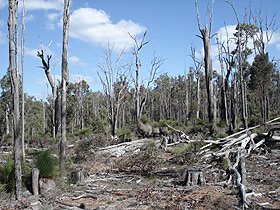
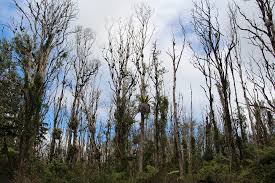
Khusnitdinova et al. (2026) add their voices to a growing chorus decrying a global forest health crisis. They say that repeated pathogen introductions—often via trade in plants and wood—have shifted many temperate and boreal forests into states characterized by higher tree mortality, increased dominance of opportunistic or disturbance-adapted species, and reduced functional diversity. These changes lead to reduced resistance [defined as the capacity to limit damage during a new outbreak] and resilience [defined as the speed and trajectory of post-disturbance regeneration and ecosystem reorganization]. They note that increasing tree species diversity is one of the few management interventions that succeeds in strengthening both forest resistance and resilience to pathogens—by decreasing host density for specialist pathogens and reducing continuous “fuel” for epidemics.
One step toward improving scientific understanding on the scale they advocate, in their view, is the European Holistic Management of Emerging Forest Pests and Diseases (HOMED) effort. HOMED combines plant pathology, forest ecology, and biosecurity. The emphasis is on early detection, risk assessment, and management of human-mediated pathways, incl plant trade and nursery systems. The initiative aims to limit pathogen establishment and spread while strengthening forest resistance and resilience under global change. Participants also try to provide practical solutions for stakeholders to manage emerging native and non-native pests and pathogens threatening European trees not only in forests, but also in nurseries, urban and rural areas.

I am inspired by the proposals in Khusnitdinova et al. (2026). In hopes that USDA will explore how to implement them, I presented a poster presentation at the annual USDA Research Forum on Invasive Species. In that poster I suggested that these ideas complement USDA Secretary Rollins’ Memorandum on departmental research priorities. The need for research to clarify scientific puzzles is particularly acute regarding tree-killing pathogens nematodes, etc.
I suggested prioritizing research on the following issues:
- Setting up intensive monitoring programs targetting the agriculture/natural system interfaces, as recommended by Khusnitdinova et al. (2025). These authors describe useful technologies in molecular diagnostics, genomic surveillance, environmental DNA, and remote sensing to detect fungi, oomycetes, rusts, bacteria, and viruses. Kantor et al. (2025) define techniques applicable for nematodes.
- Rapid analysis of potentially invasive species and their pathways of entry revealed by “early warning” systems [e.g., APHIS’ “PestLens” website; “door knocker” introductions; academic studies; and “unimportant” species introduced to the U.S. (e.g., Leptosillia pistaciae in California)].
- Exploring ways (in addition to those suggested by Khusnitdinova et al. 2025) to shorten the time lag between introduction of a pathogen and its detection.
- Incorporating into risk analyses information from sentinel garden program. Fund expansion of data collection and analysis to address asymptomatic plants, sampling techniques, and seasonality, as outlined by Drs. Eliana Torres Bedoya and Enrico Bonello (at the 2025 USDA Research Forum) and Raffa et al. (2023).
Over a somewhat longer-term, I suggested that research address these topics:
- Find techniques to speed up determination of disease causal agents – which often remain obscure for years or decades. The International Plant Protection Convention (IPPC) link requires countries to name the causal agent before regulating disease hosts and vectors.
- Determine which components of a “systems approach” are most effective against each type of pathogen – fungi, oomycetes, rusts, bacteria, viruses, nematodes, etc.
- With state counterparts, explore ways to better curtail domestic spread of organisms once they have established in the United States.
- Integrate socio-economic drivers of pest introductions into studies. E.g., why do some organisms suddenly spread to numerous countries over a period of a few years?
- Greatly expand efforts (in house and by collaborators) to breed trees resistant to established and newly detected pathogens.
- Increase research supporting biocontrol.
As I have frequently complained in the past, the international phytosanitary system has failed to protect Earth’s forests and other natural ecosystems from non-native plant pests (or invasive plants). This failure has been documented by Weed, Ayres, and Hicke (2013), Fei et al. (2019), Quirion et al. (2021) for North America; and Gougherty (2023), Wu (2023), Sitzia et al. (2021), Martinac et al. (2025) and Khusnitdinova et al. (2025) from a global perspective.
Challenges:
- Most microorganisms are unknown to science – “unknown unknowns”.
- Scientists usually cannot predict the impact of known micro-organisms on new hosts under novel environmental conditions.
- The World Trade Organization’s SPS Agreement and the International Plant Protection Convention (IPPC) demand unachievable levels of specificity re: a potential pest’s impact.
- Most tree-killing pathogens are detected after they have entered the forest.
- Agencies assign a low priority to protecting natural ecosystems from bioinvasion.
- Resources (funds, staffing, etc.) are unreliable for agencies carrying out the full range of efforts, from assessing various risks to restoring pest-resistant trees to the forest.
SOURCES
Fei, S., R.S. Morin, C.M. Oswalt, & A.M. 2019. Biomass losses resulting from insect & disease invasions in United States forests
Gougherty, A.V. (2023) Emerging tree diseases are accumulating rapidly in the native & non-native ranges of Holarctic trees. NeoBiota 87: 143–160. https://doi.org/10.3897/neobiota.87.103525
Kantor, C., Teixeira, M., Kantor, M., and Gleason, C. 2025. Tiny Invaders, Big Trouble: Emerging Nematode Threats in the United States. Phytopathology 2025 115:587-595 https://doi.org/10.1094/PHYTO-09.-24-0290-IA
Khusnitdinova, M., V. Kostyukov, G. Nizamdinova, A. Pozharskiy, Y. Kydyrbayev and D. Gritsenko. 2026. Cross-Ecosystem Transmission of Pathogens from Crops to Natural Vegetation. Forests 2026, 17, 76
Martinac, M-L., F. Ningre, A. Dowkiw, N.Le Goff, B. Marcais. 2025. High host density favour ash dieback Preprint Plant Pathology
Quirion BR, Domke GM, Walters BF, Lovett GM, Fargione JE, Greenwood L, Serbesoff-King K, Randall JM & Fei S (2021) Insect and Disease Disturbances Correlate With Reduced Carbon Sequestration in Forests of the Contiguous United States. Front. For. Glob. Change 4:716582. [Volume 4 | Article 716582] doi: 10.3389/ffgc.2021.716582
Sitzia, T., T. Campagnaro, G. Brundu, M. Faccoli, A. Santini & B.L. Webber. 2021. Routledge Handbook of Biosecurity & invasive species. Chapter 7. Forest Ecosystems. ISBN 9780367763213
Weed, A.S., M.P. Ayers, J.A. Hicke. 2013. Consequences of CC for biotic disturbances in North American forests. Ecological Monographs, 83(4), 2013, pp. 441–470
Wu, H. 2023/24. Modelling Tree Mortality Caused by Ash Dieback in a Changing World: A Complexity-based Approach MSc/MPhil Dissertation Submitted August 12, 2024. School of Geography & the Enviro, Oxford University
Posted by Faith Campbell
We welcome comments that supplement or correct factual information, suggest new approaches, or promote thoughtful consideration. We post comments that disagree with us — but not those we judge to be not civil or inflammatory.
For a detailed discussion of the policies and practices that have allowed these pests to enter and spread – and that do not promote effective restoration strategies – review the Fading Forests report at http://treeimprovement.utk.edu/FadingForests.htm