Many have recognized that preventing introduction of invasive species is the most efficient approach to minimizing their ecological and economic impacts. Prevention requires many capacities, including control over a country’s borders, strong border biosecurity agencies and policies, and foreknowledge of probable pathways of introduction and high-impact species that might arrive.
Horizon scanning is one tool for gathering information about non-native species likely to enter, how they might arrive, and their probable impact. Horizon scanning involves a systematic search for potential invaders, assessment of their potential to harm BD, economic activities and human health, and opportunities for impact mitigation. It thus supports choice of prevention policies, targetting of efforts, and implementation of early identification and eradication procedures (Kenis et al. 2022; Martinou et al. 2026)
I have reviewed two case studies of the application of horizon scans.
Plant Pests in Ghana
One horizon scanning exercise aimed to identify and rank potential invasive non-native plant pest species that could be harmful to agriculture, forestry, and the environment in Ghana. The ultimate objective was to enable prioritization of actions aimed at preventing their introduction. As the participants in this exercise note (Kenis et al. 2022), the resource-poor farmers of Sub-Saharan Africa are particularly vulnerable to invasive pests that attack their crops, both those grown for subsistence e.g., maize and sorghum, and those grown for the international market, e.g., cacao and tomatoes. The continent’s vulnerability is increased by porous borders, weak cross border biosecurity, and inadequate capacity to limit or stop invasions. This exposes Africa both to repeated invasions and to continued spread across the continent once they have arrived.
Marc Kenis and 21 others assessed 110 arthropod and 64 pathogenic species using a simplified pest risk assessment. This set had been winnowed from an initial list of 1486 arthropods, nematodes and pathogens. Unfortunately, assessors were unable to agree on confidence levels for the assessments.
Sixteen of the assessed species – 14 arthropods and two pathogens – were thought at the time to not be on the African continent. Another 19 arthropod and 46 pathogenic species had been reported established in the neighboring countries of Burkina Faso, Côte d’Ivoire, and Togo. Seventy-seven species [62 of them pathogens] were recognized as established elsewhere in Africa.
Ninety-five percent of the arthropods were considered likely to arrive as contaminants on commodities, i.e. on their host plants; 23% were also likely to arrive as stowaways; some good fliers already present in neighboring countries could also enter unaided.
The 64 pathogen species included 14 bacteria, 16 fungi, 14 nematode, seven water moulds (Kingdom: Chromista), and 13 viruses. Sixty-two of these species have been detected on the African continent; 46 are reported in neighboring countries. Thirty-one (48.4%) of the pathogenic organisms were considered likely to arrive both as contaminants on commodities and/or as stowaways; Twenty-six (40.6%) probably arrive only as contaminants; five could arrive exclusively as stowaways. Kenis et al. (2022) specify which of the fungi, nematodes, viruses, bacteria, and water moulds fall into which category.
The most important input in the threat scoring process was likelihood of entry. The unsurprising result was that species known to be in neighboring countries or spreading rapidly in Africa received the highest overall scores. The likelihood of establishment was less important because the assessors had already excluded species they thought would encounter an unsuitable climate or absence of host plants. The impact score played an important role in the overall score; it was based primarily through their potential economic impact. There is little information about or attention to the potential threat of non-native plant pest species to non-commercial plants. Kenis et al. (2022) cite well-known examples to remind us that invasive plant pest species have had “huge impacts” on native tree species and biodiversity in North America and Europe. On the African continent, most non-native pests attack mostly concern exotic trees. They note one exception, Euwallacea fornicatus, DMF a wood-boring beetle from Asia killing many native trees in South Africa.
Kenis et al. (2022) state that some of the several alien arthropods and pathogens identified in neighboring countries might already be present in Ghana although not yet recorded or identified to the species level. They say it is essential to clarify these species’ status by enhanced surveillance and applying morphological and molecular methods. Some of these possibly introduced species received high scores in the assessment. They threaten cocoa, a key crop in Ghana, and vegetable crops.
I am disappointed that Kenis et al. (2022)’s main actions suggested for both arthropod and pathogenic species that scored highly are to ramp up surveys and to conduct full pest risk analyses. It is true, as thy point out, that such assessments are required by international regulations before a country may implement phytosanitary measures. [See discussion of the requirements of the International Plant Protection Convention here.]
To some extent, the horizon scan echoed the obvious: most of species ranked high are already on the African continent, including 19 arthropod and 46 pathogenic species known to be established in neighboring countries. Plus, the recommended actions are minimal. Since Kenis et al. (2022) is essentially the scan itself, it provides no information on whether Ghana has implemented the recommendations. Still, given what I assume is lagging preparation across most of Africa, the horizon scan might be useful in encouraging countries to set priorities and take some action.
Cyprus
The second case study of applying horizon scanning is more encouraging. Scientists on Cyprus tried to assess the efficacy of their own horizon scanning exercise. I applaud their decision to do so. The horizon scan itself might have been undertaken on their own initiative? Or it might have been taken on in response to European Union regulations, which oblige Member States to enact measures to prevent or manage introduction and spread of invasive species designated as of Union Concern. The Union also encourages development of national invasive species lists and provides a legal basis for emergency measures in response to a detection.
Scientists carried out two horizon scan workshops in 2017 and 2019. The two workshops evaluated 225 and 352 species, respectively, to predict which are most likely to arrive and the level of provable impact to Cyprus’ biodiversity, human health, and economy. In 2023, four to six years after the workshops, scientists evaluated the listed species to reveal the accuracy of the predictions and actions taken so far (Martinou et al. 2026).
During the period 2017 – 2023 there were 183 Martinou et al. (2026) found publications naming 183 non-native species not previously officially detected in Cyprus. (As I will discuss later, a significant number of these species had been present on the island in 2017 but knowledge of their presence did not reach the assessors.) Of the 183 newly reported species, 31 had been included on some list of invasive species (e.g., EPPO or European Union list of species “of Concern”) or predicted by the horizon scanning exercises to rank amongst the top 100 riskiest species.
Cyprus’ horizon scans highlighted the risk posed by 10 of these 26 species. Martinou et al. (2026) focused on seven of them as having been ranked as high risk to the nation’s BD, human-health or economy. They added an eighth species, a venomous marine fish.
A further 10 species that were detected in the country had received lower impact scores, so they had not been included on the high priority lists of the horizon scans.
One of the species allotted a lower impact score, Spodoptera frugiperda, is under eradication, although it is widely distributed on the island. This action might be in response to the species’ inclusion on the EPPO A2 list.
As I noted above, scientists learned that 17 of the species had been present in Cyprus before the scanning exercises were undertaken but since their presence was then unknown to the participants, they were assessed as if still had not been introduced. This points to the country’s non-native species checklists not being fully up to date at the time.
Nine plant species common in the plant trade were most certainly present on Cyprus before the horizon scans (2017), but there were no published reports of their escape from cultivation. Nevertheless, they might have already been present in the wild. It is also possible that at least some escaped since the scans. Always tricky; always depends on who looking where.
Actions upon detection of specific taxa
Detection of the common myna (Acridotheres tristis) – a species widely recognized as invasive – occurred in January 2022, close to a port. Eradication measures were implemented by the wildlife agency. Martinou et al. (2026) believe the introduction was facilitated by shipping. They think there is an extremely high risk of repeated introductions of mynas.
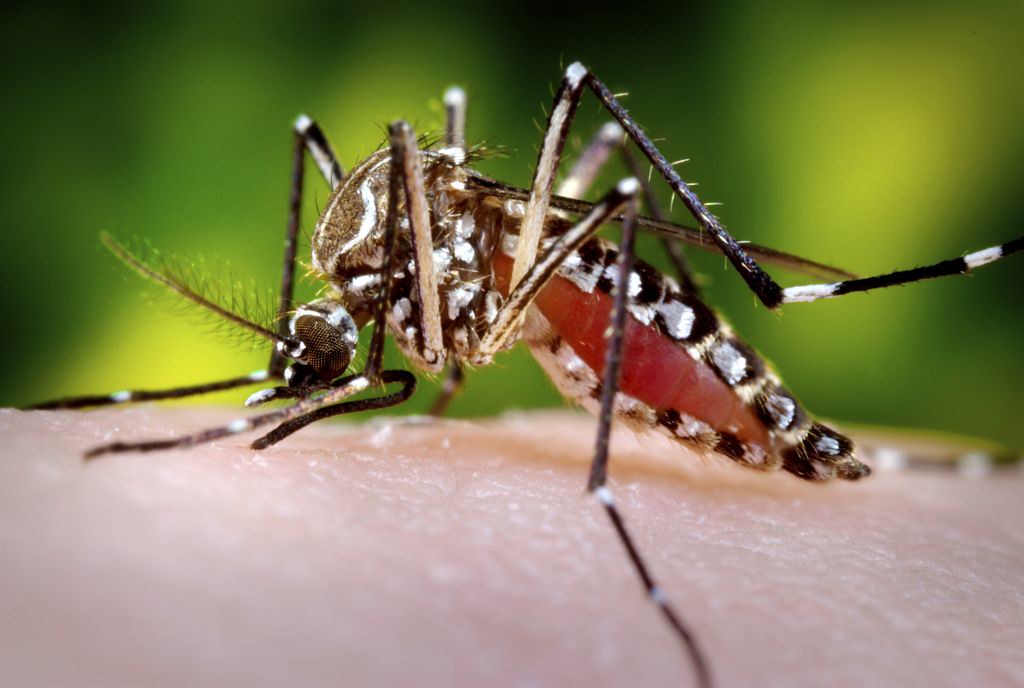
Two mosquitoes were detected in 2022. A pilot project to eradicate The yellow fever mosquito, Aedes aegypti, was begun in 2023. There is no information about its success. The Asian tiger mosquito, Aedes albopictus, has been documented by citizen scientists as spreading rapidly in the suburbs of Limassol and Nicosia. To date the proposed interventions have been unsuccessful, possibly due to focusing on public land while the mosquitoes can also breed on private properties.
Detection of the little fire ant Wasmannia auropunctata (in 2022) was not surprising since it had already invaded other regions of the Mediterranean. Martinou et al. (2026) believe the introduction was probably facilitated by the plant trade. The scientists note that ant management and eradication efforts are both challenging and costly, but do not report whether any has been initiated.
Detection of several marine invasive species was reported, some by citizens, e.g., divers or fishermen.
Among the 17 species determined to have been present on the island since before 2017 were some fairly conspicuous vertebrates: brown rat (Rattus norvegicus), raccoon Procyon lotor, two tortoise species, house crow (Corvus splendens) ruddy duck (Oxyura jamaicensis). Also two more ant species, Solenopsis geminata and Trichomyrmex destructor. There were also several non-native plant species, including the notorious seaweed Caulerpa taxifolia.
Value of the Horizon Scan
I am surprised that Martinou et al. (2026) do not explore why so many detections were published in 2022 since they assert that horizon scanning helped raise awareness amongst the authorities, scientists and the public. They do note that this awareness led, in some cases, to a rapid response by the competent authorities. Martinou et al. (2026) assert further that the exercise facilitated communication between invasive species experts, policy makers and society, encouraged active engagement and raised awareness regarding the importance of early warning, rapid response, and management of IAS. They therefore propose that the horizon scanning process for the island of Cyprus be repeated regularly – every five to 10 years – since new introductions continue. These efforts should include development pathway management plans and contingency planning that would be shared with local authorities and stakeholders.
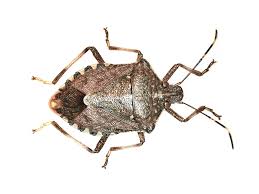
Martinou et al. (2026) note two detections that have not, apparently, resulted in establishment. A dead specimen of brown marmorated stink bug (Halyomorpha halys) was reported in luggage in May 2022, the result of ‘Bug Alert Cyprus’ awareness campaign. The Colorado potato beetle (Leptinotarsa decemlineata) was detected in 2010 by Department of Agriculture inspectors in a consignment of potatoes. The agency ordered immediate destruction. Imports of potatoes are subject to special phytosanitary requirements for protected zones. It is not clear that this measure was implemented by Cyprus or is a European Union decree.
Martinou et al. (2026) are worried that no introductions have been reported at border crossings across the ‘Green Line’ [the United Nations-controlled buffer zone between Greek and Turkish portions of the island]. They call for enhanced cross-community collaboration and improved information and data sharing for border control staff and customs officers about invasive species. They suggest that border order inspections and pathway monitoring could be supported by local experts offering identification services for a variety of taxa. They suggest that the horticultural industry is a major pathway for the introduction of plants and insects such as ants.
Martinou et al. (2026) also advocate efforts to improve communication among the various institutions and authorities that discover bioinvasions and are responsible for taking action. While researchers + experts from government departments involved in the horizon scans are informed, the findings of the horizon scanning needs to be provided to e.g., customs officers, fishers, ship crews, pet shop owners, and school teachers. Much of this information might be exchanged through informal networks and through a growing body of web-based databases and other resources.
Early detection and rapid response depends increasingly on efforts by citizen scientists to report observations of IAS of concern. Martinou et al. (2026) note that six of the invasive species identified in the horizon scanning exercise were reported by citizen scientists. They express the hope that artificial intelligence and deep learning models could help identify species from photographs collected by citizen scientists on platforms such as iNaturalist. Such platforms also facilitate rapid dissemination of information to decision-makers who can take appropriate action. Martinou et al. (2026) also hope eDNA can help detect cryptic bionvaders, including freshwater or marine taxa.
As I blogged earlier, Mark Hoddle had endorsed several components of prevention programs:
* Early research to identify natural enemy species that might “self-introduce” along with the invading host.
* Collaborating with non-U.S. scientists to identify and mitigate invasion bridgeheads.
* Sentinel plantings. These plantings can also support research on natural enemies of key pests. [A year ago, Eliana Torres Bedoya of Ohio State alerted participants in the annual USDA research forum on invasive species that fungi, including potential pathogens, were isolated from asymptomatic plants;
Detection of the full range of fungal pathogens requires that samples must be collected throughout the growing season; microbes present differ.
Need to expand surveillance beyond symptomatic plants – at both sentinel gardens and plant health border inspection stations.
*Integrating online platforms, networks, professional meetings, and incursion monitoring programs into “horizon scans” for potential invasive species. He mentions specifically PestLens, (https://pestlens.info/); online community science platforms, e.g., iNaturalist; international symposia; and official pest surveillance, e.g., U.S. Forest Service’s bark beetles survey and surveys done by the California Department of Food and Agriculture and border protection stations.
That blog also cites Weber et al.’s support for sentinel plant nurseries because accidental plant and herbivore invasions often occur at the same points of entry.
At the 2026 meeting of the annual USDA Research Forum on Invasive Species, Ashley Schulz (Mississippi State) reported findings of study analyzing establishment of insects imported deliberately as biocontrol agents as clues to bioinvasion. She found that generalist phytophagous insects might be more likely to find a suitable host and survive after introduction. The “goldilocks” standard applies: the host must be sufficiently closely related to the insect’s native host to be recognizable but sufficiently distant so that it lacks defenses. Considering impact, phytophagous insects that feed on structures not easily restored – e.g., main stem or root, cause more damage than those that feed on easily replaced leaves. Entomopagous insect, on the other hand, must be able to find hosts that can hide or defend themselves. This means that highly specialized insects might be more likely to establish.
SOURCE
Hoddle. M.S. 2023. A new paradigm: proactive biological control of invasive insect pests. BioControl https://doi.org/10.1007/s10526-023-10206-5
Kenis et al. 2022. Horizon scanning for prioritizing invasive alien species with potential to threaten agriculture and biodiversity in Ghana. Neobiota 71: 129-148 (2022) doi: 10.3897
Martinou, A.F., J. Demetirou, I. Angelidou, N. Kassinis, A. Melifronidou, J.M. Peyton, H.E. Roy, A.N.G. Kirschel. 2026. Multiple introductiions of invasive alien species on a Mediterranean Island predicted by horizon scanning. Biological Invasions (2026) 28:41 https://doi.org/10.1007/s10530-025-03729-8
Posted by Faith Campbell
We welcome comments that supplement or correct factual information, suggest new approaches, or promote thoughtful consideration. We post comments that disagree with us — but not those we judge to be not civil or inflammatory.
For a detailed discussion of the policies and practices that have allowed these pests to enter and spread – and that do not promote effective restoration strategies – review the Fading Forests report at http://treeimprovement.utk.edu/FadingForests.htm
Or
https://fadingforests.org/