Invasive Earthworms Need Action!

 worm_medAmynthes agrestis; National Park Service photo


Earthworms have been largely ignored as a class of invaders. But evidence is accumulating that their numbers and impacts are too significant to ignore.


Non-indigenous earthworms began arriving in the Americas with the first European colonists and they are now widespread. One study (see summary of Reynolds and Wetzel 2008 here) found 67 introduced species among the 253 earthworm species in North America (including Mexico, Puerto Rico, Hawaii, and Bermuda).  In Illinois, 20 of the 38 species are introduced. Nuzzo et al. 2009 recorded a total of 11 earthworm species – all nonnative – at 15 forest sites in central New York and northeastern Pennsylvania.


Earthworms are good invaders – they reproduce quickly and are easily transported to new places – both carelessly and deliberately for bait, composting, or other uses.


As ecosystem engineers, invasive earthworms cause significant impacts to the soil and leaf litter, as well as to plants and animals dependent on those strata.  However, they are little studied and few efforts been made to address their threat.  Wisconsin is the pioneer (see below).


Ecosystem Engineers: Impacts on Soil, Plants, and Animals


Invasive alien earthworms cause enormous damage in forest environments. (I have seen no information about the damage they might cause in other natural systems.)  Earthworms can change soil chemistry, soil structure, and the quantity and quality of the litter layer on the soil surface. Changes include rapid incorporation of leaf litter into the soil, alteration of soil chemistry, changes in soil pH, mixing among soil layers, and increased soil disturbance. Such changes have been shown to harm native plant species – both herbaceous ones on the forest floor as well as the regeneration of woody vegetation, including trees.  See the review just published by Craven et al. 2016 and Hale and Nuzzo references below).


Craven et al. (2016) conducted a meta-analysis of 645 observations in earlier publications. They sought to measure the effects of introduced earthworms on plant diversity, cover of plant functional groups, and cover of native and non-native plants. Sites with a higher the diversity of invading earthworms – with associated variety in behaviors (see below) – had greater declines in plant diversity.  Higher earthworm biomass or density did not reduce plant diversity but did change plant community composition:  cover of sedges and grasses and non-native plant species significantly increased, and cover of native plant species (of all functional groups) tended to decrease. The increase in non-native plant cover in areas with higher earthworm biomass is thus an example of ‘invasional meltdown’ as propounded by Simberloff and Von Holle in 1999.


Craven et al. 2016 propose several direct and indirect mechanisms by which introduced worms might affect plant species. These include ingestion of seeds or seedlings, burying seeds, and alteration of water or nutrient availability, mycorrhizal associations, and soil structure. European and Asian plant species that co-evolved in the presence of earthworms could better tolerate earthworms’ presence.


Important Questions


Craven et al. 2016 note that the interaction of the invader-related factors with other site-related conditions such as deer browsing, fire history, forest management, and land-use history require further study to disentangle. Many other questions need to be answered, too.


Although Craven et al. (2016) do not specify the geographic range of the studies analyzed, I believe most were conducted in the northern and northeastern regions of the United States and some parts of Canada. It would be interesting to see if these studies’ findings differed from those carried out in Great Smoky Mountains National Park on the Tennessee-North Carolina border. The latter is an area where – unlike the northern states – earthworms were not wiped out by the most recent glaciation.  (See references by Bruce Snyder and Jeremy Craft, below.)


The finding that worm species diversity is associated with decreased plant species diversity seems to indicate that worms’ impacts might vary depending on the behavior of the worm in question – especially whether the worms remain on or near the soil surface and — if not — how deeply they burrow.  Are studies under way to clarify these differences?


Furthermore, do the impacts of European worms – the subjects of most of the studies carried out in Minnesota, New York, and Pennsylvania – differ substantially from the impacts of Asian earthworms? Or are any differences explained better by the species’ activity in the soil (e.g., depth of burrows) than their origins?


Impacts of earthworms on wildlife are less studied and perhaps less clear.  Several studies have focused on salamanders because of their known dependence on leaf litter. In a study of 10 sites in central New York and northeastern Pennsylvania, Maertz et al. 2009 found that salamander abundance declined exponentially with decreasing volume of leaf litter. They suggested that the salamander declines were a response to declines in the abundance of small arthropods, a stable resource.

A study by Ziemba et al. (2016) in Ohio involved Asian worms (genera Amynthas and Metaphire) rather than the European worms most often included in studies carried out in Minnesota, New York, and Pennsylvania.  These authors found a complex picture: earthworm abundance was negatively associated with juvenile and male salamander abundance, but had no relationship with female abundance.

Craft (2009) found that reduced leaf litter mass in invaded areas of Great Smoky Mountains National Park diminished habitat for both salamanders and salamander prey.

Others have studied millipedes – a largely unappreciated example of biological diversity in the Southern Appalachian Mountains – in Great Smoky Mountains National Park. Snyder and colleagues (2013) found that earthworms in the genus Amynthas altered soils by decreasing the depth of partially decomposed organic horizons and increasing soil aggregation. The result was a significant decrease in millipede abundance and species richness – probably as a result of competition for food.

Results from a study of earthworms’ effects on the Park’s food web by Anita Juen and Daniela Straube, begun in 2010, have not yet been published (pers. comm. from GRSM staff).

Even birds might be affected by worm invasions. One study in Wisconsin found that hermit thrush and ovenbird populations are lower in areas infested by worms. Possible reasons for the decline are that nests (on the ground) are more vulnerable to predation when located in the grasses promoted by worms, and a reduction in invertebrates fed to nestlings.


Expanding Risks

Several non-native earthworm species have been collected (so far) only from greenhouses or other places of indoor cultivation.  But can we be sure that they are not being spread to yards, parks, and other places halfway to natural systems through movement of plants and mulch?


Earthworms are extremely difficult to manage once established.

Are these challenges the reasons why few official efforts to control earthworm spread have been adopted? Or is it the animals’ public image – they are widely regarded as “good” critters that enrich the soil and facilitate composting. Or is it that trying to control worms will require enhanced regulation of the nursery and green waste industries?

worms1Amynthes photo; from Wisconsin DNR website

Wisconsin Is the Policy Pioneer

Wisconsin stands out for trying to address the issue! The state’s conservation and phytosanitary officials became alarmed when they detected Amynthas species in the University of Wisconsin Arboretum in 2013.  This is the site of regular plant sales,a likely pathway for spread.  Wisconsin now knows this genus of worms to be present in 21 counties, mainly along urban corridors.  They have not yet been found in the state’s forests.

Wisconsin is acting to protect its forests despite Amynthas worms having been present in the United States for over a century: Snyder, Callaham and Hendrix 2010 say several species of Amynthas were documented in Illinois and Mississippi by the 1890’s.  Some 15 species are recorded as established and widespread across the eastern United States (Reynolds and Wetzel 2004).


Wisconsin has classified the Amynthas genus as “restricted” – so their movement is now regulated. The risk of spread appears to be greatest through mulch produced from leaves collected in residential communities. The state held a workshop during which the regulated industry developed best management practices to address that risk. The Wisconsin Department of Natural Resources has posted a web page with information about identifying the worms and the BMPs. (Wisconsin DNR has also been a leader in tackling the firewood pathway.) The Wisconsin Department of Agriculture put the worm issue on the agenda of the National Plant Board in August 2016 and urged other states to take action.

The Wisconsin DNR webpage has

  • ID cards and other information to aid identification, g., photos of worms and the “coffee ground” soil they create;
  • a brochure with the state’s new “best management practices”
  • educate yourself and others to recognize jumping worms;
  • watch for jumping worms and signs of their presence;
  • ARRIVE CLEAN, LEAVE CLEAN – Clean soil and debris from vehicles, equipment and personal gear before moving to and from a work or recreational area;
  • only use, sell, plant, purchase or trade landscape and gardening materials and plants that appear to be free of jumping worms; and
  • only sell, purchase or trade compost that was heated to appropriate temperatures and duration following protocols that reduce pathogens.

What’s Up Where You Are?

What is your state doing to slow the spread of invasive earthworms?

  • Do nursery inspectors look for earthworms when approving plant shipments? Craven et al. 2016 findings re: higher impacts on plants as number of worm species rises demonstrate the importance of slowing spread of new species even into areas that already have some non-native earthworms.
  • Are professional associations of nurserymen and green waste recyclers educating their members about the damage caused by invasive earthworms and steps they can take to minimize worms’ spread to new areas?
  • Are organizations of anglers and gardeners in your state educating their members about the damage caused by invasive earthworms and steps they can take to minimize worms’ spread to new areas?
  • Are ecologists studying earthworm invasion impacts in other parts of the country? In non-forested ecosystems?
  • Are conservation organizations initiating or joining outreach efforts?
  • Can worm-education efforts be joined with h more robust public and private outreach focused on aquatic invaders, invasive plants, or firewood?


SOURCES

Bohlen, P.J., S. Scheu, C.M. Hale, M.A. McLean, S. Migge, P.M. Groffman, and D. Parkinson. 2004.  Non-native invasive earthworms as agents of change in northern temperate forests. Front Ecol Environ 2004; 2(8): 427–435

Craft, J.J. 2009. Effects of an invasive earthworm on plethodontid salamanders in Great Smoky Mountans National Park. Thesis prepared at Western Carolina University.

Craven, D., M.P. Thakur, E.K. Cameron, L.E. Frelich, R.B. Ejour, R.B. Blair, B. Blossey, J. Burtis, A. Choi, A. Davalos, T.J. Fahey, N.A. Fisichelli, K. Gibson, I.T. Handa, K. Hopfensperger, S.R. Loss, V. Nuzzo, J.C. Maerz, T. Sackett, B.C. Scharenbroch, S.M. Smith, M. Vellend, L.G. Umek, and N. Eisenhauer. 2016.The unseen invaders: intro earthworms as drivers of change in plant communities in No Am forests (a meta-analysis). Global Change Biology (2016), doi: 10.1111/gcb.13446 available here.

Hendrix, P.F. 2010. Spatial variability of an invasive earthworm (Amynthas agrestis) population and potential impacts on soil characteristics and millipedes in the Great Smoky Mountains National Park, USA. Biological Invasions DOI 10.1007/s10530-010-9826-4

Maertz, J.C., V. Nuzzo, B. Blossey.  2009. Declines in Woodland Salamander Abundance Associated with Non-Native Earthworm and Plant Invasions. Conservation Biology Volume 23, Issue 4 August 2009  Pages 975–981

Nuzzo, V.A., J.C. Maerz, B. Blossey. 2009. Earthworm Invasion as the Driving Force Behind Plant Invasion and Community Change in Northeastern North American Forests. Conservation Biology Volume 23, Number 4, 966-974.

Simberloff, D.  and Von Holle, B. 1999. Positive interactions of nonindigenous species: invasional meltdown? Biological invasions 1, 21-32

Snyder, B.A., M.A. Callaham, C.N. Lowe, P.F. Hendrix. 2013. Earthworm invasion in North America: food resource competition affects native millipede survival and invasive earthworm reproduction. Soil Biology and Biochemistry 57, 212-216

Ziemba JL, Hickerson C-AM, Anthony CD. 2016. Invasive Asian Earthworms Negatively Impact Keystone Terrestrial Salamanders. PLoS ONE 11(5): e0151591. doi:10.1371/journal.pone.0151591


See also:

Global picture: https://www.newscientist.com/article/mg19325931-600-war-of-the-worms/

Great Lakes Wormwatch website: http://www.nrri.umn.edu/worms/research/publications.html  

Illinois Natural History Survey webpage: http://wwn.inhs.illinois.edu/~mjwetzel/IllinoisEarthworms.html

Wisconsin  DNR http://dnr.wi.gov/topic/invasives/fact/jumpingWorm/index.html

Information on western Canada:

http://bcinvasives.ca/news-events/recent-highlights/earthworm-invasion-calling-all-citizen-scientists/

http://ibis.geog.ubc.ca/biodiversity/efauna/EarthwormsofBritishColumbia.html

Native Earthworms of British Columbia Forests: http://www.cfs.nrcan.gc.ca/pubwarehouse/pdfs/5102.pdf


Posted by Faith Campbell

Let’s Work Together to Curtail Threat to Our Forests from Non-Native Pests

Dear Forest Pest Mavens,

I believe you agree with me that non-native insects, pathogens, earthworms … and other organisms! … pose significant threats to North America’s tree species and the complex ecosystems of which they are such important components.

I hope you also agree that our society’s efforts to counter this threat fall far short of what is needed.

  • Official phytosanitary policies are not as strong as needed to prevent introduction and spread of these tree-killing pests.
  • Worse, those policies are not always enforced assertively – as I documented in my blog about a shipment of auto parts posted on 9 August.
  • The Congress does not provide sufficient funds and other resources to support active detection and response programs – either early in an invasion or later.
  • Businesses that import or trade in goods or packaging that can transport pests are not held responsible for taking actions aimed at reducing the likelihood of such transport or supporting recovery efforts. Opposing free trade has become a hot button election issue but one of its worst impacts — wholesale movement of pests — is never mentioned.

As I noted in my earlier blog, a key reason we see these weaknesses is because those who want stronger programs have not had an effective voice in educating federal policy-makers – the USDA secretary, senators, and members of Congress – about the damage caused by introduced tree-killing pests and the governmental actions needed to counter those impacts.

The election provides both a deadline and an opportunity.

The deadline: we should try to finalize some APHIS-proposed actions before this Administration leaves office. Outgoing officials often feel freer to take bold actions at this time.

The opportunities:

  • New officials who take office in January might be open to addressing “new” issues. We must begin efforts now to get our “asks” on their agenda.  Specifically, we should approach the  senators who will question appointees to USDA Secretary and Under Secretary positions during their confirmation processes.  We should urge them to ask candidates  how they would address plant pests and to make firm, specific commitments to do so
  • Also, Congress is beginning to consider provisions to include in the next Farm Bill (due to be passed by 2019).

Several coalitions work to raise the political profile of non-native, tree-killing pests, i.e., the Coalition Against Forest Pests; Sustainable Urban Forestry Coalition; Reduce Risk from Invasive Species Coalition; Continental Dialogue on Non-Native Forest Insects and Diseases.   Many of the nation-wide forest-related organizations are members of one or more of these coalitions and I work hard for many of them. They are absolutely essential. . .

However, such “big tent” coalitions are unlikely to press for  truly bold solutions, especially if new policies  involve serious costs to economic interests or industries that are part of their membership. There is nothing nefarious in this; it is the way coalitions operate. In the case of forests pest issues, though, the absence of more forceful and nimble groups leaves a policy vacuum that no one currently  fills.

Furthermore, these coalitions don’t offer an opportunity to concerned individuals and smaller organizations to learn about phytosanitary threats or provide them with opportunities to influence policy.

In the past, I have tried to provide this information through my one-way emails and blog postings.  I would like now to upgrade these communications and to provide you with a way to interact with me and others, as well as to form joint positions.  The goal is to re-balance the politics of phytosanitary policy – so that our political leaders understand and support both adoption and enforcement of strong, effective phytosanitary measures.

I suggest that we form a new, loose “coalition of the willing” who are ready to speak up and seek ways to stay abreast of developments and opportunities and to coordinate their actions with those of like-minded people.  I suggest a loose structure –

  • I undertake to set up an email network that everyone could use. It would:
    • communicate information about pest threats and opportunities to engage;
    • communications could be initiated by anyone in the group (either through a “reply all” function or my promise to re-send any email sent to me — with the request that I do so);
    • encourage people to work together – with my assistance – to form joint positions;
    • provide lists of key contacts for specific issues — perhaps with specific talking points, letter templates, etc., to help in reaching out;
  • There would be no cost to participants;
  • Participants could take part anonymously if they wish – either generally or on specific issues;
  • If there is sufficient interest or need, we could form a steering committee to streamline and help guide the work;
  • Our goal would be communications that are straight-forward and clear — to each other and to policymakers — while avoiding gratuitous insults or insinuations.

Examples of issues on which I believe a new group could productively engage (and which the “big tent” coalitions likely will avoid) are:

  • Helping APHIS finalize its proposal to require that wood packaging coming from Canada conform to ISPM#15 standards (see blog posted on 9 August). We need to press the USDA leadership to approve the proposal; then press the Office of Management and Budget to approve it.
  • Press USDA to take two steps to improve enforcement of ISPM#15:
    • End the policy of not fining importers for non-compliant wood packaging until they have five (!) non-compliances within a single year.
    • Declare wood packaging to be a high-risk import and thus subject to mandatory inspection by Customs
  • Press Customs and Border Protection to include wood packaging compliance under its Customs-Trade Partnership Against Terrorism (C-TPAT) program.
  • Seek agreement on a strategy to encourage importers to shift to packaging made from materials other than solid wood boards. Proposals range from new regulatory requirements to C-TPAT to green certification-type voluntary programs.

I welcome suggestions for other topics we might explore!

Please let me know that you would like to join this coalition.  Please  feel free to forward this message and to invite others to join in.

[use the “contact” button on the www.cisp.us website]

Faith

A Red List for Trees!

16 dead sweet bay + grpF.T. Campbell  dead sweetbay, Florida Everglades

At the global level, the World Conservation Union (IUCN) is the recognized leader in conservation.  Information from the IUCN’s Red List has been widely used to inform conservation policies and legislation, as a tool for environmental monitoring and reporting, and to prioritize areas for conservation action.


The IUCN is holding its World Conservation Congress in Honolulu during the first half of September.  The several sessions focused on both invasive species and forests have been grouped into “Journeys”.  The invasive species Journey schedule is available here.  The schedule for the forest Journey is available here   I don’t think either puts much emphasis on the year-old Tree Specialist Group.


Over the decades, the Union has increasingly engaged on plant conservation issues. The plants under consideration now include trees! There are multiple ways that you can be part of this important effort. Details are below. One of the efforts’ leaders assures me that the IUCN process will address tree species not yet “endangered” but under severe pressure – currently or virtually certainly in the near future – from established non-native insects and pathogens.


The IUCN has noted that trees have high ecological, economic, and cultural value. Forests are being converted or degraded by many human-related activities, including overharvesting, fire and grazing – to say nothing of climate change and non-native pests. Yet – the impacts of forest conversion and degradation on tree species per se are largely unknown. How many tree species qualify for a “Red List” category: extinct, critically endangered, endangered, or vulnerable? (For a discussion of the criteria applied in assigning categories, go here.

(Of course, full-scale extinction or endangerment of a species is the extreme; ecological damage begins earlier and more locally, as the species declines as the result of a suite of pressures …)


The IUCN has formed a Global Tree Specialist Group to conduct a comprehensive conservation assessment of the world’s tree species, linked to IUCN’s Red List. The effort is being led by the Tree Specialist Group  and the Botanic Gardens Conservation International (BGCI). The group’s mission, underlying considerations and process are described in an article published in the Oryx article cited below.


IUCN has recently completed analyses of extinction risk in selected animal groups. They concluded that 14% of bird, 33% of amphibian, and 22% of mammal species are either threatened or extinct.


Preparing the same type of analysis for tree species will be more complicated. First there are many more plant species than ones in the selected groups of animals. Scientists don’t know the total number of extant tree species. One estimate is 60,000.  If that estimate is in the ballpark, the status of approximately 84% of tree species has not yet been assessed. Assessments of tree species begun in the 1990s have resulted in approximately 9,500 species being included in one of the Red List categories.  They represent slightly less than half of all plant species listed.


To achieve the goal of assessing the status of all tree species by 2020, organizers plan to adopt the approach used successfully in the recent assessments of vertebrate groups – mobilizing global data sets (which have become more numerous and easier to use) and hundreds of volunteer experts.


To start, the Group is focused on specific plant families with high numbers of trees, e.g., Aquifoliaceae, Fabaceae, Fagaceae, Lauraceae, Meliaceae and Myrtaceae. Combined, these families include more than 20,000 species. Assessments of Betulaceae and Ebenaceae have already started, led by BGCI and the Missouri Botanical Garden, respectively.


Project leaders hope to complete 5,000 more tree assessments – new or updates – during 2016.


What is Under Way


Other IUCN specialist groups are assisting in assessing the status of trees in various geographic regions or with particular human uses. The IUCN Plants for People initiative is already assessing timber, medicinal and crop wild relatives. The Crop Wild Relative Specialist Group has prepared draft assessments for over 90 woody species of Malus, Prunus, Pistacia and Mangifera. Specialist Groups and Red List authorities in South Africa, Brazil, and East Africa and several island groups are contributing.


A third focus will be tree species presumed to be most at risk from climate change, e.g., montane and island trees. IUCN Specialist Groups in Hawai`i, New Caledonia, Galapagos, Mascarene Islands, Fiji, and Madagascar are working.


The BGCI is making progress on assessing Europe’s non-coniferous trees. If you wish to help, contact Malin Rivers at malin.rivers@bgci.org.


In North America, the U.S. Forest Service hosted a meeting on “Gene Conservation of Tree Species” at the Morton Arboretum in Chicago in May 2016. Murphy Westwood facilitated a special session during which “listing” experts from IUCN, NatureServe, USFS CAPTURE Program, and the U.S. Fish and Wildlife Service compared their assessment processes and discussed how data might be shared more efficiently. A goal of completing the IUCN Red List of North American Trees was agreed on. The Morton Arboretum will help coordinate the effort. To contribute please contact Murphy Westwood at mwestwood@morton.org.  


One suggestion was to conduct an IUCN Red List assessment for the genus Fraxinus. Two ash species – one Asian, one Central American – are included in the IUCN Red List (although one needs to be updated). Jeanne Romero-Severson of Notre Dame University has offered to undertake assessments for green ash, Fraxinus pennsylvanica, and black ash, Fraxinus nigra. If you wish to help, contact Sara Oldfield at sara@saraoldfield.net.


(I think several other species also warrant IUCN assessment, including redbay Persea borbonia, tanoak Notholithocarpus densiflorus, and whitebark pine Pinus albicaulis)


This IUCN effort represents yet a fourth set of people examining tree-pest interactions – people integrated into traditional, internationally-focused conservation organizations. There are at least three other groups already involved: (1) forest pest experts in academia and government agencies, (2) people who focus on invasive species, and (3) phytosanitary officials. I think that these latter three groups already interact less smoothly than would be ideal. How can we all combine our efforts to enhance protection programs?


Might more of the scientists who work on insects and pathogens attacking tree species join the IUCN Tree Specialist group? Might organizers of meetings make a greater effort to engage people from all four silos in discussions of strategies? Might some virtual for a be established that could facilitate communication across the gaps – perhaps emphasizing the gap between invasive species experts and phytosanitary officials?


Finally, how can we use the new focus on tree species’ degree of endangerment to enhance efforts to prevent and respond to invasions by non-native insects and pathogens? How do we link these concerns to existing attention to the ecological and economic impacts – which begin to manifest long before a species qualifies as “endangered”.  How can the various approaches reinforce each other?


SOURCES


Newton, A., S. Oldfield, M. Rivers, J. Mark, G. Schatz, N. Tejedor Garavito, E. Cantarello, D. Golicher, L. Cayuela, and L. Miles. 2015. Towards a Global Tree Assessment. Oryx, Volume 49, Issue 3, July 2015, pp. 410-415.


Explanatory information available at

https://www.bgci.org/plant-conservation/globaltreeassessment/

Click to access GTALeaflet%20FINAL.pdf


The GTSG Newsletter is apparently available only to those who are part of the IUCN network.


For more information, contact Sara Oldfield, Co-Chair GTSG, at sara@saraoldfield.net


Posted by Faith Campbell

Biocontrol As a Strategy to Control Damage by Invasive Plants – is the Logjam Broken?

gmustard 

garlic mustard; Chris Evans,River to River CWMA;  Bugwood

As we all know, the United States is overrun by non-native plants.  As I noted in blogs posted in January and March, Rod Randall’s database lists more than 9,700 non-native plant species as naturalized in the U.S.  Not all 9,700 cause environmental damage. But hundreds do – a fact attested to by the various regional Invasive Plant and Exotic Pest Plant councils:

  • The Southeast Exotic Pest Plant Council lists approximately 400 invasive species.
  • The Mid-Atlantic Invasive Plant Council lists 285 invasive plants.
  • The Midwest Invasive Plant Network says the state agencies or state-level invasive plant councils in its region list more than 270 plant species as invasive, noxious, or pest species in the Midwest.
  • The California Invasive Plant Council lists 208.
  • Texas Invasives reports that there are more than 800 non-indigenous plant species in the state, of which 20 are considered invasive.


The Pacific Northwest and Northern Rockies councils do not provide lists on their websites.


The analysis of forest inventory data by Christopher Oswalt and colleagues — discussed in my blog in March — found that almost 40% of forest plots in the United States are invaded by alien plant species. Other than in Hawai`i, the most invaded region is forests in the eastern United States – where 46% of forest plots in the East harbor one or more of the invasive plant species included in the inventory process.


The March and earlier blogs discuss reasons why the invasive plant situation is likely to worsen over time.


Given the geographic extent of plant invasions and the environmental complications, expense, and other difficulties associated with managing invasive plants using mechanical or chemical tools, many place their hope in biological control. Scientists in the U.S. Forest Service, Agriculture Research Service, U.S Geological Survey, academia, and other institutions have devoted years to identifying promising biocontrol agents targeting some of the most widespread and damaging invasive plants.


Possible biocontrol agents have been identified for numerous invasive plant species  …  but relatively few have been approved for release.


Part of the delay is attributable to the necessity for caution to ensure that biocontrol agents are effective and do not become damaging invasive themselves.  This concern underlies the legal requirement that non-native biocontrol agents must be approved by USDA APHIS. APHIS permits are required for

  • Importation of live biocontrol agents into the U.S. or its territories
  • Interstate movement of live biocontrol agents (USDA policy allows movement of certain commercial entomophagous biocontrol agents without a permit)
  • Retaining live biocontrol agents after expiration of a permit
  • Movement of any live biocontrol agent from confinements of containment facility or for release into the environment.

The approval process is lengthy and complex – and frustrating! Its many steps were outlined in a presentation by a staffer in APHIS’ permit branch, Robert Tichenor, available here


As noted in the presentation, the process can take a decade or more between scientists initiating the search for possible agents to final approval. The scientists hoping to find useful biocontrol agents face possibly years of work to identify and obtain organisms that seem promising as biocontrol agents. The petitioner must then screen the putative agent(s) for efficacy and then for host specificity. Once this work has been completed, the scientist prepares a petition to APHIS asking that it approve release of the biocontrol agent(s).

At this stage, government agencies take over. When it receives a petition for release of a biocontrol agent, APHIS sends the petition to the Technical Advisory Group (TAG).  (For details about the TAG, go here.

Under the TAG charter, APHIS invites the following agencies to provide a representative to serve on the TAG: Army Corps of Engineers, Environmental Protection Agency; Department of Agriculture: APHIS, Agricultural Research Service, Forest Service, National Institute of Food and Agriculture, Natural Resource Conservation Service; Department of the Interior: Bureau of Indian Affairs, Bureau of Land Management, Bureau of Reclamation, National Park Service, Fish and Wildlife Service, Geological Survey. APHIS may also invite participation by State or other Federal government employees (one each) to represent the National Plant Board, Weed Science Society of America, and other Federal Agencies expressing interest.  Canada and Mexico are also asked their views.


The TAG reviews both the proposed plant list for host specificity testing and the petition for first-time field release. The TAG may suggest inclusion of certain test plants, identify conflicts of interest, and assess potential risks associated with an environmental release. In making their evaluations, TAG members are expected to represent their agency’s or organization’s perspective. The chairman seeks to build consensus. Then s/he conveys the recommendations to APHIS.


APHIS decides whether to proceed with the review process and so informs the petitioner and APHIS’ Policy and Program Development (PPD) division.  Using information in the Petition, APHIS prepares a Biological Assessment analyzing whether releasing the biocontrol agent might affect a species listed as endangered or threatened under the Endangered Species Act. This Biological Assessment is sent to the US Fish and Wildlife Service (FWS)  to initiate an “informal” consultation per Section 7 of the Endangered Species Act (16 U.S.C. Section 1536). The FWS’ review can take more than a year and can involve requests for additional information. For the proposed biocontrol project to proceed, APHIS must receive a letter from US FWS stating that US FWS  “concurs” with APHIS’ determination that release of the biocontrol agent is “not likely to adversely affect” listed species or designated Critical Habitat.


Upon receipt of the FWS concurrence letter, APHIS begins preparing an environmental assessment (EA), and consults with any affected Native American tribes. The draft EA is released for public comment, usually for a period of 30 days. Once the comments are received, APHIS reviews and responds to the comments, and issues the final EA and accompanying Finding of No Significant Impact (FONSI). A month later, the permit is issued to remove the biocontrol agent form containment and release it into the environment.


While APHIS normally waits for FWS approval before beginning the NEPA review – because APHIS cannot complete the FONSI until it receives FWS concurrence – staff are now considering ways to speed up the process.


This already lengthy process has been further hampered by retirement of key staff in both APHIS and the FWS. New staff were also probably more cautious about approving agents because of the controversy over the potential impact of biocontrol agents’ success in reducing populations of tamarisk (Tamarix spp.) on nesting habitat for the endangered southwest willow flycatcher.


Finally, the process itself causes delays. Petitioners are required to re-submit their proposal to the Technical Advisory Group each time it is revised to address a question raised by a reviewer. These requirements can cause delay and probably frustrate the petitioners.

Current status of weed biocontrol programs

air potato

air potato; Rebekah D. Wallace, University of Georgia; bugwood.org

The current status of weed biocontrol is partially revealed at this site, which shows the status of TAG and APHIS actions.  Some 36 biocontrol agents proposed for field release have been reviewed by the TAG since 2010.  Of these, two have completed the review process and been approved by APHIS for release: agents targeting hawkweeds (Hieracium spp.) and air potato (Dioscorea bulbifera). Both were approved in 2011. In his presentation, Dr. Tichenor said a third insect – a gall fly targeting Cape Ivy (Delairea odorata) – received a permit allowing release into the environment in May 2016.

The 33 other biocontrol agents that were approved by the TAG are still in other stages of the approval process. Dr. Tichenor reported that an environmental assessment is now being written for a leaf mining fly (Lasioptera donacis) intended to control Arundo (this agent was approved by the TAG only in April 2016 – remarkable speed in obtaining FWS clearance). Three agents are nearing the end of the Endangered Species Act §7 consultation process; these are agents targeting yellow toadflax (Linaria vulgaris), hoary cress (Lepidium draba), and the two swallow-worts (Cynanchum louiseae or Vincetoxicum nigrum; and Cynanchum rossicum or Vincetoxicum rossicum). APHIS has asked for additional information on two agents – targeting gorse and several knotweed species.

One agent intended for use against garlic mustard was rejected by the TAG in 2009.  A second agent is still under review by the TAG.

The other four species approved by the TAG in 2016 to date are presumably at the early stage of the biological assessment; these include two agents for Brazilian pepper, a beetle for Chinese tallowtree, and another insect targeting hawkweeds (genus now given as Pilosella).


Since 2010, the TAG has recommended against field release for eight proposed biocontrol agents.  These included species intended to control Chinese privet (Ligustrum sinense), Russian thistle (Salsola tragus), and Russian knapweed (Rhaponticum repens).  The TAG asked for additional information on four species.


Of course, garlic mustard and Chinese privet are among the top five most frequently detected invaders in the forest inventory study – garlic mustard in the Mid-Atlantic and Northeast, privet in the Southeast.

A fungus (Verticillium nonalfalfae ) is under study as a biocontrol agent for another widespread invasive plant, Ailanthus (tree of heaven). Research by USDA Forest Service scientists have found that a few native species of shrubs and trees are also mildly sensitive to the fungus.  Testing of additional native and agricultural species continues. The fungus occurs naturally in North America so it is not subject to the approval process described here.


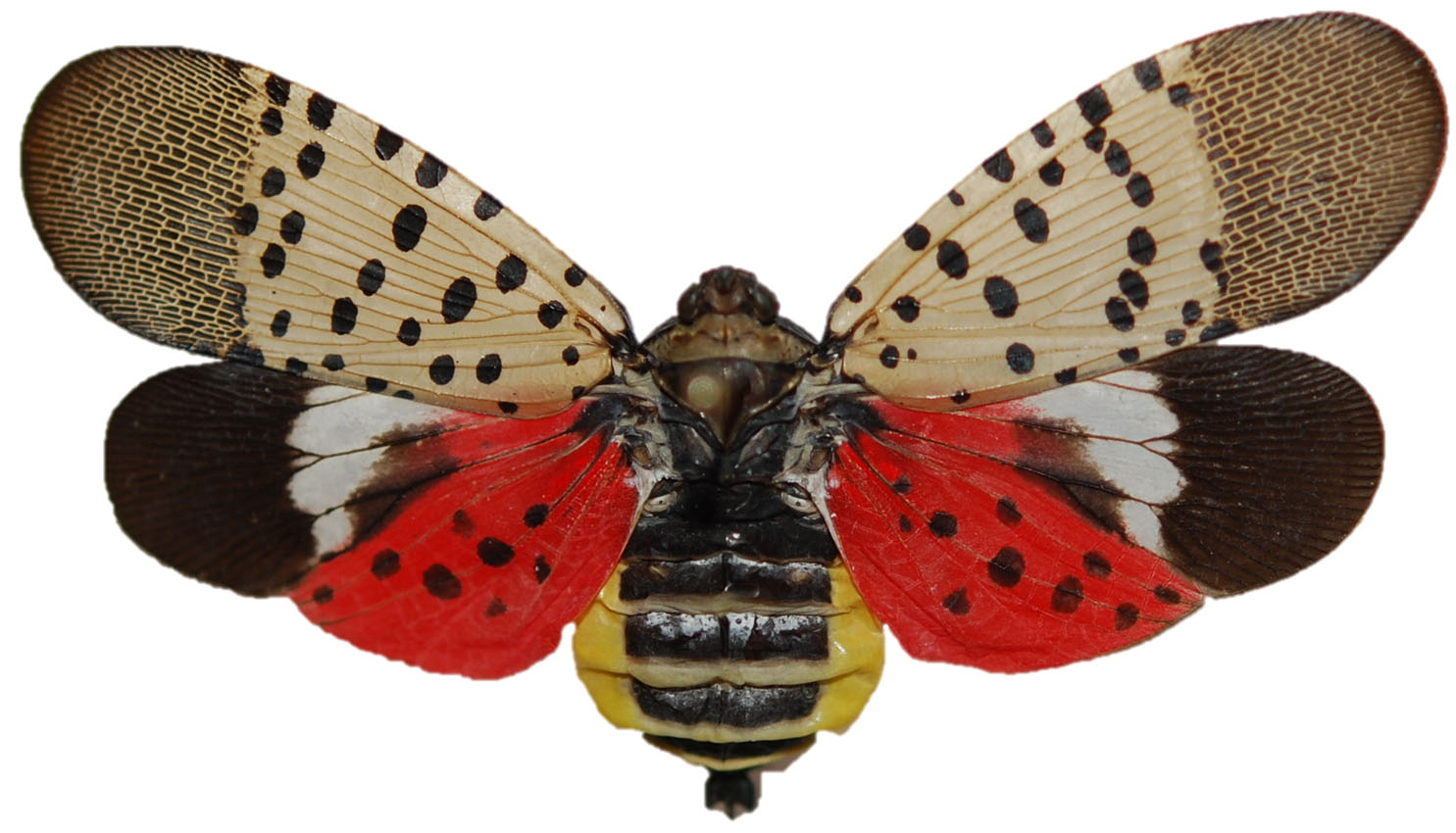
An introduced insect, spotted lanternfly (Lycorma delicatula) also attacks Ailanthus. The lanternfly attacks a wide range of woody plants, including grapes and fruit trees. Consequently, Pennsylvania is attempting to eradicate it from the four counties in the eastern part of the state where it has been found.


Hundreds of invasive plant species are damaging ecosystems across the country. Biocontrol is one of the few tools available to counter the threat from invasive species – plants and others. I hope people concerned about invasive species will increase efforts to identify those bioinvaders for which biocontrol appears to offer promise, then to seek out potential biocontrol agents. And that regulatory bodies improve their ability to evaluate proposals promptly – while still being thorough. Doing nothing causes real harm.


Posed by Faith Campbell

What Happens When Decision-Makers (= politicians) Don’t Hear from Us

Decisions and delays that undermine vital phytosanitary programs …


champion green ashchampion dead

Michigan’s champion green ash – before and after emerald ash borer entered the state

Examples:

Sometimes, when a shipment arriving at a U.S. port is found to be enclosed in wood packaging that is infested by pests, the importers complain to top-level officials. Sometimes, those officials respond to the pressure by allowing that shipment to enter the country – contrary to policy and common sense.

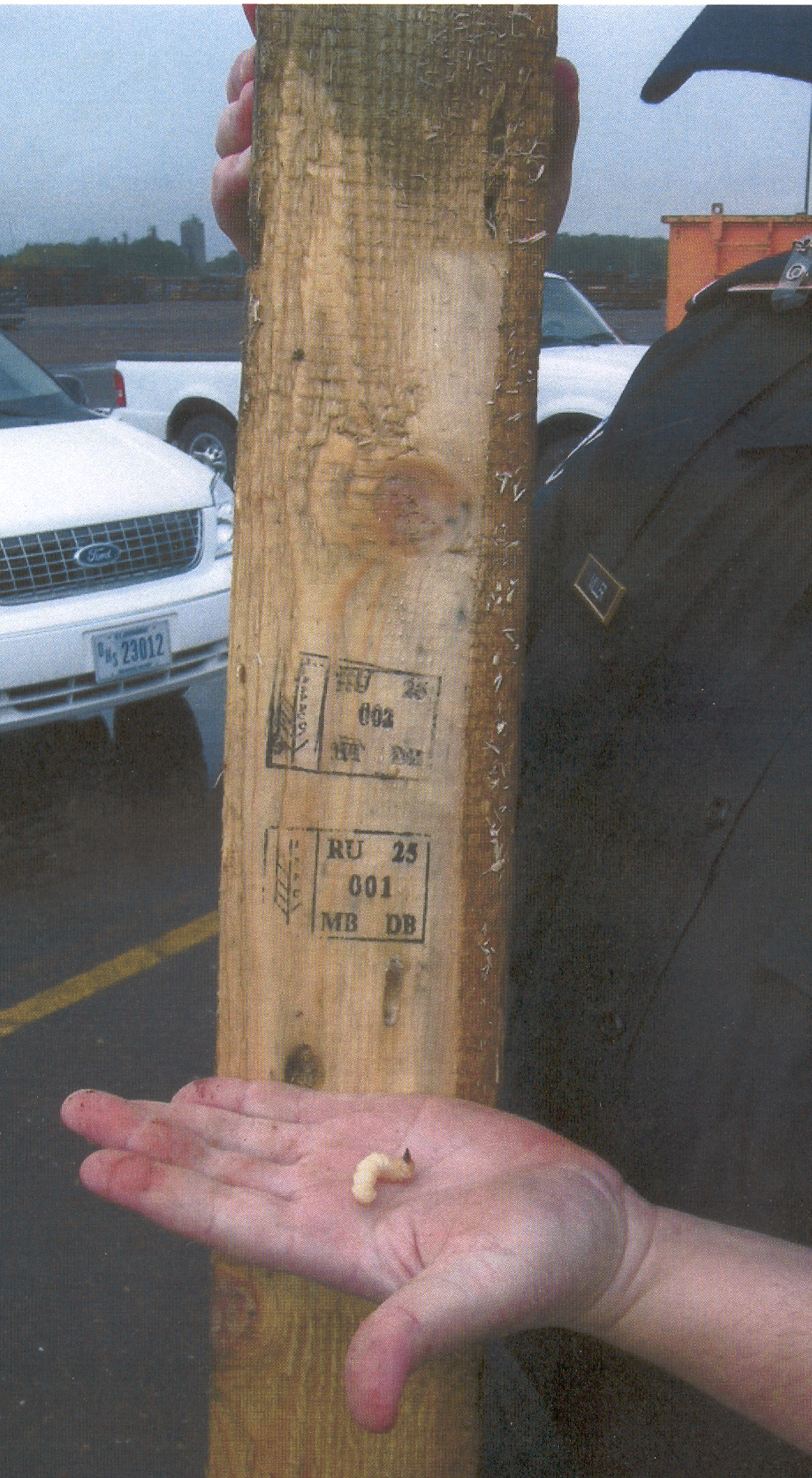
I learned recently of a particularly upsetting situation. A shipment of car parts arrived at a seaport. The wood packaging was found to be infested by a wood-boring insect that attacks pines and possibly other conifers. Because adults were present, the shipment could not be fumigated – because adult insects can escape during that process.

According to U.S. regulations, the shipment should have been refused entry to the U.S. and placed back on the ship to be transported elsewhere.

But what happened instead? The importer – a major auto manufacturer – complained to Michigan political leaders that delay in receiving the “just in time” shipment would result in halting production and unemployment.

Michigan governor Snyder and both Senator Debbie Stabenow and Senator Gary Peters put pressure on the U.S. Secretaries of Agriculture (who supervises APHIS) and Homeland Security (who supervises the Bureau of Customs and Border Protection). The two secretaries agreed to allow movement of the pest-infested shipment from the seaport across half the country to Michigan. They overruled their staffs and endangered our forests – most immediately along the shipment route. Those forests provide wildlife habitat, carbon sequestration, water supplies and other ecosystem serves; as well as numerous jobs and industries. It will be years before we know whether pests escaped the containers during transport and established in any of the wildland, rural, or urban forests along the route.

Had the shipment been refused entry — as the law requires — a new shipment in pest-free crates would have arrived within weeks.

It is particularly ironic that this pressure was exerted by Michigan officials. You would think that Michigan officials would remember the devastation to their state caused by the emerald ash borer and —  instead — press for vigorous enforcement of effective phytosanitary rules.

Of course, the Federal officials responsible for protecting our Nation from damaging plant pests should be strong in the face of political pressure. They should enforce regulations adopted through the appropriate regulatory processes. However, in this case, they chose the politically expedient action instead of carrying out their legal responsibilities.

A second example:

Since 2010, APHIS and its Canadian counterpart, Canadian Food Inspection Agency, have tried to amend the two countries’ regulations to require that wood packaging used to support or contain goods traded between the two countries conform to the international standard (ISPM#15). (When they initially adopted ISPM#15 in 2004, the U.S. and Canada exempted their bilateral trade.)

Why end this exemption? Both countries realize that each country harbors pests – native or introduced – that could pose a threat to forests in the other country. Also, the exemption complicates enforcement of the standard for shipments that originated elsewhere, e.g., in Europe or Asia.

For example, shipments of Italian decorative tiles that had been held in Canadian warehouses have been sent later to retailers in the U.S. Shippers have claimed that the pallets supporting the tiles are of Canadian origin, so they don’t need to have the stamp certifying treatment. Customs officials say that sometimes the evidence counters this claim – leading them to conclude that the pallet actually accompanied the load of tiles throughout its movement from Italy and thus is in violation of both U.S. and Canadian rules.  I expect that Canadians could cite examples of the same problem arising with shipments from U.S. warehouses to Canadian retailers.

Still, despite the need to end the exemption, APHIS’ proposed rule has been stuck at higher levels in the Department of Agriculture due to opposition by the Chamber of Commerce and some business associations.

Why are top-level politicians and other officials undermining phytosanitary programs? Do they not know the costs they’re risking?

I think it is at least partly because those of who know about the pest risk associated with wood packaging lack powerful and vocal allies who can educate the policy-makers about the damaged caused by introduced tree-killing pests.

For a reminder – woodborers have been estimated by Aukema et al. 2011 to cost local governments $1.7 billion per year; homeowners pay another $760 million to remove dead trees from their property. For more information, see also my blogs posted in July, August, September, and October 2016; fact sheets posted here and articles by Aukema et al. 2011 and Lovett et al. 2016. Remember that the costs discussed in these papers don’t reflect the vast majority of environmental and ecosystem losses, including disruption of such unique ecosystems as black ash swamps from New Brunswick to Minnesota and tree hammocks in the Everglades. Nor do they include the losses of cultural resources to Native Americans, such as basket weavers of the North and medicinal plants for Tribes in Florida …

You would think that federal and state officials who have lived through the disasters resulting from introduced wood-borers would want strict enforcement of customs and plant health regulations intended to prevent introduction of additional tree-killing pests. But these people respond to what they hear from the public and the media – perhaps the loudest voice they heard most recently. Unfortunately, people who care about invasive species – specifically tree-killing insects and pathogens – don’t have spokespeople.

Do you think the President or even Secretary of Agriculture is hearing about tree-killing pests every week? From whom? Not the Chief of the USDA Forest Service. Not the forest products industry. Not leaders of conservation organizations. Do governors, mayors, or heads of state agriculture or conservation agencies speak to Senators or Members of Congress — routinely and repeatedly — about the need to better protect our forests from non-native pests?

The evidence is that they do not. And what is the result?  These decision-makers respond to pressure from importers who want access to traded goods – and who are quite vocal about their complaints. Politics is how our country makes important decisions. And in politics, the squeaky wheel gets the grease.

When was the last time any of these officials – USDA Secretary Vilsack, DHS Secretary Jeh Johnson, Governor Rick Snyder, Senators Stabenow and Peters – heard from constituents or from leaders of the agencies under their jurisdiction about the importance of preventing introduction of new wood-boring insects?  When did a Michigan news media outlet last publish a report that discussed the pathways or vectors by which these insects enter the country and the importance of enforcing rules adopted to prevent additional introductions?

I recognize that it can be difficult for staff to get the attention of their supervisors on such issues. For example, I have been told by several people that California Governor Jerry Brown was surprised to learn that sudden oak death had killed millions of trees in his state. How did he “learn” this? From an article in the Washington Post that reported on a recent scientific study (Cuniffe et al. 2016).  Staff of CalFire were very frustrated that their efforts to educate the Governor had not resulted in his understanding the pathogen’s impact.

So – what can we do to re-balance the politics of phytosanitary policy – so that our political leaders understand why phytosanitary rules are adopted and support both adoption and enforcement of strong, effective measures?

We need to

  • Speak up at every opportunity about the damage to our trees caused by non-native insects and pathogens and describe the policies and programs that can reduce that damage and the risk of additional introductions.
    1. Tell this story to elected officials at all levels
    2. Write letters to the editors of media outlets
    3. Offer to show officials and reporters examples of the damage
  • Educate members of other stakeholder groups and ask them to integrate this message into their interactions with officials and the media.

Remember:

  • Election seasons provide opportunities to raise issues.
  • People taking up positions in January (whether elected or appointed) will be more open to learning about “new” issues than have been people who have occupied an office for some time.

Finally – these messages need to be repeated periodically. Proctor and Gamble does not make its profits  by asking us to buy their toothpaste once a year. We cannot duplicate a major corporation’s advertising budget – but we can speak up!


SOURCES

Aukema, J.E., B. Leung, K. Kovacs, C. Chivers, K. O. Britton, J. Englin, S.J. Frankel, R. G. Haight, T. P. Holmes, A. Liebhold, D.G. McCullough, B. Von Holle.. 2011. Economic Impacts of Non-Native Forest Insects in the Continental United States PLoS One September 2011 (Volume 6 Issue 9)

Cunniffe, N.J., R.C. Cobb, R.K. Meentemeyer, D.M. Rizzo, and C.A. Gilligan. Modeling when, where, and how to manage a forest epidemic, motivated by SOD in California. PNAS, May 2016 DOI: 10.1073/pnas.1602153113

Lovett,G.M.,  M. Weiss, A.M. Liebhold, T.P. Holmes, B. Leung, K.F. Lambert, D.A. Orwig, F.T. Campbell, J. Rosenthal, D.G. McCullough, R. Wildova, M.P. Ayres, C.D. Canham, D.R. Foster, S.L. LaDeau, and T. Weldy. 2016. Nonnative forest insects and pathogens in the United States: Impacts and policy options. Ecological Applications, 0(0), 2016, pp. 1–19. DOI 10.1890/15-1176.1


Posted by Faith Campbell


Why doesn’t state government take action to contain pests that threaten to cost 20 million Californians $1,800 apiece?

(The total cost will exceed $36 billion – which will be borne largely by homeowners and municipalities – meaning their taxpayers.  The state will bear little of this cost.)

PB036597 fate-sm smwillow tree in Tijuana River riparian area felled by KSHB.  Photo by John Boland; used by permission

(To see more scary photos of the damage along the Tijuana River taken by John Boland, go here.

The polyphagous (PSHB) and Kuroshio (KSHB) shot hole borers pose a great threat to many tree species in California – native species in natural and urban settings; non-native species used in plantings; and agricultural crops. Yet the state government is frozen in inaction.

These two shot hole borers attack hundreds of tree species; at least 40 are reproductive hosts. For details, view the write-up here or visit the UC Riverside website here.

Some of the important reproductive hosts for PSHB are listed here; those that are also known to support reproduction of the Kuroshio shot hole borer are marked by an asterisk.

  • Box elder (Acer negundo)
  • Big leaf maple (Acer macrophyllum) *
  • California sycamore (Platanus racemosa)
  • Several willows (Salix spp.)
  • Cottonwoods  (Populus fremontii & P. trichocarpa)
  • Several  oaks (Quercus agrifolia, Q. engelmannii, Q. lobata)

Several widespread exotic species also support PSHB reproduction: they include the invasive castor bean (Ricinus communis) and widely-planted London plane tree (Platanus x acerifolia).

US Forest Service scientist Greg McPherson has analyzed the vulnerability to PSHB of urban forests in cities in three regions of southern California: the Inland Empire, Coastal Southern California, and Southwest Desert. Together, these comprise 4,244 sq. miles and have 20.5 million residents. Dr. McPherson found that:

1) Approximately 26.8 million trees – 37.8% of the region’s 70.8 million trees – are at risk. Trees at risk include

  • 5 million coast live oaks,
  • 4 million ash,
  • 3 million sycamores and plane trees,
  • 9 million stone fruit or flowering Prunus species,
  • 5 million avocadoes, and
  • 8 million citrus trees.

2) The cost for removing and replacing the 26.8 million trees would be approximately $36.2 billion. This amount averages to $1,768 per capita.

3) The value of ecosystem services forgone each year due to the loss of these trees is $1.4 billion.

4) These estimates are conservative because they:

  • do not include costs associated with damage to people and property from tree failures, as well as increased risk of fire and other hazards
  • may undervalue benefits of trees to human health and well-being; and
  • do not include newly detected host species or the shot borers’ spread.

These disasters are highly likely to occur given the extent of current infestations and difficulty in curtailing spread of the beetle/fungus complex.


Natural areas – especially riparian areas – are also at risk.  John Boland reports that 70% of willows studied in the Tijuana River riparian area on the California/Mexico border were infested by KSHB.  Tree branches and boles weakened by beetle attack broke in the first winter storms in early 2016.  In some sections, “native riparian forest … went from a dense stand of tall willows to a jumble of broken limbs in just a few months.”  Trees growing in the wettest parts of the riparian area were most heavily attacked and damaged.  Three highly invasive plant species – castor bean, salt cedar, and giant reed – are barely or not attacked by KSHB.  The result of the damage to native willows and likely proliferation of the invasive plants is likely to be significant alteration of the entire biological system.

(While no one knows how KSHB reached the Tijuana River, John Boland says there is a greenwaste “recycling” center in the valley. See picture below, taken by John Boland.)

OLYMPUS DIGITAL CAMERA

Regulatory action could help protect wildland, rural, and urban forests in the rest of the state – and possibly beyond. Scientists’ analysis of climate indicates that most of the urban and agricultural areas in California are at risk. The scientists have also begun analyzing the potential risk to other parts of country.


Why is the California government so unwilling to tackle a threat of this magnitude?

I have written about this inaction several times as it applies to the goldspotted oak borer. See my blogs on 1) California’s inaction on firewood in July 2015; 2) GSOB and firewood in September 2015;  3) contrasting states’ action on mussels with inaction on firewood posted in December 2015;  and 4) the threats to oaks, posted in April 2016.

In October CISP joined an eminent forest entomologist, Dr. David Wood of the Department of Natural Resources at the University of California, Berkeley.  We petitioned the California Department of Food and Agriculture to regulate movement of firewood within the state. CDFA refused, saying that the absence of control points through which firewood could be funneled made efforts to regulate its movements impractical. (For copies of our letter and CDFA’s reply, contact me through the “contact” button on the CISP website.)

While there are many questions about practical aspects of implementing and enforcing such regulations, I do not believe they are insurmountable.

I concede that CDFA has provided significant funds for firewood outreach campaigns. But people care about the threat posed by these pests and want CDFA to act. In the meantime, concerned people have formed formal partnerships linking local, county, state, and federal officials and academics to coordinate efforts to manage both GSOB and the PSHB and KSHB.  Groups’ efforts can be viewed here and here. CalFire and the California Fire Wood Task Force are active participants.

During a recent conference call sponsored by the California Agricultural Commissioners and Sealers Association’ Pest Prevention Committee, participants reinforced the damaging consequences of CDFA’s  inaction:

  • While scientists are developing new tools for detection of the polyphagous and Kuroshio beetles and the fungi, there are no funds to support their use in a more intensive detection trapping effort!!!!! Call participants discussed various potential funding sources (e.g., from competitive grant programs operated by various agencies).  Some survey efforts have been funded – by USDA APHIS:
    1. UC Riverside Professor Richard Stouthamer received Farm Bill §10007 funds for two years to develop traps and lures for PSHB.
    2. CDFA participates in a national woodborer survey which is funded by APHIS.
  • In the absence of CDFA designation of PSHB, KSHB, or GSOB as regulated pests, neither state nor county agencies have a firm foundation on which to base regulations to curtail movement of firewood, greenwaste, or other pathways by which these pests can be spread to new areas.

It is clear from the discussion during the call that many people understand the need for regulations to ban movement of firewood out of southern California. But so far they have not succeeded in building sufficient political support to bring this about.


Meanwhile, other federal agencies are beginning to perceive the risk posed by these pests – and are struggling to develop responses. The US Fish and Wildlife Service (USFWS) is trying to develop strategies to protect the forested wetlands, which are habitats for the endangered least Bell’s vireo (a bird) and other endangered species. However, the USFWS lacks funds to carry forward desired detection and other programs. The USFWS offices in California are trying to engage agency leadership on this threat. So far, Endangered Species Act §7 requirements have not restricted removal of infested trees in wetlands already invaded by PSHB or KSHB.


Santa Monica National Recreation Area is the first National Park Service unit to pay attention. I have written in the past that the National Park Service should adopt a nation-wide policy banning visitors from bringing their own firewood to campgrounds (see my blogs from August and October 2015). In the absence of a nation-wide policy, action by individual units is important.


The USDA Forest Service is already engaged, especially with detection and outreach. However, the USFS also does not have nation-wide policy restricting campers from taking their own firewood to campgrounds on National forests.


Many Californians are pushing for action … they need our help! If you live in California, contact your state legislators. If you live elsewhere, your forests are also at risk from the state’s failure to act.  So, if you know someone who lives there, ask that person to contact his/her legislators. Ask the legislators to demand state designation of PSHB, KSHB, and GSOB as quarantine pests and adoption of state firewood regulations.


SOURCE:

Memorandum from Greg McPherson, USDA Forest Service, to John Kabashima Re: Potential Impact of PSHB and FD on Urban Trees in Southern California, April 26, 2016


Posted by Faith Campbell

Funding Levels Reveal Low Priority for Combatting Tree-Killing Pests

As the recent article demonstrated, non-native insects and pathogens pose a unique threat to America’s forests.  See also my blog posted May 10.

As Scott Schlarbaum and I said in Fading Forests III:

“Ultimately, then, the future of American forests is in the hands of our nation’s people.  In choosing our elected representatives, holding other government officials accountable, and making our private choices, we decide the priority of  whether addressing the causes and solutions to these pest issues is a priority – and, thus, whether we will keep of our natural heritage.  There is already a strong foundation for action.”

However, American society – as reflected in its political decisions – has not put a high priority on countering this threat. We outlined the long history of inadequate funding for USDA APHIS and USFS in chapters III and VI. Also, I wrote about the appropriations process for Fiscal Year 2017 (which begins in October) in my blog posted on March 22.

$100

Recent action by the House of Representatives (see below) might signal a change. We shall have to wait to see whether this change lasts.


APHIS Funding

Too often, we think first of U.S. Forest Service funding as singularly important regarding non-native forest pests and pathogens. When it comes to prevention, though, its USDA’s Animal and Health Inspection Service (APHIS) that is key.

Total funding for the USDA APHIS in FY17 will be on the order of $939 million. The budget for its plant health program is about $310 million.  Included in this sum are mere tens of millions for addressing tree-killing pests:

  • Tree and wood pests — $54 million in the Senate bill, but only $45.9 million in the House bill
  • “specialty crops” — $167.5 million in the House bill, $158 million in the Senate bill; with only about $5 million likely to be spent on managing the sudden oak death pathogen, especially movement of infected plants, soil, etc. in the nursery trade.

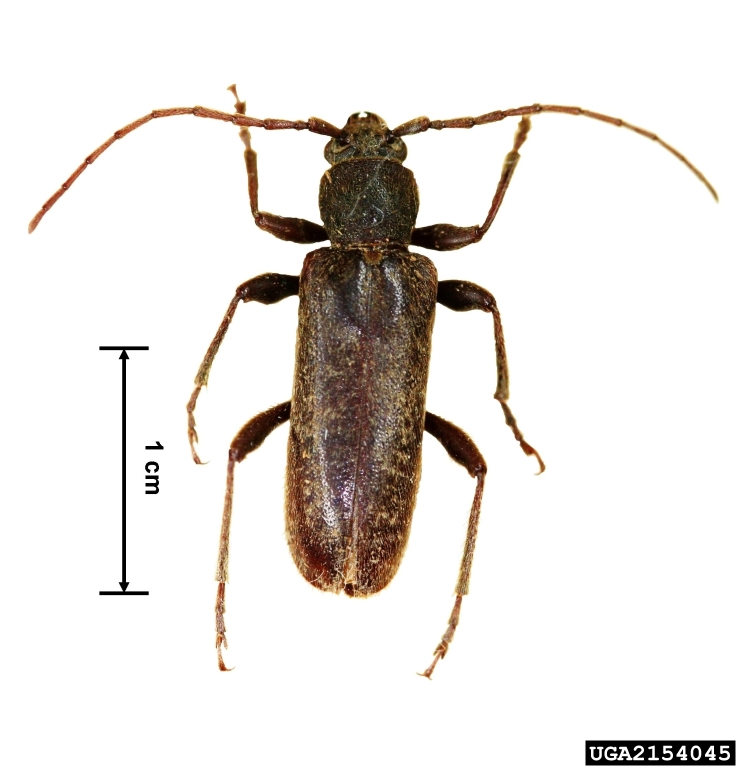
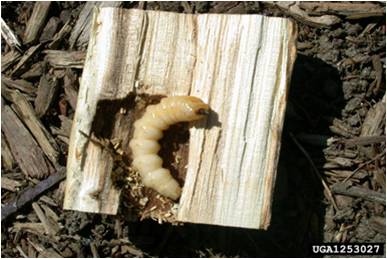
The Center for Invasive Species Prevention and others had requested the higher number for “tree and wood pests”.  We think higher funding is appropriate given the number of highly damaging wood-boring insects already in the country – e.g., Asian longhorned beetle; emerald ash borer; redbay ambrosia beetle and its associated laurel wilt pathogen; the polyphagous and Kuroshio shot hole borers and their associated pathogens … (all these species are described here).  Furthermore, there is every likelihood that additional pests will be detected in the country since the wood packaging pathways remains leaky (see the Lovett et al. article cited above and my blogs about the wood packaging material pathway posted in July through October 2015).

The House bill specifies that $15 million of the “specialty crops” money should be allocated to citrus pests and pathogens, fruit flies, a grapevine pest and a multi-host pest (light brown apple moth).

USFS Forest Health Funding

Funding levels for the USDA Forest Service also demonstrate a low priority to countering non-native tree-killing insects and pathogens.

Total funding for the USFS is about $5 billion.  In making its request for $4.9 billion, the Administration allocated only $92 million to countering threats to forest health (on both federal and non-federal lands).

The House of Representatives’ Appropriations Committee has a different – and welcome – view: the House bill provides $114.6 million for forest health protection.  This is $15 million above the FY16 level and $22.55 million above the Administration’s request – a substantial increase unequaled in past years.  The accompanying committee report expresses concern about severe insect and disease threats, especially in California.  The report also notes that invasive forest pests threaten more than 58 million acres of the Nation’s forests.  The Committee encourages the Service to continue its work to assess future risks, control existing threats, research and develop new control methods, and improve the health of forest ecosystems.  Since only $5 million of the increase is to be used on non-federal lands, the “bump-up” for non-native pests will be modest.

A note of caution: the House expansion of funding for the forest health program was doubtless made easier by the House’s cuts to programs managed by the Environmental Protection Agency, which is funded by the same bill.)

The Senate bill follows the Administration in allocating only $92 million for forest health protection.

Not only has the Administration asked for less for the forest health program in recent years.  The funding allocations within that total trouble me.  In the current year (FY16), the USFS allocated only $20.2 million (15% of total forest health funds for this year) to specific projects targeting non-native insects or pathogens.  Nearly $10 million of these funds went to just one species – European gypsy moth.  The only other species receiving a significant proportion of the funds is hemlock woolly adelgid – HWA received $1.77 million. The second greatest allocation was to oak wilt — $466,000.  Ranking third is white pine blister rust, which was allocated $420,000.  A group of three species (goldspotted oak borer, thousand cankers disease, and laurel wilt) received a total $587,000.  This low figure does not, in my view, reflect the great damage caused by goldspotted oak borer and laurel wilt.  Furthermore, I assume that the polyphagous and Kuroshio shot hole borers are included in this grouping, although they are not listed specifically.  Both shot hole borers threaten many tree species in southern California riparian areas, and pose a possible threat to trees in other parts of the country.  All of these species are expected to receive less funding in FY17 under the Administration’s request.  (Again, all these species are described here).

(Native pests – southern and western bark beetles – received a total of $7.2 million in FY16. Invasive plants were allocated $1.7 million.  These figures are not included in my calculations in the preceding paragraph.)

USFS Research Funding

The House appropriations bill provides just under $292 million for research – the amount requested by the Administration.   The Senate bill cut funding for research to $280 million – a cut of $11 million from the FY16 level.  Worse, the Senate also added $2 million to the share of research funding allocated to foerst inventory.  The only mention of non-native pests and diseases in the report accompanying the Senate bill is a paragraph instructing the USFS to work with the USDI Fish and Wildlife Service, National Park Service, USDA APHIS, and state agencies to address the threat to the Hawaiian Islands’ `ohi`a trees from the Ceratocystis fungus (the disease is described here).  This report emphasizes the importance of continuing research on forest product utilization.

Even more troubling, for years the USFS has allocated only about 3% of its total research budget to research on “pest” species (including invasive plants).  Of this total, about half – $5 million – has been allocated to projects targeting non-native insects or pathogens.  This year (FY16), the highest funding went to hemlock woolly adelgid, at $1.782 million.  The second greatest amount was allocated to emerald ash borer —  $1.168 million.

(In FY16, the non-native western bark beetles received nearly $1.4 million in research funding; invasive plants received nearly $1.9 million.  Again, these figures are not included in my calculations above. )

USFS Wildfire Funding

One explanation for the Administration’s lower funding requests is the great pressure on the USFS to fund management of wildfire.  The agency now spends more than half of its annual budget to fight wildfires.  This situation is expected to get worse as the climate warms and fires become even more frequent and intense.

The Obama Administration’s budget proposals for both FY16 and FY17 asked Congress to set up a system to pay the costs of fighting extreme wildfires in the same way it finances the federal response to other natural disasters.  When hurricanes and tornadoes cause sufficient damage to be declared disasters by the president, the Federal Emergency Management Agency is authorized to exceed its annual budget and draw on a special disaster account. The account is adjusted each year to reflect the 10-year average cost of responding to such events.  President Obama suggested creating a similar exception for USDA Forest Service and Department of the Interior.

Currently, the USFS must obtain funds through annual Congressional appropriations – which are adopted too early for an accurate assessment of that season’s likely fire damage. When fire-fighting costs exceed the appropriation, the USFS must transfer money from other accounts – setting back forest restoration projects and efforts aimed at preventing wildfires.

The Obama administration asked Congress to end the need for such transfers by appropriating 70% of the 10-year average it costs to fight wildfires each year and allowing the Forest Service access to a disaster fund.

However, the Congress has been unwilling so far to establish the disaster fund.

Conclusion

The House bill’s welcome increase for the USFS forest health protection program – if enacted – would address pests that are already widespread.  Programs aimed at preventing introductions and responding to newly detected invasions – programs operated by APHIS – do not yet enjoy sufficient support from either the Administration or the Congress.

Advocates for stronger programs to combat non-native forest pests are exploring ways to ensure additional funding for key programs, especially early detection of and rapid response to newly detected outbreaks.  You will hear more about these ideas in future!

SOURCES

Descriptions of the Administration’s fire-funding proposal can be found at:

http://www.nytimes.com/2014/02/23/us/obama-to-propose-shift-in-wildfire-funding.html?_r=0&module=ArrowsNav&contentCollection=U.S.&action=keypress&region=FixedLeft&pgtype=article

http://thehill.com/policy/finance/253687-obama-officials-press-congress-to-change-wildfire-funding


Posted by Faith Campbell


Junk the international phytosanitary system? One seed breeder says yes.

If you have read my earlier work, you know that I think the international phytosanitary “system” is not working well to prevent introduction of novel arthropods and pathogens that attack naïve plant hosts in the new ecosystem. For example, see my blog in May on the study of introduced forest pests with Gary Lovett as senior author; my blog in April 2016 on Phytopththoras in Europe; discussions of the problems in my reports, Fading Forests II and Fading Forests III – available here.

forum-1190786_960_720the IPPC is located in Rome

One plant breeder has read the critiques by Clive Brasier (world-famous British forest pathologist) and others and apparently concluded that the solution is not to strengthen phytosanitary measures but to abandon them! He suggests that instead of attempting to prevent pest introductions, agriculture should instead rely on new breeding technologies to rapidly breed plants that are resistant to the introduced pest.

D. Zamir (who works at the Institute of Plant Sciences and Genetics, Faculty of Agriculture, The Hebrew University of Jerusalem) has published an article in Plos 1 Biology citing Brasier’s criticisms (see Dr. Brasier’s web link above and my Phytophthora blog).  Zamir calls for the International Plant Protection Convention (IPPC) to launch a global plant breeding project.  In his view, such a project would not only improve plant species’ resilience vis a vis pest attacks. It would also build the scientific capacity of countries with high biological diversity

Zamir says that the IPPC is waging a losing defensive strategy that imposes ever-more regulations on plant movement and exposes those who would like to move plants for various reasons to increasingly heavy penalties if they violate the rules. At the same time, the internet provides unlimited opportunities for anyone to obtain mail-ordered seed, often with free international shipping.

Citing Brasier, Zamir notes that the current phytosanitary system has the following flaws:

  1. The system ignores the approximately 90% of pathogens that are unknown to science.
  2. It assumes that potential hosts will be taxonomically related to those affected in the country of origin, whereas the host range may be much wider in the new environment.
  3. Reliance on visual evaluations fails because pathogens might be present in a form that does not cause symptoms (e.g., spores).
  4. Aggressive pathogens identified in a particular country might not be recognized as a risky pest by the international community because of inefficient global communication of such threats.

Zamir says that biological diversity drives improvements in crop productivity and resilience to diseases and environmental stresses. In his view, release of new varieties provides added value to consumers, producers, and the environment.  Breeding programs often rely on the use of wild species and local varieties for gene mapping and rapid deployment of traits.  However, Zamir complains, the international system hampers exchanges of seed among countries. It is often not possible to ascertain if the original seed used as a source of the traits was obtained in accordance with all the phytosanitary regulations. Zamir says that breeders often “cut through the red tape” by sending the seed through the mail without obtaining a phytosanitary certificate.

Zamir then proposes that people concerned about plant productivity and health in the face of growing trade volumes and vulnerability to insects and pathogens should abandon reliance measures intended to prevent introductions of pests and instead launch a massive plant breeding program.

While his focus is apparently on crop breeding, Zamir cites success in breeding elm trees resistant to the Dutch elm disease pathogens as proof that this approach can work – and that success depends on access to the full genetic variability of the target species.

Zamir concedes that he has not addressed issues of governance, financing, selection of the species to be included in the program, and how to involve the private sector.

Of course, movement of seeds across ecological barriers poses less of a risk of introducing an alien pest than does movement of whole plants or cuttings. For that reason, phytosanitary regulations governing seed movement are more lenient than those for plants and cuttings.

I consider Zamir to wildly underestimate the difficulty – nay, impossibility – of applying his approach. To date, efforts to breed trees resistant to individual pests have required decades of effort. The U.S. tree breeding system falls far short of what is needed to respond to pests already in the country (see Chapter 6 of Fading Forests III, available here). For example, American chestnut has benefitted from decades of devoted effort – but success in countering chestnut blight is not yet certain, and the tree is under attack by another half-dozen pests.  (To see a reminder of how many tree taxa are under threat from non-native pests, go to the write-ups on the Don’t Move Firewood website or re-read articles by Lovett et al. or Aukema et al. 2010 — citations provided below.)

Even though modern genetic techniques, e.g., CRISPR –Cas9, seem to promise faster and cheaper breeding methods, how would breeding programs catch up to the tidal wave of new introductions?

Furthermore, few breeding programs for North American forest trees have yet proved a capacity to restore trees to the forest.

Finally, Zamir’s proposal would compound the existing equity problem. Already, the cost, environmental degradation, and other burdens of countering pest spread lie predominantly on the receiving society – including municipal tax payers and homeowners who must remove and replace trees killed by introduced pests (see Aukema et al. 2011.) Those who profit from international trade rarely pay directly. Zamir’s proposal would exacerbate that inequity by transferring all the risk of new introductions and cost of responding to new pests to the receiving ecosystem and the broad public. Those profiting from the trade would face next to no responsibility.

Fortunately, most plant breeders engaged in moving seed internationally have taken a more productive approach to adapting the international phytosanitary system to accommodate their business. The North American countries adopted a regional standard on the seed trade (RSPM# 36) in 2012.  A draft global standard will soon be circulated for comments by the IPPC member countries.

As I have said before, I call on phytosanitary agencies and the multitude of stakeholders harmed by pest movement – including grant-making foundations; federal and state agencies; conservation non-governmental organizations; forest products companies; trade associations representing various aspects of international trade in plants, wood packaging, and other vectors; and urban tree programs and mayors – to work together to improve U.S. and international phytosanitary programs.


SOURCES


Aukema, J.E., B. Leung, K. Kovacs, C. Chivers, K. O. Britton, J. Englin, S.J. Frankel, R. G. Haight, T. P. Holmes, A. Liebhold, D.G. McCullough, B. Von Holle.. 2011. Economic Impacts of Non-Native Forest Insects in the Continental United States PLoS One September 2011 (Volume 6 Issue 9)

Aukema, J.E., D.G. McCullough, B. Von Holle, A.M. Liebhold, K. Britton, & S.J. Frankel. 2010. Historical Accumulation of Nonindigenous Forest Pests in the Continental United States. Bioscience. December 2010 / Vol. 60 No. 11

Campbell, F.T. and S.E. Schlarbaum. Fading Forests I, II, and III at http://treeimprovement.utk.edu/FadingForests.htm

Lovett, G.M., M. Weiss, A.M. Liebhold, T.P. Holmes, B. Leung, K.F. Lambert, D.A. Orwig , F.T. Campbell , J. Rosenthal, D.G. McCullough, R. Wildova, M.P. Ayres, C.D. Canham, D.R. Foster, S.L. LaDeau, and T. Weldy. 2016. Nonnative forest insects and pathogens in the United States: Impacts and policy options. Ecological Applications, 0(0), 2016, pp. 1–19. DOI 10.1890/15-1176.1 Available at www.caryinstitute.org/tree-smart-trade

Zamir D (2016) Farewell to the Lose–Lose Reality of Policing Plant Imports. PLoS Biol 14(4): e1002438. doi:10.1371/journal.pbio.1002438 Published:  April 19, 2016Available at http://journals.plos.org/plosbiology/article?id=10.1371/journal.pbio.1002438 Or http://www.ncbi.nlm.nih.gov/pubmed/27093460


Posted by Faith Campbell

When will invasive species get the respect they deserve from conservationists?

i`iwi birdblogger i`iwi in Hawai`i

photo from www.TheBirdBlogger.com; used with permission


Evidence is growing that invasive species are among THE major threats to conservation goals worldwide.

In 2015 the IUCN called invasive species the second most significant threat to those World Heritage sites around the world that have outstanding natural values. (Poaching is the greatest threat.) My October 21, 2015 blog showed that the IUCN report actually underestimated the impact of invasive species. I listed briefly the principal invaders in several U.S. National parks. Earlier blogs criticized the National Park Service for failing to regulate the movement of firewood (August 2015) and described the invasive threat to Hawai`i (earlier in October 2015).

Now a second study shows invasive species are a principal driver of species extinction. The authors assessed the prevalence of alien species as a driver of extinctions among plants, amphibians, reptiles, birds, and mammals (which are the best-studied taxa) post-1500 AD. Overall, 58% of extinct or extinct-in-the-wild species had been driven to extinction at least in part by invasive species. Invasive alien species are the second most common threat overall. Indeed, invasive species are the most common threat for vertebrate extinctions (62% of extinct or extinct-in-the-wild species faced threats from invasive species). Invasive species ranked fourth as a cause of extinction for plants: 27% of listed plant species were threatened by invasive species.

For those species with just a single driver of extinction, invasive species is the cause for 47% of mammals, 27% of birds, 25% of reptiles, and 17% of plants. In no case were invasive species identified as the sole threat to an amphibian species – although invasive species are their second highest threat.

Although the paper lists invasive species as second, their threat was virtually identical to that of “overexploitation”, the threat ranked first. That is, 124 out of 215 species studied were threatened at least in part by invasive species; 125 were threatened by overexploitation.

Other principal threats were overexploitation, agriculture, aquaculture, and – in the case of plants – residential and commercial development. Categories related to habitat loss ranked surprisingly low. Only 61 of the 215 cases listed agriculture and aquaculture as threats.

The authors reflect on whether invasive species are not themselves causal agents of extinction, but rather symptoms of the real causes, especially habitat destruction. They conclude that that is unlikely.

Instead, they suggest that invasive species impacts might often be underestimated, as many interactions – especially those between alien parasites and native hosts – are very hard to detect.

Not surprisingly, 86% of island endemic species had invasive species as one extinction driver. Nevertheless, continental organisms are also threatened — 14% of alien-related extinctions have been of species with mainland populations. These include eight amphibians, five birds, and six mammals. Most of these invader-threatened mainland organisms are from the Americas

Among the approximately 30 alien taxa named as extinction drivers are rats, cats, and trout as threats to other vertebrates such as birds and mammals. All three were also ranked highly as damaging invasives in the earlier IUCN report on World Heritage sites. Diseases – especially chytridiomycosis and avian malaria – were causal agents of extinction for amphibians and birds. Several herbivores – especially goats, sheep, and European rabbits – and alien plants were drivers of extinction for plant species.

Of course, outright extinction is not the only damage to biological diversity caused by invasive species. American chestnut, Fraser fir, and redbay are not extinct, but their ecological role has been virtually eliminated as the vast majority of these forest trees die off. Other tree taxa are on same road – ash and eastern hemlocks across wide expanses of their ranges; tanoaks; whitebark pines …

Invasive species pose major threats to biological diversity and other conservation goals. These damages are on top of the acknowledged threat of invasive species to agriculture, forestry, or economic groups. (See, for example, Lovett et al. 2016 discussed in my previous blog.) The role of invasive species in extinction described in this new paper suggest a long-standing bias among conservationists’ priorities. Too often, we have focused on species threatened by overexploitation – which is such easier to see and involves an obvious “villain”.

Nevertheless, a host of practical suggestions have been put forward to address the root causes of species introductions and spread. Often, these ask some or many of us to stop doing what we have been doing. But much meaningful conservation action requires someone to accept limits or to make sacrifices.

Will the conservation community – including grant-making foundations, federal and state agencies, and the many conservation non-governmental organizations ranging from the IUCN to local groups – now take up the challenge of implementing suggested actions and actively advocating for the funding needed for practical steps that will begin to bring this threat under control?


Sources

Bellard C, Cassey P, Blackburn TM. 2016 Alien species as a driver of recent extinctions. Biol. Lett. 12: 20150623. http://dx.doi.org/10.1098/rsbl.2015.0623 http://rsbl.royalsocietypublishing.org /


Lovett,G.M., M. Weiss, A.M. Liebhold, T.P. Holmes, B. Leung, K.F. Lambert, D.A. Orwig , F.T. Campbell , J. Rosenthal, D.G. McCullough, R. Wildova, M.P. Ayres, C.D. Canham, D.R. Foster, S.L. LaDeau, and T. Weldy. 2016. Nonnative forest insects and pathogens in the United States: Impacts and policy options. Ecological Applications, 0(0), 2016, pp. 1–19. DOI 10.1890/15-1176.1

Available at www.caryinstitute.org/tree-smart-trade


Posted by Faith Campbell

Experts describe forest pests’ impact, call for action


Sixteen scientists and policy analysts (including me) have published a new study reviewing recent work on numbers, pathways and impacts of non-native, tree-killing insects and pathogens. I encourage you to read the article. It provides a concise and compelling overview of the threat to our wildland, rural, and urban forests from non-native insects and diseases and proposes some thought-provoking solutions.

SOD Parke diseased plant

rhododendron infected by sudden oak death; photo by Jennifer Parke, Oregon State University

Meanwhile, here are our conclusions:

Current policies for preventing introductions have reduced the numbers of pests introduced via the various pathways (e.g., wood packaging and horticultural plants – but not sufficiently to counter pests’ rising opportunities for introduction resulting from burgeoning global trade. [Emphasis mine.]


At the current efficacy of implementing the international regulations governing wood packaging [ISPM #15] ( Haack et al., 2014),  and given growing trade, Leung et al. 2014 project that by 2050 – just 35 years from now – up to three times as many wood-boring insects may be introduced to the U.S. as are currently here.


(I discussed this high risk in blogs posted at this site on July 15 and August 22, 2015.)


The new paper presents several options for improving prevention. These include: measures to ensure exporters ship “clean” plants and wood packaging; post-entry quarantines to raise the likelihood that pests will be detected; placing all genera of North American woody plants on USDA’s NAPPRA list of genera not currently approved for import and awaiting risk assessment; and improved surveillance and eradication programs. We also note the importance of improving data collection and allowing  researchers outside USDA access to those data to support independent evaluation of policy’s effectiveness.


As Aukema et al. demonstrated six years ago, non-native forest insects have accumulated in U.S. forests at a steady rate of about 2.5 per year over the last 150 yrs. While the rate of introduction has not changed, the types of insects introduced have. In the 20th Century, plant-associated insects dominated the introductions. In recent years wood-boring insects associated with wood packaging materials have dominated. Some of these wood-borers also are highly damaging! (See emerald ash borer, redbay ambrosia beetle/laurel wilt, and polyphagous shot hole borer/Fusarium here). Lack of information precludes a similar analysis for pathogens; although we all know that the 20 or so high-profile pathogens cause great devastation – see descriptions here.


The whole country is at risk; although the highest numbers of tree-killing insects and pathogens are established in the Northeast and Midwest, Pacific Coast states are catching up (and certainly already have their share of devastating insects and pathogens).  See the map below.  You can check the pests in your state by visiting the interactive map here .

map

map developed by USFS; published in Aukema et. al 2010.

Our new article notes that these non-native pests are the only disturbance agent that has effectively eliminated entire tree species or genera from U.S. forests in the span of decades. Follow-on effects include alterations of ecosystem functions and huge costs to various stakeholders, especially residents and governments of (sub)urban areas.


These impacts can persist for centuries as a result of altered species composition, which affects multiple trophic levels.


We followed Aukema et al. 2011’s results in estimating the direct annual economic impact of non-native forest insects to be at least:  $2 billion in municipal government expenditures, $1.5 billion in lost residential property values, and $1 billion in homeowner expenditures for tree removal and replacement or treatment. These costs and losses contrast with the paltry $216 million estimated in federal government expenditures.


Aukema et al. 2011 noted that these expenses cannot be summed across cost categories because of the potential for double-counting. We note that these figures are probably underestimates for several reasons. They did not include the introduced diseases such as sudden oak death. Nor do they  include pests detected recently, such as the polyphagous shot hole borer.  Finally, our paper excluded consideration of insects or pathogens native to some part of North America, such as the goldspotted oak borer. (For more information about these organisms, consult the write-ups here.)


As our article notes, the billions of dollars in annual economic damages (and un-quantified ecological impacts) are economic externalities. That is, the importers who benefit from the economic activity do not pay directly for preventing or responding to the associated pest introductions.


The article discusses several policy options that we believe would greatly reduce unacceptable risks. These options include several bold actions:


  • Require importers to switch from packaging made from wooden boards to packaging made from materials other than solid wood (fiberboards ok). This change is both highly protective and potentially cost-effective. Such a switch would have to be justified under the terms of international trade agreements – but given the high levels of damage caused by wood-boring pests, I don’t think that hurdle is insurmountable.
  • Greatly strengthen measures aimed at preventing pest introduction on imports of plants. One step would be restricting imports of all genera of “woody” plants native to North America by designating them as “not authorized for importation pending pest risk assessment” (NAPPRA). Another protective step would be to promptly finalize the Q-37 revision proposed by USDA in April 2013 and immediately initiate negotiations with principal foreign suppliers of temperate climate woody vegetation to implement the pest-minimization procedures contained in that revised regulation, as well as in ISPM#36.


Other options discussed are straight-forward and simpler:


  • Tighten enforcement of existing regulations by ending the practice of allowing an importer to be detected five times in a year with wood packaging that does not comply with regulatory requirements before imposing a penalty. When a new year starts, that importer gets a “clean slate”! Is this how agencies enforce regulations that they are serious about?
  • Expand efforts to assist trade partners in adopting clean trade measures.
  • Expand and integrate surveillance programs for new pest outbreaks, and providing timely and adequate funding for emergency eradication efforts.


SOURCES


Aukema, J.E., B. Leung, K. Kovacs, C. Chivers, K. O. Britton, J. Englin, S.J. Frankel, R. G. Haight, T. P. Holmes, A. Liebhold, D.G. McCullough, B. Von Holle.. 2011. Economic Impacts of Non-Native Forest Insects in the Continental United States PLoS One September 2011 (Volume 6 Issue 9)

Aukema, J.E., D.G. McCullough, B. Von Holle, A.M. Liebhold, K. Britton, & S.J. Frankel. 2010. Historical Accumulation of Nonindigenous Forest Pests in the Continental United States. Bioscience. December 2010 / Vol. 60 No. 11


Haack, R. A., K. O. Britton, E. G. Brockerhoff, J. F. Cavey, L. J. Garrett, M. Kimberley, F. Lowenstein, A. Nuding, L. J. Olson, J. Turner, and K. N. Vasilaky. 2014. Effectiveness of the international phytosanitary standard ISPM no. 15 on reducing wood borer infestation rates in wood packaging material entering the United States. Plos One 9:e96611.


Leung, B., M. R. Springborn, J. A. Turner, and E. G. Brockerhoff. 2014. Pathway-level risk analysis: the net present value of an invasive species policy in the US. Frontiers in Ecology and the Environment 12:273-279.


Posted by Faith Campbell