The implied or explicit recommendations are not new. But they are supported by new data!
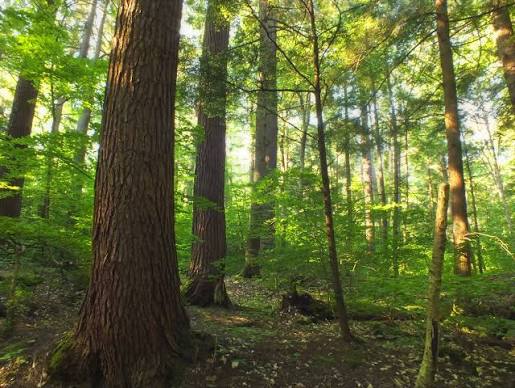
Several measures of forest health drawn from survey plots of the Forest Inventory and Analysis (FIA) show that federally-owned forested lands – in both National forests and National parks – are healthier than neighboring forests under different ownership. Forest inventory plots in federal forests have significantly greater tree species and structural diversity and evenness; basal area and biomass per hectare; and seedling density. They are also less invaded by non-native plants. These findings hold across the continental United States, four regions (North, South, Rocky Mountains, and Pacific Coast) analyzed separately, and 22 common forest types.
The consistent finding of more “mature forest” features in eastern National parks and National forests – regardless of longer-term land-use histories (Potter et al. 2026b) – seems to me to indicate that recent and current management practices might overcome influences of centuries of pre-protection land use histories of exploitation and degradation.
1. Forest Health Inside vs. Outside Federal Forested Lands
Legally designated USFS National forests comprise ~19% of the Nation’s total forest area (~59 million out of 310 million hectares). Since adoption of the Forest and Rangeland Renewable Resources Act of 1974, the National Forest System (NFS) within USDA has been managed to maintain “appropriate forest cover . . . to secure the maximum benefits of multiple use sustained yield management in accordance with land management plans”. The Department of Interior’s National Park Service units are managed to conserve unimpaired the natural and cultural resources and values in the system for the enjoyment, education, and inspiration of this and future generations (National Park Service “Organic Act” of 1916).
Potter et al. 2026b assessed the ability of National forests to provide ecosystem services and forest products in the face of dramatically increasing threats: (1) more intense and frequent wildfires; (2) uncharacteristically long and hot drought conditions; (3) mortality and compositional changes caused by invasive forest pests; (4) competition from invasive plant species; and (5) forest fragmentation and conversion to other land uses. To do this, they asked whether National forests (1) have greater biodiversity – as measured by species and structural diversity; (2) are denser and encompass more biomass; (3) experience more regeneration; and (4) are less invaded by non-native plants. The FIA surveys were carried out from ~2010 to ~2022. As noted, they analyzed each comparison across the conterminous states, the four regions, and the 22 forest types.
Potter et al. (2026b) and an earlier study by Miller et al. (2016) agree that ownership determines forest management, specifically the level of anthropogenic disturbance allowed. Miller et al. demonstrated that, in the eastern United States, forests in National parks have greater live tree basal area, a larger volume of coarse woody debris, and greater proportions of late-successional tree species than nearby forests. They also have lower rates of tree growth and mortality.
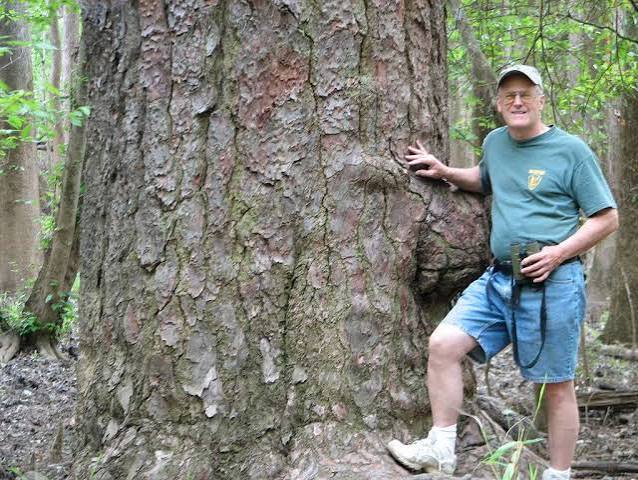
Potter et al. (2026b) found that all biodiversity indicators except number of saplings per hectare were higher for plots inside the NFS than neighboring forests under other ownerships. This was true across the continent and in all four regions.
In some of the 22 forest types the indicators were particularly strong. Thus, basal area was notably higher on NFS forests populated by loblolly/shortleaf pine, Western larch, hemlock/Sitka spruce, maple/beech/birch, and oak/hickory forest types. Tree species richness was significantly higher on NFS plots for Western larch, elm/ash/cottonwood, longleaf/slash pine, pinyon/juniper, and loblolly/shortleaf pine. Differences in regeneration were seen most prominently in loblolly/shortleaf pine, oak/hickory, oak/pine, and white/red/jack pine. The authors do not speculate on the reasons.
The FIA data showed that invasive plant richness and cover were both greater on plots outside National forests across the Continent and in all four regions. However, invasive plant richness did not differ by ownership for some specific forest types: elm/ash/cottonwood, pinyon/juniper, Western larch, and hardwood woodlands. (National parks are even less invaded by non-native plants than National forests; see below.)
2. Regions Differ – Why?
Geographic regions differed noticeably. Tree species richness and evenness; diversity and evenness of tree height classes; biomass/ha; seedlings and saplings per hectare; and invasive plant diversity and cover were higher in the East – in both USFS Northern and Southern regions. Tree species richness was by far highest in the South – especially in the southern Appalachians and on the Cumberland Plateau. Seedling density was highest in the North, moderately high in the South. In the North, tree species and tree height evenness were both higher on non-federal lands.
Invasive plant richness was highest in some parts of the South. [See a more detailed discussion of invasive plants below.] Tree diameter class diversity and evenness were significantly higher in the West. Basal area was by far the highest in the northern part of the Pacific coast region (Washington, Oregon, and California.). Seedling density was moderately high in some National forests in the Rocky Mountains. Tree diameter evenness was higher outside National forests in the Rocky Mountains.
These differences had been expected given the marked regional dissimilarities in floristic, climatic, and edaphic factors, as well as ownership patterns.
Potter et al. (2026b) report that tree recruitment was stronger in the East than the Rocky Mountain and Pacific coast regions. I wish they had discussed how this finding relates to earlier findings (Potter and Riitters 2022) that numbers of species experiencing poor regeneration were highest in the Southeast, followed by the Northeast and Midwest. Miller et al. (2023) also found that tree regeneration was poor in National parks from Virginia to Maine. The latter study attributed this failure to a combination of browsing by overabundant deer and competition by invasive plants. The latter is presumably even more important in national forests, which are invaded by non-native plants at twice the rate of national parks. Nonfederal forests are invaded at even higher rates – up to 3 times greater. [See here for a study of improve regeneration in National parks which control their deer populations.]
Potter et al. (2026b) note that the higher forest health indicator values for NFS forests prevailed across the Continent despite notable differences in land-use and management histories and landscape contexts. Most NFS land in the West was put under federal management before arrival of European pioneers, so more of their groves are classified as old-growth or mature. In the East, nearly all lands incorporated into the National Forest System were privately owned until they were purchased in the 20th Century. At that time these forests were often highly degraded. Not only did the eastern National forests have to recover from overexploitation; they are still typically embedded in a matrix of other land ownerships, often largely cleared of trees.
In their analysis, Potter et al. (2026b) controlled for differences in site productivity and some environmental conditions e.g., elevation and slope, but not soil or hydrological conditions. So they believe that the suite of environmental factors do not explain the “older” attributes of eastern forests managed by the USDA Forest Service and USDI National Park Service,. These attributes generally include a more complex forest structure; higher tree species richness; and greater basal area and density of live trees (Miller et al. 2016).
What differs is management. Miller et al. (2016) say explicitly that protection from forest harvesting for many decades probably is an important explanation of why forests in the eastern National parks have greater tree species diversity than forests owned by other parties. Potter et al. (2026b) instead emphasize the impacts of different land-use histories outside of National forest boundaries. Much of this land (especially in the East) has experienced continuous, centuries-long agriculture and residential development and more acute disturbance pressures associated with higher human population density. They also note that managers of non-federal forests goals often call for harvests or other active management – which can reduce forest structure, species richness, size of live trees, presence of downed woody debris, etc.
I note that the consistent finding of more “mature forest” features in eastern National parks and National forests – regardless of longer-term land-use histories (Potter et al. 2026b) – indicates that recent and current management practices might overcome older influences. Many of these forests have enjoyed protective management for less than a century; the Forest and Rangeland Renewable Resources Act of 1974 was adopted just 50 years ago. I assert that the decisive factor might be the much lower presence – although not absence! – of deliberately planted non-native plant species on federal properties. [Again, see a more detailed discussion of invasive plant issues below.]
Potter et al. (2026b) also comment that regeneration on NFS land is almost exclusively natural. As discussed above, they consider this regeneration to be successful, in that seedlings generally are being produced in greater numbers than on surrounding forests in other ownerships. Again, I would like to learn how this finding relates to the earlier study by Potter and Riitters (2022).
Potter et al. (2026b) state that National forests benefit from their greater size and stability of management goals. These are necessary for large-scale approach to conserve or imitate the processes that create diversity
As Potter et al. (2026b) note, in the East, reserved areas like National forests (or to a greater extent, National parks) represent a small proportion of the landscape. Their distinctness from neighboring forestlands emphasizes their ecological value. They call for managers to be alert to potential invasions of non-native plants or tree-killing pests from the surrounding agricultural and developed land. In the West, private forests abut federal forested lands less often and thus have less influence on the status of forest health indicators on National forests.
3. Plant Invasions in Forests
Several studies by Kevin Potter, Kurt H. Riitters and colleagues have documented the extent of plant invasions in America’s forests. Data supporting these studies come from the same forest plot surveys conducted under the Forest Inventory and Analysis (FIA) program.
The region most invaded is Hawai`i: 83% of FIA plots have one or more invasive plant species. The region that ranks second is the East, specifically the 37 states comprising the USDA Forest Service’s former Northern and Southern regions. Nearly 53% of FIA plots in this region have one or more invasive plant species (Potter et al. 2024). FIA plots in the Rocky Mountain West had only 11% (Potter et al. 2026a).
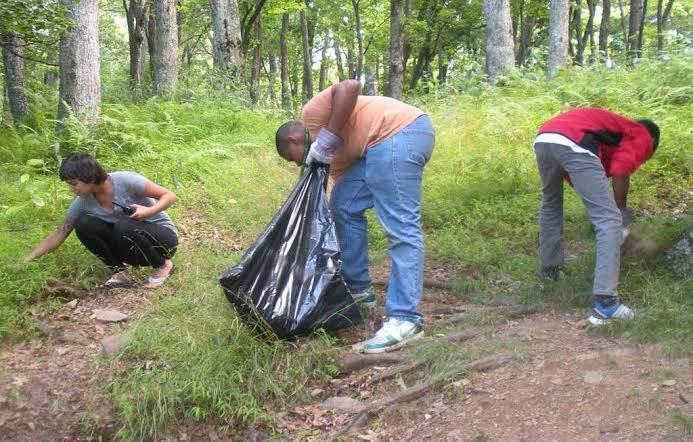
As noted above, invasive plants are particularly problematic in the South. There, invasive plants have been documented on 55.3 million hectares. In the Northern Region, an incomplete survey found invasive plants on 36.9 million ha. In some counties of the 37 states, 80% of inventoried forest plots contain invasive plants. Spread of these invaders is largely unchecked. The invasions’ extent and intensity are so great that their complete removal – or elimination of their impacts – is “practically impossible” (Potter et al., 2024; Potter et al. 2026a).
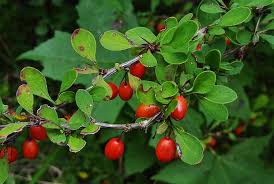
Plant invasions in eastern forests are undoubtedly worse than these data indicate because the records include only some of the non-native plant species present — those considered to be the worst invaders at the time regional lists were compiled (Potter et al. 2026a). Not included on the survey list are wavy-leaf basketgrass (Oplismenus undulatifolius), fig buttercup (Ficaria verna), shrub and creeping Euonymus, callery pear (Pyrus calleryana). Only one privet (Ligustrum vulgare) is included.
Furthermore, Bradley, Early and Sorte (2015) report that while non-native plant species are already more widely distributed than native species, the average invasive plant species inhabits only about 50% of its expected range.
Sites Most Heavily Invaded
Analyses of the FIA data reveal several overlapping definitions of which locations and situations have been invaded most severely. These factors are separate from the issue of ownership discussed above. Invasive plants are more numerous, widespread, and diverse in more disturbed or fragmented sites. One study found that 65% of plots that experienced greater fragmentation were invaded compared to 46% of plots that experienced low fragmentation. Invasion rates are highest in the “wildland-urban interface” (WUI). Unfortunately, the WUI is growing faster than any other land use type in the country – especially in the East (Potter et al. 2024). Because the East is so heavily developed, a plot’s distance from a road was nearly irrelevant. Furthermore, development in the WUI also promotes planting of non-native species that might then invade the nearby forest. See my more detailed discussion of these issues here.
Highly productive sites [defined as a site’s ability to grow industrial timber; Potter et al. 2026b] are also prone to invasion: 76% of highly productive plots were invaded compared to 40% of low-productivity plots. It is not known whether highly productive sites are inherently more invasible, or, instead, that such plots were converted to agriculture earlier, so exposed to human disturbance longer (Riitters et al. 2017).
A third analysis found that the best predictor of the odds that a site would be invaded was the site’s ecological province as defined by Robert G. Bailey in 1995 (Riitters et al. 2017)
Propagule Pressure: the Role of Deliberate Planting
Over 25 years (Reichard and White 2001) numerous scientists have documented the role of deliberate planting – especially ornamental horticulture – in facilitating introduction and spread of invasive plants. Kinlock et al. (2025) found that more than 1,600 plant species sold by nursery and seed catalogs over 200 years had “naturalized” somewhere in the continental 48 states. Fertakos and Bradley (2024) found that species were likely to establish if they were introduced to as few as eight locations. Beaury et al. (2023) found that half of 89 plant species recognized as invasive are sold in the same locations where they are invasive. Another 25 species are sold in an area that is currently unsuitable for those species, but that will become more suitable for invasion as temperatures warm.
Both Potter et al (2024) and Potter et al. (2026a) note that the flora of suburban and rural residential landscapes is dominated by non-native plant species. I add that the people who live there promote plant invasions in various ways, including planting shrubs or flowers in the woods and dumping yard waste there. The older the human settlement, the more years for these plants to spread – assisted by birds, wind, or water. Go here for a more detailed discussion of these issues.
What Should We Do to Curtail Introduction and Spread of Invasive Plants?
a. Regulations The ornamental plant market – whether brick and mortar stores or internet sales — is interstate in scope. Regulations need to match (Beaury et al. 2023). This requires Congress to adopt a new federal law. Under the Constitution, the appropriate entity for regulating interstate commerce is the federal government. But the current statute (the Federal Noxious Weed Act) does not address long-established, widespread species.
States currently have the lead in regulating sales of horticultural plants. Beaury et al. (2023) and Evans et al. (2024) criticize state restrictions as outdated, limited to a few weeds that plague agriculture, and irregularly enforced. The result is a checkerboard of places where a species is offered for legal sale next to places where that sale is prohibited. Finally, the regulations are reactive; they rarely include plants in anticipation of their spread to new areas. Evans et al. (2024) urge state regulators to prioritize those species in the ornamental trade that are projected to remain or become abundant under evolving climate conditions.
b. Voluntary Actions
Potter et al. (2024) call for efforts to encourage homeowners to plant more native and environmentally friendly private landscapes. They concede the complication that some non-native – even invasive – species provide valued ecosystem and cultural services. They also suggest that local governments adopt land-use planning rules that protect forests of high conservation value. They do not discuss the extreme improbability of the latter action given the magnitude of predicted land-use changes in the country, powerful demographic factors driving them, and lobbying clout of affected economic interests, including the nursery industry.
Many citizen associations – native plant societies, regional or state invasive plant councils, etc. – are pursuing the education approach. (See the websites for state native plant societies, Southeast Exotic Pest Plant Council, Mid-Atlantic Invasive Plant Council, Midwest Invasive Plant Network, and Virginia Invasive Plant Coalition.) These voluntary efforts have yielded some success. But they have not resulted in adequate protection for our ecosystems.
c. Land-Managing Agencies
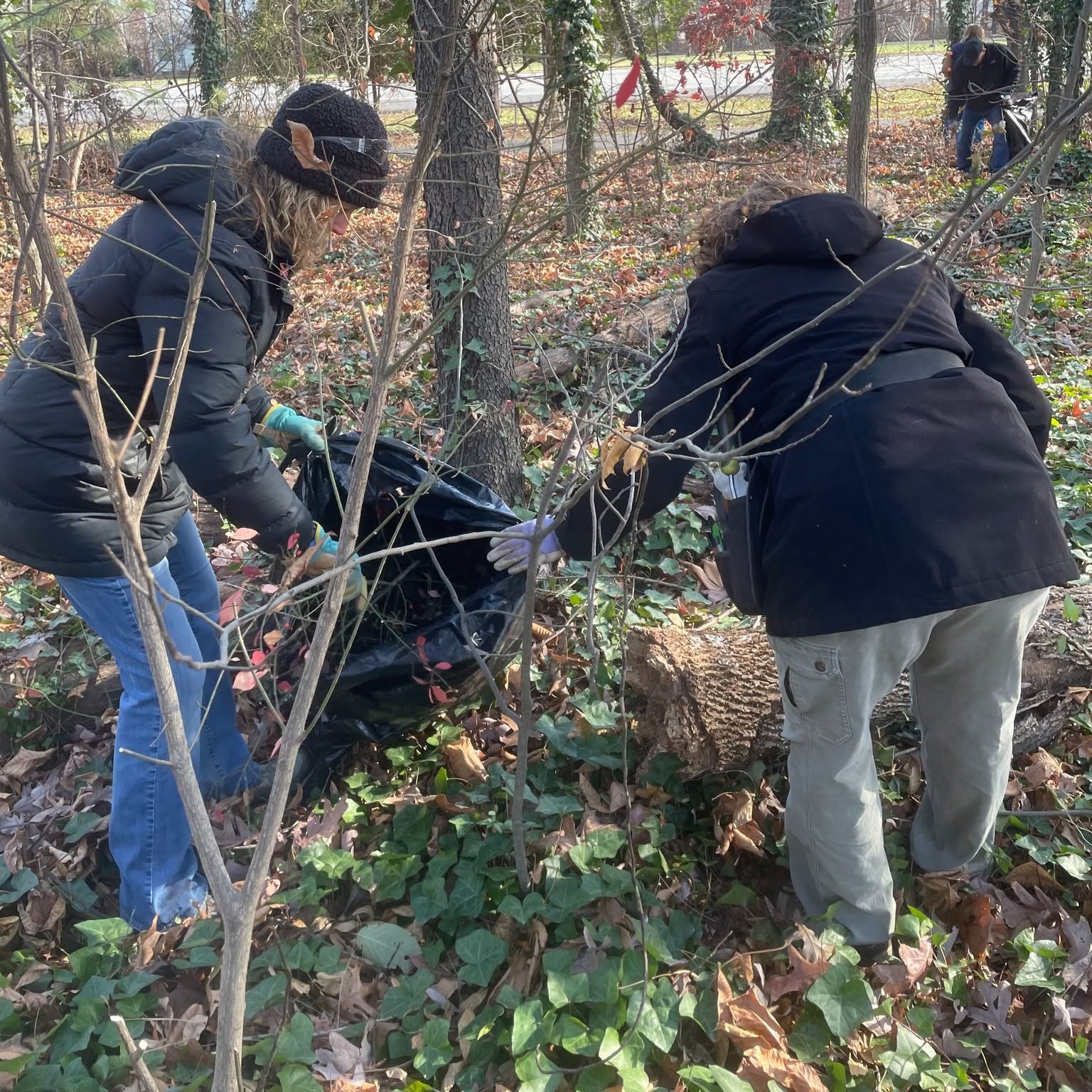
Many land-managing agencies work with local and regional groups to monitor and remove invasive plants, e.g., Blue Ridge PRISM. Databases that verify and post their findings, e.g., iNaturalist and EDDmapS can provide early warning of new invaders. See here for a discussion of these matters.
Potter et al. (2026a) also suggest that the USDA Forest Service update the lists of invasive plants to be included in future FIA surveys. I agree. See above for examples of highly invasive species not now included.
Of course, the influence of plants on ecosystems is broader than invasive species. Dr. Douglas Tallamy has demonstrated that even non-invasive, non-native plants can disrupt food webs.
SOURCES
Beaury, E.M., J.M. Allen, A.E. Evans, M.E. Fertakos, W.G. Pfadenhauer, B.A. Bradley. 2023. Horticulture could facilitate invasive plant range infilling and range expansion with climate change. BioScience 2023 0 1-8 https://doi.org/10.1093/biosci/biad069
Bradley, B.A., R. Early and C. J. B. Sorte. 2015. Space to invade? Comparative range infilling and potential range of invasive and native plants. Global Ecology and Biogeography
Evans, A.E., C.S. Jarnevich, E.M. Beaury, P.S. Engelstad, N.B. Teich, J.M. LaRoe, B.A. Bradley. 2024. Shifting hotspots: Climate change projected to drive contractions and expansions of invasive plant abundance habitats. Diversity and Distributions 2024;30:4154
Fertakos, M.E. and B.A. Bradley. 2024. Propagule pressure from historic U.S. plant sales explains establishment but not invasion. Ecology Letters 2024;27:e14494 doi: 10.1111/ele.14494
Kinlock, N.L., D.W. Adams, W. Dawson, F. Essl, J. Kartesz, H. Kreft, M. Nishino, Jan Pergl, P. Pyšek, P. Weigelt and M. van Kleunen. 2025. Naturalization of ornamental plants in the United States depends on cultivation and historical land cover context. Ecography 2025: e07748 doi:10.1002/ecog.07748
Miller, K. M., F. W. Dieffenbach, J. P. Campbell, W. B. Cass, J. A. Comiskey, E. R. Matthews, B. J. McGill, B. R. Mitchell, S. J. Perles, S. Sanders, J. P. Schmit, S. Smith, and A. S. Weed. 2016. National parks in the eastern United States harbor important older forest structure compared with matrix forests. Ecosphere 7(7):e01404. 10.1002/ecs2.1404
Miller, K.M., S.J. Perles, J.P. Schmit, E.R. Matthews, M.R. Marshall. 2023. Overabundant deer and invasive plants drive widespread regeneration debt in eastern United States national parks. Ecological Applications. 2023;33:e2837. https://onlinelibrary.wiley.com/r/eap
Potter, K.M and Riitters, K. 2022. A National Multi-Scale Assessment of Regeneration Deficit as an Indicator of Potential Risk of Forest Genetic Variation Loss. Forests 2022, 13, 19. https://doi.org/10.3390/f13010019.
Potter, K.M., K.H. Riitters, B.V. Iannone III, Q. Guo and S. Fei. 2024. Forest plant invasions in the eastern United States: evidence of invasion debt in the wildland‑urban interface. Landsc Ecol (2024) 39:207 https://doi.org/10.1007/s10980-024-01985-y
Potter, K.M., B.V. Iannone III, K.H. Riitters, Q. Guo, K. Pandit, C.M. Oswalt. 2026a. US Forests are Increasingly Invaded by Problematic Non-Native Plants. Forest Ecology and Management 599 (2026) 123281
Potter, K.M., Q. Guo, F.H. Koch, S. Lim-Hing, E.R. Matthews, and K. Pandit. 2026b. U.S. National Forests Are More Diverse, Denser and Less Invaded than Neighboring Forests. Forests 2026 17
Reichard, S.H. and P. White. 2001. Horticulture as a Pathway of Invasive Plant Introductions in the United States. BioScience 103. Vol. 51 No. 2. February 2021.
Riitters, K., K. Potter, B.V. Iannone III, C. Oswalt, S. Fei, Q. Guo. 2017. Landscape correlates of forest plant invasions: A high-resolution analysis across the eastern United States. Diversity and Distributions. DOI: 10.1111/ddi.12680
Tallamy, D.W. and K.J. Shropshire. 2009. Ranking Lepidopteran Use of Native Versus Introduced Plants
Conservation Biology, Volume 23, No. 4, 941–947 2009 Society for Conservation Biology
DOI: 10.1111/j.1523-1739.2009.01202.x
Posted by Faith Campbell
We welcome comments that supplement or correct factual information, suggest new approaches, or promote thoughtful consideration. We post comments that disagree with us — but not those we judge to be not civil or inflammatory.
For a detailed discussion of the policies and practices that have allowed these pests to enter and spread – and that do not promote effective restoration strategies – review the Fading Forests report at http://treeimprovement.utk.edu/FadingForests.htm
Or