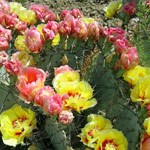
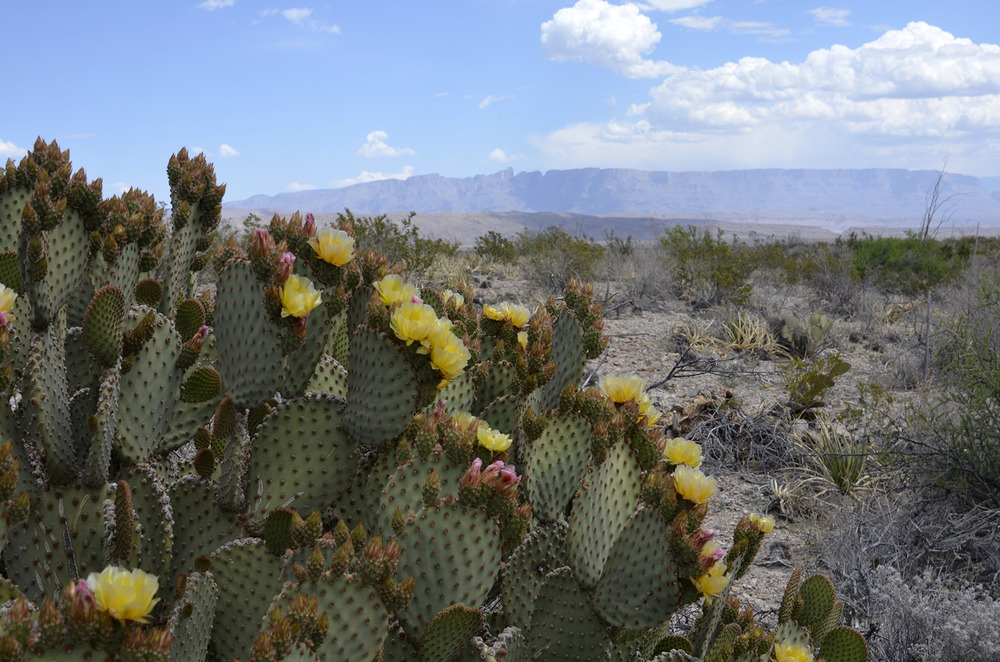
prickly pear cacti in Big Bend National Park photo by Blake Trester, National Park Service
The cacti that are such important components of desert ecosystems across nearly 2 million square miles straddling the U.S.-Mexico border are under threat from non-native insects – as I have noted in earlier blogs. Of course, cacti are important in other ecoregions, too – I wrote recently about the columnar cacti in the dry forests of Puerto Rico.
Flat-padded prickly pear cacti of the genus Opuntia are threatened by the cactus moth, Cactoblastis cactorum.
In 1989, the cactus moth was found
in southern Florida, to which it had spread from the Caribbean islands (Simonson
2005). Recently, the moth was found to have spread west as far as the Galveston,
Texas, area and near I-10 in Columbus, Texas, about 75 miles west of central
Houston (Stephen Hight, pers. com.) Two
small outbreaks on islands off Mexico’s Caribbean coast have been eradicated.
In Florida, the cactus moth has
caused considerable harm to six native species of prickly pear, three of which
are listed by the state as threatened or endangered.
When the cactus moth reaches the
more arid regions of Texas, it is likely to spread throughout the desert
Southwest and into Mexico. In the American southwest, 31 Opuntia species are at risk; nine of them are endemic, one is endangered.
Mexico is the center of endemism for the Opuntia
genus. In Mexico, 54 Opuntia species
are at risk, 38 of which are endemic (Varone et al. 2019; full citation at end of this blog).
The
long-term effects of the cactus moth on these North American Opuntia are unknown because there may be
substantial variations in tolerance. The attacks observed in the Caribbean
islands have shown great variability in various cactus species’ vulnerability (Varone et al. 2019).
The Opuntia cacti
support a diversity of pollinators as well as deer, javalina (peccaries),
tortoises, and lizards. Prickly pears also shelter packrats and nesting birds (which
in turn are fed on by raptors, coyotes, and snakes), and plant seedlings. Their
roots hold highly erodible soils in place (Simonson 2005).
While scientists have been concerned about the possible impacts of the cactus moth since it was detected in Florida 30 years ago, a substantial response began only 15 years later. The U.S. Department of Agriculture began trying to slow the spread of the cactus moth in 2005 (Mengoni Goñalons et al. 2014), with a focus on surveys and monitoring, host (cactus) removal, and release of sterile males. This program was successful at slowing the moth’s spread and eradicating small outbreaks on offshore islands of Alabama, Mississippi, and Mexico.
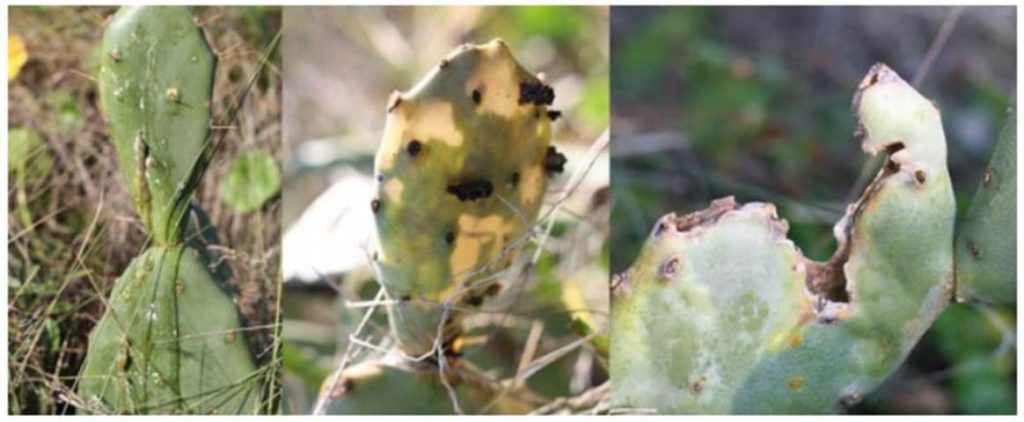
Cactus moth damage to native cacti in Florida photo by Christine Miller, UF/IFAS
However,
the moth continued to spread west and the program never received an appropriation from Congress. The primary funding source was a US – Mexico
Bi-National Invasive Cactus Moth Abatement Program. Both countries contributed
funds to support the research and operational program to slow the spread in the
U.S. Funds were provided through USDA Animal and Plant Health and Inspection
Service (APHIS) and the Mexican Secretariat of Agriculture, Livestock, Rural
Development, Fisheries and Food (SEGARPA). Unfortunately,
funding was reduced by both entities and became inadequate to maintain the
Bi-National Program.
Therefore, in 2012, APHIS abandoned
its regional program and shifted the focus to biocontrol. This is now
considered the only viable control measure in the desert Southwest where vulnerable
cacti are numerous and grow close together. The biocontrol project has been funded
since 2012 through the Plant Pest and Disease Management and Disaster
Prevention program (which receives funding through the Farm Bill). It has
received a total of slightly more than $2
million over seven years. More than half the funds went to the quarantine
facility to support efforts to rear non-target hosts and verify the biocontrol
agent’s host specificity. About a quarter of the funds supported complementary
work of an Argentine team (both the cactus moth and the most promising
biocontrol agent are native to Argentina). Much smaller amounts have supported
U.S.-based scientists who have studied other aspects of the cactus moth’s
behavior and collected and identified the U.S. moths being tested for their
possible vulnerability to attack by a biocontrol wasp.
Here are
details of what these dedicated scientists achieved in just the past seven
years at the relatively low cost of roughly $2 million. Unfortunately, the project now faces a funding crisis and
we need to ensure they have the resources to finish their work.
Some
Specifics of the BioControl Program
After literature reviews, extensive collections,
and studies in the cactus moth’s native habitat in Argentina (Varone et al. 2015), a newly described wasp, Apanteles
opuntiarum (Mengoni Goñalons et al. 2014), has been determined to be host
specific on Argentine Cactoblastis species and the most promising
candidate for biocontrol. Wasps were collected in Argentina and sent to
establish a colony in a quarantine facility in Florida to enable host
specificity studies on North American Lepidoptera (Varone et al. 2015).
Quarantine
host specificity studies and development of rearing technology has not been straightforward. Initially, it was
difficult to achieve a balanced male/female ratio in the laboratory-bred generations;
this balance is required to maintain stable quarantine laboratory colonies for
host range testing. This difficulty was overcome. A second challenge was high
mortality of the cactus-feeding insects collected in the Southwest that were to
be test for vulnerability to the biocontrol wasp. These desert-dwellers don’t
do well in the humid, air-conditioned climate of the quarantine facility! For
these difficult-to-rear native insects, scientists developed a molecular
genetics method to detect whether eggs or larvae of the cactus moth parasitoid were
present inside test caterpillars after they were exposed to the wasps. For easy
to rear test insects, caterpillars are exposed to the wasps and reared to
adulthood. Host specificity tests have been conducted on at least five species
of native U.S. cactus-feeding caterpillars and 11 species of non-cactus-feeding
caterpillars (Srivastava
et al. 2019; Hight pers.comm.).
To
date there has been no instance of
parasitism by Apanteles opuntiarum on either lepidopteran non-target species or
non-cactus-feeding insects in the Florida quarantine or in field collections in
Argentina (Srivastava et al.
2019; Varone et al. 2015; Hight pers.comm.).
The scientists expected to complete host-specificity testing in the coming months, then submit a petition to APHIS requesting the release of the wasp as a biocontrol agent. Unfortunately, the project’s request for about $250,000 in the current year was not funded. This money would have funded completion of the host specificity testing, preparation of a petition to APHIS in support of release of the biocontrol agent into the environment, and preparation of the release plan.
Meanwhile,
what can we expect regarding the probable efficacy of the anticipated biocontrol
program?
Some
of the wasp’s behavioral traits are encouraging. The wasp is widely present in
the range of the cactus moth, and persisted in these areas over the years of
the study. The wasp can deposit multiple eggs with each “sting”. Multiple wasps
can oviposit into each cactus moth without detriment to the wasp offspring. Unmated wasp females
produce male offspring only, whereas mated females produce mixed offspring
genders. In the field, female wasps attack cactus moth larvae in a variety of
scenarios: they wait at plant access holes to sting larvae when they come
outside to defecate; they attack larvae when they are moving on the surface of
the pads; they can sting the youngest cactus moth larvae through the thin plant
wall of mined the pads; and they enter large access holes created by older
larvae and attack larger larvae. The wasps are attracted by the frass
(excrement) left on the outside of the cactus pads by cactus moth larvae (Varone
et al. 2020).
However, I wonder about the extent
to which the cactus moth is controlled by parasitoids in Argentina. Cactoblastis eggs are killed
primarily by being dislodged during weather events (rain and wind) and by
predation by ants. First instar larvae are killed primarily by the native Argentine
cactus plants’ own defenses – thick cuticles and release of sticky mucilage when
the young larvae chew holes into the pads where they enter and feed internally.
As larvae feed and develop inside the pads, the primary cause of mortality is
natural enemies.
Of
all the parasitoid species that attack C. cactorum, A. opuntiarum
is the most abundant and important. When the larvae reach their final state (6th
instars), they leave the pads and find pupation sites in plant litter near the
base of the plants. It is at this stage that the parasitism from A.
opuntiarum is detected in the younger larvae that were attacked while
feeding inside pads. As the moth larva begins to spin silk into which to
pupate, larvae of the wasp erupt through the skin of the caterpillar and pupate
within the silk spun by the moth. Predation by generalists (ants, spiders,
predatory beetles) accounted for high mortality of the unprotected last instar
and pupae (Varone et al. 2019).
Finally,
the cactus moth has three generations per year when feeding on O. stricta in the subtropical and tropical coastal areas of the Americas
and the Caribbean. In Argentina, on its native host, the moth completes
only two generations per year (Varone et
al. 2019).
How to
Get the Program Support Needed
Opuntia in Big Bend National Park Photo by Cookie Ballou, National Park Service
To date, no organized
constituency has advocated for protection of our cacti from non-native insect pests.
Perhaps now that the Cactoblastis
moth is in Texas, the threat it represents to our desert ecosystems will become
real to conservationists and they will join the struggle. The first step is to
resolve the funding crisis so that the agencies can complete testing of the biocontrol
agent and gain approval for its release. So now there is “something people can
do” – and I hope they will step forward.
I hope Americans are not actually indifferent
to the threat that many cacti in our deserts will be killed by non-native
insects. Many are key components of the ecosystems within premier National
Parks, and other protected areas. Cacti also are beautiful treasures in
botanical gardens. I hope conservationists will agree that these threats must
be countered, and will help to ensure
funding of the final stages of the biocontrol tests.
Sources
Mengoni Goñalons, C., L. Varone, G. Logarzo, M. Guala, M.
Rodriguero, S.D. Hight, and J.E. Carpenter. 2014. Geographical range & lab
studies on Apanteles opuntiarum (hymenoptera: braconiDae) in AR, a candidate
for BC of Cactoblastis cactorum (Lepidoptera: Pyralidae) in North America. Florida
Entomologist 97(4) December 2014
Srivastava, M., P. Srivastava, R. Karan, A. Jeyaprakash,
L. Whilby, E. Rohrig, A.C. Howe, S.D. Hight,
and L. Varone. 2019. Molecular detection method developed to track the
koinobiont larval parasitoid Apanteles opuntiarum (Hymenoptera: Braconidae) imported from Argentina to control Cactoblastis cactorum (Lepidoptera:
Pyralidae). Florida Entomologist 102(2): 329-335.
Varone, L., C.M. Goñalons, A.C. Faltlhauser, M.E. Guala,
D. Wolaver, M. Srivastava, and S.D. Hight. 2020. Effect of rearing Cactoblastis cactorum on an artificial
diet on the behavior of Apanteles
opuntiarum. Applied Entomology DOI: 10.1111/jen.12731.
Varone,
L., G. Logarzo, J.J. Martínez, F. Navarro, J.E. Carpenter, and S.D. Hight.
2015. Field host range of Apanteles
opuntiarum (Hymenoptera: Braconidae) in Argentina, a potential biocontrol
agent of Cactoblastis cactorum
(Lepidoptera: Pyralidae) in North America. Florida Entomologist — Volume 98,
No. 2 803
Varone, L., M.B. Aguirre, E. Lobos, D. Ruiz Pérez, S.D. Hight, F. Palottini, M. Guala, G.A. Logarzo. 2019. Causes of mortality at different stages of Cactoblastis cactorum in the native range. BioControl (2019) 64:249–261
Posted by Faith Campbell
We welcome comments that supplement or correct factual information, suggest new approaches, or promote thoughtful consideration. We post comments that disagree with us — but not those we judge to be not civil or inflammatory.
APHIS can protect our native & agricultural plants – but will it?
Imports
of large numbers of plants for planting from Southeast Asia represents a
significant biosecurity risk for forestry, horticulture, and natural ecosystems
in North America and Europe. This threat
is likely to grow unless APHIS takes
action under its emergency authorities.
Recent
pest introductions and related studies indicate that Southeast Asia is a newly-discovered
center of origin for plant pathogens. Places of particular concern are Vietnam,
southern Yunnan Province and Hainan Island of China, northern Laos, the eastern
Himalayas, and Taiwan. Significant pathogens and associated insects apparently centered
in these areas include the sudden oak death pathogen (Phytophthora ramorum) and other Phytophthora
species; and several ambrosia beetles and associated fungi, including the laurel
wilt fungus (Raffaelea lauricola) and
its primary vector (Xyleborus glabratus),
and the polyphagous (Euwallacea whitfordiaodendrus)
and Kuroshio shot hole borers (Euwallacea
kuroshio).
Southeast
Asia is attractive to the plant trade because of the region’s high floral diversity,
including such sought-after families as Ericaceae (rhododendrons). Indochina has
more than 10,350 vascular plant species in 2,256 genera – equaling more than
20% of the world’s plant species (Jung et
al. 2019).
Pathogens
are notoriously difficult to detect during inspections at the time of shipment.
One-time inspections of high volume imports are especially weak and prone to
failure.
How do we
protect America’s flora?
APHIS could — but has not yet — developed requirements that these countries institute integrated pest management procedures for their exporting nurseries – as provided under amendments to APHIS’ Q-37 regulation and ISPM#36. In any case, it is unlikely that such procedures would minimize the risk because many of the plants that would be imported would probably be wild-collected.
APHIS has – and should use – far more effective means to minimize risk. These are the Federal orders and listing process known as “not authorized for importation pending pest risk assessment” or NAPPRA. If – despite the scientific evidence – APHIS continues to allow high volumes of dangerous imports, the agency should immediately institute new phytosanitary controls to its inspection process. These include relying on risk-based inspection regimes and molecular high-through-put detection tools.
Supporting
Material
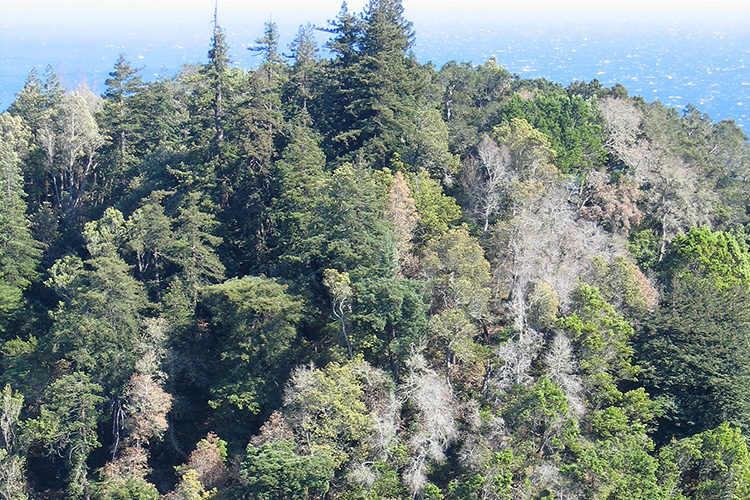
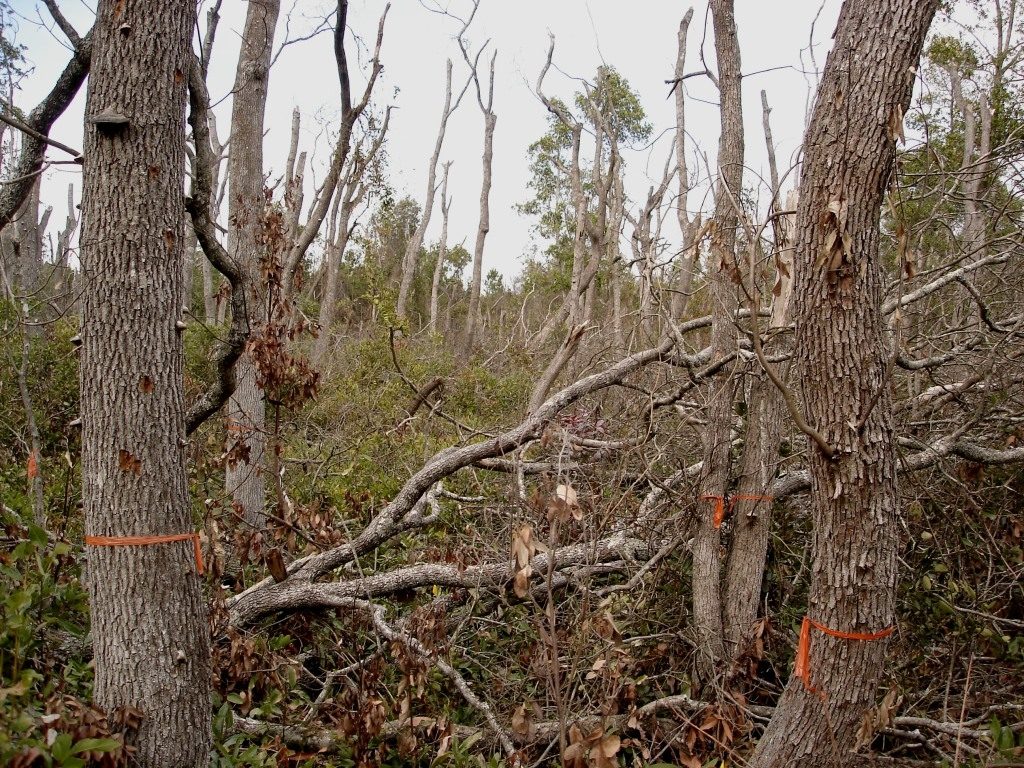
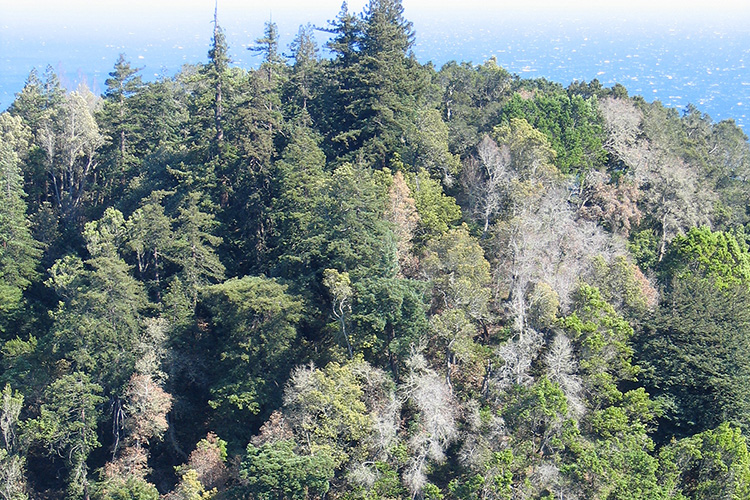
SOD-killed tanoaks in Big Sur; photo provided by Matteo Garbelotto, UC Berkeley
Phytophthora species
A
team of European pathologists, led by Thomas Jung and including Clive Brasier
and Joan Webber (see full citation at the end of this blog) surveyed Phytophthora species by sampling
rhizosphere soils in 25 natural and semi-natural forest stands, isolations from
naturally fallen leaves, and waters in 16 rivers in temperate and subtropical
montane and lowland regions of Vietnam during 2016 and 2017.
These
studies detected 13 described Phytophthora
species, five informally designated taxa, and 21 previously unknown taxa. Detections were made from soil samples
taken from 84% of the forest stands and from all rivers.
As I reported in am earlier blog, P. ramorum and P. cinnamomi were among those species detected. Both the A1 and A2 mating types of both P. ramorum and P. cinnamomi co-occurred.
The
survey also detected at least 15 species in other genera of oomycetes.
The
scientists conclude that most of the 35 forest Phytophthora species detected are native to Vietnam or nearby
surrounding areas, attributing species in Phytophthora
clades (taxonomically related groups) 2, 5, 6, 7, 8, 9, and 10 as native to
Indochina. Different clades were detected in high-elevation vs. lowland rivers, cooler (subtropical)
vs. tropical streams, and in soils vs. streams. Given the relatively
limited number and diversity of the sampled sites and ecosystem types, it is
likely that the true Phytophthora diversity
of Vietnam is markedly higher (Jung et al.
2019)
Worrying
diversity of Phytophthora has been
detected in other areas of Southeast Asia. A 2013 survey in natural forests and
streams of Taiwan detected 10 described species and 17 previously unknown taxa
of which 9 were of hybrid origin. In three areas in northern Yunnan, a Chinese
province adjacent to northern Vietnam, eight Phytophthora species were isolated from streams running through
sclerophyllous oak forests; two were recovered from forest soil samples. In
montane forests of the tropical island Hainan, located in the South China Sea
close to Vietnam, six Phytophthora species
were found (Jung et al. 2019).
These
studies are being conducted in the context of scientists discovering numerous
new species of Phytophthora in recent
decades. Since 1999, the number of described species and informally designated
taxa of Phytophthora has tripled. World-renowned
experts Clive Brasier anticipates that between 200 and 600 species of Phytophthora are extant in natural
ecosystems around the world (Jung et al.
2019).
In
the Vietnam survey, P. ramorum was the
most widespread species. While genetic studies indicate ancestral connections to
the four P. ramorum lineages (genetic
strains) introduced to North America or Europe, further studies are under way to clarify these relationships (Jung et al. 2019).
Jung
and colleagues found P. cinnamomi to
be the most common soilborne Phytophthora
species at elevations above 700 m. Two genotypes of the P. cinnamomi A2 mating type are causing epidemics in numerous
natural and managed ecosystems worldwide. There was some evidence that the more
frost sensitive A2 mating type might be spreading into higher altitudes in Vietnam
(Jung et al. 2019).
Most
of the Phytophthora species detected
in the rhizosphere were not associated with obvious disease symptoms. (The
principal exception was the A2 mating type of P. cinnamomi in montane forests in northern Vietnam.) (Jung et al. 2019) This lack of disease greatly reduces the chances of detecting the
oomycetes associated with any plants exported from the region – there are
no symptoms.
Since
southern Yunnan, northern Laos, and the eastern Himalayas belong to the same
biogeographic area those areas might also harbor endemic P. ramorum populations. Further surveys are needed to confirm this
hypothesis (Jung et al. 2019).
Phytophthora
lateralis
– causal agent of Port-Orford cedar root rot – also probably originated in the
area, specifically Taiwan (Vettraino et
al. 2017).
Implications for
phytosanitary measures
Many
of the native Asian forest Phytophthora
species have co-evolved with a variety of tree genera also present in Europe
and North America, including Fagaceae, Lauraceae, Aceraceae, Oleaceae, and
Pinaceae. Numerous examples demonstrate a strong potential that trees in these
families that have not previously been exposed to these Phytophthora species might be highly susceptible. Scientists have
begun an extensive host range study of Phytophthora
species from Asia and South and Central America. One part of this study found
that five Asian Phytophthora species caused
significant rot and loss of fine roots and lateral roots in three European
species of chestnut and oak (Jung et al.
2019).
Other pathogens
Studies by separate groups of scientists have concluded that several beetle-fungus disease complexes are native to this same region.
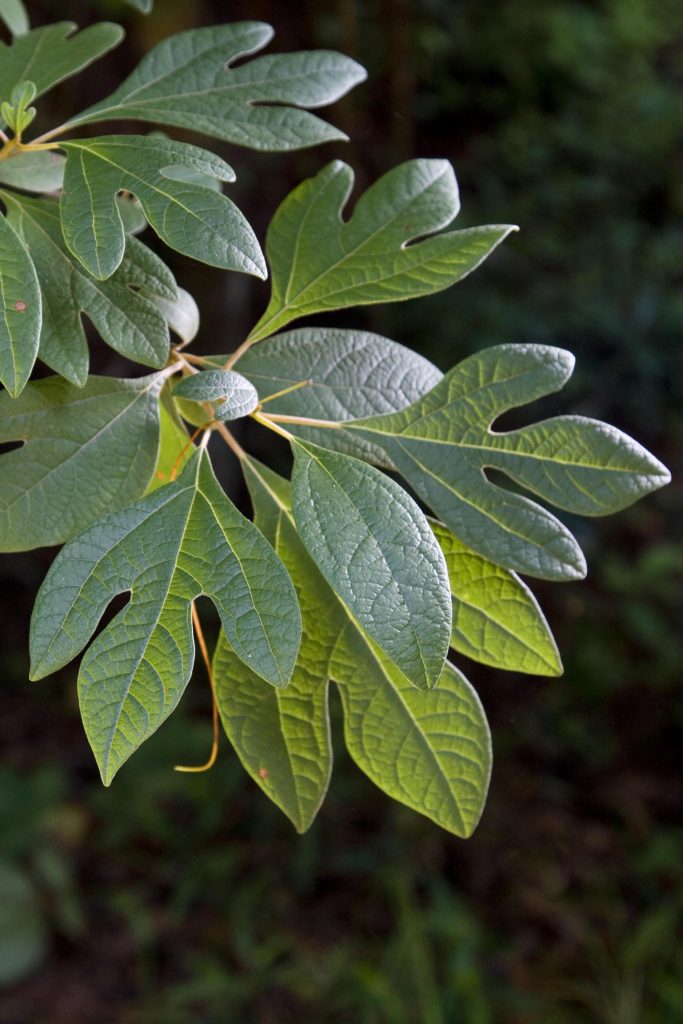
Sassafras – photo by David Moynihan
Both the laurel wilt fungus Raffaelea lauricola and its primary vector Xyleborus glabratus probably originated in Southeast Asia; there are probably different strains or genetic makeups across their wide ranges. For example, Dreaden et al. 2019 found that the fungus population from Myanmar differed genetically from those found in Japan, Taiwan, and the United States. Others had already expressed concern about the possibility that new strains of R. lauricola might be introduced (Wuest et al. 2017, cited in Cognato et al. 2019).
Cognato
et al. 2019 found that the beetle
occurs in deciduous forests from southern Japan to Northeast India, so genetic
variation across this range is likely. In fact, they have separated the species
X. glabratus into three species. They
found that some of the beetles might thrive at 40o North – the
latitude of central Illinois, Indiana, and Ohio and southern Pennsylvania. The
ability of the vector of laurel wilt disease to spread so far north poses an
alarming threat to sassafras (Sassafras albidum) – which is a major
understory tree in forests of these regions.
It is unknown whether these new species and X. glabratus lineages are associated with different fungal strains. In company with the pathologists cited above, Cognato et al. 2019 warn that preventing introduction of the three beetle species to other regions is prudent. Cognato et al. 2019 point out that if other beetle lineages from the southern extent of their range can tolerate hotter and drier conditions, they might pose a greater risk to host species in the more arid areas of California and Mexico. In addition, Central America is at great risk because of the numerous plant species in the vulnerable Lauraceae found there.
Also from the region are two beetle-fungus combinations killing trees in at least seven botanical families, including maples, oaks, and willows, in southern California. The polyphagous shot hole borer (Euwallacea whitfordiaodendrus) apparently is native to Vietnam (Eskalen et al. 2013) and the closely related Kuroshio shot hole borer (Euwallacea kuroshio) to Japan, Indonesia, and Taiwan (Gomez et al. 2018).
What you can do
Getting APHIS to act
1) communicate concern about the risk to APHIS leadership and ask that the agency take action under its NAPPRA authority
2) communicate the same to intermediaries who can influence APHIS:
State phytosanitary agency – especially through regional plant boards and National Plant Board
Your Congressional representative and senators (especially if one or more serves on Agriculture or Appropriations committee)
Professional societies – American Phytophathological Society, Mycological Society, American Society of Entomologists, Society of American Foresters …
3) communicate the same to university leadership and ask that their lobbyists advocate to USDA
4) communicate the same to the media
2) Research on extent of North American tree species’ vulnerability to the Oomycetes and other associated microorganisms
Jung et al. 2019 say that studies are under
way to identify potential pest-host relationships with important tree species.
However, all the authors are Europeans. Is anyone carrying out tests on North
American trees in the apparently most vulnerable families — Fagaceae,
Lauraceae, Aceraceae, Oleaceae, and Pinaceae?
1)
Communicate with colleagues, scientific societies, APHIS, Agriculture Research
Service, National Institute of Food and Agriculture, and USFS to determine
whether such tests are under way or planned.
2) In those cases where no studies are planned, work with above to initiate them.
Sources
Cognato,
A.I., SM. Smith, Y. Li, T.H. Pham, and J. Hulcr. 2019. Genetic Variability
Among Xyleborus glabratus Populations
Native to Southeast Asia (Coleoptera: Curculionidae: Scolytinae: Xyleborini)
and the Description of Two Related Species. Journal of Economic Entomology XX(XX),
2091, 1 – 11.
Dreaden,
T.J., M.A. Hughes, R.C. Ploetz, A. Black and J.A. Smith. 2019. Genetic Analyses
of the Laurel wilt Pathogen, Raffaelea
lauricola, in Asia Provide Clues on the Source of the Clone that is
Responsible for the Current USA Epidemic. Forests 2019, 10, 37
Eskalen,
A., Stouthamer, R. Lynch, S.C., Twizeyimana, M., Gonzalez, A., and Thibault, T.
2013. Host range of Fusarium dieback and its ambrosia beetle (Coleoptera
Scolytinae) vector in southern California. Plant Disease 97938-951.
Gomez,
D.F., J. Skelton, M.S. Steininger, R. Stouthamer, P. Rugman-Jones, W.
Sittichaya, R.J. Rabaglia, and J. Hulcr1/ 2018. Species Delineation Within the
Euwallacea fornicatus (Coleoptera: Curculionidae) Complex Revealed by
Morphometric and Phylogenetic Analyses. Insect Systematics and Diversity,
(2018) 2(6): 2; 1–11
We
welcome comments that supplement or correct factual information, suggest new
approaches, or promote thoughtful consideration. We post comments that disagree
with us — but not those we judge to be not civil or inflammatory.
Faith Campbell receives award for activism from National Association of State Foresters; 2016
For nearly 30 years I have documented bioinvasion threats and gaps, first in three Fading Forests reports (available here), then in five years of blogging. Here I pull together that information and suggest — in most cases reiterate — steps to address these threats and gaps. I list sources of discussion of the underlying issues – other than my reports and blogs – in references at the end of this blog.
My
first premise is: robust federal leadership is crucial:
The Constitution gives primacy to
federal agencies in managing imports and interstate trade.
Only a consistent approach can
protect trees (and other plants) from non-native pests.
Federal agencies have more
resources than state agencies individually or in any likely collective effort
— despite decades of budget and staffing cuts.
My
second premise is: success depends on a continuing, long-term effort founded on
institutional and financial commitments commensurate with the scale of the threat.
This requires stable funding; guidance by research and expert staff; and engagement
by non-governmental players and stakeholders. Unfortunately, as I discuss
below, funding has not been adequate or stable.
My third premise is that programs’ effectiveness needs to be measured, not just effort (see the NECIS document referenced at the end of the blog).
SPECIFICS
Preventing
new introductions continues to be the most effective action. Mitigating options
decrease and damages increase once a non-native pest has entered the country –
much less become established (see Lovett et
al. 2016 and Roy et al. 2014). I
recognize that preventing new introductions poses an extremely difficult
challenge given the volume and speed of international trade and the strong
economic forces supporting free trade. These challenges have been exacerbated over
several decades by the political zeitgeist – the anti-regulatory ideology, the emphasis
on “collaborating” with “clients” rather than imposing requirements through
regulations. Although the current “America First” policy might reduce import
volumes and therefore reduce the invasive species threat to some extent, the
anti-regulatory stance has only strengthened.
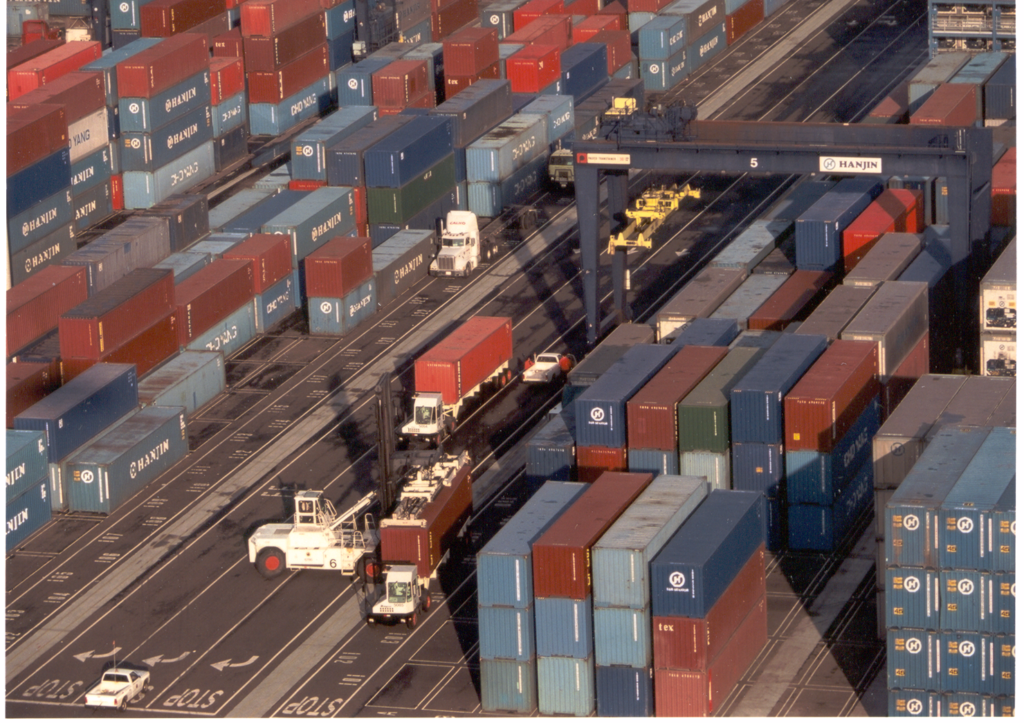
containers at the Port of Long Beach, California
Decades of cutting key agencies’ budgets and personnel are another factor. However, the damage to America’s natural systems is so great that we must try harder to find more effective strategies (See the Fading Forest reports; my previous blogs; Lovett et al. 2016; and APHIS annual reports – e.g., the 2019 report here)
Prevention
Despite adoption and implementation of new international and national regulations to stem pest introductions, introductions continue – although probably at a lower level than would otherwise be the case. Delays in adoption of regulations (documented in Fading Forests II and III and my two recent 30-years-in-review blogs have facilitated damaging introductions and spread.
Solutions
Stakeholders press USDA
leadership to initiate rules intended to strengthen phytosanitary protection and
expedite their completion
APHIS promote and facilitate
analysis of current programs and policies by non-agency experts to ensure the
agency is applying most effective strategies (Lovett et al. 2016).
Adoption
of insufficiently protective regulations (documented in FFII, FFIII, two
30-years-in-review blogs) – adopted in part because APHIS is trying to
“balance” trade facilitation and phytosanitary protection – has further
contributed to damaging pests’ introduction and spread.
Solutions:
Boost
priority of preventing pest introductions by amending the Congressional finding
in the Plant Protection Act [7 USC 7701(3)] as follows
Existing language: “[I]t is the
responsibility of the Secretary [of Agriculture] to facilitate exports, imports
and interstate commerce in . . . commodities that pose a risk of harboring
plant pests or noxious weeds in ways that
will reduce, to the extent practicable, as determined by the Secretary, the
risk of dissemination of plant pests and noxious weeds .… “
Amend to read as follows: “…. in ways that will reduce prevent, to the greatest extent practicable feasible, as determined by the Secretary, …” [emphasis added]
Adopt several actions to
strengthen phytosanitary protections at the point of origin (Lovett et al. 2016)
Expand
pre-clearance partnerships — as authorized for plants under Q-37 regulations
and ISPM-36
Expand
sentinel tree programs
Promote
voluntary substitution of packaging made from materials other than solid wood.
APHIS
doesn’t use the enforcement powers that it has under Plant Protection Act (see
several of my past blogs)
Solutions:
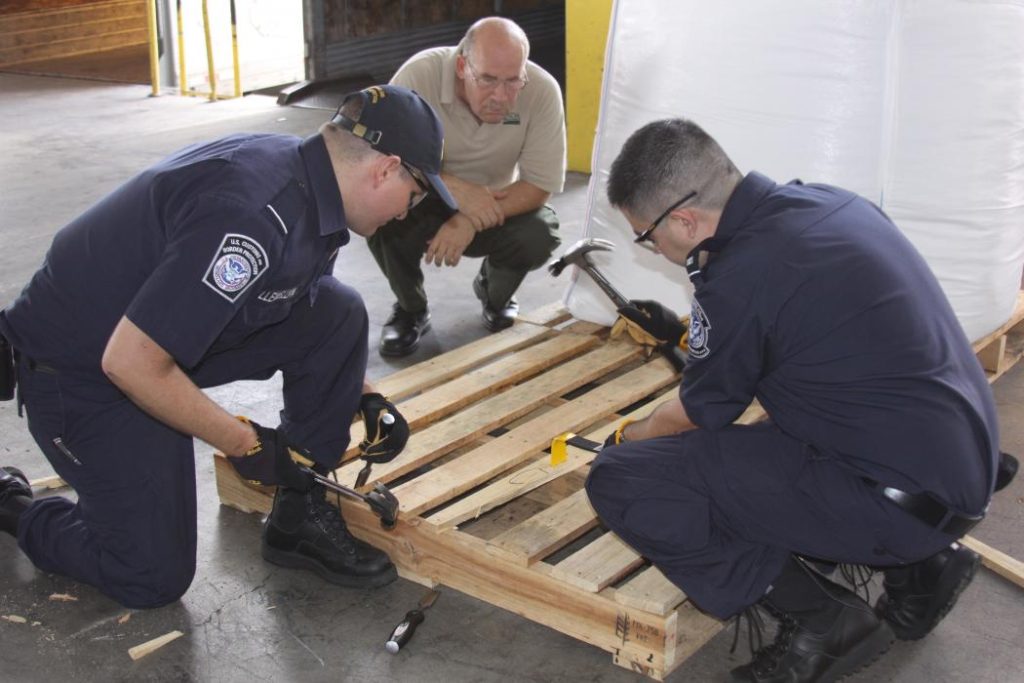
CBP inspectors search for pests in a pallet; CBP photo
APHIS follow the lead of Customs and Border Protection and begin penalizing importers on the first instance of their wood packaging not being in compliance with ISPM#15 (see blog here).
APHIS prohibit use of wood packaging by countries and importers of categories of imports that – over the 13 years since implementation – have developed a record of frequent violations of ISPM#15.
APHIS use its authority per revised Q-37 regulations to negotiate with countries that export plants to the U.S. to establish “integrated measures” programs aimed at minimizing the risk of associated pests being transported to the U.S.
APHIS use its authority per revised Q-37 to place in the “Not Authorized for Import Pending Pest Risk Assessment (NAPPRA) “limbo” category genera containing North American “woody” plants (see Roy et al. 2014; Lovett et al. 2016).
Spread within the
U.S.
The
United States lacks a coordinated system to prevent pest spread within the
country (see Fading Forests III Chapter 5). Even our strictest methods, like APHIS’s
quarantines regulating interstate movement of goods, have failed to curtail
spread of significant pests. The most obvious example is the emerald ash borer.
The regulations governing movement of the sudden oak death pathogen in the nursery trade have also failed: there have been periodic outbreaks in which the pathogen has been spread to nurseries across the country. Between 2003 and 2011, a total of 464 nurseries located in 27 states tested positive for the pathogen, the majority as a result of shipments traced from infested wholesalers. In 2019, plants exposed to the pathogen were again shipped to 18 states; eight of those states have confirmed that their plant retailers received infected plants (see my blog from summer here).
Another
serious gap is the frequent failure of APHIS and states to adopt official
programs targetting bioinvaders that will be difficult to control because of
biological characteristics or cryptic natures – even when severe impacts are
demonstrated. Recent examples include the laurel wilt disease complex, goldspotted
oak borer, polyphagous and Kuroshio shot hole borers and associated pathogens,
and even the spotted lanternfly (although the last has received significant
funds from APHIS.)
redbay killed by laurel wilt disease, Georgia; photo by Scott Cameron
Solutions:
APHIS apply much more stringent
regulations to interstate movement, based on a heightened priority for
prevention in contrast to facilitating interstate trade. E.g., prohibit nurseries on the West Coast from shipping P. ramorum hosts to states where the pathogen
is not established.
APHIS encourage states to adopt
quarantines and regulations aimed at preventing spread of invasive pests to
regions of the state that are not yet infested. For example, the sudden oak
death pathogen in California and Oregon; the borers in southern California.
APHIS abandon plans to deregulate
emerald ash borer and step up its support for state regulations on firewood.
APHIS stop dumping pests it no
longer wants to regulate onto the states through the “Federally Recognized
State Manage Phytosanitary (FRSMP) program”.
APHIS revise its policies so that
the “special needs exemption” [7 U.S.C. 7756] actually allows states to adopt
more stringent regulations to prevent introduction of APHIS-designated
quarantine pests (see Fading Forests III Chapter 3).
To help fill the gaps, the states are trying to coordinate their regulations in some important areas. The most advanced example is the voluntary Systems Approach to Nursery Certification, or SANC program. APHIS has supported this initiative, including by funding from the Plant Pest and Disease Management and Disaster Program (see below). However, it is a slow process; USDA funds first became available in 2010. The states are trying to coordinate on firewood, but we don’t yet know what the process will be.
Funding shortfalls (See the three Fading Forests
reports, my blogs about appropriations)
Increase APHIS’ access to emergency
funds from the Commodity Credit Corporation by
amending the Plant Protection Act [7 U.S.C. 7772 (a)] to include this
new definition of “emergency”:
the term “emergency” means any
outbreak of a plant pest or noxious weed which directly or indirectly threatens
any segment of the agricultural production of the United States and for which
the then available appropriated funds are determined by the Secretary to be
insufficient to timely achieve the arrest, control, eradication, or prevention
of the spread of such plant pest or noxious weed.
Although APHIS has the most
robust prevention program of any federal agency, its funding is still
inadequate. Stakeholders should lobby the Congress in support of higher annual
appropriations.
The Plant
Pest and Disease Management and Disaster Program (now under Section 7721 of the
Plant Protection Act) has provided at least $77 million for tree-pest
programs (excluding NORS-DUC & sentinel plant programs and other programs)
since FY 2008. Much useful work has been carried out with these funds. However,
these short-term grants cannot substitute for stable, long-term funding. I
reiterate my call for stakeholders to lobby the Congress to provide larger
appropriations to the APHIS Plant Protection program and Forest Service Forest
Health Protection and Research programs.
Long-term Responses
to Bioinvasive Challenge
More stakeholders are advocating raising the priority of – and providing adequate resources to – such long-term solutions as biocontrol and breeding trees resistant to pests and restoring them to our forests. Advocates include the state forestry agencies of the Northeast and Midwest, some non-governmental organizations, some academics, and individual USFS scientists. One effort resulted in inclusion of language in the 2018 Farm Bill (see blog here) – although this approach has apparently run into a dead end. The new emphasis on breeding has so far not been supported by agency or Congressional leaderships.
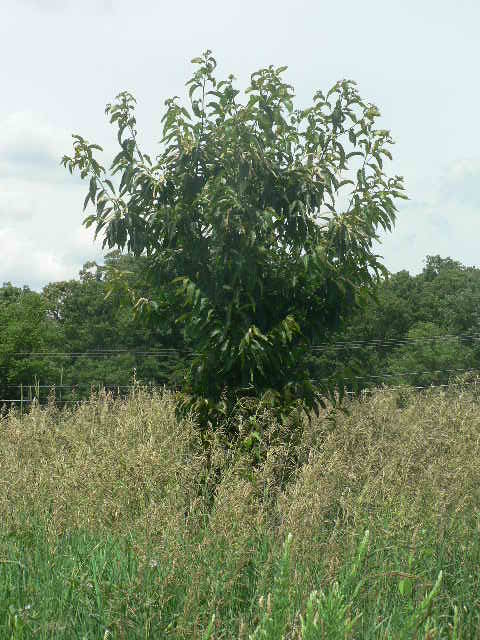
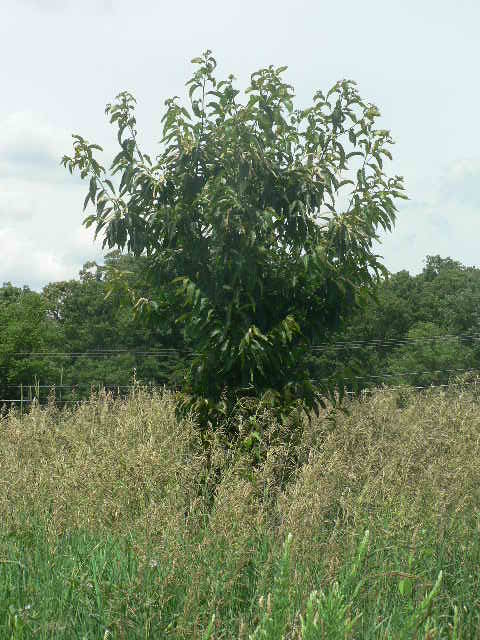
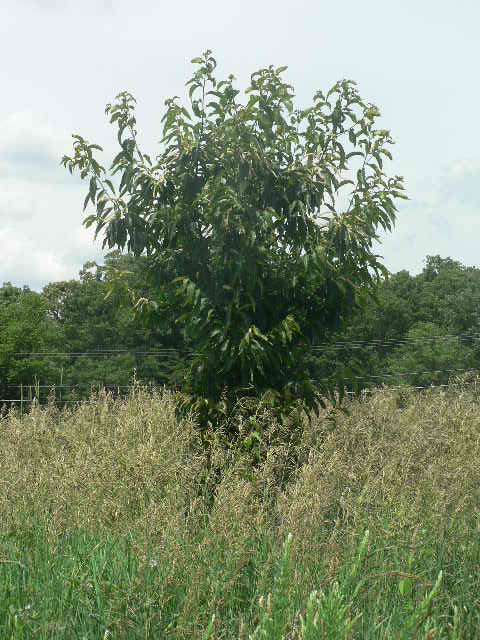
test planting of an American chestnut bred to be resistant to chestnut blight
Solutions:
USFS convene workshop of the
federal, state, National Academy, academic, and NGO groups promoting resistance
breeding in order to develop consensus on priorities and general structure of program.
Explicitly include evaluation of the
CAPTURE Project’s (see blog here) efforts to
set priorities to guide funding allocations and policies; and proposals for
providing needed supportive infrastructure – facilities, trained staff in
various disciplines. (See my blogs here.)
Report results of meeting to USDA
leadership, Congress, and stakeholders
Then ensure implementation of the
accepted approach by both Research and Development and Forest Health Protection
programs. Include provisions to provide sustainable funding.
These proposed actions still do not address ways to correct the provisions of the international phytosanitary agreements (World Trade Organization and International Plant Protection Convention) that complicate – or preclude – efforts to prevent introduction of pests currently unknown to science. This issue is discussed in Fading Forests II. A current example is beech leaf disease (described here).
Continuing
inadequate engagement by stakeholders
Most
constituencies that Americans expect to protect our forests don’t press
decision-makers to fix the problems I have identified above: inadequate
resources, weak and tardy phytosanitary measures. Some of these stakeholders
are other federal agencies, or state agencies – or their staffs. They face
restrictions on how “political” they can be. But where are the professional and scientific associations,
representatives of the wood products industry, forest landowners, environmental NGOs and their funders, urban
tree advocates Efforts by me, USDA, and others to better engage these groups
have had disappointing results.
As
I have documented, groups of USFS scientists have made several attempts to
document the extent of invasive species threats and impacts and to set
priorities. So far, they have not gained much traction. Another USFS attempt,
Poland et al. in press, will appear
at the end of the year. Will this be more successful?
I
detect growing attention to educating citizen scientists for early detection;
but if there is an inadequate – or no – official response to their efforts
won’t people become discouraged?
SOURCES
Lovett,
G.M., M. Weiss, A.M. Liebhold, T.P. Holmes,
B. Leung, K.F. Lambert, D.A. Orwig, F.T. Campbell, J. Rosenthal, D.G. McCullough,
R. Wildova, M.P. Ayres, C.D. Canham, D.R. Foster, SL. Ladeau, and T. Weldy.
2016. NIS forest insects and pathogens in the US: Impacts and policy options. Ecological
Applications, 26(5), 2016, pp. 1437–1455
National Environmental Coalition on Invasive Species “Tackling the Challenge.”
Poland,
T.M., Patel-Weynand, T., Finch, D., Miniat, C. F., and Lopez, V. (Eds) (2019),
Invasive Species in Forests and Grasslands of the United States: A
Comprehensive Science Synthesis for the United States Forest Sector. Springer Verlag. (in press).
Roy,
B.A., H.M Alexander, J. Davidson, F.T Campbell, J.J Burdon, R. Sniezko, and C.
Brasier. 2014. Increasing forest loss worldwide from P&Ps requires new
trade regulations. Front Ecol Environ 2014; 12(8): 457–465
It
is widely recognized that invasions of non-native species occur as a
consequence of international trade (see Seebens et. al. 2017 – full citations at the end of this blog). This is as
true for non-native forest pests as for any other bioinvader – see Aukema et al. 2010; Liebhold et al. 2012, Lovett et al. 2016. In fact, gross domestic product – as an indicator of levels
of trade — is a better predictor of the number of forest pest invasions in a
given country than the country’s amount of forested land (Roy et al. 2014).
shipping containers at port of Long Beach, California
As I noted in my previous blog, I began studying and writing about the threat to North America’s forests from non-native insects and pathogens in the early 1990s. I reported my analyses of the evolving threat in the three “Fading Forests” reports – coauthored by Scott Schlarbaum – in 1994, 2003, and 2014. These reports are available here.
I document here that both introduction
and spread of pests within the country have continued apace. While significant
efforts have been made to prevent introductions (described briefly under the
“Invasives 101” tab of the CISP website), they have fallen short. As I noted in
Fading Forests III, programs aimed at preventing spread of pests within the
country remain fragmented and often are unsuccessful.
The Challenge: Huge Volumes of goods are moving, providing
opportunities for pests
Since 1990, volumes of imported goods more than quintupled. Within the U.S., a total of 17,978 million tons of goods were transported in 2015; 10,776 million tons of this total by truck. About one-third of this total – 5,800 million tons – was moved farther than 250 miles. These vehicles moved on a public roads network of 4,154,727 miles (US DOT FFA). Consequently, once a pest enters the U.S., it can be moved quickly into every corner of the country.
Introductions
By and large,
establishment of tree-killing pests has occurred at a fairly steady rate of
about 2.5 per year, with “high-impact” insects and pathogens accumulating at
0.43 per year (Aukema et al. 2010). Since
introductions did not rise commensurately with rising import volumes, Lovett et al. (2016) concluded that the
recently adopted policies for preventing introductions referenced above are
having positive effects but are insufficient to reduce the influx of pests in
the face of ever-growing global trade volumes. The study’s authors went on to
say that absent more effective policies, they expect the continued increase in
trade will bring many new establishments of non-native forest pests.
One group of forest
pests did not enter at a steady rate, but rather entered at a higher rate since
1985 – wood-boring insects. Experts concluded that the increase probably
reflected increases in containerized shipping (Lovett et al. 2016). At the global level, the rate of fungal invasions has
also recently been reported to be increasing rapidly (Roy et al. 2014).
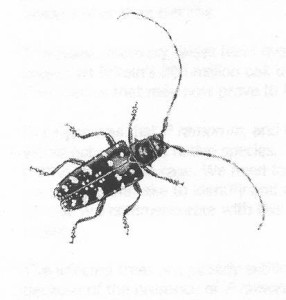
Asian longhorned beetle
Geography of trade
patterns also matters. Opening of trade with China (in 1979) offered
opportunities for pests from a new source country which has a similar climate
and biology. Roy et al. describe the importance of phylogenetic
relatedness of pests and of tree hosts in explaining tree species’ vulnerability
to introduced pests. The most vulnerable forests are those made up of species
similar to those growing in the source of the traded goods – i.e., the temperate forests of the
northeastern U.S. – when goods are imported from similar forested areas of
Europe and Asia. Chinese-origin wood-boring pests began to be detected around
1990. This already short interval probably underestimates how quickly pests
began arriving; detection methods were poor in those years, so a pest was often
present for close to a decade before detection.
Between 1980 and 2016, at least 30 non-native species of wood- or bark-boring insects in the Scolytinae / Scolytidae were newly detected in the United States (Haack and Rabaglia 2013; Rabaglia et al. 2019). Over the same period, approximately 20 additional tree pests were introduced to the continental states (Wu et al. 2017; Digirolomo et al. 2019; R. Haack, pers. comm.) plus about seven to America’s Pacific islands. Not all of the new species are highly damaging, but enough are. See my previous blog here.
Many of the tree-killing
pests were probably associated with pathways other than wood packaging. These
include 6 of the 7 Agrilus species, sudden oak death pathogen, three pests of palm trees, the
spotted lanternfly, beech leaf disease; and the pests introduced to America’s
Pacific Islands.
HIGH-RISK
PATHWAYS OF INTRODUCTION
Already
in the 1990’s it was evident that better preventing pest introductions would
depend on shutting down the variety of pathways by which they move around the
world. At that time, attention focused on imports of
logs and nursery stock (nursery stock makes up one component of a broader
category called by phytosanitary agencies “plants for planting”). Both logs and
“plants for planting” had well-established histories of transporting pests and
import volumes were expected to grow. We have since learned that there are many
more pathways!
Plants for Planting
Imports of “plants for planting” (phytosanitary agencies’ term, which encompasses nursery stock, roots, bulbs, seeds, and other plant parts that can be planted) have long been recognized as a dangerous pathway for introduction of forest pests. For example, this risk was the rationale for adopting the 1912 Plant Quarantine Act. Charles Marlatt, Chairman of USDA’s Federal Horticultural Board (see “Then and Now” in Fading Forests III here), wrote about the risk in National Geographic in April 1911 (urging adoption of the 1912 law) and again in August 1921. See also Brasier (2008), Roy et al. (2014), Liebhold et al. (2012), Jung et al. (2016).
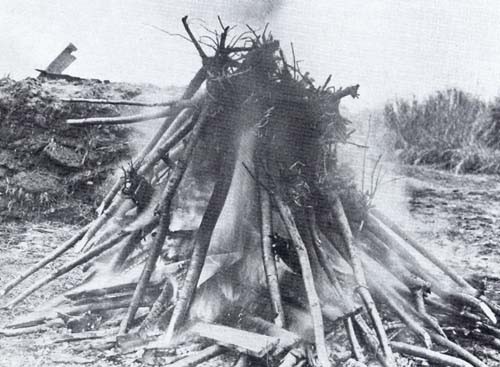
Japanese cherry trees being burned because of scale infestation January 28, 1910; Agriculture Research Service
Of the 91 most
damaging non-native forest pest species in the U.S. (Guo et al. 2019), about 62% are thought to have entered North America
with imports of live plants. These include nearly all the sap-feeding insects,
almost 90% of the foliage-feeding insects, and approximately half of the
pathogens introduced during the period 1860-2006 (Liebhold et al. 2012). Specific examples include chestnut blight, white pine
blister rust, Port-Orford-cedar root disease, balsam woolly adelgid, hemlock
woolly adelgid, beech scale, butternut canker, dogwood anthracnose, and sudden
oak death. In more recent years, introductions via this pathway possibly
include ‘ōhi‘a
rust, rapid ‘ōhi‘a death pathogens, and beech leaf disease. The gypsy
moth, while a foliage feeder, was not introduced via imports of live plants.
The
APHIS annual report for 2018 reported that in that year we imported 18,502
shipments containing more than 1.7 billion
plant units (plants, bulbs, in vitro materials, etc.).
Liebhold et al. 2012, relying on 2009 data, found that about 12 percent of incoming plant shipments had symptoms of pests – a rate more than 100 times greater than that for wood packaging. Worse, a high percentage of the pests associated with a shipment of plants is not detected by the federal inspectors. The meaning of this finding is unclear because the study did not include any plant genera native to temperate North America and APHIS points out that infestation rates varied considerably among genera in the study. However, APHIS has not conducted its own analysis to document the “slippage rate” on imports of greatest concern to forest conservationists, i.e., imports of woody plants. I provide details on pests detected on imports of woody plants in recent in my blog here.
Clearly the risk of pest introductions continued at least until recently. I reviewed an APHIS database listing pests newly detected in the country during the period 2009-2013. I concluded that approximately 37 of the 90 “new” pests listed in the database (viruses, fungi, aphids and scales, whiteflies, mites) were probably introduced via imports of plants, cuttings, or cut foliage or flowers. I discussed these matters in greater detail here.
Adoption of a new regulatory regime governing imported plants for planting (Q-37 regulation) in 2018 is too recent to for us to see its impact. But the new regulation sets up a process under which APHIS can impose more protective regulations on specific types of plants or plants from certain countries of origin to counter a perceived concerning level of risk. Until APHIS begins activating its new powers by negotiating more protective regulations governing plant imports from high-risk sources, it seems unlikely there will be any meaningful change in the introduction rates.
Crates, Pallets,
and Other Forms of wood packaging (solid wood packaging, or SWPM)
Recognition
of the risk associated with wood packaging is much more recent. In 1982, a USDA
risk assessment concluded that the wood boring insects found in crates and
pallets were not of great concern (USDA APHIS and Forest Service, 2000).
However, contradictory indications were quickly documented – including from
APHIS’ own port interception data – which the agency began collecting in 1985. Over
the 16-year period 1985-2000, 72%
of
the 6,825 bark beetles (Scolytidae)
intercepted by APHIS were found on SWPM (Haack 2002). Cerambycids (longhorned
beetles) and buprestids (jewel beetles) make up nearly 30% of insects detected
in wood packaging over the last 30 years (Haack et al. 2014).
Detection
of outbreaks of the Asian longhorned beetle and other woodborers in the
mid-1990s made it clear that wood packaging was, indeed, a high-risk pathway.
Of
the 91 most damaging non-native pest species in the US, 30% probably arrived
with wood packaging material or other wood products (Liebhold et al. 2012). This group includes many
of the most damaging pests, the deadly woodborers – Asian longhorned beetle,
emerald ash borer, redbay ambrosia beetle,
possibly the polyphagous and Kuroshio shot hole borers.
CBP agents inspecting a pallet
As noted above, introductions of wood borers have risen in recent decades, widely accepted as associated with the rapid increase in containerized shipping after 1980. In 2009 it was estimated that 75% of maritime shipments were packaged in crates or pallets made of wood (Meissner et al. 2009). A good history of the global adoption of containerized shipping is Levinson, M. The Box: How the Shipping Container Made the World Smaller and the World Economy Bigger (Princeton University Press 2008)
The simultaneous
opening of trade with China (in 1979) offered opportunities for pests from a
new source country which has a similar climate and biology. Chinese-origin wood-boring
pests began to be detected around 1990. This already short interval probably underestimates
how quickly pests began arriving; detection methods were poor in those years,
so a pest was often present for close to a decade before detection.
I have already documented numerous times that, despite the U.S.’ implementation of the International Standard of Phytosanitary Measures (ISPM) #15 in 2006, live quarantine pest woodborers continue to enter the U.S. in wood packaging. The best estimate is that 0.1% of wood packaging entering the United States is infested with wood-borers considered to be quarantine pests (Haack et al. 2014). More than 22 million shipping containers entered the U.S. via maritime trade in 2017 (US DoT). As noted, an estimated 75% of sea-borne containers include wood packaging. Applying the 0.1% estimate to these figures results in an estimate that as many as 17,650 containers per year (or 48 per day) transporting tree-killing insects enter the U.S.
Over a period of
nine years – Fiscal Years 2010 through 2018 – U.S. Customs and Border
Protection (CBP) detected more than 28,600 shipments with wood packaging that
did not comply with ISPM#15 (Harriger presentations to the annual meetings of
the Continental Dialogue on Non-Native Forest Insects and Diseases). While most
of the non-compliant shipments were wood packaging that lacked the required
mark showing treatment per ISPM#15,
in 9,500 cases the wood packaging actually harbored a pest in a regulated
taxonomic group.
Disturbingly, 97%
of the shipments that U.S. CBP found with infested wood packaging bear the
ISPM#15 mark certifying that wood had been fumigated or heat-treated (Harriger
2017). CBP inspectors tend to blame this on widespread fraud in use of the mark.
On the other hand, one study found that larvae can survive both treatments –
although the frequency of survival was not determined. It was documented that twice
as many larvae reared from wood treated by methyl bromide fumigation survived
to adulthood than larvae reared from heat-treated wood; the reason is unclear
(Nadel et al. 2016).
The APHIS’ record
of interceptions for the period FYs 2011 – 2016 contained 2,547 records for
insect detections on wood packaging. The insects belonged to more than 20
families. Families with the highest numbers of detections were Cerambycids –
25% of total; Curculionidae – 23% (includes Dendroctonus,
Ips, Orthotomicus, Scolytinae, Xyleborus, Euwallacea); Scolytidae – 17% (includes
true weevils such as elm bark beetles); Buprestids – 11%; and Bostrichidae –
3%. Not all of the insects in these groups pose a threat to North American
plant species.
One encouraging data point is that since 2010, there have been no detections of species of bark and ambrosia beetles new to North America in the traps deployed by the USDA Forest Service Early Detection and Rapid Response program (Rabaglia 2019). The 2014 recognition of the Kuroshio shothole borer apparently did not result from this trapping program.
There have been several changes in the wood packaging standard and its implementation by CBP since 2009, the year Haack et al. 2014 analyzed the “pest approach rate”. APHIS has not carried out a study to determine whether these recent changes have reduced the approach rate below Haack’s estimate of 0.01%. Consequently, we do not know whether these changes have reduced the risk of pest introductions.
Other Pathways That
Transport Fewer Pests – Some of Which Have High Impacts
Insects
that attach egg masses to hard surfaces can be transported by ship
superstructures, containers, and hardsided cargoes such as cars, steel beams,
and stone. While relatively few species have been moved in this way, some have
serious impacts. The principal examples are the gypsy moths from Asia, which
feed on 500 species of plants (Gibbon 1992).
The United States and Canada have a joint program – under the auspices of the North American Plant Protection Organization (see RSPM #33) aimed at preventing introduction of species of Asian gypsy moths. The NAPPO standard originally went into force in March 2012. Under its terms, ships leaving ports in those countries during gypsy moth flight season must be inspected and cleaned before starting their voyage.
Gypsy moth populations rise and fall periodically; it is much more likely that egg masses will be attached to ships during years of high moth population densities. These variations are seen in U.S. and Canadian detection reports – as reported here.
While most AGM detections are at West Coast ports, [here; and here] the risk is not limited to that region. AGM have been detected at Wilmington, NC; Baltimore, MD; Charleston, SC; Savanna and Brunswick, GA; Jacksonville, FL; New Orleans, LA; Houston and Corpus Christi, TX; and even McAlester, OK.
Nor is the risk limited to the ships themselves. In 2014, more than 500 Asian gypsy moth egg masses were found on four shipments of imported steel slabs arriving at ports on the Columbia River in Washington.
Between 1991 and 2014, AGM was detected and eradicated
on at least 20 occasions in locations across the United States (USDA AGM pest
alert). Additional outbreaks have been discovered and eradication efforts
undertaken in more recent years.
A second example is
the spotted lanternfly (SLF) (Lycorma delicatula), which was first
detected in southeast Pennsylvania in autumn 2014. It is native to Asia; it is
believed to have entered the country as egg masses on imported stone.
While SLF is
clearly a pest of agriculture – especially grapes and tree fruits – its
importance as a forest pest is still unclear. Many native forest trees appear
to be hosts during the insect’s early stages, including maples, birches,
hickories, dogwoods, beech, ash, walnuts, tulip tree, tupelo, sycamore, poplar,
oaks, willows, sassafras, basswood, and elms. Adult lanternflies strongly
prefer the widespread invasive species tree of heaven (Ailanthus altissima).
As of August 2019, SLF was established in parts of five states: Delaware, Maryland, New Jersey, Pennsylvania, and Virginia. It was detected as having spread to a 14th county in Pennsylvania; five new counties in New Jersey. APHIS is working with state departments of Agriculture in these states, as well as supporting surveys in New York, North Carolina, and West Virginia (USDA APHIS DA-2019-20, August 7, 2019). Apparently the detections of a few adults – alive or dead – in Connecticut and New York had not evolved into an outbreak. See description and map here.
Imports of logs – roundwood – seem inherently risky. Certainly Dutch elm disease was introduced via this pathway. However, there have been few pest introductions linked to this pathway in recent years, probably because we import most of our unprocessed lumber from Canada. (I provide considerable data on U.S. roundwood imports in Fading Forests III here.)
Decorative items and furniture made of unprocessed wood certainly have the potential to transport significant pests (USDA APHIS 2007). Examples include boxes and baskets; wood carvings; birdhouses; artificial Christmas trees or other plants; trellises; lawn furniture. To date, apparently, no high-impact pest has been introduced via this pathway, although pests intercepted on shipments have included Cerambycids from Asia, e.g., velvet longhorned beetle and here.
Alarmed by high numbers of infested shipments from China, APHIS first suspended imports of such items temporarily; then adopted a regulation (finalized in March 2012 – USDA APHIS 2012).
APHIS
has not taken action to prevent introductions on such items imported from other
countries – although the North American Plant Protection Action adopted a
regional standard making the case for such action and outlining a risk-based
approach (NAPPO RSPM#38).
Snails on Shipping
Containers
Snails have been
detected on shipping containers and wood packaging for decades. In 2015, APHIS
stepped up its efforts to address this risk through bilateral negotiations with
Italy and launching regional and international efforts to develop guidance for
ensuring pest-free status of shipping containers (Wendy Beltz, APHIS, presentation
to National Plant Board, 2018 annual meeting).
SPREAD
WITHIN THE UNITED STATES
Major pathways for human-assisted spread of pests within the country are sales of plants for planting, movement of unprocessed wood – especially firewood, and hitchhiking on transport vehicles. Since most forest pests are not subject to federal quarantine, any regulatory programs aimed at preventing spread depend on cooperation among the 50 states. None of these pathways is regulated adequately to prevent pests’ spread. See Chapter 5 of Fading Forests III here.
And since neither
federal nor state agencies do significant enforcement of existing regulations,
preventing spread often depends upon pest awareness of, and voluntary
compliance by, individuals and companies.
Even pests subject to a federal quarantine are not prevented from spreading. Plants exposed to the sudden oak death pathogen were shipped to 18 states in spring 2019.
SOD-infected rhododendron plant; Indiana Department of Natural Resources
A collaborative effort by the nursery industry, APHIS, and states (Systems Approach to Nursery Certification, or SANC) is striving to close gaps linked to the standard practice of inspecting plants at the time of shipping, but full implementation of this voluntary program is still years away.
Transport of firewood has been responsible for movement of pests both short distances, e.g., goldspotted oak borer in southern California; and long distances – e.g., emerald ash borer to Colorado. APHIS attempted to develop a certification program but the industry was unable to put one together (see Chapter 5 of Fading Forests III). Current federal and state regulations of firewood are tied to the emerald ash borer quarantine, which APHIS has proposed to terminate. Wood for turning and woodworking has also been linked to movement of pests, e.g., walnut twig beetle/thousand cankers disease from the west to Pennsylvania.
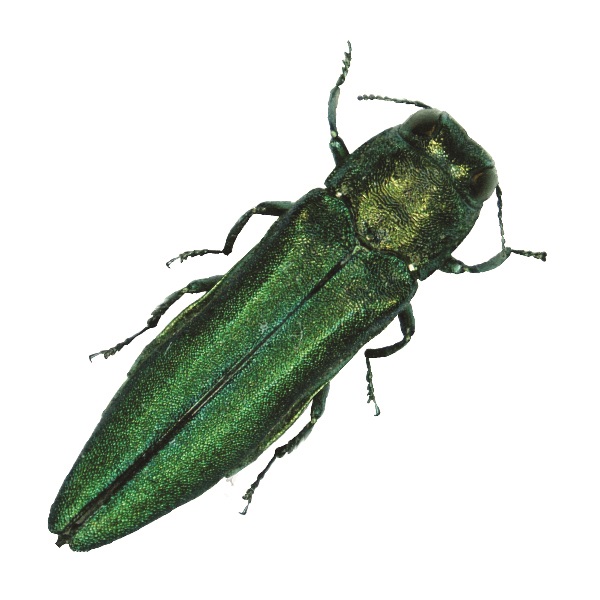
emerald ash borer
Truck transport of a
variety of goods has transported European gypsy moths from the infested areas
in the east to the west coast. Transport of stone probably moved spotted
lanternfly from southeastern Pennsylvania to Winchester, Virginia.
SOURCES
Aukema, J.E., D.G. McCullough, B. Von
Holle, A.M. Liebhold, K. Britton, & S.J. Frankel. 2010. Historical
Accumulation of Nonindigenous Forest Pests in the Continental United States.
Bioscience. December 2010 / Vol. 60
No. 11
Brasier, C.M. 2008. The biosecurity
threat to the UK and global environment from international trade in plants. Plant Pathology (2008) 57, 792-808
Bray, A.M., L.S. Bauer, T.M. Poland,
R.A. Haack, A.I. Cognato, J.J. Smith. 2011. Genetic analysis of emerald ash
borer (Agrilus planipennis Fairmaire)
populations in Asia and North America. Biol. Invasions (2011) 13:2869-2887
Gibbon,
A. 1992. “Asian Gypsy Moth Jumps Ship to United States.” Science.
Vol. 235. January 31, 1992.
Haack R. A. and J.F. Cavey. 1997.
Insects Intercepted on Wood Articles at United States Ports-of-Entry and Two
Recent Introductions: Anoplophora
glabripennis and Tomicus piniperda.
In press in International forest insect workshop proceedings, 18 – 21
August 1997, Pucon, Chile. Corporacion National Forestal, Santiago, Chile.
Haack, R.A., F. Herard, J. Sun, J.J.
Turgeon. 2010. Managing Invasive Populations of Asian Longhorned Beetle and
Citrus Longhorned Beetle:A Worldwide Perspective. Annu. Rev. Entomol. 2010.
55:521-46.
Haack,
R.A. and R.J. Rabaglia. 2013. Exotic Bark and Ambrosia Beetles in the USA:
Potential and Current Invaders. CAB International 2013. Potential Invasive
Pests of Agricultural Crops (ed. J. Peña)
Haack R.A., Britton K.O., Brockerhoff, E.G., Cavey, J.F.,
Garrett., L.J., 2014. Effectiveness of the International Phytosanitary Standard
ISPM No. 15 on Reducing Wood Borer Infestation Rates in Wood Packaging Material
Entering the United States. PLoS ONE 9(5): e96611.
doi:10.1371/journal.pone.0096611
Haack,
R.A., F. H´erard, J. Sun, and J.J. Turgeon. 2010. Managing Invasive Populations
of Asian Longhorned Beetle and Citrus Longhorned Beetle: A Worldwide
Perspective. Annu. Rev. Entomol. 2010. 55:521–46
Harriger, K. Department of Homeland Security Bureau of
Customs and Border Protection, presentation to the Continental Dialogue on
Non-Native Forest Insects and Diseases, November 2017.
Jung T, Orlikowski L, Henricot B, et al. 2016. Widespread
Phytophthora infestations in European nurseries put forest, semi-natural and
horticultural ecosystems at high risk of Phytophthora diseases. Forest
Pathology 46: 134–163.
Liebhold, A.M., E.G. Brockerhoff, L.J. Garrett, J.L.Parke, and K.O Britton.
2012. Live plant inports: the major pathway for forest insect and pathogen invasions of the US. Frontiers in
Ecology.
Lovett, G.M., M. Weiss, A.M. Liebhold, T.P. Holmes, B.
Leung, K.F. Lambert, D.A. Orwig, F.T.
Campbell, J. Rosenthal, D.G. McCullough, R. Wildova, M.P. Ayers, C.D. Canham,
D.R. Foster, S.L. LaDeau, and T. Weldy. 2016.
Non-native forest insects and pathogens in the United States: Impacts
and policy options. Eological
Applications, 26(5) pp. 1437-1455.
Meissner, H., A. Lemay, C. Bertone, K. Schwartzburg, L.
Ferguson, and L. Newton. 2009. EVALUATION OF PATHWAYS FOR EXOTIC PLANT PEST
MOVEMENT INTO AND WITHIN THE GREATER CARIBBEAN REGION. Caribbean Invasive
Species Working Group (CISWG) and Plant Epidemiology and Risk Analysis
Laboratory (PERAL) / CPHST. June 4, 2009
Morin, R. presentation at Northeastern Forest Pest Council 81st Annual
Meeting, March 12 – 14, 2019, West
Chester, Pennsylvania
Nadel, N., S. Myers, J. Molongoski, Y.
Wu, S. Linafelter, A. Ray S. Krishnankutty, and A. Taylor. 2016.
Identificantion of Port Interceptions in Wood Packaging Material: Cumulative
Progress Report, April 2012 – August 2016
Rabaglia,
R.J., A.I. Cognato, E. R. Hoebeke, C.W. Johnson, J.R. LaBonte, M.E. Carter, and
J.J. Vlach. 2019. Early Detection and Rapid Response. A Ten-Year Summary of the
USDA Forest Service Program of Surveillance for Non-Native Bark and Ambrosia
Beetles. American Entomologist Volume 65, Number 1
Roy, B.A., H.M. Alexander, J. Davidson,
F.T. Campbell, J.J. Burdon, R. Sniezko, and C. Brasier. 2014. Frontiers in Ecology 12(8): 457-465
U.N. Food and Agriculture Organization International
Plant Protection Convention. 2012. International Standards for Phytosanitary Meaures
No. 36 Integrated Measures for Plants for planting. Rome. Online at
https://www.ippc.int/ Accessed December
7, 2012.
United States Department of Agriculture
Animal and Plant Health Inspection Service and Forest Service, 2000. Pest Risk
Assessment for Importation of Solid Wood Packing Materials into the United
States.
United States Department of Agriculture Animal and
Plant Health Inspection Service 2009. Proposed Rule Importation of plants for
planting: establishing a category of plants for planting not authorized for
importation pending pest risk assessment. Federal
Register 74(140): 36403-36414 July 23, 2009.
United
States Department of Agriculture Animal and Plant Health Inspection Service 7
CFR Parts 318, 319, 330, 340, 360, and 361. Federal Register Rules and
Regulations Vol. 83, No. 53. Monday, March 19, 2018
United States Department of Agriculture Animal and
Plant Health Inspection Service 2007. Pests and
mitigations for manufactured wood décor and craft products from China for
importation into the United States. Revision 6. July.
United States Department of Agriculture Animal and
Plant Health Inspection Service. 2012. Importation of wooden handicrafts from
China. Final rule. Federal Register 77(41):
12437-12444. March 1. Online at http://www.gpo.gov/fdsys/pkg/FR-2012-03-01/pdf/2012-4962.pdf.
Accessed August 2, 2013.
United
States Department of Transportation Bureau of Transportation Statistics Freight
Facts and Figures
United States Department of Transportation, Maritime
Administration, U.S. Waterborne Foreign Container Trade by U.S. Customs Ports
(2000 – 2017) Imports in Twenty-Foot Equivalent Units (TEUs) – Loaded
Containers Only
Williams, L.H. and J.P. La Fage. 1979.
Quarantine of Insects Infesting Wood in International Commerce. in J.A.
Rudinksy, ed. Forest Insect Survey and Control Fourth Edition 1979
Wu,Y.,
N.F. Trepanowski, J.J. Molongoski, P.F. Reagel, S.W. Lingafelter, H. Nadel1,
S.W. Myers & A.M. Ray. 2017. Identification of wood-boring beetles
(Cerambycidae and Buprestidae) intercepted in trade-associated solid wood
packaging material using DNA barcoding and morphology Scientific Reports 7:40316
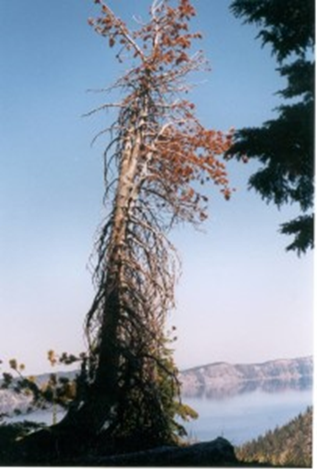
dead whitebark pine in Crater Lake National Park photo by F.T. Campbell
I began studying and writing about the threat to North America’s forests from non-native insects and pathogens in the early 1990s – nearly 30 years ago. I reported my analyses of the evolving threat in the three “Fading Forests” reports – coauthored by Scott Schlarbaum – in 1994, 2003, and 2014. These reports are available here.
So what has changed over those 30 years? What remains the same? Why have both the changes and the stasis occurred? What can we do to fix the gaps, close unaddressed pathways, strengthen flabby policies? I will address these issues in this and following blogs.
experimental American chestnut planted in Fairfax County, VA photo by F.T. Campbell
What has changed
since the early 1990s:
Adoption and implementation of significant new international and national regulations and programs aimed at preventing introductions of non-native invasive species.
Despite the welter of new regulations, an alarming increase in numbers of highly damaging forest pests established in the country. (By my count, about 50 new species have established on the continent, six on Pacific islands; see details below.)
Alarming spread of established pests to new geographic regions and new hosts (e.g., emerald ash borer in 35 states and 5 provinces; laurel wilt disease across the range of redbay and swamp bay; rapid ‘ōhi‘a death on three of the main Hawaiian islands).
Introductions via unexpected pathways and vectors far removed from phytosanitary agencies’ usual targets, e.g., ship superstructures, imported steel and stone …
What has remained the
same since the early 1990s:
Inadequate
resources provided to response and recovery efforts.
Available
funding focused on only a few of the more than 90 species causing damage.
Adoption
of insufficiently protective regulations that have failed to prevent
introduction and spread of tree-killing pests.
Lengthy
delays in implementing programs that tighten controls – another factor in
continuing introductions and spread.
Continued
importance of expected pathways – nursery stock and raw wood, especially
crates, pallets, and other forms of wood packaging.
Federal
and state agencies still choose not to take action on pests e.g., goldspotted oak borer, polyphagous
and Kuroshio shothole borers, beech leaf disease.
Inadequate
coordination despite several efforts to set priorities.
Spurts
of attention by media and political decision-makers, contrasted by lengthy
periods of inattention.
Failure
of most stakeholders to support efforts to prevent and respond to introductions
of tree-killing pests.
Details: The Situations
Then and Now
(Many of the individual species mentioned here are described more fully here. Full citations of sources are at the end of blog.)
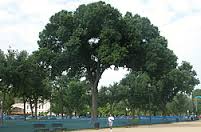
American elm on the National Mall, Washington, D.C.
photo by USDA Agricultural Research Service
In 1993:
The number of non-native forest pest species established in the U.S. was estimated at between 300 (Millers et al. 1993) and 380 (Mattson et al., 1994; Liebhold et al., 1995) .
The area suffering the greatest numbers and impacts was the Northeast.
Several highly damaging pests that had been established for decades, including chestnut blight, white pine blister rust, Port-Orford-cedar root disease, Dutch elm disease, hemlock woolly adelgid, butternut canker, and dogwood anthracnose were receiving some attention but continued to spread.
USDA Forest Service funding for management of exotic pest infestations was crisis-oriented, with “… priorities … set under political pressures for immediate answers, with too much regard for short-term problems and too little consideration for broader management objectives.” (NAS 1975)
Since few high-profile pests had been introduced in recent years, APHIS was not actively engaged. In FY92, APHIS spent $20 million on efforts to eradicate the Asian gypsy moth. The narrow focus is illustrated by the fact that in FY93, more than two-thirds of all USDA tree pest control funds were devoted to efforts to suppress or eradicate the European gypsy moth (See FFI).
Concern about possible new introductions had grown; it focused on proposals to import unprocessed wood from Siberia, New Zealand, and Chile. The USDA Forest Service, academic scientists, and therefore APHIS emphasized the risks of known Asian pests, e.g., Asian gypsy moth, to western coniferous forests (See FFI). While individual scientists had expressed concern about wood packaging material, there was little public discussion of this threat.
We would learn later that several of the most damaging pests were already present in the country but not yet recognized – Asian longhorned beetle, sudden oak death pathogen, probably emerald ash borer.
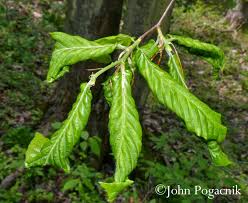
beech leaf disease
photo by John Pogacnik
In 2019:
Numbers of non-native insects and pathogens attacking trees in North America approach 500 species. (In Fading Forests III, I calculated that by the first decade of the 21st Century, the number had risen to at least 475. Several more have been detected since 2014. More than 181 exotic insects that feed on woody plants had established in Canada. (Source: USDA APHIS. 2000. Wood packaging risk assessment.)
Of these, 91 are considered “serious” threats (Guo et al. 2019). This estimate excludes pests native to portions of North America that are causing severe damage in naïve hosts – e.g., goldspotted oak borer; pests of palms; and pests attacking trees on U.S. Pacific and Caribbean islands.
Introductions had continued.
Between 1980 and 2016, at least 30 non-native species of wood- or bark-boring insects (Scolytinae / Scolytidae) were newly detected in the U.S. (Haack and Rabaglia 2013; Rabaglia et al. 2019). A few of these are highly damaging, e.g. redbay ambrosia beetle, polyphagous and Kuroshio shothole borers.
In addition to these 30 new pests, other highly damaging tree-killing pests probably introduced since the 1980s include (on the continent):
Eight Cerambycids such as Asian longhorned beetle (Wu et al. 2017)
7 Agrilus, including emerald ash borer and soapberry borer; plus goldspotted oak borer transported from Arizona to California (Digirolomo et al. 2019; R. Haack, pers. comm.)
Sirex woodwasp
Pests of palm trees, e.g., red palm mite, red palm weevil, South American palm weevil
Spotted lanternfly
Beech leaf disease
Also not included in the above estimate and lists are tree-killing pests on America’s Pacific Islands :
‘ōhi‘a rust
Cycad scale
Cycad blue betterfly
Erythrina gall wasp
two Ceratocystis pathogens that cause rapid ‘ōhi‘a death
Coconut rhinoceros beetle
Authorities also carried out approximately 25 eradication programs targetting introductions of the Asian gypsy moth (USDA Pest Alert Asian Gypsy Moth plus additional outbreaks since 2014).
Impacts of exacerbated tree mortality rates linked to these introduced pests are seen across wide swaths of the country, and affect widespread species, genera, and families.
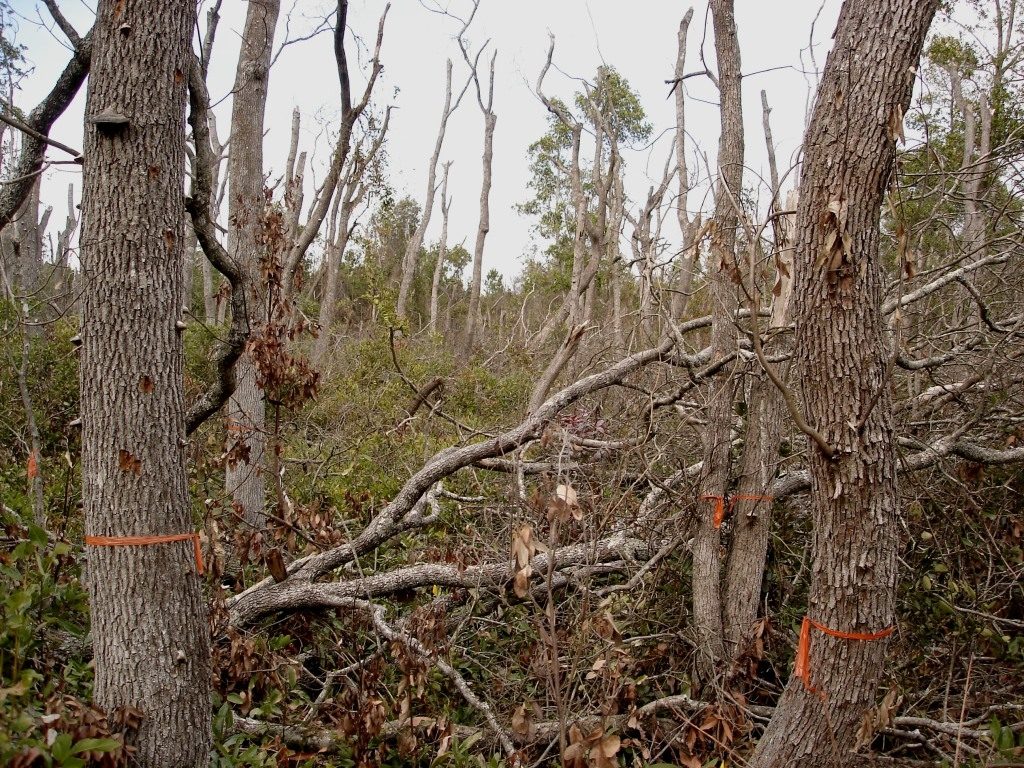
dead redbay in Claxton, Georgia photo by Scott Cameron
I will discuss the risk of continuing new introductions in a separate blog.
Trying to Develop
the Big Picture and Set Priorities
In
recent years, USDA Forest Service scientists have made several attempts to
provide nation-wide assessments of the impact of these pests and criteria for
establishing priorities.
The
National Insect and Disease Forest Risk Assessment predicted the loss of basal
area to various pests over the 15-year time period 2012 – 2027. The assessment
predicted the following losses for specific species: 90% for redbay; 60% for whitebark
pine; more than 40% for limber pine; 24% for tanoak; 11% for coast live oak; 6%
for eastern and Carolina hemlock; 27% for eight species of ash; 20% for
American elm; 19% for red oak; 18% for American beech (Krist et al. 2014).
A separate group of scientists found that, nation-wide, non-native forest pests are causing an approximate 5% increase in total mortality by tree volume (Randy Morin at NEFPC). For details on Dr. Morin’s findings, see my blog here.
A third approach to developing a nation-wide picture, Project CAPTURE, (and my blog here) utilized FIA data to develop priorities for conservation action. Fifteen species were placed in the highest priority category, including Florida torreya (Torreya taxifolia), American chestnut and Allegheny and Ozark chinquapins, redbay, five species of ash, two species of hemlock, Port-Orford cedar, tanoak, and butternut (Potter et al. 2019(b).
According
to Project CAPTURE, the non-native pests affecting the largest number of hosts
are the European gypsy moth, which attacks 65 hosts; and oak wilt (Bretziella fagacearum), which infects 61
hosts. The Asian longhorned beetle attacks 43 hosts (Potter et al. 2019(b).
I note that several other non-native pests also have high numbers of host species. In the Project CAPTURE study, these pests are ranked lower because the project limited its evaluation to the five agents with the greatest effect on any particular host. Thus, of the 18 native tree species that host one or both of the invasive shothole borers and associated Fusarium disease complex (PSHB website), the project included only six. Of the 22 tree species listed by APHIS as hosts of Phytophtora ramorum, the project included 12 (K. Potter, pers. comm. April 17, 2019).
SOD-killed tanoak on the Big Sur peninsula, California photo by Matteo Garbelotto, University of California Berkeley
More extensive discussions of
non-native pests’ impacts are provided in Lovett et al. 2006, Lovett et al.
2016, and Potter et al. 2019. A
book-length discussion of invasive species impacts – ranging from feral hogs to
invasive plants, is expected in December; look for Poland et al. (in press).
SOURCES
Aukema,
J.E., D.G. McCullough, B. Von Holle, A.M. Liebhold, K. Britton, & S.J.
Frankel. 2010. Historical Accumulation of Nonindigenous Forest Pests in the
Continental United States. Bioscience. December
2010 / Vol. 60 No. 11
Digirolomo, M.F., E. Jendek, V.V. Grebennikov, O. Nakladal. 2019. First North American
record of an unnamed West Palaearctic Agrilus (Coleoptera:
Buprestidae) infesting European beech (Fagus sylvatica) in New York
City, USA. European Journal of
Entomology. Eur. J.
Entomol. 116: 244-252, 2019
Guo,
Q., S. Fei, K.M. Potter, A.M. Liebhold, and J. Wenf. 2019. Tree diversity
regulates forest pest invasion. Proceedings of the National Academy of Sciences
of the United States of America. www.pnas.org/cgi/doi/10.1073/pnas.1821039116
Haack,
R.A. and R.J. Rabaglia. 2013. Exotic Bark and Ambrosia Beetles in the USA:
Potential and Current Invaders. CAB International 2013. Potential Invasive
Pests of Agricultural Crops (ed. J. Peña)
Krist,
F.J. Jr., J.R. Ellenwood, M.E. Woods, A. J. McMahan, J.P. Cowardin, D.E. Ryerson,
F.J. Sapio, M.O. Zweifler, S.A. Romero 2014. National Insect and Disease Forest
Risk Assessment. United States Department of Agriculture Forest Service Forest
Health Technology Enterprise Team FHTET-14-01
Leung,
B., M.R. Springborn, J.A. Turner, E.G. Brockerhoff. 2014. Pathway-level risk
analysis: the net present value of an invasive species policy in the US. The
Ecological Society of America. Frontiers of Ecology.org
Liebhold, A. M., W. L. MacDonald, D. Bergdahl, and V. C. Mastro. 1995. Invasion by exotic forest pests: a threat to forest ecosystems. Forest Sci., Monograph 30. 49 pp.
Lovett,
G.M., C.D. Canham, M.A. Arthur, K.C. Weathers, and R.D. Fitzhugh. Forest
Ecosystem Responses to Exotic Pests and Pathogens in Eastern North America. BioScience
Vol. 56 No. 5 (May 2006)
Lovett,
G.M., M. Weiss, A.M. Liebhold, T.P. Holmes,
B. Leung, K.F. Lambert, D.A. Orwig, F.T. Campbell, J. Rosenthal, D.G.
McCullough, R. Wildova, M.P. Ayres, C.D. Canham, D.R. Foster, SL. Ladeau, and
T. Weldy. 2016. NIS forest insects and pathogens in the US: Impacts and policy
options. Ecological Applications, 26(5), 2016, pp. 1437–1455
Mattson,
W. J., P. Niemela, I. Millers, and Y. Ingauazo.
1994. Immigrant phytophagous insects on woody plants in the United
States and Canada: an annotated list.
USDA For. Ser. Gen. Tech. Rep. NC-169, 27 pp.
Millers, I. United States
Department of Agriculture, Forest Service Entomologist, Forest Health
Protection Northeastern Area State and Private Forestry. Durham, NH. Personal
communication to F.T. Campbell, 1993.
Morin, R. presentation at Northeastern Forest Pest Council 81st Annual
Meeting, March 12 – 14, 2019, West
Chester, Pennsylvania
National Academy of Sciences. 1975. Forest Pest Control. Washington, D.C.
Poland,
T.M., Patel-Weynand, T., Finch, D., Miniat, C. F., and Lopez, V. (Eds) (2019),
Invasive Species in Forests and Grasslands of the United States: A
Comprehensive Science Synthesis for the United States Forest Sector. Springer Verlag. (in press).
Potter,
K.M., M.E. Escanferla, R.M. Jetton, and G. Man. 2019. Important Insect and
Disease Threats to US Tree Species and Geographic Patterns of Their Potential
Impacts. Forests 2019, 10, 304.
Potter,
K.M., Escanferla, M.E., Jetton, R.M., Man, G., Crane, B.S. 2019. Prioritizing
the conservation needs of US tree spp: Evaluating vulnerability to forest insect
and disease threats, Global Ecology and Conservation (2019), doi:
https://doi.org/10.1016/
Rabaglia,
R.J., A.I. Cognato, E. R. Hoebeke, C.W. Johnson, J.R. LaBonte, M.E. Carter, and
J.J. Vlach. 2019. Early Detection and Rapid Response. A Ten-Year Summary of the
USDA Forest Service Program of Surveillance for Non-Native Bark and Ambrosia
Beetles. American Entomologist Volume 65, Number 1
U.S.
Department of Agriculture, Animal and Plant Health Inspection Service. 2009.
Risk analysis for the movement of wood packaging material (WPM) from
Canada into the US.
Wu,Y.,
N.F. Trepanowski, J.J. Molongoski, P.F. Reagel, S.W. Lingafelter, H. Nadel1,
S.W. Myers & A.M. Ray. 2017. Identification of wood-boring beetles
(Cerambycidae and Buprestidae) intercepted in trade-associated solid wood
packaging material using DNA barcoding and morphology Scientific Reports 7:40316
frogs in California killed by chytrid fungus photo by Rick Kyper, US Fish and Wildlife Service
I expect you have heard about the report issued on May 6 by the Intergovernmental Science-Policy Platform on Biodiversity and Ecosystem Services. The executive summary is available here
Based on thousands of scientific
studies, the report concludes that the biosphere, upon which humanity as a whole
depends, is being altered to an unparalleled degree across all spatial scales. The
trends of decline are accelerating. As many as 1 million species (75% of which are
insects) are threatened with extinction, many within decades.
Humans dominate Earth: natural
ecosystems have declined by 47% on average. Especially hard-hit are inland
waters and freshwater ecosystems: only 13% of the wetland present in 1700
remained by 2000. Losses have continued rapidly since then.
The report lists the most important
direct drivers of biodiversity decline – in descending order – as habitat loss
due to changes in land and sea use; direct exploitation of organisms; climate
change; pollution; and invasive species. The relative importance of each driver
varies across regions.
If you have been paying attention, these
conclusions are not “news”.
However, the report serves two valuable
purposes. First, it provides a global overview, a compilation of all the data
and trends. Second, the report ties the direct drivers to underlying causes
which are in turn underpinned by societal values and behaviors. Specifically
mentioned are production and consumption patterns, human population dynamics
and trends, trade, technological innovations, and governance (decision making
at all levels, from local to global).
The report goes to great lengths to
demonstrate that biological diversity and associated ecosystem services are
vital for human existence and good quality of life – especially for supporting
humanity’s ability to choose alternative approaches in the face of an uncertain
future. The report concludes that while more food, energy and materials than
ever before are now being supplied to people, future supplies are undermined by
the impact of this production and consumption on Nature’s ability to provide.
The report also emphasizes that both the
benefits and burdens associated with the use of biodiversity and ecosystem
services are distributed and experienced inequitably among social groups,
countries and regions. Furthermore, benefits provided to some people often come
at the expense of other people, particularly the most vulnerable. However, there are also synergies – e.g., sustainable agricultural practices
enhance soil quality, thereby improving productivity and other ecosystem
functions and services such as carbon sequestration and water quality
regulation.
The report contains vast amounts of data
on the recent explosion of human numbers and – especially – consumption – of
agricultural production, fish harvests, forest products, bioenergy production …
and on the associated declines in “regulating” and “non-material contributions”
ecosystem services. In consequence, the report concludes, these recent gains in
material contributions are often not sustainable.
While invasive species rank fifth as a
causal agent of biodiversity decline globally, alien species have increased by
40% since 1980, associated with increased trade and human population dynamics
and trends. The authors report that nearly 20% of Earth’s surface is at risk of
bioinvasion. The rate of invasive species introduction seems higher than ever
and shows no signs of slowing.
The report notes that the extinction
threat is especially severe in areas of high endemism. Invasive species play a
more important role as an extinction agent in many such areas, especially
islands. However, some bioinvaders also have devastating effects on mainlands;
the report cites the threat of the pathogen Batrachochytrium
dendrobatidis to nearly 400 amphibian species worldwide.
The report also mentions that the combination
of species extinctions and transport of species to new ecosystems is resulting
in biological communities – both managed and unmanaged — becoming more similar
to each other — biotic homogenization.
The report notes that human-induced
changes are creating conditions for fast biological evolution of species in all
taxonomic groups. The authors recommend adopting conservation strategies
designed to influence evolutionary trajectories so as to protect vulnerable species
and reduce the impact of unwanted species (e.g.,
weeds, pests or pathogens).
The report says conservation efforts
have yielded positive outcomes – but they have not been sufficient to stem the
direct and indirect drivers of environmental deterioration. Since 1970, nations
have adopted six treaties aimed at protection of nature and the environmental,
but few of the strategic objectives and goals adopted by the treaties’ parties
are being realized. One objective that is on track to partial achievement is
the Aichi Biological Diversity Target that calls for identification and
prioritization of invasive species.
That might well be true – but I would not consider global efforts to manage invasive species to be a success story in any way. I have blogged often about studies showing that introductions continue unabated … and management of established bioinvaders only rarely results in measurable improvements. [For example, see here and here.]
The report gives considerable attention
to problems caused by some people’s simultaneous lack of access to material
goods and bearing heavier burden from pollution and other negative results of
biodiversity collapse. Extraction of living biomass (e.g. crops, fisheries) to meet the global demand is highest in
developing countries whereas material consumption per capita is highest in developed countries. The report says that
conservation of biodiversity must be closely linked to sustainable approaches
to more equal economic development. The authors say both conservation and economic
goals can be achieved – but this will require transformative changes across
economic, social, political and technological factors.
One key transformation is changing
people’s conception of a good life to downplay consumption and waste. Other
attitudinal changes include emphasizing social norms promoting sustainability
and personal responsibility for the environmental impacts of one’s consumption.
Economic measures and goals need to address inequalities and integrate impacts
currently considered to be “economic externalities”. The report also calls for inclusive
forms of decision-making and promoting education about the importance of
biodiversity and ecosystem services.
Economic instruments that promote
damaging, unsustainable exploitation of biological resources (or their damage
by pollution) include subsidies, financial transfers, subsidized credit, tax
abatements, and commodity and industrial goods prices that hide environmental
and social costs. These need to be changed.
Finally, limiting global warming to well
below 2oC would have multiple co-benefits for protecting
biodiversity and ecosystem services. Care must be exercised to ensure that large-scale
land-based climate mitigation measures, e.g.,
allocating conservation lands to bioenergy crops, planting of monocultures,
hydroelectric dams) do not themselves cause serious damage to biodiversity or
other ecosystem services.
The threats to biodiversity and
ecosystem services are most urgent in South America, Africa and parts of Asia. North
America and Europe are expected to have low conversion to crops and continued
reforestation.
Table SPM.1 lays out a long set of approaches
to achieve sustainability and possible actions and pathways for achieving them.
The list is not exhaustive, but rather illustrative, using examples from the
report.
Posted by Faith Campbell
We
welcome comments that supplement or correct factual information, suggest new
approaches, or promote thoughtful consideration. We post comments that disagree
with us — but not those we judge to be not civil or inflammatory.
Photo of infested cactus at Cabo Rojo National Wildlife Refuge, Puerto Rico. Taken August 20, 2018 by Yorelyz Rodríguez-Reyes
Three and a half years ago, I blogged about the threat to columnar cacti in Puerto Rico from the Harrisia cactus mealybug. The mealybug clearly threatens the endemic cacti of the Caribbean islands, and possibly some of the hundreds of other columnar cacti growing across two million square miles of desert ecosystems that straddle the U.S.-Mexico border region.
I am pleased to report that scientists continue efforts to find biocontrol agents to reduce this insect’s damage on Caribbean islands. Much of this work is being done by the Center for Excellence in Quarantine and Invasive Species at University of Puerto Rico. The team consists of Michael West Ortiz, Yorelys Rodrígues Reyes, Ferdinand Correa and Jose Carlos Verle Rodrigues.
As of February 2019, the Center is conducting host specificity tests on a primary parasitoid of the Harrisia Cactus mealybug — Anagyrus cachamai. This wasp was found as a result of almost a decade of searching in South America and other locations. It is native to Argentina and Paraguay (Triapitsyn et al. 2018; sources listed at the end of the blog).The Center also continues surveys and studies of other primary and secondary parasitoids of the mealybug.
The work to develop a biocontrol agent for the
mealybug continues despite continuing uncertainty about the true species of the mealybug. At the time
of its discovery on Puerto Rico, the mealybug was believed to belong to a
species used as a biocontrol agent for invasive cacti in Australia and South
Africa, designated as Hypogeococcus
pungens.
However, H. pungens is now thought to
be a species complex, and the species in Puerto Rico differs from the earlier
designation (Triapitsyn et al.
2018).
Apparently
the mealybug was introduced in Puerto Rico around 2000 — probably on the ornamental common
purslane (Portulaca olerácea), an
annual succulent. (Note: the
introduction was on a host different from the vulnerable cacti.) Within five
years of the first detection in San Juan, the mealybug was sighted on cacti on
the other side of the island in the Guánica State Forest and Biosphere Reserve.
By 2010, the mealybug was widely distributed in most dry districts. Surveys
found it in all 11 municipalities surveyed in southern Puerto Rico. At some
locations, infestation levels were extremely high – e.g., 86% of stems surveyed were infested at Guánica. Infestation
rates were lower in other municipalities. As of 2010, infestations were
estimated to be present on about 1,400 km2 on the southern coast;
the rate of new infestations suggests that the mealybug was spreading rapidly
(Segarra-Carmona et al. 2010). I have been unable to obtain more recent
estimates.
The
mealybug impacts seven of 14 native cactus species occurring in dry forests of
the island, including three endemic and two endangered species in the subfamily
Cactoideae. The two endangered species are Harrisia
portoricensis and Leptocereus grantianus (USDA ARS). The tissue
damage caused by the mealybug interferes with sexual reproduction and can cause
direct mortality of the plant (Triapitsyn et
al. 2018). These
cacti provide food or shelter for endemic bats, birds, moths and other
pollinators (Segarra & Ramirez; USDA ARS). The mealybug is also now killing
native cacti on the U.S. Virgin Islands (H. Diaz-Soltero pers. comm. August
2015).
USDA Funds Conservation Efforts Despite
Apparent Absence of a Constituency Calling for Such Action
Efforts
to identify and test possible biocontrol agents targetting the Harrisia cactus
mealybug received significant funds from the Plant
Pest and Disease Management and Disaster Prevention Program. This is a
competitive grant program managed by APHIS. It is permanently funded and thus
not subject to the vagaries of annual appropriations. Until last year, this
program operated under Section
10007 of the 2014 Farm Bill. With passage of a new Farm Bill, it is now
designated as Section 7721 of the Plant Protection Act.
Since Fiscal Year 2018, APHIS has had authority to spend more than $60 million per year on this program. In Fiscal Year 2017, , the program provided $120,000 to an unspecified federal agency, $70,000 to an academic institution in Puerto Rico (presumably the Center), $15,000 to another academic institution in California, and $3,000 divided among two APHIS facilities – for a total of $208,000. The next round of funds came in FY19, when the program provided $277,267 to an unspecified federal agency to continue work on biocontrol. In addition, the program provided $78,507 to an unspecified federal agency to “safeguard[e] genetic diversity of native and listed cacti threatened by Harrisia cactus mealybug in Puerto Rico”.
No Apparent Action on
Threats to Opuntia Cacti
In my earlier blog, I also described the threat to flat-padded Opuntia (prickly pear) cacti from the cactus moth Cactoblastis cactorum. Various federal, state, and academic entities received $463,000 from the permanent fund in Fiscal Year 2016 and another $100,000 in FY2017. No cactus moth programs have received funds in more recent years.
SOURCES
Segarra-Carmona, A.E., A.
Ramirez-Lluch. No date. Hypogeococcus pungens (Hemiptera: Pseudococcidae): A
new threat to biodiversity in fragile dry tropical forests.
Segarra-Carmona,
A.E., A. Ramírez-Lluch, I. Cabrera-Asencio and A.N. Jiménez-López. 2010. FIRST REPORT OF A NEW INVASIVE MEALYBUG, THE
HARRISIA CACTUS MEALYBUG HYPOGEOCOCCUS PUNGENS (HEMIPTERA: PSEUDOCOCCIDAE). J.
Agrie. Univ. RR. 94(1-2):183-187 (2010)
Triapitsyn,
Aguirre, Logarzo, Hight, Ciomperlik, Rugman-Jones, Rodriguez. 2018. Complex of
primary and secondary parasitoids (Hymenoptera: Encyrtidae and Signiphoridae)
of Hypogeococcus spp. mealybugs (Hemiptera: Pseudococcidae) in the New World. Florida
Entomologist Volume 101, No. 3 411
USDA Agriculture Research Service, Research Project:
Biological Control of the Harrisia Cactus Mealybug, Hypogeococcus pungens
(Hemiptera:pseudococcidae) in Puerto Rico Project Number: 0211-22000-006-10
Project Type: Reimbursable
West Ortiz, M. pers. comm. February 2019
Posted
by Faith Campbell
We
welcome comments that supplement or correct factual information, suggest new
approaches, or promote thoughtful consideration. We post comments that disagree
with us — but not those we judge to be not civil or inflammatory.
a blight-resistant chestnut tree bred using traditional breeding techniques by The American Chestnut Foundation; photo by F.T. Campbell
Nearly one-third of the continental United States is covered by forests, more than 1 million square miles. As demonstrated by many authorities and – I hope! – in my blogs, these forests face increasing threats, including introduction of rising numbers of non-native insects and pathogens that kill or severely damage the tree species that comprise those forests.
One
response has been a request by the U.S. Endowment for Forestry and Communities,
the Environmental Protection Agency, and U.S. Department of Agriculture
(Agricultural Research Service, Animal and Plant Health Inspection Service,
U.S. Forest Service, and National Institute of Food and Agriculture) that the
National Academies of Sciences, Engineering, and Medicine consider the
potential for the use of biotechnology to mitigate these threats to forest
health.
The resulting report was released in January 2019 (see full citation at the end of the blog). The report is 240 pages long, very thorough, and wide-ranging. It does have a 12-page summary, listing the Panel’s many conclusions and its recommendations. While the preponderance of the report concerns forests on the North American continent, the panel did seek information about threats to endemic trees in Hawai`i, which (to my mind) are especially severe. See earlier blogs here and here.
To
me, one of the report’s most important conclusions is that while there are
multiple options for dealing with forest pests, their feasibility and success
vary widely. Saying that no single management practice is likely to be
effective by itself, the report calls
for increasing investment in the full range of strategies other than
biotechnology,i.e.,
preventing
arrival of non-native pests (recognized as the first line of defense and the
most cost-effective strategy);
site
management practices;
biocontrol;
and
enhancement
of genetic resistance naturally present in affected tree species (including developing human capital in professions related to tree
breeding).
The
panel was not asked to examine the potential for biotech to reduce threats to
forest health by altering the pests affecting North American tree species so it
does not do so.
Summarizing the
Threat
Citing
Aukema et al. 2010 and other sources,
the Academy panels reports that approximately 450 species of insects and at
least 16 species of pathogens have been introduced and have established in
continental U.S. forests. Of those, 62 insects and all of the pathogens are
determined to have a high impact. A USDA Forest Service study estimates that 81.3
million acres (about 7% of all forested or treed land in the U.S.) are at risk
of losing at least 25% of tree vegetation by 2027 due to insects and pathogens.
These pests are both non-native, introduced species and native pests that are spreading
to new regions as a result of climate change.
The
Academy panel notes that loss of a tree species can have cascading adverse
effects on the forest ecosystem and on the range of services it provides and
the values it represents to human populations.
Part A. The Technology for Trees
The
Academy panel was asked to assess the ecological, economic, and social
implications of deploying genetically engineered trees. The experts also were asked
to identify the knowledge needed to evaluate the ways such a tree might affect
the prospects for forest health. The analysis was to include social and
cultural impacts as well as impacts on forest and associated ecosystems –
including their structure, composition, processes, function, productivity, and
resilience.
This
use of biotechnology to restore healthy forests differs from applications in
industrial plantations or annual agricultural crops in that the biotech tree is
intended to proliferate in a natural forest setting.
The
authors chose four taxa — American chestnut (Castanea dentata), whitebark pine (Pinus albicaulis), ash (Fraxinus
spp.), and poplars (Populus spp.) —
to illustrate the variety of threats to forest health and efforts to date to
protect the resource.
The
committee defined forest health as:
A condition that sustains the structure,
composition, processes, function, productivity, and resilience of forest
ecosystems over time and space.
The
panel says that “forest health” is assessed based on current knowledge and is
influenced by human needs, cultural values, and land management objectives.
1. A Balanced
Analysis
The
report does not hype biotechnology for solving problems. The panel called for
research on even the foundational question: whether resistance imparted to tree
species through a genetic change will be sufficient to persist in trees that
are expected to live for decades to centuries as well as in the generations
they parent.
The
report compares the two approaches to enhancing genetic resistance to pests, i.e., selective (traditional) breeding
and relying on biotechnology. Both
involve multiple steps, expense, and risks of pursuing what ultimately turn out
to be dead ends.
Thus,
in traditional selective breeding, scientists must complete the following
steps:
1)
Determine whether genetic resistance exists within the affected tree species’
population. According to the Academy report, while many tree species have some
degree of resistance to particular native or non-native pests, finding suitable
parent trees can be difficult, and even when they are found, not all the
progeny will be resistant.
2)
Evaluate the durability of resistance in order to protect trees over decades.
3)
Propagate the resistant progeny in greenhouses or seed orchards to create
sufficient resistant genotypes for restoration and reforestation. Many tree
species are difficult to propagate using cell culture and regeneration.
In
applying biotechnology techniques, scientists must complete the following
steps:
1)
Identify the genes carrying pertinent traits – which are to be modified, introduced,
or silenced. Scientists don’t know what genetic mechanisms underlie important
traits. This discovery process is more difficult for tree species than for
agronomic crops due to the plants’ large size, long generation time, and (in
the case of conifers) immense genomes. Another problem is that forest trees
have high levels of heterozygosity due to their large population sizes and
outcrossing breeding systems, which complicates genome assembly and modification.
Still, recent technological improvements are making this identification process
easier.
2)
Insert the genes using various biotechnology tools such as transgenesis and
genome editing.
3)
Produce trees containing the desired gene sequence to
regenerate plants from disorganized callus tissue. As noted above, many tree species
are difficult to propagate using cell culture and regeneration. Even when this
approach is possible, the regeneration of a plant from a single cell may not
produce an individual that has the desired genetic change in every cell.
The
time line for applying either approach to protect forest health will depend on several
factors, including the biology of both the tree and the pest, and the
environments in which the target tree species exists. It can vary from a few
years to multiple decades.
2. Who Should
Carry Out Genetic Improvement of Trees (and by implication, all long-term
strategies to protect forest health)?
Trees
provide private as well as public benefits, such as income from timber sales. However,
the costs of developing a genetically resistant tree – whether achieved through
traditional breeding or biotechnology processes – will be incurred up front and
the benefits will follow later – often decades or even centuries later. Consequently,
the sponsors need a long time horizon!
The
panel suggests that the public sector can have greater patience when it
perceives that significant public benefits will be forthcoming. The private
sector is not likely to invest in the protection of forest health because it
cannot fully capture the benefits that may accrue. The authors define “public
sector” to include government agencies and non-profit organizations.
Part B. Impacts, Ethics, and Policy
1. Impacts
The
report provides careful analysis of the ecological impacts that should be
considered in evaluating the use of biotechnology to maintain or improve forest
health. The report emphasizes that if the modified trees are to spread and
restore the species to its role in the ecosystem, the modified trees must be
competitive in the ecosystem (while not being invasive!). The trees must be suited
to the variety of climates and other biophysical conditions found throughout
the tree species’ range. The report even said that establishing the rangewide
patterns of distribution of the target species’ natural standing genetic variation
should be researched before a project is begun aimed at inserting pest
resistance genes.
2. Public
attitudes and ethical considerations
The
panel was charged to consider social, cultural, and ethical issues related to
the potential use of biotechnology to develop trees resistant to pests. They
devote 13 pages to examining this complex set of issues, which range from
Native Americans’ use of black ash to concepts of “wildness” and competing
models of “conservation”. There have
been few surveys or other studies of Americans’ attitudes. The panel also notes
that the public lacks in-depth knowledge about genetic interventions and processes,
so their attitudes are likely to change — for or against use of the technology
— as they learn more or associate biotech with strongly held beliefs.
The
Panel notes that important ethical questions fall outside any current “impact
analysis” evaluation system, or any new analysis that focuses on “ecosystem
services”. It calls for additional research
on societal response to biotechnology applied to forest health and development
of new forms of engaging full range of stakeholders.
3. Need for a New
Impact Assessment Framework
The panel
concludes that the current regulatory system does not provide for consideration
of most aspects of forest health in assessing the safety of a tree developed
through biotechnology, including those described above. Consequently, the
panel calls for an entirely new assessment process in order to evaluate both
the ecological and social/ethical considerations.
The
long-standing Coordinated Framework for the Regulation of Biotechnology relies
on existing federal statutes. Under this system, the regulatory agencies (USDA Animal
and Plant Health Inspection Service, Environmental Protection Agency, sometimes
Food and Drug Administration) regulate specific products, not the process by
which the products are produced. For example, USDA regulates only the small
subset of biotech trees which were transformed via use of a bacterium, Agrobacterium tumefaciens, to insert the
desired trait.
The
panel says that an agency undertaking an environmental analysis under the terms
of the National Environmental Protection Act would need to add an analysis of
some components of forest health.
To rectify these analytical gaps, the panel suggests creation of an integrated impact assessment framework that combines ecological risk assessment with consideration of ecosystem services. This integrated framework would evaluate the effect of the pest threat – and responses to that threat – on forest processes –as well as on associated cultural and spiritual values. The impact assessment must make explicit the links between specific forest protections and their effects on important ecosystem services. The panel points to an EPA guidance document on economic impact analysis (see reference at the end of this blog) as a useful starting point. The panel suggests that this framework should be used to evaluate any forest health intervention, including use of selectively bred trees.
Because
of the length of time until tree reproductive maturity and long life span of
most trees, collecting data for an impact assessment might take years. The
panel suggests adopting a tiered system which would allow field trials of low-risk
transgenic trees to reach flowering stage so as to provide data on gene flow
and climatic tolerances – data that are essential for a proper impact
assessment that would evaluate the likelihood of ultimate success of the
restoration effort. Such experiments and
carefully developed models must also identify sources of uncertainty.
Adoption
of such a stepwise, iterative process
requires abandonment of the current regulatory system, which does not permit
the flowering of biotech trees in most cases.
My Conclusions
The
report makes clear several realities:
1)
the magnitude of the threat to our forests from non-native pests – which
warrants an effective response;
2)
the strengths and weaknesses of the several response strategies – none of which
can solve this problem in isolation;
3)
the scientific challenges that need to be overcome to apply strategies aimed at
enhancing tree species’ genetic resistance to pests;
4)
the need for greatly expanded programs to implement the various strategies.
Also, the report shows how unprepared our country is to systematically assess the full impacts of new forms of tree breeding and forest health. To rectify this gap, the report also calls for a complete overhaul of the procedures by which the government currently evaluates the environmental risks associated with applying one of the strategies, genetic transformation of the plant host – which is defined (in the Glosssary) as including transgenesis, cisgenesis, RNA interference, genome editing, and insertion of synthetic DNA.
The
recommended actions in this report – taken either individually or collectively
– require a level of commitment by government and conservation organizations
that far exceeds the current level.
I
hope the Academies’ prestige can prompt such commitment. For example,
development of a sufficiently robust coalition of groups could re-invigorate
our society’s response to the invasive pest threat. The report has received
some encouraging attention. It was reported in Nature and Scientific
American. About 130 people tuned in live to
the launch webinar on January 8th. So far, almost 1,200 people have
downloaded the report.
The
government shutdown has delayed the sponsoring agencies’ (USDA and EPA) official reactions to the report. It probably curtailed
some publicity efforts among all the sponsoring agencies. Also, the report will
be only one item in the overflowing inboxes of agency scientists and managers
after 35 days on furlough. I hope it won’t be lost, especially with the threat
of a second shut-down.
How
can those of us in the public who care about our forests ramp up our activity to
support these recommendations?
A reminder: Scott Schlarbaum and I addressed the need for a greatly expanded restoration component as part of a comprehensive response to non-native tree-killing pests in our report Fading Forests III, released five years ago. It is available here.
SOURCES
Aukema, J.E., D.G.
McCullough, B. Von Holle, A.M. Liebhold, K. Britton, & S.J. Frankel. 2010.
Historical Accumulation of Nonindigenous Forest Pests in the Continental United
States. Bioscience. December 2010 /
Vol. 60 No. 11
National
Academies of Sciences, Engineering, and Medicine. 2019. Forest Health and
Biotech: Possibilities and Considerations. Washington, DC: The National
Academies Press. doi: https://doi.org/10.17226/25221.
U.S.
Environmental Protection Agency. 2014. Guidelines for Preparing Economic
Analyses. Washington, D.C.
Last month, in my blog about the US Geological Survey’s report on invasive species I announced release of a report by South Africa on its invasive species management programs – available here. Because this report is unusual in both its rigor and its honesty, I’m returning to it here. I think it is a model for our country and others.
The report provides the basics. That is, it analyzes pathways of introduction and spread; number, distribution and impact of individual species; species richness and abundance of alien species in defined areas; and the effectiveness of interventions. Of the 775 invasive species identified to date, 556, or about 72%, are listed under some national regulatory program. Terrestrial and freshwater plants number 574 species; terrestrial invertebrates number 107 species. A different set of 107 species, or about 14%, are considered by experts to be having major or severe impacts on biodiversity and/or human wellbeing. The highest numbers of alien species are in the savanna, grassland, Indian Ocean coastal belt, and fynbos biomes. South Africans are particularly focused on the reductions in surface water resulting from plant invasions. Much of the control effort is under the egis of the decades-old “Working for Water” program.
Also, the report has features that are all-too-rare in work of its kind. First is the authors’ focus on rigor – of data sources and interpretation of those data using standardized criteria. Second – and even more important – is their call for analyzing the efficacy of the components of invasive species program. They insist on the need to measure outcomes (that is, results), not just inputs (resources committed) and outputs (“acres treated”, etc.). Inputs are far easier to measure and are, unfortunately, the mainstay of how most U.S. efforts are tracked – if they are tracked at all.
As they note, measure of inputs and outputs are not useful because they provide no guidance on the purpose of the action or treatment or of its effectiveness in achieving that purpose.
(For earlier CISP advocacy of measuring outcomes, visit the National Environmental Coalition on Invasive Species and read the bullet points under “Recommendations for a Comprehensive National Response”.)
The report has been praised by international conservationists, including Piero Genovesi – chair of the IUCN’s Invasive Species Specialist Group. British ecologist Helen Roy says that, to her knowledge, it is “the first comprehensive synthesis of the state of invasive species by any country.”
How well are programs working?
The authors’ focus on rigor includes being scrupulously honest in their assessments of current program components. They note deficiencies and disappointments, even when the conclusions might be politically inconvenient. To be fair, all countries struggle to achieve success in managing bioinvasions. And South Africa is, in many ways, a developing country with a myriad of economic and social challenges.
So it is probably not surprising that, for most factors analyzed, the authors say data are insufficient to determine the program’s impact. Where data are adequate, they often show that programs fall short. For example, they conclude that control measures have been effective in reducing populations of established invasive species, usually plants, in some localized areas but not in others. While the situation would arguably have been worse had there been no control, current control efforts have not been effective in preventing the ongoing spread of IAS when viewed at a national scale. Only one of South Africa’s 72 international ports of entry has consistent inspection of incoming air passengers and cargo – and even those inspections are not carried out outside of regular working hours (e.g., nights and weekends).
The authors are even critical of the “Working for Water” program – which is the basis for most control efforts in South Africa and enjoys wide political support. WfW has two goals: providing employment and development opportunities to disadvantaged individuals in rural areas, and managing invasive alien plants. Despite substantial funding, the WfW program has supported control teams that have reached only 2% – 5% of the estimated extent of the most important invasive plants. Furthermore, programs structured to provide employment have not ensured use of the most efficient control strategies.
What’s needed in South Africa — and around the world
The authors conclude that South Africa needs new processes to monitor and report on bioinvasions in order to achieve evidence-based policy and management decisions. They call for (1) more research to determine and assess invasive species impacts; (2) better monitoring of the effectiveness of current control measures; and (3) the development of methods to look at the impact of bioinvasions and their management on society as a whole.
The authors say it is important for South Africa to improve its management of invasive species because their impacts are already large and are likely to increase significantly. They note that improving management efficiency will require difficult choices and trade-offs. They recommend a focus on priority pathways, species, and areas. They also stress return on investment.
I don’t know how this report has been received in South Africa. I hope government officials, media observers, landowners, political parties, and other stakeholders appreciate the honesty and expertise involved. I hope they take the analyses and recommendations seriously and act on them.
(Preparation of the report was was overseen by a team of editors and contributing authors employed by the South African National Biological Diversity Institute (SANBI) and the DST-NRF Centre of Excellence for Invasion Biology at (C.I.B). Drafts were widely circulated to contributing authors and other stakeholders for comments. An independent review editor will be appointed to assess the review process and recommend any ways to strengthen the process for future reports.)
Meanwhile, how do we Americans apply the same rigor to analyzing our own efforts?
Posted by Faith Campbell
We welcome comments that supplement or correct factual information, suggest new approaches, or promote thoughtful consideration. We post comments that disagree with us — but not those we judge to be not civil or inflammatory.
While I usually blog about insects (and plant pathogens) that have invaded new ecosystems and are killing native plant species, I am aware that insects are numerous and vitally important components of the ecosystems in which they evolved. I join others in noting with concern evidence that insect populations in wide-apart areas have declined at very high rates. Insects appear to be affected by the Sixth Extinction Event (concept described here and here) as much as or possibly more than various vertebrate and plant taxonomic groups.
The Zoological Society of London and World Wildlife Fund published this week the 2016 version of the Living Planet report. Based on an analysis of 3,700 vertebrate species (birds, fish, mammals, amphibians and reptiles), the authors concluded that global wildlife populations have fallen by 58% since 1970 (Morelle; see references at the end of the blog).
Dirzo et al. in 2014 provided a very interesting discussion of the impacts of species’ declines in numbers and local extinctions – short of complete extinction. They asserted that “declines in numbers of individuals in local populations and changes in the composition of species in a community will generally cause greater impacts on ecosystem function than global extinctions. Dirzo et al. noted the importance of invertebrates, especially insects, in ecosystem functioning. They stated that the smaller fauna – including insects – “arguably are more functionally important” than charismatic megafauna and called for improved monitoring and study of such taxa, particularly invertebrates,
In their study, Dirzo et al. estimated that, since 1970, Lepidoptera – an order containing many important pollinators – had declined 35% in abundance globally over 40 years. Declines of other insect orders were considerably more. One study they cited found an overall 45% decline for all invertebrate populations over 35 years. More recent studies find decline rates that considerably exceed the estimated decline of 58% in global abundance of wild vertebrates over a 42-year period (Morelle; Hallmann et al.)
A year ago, Hallmann et al. reported a 76% decline in the biomass of flying insects over a 27-year period in Germany. There were seasonal variations; in midsummer, when insect biomass is highest, the decline was 82%. The study was carried out in nature protection areas – that is, places set aside and protected to conserve biological diversity. Hallmann et al. predict cascading effects on food webs and jeopardy to ecosystem services, including pollination, herbivory and breakdown of detritus, nutrient cycling and providing a food source for higher trophic levels such as birds, mammals and amphibians.
Hallmann et al. said that changes in weather, land use, and habitat characteristics could not explain this overall decline. Declines occurred in both nutrient-poor habitat types (e.g., heathlands, sandy grasslands, and dunes) and nutrient-rich habitats (grasslands, margins and wasteland), as well as in pioneer and shrub communities.
Another of the few studies looking at insects broadly, a study of flying insect biomass in the United Kingdom, found a biomass decline at only one of the four sites. Hallmann et al. note that the British researchers used considerably different sampling methods that targetted primarily high-flying insects (and caught mostly members of one fly family) whereas their own Malaise traps caught insects flying close to the ground and a much wider diversity of taxa.
Taxon-specific studies have also found severe declines in insect populations.
Hallmann et al. concluded that the scale of decline in insect biomass – throughout the growing season, and irrespective of habitat type or landscape configuration – suggest that large-scale factors must be involved. As noted, their data did not support either landscape changes or climate change as explanatory factors – although they admit that they did not exhaustively analyze the full range of climatic variables that could potentially impact insect biomass. Hallmann et al. did think that agricultural intensification (e.g. pesticide usage, year-round tillage, increased use of fertilizers and frequency of agronomic measures) was a plausible cause of insect biomass decline given the reserves’ limited size in typically fragmented western-European landscapes. The noted that the protected areas might serve as insect sources which might be counterbalanced by the surrounding agricultural fields, which might act as sinks or ecological traps.
While Hallman et al. did not specify the types of pesticides being used by the German farmers operating near their study areas, in recent years there has been growing concern about widespread use of neonicotenoids, which appear to pose a threat to bees and possibly other insects. Three sources of information are the European Food Safety Agency; Xerxes Society; and petition pertaining to regulation of seeds treated by neonicotenoids submitted by the Center for Food Safety.
This month, Bradford Lister and Andrés García published a study that compared numbers of the insects and insectivores (birds, frogs, lizards) in Puerto Rico’s tropical rainforest in 2012 to results of Lister’s studies there in 1976 and 1977. Overall arthropod biomass in Puerto Rico’s Luquillo rainforest fell 10 to 60 times since 1970s (Lister and Garcia). Numbers of insects in the vegetation collected by sweep nets decreased to a fourth or an eighth of what they had been. The catch rate of ground-dwelling arthropods caught in sticky traps fell 60-fold (Guarino).
Lister and Garcia attribute the crash in arthropod numbers to climate change, especially rising maximum temperatures. They note that over the same 40-year period, the average high temperature in the rainforest increased by 4 degrees Fahrenheit (2oC). Lister and Garcia cite several studies indicating that tropical invertebrates are adapted to a narrow band of temperatures.
Lister and Garcia also measured declines among insect-feeding vertebrates. The biomass of anole lizards dropped by more than 30%. Some anole species disappeared from the interior forest (Guarino). Declines in number of coqui frogs (Eleutherodactylus spp) began in the 1970s. Currently, three of 16 species are extinct, and the remaining 13 species are classified in some category of endangered or threatened. Disease caused by the fungus Batrachochytrium dendrobatidis is not a factor at the elevations where study done.
Anolis gundlachi; photo by Joe King
Citing data from other researchers, Lister and Garcia report that numbers of insectivorous birds captured in mist nets fell 53% between 1990 and 2005.
Lister and Garcia sought to explain why there were simultaneous, long-term declines in arthropods, lizards, frogs, and birds over the past four decades in the relatively undisturbed rainforests of northeastern Puerto Rico. They concluded that climate warming has been a major factor driving reductions in arthropod abundance, and that these declines have in turn precipitated decreases in forest insectivores in a classic bottom-up cascade.
As supporting evidence, Lister and Garcia cite
(1) Declines across varied species and communities that occurred in parallel with rising temperatures.
(2) Simultaneous declines of all arthropod taxa in their own and others’ studies – pointing to an overriding environmental factor that has had ubiquitous, adverse effects on forest arthropods regardless of taxonomic affiliation, stratum occupied, or type of niche exploited.
(3) Declines in arthropod abundance that occurred despite major decreases in their predators – and, presumably, reduced predatory pressure..
Lister and Garcia note that there have been almost no significant human perturbations in the Luquillo forest since the 1930s, and that pesticide use in Puerto Rico fell nearly 80% over the past 40 years with the decrease in agricultural activity on the island. Some of the insect trend data came from studies carried out in the Luquillo Long Term Ecological Study site.
Lister and Garcia say that major weather perturbations have also had an impact. Over the 36-year time span, there have been five major hurricanes and eight severe droughts. They note that the island’s vegetation regenerated rapidly after hurricanes Hugo and Maria; insect populations regenerated rapidly after Hurricane Georges. La Niña episodes led to an immediate increase in the abundance of canopy invertebrates, whereas El Niño episodes caused declines.
Of course, some insects are under threat from loss of their primary food plants to invasive species. I note particularly the Palamedes swallowtail butterfly (Papilio palamedes), which depends on redbay and swamp bay, and an estimated 21 species of North American butterflies and moths believed to specialists or largely dependent on ash.
In some cases, e.g., hemlock woolly adelgid and Asian longhorned beetle, neonicotenoids, specifically imidacloprid, is an essential tool to controlling a tree-killing invasive insect.
We welcome comments that supplement or correct factual information, suggest new approaches, or promote thoughtful consideration. We post comments that disagree with us — but not those we judge to be not civil or inflammatory.
SOURCES
Dirzo, R., H.S. Young, M. Galetti, G. Ceballos, N.J. B. Isaac, B. Collen. 2014. Defaunation in the Anthropocene. Science 345, 401
Guarino, B. 2018. ‘Hyperalarming’ study shows massive insect loss. 2018. The Washington Post October 15 2018
Hallmann CA, Sorg M, Jongejans E, Siepel H, Hofland N, Schwan H, et al. 2017. More than 75 percent decline over 27 years in total flying insect biomass in protected areas. PLoS ONE 12 (10): e0185809. https://doi.org/10.1371/journal. pone.0185809
Lister, B.C. and A. Garcia. 2018. Climate-driven declines in arthropod abundance restructure a rainforest food web. Proceedings of the National Academy of Sciences. http://www.pnas.org/content/early/2018/10/09/1722477115