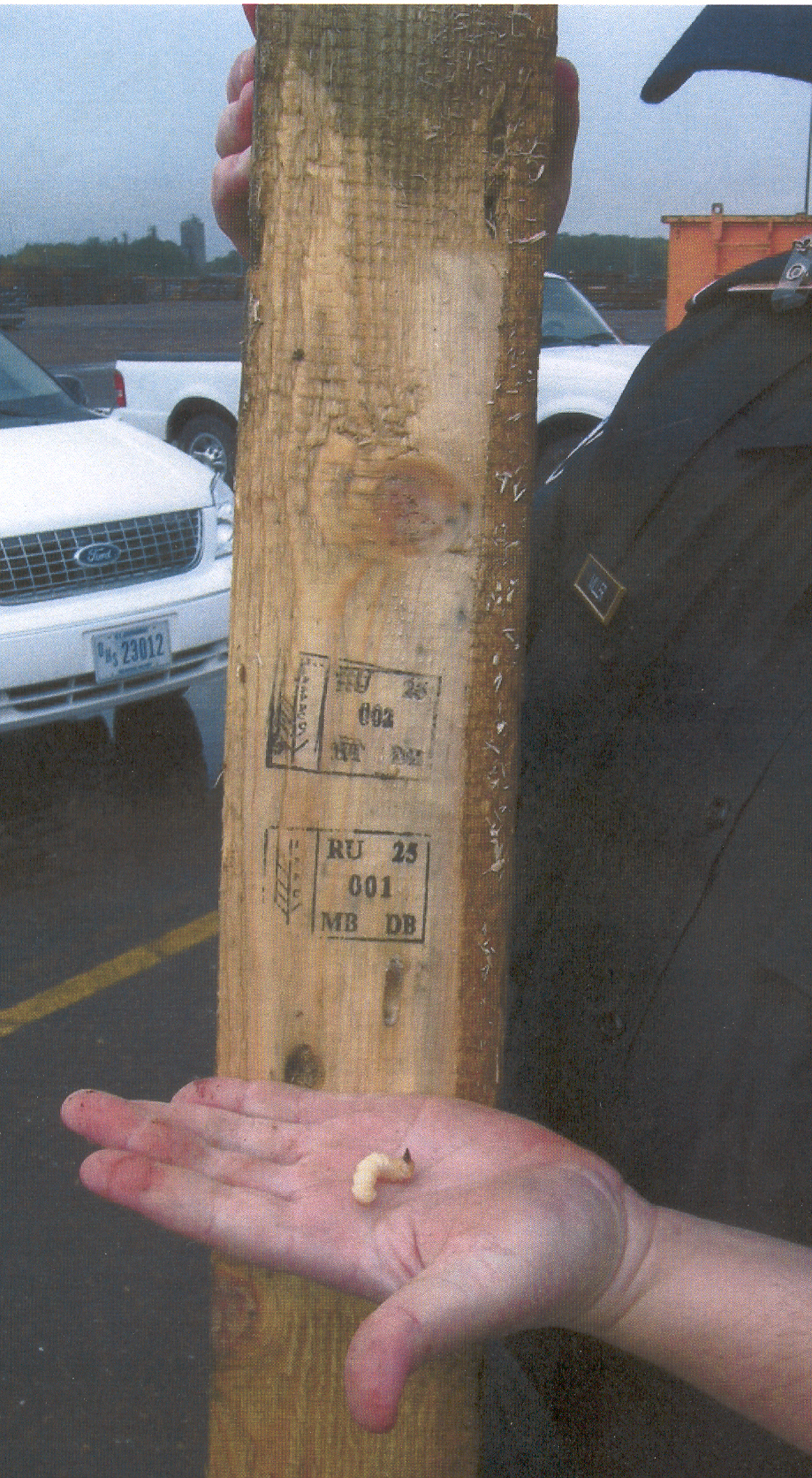
Twenty-four years ago the international community adopted ISPM#15 with the aim of reducing forest pest introductions via the wood used to make crates, pallets, and other forms of wood packaging (SWPM). Over that period questions have been raised about its efficacy. See the analyses by Haack et al. I have posted numerous blogs about wood packaging introductions, focused on the United States. To review these, on this website, scroll below the “Archives” to “Categories”, click on “wood packaging”.
Scientists continue to analyze data on wood borer introductions to explore patterns and evaluate the standard’s efficacy. Two recent articles focus on woodwasps in the Siricidae (Nardi et al. 2026) and ambrosia beetles in the Euwallacea complex (Lanschler et al. 2026). Full citations for both are at the end of this blog.
Sirex woodwasps
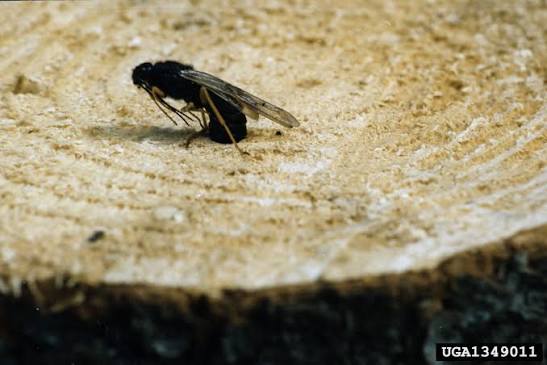
A group of scientist led by D. Nardi surveyed woodwasp introductions to the United States, Canada, and New Zealand to determine historic and current patterns. They found that:
1) Nearly all Sirex woodwasps (84.2% – 97.6%) are transported in wood packaging.
2) While most introductions originated in the woodwasps’ native regions of Europe and Eastern Asia, accompanying high volumes of commodities imported from those regions, interceptions from the Southern Hemisphere have increased recently. Nardi et al. speculate that Asian countries might use softwoods (conifer species) less often for SWPM than do Europe and North America. Certainly the most infamous invasive wood borers from Asia are those that attack hardwoods, e.g., Asian longhorned beetle, emerald ash borer, invasive shothole borers.
3) Widespread adoption of ISPM#15 has significantly reduced interception, establishment, and damage associated with Siricids in the U.S., Canada, and New Zealand since 2002. However, continued detection of live Siricids in wood packaging demonstrates the need for strict enforcement of the standard’s provisions and potentially adoption of additional mitigation strategies.
4) Data collected by phytosanitary agencies of these importing countries is sometimes too limited to support needed analyses of trade patterns and risk.
- U.S. phytosanitary agencies identified less than 10% of the intercepted woodwasps to the species level, whereas Canada identified 25% and New Zealand 75%. Identification of the intercepted woodwasp and its country of origin is critical for effective biosecurity. Nardi et al. (2026) express consternation that only 17.8% of interceptions were identified to species level. Even worse, U.S. phytosanitary officials identified less than 10% of the intercepted woodwasps to species. Canadian officials identified 25%, and New Zealand officials identified 75%. Yes, the taxonomy of the family is complex and in flux. And U.S. port staff must process orders of magnitude more interceptions of woodwasps than do either Canada or New Zealand. However, to understand which species are approaching American borders USDA APHIS (which performs the identifications) needs to provide specialized training and apply modern tools e.g., barcoding, molecular diagnostics. CBP and APHIS must also allow adequate time to process the detection before determining the fate of the shipment.
- U.S. authorities also did not document the country of origin of 83% of shipments associated with Siricid-infested wood packaging intercepted. New Zealand authorities recorded the country of origin of 78% of intercepted shipments, Canadians of 90%.
- Lack of information on sampling effort impedes exploitation of valuable info. Haack et al. (2014) discuss this obstacle in detail. Nardi et al. (2026) note that changing inspection and reporting priorities – especially when not explicitly described – hamper analysis of which factors explain variations in interception rates over time.
5) Interceptions of Siricids on wood packaging from regions outside the species’ native range have been increasing since the 1960s. Overall, 2.2% of the 504 interceptions named to species level were imported from countries to which they are not native. This included 12.3% of Sirex noctilio (from North America, the Neotropics, and Africa); 3.2% of Urocerus gigas (from North America and the Neotropics).
These secondary invasions are often from “bridgehead” populations in the Southern Hemisphere. Nardi et al. (2026) worry that such invasion bridgeheads established in trade hubs could speed up biological homogenization of their region.
6) Only a few of the more than 100 species in the family have established in novel regions although many additional species have frequently been intercepted in wood packaging by port inspectors. The species that have established are Sirex noctilio (introduced from Eurasia to North and South America, Australia, New Zealand, and South Africa); and two North American species: Urocerus albicornis (introduced to Europe and Asia) and Sirex obesus to South America. This pattern suggests that biological, environmental, or dispersal barriers interfere with establishment of other Sirex species even when they are transported to new regions.
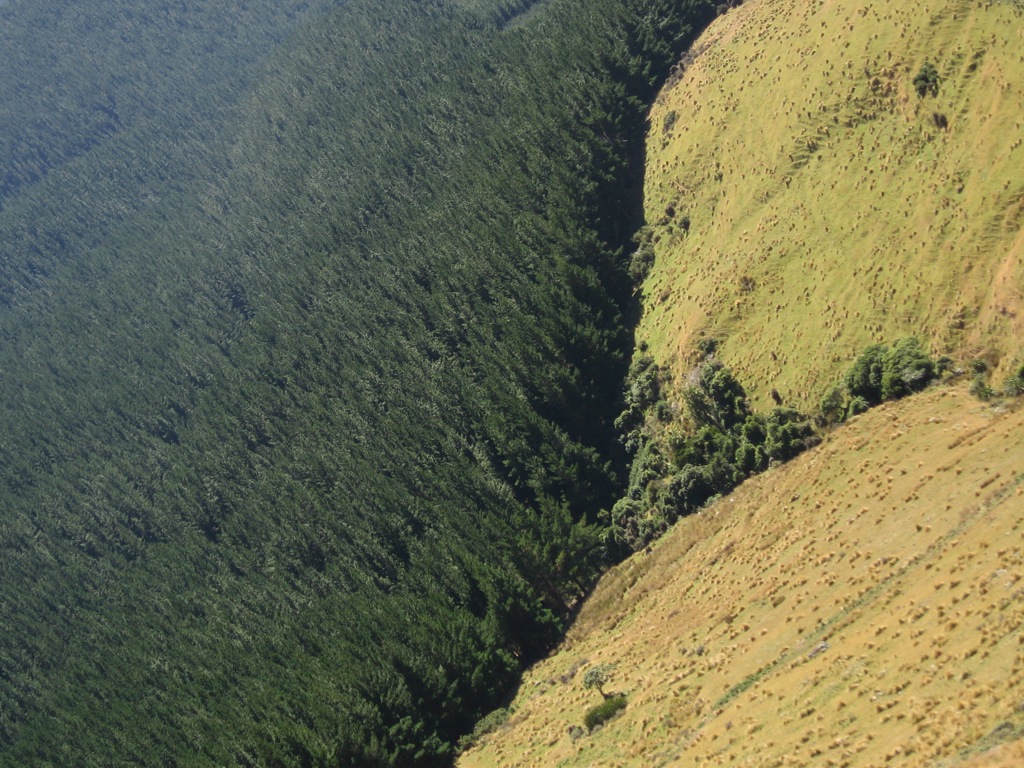
- One example might be Sirex juvencus. Although it has been intercepted 215 times by one of the three countries, it has not established outside its native range. Nardi et al. (2026) note that the species prefers spruce (Picea spp.), which are much less commonly planted in Southern hemisphere plantations and around the Northen Hemisphere than the pines (Pinus spp.) that support establishment of S. noctilio and U. gigas.
- The role of the associated fungi is another factor. Nardi et al. (2026) note that another woodwasp species, Xeris spectrum, has not established in New Zealand despite being intercepted often by that country’s phytosanitary officials and presence of suitable hosts. They note that is species does not transport the symbiotic fungi on its body as do other woodwasps. Instead it oviposits on trees already infested with Amylostereum fungus that was injected by an earlier invasive woodwasp. (A successful biological control program has reduced infestations of S. noctilio, so pine plantations are again widespread on the islands.)
Nardi et al. (2026) warn about several cryptic dangers. First, horizontal transfer of associated symbiont basidiomycete fungal species has been documented: Amylostereum fungal strains from European S. noctilio to American Urocerus species. Such transfers might increase the pathogenicity of formerly benign introductions. Second, scientists don’t yet understand the probable effects of climate change on insect and fungal species’ life cycles. They mention specifically the Asian species Sirex nitobei because its hosts are widespread Pinus species and it has been detected repeatedly, esp. on dunnage.
Nardi et al. (2026) suggest that officials should consider these ecological factors in assessing the risk of new introductions of specific species. I counter that the underlying rationale for adopting ISPM#15 was recognition that trying to manage individual species or countries of origin would not be effective. Instead, I advocate much more assertive enforcement of the standard.
Invasive shothole borers
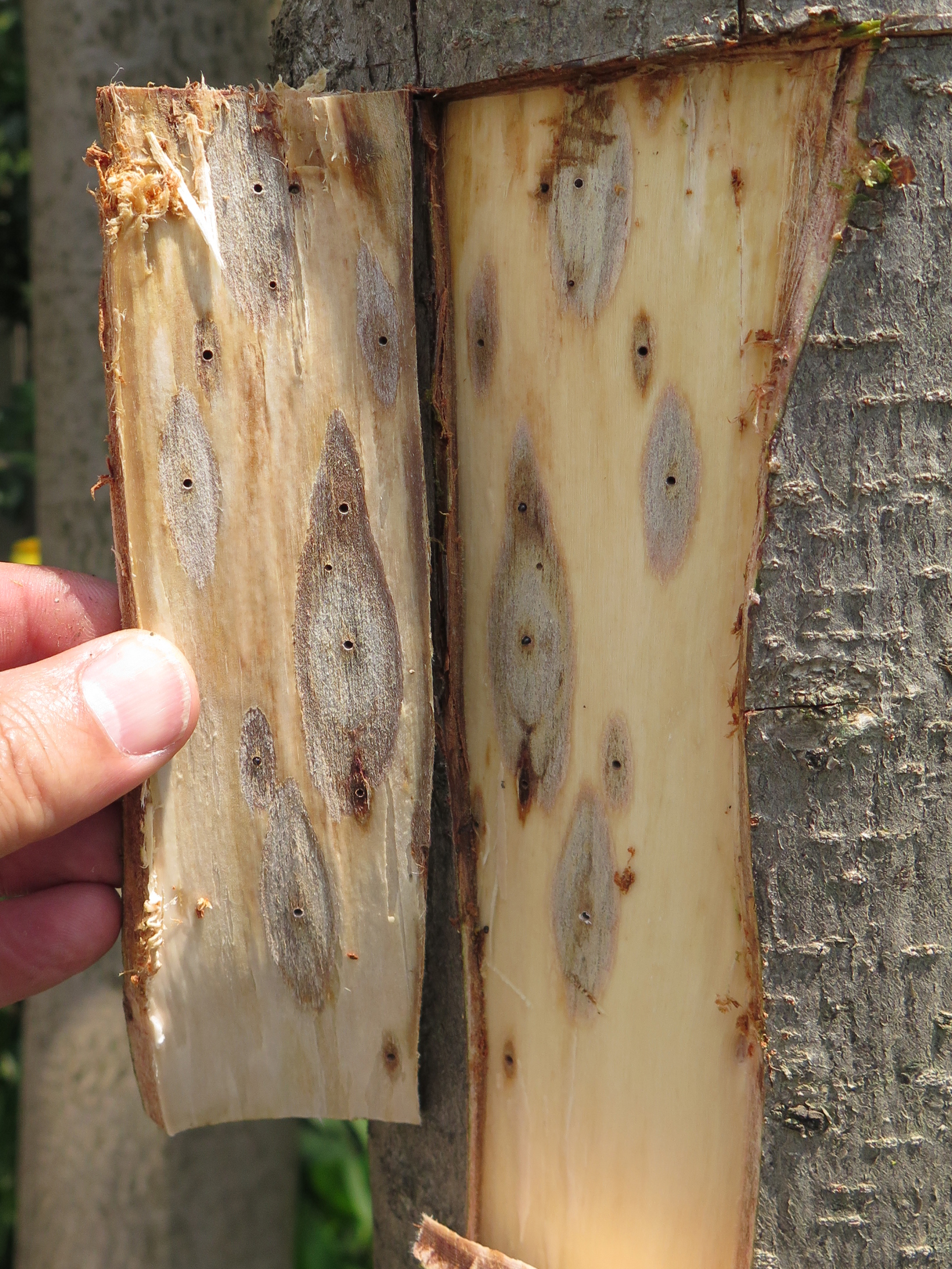
Based on analysis on distribution of haplotypes, phylogenetic relationships and dates of first detections, Lantschner et al. (2026) identified seven independent introduction events of the polyphagous shot hole borer (PSHB) Euwallacea fornicatus: to the continental U.S., Hawai`i, South America, Central Europe, Spain, Türkiye, and South Africa. Most apparently originated directly from the species’ native range, although some evidence of likely secondary spread between already invaded regions. Several of these introductions – Israel (2009), South Africa (2016); Brazil (2020), Argentina and Australia (2021), Spain (2022), Uruguay (2023), and Türkiye (2024) – occurred despite stricter biosecurity measures, specifically ISPM#15.
The United States (California) experienced two additional invasions by Euwallaceae in the 2020s: by PSHB E. fornicatus (in San Jose) and a new species, E. interjectus. This makes a total of nine separate introductions.
Lantschner et al. (2026) suggest two opposite explanations for why so many introductions of this group of species from Asia have continued since ISPM#15 came into effect. Their suggestions are that either beetle populations in China, Taiwan, and/or Vietnam grew, thus increasing the pool of potential invaders/propagule pressure, or that increased international exports from these countries opened new commercial pathways. Certainly the latter has occurred. According to Google, exports from China rose from less than $500 billion in 2003 to ~ $4 trillion in 2025. Exports from Vietnam rose from ~$22 billion to $500 billion over the same period.
To be fair, most consider that the principal pathway for movement of species in the Euwallaceae complex is the trade in ornamental plants. In addition to the introductions listed above, E. fornicatus populations have been detected in greenhouses or botanical gardens in Italy, Germany, the Netherlands, and Poland. All have been reported as eradicated (Lantschner et al. 2026). I recently posted a blog discussing the widespread failure of the international phytosanitary system to stem introductions via this trade.
A second group of scientists (Dell, Xu, and Chi 2026) worry that E. fornicatus has spread especially rapidly in South Africa and South America. Already the outbreak of Fusasrium disease in South Africa is the largest the world: it is present in every province except Limpopo. The disease is recorded on 162 tree species, 78 of which are indigenous to the country (Townsend, Hill, Hurley and Roets 2025).
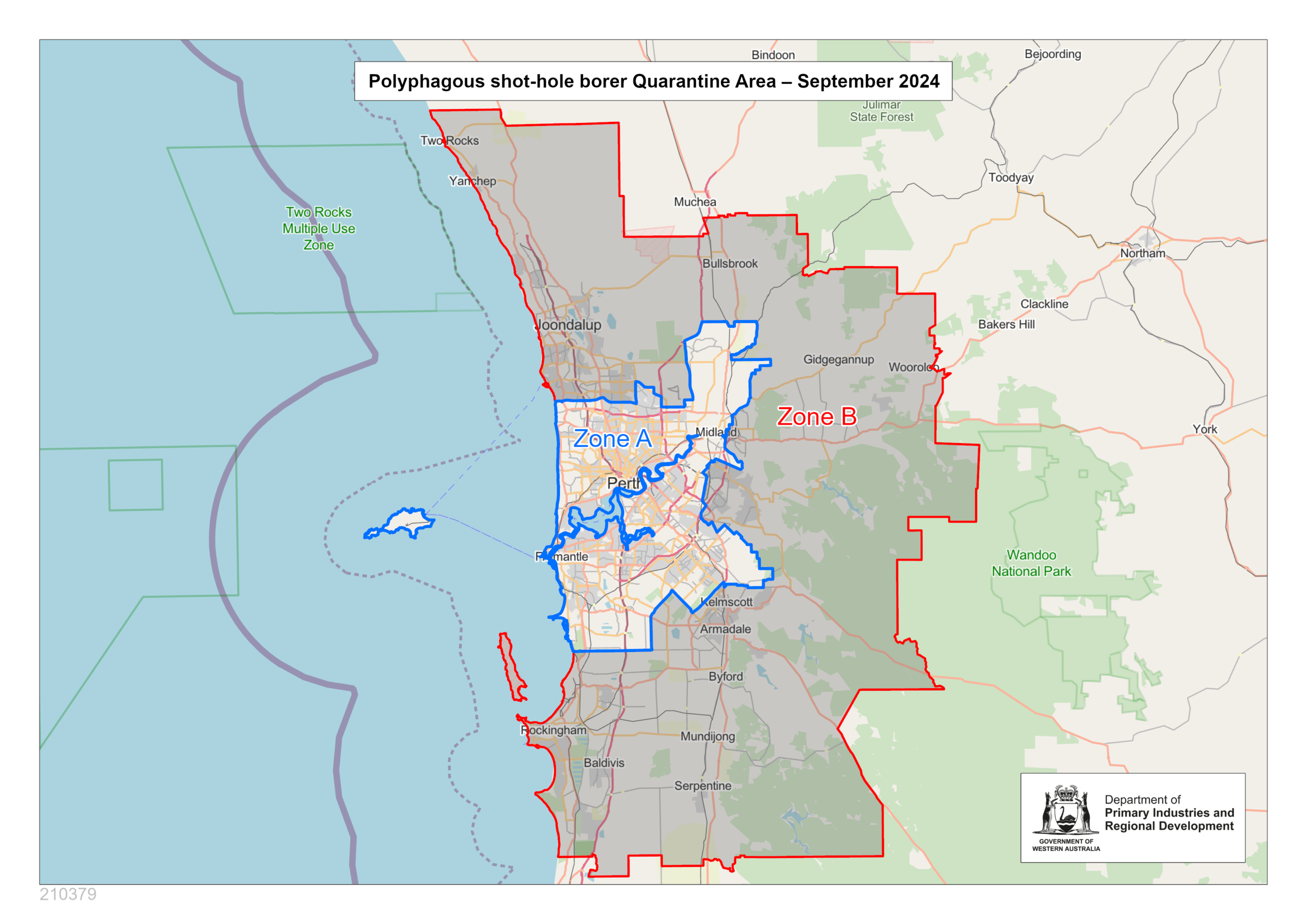
The introduced ranges – sometimes called bridgeheads – create conditions under which the pest can more easily spread further. Lantschner et al. (2026) suggest that the PSHB population established in southern California could spread into the American southeast, eastern Mexico, and parts of Central America. The population in South Africa might expand into other temperate and subtropical regions of Africa. Beetle populations established in Spain, Israel and Türkiye might spread across Mediterranean basin. Population in Western Australia could spread to eastern regions. They note that achieving some of these dispersals would require crossing substantial gaps of unsuitable habitat. They don’t mention that human transport has moved many populations of wood-boring beetles across unsuitable habitat! As I blogged earlier, officials in Sydney, Australia, determined that 47% of trees in the city are vulnerable to PSHB.
SOURCES
Carnegie AJ, Summerell BA, Trollip C, Tovar F, Smith DI and McDonald J (2026) Sentinel trees for early detection of non-native forest pests and pathogens in AU. Front. For. Glob. Change 9:1801183. doi: 10.3389/ffgc.2026.1801183
Dell, B., W. Xu, and N.M. Chi. 2026. Polyphagous Shot Hole Borer, a Global Threat to Forest Plantations, Green Infrastructure, and Biodiversity: Status, Challenges, and Solutions. Forests 2026, 17, 832
Lantschner, M.V., E. Ceriani-Nakamurakare, A.J. Johnson, A.I. Cognato, S.M. Smith, D.F. Gomez. 2026. Invasion history reconstruction and potential distribution of the ambrosia beetles Euwallacea fornicatus and E. perbrevis (Coleoptera: Scolytinae), two global emerging pests. J Pest Sci 99, 100 (2026). https://doi.org/10.1007/s10340-026-02070-w
Nardi, D., K.E. Wagner, S.F. Ward, A.M. Liebhold, E.G. Brockerhoff, R.M. Turner, J.J. Riggins. 2026. Global movement of woodwasps (Hymenoptera: Siricidae) inferred from border interception records Biol Invasions (2026) 28:167 https://doi.org/10.1007/s10530-026-03881-9
Townsend, G., M. Hill, B.P. Hurley, and F. Roets. 2025. Escalating threat: increasing impact of the polyphagous shot hole borer beetle, Euwallacea fornicatus, in nearly all major South African forest types. Biol Invasions (2025) 27:88 https://doi.org/10.1007/s10530-025-03551-2
Posted by Faith Campbell
We welcome comments that supplement or correct factual information, suggest new approaches, or promote thoughtful consideration. We post comments that disagree with us — but not those we judge to be not civil or inflammatory.
For a detailed discussion of the policies and practices that have allowed these pests to enter and spread – and that do not promote effective restoration strategies – review the Fading Forests report at http://treeimprovement.utk.edu/FadingForests.htm
Or