I applaud the growing attention to the impacts of deadly pathogens in forests. The focus is often on the resulting decrease in tree-based storage of atmospheric CO2. In an earlier blog I cited findings by Quirion et al. (2021) that forest diseases in the United States between 2001 and 2019 reduced mean forest carbon sequestration by 28%. Forests were converted from carbon storage to carbon sources. [Full citations for all sources provided at the end of this blog.] Earlier, Fei et al. (2019) had determined that compensatory growth by non-host species (spurred by reduced competition and greater resource availability after a dominant tree species dies) might partially offset CO2 decline, although only over long timescales. Chan et al. (2026) cite examples from redwoods in California to Dipterocarps in Southest Asia that document the importance of large trees in sequestering atmospheric CO2. See also Calders et al. re: Wytham Woods in the United Kingdom.
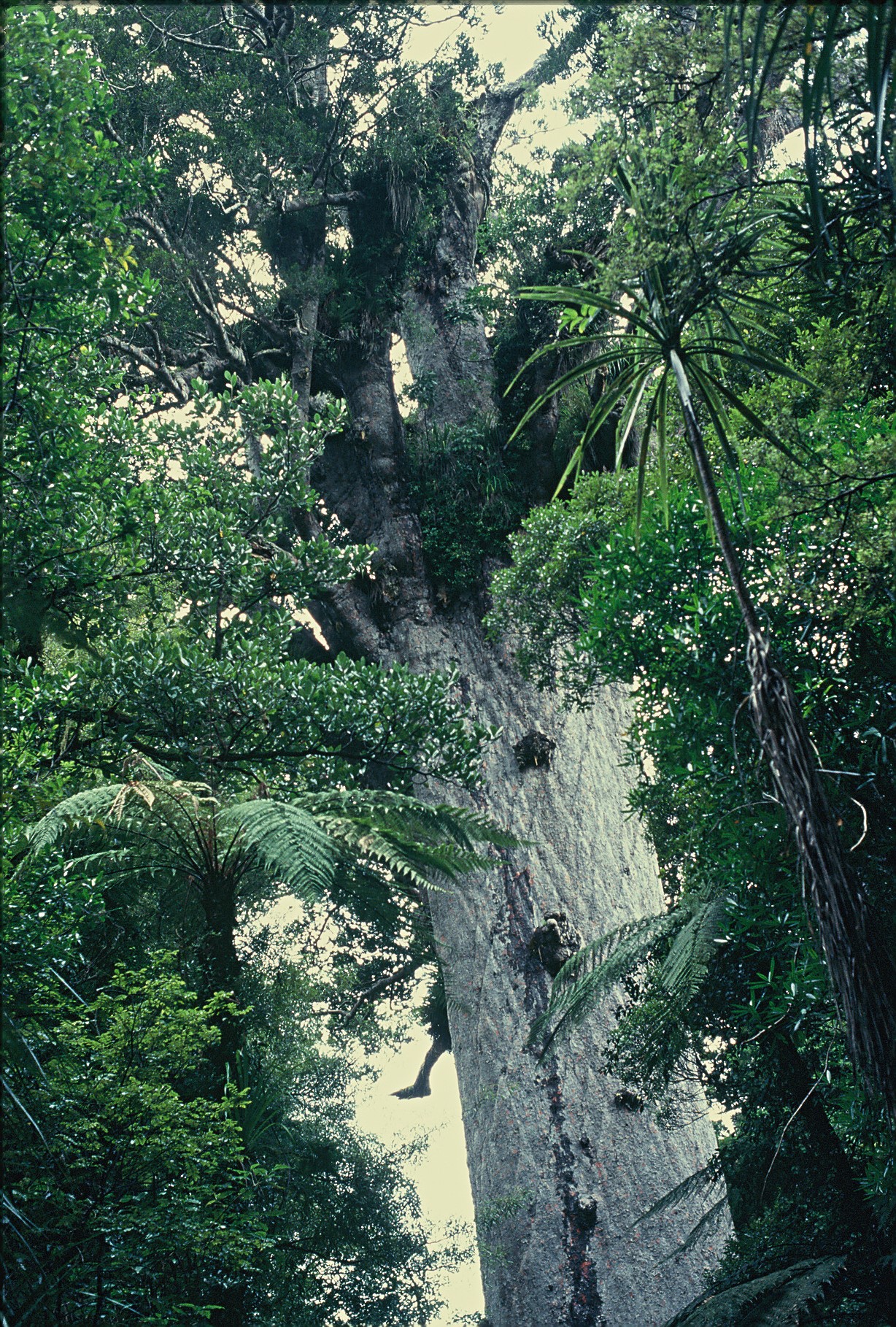
A pertinent current example is found in New Zealand. There, the oomycete Phytophthora agathidicida is killing the endemic kauri tree, Agathis australis. Kauri are among the largest and longest-lived trees on Earth. The average age of large individuals in old-growth stands is ~ 600 years; exceptional specimens reach 1,600 years. Typical diameters in old-growth stands are 1.3–1.5 m; exceptional specimens > 7 meters (Chan et al. 2026).
A year ago Simpkins et al. (2025) reported a modeling study that indicated that kauri dieback disease could cause a decrease in aboveground carbon stocks by 55% over 500 years. However, as Chan et al. (2026) point out, stand-level carbon sequestration and storage in a forest undergoing widespread mortality of the dominant tree species depend on growth and productivity of the replacement species. Even the magnitude of short-term dynamics depends on the relative abundance of the vulnerable host and the rate of its mortality and decline.
Therefore they explored the impact of kauri dieback in greater detail, including which species they thought likely to replace kauri and their carbon-sequestration capabilities at the stand level.
Although (regrettably) not the focus of their article, Chan et al. (2026) note that loss of the kauri tree also threatens biodiversity. Kauri strongly modify their environment through accumulation of a thick organic soil layer derived from litter. The layer is typically 30 to 50 centimeters deep but can reach 2 meters. These soils are acidic, drought-prone and nutrient-poor. As result the co-occurring plants comprise a unique suite of stress-tolerant plants. The vertical stratification of conifer and angiosperm crowns in kauri forests allows coexistence and unusually high total basal area of other plant species.
In these forests, kauri have dominated annual CO2 capture and long-term storage. Under pre-invasion conditions, Chan et al. (2026) this to continue. Previous work estimated that live vegetation biomass in kauri stands doubles when the stand moves from early- or mid-successional stages to mature. Three other species each contribute more than 10% of carbon storage: the tree fern Cyathea dealbata, and two small trees, Phyllocladus trichomanoides and Kunzea ericoides. All are early successional species that typically dominate in open or disturbed environments but decline as canopies close.
Chan et al. (2026) studied changes in live vegetation carbon stocks between two census periods ten years apart, 2011 – 2014 and 2021 – 2024. The five kauri-dominated plots included two plots each in early- and late-successional stages and one mid-successional stand. The study site was in the greater Auckland region of North Island. Phytophthora agathidicida is spreading through these forests, infecting kauri of all ages. Still, dieback intensity varies within the plots, so they were subdivided plots into 20 10 m × 10 m subplots.
Chan et al. (2026) tried to measure two distinct processes: the increase in carbon stocks coming from recruitment and growth of live stems (= productivity) and loss of sequestration and storage due to tree mortality. The two phenomena might respond differently to kauri dieback and initial carbon stocks. While increasing disease severity and increased mortality both result in lower net accumulation, it is important to disentangle the effects of increased loss, reduced productivity, or the combination.
Findings
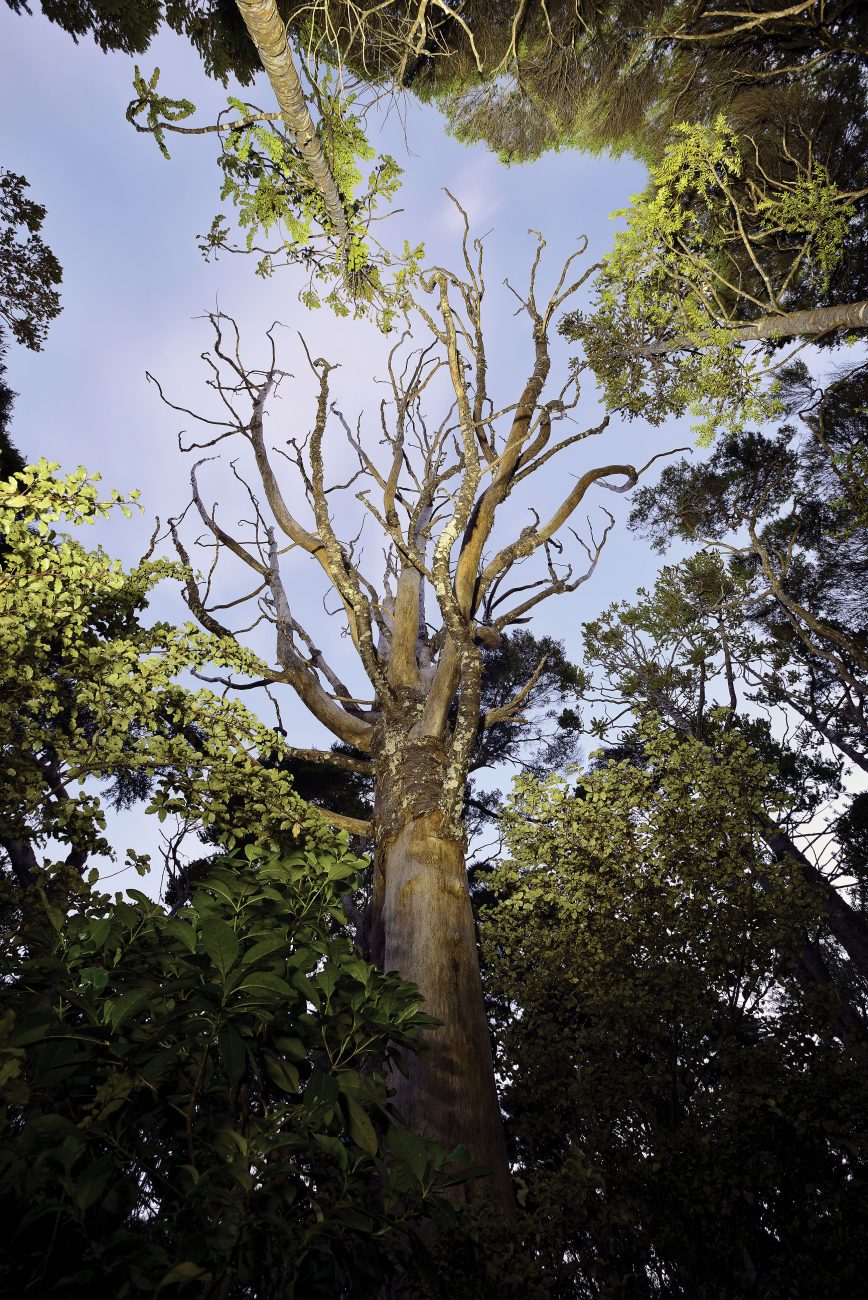
Carbon sequestration declined proportionately with increasing disease severity due to both reduced productivity and greater carbon loss from mortality. Because kauri contributed the largest share of carbon sequestration and storage due to the enormous size of some individuals, death of higher numbers of large kauri led to the largest reductions in these services. That is, the greatest observed decrease in carbon sequestration and storage was in those stands that initially had the highest levels of carbon storage. These were stands in mid- and late-successional subplots rather than in early-successional subplots. The higher the initial mean carbon stock level, the more pronounced the observed decline in sequestration.
This means that kauri dieback threatens both the carbon sequestration and long-term carbon storage capacity of kauri forests, particularly in mature stands comprising the largest trees.
Chan et al. (2026) conclude that the carbon stocks of these mature kauri stands will not stabilize until after substantial depletion of kauri biomass. As a result, long-term carbon storage capacity is markedly reduced.
Meanwhile, healthy kauri stands continued to sequester carbon as the trees grew. Chan et al. (2026) expect living kauri trees to continue adding to their basal area and other productive species can co-exist under the vertically stratified crowns.
In stands that had low carbon sequestration levels at the time of the first census (early successional stands), the stand maintained positive carbon sequestration until the disease reached a higher intensity. This was because some of the other tree species in the stand raised their proportional contributions to CO2 sequestration. Chan et al. (2026) concluded that these stands were likely stabilize at a reduced level of biomass, effectively lowering their long-term carbon storage and sequestration potential.
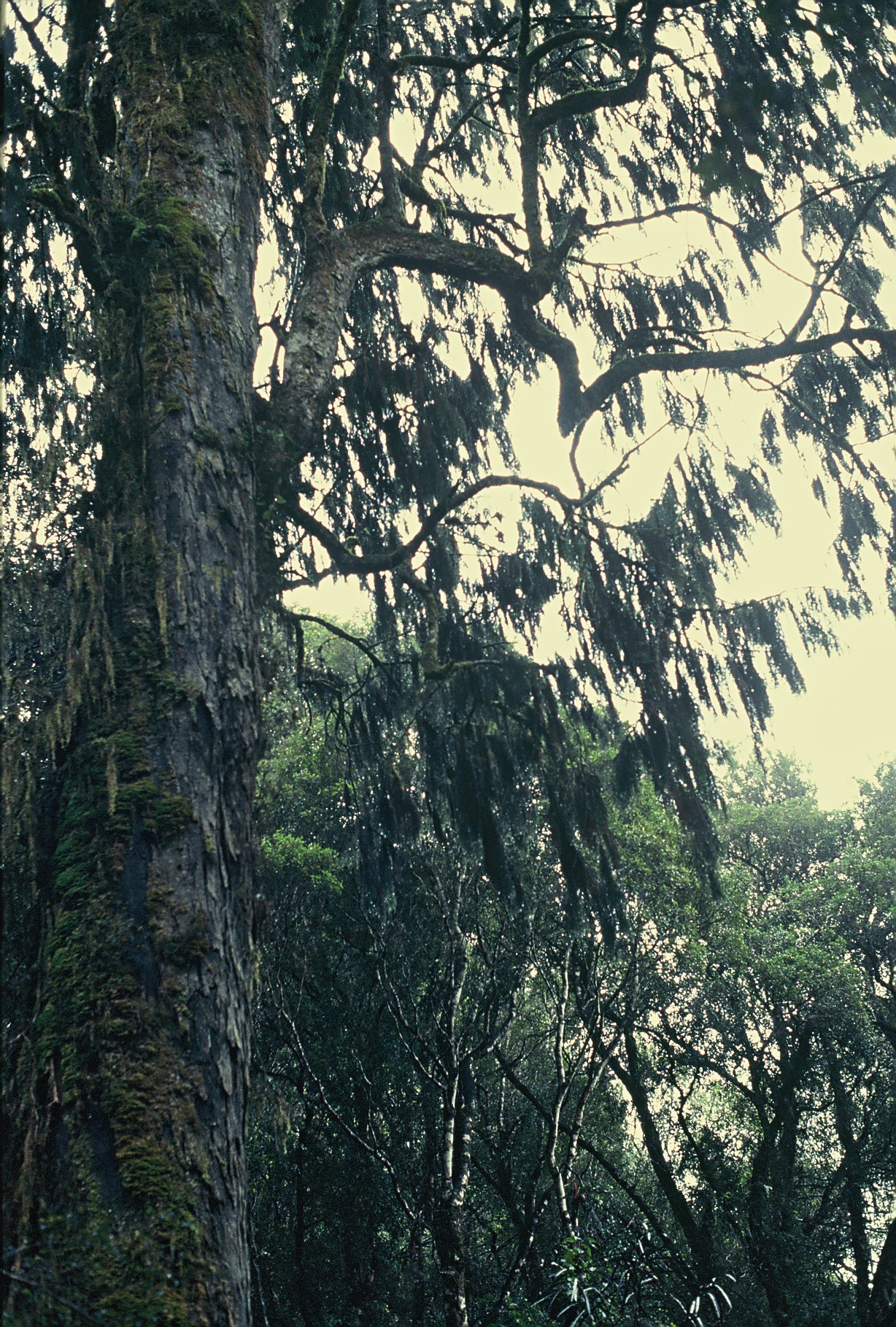
The steep decline in carbon sequestration and storage associated with higher initial carbon stocks reveal the disproportionate vulnerability of mature kauri stands. The kauri contribution to stand biomass is unlikely to be replaced by a structurally similar species, e.g., the long-lived, large conifer rimu (Dacrydium cupressinum), until passage of many years. Early-successional species are expected to colonize the damaged forests rapidly, but their lower wood densities and fast maturity/senescence confer limited carbon storage capacity.
Besides, some of the species likely to replace (temporarily) dead kauri — Myrtaceae such as Kunzea ericoides — are susceptible to another introduced pathogen, myrtle rust (Austropuccinia psidii) (Lantham et al. 2025).
So kauri dieback not only reduces current carbon stocks but succession dynamics do not support future sequestration potential, leading to a long-term decline in the carbon storage capacity of these forests.
Chan et al. (2026) call for urgent efforts to prevent spread of the pathogen Phytophthora agathidicida and injection of phosphite to reduce disease symptoms. Both strategies should target mature kauri stands. Research on phosphite treatments is under way. They also suggest research on disease progression and associated changes in carbon stocks across multiple pools, including coarse and fine woody debris and deep organic soil layers.
Chan et al. (2026) report that the disproportionate contribution of large, long-lived individual trees to carbon storage is a worldwide phenomenon.
Extraneous thought: I am glad that Chan et al. (2026) cite examples of high-impact pathogens from the Southern Hemisphere, i.e., Phytophthora cinnamomi in Australia. While chestnut blight certainly had severe impacts, so have many others, e.g., white pine blister rust Cronartium ribicola. Some arthropods have also proved damaging on several continents, including emerald ash borer (Agrilus plannipennis), or across widely separated island systems, e.g., Erythrina gall wasp (Quadrastichus erythrinae) and cycad scale (Aulacaspis yasumatsui). I regret that I can find no recent information on the scale.
SOURCES
Calders, K., H. Verbeeck, A. Burt, N. Origo, J. Nightingale, Y. Malhi, P. Wilkes, P. Raumonen, R.G.H. Bunce, M. Disney. Laser scanning reveals potential underestimation of biomass carbon in temperate forest. Ecol Solut Evid. 2022;3:e12197. wileyonlinelibrary.com/journal/eso3
Chan, P.J., T. Elliott, H.R. Lai, B. Burns, L. Schwendenmann. 2026. Consequences of a dieback disease on carbon stocks and fluxes in forests dominated by a susceptible foundation species. Plant Ecology (2026) 227:97 https://doi.org/10.1007/s11258-026-1669-4
Fei, S, R.S. Morin, C.M. Oswalt, and A.M. Liebhold. 2019. Biomass losses resulting from insect and disease invasions in US forests. Proceedings of the National Academy of Sciences. August 27, 2019 vol. 116 no. 35 www.pnas.org/cgi/doi/10.1073/pnas.1820601116
Latham, M.C., A. Lustig, N.M. Williams, A. McDonald, T. Patuawa, J. Chetham, S. Johnson, A. Carrington, W. Wood, and D.P. Anderson. 2025. Design of risk-based surveillance to demonstrate absence of Phytophthora agathidicida in NZ kauri forests. Biol. Invasions (2025) 27, no.26 https://doi.org/10.1007/s10530-024-03501-4
Quirion BR, Domke GM, Walters BF, Lovett GM, Fargione JE, Greenwood L, Serbesoff-King K, Randall JM and Fei S (2021) P&P Disturbances Correlate With Reduced Carbon Sequestration in Forests of the Contiguous US. Front. For. Glob. Change 4:716582. [Volume 4 Article 716582 doi: 10.3389/ffgc.2021.716582
Simpkins, C.E., P.J. Bellingham, K. Reihana, J.M.R. Brock, G.L.W. Perry. 2024. Evaluating the effects of two newly emerging plant pathogens on North Aotearoa-NZ forests using an individual-based model. Ecological Modelling, www.elsevier.com/locate/ecolmodel https://doi.org/10.1016/j.ecolmodel.2024.110938
Posted by Faith Campbell
We welcome comments that supplement or correct factual information, suggest new approaches, or promote thoughtful consideration. We post comments that disagree with us — but not those we judge to be not civil or inflammatory.
For a detailed discussion of the policies and practices that have allowed these pests to enter and spread – and that do not promote effective restoration strategies – review the Fading Forests report at http://treeimprovement.utk.edu/FadingForests.htm
Or
See also my earlier blog about the vulnerability of the seven unique floral kingdoms of the Southern Hemisphere