South African report: Rigorous, Honest, and a Model for U.S. and Others

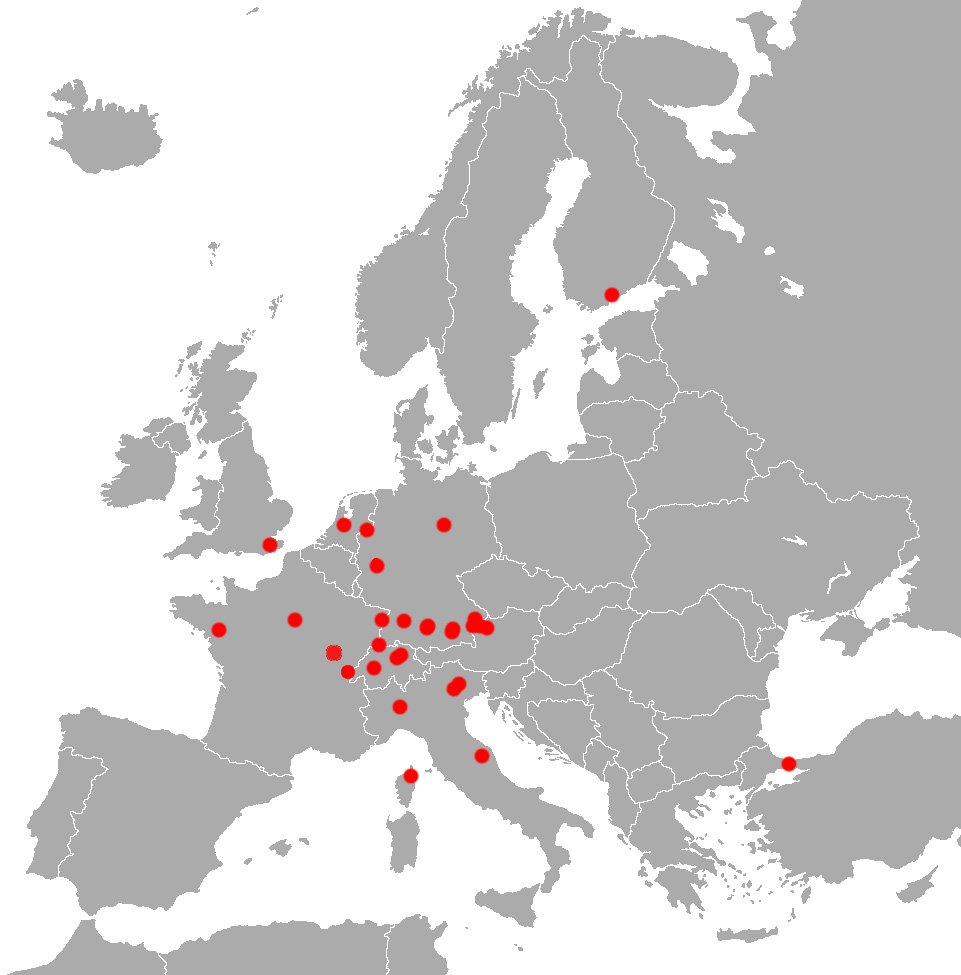
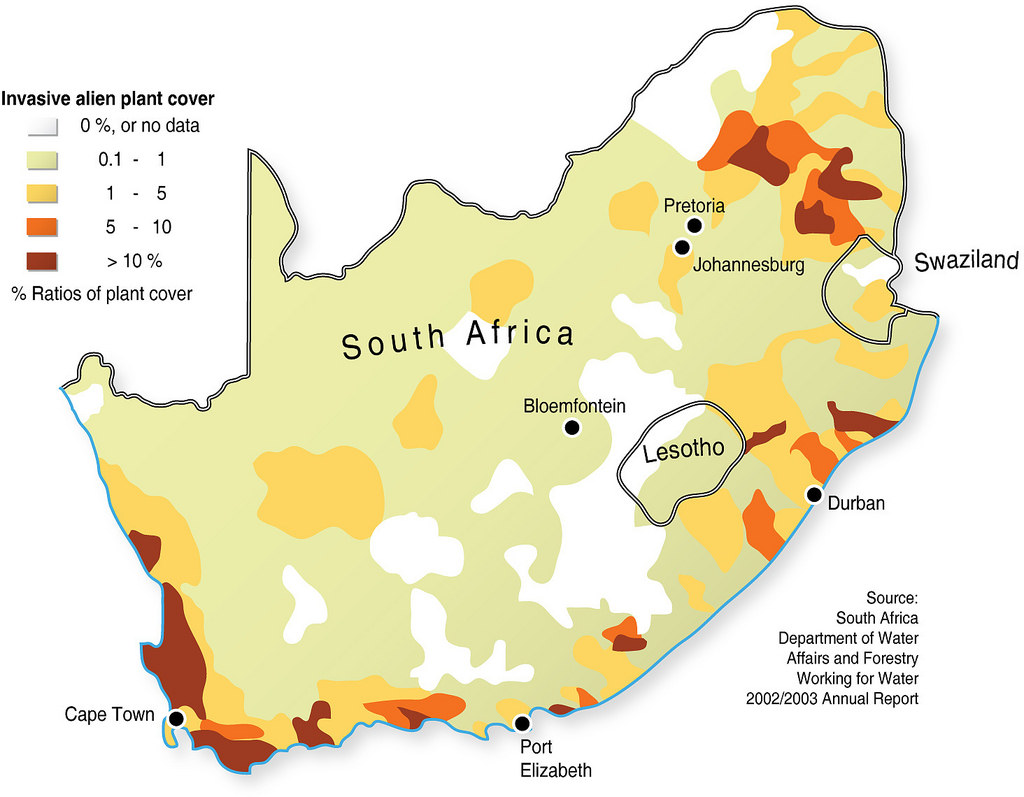
Density of invasive plants in South Africa

map available here


Last month, in my blog about the US Geological Survey’s report on invasive species  I announced release of a report by South Africa on its invasive species management programs – available here.  Because this report is unusual in both its rigor and its honesty, I’m returning to it here. I think it is a model for our country and others.

The report provides the basics. That is, it analyzes pathways of introduction and spread; number, distribution and impact of individual species; species richness and abundance of alien species in defined areas; and the effectiveness of interventions. Of the 775 invasive species identified to date, 556, or about 72%, are listed under some national regulatory program. Terrestrial and freshwater plants number 574 species; terrestrial invertebrates number 107 species. A different set of 107 species, or about 14%, are considered by experts to be having major or severe impacts on biodiversity and/or human wellbeing. The highest numbers of alien species are in the savanna, grassland, Indian Ocean coastal belt, and fynbos biomes. South Africans are particularly focused on the reductions in surface water resulting from plant invasions. Much of the control effort is under the egis of the decades-old “Working for Water” program.

Also, the report has features that are all-too-rare in work of its kind. First is the authors’ focus on rigor – of data sources and interpretation of those data using standardized criteria. Second – and even more important – is their call for analyzing the efficacy of the components of invasive species program. They insist on the need to measure outcomes (that is, results), not just inputs (resources committed) and outputs (“acres treated”, etc.). Inputs are far easier to measure and are, unfortunately, the mainstay of how most U.S. efforts are tracked – if they are tracked at all.

As they note, measure of inputs and outputs are not useful because they provide no guidance on the purpose of the action or treatment or of its effectiveness in achieving that purpose.

(For earlier CISP advocacy of measuring outcomes, visit the National Environmental Coalition on Invasive Species and read the bullet points under “Recommendations for a Comprehensive National Response”.)

The report has been praised by international conservationists, including Piero Genovesi – chair of the IUCN’s Invasive Species Specialist Group. British ecologist Helen Roy says that, to her knowledge, it is “the first comprehensive synthesis of the state of invasive species by any country.”


How well are programs working?

The authors’ focus on rigor includes being scrupulously honest in their assessments of current program components. They note deficiencies and disappointments, even when the conclusions might be politically inconvenient. To be fair, all countries struggle to achieve success in managing bioinvasions. And South Africa is, in many ways, a developing country with a myriad of economic and social challenges.

So it is probably not surprising that, for most factors analyzed, the authors say data are insufficient to determine the program’s impact. Where data are adequate, they often show that programs fall short. For example, they conclude that control measures have been effective in reducing populations of established invasive species, usually plants, in some localized areas but not in others. While the situation would arguably have been worse had there been no control, current control efforts have not been effective in preventing the ongoing spread of IAS when viewed at a national scale. Only one of South Africa’s 72 international ports of entry has consistent inspection of incoming air passengers and cargo – and even those inspections are not carried out outside of regular working hours (e.g., nights and weekends).

The authors are even critical of the “Working for Water” program – which is the basis for most control efforts in South Africa and enjoys wide political support. WfW has two goals: providing employment and development opportunities to disadvantaged individuals in rural areas, and managing invasive alien plants. Despite substantial funding, the WfW program has supported control teams that have reached only 2% – 5% of the estimated extent of the most important invasive plants. Furthermore, programs structured to provide employment have not ensured use of the most efficient control strategies.


What’s needed in South Africa — and around the world

The authors conclude that South Africa needs new processes to monitor and report on bioinvasions in order to achieve evidence-based policy and management decisions. They call for (1) more research to determine and assess invasive species impacts; (2) better monitoring of the effectiveness of current control measures; and (3) the development of methods to look at the impact of bioinvasions and their management on society as a whole.

The authors say it is important for South Africa to improve its management of invasive species because their impacts are already large and are likely to increase significantly. They note that improving management efficiency will require difficult choices and trade-offs. They recommend a focus on priority pathways, species, and areas. They also stress return on investment.


I don’t know how this report has been received in South Africa. I hope government officials, media observers, landowners, political parties, and other stakeholders appreciate the honesty and expertise involved. I hope they take the analyses and recommendations seriously and act on them.

(Preparation of the report was was overseen by a team of editors and contributing authors employed by the South African National Biological Diversity Institute (SANBI) and the DST-NRF Centre of Excellence for Invasion Biology at (C.I.B). Drafts were widely circulated to contributing authors and other stakeholders for comments. An independent review editor will be appointed to assess the review process and recommend any ways to strengthen the process for future reports.)


Meanwhile, how do we Americans apply the same rigor to analyzing our own efforts?


Posted by Faith Campbell


We welcome comments that supplement or correct factual information, suggest new approaches, or promote thoughtful consideration. We post comments that disagree with us — but not those we judge to be not civil or inflammatory.


Worldwide – and U.S. – Proliferation of Phytophthora via the Nursery Trade – an Update

Phytophthora cinnanomi killing Ione manzanita in California; photo from Swiecki and Garbelotto, Distribution of Phytophthora cinnamomi within the range of Ione manzanita (Arctostaphylos myrtifolia).   Agreement between the California Department of Fish and Game and University of California

Phytophthora species are plant pathogens in the oomycote group (water molds, closely related to brown algae). More than 160 species have been described; new species are continually being isolated. Many Phytophthora species are deadly to naïve hosts; examples in the United States include sudden oak death, Port-Orford cedar root disease, disease on chestnuts and oaks.

Forests in Europe – especially the United Kingdom – and Australia are also suffering high levels of mortality associated with one or more Phytophthora species.

In recent years, several studies have documented the role of nurseries in spreading non-native Phytophthora species. Two strains of P. ramorum are widespread in European nurseries and in tree plantations and wild heathlands of southwest England, Wales, parts of Scotland, and Ireland. (See here and here.)

In April 2016 I blogged about the situation in Europe described by Jung et al. 2015 (see references at the end of the blog). Jung et al. concluded that diseases caused by Phytophthora pose a substantial threat to both planted landscapes and forest ecosystems across Europe. They found 56 Phytophthora taxa in 66% of 2,525 forest and landscape planting sites that were probably introduced to those sites via nursery plantings.

Barber et al. 2013 reported nine species of Phytophthora associated with a wide variety of host species in urban streetscapes, parks, gardens, and remnant native vegetation in urban settings in Western Australia. Phytophthora spp were recovered from 30% of sampled sites.

A new summary confirms that the threat is similar in North America. In British Columbia, Dale et al. (2017) found more than two times as many Phytophthora species were detected in soil and water samples in urban areas (23) than in natural areas (11). Urban samples also showed a much higher diversity of Phytophthora per site than natural environments. These Phytophthora species had been introduced initially into urban areas and had subsequently spread into native vegetation, particularly in areas near developed sites (wildland-urban interface areas).

Swiecki et al 2018 cite several sources and their own studies to show that the large and increasingly diverse contingent of introduced Phytophthora species pose an increasingly important threat to both urban forests and surrounding native forests and plant communities in California. It is clear that shrubs and herbaceous plants as well as trees are also at risk. These scientists have repeatedly found multiple non-native Phytophthora species at individual sites in northern and southern California sites where nursery stock had been planted. Sampling in 2014 identified about 60 different Phytophthora taxa in restoration planting sites and native plant nurseries. The sampled restoration plantings were mostly located in urban riparian corridors and peri-urban parks, open spaces, or protected watersheds.

I first discussed this issue in a blog in July 2016.

Swiecki et al (2018) have also found that Phytophthora species persist in drier ecosystems. When conditions are too dry for sporangium production, Phytophthora hyphae produce resistant survival structures that can tolerate drying and persist in dead root fragments or soil. In the presence of appropriate stimuli, e.g., moisture and root exudates, resistant structures germinate to produce sporangia or hyphae, leading to new infections. Even relatively short wet periods associated with rain or irrigation can be sufficient to stimulate zoospore release. Swiecki et al (2018) list examples of numerous Phytophthora infestations that developed in dry sites, such as dry foothills of the Sierra Nevada in Amador County, and the Oakland Hills of Alameda & Contra Costa County. Swiecki et al. (2018) also  note that P. cinnamomi has persisted in Australian forests in the absence of known primary hosts.

Phytophthora infections can also persist for decades in soil. In California, Swiecki et al. (2018) mention several examples:

  • Residual cinnamomi inoculum killed young sprouts of susceptible manzanitas (Arctostaphylos myrtifolia and A. viscida) planted on sites that were infected many years earlier.
  • A street planting of cork oaks (Quercus suber) apparently died due to Phytophthora root rot that had occurred 21 years earlier.
  • Both cinnamomi and P. cactorum were recovered from roots and soil beneath affected trees at least 60 years after the site had been a municipal woody plant nursery and adjacent residence.
  • A 7-acre area of native vegetation showing decline & mortality of multiple plant species was infested with multiple Phytophthora spp, including cactorum, P. cambivora, P. crassamura, P. ‘kelmania’ & P. syringae. The site was apparently infected 22 years earlier during a planting of a habitat restoration project using Ceanothus nursery stock. Subsequent spread was primarily downhill from the planting sites, facilitated by water flow, with additional spread along and near trails.


The Risk from the Nursery Trade

While Phytophthora-infested soil and plant debris can be transported on tools, vehicles, and shoes, or moved in large quantities when infested soil is excavated, graded, or imported, the principal threat is the nursery trade.

  • Jung et al. (2015) state that widespread contamination of nursery stock was the primary means by which these pathogens were introduced and spread in Europe. They found 49 Phytophthora taxa in 670 European nurseries. Phytophthora species were recovered from more than 90% of the sampled nurseries.
  • Swiecki et al. (2018) say that most of the common Phytophthora species detected in California are distributed globally, moved about with live plants or other infested materials. None is native to California.
  • Swiecki et al. (2018) cite studies reporting that thirteen species of Phytophthora were found in a survey for leaf spots in California nurseries in 2005 and 2006. Sampling of plants in or originating from Calif native plant nurseries alone has yielded about 60 Phytophthora At least eight species of Phytophthora were found in shipments of symptomatic and asymptomatic plants sent from west coast nurseries to Maryland. Parke et al. (2014) identified 28 Phytophthora taxa in four Oregon nurseries.
  • Not all infections are on the West Coast. Swiecki et al. (2081) reports that a survey in Minnesota nurseries of plants with symptoms – primarily on aboveground plant parts – found eleven species of Phytophthora.

Are scientists in other parts of the country looking for Phytophthora? I see no reason to think the situation in California is unique.

The damage caused by Phytophthora infections can be significant. In California and Oregon, sudden oak death,  and Port-Orford cedar root disease, have killed well over a million trees and disrupted the ecosystems of which they are a part. There are multiple locations in Northern California where introduced Phytophthora species, especially P. cinnamomi and P. cambivora, have caused localized to extensive decline and mortality in native forests and shrublands.

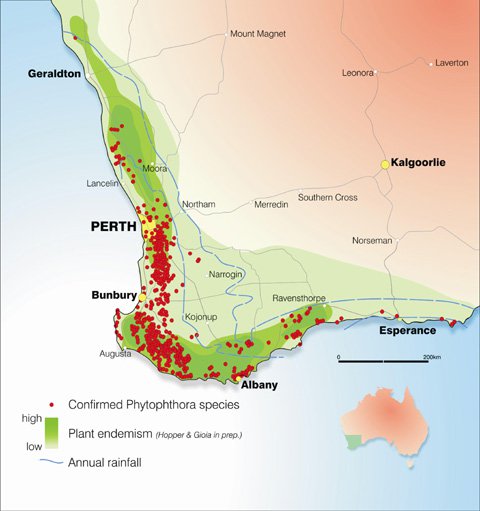
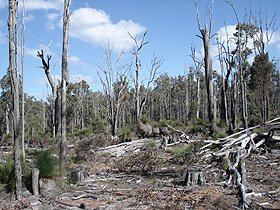
Phytophthora dieback has infected more than one million hectares in Western Australia. More than 40% of the native plant species of the region are vulnerable to the causal agent, P. cinnamomi.

Phytophthora dieback in Western Australia


Dieback in native forest in Western Australia; photo copyright Western Australian Department of Parks and Wildlife

In the United Kingdom, several Phytophthora species are causing widespread mortality of native shrubs and trees and commercial plantings.

In nearly all the studies, scientists have detected previously unknown pathogen-host relationships.

The threat from spreading pathogens with wide host ranges is not limited to the genus Phytophthora. The fungus Fusarium euwallacea associated with the Kuroshio and polyphagous shot hole borers  is known to kill at least 18 species of native plants in California and additional species in South Africa.    The laurel wilt fungus kills many trees and shrubs in the Lauraceae family. ‘Ohi‘a or myrtle rust kills several shrubs native to Hawai`i and threatens a wide range of plants in the Myrtaceae family in Australia and New Zealand. Some insects also have wide host ranges, including the Kuroshio and polyphagous shot hole borers; and Asian longhorned and citrus longhorned beetles.

When are national and international phytosanitary agencies going to adopt policies and programs that are effective in preventing the continued spread of these highly damaging tree-killing pests? At the national level, APHIS needs to aggressively use two authorities to curtail importation of plant taxa from countries of origin which present a risk of transporting additional species of pathogens:

  • NAPPRA, which allows APHIS to prohibit risky imports until it has conducted a pest risk analysis.
  • Programs under the revised “Q-37” regulations allowing APHIS to work with exporting countries’ phytosanitary officials to implement integrated pest management strategies to ensure that plants are pathogen-free before they are exported.

I have blogged about both programs before – NAPPRA here;  the Q-37 regulation strengthening here.

At the international level, the members of the International Plant Protection Convention (IPPC) must recognize the failure of the international phytosanitary system and explore ways to strengthen it. See my numerous blogs on this topic (beyond those linked to here!) by visiting www.cisp.us or www.nivemnic.us and searching under the category “forest pathogens”.


Posted by Faith Campbell


We welcome comments that supplement or correct factual information, suggest new approaches, or promote thoughtful consideration. We post comments that disagree with us — but not those we judge to be not civil or inflammatory.


SOURCES


Jung, T. et al. 2015 “Widespread Phytophthora infestations in European nurseries put forest, semi-natural and horticultural ecosystems at high risk of Phytophthora disease” Forest Pathology. November 2015; available from Resource Gate

Swiecki, T.J., E.A. Bernhardt, and S.J. Frankel. 2018. Phytophthora root disease and the need for clean nursery stock in urban forests: Part 1 Phytophthora invasions in the urban forest & beyond. Western Arborist Fall 2018

Apparently can’t access current (2018) issues of “Western Arborist” on web unless subscribe


Scientists Document Alarming Declines in Insects

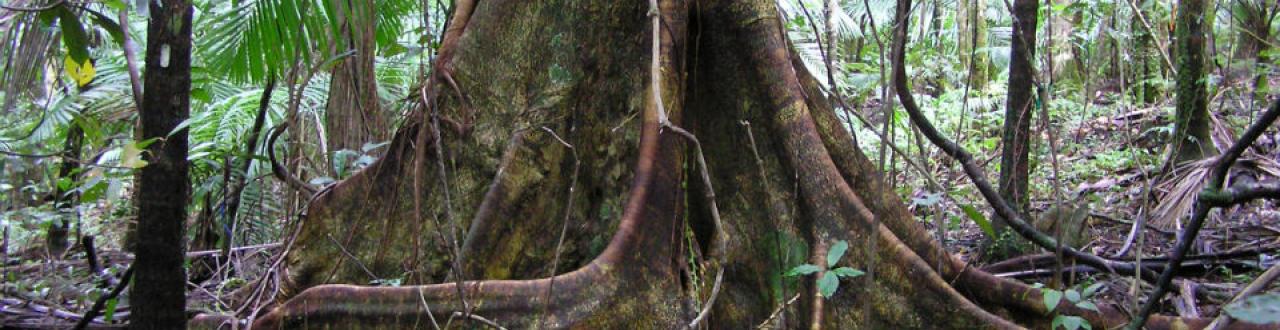
Luquillo Forest in Puerto Rico

While I usually blog about insects (and plant pathogens) that have invaded new ecosystems and are killing native plant species, I am aware that insects are numerous and vitally important components of the ecosystems in which they evolved. I join others in noting with concern evidence that insect populations in wide-apart areas have declined at very high rates. Insects appear to be affected by the Sixth Extinction Event (concept described here and here) as much as or possibly more than various vertebrate and plant taxonomic groups.

The Zoological Society of London and World Wildlife Fund published this week the 2016 version of the Living Planet report. Based on an analysis of 3,700 vertebrate species (birds, fish, mammals, amphibians and reptiles), the authors concluded that global wildlife populations have fallen by 58% since 1970 (Morelle; see references at the end of the blog).

Dirzo et al. in 2014 provided a very interesting discussion of the impacts of species’ declines in numbers and local extinctions – short of complete extinction. They asserted that “declines in numbers of individuals in local populations and changes in the composition of species in a community will generally cause greater impacts on ecosystem function than global extinctions. Dirzo et al. noted the importance of invertebrates, especially insects, in ecosystem functioning. They stated that the smaller fauna – including insects – “arguably are more functionally important” than charismatic megafauna and called for improved monitoring and study of such taxa, particularly invertebrates,

In their study, Dirzo et al. estimated that, since 1970, Lepidoptera – an order containing many important pollinators – had declined 35% in abundance globally over 40 years. Declines of other insect orders were considerably more. One study they cited found an overall 45% decline for all invertebrate populations over 35 years. More recent studies find decline rates that considerably exceed the estimated decline of 58% in global abundance of wild vertebrates over a 42-year period (Morelle; Hallmann et al.)

A year ago, Hallmann et al. reported a 76% decline in the biomass of flying insects over a 27-year period in Germany. There were seasonal variations; in midsummer, when insect biomass is highest, the decline was 82%. The study was carried out in nature protection areas – that is, places set aside and protected to conserve biological diversity. Hallmann et al. predict cascading effects on food webs and jeopardy to ecosystem services, including pollination, herbivory and breakdown of detritus, nutrient cycling and providing a food source for higher trophic levels such as birds, mammals and amphibians.

Hallmann et al. said that changes in weather, land use, and habitat characteristics could not explain this overall decline. Declines occurred in both nutrient-poor habitat types (e.g., heathlands, sandy grasslands, and dunes) and nutrient-rich habitats (grasslands, margins and wasteland), as well as in pioneer and shrub communities.

Another of the few studies looking at insects broadly, a study of flying insect biomass in the United Kingdom, found a biomass decline at only one of the four sites. Hallmann et al. note that the British researchers used considerably different sampling methods that targetted primarily high-flying insects (and caught mostly members of one fly family) whereas their own Malaise traps caught  insects flying close to the ground and a much wider diversity of taxa.

Taxon-specific studies have also found severe declines in insect populations.

Hallmann et al. concluded that the scale of decline in insect biomass – throughout the growing season, and irrespective of habitat type or landscape configuration – suggest that large-scale factors must be involved. As noted, their data did not support either landscape changes or climate change as explanatory factors – although they admit that they did not exhaustively analyze the full range of climatic variables that could potentially impact insect biomass. Hallmann et al. did think that agricultural intensification (e.g. pesticide usage, year-round tillage, increased use of fertilizers and frequency of agronomic measures) was a plausible cause of insect biomass decline given the reserves’ limited size in typically fragmented western-European landscapes. The noted that the protected areas might serve as insect sources which might be counterbalanced by the surrounding agricultural fields, which might act as sinks or ecological traps.

While Hallman et al. did not specify the types of pesticides being used by the German farmers operating near their study areas, in recent years there has been growing concern about widespread use of neonicotenoids, which appear to pose a threat to bees and possibly other insects. Three sources of information are the European Food Safety Agency; Xerxes Society; and petition pertaining to regulation of seeds treated by neonicotenoids submitted by the Center for Food Safety.

This month, Bradford Lister and Andrés García published a study that compared numbers of the insects and insectivores (birds, frogs, lizards) in Puerto Rico’s tropical rainforest in 2012 to results of Lister’s studies there in 1976 and 1977. Overall arthropod biomass in Puerto Rico’s Luquillo rainforest fell 10 to 60 times since 1970s (Lister and Garcia). Numbers of insects in the vegetation collected by sweep nets decreased to a fourth or an eighth of what they had been. The catch rate of ground-dwelling arthropods caught in sticky traps fell 60-fold (Guarino).

Lister and Garcia attribute the crash in arthropod numbers to climate change, especially rising maximum temperatures. They note that over the same 40-year period, the average high temperature in the rainforest increased by 4 degrees Fahrenheit (2oC). Lister and Garcia cite several studies indicating that tropical invertebrates are adapted to a narrow band of temperatures.

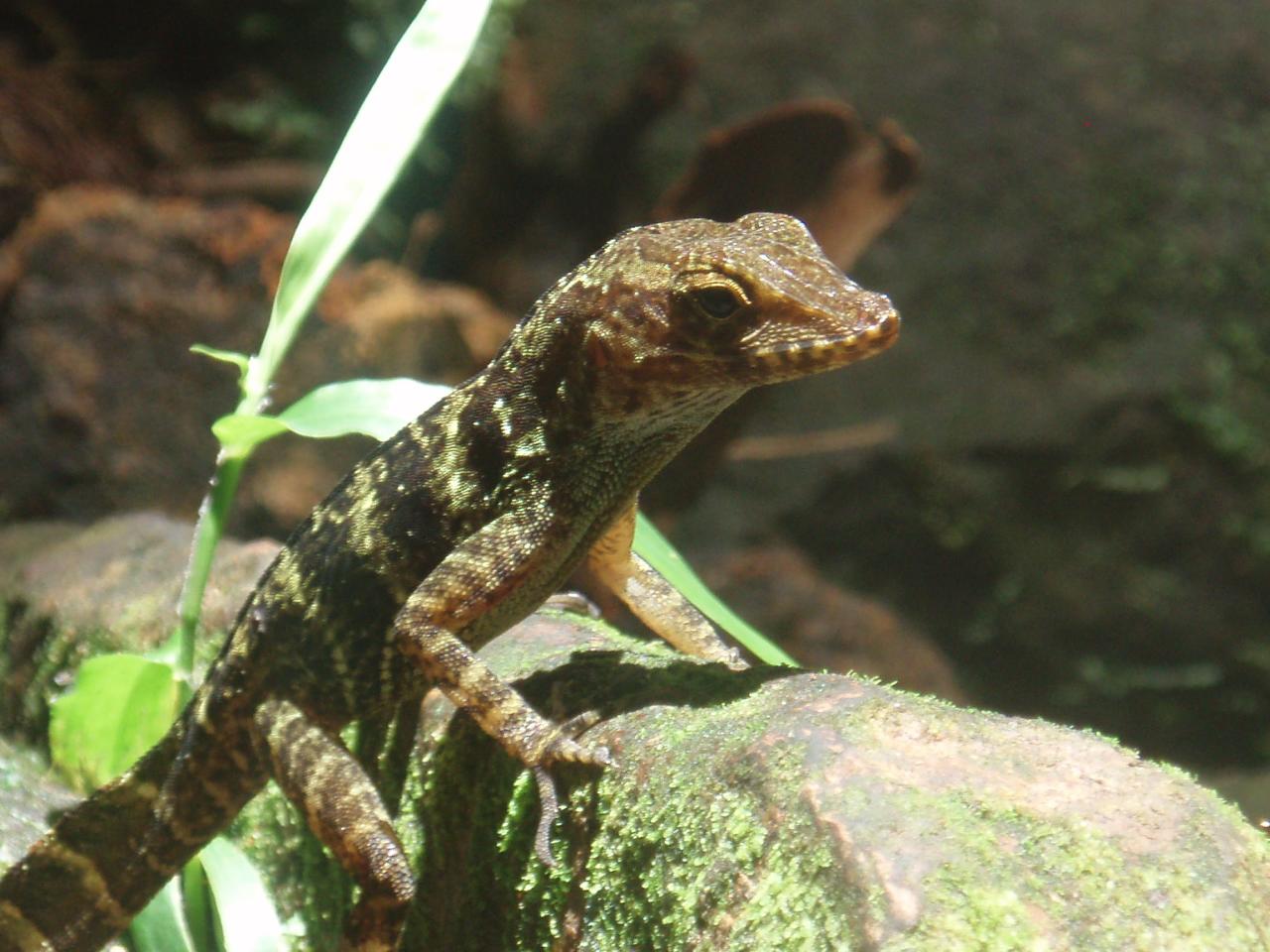
Lister and Garcia also measured declines among insect-feeding vertebrates. The biomass of anole lizards dropped by more than 30%. Some anole species disappeared from the interior forest (Guarino). Declines in number of coqui frogs (Eleutherodactylus spp) began in the 1970s. Currently, three of 16 species are extinct, and the remaining 13 species are classified in some category of endangered or threatened. Disease caused by the fungus Batrachochytrium dendrobatidis is not a factor at the elevations where study done.

Anolis gundlachi; photo by Joe King

Citing data from other researchers, Lister and Garcia report that numbers of insectivorous birds captured in mist nets fell 53% between 1990 and 2005.

Lister and Garcia sought to explain why there were simultaneous, long-term declines in arthropods, lizards, frogs, and birds over the past four decades in the relatively undisturbed rainforests of northeastern Puerto Rico. They concluded that climate warming has been a major factor driving reductions in arthropod abundance, and that these declines have in turn precipitated decreases in forest insectivores in a classic bottom-up cascade.

As supporting evidence, Lister and Garcia cite

(1) Declines across varied species and communities that occurred in parallel with rising temperatures.

(2) Simultaneous declines of all arthropod taxa in their own and others’ studies – pointing to an overriding environmental factor that has had ubiquitous, adverse effects on forest arthropods regardless of taxonomic affiliation, stratum occupied, or type of niche exploited.

(3) Declines in arthropod abundance that occurred despite major decreases in their predators – and, presumably, reduced predatory pressure..

Lister and Garcia note that there have been almost no significant human perturbations in the Luquillo forest since the 1930s, and that pesticide use in Puerto Rico fell nearly 80% over the past 40 years with the decrease in agricultural activity on the island. Some of the insect trend data came from studies carried out in the Luquillo Long Term Ecological Study site.

Lister and Garcia say that major weather perturbations have also had an impact. Over the 36-year time span, there have been five major hurricanes and eight severe droughts. They note that the island’s vegetation regenerated rapidly after hurricanes Hugo and Maria; insect populations regenerated rapidly after Hurricane Georges.  La Niña episodes led to an immediate increase in the abundance of canopy invertebrates, whereas El Niño episodes caused declines.

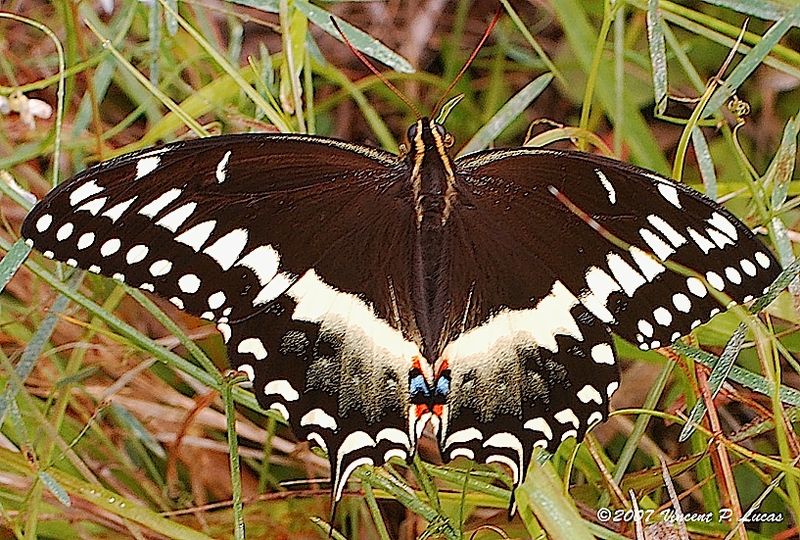
Of course, some insects are under threat from loss of their primary food plants to invasive species.  I note particularly the Palamedes swallowtail butterfly (Papilio palamedes), which depends on redbay and swamp bay, and an estimated 21 species of North American butterflies and moths believed to specialists or largely dependent on ash.

Palamedes swallowtail; photo by Vincent P. Lucas


In some cases, e.g., hemlock woolly adelgid and Asian longhorned beetle, neonicotenoids, specifically imidacloprid, is an essential tool to controlling a tree-killing invasive insect.


We welcome comments that supplement or correct factual information, suggest new approaches, or promote thoughtful consideration. We post comments that disagree with us — but not those we judge to be not civil or inflammatory.
SOURCES

Dirzo, R., H.S. Young, M. Galetti, G. Ceballos, N.J. B. Isaac, B. Collen. 2014. Defaunation in the Anthropocene. Science 345, 401

Guarino, B. 2018. ‘Hyperalarming’ study shows massive insect loss. 2018. The Washington Post October 15 2018

Hallmann CA, Sorg M, Jongejans E, Siepel H, Hofland N, Schwan H, et al. 2017. More than 75 percent decline over 27 years in total flying insect biomass in protected areas. PLoS ONE 12 (10): e0185809. https://doi.org/10.1371/journal. pone.0185809

Lister, B.C. and A. Garcia. 2018. Climate-driven declines in arthropod abundance restructure a rainforest food web. Proceedings of the National Academy of Sciences. http://www.pnas.org/content/early/2018/10/09/1722477115

Morelle, R. Science Correspondent, BBC News. 2018. World wildlife ‘falls by 58% in 40 years’ https://www.bbc.com/news/science-environment-37775622


Status of Phytopthoras in the United States & Europe: an update

tanoak killed by sudden oak death; Marin County, Calif. photo F.T. Campbell

Here is some interesting information from recent issues of the the California Oak Mortality Task Force’s bimonthly newsletter. I am updating my earlier blogs on the status of Phytophthoras and sudden oak death (SOD) in the United States and Europe.


More than 600 samples were taken from streams or ponds in nine states (Alabama, Florida, Georgia, Mississippi, North Carolina, Pennsylvania, South Carolina, Tennessee, and Texas) during 2016. Ten of the samples were positive: seven from three streams in Alabama and three from one stream in Mississippi. Each of these had tested positive before; none was a new positive location. [March newsletter]


  • The disease continues to spread in Oregon and California:

During 2016 and early 2017, sudden oak death and tanoak mortality continued to intensify within the officially designated quarantine zone in southwest Oregon. So far, no new outbreaks have been detected outside the quarantine zone.

In Oregon, there is growing concern about the disease and the paucity of funds to address it. As a result, Oregon state Representative David Brock Smith and U.S. Senator Jeff Merkley have formed an Oregon Sudden Oak Death Task Force. The Task Force is developing a collaborative action plan to secure enough funding to contain the infestations of the NA1 genetic strain (the one widespread in Oregon and California) and to eradicate the EU1 lineage (this is the only known site where this strain is established in the forest in North America; see my blog from August 2015, which explains the significance of these strains.)  [March newsletter]


In California, scientists have been surprised by the intensity of the disease in several parks on the eastern side of San Francisco Bay – an area that is drier than most forests that are infested. The severe drought of recent years has not prevented spread of the disease. Even more surprising, one park has very little California bay laurel – which is considered to be the primary source of infection. [March newsletter]


  • Native plant nurseries may be spreading various Phytophthoras (see my blog from last year here) or the presentations on “Phytophthora Detections in Native Plant Nurseries and Restoration Sites” posted here)

The National Ornamentals Research Site at Dominican University (NORS-DUC) sampled several types of native plant nurseries in fall 2016 to determine the extent of movement of Phytophthora species on plants they sell. Unfortunately, the report in the newsletter did not include results of the sampling. [January 2017]

CFDA photo of herbaceous plants with Phytophthora infection

Oregon and Washington authorities acted in response to the initial reports from the San Francisco area, and sampled nurseries in their states. They found a similarly high infestation rate in native plant nurseries in their states. Washington State University and Oregon State University have held several 2 ½-day workshops on “Preventing Phytophthora Contamination in Native Plant Nurseries and Restoration Sites”. [May newsletter]

For more information about Phytophthoras in native herbaceous plants in California, visit http://ucanr.edu/sites/sod6/Proceedings/Presentations_and_Posters/  and  www.calphytos.org

  • Disease costs in England and Wales could top 1 billion dollars


Drake and Jones have estimated that damage by Phytophthora ramorum and P. kernoviae [link to Gallery] to non-extractive public use and non-use values at risk from uncontrolled spread of these diseases in England and Wales is £1.446 billion per year (approximately $US 1.82 billion). The greatest public value at risk (slightly more than one-third) is from an uncontrolled spread of these diseases to heritage gardens; lower risks are to the diseases’ spread to woodlands and heathlands. [March newsletter]


5) Ireland resembles Europe in numbers of Phytophthora species:


O’Hanlan and colleagues tested more than 11,000 samples from both “trade” environments (presumably, nurseries) and “non-trade” environments (presumably plantings or natural environments). They detected 19 species and 3 informally designated taxa of Phytophthora, including 8 new records for Ireland. Thus, Ireland’s situation is similar to that in Europe more broadly – a study last year by Junker and colleagues report the detection of 15 Phytophthora species in two commercial woody ornamental nurseries [link to blog about Phythophs in Europe] In Ireloand, P. ramorum was found on 30 hosts; P. syringae on 6 hosts; P. kernoviae on 3 hosts. Phytophthora species were most frequently detected on rhododendrons – (12 Phytophthora species). [January newsletter]


SOURCES


Drake, B. and Jones, G. 2017. Public Value at Risk from Phytophthora ramorum and Phytophthora kernoviae Spread in England and Wales. Journal of Environmental Management. 191: 136–144.


Junker, C., Goff, P., Wagner, S., and Werres, S. 2016. Occurrence of Phytophthora in commercial nursery production. Plant Health Progress. 17:64-75.


O’Hanlon, R.; Choiseul, J.; Corrigan, M.; Catarame, T.; and Destefanis, M. 2016. Diversity and Detections of Phytophthora Species from Trade and Non-Trade Environments in Ireland. EPPO Bull. 46: 594–602. DOI: 10.1111/epp.12331.


Posted by Faith Campbell


We welcome comments that supplement or correct factual information, suggest new approaches, or promote thoughtful consideration. We post comments that disagree with us — but not those we judge to be not civil or inflammatory.
 

Support Effort to Declare UN “International Year of Plant Health”

forum-1190786_960_720

Officials who carry out plant health programs around the world are trying to build public understanding and support for such programs by organizing an “International Year of Plant Health”. Such “international years” are designated by the United Nations General Assembly – so – as you can imagine – years of planning go into the effort.

So far, the proposal has been approved by the Council of Agricultural Ministers and will be considered by the Conference of the UN Food and Agriculture Organization in June 2017. If approved by the FAO, the proposal will then be put to the full United Nations by sponsoring nations’ diplomats.  The General Assembly meeting in 2018 would consider the proposal – assuming FAO does forward it.

The goal of the proposed Year is to persuade decision-makers and the public that protecting plants by preventing and containing pests is an essential foundation for countries’ efforts to achieve food security, economic development, and environmental protection. Organizers also want people to know that plant protection is also a necessary component of policies to facilitate trade.

The events associated with the “International Year of Plant Health” will recognize plant health disciplines and the many people and organizations who contribute at the global, regional and national levels. It is not intended to celebrate specifically the International Plant Protection Convention, or the standards and other measures it has adopted.

Plant health professionals are concerned that funds and other resources dedicated to plant protection services are shrinking despite the growing threat to agricultural and natural resources from the spread of pests. Without more attention, they fear that resources will fall even farther behind the need as agencies confront demands from other global challenges. They intend to make the case that healthy plants help solve — rather than compete with – such other big problems as climate change, changing migration patterns, biosecurity concerns, and economic development.

The proponents specific objectives are to:

  1. Raise awareness among political decision makers at global, regional, and national levels.
  2. Build up plant health efforts and resources at all levels to better match growing needs linked to increasing trade and the new pest risks caused by climate change.
  3. Educate the broader public so it better understands the importance of protecting plant health.
  4. Enhance dialogue and stakeholder involvement in plant health.
  5. Increase information about the state of plant protection in the world.
  6. Promote partnerships on national, regional, and global levels.

It is hoped that success in raising awareness and understanding will result in sustainable funding of national plant health systems that will, in turn, enable

  • Improved capacity to take on more plant health related projects and programs
  • More effective collaboration and solutions at the global level
  • Better plant health situation in all countries.

I assume that readers of this blog are stakeholders in the global plant protection network. Most of you are professionally engaged in forest or nature conservation (perhaps through research), or are active conservation advocates. Some of you might be affiliated with trade and grower associations. Please consider how you can help educate political decision makers about the importance of protecting plants from non-native organisms that potentially threaten native ecosystems or agricultural and horticultural production. The first task is to ensure that the incoming Secretary of Agriculture actively supports the proposal both among his colleagues (e.g., with the Department of State) and at the FAO Conference in June. Please use your contacts in the government – including the Congress – and with other stakeholders to promote the idea.

Assuming that the International Year of Plant Health is approved, there will be many opportunities to lead or collaborate in the planned outreach efforts. Our engagement might help shape the message. For example, we need to ensure attention to the many challenges currently hindering plant health protection,  as discussed in my blogs and in numerous peer-reviewed articles and reports. Also, we need to make certain that the environmental and biodiversity aspects of plant protection are prominent among considerations.

And if the Year is not approved?  In my mind, that action would prove even more that we need to educate those who do not yet see why healthy trees and other plants matter!

Let me know what you think we might do – by sending me an email using the “contact us” button. Together, we can use this proposal to join coalitions with the goal of promoting stronger, more effective protection for our forests and other natural resources!


Posed by Faith Campbell

We welcome comments that supplement or correct factual information, suggest new approaches, or promote thoughtful consideration. We post comments that disagree with us — but not those we judge to be uncivil or inflammatory.

Europe moves to curtail forest pest introductions – but strongest measures are hampered by trade rules

alb-in-euro-on-tree-doris-holling-wslALB in Europe; photo by Doris Holling WSL

Maartje J. Klapwijk and several colleagues have recently taken a hard look at non-native forest pests in Europe.  They conclude that current European legislation is inadequate to prevent forest/tree pest introduction, establishment and spread in the European Union. (A link to the article is provided at the end of this post.)


Some of the proactive steps that they recommend, however, will be difficult to enact. International trade rules (World Trade Organization, Agreement on the Application of Sanitary and Phytosanitary Measures – SPS Agreement) require that countries prove that the target commodity in trade presents a significant pest risk – proof that is difficult to obtain before damage has actually occurred.


(I have written extensively about this “Catch 22” – see Fading Forests II here)


Furthermore, European Union rules prevent countries from taking proactive measures to restrict potentially pest-infested plants or wood products being traded from one EU member country to another.  However, member countries’ vary in their levels of concern about tree-killing pests. As a result, phytosanitary measures are quite weak in some countries. Once a pest-infested shipment enters a country with a weak phytosanitary system it can be moved freely to any other member country.


Thus, international and EU rules together create a significant risk that a pest will enter, establish, and then be spread by commerce to the rest of the Union.


The authors note that growing trade in living plants and wood products has brought a rise in non-native tree pests becoming established in Europe. The number of alien invertebrate species has increased two-fold since 1950; the number of fungal species has increased four-fold since 1900. Few studies have attempted to quantify the economic impacts of non-native tree-killing pests in Europe. But the authors say that the introduced pests will cause economic damage either directly by reducing the revenue of the country or imposing control costs; or indirectly through trade restrictions or reduced values of real estate.


Among the recent introductions are the pinewood nematode from North America; Asian and Citrus longhorned beetles and ash dieback fungus from Asia; and sudden oak death and other Phytophthora species. (I described the extent of Phytophtphora infestations in European nurseries in a blog posted on April 25.) As a partial response, EU countries have created a network of nurseries intended to serve as an early warning system against further introductions of alien tree pests.  (Descriptions of these pests and where they are found are available on the website of the European and Mediterranean Plant Pest Organization (EPPO) here)

alb-in-europeALB introduction sites in Europe


The European Union regulates invasive species through the Environment Directorate-General (DG Environment).  However, tree-killing pests and other plant health concerns are the responsibility of a different governmental body, the Directorate-General Health and Food Safety (DG SANCO).


Maartje J. Klapwijk and colleagues note the risk associated with:

  • crates, pallets, and other forms of wood packaging;
  • wood chips (Europe imports more than 4 million tons of wood pellets as fuel in order to meet its carbon emission reduction goals)  ; and
  • especially – living plants.


They note that the international community has adopted two international related sanitary agreements : ISPM#15 (wood packaging) and ISPM#36 (living plants).  The European Union requires certificates stating that imported plants are free from harmful organisms and that phytosanitary measures stipulated by the importing country have been applied. However, limited resources mean that only a small proportion of living plants, plant material, soil and wood products arriving in Europe can be inspected. “The main purpose of the inspections is to verify whether shipments comply with regulations, rather than to stop potentially harmful organisms …” (my emphasis).  Reflecting the differences in levels of concern among EU member states noted above, there are large differences in inspection intensity among the EU member states.


The pertinent European legislation is Directive 2000/29/EC. It relies on a ‘‘black-list’’ of plants and plant products that are banned from import and specifies procedures to apply when any of these banned products is found in the EU. According to Klapwijk and colleagues, these quarantine lists provide insufficient protection because harmful organisms that enter the EU often are unknown prior to establishment.


Aware of the current system’s inadequacies, the EC has proposed a new regulation which would simplify and harmonize plant passports, allow for stricter measures against pests, and address emerging risks from certain living plant imports from some non-EU countries. Instead of listing harmful plant pests, the proposed regulation “sets out the conceptual nature of quarantine pests” and empowers the Commission to adopt measures to control certain pests.


Klapwijk and colleagues praise these actions as a significant step forward. However, they note that the new rules still don’t provide for precautionary assessments of high-risk commodities. Nor do they restrict import of the highest-risk commodities, such as imports of large plants or plants in soil. (my emphasis)


The authors note that other countries take a more pro-active, precautionary stance. Australia and New Zealand require that all imported plant products be assessed and proved safe before import. The U.S. restricts the size of imported plants and does not allow imported plants to be in soil. (The U.S. has proposed a new approach that relies increasingly on integrated measures or systems approaches rather than port-of-entry inspection.  However, this proposal has been pending for more than three years. (APHIS explains its proposal here)


The question is, do trade rules allow Europe to apply the same restrictions as other countries? As Klapwijk and colleagues note, the EU cannot adopt more rigorous phytosanitary measures without providing scientific evidence for this necessity. Preparing a risk assessment to make this case will involve considerable work. As part of this process, Europe should announce that it wishes to raise its “level of protection” and that more stringent phytosanitary measures are needed to achieve that new goal.


Meanwhile, the EU can enhance its active detection efforts and “rapid response” capabilities. The new EC directive will require countries in which a new pest is detected to eradicate or contain the pest. However, the response continues to depend on investments and actions by individual Member States – which have often been insufficient.


Klapwijk and colleagues endorse the suggestion by Hulme et al. (2009) that the European Commission establish a single agency to respond to introductions of any kind of invasive species (not just tree pests) – modeled on the European Centre for Disease Prevention and Control.


Finally, Klapwijk and colleagues note the importance of engaging the public.  Citizens’ participation can enhance early detection and strengthen public support for management strategies.


CONCLUSIONS


We Americans are very lucky that the U.S. Department of Agriculture had fairly stringent rules governing plant imports before the World Trade Organization and SPS Agreement were negotiated in the 1990s.  We don’t have the burden of proving that imports of large plants (small trees!) in soil is too risky. (This not to say that U.S. regulations should not be tightened further for the most high-risk imports. See Fading Forests III here).  Europeans should be able to build their case for more restrictive trade rules on existing risk assessments and practices utilized by the U.S., Australia, New Zealand, and others; on the numerous studies published in recent years that describe recent introductions to Europe and the pathways by which they entered; and by the number of those introductions alone.  (To see what has been introduced, visit the website of the European and Mediterranean Plant Pest Organization (EPPO) here)


One important step in improving U.S. rules would be to finalize the proposal – put forward in 2013 – to depend more on integrated measures or systems approaches rather than inspection at the port of entry.  Join with me in urging the Secretary of Agriculture to finalize this proposal before he leaves office in January.   Contact me via the “contact us” button on the webpage to learn how you can help.


The United Kingdom has voted to leave the European Union. This means that the U.K. has the opportunity – and burden – of developing its own phytosanitary regulations. The U.K. has some of the leading forest pathologists and entomologists. The risk is obvious to all – especially Phytophthora ramorum in larch plantations and ash dieback disease in many areas of the country. I hope that the British will seize this opportunity to adopt really effective phytosanitary regulations that can serve as a model for the rest of Europe – and possibly even the U.S.


Sources


Maartje J. Klapwijk, Anna J. M. Hopkins, Louise Eriksson, Maria Pettersson, Martin Schroeder,A°ke Lindelo¨w, Jonas Ro¨nnberg, E. Carina H. Keskitalo, Marc Kenis. 2016. Reducing the risk of invasive forest pests and pathogens: Combining legislation, targeted management and public awareness. Ambio 2016, 45(Suppl. 2):S223–S234  DOI 10.1007/s13280-015-0748-3


Hulme, P.E. 2009. Trade, transport and trouble: Managing invasive species pathways in an era of globalization.  Journal of Applied Ecology 46:10-18


Posted by Faith Campbell

On the Road to Extinction, Invasive Plants Do Have Significant Impacts

KONICA MINOLTA DIGITAL CAMERA
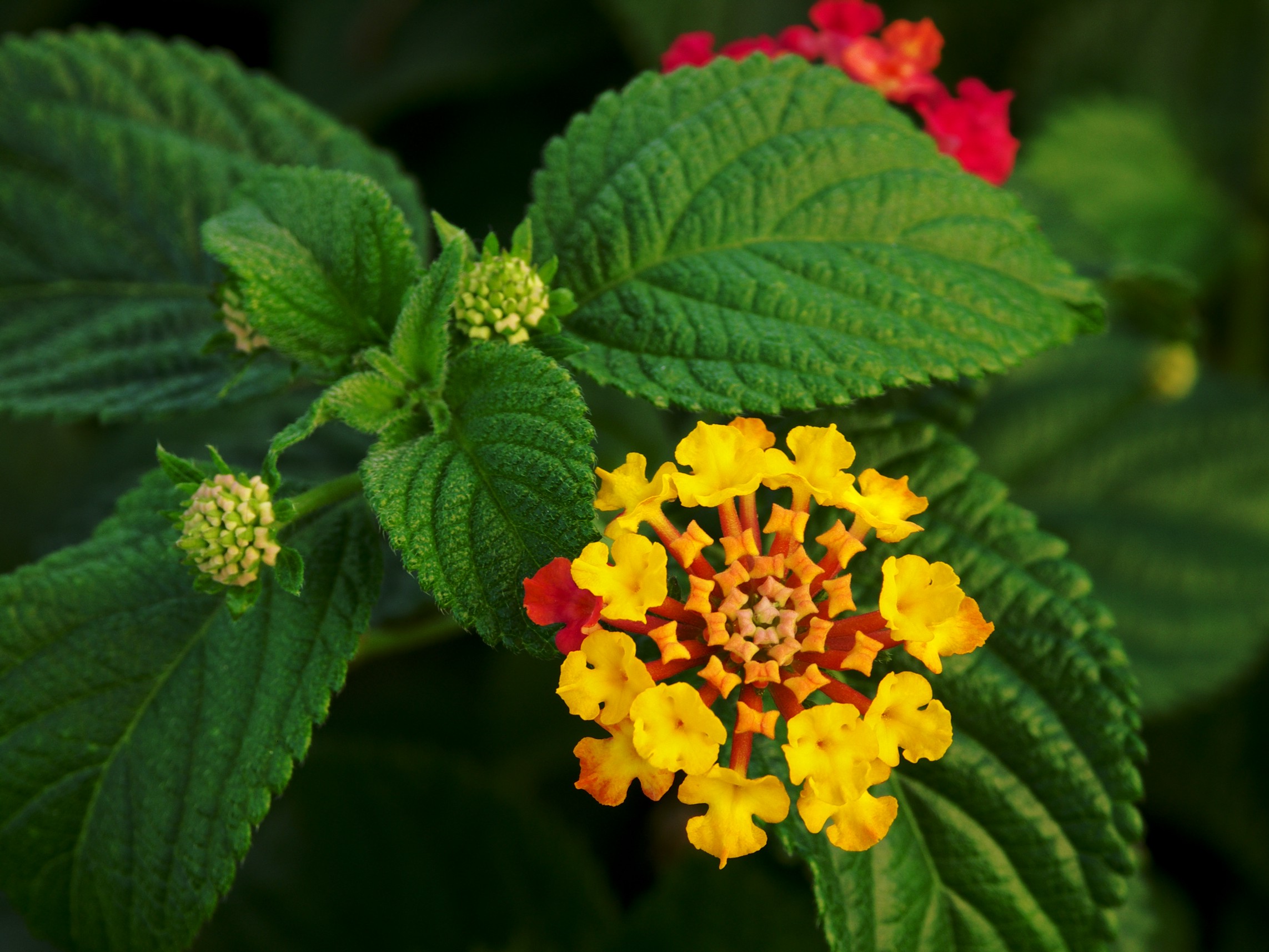
Lantana camarata

No studies have documented extinction of a native plant species caused by invasive ones. This has led to questions about whether invasive plants have truly significant impacts. (Of course, species extinction is not the only important impact).

These questions have been answered in a recent article by Paul Downey (of the Institute for Applied Ecology, University of Canberra) and David Richardson (of the Centre for Invasion Biology at Stellenbosch University, South Africa). A link to the article is provided at the end of this blog.

Downey and Richardson argue that studies have documented instances of invasive plant species putting native plants on the path – or trajectory – to extinction. Furthermore, plants go extinct more slowly than animals, often over centuries. As result, current approaches to analyzing impacts of invasive plants underestimate the damage that non-native species cause because they assume extinction will not result.

The authors name six “thresholds” along the trajectory to plant extinction. Each is affected by invasive plants:

  1. Plants die more quickly than they can be replaced by their offspring in some locations.
  2. Plants disappear from some locations entirely, but seeds or spores remain that could regenerate a new cohort of individuals.
  3. Some locations lose both individual plants and their propagules. This is a local extinction.
  4. The last locations hosting a species lose their individual plants, but in some places seeds or spores remain in the soil.
  5. The species is entirely lost in the wild with no individuals or propagules. The only survivors are held in botanic collections.
  6. Extinction. The remaining plants are lost, and the remaining seeds or spores are no longer capable of becoming new plants.

By focusing purely on full extinction — step six — plant conservationists lose sight of the threats to species as they occur and accumulate at each stage of the process. Without such attention we fail to act on opportunities to protect the species and counter the wider impacts of its disappearance.

Downey and Richardson note that plant invasions affect each component of a plant species’ population dynamics:  fecundity (seed production); death; immigration; and emigration (dispersal). Yet they could find no studies that have explored the effects of alien plants for all four components collectively.

A second explanation for scientists’ not documenting any extinctions caused by invasive plants is that it is extremely difficult to prove that every last individual or propagle of a plant species is dead . Many plant species have long-lived seed banks in the soil, or can regenerate from underground structures – so it is hard to know when that species is truly gone. This is especially true since seed banks are rarely monitored.

Furthermore, many of the conditions needed to demonstrate that alien plants have caused the extinction of native plant species have either not been measured, or have been examined for too short a time. The IUCN definition of extinction requires that data be collected over “a period that is appropriate for the life cycle of the species” (IUCN. 2014. Guidelines for using the IUCN Red List categories and criteria. Version 11. Prepared by the Standards and Petitions Subcommittee. Switzerland). Given the long persistence of plant species, the “appropriate period” exceeds the timeline almost all of even the few long-term studies in invasion ecology.


Downey and Richardson say that relying on changes in species richness to assess the impacts of alien plants will not adequately predict or describe the effects of invasion. Such analysis especially will not provide evidence for a species crossing from Threshold 1 to 2 or 3 . Indeed, they assert, collective species richness measures could mask losses of some species in instances where additional species are also recorded (i.e. the losses are off-set by additions).


The authors have found abundant evidence of invasive plants driving native plants along this extinction trajectory. They cite several examples of an invasive plant causing a “threshold effect” – that is, increases in alien plant cover or density result in decreased native plant species diversity or richness. They define this as the native species crossing from Threshold 1 to 2. Among the examples provided are several species in Australia and New Zealand and Lonicera maackii in the United States.


The authors also provide examples of species causing “extinction debts” – that is, a significant time lag between the introduction of an alien species initiating a native species’ movement along the trajectory and its actual extinction. One mechanism is by reducing native plants’ seed production. Again, Lonicera maackii is cited.

Downey and Richardson also note the potential downsides of invasive plant control measures.

In the end, the authors urge that scientists “… shift attention away from the end point of the extinction trajectory … to give due consideration of the full series of processes that drive declines of populations of native species.”

As Richardson has said in an interview with Oxford University Press, “… There is absolutely no doubt that alien plant invasions are eating away at native plant biodiversity. Many native plant species — probably HUNDREDS of species — are precariously close to being functionally extinct and survive as the ‘living dead’.’”


Source: Downey, P.O., D.M. Richardson. 2016. Alien plant invasions and native plant extinctions: a six-threshold framework. AoB Plants, 2016; 8: plw047 DOI: 10.1093/aobpla/plw047 ; open access, available at http://aobpla.oxfordjournals.org/


Posted by Faith Campbell

A Red List for Trees!

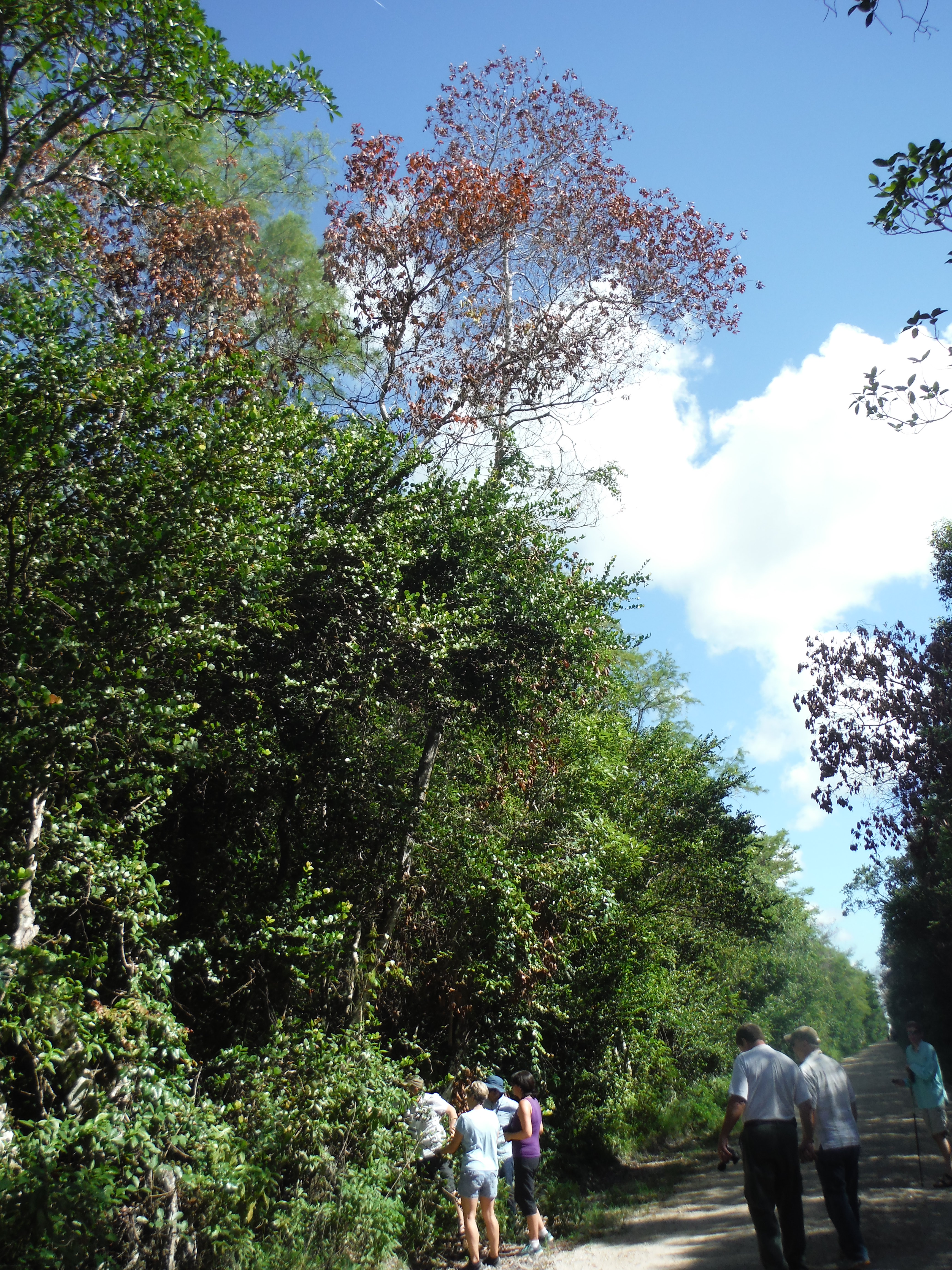
16 dead sweet bay + grpF.T. Campbell  dead sweetbay, Florida Everglades

At the global level, the World Conservation Union (IUCN) is the recognized leader in conservation.  Information from the IUCN’s Red List has been widely used to inform conservation policies and legislation, as a tool for environmental monitoring and reporting, and to prioritize areas for conservation action.


The IUCN is holding its World Conservation Congress in Honolulu during the first half of September.  The several sessions focused on both invasive species and forests have been grouped into “Journeys”.  The invasive species Journey schedule is available here.  The schedule for the forest Journey is available here   I don’t think either puts much emphasis on the year-old Tree Specialist Group.


Over the decades, the Union has increasingly engaged on plant conservation issues. The plants under consideration now include trees! There are multiple ways that you can be part of this important effort. Details are below. One of the efforts’ leaders assures me that the IUCN process will address tree species not yet “endangered” but under severe pressure – currently or virtually certainly in the near future – from established non-native insects and pathogens.


The IUCN has noted that trees have high ecological, economic, and cultural value. Forests are being converted or degraded by many human-related activities, including overharvesting, fire and grazing – to say nothing of climate change and non-native pests. Yet – the impacts of forest conversion and degradation on tree species per se are largely unknown. How many tree species qualify for a “Red List” category: extinct, critically endangered, endangered, or vulnerable? (For a discussion of the criteria applied in assigning categories, go here.

(Of course, full-scale extinction or endangerment of a species is the extreme; ecological damage begins earlier and more locally, as the species declines as the result of a suite of pressures …)


The IUCN has formed a Global Tree Specialist Group to conduct a comprehensive conservation assessment of the world’s tree species, linked to IUCN’s Red List. The effort is being led by the Tree Specialist Group  and the Botanic Gardens Conservation International (BGCI). The group’s mission, underlying considerations and process are described in an article published in the Oryx article cited below.


IUCN has recently completed analyses of extinction risk in selected animal groups. They concluded that 14% of bird, 33% of amphibian, and 22% of mammal species are either threatened or extinct.


Preparing the same type of analysis for tree species will be more complicated. First there are many more plant species than ones in the selected groups of animals. Scientists don’t know the total number of extant tree species. One estimate is 60,000.  If that estimate is in the ballpark, the status of approximately 84% of tree species has not yet been assessed. Assessments of tree species begun in the 1990s have resulted in approximately 9,500 species being included in one of the Red List categories.  They represent slightly less than half of all plant species listed.


To achieve the goal of assessing the status of all tree species by 2020, organizers plan to adopt the approach used successfully in the recent assessments of vertebrate groups – mobilizing global data sets (which have become more numerous and easier to use) and hundreds of volunteer experts.


To start, the Group is focused on specific plant families with high numbers of trees, e.g., Aquifoliaceae, Fabaceae, Fagaceae, Lauraceae, Meliaceae and Myrtaceae. Combined, these families include more than 20,000 species. Assessments of Betulaceae and Ebenaceae have already started, led by BGCI and the Missouri Botanical Garden, respectively.


Project leaders hope to complete 5,000 more tree assessments – new or updates – during 2016.


What is Under Way


Other IUCN specialist groups are assisting in assessing the status of trees in various geographic regions or with particular human uses. The IUCN Plants for People initiative is already assessing timber, medicinal and crop wild relatives. The Crop Wild Relative Specialist Group has prepared draft assessments for over 90 woody species of Malus, Prunus, Pistacia and Mangifera. Specialist Groups and Red List authorities in South Africa, Brazil, and East Africa and several island groups are contributing.


A third focus will be tree species presumed to be most at risk from climate change, e.g., montane and island trees. IUCN Specialist Groups in Hawai`i, New Caledonia, Galapagos, Mascarene Islands, Fiji, and Madagascar are working.


The BGCI is making progress on assessing Europe’s non-coniferous trees. If you wish to help, contact Malin Rivers at malin.rivers@bgci.org.


In North America, the U.S. Forest Service hosted a meeting on “Gene Conservation of Tree Species” at the Morton Arboretum in Chicago in May 2016. Murphy Westwood facilitated a special session during which “listing” experts from IUCN, NatureServe, USFS CAPTURE Program, and the U.S. Fish and Wildlife Service compared their assessment processes and discussed how data might be shared more efficiently. A goal of completing the IUCN Red List of North American Trees was agreed on. The Morton Arboretum will help coordinate the effort. To contribute please contact Murphy Westwood at mwestwood@morton.org.  


One suggestion was to conduct an IUCN Red List assessment for the genus Fraxinus. Two ash species – one Asian, one Central American – are included in the IUCN Red List (although one needs to be updated). Jeanne Romero-Severson of Notre Dame University has offered to undertake assessments for green ash, Fraxinus pennsylvanica, and black ash, Fraxinus nigra. If you wish to help, contact Sara Oldfield at sara@saraoldfield.net.


(I think several other species also warrant IUCN assessment, including redbay Persea borbonia, tanoak Notholithocarpus densiflorus, and whitebark pine Pinus albicaulis)


This IUCN effort represents yet a fourth set of people examining tree-pest interactions – people integrated into traditional, internationally-focused conservation organizations. There are at least three other groups already involved: (1) forest pest experts in academia and government agencies, (2) people who focus on invasive species, and (3) phytosanitary officials. I think that these latter three groups already interact less smoothly than would be ideal. How can we all combine our efforts to enhance protection programs?


Might more of the scientists who work on insects and pathogens attacking tree species join the IUCN Tree Specialist group? Might organizers of meetings make a greater effort to engage people from all four silos in discussions of strategies? Might some virtual for a be established that could facilitate communication across the gaps – perhaps emphasizing the gap between invasive species experts and phytosanitary officials?


Finally, how can we use the new focus on tree species’ degree of endangerment to enhance efforts to prevent and respond to invasions by non-native insects and pathogens? How do we link these concerns to existing attention to the ecological and economic impacts – which begin to manifest long before a species qualifies as “endangered”.  How can the various approaches reinforce each other?


SOURCES


Newton, A., S. Oldfield, M. Rivers, J. Mark, G. Schatz, N. Tejedor Garavito, E. Cantarello, D. Golicher, L. Cayuela, and L. Miles. 2015. Towards a Global Tree Assessment. Oryx, Volume 49, Issue 3, July 2015, pp. 410-415.


Explanatory information available at

https://www.bgci.org/plant-conservation/globaltreeassessment/

Click to access GTALeaflet%20FINAL.pdf


The GTSG Newsletter is apparently available only to those who are part of the IUCN network.


For more information, contact Sara Oldfield, Co-Chair GTSG, at sara@saraoldfield.net


Posted by Faith Campbell

European study buttresses case for revolutionary changes to phytosanitary system

PHYTRA_06[1]

rhododendron in Europe sickened by P. ramorum; photo from EPPO website


A recently published study by European researchers [Jung, T. et al. 2015] documents the failure of current European and global phytosanitary programs and calls for “a new holistic and integrated systems approach”.  The authors specifically criticize Article VI.2 of the International Plant Protection Convention  because it requires that a plant pest be identified and its risks assessed before a country may adopt a phytosanitary measures.  The authors call this requirement “paradoxical” given the large number of potentially damaging plant pests that remain unknown to science.


The study focuses on the genus Phytophthora, which contains about 150 identified species and perhaps 500 species not yet identified by scientists.  The identified species include plant pathogens which are responsible for more than 66% of all fine root diseases & more than 90% of all collar rots of woody plant species.  Examples include the pathogens responsible for the Irish potato famine, sudden oak death, Port-Orford-cedar root disease, the die-off of many endemic plant species in Western Australia and damage to many other species in Europe and North America, and mortality and decline of oaks and alders across Europe.


The authors note that

  • Most of the ~150 currently known species and designated taxa of Phytophthora were unknown to science before they turned up in new environments on other continents as invasive aggressive pathogens of native plants.
  • Forty-four of the 64 Phytophthora taxa detected in the present study were unknown to science before 1990.
  • None of the 59 putatively exotic Phytophthora taxa detected in the present study had been intercepted at European ports of entry. (Some of these introductions are known to be recent; see UK reports on the 4th P. ramorum lineage ) and P. lawsonii detections in the U.K., France and the Netherlands in 2010.)
  • In many cases, had a Phytophthora been detected, the detection would not have resulted in rejection of the shipment because only 5 Phytophthora species are regulated under European regulations.
  • Spread of the quarantine organism ramorum was not halted despite the presence of strict quarantine regulations.


I have written several times about the threat to U.S. trees and forests from insects and – especially – pathogens introduced via the trade in live plants; see Fading Forests II and III .  Fading Forests II discusses the threat from unknown pests and the roadblocks to managing that threat raised by the World Trade Organization’s Agreement on the Application of Sanitary and Phytosanitary Measures and the implementing procedures adopted by the International Plant Protection Convention.  Fading Forests III discusses USDA APHIS efforts to adopt more effective regulatory approaches through adoption of both international and regional standards (ISPM#36 and RSPM#24) and revision of its own Q-37 regulations.

Jung and his 65 (!) coauthors present some frightening facts about the situation in European nurseries and forest, landscape, and ornamental plantings:

  • They found a total of 68 Phytophthora taxa (species, informally designated taxa, and previously unknown taxa). 49 taxa were found in nurseries, 56 in forest and landscape plantings.
  • 91% of the 732 nurseries analyzed had at least 1 Phytophthora taxon present; in the 101 infested nurseries in which more than 5 stands were tested, an average of 3.6 Phytophthora taxa per nursery were detected
  • 66% of forest & landscape plantings had at least 1 Phytophthora taxon present
  • The majority of infested plants in nurseries did not display symptoms; the sampling methods for plantings relied to a large extent on symptoms, so the presence of symptomless plants could not be evaluated.
  • Hundreds of previously unknown Phytophthora–host associations were observed.
  • One or more of 19 Phytophthora which can attack native European or widely-planted trees and shubs were isolated from 84% of ornamental planted stands. Two such pathogens were detected in 11.8% of those stands.
  • In a single British ornamental and amenity planting, 15 different Phytophthora taxa were isolated from 33 different species and varieties of plants. Smaller numbers were isolated from smaller numbers of sampled plants in other countries.
  • The infestation rate for various types of plantings ranged from 94% for riparian plantings through 83.1% for horticultural plantings to 79.3% for forest plantings. About half of amenity and ornamental plantings had one or more infestations.
  • 64% of oak plantings were infested by at least one Phytophthora species associated with decline of mature oak stands. Eight of the 9 plantings of Laurus nobilis in Spain and the UK hosted Phytophthora. Rates varied for other types of trees.
  • In total, 755 ornamental plantings of 281 broadleaved woody and herbaceous species were sampled in 8 countries. 45% had at least one of the 21 Phytophthora taxa known to damage a wide range of European and widely planted exotic tree and shrub species. About 10% of the tested stands had more than one.


As the authors state, their results clearly demonstrate that the vast preponderance of nursery stands across Europe are infested by a large array of Phytophthora species.  Nurseries and other plantings relied on as sources of plants for afforestation and other outplantings are routinely infected by the most aggressive Phytophthora pathogens that attack the respective tree or crop species. The result is continuous high-frequency spread of these aggressive pathogens to planted forests and horticultural systems — and will inevitably result in their introduction to the wider environment.


They estimate that 4.8 million ha of the 6 million ha of new forests planted in Europe over the past 20 years are potentially infested by Phytophthora pathogens.  Another 17.6 million ha of forests replanted after harvesting or fire were possibly established with Phytophthora-infested nursery stock.


Why has this happened? The authors note that under current nursery growing practices, individual plants often flow largely unregulated through several nurseries both within and between countries before being sold to a consumer. In addition, such common nursery practices as reusing containers, irrigating with unfiltered surface water or recirculated water, poor drainage and failure to remove dead plants and debris all contribute to establishment and spread of Phythothora.  These same criticisms have been made by U.S. scientists – and incorporated into APHIS’ revised regulations for management of sudden oak death and the nursery-regulatory SANC program now being tested.


Is the situation equally bad in North America?  Jung et al. cite several publications that cumulatively demonstrate high infestation rates of U.S. ornamental nurseries with at least 31 Phytophthora species.  They say that the situation in forest nurseries is largely unknown.

Certainly both continents are at high risk of additional introductions.  U.S. plant imports reached 3.2 billion in 2007 (Liebhold et al. 2012). I am unaware of a more recent calculation … In 2010, ten European countries cumulatively imported 4.3 billion living plants from overseas; almost all were imported first to the Netherlands.  The principal source was Africa (3.6 billion). Asia shipped 456 million plants; North America 181 million; South America 81 million; Oceania only 2.4 million plants. Between 2007 and 2010, the volume of imported woody plants increased by 44%, and in 2010, the proportion of woody plants reached 20.8% of all imported plants.  Only 3% of the imported consignments are subject to phytosanitary inspections.


As Jung et al. note, their study joins an ever-longer list of analyses that have concluded that current international plant health protocols based on random visual inspections for symptoms of listed quarantine organisms have failed and must be changed fundamentally.  (See, for example, the writing of Clive Brasier  and the Montesclaros Declaration.


Jung et al. call for adoption of a pathway regulation approach based on pathway risk analyses, and risk-based inspection regimes performed by an adequate number of skilled staff using molecular high-throughput detection tools. Nurseries wishing to ship plants internationally would have to comply with mandatory best practices. The requirements must be supported by rigorous enforcement and bold outreach campaigns. This approach would minimize the risks of further introductions and dissemination of both known and, even more importantly, unknown potential pathogens.


MY CONCLUSION


Revising the international phytosanitary regime will be difficult, requiring 170 countries to agree to amend both the World Trade Organization’s SPS Agreement and the International Plant Protection Convention. The difficulties will be not only political. Allowing countries to regulate unknown organisms that are potential pests will open a door to protectionist restrictions.  The countries that wrote these agreements have long sought to block protectionist restrictions by requiring that phytosanitary measures be based on scientific analyses of specific risks.


However, as Jung et al. – and before them many others, especially Clive Brasier  – have demonstrated, the current requirement that each pathogen be identified and its risk analyzed before  regulations are adopted is counter to the scientific fact that most pathogens and arthropods are not known to science.  The knowledge gap is many times greater when the question is how those microorganisms and arthropods will interact with millions of plant species if introduced to novel habitats.


Meanwhile, USDA APHIS has begun trying to close some of the regulatory gaps.  In 2011 APHIS adopted regulations creating a temporary holding category, called “Not Authorized (for importation) Pending Pest Risk Analysis,” or NAPPRA. Now, APHIS has authority to temporarily prohibit import of certain types of plants, from specific countries of origin, that it considers to pose a particular pest risk. The temporary ban gives APHIS time to complete a pest risk analysis and then enact appropriate safeguards to ensure that imported plants will be as pest-free as possible.  However, APHIS has been unable to utilize this new power.  The agency proposed a second round of “NAPPRA” species in May 2013, but nearly 3 years later it has not finalized that action. Even if fully implemented, NAPPRA does not address the problem of unknown pests and pathogens.


APHIS has also proposed a major revision of its plant import regulations (called “Q-37”).  This change would implement the IPPC standard on living plants (ISPM#36) and authorize APHIS to require foreign suppliers of plants to apply hazard identification and mitigation practices to ensure plants are pest-free. APHIS proposed this rule change 3 years ago, in 2013.  Again, the change has not yet been finalized.


What You Can Do

Write to your member of Congress and Senators and ask them to urge the Secretary of Agriculture to finalize the two pending regulations – to add the second round of species to the NAPPRA list and to update the Q-37 regulations.


SOURCES

Jung, T. et al. 2015 “Widespread Phytophthora infestations in European nurseries put forest, semi-natural and horticultural ecosystems at high risk of Phytophthora disease” Forest Pathology. November 2015; available from Resource Gate

Liebhold, A.M., E.G. Brockerhoff, L.J. Garrett, J.L. Parke, and K.O. Britton. 2012. Live Plant Imports: the Major Pathway for Forest Insect and Pathogen Invasions of the US. www.frontiersinecology.org


Posted by Faith Campbell

New IUCN report notes invasive species threat to World Heritage Sites – Including U.S. National Parks

The World Conservation Union (IUCN) has just released a report, IUCN World Heritage Outlook 2014 (for press release, click here; for the full report, click here)
that names invasive species as the second most significant threat World Heritage sites with outstanding natural values. (Poaching is the greatest threat).

World Heritage sites have “outstanding universal values” – either natural or cultural. Natural sites are areas either of exceptional beauty or representative of major stages of Earth’s history, significant ongoing ecological processes, or significant habitats for biodiversity and threatened species.

The 2014 assessment examined 229 natural World Heritage sites and found that 104 are affected by invasive species. Unsurprisingly, island sites are especially heavily impacted. Two-thirds of the affected island sites (24 out of 36) are in the tropics.

The most widespread or common invaders are plants; they are named in 55 of the 104 affected sites. Invasive vertebrate animals affect at least 12 sites. These frequently include fish (mostly trout), cats, and rodents (especially rats).

The report calls for effective management strategies to protect the World Heritage sites. Such strategies include well-defined plans as well as strict bio-security measures, including limiting materials entering the site or the eradication of problem-causing species. Ideally, these actions involve local communities. Among the 104 natural World Heritage areas affected by invasive species, 87 have management projects addressing at least some invasive species or related issues.

According to the report, future invasive species management will be even more challenging, especially because of climate change. Climate change, itself, could become the biggest threat to natural sites in future.

30 dead swt bay 

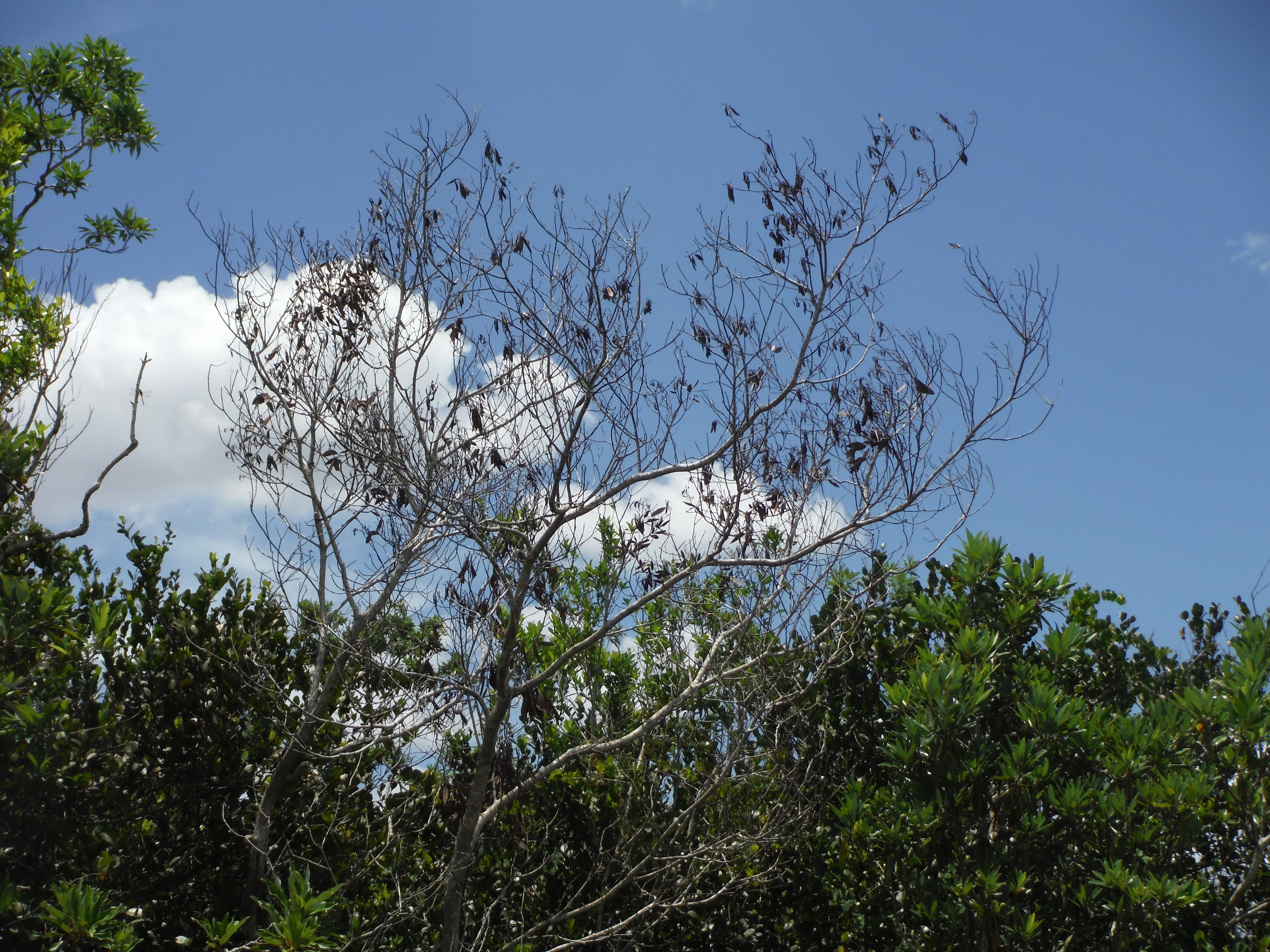
dead sweetbay in Big Cypress National Preserve, Florida

The United States has 21 World Heritage sites. Nine were chosen for their outstanding natural values. These include the following National parks: Everglades, Grand Canyon, Great Smoky Mountains, Hawaii Volcanoes, Redwood, Yellowstone, and Yosemite National parks; and – jointly with Canada – Kluane / Wrangell-St. Elias / Glacier Bay / Tatshenshini-Alsek and Waterton-Glacier National parks.

Several of these natural wonders are well known to be threatened by invasive species – including some tree-killing insects and pathogens.

Everglades National Park. In Everglades, pythons have decimated populations of small to medium native mammals. Lionfish are killing vast numbers of fish in the shallow bay. Numerous invasive plants, especially Australian pine, Melaleuca, Brazilian pepper, and old world climbing ferns transform the natural sawgrass prairie and mangroves. Some, e.g., Melaleuca, are under control thanks to persistent effort over decades.

Laurel wilt has almost eliminated swamp bay trees from the hammocks. Bromeliad weevil has killed many bromeliads in 12 genera (of the 16 present in Florida).

t-utriculata-mrsp

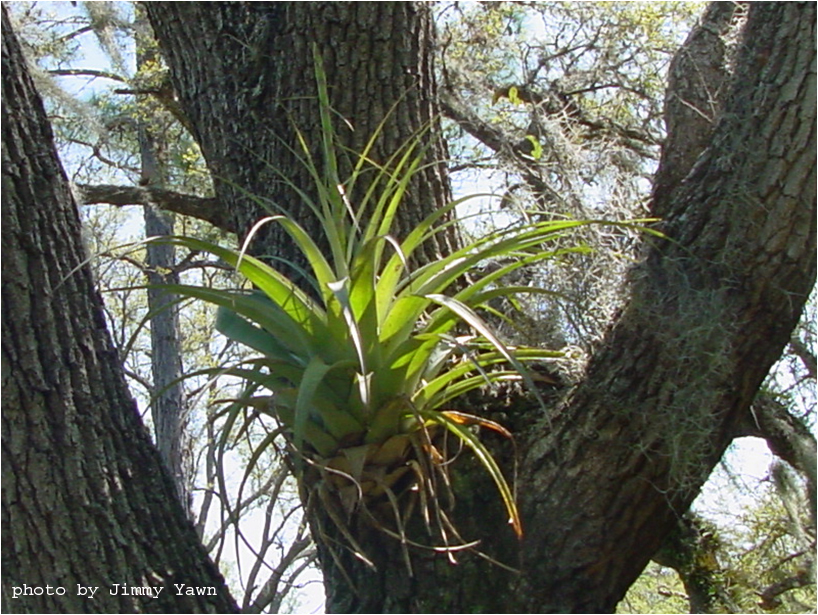
Tillandsia utriculata bromeliad in Florida

Great Smoky Mountains National Park. The outstanding biological diversity of the forested Great Smoky Mountains National Park has been severely undermined by chestnut blight, hemlock woolly adelgid, balsam woolly adelgid; and is now under attack by more recent invaders, including beech bark disease, emerald ash borer, and thousand cankers disease of walnut. Descriptions of all these pests are available here. At ground level, feral hogs damage plants, soil-dwelling invertebrates and small vertebrates, even birds. Rainbow trout compete with native trout in the streams. More than 380 non-native plants compete with the native species. The Park’s website features another invader, the Asian jumping worm (Amynthas agrestis), which has been introduced through bait.

The Great Smoky Mountains are the center of biological diversity for salamanders which are likely soon to face danger from the “Bsal” pathogen – unless the Fish and Wildlife Service acts to restrict imports of salamanders by the pet trade. See how CISP tries to counter this threat.

Hawaii Volcanoes National Park. As I wrote in my blog of October 7, Hawaii Volcanoes National Park is fighting feral hogs, goats, and a plethora of invasive plants (the Park’s flora contains nearly twice as many exotic flowering plants as native species). The Park’s birds are threatened by two non-native diseases, avian pox and avian malaria. As noted in the earlier blog, Hawaii Volcanoes has also been invaded by koa wilt and `ohi`a rust; and is about to be invaded by `ohi`a wilt.

Web-based information from several parks in the western part of the continent focuses on the threat from invasive plants: Grand Canyon, Olympic, Yellowstone, and Yosemite. Redwoods National Park notes the damage caused by sudden oak death to its principal hardwood species, tanoak. Yellowstone National Park has a website describing its whitebark pine forests and mentioning that up to 30% of the taller whitebark pines have been attacked by white pine blister rust; I could find little information about the disease’s impact on the Park’s limber pines, which are also susceptible.

Yosemite National Park has a website with a table listing 16 non-native insects and pathogens that could threaten trees in the park. White pine blister rust is already present in the Park’s sugar pines. I am pleased to see that the website features goldspotted oak borer and the risk of pest introduction via firewood. I just wish Yosemite actually prohibited visitors from bringing firewood into the Park! And carefully restricted commercial suppliers! I addressed Yosemite’s failure to protect itself in my blog of 10 August.

The National Parks Conservation Association is the principal NGO that advocates for protection of the National parks. It issued a report in 2008 that found invasive species were a limited concern in 90% of the parks evaluated, a widespread or chronic concern in 38%. In Hawaii Volcanoes specifically, the natural resources were ranked in “poor” condition due primarily to non-native plants and animals.

Many individual parks have “Friends” groups ….

I ask these groups to help the National parks counter invasive species. To be effective, they need to go beyond the many volunteer “weed pulls” and outreach programs educating park visitors who might transport invasive species (for example, boaters and fishermen who can spread New Zealand mudsnails, rock snot, and invasive mussels; and campers who carry firewood that can transport pests). I ask them to also lobby for policies that would prevent invasions and for increase funding for the parks’ resource management programs (the programs that tackle invasive species). I suggest specifically that supporters of National parks advocate for improvements in programs run by the USDA’s Animal and Plant Health Inspection Service or the U.S. Fish and Wildlife Service.  These agencies, more than any other, determine whether prevention succeeds or fails.


Posted by Faith Campbell