South African report: Rigorous, Honest, and a Model for U.S. and Others

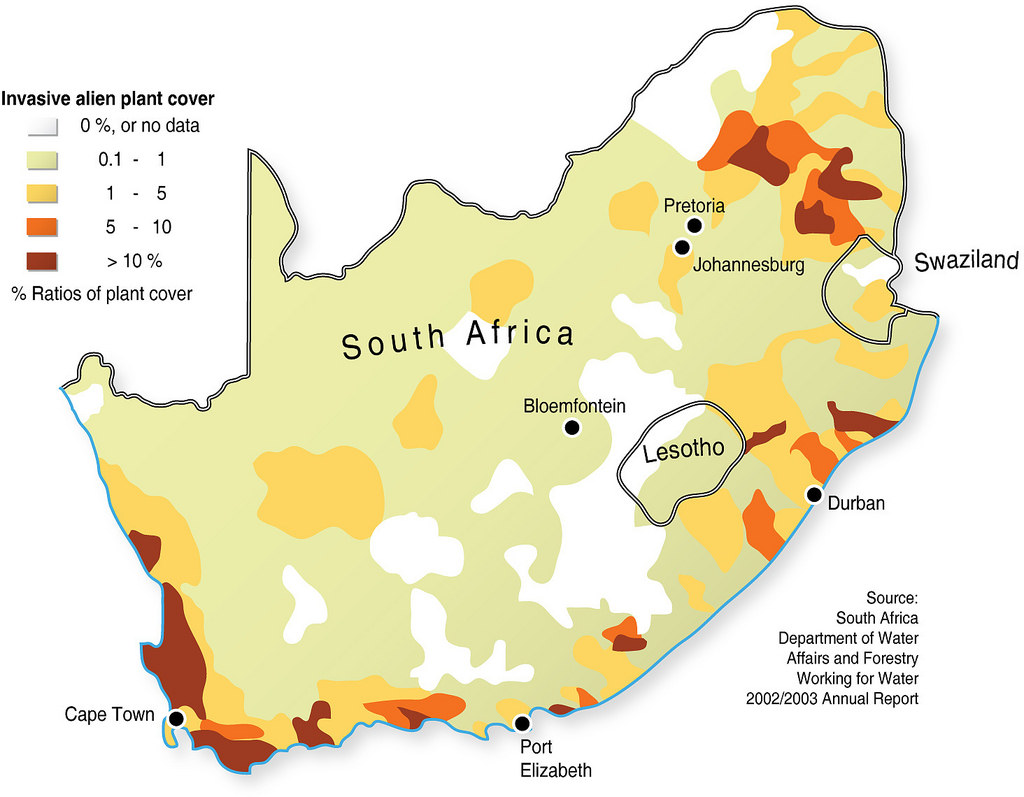
Density of invasive plants in South Africa

map available here


Last month, in my blog about the US Geological Survey’s report on invasive species  I announced release of a report by South Africa on its invasive species management programs – available here.  Because this report is unusual in both its rigor and its honesty, I’m returning to it here. I think it is a model for our country and others.

The report provides the basics. That is, it analyzes pathways of introduction and spread; number, distribution and impact of individual species; species richness and abundance of alien species in defined areas; and the effectiveness of interventions. Of the 775 invasive species identified to date, 556, or about 72%, are listed under some national regulatory program. Terrestrial and freshwater plants number 574 species; terrestrial invertebrates number 107 species. A different set of 107 species, or about 14%, are considered by experts to be having major or severe impacts on biodiversity and/or human wellbeing. The highest numbers of alien species are in the savanna, grassland, Indian Ocean coastal belt, and fynbos biomes. South Africans are particularly focused on the reductions in surface water resulting from plant invasions. Much of the control effort is under the egis of the decades-old “Working for Water” program.

Also, the report has features that are all-too-rare in work of its kind. First is the authors’ focus on rigor – of data sources and interpretation of those data using standardized criteria. Second – and even more important – is their call for analyzing the efficacy of the components of invasive species program. They insist on the need to measure outcomes (that is, results), not just inputs (resources committed) and outputs (“acres treated”, etc.). Inputs are far easier to measure and are, unfortunately, the mainstay of how most U.S. efforts are tracked – if they are tracked at all.

As they note, measure of inputs and outputs are not useful because they provide no guidance on the purpose of the action or treatment or of its effectiveness in achieving that purpose.

(For earlier CISP advocacy of measuring outcomes, visit the National Environmental Coalition on Invasive Species and read the bullet points under “Recommendations for a Comprehensive National Response”.)

The report has been praised by international conservationists, including Piero Genovesi – chair of the IUCN’s Invasive Species Specialist Group. British ecologist Helen Roy says that, to her knowledge, it is “the first comprehensive synthesis of the state of invasive species by any country.”


How well are programs working?

The authors’ focus on rigor includes being scrupulously honest in their assessments of current program components. They note deficiencies and disappointments, even when the conclusions might be politically inconvenient. To be fair, all countries struggle to achieve success in managing bioinvasions. And South Africa is, in many ways, a developing country with a myriad of economic and social challenges.

So it is probably not surprising that, for most factors analyzed, the authors say data are insufficient to determine the program’s impact. Where data are adequate, they often show that programs fall short. For example, they conclude that control measures have been effective in reducing populations of established invasive species, usually plants, in some localized areas but not in others. While the situation would arguably have been worse had there been no control, current control efforts have not been effective in preventing the ongoing spread of IAS when viewed at a national scale. Only one of South Africa’s 72 international ports of entry has consistent inspection of incoming air passengers and cargo – and even those inspections are not carried out outside of regular working hours (e.g., nights and weekends).

The authors are even critical of the “Working for Water” program – which is the basis for most control efforts in South Africa and enjoys wide political support. WfW has two goals: providing employment and development opportunities to disadvantaged individuals in rural areas, and managing invasive alien plants. Despite substantial funding, the WfW program has supported control teams that have reached only 2% – 5% of the estimated extent of the most important invasive plants. Furthermore, programs structured to provide employment have not ensured use of the most efficient control strategies.


What’s needed in South Africa — and around the world

The authors conclude that South Africa needs new processes to monitor and report on bioinvasions in order to achieve evidence-based policy and management decisions. They call for (1) more research to determine and assess invasive species impacts; (2) better monitoring of the effectiveness of current control measures; and (3) the development of methods to look at the impact of bioinvasions and their management on society as a whole.

The authors say it is important for South Africa to improve its management of invasive species because their impacts are already large and are likely to increase significantly. They note that improving management efficiency will require difficult choices and trade-offs. They recommend a focus on priority pathways, species, and areas. They also stress return on investment.


I don’t know how this report has been received in South Africa. I hope government officials, media observers, landowners, political parties, and other stakeholders appreciate the honesty and expertise involved. I hope they take the analyses and recommendations seriously and act on them.

(Preparation of the report was was overseen by a team of editors and contributing authors employed by the South African National Biological Diversity Institute (SANBI) and the DST-NRF Centre of Excellence for Invasion Biology at (C.I.B). Drafts were widely circulated to contributing authors and other stakeholders for comments. An independent review editor will be appointed to assess the review process and recommend any ways to strengthen the process for future reports.)


Meanwhile, how do we Americans apply the same rigor to analyzing our own efforts?


Posted by Faith Campbell


We welcome comments that supplement or correct factual information, suggest new approaches, or promote thoughtful consideration. We post comments that disagree with us — but not those we judge to be not civil or inflammatory.


APHIS’ Strategic Plan – Focus on Deregulation & Trade Facilitation

APHIS’ headquarters building

USDA APHIS released its Strategic Plan for fiscal years 2019-2023 just after Thanksgiving. The report is 21 pages long. There is no evidence that any stakeholders were asked for input or review.

The Plan has a disappointing – but not surprising – emphasis on deregulation and “customer service”. A second – and more surprising weakness is the lack of attention to plant pests – even those of agriculture, much less natural resources. The emphasis is clearly on animal pests and diseases – including zoonotics.

APHIS’ mission is “To safeguard the health, welfare and value of American agricultural and natural resources.” To accomplish this mission, APHIS has set three goals:

  • Deliver efficient, effective, and responsive programs.
  • Safeguard American agriculture.
  • Facilitate safe U.S. agricultural exports.

Most references to protecting natural resources relate to finding more environmentally sensitive approaches for the program under which APHIS reduces human-wildlife conflicts (e.g., birds being struck by airplanes).

In the Plan, APHIS Administer Kevin Shea writes in his opening message that achieving APHIS’ difficult mission of protecting the health and value of America’s agriculture and natural resources cannot be accomplished by APHIS alone. Instead, the agency must work collaboratively with other government agencies and industry, and consult regularly with partners and stakeholders regarding programs’ effectiveness. Administer Shea also highlights the importance of “delivering our programs and services efficiently, effectively, with integrity, …” The agency promises to modernize information technology, data management, methods of communication with collaborators, exporters and importers, etc., in order to give good return on expenditure of taxpayer resources. APHIS also pledges to make decisions based on science. There are seven references to basing decisions on scientific data.

Fair enough. Such emphases were to be expected from Trump Administration and prefigured by USDA Secretary Sonny Perdue during his nomination hearing, e.g., facilitating exports, supporting better information technology.

However, the Plan refers to “customer service” or “customer experience” 34 times. An additional seven references are made to reducing regulatory burdens. The Plan also speaks of the need to “protect the health, welfare, and value of American agriculture and natural resources. … at a reasonable cost. … Easing regulatory burdens makes it easier to create jobs and promote economic growth.” (Emphasis added.)

Perhaps the recent proposal to deregulate the emerald ash borer is driven in part by the emphasis on minimizing costs to regulated industries and seeking alternative approaches? (Although the deregulation has been under discussion for several years, predating the Trump Administration.)

from APHIS PPQ website

The imbalance in attention to animal versus plant pests and disease is striking. Each of the 14 goals is supported by a number of specific tactics. There are a total of 100 “tactics” under the two goals most directly relevant to preventing or managing pest introductions. These goals are: “Protecting America’s agriculture” and “Promoting U.S. agricultural exports.” Of the 100 tactics, only ten are clearly related to plant pests; 19 are pretty clearly activities that apply to both plant and animal pests and diseases; and five are unclear as to whether they include plant pests as well as animal diseases. Thus, only a third of the tactics apply!

[In making this calculation, I did not include 43 tactics listed under the first goal (“Deliver efficient, effective, and responsive programs”) or three objectives under the goal of “Protecting American agriculture” that apply explicitly to wildlife management, regulating genetically engineered organisms, or ensuring humane treatment of animals.]

Specific examples of such lack of balance include the six examples illustrating the declaration (on p. 4) that “Pest and disease events are more frequent, more complex, and less predictable.” Five of the examples are animal diseases, the sixth is the insect-vectored human disease caused by the Zika virus.

In discussing its efforts to balance its safeguarding efforts against increasing requests for market access by international trading partners, APHIS mentions some activities pertinent to plant as well as animal pest management, e.g., examining disease and pest risks and inserting mitigation strategies into international agreements and interstate movement protocols. However, the only specific action it mentions is helping countries to build capacity to implement the Global Health Security Agenda.

The only reference to forest pests is under one of the 24 tactics associated with Goal 2. Safeguard American agriculture, Objective 2.1: Prevent damaging plant and animal pests and diseases from entering and spreading in the United States to promote plant and animal health. This tactic calls for strengthening the North American perimeter against pest threats from outside the region to prevent introduction of agricultural, forest, and other invasive pests.

Why are Plant Pests slighted?

Perhaps plant-related efforts were left out because they are less “sexy”? Or because they are more distantly linked to human health? The Plan does state that “The tactics in this plan represent only a portion of APHIS activities and by no means embody all the important work APHIS does to fulfill its mission.”

Who knows what was left out?

How will adoption of this strategy affect future efforts to address tree-killing insects and pathogens – both those already present in the country and those yet to be introduced?

Might PPQ Fill in the Gaps?

In 2014 APHIS Plant Protection and Quarantine issued its own strategic plan. This supplementary plan made frequent mentions of safeguarding natural resources. Indeed, the third of the plan’s seven goals stated:                              

Goal 3: Protect forests, urban landscapes, rangelands and other natural resources, as well as private working lands from harmful pests and diseases

Several “tactics” under each goal also directly applied to protecting natural resources. I list them below:

1) Prevent the entry and spread of ag pests and diseases.

  • Coordinate with Canada to implement an effective multi-national system that reduces the threat of tree pests arriving from Asia and other parts of the world (e.g. AGM).

3: Protect forests, urban landscapes, rangelands and other natural resources, as well as private working lands from harmful pests and diseases

  • Maintain EAB regulatory framework to focus on the leading edge of infestations while minimizing impacts on regulated businesses in quarantined areas.
  • Evaluate the effectiveness of biocontrol releases in states and combining both regulatory & outreach activities to address the risks of moving logs, firewood, and nursery stock.
  • Examine detection technologies and partnering with states to determine and apply the most effective strategies to survey & eradicate the Asian longhorned beetle
  • Partnering with federal and state agencies to enact measures such as a public outreach campaign to mitigate the movement of forest pests through firewood.
  1. Ensure the safe trade of ag products, creating export opportunities for U.S. producers
  • play a leadership role in revising ISPM#15
  1. Protect the health of U.S. agricultural resources, including addressing zoonotic disease issues and incidences, by implementing surveillance, preparedness and response, and control programs
  • Strengthen partnerships with Tribal Nations to develop a robust surveillance and early detection system for detecting and reporting invasive species.
  • Work with all stakeholders to coordinate all-hazards agriculture and natural resources response support.
  • Develop science-based programs in collaboration with industry and academia to jointly identify practices that will mitigate pest damage. E.G., SANC program http://sanc.nationalplantboard.org/ [a Systems Approach to Nursery Certification] implemented jointly with the National Plant Board and nursery industry

Dare we hope that PPQ adopts an updated strategic plan that fills in some of the gaps in the overall APHIS plan?


Posted by Faith Campbell


We welcome comments that supplement or correct factual information, suggest new approaches, or promote thoughtful consideration. We post comments that disagree with us — but not those we judge to be not civil or inflammatory.


Report Lists Non-Native Species in the U.S.

Ailanthus altissima

Several scientists at the United States Geological Service (USGS) have published a report and accompanying datasets that attempts to provide a publicly accessible and comprehensive list of non-native species established in United States.

Led by Annie Simpson and Meghan C. Eyler, a team of six scientists worked six years (2013–2018). They reviewed 1,166 authoritative sources to develop a list of 11,344 unique names – most of them binomials (genus and species), a few genera, plus some viruses.

This was a Herculean effort that produced very valuable products. We are all in their dept!

Simpson and Eyler point out that knowing which species are non-native to a region is a first step to managing invasive species. Lists compiled in the past were developed to serve a variety of purposes, including watch lists for preventing invasions, inventory and monitoring lists for research and modeling, regulatory lists for species control, and non-regulatory lists for raising awareness. As a result, they are not comprehensive.

Among the sources these authors consulted in preparing the list were peer-reviewed journal articles, books, brochures, circulars, databases, environmental assessments, technical reports, graduate theses, and websites.

Data – by Region

The report also notes which non-native species were established in each of three regions: the “lower 48” states, Alaska, and Hawai`i. Not surprisingly, more than half the non-native taxa are established in the vast area (nearly 7.9 million km2) comprising the “lower 48” states – 6,675 taxa. Almost half of the total number of non-native taxa have established in the tiny geographic region (only 28,311 km2) of Hawai`i – 5,848 taxa.  One-tenth as many non-native taxa – 598 – are reported as established in Alaska (1.7 million km2).

This report includes taxa that are not native to any part of the specific region, but established (naturalized) somewhere in the region. An “established” species must have at least one population that is  successfully reproducing or breeding in natural systems. The list includes domesticated animals and plants introduced for crops or horticulture when the taxon has escaped cultivation or captivity and become established in the wild. Species listed range from feral hogs (Sus scrofa) to plum pox virus and citrus canker to ohia rust (Puccinia psidii).

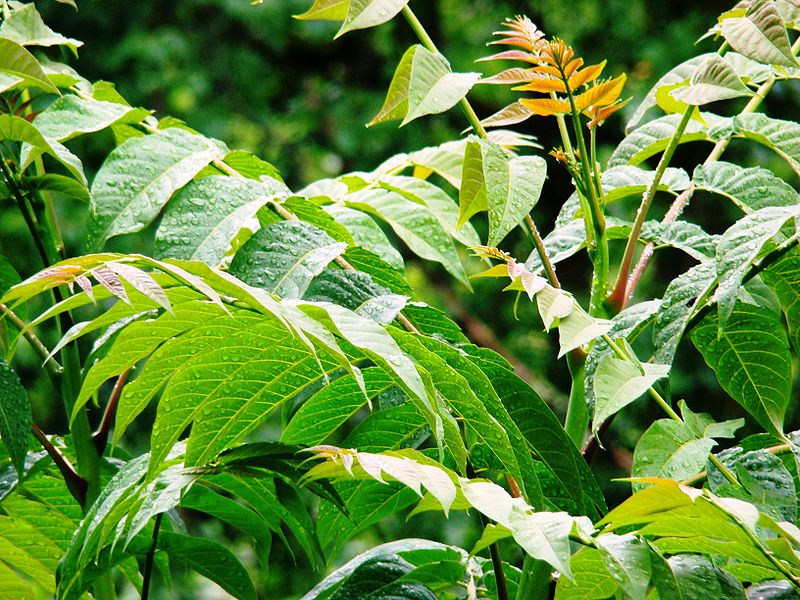
Of the total 11,344 taxa, 157 are established in all three regions. These included 125 vascular plants (especially grasses and asters); 13 arthropods, 11 mammals; 6 birds; 3 mollusks; 1 bryozoan. One of the ubiquitous plant species is tree of heaven (Ailanthus altissima). I find it entirely appropriate that the cover photo shows this tree – the photo was taken 8 miles from my home in Fairfax County, Virginia.

Nearly three-quarters (71.4%) of the non-native species in Alaska are plant species. More than half (59.7%) of the non-native species in the “lower 48” region are also plants. Nearly all the remainder of the non-native species in both regions are some kind of animal. Fungi constitute only 1.8% of the non-native species in the “lower 48” region; all the rest of the groups (Bacteria, Chromista, Protozoa, Virus) constitute less than 1% of the non-native species recorded in either region.

By contrast, in Hawai`i, animals make up 69.7% of the listed non-native species; most are invertebrates. Plants constitute 29.8% of the Hawaiian list.

Gaps, by Taxon

The authors recognize that invertebrates and microbes are under-represented because species are still being discovered; non-charismatic and difficult-to-identify species tend to be overlooked; and the species composition of any nation in this era of globalization is constantly subject to change.

I have noted some gaps among the pathogens: the absence of some of the Phytophthora that have been detected infecting shrubs and herbaceous plants in California,  e.g., Phytophthora cambivora, siskiyouensis, tentaculata;  and the “rapid ohia death” pathogens, Ceratocystis huliohia and C. lukuohia. Dr. Simpson is aware of these gaps and is soliciting sources to help add these organisms – especially the various Phytophthora species – to the next version of the list.

Simpson and Eyler note that the relative geographic distribution of the list at its current state seems to reinforce three well established premises: that tropical island systems are particularly vulnerable; that higher latitudes host fewer but are not invulnerable; and that species diversity in general decreases with increasing latitude.

 Comparisons to Other Databases

After standardizing the names in the list by comparing them to the Integrated Taxonomic Information System (ITIS), Simpson and Eyler also reviewed the USGS BISON database, which has more than 381 million occurrence records for native and non-native species in the U.S. and Canada, covering 427,123 different taxa. (The BISON database contains significantly more species occurrences for the U.S. than the largest invasive species database, EDDMapS, which contained 4.4 million species occurrences as of June 2018.) Simpson and Eyler had to evaluate which of these taxa met their definition of non-native, since most species occurrence records in the USGS BISON are not labeled as non-native in the original records.

Comparing the BISON and non-native lists, Simpson and Eyler found that the BISON list contained a larger number of occurrence records for non-native taxa: a total of 13,450,515.However, the BISON list does not provide complete coverage of non-native species: it includes records for 77% of list of non-native species Simpson and Eyler found in Alaska, 75% of the “lower 48” sublist, but only 37% of the Hawaiian sublist.

Simpson and Eyler state their intention to continue updating the list of non-native species, they welcome contributions to it from area experts, and they urge integration of new occurrence data into invasive species database such as EDDMapS.

Indicators of Non-Native Species Richness

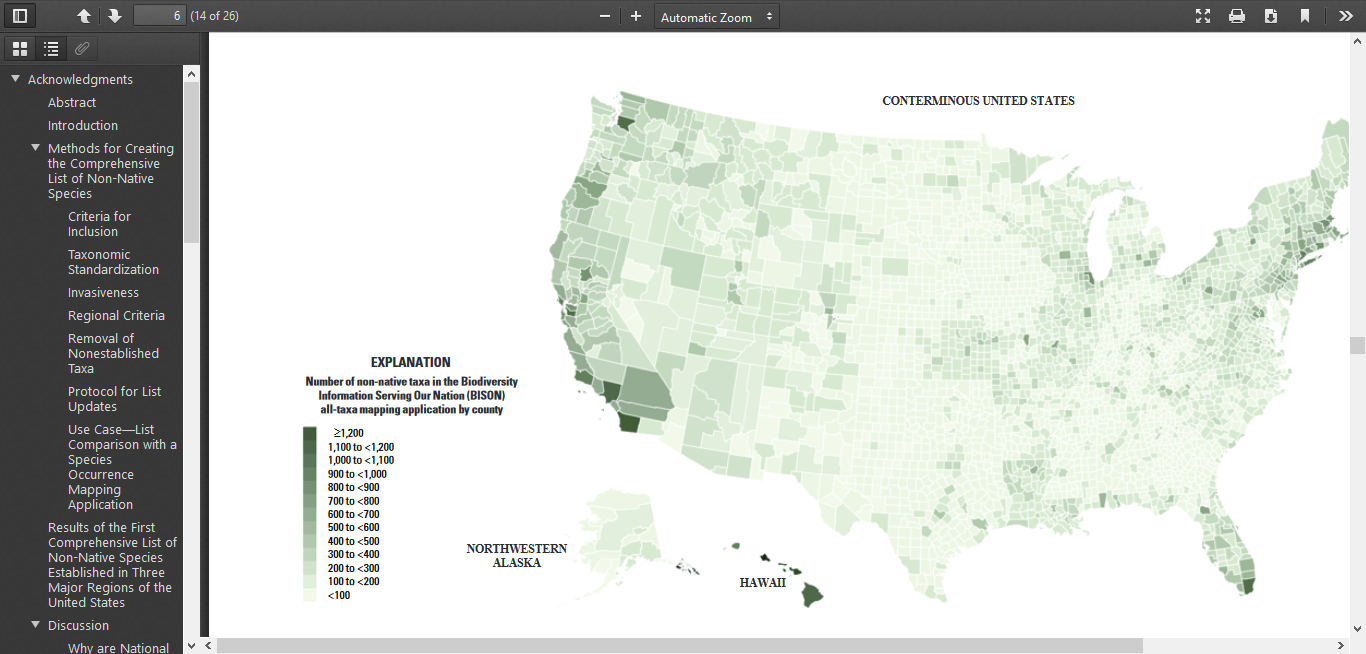
Figure 3 in the report (above) maps the number of non-native taxa in BISON at the county level. Figure 4 displays the proportion of non-native to native species in BISON. Higher percentages are generally evident in coastal areas and other regional hotspots. For example, the proportion in Hawaiian counties is greater than 33%. Additional data are needed to perform a more in-depth analysis of non-native species richness and abundance.

UPDATE! New Report in the Works

In June 2021, USGS announced that it was updating its Comprehensive List of Non-Native Species Established in 3 Major Regions of the U.S. so that the document more closely aligns with the parameters of the Global Register of Introduced and Invasive Species. The new USGS dataset is to be called the US Register of Introduced and Invasive Species. The list in the current draft includes 15,364 records. About 500 of these records are in Alaska, 6,000 in Hawai`i, and 8,700 in the conterminous 48 States.

One of the lead authors, Annie Simpson, contacted invasive species experts seeking feedback and suggested additions – based on authoritative resources such as peer reviewed journal articles, pest alerts, databases, books, and technical bulletins. She sought input by 25 July, 2021.

The published version of this dataset will be made freely available on USGS’ ScienceBase (https://www.sciencebase.gov), and all reviewers will be acknowledged in the dataset’s abstract.

SOURCE

Simpson, A., and Eyler, M.C., 2018, First comprehensive list of non-native species established in three major regions of the United States: U.S. Geological Survey Open-File Report 2018-1156, 15 p.

The report and accompanying data tables are available here.

South African report

In an unrelated but similar development, South Africa has issued a report on its invasive species — 2017 The Status of Biological Invasions and Their Management in South Africa. The report analyzes pathways of introduction and spread; number, distribution and impact of individual species; species richness and abundance of alien species in defined areas; and the effectiveness of interventions. The report notes that 775 invasive species have been identified to date, of which 556 are listed under some national regulatory program. Terrestrial and freshwater plants number 574 species; terrestrial invertebrates number 107 species. (This total does not include the polyphagous shot hole borer, which was detected too recently.) 107 species are considered by experts to be having either major or severe impacts on biodiversity and/or human wellbeing. Alien species richness is highest in the savanna, grassland, Indian Ocean coastal belt and fynbos biomes, lower in the more arid Karoo and desert biomes. South Africans are particularly focused on the reductions in surface water resulting from plant invasions. The decades-old “Working for Water” program has two goals: providing employment and development opportunities to disadvantaged individuals in rural areas, and managing invasive alien plants.

The Status of Biological Invasions and Their Management in South Africa is available here.

Posted by Faith Campbell

We welcome comments that supplement or correct factual information, suggest new approaches, or promote thoughtful consideration. We post comments that disagree with us — but not those we judge to be not civil or inflammatory.

New science reveals that threats remain from Bd, the infamous frog and toad-killing pathogen

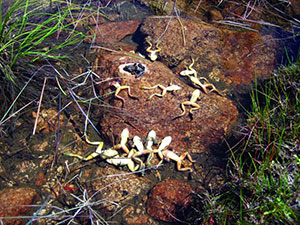
California red-legged frog

courtesy of the U.S. Fish and Wildlife Service


In my last blog, I addressed how the United States Fish and Wildlife Service (FWS) has neglected to undertake the plan that it announced in early 2016 to finalize and improve its weak “interim” regulation aimed at preventing the salamander disease “Bsal” (Batrachochytrium salamandrivorans) from infecting salamanders in the still-unexposed United States. While Canada, the European Union and the United Kingdom have all taken very strong measures this year to block salamander imports that are not “Bsal free,” our country is stuck on a much weaker approach that I described as “Swiss cheese”.

Further compounding my concern about FWS’s inaction is new science about Bsal’s older devastating cousin, “Bd” (Batrachochytrium dendrobatidis), the separate fungus epidemic that has extirpated huge numbers of frogs and toads worldwide, driving several species extinct. Within the last year, the FWS has secretly withdrawn its consideration of a formal petition to regulate Bd filed with the Secretary of the Interior (in charge of the FWS) by Defenders of Wildlife in 2009. The Petition set out a plan to block the ongoing risk to native frogs and toads that the Bd pathogen posed then – and still poses. See description and documents under “Chytrid Fungus – September 16, 2010” here. The petition requested the FWS to create a “Clean Trade” program for shipments of imports, keeping them out of the country unless accompanied by certification that they are “Bd free” – whether by quarantine, testing or other reliable certification approach.

The new key paper, published last month in Science, is a sweeping study that finally answers the two questions that bedevilled amphibian experts since Bd’s first identification back in the mid-1990s:  where did it come from and how was it spread around the world? O’Hanlon et al.’s study, “Recent Asian origin of chytrid fungi causing global amphibian declines,” here, [one must have an account to read the article] was extremely complex (there were 59 co-authors!). They discovered that Bd originated in salamanders in Asia, likely on the Korean Peninsula, and was spread via trade in live frogs and toads (pets, specialty foods and perhaps other uses). Genetic analysis of the numerous Bd strains showed there is still potential for more strains to mix, for new hybrids to emerge and for still more virulent outbreaks of the disease to occur. The article states: “… further sampling across this region is urgently needed because the substantial global trade in Asian amphibians presents a risk of seeding future outbreak lineages.” One lead co-author, Professor Matthew Fisher of Imperial College London, told the BBC:

​“Until the ongoing trade in infected amphibians is halted, we will continue to put our irreplaceable global amphibian biodiversity recklessly at risk.”

Also notable is University of Maryland Professor Karen Lips’ concise commentary on it here [one must have an account to read the article]. Dr. Lips links the lessons of Bd and Bsal, pointing out the obvious:  regulators need to learn the tragic lessons of Bd and take steps to keep out Bsal now – and not wait until after the fact of an outbreak.

Perhaps it was understandable before the O’Hanlon et al. paper that the FWS never responded to the Defenders of Wildlife Bd petition seeking trade restrictions because Bd was already so widespread within the United States then (unlike Bsal) and Bd’s origins and genetics were so confusing. It was not entirely clear that regulating further amphibian imports would have actually improved our level of Bd protection. But, O’Hanlon et al. changes that –– we now know enough to justify much stricter regulation to prevent more imports of Bd-infected frogs and toads and to block the potential for more virulent outbreaks here.

In short, FWS action on that 2009 Defenders of Wildlife petition is called for now. (Disclaimer: I wrote and filed that petition when I was Director of International Conservation at Defenders.) However, in a remarkably unfortunate use of its administrative powers, the FWS internally determined in March of 2017 to just altogether stop considering it. Rather than communicating back to Defenders that it is granting or denying its petition the FWS now states that it has “Withdrawn” consideration of any regulatory action, here.

This move by FWS plainly is part of the Trump Administration’s broad de-regulatory agenda.  But, the FWS made no decision other than to put it on hold and Defenders of Wildlife did not withdraw it, so as a legal matter the nine-year old Petition is still pending. The FWS can and should take it up again and grant it. But, Defenders likely will have to push hard in order for that to happen.

The scientific community working on both Bd and Bsal has produced authoritative, painstaking studies on which the FWS and others can rely in regulating. And the community has made clear calls to stop the ongoing trade in many scores of species of amphibians around the world with no quarantines or health certificates, which is “business as usual” now. If the amphibian trade continues in the future it needs to be Clean Trade or we will suffer further consequences. It is up to us in the conservation community to convert the scientists’ calls into regulatory reality.

Posted by Peter Jenkins

We welcome comments that supplement or correct factual information, suggest new approaches, or promote thoughtful consideration. We post comments that disagree with us — but not those we judge to be not civil or inflammatory.


The United States is Being Left in the Dust on Amphibian Disease Prevention


For a short time, the U.S. was the world leader in regulating to prevent introduction of a foreign amphibian disease that has caused a deadly epidemic in Northern Europe – and could cause the same outbreaks here. Unfortunately, we have since surrendered our leadership. But, we still can and must act. Here is the story as I have seen it unfold (having begun my advocacy on this particular threat in late 2014).

The fungus Batrachochytrium salamandrivorans (“Bsal”) is carried on the skin of a large number of salamander species; it was first described in 2014. To help prevent Bsal from arriving and killing native salamanders, the U.S. Fish and Wildlife Service (FWS) published its “Interim Rule” in January of 2016 to list 201 salamander species as “injurious wildlife” under the Lacey Act (available here; the list of blocked species is here). The FWS had determined that Bsal caused major die-offs of salamanders in Europe and posed an imminent threat to our U.S. native populations. The fungus, which had very likely been carried from Asia to Europe via the pet trade, is not known to exist in the U.S., which is a very fortunate thing because we are the global “hotspot” for salamander diversity. An array of beautiful and popular species are found across the nation, especially in the Appalachian and south-eastern States and the Pacific Coast States.

That 2016 regulation was an important advance fought for by many amphibian conservation advocates and experts. We were proud that ours was the first government to take proactive steps. Unfortunately, the FWS regulation’s focus on just 201 salamander species — out of more than 650 named species worldwide — meant that the regulation was not protective enough to reliably keep Bsal out (as scientists had stressed to the FWS back in 2015). However, we took hope from the fact that it was an “Interim” regulation responding to the urgency of this new risk and the agency had repeatedly announced it intended to revise it into a Final Rule, which process could toughen it up.  However, two and a half years have gone by with no action.

In the fall of 2017 the new Bsal science was showing even greater risk than was understood before. This was gathered into a comprehensive Scientists’ Statement of Reasons for a Class-wide Moratorium of Amphibians in USA Import Trade to Prevent Entry of Bsal, signed by 12 leading amphibian health experts (available here). Further driving home the need for toughening the Interim Rule, in February of 2018 a crucial paper came out, the Yuan et al. salamander study, Widespread occurrence of an emerging fungal pathogen in heavily traded Chinese urodelan species. (Conserv Lett. 2018;e12436). Reviewing Table 1 therein reveals that​ of ​​8 species that tested positive for Bsal infection in China​, when​ compared to the 201 species regulated under the FWS Interim Rule​, ​at least 3 species were ​positive for ​the infection that are ​​not prohibited from import: Andrius davidianusPachytriton wuguanfui and Paramesotriton aurantius.

To reiterate: the Interim Rule allows unregulated Bsal-infected species from China to be imported. Further, we know the list of native U.S. species regulated under the list of 201 species is underprotective. Knowledgeable scientists say that Bsal can infect and harm at least 5 additional native species beyond those the FWS listed, while many more unlisted species can act as carriers of the pathogen. (That research likely will be published over the course of this and next year.)  In short, the 2016 Interim Rule now looks like Swiss cheese.

Meanwhile, we have given up our Bsal leadership position to Canada, the European Union and the United Kingdom. After first adopting a 1-year import moratorium, Canada now (effective May 12, 2018) prohibits imports of all species of the order Caudata (salamanders, newts and mudpuppies) except via a special permit (available here).  Taking a different approach, at the end of February the European Union recommended a sweeping “Clean Trade” program relying on pre-shipment certifications, applicable to both imports into the EU and trade between member nations (available here).  The EU animal health authorities recommended that members allow no commercial salamander shipments without risk mitigations, such as detailed quarantines and testing of shipments.

Just recently the United Kingdom followed the EU recommendation and adopted a strict health certificate and quarantine approach for salamander and newt imports targeted to prevent Bsal (available here). It involves three, alternative, detailed quarantine options, while allowing importers to propose a different quarantine approach if it is based on peer-reviewed published science.

To make matters look worse for the U.S. by comparison, this Administration has for no clear reason disengaged from the previously-announced FWS plan to finalize the underprotective Interim Rule. There was a public comment period that ended in March of 2016. Because of that now two-year old closed comment period, the FWS officials in charge just this past April flatly refused to meet with a group of salamander experts to discuss the implications of the new science mentioned above. Then, we found out that the FWS actually officially has delayed finalizing the Interim Bsal Rule indefinitely; the agency now classifies it as a “Long-term Action” with no planned date for completion. (Per White House, Office of Management and Budget, Unified Regulatory Agenda, here).

This administrative slow-down is remarkably unfortunate. Rather than reflecting the new realities and proposing a state-of-the-science “Clean Trade” approach like the EU and UK, or mandating a permit for all salamander imports like Canada, or at least adding the other known unlisted Bsal-carrying and Bsal-vulnerable species to the list of 201 prohibited species adopted back in 2016, the FWS now appears content to expose the country to the risk of this devastating wildlife epidemic via unregulated imports.

It would be one thing if there was some overwhelming economic value to salamander imports, but that is not so. Salamander imports make up a tiny part of the pet trade – their total dollar value is paltry compared to other imported animals. Neither the organized pet industry nor anyone else is actively trying to block progressive protections. Indeed, the pet industry will itself benefit greatly from not having Bsal here infecting its own commercial pet supply. And the industry will benefit from not being blamed if or when released pet salamanders spread Bsal into the wild, which is an all-too-likely scenario based on past species and pathogen incursions.

As called for in the 2017 Scientists’ Statement mentioned above, in order to protect our priceless North American salamander fauna we need a “class-wide ban” – at least. This can and should still allow for appropriate exceptions under FWS permits for education, research, display and other important uses as are already provided for under the Lacey Act.

If you would like to get involved in the informal “Bsal Discussion Group” that is engaged in advocacy to improve the FWS regulation, please contact me at: jenkinsbiopolicy@gmail.com.


//////////////////////////

PART II, coming soon, will delve into the new science about the “old” emerging amphibian epidemic, Bd, which has devastated frogs and toads across the planet.


Posted by Peter Jenkins

We welcome comments that supplement or correct factual information, suggest new approaches, or promote thoughtful consideration. We post comments that disagree with us — but not those we judge to be not civil or inflammatory.


National Park Service Experts Urge Improvements to Invasive Species Efforts


cats – reported to be the most widespread invasive animal in National parks

In two recent evaluations and resulting reports, National Park Service experts admit the agency has fallen short on managing the invasive species threat and suggest ways to improve. One report – that on invasive animals (see below) identifies the principal problem to be lack of support for invasive species programs from NPS leadership.

They’re not alone: I have previously criticized the NPS here and here


Invasive Animals

The bolder of the two reports addresses invasive animals – “Invasive Animals in U.S. National Parks – By a Science Panel” https://irma.nps.gov/DataStore/DownloadFile/594922 commissioned by the NPS Chief of Biological Resources Division. The report was released in December 2017.

The report is blunt – which I welcome.


Key Message

The NPS’ mission of preserving America’s natural and cultural resources unimpaired for future generations is “under a deep and immediate threat as a consequence of invasive animal species, yet the National Park Service does not have a comprehensive understanding of the costs and impacts of invasive animals or a coordinated strategy for their management.”  The result: “The consequence is a general record of failure to control invasive species across the system.”

The report says there are opportunities for the NPS to take a lead in addressing the threat – including to help counter invasive species denialism. It suggests ways to provide the needed capacity and to change the agency culture that hampers efforts to realize this ambition.


Current Picture

More than half of all National Park units reporting to the report’s authors (245 out of 326 parks) reported the presence of invasive animals – ranging from freshwater mussels to feral cats. In the process of compiling the report, the authors received reports of 1,409 invasive animal populations – comprising 331 species — probably an underestimate. Only a small percentage can be considered under some form of management. The most widely reported species:

Domestic cat                69 parks

Common starling         66 parks

Common pigeon          47 parks

House sparrow             40 parks

Red imported fire ant   40 parks

Feral hog                      39 parks

Rainbow trout              36 parks (often introduced deliberately)


The report mentions several tree-killing insects or pathogens among the damaging animal invaders in National parks: emerald ash borer, hemlock woolly adelgid, and rapid ohia death (a pathogen). (Background on all three is here.)


This new report acknowledges management efforts. They reviewed 80 NPS projects in the pipeline from 2000 through 2023. Most projects target a limited number of species: feral hogs, cats, and horses/burros; fire ants; hemlock woolly adelgid; and emerald ash borer.

EAB-killed ash tree in Shenandoah NP  (F.T. Campbell)

Eradication has reportedly been attempted for 21 invasive animal populations; 17 of those populations remained under some control efforts (e.g., monitoring to detect any re-invasion) in 2016. Nine of the eradicated populations were in the Pacific West region – especially Channel Islands National Park. Another eight were in the Southeast. Three other regions — Intermountain, Northeast, and National Capital regions — each reported one invasive animal population eradicated and under control. Another 150 invasive animal populations were reportedly “controlled”.


What’s the Problem?

The report’s authors note numerous (and well-known) difficulties in managing invasive animals. These include difficulty detecting invaders at early stages of invasion; paucity of effective management tools; and social constraints such as perceived benefits associated with some (e.g., trout and other sport fishes) and ethical and humane objections to killing vertebrates.

However, the report identifies the principal problem to be lack of support for invasive species programs from NPS leadership. Constraints that hamper park managers’ efforts within the agency include Service-wide coordination, lack of capacity, park culture, “social license” (i.e., public approval), and cross-boundary coordination.

The authors suggest that to correct these deficiencies, the Service should formally acknowledge that invasive animals represent a crisis on par with each of the three major crises that drove Service-wide change in the past:

1) over-abundance of ungulates due to predator control (leading to the “Leopold Report” in the 1960s);

2) Yellowstone fire crisis (which led to new wildfire awareness in the country); and

3) recognition of the importance of climate change (which resulted in the report “Leopold Revisited: Resource Stewardship in the National Parks”).

To achieve true success in such a major undertaking, all levels of NPS management must be engaged. Further NPS’ current culture and capacity must be changed. The report suggests providing incentives for (1) efforts to address long-term threats (not just “urgent” ones) and (2) putting time and effort into coordinating with potential partners, including other park units, agencies at all levels of government, non-governmental organizations, private landowners, and economic entities.

An additional step to realizing a comprehensive invasive animal program would be to integrate invasive animal threats and management into long-range planning goals for natural and cultural landscapes and day-to-day operations of parks and relevant technical programs (e.g., Biological Resources Division, Water Resources Division, and Inventory and Monitoring Division).

The report notes the need for increased funding. Such funding would need a flexible timeline (unlike existing Service-wide funding for more general purposes), allowing parks to be responsive to time-sensitive management issues. It would also have to be available consistently over the long term – since eradication can take a long time. Several approaches are proposed, including incorporating some invasive species control programs (e.g., weeds, wood borers) into infrastructure maintenance budgets; adopting invasive species as fundraising challenges for “Friends of Park” and the National Park Foundation; and adopting invasive species as a priority threat.

The authors would like NPS to become a leader on the invasive species issue – specifically by testing emerging best management practices and by better educating visitors on the ecological values of parks and the serious threat that invasive species pose to the their biodiversity. The authors suggest that the NPS also take the lead in countering invasive species denialism.

While officially-approved deliberate introductions of non-native species are probably unlikely to continue, the report expects that the numbers of invasive animals and species in national parks will increase due to continuing spread of invaders from neighboring areas. Therefore, NPS’ current piecemeal approach needs to be replaced with a much stronger, strategic approach in which parks engage in collaboration with conservation partners on adjacent lands or waters and across the greater landscape.


Invasive Plants

The NPS launched a coordinated effort targetting invasive plants years ago — in 2000. The most obvious component of which was the Exotic Plant Management Teams (EPMTs). The broader program was officially named the Invasive Plant Program (IPP) only in 2014. The IPP provides leadership to individual parks, regions, and the park system on invasive plant management, restoration, and landscape level protection. The IPP released its strategic plan in December 2016. (Ok! More than a year ago. I am tardy.)

Despite the large size of the program – 15 EMPTs across the country – and the clear and recognized threat that invasive plants pose to NPS values, I got the impression that the program struggles to gain  support from the Service. In that way, the situation is similar to the challenges to efforts on animal invasives described above.

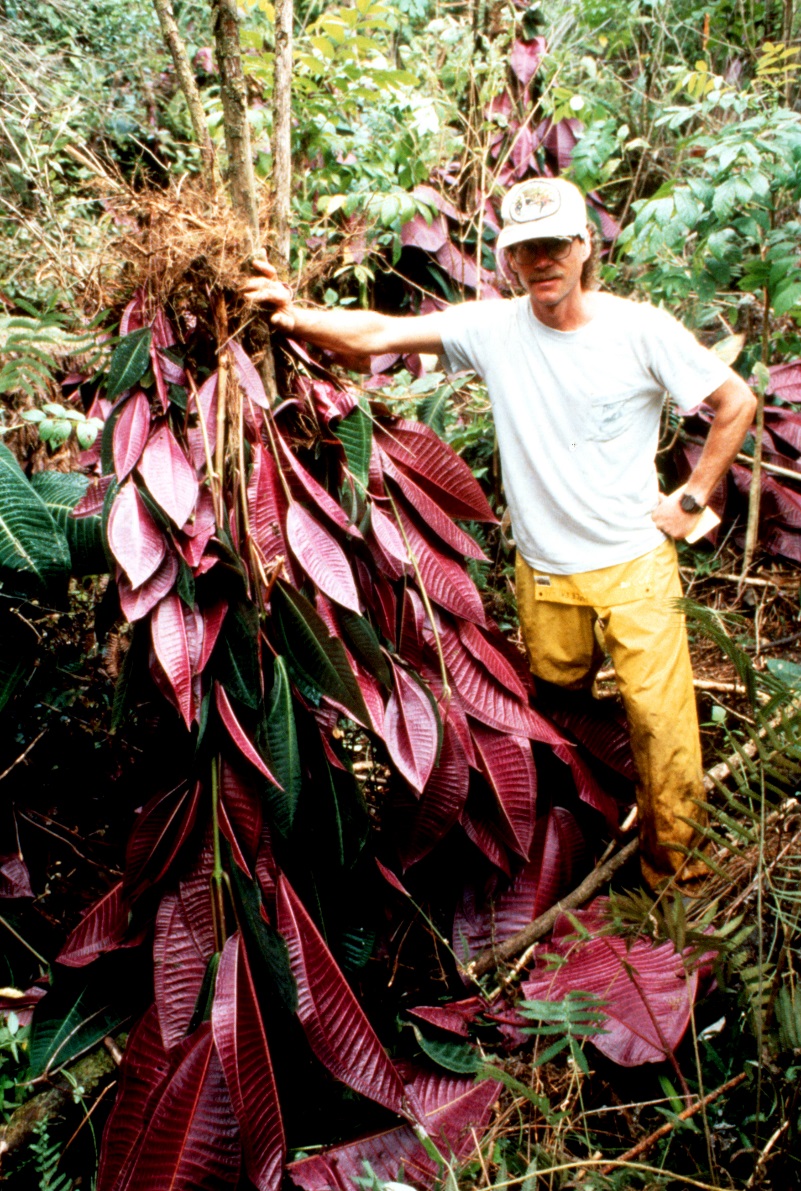
   removing Miconia to protect Haleakala National Park

The Strategic Plan identifies goals and actions to optimize the program’s effectiveness, while increasing program and park capacity and leveraging human and fiscal resources with state, federal, and private entities.

The plan articulates a mission, a vision, five broad goals, and actions for the next 10 years. It’s intended to guide annual planning and major projects, as well as to identify and help prioritize funding needs and initiatives.

The overall vision is for the Invasive Plant Program to guide park service efforts to enhance landscape level stewardship of resources by applying “technically sound, holistic, collaborative, adaptive, and innovative approaches.” The hope is that other NPS units will increasingly rely on the IPP’s expertise in implementing their programs and building partnerships.

The strategic plan lays out five broad goals, each supplemented by a list of detailed activities. Priority actions have been identified for the first 5 years (2017-2021) with the expectation that actions will be re-prioritized during annual reviews. These five goals are:

  1. Develop program standards

Clarify and standardize administrative and operational roles and tasks. Improve data management and train colleagues in those standards. Incorporate science-informed procedures to support park management of invasive plants.

Interestingly, the Plan calls for IPP staff to quantify the invasive plant threat and effort needed to manage it and then to communicate the gap between effort needed and resources available to decision makers.

2. Promote the Invasive Plant Program by highlighting the services it provides and the significance of the invasive plant issue both internally and with stakeholders. Assure that IPP efforts parallel those in the Department of Interior Action Plan for invasive species.

  1. Build capacity of individual parks and the Service to prevent the arrival of invasive plants and manage infestations that are already present

Enhance resource and information sharing and field-based training. Find ways to encourage parks to continue managing the invaders after the EMPT completes the initial eradication. Also find ways to increase the EPMT Program’s efficiency. Possibly develop an NPS pesticide applicators’ certification course (the Bureau of Land Management and Department of Defense already have one).

Increase partnerships to deal with actions that are outside parks’ control. Specifically, participate in regional and state invasive plant councils, and collaborate with a full range of external partners to identify successful techniques, conduct control and restoration campaigns, improve and implement efficient plant management across park boundaries, and recruit and manage youth and volunteers.

  1. Promote holistic and integrated invasive plant management

Work with other NPS programs and parks (across all divisions) to establish resource stewardship and landscape preservation / restoration goals. Integrate integrated pest management strategies in management actions. Continue close collaboration with Climate Change Response Program (if it still exists!). Identify research needs and get the research done.

  1. Collaborate on invasive plant management

Foster and encourage internal and external collaboration and coordination to leverage available resources, expertise, and knowledge.

Identify parks, NPS programs, partner agencies, organizations, and related initiatives with similar objectives to increase efficiency and effectiveness. Coordinate with NPS monitoring programs (although the invasive animal study authors thought the monitoring program is not structured to serve invasive species needs). Partner with BLM and US Fish and Wildlife Service and non-federal partners to cooperatively manage invasive plants on the landscape. Coordinate compliance with National Environmental Policy Act (NEPA) and National Historic Preservation Act.


Each IPP unit is expected to develop an annual work plan that aligns with an annual financial plan. Priorities will be reviewed annually. Each IPP unit will also submit an annual accomplishment report. IPP might develop a tracking system to be applied to each assigned action.

Plus the IPP strategic plan will be reviewed annually and actions will be re-prioritized as needed. The annual status reports will be made available to stakeholders and partners on the Web.


Posted by Faith Campbell

We welcome comments that supplement or correct factual information, suggest new approaches, or promote thoughtful consideration. We post comments that disagree with us — but not those we judge to be not civil or inflammatory.


New “Plant Pest” Boss Soon to Take Office

Gregory Ibach


Gregory Ibach has been appointed USDA Under Secretary of Agriculture for Marketing and Regulatory Programs. He will supervise APHIS.

Mr. Ibach has strong ties to mainstream agriculture. A fourth-generation farmer (cow-calf and rowcrops), he has served as Nebraska’s Commissioner – or Deputy – of Agriculture under three governors – since 1999. His academic background is animal science and agricultural economics.

Mr. Ibach’s nomination was supported by 60 organizations, including the Farm Bureau, National Cattlemen’s Beef Association, and National Corn Growers.

The Senate Committee on Agriculture, Nutrition & Forestry held a very friendly hearing on Mr. Ibach’s appointment on October 5, 2017 2017 (video posted at the Committee website)  During the hearing – which was shortened by the need to attend to other Senate business – Senators’ attention focused on the farm conservation programs managed by the other nominee at the hearing (William Northey, nominee for Undersecretary for Farm and Foreign Agricultural Services). In response to several questions about marketing programs, Mr. Ibach said he needed to learn more about an issue.

In his formal testimony, Mr. Ibach noted the breadth of responsibilities under the jurisdiction of the Under Secretary for Marketing and Regulatory Programs and promised to find a balance between the two duties: representing and promoting the interests of farmers and ranchers; and overseeing some of the entities that regulate them. (Written testimony posted on Committee website — link above.)

“If confirmed, I will help the Secretary achieve his goals through ensuring sensible and effective regulations, responding to our customers in a timely and straight forward manner, focusing on plant and animal health program effectiveness, and fostering safe innovation that is farmer, consumer and environmentally sound.”

I summarize key points of the hearing below.

Committee Chairman Pat Roberts (R-KS) noted that foreign animal disease threats – such as avian influenza – have threatened agricultural production and asked what Mr. Ibach’s priorities would be for safeguarding animal health. Mr. Ibach said he takes very seriously APHIS’ responsibilities to keep diseases and pests out of the country and to control those that enter. He promised to learn about every program.

Ranking Democrat Debbie Stabenow (D-MI) asked Mr. Ibach about budgetary pressures. He responded by saying he would commit to doing the best job possible with available funds and to pursue efficiencies.

Amy Klobuchar (D-MN) was also concerned about disease threats to Minnesota’s large-scale turkey and hog producers.

John Hoeven (R-ND) pressed Mr. Ibach to find a solution to blackbirds as a threat to agriculture. Mr. Ibach said they are a problem in Nebraska, too. He promised to seek a “balanced” approach that preserved wildlife “when appropriate” while protecting farmers from destruction and disease threats.

Senator Leahy (D-VT) submitted questions pertinent to our concerns about tree-killing pests. Noting that Mr. Ibach had spoken about the pest threat to farmers, ranchers, and producers but had made no mention of the forest pests, Senator Leahy asked:

  • What familiarity do you have with APHIS’ work to keep out invasive forests pests that threaten our nation’s forests and the rural jobs and economy those forests support?

Mr. Ibach replied: I am familiar with the work that APHIS does in partnership with states to keep out and eradicate forest pests. In fact, in Nebraska, we have been working closely with APHIS prior to and since Emerald Ash Borer was found in the state for the first-time last year. These pests can absolutely devastate our forests, and if confirmed, I would work to make sure that APHIS’ pest programs, including those to protect the green mountains of Vermont, are effective.

  • Can you tell me how many wood and tree pests APHIS inspectors find every year, which theoretically should not have made it to our shores if importers were using the best available processes and phytosanitary practices to keep American agriculture and natural resources safe? And do you commit to looking into this issue and finding ways to safeguard both American agriculture and our natural resources?

Mr. Ibach replied: I do not have that data, but commit to learning more and working every day to protect American agriculture and natural resources if confirmed.

Senator Roberts said that the Committee would act soon to approve the nominations of Gregory Ibach and William Northey.


The Under Secretary for Marketing and Regulatory Programs sets the tone for APHIS’ efforts.  This person can prompt aggressive protection efforts … or block such efforts by opposition or indifference.  Let’s hope that Mr. Ibach plays the former role!


Posted by Faith Campbell


We welcome comments that supplement or correct factual information, suggest new approaches, or promote thoughtful consideration. We post comments that disagree with us — but not those we judge to be not civil or inflammatory.


CISP Starts Focus on Emerging Wildlife Diseases in Large Collaboration


A new CISP effort is underway: we are pleased to announce support for our work on emerging wildlife diseases. Funding for this collaborative effort was provided by the BAND Foundation, a charitable foundation whose mission includes conservation of wildlife and plant species and combatting wildlife diseases. The grant, managed by the Association of Fish & Wildlife Agencies (AFWA), will provide support through 2017 and 2018. The scope of the project is described in the following AFWA announcement. We will provide more information on the project as it develops.

 ————————————-

Washington D.C. (May 4, 2017) – The Association of Fish & Wildlife Agencies is pleased to announce a partnership focused on fish and wildlife health, in collaboration with Bat Conservation International, the Amphibian Survival Alliance, the Amphibian and Reptile Conservancy, the Center for Invasive Species Prevention, and five universities in the United States.

 Disease is rapidly emerging as a major threat to wildlife globally. While wildlife diseases are not new, human actions are dramatically increasing their spread and impact. The partnership between the BAND Foundation and the Association will lead to more effective responses to emerging wildlife diseases.  Three specific emerging pathogens that affect bats (White-nose syndrome (WNS)), salamanders (Batrachochytrium salamandrivorans (Bsal)) and sea stars (Sea Star Wasting Disease (SSWD)) are of immediate concern in the United States. These families of animals play vital roles as ecosystem engineers across a range of habitats from agricultural landscapes to forests to intertidal zones. This project provides funding for critical research and monitoring to better understand the diseases that threaten them, aims to catalyze a public policy framework for tackling wildlife disease more broadly and strategically, and seeks to leverage additional dollars to address this critical issue.

 “State fish & wildlife agencies are on the front lines of wildlife disease prevention. This much needed funding will go a long way to prevent and prepare for disease outbreaks through the United States,” said Nick Wiley, President of the Association of Fish & Wildlife Agencies.

A conference to bring together experts in science and management of various wildlife diseases will be convened in 2018, to help further identify needs and improve communication and responses.

at: file:///C:/Users/Owner/Downloads/PR-%20AFWA%20Partners%20with%20the%20BAND%20Foundation.pdf .


Posted by Peter Jenkins

We welcome comments that supplement or correct factual information, suggest new approaches, or promote thoughtful consideration. We post comments that disagree with us — but not those we judge to be not civil or inflammatory.


Injurious species ruling could lead to more invasions​


CISP and I are mentioned in this Newsweek article of April 12 ​about a court ruling that undercut ​ ​the past 28 years of the ​U.S. ​Fish and Wildlife Service’s ​(FWS)​ program of regulating “injurious species” under the Lacey Act at the level of interstate transportation within the 49 continental States.

​​

Dr. Skip Snow, National Park Service Herpetologist, Everglades National Park, examines python captured in the Park; NPS photo

LANDMARK CASE PAVES WAY FOR ANIMALS LIKE PYTHONS TO BE TRADED IN U.S.

​http://www.newsweek.com/landmark-case-paves-way-animals-pythons-be-legally-traded-us-583137 ​
What happened? In 201​3​, in ​DC ​District Court, the U.S. Association of Reptile Keepers (USARK) brought a suit that, among other arguments, claimed ​the Government (the ​USFWS), lacked statutory authority under the Lacey Act to regulate interstate commerce in large constrictor snakes among the 49 continental States​. The DC District Court agreed and that issue was ​prompt​ly appealed to the DC Circuit Court of Appeals​. Its ​April 7th ​opinion frames the issue like this (pp. 2-3):​


When a species is designated as injurious, the Act prohibits any importation of the species into the United States or its ​p​ossessions or territories. 18 U.S.C. § 42(a)(1). The Act additionally bars “any shipment” of the species“ ​​between the continental United States, the District of Columbia, Hawaii, the Commonwealth of Puerto Rico, or any possession of the United States.” Id.

​    ​

This case concerns the proper interpretation of the latter provision, which we will refer to as the shipment clause. All agree that the clause bars shipments of injurious species between each of the listed jurisdictions—for instance, shipments of animals between “Hawaii” and “the continental United States,” or between “the Commonwealth of Puerto Rico” and a “possession of the United States.” But what about ​shipments between the states making up “the continental United States”—for instance, shipments between Virginia and Maryland? Does the clause prohibit those shipments as well?​


The Court ​of Appeals ​answered the last question with a convincing “no”.​ 


It is important to note the effect is only on ​interstate commerce (“​IC ​”)​ among the 49 States and it does not change the FWS’ authority to regulate commerce between those named locations, that is, ​Hawaii, DC, PR, the possessions and the 49 States considered as one block​.  Also, the ruling does not ​at all ​affect the FWS’ authority to regulate imports of injurious species from other nations.


Was it unexpected? No. The USARK attorneys did outstanding legal work in revealing the early Legislative history ​ of the 1960 Lacey amendments at issue​ and the fact that,​ from 1960 through 1989, the FWS itself interpreted the statute not to allow it to regulate IC. The FWS only began regulating IC in its ​Lacey ​injurious species listings ​in​ about 1989, but it has continued to do that in every listing since 1989, ​under the last 5 Presidential administrations. The long delay in the Court challenge was largely due to lack of enough economic incentive for a regulated industry to bring a lawsuit to challenge ​the FWS changed approach​. It was not until USARK was motivated to raise a vast amount of contributions from its members to pays it large legal fees that a challenge was organized.


How broad is the ruling? Sweeping. It is n​either​ limited to the parties in th​e​ case ​n​or ​to the ​snakes involved. The opinion makes clear that the correct legal interpretation by the FWS from now on must be not to regulate IC among the continental 49 States, with this statement on p. 22:


   we …. hold as a matter of law that the government lacks authority under the shipment clause to prohibit shipments of injurious species between the continental States.     


Will there be more proceedings in the District Court? Likely yes, as USARK had brought other legal arguments claiming that the entire listings of their snakes (including regulation of foreign imports too) was illegal. Now that the pressing issue of the IC restriction ​for injurious species under the Lacey Act ​has been resolved, USARK can still make those arguments back in the District Court. My judgment ​as an attorney ​is those were all weak arguments and ultimately the listing of the snakes and trade restrictions will be upheld as legal by the Courts as far as ​regulating ​foreign imports and the commerce among the listed locations.


Is the ruling disallowing IC restrictions likely to have more appeals? No. It is theoretically possible that the Government could seek review from the Supreme Court, but doubtful that the Government will do that or that the Supreme Court would take the case.  Both the District Court Judge and the DC Circuit Court of Appeals (3 Judges) wrote very well-reasoned opinions, and there is no dissenting opinion or conflicting decision from any other Court. Given those circumstances, it is not the sort of case the Supreme Court would take, so the DC Circuit’s opinion should be considered the final word unless Congress changes the law.


When does it take effect? Immediately​, unless it is somehow blocked​. While the appeal was from a preliminary injunction, the ruling need not go back to the District Court now as far as the IC issue – that is decided as a matter of law. As the opinion pointed out ​(​pp. 7-8​)​​:​


      We reach a definitive judgment on the shipment clause’s meaning in order to “save the parties the expense of future l​itigation​”.​

     ​

What is the effect on existing Lacey Act injurious species listings? All existing injurious species listing regulations that claim to regulate IC must from now on be interpreted not to regulate IC. The FWS may re-issue some new listing regulations to make its lack of authority more clear, but even if the FWS delays in doing that the language in those regulations on regulating IC is now a nullity, that is, ​that language​  should be treated as if it does not exist.


It should be noted that ​ for​ the ​now​ 2​8​ different injurious species listing ​ decisions​ (some of which take in large numbers of species ​ totaling ~ 300 or up to ~700 species if the disease regulations are included​) th​e​ impact of this listing will vary greatly.  ​In reality​ only ​5 or 6​listings are significantly harmed ​now ​by the ruling. Most of the Lacey species listed are not in the US yet, ​e.g., Racoon dog, ​so the elimination of the IC restriction will have no effect currently and the continuing regulation of ​importation is all that is needed ​, unless the species does appear somewhere within the ​49 continental States​.

One ​listed species​, zebra mussel, ​is so widespread in the US ​already ​and/or ​its​ movement is generally unintentional s​o​ that the IC restriction has ​generally​ been unenforceable as a practical matter ​ (with some ​important ​exceptions to that)​.


One listing — the “all-salmonids pathogens” listing — was by its terms limited to regulating foreign imports and not IC, so it was not affected ​at all ​by the ruling.


But, for ​the ​listings ​​of​ the large constrictor snakes, the ​4 ​Asian carps​,​ the Northern snakehead​ and some others​, the Court ruling eliminating IC regulation will greatly weaken Federal control over the ​many ​species ​ within those listings​. ​Several​ of them are already fairly widespread ​in the country ​with captive and/or wild breeding populations to draw stock from. So ​just ​regulating their foreign importation is almost meaningless –  it is IC that is their most important risk. So​,​ we are more likely to see more invasions ​by those species i​n more States due to more ​unregulated ​IC unless that legal gap is filled.


Bsal regulation effect:​ The Bsal-prevention salamander ​foreign import ​regulation has been successful in keeping the Bsal pathogen out of the US (it appears​,​ based on monitoring so far), but the IC restriction had provided​ important ​insurance​ in the event that the pathogen is ​in fact ​here but just has yet to be detected. Or if the pathogen were to arrive, the IC restrictions would ​have ​facilitate​d​ a stronger preventative response, ​blocking or ​slowing spread from one State to another. ​Now, ​if the pathogen arrives with ​no IC restrictions in place, interstate trade in ​infected ​salamanders could rapidly spread a potentially devastating, nationwide, ​Bsal outbreak.


What is the effect on existing permits for interstate movement of listed species? To the extent the permits relate to foreign imports or movements between Hawaii, DC, ​PR, ​the ​possessions/​

territories or the continental States  considered as a whole​, the permit system is still in effect. As far as permits ​for movements ​within the continental 49 States, it should be expected that the FWS will modify their terms. Until the FWS does that or provides clarification​,​ the permit holders should ​follow​ the terms of their permits.


What might Congress do in response? Congress could pass a law filling the gap and returning ​the ​FWS IC regulation ​program ​to the status quo that has exist​ed​ since 1989. Such a law could be quite narrow, targeting only the IC gap, or it could be broader, including an IC gap fix within a broader new law. Or Congress could take no action, leaving the effect of the Court ruling in place.


What might State fish and wildlife agencies do in response? Unless it appears that Congress will fill the IC gap quickly, then concerned States may wish to promptly ​adopt ​their own new laws ​/regulations​ restricting commerce into their States of the species involved. This seems ​the ​highest priority for the States most at risk from the species whose IC has been most liberalized by the ruling, that is, the large constrictor snakes, the ​4​ Asian carps​,​ the Northern snakehead and ​the ​salamanders that the FWS listed as potentially carrying Bsal. (Some States already may have such restrictions on the books.)


​ Note that Hawaii is well-protected as a specially-designated State and need take no action, as is also true for DC, PR and the territories.​


It is too soon to know what the policy responses may be, but the FWS, State agencies and stakeholders likely are evaluating options now. ​


We welcome comments that supplement or correct factual information, suggest new approaches, or promote thoughtful consideration. We post comments that disagree with us — but not those we judge to be not civil or inflammatory.

​Posted by Peter Jenkins


What the new President & Congress Can Do re: Invasive Species

 White House


A new President and Congress take office in January.  And outgoing President Obama recently amended the Executive Order on invasive species.

What might the new leaders do to improve America’s invasive species programs?

Here are a group of actions that I think would improve programs significantly:

  • amend the Lacey Act to strengthen controls over introduction and spread of invasive animals and animal diseases;
  • raise the political profile of invasive species issues by holding more frequent oversight hearings;
  • increase funding for invasive species prevention, containment, and control programs;
  • support proposals to amend the 2019 Farm Bill to strengthen on-the-ground programs, policies, and research aimed at minimizing invasive species introduction, spread, and damage;
  • during the confirmation process, Senators should ask President Trump’s nominees to leadership positions in the Departments of Agriculture and Interior about how they will address invasive species challenges.

Do we need new legislation mandating that federal land-managing agencies do X or Y with regard to invasive species? This was the focus of a hearing in May at which I testified.

Federal land-managing agencies are already authorized and – in some cases required – to act to control invasive species on lands and waters under their jurisdiction.  Some of the existing statutes even authorize the agencies to apply fees paid by people who use the public lands for some purpose (e.g., livestock grazing, recreation) to management of invasive species.

Most of the statutes authorizing invasive species management incorporate that activity into the agency’s broader management goals for protection of wildlife, habitat, natural resources, historic or cultural sites, etc.  For example, the USFS Manual §2900 lists 21 laws and 6 regulations or policies that govern the USFS’ management of invasive species.  Some of these laws apply to all federal land-managing agencies, including:

  • Endangered Species Act (ESA) of 1973 (16 U.S.C. §§1531 et seq.)
  • Surface Mining Control and Reclamation Act of 1977 (30 U.S.C. 1201, 1201 (note), 1236, 1272, 1305). §515
  • North American Wetland Conservation Act 1989 (16 U.S.C. 4401 (note), 4401-4413, 16 U.S.C. 669b (note)). §9 [U.S.C. 4408]
  • Sikes Act (Fish and Wildlife Conservation) of September 15, 1960 (16 U.S.C. 670g-670l, 670o, P.L. 86-797), as amended. §201
  • National Historic Preservation Act of 1966 [16 U.S.C. §§470 et seq.]
  • Wilderness Act of 1964 (16 U.S.C. §§1131 et seq.

Other statutes apply only to resource management authorities of the USDA Forest Service; these include:

  • Organic Administration Act of 1897 (16 U.S.C. §§ 473 et seq.).
  • Fish and Wildlife Coordination Act (16 U.S.C. § 661 et seq.).
  • Knutson-Vandenberg Act of June 9, 1930 (16 U.S.C. 576, 576a-576b). §3 [16 U.S.C. 576b]
  • Bankhead-Jones Farm Tenant Act of 1937 (7 U.S.C. §§1010 et seq.)
  • Anderson-Mansfield Reforestation and Revegetation Act of October 11, 1949 (16 U.S.C. 581j (note), 581j, 581k)
  • Multiple-Use Sustained-Yield Act of 1960 (16 U.S.C. §§528 et seq.)
  • Forest and Rangeland Renewable Resources Planning Act (RPA) of 1974 as amended by the National Forest Management Act (NFMA) of 1976. §6
  • International Forestry Cooperation Act of 1990 (16 U.S.C. § 4501)
  • Healthy Forests Restoration Act of 2003 (H.R. 1904), [16 U.S.C. 6501-6502, 6511-18, 6541-42, 6571-78]
  • Wyden Amendment (P.L. 109-54, Section 434).
For brief descriptions of all these statutes, see the references and links at the end of this blog posting.

Advocates have tried before to legislate a specific requirement that federal agencies combat invasive species.  The Federal Noxious Weed Act of 1974 (7 U.S.C. § 2801 note; 7 U.S.C. § 2814) was amended in 1990 to add §15, “Management of Undesirable Plants on Federal Lands”.  This section requires each federal agency to

1) designate an office or person adequately trained to develop and coordinate an undesirable plants management program for control of undesirable plants on federal lands under the agency’s jurisdiction, and

2) establish and adequately fund an undesirable plants management program through the agency’s budgetary process,

3) complete and implement cooperative agreements with state agencies regarding the management of undesirable plant species on federal lands, and

4) establish integrated management systems to control or contain undesirable plant species targeted under cooperative agreements.

This approach hasn’t worked – no one is satisfied by the federal agencies’ “weed” management efforts.


Capitol

What is missing is a political demand for action – and support for necessary staff and funding. Agencies under the secretaries of Agriculture and Interior bear most of the responsibility for managing invasive species.  As long as these officials are not being pressed by key Congressional committees, the media, and key stakeholders to take more aggressive and effective action to curtail species introductions and suppress established populations of bioinvaders, they will continue to focus their attention on issues that do generate these kinds of political pressure.

I am not saying that the principal statutes governing invasive species management could not be improved.  As noted above, several proposals have been put forward to strengthen laws which are the foundation for preventing introduction of invasive species.  I will blog about specific proposals in the new year.


Sources

USFS Invasive Species Manual

ANSTF/NISC report “Federal Policy Options Addressing the Movement of Aquatic Invasive Species Onto and Off of Federal Lands and Waters. 2015.  Committee on the Movement of Aquatic Invasive Species both onto and off of Federal Lands and Waters.

Posted by Faith Campbell

We welcome comments that supplement or correct factual information, suggest new approaches, or promote thoughtful consideration. We post comments that disagree with us — but not those we judge to be not civil or inflammatory.