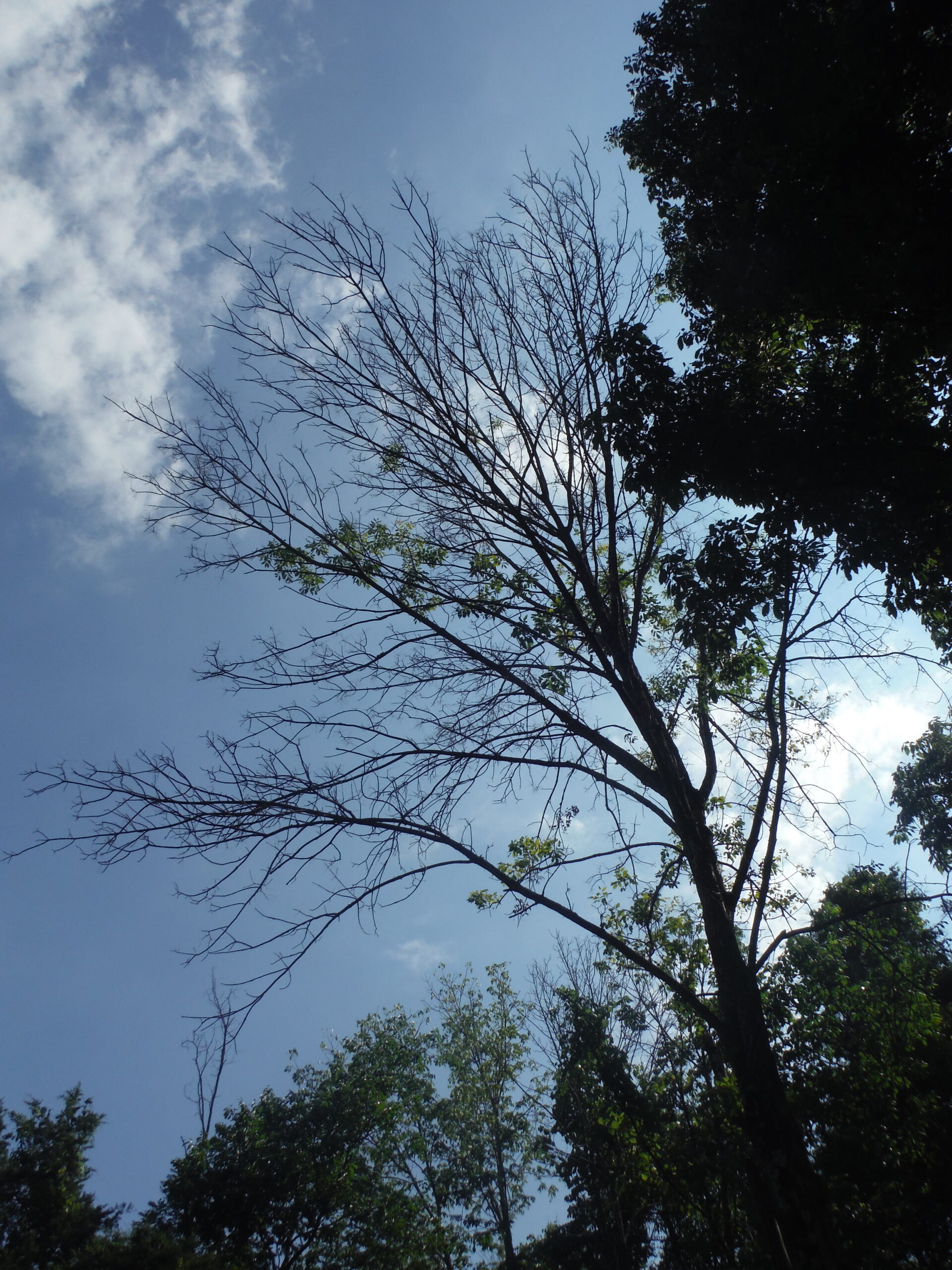
The emerald ash borer (Agrilus plannipennis; EAB) was detected in North America in 2002. So both U.S. and Canadians have been motivated to evaluate the probable trajectory of the primary hosts – the ash genus Fraxinus – in the face of the ongoing invasion. See Deschênes et al. 2026 and Wilson et al. 2025 – full citations at the end of this blog. Both studies focused on white (Fraxinus americana) and green ash (F. pennsylvanica); they say next to nothing about black ash (F. nigra). I regret this silence because of the unique ecology of black ash swamps. Neither addresses the threat to Oregon ash (F. latifolia) in the West.
The two assessments have similar findings: high mortality of larger trees (canopy and “recruit” size trees); abundant regeneration (seedling and saplings sizes) after an initial period; and uncertainty as to whether persisting EAB populations will kill the saplings before sufficient numbers grow into reproductive size.
There are two conspicuous differences. First, the American study does not consider the possible impact of biological control – although USDA APHIS has placed all its effort on this approach since January 2021. The Canadians report that self-sustaining populations of the wasps are now found across the northern U.S. and eastern Canada. In their study, conducted in Ontario, they detected only Tetrasticus planipennisi; it was parasitizing 16% of the EAB larvae in dissected stems. This wasp’s affinity for colder climates and short ovipositor – which limits it to parasitizing larvae inhabiting small stems – are portrayed as positive traits under these circumstances.
Second, the Canadians did not find “lingering” adult ash trees as have the Americans. These trees indicate the probability of finding workable levels of genetic resistance to the EAB. USDA Forest Service scientists are pursuing a breeding program. While in south-central Michigan, where overstory ash mortality typically exceeded 80%, 46% of overstory ash and 82% of ash recruits were relatively healthy (Wilson et al. 2025), in Ontario none of 1,129 overstory ash trees survived beyond seven years after EAB detected. No trees exceeded 15 cm dbh (Deschênes et al. 2026).
Regeneration
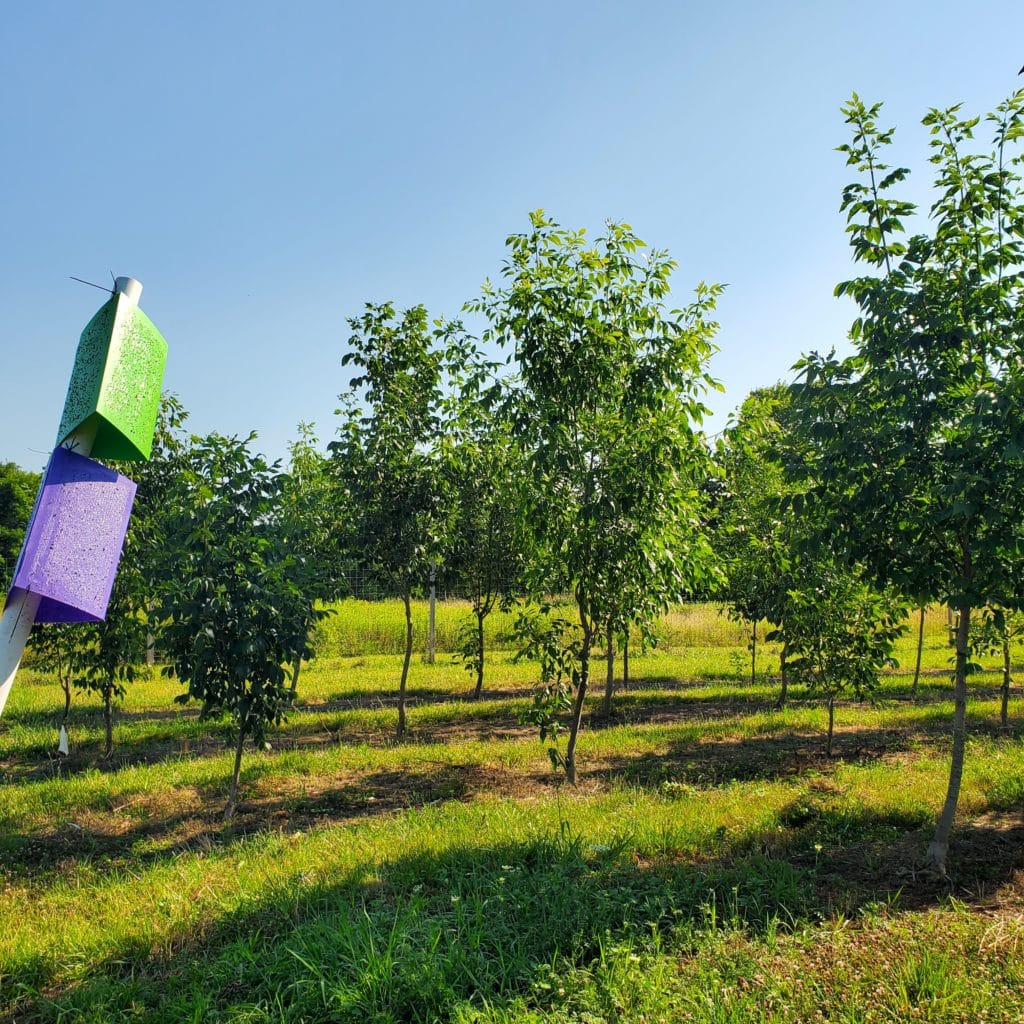
As Deschênes et al. (2026) state, the future of ash stands depends on the complex of interactions among environmental conditions, management interventions, efficacy of natural enemies (natural or introduced), and life-history traits of the insect and its host. Coexistence might be possible if EAB larval densities remain sufficiently low to support survival of residual trees and successful seedling recruitment.
Larval densities in Ontario were said to be generally low, suggesting reduced carrying capacity in post-invasion forests, lower EAB fecundity, and higher EAB mortality in regenerating stems. Deschênes et al. (2026) note that in more northern areas colder temperatures are thought to slow larvae development. Perhaps these larvae might also be less vigorous, so they night disperse only over short distances. Still, there were sufficient EAB present after all the overstory trees had died to create 97% of the 298 galleries in regenerating ash stems (Deschênes et al. 2026). Furthermore, Wilson et al. (2025) say that EAB densities in infested trees in Michigan were similar to densities recorded during the initial invasion. This seems ominous to me – a solid foundation from which beetle populations could build up again as regenerating ash grow and provide more phloem for the insect to exploit.
Ash reproduce by both flowering/seeding and sprouting from the base. EAB predation is not the only complication. First, ash are dioecious so mature trees of both sexes must grow within a few hundred meters. Second, predation by the ash seed weevil (Lignyoodes helvolus) reduces seed supplies. Dense sedge mats can prevent germination (Wilson et al. 2025). Scientists generally believe that the soil seed bank is quickly exhausted, although Wilson et al. (2025) cite others’ conflicting findings. Neither article discusses predation by mammals, e.g., deer or rabbits. Wilson et al. (2025) mention attacks by beavers.
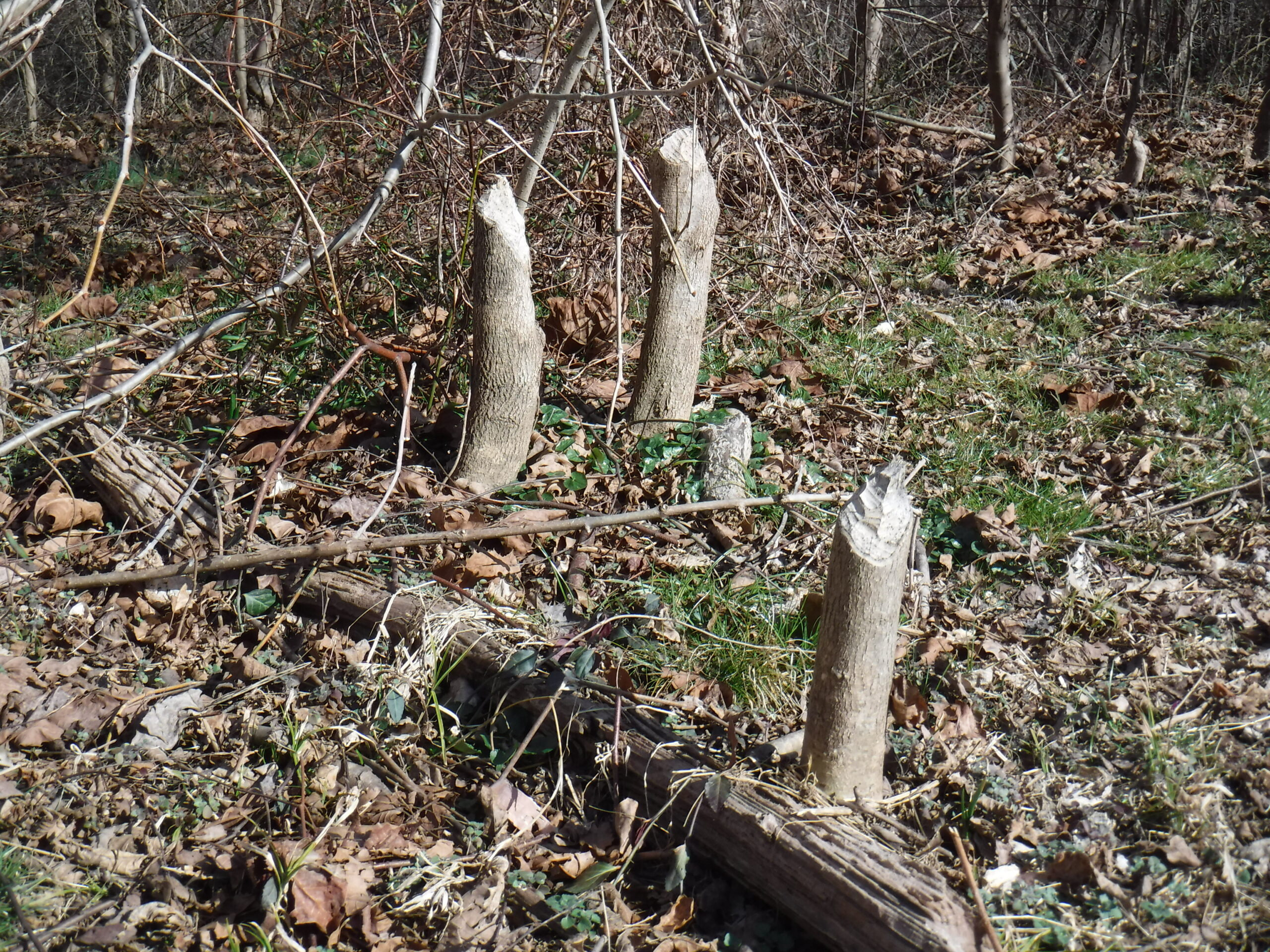
Wilson et al. (2025) did not study whether stump-sprouted ash were able to successfully recruit into the overstory. They do report that in one study in southeastern Michigan stump sprouts were the dominant form of green ash regeneration and about a quarter of these sprouts produced seeds at least once. Deschênes et al. (2026) found that on average 47% of regenerating stems at their Ontario research sites originated from stump sprouts.
EAB has been documented to attack and kill trees when the main stem is as small as 2.5 cm. While EAB probably prefer larger stems, Deschênes et al. (2026) suggest that stems become acceptable at the lower range of size required for seed production – 8–10 cm dbh. Reliable and abundant seed production doesn’t occur until white or green ash achieve > 20 cm dbh. At their Ontario sites, Deschênes et al. (2026) found that 42% of regenerating stems has been infested by EAB at least once; 14% had been attacked five or more times. They removed 74 EAB larvae from 28 stems; 49 (66%) were alive. Fifteen EAB (16% of current year galleries) had been parasitized — all by Tetrastichus planipennisi. They also observed numerous signs of defensive responses.
In Michigan, no ash recruits — living or dead – were found in plots in 28% of the cells. In the remaining 128 cells, an average of ~33% of ash recruits were infested by EAB, and ~21.4% of ash recruits dead. As is typical, white ash fared better than green ash. Recruit sized ash trees were twice as likely to die than to survive and mature into overstory size (Wilson et al. (2025).
In Ontario, as noted, all canopy ash had died. There were 119 live trees 5 – 10 cm dbh – a tenth as many “mature” ash as when EAB arrived, and all were smaller. There was abundant regeneration in most sites initially, but at the longest-infested sites in Essex County, regenerating ash stems were half as numerous as early after the transition (Deschênes et al. 2026).
The Canadians found it encouraging that some of the regenerating stems were vigorous despite containing EAB gallery densities greater than 20 larvae·m?2 of phloem. They did not know the mechanisms underlying survival of these stems. Possible explanations ranged from the low EAB carrying capacity of smaller trees to stronger host defenses in regenerating stems to EAB mortality due to parasitism.
Wilson et al. (2025) note that despite more than 20 years of EAB presence, densities of ash recruits, saplings, and seedlings were high relative to other species. However, they remind us, ~ one-third of the live ash recruits were infested so their survival into reproductive size was uncertain. The high mortality of overstory ash results in loss of seed resources, greater sun exposure, and cascading consequences for forest composition and function. In upland sites, cells with low ash basal area favored Quercus rubra and Tilia americana. They conclude that changes to forest composition is probably site specific — largely depend on what tree species are already present.
Despite the challenges described above, the Canadian scientists also believe that these findings demonstrate that ash has a capacity for long-term regeneration (Deschênes et al. 2026).
Changing Species Composition in the U.S. (Wilson et al. 2025)
Canopy gaps caused by ash mortality have largely been filled by lateral ingrowth of species already there — American elm (Ulmus americana), black cherry (Prunus serotina), and northern red oak (Quercus rubra). The regeneration strata (saplings and seedlings) is dominated by Fraxinus (white outnumbering green when differentiated), maples (Acer rubrum, A. saccharum), black cherry, Crataegus species and Carya ovata. Elms are consistently among most common non-ash taxa among overstory, recruit, sapling and seedling strata. At some Ohio sites there was also increased abundance of non-native tree and shrub seedlings. This is not surprising since invasive plants are widespread in the forests of Ohio and other eastern states. A decade ago 93% of Forest Inventory and Analysis (FIA) plots in Ohio had at least one of 50 invasive plant species.
In another paragraph they mention Tilia americana as one of the important species in these forests.
Situation in Canada (Deschênes et al. 2026)
Deschênes et al. (2026) express concern that the death of nearly all canopy-level trees will substantially reduce ash’ ability to fulfill its ecological roles in these ecosystems. Still, ash regeneration is persisting for decades following overstory mortality. The taxon’s continued presence is driven largely by strong sprouting, which has been observed in several locations in Ontario. In some areas, low EAB infestation rates and evidence that regenerating stems can withstand multiple infestations raises hope that some might reach maturity and produce seeds. This scenario would be similar to that of elms, in which surviving trees contribute to ongoing regeneration and might eventually facilitate development of some level of resistance to the invasive fungus. A second possibility is that ash’ high sprouting capacity might point to a scenario similar to that of American chestnut. This species has persisted for a century primarily as sprouting shrubs — although they rarely reach reproductive maturity.
White Fringetree
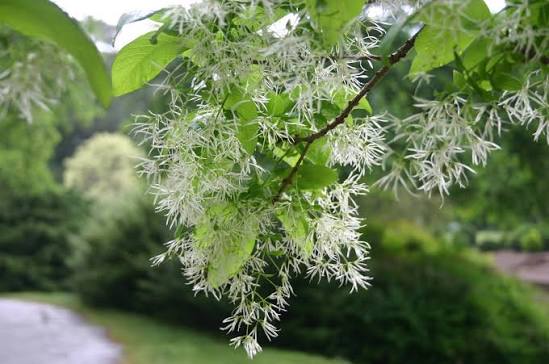
Scientists also reviewed the status of a secondary host of EAB in North America, white fringetree (Chionanthus virginicus). Earlier studies of this host-pest relationship had been conducted on ornamental plantings where the trees tend to be scattered across open lawns and actively managed – including protection from pests. The Cipollinis (see full citation at the end of this blog) believe they might be better able to ward of EAB attack than are wild, unmanaged trees in forests that must compete for resources. They wanted to assess the current status and likely trajectory of the tree species in the wild.
To do so they revisited a wild population of the tree in southern Ohio previously assessed 10 years earlier. White fringetree is a small multi-stemmed tree native to the southeastern U.S. It is widely planted as an ornamental in across the east. In Ohio, white fringetree grows wild in only a few southern counties, in small populations or as widely scattered individuals. The species is classified as “Potentially Threatened” at the state level.
In 2015, 30% of the white fringetrees at the site were infested. These trees had signs of stress but none had died. EAB larvae grow more slowly on fringetree than on North American ash species. Meanwhile, all mature white ash trees at the site had been killed by EAB. Smaller white ash trees more comparable in size to the white fringetrees had attack rates and impacts comparable to those on the fringetrees.
In their new study, the Cipollinis found that nine of 31 trees tagged in 2015 (29%) had died; 22 (71%) were alive. Of those 22 living trees, 12 (55%) stayed the same or improved slightly over the five-year period; 10 (45%) declined. Five of these 22 living trees (23%) had evidence of current infestation. Trees that had died had a higher incidence of old EAB galleries, adult exit holes, and woodpecker activity. This is interpreted as demonstrating that EAB must cause extensive damage to kill fringetrees.
In summary, fringetrees in a wild unmanaged population continued to be attacked by EAB over 10 years and suffered higher attack rates and more significant impacts than those previously observed in managed pops. The Cipollinis conclude that trees large enough to attract EAB oviposition will continue to decline in health and be killed as long as beetles are present. They expect that wild white fringetrees might meet the same fate as ash trees, but over longer time scales.
At the same time, this delay in complete mortality might create a refugium for remnant populations of EAB after most ash have been killed. This status would be exacerbated if it turns out that the biocontrol agents cannot find their target — EAB — in the alternative host. The Cipollinis found lower parasitism rates by Tetrastichus planipennisi in fringetrees, although this was not true for the egg parasite Oobius agrili and two Spathius larval parasites.
Whitebark fringetree populations can produce few adult EAB because the trees are small and contain low amounts of phloem. Still, as young trees grow into vulnerable sizes they might help sustain the EAB population – as young ash trees in the area appear to do.
While caution is appropriate in interpreting findings from a study of a single population, the Cipollinis argue that this population has been studied intensively: assessed six times over 10 years, beginning at the start of the EAB infestation. Therefore they think their analysis provides useful informative regarding the long-term impacts of EAB on fringetree.
They concede that larger populations in areas deep within the tree’s native range might experience different dynamics and impacts. So far, however, observations in Chattahoochee National Forest in Georgia and at Great Falls Park on the Maryland-Virginia border generally support their finding that wild fringetrees in natural landscapes will suffer higher attack rates and be more severely impacted by EAB than trees in managed landscapes.
Finally, the Cipollinis fear that a close relative, pygmy fringetree, Chionanthus pygmaeus, is at particularly high risk because it is endemic to only a few counties in the sandhills of central Florida. The species is already classified as endangered by both the state and the federal governments. The pygmy fringetree is smaller than white fringetree, so its size might help it escape attack. However, adults achieve sizes comparable to that of fringetree in some cases. So when EAB reaches Florida, the specie appears to be highly vulnerable.
SOURCES
Cipollini, D. and K. Cipollini. 2026 The Fate of a Wild White Fringetree (Chionanthus virginicus) Population in Ohio 10 Years After Invasion by Emerald Ash Borer (Agrilus planipennis) Forests 2026, 17, 712
Deschênes, É., C.J.K. MacQuarrie, L. Scott, C. Zimmerman, and I. Aubin. 2026. Ash population dynamics after two decades of emerald ash borer infestations in Canada. Canadian Journal of Forest Research. Can. J. For.Res. 56: 1–13 (2026) | dx.doi.org/10.1139/cjfr-2026-0075
Wilson, C.J, L. Labbate, T.R. Petrice, T.M. Poland, D.G. McCullough. 2025. Ongoing regeneration of ash and co-occurring species 20 years following invasion by emerald ash borer. Forest Ecology and Management 580 (2025) 122546
Posted by Faith Campbell
We welcome comments that supplement or correct factual information, suggest new approaches, or promote thoughtful consideration. We post comments that disagree with us — but not those we judge to be not civil or inflammatory.
For a detailed discussion of the policies and practices that have allowed these pests to enter and spread – and that do not promote effective restoration strategies – review the Fading Forests report at http://treeimprovement.utk.edu/FadingForests.htm
Or